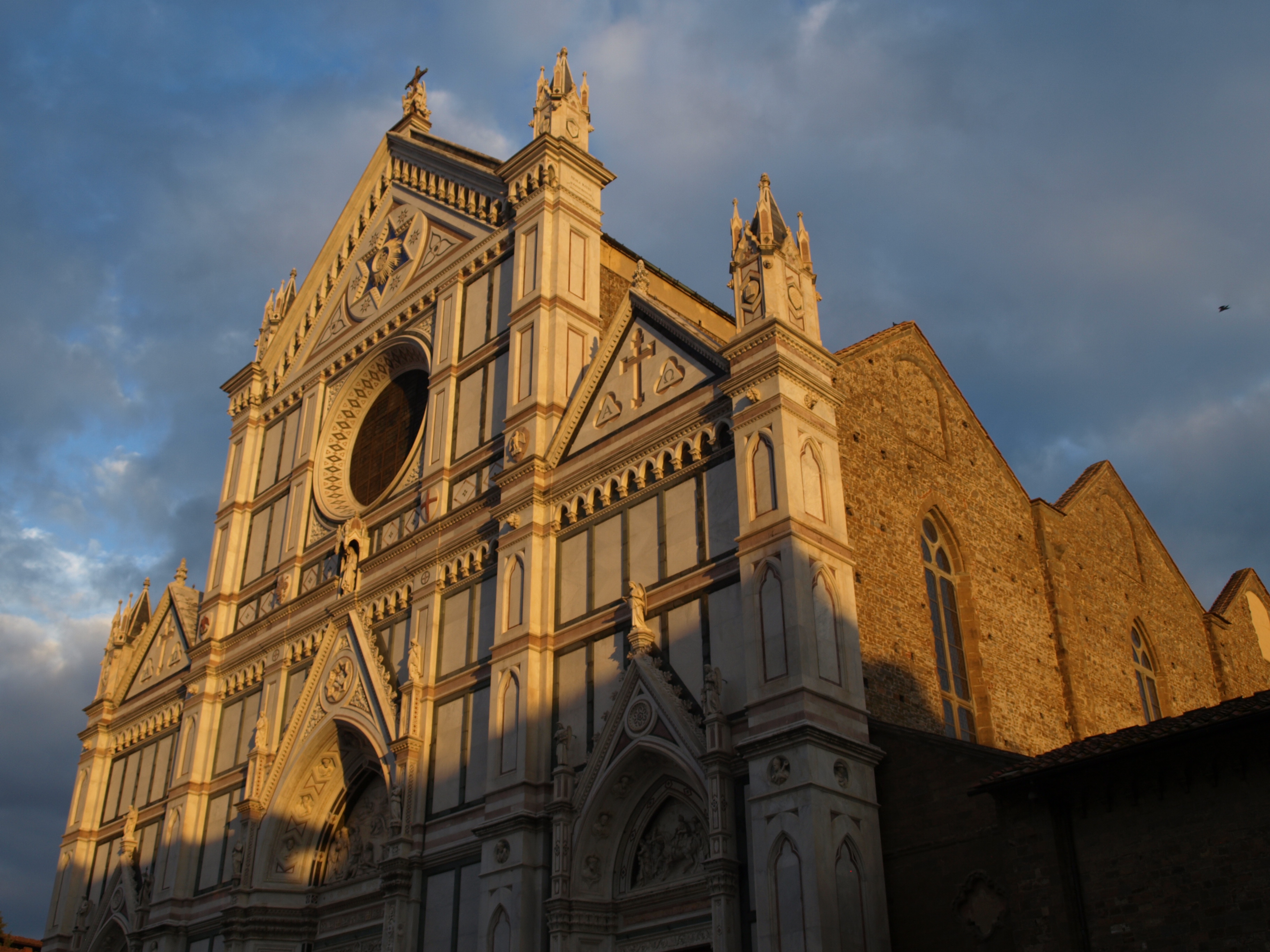
Buon anno! Auguri!

Wherever you are, whatever you are doing to celebrate the arrival of 2017, I send you auguri!

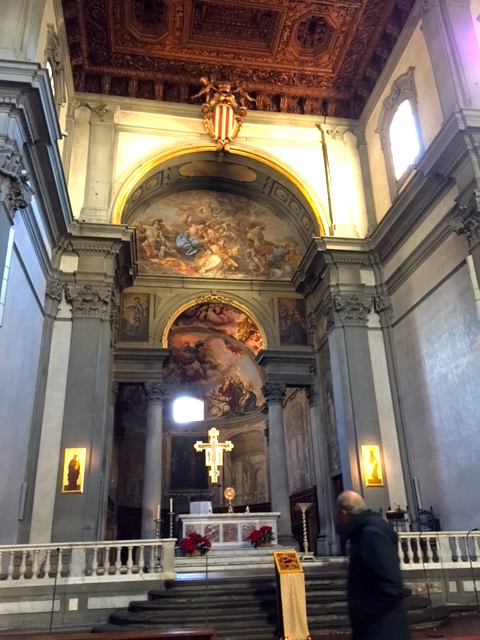
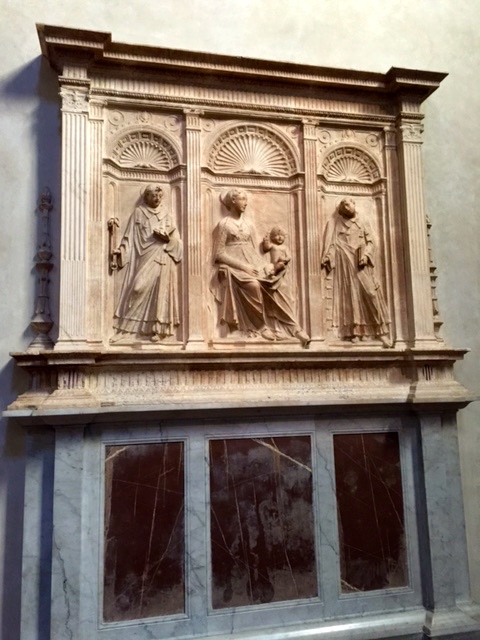
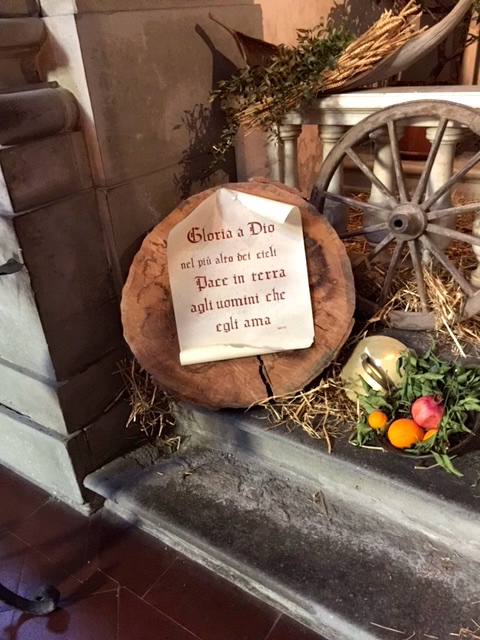
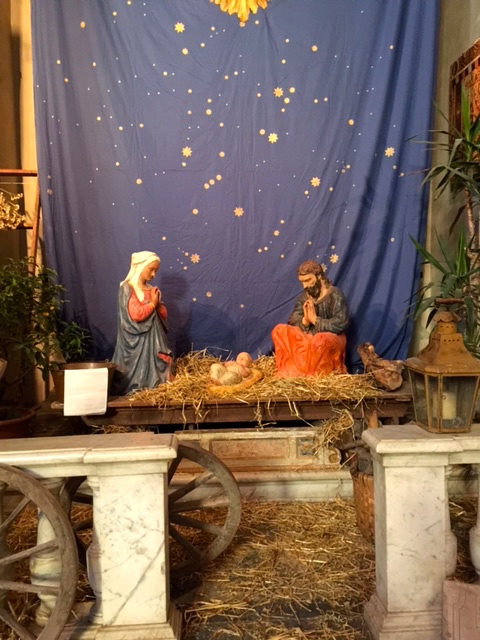
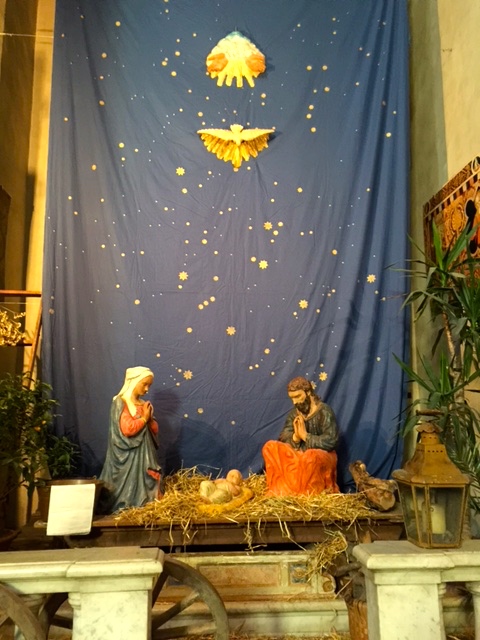
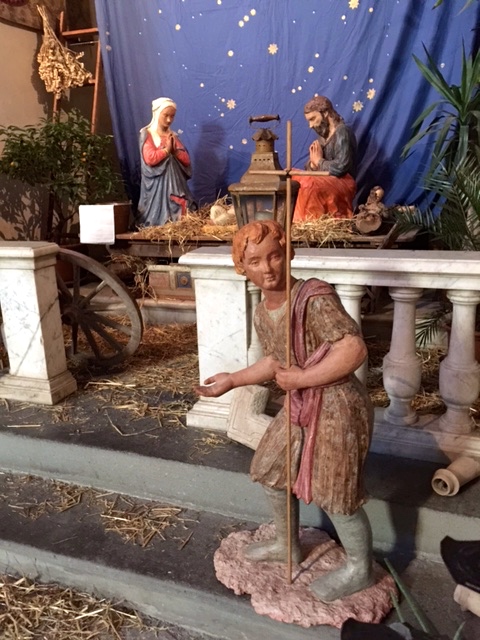
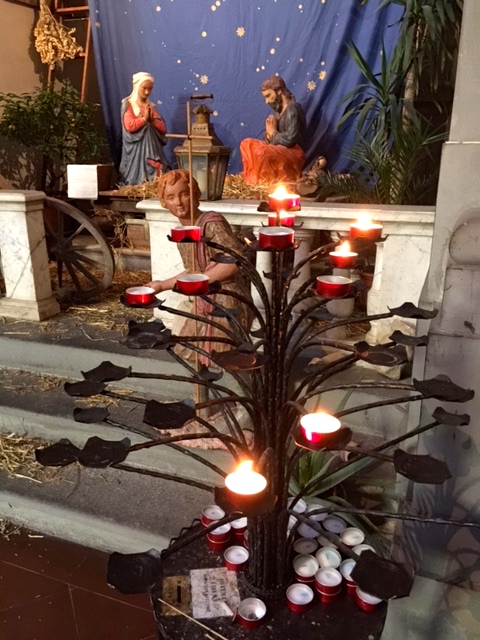
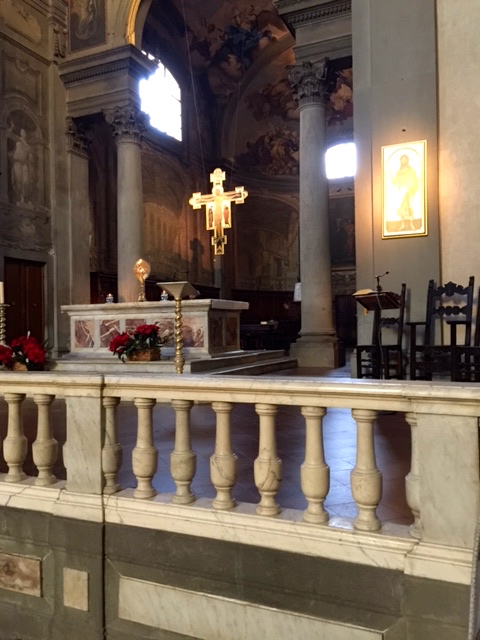
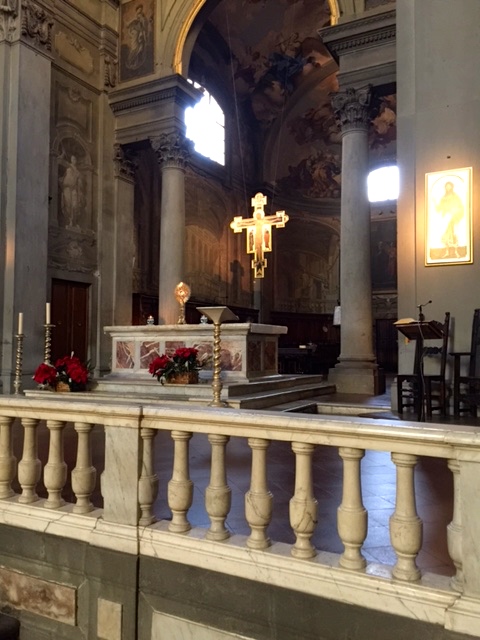
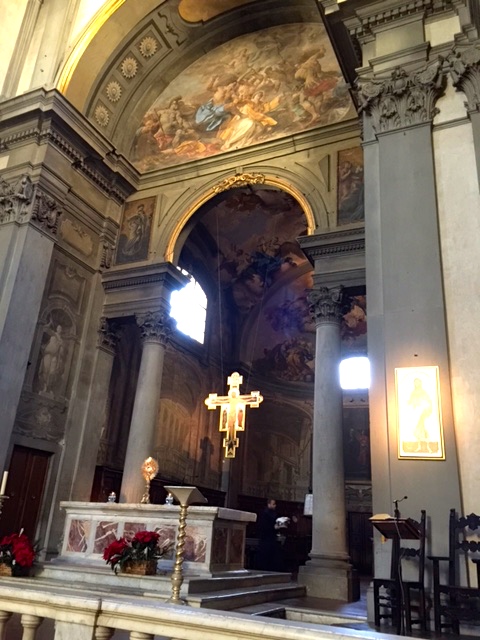
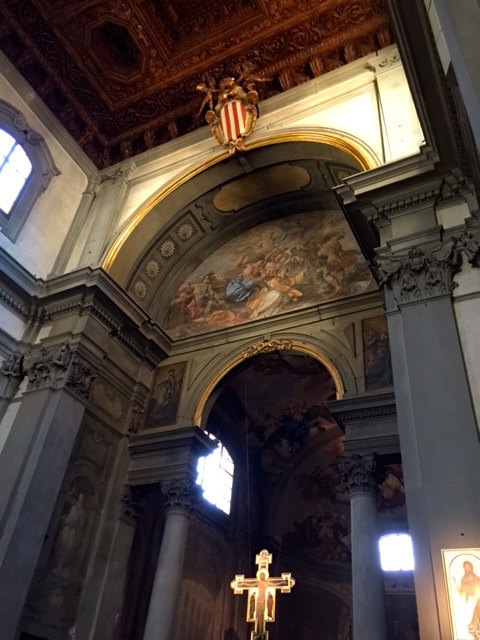
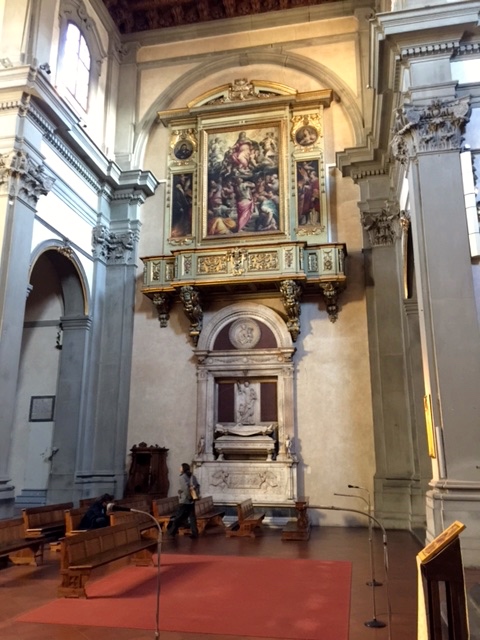
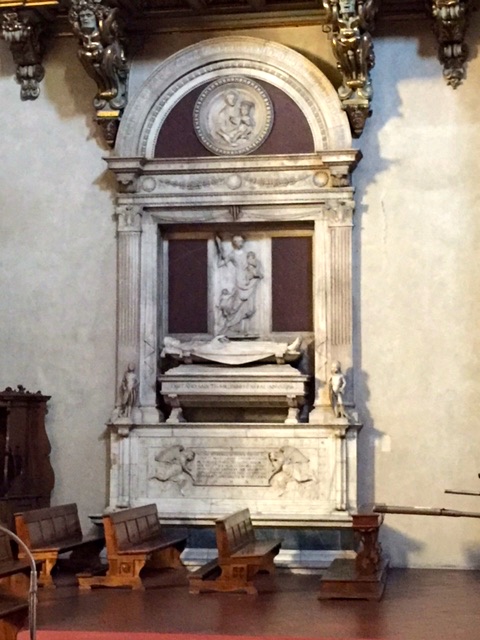
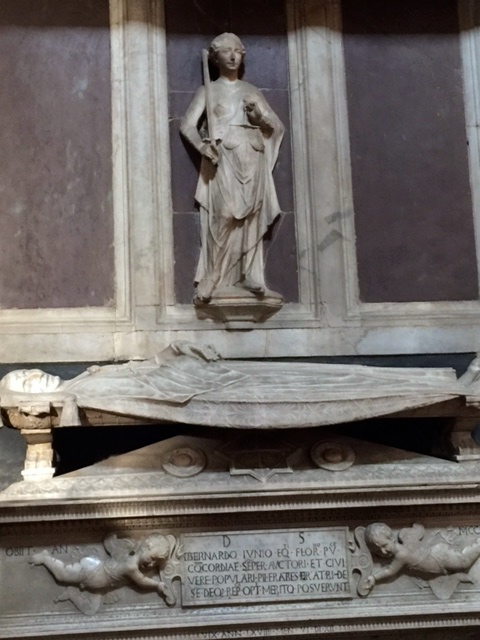
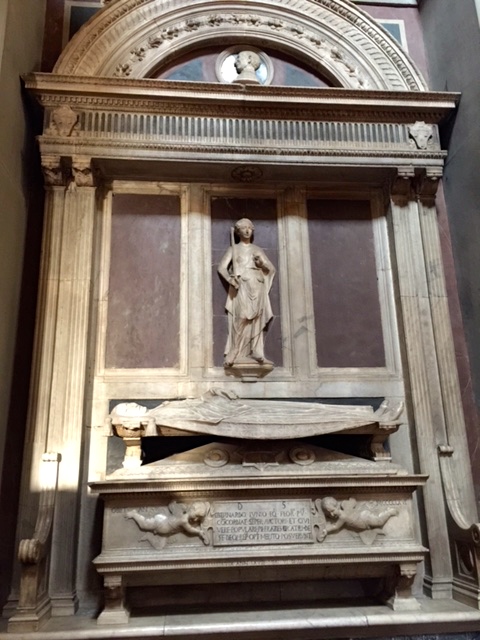
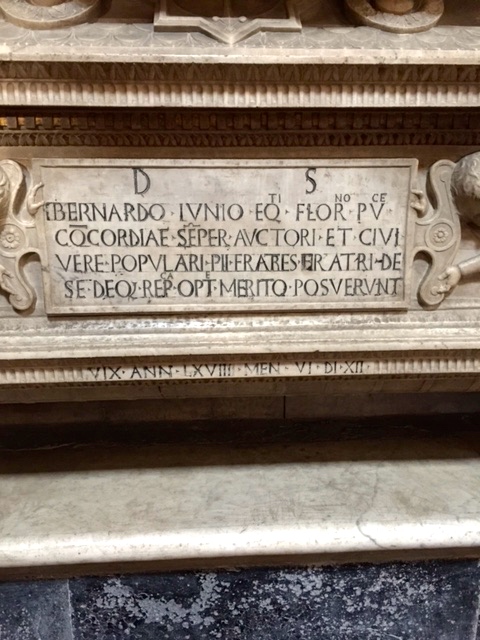
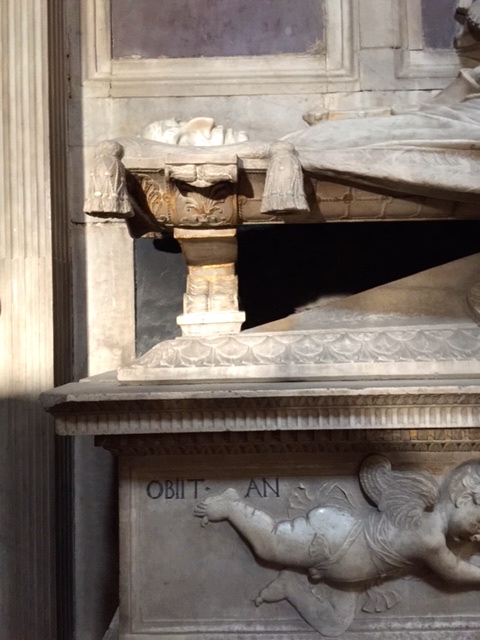
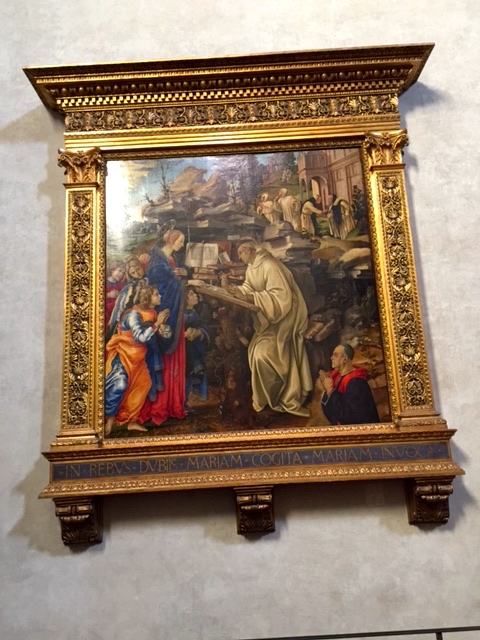
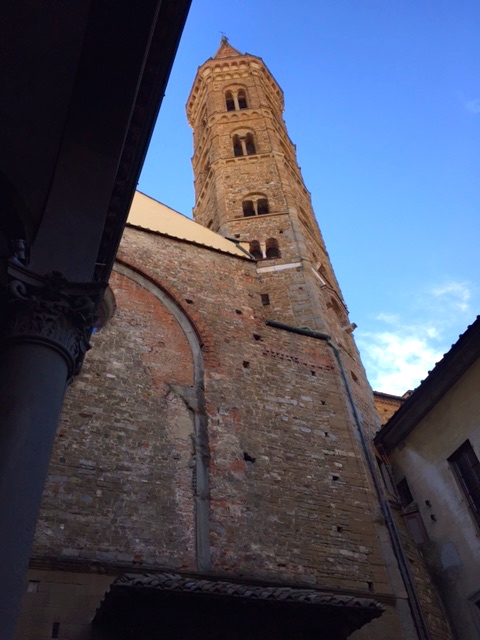
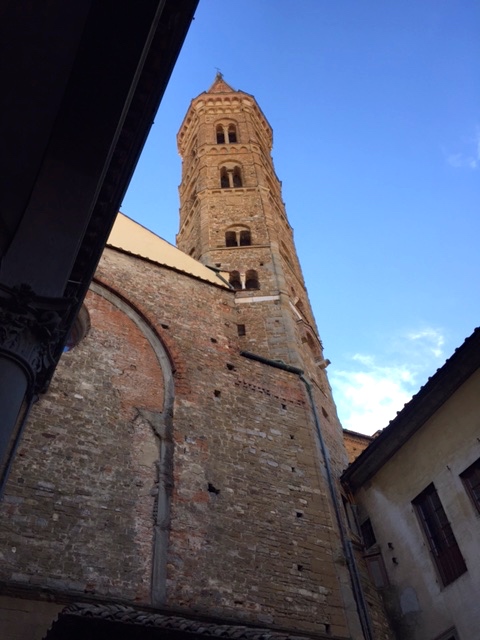
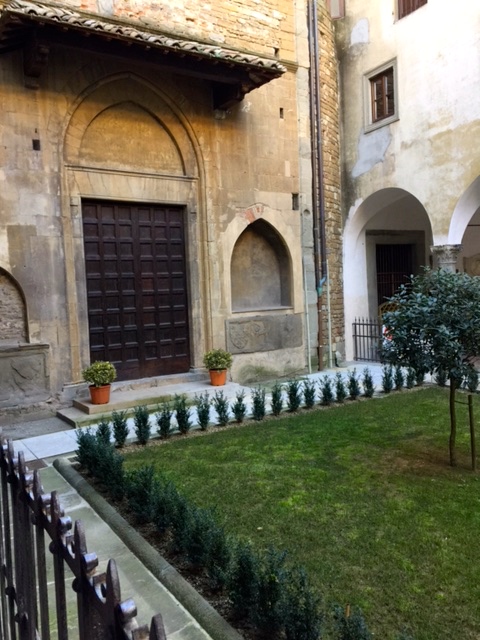
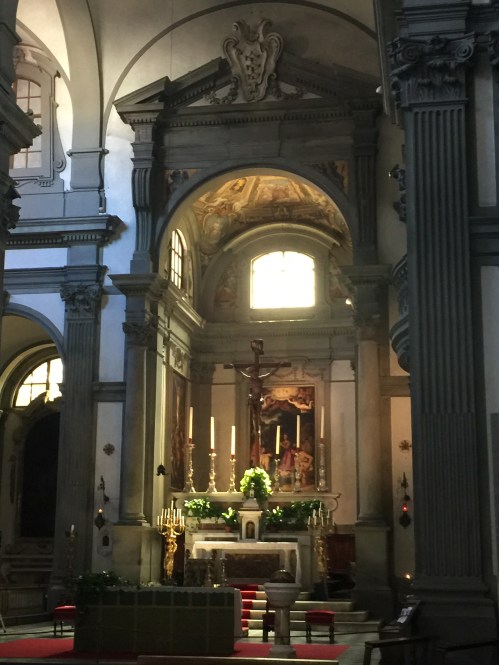
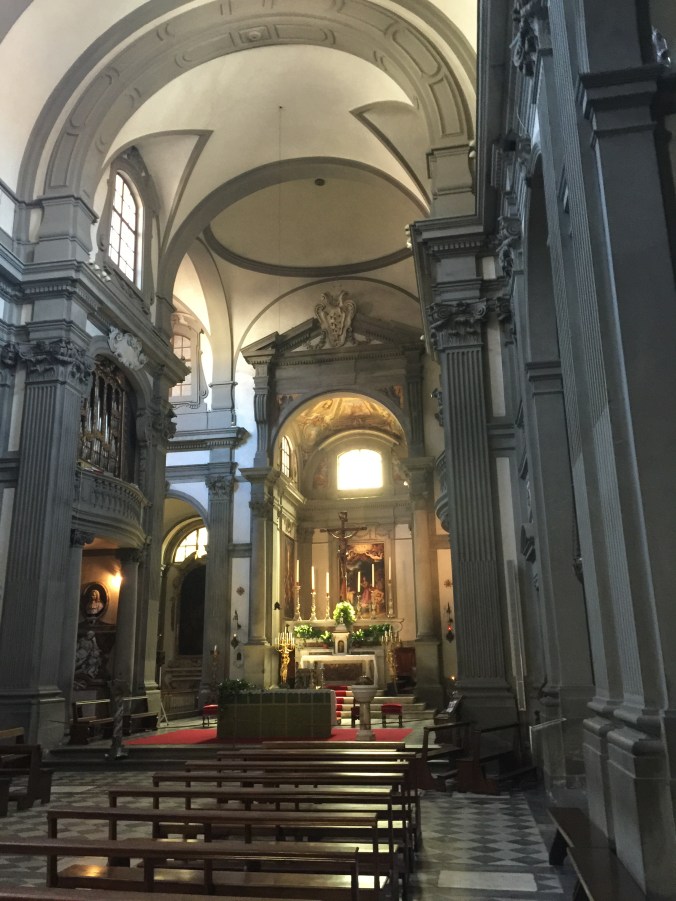
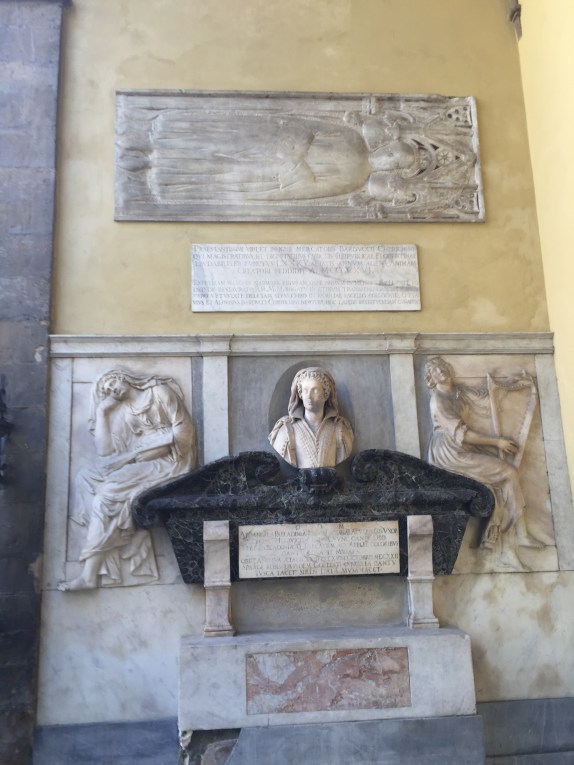
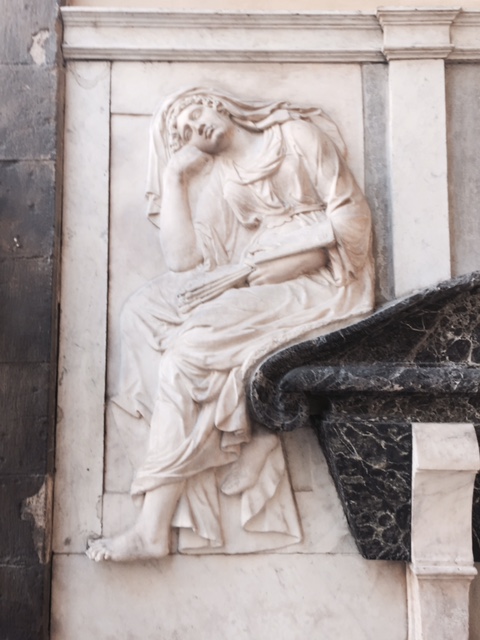
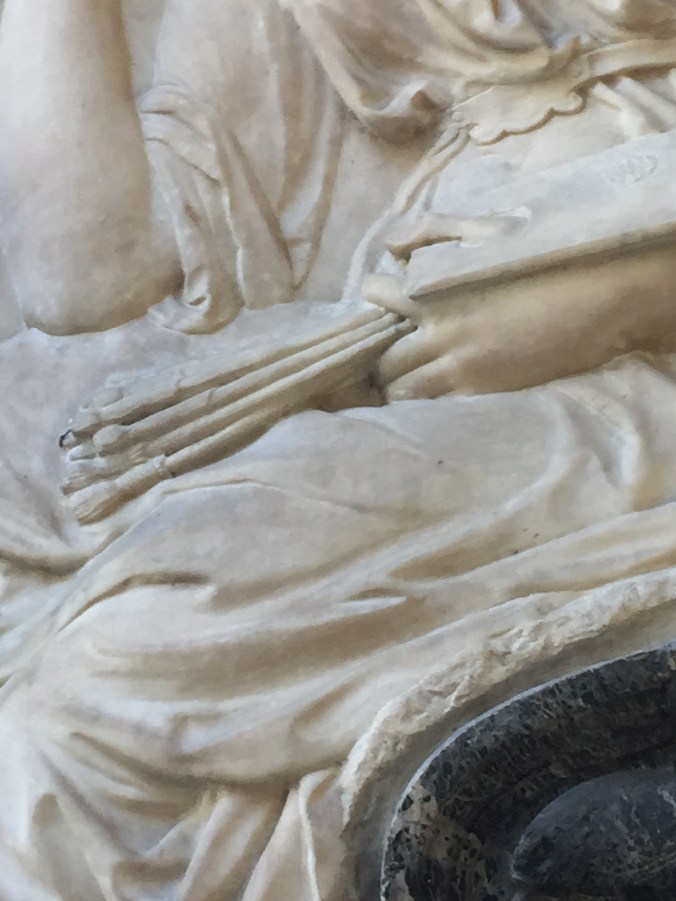
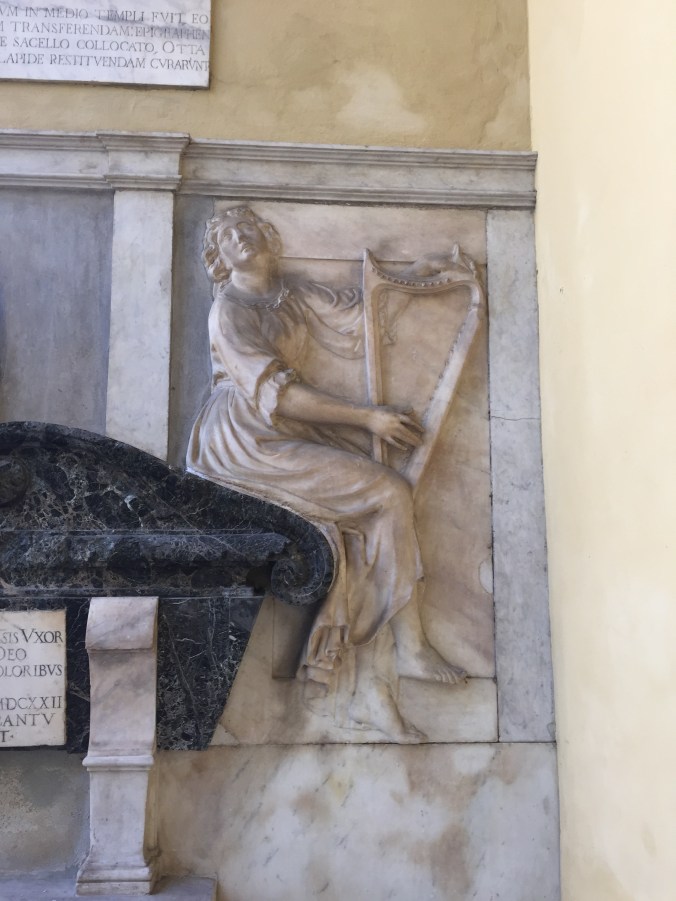
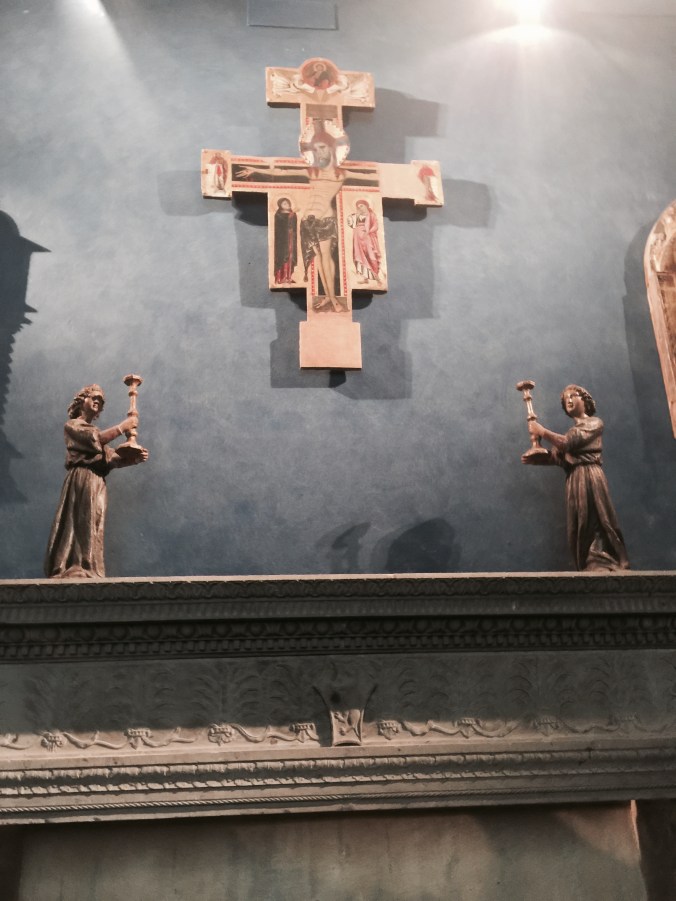
I’ve been busy, although I haven’t been posting much this past week.  But today I share with you the photos I took today of the Badia fiorentina, complete with its Nativity scene.  Two major tombs are part of the interior of this fine, ancient church in Florence, as well as a gorgeous coffered wood ceiling.  Also, a fine altarpiece by Fra Filippo Lippi is still in situ.

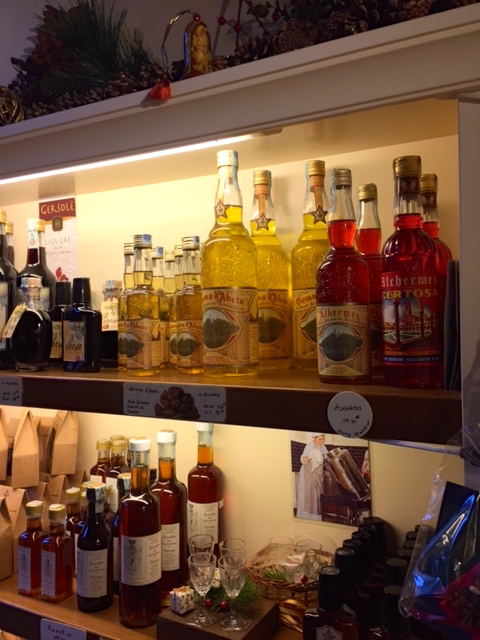
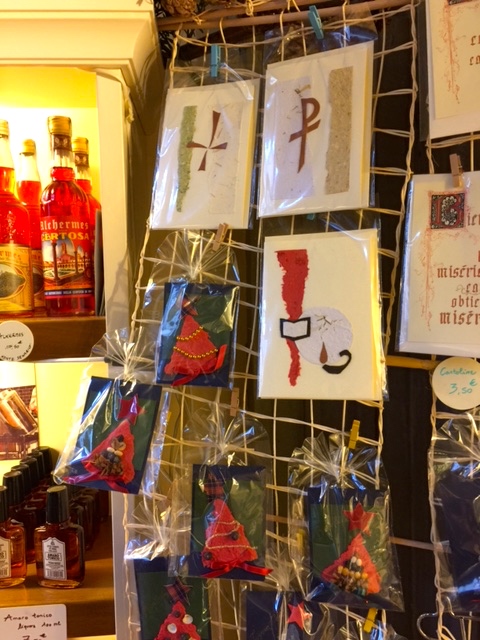
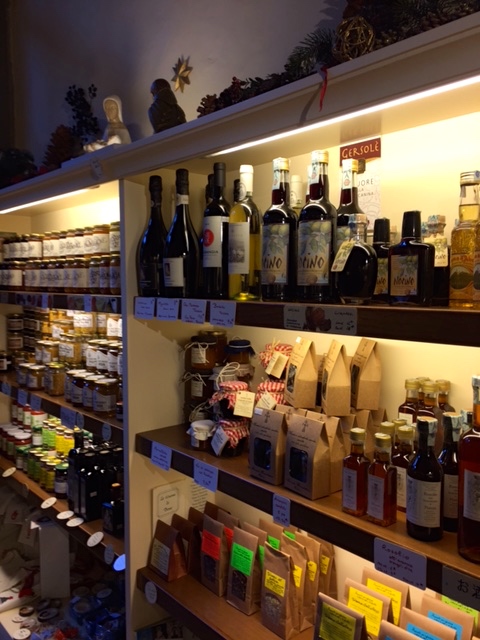
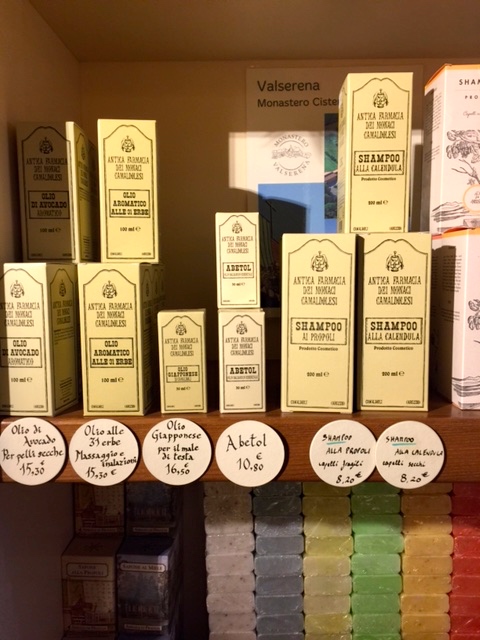
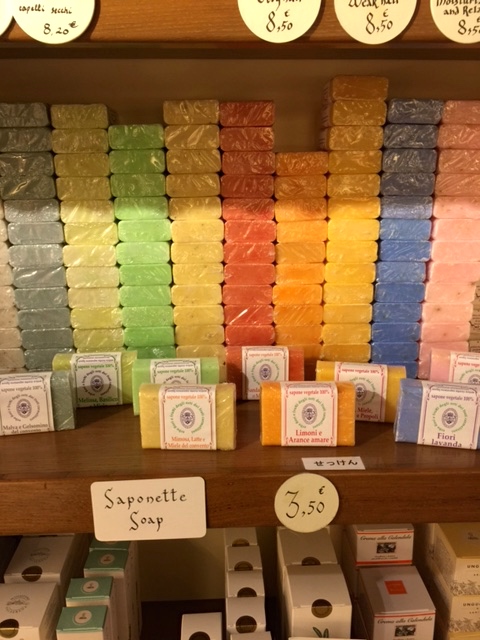
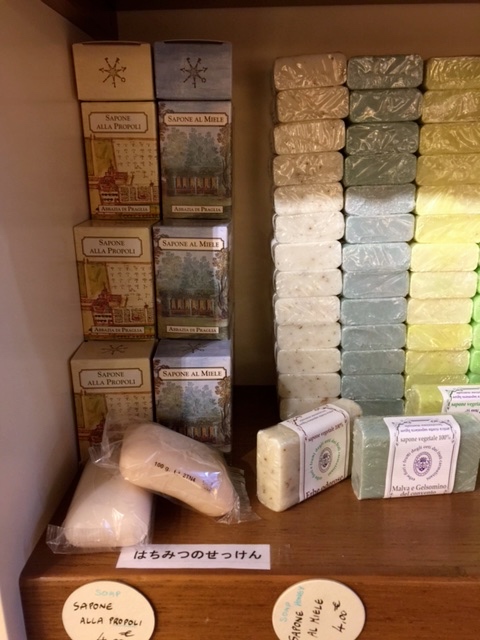
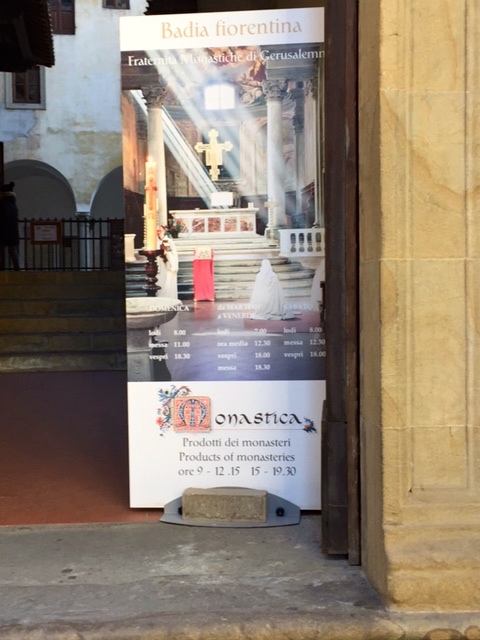
At the end of the pictures, I’ve included the offerings from the shop attached to the church.  Here one may buy jams and jellies, spirits and wines, soaps and lotions, all made by the monastic orders.

Please enjoy!

img_8764img_8766

img_8768img_8769img_8770img_8771img_8772img_8773img_8775img_8776img_8777

img_8778img_8779img_8780img_8781img_8782img_8783img_8784img_8785img_8786

img_8787img_8788img_8789img_8790img_8791img_8792img_8793img_8794

8 things I love about Santa Felicita in Florence

Among my favorite churches in Florence is Santa Felicita. I love this church for many, many reasons.  Let me count them.

images

1. Size: It is not too large and not too small.  It feels just right. You can walk in and not feel overwhelmed by the size and scale of architecture, altar, chapels and more.

IMG_5919


2. Location, location, location: Just steps from the world-famous Ponte Vecchio

Screen Shot 2016-04-25 at 12.44.36 PM


3. Little known and under appreciated.  Which means that it is never swarmed with tourists despite its premier location.  At all times of day and every season of the year the Ponte Vecchio seems to be covered with tourists from around the globe, and yet, Santa Felicita is rarely visited by the hordes.  It is an oasis within a sea of chaos.  Which is exactly what churches are meant to be, I think.

Santa Felicita is a jewel, awaiting a visit by cogniscenti. Tourists pass by, thinking the edifice is just a backdrop for their frenzied nearby shopping extravaganza.

images-3


4. Design: The cherry on top it is that the design is as fine as the church is petite.

IMG_5921IMG_5896IMG_5902

But oh, the loveliness that awaits those who enter.

IMG_5895

The serene gray hue of Tuscan pietra serena architectural details against the cool white plaster walls work together to create a calm, harmonized interior. The unadorned vaulted ceilings and the black and white marble floors and  provide just the right amount of understated elegance to finish the setting. The interior is flooded with ambient light from the high windows during daytime hours.

5. Another thing that sets this pretty church apart from all the others in town is that it probably the oldest in the city, right after San Lorenzo.  The first church on this site was probably built in the late 4th century and was dedicated to Saint Felicity of Rome. A new church was built in the 11th century and the current church largely dates from 1736–1739, under design by Ferdinando Ruggieri, who turned it into a one nave edifice.  Oh, the history!

IMG_5917IMG_5918IMG_5925


6. The Vasari Corridor passes through the façade of this church and on the inside there is large window, covered by a thick gate, where the Grand Dukes of the Medici family used to listen to the mass without being seen by the people staying at ground level.

images

images-4

The picture above is of the nave shot from the Vasari Corridor.


7. Masterpieces of Mannerist style paintings by Pontormo.  Pontormo is one of my favorite artists but I will admit that, like Campari, Pontormo is an acquired taste.  I love his work so much that I plan to devote a post to him soon.

IMG_5886


8.  The entry Vestibule is one of my favorite indoor/outdoor spaces in Florence.  It is simple and feels very Tuscan.  Here are some shots of what I love about the vestibule.

IMG_5916

The wrought iron separates the church from the hoi polloi in the the street and piazza outside.


Ever wonder what the walls would look like without a fresco adorning them?  Here’s the answer:

IMG_5899


IMG_5909

The muse of painting takes a nap while the muse of music plays a soothing tune.

FullSizeRenderIMG_5911IMG_5912

Santa Felicita, a Florentine jewel.

It’s time to get back to some art!

I am in need of an art fix, fast, to get my mind off bonnie Prince George.

So, let’s visit the Museo Bardini in Florence!  Perche no?

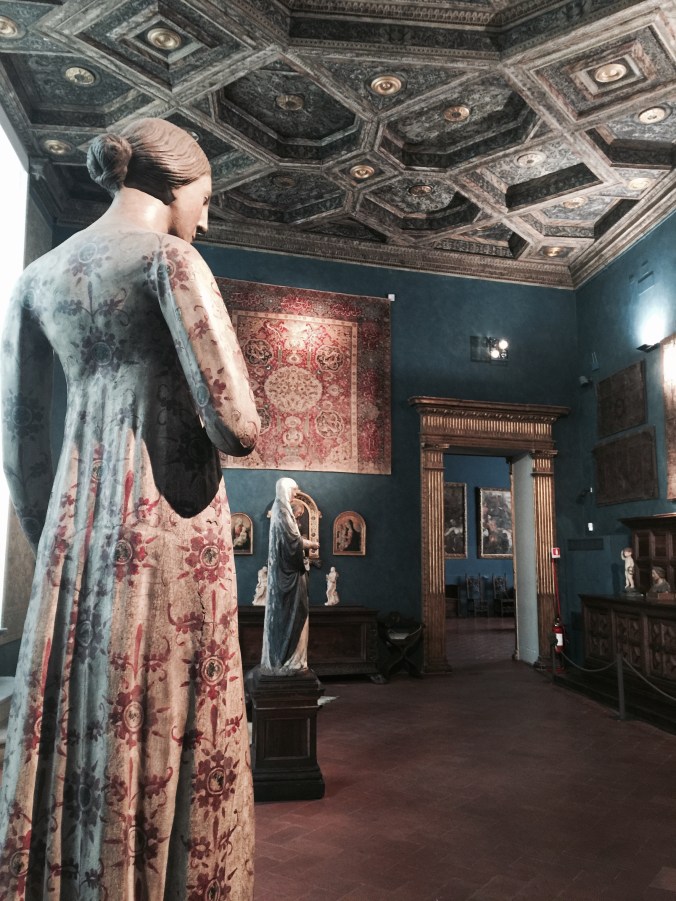
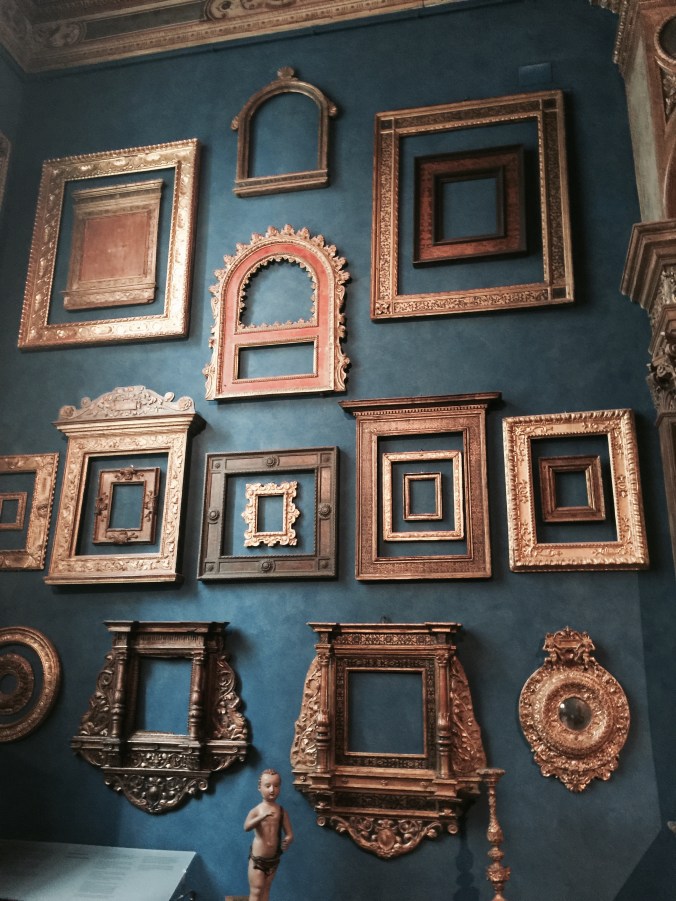
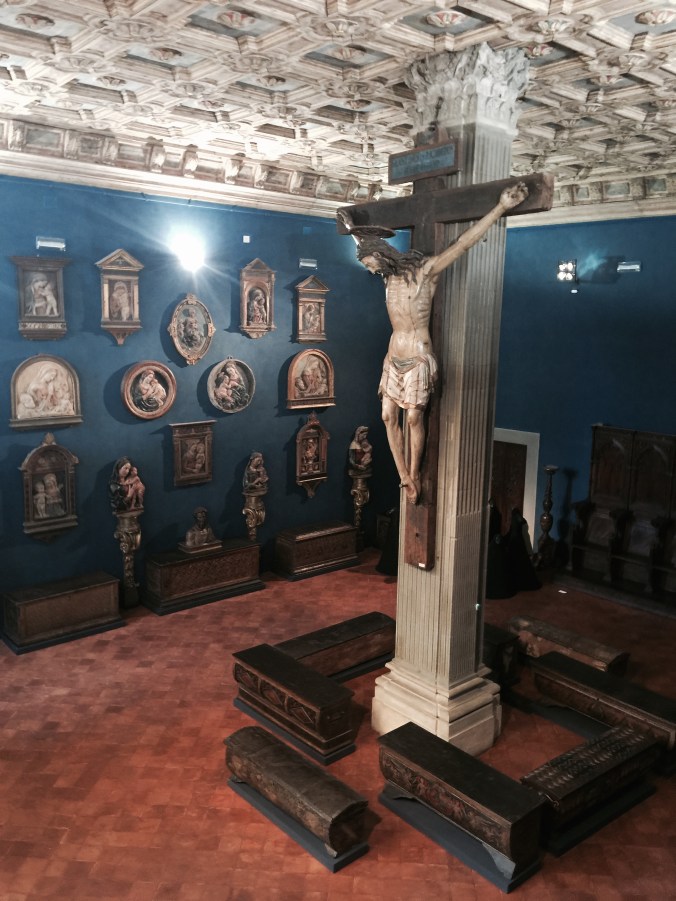
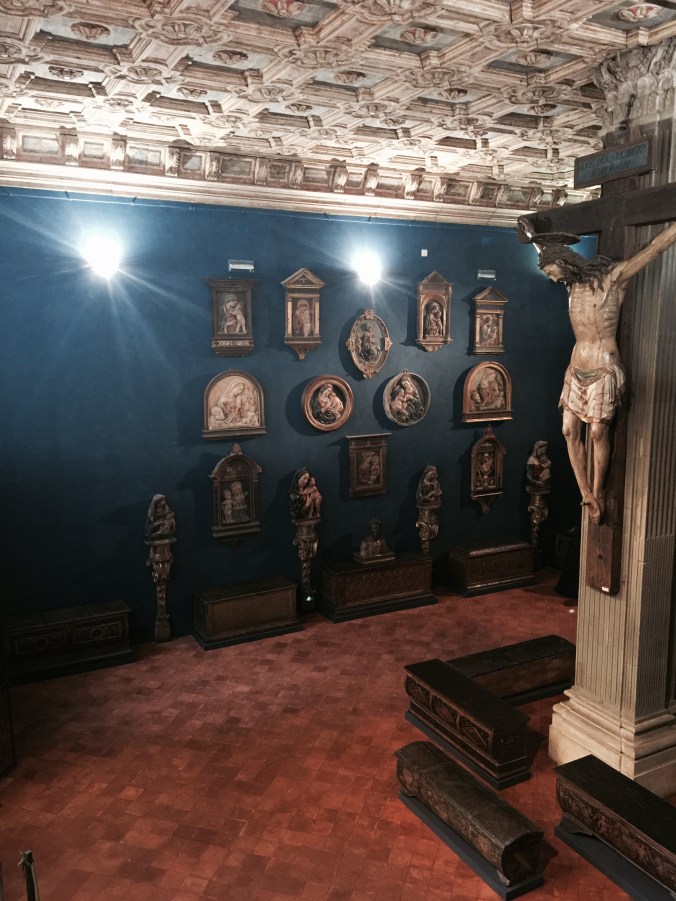
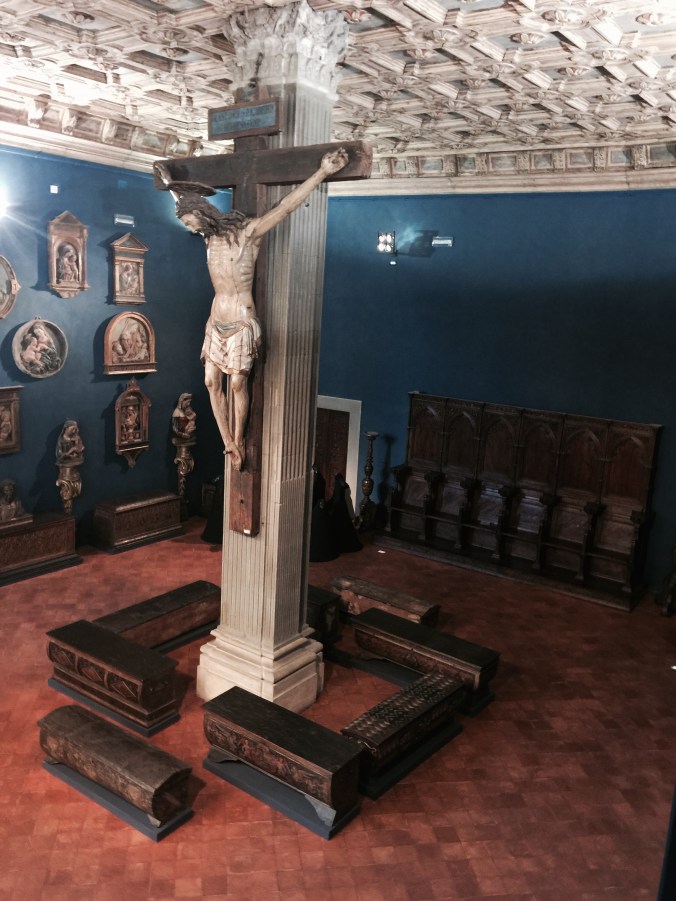
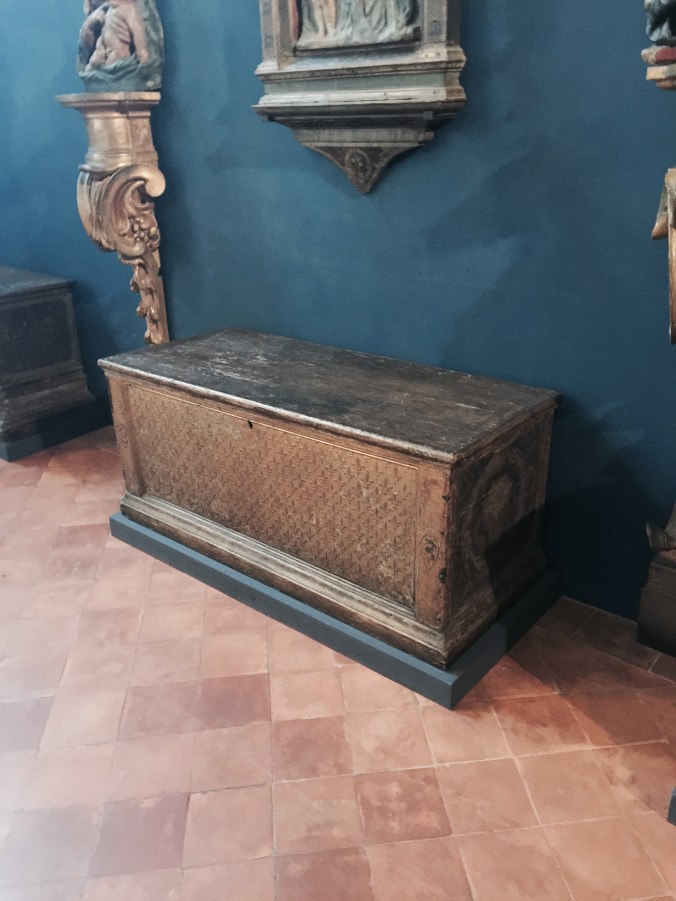
I love this gorgeous museum housed in a former palace right behind my Florentine apartment in the Oltrarno.  It is fantastic place filled with fantastic art.

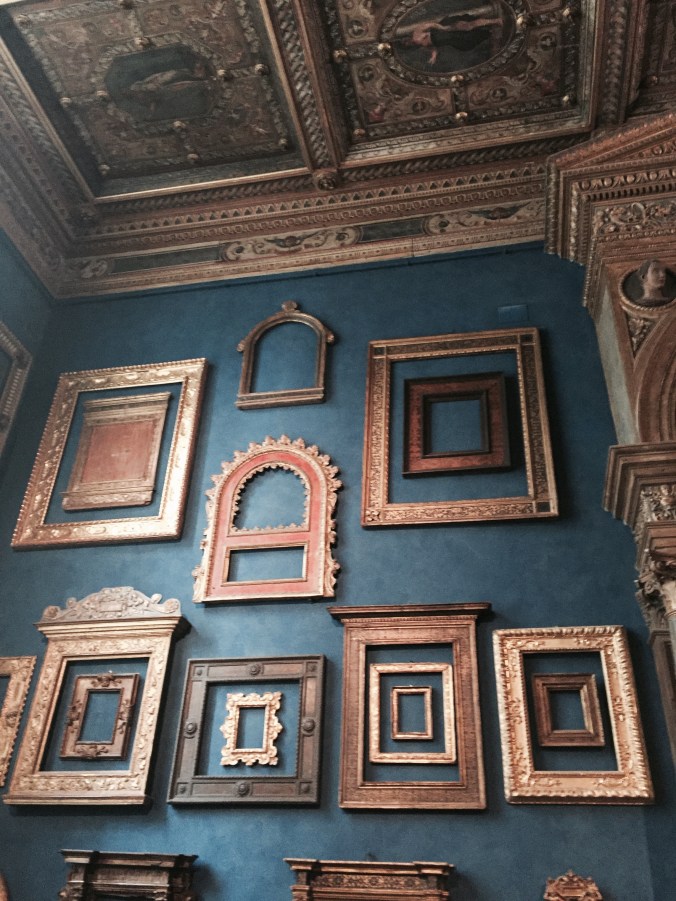
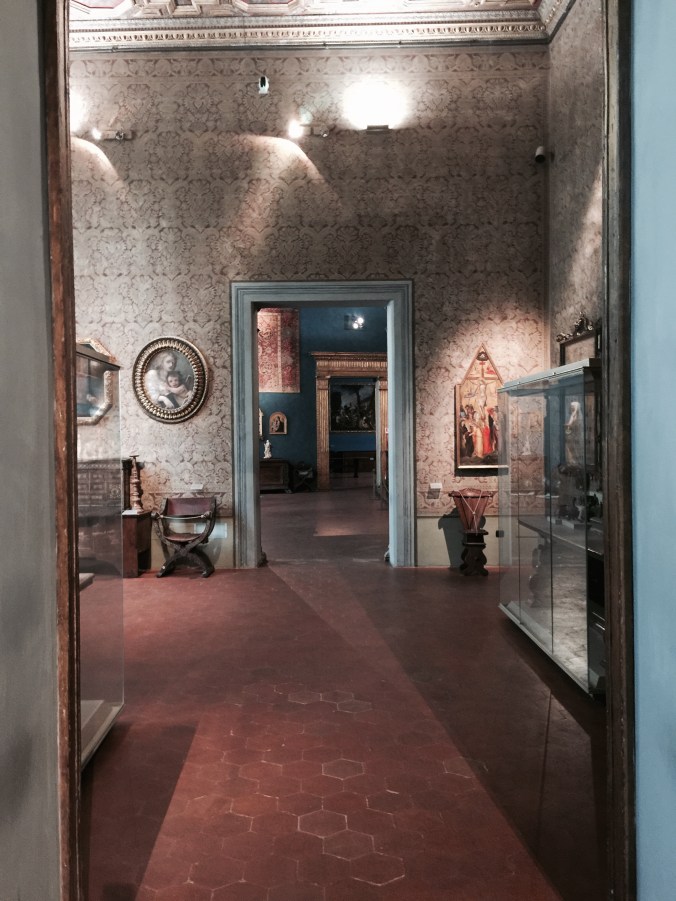
For starters, the walls in the galleries are a beautiful shade of midnight blue, done on Venetian plaster if I am not mistaken.  Gorgeous effect.

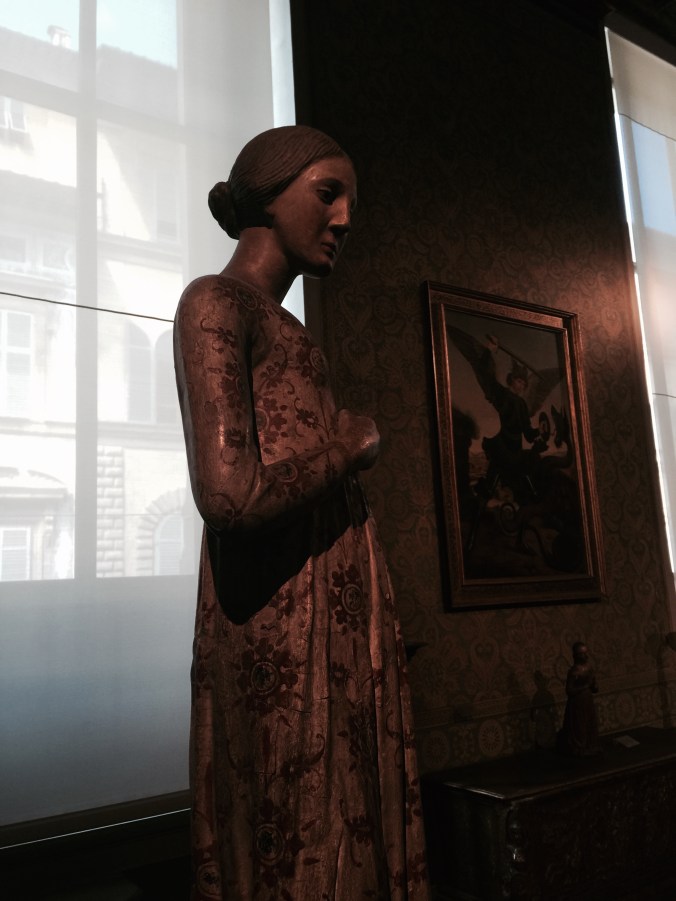
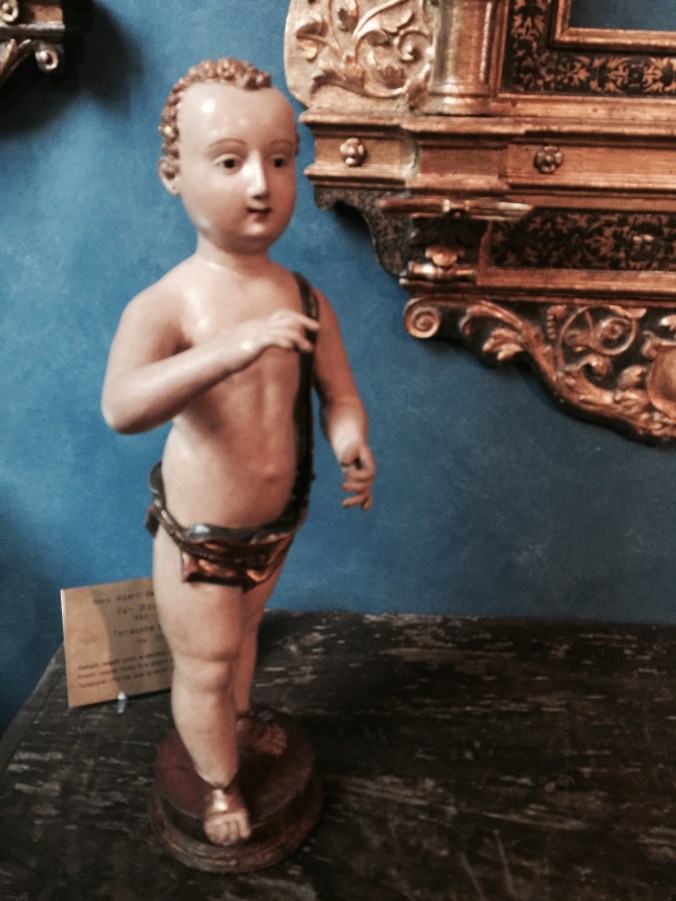
This Renaissance statue in painted wood takes my breath away.

IMG_5373IMG_5374IMG_5375

Isn’t she lovely?

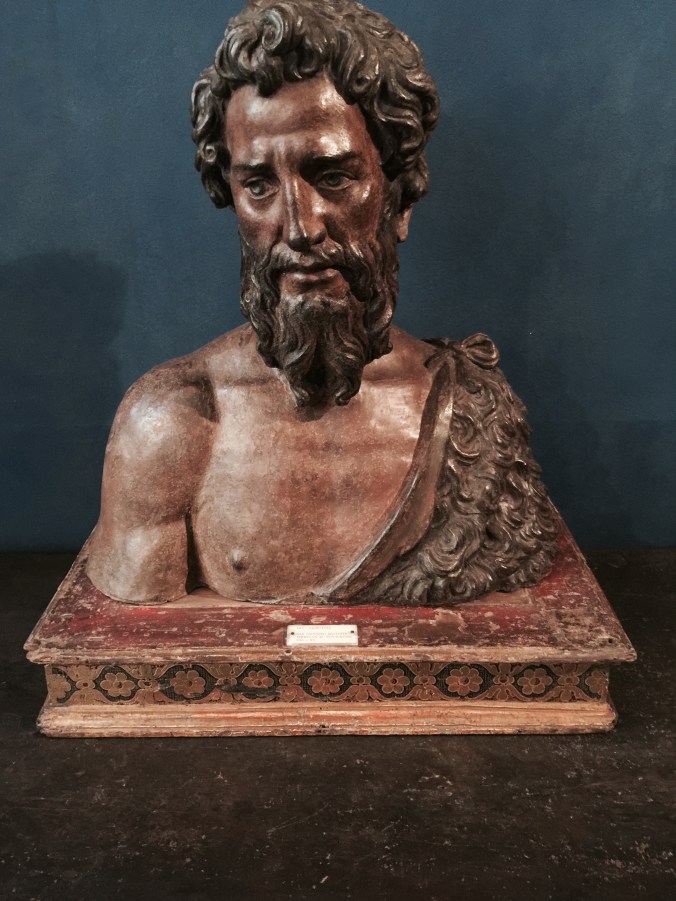
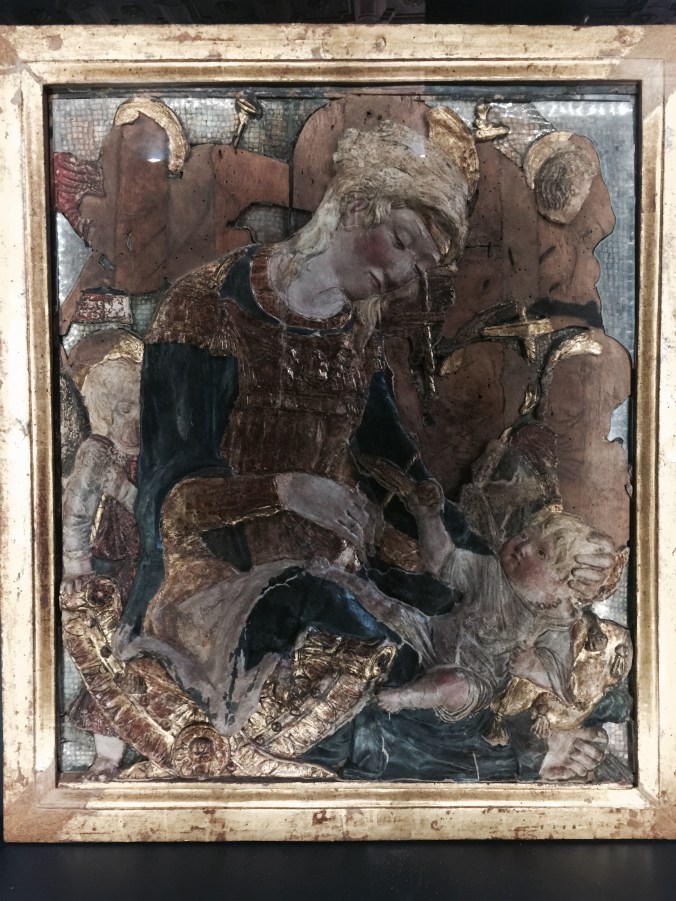
Now, let’s have a look at some other of the masterpieces in the collection.


IMG_5376


IMG_5377


A chair, to rest your weary Renaissance bones upon.

IMG_5378


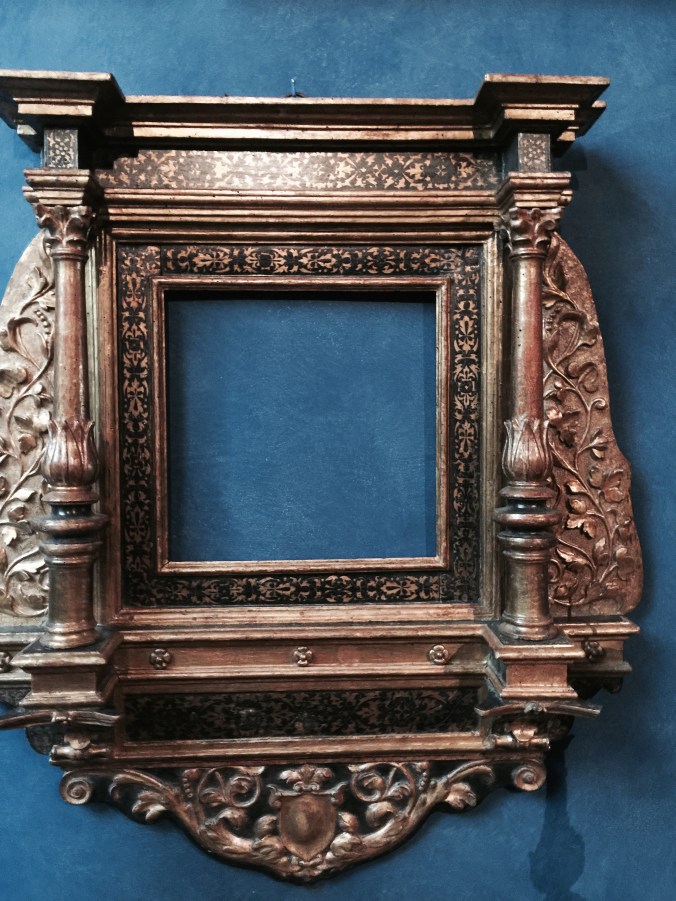
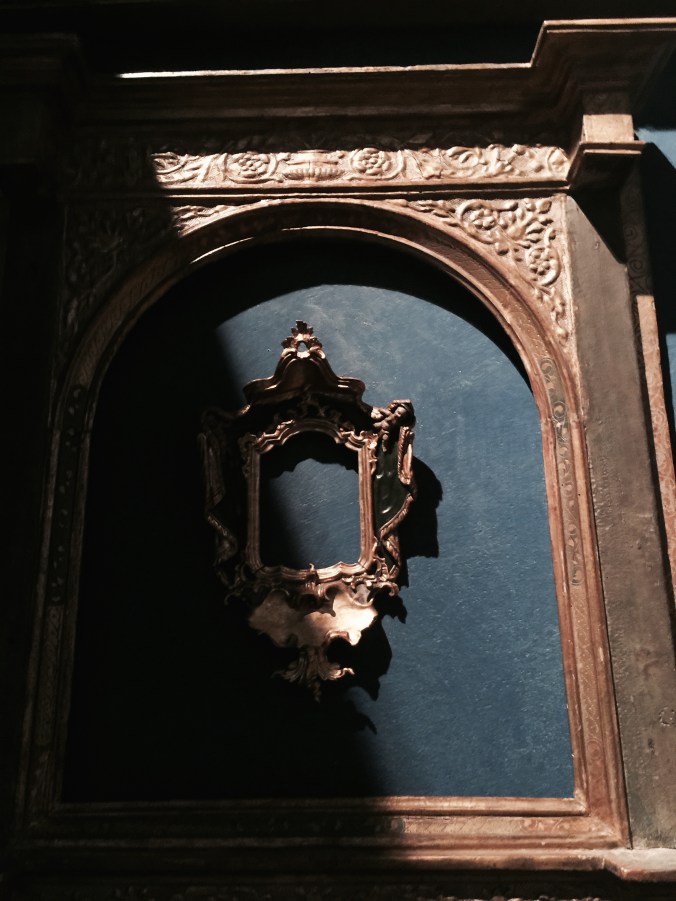
An artful display of fantastic Renaissance frames.  Who needs a painting when you’ve got frames like these?

IMG_5379

IMG_5412


IMG_5395


IMG_5403

IMG_5411IMG_5407


Some Renaissance slippers for the lady.

IMG_5404


And some for her gentleman?

IMG_5405

IMG_5408IMG_5410IMG_5413IMG_5414

IMG_5415IMG_5416IMG_5417IMG_5418IMG_5419IMG_5420IMG_5422IMG_5424

IMG_5425IMG_5426IMG_5427IMG_5428IMG_5429IMG_5430IMG_5431IMG_5432IMG_5433

IMG_5434IMG_5435IMG_5436IMG_5437IMG_5438IMG_5440


Let’s leave the way we came in.

IMG_5441

Ciao for now!

How Florence became Florence: the year 1300

A huge topic, no question.

IMG_5558

But I like to think about it.  Here’s a woodcut of Florence, followed by a description of what the evolving city would have been like around 1300.  It starts to fire the imagination of Florence taking shape as the jewel it would soon become :

1

“Under the government of the Guelphs, Florence grew and prospered. All its main streets…had been paved…[under the leadership] of a Milanese Podesta, Rubaconte da Mandello….the city’s population…seems to have increased to about 45,000, considerably more than London’s and some eight times that of Oxford, even though the university there was by that time well established.

site_162696-4042

The city’s banking houses were making immense profits through their dealings with foreign powers, in particular with the Kings of France and Sicily and with the Pope;

e319e91427ce4e1fd7f9e6c3961315c8

The trade of the city was increasing in volume year by year. Merchants dealt in spices and dyes, hides and silks, sendal [a type of silk] and taffeta, gold brocades and braid, and above all in wool.

wp129d1d88_05_06


Vast quantities of woolen cloth and bales of raw wool were imported from northern Europe, mainly from France, the Low Countries, the Algarve, Spain, and by the end of the 13th century, from England.

The wool was refined and dyed in the numerous workshops of Florence, the finished bolts of cloth being sold through so many agents beyond Tuscany’s borders, in French fairs and English markets, Flemish towns and Mediterranean ports.  Pope Boniface VIII was to say that the Florentines had become a kind of 5th element: wherever earth, air, fire, water were to be found there were sure to be Florentines as well.

In all weathers flat-bottomed barges piled high with cloth could be seen drifting down towards Pisa on the Arno, whose waters–polluted with dyestuffs, tannin and rubbish, when not dried up–drove the workshop’s mills and filled the tanks in which the wool was washed and dyed.

images-5Screen-Shot-2013-11-03-at-4.27.51-PM

The dyes used were faster, and of purer, brighter color, than any to be found elsewhere in Europe.  Some were of local origin: yellow dyes came from the crocus fields near San Gimignano; but the ingredients for others had to be transported from far away, insects for cochineal from the shores of the Mediterranean, lichen for the red dye known as oracle from Majorca, cinnabar for vermilion from the Holy Land. The bitter juice of aloes which made th eyes fast came from Alexandria and the Levant.

spindle

Throughout the year thousands of ill-paid men [and women] were hard at work in the city’s shops, in wash-houses and stretching-sheds, as well as in their own cramped houses, undertaking the numerous processes through which the imported wool had to pass, the fulling, spinning and carding, the combing, weaving, stretching and trimming, as well as the washing and dyeing and drying.

images-2

images-4

images-3

Nor was it only textiles that left Florence by river or on the backs of pack-horses which made their slow way to the coast or ambled north across the Apennines to Venice for shipment to the ports of the eastern Mediterranean; grain was exported, too, oil and livestock, timber and the fine wines of Tuscany.

1954729_f520

In this commerce the banks of Florence played an essential part, not only in supplying capital and in the investment of money for their clients, but in all manner of other activities, including the ensuring of ships and cargoes. As inventors of double-entry bookkeeping and the forerunner of the cheque, and as creators of the gold floor, and lire, sold and denier, later the lsd of British capitalism, the Florentines were already regarded as the world’s leading experts in international commerce; and their banks had the reputation of being safer and more solid business houses than any others.”

The arts were flourishing in this bustling capital as well.  By about 1300, “the last of the magnificent mosaics, some by Florentines, some by a master mosaicist from Venice, had been finished.  Andrea Pisano, a sculptor from Pontedera, who was succeed Giotto as capomaestro of the Campanile, was commissioned by the rich Arte di Calimala to provide wax models from which the bronze doors for the south side of the Baptistery might be cast.

Here are the works: the mosaic masterpiece in the dome of the baptistery,  the South Doors of the same structure by Pisano, and the Campanile by Giotto.

mosaic


South_Doors_of_the_Florence_Baptistry

Campanile


Christopher Hibbert, Florence, the Biography of a City, (New York and London, 1993) pp. 23-4 and 49. Illustrations are from all over the internet.


Happy January 6th! aka the Epiphany. Let’s join a Medici celebration already in progress.

Hey there!  You!

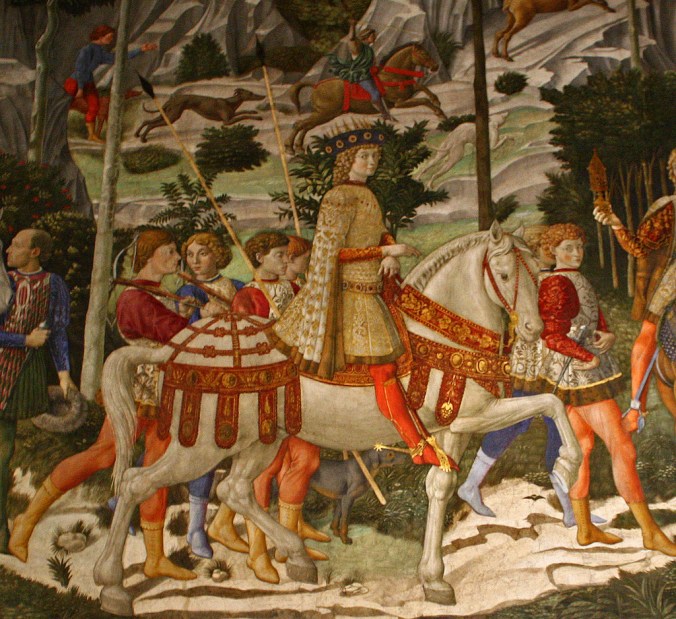
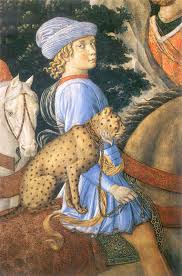
The handsome, confident guy in the blue cap!

Ciao bello!
images-7

Yes! You! I’m talking to you! The guy with the exotic leopard, riding on a horse. Which is not exactly something you see everyday of the week.

Remember me?  I’m your biggest fan.
images-7

Where are you going?  May I go with you?

Oh! how I love this fresco cycle of which the guy in blue is a part:  the Magi Chapel inside the Palazzo Medici in Florence!  I think these paintings are my very favorite of all time and that’s a big statement from one who loves art as much as I do.  I have very many favorites.
images-6

I mean, really, what’s not to love?!

4120085670_f57f902ba7_b

Sumptuous colors, incredible textures, fancy people and exotic animals, who cannot love these paintings?  The chapel is a dazzling tour de force, alive with color and movement.

But, before I get completely carried away with the sheer joy of these gorgeous images, let me discuss the celebrated moment depicted in the Magi Chapel.

The scenes take their subject matter from an event that happens every year on January 6. This is the date of the Christian festival celebrating the Epiphany, or the day when the wise men beheld the infant Jesus for the first time.

images-15

Also called Three Kings’ Day, this Christian feast day celebrates both the literal visit of the Christ child by the Magi but also the symbolic recognition of the physical manifestation of God the Son as human in Jesus Christ.  Put another way, Epiphany proclaims the revelation of Jesus to the Gentiles.  It’s a very big deal for Christianity, no doubt about it.  Like, the cornerstone.

The visit of the Magi, bringing their precious gifts of gold, frankincense and myrrh to the Holy Family near Bethlehem after the birth of Jesus was a favorite subject for painters of the Renaissance period in Italy.  One reason it was so popular, in my opinion, is that like the moment of the Annunciation in the Christian chronicle, the Adoration of the Magi captures one of the most hopeful moments of the story. There is so much pain and suffering in the Christian narrative, heaven knows it is nice to dwell on the occasions for gladness.

Depicting this scene gives any painter the perfect opportunity to use rich colors and scenery, and exotic luxury in general.  Since the 12th century, if not before, Florence has been known for its love for and production of luxury goods whether in wool, silk and dyes; hides and leather working; gold; spices; or painted images.  It seems a natural for Gozzoli to depict this happy, rich moment of the Christian story for the private chapel of the pre-eminent Florentine family.   And, as it turns out, the Medici family had a particular affinity for the Epiphany feast, as discussed below.

The lively frescoes are complimented in the chapel by the precious marble mosaic work flooring, which is divided by elaborate geometric design in extraordinary materials (porphyries, granites, etc.).  The chapel is further enhanced with an astonishing ceiling of inlaid wood, painted and generously gilded, attributed to Pagno di Lapo Portigiano. Finally, the elaborate wooden stalls that furnish the chapel were designed by Giuliano da Sangallo. It is clear that no expense was spared in creating this suite of designs.

3_97

Magi_01

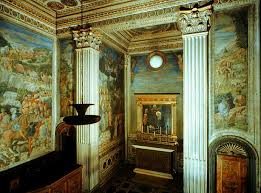
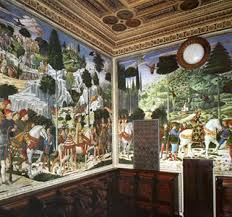
To begin our tour of this jewel box chapel fresco cycle, let’s have a look at a couple overall photos. The chapel is not huge but it is pretty hard to photograph as a unity. Nevertheless, let’s take a stab at it.
images-10

images-5

While not perfect, at least the 2 photos above give you a sense of the magnificent room.  It is one of the glories of the Renaissance period and one of the surviving in situ masterpieces of Florence.
Benozzo_Gozzoli,_cappella_dei_magi,_parete_est_(dettaglio)

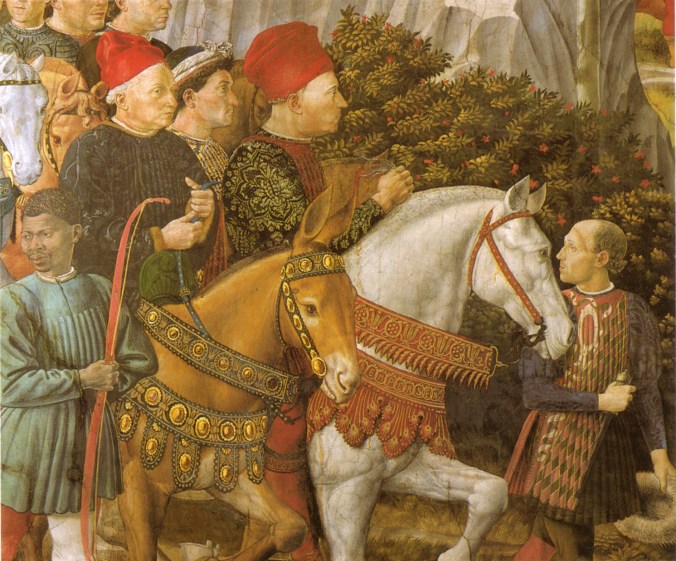
The Magi Chapel was begun around 1449-50 and probably finished in 1459 as the private family chapel inside the Palazzo Medici-Riccardi in Florence, designed by famed Renaissance architect Michelozzo di Bartolomeo.  The exterior of the palazzo looks like this.

palazzo-medici-riccardi-exterior

Although there were public churches near the palace, and ones for which the Medici family were patrons, it was customary for wealthy families to have private chapels inside their homes.  In fact it is not unusual for any religious household to have a space to celebrate their gods inside their home, no matter how humble.

Three of the chapel’s walls are almost completely covered by this famous fresco cycle by Renaissance master Benozzo Gozzoli (1421-97). Gozzoli painted the cycle between 1459 and 1463. The Journey of the Magi to Bethlehem is depicted in three large large sections, each one showing the procession of one of the three Magi.
images-10

Let’s begin with the apse wall: An apse contains the centerpiece of any chapel, as it does here as well. The framed altarpiece in the apse is by Fra Filippo Lippi: The Adoration of the Christ Child. Painted specifically for this location, the original is now in Berlin, while a copy by a follower of Lippi hangs in the Magi Chapel. The copy is attributed to Pseudo Pier Francesco Fiorentino, a follower of Lippi, and the painting  was restored in 1992.

The image below is the original Lippi painting.

543px-Fra_Filippo_Lippi_002

Here’s how the apse looks from front on.  It is designed to be the place where one kneels to pray and worship.

images-7

450px-Palazzo_medici_riccardi,_cappella_dei_magi,_scarsella

The sides walls of the apse as above are painted with saints and angels in adoration.  It is possible to see the influence of his master, Fra Angelico, in Gozzoli’s painting style.  These personages are arranged so as to be looking at the Lippi altarpiece, the same as we the viewers do.

This host of angels are gorgeously painted in rich colors with a luxurious application of plenty of gold.

Benozzo-Gozzoli-Procession-of-the-Magi-detail-

BEN70612

B.Gozzoli, Engel / Pal.Medici-Ricc. 1459 - B.Gozzoli, Angel / Pal.Medici-Ricc. 1459 -

Benozzo_Gozzoli_001

The Medici family were, of course, the de facto rulers of the ostensibly republican Florence, and among the greatest art patrons of any era. Books have been written on their influence on the Renaissance, particularly as patrons of all of the arts.

The family had a particular interest in paintings that depicted the Adoration of the Magi, the moment when the Three Kings, led by a miraculous star, discovered the Christ child. As we have said, this event signified the recognition of the holy infant by the secular world and was celebrated in the feast of the Epiphany (from the Greek, meaning “to manifest”).

We know that the city of Florence had mounted an Epiphany festival on January 6 at least since 1390, the date of the earliest surviving record of it. The elaborate pageant, in which men reenacted the journey of the Magi through the streets of the city, must have looked much like the colorful throng that winds through Gozzoli’s fresco cycle.

By 1417, the festival was directed by a lay confraternity, the Compagnia de’ Magi, with funds donated by the Medici. Male members of the Medici family participated in the procession, which passed in front of their famous palace on Via Largo and began and ended at the church of San Marco, headquarters of the confraternity and an important recipient of Medici munificence. Cosimo de Medici even had an image of the Adoration of the Magi in his private room within the monastery of San Marco.

Incidentally, the Procession of the Magi is enacted in Florence today as well.  You can read about it here: http://www.theflorentine.net/articles/article-view.asp?issuetocId=9709

So important was the Epiphany to the Medici family, Lorenzo de Medici even changed his birthdate!  He was born on January 1, which already seems pretty auspicious, but he decided to change his birthday to January 6 to coincide with the Epiphany feast date. Here’s a portrait of Lorenzo as an adult.  I guess when you are a Medici, an earthly prince,  you can change your birthdate as desired.  Lorenzo did.

It is worth remembering that January 1 didn’t have the significance in the period that it does today.  The Florentine calendar treated March 25 as the first day of a new year.  March 25 was the feast day of the Annunciation.  So, I guess being born on Jan. 1 wasn’t that big of a whoop to begin with.  Why not switch to Jan. 6 if you were Lorenzo?  Then maybe everybody would remember your birthday?  Am I projecting too much?

220px-Lorenzo_de_Medici2

There’s no doubt about it: the Medici’s identified with the story of the Adoration of the Magi on the feast of the Epiphany.

Let’s begin our tour of the Gozzoli procession.

Caspar, the youngest Magus, leads the entourage on his beautiful white horse. Caspar is surrounded by a group of young Florentine attendants.
images-5 We see Caspar on the left wall here.

4120085670_f57f902ba7_b

Benozzo_Gozzoli,_lorenzo_il_magnifico,_cappella_dei_Magi

Although this figure has sometimes been identified as a portrait of Lorenzo il Magnifico, who was born in 1449 and so was still a boy when the fresco was completed, most scholars believe Lorenzo is more likely included as another figure, as discussed below.

Behind Caspar, to his left, are the contemporary head of the family, Piero the Gouty, wearing a red cap and seated on a white horse and devout family founder Cosimo in a dark blue shirt riding on a humble brown mule.

Cappella-dei-Magi

Here’s a composite photograph of the entire fresco cycle. It is difficult to study the images without being in the chapel itself. We have begun our look at the paintings on the far left and are moving from left to right.

big-image-of-the-procession

Behind the portraits of Piero and Cosimo, directly to the left of the standing black attendant, are portraits of Sigismondo Pandolfo Malatesta and Galeazzo Maria Sforza, respectively lords of Rimini and Milan, who were often guests of the Medici in Florence.  These men are atop the brown and white horses that face the viewer directly.
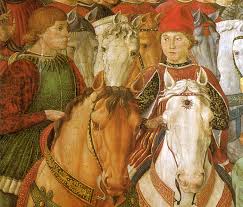
images-9

Behind in the middle ground is a crowded procession of illustrious Florentines, including such as the humanists Marsilio Ficino and the Pulci brothers, the members of the Art Guilds and even the artist, Benozzo, himself. The painter looks out at the viewer and can be recognized for the scroll on his red hat, which reads “Opus Benotii.” It is one of the great artist’s signatures on a work of art in the history of the world.

Gozzoli, Zug der Koenige, Gefolge - Gozzoli, Procession of Magi, Entourage - Gozzoli, Benozzo , 1420-1497.

Picture A above.

benozzo

The self-portrait of the artist himself is marked #14 on the key below Picture B.

Little Lorenzo il Magnifico is the boy marked #7 ; Lorenzo’s elder brother Giuliano is next to him at #8.

The following picture is Picture B, notated with numbers to identify the various illustrious contemporary personages included in Benozzo’s painting.  To see the actual faces, consult Picture A above.

identificazione_1-2
Picture B above.

Key to Picture B:

1 – Cosimo il Vecchio de’ Medici
2 – Piero il Gottoso de’ Medici
3 – Carlo di Cosimo de’ Medici
4 – Galeazzo Maria Sforza
5 – Sigismondo Pandolfo Malatesta
6 – Cosimino di Giovanni di Cosimo de’ Medici (?)
7 – Lorenzo di Piero de’ Medici detto il Magnifico
8 – Giuliano di Piero de’ Medici
9 – Gentile Becchi, precettore di Lorenzo e Giuliano
10 – Giuliano di Piero de’ Medici

11 – allora fattore nella filiale del banco Medici a Roma
12 – Giovanni di Cosimo de’ Medici(?)
13 – Benozzo Gozzoli
14 – Pope Pio II Piccolomini


identificazione_4-3

Picture C above

Key to Picture C:
15 – Benozzo Gozzoli (?),2nd self-portrait

16 – Neri di Gino Capponi (?) (1388-1457):

17 – Bernardo Giugni (?) (+1466)

18 – Francesco Sassetti (?) (1420-1490)

19 – Agnolo Tani (?)

20 – Dietisalvi Neroni (?) (1401-1482)
21 – Roberto di Niccolò Martelli (?) (1408-post 1469)

22 – Benozzo Gozzoli (?), 3rd self portrait

23 – Luca Pitti (?) (1398-1472)

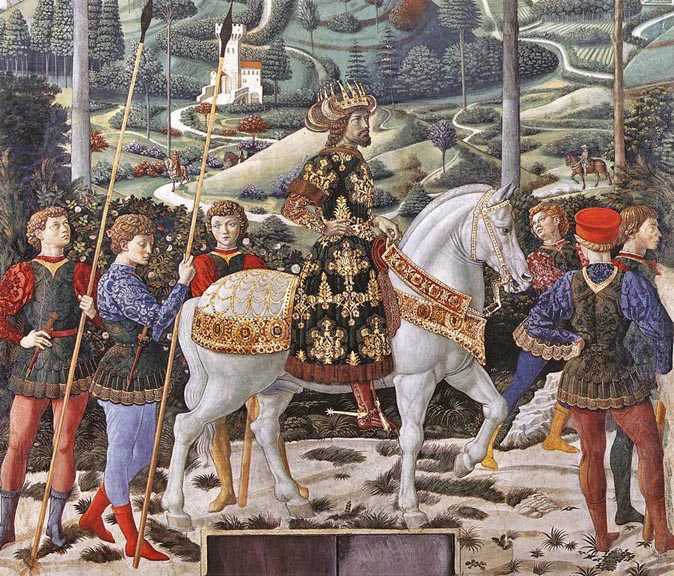
Bearded Balthasar, the middle Magus, rides a white horse on the south wall. He is portrayed with the same facial features as Byzantine emperor John VIII Palaiologos.
GozzoliRicardiProcessionMiddleKing1460

4bec163021411e511fb05f2901dcf12c

Melchior, the oldest Magus, is depicted riding on the west wall.

153w9si-4

Traditionally, his features have been read as those of Joseph, Patriarch of Constantinople, who died in Florence; but they could also be those of Sigismund, Holy Roman Emperor, who helped end the Great Schism by convoking the Council of Constance in 1414. Like Cosimo, he is shown as a peacemaker riding on a humble (this time white) mule.

He is preceded by a page in blue with a leopard on his horse – although he leads the entire procession, no real world identity for this handsome, confident figure has ever been established. Ciao bello!  You’re the one that I love!
images-7


giul

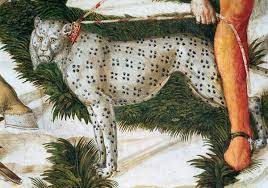
Rather than depict the topography in and around the actual Bethlehem, Gozzoli instead portrayed rich Tuscan landscapes.  As the Three Kings approach Bethelem, they are accompanied by their respective entourages as if they are participating in a noble hunting party with falcons and including exotic felines just for a measure of excess.

GozzoliRicardiProcessionMiddleKing1460

What a divine way to celebrate the Epiphany!  I think I might change my birthday to January 6 myself. I want to be like Lorenzo.

Nah, I can’t do that, even if Lorenzo and I do share the same root word as the stem of our first (Christian) names.*

I can never be a Medici, as much as I might wish it.  Maybe in my next life.


**LAURA f  Feminine form of the Late Latin name Laurus, which meant “laurel”. This meaning was favourable, since in ancient Rome the leaves of laurel trees were used to create victors’ garlands. It was also the name of the subject of poems by the 14th-century Italian poet Petrarch. As an English name, Laura has been used since the 13th century.  LAURETTA f
Italian diminutive of LAURA http://www.behindthename.com/names/usage/italian/2
LORENZO m Italian, Spanish
Italian and Spanish form of Laurentius (see LAURENCE (1)). Lorenzo de’ Medici, known as the Magnificent, was a ruler of Florence during the Renaissance. He was also a great patron of the arts who employed Leonardo da Vinci, Michelangelo, Botticelli and other famous artists. http://www.behindthename.com/names/usage/italian/2
Vedute fiorentine (Florentine views)

With some time on my hands yesterday after le mie lezione italiane (omg I am even driving myself crazy with this shit!! just ignore me; it’s more fun to practice my Italian in writing my posts than in doing l’ escercizi nello mio libro), I skedaddled on over to Piazza della Republica where we the public were serenaded by a lovely opera singer and her guitar player.  I tried to film it on my iphone, but it was dead.  After enjoying her singing for a while, I went into this department store:

rina2

And found my way to the top floor where they have a terrace with incredible panoramic views of la citta.

OLYMPUS DIGITAL CAMERA OLYMPUS DIGITAL CAMERA

See what I mean?!

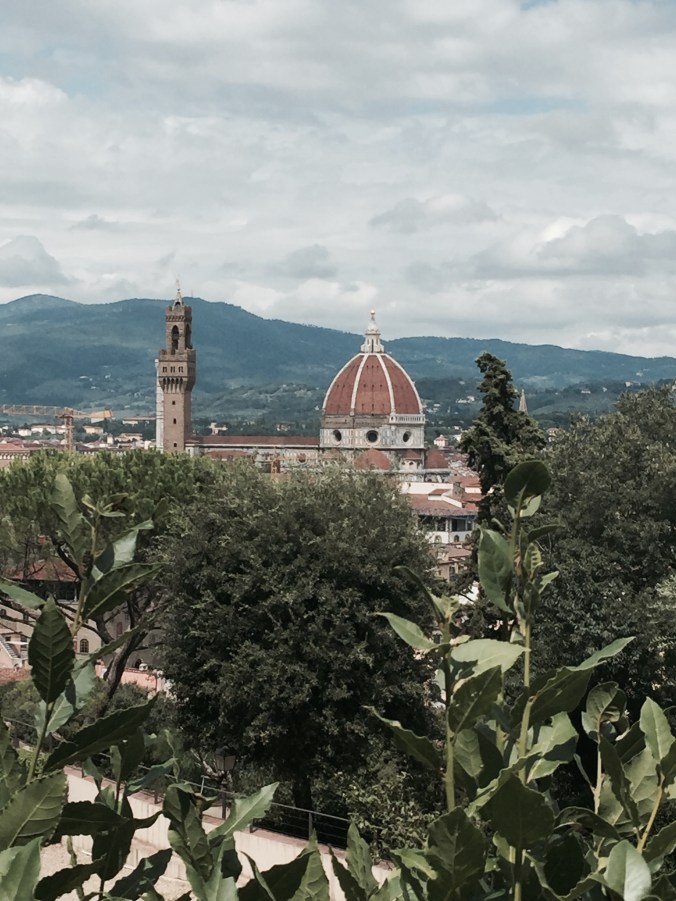
That Duomo hovers over the city of Florence, reminding me of a very large and very Renaissancey looking space ship.  A visitor from the past.

But, at any rate, I just wish Florence were more picturesque.  It is such a shame that she is not.  Ha ha.

OLYMPUS DIGITAL CAMERA

Here are some more shots from the terrace.  It is quite a place to view the city.

OLYMPUS DIGITAL CAMERA

OLYMPUS DIGITAL CAMERA OLYMPUS DIGITAL CAMERA

The sky seemed to be feeling all operatic, just like the singer in the Piazza.

The Rinascente is notable for a couple of other reasons as well.  It’s a decent department store, though quite small.  But, it has the most amazing Christmas lights.

rinascente

While strolling through the city on my way back to my hood, the Santa Croce neighborhood, I passed this ambitious and talented street artist at work.

OLYMPUS DIGITAL CAMERA

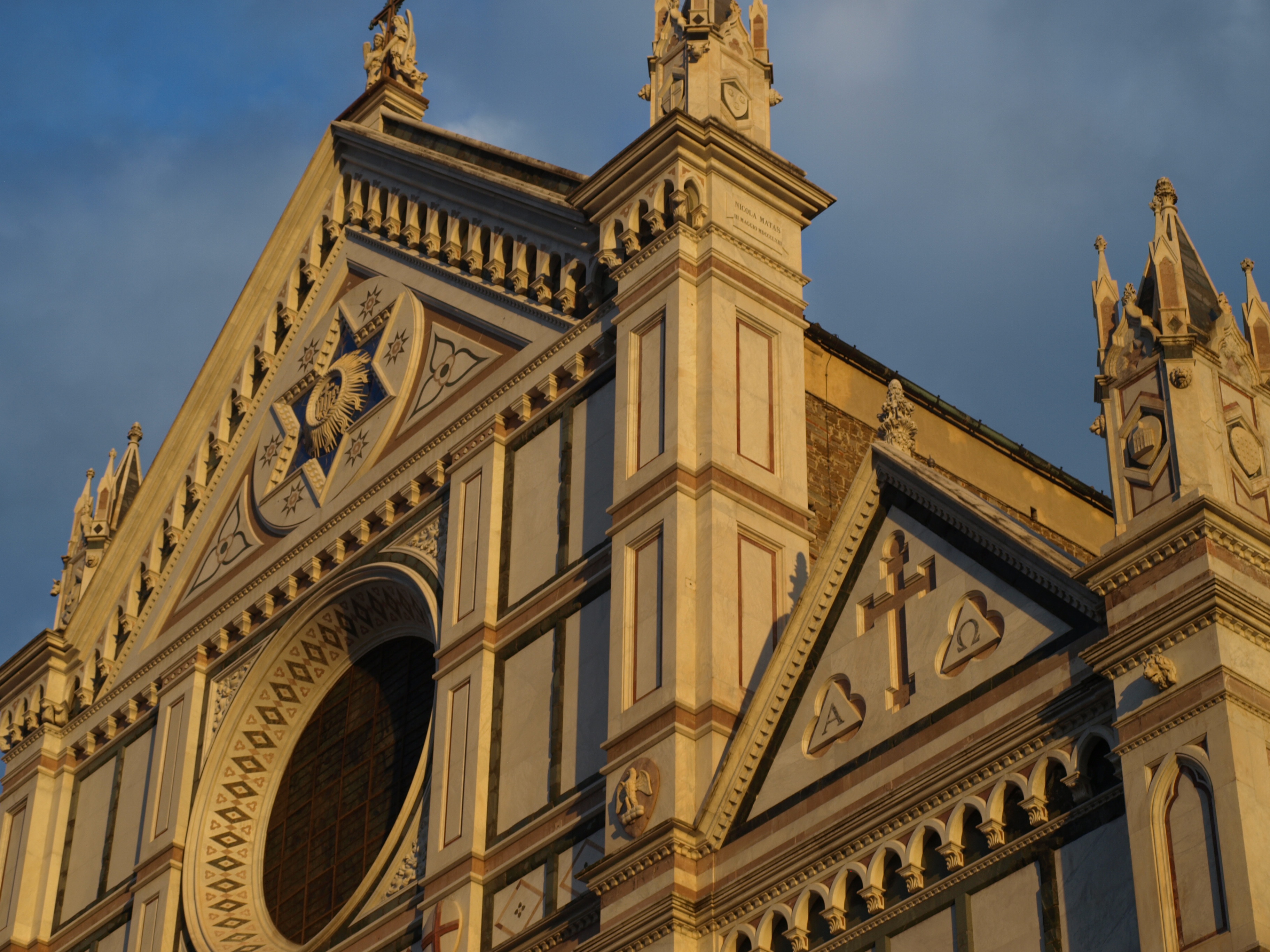
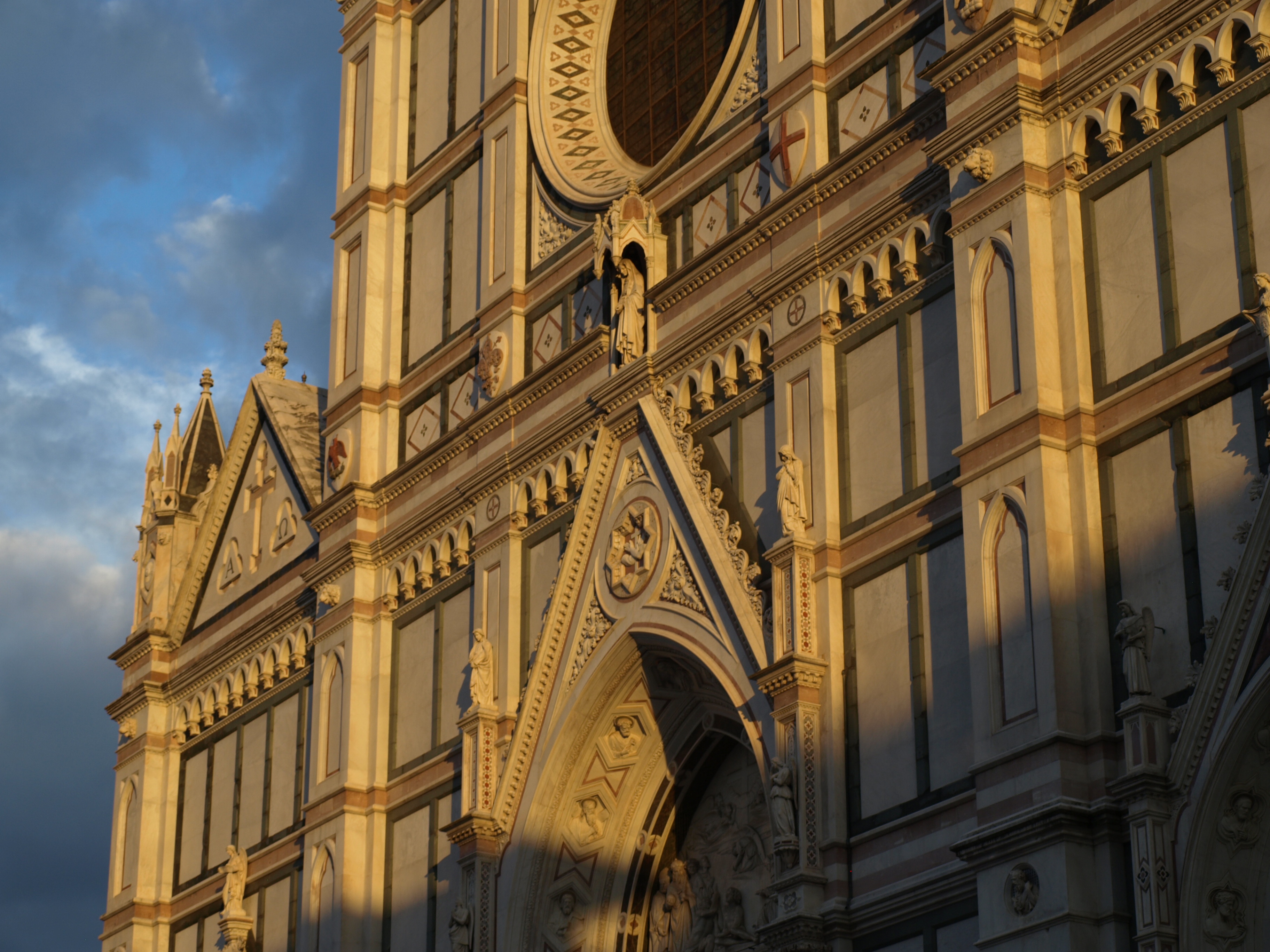
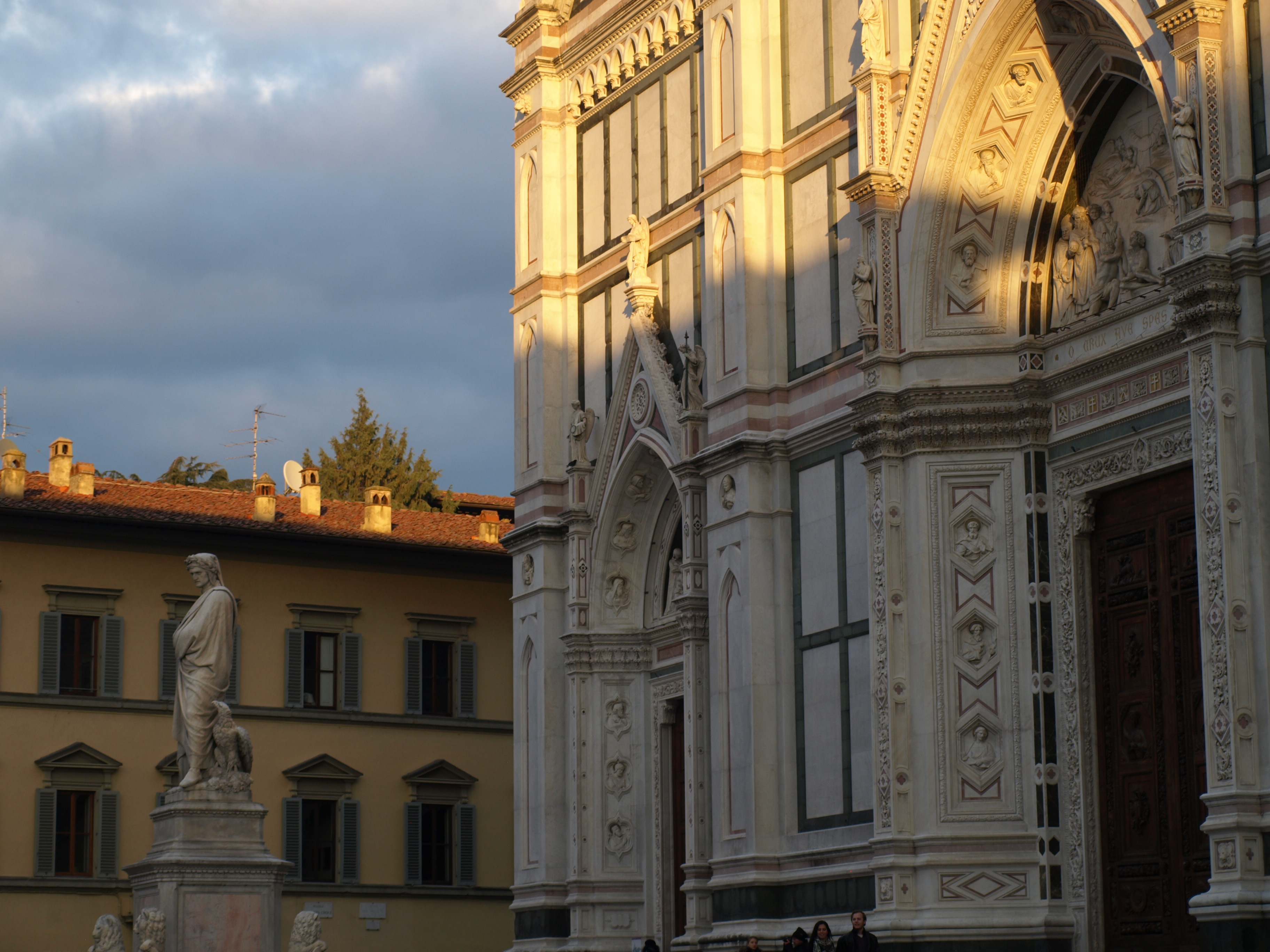
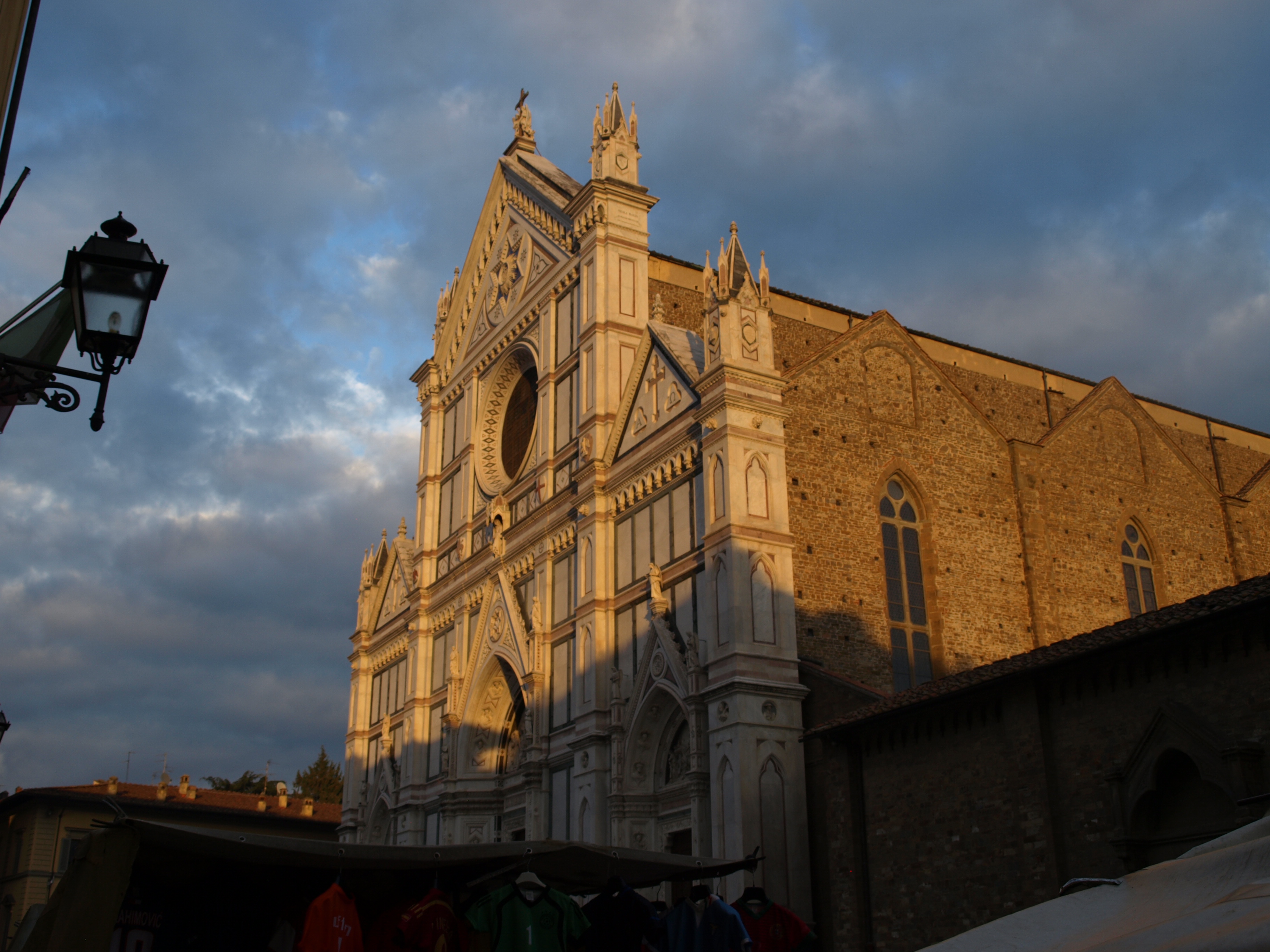
And when I came near to Santa Croce, the church was highlighted by the late afternoon sun in a very agreeable fashion.

OLYMPUS DIGITAL CAMERA OLYMPUS DIGITAL CAMERA OLYMPUS DIGITAL CAMERA

OLYMPUS DIGITAL CAMERA OLYMPUS DIGITAL CAMERA

Looking good, Santa Croce!

(Note to self: nothing is making me pay attention to the ending of Italian words and matching adjectives and nouns like trying to write these posts.  La mia professoressa will be mighty happy when I show her how hard I worked this weekend!  Such a teacher pleaser, am I!  It has always be thus. It’s always been the one place I respect authority!)

Ghiberti’s “Gates of Heaven” currently look like doors to a bank!

OLYMPUS DIGITAL CAMERA

The Florence Baptistery is currently enveloped in a gray shrouding of some sort.  This friendly detective, at your service, is on the case and will update you when information becomes available.

Seriously, are they cleaning it under the shroud or is the monument wrapped up to keep it warm for the winter?

I’ll get back to you on that!

UPDATE: According to my local anonymous sources: the shroud covers the scaffolding which was erected so the monument can be cleaned and shined up to match the shining Duomo, since they are more or less a matched set.

OLYMPUS DIGITAL CAMERA

In the meantime, this is how the doors that Michelangelo called “the gates of paradise” look today.  You can’t tell if these tourists are lining up to look at the art or queing up to draw money from the ATM.  Oh, wait a minute, no one ques in Italy, so it must be the art!