Persimmons in Arezzo

I love a pretty garden, even in the winter.  I was in Arezzo recently and paid a visit to the Vasari Casa museum.  If you know Vasari’s monumental book on Italian artists (the first of its kind, published in the 16th century), you know how important he is for more or less beginning the field of art history.  As such, he is sort of my patron saint, with lower case letters.

IMG_7190IMG_7158IMG_7159IMG_7160IMG_7161

So I was delighted to visit Vasari’s home in Arezzo, and ponder how it was his refuge from the busy life he led in Florence. But, as often happens for me, while I found his modest palazzo to be interesting for it’s structure and fresco decorations (much of it Vasari himself), it was the garden that drew me like a magnet.

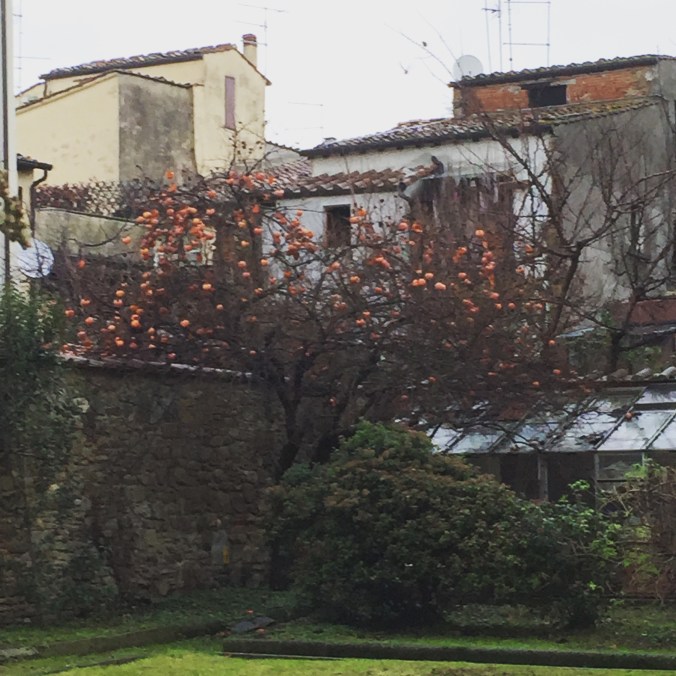
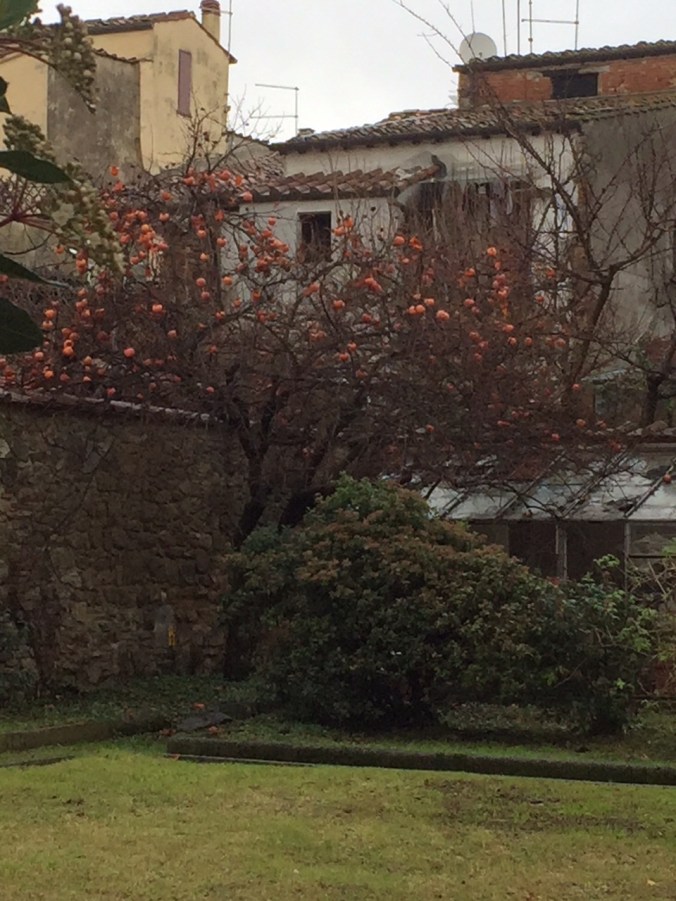
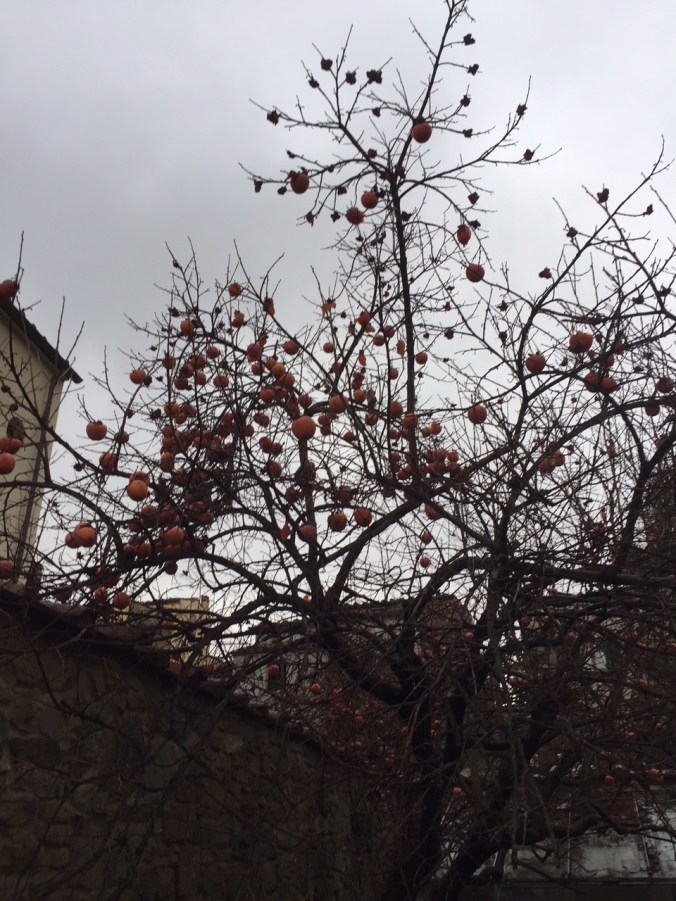
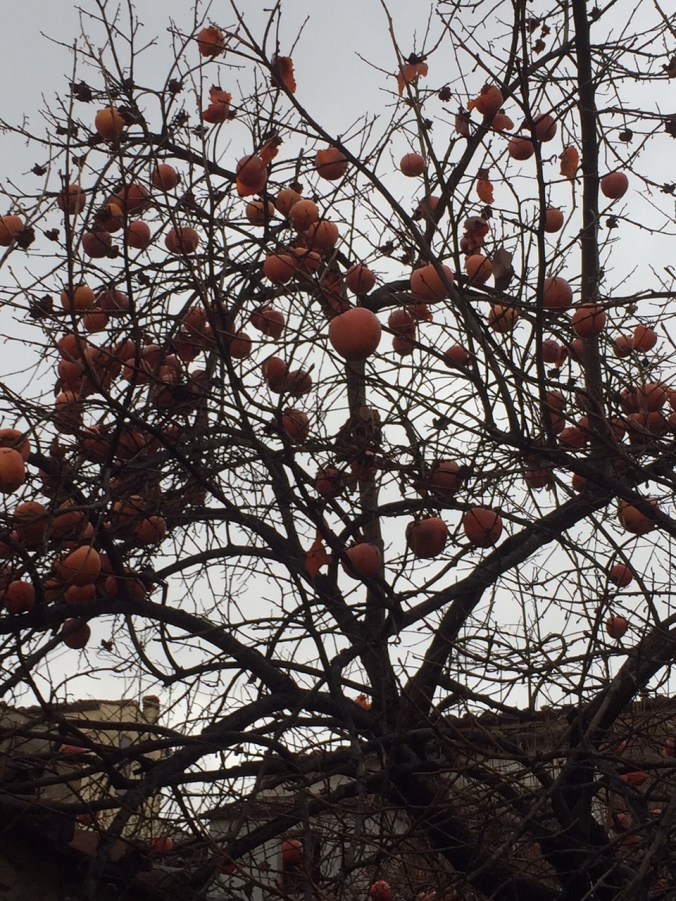
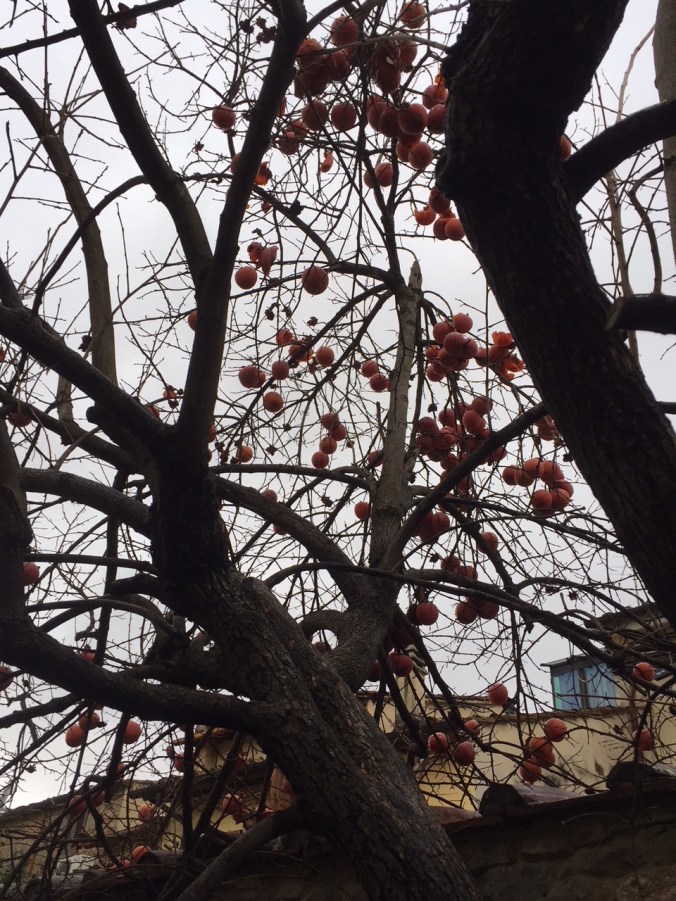
And in his garden I spied this beautiful, ancient persimmon tree.  I love how the tree looks without any leaves: only brown bark, branches, and the fruit that look like Christmas decorations.

It’s a no-go on to-go coffee in Italy

I’m delighted to report that there is (are) no Starbucks in Florence.  I have nothing against Starbucks in general, but Italy has an old and established coffee culture of its own and I am so happy that no New World influence has not been able to change that, at least so far.

Once in a while around Florence I see college co-eds walking around with a to-go coffee that they purchased in the handful of bars that will sell their brew in a styrofoam cup.  There are a couple of New World type coffee houses here, but they don’t seem to be very popular.

Why is that?  This video tells the story:

http://www.bbc.com/news/av/world-europe-42750584/why-italians-are-saying-no-to-takeaway-coffee

Five ways to drive an Italian waiter crazy, plus 1

The following post was written by my new friend, Susan, and is so fresh and honest that I just want to reblog it. I would only add one other thing at the end, so it is now 6 easy things you can do to quickly offend your server!

From Susan’s blog: Americans in Umbria:

Monday, September 26, 2011

5 things to do to drive an Italian waiter crazy

Rule number 1 to make the waitress crazy.
1.  Talk to your waitress in English in a loud voice even though she has addressed you in Italian.  Here’s the thing.  If someone speaks Italian to you it is because they don’t know English!  They know you are not Italian.  Trust me, they know.  If the waitress is young and doesn’t know English she will be embarrassed because she thinks she ought to know English.  If the waitress is older, she may be defensive and rude because she thinks you should know Italian. Speaking to them loudly in pidgin English won’t help either.  The waitress will just look shell shocked and not know what to do.

What you should do is ask, “Parla Inglese?”  If the waitress does not, she is more likely to find you someone who can.

2.  Order items out of order.  Italians may look like there is no order or system in their lives, but it isn’t true.  It is just different from Americans.  Italians are very ordered around food.  They are very serious about food.  To them, eating is not just putting calories in your system that will later be burned off.  So, there is an order in giving your order.  You will first be asked about water.  Do you want water with gas or natural.  This question needs to be answered first and then the waitress disappears while you look at the menu.  If someone shouts out beer, and someone else shouts out spaghetti, the waitress will get the same shell shocked look and god knows what you will get.  Probably the owner.  So allow the waitress to take your order in her manner.  People should go one at a time and stay on the same course.

3.  The next things that will drive her crazy.  At a table of 4 have one person order an antipasta, one person order a primi, the other person order a secondi and the last person orders a salad, which oh by the way is not on the menu.  So the American asks, “Do you have a mixed salad?” to the owner.  (The waitress has now high tailed it to the kitchen.) The owner says, “Yes, of course.”  The American says, “Where is it on the menu?”  The owner says, “It isn’t on the menu.”  The American says,”What’s in it?”  The owner says, “We make it for you what do you want in it?” The American says how many Euros?  The owner says 3.  The American says, ok my husband and I will split it.”  Now everything is out of order.  The salad, which usually comes last, is expected first.  The antipasti which should arrive first is now matched up with the primi and the secondi.  There is confusion everywhere, and everyone seems unhappy.

4.  Walk into a ristorante that offers “Typical Umbrian food” and expect a full menu of things you would eat in the states.  Oh by the way, Umbrians do not think their food is Italian.  It is Umbrian. It is different from the food in Tuscany, way different from the food in Rome and Naples.  It is generally grilled meat and meat sauce with pasta.  Very little tomatoes and very little butter.  Cheese is big.  It is usually made in house.  It is good, but unless you are at a large city, like Perugia, you are going to see pretty much the same thing on the menus because Umbrian food is pretty much the same thing, if you get my drift.

5.  The final thing to do to make your waitress crazy is to order a pizza at lunch.  Italians eat their pizza for dinner and it isn’t available at lunch.  Why is this? The wood pizza ovens are too hot to heat up during the day. There are some places that sell pizza by the slice at lunch, like in the grocery mall.  Need I say more?  One last thing once if you order pizza for dinner, ask for your left over pizza to go home with you.  The Italians are horrified by this.  Why?  Because they think warmed over pizza is disgusting and why would you do that to a food you can go and get fresh.

How do I know all of these things?  I have done everyone of them.

Thanks, Susan.  You are soooooo right!

And now, for my additional thing:

6.  The best way that I know of to convince your Italian server or manager/owner that you are a heathen from another country is to order a cappuccino after a meal.  Unless it is breakfast, or a mid-morning merenda, do not order any coffee drink with any milk in it after 12:00 p.m.  You may order a cappuccino and they will begrudgingly serve it to you, but just know that deep down inside they think you are uncivilized and know nothing about  how to enjoy food and drink.  You may order un caffe’ without a problem–in fact Italians think that an espresso after a meal helps with digestion–but never, never order a cappuccino. If you absolutely, positively must have milk in your coffee and it is after noon, you can order a macchiato with approbation, but I’m willing to bet that if what you really want is a cappuccino, you will not be satisfied with a macchiato.  Just sayin  My recommendation to you is to simply wait for morning!

A lifetime is not enough

The Italians have a saying about the marvels of Rome: “Non basta una vita”, meaning that a lifetime is not enough to enjoy all the incredible things to be found in Rome.


IMG_7311IMG_7300IMG_7280IMG_7277

I feel that way about Italy in general.  I’m fortunate enough to live in the center of Florence and each day I venture out, I see, feel, touch, smell, or hear something new.  It is a wonderful way to life life!

What does a stylish Italian newborn wear anyway?

When I was eight months pregnant with my son, the private clinic where I was to give birth gave me a list of clothes to bring with me for the newborn. There were articles of clothing that I’d never heard of before: bodino, ghettina, tutina.

They all ended in -ino or -ina, which meant they were little and cute, but what were they?

If this wasn’t enough to send my hormone-assaulted brain into a spin, the clinic specified the required type of fabric. So my fetus and I set out to find a ghettina di lana leggera (light wool leggings) and other outfits that would compose his first foray into the world of Italian fashion.

My plan was to hand the list to the lady in the store with my credit card and be done with it. The shopkeeper was around sixty, a beautiful, gravelly-voiced grandmother. I was done for.

Approximately two hours and hundreds of euros later, my fetus and I emerged, sweaty and agitated. The signora had regaled me with questions. Which kind of cotton do you prefer? Lace at the collar or on the sleeves? Oh, she was full of questions.

But somehow I couldn’t get up the nerve to ask mine. I had only two, and they were fundamental at that point in time. Which is cheaper?

And, where is the bathroom?

Later, I handed my completed assignment over to Raffaella [mother-in-law]. She put her glasses on to examine the list and to feel the tiny garments. She was Giorgio Armani before a Vogue photo shoot. She was a Hollywood image consultant.

She described the workmanship of each minuscule article, saying things like “cross-stitch embroidery” and “cream and sky-blue appliqué.” I tried to figure out if these descriptions meant the clothes passed the test. I did not want to visit the exacting, gravelly-voiced grandmother at the baby store again.

My son was not yet at term and his look was already being scrutinized. He would have to be stylish and elegant as soon as he saw the light of day. Weren’t they going to give him a couple of months to get into the swing of things? Couldn’t he be given a few weeks of leeway on account of his American, sweatpant-wearing mother? “Hmmmm…” Raffaella would have to think about it, work on it, match some of these things with items she had bought. But it looked like my job was over. Hallelujah.

“You know, in the U.S., we usually buy baby clothes that can go in the washing machine,” I ventured, finding renewed confidence in my ninth month.

“Are you serious? They get ruined that way! What about the satin lock-down stitch?”

I didn’t mention that we also tend not to spend two hundred bucks on a wardrobe that would last less than a month, and that was destined to be covered with milk and vomit.

It was pointless. I didn’t want my son to get the figlio di nessuno, the “no one’s kid” label, as soon as he was born, so I let Nonna Raffaella handle my newborn’s wardrobe. After all, I figured, who cares what they dress him in? I had enough on my mind.

Wilson, Katherine. The Mother-in-Law Cure (Originally published as Only in Naples): Learning to Live and Eat in an Italian Family (p. 208). Random House Publishing Group. Kindle Edition.

 

How Italians drink coffee

In Italy coffee is not a social drink—it is a drug. It is not drunk; it’s mainlined. No sooner does the tiny espresso cup and saucer touch the counter than whoosh, in goes a quarter-pound of sugar, and whoosh the thing is downed in one gulp, and the caffeine is racing through your veins and you’re ready to attack—literally—the world.

From Máté, Ferenc. The Hills of Tuscany: A New Life in an Old Land (Augustana Historical Society Publication) (p. 38). Albatross. Kindle Edition.

In Italy, the sound of coffee in a bar is clinking porcelain. It is cacophony, racket, loud voices arguing and laughing over the ssssshhhh of the espresso machine. These sounds, a prelude to the hit of that syrupy black nectar that is called caffè, remind me that everything is possible. I can fight the good fight.

I think the fundamental difference between the experiences of coffee in the United States and coffee in Italy comes down to the concept of “to go.”

In America, coffee is taken to go because there’s a lot of liquid to be consumed. It accompanies you as you go about your morning. There is comfort in the feel of large quantities of lava-hot liquid under your fingers, of knowing that this coffee will be with you for hours. Your big hot cup of American coffee or latte or macchiato or whatever else Starbucks has decided to name it, will be held close, cuddled and nursed. Your very own grown-up sippy cup, thanks to that marvelous plastic mouthpiece (a beccuccio, or little beak, they would call it in Italian), which enables you to sip without spilling or scalding your mouth. Sipped and dripped. American coffee is sippy and drippy. It is like the saline bags that are linked to an intravenous drip: the level of fluid in your bloodstream never drops below a certain level.

Italian espresso, on the other hand, is a hit. A fast, intense bang to your veins. It is a one-gulp switch of the wrist that wakes and revs you up in an instant. For this reason, Italian coffee to go makes no sense.  You can get your one-gulp hit somewhere other than the bar as long as it’s close by and the whole endeavor is performed quickly.

From Wilson, Katherine. The Mother-in-Law Cure (Originally published as Only in Naples): Learning to Live and Eat in an Italian Family (p. 136). Random House Publishing Group. Kindle Edition.