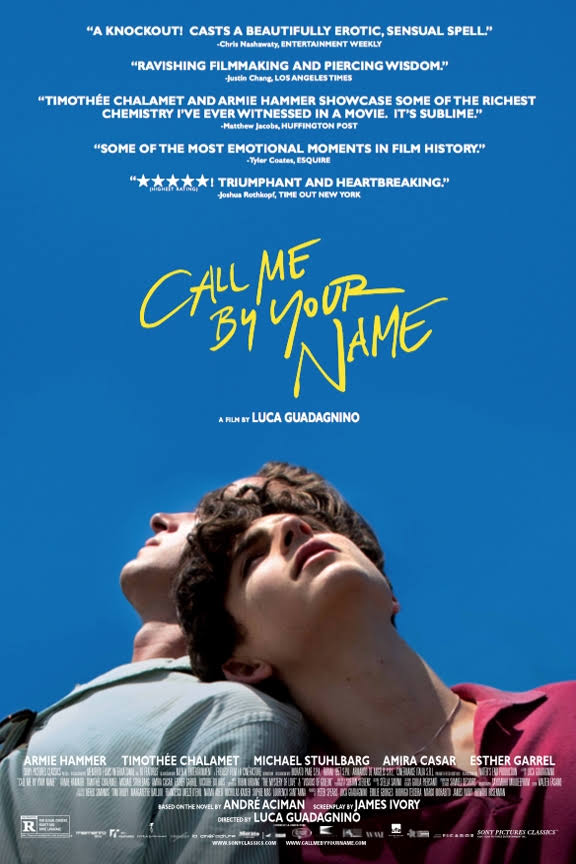
Call me by your name, and I’ll call you by mine.

images (1)

Catching up on movies during the holidays, I loved this one.  Maybe it is because it is set in Italy, maybe because it is set during my own youth and coming of age, maybe its because I have a beautiful son like the one in the film, maybe because I have spent my life searching out and writing about art like the father in the film, maybe it is because I was in breath-taking Sirmione last summer on Lake Garda where the ancient sculpture is dredged up from, maybe it is because I liked the affectionate relationship between the mother/son, maybe because I’ve met charismatic men who can do anything like the protagonist, or maybe for the collective wisdom of the parents; for whatever combination of reasons, this movie moved me.  Catch it if you can.

A good pencil is hard to find

I am betting this is a topic you have never thought about.  Why would you?

But, I have become an expert on the topic, and I have news for you: you cannot find a decent pencil in Italy.

Now I am guessing that if you go to an art supply store, or an engineering store (are there such things?), you could buy a fancy pencil that would put my favorite ones from the US of A to shame.

But, I am talking about being a student here, in a language school for foreigners, and trying to take notes. Not an artist or a engineer.

I typically write with ink, because it flows so much better than pencils and I like a fine point.  But, I had to take such fast notes and so many notes in language school, and so often made so many mistakes as I wrote Italian, that my ink written notes look like a scratch pad.  More lines through words than just plain words.  A mess.

So, I looked high and low for erasable ink pens.  I found a bunch.  They were all worthless.  The points were too thick, the erasers were not good.  I ended up tearing the paper. So, I went back to pencils.  My notes had looked (and functioned) worse in the erasable ink than in plain ink crossed out.  At least then my paper didn’t have rips in it.

Another issue is that when you think you have located a decent wooden #2 pencil here, it will not have an eraser on the end.  Or, it will have an eraser that is made out of something like marshmallow fluff.  It looks like an eraser, so you buy the pencil(s, since you might stock up when you think you’ve finally spotted a winner).

So, you take out your new pencil, which you must also carry a sharpener for as well.  Because you will break the lead, many times.  The lead isn’t that great.  And, if you are like me and want a sharp point, well…you will need that sharpener.  And you will need to empty it pretty often.  And, in all likelihood, your lead will break many times while you are manually sharpening it, and before long your new pencil will be a stub, and worse, still not that useful.

And, by that point, you will have missed the entire discussion (in Italian) of the subjunctive tense. And so, now, how will you ever be able to talk about wishes, or hopes, or things like that?

You won’t.

Anyway, you finally get your pencil stub sharpened and you start writing furiously, maybe even trying to look at your neighbor’s notes (which will be in Korean or Japanese or German), while trying to find your sea legs in the subjunctive. And damn, before you know it, you have made another mistake but you feel a bit smug, since you have a new pencil, albeit a stub, with an eraser!!

You flip that sucker over and start to erase and the entire eraser breaks off at the line where the pencil meets the eraser.

So, the next day, in desperation, when you are walking to your yoga class in the Piazza della Republicca, you pass a tourist souvenir kiosk and you notice that they sell pretty Florentine paper wrapped pencils and they have erasers.  Never in your lifetime did you think you could be so excited about the prospect of a new pencil.

You don’t have time to buy the pencil because you are already late for yoga, but visions of that pencil dances in your head in every down dog you do. You cannot wait to be done with yoga and back in the loggia by the Post Office to buy that pencil.  You are obsessed.  Plus, it’s pretty to boot and, hello, if you read my blog, you know beauty is at the top of my list, all my lists!

You buy the pencil and take it home and admire it and hope it will be the one.  You sharpen it when you get home and try it out.  You discover that the pretty Florentine paper is the only thing that makes this pencil different from the ones you’ve already tried.

So, when you go back to the USA to renew your Visa at the Italian Consulate in Chicago, you take a shopping list with you.  And no one can believe it, but at the top of your list are #2 Pencils, with erasers at the end. And you feel very safe and secure, ready to go back and try the subjunctive again.
Italian coffee magic

images-7

We know that coffee culture is supreme in Italy.  I just came across this funny take on a comparison of Italian with French coffee:

ASK HIM FOR A CAFE AU LAIT ONLY IF YOU WOKE UP WITH HIM

It’s almost impossible to find a drinkable cup of coffee in Paris: the coffee here is among the worst I’ve ever had. Before Francophiles race to chime in about how bad American coffee is, yes, I agree with you. There’s a lot of bad coffee in America. The difference is there’s the possibility of finding a good cup in the States.

Plus North Americans have an excuse: we don’t share a border with Italy, that magical kingdom of coffee, where each tiny sip is a multisensory explosion of flavor.

From the moment the barman puts that little cup under the spigot, until I polish off the last of the syrupy espresso that trickles out of the tiny cup, my mind can’t concentrate on anything but that intense dose of masterfully extracted coffee. Ah—il espresso perfetto.

In a country where there’s such an emphasis on fine dining, whose good food is celebrated not just here, but around the world, it’s stupefying why Parisian coffee is so vile that fed-up French food writer Sophie Brissard described it as “donkey piss.” The only good coffee I’ve found in Paris has been in places run by Italians. To them, serving bad coffee would be an insult to their entire culture. When I asked the woman at the Italian tourism office how she was able to live in Paris and subsist on the coffee served here, she looked as if I’d made her queasy just by mentioning it. “I will not drink coffee in France,” she responded. “I only drink tea.”

Lebovitz, David. The Sweet Life in Paris: (pp. 165-166). Crown/Archetype. Kindle Edition.

The awesome riches of Venice in late 16th century

14063

Giovanni Botero (1544—1617), an eye-witness, wrote of Venice:

Not only is there bread in abundance; there is also an incalculable wealth of all goods and delicacies, which are brought hither, not only by the rivers and canals of the mainland, but also by the sea, from as far afield as Egypt, Syria, the Archipelago, Constantinople and the Black Sea.

To Venice come the oils of Apulia, the saffrons of the Abruzzo, the malmseys of Crete, the raisins of Zante, the cinnamon and pepper of the Indies, the carpets of Alexandria, the sugar of Cyprus, the dates of Palestine, the silk, wax and ashes of Syria, the cordovans of the Morea, the leathers, moronelle, and caviar of Caffa.

There is such a variety of things here, pertaining both to man’s well-being and to his pleasure, that, just as Italy is a compendium of all Europe, because all the things scattered through the other parts are happily concentrated in her, even so Venice may be called a summary of the universe, because there is nothing originating in any far-off country but it is found in abundance in this city.

The Arabs say that, if the world were a ring, then Ormuz, by reason of the immeasurable wealth that is brought thither from every quarter, would be the jewel in it.

The same can be said of Venice, but with much greater truth, for she not only equals Ormuz in the variety of all merchandise and the plenty of all goods, but surpasses her in the splendor of her buildings, in the extent of her empire, and, indeed in everything else that derives from the industry and providence of men.

Scotti, Dom Paschal. Galileo Revisited: The Galileo Affair in Context (p. 28). Ignatius Press. Kindle Edition.

Dear Santa: Caro Babbo Natale

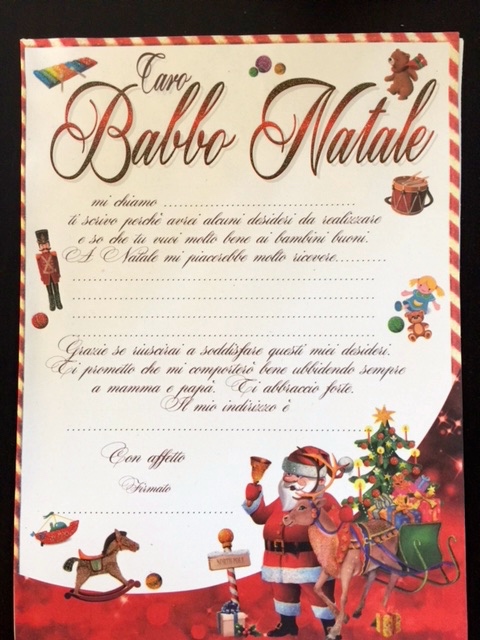
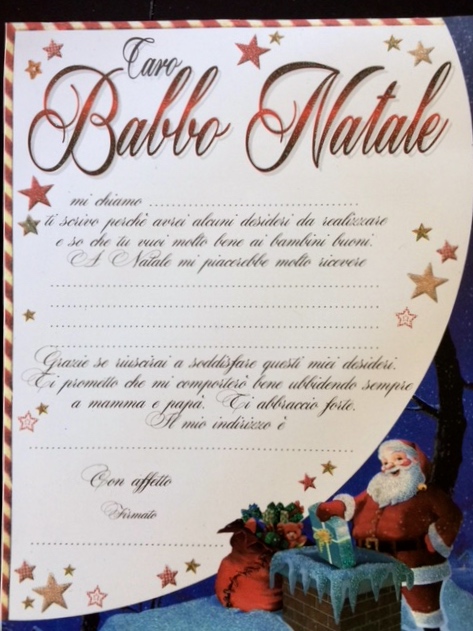
It isn’t too late, but you should hurry.  Here are two form letters I found today in Florence that will help you do the trick:

IMG_6691


IMG_6692

IMG_6693

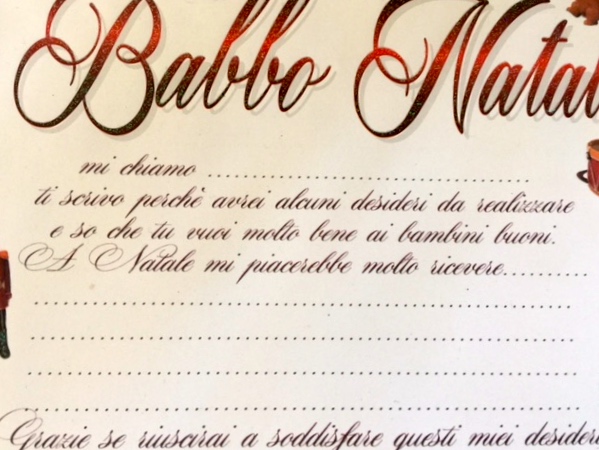
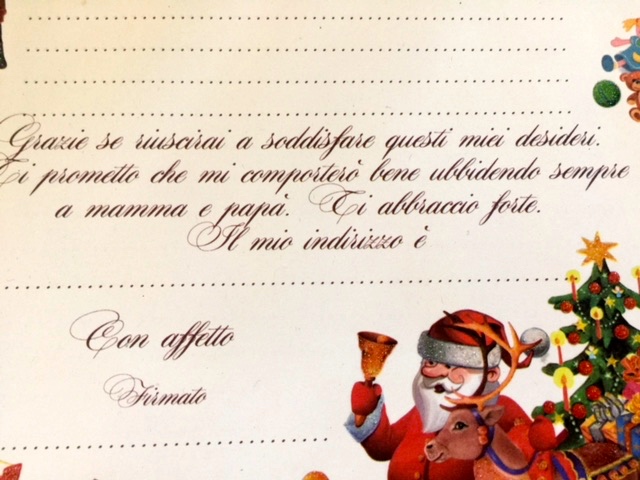
My rough translation: Dear Father Christmas, my name is ……………I am writing you because I have some wishes that I hope to have realized and I know that you are very nice to good children.  For Christmas I would very much like to receive…………………………………………………………………………………………………………………………….etc.


IMG_6694

Thank you in advance for fulfilling my wishes.  I promise you that I will be very well behaved and always obey mamma and papa.  I give you a big hug.  My address is…………………………………………………………………………………………………….

With affection (signed) ……………………………………………………………….


If I were you, I would hurry and get these letters mailed!

What’s up: Italy

What’s up: a series on new things in old places.

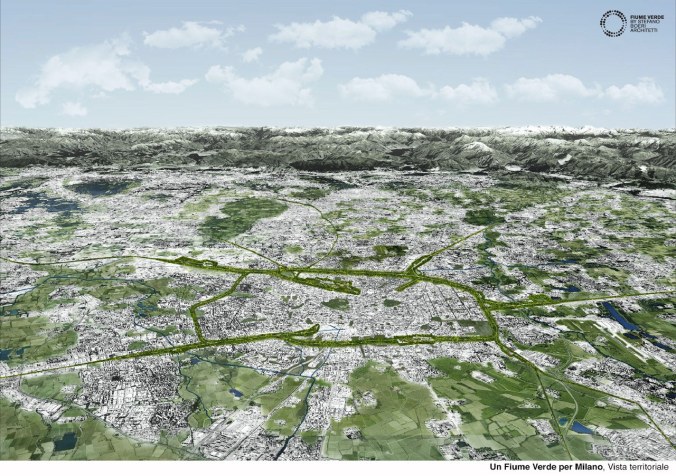
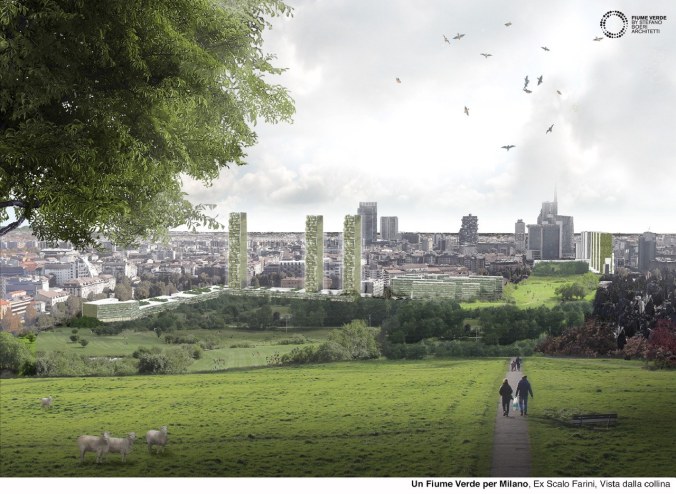
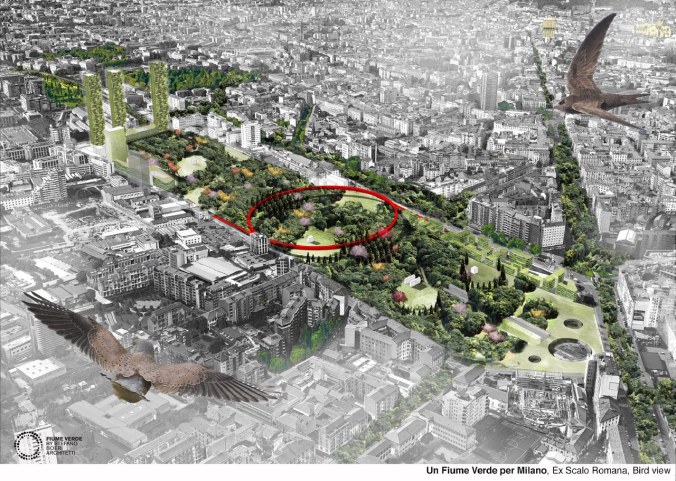
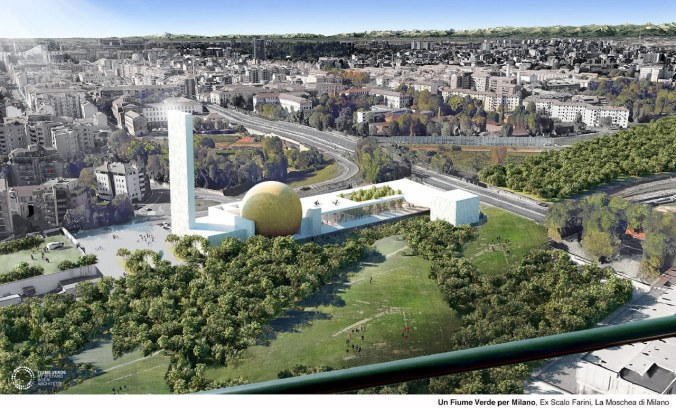
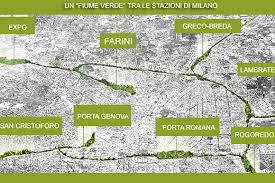
In Milan, The Green River is an urban reforestation project by architect Stefano Boeri.

00_territoriale-1280x90201_farini-collina_fv-1280x93704_romana-bird-view_fv-1280x91107_moschea_dida_Fv-1280x773

The project seeks to create on an old, dilapidated railway yard, a continuous system of parks, orchards and gardens for public use, linked by green and bicycle paths on top of former railroad tracks.  In addition, 10% of the project would create “activities that are currently lacking in the neighborhoods of Milan; that is, especially residential and study spaces for young people (young professional housing and student hotels), but also cultural services and assistance to the citizen (libraries, clinics, kindergartens), as well as social and market building.” 

Green Metropolitan Towers, will be a part of the project and the Green River will cross the Milan urban body, midway between the late 19th century expansions, the Holy Corps and the early twentieth-century suburbs, and will host a ring for public mobility (surface MM6) and a ‘ metropolitan infrastructure for geothermal use of groundwater. With the realization of the MM6 along the Green River, Milan will become the fifth European city to extend the public transport network.

 http://www.ilgiornale.it/news/milano/boeri-sogna-fiume-verde-che-scorre-ex-scali-1343809.html

https://www.stefanoboeriarchitetti.net/en/tag/fiume-verde/

images-2