This hotel is my across the street neighbor. Rough hood.
Gallery Hotel Art, owned by the Ferragamo family. I repeat, it’s a really rough hood. The bar in the hotel is famous for its aperitivo, with hand-crafted cocktails. But what I really like about the hotel is the fact that they boast some interesting exterior art installations.
The day I moved into my new apartment, a week ago, the hotel installed the latest installation, which is a line of decorated Vespa shells, snaking up the side of the building.
A few Vespas are sometimes on display in the beautiful little piazza I share with the hotel.
But, for me, the best part is my unique view of the hotel from my windows.
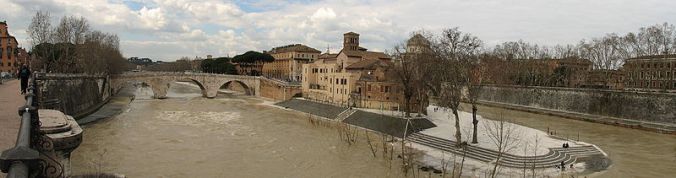
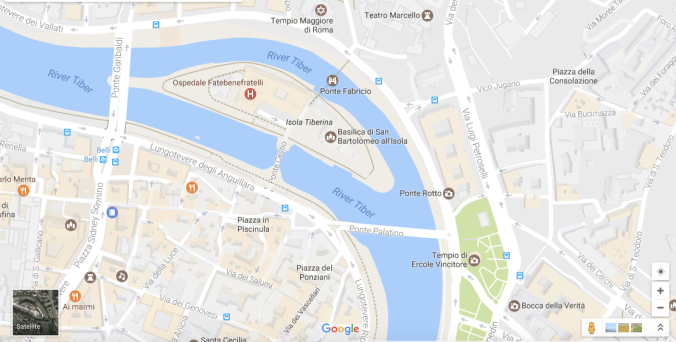
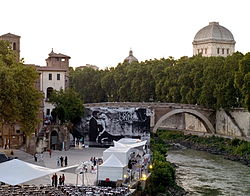
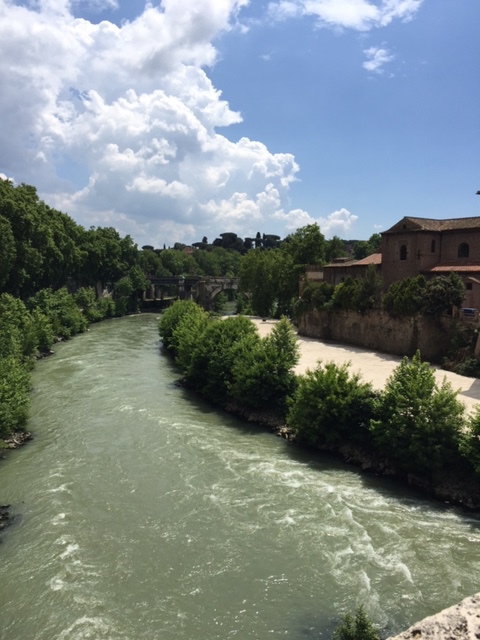
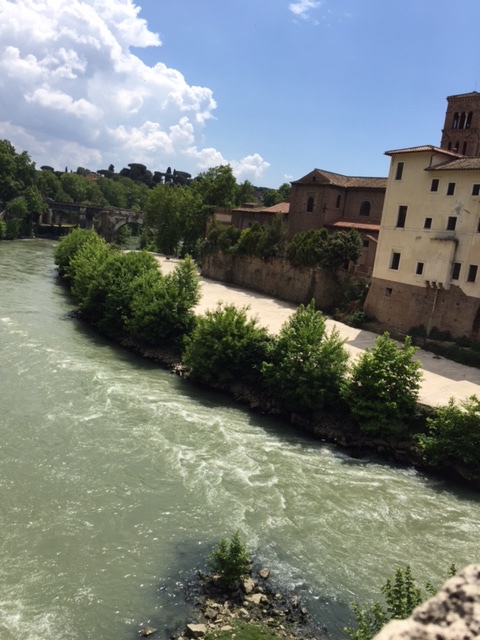
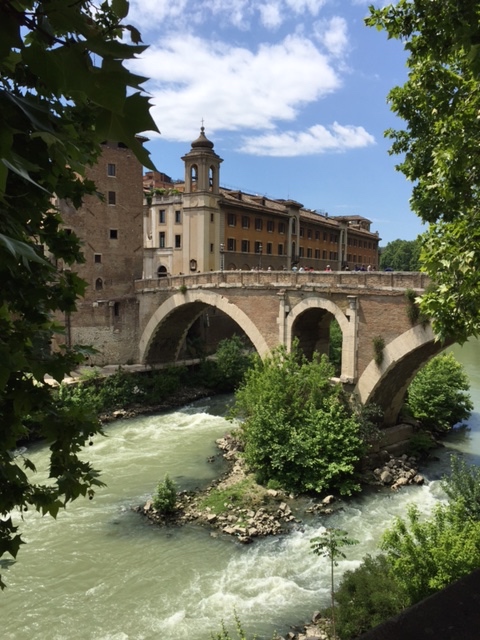
If you like to stroll along the banks of the Tiber River, as I do when the weather is fine, you’ll eventually encounter the small river island known as Isola Tiberino.
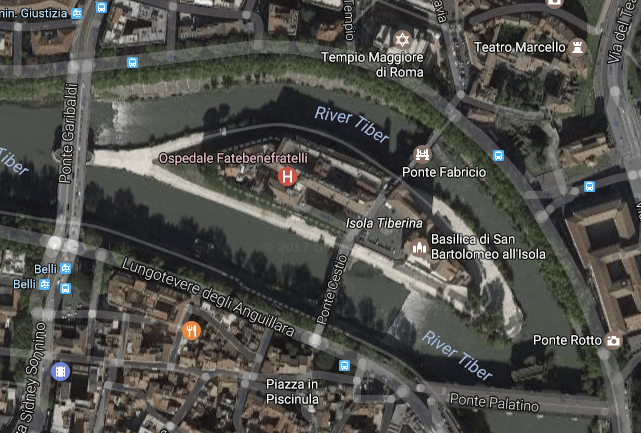
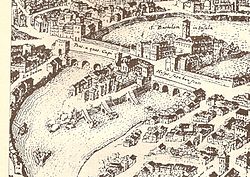
The Tiber Island is the only island in the southern bend of the Tiber river. The purposely boat-shaped island is approximately 270 metres (890 feet) long and 67 metres (220 feet) wide. It is and has been connected with bridges to both sides of the river since antiquity.
In antiquity, an ancient temple of Asclepius, the Greek god of medicine and healing, was built on the island.
Ancient sources saythere was a great plague in Rome in 293 BC and the Senate consulted the Sibyl who instructed them to build a temple to Aesculapius. The Senate sent a delegation to Epidauros to obtain a statue of the deity. As instructed, the delegation went on board a ship to sail out and obtain a statue.
They obtained a snake from a temple and put it on the ship. It immediately curled itself around the ship’s mast, which was deemed as a good sign by them. Upon their return up the Tiber river, the snake is said to have slithered off the ship and swam onto the island. They believed that this was a sign from Aesculapius, a sign which meant that he wanted his temple to be built on that island.
This location may have been chosen for the Aesculapius Temple because it was separate from the rest of the city, which could help protect whoever was there from plague and illnesses.
The island eventually became so identified with that temple, that it was modeled to resemble a ship as a reminder of how it came to be. The Romans added travertine facing by the banks to resemble a ship’s prow and stern, and erected an obelisk in the middle to symbolizing the vessel’s mast. Walls were put around the island, and it came to resemble a Roman ship. Faint vestiges of Aesculapius’ rod with an entwining snake are still visible on the “prow”.
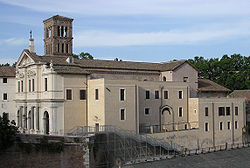
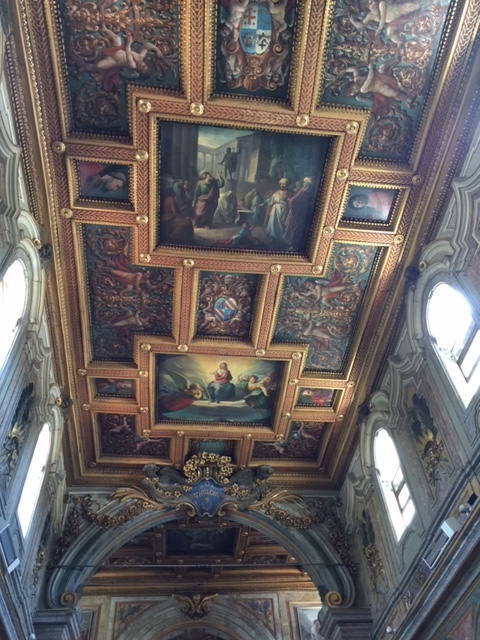
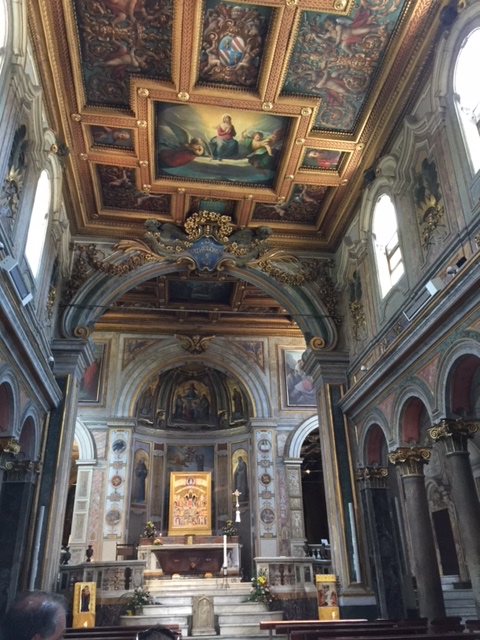
In 998 San Bartolomeo all’Isola (with a different original name) was built over the Aesculapius temple’s ruins on the eastern side (downstream end) of the island.
The island is still considered a place of healing because a hospital, founded in 1584, was built on the island and is still operating. It is staffed by the Hospitaller Order of St. John of God or “Fatebenefratelli”. The hospital was built on the western half of the island.
Interior ceiling and apse of the Basilica di San Bartolomeo:
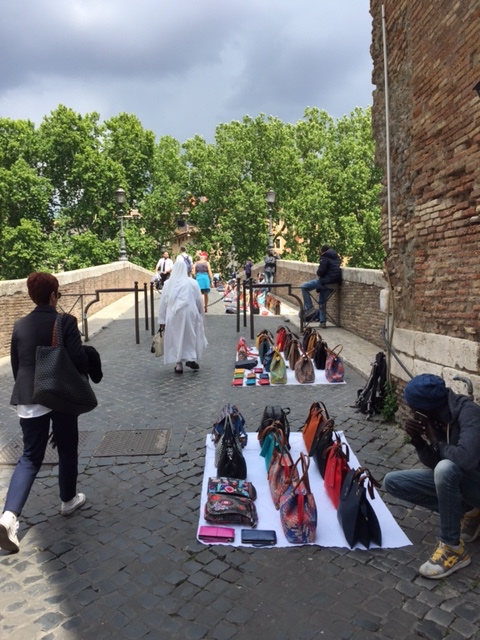
Today the island is a popular place to stroll on a fine day, to dine in the couple of trattorie, or to have an ice cream. African hawkers of knock-off goods line the 2 bridges, selling their wares until officials come along.
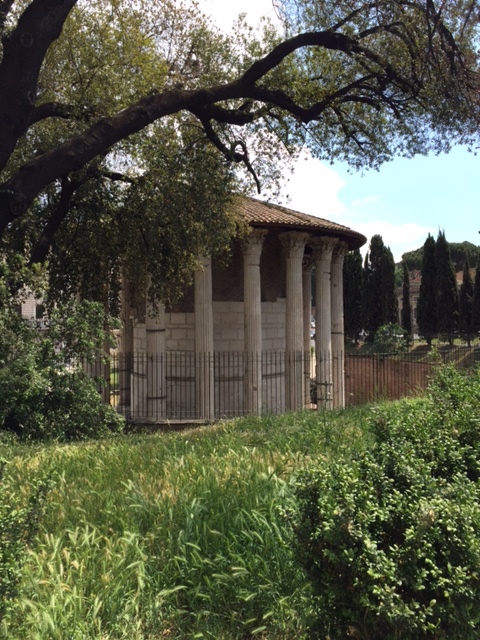
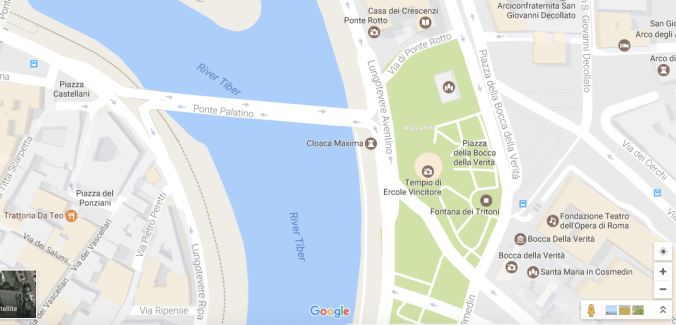
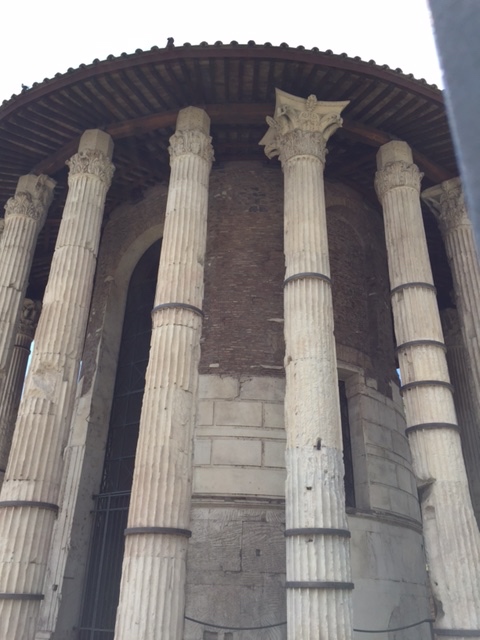
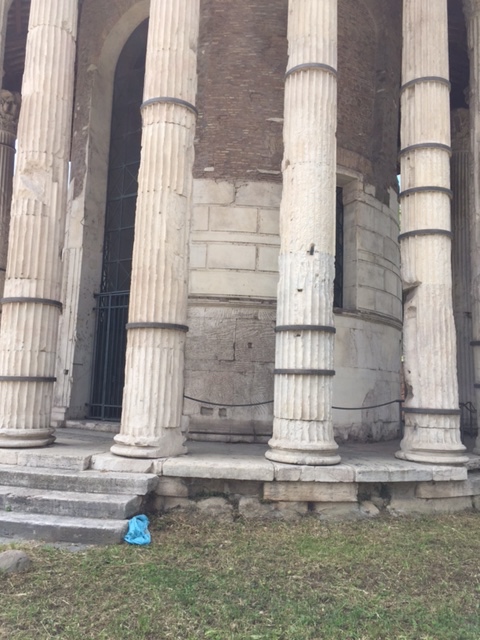
There’s a beautiful, small, round Roman temple not far from the banks of the Tiber River that seems to get no love.
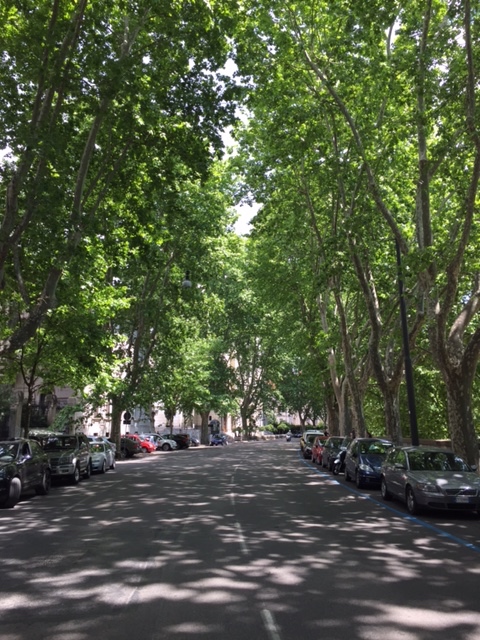
But, I love it! I took a long walk today along the Rome side of the Tiber, under the beautiful plane trees. The street looks like this:
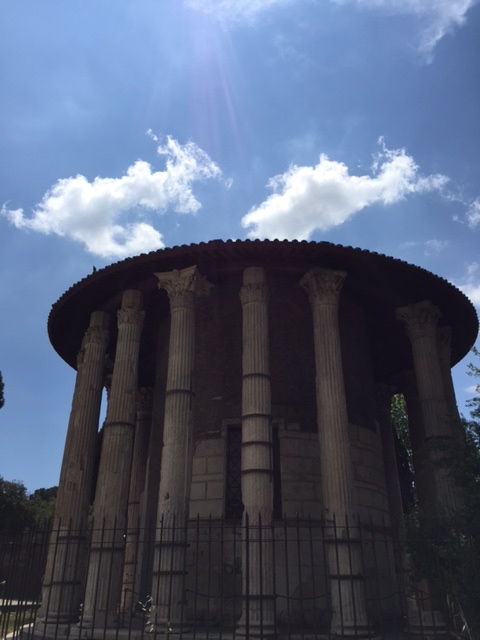
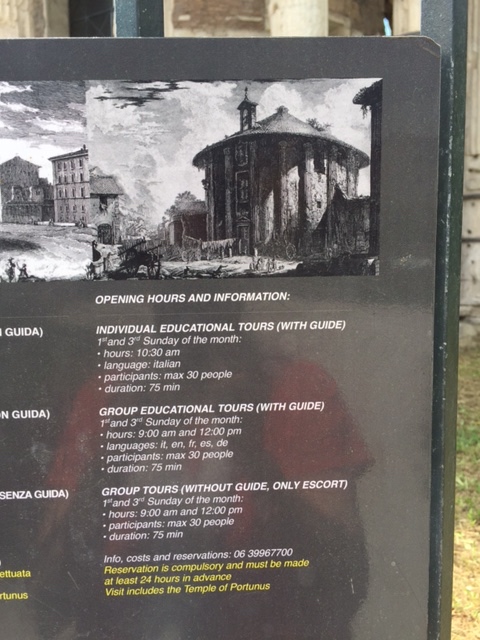
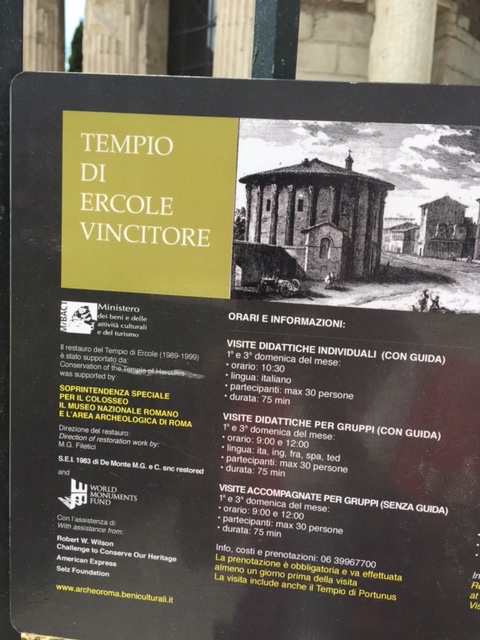
The temple I love is the Temple of Hercules the Victor (Italian: Tempio di Ercole Vincitore). It dates to the later 2nd century BC, consisting of a circular cella within a concentric ring of twenty Corinthian columns. These elements supported an architrave, which has disappeared.
The original wall of the cella, built of travertine and marble blocks. The temple is the earliest surviving marble building in Rome.
Especially if you need to get away from the hustle and bustle of running an Empire. This is really important when you feel you are not appreciated by those you rule. Ungrateful is what they are.
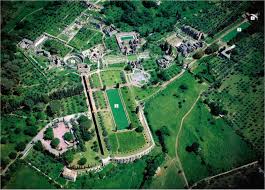
That’s exactly the position Hadrian found himself in, so he built the modest little Villa Adriana (at Tivoli, near Rome) for himself.
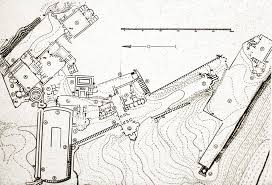
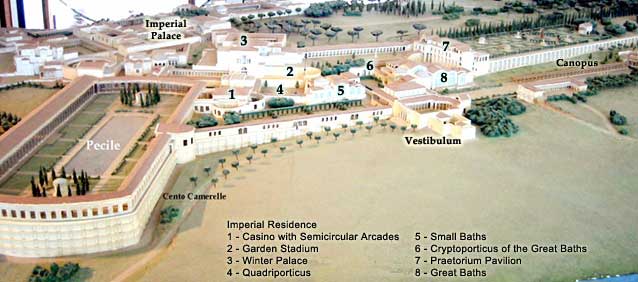
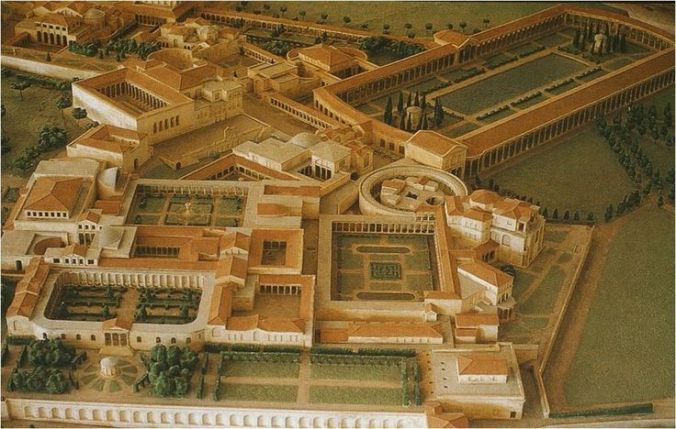
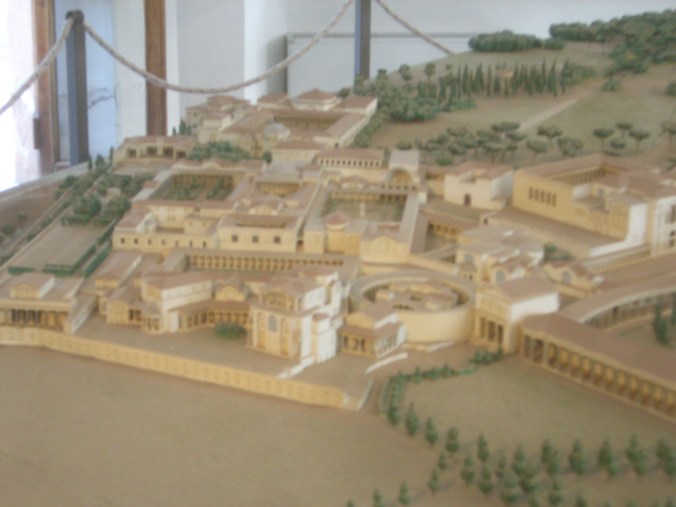
Well, I understate it a bit: his villa was an exceptional complex of classical buildings created in the 2nd century A.D.. Hadrian’s villa combined the best elements of the architectural heritage of Egypt, Greece and Rome as Hadrian attempted to build himself an ‘ideal city,’ albeit in the country, as his personal retreat.
The villa was a sumptuous complex of over 30 buildings, covering an area of at least 100 hectares (c. 250 acres), maybe even 300 hectares. Although Hadrian’s Villa is a Unesco world Heritage Site, much of it remains unexcavated.
Hadrian’s choice of an imperial palace outside Rome, instead one of the several palaces in the city, was probably influenced by the miserable relations he had with the senate and the local Roman aristocracy!
Hadrian was born in Spain, just like his predecessor Trajan, and the senate and the local aristocracy had trouble coming to terms with another provincial on the imperial throne.
The way Hadrian had assumed power only reinforced their opposition to him. Trajan adopted Hadrian on his deathbed; this was immediately cast in doubt, and when four military leaders, all Roman aristocrats who had been close to Trajan and hence possible contenders for the throne, were assassinated immediately after Trajan’s death, the senate immediately suspected Hadrian of having ordered the killings.
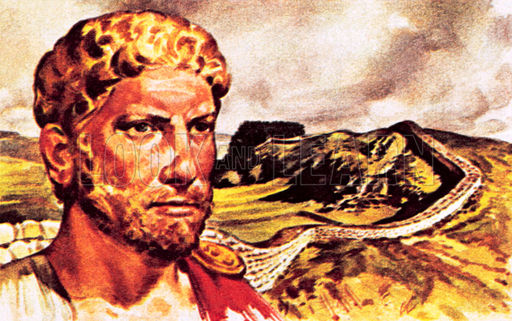
Hadrian didn’t return to Rome until eleven months after Trajan’s death, and denied any wrongdoing, but his relationship with the senate never recovered from the crisis. As a consequence Hadrian stayed very little in Rome. He travelled extensively throughout most of the empire in two prolonged periods, in 121-125 CE and in 128-134 CE, and when in Italy he avoided Rome. You see him in the picture above with a representation of his famous wall, built wherever he felt it was needed in his Empire.
When he absolutely had to be in Rome, he had his villa in Tivoli. Located some 28 km E. of Rome, Tivoli stood on a hillside, surrounded by two minor tributaries to the Aniene. Thus Tivoli and the villa were easily reached from Rome by land via the Via Tiburtina and by boat on the Aniene, which was navigable at the time.
While I still don’t have access to my pictures from my camera, here’s what I can post until I get them.
Tivoli – Hadrian’s Villa – Pecile
In fact, to show off his tastes and inclinations, Hadrian reproduced inside this residence the places and monuments that had fascinated him during his innumerable travels.
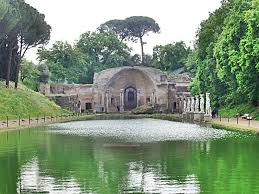
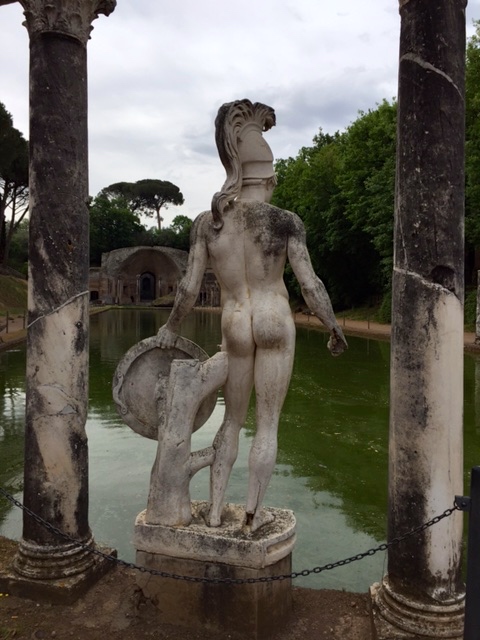
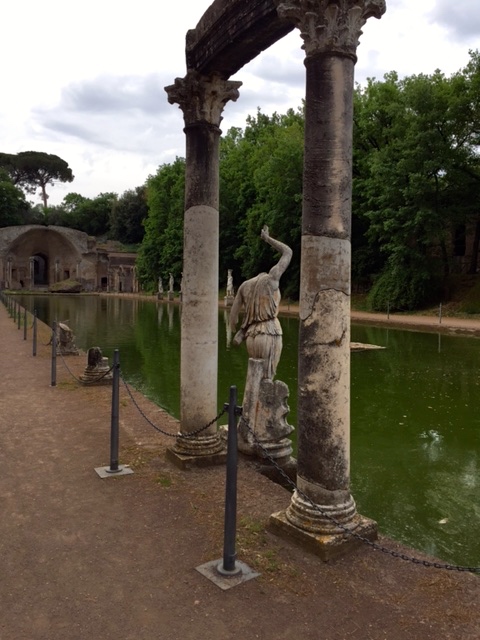
Then there is the Canopus, a long water basin embellished with columns and statues that culminates in a temple topped by an umbrella dome.
I love Mark Twain and I need him today; in Innocents Abroad he wrote:
In this connection I wish to say one word about Michelangelo Buonarroti. I used to worship the mighty genius of Michelangelo–that man who was great in poetry, painting, sculpture, architecture–great in everything he undertook….
In Genoa, he designed everything;
in Milan he or his pupils designed everything;
he designed the Lake of Como;
in Padua, Verona, Venice, Bologna, who did we ever hear of, from guides, but Michael Angelo?
In Florence, he painted everything, designed everything, nearly, and what he did not design he used to sit on a favorite stone and look at, and they showed us the stone.
In Pisa he designed everything but the old shot-tower, and they would have attributed that to him if it had not been so awfully out of the perpendicular.
He designed the piers of Leghorn and the custom house regulations of Civita Vecchia.
But, here [Rome]–here it is frightful.
He designed St. Peter’s;
he designed the Pope;
he designed the Pantheon,
the uniform of the Pope’s soldiers,
the Tiber,
the Vatican,
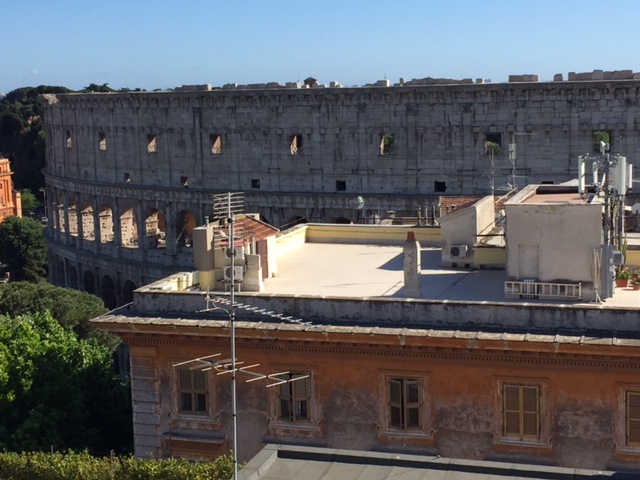
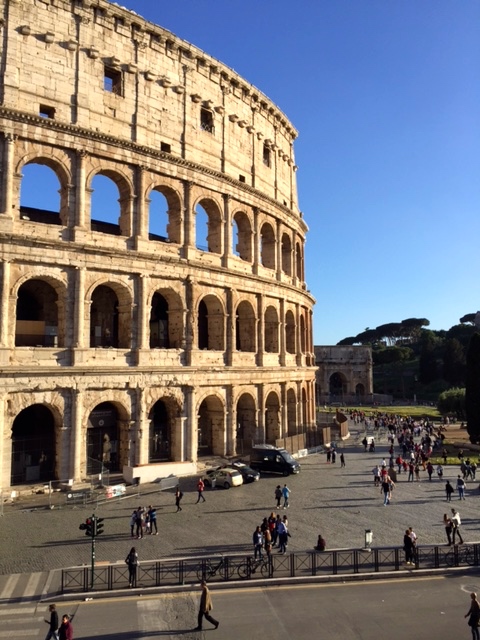
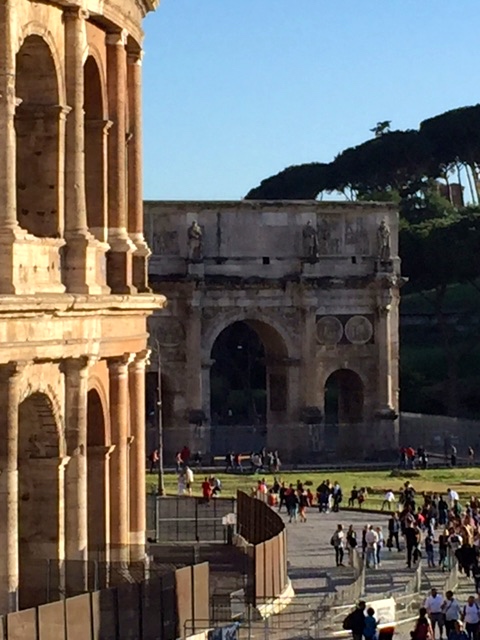
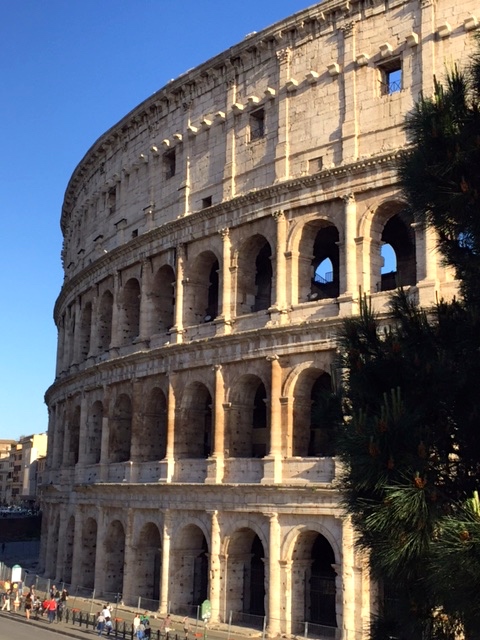
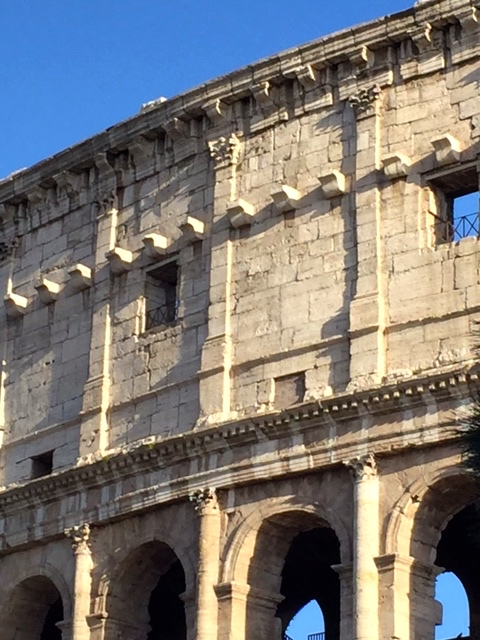
the Colosseum,
the Capitol,
the Tarpeian Rock,
the Barberini Palace,
St. John Lateran,
the Campagna,
the Appian Way,
the Seven Hills,
the Baths of Caracalla,
the Claudian Aqueduct,
the Cloaca Maxima–
[Michelangelo] the eternal bore designed the Eternal City, and unless all men and books do lie, he painted everything in it!
I never felt so fervently thankful, so soothed, so tranquil, so filled with a blessed peace, as I did yesterday when I learned that Michelangelo was dead.
Well, darn it! I made a big mistake. I left my camera cord in Florence so I can’t transfer my photos from my camera to my computer for another couple of weeks. So, I am going to have some big holes in my posts until I get back home to Florence. Oh well, what can you do?
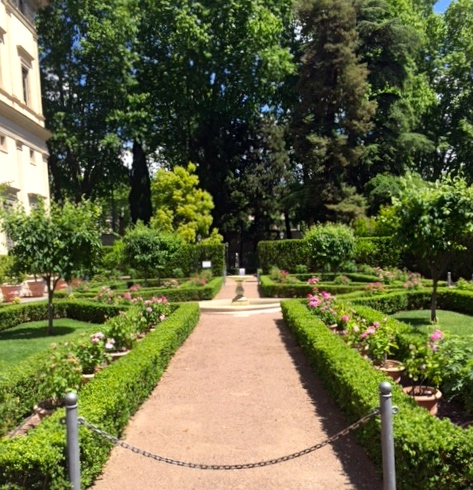
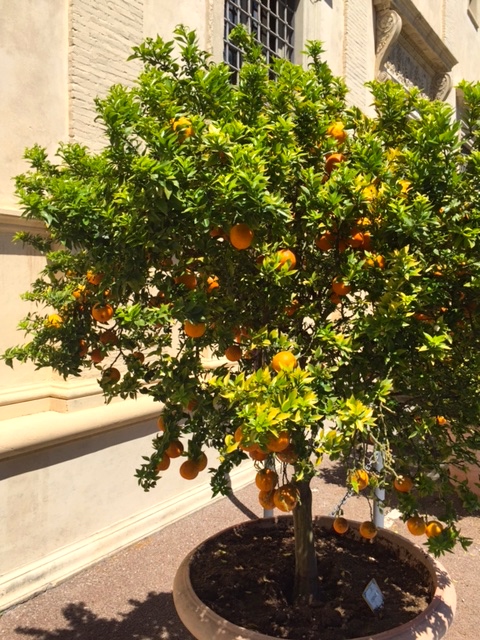
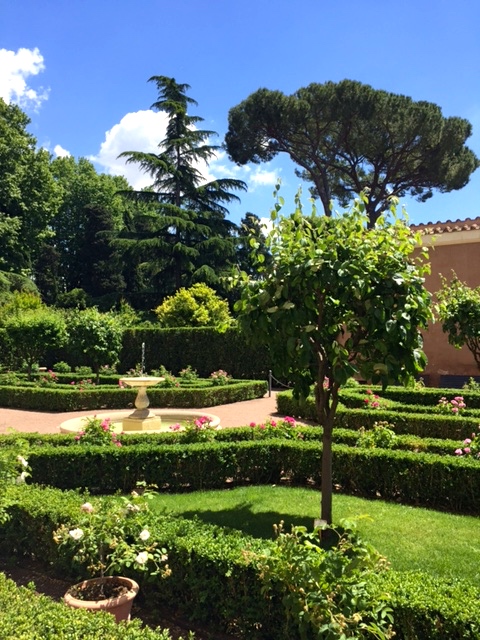
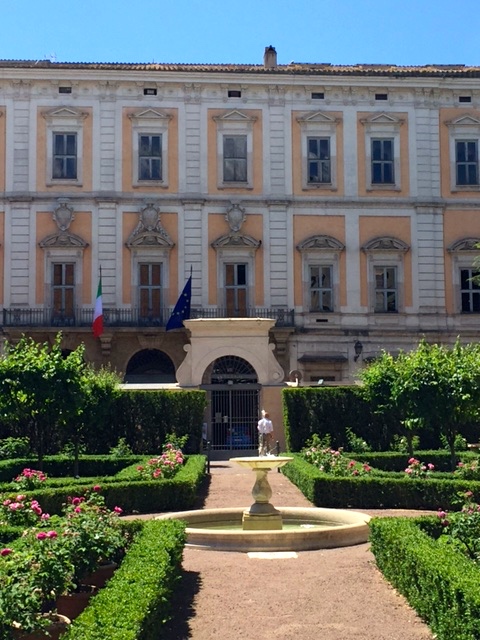
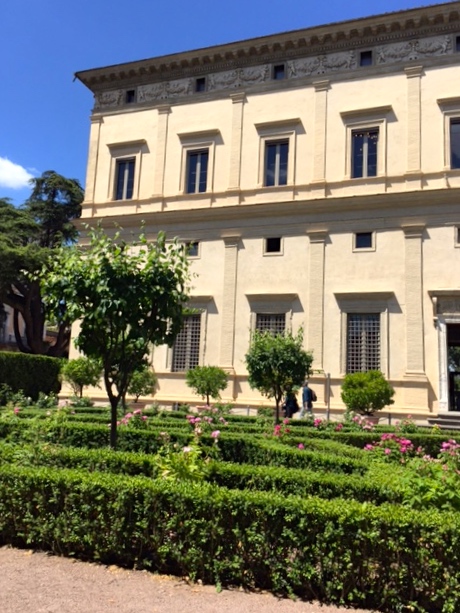
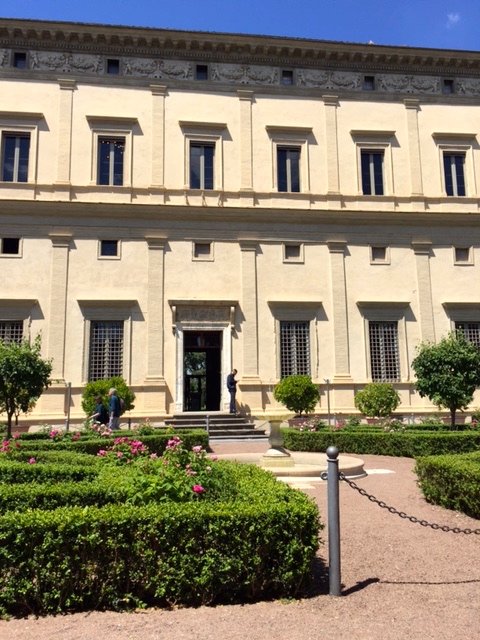
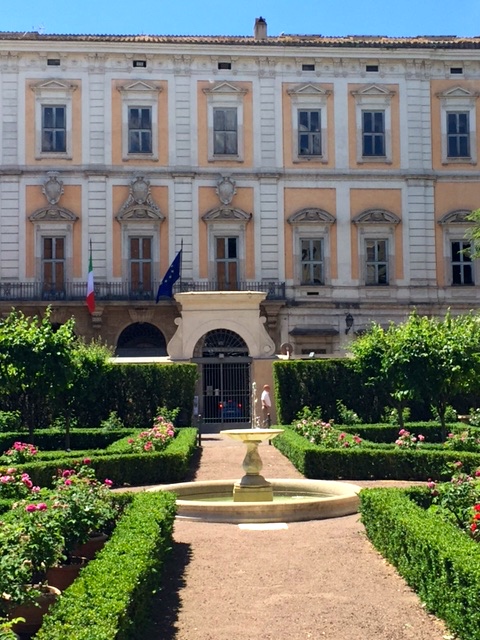
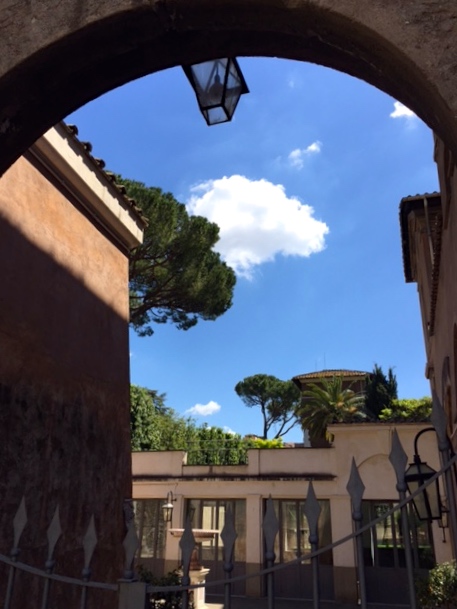
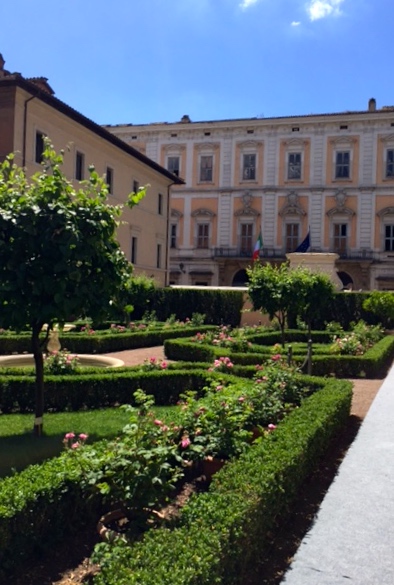
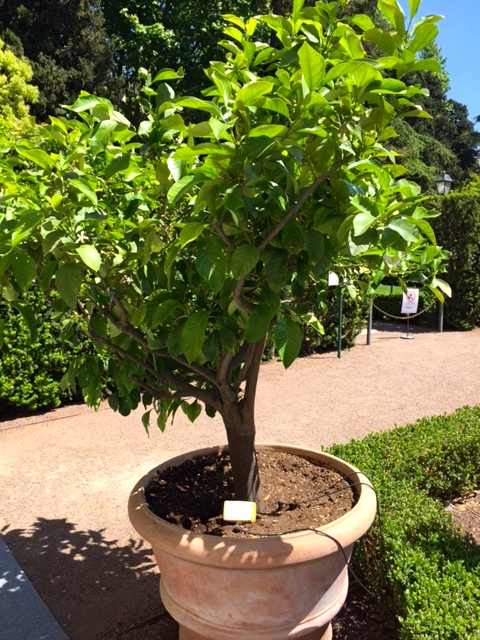
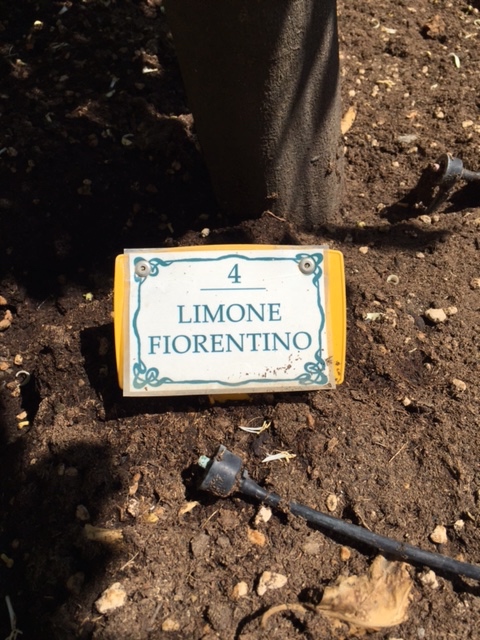
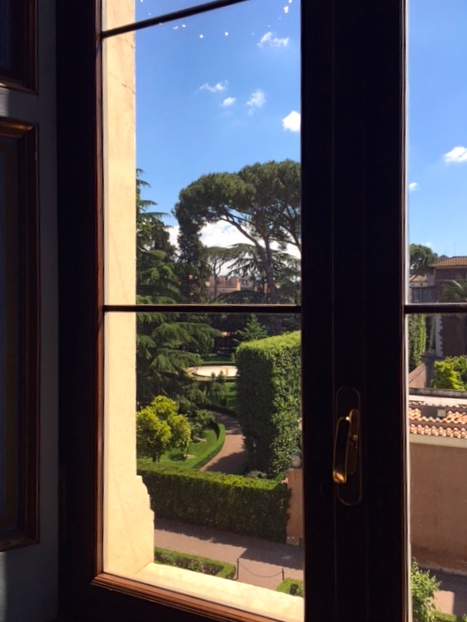
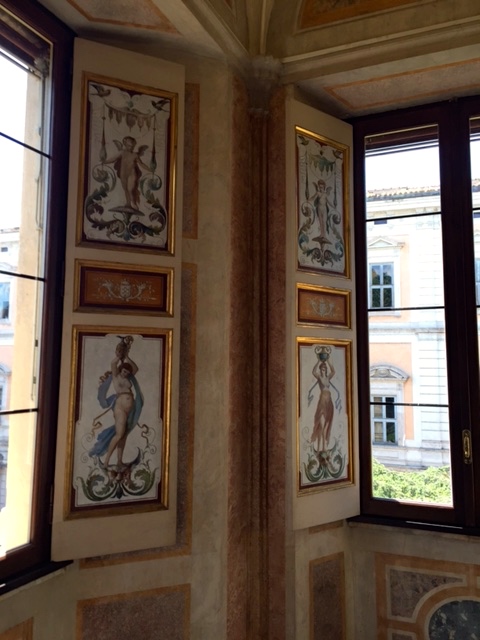
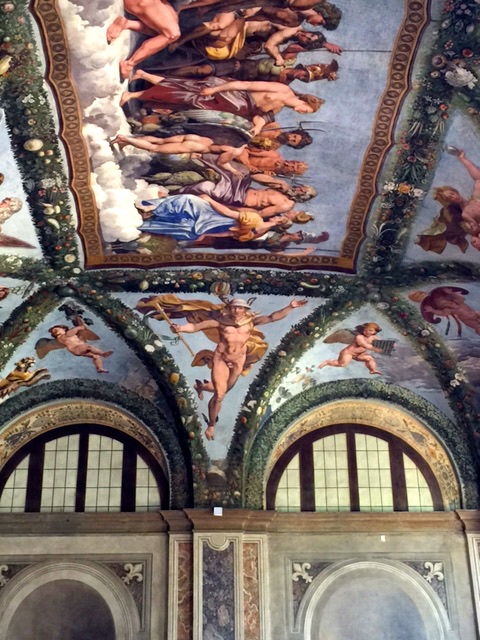
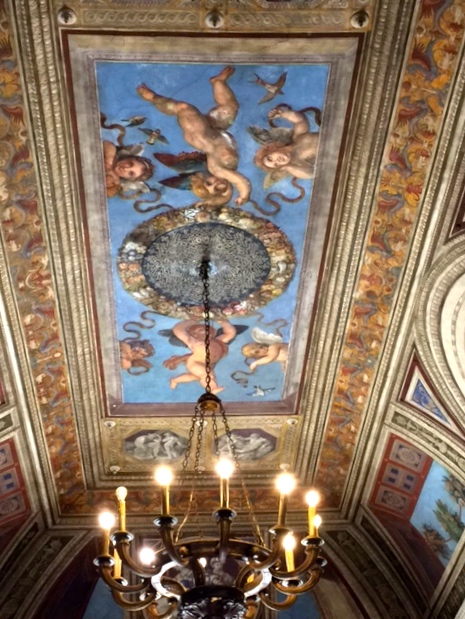
Until then, here are some shots I snapped with my phone camera at the gorgeous Villa Farnesina today. The place is so amazing, even the phone shots are pretty great! Also, the weather….70 degrees and sunny skies.
Allora, on to the Villa, the quintessential Renaissance palazzo.
The Villa’s exterior:
Before we head inside, let’s have a history lesson.
Villa Farnesina: a Renaissance suburban villa in the Via della Lungara, in the district of Trastevere in Rome.
The villa was built for Agostina Chigi, a rich Sienese banker and the treasurer of Pope Julius II. Between 1506–1510, the Sienese artist and pupil of Bramante, Baldassarre Peruzzi, aided perhaps by Giuliano da Sangallo, designed and erected the villa.
The novelty of this suburban villa design can be discerned from its differences from that of a typical urban palazzo (palace). Renaissance palaces typically faced onto a street and were decorated versions of defensive castles: rectangular blocks with rusticated ground floors and enclosing a courtyard.
This villa, intended to be an airy summer pavilion, presented a side towards the street and was given a U shaped plan with a five bay loggia between the arms. In the original arrangement, the main entrance was through the north facing loggia which was open. Today, visitors enter on the south side and the loggia is glazed.
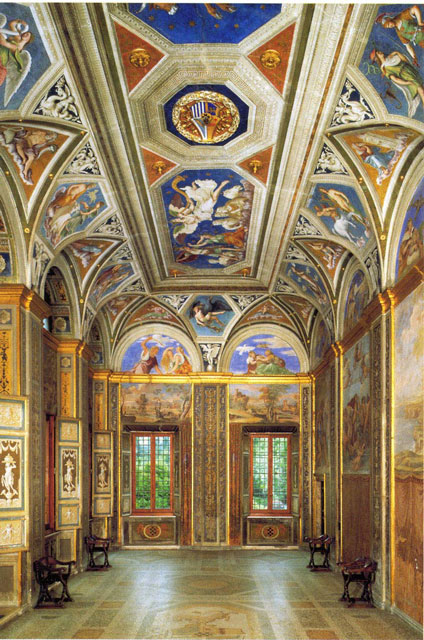
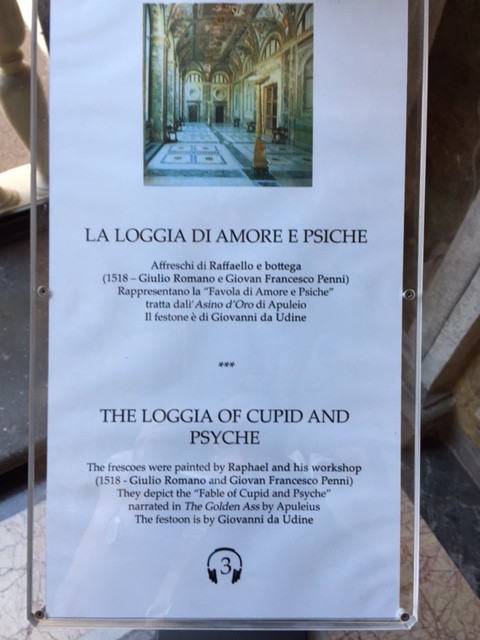
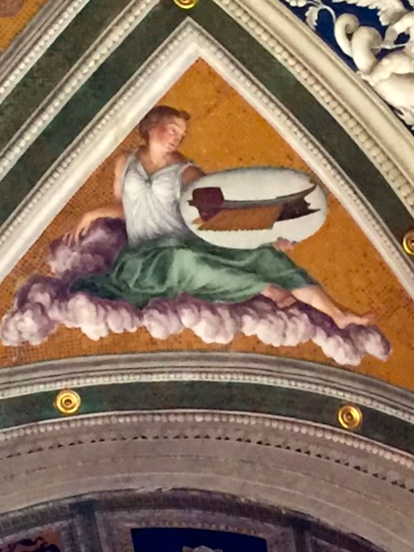
Chigi also commissioned the fresco decoration of the villa by artists such as Raphael, Sebastian del Piombo, Giulio Romano, and Il Sodoma. The themes were inspired by the Stanze of the poet Angelo Poliziano, a key member of the circle of Lorenzo de Medici.
Best known are Raphael’s frescoes on the ground floor; in the loggia depicting the classical and secular myths of Cupid and Psyche, and The Triumph of Galatea. This, one of his few purely secular paintings, shows the near-naked nymph on a shell-shaped chariot amid frolicking attendants and is reminiscent of Botticelli’s The Birth of Venus.
This same “Galatea” loggia has a horoscope vault that displays the positions of the planets around the zodiac on the patron’s birth date, 29 November 1466. The two main ceiling panels of the vault give his precise time of birth, 9:30 pm on that date.
On the piano nobile, Peruzzi painted the main salone with troupe l’oeil frescoes of a painted grand open loggia with city and countryside views beyond. The perspective view only works from a fixed point in the room otherwise the illusion is broken.
In the adjoining bedroom, Sodoma painted scenes from the life of Alexander the Great, the marriage of Alexander and Roxana, and Alexander receiving the family of Darius.
The villa became the property of the Farnese family in 1577 (hence the name of Farnesina). The Villa’s second owner, Cardinal Alessandro Farnese, became Pope Paul III in 1534, and the Farnese family’s wealth and influence continued to soar. Also in the 16th century, Michelangelo proposed linking the Palazzo Farnese on the other side of the Tiber River, where he was working, to the Villa Farnesina with a private bridge. This was initiated, remnants of a few arches are in fact still visible in the back of Palazzo Farnese towards via Giulia on the other side of the Tiber, but was never completed.
Today, the Villa is owned by the Italian State; it accommodates the Accademia dei Lincei, a long-standing and renowned Roman academy of sciences. Until 2007 it also housed the Gabinetto dei Disegni e delle Stampe (Department of Drawings and Prints) of the Istituto Nazionale per la Grafica, Roma.
The Villa’s interior (better photos are coming, in about 2 weeks; see above):


.jpg)
_-_Chapiteaux.JPG)








 get back, lauretta!
You must be logged in to post a comment.