Tango in Florence
Italy
Funny/Gorgeous Sophia Loren
~~~~~~~~~~~~~~~~~~~~~~~~~~~~~~~~~~~~~~~~~~~~~~
“Everything you see I owe to spaghetti.”― Sophia Loren
~~~~~~~~~~~~~~~~~~~~~~~~~~~~~~~~~~~~~~~~~~~~~~

Wise Leonardo da Vinci


It had long since come to my attention that people of accomplishment rarely sat back and let things happen to them. They went out and happened to things. Leonardo da Vinci

What not to do. Per favore!
Florentine Silk
From today’s New York Times.
Down a quiet lane in the San Frediano district of Florence, beyond an iron gate and leafy courtyard, is Antico Setificio Fiorentino, the sole remaining artisan silk workshop in the city. Since moving to this location (Via Lorenzo Bartolini 4) in 1786, the small factory has maintained uninterrupted production, despite wars and floods. The art of silk-making in Florence flourished in the Renaissance, when noble families amassed fortunes and fame by producing exquisite silks. That tradition endures at Antico Setificio Fiorentino, where silks are woven by hand on antique looms using Renaissance patterns.

FLORENCE | A silk loom at Antico Setificio Fiorentino. Credit Stefano Ricci /ASF by Bernardo Conti
~~~~~~~~~~~~~~~~~~~~~~~~~~~~~~~~~~~~~~~~~~~~~~~~~~~
During a recent tour, the designer Maurizio Bonas rattled off the illustrious names of historic Florentine clans — Corsini, Pucci, Strozzi — whose signature patterns are still being produced. “When you go inside many historical houses in Italy, it’s Antico Setificio that did them,” said Mr. Bonas, who noted that the factory’s silks also adorn rooms in the Vatican, the Palazzo Vecchio and the Tribuna degli Uffizi in Florence, and even in the Kremlin in Moscow.
“To make these kinds of fabric, we cannot use the modern machines,” Mr. Bonas said, pulling out a roll of sumptuous blue embroidered silk velvet made with 350,000 stitches per meter. One worker who was weaving a cream-colored damask from a design named for the Renaissance painter Pinturicchio could be expected to complete only 80 to 100 centimeters of the fabric per day. And because the small factory employs only 20 artisans, production is predictably limited — and costly. In the adjoining showroom, walls are lined with bolts of silk, from plush velvets and intricate damasks to diaphanous taffetas, 110 to 1,360 euros (about $135 to $1,670) per meter. Decorative pillows are adorned with hand-woven trims. And, on a table, a basket is filled with sachets made of Ermisino, a shimmering silk taffeta that dates back 500 years. Inside each is potpourri from Officina Profumo-Farmaceutica di Santa Maria Novella, a 400-year-old pharmacy that has partnered with Antico Setificio for, as Mr. Bonas said, “only 250 years.”
A more recent partnership with the Stefano Ricci luxury men’s wear label, which acquired Antico Setificio in 2010, means the designer’s nearby store now stocks wearable wares made with Antico Setificio’s fine silk. INGRID K. WILLIAMS
Italiano uno (Italian 1) Quando o quanto? When or how much?
Ti amo! Ti amo!
Oh, my darling, when do you love me? How much do you love me?

Quando? When?
Quanto? How much?
Preview! A sample of things to come!

The Baptistry in Firenze, all dolled up in 60’s pop colors. Hmmm. I wonder where this is headed…stay tuned, ragazzi!
Mariano Fortuny, Renaissance man

Do you know what this lovely objet is?
~~~~~~~~~~~~~~~~~~~~~~~~~~~~~~~~~~~~~~~~~~~~~~~
~~~~~~~~~~~~~~~~~~~~~~~~~~~~~~~~~~~~~~~~~~~~~~~
How about now?

~~~~~~~~~~~~~~~~~~~~~~~~~~~~~~~~~~~~~~~~~~~~~~~
~~~~~~~~~~~~~~~~~~~~~~~~~~~~~~~~~~~~~~~~~~~~~~~
Are you stumped? I’ll give you a clue.

Like a lot of the world’s best stuff, it comes from Italy. The objet under discussion actually comes from Venice.
Venice is home to many marvels. One of my favorites among them all is the Fortuny Museum.

If you are lucky enough someday to find yourself in Venice with a little extra free time, then consider yourself fortunate indeed! If this unusual scenario is yours, then you owe it to yourself and to the gods of fortune to get off the typical turista track and hightail it over to this museum in this fabulous old palazzo. Trust me, you’ll be glad you did.
For there you will find lots of this stuff.
Lots and lots of it. It is a textile.
You will find it in dresses.
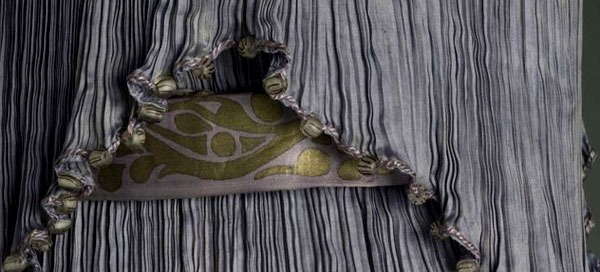
Lots and lots of very amazing dresses:
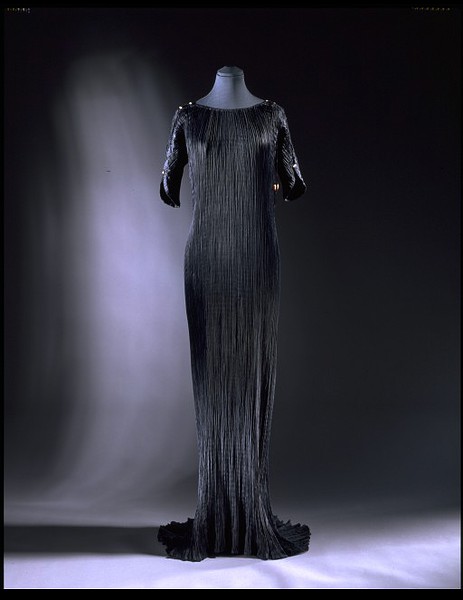


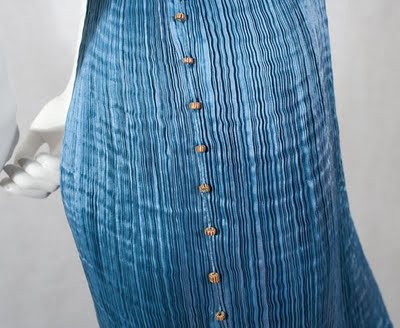


And all of it was designed by this one man, Mariano Fortuny.

Are you familiar with the amazing artistic career of Mariano Fortuny y Madrazo (1871-1949)? If not, you should be! Let’s get to work!

As you can see from this portrait, Fortuny was very “artistic!” Quote unquote! His contemporaries considered him to be a Renaissance man, for he was astoundingly creative and versatile, working in many media.
Fortuny was, like all of us, influenced by the contemporary styles and designs of his day. These fashions were informed by the latest aesthetic and functional concepts promoted by reformers of the applied arts, such as William Morris and Edward Burne-Jones. Leaders of the Arts and Crafts movement, the theories of these men and others called for a modern style freed from the restraints of convention.
Fortuny was born in Spain, the son of the painter Mariano Fortuny y Marsal. His mother was the daughter of another famous painter, Raimundo de Madrazo y Garreta, so Fortuny came by his artistic abilities naturally.
Sadly, Forturny’s father died when he was only three, but his mother supplied him with an extraordinary childhood. She moved her family to Paris after her husband’s death in Spain and in 1889 the family moved again, settling finally in Venice. Lucky Venice!
Fortuny’s mother was an inveterate collector of rich, oriental textiles and had collections of them from the various shops she had visited throughout Europe. Her son spent his childhood around these gorgeous fabrics and adopted his mother’s love for them. It is said that as a child he amused himself by tinting various fabrics to see what effects he could achieve.
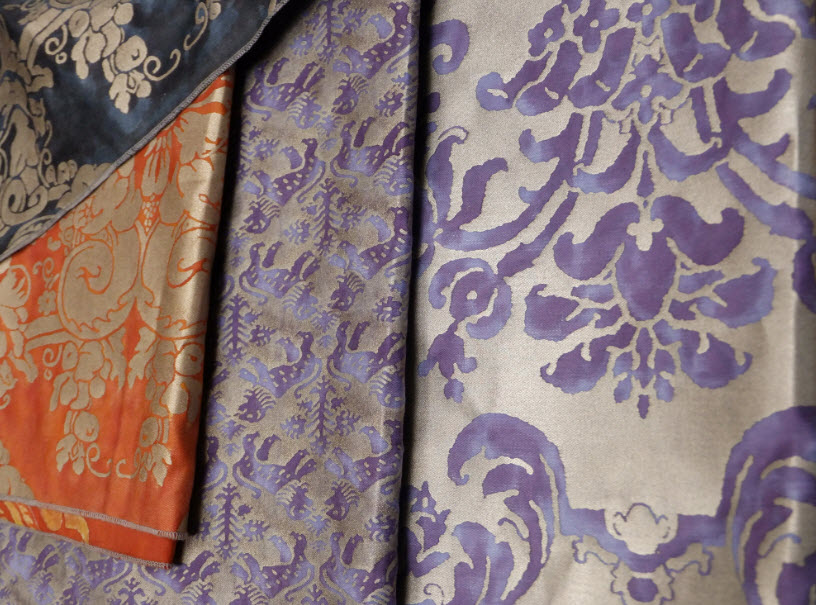
As Fortuny reached his maturity, it became apparent that he was an extremely gifted person with many artistic abilities. He was successful in an astounding number of media, including painting, photography, sculpture, architecture, printmaking and even theatrical stage lighting. His creativity led him to register and patent more than twenty inventions between 1901 and 1934.
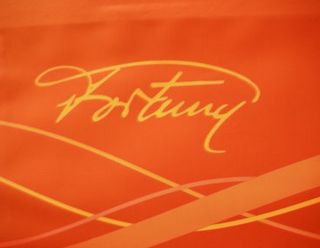
The world remembers him mainly, however, for his contributions to fabric design and for a few fabulous garments. He opened his house of couture in 1906.

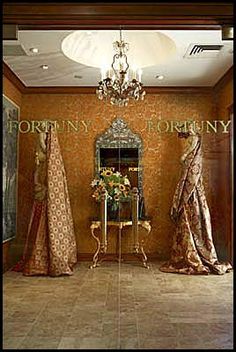
Fortuny is best remembered for his dress designs, which were fabricated from an innovative pleated silk, produced by machines designed and patented by the artist himself. Modern eyes will see Fortuny’s fabric and usage as a forerunner to Issey Miyake’s designs.
The artist:

In 1907, Fortuny created his most spectacular Art Nouveau dress, the so-called “Delphos robe” in his signature pleated silk. The dress was worn by theatrical legends Isadora Duncan and Sarah Bernhardt.


Designed in a revolutionary shape, inspired by ancient Grecian gown, the long dresses were simple and loose, artistic and functional; their borders were usually finished with Venetian colored glass beads, which were both ornamental and functional.

These finely pleated fabrics fall to the floor in long vertical lines, while closely following the sleek figure below. This is the Fortuny manner. When you hear someone refer to a Fortuny dress, this is what they mean.

All the pleated and printed silk, the dresses, and the scarves were hand-made in Fortuny’s studio, as were the multi-colored velvets, the satin linings, the silk cording and belts. Before being made up, the silks were dyed in every color imaginable, with different designs or color combinations.

It is a lot of fun to have a Vogue Magazine clipping from 1912 which discusses the current trend of all things Fortuny in America.

It is almost impossible to read the Vogue article here, but you can find it online here: http://www.oldmagazinearticles.com/Mariano_Fortuny_Article_Knossos_Scarf_Vogue_Magazine_1912. Do you take time everyday to thank the gods of fortune for the internet? I do! I really do.
Vintage Fortuny gowns have labels like this:

and this:

Here’s a vintage Fortuny, with one of his jackets on top:

And another:

Every little once in a while, a Fortuny style gown is resurrected for current fashionistas:


Fortuny devoted his life to “Art” with a capital A, and was not only an accomplished dress and fabric designer, but he excelled in stage design as well general interior design.


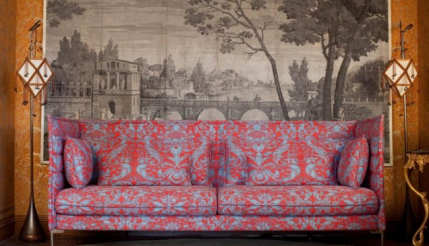


Fortuny invented methods of textile dyeing and printing, which allowed him to reproduce the depth of color and beauty of ancient brocades, velvets, and tapestries. In 1919, he he moved his textile workshop to a former convent on Giudecca, which is one of the many islands in the Venetian lagoon.

Luxe fabrics such as this one are signatures of Fortuny. The rich color is immediately suggestive of Venice in particular and Italy in general.
Here’s another:
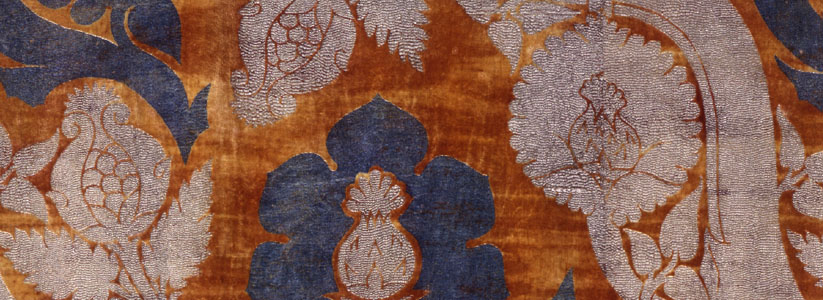
And another:

I could go on like this forever:
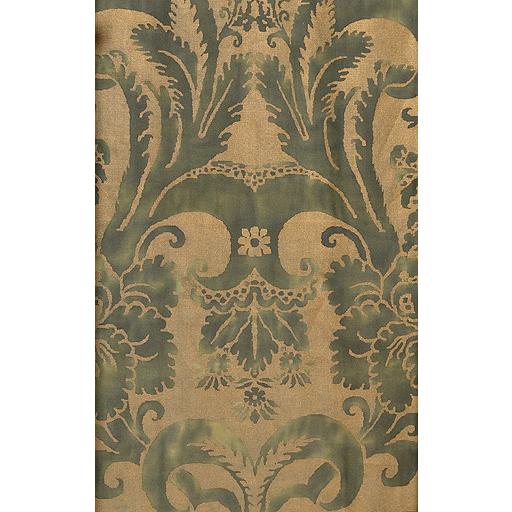
And ever:
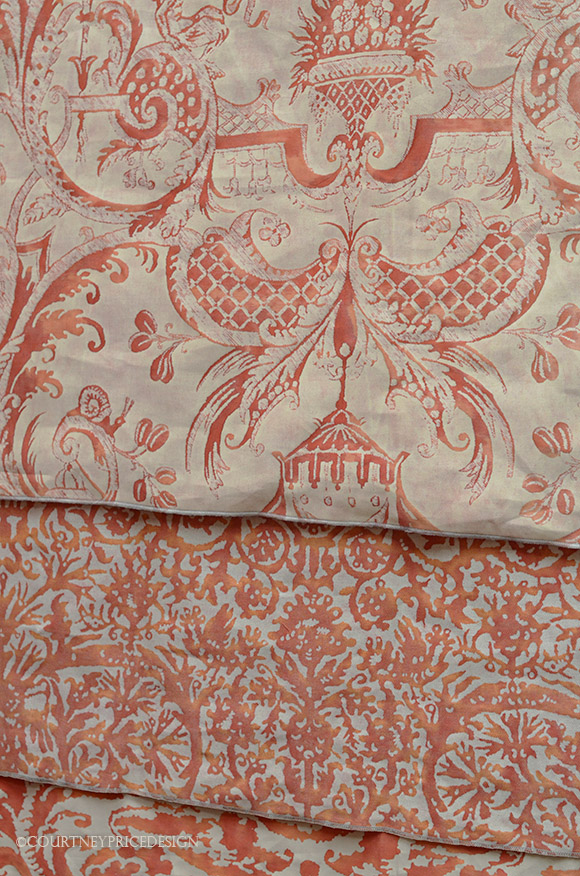


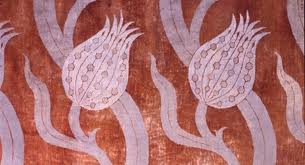
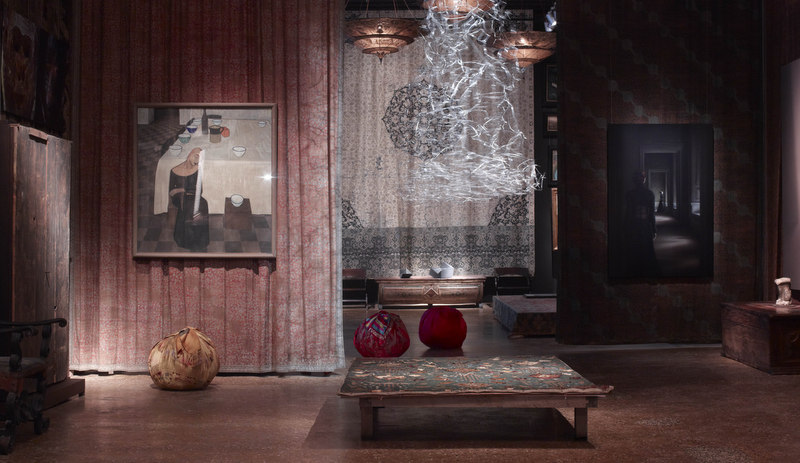
Here is another look at the Fortuny Museo:
A vintage shot of the artist in his library in his Venetian palazzo:

As if all of the above was not enough, Fortuny also created elegant lamps which diffused subtle light through opalescent silk shades, stretched over delicate wire form. The silk was hand-painted with gold motifs inspired by Oriental art and as a finishing touch, the lamps were decorated with glass beads and silk cording.
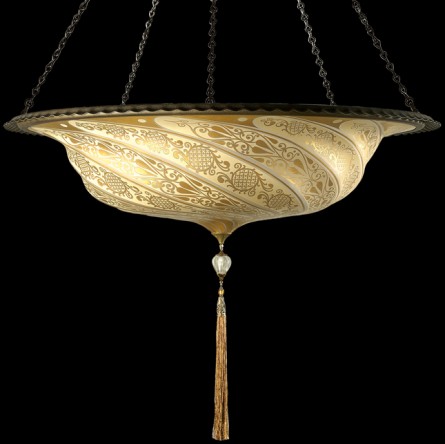
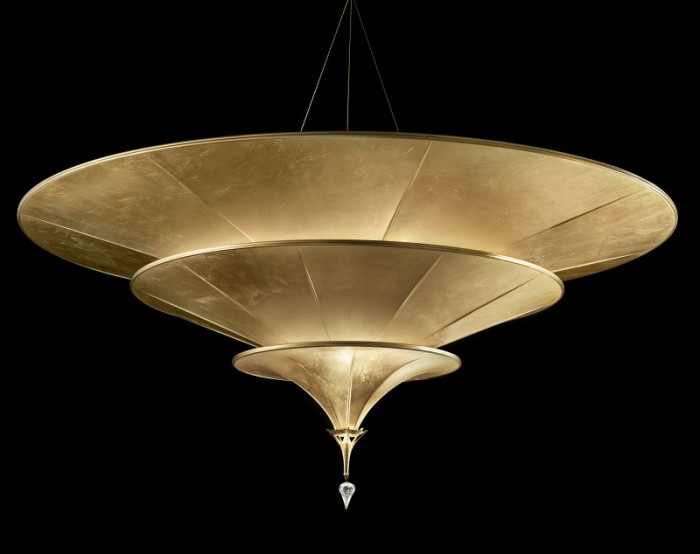
Here are two small lampshades for wall sconces.

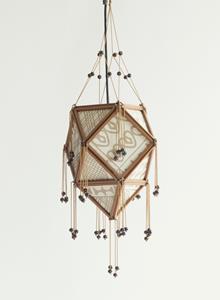
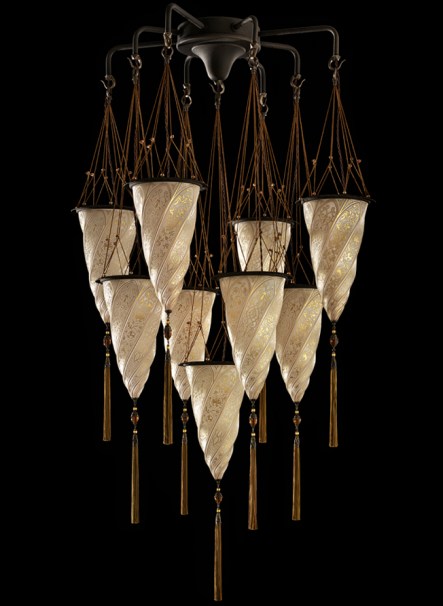
Fortuny’s life and work was a source of inspiration to the French novelist Marcel Proust. Not bad!
Roman Holiday
Oh, how I love this movie! It is my favorite single film of all time.
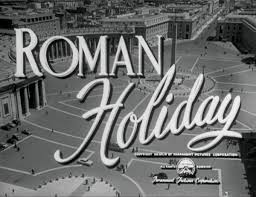
It was released in 1953, which was a very good year! It was Miss Hepburn’s first starring role in an American film, even though the whole thing was set in Rome. It has a fantastic story which is as moving as it is comedic.

Audrey Hepburn and Gregory Peck on a Vespa (bzzzz, bzzzz, vespa means hornet in Italian) with Rome as a backdrop. It doesn’t get any better than that! All of my favorites in one shot.

Here the actors appear on the iconic Spanish Steps. Miss Hepburn was the perfect age to play a European princess and Mr. Peck was completely believable as a seasoned American journalist looking to get a scoop on a story. (This is an important distinction, for not every American leading man will be a believable love interest for the amazing Miss Hepburn in her future films.)
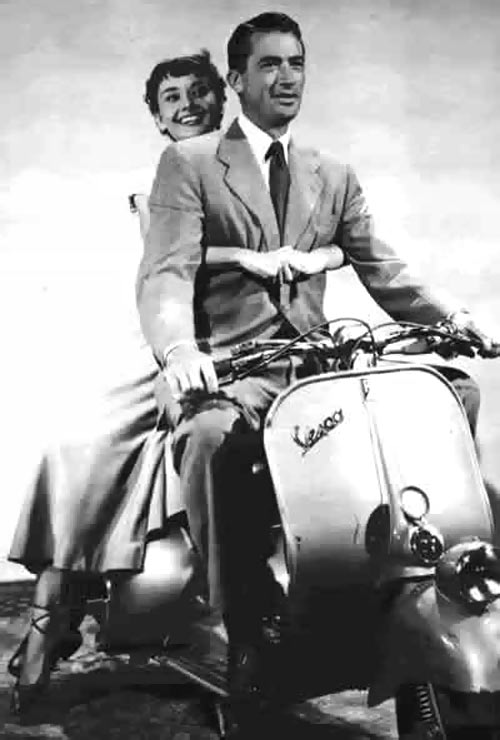
A publicity still.

I didn’t discover this movie until I was an adult, but it didn’t matter, I fell for it completely. And then, one time I was visiting my friend, Grayce Murabito, in her little village, Casoli di Camiore, near Lucca, and I met the very charismatic Eddie Albert who also had a major role in the film. Grayce and Eddie had been an entertainment duo in their early professional careers. I will write a post on them soon.
Here is a still of all 3 of the movie stars, Audrey, Gregory, and Eddie.

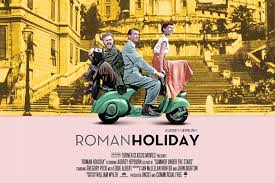
Which was turned into a great poster:
When the movie begins, we meet the character Miss Hepburn plays, Princess Ann. She is a very miserable young royal who is stifled and bored in her constant round of official presentations, even when they are in Rome.

She wants nothing but a little fun in her life and to be released from always doing the right thing.
After she has been all but tucked into bed by her female attendants in her glamorous Roman chamber, she manages to break free.
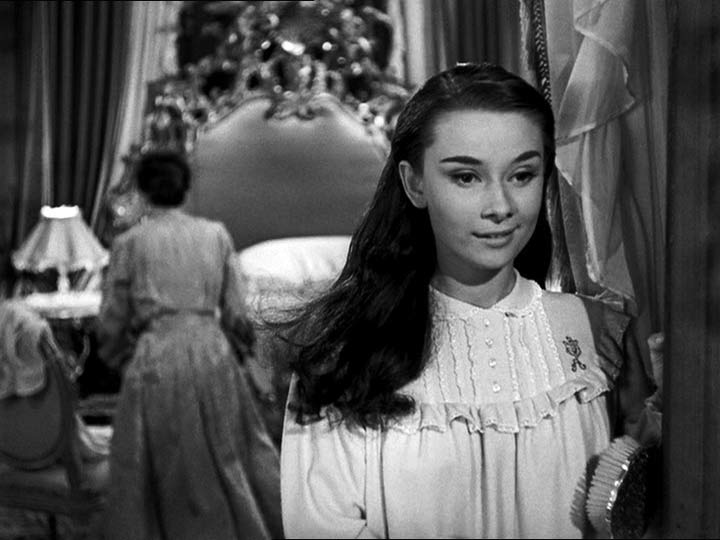
Some hi jinx ensue and she winds up in the care of an American journalist who coincidentally is in desperate need of a scoop. For quite a while he doesn’t realize he has one.

In the meantime, the princess tastes freedom. For starters, she gets her hair cut. She wanders around the streets of Rome, caught up in the sweet pleasure of her freedom to do just as she likes (dolce far niente), and when she strolls by a hairdresser, she can’t resist going in for a break-all-the-rules fashionable haircut.


Of course her new pixie haircut looks marvelous on her because, after all, she is still Audrey Hepburn!
So, heartened by her new hairstyle, Princess Ann does other daring things, like ride around Rome on a Vespa with an American man.

And wander the streets of Rome freely, meeting the people.

And attending an ordinary dance for ordinary people, at which she dances with her handsome journalist friend.

And sleeping in his tiny apartment in his pajamas.

She and her journalist friend visit the famous la boca della verita (the mouth of truth) in Rome. Joe Bradley tells her the myth, which purports that, if you put your hand into the mouth of this sculpture and tell a lie, your hand will be bitten off.
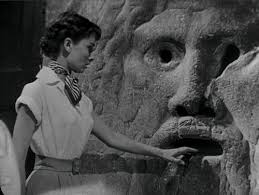
Ann is apprehensive, but tests it. Then she and Joe collapse in laughter at her silly fears.

Along with tasting freedom, the princess also inadvertently gets a taste of love in her dashing co-conspirator. Only she doesn’t know he knows who she is and that he is actually setting her up.

But he has fallen in love with her as well. How could he not? The entire western world was falling in love with Audrey Hepburn right then, no matter what role she was playing.


In the end, she goes back to her duties and you will have to watch the film to find out how Joe Bradley winds up using his scoop.
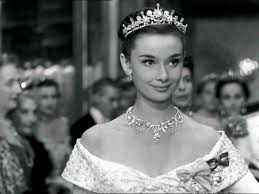
Here’s another still with some technicolor added later. The princess has discovered gelato as well as freedom.
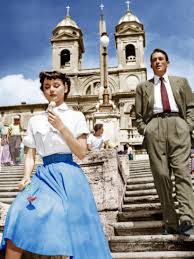
The critics and the public alike were captivated by Audrey and her performance in Roman Holiday and she was feted with multiple awards. Miss H was the first actress to win an Academy Award, a Golden Globe and a BAFTA Award for a single performance. This beautiful film set Miss H up for a series of great upcoming performances on the American screen.

It is sweet to look at this candid photo of the two lead characters playing cards during a break from filming in Rome.

Sigh. It is such a beautiful film. Run, don’t walk, to see it as soon as possible. Ride your Vespa if you can.
Ciao a tutti!
Post script: Famed Hollywood designer, Edith Head, created the looks Miss Hepburn wore. Here is Miss Head.
:
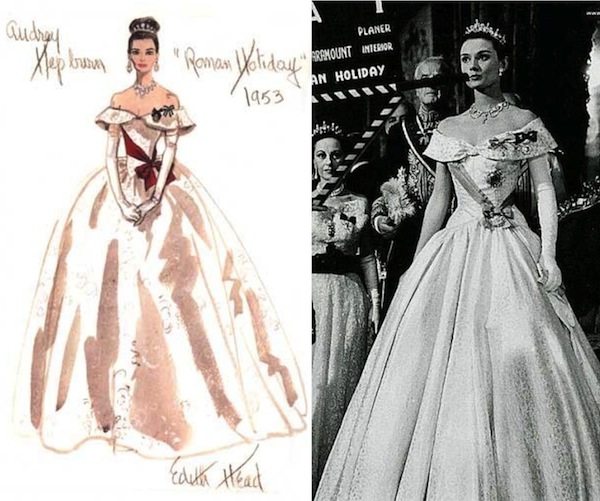
And here is the sketch Miss Head designed for the ballgown Princess Ann wears to receive dignitaries.

And, finally, one last, luminous shot of Audrey Hepburn in Rome on the Spanish Steps in color from 1953, for no other reason than I can.
Here’s the vintage trailer for the movie:
B is for Bernini. Meet me in Rome to find him.
When you are nearing the end of the alphabet (which in my case is the front end with A, since I started this exercise with the letter Z), you gotta go Italian. Personally, I don’t think it is ever wrong to go Italian. It is my default. I once spoke Italian to a man in Tokyo because my brain told me I was traveling and so it must be Italy. It wasn’t. But it was funny!
So, Bernini. Think Rome.

Good. Now, drill down.

Great. We are getting there.
The Triton Fountain by Gian Lorenzo Bernini. Check out the hotel at the top of the building behind the fountain. In case you can’t tell who the artist is, they named a hotel for him!

I love the Triton Fountain in the daytime.

I love the Triton Fountain at night.
Very dramatic with the lighting!
But, let’s keep moving. We have other Bernini works to admire.
Let’s go to the Borghese Galleries. First, let’s locate the Villa Borghese grounds in Rome. There they are, at the top of the map below. Gallery Borghese is circled in red in the Villa. Rome looks small in this map. It isn’t.

Now, for the building:

Got it! Gorgeous, right? This is one of my favorite spots in Rome. I have a funny story about a red balloon and a red-haired boy, age 10, aka Jamie, for another day. We bought this balloon just outside the Borghese and it went with us all around Italy, on trains, into buildings, it caused quite a stir. That’s all I can say for now.
So, let’s go inside.

Uh huh. Can you say beautiful in Italian? Bella. Actually, bellisimo would be more appropriate, don’t you think? I certainly do. This is Italian opulence at its finest. Do you see that big white sculpture in the center of this lovely gallery? Let’s go look at it up close. It’s a Bernini!

Nice. Let’s see another view including its luscious setting.

Sweet. I think you can see now why Bernini is considered a virtuoso sculptor! He carved this two figure group in his typically exuberant style, convincingly showing the female figure in the process of transforming from a woman into a tree. What is going on?
The story Bernini is exploiting (in a good way) is that of the god Apollo, who has been struck by Cupid’s arrow. The first girl he sees is Daphne, the maiden daughter of a river god, and he is overwhelmed by her beauty and his desire for her.
Unfortunately for Apollo, Daphne has also been struck by Cupid’s arrow, only her arrow was the kind that made her repel the love of men. So, as Apollo chases her, promising her the moon, she prays to her father, who grants her wish to get away from Apollo. The wish is performed by the nymph Daphne turning into the shrub Daphne. And, for all you gardeners out there, that is where the evergreen Daphne shrub gets its name.
Pretty cool, yes? Let’s look at a detail. See how Daphne’s fingers are turning into leaves and branches? It is very cool indeed.

Our time for today’s tour is almost up, so let’s quick hightail it over to the church of Santa Maria della Vittoria. Let’s find it on a map so you can go there someday without me.

You got it! The A above.
Look for the church.

Isn’t it lovely! Santa Maria della Vittoria. Saint Mary of Victory in English. The Italians have a lot of churches and dedicating a church to Saint Mary would not be specific enough in a city the size of Rome.
So, let’s enter.

Wow, gorgeous. We are most definitely not in Kansas anymore. Look around for the Cornaro Chapel. Let me know when you find it.

Uhh, yeah, you found it. It is kind of hard to miss, don’t you think? Look at all those expensive materials: all colors of marble for starters. Bernini designed the setting as well as the sculpture. Let’s see the statues in the center.

This is another Bernini masterpiece. It is called the Ecstasy of Saint Teresa. A Catholic saint from Avila in Spain described her experience of religious ecstasy in her encounter with the angel is described as follows:
I saw in his hand a long spear of gold, and at the iron’s point there seemed to be a little fire. He appeared to me to be thrusting it at times into my heart, and to pierce my very entrails; when he drew it out, he seemed to draw them out also, and to leave me all on fire with a great love of God. The pain was so great, that it made me moan; and yet so surpassing was the sweetness of this excessive pain, that I could not wish to be rid of it. The soul is satisfied now with nothing less than God. The pain is not bodily, but spiritual; though the body has its share in it. It is a caressing of love so sweet which now takes place between the soul and God, that I pray God of His goodness to make him experience it who may think that I am lying.
Wow. That must have been quite the experience. And you thought art history was boring? Ha! I rest my case.
I think that is enough art for today. Ciao a tutti!

 get back, lauretta!

You must be logged in to post a comment.