It’s hard to keep up!
It’s hard to keep up!
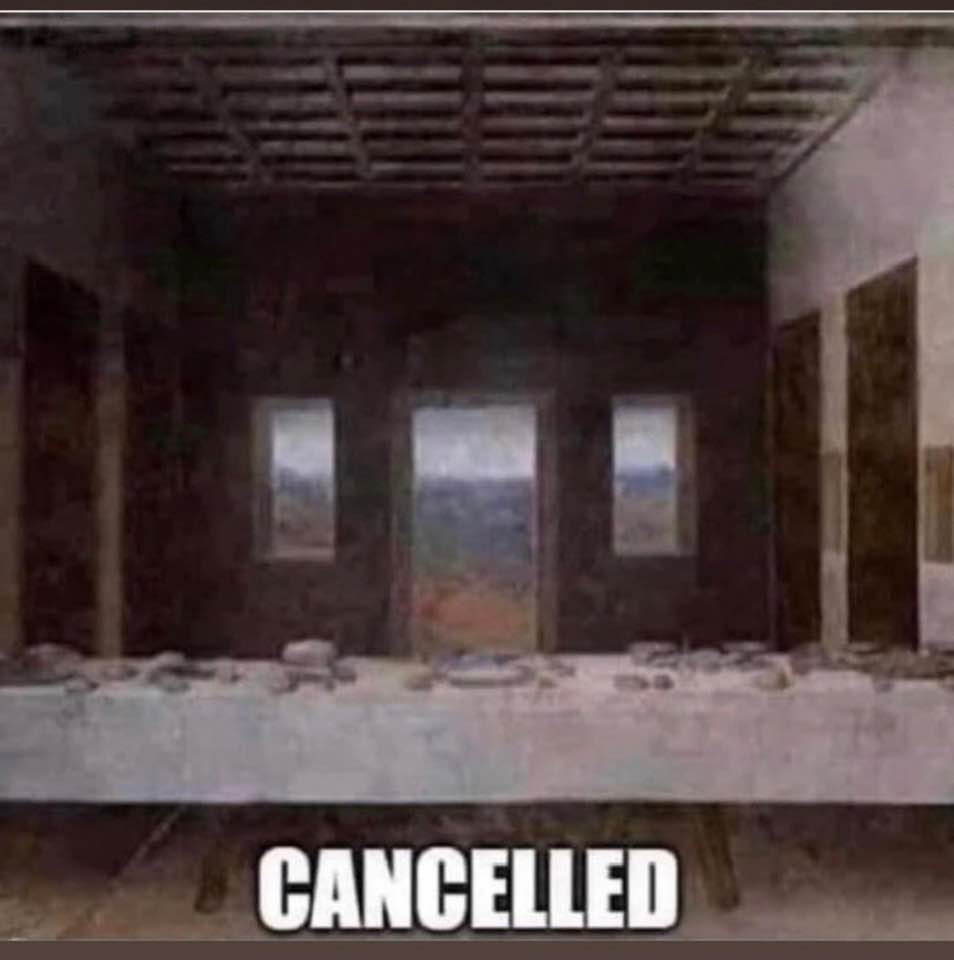
So far, so good. Tutto a posto. Only thing: I must buy a tambourine, see video below.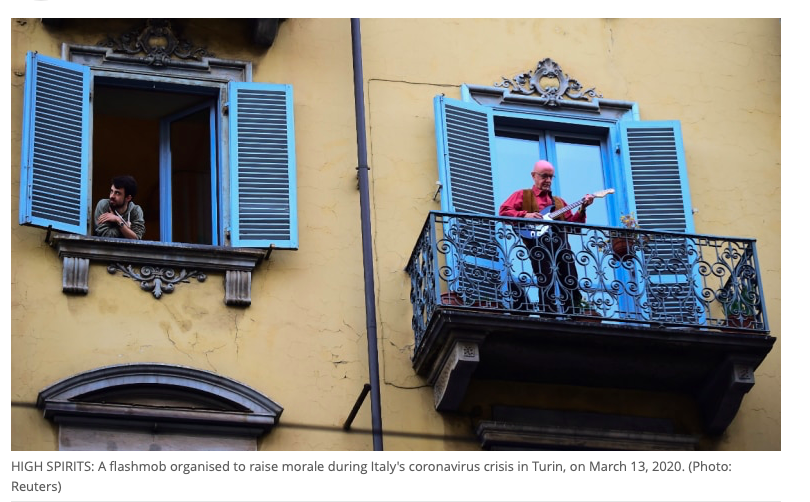
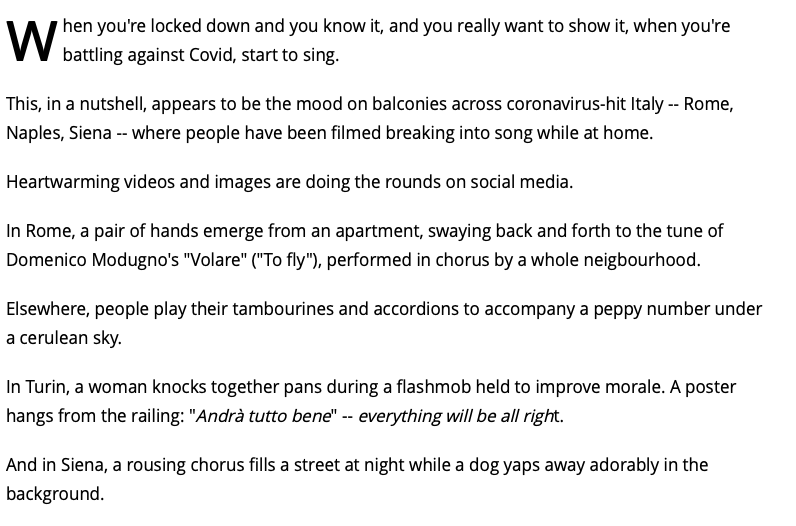
Meanwhile, back in the states:

As of last evening, all stores in Italy are closed except for grocery stores and pharmacies. We are only supposed to go out of our homes to go for groceries or visit the pharmacy. Otherwise, stay home.
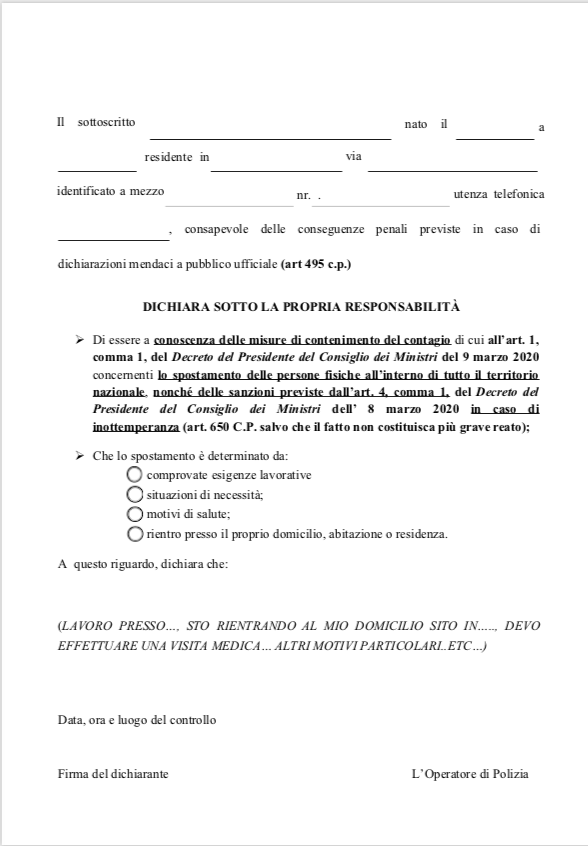
Here’s the new form we need to complete when leaving the house to travel around town. It may or may not be checked.
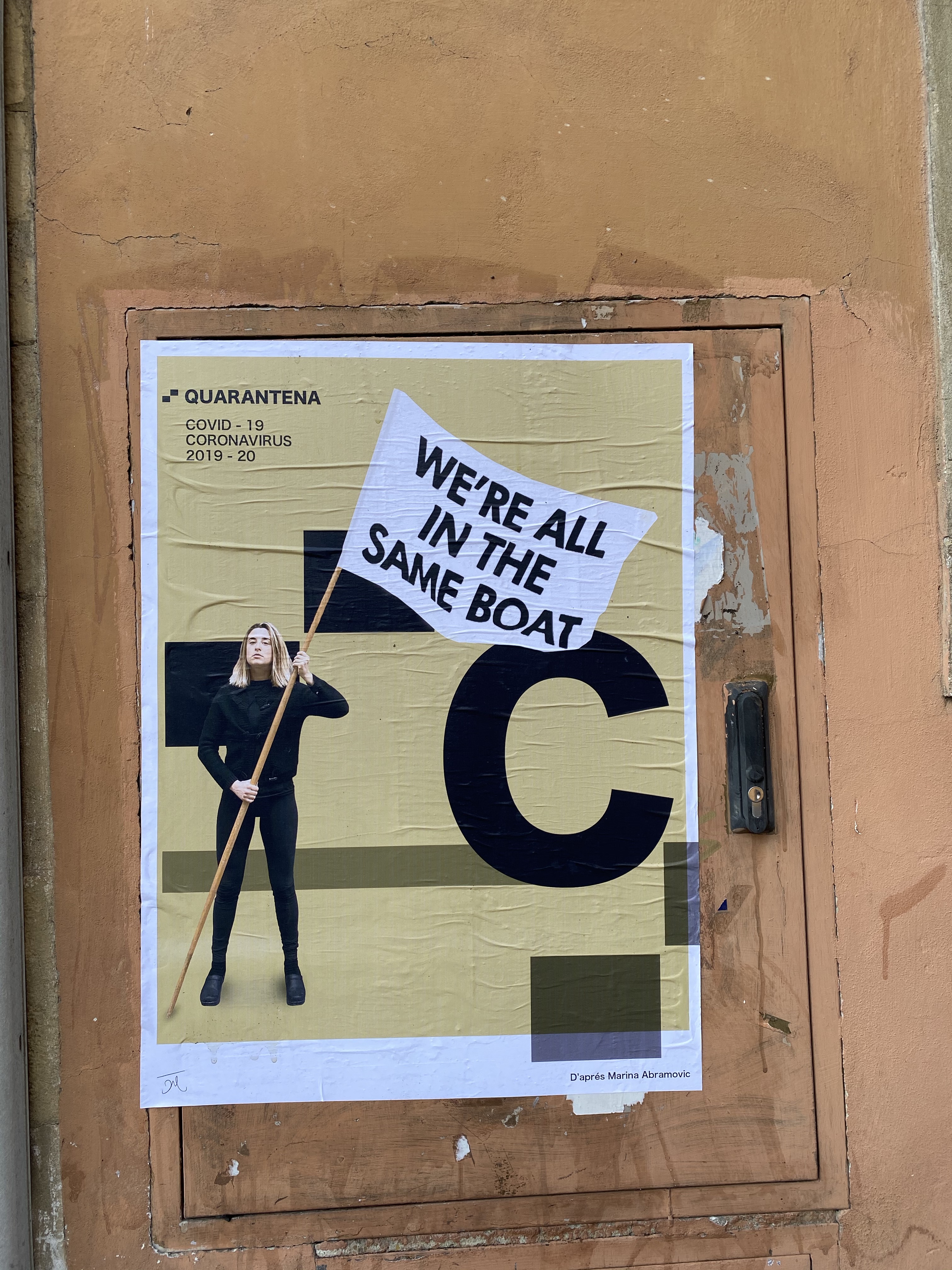
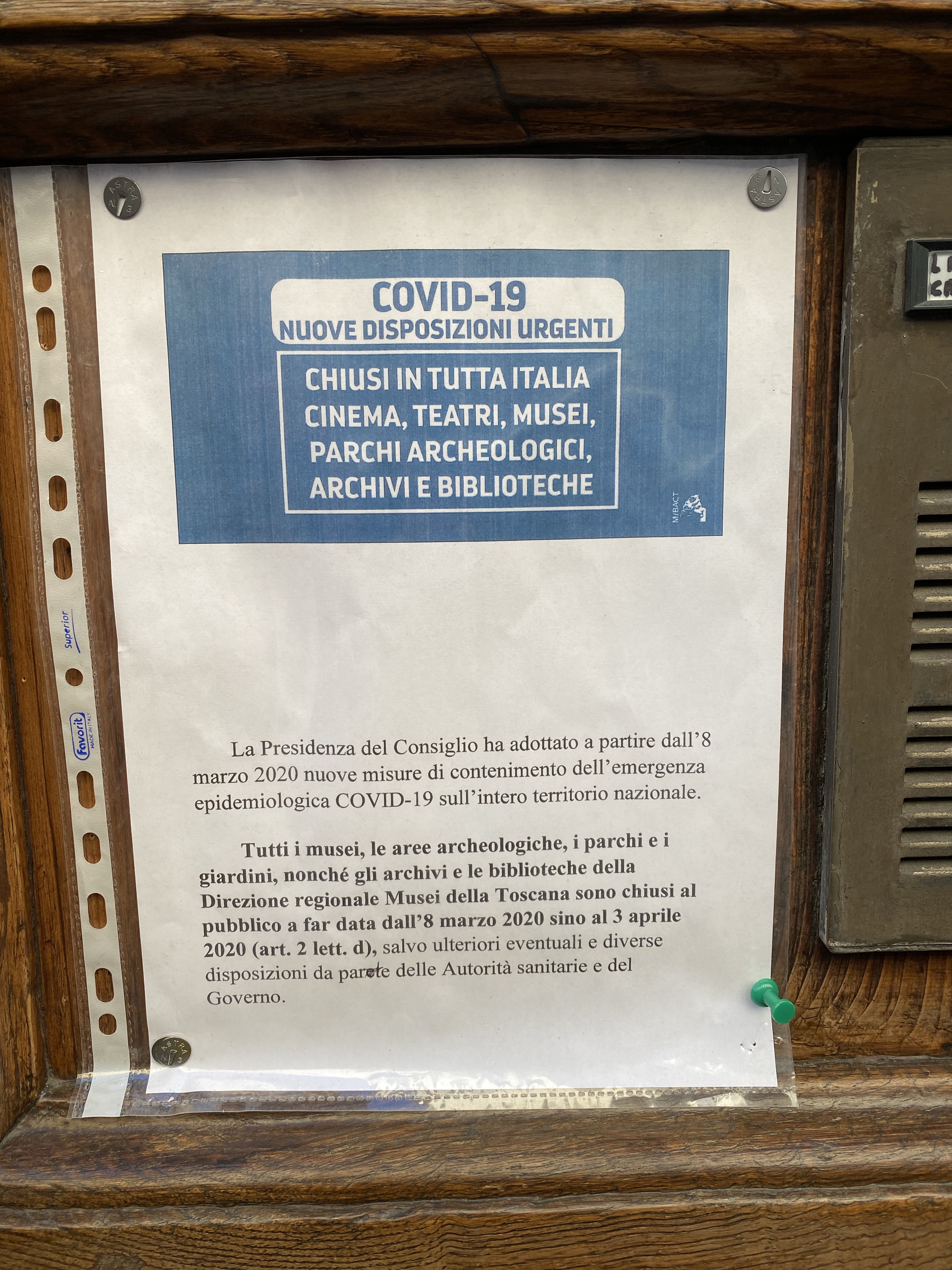
Most of my posts wax poetically over the wonders of life in Florence or Italy in general. And, there are many beautiful things about living on the peninsula.
But, there are some annoying drawbacks too, as anyone with experience can tell you. I thought I’d mention one that has been on my mind.
According to documents you can find on the internet, Italy has an open for free policy on the first Sunday of the month for certain museums. Fortunately, I am at a time in life when a 10 Euro entrance fee doesn’t decide for me whether or not I visit a museum, but when you hear about a free day and decide to take advantage of it, you expect the state museum to be opened as promised.
After consulting my handy-dandy list of which museums in Florence constitute a “state museum,” I discovered that two candidates for last Sunday would be the museum of San Marco and the Bargello. I had read that the policy of free first Sundays had been changed to only the months of October through March, and I thought I had the whole thing figured out and could pay a quick visit for free to San Marco.
When I arrived at the door to the museum part of San Marco on Sunday, March 1, which was obviously the first Monday of the month, I was greeted by a door bolted shut and a sign on the door that said the Museum is closed on the first, third and some other Sunday of every month.
So much for San Marco being a candidate for a free visit the first Sunday.
So, I headed for the Bargello. Incidentally, I had read the Google Map app that the Bargello was closed on March 1, and I wondered if that was because of the coronavirus scare (I read the the Louvre was closed for this reason) or if maybe the museum was actually open despite what the app said.
When I arrived at the entrance to the Bargello, primed for my free visit, I encountered another bolted door and a temporary sign:
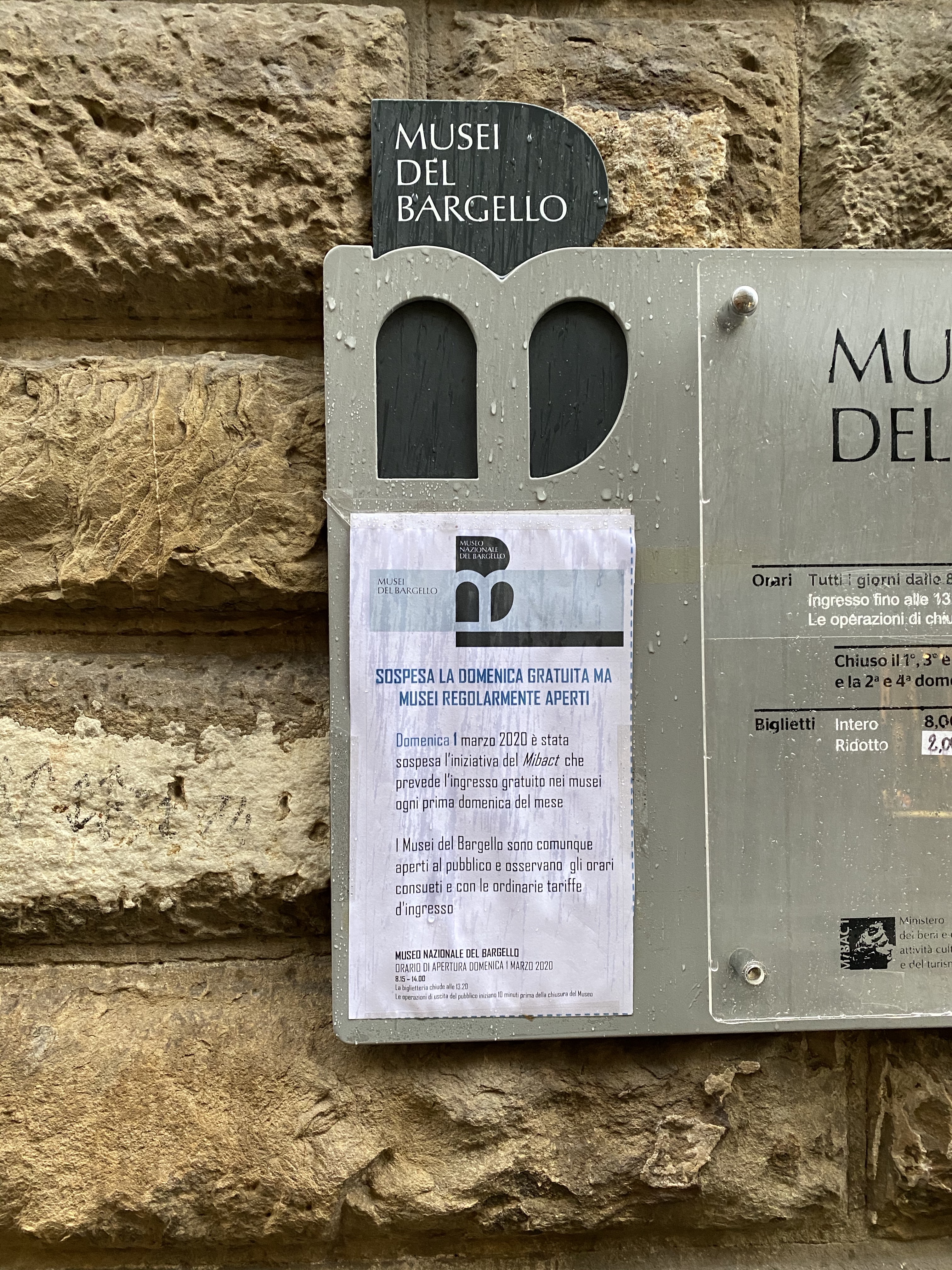
This drenched paper states that the Bargello has suspended the free Sunday visits as of March 1, 2020. It further states that the museum will be open but at the regular cost. But then, the museum was closed.
Chissa? E’ Italia! Welcome to my world!
…be here in February?

or here?

In ancient times, the Carnevale of Florence was among the most brilliant and noisy on the Italian peninsula. From the Medici times forward, members of the same noble families wore the same kind of masks and went through the city until all hours, singing and carrying so many torches it was “as if it were full day.”
The carriages courses had not yet been invented, but the revelry and the noise that was made in the streets in those days made Florence the most carefree and gay city in the world.
Carnival goers would go to the Mercato Nuovo (where the silk merchants and drapery shops were located) with flasks, and also to the Mercato Vecchio, between ferrivecchi and pannilani sellers. The young of all the leading families all took part in this gazzarra of the ball, going around disguised in creative ways and playing pranks on the unsuspecting.
More than anything, however, they tried to throw big balls into the shops so that the merchants were forced to close and send their workers out to have fun too. As long as the matter remained within these limits, people enjoyed at it, especially when in the Old Market they were throwing a ball into the workshop of a iron smith, bringing down pans, tripods and jugs, with a deafening noise.
But, over time, the revelry became excessive and caused riots. When the young nobles threw out balloons that had been soaked in mota, they ruined the fabrics and drapes of the merchants, creating great economic damages.
Hence, quarrels arose and the people objected. If the nobles were creating such problems, the plebs wanted to give them a taste of their own medicine. The commoners used bunches of rags that were drenched in pools and rivulets. These filthy bundles dirtied everything. Violence ensued in retribution.
After hundreds of arrests, the Eight of Guardia and Balìa issued a ban ordering, with the threat of severe penalties, that no one could get out with the ball before 10 pm and before the trumpets of the City had gone on the streets playing the trumpets to warn the merchants.
(Taken from Old Florence by Giuseppe Conti).
 get back, lauretta!
You must be logged in to post a comment.