Florence, where the women are all beautiful and the men are noble, chivalrous, agreeable and wise.

biblio

The Florentine writer, Boccaccio, captured the way the populations of Italian city-states viewed one another on a personal level. In his Decameron, Boccacio disparaged citizens of nearly all Italian cities except his own–Florence–and Bologna.

For example, he calls the Sienese credulous and the Venetians untrustworthy, Pisan women are ugly and Perugian men are sodomites, in the Marches the males are uncouth and mean-hearted, like those from Pistoia, who are also rogues.

The south contributes its share of wickedness with assassins from Sicily and thieves and grave-robbers from Naples, but no people rival the ‘rapacious and money-grubbing’ Genoese, who are depicted as pirates, misers and murderers.

Boccaccio’s happy fornicators and shameless adulterers come from all over Italy, but the only consistently good people live in Florence, where the women are all beautiful and the men are noble, chivalrous, agreeable and wise.

Medieval Italians talked of their city as if it were a kind of paradise, its life regulated by sublime statutes framed by lawyers at the new University of Bologna. They were proud of its appearance, especially as culture was then chiefly civic and communal; the great age of individual patronage, both noble and ecclesiastic, came later. Entire populations would turn out with trumpets and pipes to celebrate an artistic event, as the people of Siena did in 1311 when they escorted Duccio’s Maestà from the painter’s workshop outside the city through the gate in the walls and up to the cathedral.

Since things were constructed in their name – and not, as later, in that of the Medici in Florence or the Gonzaga in Mantua – they could take a proprietorial interest in the paving of streets, the laying out of squares, the building of stone bridges.

Nine centuries after their emergence, the city-states remain embedded in Italy’s psyche, the crucial component of its people’s identity and of their social and cultural inheritance. Modern inhabitants of these cities are still proud of their heritage and feel responsibility for its retention. That is why the town centres – though not unfortunately much of the country outside them – are so well preserved today.

Gilmour, David (2011-10-25). The Pursuit of Italy: A History of a Land, Its Regions, and Their Peoples (Kindle Locations 1262-1271) and (Kindle Locations 1250-1256). Farrar, Straus and Giroux. Kindle Edition.

…In the hierarchy of Florentine guilds of the period the most influential were those of judges, bankers, doctors, dealers in silk, traders in wool and furriers, who were much in demand in winter because pelts were cheaper than cloth. Florence’s Arte dei medici e speziali, which included doctors, surgeons, dentists and opticians, had over a thousand members: after passing their exams doctors had to promise to refrain from taverns and brothels and in return they were rewarded by the city with a horse, an attendant and exemption from paying taxes.  Surviving Florentine guildhalls, such as those of the silk makers and the wool merchants, are among the city’s loveliest buildings.

Gilmour, David (2011-10-25). The Pursuit of Italy: A History of a Land, Its Regions, and Their Peoples (Kindle Locations 1313-1319). Farrar, Straus and Giroux. Kindle Edition.
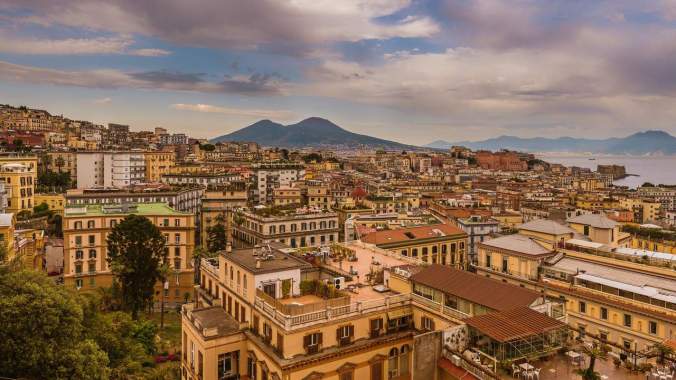


Elena Ferrante’s Naples

Naples-Italy

“The historic center of Naples drips with Old World charm — faded laundry strung between buildings, fish shops spilling tubs of clams and eels onto the sidewalk, pasticcerie tucked near Renaissance churches.”

Thus begins this interesting discussion of Naples and the popular book series.  See the full article here:

http://www.nytimes.com/2016/01/17/travel/elena-ferrante-naples.html?action=click&pgtype=Homepage&region=CColumn&module=MostEmailed&version=Full&src=me&WT.nav=MostEmailed


Childhood recollections; Part 2

Here continues part 2 of my essay entitled “Blunt is engrained in me.”  Part 1 was posted on Oct. 9, 2014.  I was discussing lilacs and their presence at the Mentor Graham Historic Site in Blunt, SD.

Sophie Anderson 1823 –1903, The Time Of The Lilac

sophie_anderson_gallery_1

If you want to completely refresh your lilac shrubs and get them to perform as newly planted shrubs with smaller more flexible branches and a fuller canopy, you may cut all of the stems back to about 12 inches above the earth. It will take the shrubs a few years to recover, but when they do they will completely refreshed.

Thinning inside, competing branch from dwarf lilac.                   images

I didn’t learn that technique from my Master Gardener training, but rather from living in an historic house built in 1795 in Milton, Massachusetts, just outside of Boston. I was privileged to live in that saltbox house for three years in the late 1980s and to be good friends with its owner, Polly Wakefield, whose ancestors came to North America on the Mayflower. Polly was my very own Yankee, a breed apart.  I love the photograph below of Polly in her great outdoors on her estate.

image674-03

With no children of her own, Polly left her vast estate in a charitable trust.              Mary Binney Wakefield

Polly was the last in a long line of “gentlemen farmers”, or, as in her case, a “gentlewoman farmer”, and all the property she inherited was maintained as a land preserve just outside Boston. She was a important member of the very prestigious Massachusetts Horticultural Society and I met her through my research and writing of an article on her ancestor’s tomb in Mt. Auburn Cemetery in Cambridge, MA. I was working as a curator at the Museum of Fine Arts in Boston, and when Polly and I met and came to know one another, we were instantly fast friends. She was old enough to be my mother or grandmother and I was her honorary daughter and my husband was her honorary son-in-law. Polly taught me a lot about horticulture, especially trees and shrubs.

ask-julie-controlling-lilac-sucker-growth-1

But, looking back in time, lilacs figure into one of my favorite memories as a girl in South Dakota. A girlfriend taught me how to make a doll’s pocketbook from a pliable lilac leaf: make a vertical cut along the central vein toward the end of the leaf with your thumbnail, roll the leaf starting at the end opposite the stem, and insert the stem in the slot you made. Other leaves can also be used, but none so well as the humble lilac leaf. These little purses were so sweet and my dolls loved having them. Well, I loved for my dolls to have them, is what I mean!

lilac leaf

Language-of-Flowers

Lilacs symbolized love in the erudite 19th-century language of flowers (which you can Google for more information). But this next fact is going to blow your mind: Walt Whitman, one of the most influential poets in the canon of American literature, wrote a poem entitled “When Lilacs Last in the Dooryard Bloom’d,” which is actually an elegy about the assassination of President Lincoln.

3dd8164aa22b1529a8d59df865c65368

Whitman Drum taps

During the Civil War, Whitman worked in Washington D.C., where he saw up close and personal many of the wounded veterans returning from battle for care. That experience and the unimaginable horror of the assassination of Lincoln on April 14, 1865 led Whitman to write a collection of poems, Drum-Taps (published 1865), in which “When Lilacs Last in the Dooryard Bloom’d” was first published. In the poem, Whitman mourns Lincoln’s death and uses lilacs as a reference to the president. So, we must wonder, did Mentor Graham himself have lilacs planted around his Blunt home in memory of his illustrious student, or is it just a coincidence? I’ve read that Graham and Whitman were both on the podium when Lincoln was inaugurated, so there may indeed be a tie in. These are the kinds of facts that ignite my mind and imagination. It is also possible, of course, that someone planted the lilacs in the Graham yard simply because they provide privacy and are a hardy shrub. Either explanation is logical. One is more evocative, however.

Here is a segment from Whitman’s poem

1

When lilacs last in the dooryard bloom’d,
And the great star early droop’d in the western sky in the night,
I mourn’d, and yet shall mourn with ever-returning spring.
Ever-returning spring, trinity sure to me you bring,
Lilac blooming perennial and drooping star in the west,
And thought of him I love.
2
O powerful western fallen star!
O shades of night—O moody, tearful night!
O great star disappear’d—O the black murk that hides the star!
O cruel hands that hold me powerless—O helpless soul of me!
O harsh surrounding cloud that will not free my soul.
3
In the dooryard fronting an old farm-house near the white-wash’d palings,
Stands the lilac-bush tall-growing with heart-shaped leaves of rich green,
With many a pointed blossom rising delicate, with the perfume strong I love,
With every leaf a miracle—and from this bush in the dooryard,
With delicate-color’d blossoms and heart-shaped leaves of rich green,
A sprig with its flower I break.
4
In the swamp in secluded recesses,
A shy and hidden bird is warbling a song.
Solitary the thrush,
The hermit withdrawn to himself, avoiding the settlements,
Sings by himself a song.
Song of the bleeding throat,
Death’s outlet song of life, (for well dear brother I know,
If thou wast not granted to sing thou would’st surely die.)
5
Over the breast of the spring, the land, amid cities,
Amid lanes and through old woods, where lately the violets peep’d from the ground, spotting the gray debris,
Amid the grass in the fields each side of the lanes, passing the endless grass,
Passing the yellow-spear’d wheat, every grain from its shroud in the dark-brown fields uprisen,
Passing the apple-tree blows of white and pink in the orchards,
Carrying a corpse to where it shall rest in the grave,
Night and day journeys a coffin.
6
Coffin that passes through lanes and streets,
Through day and night with the great cloud darkening the land,
With the pomp of the inloop’d flags with the cities draped in black,
With the show of the States themselves as of crape-veil’d women standing,
With processions long and winding and the flambeaus of the night,
With the countless torches lit, with the silent sea of faces and the unbared heads,
With the waiting depot, the arriving coffin, and the sombre faces,
With dirges through the night, with the thousand voices rising strong and solemn,
With all the mournful voices of the dirges pour’d around the coffin,
The dim-lit churches and the shuddering organs—where amid these you journey,
With the tolling tolling bells’ perpetual clang,
Here, coffin that slowly passes,
I give you my sprig of lilac.
7
(Nor for you, for one alone,
Blossoms and branches green to coffins all I bring,
For fresh as the morning, thus would I chant a song for you O sane and sacred death.
All over bouquets of roses,
O death, I cover you over with roses and early lilies,
But mostly and now the lilac that blooms the first,
Copious I break, I break the sprigs from the bushes,
With loaded arms I come, pouring for you,
For you and the coffins all of you O death.)

If you would like to read the  poem in its entirety, you may find it on the web here: http://www.poetryfoundation.org/poem/174748

lincoln2

ww0034as

Whitman’s recollections of Lincoln were obviously prized during his lifetime.

The authoritative book, Walt Whitman: An Encyclopedia (R.W. French, J.R. LeMaster and Donald D. Kummings, eds., New York: Garland Publishing, 1998) opines about Whitman’s poem and how, in his mind, the lilac symbolized Lincoln :
While the assassination of President Lincoln is the occasion of “When Lilacs Last in the Dooryard Bloom’d,” the subject, in the manner of elegy, is both other and broader than its occasion. “Lilacs” turns out to be not just about the death of Abraham Lincoln, but about death itself; in section 7, just after the poet has placed a sprig of lilac on the coffin, the poem makes a pointed transition: “Nor for you, for one alone,” the poet chants, “Blossoms and branches green to coffins all I bring.” Significantly, Lincoln is never mentioned by name in “Lilacs,” nor does the poem relate the circumstances of his death; indeed, the absence of the historical Lincoln in the poem is one of its more striking features. Historical considerations give way to universal significance. The fact of assassination, for example, is not mentioned, for, while all people die, assassination is the fate of only a few.  http://www.whitmanarchive.org/criticism/current/encyclopedia/entry_67.html

with “F” we have lawrence Ferlinghetti

I’ve always loved his last name.  He was born at the beginning of the 20th century to an immigrant couple: his mother was from France and his father from Brescia, Italy.  His father changed the family’s surname to Ferling in an attempt to make them more American.  When the poet known as Lawrence Ferlinghetti was registering for the service prior to WWII, he found out how Italian, how lilting, his family’s original surname was and took it back.  I applaud him for that.  If I had a last name as musical as his, or as Italian, I’d change it in a heartbeat (as it stands, only my first name is Italian).

tumblr_ll3o9rWh4z1qexowz

Lawrence Ferlinghetti© Soheyl Dahi, 2010

As poet, playwright, publisher, and activist, Ferlinghetti helped to spark the 1950s San Francisco literary scene and the subsequent “Beat” movement. Like the Beats, Ferlinghetti felt strongly that art should be accessible to all people, not just a handful of highly educated intellectuals. His career has been marked by its constant challenge of the status quo; his poetry engages readers, defies popular political movements, and reflects the influence of American idiom and modern jazz.  His City Lights Bookstore was a popular gathering place for San Francisco’s avant-garde writers, poets, and painters.

And for my favorite Ferlinghetti quote:

ferlinghetti

Words to live by.

Three more beauties, a movie, a novel and a MOOC.

https://i0.wp.com/asiabeam.com.nyud.net/v/var/albums/movies/Hula%20Girls/Hula%20Girls%20wallpaper%2002.jpg

Have you seen this charming film? If not, you must!  It is perfectly delightful.

Japanese Film: The Hula Girls

Hula Girls was released in Japan in 2006 and, the following year, swept five major awards from the Japan Academy.  That alone might convince you that it is worth seeing.

Then, when you hear that the heart-warming story is based on a real life group of miner’s daughters in a real Japanese village, who reluctantly turn to dancing the hula in an effort to save their small community:  maybe that will make you want to see it.

But, whatever inspires you, see it!

I loved it.

Ellen Ullman By Blood 

And then there is By Blood, written by Ellen Ullman.  I juust finished reading this masterpiece, which was a New York Times Notable Book last year.

You know how sometimes you get lucky and find a book that you can’t stop reading?  Well, for me, this book was all that.  I read it in under a day because I could not put it down. I tried to do other things yesterday, honest I did.  But when I walked away from this book, I couldn’t stop thinking about it.  I read a lot, and this rarely happens.

By Blood is a must read for anyone interested in current fiction and great story-telling.  It is written with a fresh, new style that keeps the narrative flowing.  You will be amazed.  I promise.

And, finally, my MOOC.

https://i0.wp.com/upload.wikimedia.org/wikipedia/commons/thumb/5/5a/Porch_of_Maidens.jpg/275px-Porch_of_Maidens.jpg

The Ancient Greeks
by Andrew Szegedy-Maszak

You know about these Massive Open Online Courses (MOOC), I presume?  If not, you need to find out about them pronto.  For anyone who loves learning, this is an amazing new resource, a cutting-edge approach to education for the 21st century.  And, it is free.  I am currently enrolled in a history course entitled The Ancient Greeks taught by Andrew Szegedy-Maszak of Wesleyan University.

As a learning or teaching format, this system has some kinks.  For example, if you watch the course videos, and don’t already know a lot about Greek history and name and place spellings, you are going to feel overwhelmed and need to stop the video a bunch of times to look up the spellings.  A word to the planners:  this is not a good thing.  A lot of “students” are going to get frustrated and stop “attending” your lectures.  I also think the “tests” are not currently stressing the most important concepts in learning.  But, again, I want to emphasize that the format is new and being revised, so still try out a course or two.

However, I persevered and overall have been happy that I did. What great access to good professors and new materials in an approachable format.  It is a boon for learners from around the world.  In the online forums, I found myself chatting about the course with people from Hong Kong, South America, all over Europe.

So, try it, I think you’ll like it.

In Memoriam: Boston Marathon, 2013

Like many others from around the world, I have no words to talk about yesterday’s unspeakable horror in Boston. In the hope of finding some solace from this grief, I find myself thinking of some beautiful memories I have of the Public Garden in Boston.

boston-public-garden-in-spring-susan-cole-kelly

Many years ago, I had the pleasure of living in Boston for three years.  Through my work as a curator at the Museum of Fine Arts in Boston, and in particular because of an article I was researching a monument in Mount Auburn cemetery by sculptor Thomas Crawford in Cambridge, I came to know a very distinct landscape architect, who had helped save the Public Garden when it was almost lost.  This fascinating person introduced me not only to her work in rescuing the fine Boston Public Garden, but to the field of horticulture in general. Polly Wakefield and I became friends as we studied her illustrious family’s history and in particular, the marker in Cambridge to her ancestor, Amos Binney. (For my article see, L.  Dimmick, “Thomas Crawford’s Monument for Amos Binney in Mount Auburn Cemtery: A Work of Rare Merit” in the Association for Gravestone Studies journal, MARKERS IX, pages 158 – 195.)

Through our friendship, I was privileged to live on Polly’s family estate in the “farm house” in Milton.  We causally shared many summer Sunday afternoon teas on her magnificent veranda overlooking her gardens, as well as a couple of  Christmas Days in her Isaac Davenport mansion.  My cocker spaniel, Samantha, was best friends with Polly’s corgi, Sally, and we happily watched them romp through the lovely gardens that she designed on the estate too many times to remember.  If you want to read about the very impressive Mary May Binney Wakefield, more information is available here: http://www.wakefieldtrust.org/site/about-us/polly-wakefield-a-brief-story-of-her-life.html.

I am thinking of you today, Polly Wakefield. You opened my eyes to the practice of your profession and to many wonderful horticultural experiences, which eventually changed the focus of my professional life. Horticulture has become the thing that (after my child, obviously) makes my heart beat the fastest, and you inspired me to become a lifelong learner and doer.

These pictures are offered in Polly Wakefield’s memory, as well as to those who were hurt yesterday.  Let us honor the ones who died.

1211_06_10_web

How we all love the Boston Public Garden’s sculptural group entitled Make Way for Ducklings, based on the charming children’s book of the same title by Robert McCloskey.

OLYMPUS DIGITAL CAMERA

It is also sweet to remember E.B. White‘s affection for the Public Garden, captured in his children’s novel, The Trumpet of the Swan. I don’t know if this is a fact or just an fantasy I had, but I believe White lived in The Ritz Hotel across the street from the Garden. Maybe a reader will correct me if I am wrong?

My thoughts are with Boston today and always.

Added later:  this was good to see in the paper: http://www.bostonglobe.com/arts/theater-art/2013/04/16/museums-offer-free-admission-response-marathon-bombings/OZ3Y0QEXmbD0AqgCWq4FVM/story.html