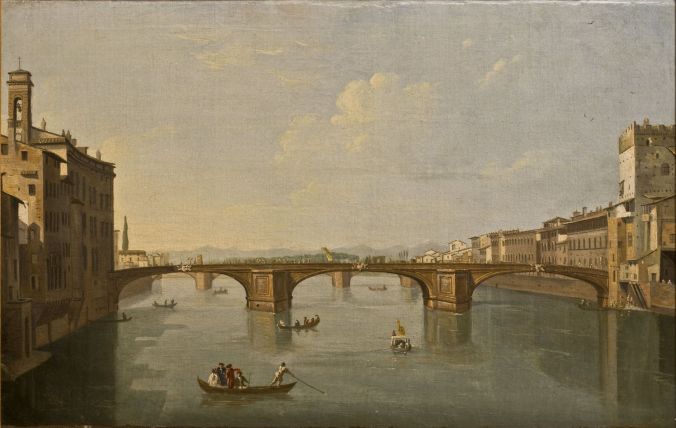
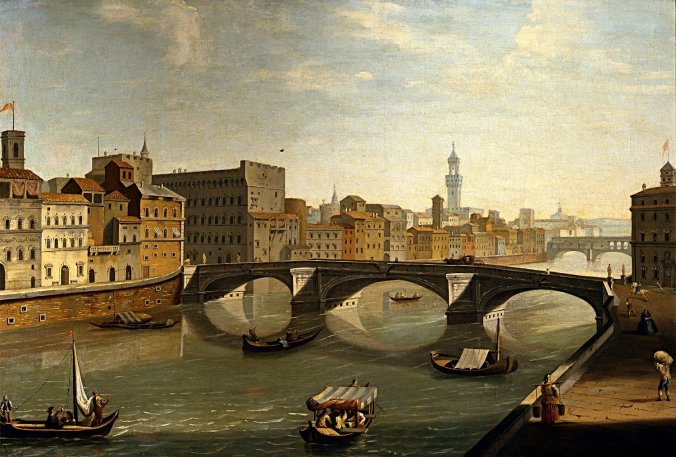
Fiera Firenze, an exhibition space extraordinaire, inside a Medicean fortress

What does a city do with an historic fortress, when the idea of a fortress and its original capabilities are no longer needed/wanted?

Well, if it is Florence, you turn it into a modern asset–an exhibition/conference space like no other.

Known as Fiera Firenze, the Fortezza de Basso is now a leading exhibition centre in Tuscany located at the heart of the city, with 100,000 sq m, 65,000 of which are roofed. Among the venues constituting the exhibition area are The Fortezza da Basso, with its 55,000 sq m of covered area, Palazzo dei Congressi (with a congress capacity of around 1,500 seats and an auditorium for 1,000 guests) and Palazzo degli Affari, a modern and multifunctional venue of over 4,000 sq m, with an overall capacity of 1,300 people.

Its privileged location and its charming spaces, reflecting a perfect dialogue between historical architecture and contemporaneity, are the key factors making it a unicum in the fair & congress world.

Every year, the company boasts a portfolio of important events – some of which are leading events for men’s fashion and high quality crafts- as well as important local and international conventions and congresses, mainly focusing on medical-scientific subjects and on the IT sector.
Firenze Fiera also features a Development Department, as well as a Press & Communication Office, actively supporting the organisers of events, fair and congresses.
 

Palazzo Davanzati and Elia Volpi

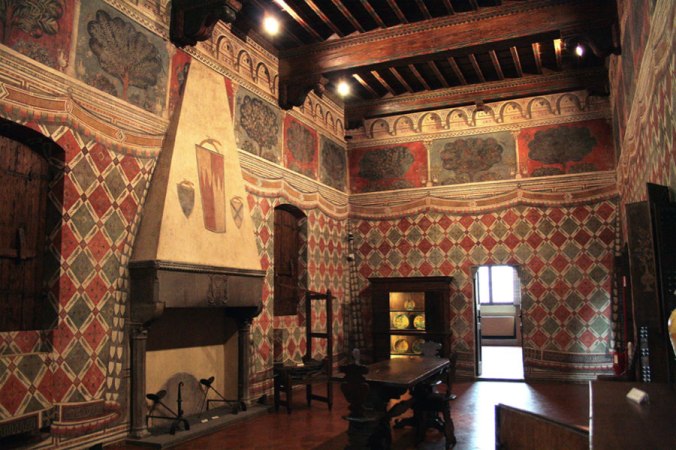
One of my favorite places in Florence is the Palazzo Davanzati. One look at one of the rooms in the palazzo will show you why I love it.  I visited it on my very first trip to Florence, almost 40 years ago.  It hasn’t changed one bit, except maybe it is even better now with more didactic info available.

11


We have the art dealer, Elia Volpi (1858–1938), to thank for having saved the Palazzo as it appears today.  In Florence, Volpi is known as the “father” of the Museum of the Old Florentine House in Palazzo Davanzati, as he was responsible for restoring the building and turning it into a private museum in 1910.


e07783b5edc1fcaea3ad2a886e8bc82a47b96f


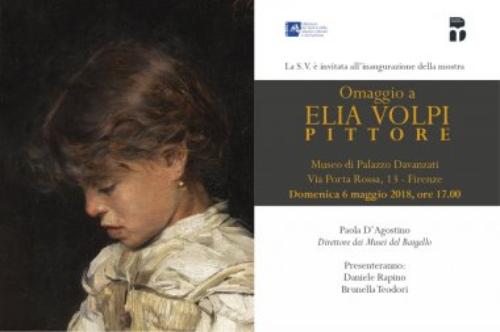
Now the museum, on via Porta Rossa, is opening its “Homage to Elia Volpi the Painter” exhibition, which offers the chance to discover a lesser-known side of the illustrious collector and antiquarian, that is, to see him as an artist.

11


Volpi trained at Florence’s Academy of Fine Arts. The current exhibition focuses on his training and the paintings he produced from the 1870s through the 1890s, with examples of his sketches and finished paintings, mostly in pristine condition.  All of these works have been donated to the museum from private collections.

Volpi’s sketches are testament to his studies of the Italian Renaissance masters and, along with the male nudes, show off the early artistic skills of a young Volpi.

The paintings demonstrate his broad range; during the 1880s he explored church scenes before concentrating on the subjects and style of the Macchiaioli and more contemporary artists such as Francesco Gioli and Niccolò Cannicci.


The show also includes a multimedia section featuring a video that focuses on the artist’s personal life and a touch-screen panel with photographs that demonstrate the creation of the museum.


The exhibition is open from May 6 to August 5 in the Palazzo Davanzati Museum.


The source of this info comes from:

http://www.theflorentine.net/art-culture/2018/05/elia-volpi-exhibition-palazzo-davanzati/

The end of the Corcoran Gallery of Art

A few years ago it was announced that the Corcoran Gallery of Art, Washington’s oldest private art museum, and its venerable college of art and design would cease to exist as an independent institution, and its components — artwork, historic building and school program — will be taken over by the National Gallery of Art and George Washington University.

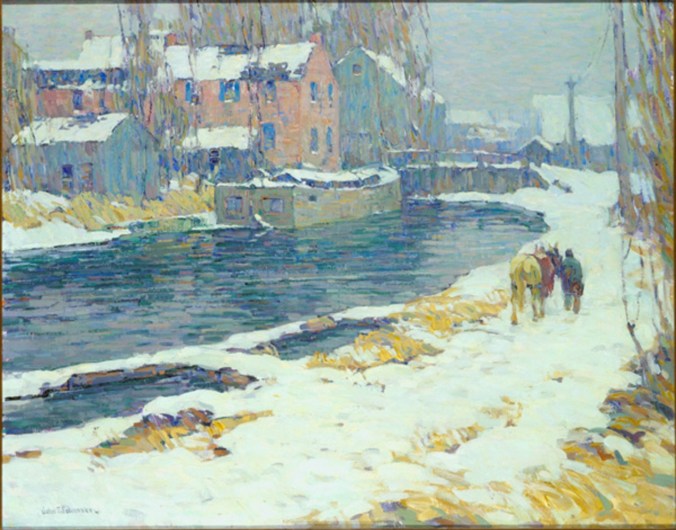
Folinsbee_21_7John Fulton Folinsbee’s “Grey Thaw,” one of the works in the Corcoran’s collection. (Corcoran Gallery of Art’s board of trustees )
This week it was announced that the Corcoran’s board of trustees has decided that it will distribute almost 11,000 works remaining in its renowned collection, a historic giveaway that includes paintings by Washington Color School artist Sam Gilliam, photographs by Ansel Adams and Dorothea Lange, and prints by 19th-century French master Honoré Daumier.

Almost 9,000 pieces will go to the American University Museum at the Katzen Arts Center, with others headed to 10 Smithsonian Institution museums, several universities and the U.S. Supreme Court.

The distribution marks the final stage of the dismantling of the famed Washington institution. Under a controversial 2014 deal, the National Gallery of Art had first dibs on the entire collection and ended up acquiring about 40 percent of the 19,493 works. George Washington University gained control of the museum’s independent school and its two historic buildings, including the Flagg Building on 17th Street NW.


For more, please see these sources:

https://www.washingtonpost.com/entertainment/museums/the-end-of-the-corcoran-gallery-of-art/2014/02/19/accd8a38-99a3-11e3-b931-0204122c514b_story.html?utm_term=.e1e71071df4d

https://www.washingtonpost.com/entertainment/museums/bulk-of-corcorans-remaining-collection-headed-to-au-museum-at-the-katzen/2018/05/13/1ae68b48-5550-11e8-9c91-7dab596e8252_story.html?utm_term=.0801f8cb53cc

How art history became an academic (& my favorite) field of study

Before Charles Eliot Norton had become Harvard’s first professor of that discipline, art history had, in general, been considered, not a field of study, but a matter of craft and technique to be taught by painters to other painters.

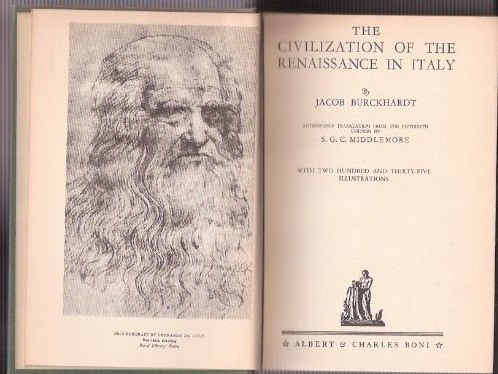
Scholarship about art, and especially about Italian art, entered a new era as the German universities began developing large-scale historical studies like those of Swiss scholar Jacob Burckhardt, whose Civilization of the Renaissance in Italy was published in English in 1878.

Die_Kultur_der_Renaissance_in_Italien

In Great Britain, tastes were influenced by the work of Norton’s close friend Ruskin in books like The Stones of Venice (1851–1853) and The Seven Lamps of Architecture (1849).

The_Seven_Lamps_of_Architecture_-_titlepage

Following Ruskin, Norton loved best in Italy the powerful moral uplift of Dante and of Italy’s medieval Gothic architecture. In Norton’s art history courses, the Renaissance was the unhappy termination of the Middle Ages, which had been the last great era of spiritual unity and well-being.

There was a joke current among Harvard undergraduates that Norton had died and was just being admitted to Heaven, but at his first glimpse staggered backward exclaiming, “Oh! Oh! Oh! So Overdone! So garish! So Renaissance!”

“Norton,” Bernard Berenson commented drily years later, had done what he could at Harvard to restrain “all efforts toward art itself.”

Rachel,Cohen. Bernard Berenson (Jewish Lives) (p. 45). Yale University Press. Kindle Edition.


A marvelous May fair in Florence

300x190

  XXIV EDITION

ARTIGIANATO E PALAZZO 2018

The great tradition of italian craftsmanship
from its origins to the present

The 24th ARTIGIANATO E PALAZZO exhibition (Florence, Corsini Gardens, May 17-20, 2018) gets underway with the history of one of the leading examples of Made in Italy excellence, the “Mostra Principe” dedicated to the Richard Ginori porcelain Manufactory and fundraising for the reopening of the Doccia Museum, recently acquired by MiBACT (Italian Ministry of Cultural Heritage and Activities and Tourism).

“The hundreds of requests to take part that we have received this year represent an excellent sign of recovery in the artisan sector, because craftspeople are the lifeblood of Made in Italy,” said Giorgiana Corsini and Neri Torrigiani who, for over twenty-four years, have been involved in organizing the ARTIGIANATO E PALAZZO event and in promoting Italy’s artisan heritage.

During the four-day event in the Limonaia Piccola of the 17th-century Corsini Gardens (open to the public for this occasion), the Richard Ginori company will recreate various phases in the creative process through which, daily since 1735, it has produced unique porcelain pieces, with special live demonstrations to reveal to the public a story that has survived to the present day with a rich tradition of know-how, innovation and beauty.

For the first time, it will be possible to admire outside the plant in Sesto Fiorentino the Manufactory’s artisans at work in their various areas of expertise: from slip casting to decoration, evidence of a wealth of knowledge that has been handed down without interruption from older to younger generations of craftspeople.

For its part, the Doccia Museum will be the recipient of the major fundraising initiative, “ARTIGIANATO E PALAZZO FOR THE DOCCIA MUSEUM”that Giorgiana Corsini and Neri Torrigiani have decided to launch with this year’s event “so that the priceless collection of the Doccia Museum will once again be open to the public”. 8,000 porcelain, ceramic, majolica, terracotta and lead objects and over 13,000 drawings, engraved metal plates, chromolithograph stones, plaster molds and wax sculptures.

The project involves a series of initiatives that will involve the organizers, public and corporate sponsors of the 24th ARTIGIANATO E PALAZZO exhibition, the full proceeds of which will go to the Associazione Amici di Doccia:

What is a curator anyway, and what does she do?

I used to be an art museum curator, and often people would ask me what that was.  Here is as good a definition as I’ve ever found:

The job of the curator has also changed. Today they are counted on for publicity appearances, special events, Web site management, interactive displays, programming, grant writing, and exhibition planning as never before, as well as the constant courting of potential patrons. There is little time left over for scholarly research or acquisitions. Loan requests from other museums are a constant workload on the curator’s desk, and while these help shore up goodwill in the interests of comparable loans from the borrowing institution.

The recent trend for the building of branch museums, such as the MFA’s in Nagoya, Japan, which opened in 1999, adds further pressures to the collection as a whole. Artworks are the museum’s ultimate “cash cow.” They are also the stars of the collection in the eyes of many visitors, who all too often cannot count on finding them on view because of the persistent demands for their appearances elsewhere. As box office attractions, special exhibitions rule the day. The greater number, and greater size, of museums in America also mean increasing competition for loans.

Rathbone, Belinda (2014-10-13). The Boston Raphael: A Mysterious Painting, an Embattled Museum in an Era of Change & A Daughter’s Search for the Truth (Kindle Locations 4204-4210). David R. Godine, Publisher. Kindle Edition.


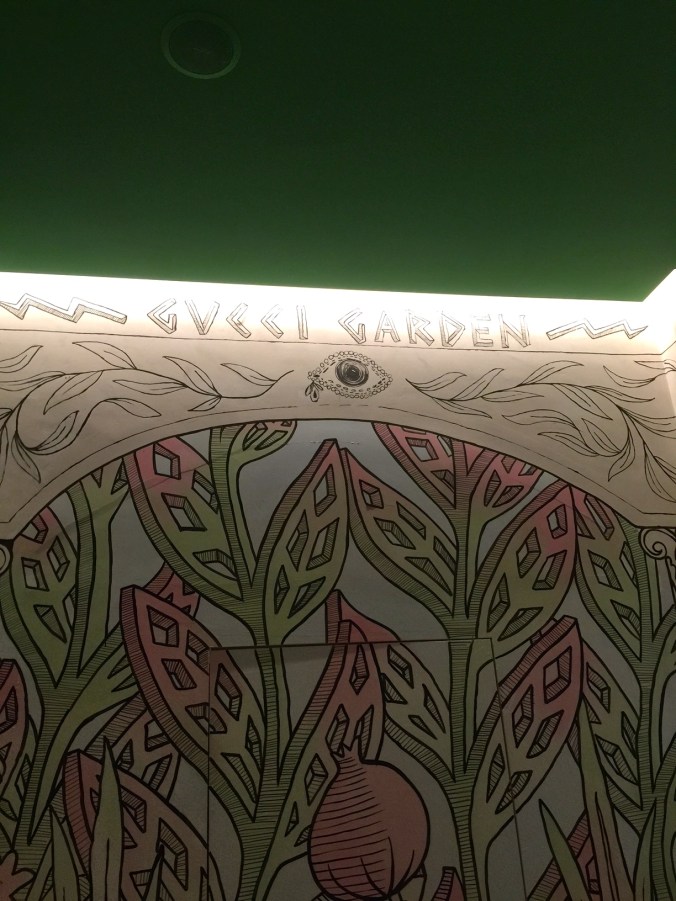
Gucci gucci garden

The Gucci Museum recently reopened after renovation.  The restaurant is beautiful and impossible to reserve a table in.  Gucci advertised the new installation as a garden and, silly me, I thought that meant an outdoor space with soil and plants.  It’s possible, there could be a courtyard.

But, no, it’s not an actual garden.  I guess it’s a paper garden.  Anyway here it is:


IMG_8377