For the men: Pitti Uomo – Pitti Immagine

Are your sore eyes in need a handsome sight?  If so, you should high-tail it to Florence in mid-January.

Pitti Uomo – Pitti Immagine is the world’s most important (so they say) platform for men’s clothing and accessory collections and for launching new projects in men’s fashion. Created in 1972 Pitti Uomo is held in Florence twice a year. If you missed the show this month, you can catch the next iteration in June.

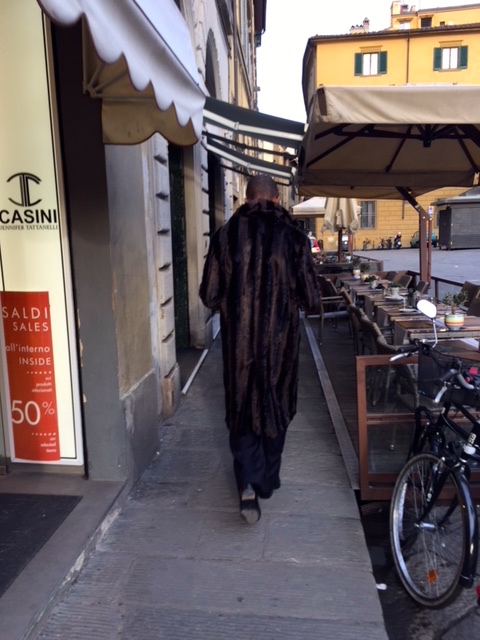
Walking home from yoga the other day, I saw this handsome man wearing a full-length fur coat.  I was pretty sure it was faux, and he confirmed that it was.

IMG_7329

You can read all about the show here:

http://www.pittimmagine.com/en/corporate/fairs/uomo.html


Should Michelangelo’s David be moved to an earthquake proof location?

Let’s ask the director of The Accademia, Cecilie Hollberg, where the statue stands today.  The following is an interview conducted by Helen Farrell of The Florentine:

Cecilie Hollberg | Ph. Leo Cardini


Helen Farrell
: Earlier this year, an architect from Padua made the international headlines with an idea to move the David to an earthquake-proof museum. At what stage is the Accademia in the creation of seismic protection for the world’s most famous statue?


Cecilie Hollberg: First of all, this architect has been publishing things in newspapers and magazines since 2008; there are plenty of experts who openly give us advice without being familiar with our site, or without having the experience or capabilities needed to understand what can be done here. Building an underground bunker in a city like Florence means moving the David, which is enough to show us they really haven’t thought this through. There’s all this chatter in a local newspaper about moving it in the front of the new opera house. Everyone’s been asking about it. This statue is fragile, and that’s why it gets everyone so agitated. Yet, at the same time, everyone’s ready to move it all over the place—it’s a very strange situation. In any case, we’ve been working on this for years. The Ministry conducted many investigations on the building, the structure itself, and the possibilities that may arise, and since I’ve been here, we’ve been closely monitoring the statue. It’s cleaned every two months, financed by the Friends of Florence, and with every cleaning we are able to monitor the statue very closely. Every weak or fragile spot is regularly scrutinized time and time again so if there were any changes we would see them immediately. This aspect is something that’s always been under control. But, and I’m going to open a parenthesis here, there are some real absurdities out there. There was someone who sustained that the heat makes marble melt: it’s absurd. Marble changes its state of aggregation at 900 degrees centigrade.


HF: He’ll be fine then, even with our summers…


CH: There are all of these things that end up in the press because these poor souls want to link their name to Michelangelo’s David, hoping to end up in newspapers. Of course, they do end up in newspapers and we have to waste our time explaining to them that, in reality, marble does not melt. In addition, we created a framework agreement with DICEA, the University of Florence Department of Civil Engineering and Environment, in which we continue the already initiated investigation on the structure of the building. The structure is what’s important in the event of any sort of {seismic} movement. The base that holds the statue and blocks it from falling is entirely useless if the ceiling comes down on it. Thus, we made this framework agreement and the inspection will follow shortly, the only thing missing before we can decide what to do. I have been in contact with many institutions; I’ve been to the U.S. to the Getty Institute where there are several earthquake experts. Yet the reality remains that no one has ever worked with a statue like the David. All of these platforms are just fine for structures from 2 to 2.5 metres, but the David weighs 5,660 kilos and stands 5.17 meters tall. No one has ever experimented on a statue of this kind. They’ve experimented with the Riace Bronzes, but they’re much smaller and bronze is an entirely different material—it’s more flexible than marble. It’s an entirely different conversation, and so we can’t adapt the research done for that kind of model and apply it to an icon of the Renaissance. We really have to think about what we’re doing. The last thing I need is this group of charlatans coming to me with advice without knowing anything about the situation.

You can read the entire interview here:

http://www.theflorentine.net/art-culture/2017/10/a-conversation-with-cecilie-hollberg/

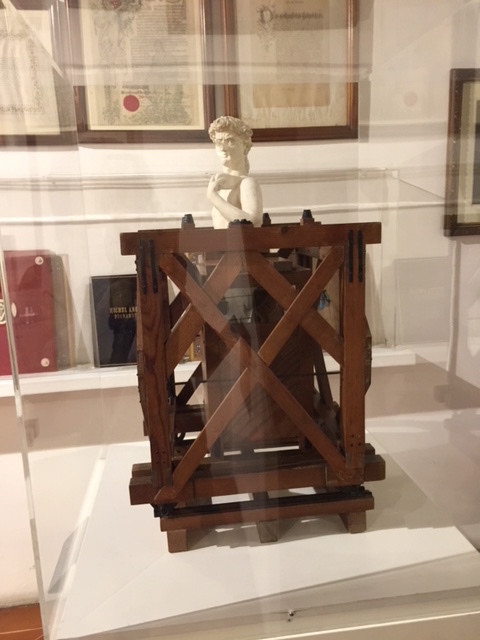
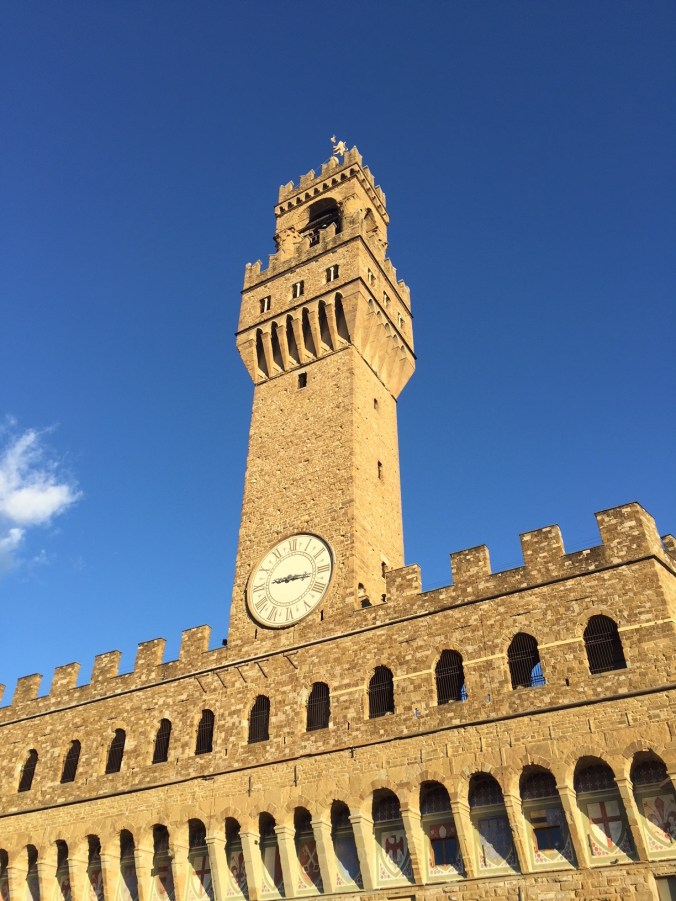
Incidentally, this week I visited the Casa Buonarroti, where a scale model of the apparatus that was used to move the David from Michelangelo’s studio to its original placement outside the Palazzo Vecchio (the original has since been moved to the Academia) is prominently on display.  Here’s a photo of that model:

IMG_6886IMG_6887

Uffizi masterpiece: Duccio’s Rucellai Madonna

As Christians around the world prepare to celebrate the birth of Jesus on December 25, it seems like the right time to talk about some Uffizi masterworks.

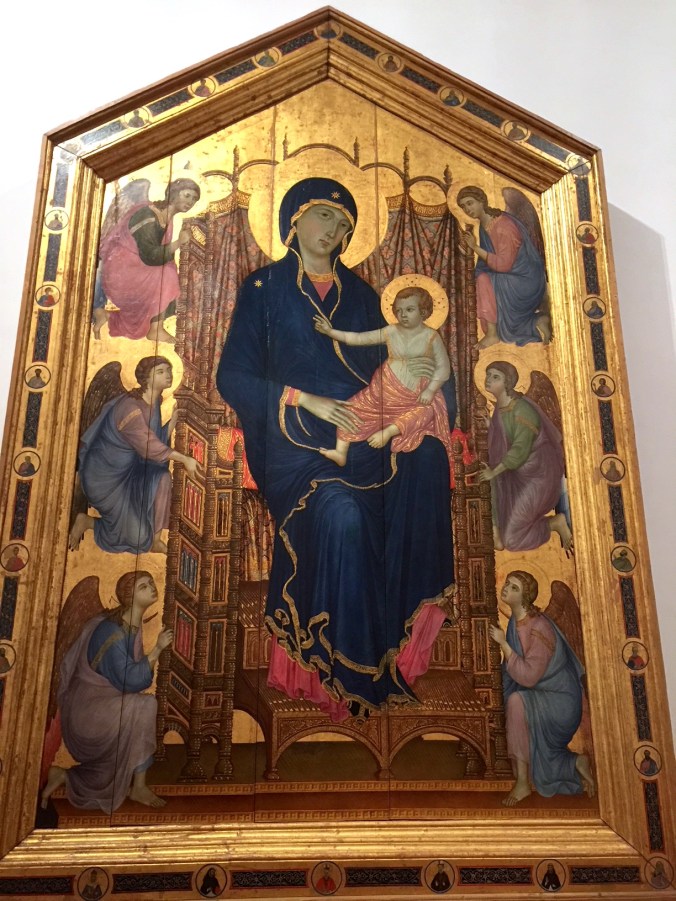
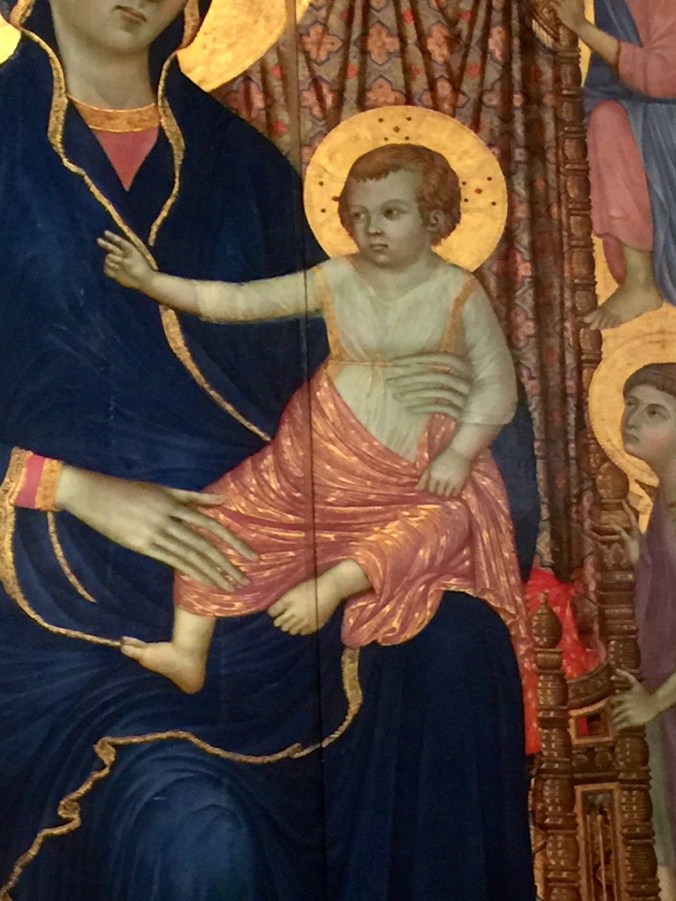
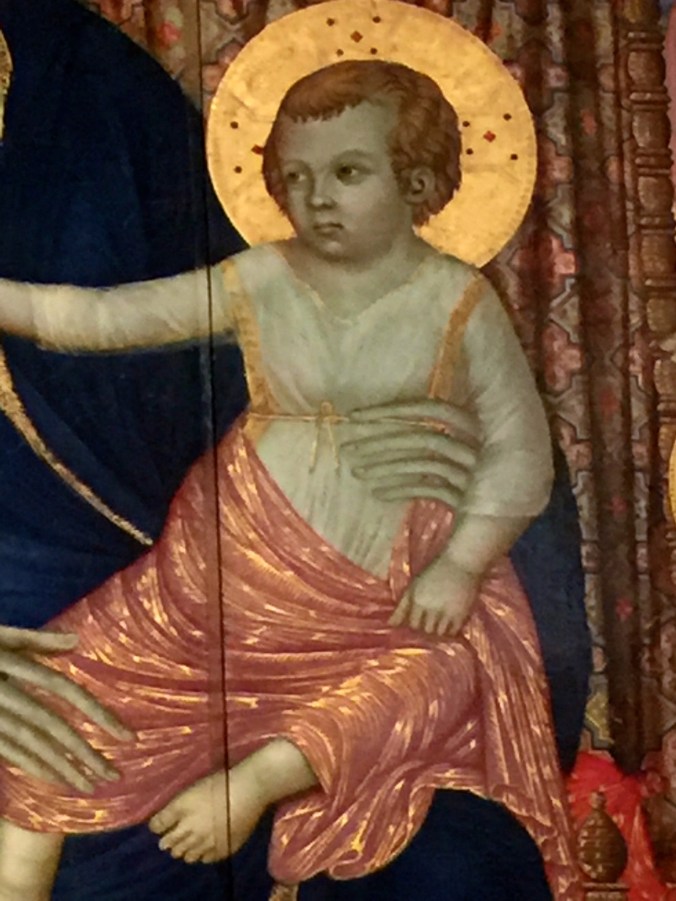
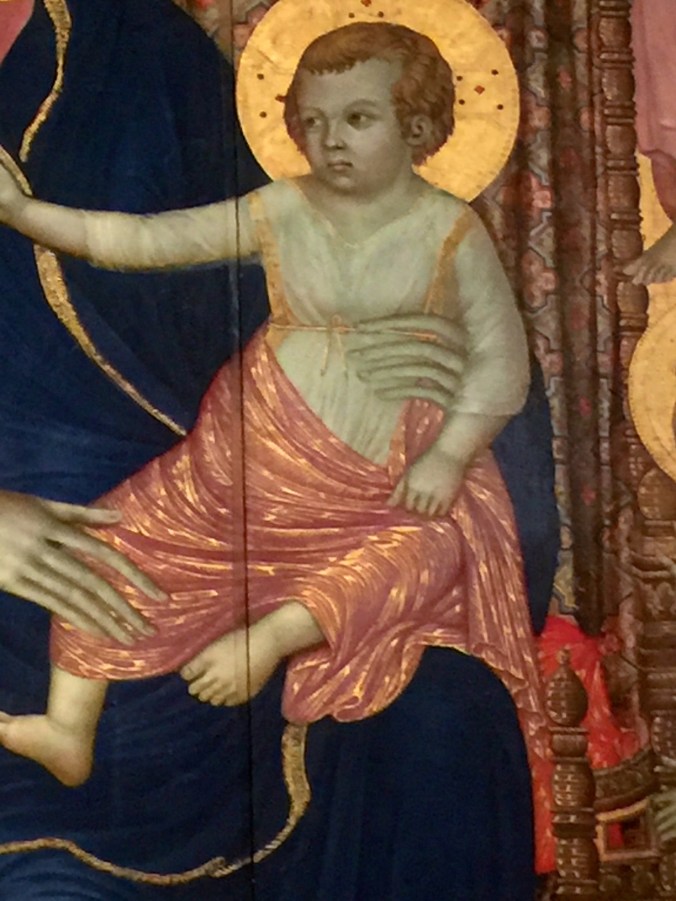
Let’s start at the beginning of the Italian Renaissance with Duccio’s break-taking Rucellai Madonna.  This large painting shares a room with two other altarpieces by contemporary artists, whom I’ll discuss in upcoming posts.


IMG_6706

Duccio, The Rucellai Madonna, 1285-86, tempera on panel, 177″ x 114″


IMG_6707IMG_6708IMG_6709


I could wax on about this gorgeous work of art, but instead I’ll direct you to the Khan Academy instead:

https://cdn.kastatic.org/KA-youtube-converted/1JL5ZR-ocOs.mp4/1JL5ZR-ocOs.mp4#t=0

Today in Florence, the Uffizi Gallery and the city

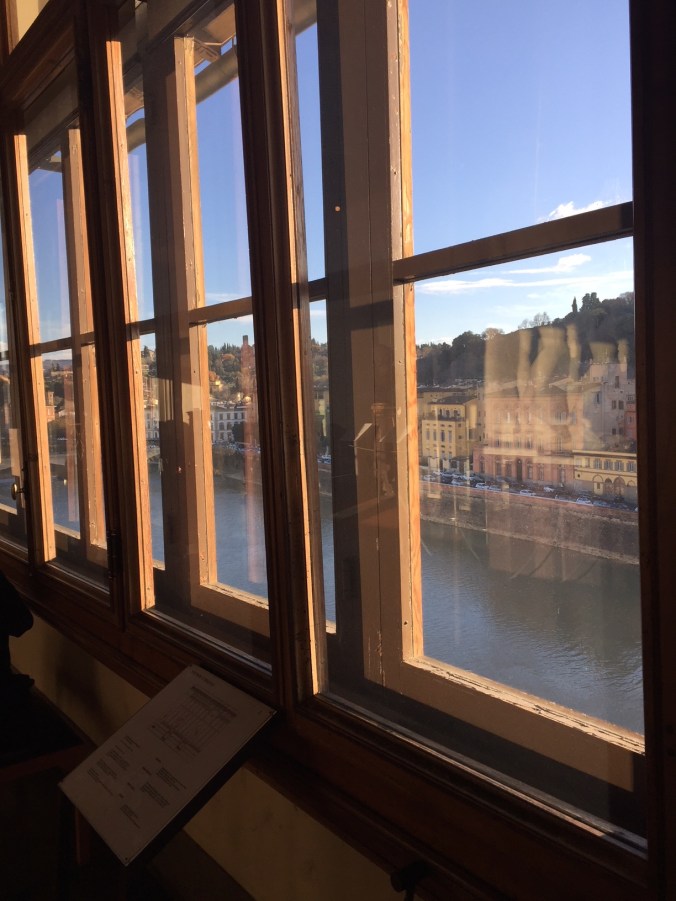
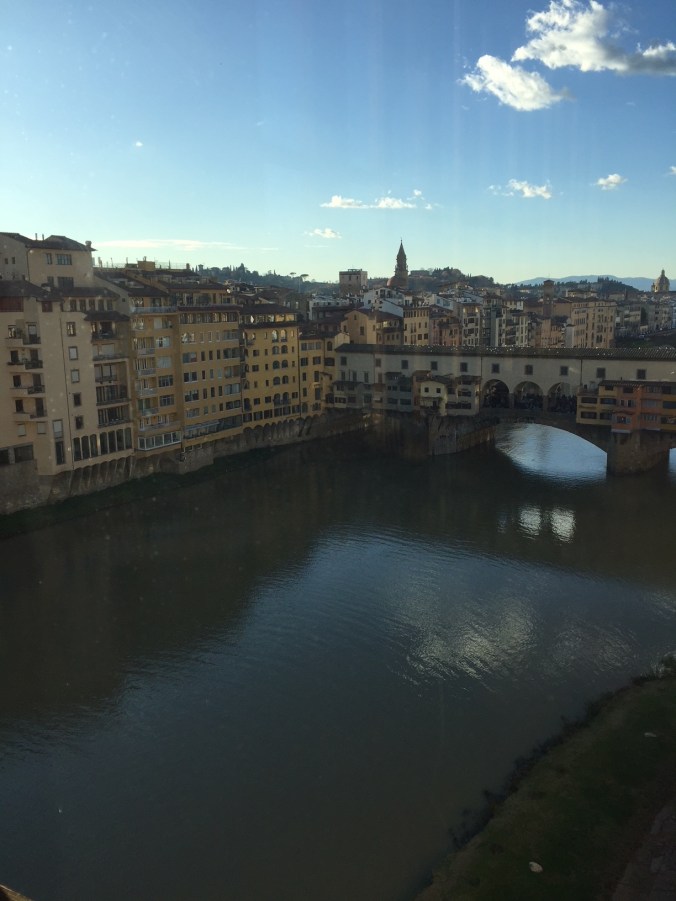
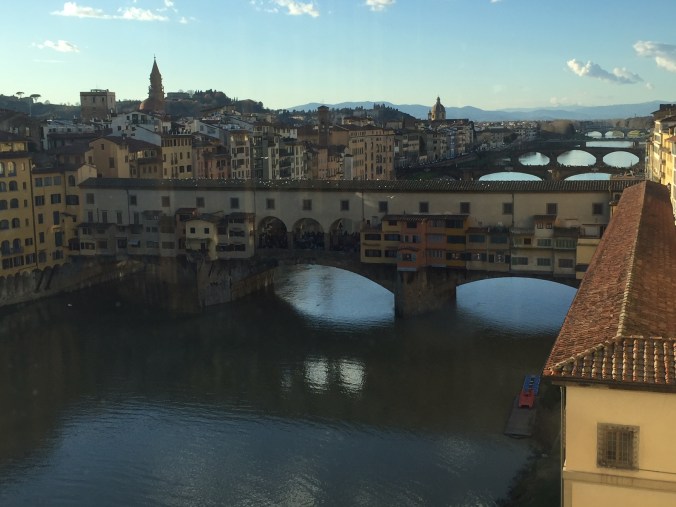
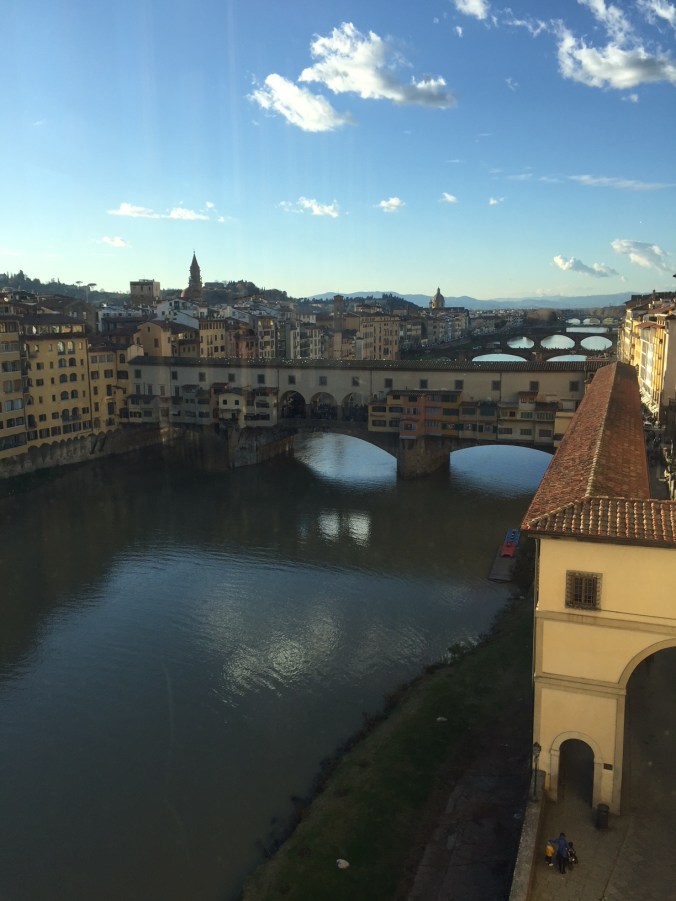
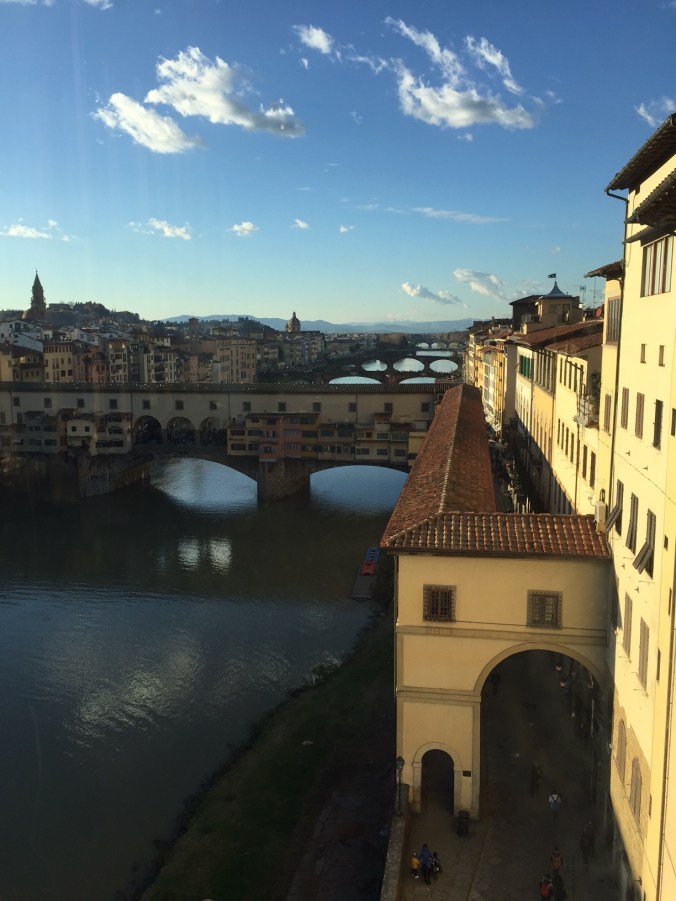
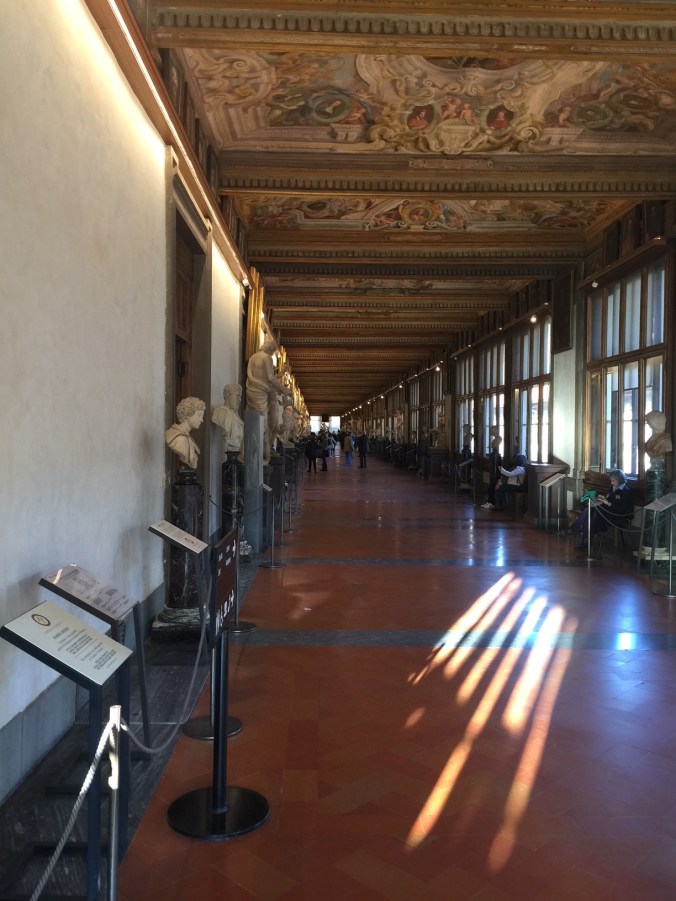
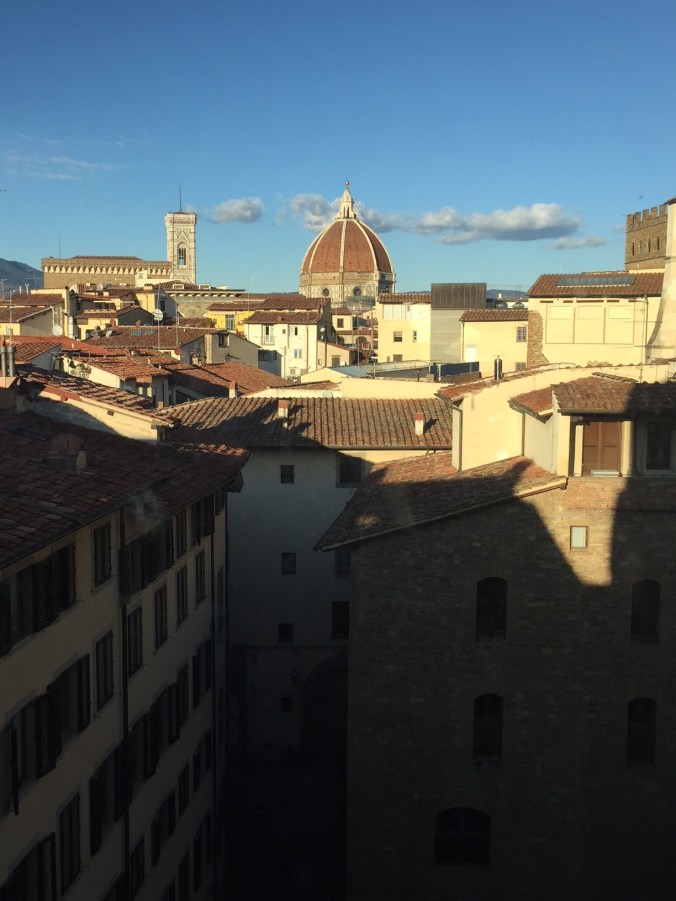
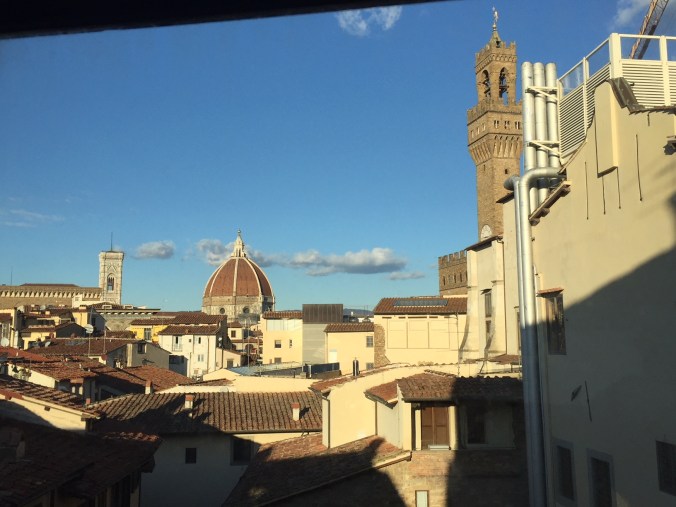
A visit to the famed Uffizi Gallery will not only supply you with artworks to gaze upon, but incredible views of the city as well.  I was there this sunny, glorious afternoon, and I’ll be posting soon about some of the art, but for now, feast your eyes upon picturesque Firenze!

IMG_6804IMG_6805IMG_6806

IMG_6807IMG_6810IMG_6811

IMG_6808

IMG_6809IMG_6812

IMG_6819IMG_6820

IMG_6813IMG_6814IMG_6815


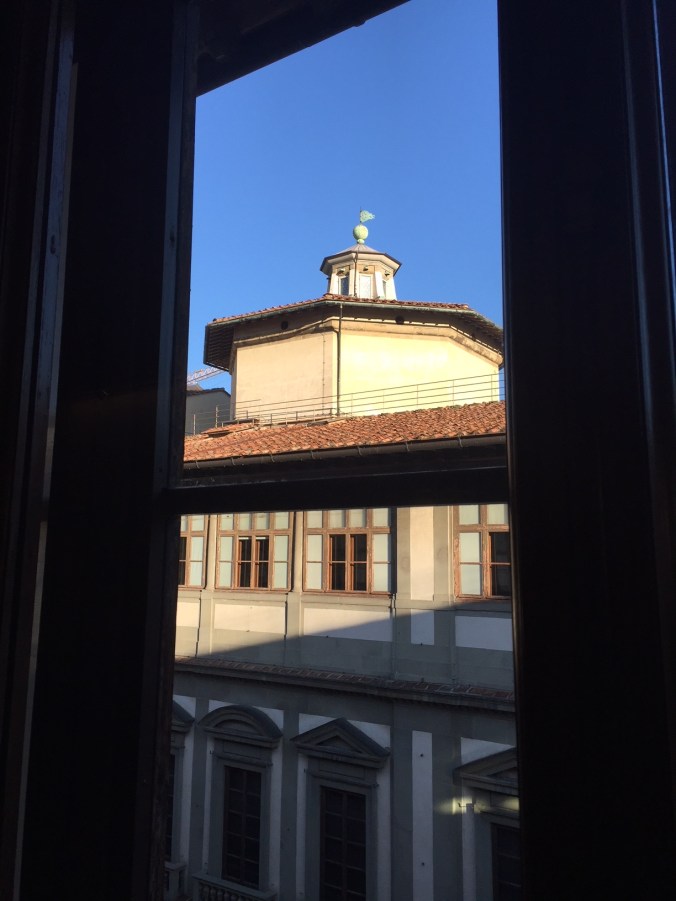
The photo below shows the exterior cover of the famous room known as the  “Tribune” within the Uffizi.  People rave about the inside, but I like the outside too.

IMG_6816


The fashion of Cristóbal Balenciaga

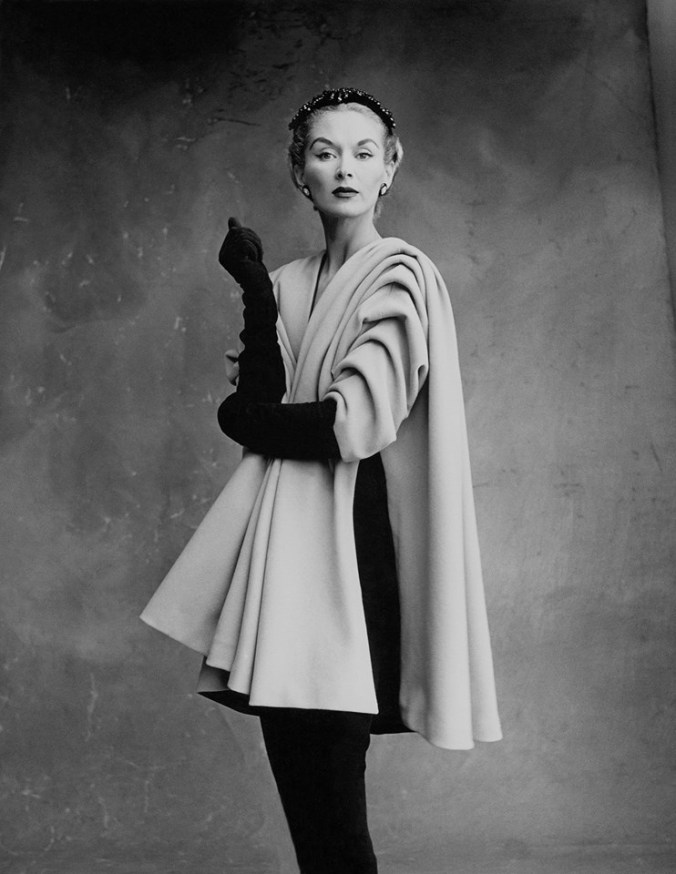
Lisa Fonssagrives-Penn wearing coat by Cristóbal Balenciaga, Paris, 1950. Photograph by Irving Penn © Condé Nast, Irving Penn Foundation.

23472746_10155555889028880_7700103092903214909_n

Cristóbal Balenciaga’s vintage fashion innovations are still striking today. #Balenciaga’s talent for clothing seemed to rival architecture, from the way garments were structured and held together to the modern shapes that he introduced. Explore the work of the Master and his profound influence on modern fashion in the current exhibition at London’s Victoria and Albert Museum https://goo.gl/bCSfgL .

Palazzo Strozzi: an incredible, historic building now repurposed as a superb exhibition space

The Palazzo Strozzi is a superb example of Renaissance civil noble residential architecture in the historic center of Florence.  And it has been repurposed to delightful service of the modern world.

220px-Palazzo_Strozzi_2


Today the palace is used for temporary international expositions, like the one I viewed yesterday, devoted to Bill Viola.


banner-pg2-ing


Before looking at the exhibition, let’s discuss the incredible building:

Filippo Strozzi the Elder (1428 – 1491), the banker and statesman, commissioned the structure after his return to Florence in November of 1466.

Stile_di_niccolò_fiorentino,_filippo_strozzi_(1426-91),_1489,_recto

As a major Medici rival, Strozzi wanted to build the most magnificent home in the city to assert his family’s prominence.  The palace may as well have been intended as a political statement of his own status.  Based on the wishes of Strozzi himself, the palazzo would be built to look like a small fortress in the heart of the city.

The palace was begun in 1489 and designed by Benedetto da Maiano.

250px-Palazzo_Strozzi_03

The Strozzi palace was clearly inspired by the Palazzo Medici, with its rusticated stone exterior, but it is much larger and has more harmonious proportions than its predecessor.  Whereas the Palazzo Medici was sited on a corner lot and thus has only two main sides, the Stozzi is surrounded on all four sides by streets. The Strozzi palace faces the historical  and fashionable Via de’ Tornabuoni, as well as the Piazza Strozzi and on Via Strozzi. The building thus required three imposing entranceways, each flanked by rectangular windows. The Strozzi family’s coat of arms is found in the upper floors.

The siting of the Strozzi in the center major streets provided the challenge of how to integrate a cross-axis in keeping with the Renaissance desire for strict internal symmetry.  As a result, the ground plan of Palazzo Strozzi is rigorously symmetrical on its two axes.

The Strozzi family acquired a great number of buildings in this area were acquired during the 70s and demolished them all to to provide enough space for his new home.

The original architect, Benedetto da Maiano, died in 1497; Simone del Pollaiolo (il Cronaca) took over and was responsible for the completion of the palace. Pollaiolo died in Florence in 1508, but is credited with the design and finish of the central courtyard or cortile, surrounded by an arcade inspired by Michelozzo.

The external facade is adnorned with splendid torch holders, flag holders and rings to tie horses made by Niccolò di Nofri, an iron-worker known as il Caparra.

Unfortunately, Filippo Strozzi died in 1491, long before the construction’s completion in 1538.  Strozzi’s children were the first to live in the palazzo, moving in around 1505.  Ironically, Duke Cosimo I de’ Medici confiscated the palazzo in the same year, not returning it to the Strozzi family until thirty years later.

The palazzo remained the seat of the Strozzi family. Although the family lived in Rome for centuries, the palazzo was returned to its original splendour in the mid-1800s with the Princess Antonietta, and then with Prince Piero, who, from 1886 to 1889, had the building renovated by architect Pietro Berti.  In 1937 the family sold the building to the Istituto Nazionale delle Assicurazioni, and many changes were made to the edifice.  It was later given to the city of Florence in 1999. It is now home to the Institute of Humanist Studies and to the Fondazione Palazzo Strozzi.

Since July 2006, the Fondazione Palazzo Strozzi has been able to create a rich and innovative calendar of events and exhibits, in these areas of the building: Piano Nobile, la Strozzina and Il Cortile.

The Gabinetto G.P. Viesseux and the Renaissance Studies Institute both have also occupied the building since 1940.  Here also is the seat of the Istituto Nazionale del Rinascimento and the noted Gabinetto Vieusseux, with a library and reading room.

Today the palace is used for temporary international expositions like the now-annual antique show, founded as the Biennale dell’Antiquariato in 1959, fashion shows and other cultural and artistic events.


Allora, on to Bill Viola and his video art.

In the exhibition “Electric Renaissance,” Viola seems to have taken certain Renaissance masterpieces and created video dialogues with them.  I would say he is tremendously fortunate to have been able to borrow the original Italian artworks and, even if you don’t love Viola’s work, you will be rewarded with a small, select group of historic masterworks.  For example:

Here’s his dialogue between his video of 3 contemporary women greeting each other, in relationship to Pontormo’s

IMG_3759


IMG_3758  IMG_3757


Other installations stand on their own.  This screen is about 200 feet long by 15 feet high.

IMG_3761


IMG_3766IMG_3767IMG_3768IMG_3769IMG_3770IMG_3771


Summer reading.

I know, the calendar hasn’t officially cleared summer for take off.  But, as I write this in Florence on Saturday evening at 6:30 p.m., the temperature is 91 degrees F.  Summer has arrived, secondo me. If it gets much hotter than this, I may have to move way way up north to Scotland.

Keeping cool for me requires a lot of good reading material.  My latest enjoyment has been found in this great non-fiction tome, filled with art intrigue, a connection between Italy and the US, and historical context of the 1960s and 1970s.  A fun book to read, and not just for art historians, I promise!


51dYJhPEQ5L._AC_US218_


The Boston Raphael: A Mysterious Painting, an Embattled Museum in an Era of Change & A Daughter’s Search for the Truth by Belinda Rathbone

Great summer reading.