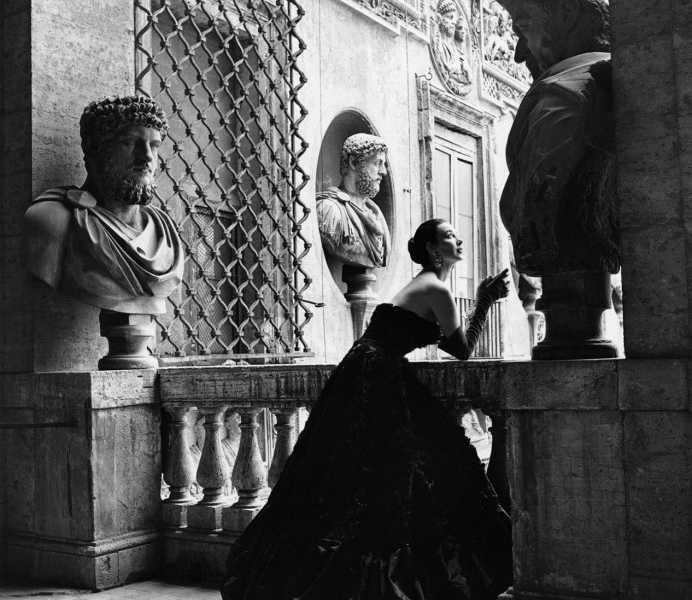
Florence is one with Syria’s antiquities

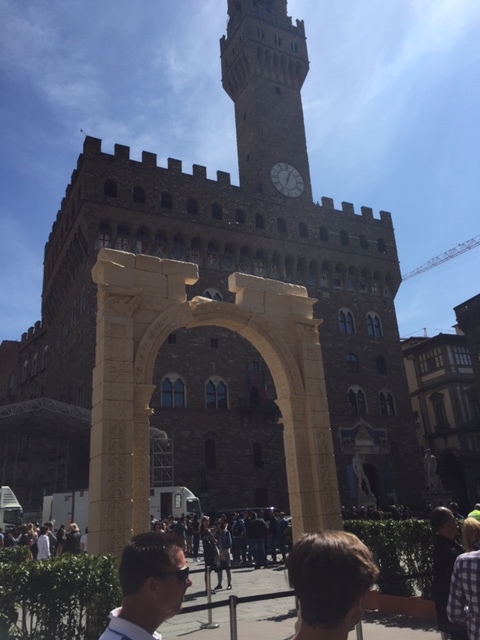
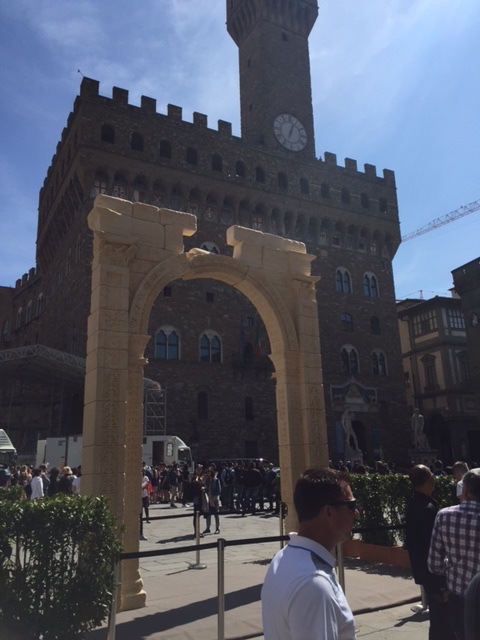
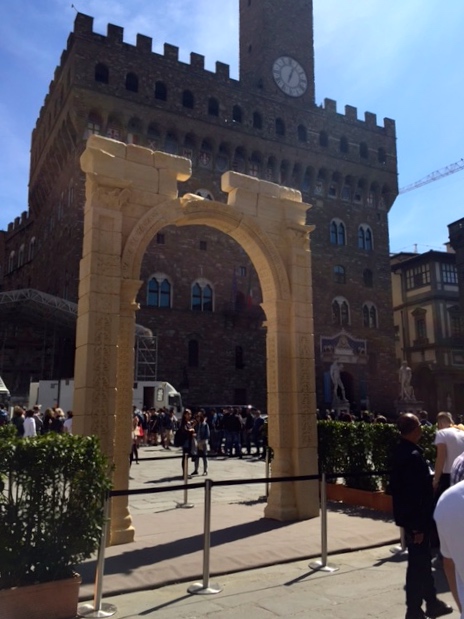
A replica of the Palmyra Arch is currently on display in the Piazza della Signoria, bringing awareness to the senseless destruction of the original in Syria in 2015 by militants.  It is an austere and chilling juxtaposition, this lost arch and Florence, which is lavished with attention.

IMG_1619IMG_1620IMG_1621


For more information, see the following sources:

http://www.florencedailynews.com/2017/03/14/replica-palmyras-arch-unveiled-g7-florence/

http://www.theflorentine.net/news/2017/03/arch-palmyra-installed-g7-off/


It’s time to get back to some art!

I am in need of an art fix, fast, to get my mind off bonnie Prince George.

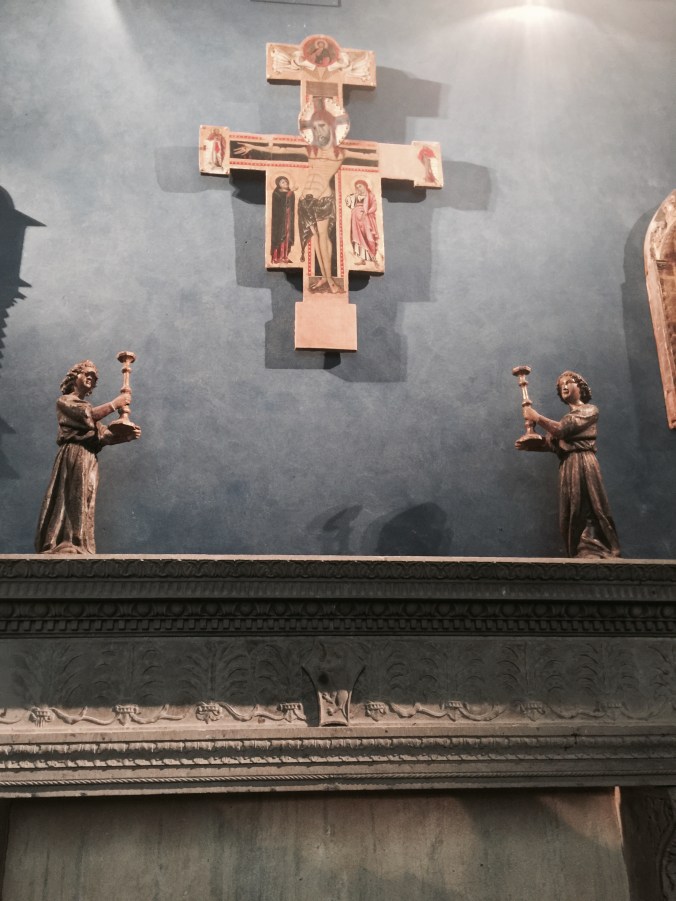
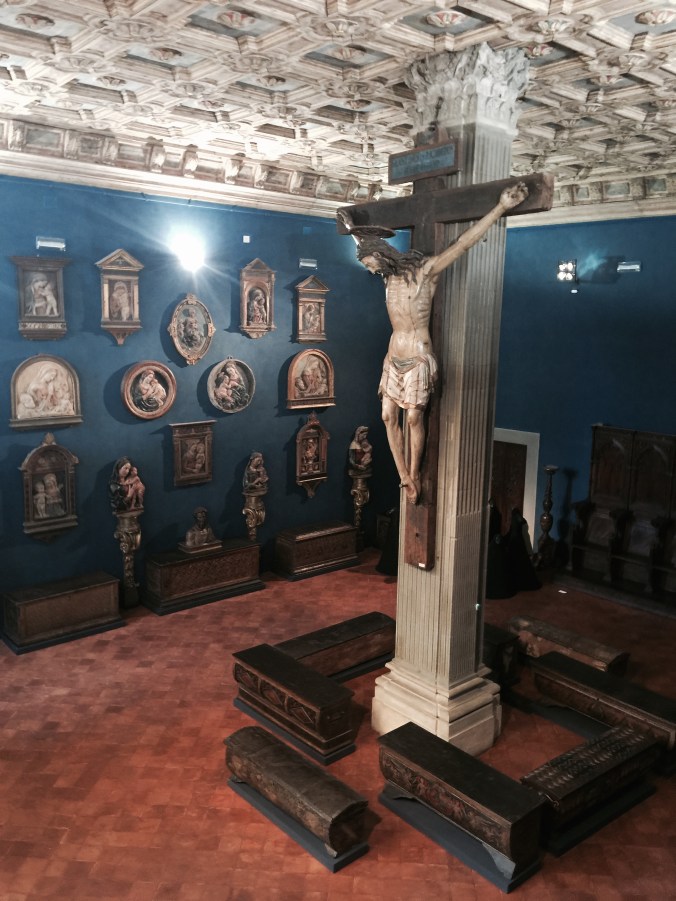
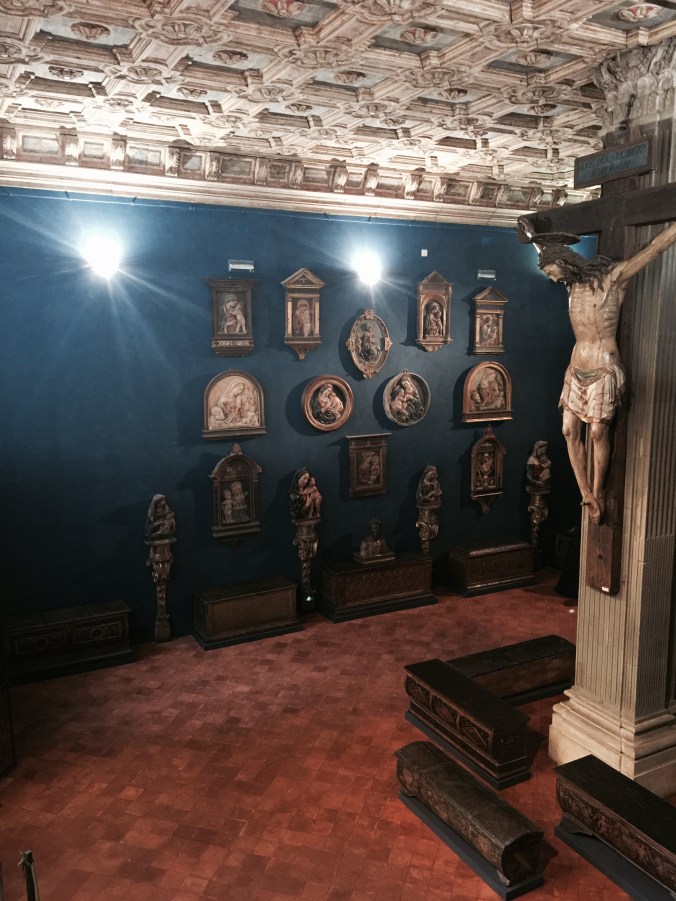
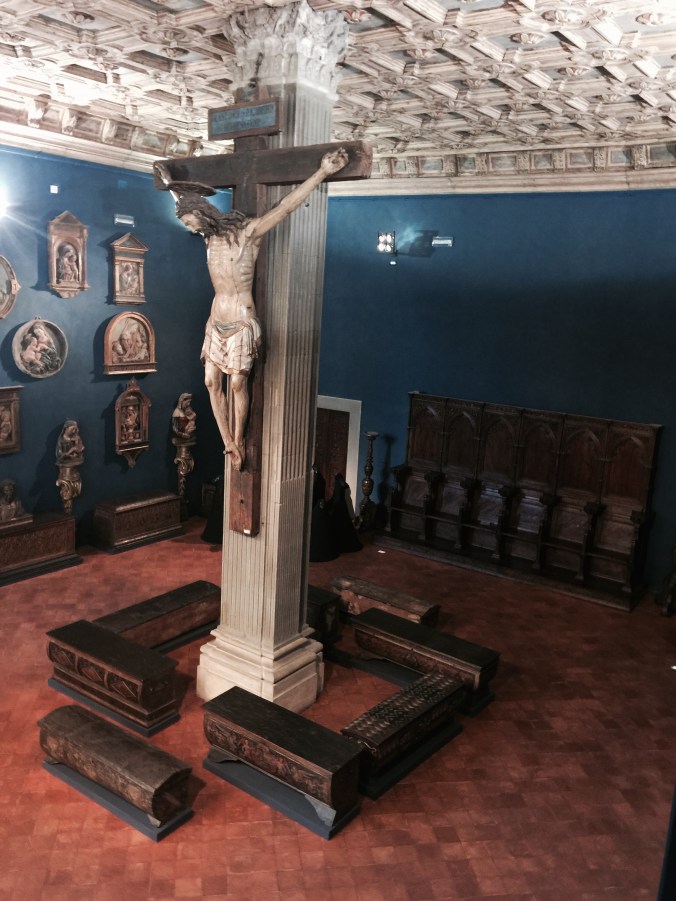
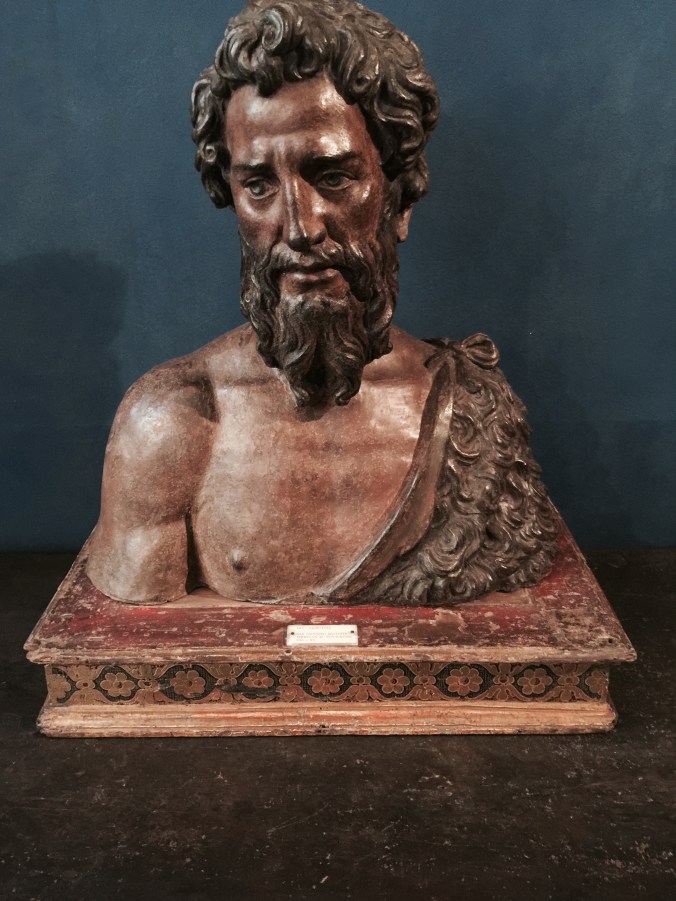
So, let’s visit the Museo Bardini in Florence!  Perche no?

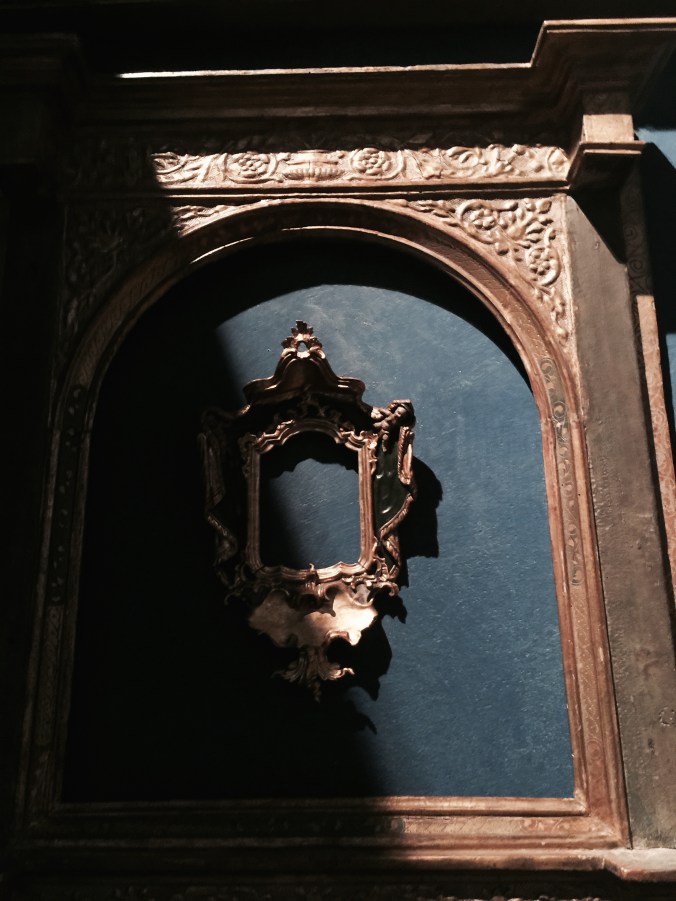
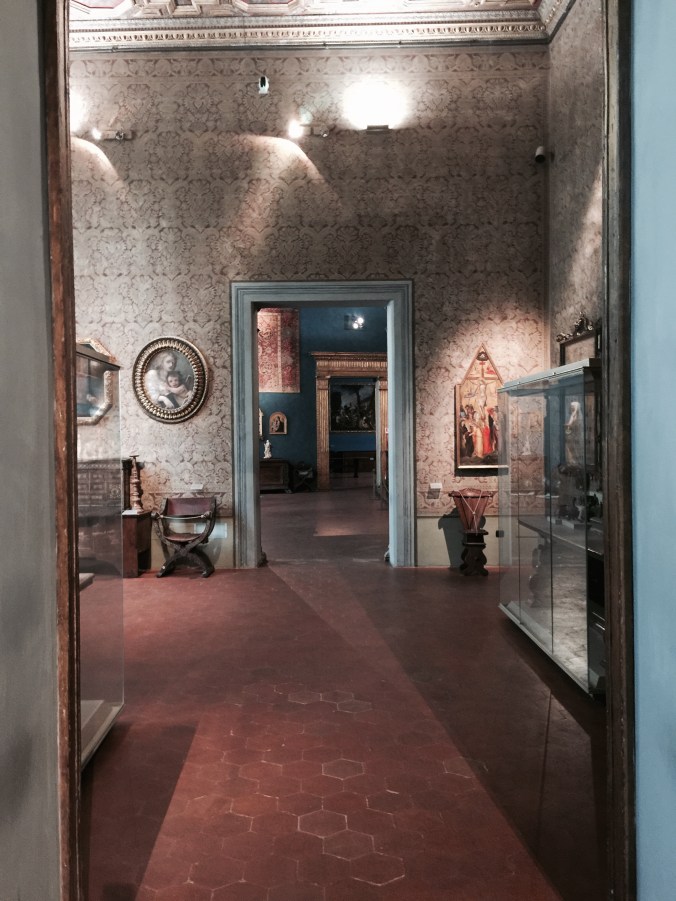
I love this gorgeous museum housed in a former palace right behind my Florentine apartment in the Oltrarno.  It is fantastic place filled with fantastic art.

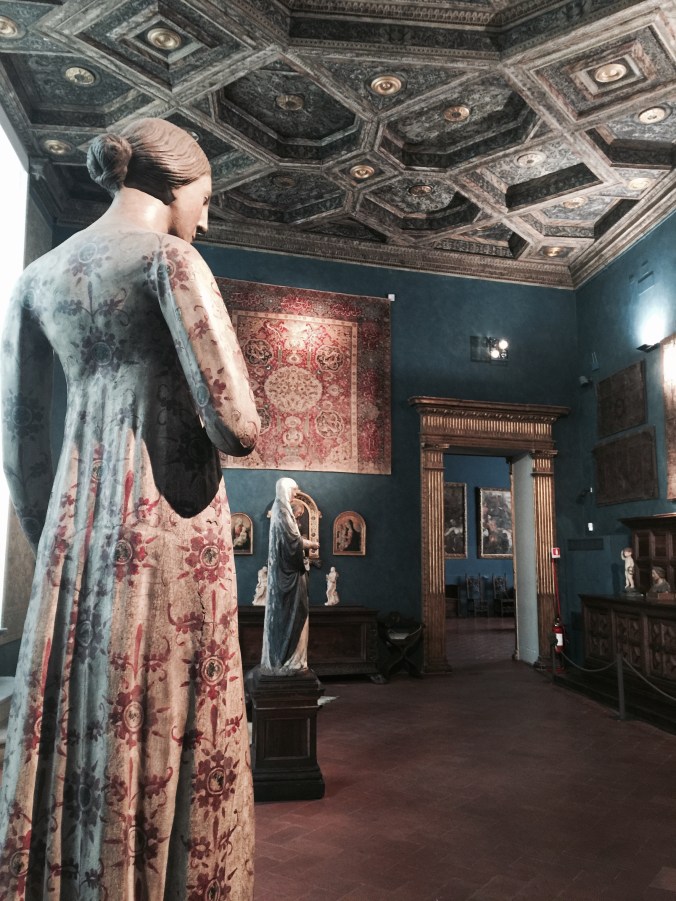
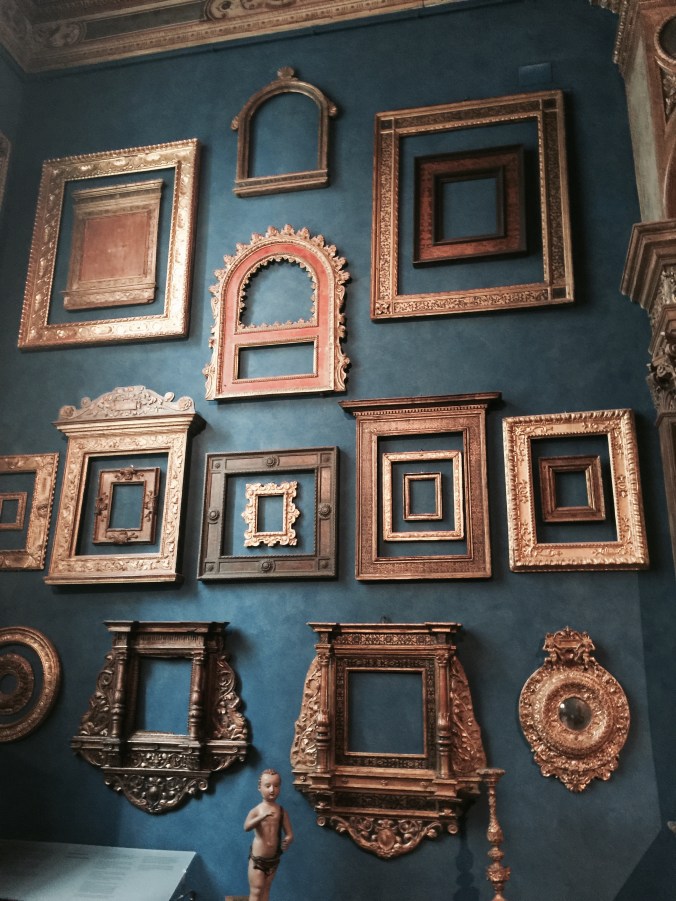
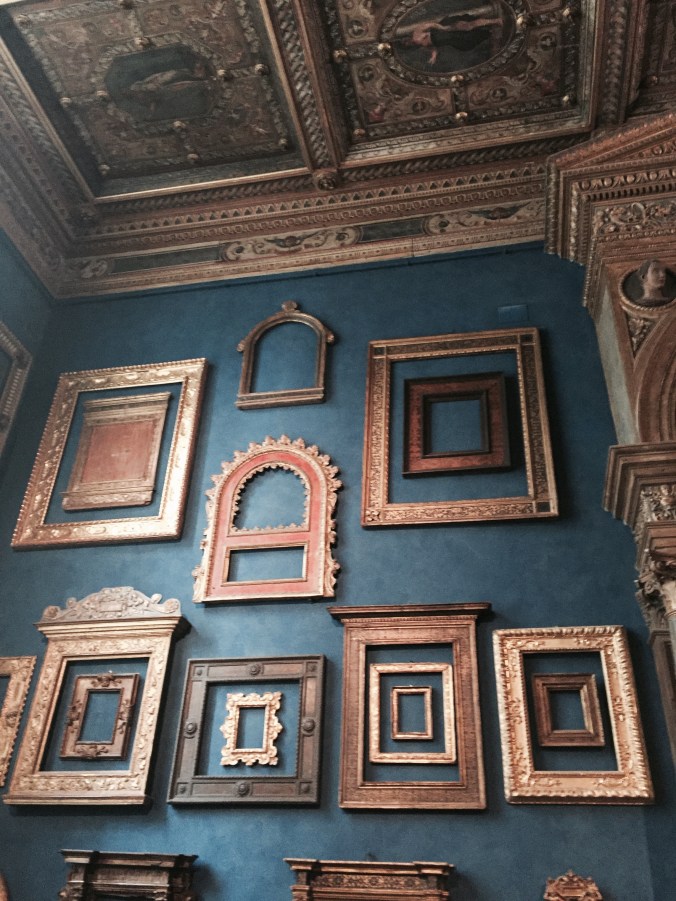
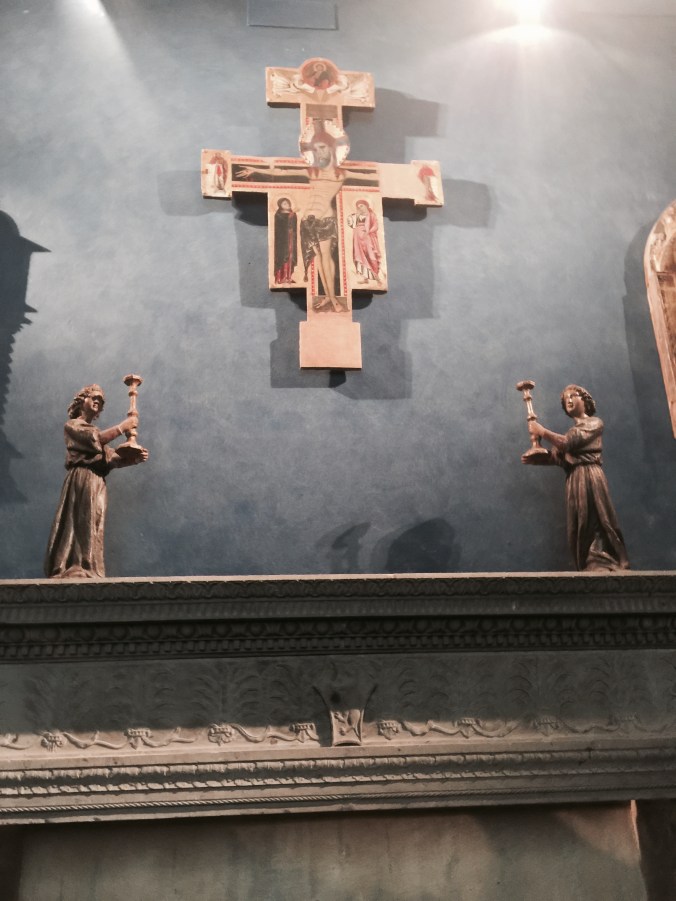
For starters, the walls in the galleries are a beautiful shade of midnight blue, done on Venetian plaster if I am not mistaken.  Gorgeous effect.

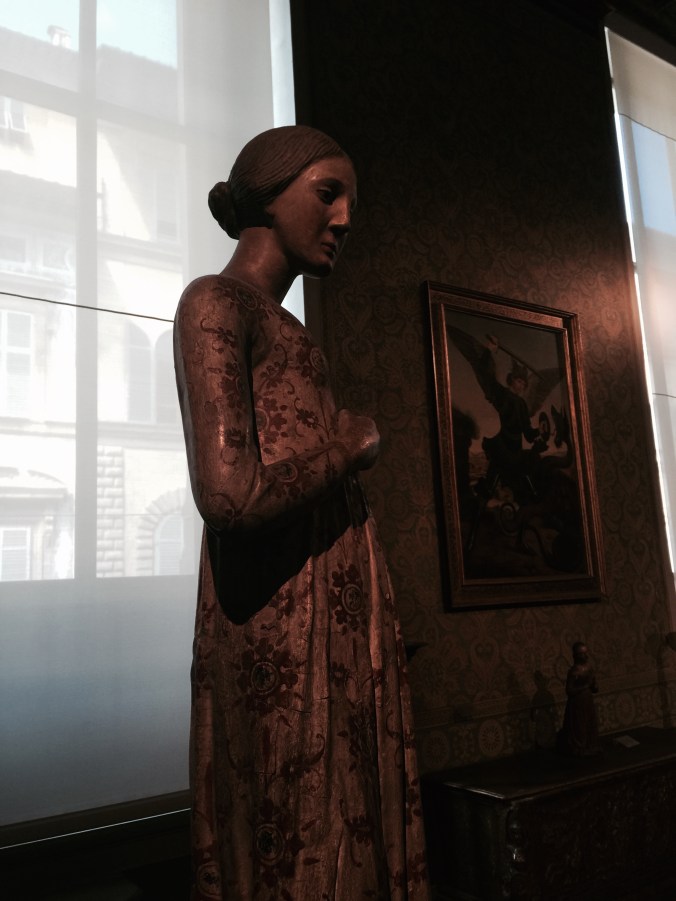
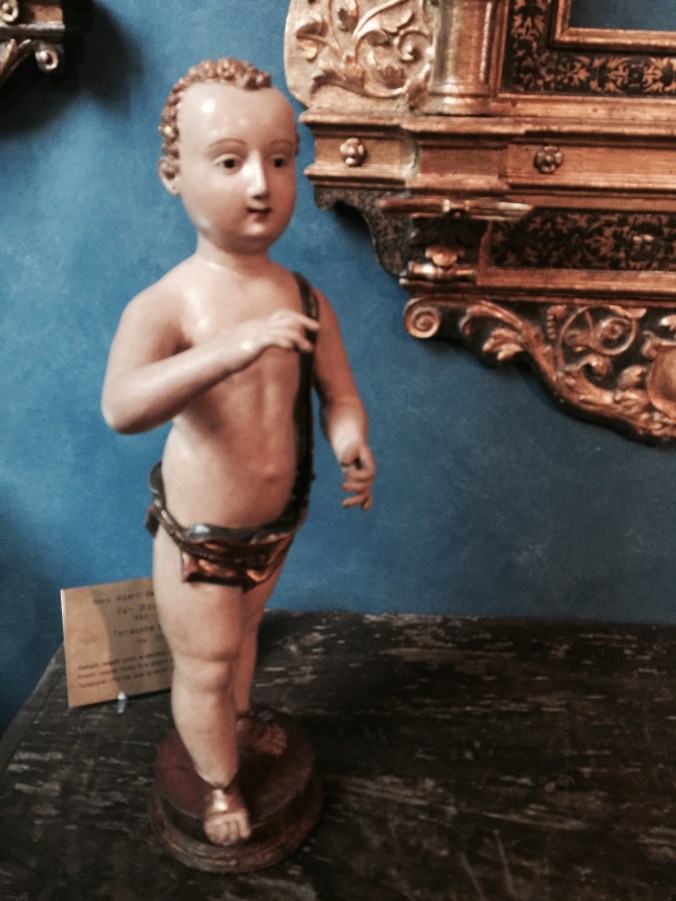
This Renaissance statue in painted wood takes my breath away.

IMG_5373IMG_5374IMG_5375

Isn’t she lovely?

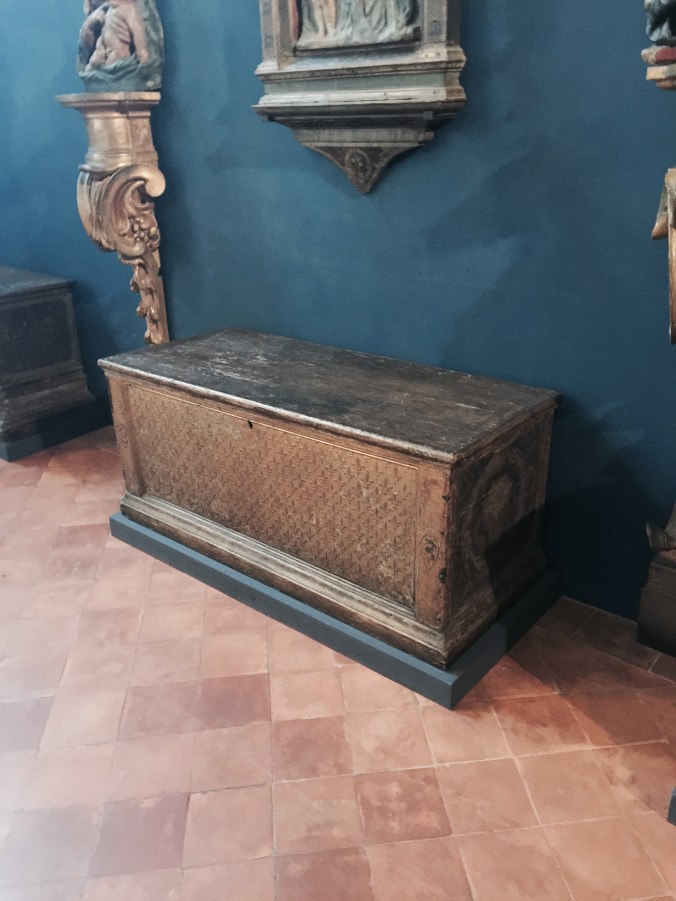
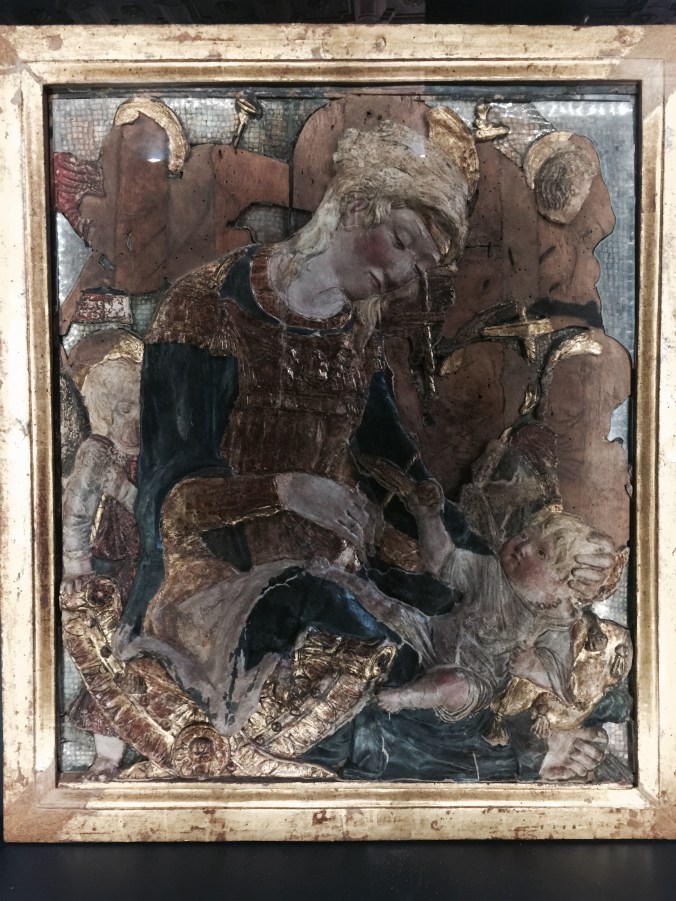
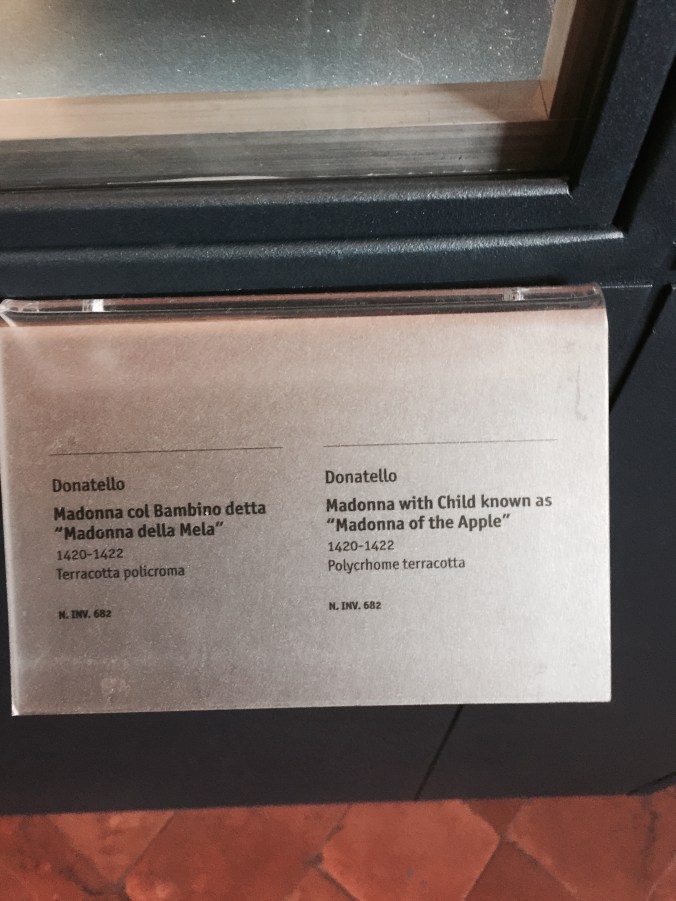
Now, let’s have a look at some other of the masterpieces in the collection.


IMG_5376


IMG_5377


A chair, to rest your weary Renaissance bones upon.

IMG_5378


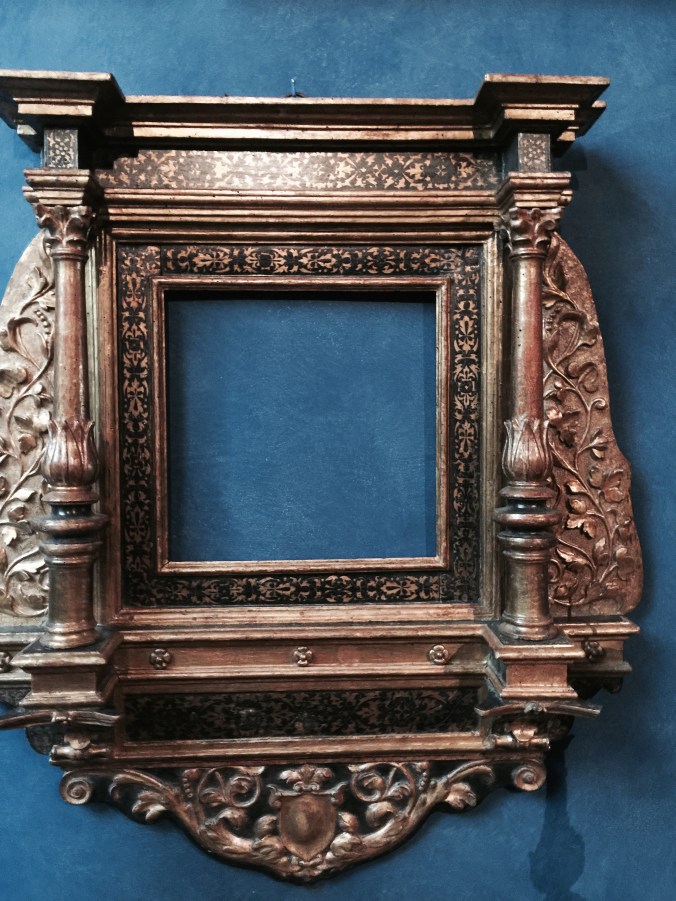
An artful display of fantastic Renaissance frames.  Who needs a painting when you’ve got frames like these?

IMG_5379

IMG_5412


IMG_5395


IMG_5403

IMG_5411IMG_5407


Some Renaissance slippers for the lady.

IMG_5404


And some for her gentleman?

IMG_5405

IMG_5408IMG_5410IMG_5413IMG_5414

IMG_5415IMG_5416IMG_5417IMG_5418IMG_5419IMG_5420IMG_5422IMG_5424

IMG_5425IMG_5426IMG_5427IMG_5428IMG_5429IMG_5430IMG_5431IMG_5432IMG_5433

IMG_5434IMG_5435IMG_5436IMG_5437IMG_5438IMG_5440


Let’s leave the way we came in.

IMG_5441

Ciao for now!

Van Dyck at the Frick


20161587_0

This beguiling self-portrait was created around 1620 by Anthony van Dyck (1599-1641), one of the most talented portrait painters of all time.  His sitters–poets, duchesses, painters and generals–were the elite of his age.  He painted them in an elegant manner, capturing, in his best works it is often said, the sitter’s inner life.

The Frick Collection in New York has a major new exhibition running currently and, thanks to the internet, we can all take a virtual tour of the show.

And may I say, hat’s off to the Frick for their outstanding use of technology to advance knowledge of the exhibition itself as well as the work of Van Dyck. The Frick’s website is among the most advanced I have seen of all art museums.  The following pictures and text are all modified from the museum’s website.

http://www.frick.org/exhibitions/van_dyck/virtual_exhibition

Born in Antwerp, Van Dyck rose to the top of his field, already assisting Flander’s most acclaimed artist, Peter Paul Rubens, in his late teens. Van Dyck spent the winter of 1620 in England, followed by a six year stay in Italy. By the age of 33, he was back in England, appointed principal painter to Charles I.

vanDyck_cat_2_2000

Self-portrait, c. 1613-15 Van Dyck’s first known self-portrait, painted when he was about fifteen.


vanDyck_cat_17_2000

Genoese Noblewoman, c. 1625-27

Van Dyck spent most of his Italian years in Genoa, a thriving Mediterranean port with an important Flemish community. In the wake of Peter Paul Rubens, who had preceded him there in the first decade of the century, he provided the city’s noble families with grand portraits, many of which still adorn their palaces. This portrait of a luxuriously dressed young woman standing against a loosely defined architectural background is a typical example of such images. Although she remains unidentified, the sash across her torso and the black edges of her cuffs seem to indicate she is a widow.


vanDyck_cat_85_2000

Lady Anne Carey, c. 1636

Anne Carey, later Countess of Clanbrassil, was the daughter of Henry Carey, second Earl of Monmouth, and Martha Cranfield. This portrait was likely painted on the occasion of her engagement to James Hamilton, heir of a Scottish family that had received large land grants in Northern Ireland. Lady Anne strides to the left in an Arcadian landscape, with the boulder behind her framing a woodland vista. Van Dyck reused this backdrop in other portraits, catering to the taste of English aristocrats who sought refuge from an increasingly unstable political situation in pastoral fantasies.


20161570

Mary, wife of Anthony van Dyck, c. 1640

Van Dyck’s wife, Mary Ruthven, came from an aristocratic, if impoverished, family of Scottish Catholics and served as a maid of honor to Queen Henrietta Maria. Van Dyck’s marriage to her in early 1640 marked his social ascent, but the painter died less than two years later, just eight days after the birth of his daughter Justina. Van Dyck’s portrait of his new bride is a sensuously painted autograph work. A cluster of oak leaves bound in Lady van Dyck’s hair may symbolize constancy, while her elegantly splayed fingers call attention to the proscribed Catholic faith that she shared with her husband, symbolized in the crucifix she displays.


20161593

Marie-Claire de Croy & son Phillpe-Eugene, 1634

Descended from one of the most ancient noble families in the Southern Netherlands, Marie-Claire de Croÿ was created Duchess of Havré in her own right by the king of Spain upon her marriage to a cousin in 1627. The child who appears alongside her is likely Philippe-Eugène, the future bishop of Valencia. The painting shows van Dyck’s customarily grandiose and richly colored court portraits.


20161597

Queen Henrietta Maria with Jeffrey Hudson, 1633

Charles I’s queen, Henrietta Maria, was the youngest child of Henri IV of France and Maria de’ Medici. In England, her lifelong devotion to the Catholic faith proved to be a major impediment to her popularity. Nevertheless, she served as the emotional mainstay of her husband’s life and provided an important cultural link among England, France, and the papal court at Rome. This is one of Van Dyck’s earliest portraits of the queen. He assimilates her into an English tradition of depicting queens in hunting dress, and the European practice of representing royalty in the company of dwarves — in this case, Jeffery Hudson, a famous member of the queen’s retinue.


20161594

Pomponne II de Bellievre, c. 1637-40

Pomponne II de Bellièvre, Lord of Grignon, came from a prominent family of French statesmen and twice served as French ambassador to the English court. Van Dyck most likely painted Bellièvre during the latter’s first posting to London.. Van Dyck’s likeness is a study in muted elegance, with Bellièvre’s long brown hair lapping over his floppy collar while a sash of crimson silk accents his otherwise black and white costume.


20161560

Prince William of Orange and Mary, Princess Royal, 1641


The marriage of William of Orange and Mary, daughter of Charles I and Henrietta Maria, provided an important link between the English court and the Dutch Republic. In this smoothly executed formal wedding portrait, Van Dyck depicts the two children with linked hands, calling attention to the princess’s wedding ring.  Account books record William’s many purchases on the occasion of his wedding, including the diamond brooch for Mary and suit of pink silk faithfully reproduced here.


http://www.frick.org/exhibitions/van_dyck/video


Italian fashion @ the Victoria and Albert Museum, London

v-a-the-glamour-of-italian-fashion.sw_.13.italian-style-vintage-va-ss09-692x600

Gown above by Simonetta.

Last summer the V & A in London had an important exhibition on Italian fashion called The Glamour of Italian Fashion 1945 – 2014.  Much of this post is taken from the website link, given at the bottom.

Both women’s and menswear were highlighted in the show, with an emphasis on the techniques, materials, and expertise for which Italian fashion is renowned.

The V & A included around 100 ensembles and accessories by leading Italian fashion houses including Simonetta, Pucci, Sorelle Fontana, Valentino, Gucci, Missoni, Giorgio Armani, Dolce & Gabbana, Marni, Fendi, Prada and Versace.

Here’s a video (Click on the “Vimeo” button to see it) about the opening of the show:

The Glamour of Italian Fashion 1945 – 2014   DolceandGabbana ankle boots

The Glamour of Italian Fashion 1945 – 2014

Years following WWII:

Following the despair of the 1940s, Italy’s post-war government aimed to reinvigorate a country weakened in spirit and in physical and financial ruin. American aid helped Italy get back up on its feet, with support provided through the Marshall Plan.

Even the fashion world was helped by these conscious efforts to rebuild: the swift retooling of Italian factories alongside efforts by the country’s many entrepreneurs helped fashion become a cornerstone of Italy’s post-war recovery.

V&A

As clothing designers and textile manufacturers gradually resumed trading, their stylish designs responded to a hunger for glamor after years of wartime deprivation. Italian high fashion and fine tailoring became one of Italy’s most successful and popular exports.

Return to Luxury post WWII:

V&A20

The fashion industry gradually built itself a luxury market.  Giovanni Battista Giorgini launched Italy’s first internationally recognized fashion shows. In 1952, he secured the use of the Sala Bianca (White Hall), an opulent, chandelier-lit gallery in Florence’s famed Pitti Palace, for the landmark catwalk shows that would be held in the Renaissance city throughout the 50s.  This exciting moment propelled Italian fashion onto the world stage, front and center.

Hollywood on the Tiber:

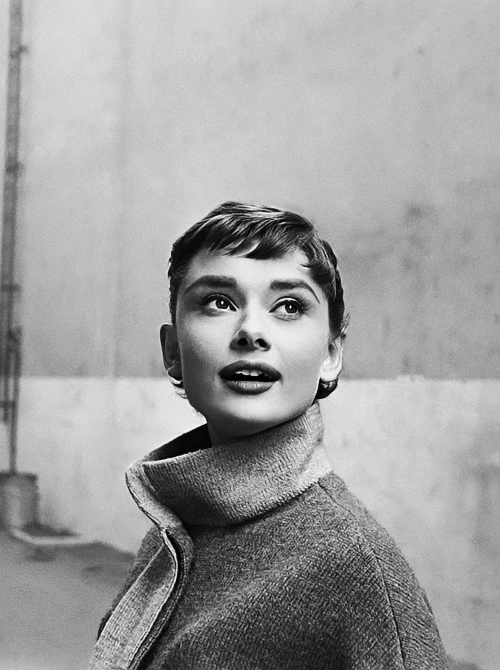
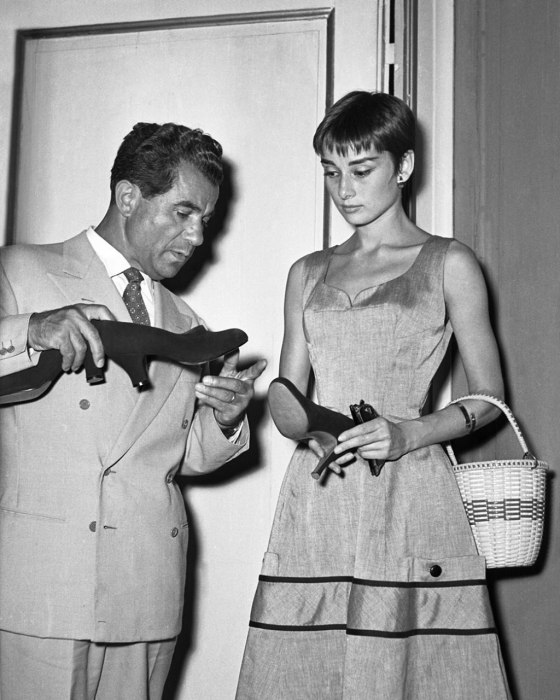
During the 1950s and 1960s, so many Hollywood films were shot on location in Italy that Rome was nicknamed “the Hollywood on the Tiber.”  Movie stars like Audrey Hepburn and Elizabeth Taylor became almost ambassadors for Italian fashion, which fueled a keen international appetite for the luxe clothing fabricated in Italy. (Please see my earlier post on Roman Holiday and Funny Face; I am a huge fan of Miss Hepburn.)

tumblr_ms7sptSLjC1qd48zdo1_500

v-a-the-glamour-of-italian-fashion.sw.9.italian-style-vintage-va-ss05

Salvatore Ferragamo discusses shoes with Audrey Hepburn

v&a22

elizabeth-taylor
Throughout the 1950s and 1960s, Italy’s economy had grown rapidly, driven in part by the fashion and textile sectors. In the years that followed, despite social and political instability, Italy’s fashion industry blossomed. Numerous fashion and related manufacturing businesses started up, many of them family-run.

Dresses+Worn+Audrey+Hepburn+Displayed+Ahead+gXZ_38LrNIHl

Tailoring

Italy’s reputation for tailored clothing developed internationally thanks to popular images of stylishly dressed Italian actors. Marcello Mastroianni’s trim suits in the 1960 film La Dolce Vita inspired fashion-conscious men everywhere.

dolce

That movie alone popularized the men’s Italian suit worldwide. Made to measure suits for an individual client were the launching pad for a growing international clientele, followed by the increasingly popular ready-made suits of later decades.

dolcevita

A well-tailored suit requires precisely cut fabric and exact fit, along with fine finishing details. The smallest design elements, such as the shape of a pocket or sleeve, often differed from region to region. A Neapolitan suit could be distinguished from one produced in Rome.

The emergence of ready to wear:

From the early 1970s, the popularity of couture gave way to enthusiasm for manufactured fashion. Milan – with its fashion press, advertising industry, and nearby clothing and textile factories – became Italy’s new fashion capital.

v&a12

V&A5

v&A2

Made in Italy:

‘Made in Italy’ was a marketing campaign that celebrated a rainbow of premium goods: cinema, art, food, tourism, design and, chief among them, fashion. This decades-long, international promotional campaign ensured that ‘Made in Italy’ became the mark of style.

Cult of the designer:
Since the mid-1990s, fashion has become ever more international. Many more Italian designers have become celebrities in their own right and solidified their country’s reputation as a global tastemaker. These designers sell a universe of goods across continents, from clothing to furniture to hotel interiors. Some have transformed long-established family firms into international luxury brands. All have a devoted following.

The designers in this section are at varying stages on the journey to recognition. Some have the tradition of generations behind them. Others emerged onto Italy’s fashion scene only a few seasons ago. What unites them is a loyal clientele, an emphasis on Italian production, and a place at the top end of fashion, where Italy’s designers continue to find their competitive advantage.
The bright spot in Italy’s generally sober economic outlook is the limitless demand for a taste of Italian style. Italian fashion companies are still influential, even as Italy’s reputation has suffered.

What will ‘Made in Italy’ mean in future?

The years since 2000 have been marked by political scandal, immigration tensions and economic problems. Italy’s once famed networks of textile production and related industries are thinning. Its premium fashion houses are increasingly foreign-owned. Chinese factories, workers and consumers are now intertwined with the destiny of the Italian-made.

Sponsored by Bulgari:
Bulgari is proud to sponsor this exhibition. Bulgari is an emblem of Italian creativity and craftsmanship, renowned for its distinctively Italian style. From the 1960s Bulgari was acclaimed for creative designs incorporating colored gemstones. This exhibition features legendary jewels once owned by Elizabeth Taylor.

bulgari1

Bulgari jewels

http://www.vam.ac.uk/content/exhibitions/exhibition-the-glamour-of-italian-fashion-1945-2014/about-the-exhibition/

A couple of last looks from the exhibition:

RobertoCapuccidressv-a-the-glamour-of-italian-fashion.sw.6.italian-style-vintage-va-ss02

The V & A exhibition also asked the question of what the future might hold for Italian fashion, including a short documentary about the future of the Italian fashion industry vis a vis competition from lower-wage markets such as India and Asia and also the marketing power of the established fashion houses, which makes it harder for newcomers to gain a foothold.  Thought provoking stuff.