

Oranges and Italian art:
Because of a combination of new artistic techniques and some apparently reasonable, but mistaken, assumptions about the history of citrus, oranges appeared frequently in paintings by any number of the great masters of the Italian Renaissance.
In making the break from Byzantine scholasticism to the new humanism of the Renaissance, artists began setting their religious figures against naturalistic backgrounds. Not having seen the Holy Land, they glibly set their Annunciations and Resurrections in Italian villas and on Italian hills.
Crusaders, among others, had long since reported that orange trees flourished in Palestine, so, as a kind of hallmark of authenticity, the painters slipped orange trees into masterpiece after masterpiece, remaining ignorant to their deaths that in the time of Christ there were no orange trees in or near the Holy Land.
In his “Maestà,” the Sienese painter Duccio di Buoninsegna showed Jesus entering Jerusalem through the streets of Siena, past orange trees in full fruit.
Fra Angelico painted Jesus resting under an orange tree.
It was almost unthinkable for a great master to do a “Flight into Egypt” without lining the route with orange trees.
A “Last Supper” was incomplete without oranges on the table, although there is no mention of oranges in the Bible.
Titian’s “Last Supper,” which hangs in the Escorial, shows oranges with fish.
A Domenico Ghirlandaio “Last Supper” goes further: a mature orange grove is depicted in murals behind the Disciples.
The deterioration of Leonardo’s “Last Supper” has been too extensive for any oranges in it to be identified, but in all likelihood, according to Tolkowsky, they were there.
Most painters thought of the Annunciation as occurring indoors, and Paolo Veronese, for one, moved orange trees indoors to authenticate the scene, setting the plants in trapezoidal pots, of the type in which orange trees were grown in his time in northern Italy.
Fra Angelico also used orange trees to give a sense of the Holy Land to his “Descent from the Cross,” which was otherwise set against the walls of Florence, and, like many of his contemporaries, when he painted the Garden of Eden he gave it the appearance of a citrus grove.
Benozzo Gozzoli’s frescoes in a family chapel of the Medici show Melchior, Balthasar, and Gaspar looking less like three wise kings from the East than three well-fed Medici, descending a hill that is identifiable as one near Fiesole, dressed as an Italian hunting party, and passing through stands of orange trees bright with fruit.
Actually, Gozzoli’s models for the magi were Lorenzo de’ Medici; Joseph, Patriarch of Constantinople; and John Palaeologus, Emperor of the East.
~~~~~~~~~~~~~~~~~
The orange tree was more than a misplaced landmark. It was also a symbol of the Virgin, erroneously derived from an earlier association that medieval theologians had established between Mary and the tall cedars of Lebanon.
Thus, countless paintings of the Madonna or of the Madonna and Child were garlanded with orange blossoms, decorated with oranges, or placed in a setting of orange trees.
Mantegna, Verrochio, Ghirlandaio, Correggio, and Fra Angelico all complemented their Madonnas with oranges.
Sandro Botticelli, in his “Madonna with Child and Angels,” set his scene under a tentlike canopy thickly overhung with the branches of orange trees full of oranges.
In the Neo-Latin of the Renaissance, oranges were sometimes called medici— an etymological development that had begun with the Greek word for citron, or Median apple.
It is no wonder, therefore, that in art and interior decoration the Medici themselves went in heavily for oranges. In Florence, oranges are painted all over the ceilings of the Medici’s Pitti Palace.
The Grand Duke Francesco de’ Medici was one of the world’s earliest collectors of citrus trees, and in Tolkowsky’s view the five red spheres on the Medici coat of arms were almost certainly meant to represent oranges.
When Botticelli painted his “Primavera,” under a commission from the family, he shamelessly included Giuliano de’ Medici as the god Mercury, picking oranges.
Botticelli also painted his “Birth of Venus” for the Medici.
It was Venus, and not the Hesperides, according to a legend current at the time, who had brought oranges to Italy.
Botticelli’s model was Simonetta dei Cattanei, wife of Marco Vespucci and Giuliano de’ Medici’s Platonic love. Simonetta came from Porto Venere, where Venus was alleged to have landed with the original oranges, so Botticelli painted her in the celebrated scallop shell bobbing on the gentle swells off Porto Venere, and lined the coast behind her with orange trees.
Giuliano’s son, Giulio de’ Medici, who became Pope Clement VII, commissioned Raphael to design a villa for him with a great double stairway leading to a sunken garden full of orange trees.
All this was bound to engage the envy of royalty in the north, and at the end of the fifteenth century, in an expedition often said to mark the dividing point between medieval and modern history, Charles VIII of France went to Italy intending to subdue the peninsula by force of arms. Instead, he fell in love with Italian art, architecture, and oranges. When he returned to France, every other man in his retinue was an Italian gardener, an Italian artist, or an Italian architect. Charles was going to transform the castles and gardens of France.
McPhee, John (2011-04-01). Oranges. Farrar, Straus and Giroux. Kindle Edition.
WOMEN OF STEADFAST CONVICTION, who struggled, suffered, and triumphed in Rome are remembered in churches all over the city. Some were elevated to sainthood. Some are honored in tombs, such as Saint Monica, Patron of Mothers, who spent most of her life worrying about her ne’er-do-well son, Augustine. You can find her tomb here:
https://en.wikipedia.org/wiki/Basilica_of_Sant%27Agostino,_Rome

Above: A map of the center of Rome (“centro storico”, roughly equal to the walled city) with its rioni.
A rione of Rome (pl. rioni) is a traditional administrative division of the city. “Rione” is the term used since the 14th century to name a district of a town. The term was born in Rome, originating from the administrative divisions of the city. The word comes from the Latin word regio (meaning region); during the Middle Ages the Latin word became rejones, from which rione comes. Currently, all the rioni are located in Municipal I of Rome.
According to tradition, it was Servius Tullius the sixth king of Rome who first divided the city into 4 regiones. The first emperor Augustus created the 14 regiones of Rome that were in effect throughout the Imperial era, as attested by the 4th-century Cataloghi regionari, which names and provides information for each. All but Transtiberim (the modern Trastevere) were on the left bank of the river Tiber. The regions were:
During the Renaissance, the city was reorganized and expanded, and the rioni were reinstituted. The name comes from regio in Latin; rione in the vernacular term.
In 1586, Sixtus V added Borgo as another rione.
In 1744 Pope Benedict XIV replanned the administrative division of Rome. Marble plates defining the borders of each rione, many of which still exist, were installed in that year on the facades of houses lying at each rione’s border.
In 1798, during the Roman Republic, there was a reorganization of the administrative divisions of the city, creating 12 rioni. They are named below, with the modern rione in parentheses after:
Soon after this, during the Napoleonic period, Rome was split into 8 parts, each part called Giustizie (meaning “justices” in Italian):
The Napoleonic subdivisions remained in effect until Rome became the capital of the newly formed Italy in 1861. The new capital grew quickly, both within and without the Aurelian walls. In 1874 the rioni numbered 15, with the addition of Esquilino. At the beginning of the 20th century, some rioni were further subdivided and the first parts outside the Aurelian walls started being considered part of the city. In 1921, the number of the rioni increased to 22. Prati was the last rione to be established and the only one outside the walls of Urbanus VIII.
The latest reform was made in 1972: Rome was divided in 20 circosrizioni (later renamed municipi. One of these later became the independent municipality of Fiumicino, and 20 rioni (which together form the Centro Storico) constituted the first one, Municipio I. The two remaining, Borgo and Prati, belonged to the XVIIth municipality until 2013. Since then they belong too to the first Municipio.
The complete list of the modern rioni, in order of number, is the following:
|
9 – Pigna |
16 – Ludovisi |


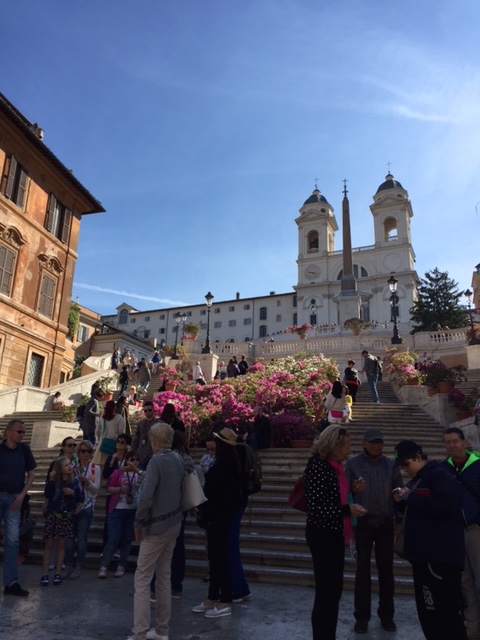
Piazza di Spagna
Breakfast


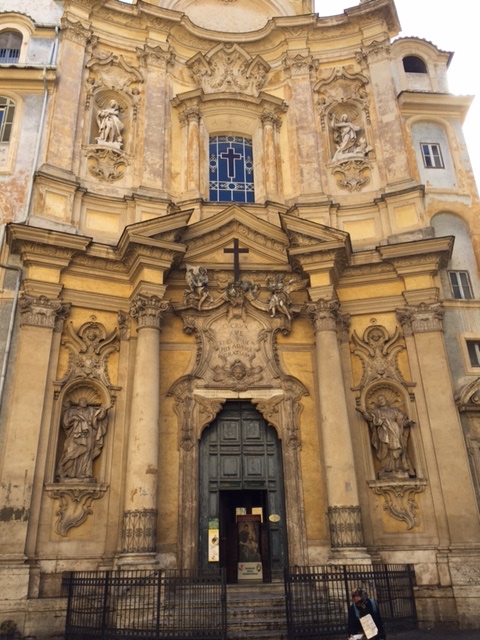
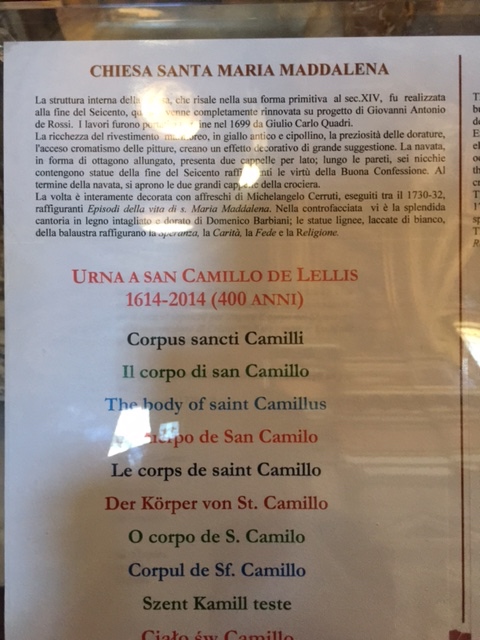
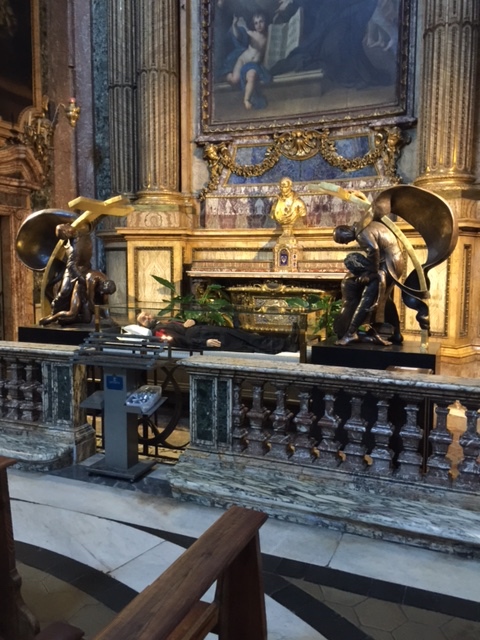
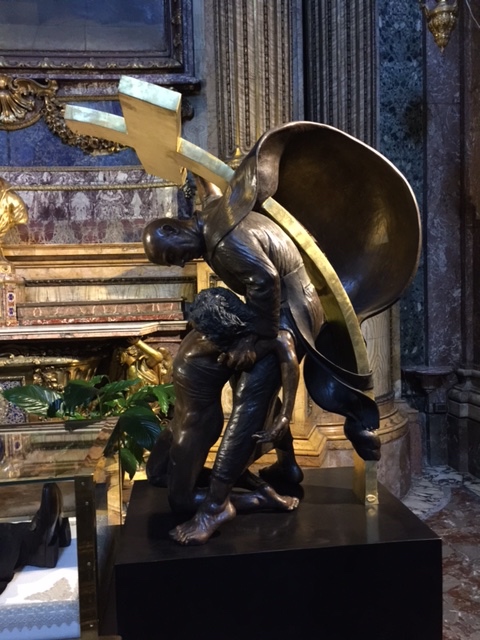
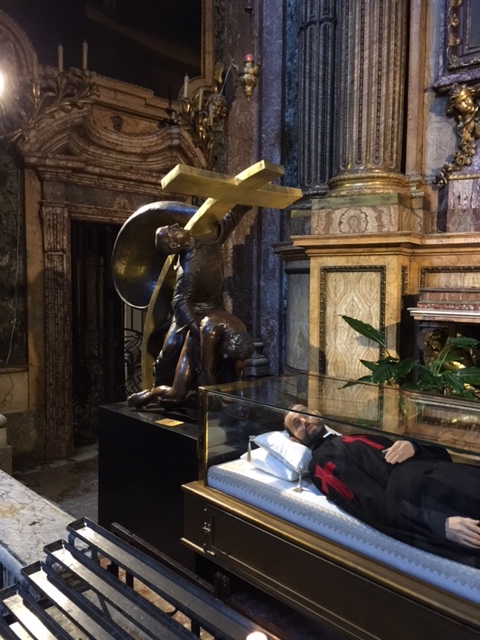
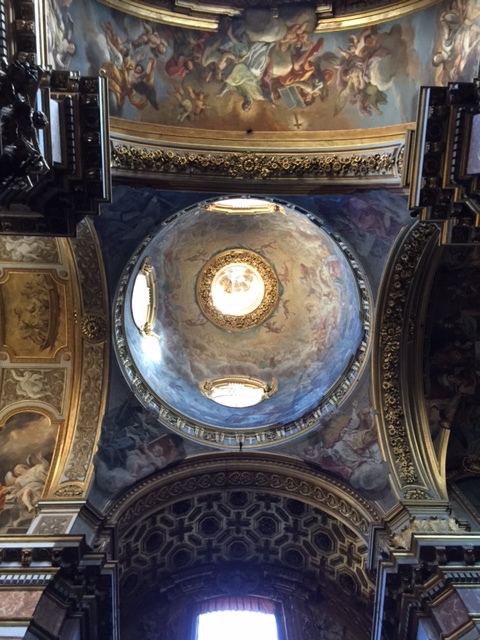
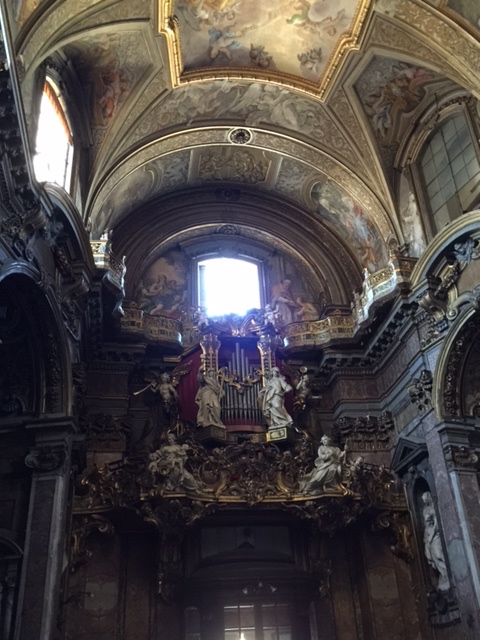
Chiesa Santa Maria Maddalena
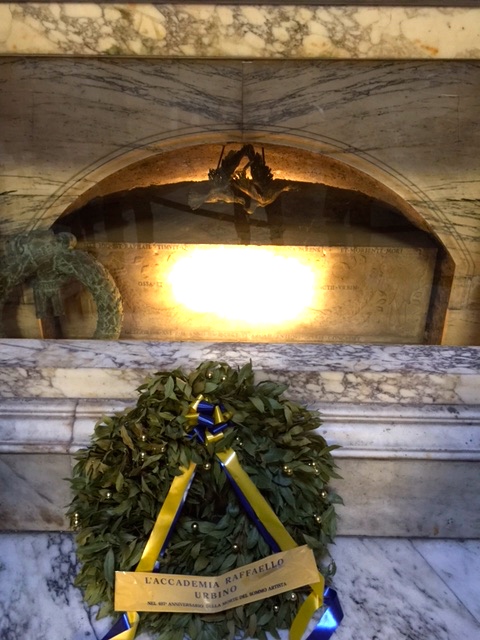
Pantheon
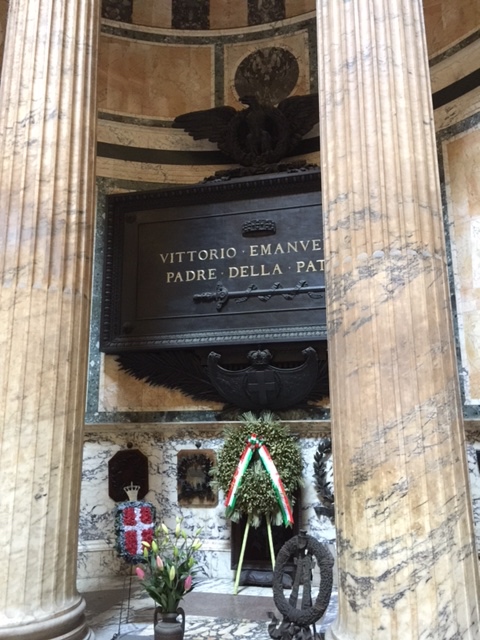
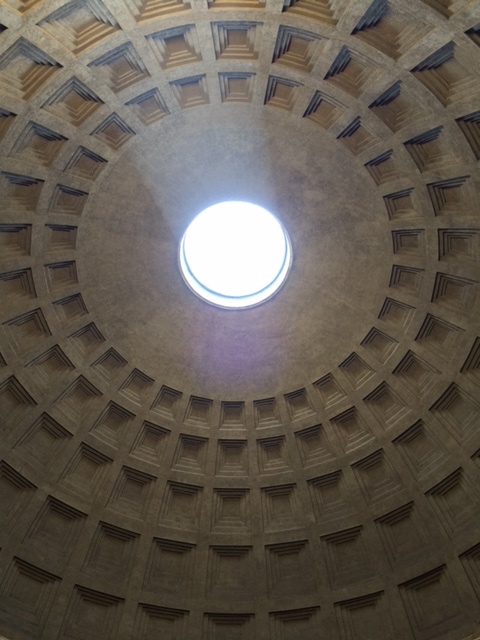
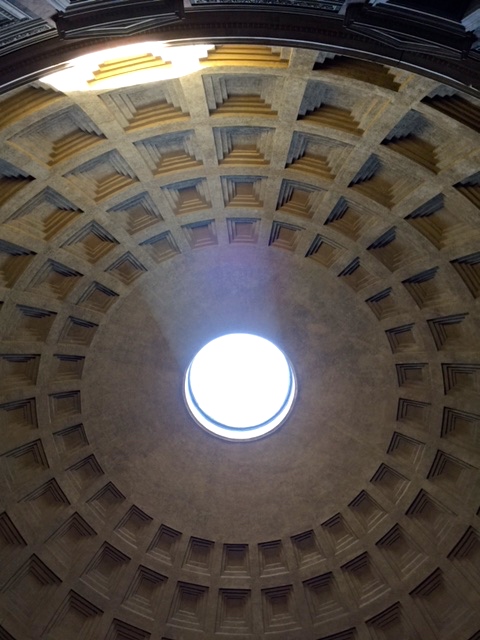
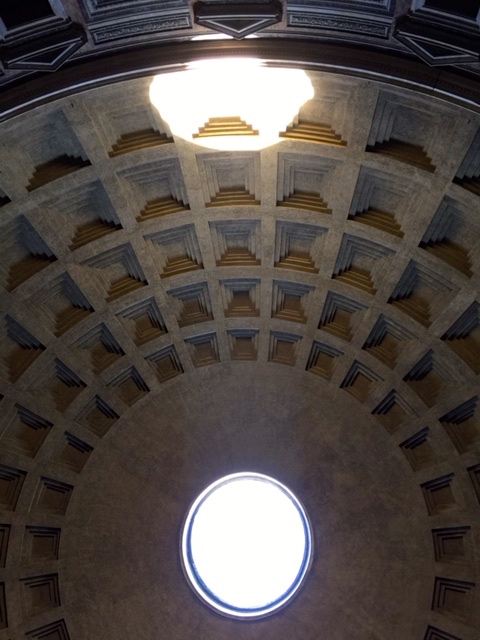
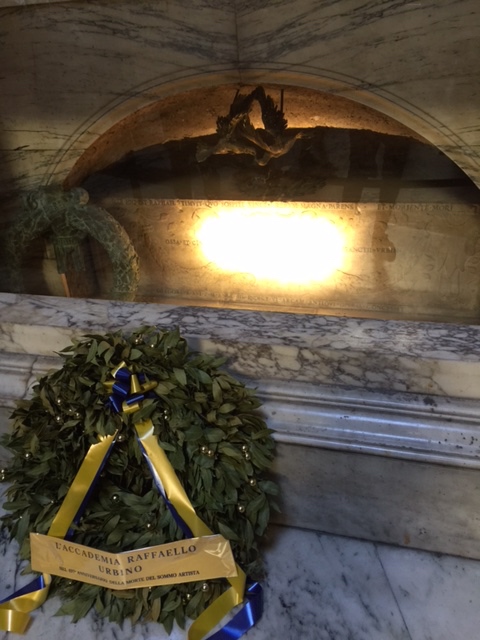
Tomb of Raphael
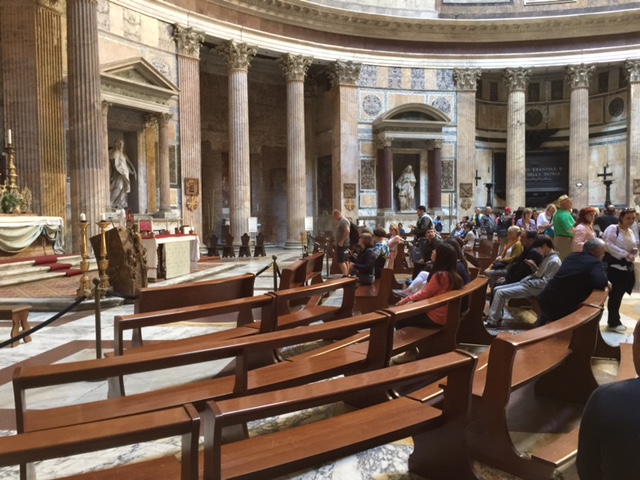
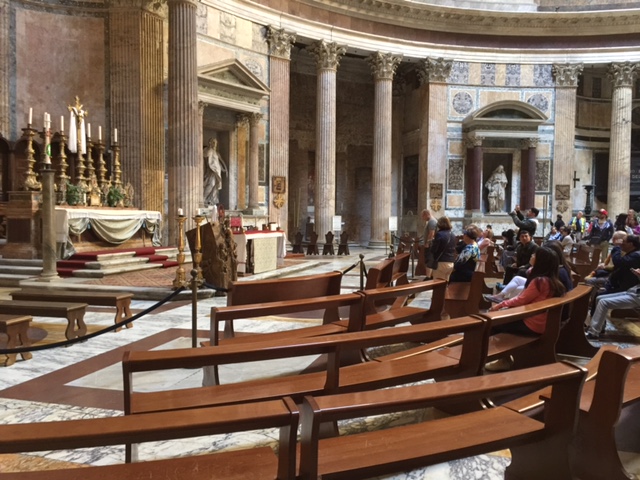
The Pantheon is a church after all. Here is how it is set up for mass.
Bernini’s elephant. My favorite sculpture in Rome!
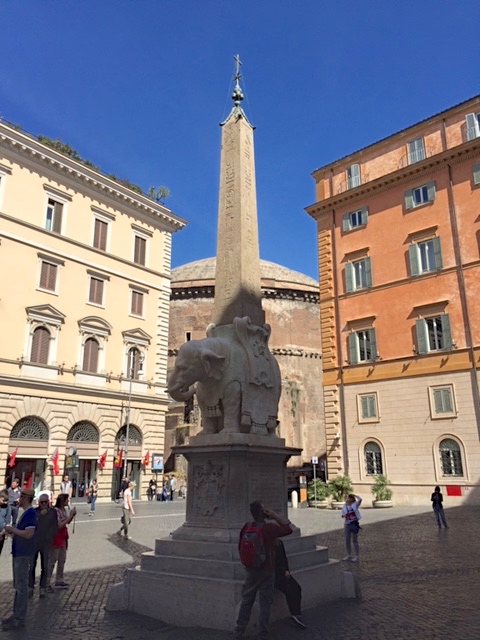
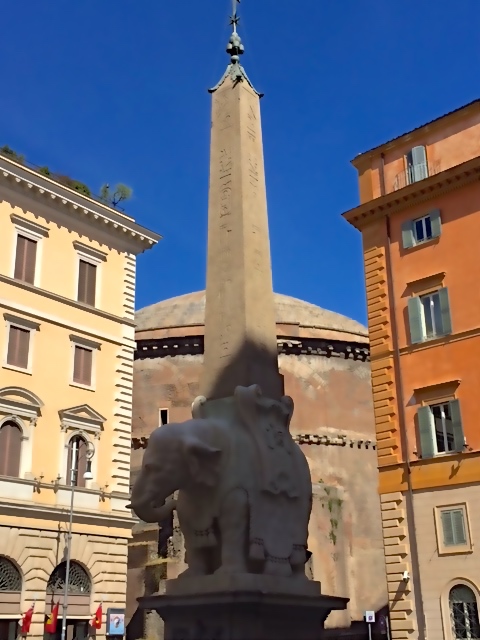
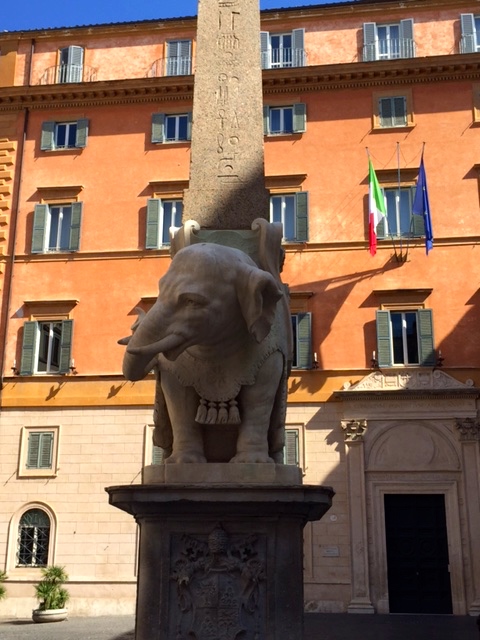
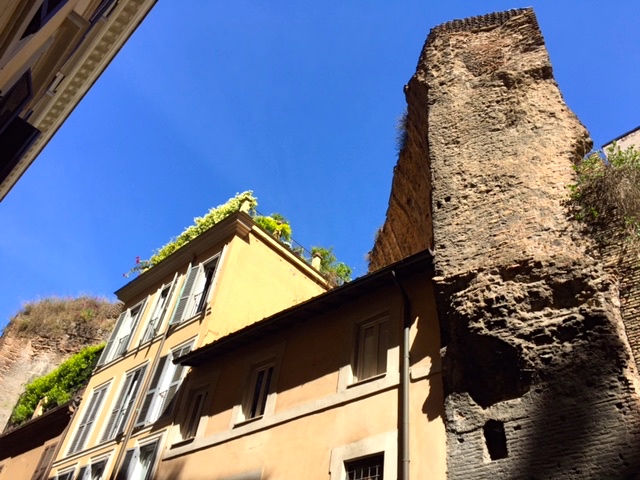
In a future life, I want to live in a palazzo built into Roman city walls.
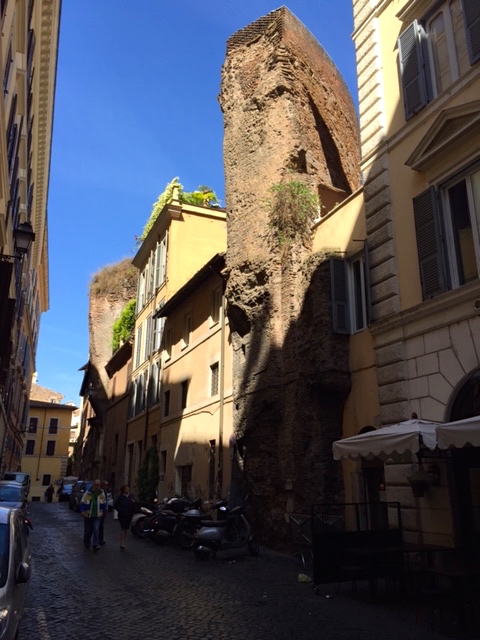
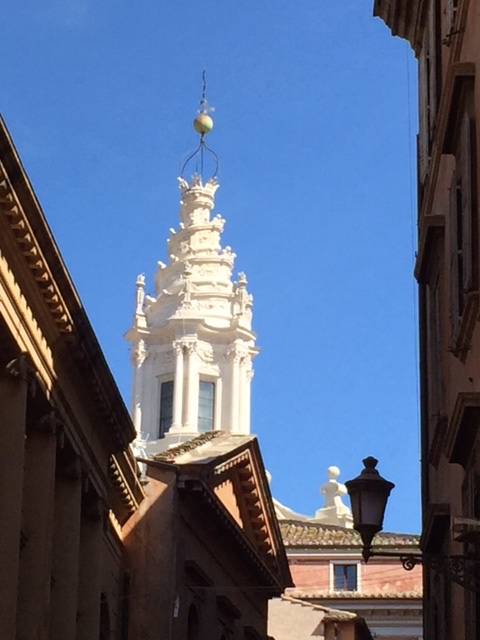
Borromini. Perfection.
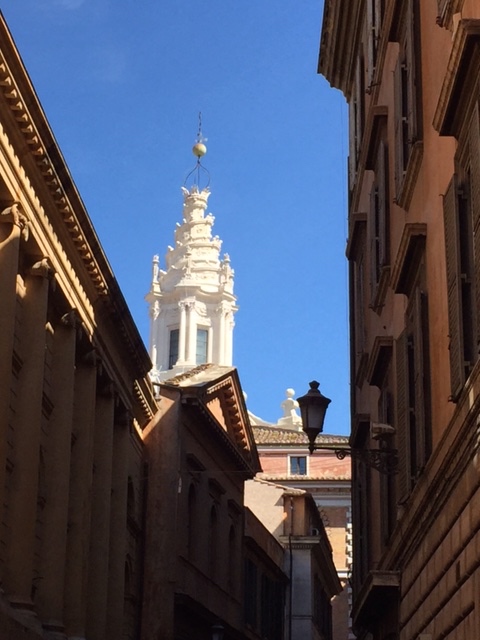
Just for fun.
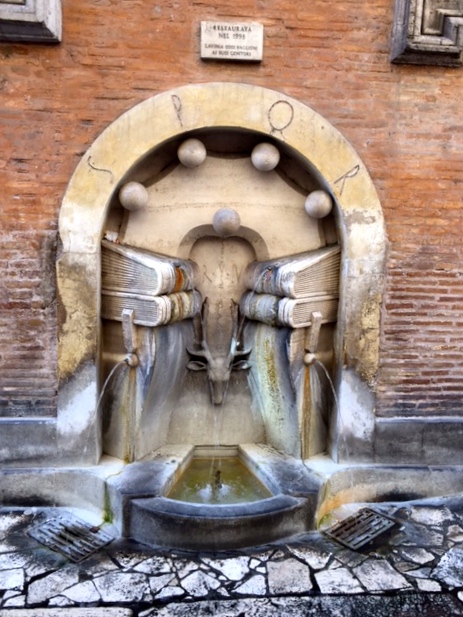
Piazza Navona, certo!
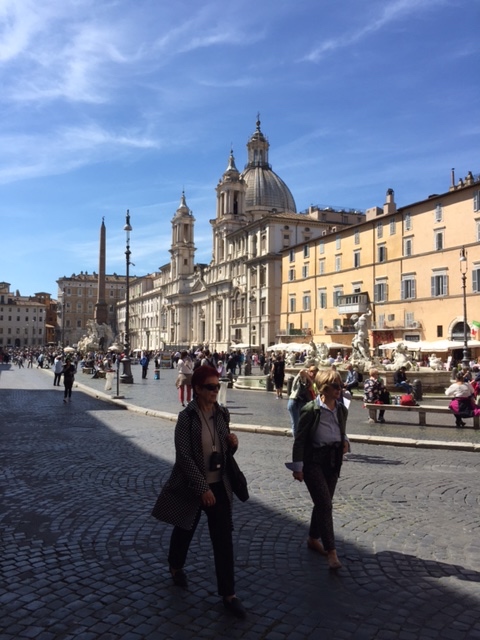
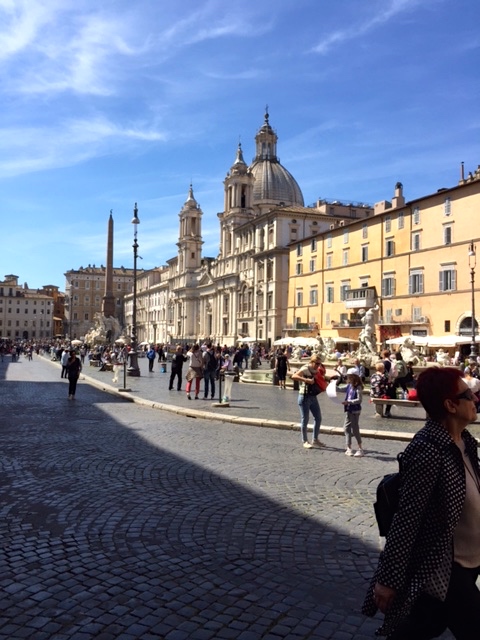
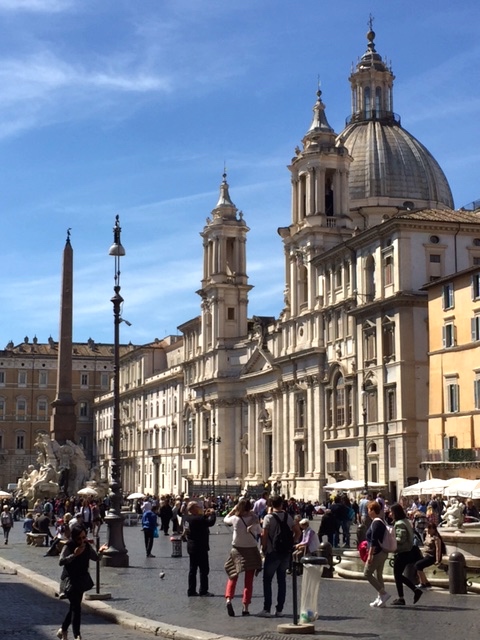
Going home.


Here’s a little more info on how to see more of Roman Florence. And, although I typically don’t post advertisements for businesses, this one includes very interesting information about Roman ruins in Florence.
See also:
April 21 is the day the eternal city celebrates its official birth.
This year the capital celebrates its 2,770th birthday. Known as Natale di Roma, the annual birthday celebration is based on the legendary foundation of Rome by Romulus in 753 BC.
Buon compleanni, Roma!

You don’t look a day over 1000!
Now, let’s refresh our memories:
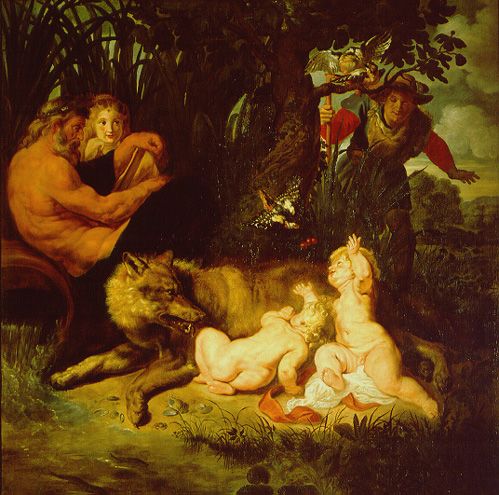
You will remember from your history lessons that Rome was founded as a small settlement atop the Palatine Hill (the hill within the Roman Forum complex), a settlement that would one day become the Caput Mundi (capital of the world).
Archaeology can be used to determine how Rome was actually founded, but it is through the stories orally passed down through history that gives us the colorful legendary story, filled with love, death, nurture and triumph and casts two baby boys, Romulus and Remus, alongside a she-wolf as the protagonists of one of the the world’s most fascinating tales.
The orphaned twins, Romulus and Remus, were the sons of Mars, the God of War, and Rhea Silvia, the daughter of the ex-King Numitor of Alba Longa.
Rhea’s uncle Amulius was threatened by the young babies, convinced that one day they would overthrow him, just as he had done to Rhea’s father. Rhea was forced to forsake her children and an order was given to drown the twins in the River Tiber. Remarkably, the twins survived this brutal attempt at their lives. A she-wolf found the babies and kept them alive by caring for them like they were her pups.
After the she-wolf gave Romulus and Remus a chance at life, Faustulus, a shepherd, adopted them as his own. He raised the boys as leaders of a group of shepherd warriors.
Growing stronger every day, the twins eventually learned that their mother was the daughter of the Kind of Alba Longa; they stormed the empire, claiming their right as heirs, killing the uncle who ordered their death, and reinstating their grandfather as the king.
Having had their revenge, the brothers returned to the place where the she-wolf had found them and set out to build a city of their own.
As so often happens in epic myths (and real life), the two power hungry brothers had a series of disagreements. Romulus ended up killing his brother Remus in a fight and thus Romulus then became the king of the city that they had founded atop the Palatine Hill. He named it “Rome”.
If you’ll be in Rome this weekend, and want to join the party, here’s a resource for activities planned:
http://www.natalidiroma.it/english_3.html
.svg)
.svg)
.svg)
.svg)
.svg)
.svg)
.svg)
.svg)
.svg)
.svg)
.svg)
.svg)
.svg)
.svg)
.svg)
.svg)
.svg)
.svg)
.svg)
.svg)
.svg)
.svg)
 get back, lauretta!
You must be logged in to post a comment.