Rome’s birthday and her rose and Japanese gardens

I’m headed to Roma soon!

Start your engines!

Rome its 2,770th birthday on Friday 21 April, with events lasting until Sunday 23 April. Known as Natale di Roma, the annual birthday celebration is based on the legendary foundation of Rome by Romulus in 753 BC.


On the roses, see:

http://www.wantedinrome.com/whatson/romes-rose-garden-2/

On Japanese garden, see:

http://www.wantedinrome.com/whatson/japanese-gardens-in-rome-3/

Those silly ancient Romans…

42000-kremer-vermilion-pigment-genuine-from-china-50g-936-p

During the Renaissance the color of red was achieved in painting with the use of vermilion.

“Vermilion was made from cinnabar, a brick-red mineral the ancient Romans believed came from the blood of dragons crushed to death under the weight of elephants.”**

So silly and yet so specific!

images


**King, Ross (2012-10-30). Leonardo and the Last Supper (p. 149). Bloomsbury Publishing. Kindle Edition.

Archaeological risk?

When in Rome, beware of archaeological ruins.  They are everywhere!

italy-rome-metro-ruin_salo-1italy-rome-metro-ruin_salo1


Work, for example, on the current subway expansion to build a third line is underway in the historical center of Rome. But, it had to be stopped for unexpected “archaeological risk.”  While digging down the equivalent of several stories to build a new station, incredible mosaics, as well as 13 human skeletons from what have been identified as the 2000 year old military barracks for Emperor Hadrian’s army, have just been discovered.  The 39 rooms found were used for weapon storage as well as dormitories for the ancient troops.  Some of the rooms were decorated with frescoes as well as mosaics.

Instead of stopping work or relocating the find, the plan is to have an architect design a way to incorporate this discovery into the metro stop itself. It will become Rome’s first “archaeological station,” along the lines of metro museums in places like Athens, Greece, where travelers at a number of subway stops can peruse ancient artifacts as they journey across the capital.

As with all civic engineering in the Eternal City, Rome’s subway system has been plagued by delays not related to archaeology but finance problems.

Rome’s third metro line isn’t scheduled to be completed until 2021. There have been plenty of delays that are a result of a far less visual but just as ancient problem – corruption.

See here for more info:

http://www.cbsnews.com/news/rome-to-build-first-archaeological-station-after-artifacts-unearthed-in-subway-construction-site/


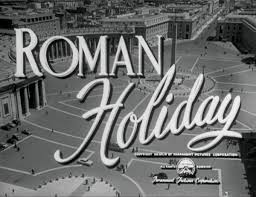
Roman Holiday

Oh, how I love this movie!  It is my favorite single film of all time.

images

It was released in 1953, which was a very good year! It was Miss Hepburn’s first starring role in an American film, even though the whole thing was set in Rome.  It has a fantastic story which is as moving as it is comedic.

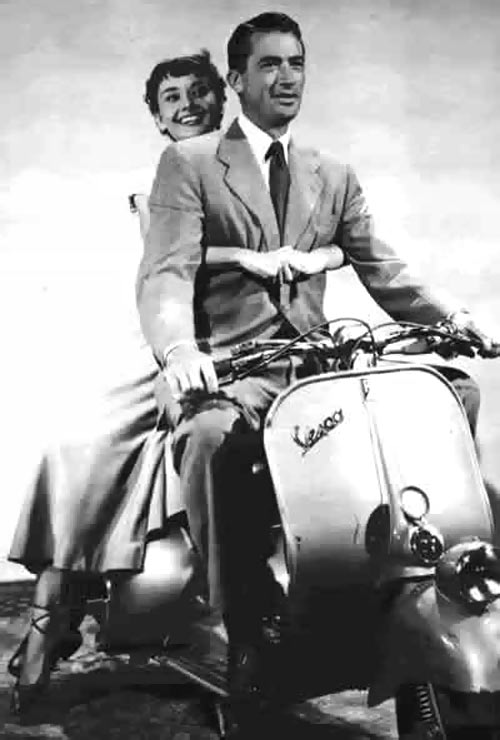
cropped-audrey_hepburn_and_gregory_peck_on_vespa_in_roman_holiday_trailer1.jpg

Audrey Hepburn and Gregory Peck on a Vespa (bzzzz, bzzzz, vespa means hornet in Italian) with Rome as a backdrop.  It doesn’t get any better than that!  All of my favorites in one shot.

images-3

Here the actors appear on the iconic Spanish Steps.  Miss Hepburn was the perfect age to play a European princess and Mr. Peck was completely believable as a seasoned American journalist looking to get a scoop on a story.  (This is an important distinction, for not every American leading man will be a believable love interest for the amazing Miss Hepburn in her future films.)

27sd-vespa-scooters-2

A publicity still.

roman_holiday manifesto

I didn’t discover this movie until I was an adult, but it didn’t matter, I fell for it completely. And then, one time I was visiting my friend, Grayce Murabito, in her little village, Casoli di Camiore, near Lucca, and I met the very charismatic Eddie Albert who also had a major role in the film.  Grayce and Eddie had been an entertainment duo in their early professional careers.  I will write a post on them soon.

Here is a still of all 3 of the movie stars, Audrey, Gregory, and Eddie.

images

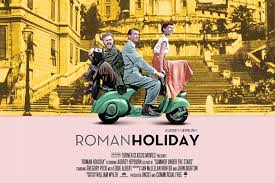
Which was turned into a great poster:

images-4

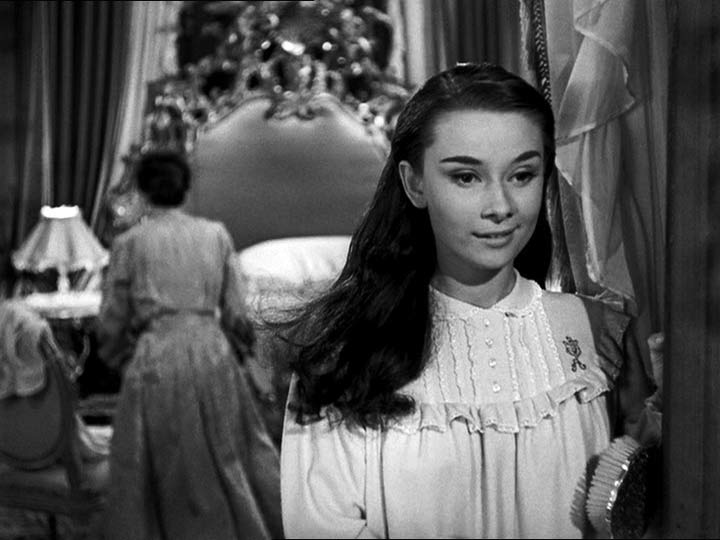
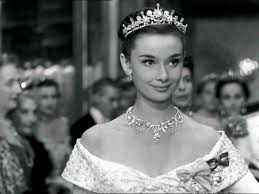
When the movie begins, we meet the character Miss Hepburn plays, Princess Ann.  She is a very miserable young royal who is stifled and bored in her constant round of official presentations, even when they are in Rome.

3292136204_f6924eb805

She wants nothing but a little fun in her life and to be released from always doing the right thing.

After she has been all but tucked into bed by her female attendants in her glamorous Roman chamber, she manages to break free.

?????????????

Some hi jinx ensue and she winds up in the care of an American journalist who coincidentally is in desperate need of a scoop.  For quite a while he doesn’t realize he has one.

audrey-long1

In the meantime, the princess tastes freedom.  For starters, she gets her hair cut.  She wanders around the streets of Rome, caught up in the sweet pleasure of her freedom to do just as she likes (dolce far niente), and when she strolls by a hairdresser, she can’t resist going in for a break-all-the-rules fashionable haircut.

2RomanHoliday1

audrey-hepburn-roman-holiday-18

rh220

roman_holiday_short_haircut

roman_holiday_haircut

Of course her new pixie haircut looks marvelous on her because, after all, she is still Audrey Hepburn!

So, heartened by her new hairstyle, Princess Ann does other daring things, like ride around Rome on a Vespa with an American man.

100513-01-Gregory_Peck_and_Audrey_Hepburn_on_scooter_in_Roman_Holiday

And wander the streets of Rome freely, meeting the people.

ah11

And attending an ordinary dance for ordinary people, at which she dances with her handsome journalist friend.

audreydanceswgreg

And sleeping in his tiny apartment in his pajamas.

princess

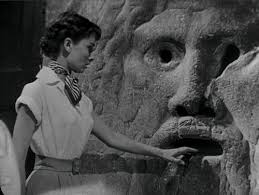
She and her journalist friend visit the famous la boca della verita (the mouth of truth) in Rome.  Joe Bradley tells her the myth, which purports that, if you put your hand into the mouth of this sculpture and tell a lie, your hand will be bitten off.

audreyandboca

Ann is apprehensive, but tests it.  Then she and Joe collapse in laughter at her silly fears.

mouth-of-truth

Along with tasting freedom, the princess also inadvertently gets a taste of love in her dashing co-conspirator.  Only she doesn’t know he knows who she is and that he is actually setting her up.

audreyhaircut

But he has fallen in love with her as well.  How could he not? The entire western world was falling in love with Audrey Hepburn right then, no matter what role she was playing.

roman-holiday-audrey-hepburn-g-peck-apt2

42_4990301671_7ba6c0088e

In the end, she goes back to her duties and you will have to watch the film to find out how Joe Bradley winds up using his scoop.

ah8

Here’s another still with some technicolor added later.  The princess has discovered gelato as well as freedom.

images-2

The critics and the public alike were captivated by Audrey and her performance in Roman Holiday and she was feted with multiple awards.  Miss H was the first actress to win an Academy Award, a Golden Globe and a BAFTA Award for a single performance.  This beautiful film set Miss H up for a series of great upcoming performances on the American screen.

AHepburn1_V_21nov11_pa_b1953 OSCAR B.A. AWARDS GIVENCHY

It is sweet to look at this candid photo of the two lead characters playing cards during a break from filming in Rome.

article-2394555-1B49CDAA000005DC-662_306x423

Sigh.  It is such a beautiful film. Run, don’t walk, to see it as soon as possible.  Ride your Vespa if you can.

Ciao a tutti!

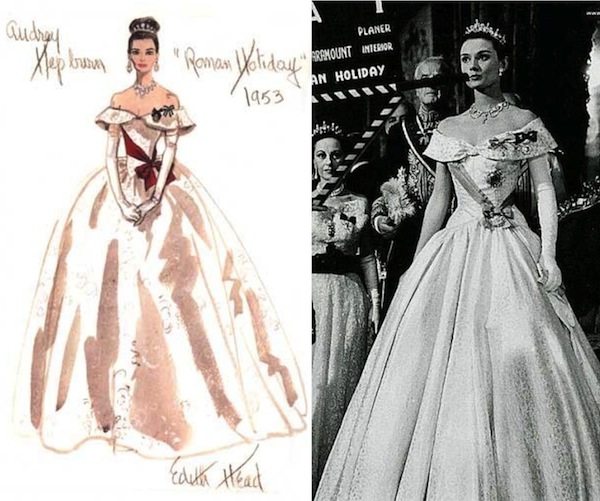
Post script: Famed Hollywood designer, Edith Head, created the looks Miss Hepburn wore. Here is Miss Head.

:6a00d8341c630a53ef01539294fef0970b

Slide2

And here is the sketch Miss Head designed for the ballgown Princess Ann wears to receive dignitaries.

romanholiday

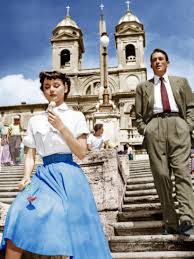
And, finally, one last, luminous shot of Audrey Hepburn in Rome on the Spanish Steps in color from 1953, for no other reason than I can.

Here’s the vintage trailer for the movie:

B is for Bernini. Meet me in Rome to find him.

When you are nearing the end of the alphabet (which in my case is the front end with A, since I started this exercise with the letter Z), you gotta go Italian. Personally, I don’t think it is ever wrong to go Italian.  It is my default.  I once spoke Italian to a man in Tokyo because my brain told me I was traveling and so it must be Italy.  It wasn’t.  But it was funny!

So, Bernini.  Think Rome.

banner

Good.  Now, drill down.

percorso_barberini_big

Great. We are getting there.

The Triton Fountain by Gian Lorenzo Bernini.  Check out the hotel at the top of the building behind the fountain.  In case you can’t tell who the artist is, they named a hotel for him!

Berninifountain-L

I love the Triton Fountain in the daytime.

Bernini

I love the Triton Fountain at night.

Very dramatic with the lighting!

But, let’s keep moving.  We have other Bernini works to admire.

Let’s go to the Borghese Galleries. First, let’s locate the Villa Borghese grounds in Rome.  There they are, at the top of the map below.  Gallery Borghese is circled in red in the Villa.  Rome looks small in this map.  It isn’t.

borghesemap

Now, for the building:

borghesegalleries

Got it!  Gorgeous, right?  This is one of my favorite spots in Rome.  I have a funny story about a red balloon and a red-haired boy, age 10, aka Jamie, for another day.  We bought this balloon just outside the Borghese and it went with us all around Italy, on trains, into buildings, it caused quite a stir.  That’s all I can say for now.

So, let’s go inside.

borghesegalleryinterior

Uh huh.  Can you say beautiful in Italian?  Bella.  Actually, bellisimo would be more appropriate, don’t you think? I certainly do. This is Italian opulence at its finest.  Do you see that big white sculpture in the center of this lovely gallery?  Let’s go look at it up close.  It’s a Bernini!

bernini6

Nice.  Let’s see another view including its luscious setting.

borghesegallery9

Sweet.  I think you can see now why Bernini is considered a virtuoso sculptor!  He carved this two figure group in his typically exuberant style, convincingly showing the female figure in the process of transforming from a woman into a tree.  What is going on?

The story Bernini is exploiting (in a good way) is that of the god Apollo, who has been struck by Cupid’s arrow.  The first girl he sees is Daphne, the maiden daughter of a river god, and he is overwhelmed by her beauty and his desire for her.

Unfortunately for Apollo, Daphne has also been struck by Cupid’s arrow, only her arrow was the kind that made her repel the love of men.  So, as Apollo chases her, promising her the moon, she prays to her father, who grants her wish to get away from Apollo.  The wish is performed by the nymph Daphne turning into the shrub Daphne.  And, for all you gardeners out there, that is where the evergreen Daphne shrub gets its name.

Pretty cool, yes?  Let’s look at a detail.  See how Daphne’s fingers are turning into leaves and branches?  It is very cool indeed.

borghese-gallery-photo_2006066-260tall

Our time for today’s tour is almost up, so let’s quick hightail it over to the church of Santa Maria della Vittoria.  Let’s find it on a map so you can go there someday without me.

mappa_roma_santa_maria_vittoria

You got it!  The A above.

Look for the church.

Santa_Maria_della_Vittoria_exterior

Isn’t it lovely!  Santa Maria della Vittoria. Saint Mary of Victory in English. The Italians have a lot of churches and dedicating a church to Saint Mary would not be specific enough in a city the size of Rome.

So, let’s enter.

santa-maria-della-vittoria

Wow, gorgeous.  We are most definitely not in Kansas anymore.  Look around for the Cornaro Chapel. Let me know when you find it.

p1353240230-3

Uhh, yeah, you found it.  It is kind of hard to miss, don’t you think?  Look at all those expensive materials: all colors of marble for starters. Bernini designed the setting as well as the sculpture. Let’s see the statues in the center.

Bernini5

This is another Bernini masterpiece.  It is called the Ecstasy of Saint Teresa.  A Catholic saint from Avila in Spain described her experience of religious ecstasy in her encounter with the angel is described as follows:

I saw in his hand a long spear of gold, and at the iron’s point there seemed to be a little fire. He appeared to me to be thrusting it at times into my heart, and to pierce my very entrails; when he drew it out, he seemed to draw them out also, and to leave me all on fire with a great love of God. The pain was so great, that it made me moan; and yet so surpassing was the sweetness of this excessive pain, that I could not wish to be rid of it. The soul is satisfied now with nothing less than God. The pain is not bodily, but spiritual; though the body has its share in it. It is a caressing of love so sweet which now takes place between the soul and God, that I pray God of His goodness to make him experience it who may think that I am lying.

bernini2

Wow.  That must have been quite the experience. And you thought art history was boring?  Ha!  I rest my case.

I think that is enough art for today.  Ciao a tutti!

Addio, Oscar.

One of the people I have held most dear to me was a man I met at the American Academy in Rome in September of 1985.  Oscar Hijuelos died last Saturday at the age of 62 of heart failure.  In truth, it is not that surprising, for here was a man with a very large heart, or cuore, as they say in italiano, and Oscar used up his heart by sharing it with anyone he was engaged with. It was his charm and ultimately his destiny.

We shared a love of life tempered by the waning golden sunlight of Roma that autumn and by our passion for all things Italian. I introduced Oscar to Firenze and that marvelous citta has never –in a lifetime of visits to Florence– seemed more magical to me, before or since, than in his lively company.  We intersected in a time and space that are of course now lost; but, I am witness to an incredible moment that changed us both in significant ways.  We were truly “innocents abroad.”  It was the best of times.

I shall miss you, Oscar. The world was a bigger, better, warmer, kinder place when you were in it. Ciao, caro mio. Addios.

 oscarhijuelos

S is for spending the summer with John Singer Sargent

Oh my goodness, I have been delinquent!  Sorry, let me get back —pronto— to the reverse alphabet of art. Last post was for the letter T and now I’m ready to move on to the letter S.  Andiamo!

Wouldn’t you love to be passing a summer afternoon with these ladies?  I would!  I bet they are discussing their beaus.

Or, taking a summer afternoon nap to escape the heat in this little outbuilding in Corfu?  I would!

Or, gliding in a gondola over the waterways of Venice?  I would!

Or, observing some exotic ceremony in some Middle Eastern country?  I would!

Or, playing some board game with your friends on some pretty bank of some lovely, cooling stream?  I would!  But I do wonder why all the women have their heads wrapped up in filmy cloth.  Too many insects, I presume.

Mosquito Nets by John Singer Sargent

One activity from which I prefer to be excused, is reading while under mosquito netting.  But, who wouldn’t like to look at the beautifully-painted image?  I would!

Or, painting a portrait of a gorgeous gentleman while sitting on classical balustrade next to a waterfall? I mean come on!  I would!

Or standing over water pouring out of a jet and into a pool, while dressed in your most elaborate summer whites. While pausing on a classical balustrade, next to some potted lemon trees in some magnificent Italian locale?  I would!

What child wouldn’t like to spend the evening hours, after the heat of the day has passed, dressed in your coolest cotton clothing, capturing fire flies in a flower garden?  I would!

Or fishing on the side of a cool stream with your feet in the water?  I would!

Or, preparing to dine on an outdoor terrace?  I would!

Or, best of all, who wouldn’t love to lie on the ground, sunk into your voluminous and gorgeous summer fashions and being painted all the while by one of the best painters of all time?  I would!

Who wouldn’t want to spend a summer with John Singer Sargent?

Keep cool, everybody! Arrividerla!

X is for the portrait of Pope Leo X. Some guys have all the luck.

Quick: what is the one thing that every Italian Renaissance man– including Lorenzo the Magnificent, ruler of the Florentine republic— wanted?

To have their son named Pope, of course!

And Lorenzo got his wish!

And on top of that, Lorenzo’s son, known as Pope Leo X, had his portrait painted by Raphael.  Wow, some people really do have all the luck!

Pope Leo X had the good fortune to be born in Florence (in 1475), the second son of il magnifico.  His birthname was Giovanni di Lorenzo de’ Medici.  In Italian families, the eldest son inherited the business or other elite endeavors of the father; the second son went into the church.  Young Giovanni was therefore destined to rise in church hierarchy and, sure enough, was made a cardinale in 1489 at the ripe age of 14. He must have been filled with wisdom at this very mature age.  Yuk, yuk.

Giovanni became Pope (il Papa) Leo X in 1513, and he remained in this most elite office until his death in 1521 at the age of  46.  The church was losing ground during this time and il papa did everything he could think of to stop the losses.  He succeeded in making his nephew the duke of Urbino, but only by leading a costly war which severely damaged papal finances. Some of his cardinals tried to poison him, but he escaped this fate just narrowly.

Leo X is probably best known for granting indulgences to pay for the reconstruction and beautification of the St. Peter’s and the Vatican; for example, he commissioned Raphael to paint what are now known as the Raphael Rooms, which were the central, and largest, works of the painter’s career. One of Raphael’s best known works is The School of Athens in the  Stanza della Segnatura, seen here.

File:Raffael Stanza della Segnatura.jpg

Leo X seemed to have been quite unwilling to accept that the way he conducted church business was not condoned and, as a result, Martin Luther wrote the 95 Theses.  Leo X condemned Luther in his Papal Bull of 1520.  He couldn’t stop the march of reform, however, and the Protestant Reformation succeeded. This pope died in 1521 and is buried in Rome in the church Santa Maria sopra Minerva.  I suspect there is a big reason why he wasn’t buried in St. Peter’s, as were some of his fellow popes.  But, I don’t have an answer for that at this time.

Now, on to Raphael, one of the greatest artists of the Italian Renaissance. Here is a portrait of him as a young man.

https://i0.wp.com/upload.wikimedia.org/wikipedia/commons/9/94/Sanzio_00.jpg

Raphael’s father was a court painter and, from a very early age, Raphael showed immense talent.  His artistic ability and connections took him first to Florence and then to Rome.  Of course he knew both Leonardo and Michelangelo.  Pope Leo X kept Raphael busy with commissions for the Vatican, and it therefore comes as no surprise that he as well painted the pontiff’s portrait.  Here it is again:

Here are a few of Raphael’s other portraits, so you can get some sense of what he achieved in his highly realistic treatment of Pope Leo X.

Z is for Zenobia.

I don’t know what has gotten into me recently.  I just really feel like blogging about art.  For some reason, Harriet Hosmer’s Zenobia has been on my mind today and so–just for fun–I decided to try blogging each day with an artist, artwork, or art-related subject for each letter of the alphabet.  And, because, I am Lauretta, who likes to do things differently, I decided to do it from Z to A.

Ahem.

So, here we go, let’s start at the very end.  Z is for Zenobia.

https://i0.wp.com/farm5.static.flickr.com/4037/4392244201_cf0e5d7426_m.jpg

So, I can hear you asking, who is Harriet Hosmer and what is a Zenobia?

Well, let me introduce you to “Hattie” who is shown working here in her studio in Rome, c. 1860.

https://i0.wp.com/www.historyproject.org/exhibits/public_faces/images/14.JPG

Got your attention?  Excellent!

Harriet Goodhue Hosmer was born (1830) in Massachusetts and was encouraged by her physician father to live an active life to overcome early illnesses.  He instructed her in studies of anatomy, which are critical for an artist’s understanding of how to portray the human body, and she liked to model in clay.  With her father’s connections, she was able to study at a medical school in Missouri.

Yada-yada, I can hear you saying, but women didn’t go to medical school in the mid-19th century! “Ladies” stayed at home and painted watercolors, if they just had to paint, or did needlework more likely.  They didn’t mix with men in medical schools for crying out loud!  But Hosmer did. She seemed destined to defy tradition.

File:Engraving of Harriet Hosmer.jpg

This is “Hattie” as a young woman. Maybe I am reading too much into this portrait of her, but I think I can see confidence and strong-mindedness in her direct gaze; regardless, she would need these character traits to lead what turned out to be a very unconventional life during the Victorian era.

The year 1852 was very critical in Hosmer’s life, for that’s when she left New England for Rome.  From 1853 to 1860, she studied sculpting with the Welsh sculptor, John Gibson, in his Roman studio.  Hosmer met many stars in the international art galaxy centered in Rome, including Nathaniel Hawthorne, George Eliot, George Sand, and she was a frequent guest of the Robert and Elizabeth Barret Browning in Florence.  Just for fun, let’s take a quick look at the Browning’s front door in Firenze.

https://i0.wp.com/cdn3.vtourist.com/4/4853663-The_house_of_Elizabeth_Barrett_Browning_Florence.jpg

Omg, don’t you love it?  Did you know that Elizabeth Barrett Browning is said to have said: “When I die I don’t want to go to heaven, I want to go to Florence.”  My sentiments exactly.

But, back to unconventional Hosmer.

I have written at some length on Hosmer before ( for the Metropolitan Museum of Art on their American sculpture collection) and there is plenty of biographical material available on the web for anyone who is interested, so let me simply summarize by saying that all of the educated citizenry of the western world flocked to Rome in the early to mid-19th century.  The “Grand Tour” was de rigueur for the elite, and Americans of means traveled to Italy to acquire class or at least its trappings.

While we can smile at their obvious antics, we need to remember that if it weren’t for these ambitious predecessors, our American art museums would not house their impressive collections.

If you are interested in this era, there are plenty of published first-hand accounts, ranging from Nathaniel Hawthorne (see, for example, The Marble Faun), who caught it mid-wave, and Henry James, who caught the tail-end of wave, but rode it beautifully (Daisy Miller and more).  Reading Henry James’ Golden Bowl, or watching the movie made from it, is a superb way to enter the atmosphere of the lure of Italy for weatlhy Americans.

There can be no doubt that in addition to studying sculpture, Hosmer enjoyed the comparative freedom that a foreigner always feels while living in another country.  And Rome was very open-minded, which was helpful because Hattie was gay.  Her life in Italy must have been intoxicating.

Hosmer met and mingled with many strong women from several countries and she had love affairs with a number of them.  Her private life is really none of my biz, but I suspect it was quite interesting.  Good for her!  She would probably cheer for yesterday’s American Supreme Court ruling, allow for same sex marriage. Huzzah! But, back to art.

In time Hosmer was joined in Italy by a number of other American women who, interestingly enough, made sculpture their raison d’etre.  Hosmer may have shown them the way.

https://i0.wp.com/www.theslideprojector.com/images/1850sto1890s/hosmer/puckonatoadstool.jpg

With images such as this, known as Puck, Hosmer garnered critical and popular acclaim. The Prince of Wales and the Duke of Hamilton were among just two of the purchasers of this whimsical piece (and there were many copies made, very openly, of popular subjects).

https://i0.wp.com/www.historyproject.org/exhibits/public_faces/images/15.JPG

Here is a great photograph of Hosmer and all the Italian artisans that brought her modeled images to life in marble (yes, that’s right, most of these sculptors modeled and hired locals in Italy to do the carving).  When you consider how far women had come, this is a remarkable document.

Zenobia was the queen who ruled Palmyra, a part of Roman Syria, from 267 to 274 CE.  Zenobia, known as al-Zabbā’ (الزباء‎) in Arabic, famously led a revolt against the Roman Empire and became queen of the Palmyrene Empire. By 269, Zenobia had expanded the empire, conquering Egypt and expelling the Roman prefect, Tenagino Probus, who was beheaded after he led an attempt to recapture the territory. She ruled over Egypt until 274, when she was defeated and taken as a hostage to Rome by Emperor Aurelian.

https://i0.wp.com/sandstead.com/images/wadsworth_athenaeum/HOSMER_Harriet_Zenobia_in_Chains_1859_Wadsworth_Athenaeum_source_Sandstead_d2h_.jpg

Of all the moments in Zenobia’s life, Hosmer chose to depict her as captive of the Roman army, her head bowed slightly and her eyes downcast. Despite the manacles and chains which imprison her, she still conveys a sense of authority and majesty, for her crown and other jewels are intact, her back is straight, and her shoulders are held back as she steps confidently forward.  I see her as proud and stoic.

https://i0.wp.com/24.media.tumblr.com/acaa49431caf10ebffa0ebd39cdd6044/tumblr_mlsj1nTfh81rt8jooo2_1280.jpg

Here I quote another blogger on Hosmer:

“Hosmer chose to bring Zenobia to life, not as her usual symbol of a defeated victim, but rather as an embodiment of woman’s ability to move beyond the constraints that have been placed on them.”  This may be an overstatement, but I tend to think not. And I think Zenobia is a great place to start an alphabet!