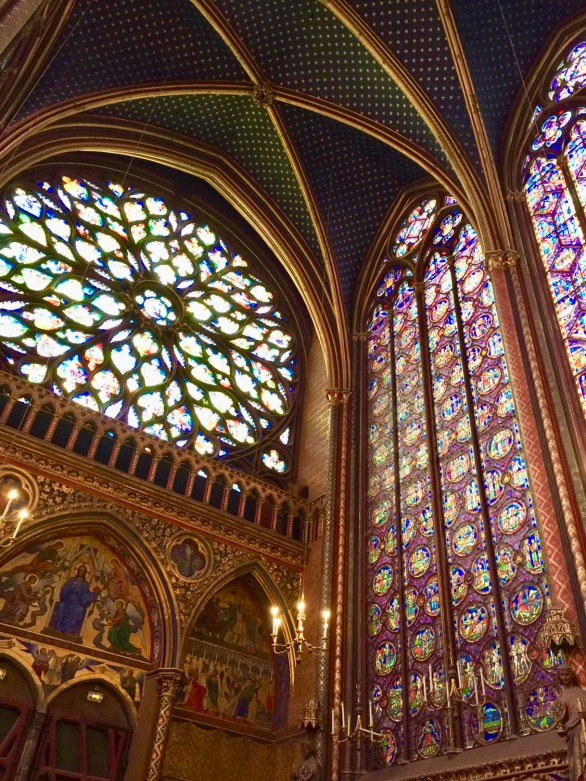
If there is a more beautifully constructed space on earth than Sainte-Chapelle, then I have yet to find it! Glass and color and stone have never been more masterfully combined than in this place. It’s alchemy.
Feast your eyes!
The Sainte-Chapelle, an architectural gem set within the Palais de la Cité, was founded by King Louis IX (later to become Saint Louis) in the mid-13th century to house the relics of the Passion.
Originally at the service of the monarchy, the building is composed of the lower chapel, used by the Palace staff, and the upper chapel, reserved to the King and his entourage, where the relics were kept. The stained glass windows, set in the Flamboyant Gothic architecture, are one of a kind.
 Sainte-Chapelle (Holy Chapel) – Upper Chapel, Paris, France
First, I take you on a guided tour starting at the facade and going into the upper and lower chapels, ending with a video of the exterior work that is going on now. For you history buffs, my usual spiel is at the end. :-)
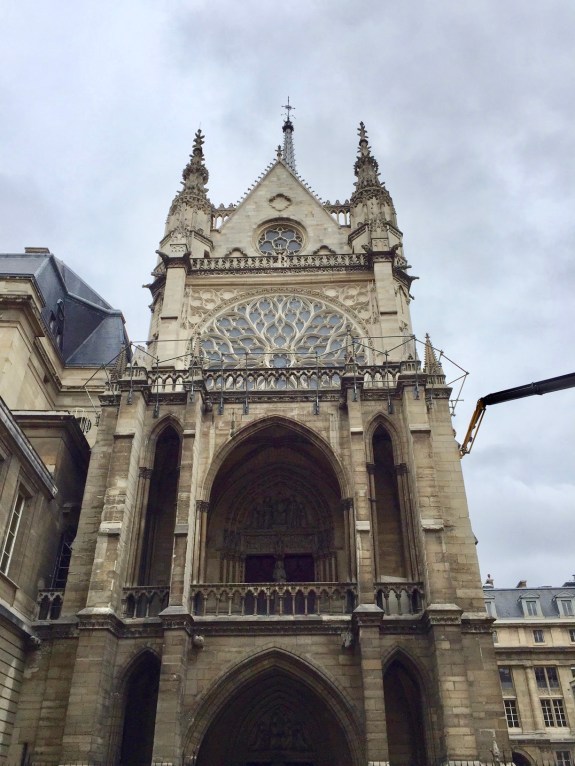

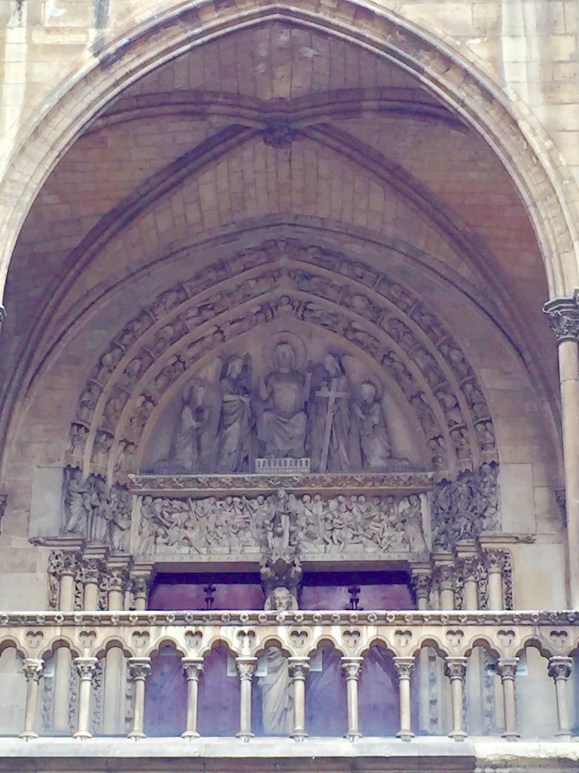

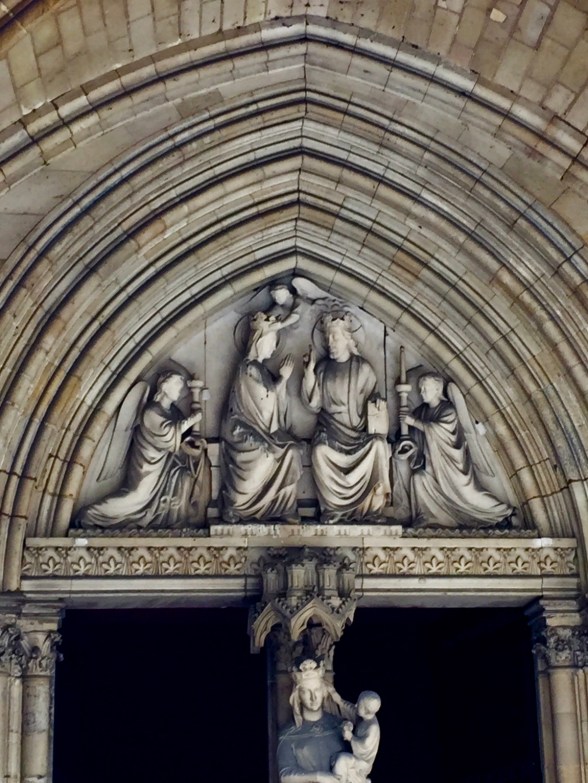


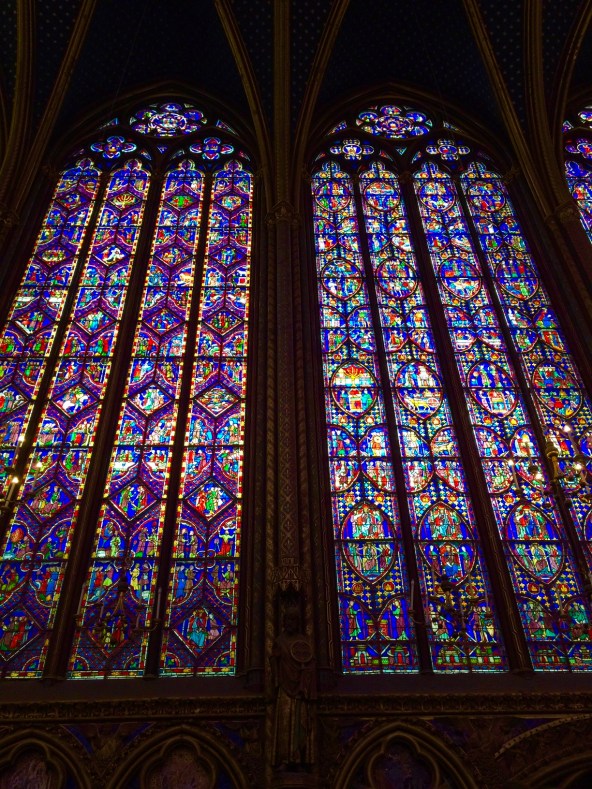
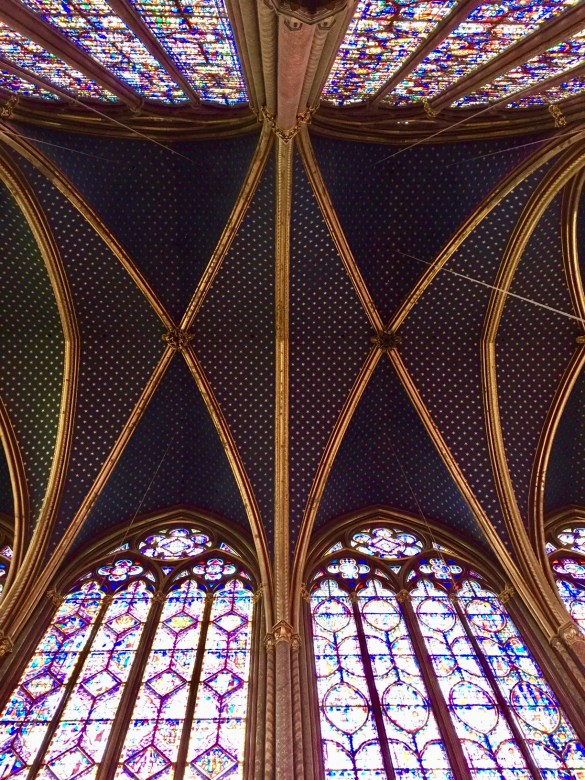

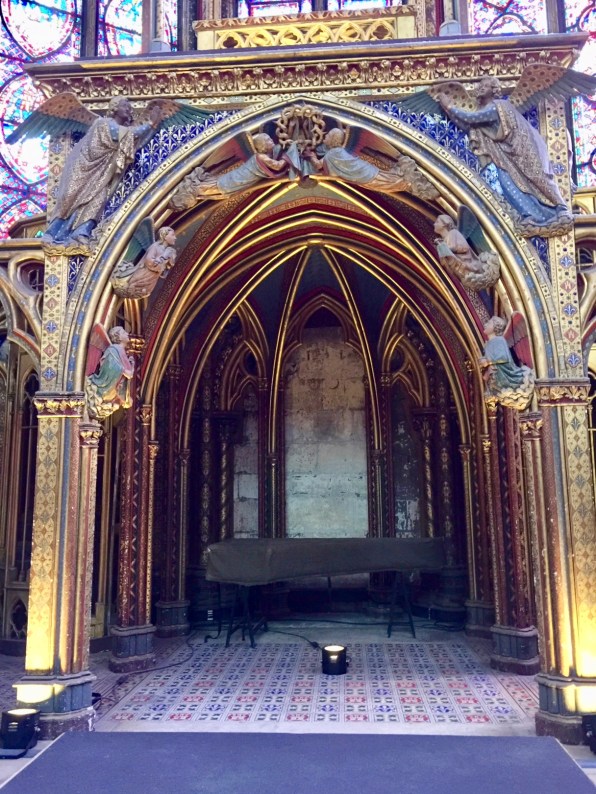
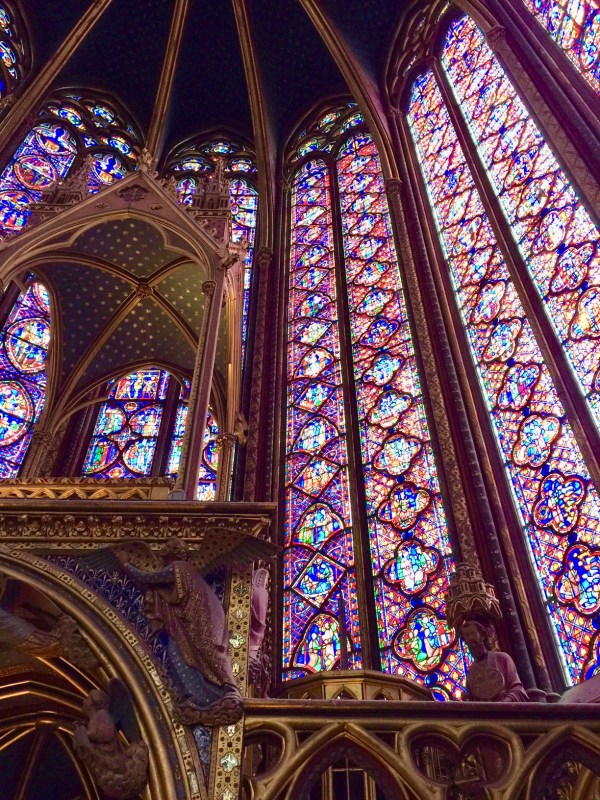

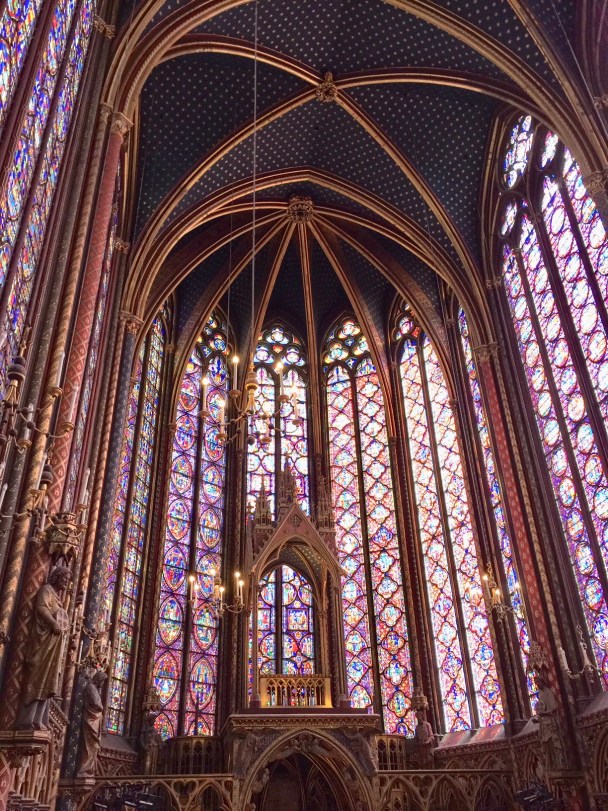

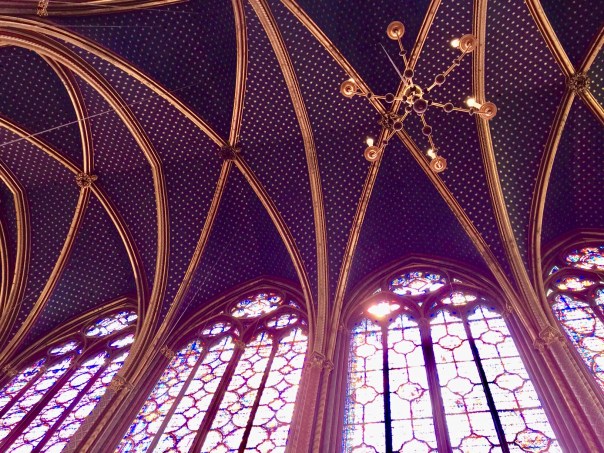
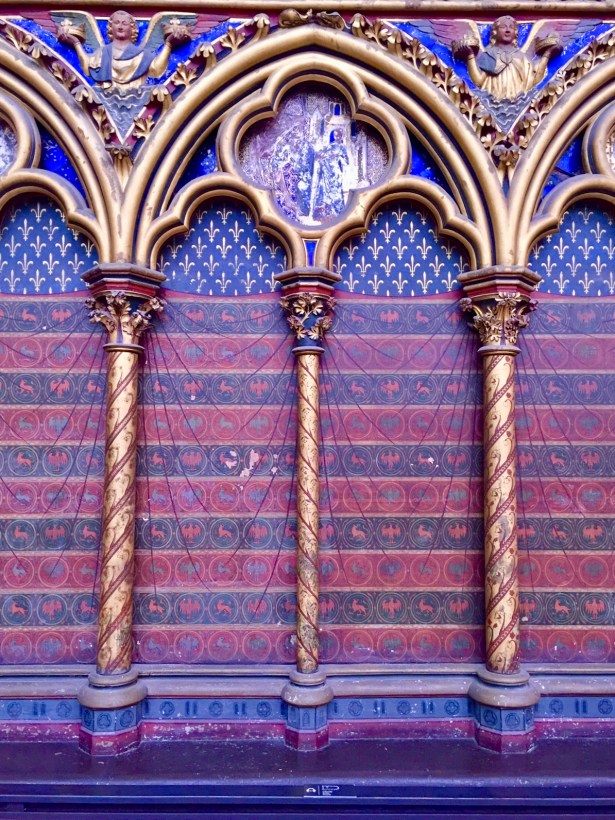

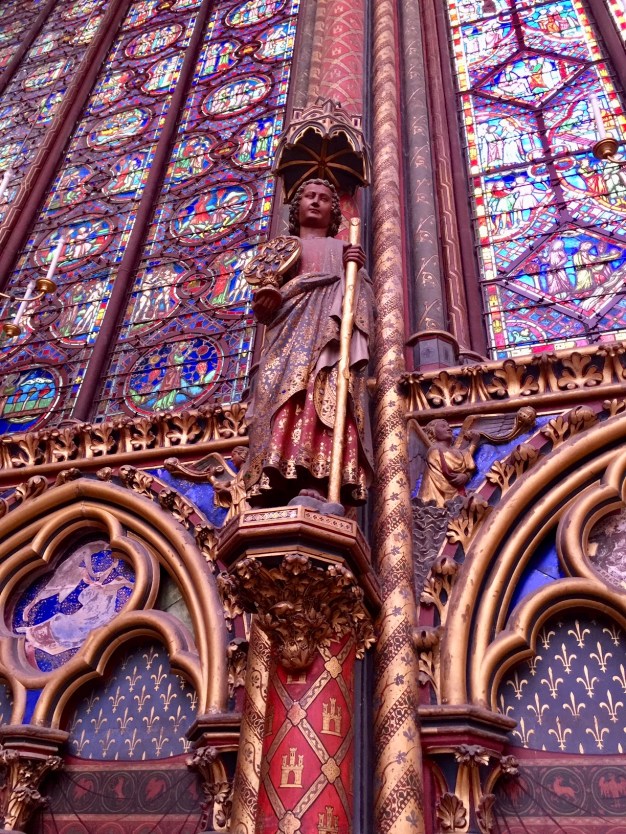
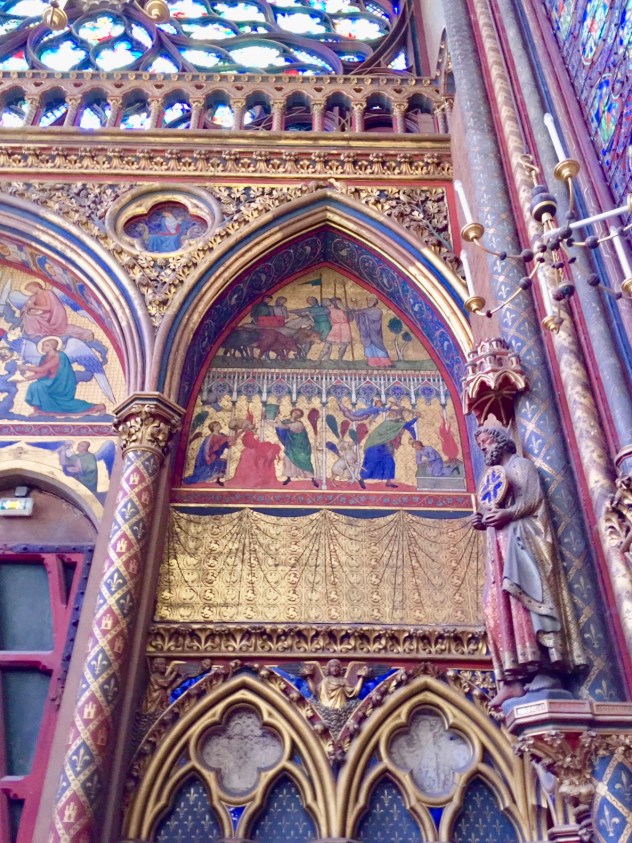
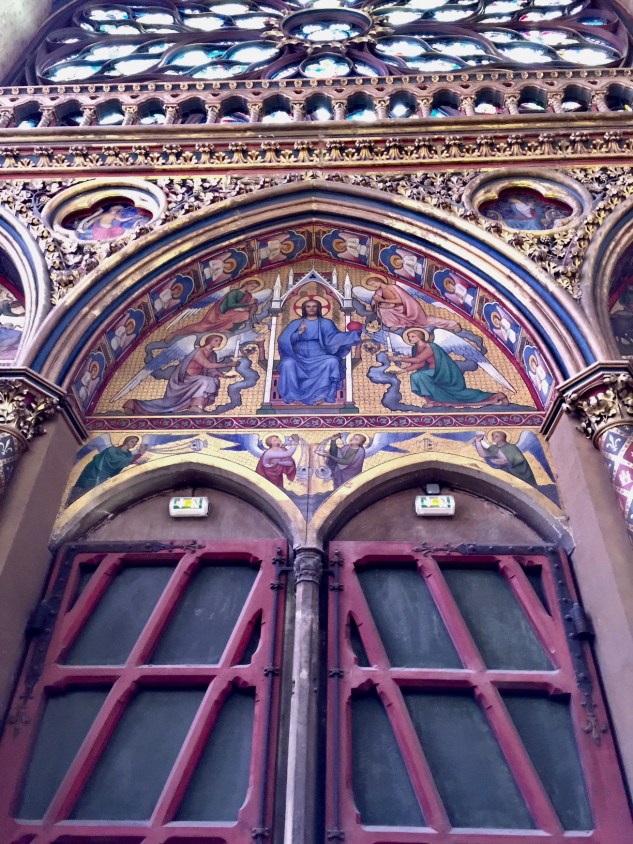
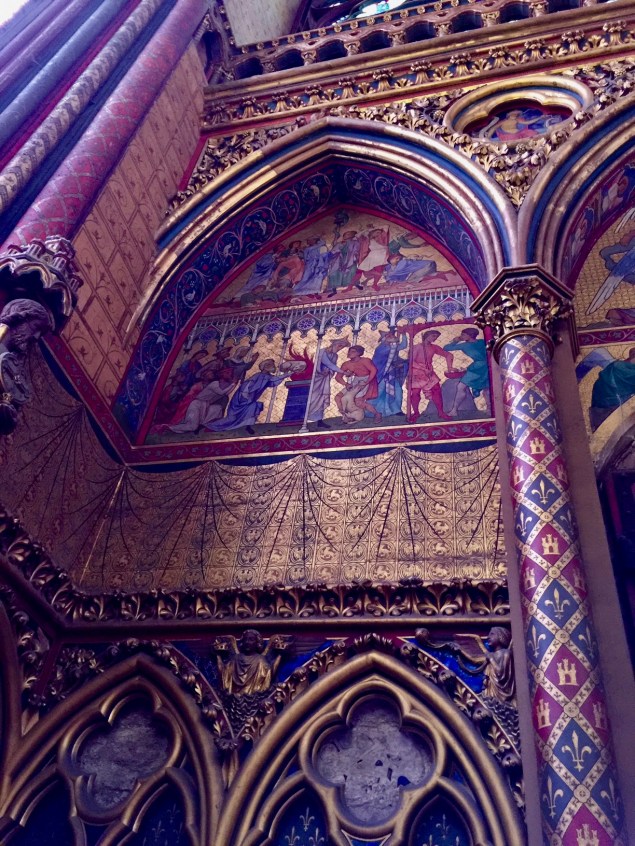
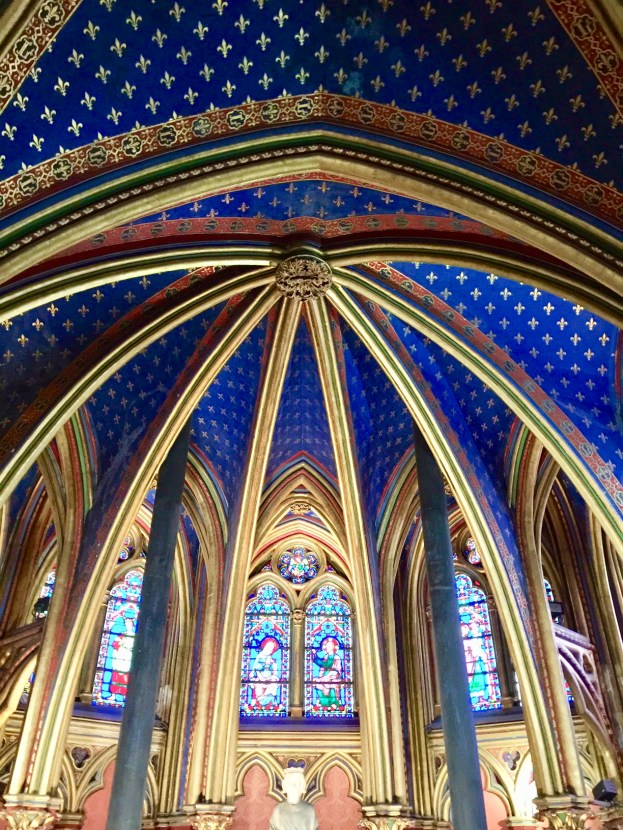
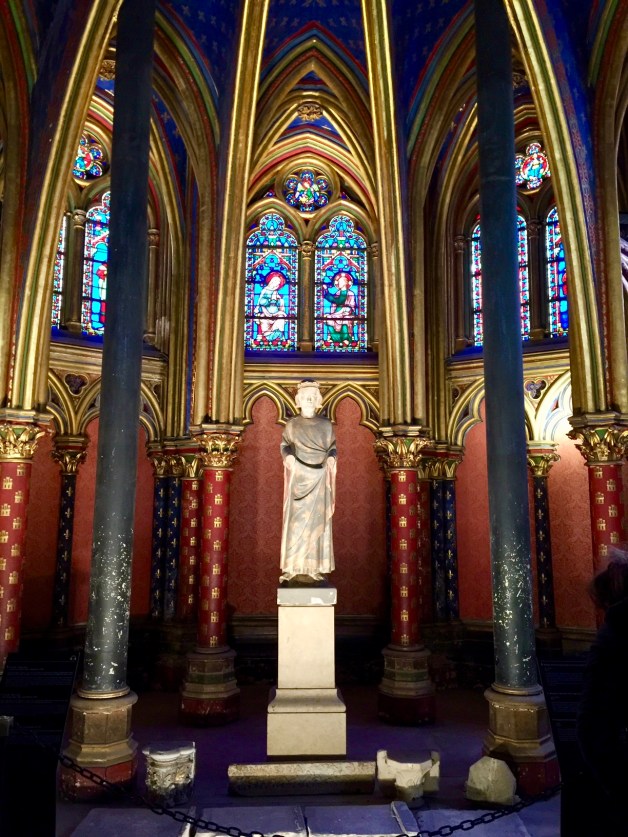

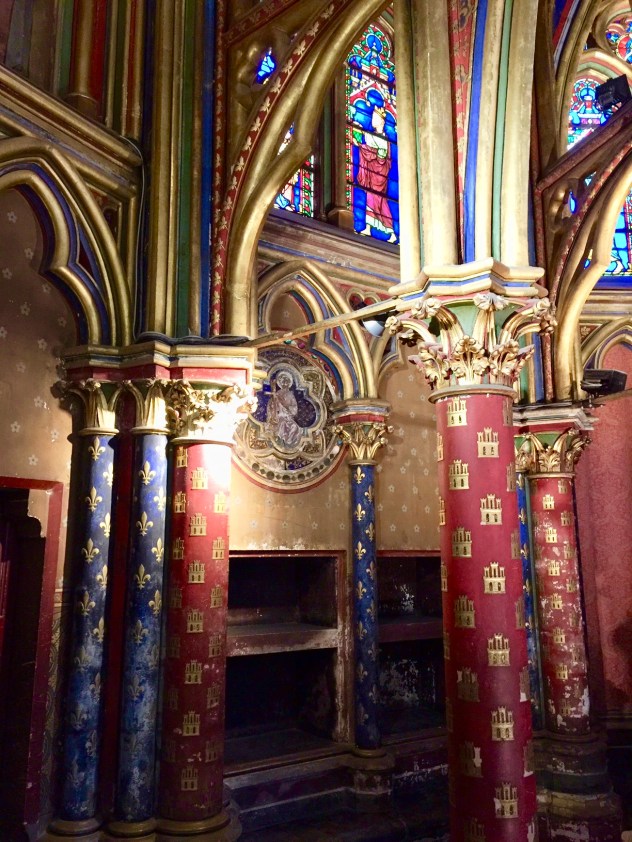

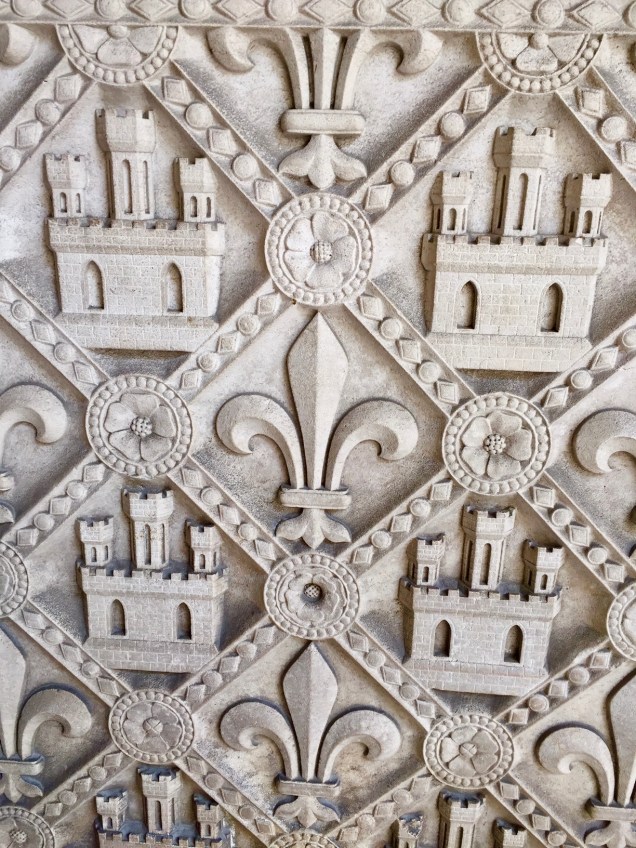

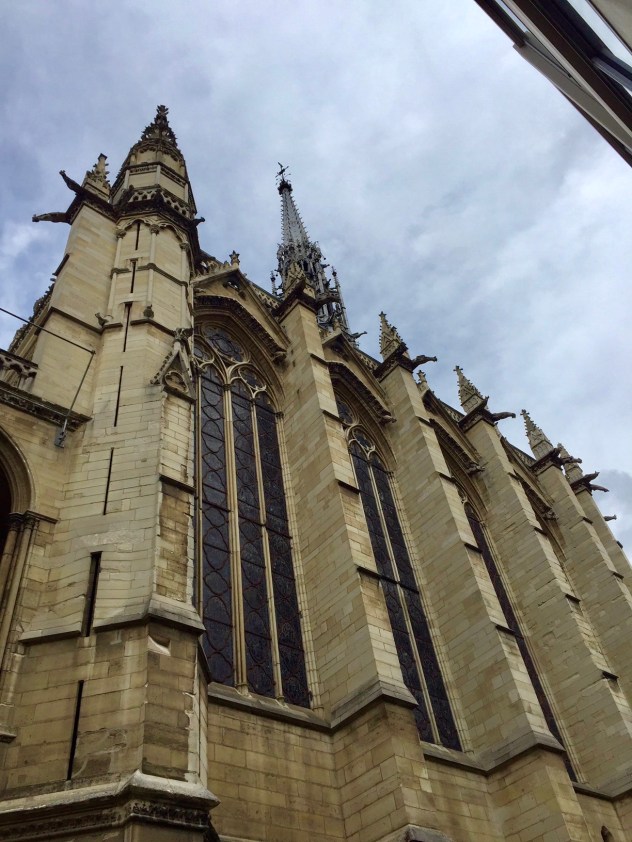
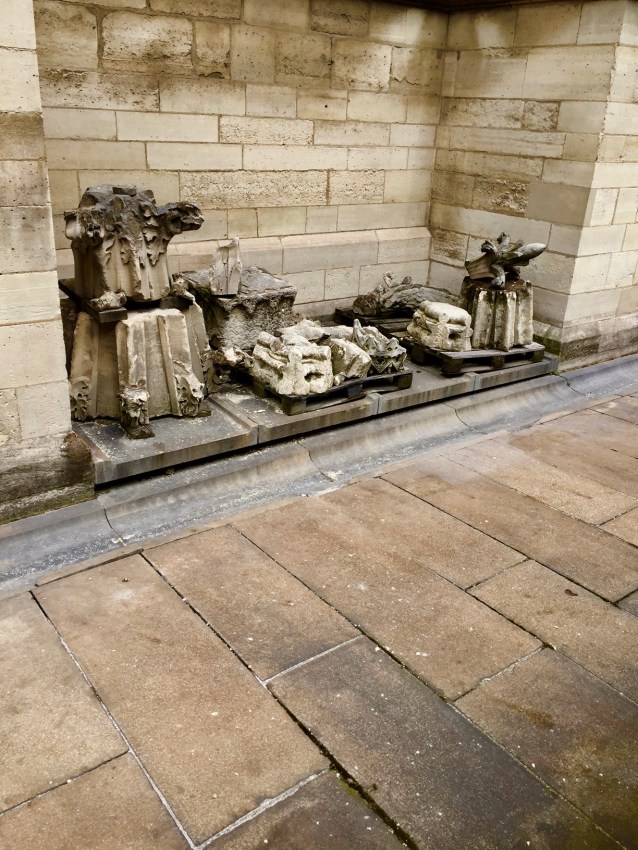
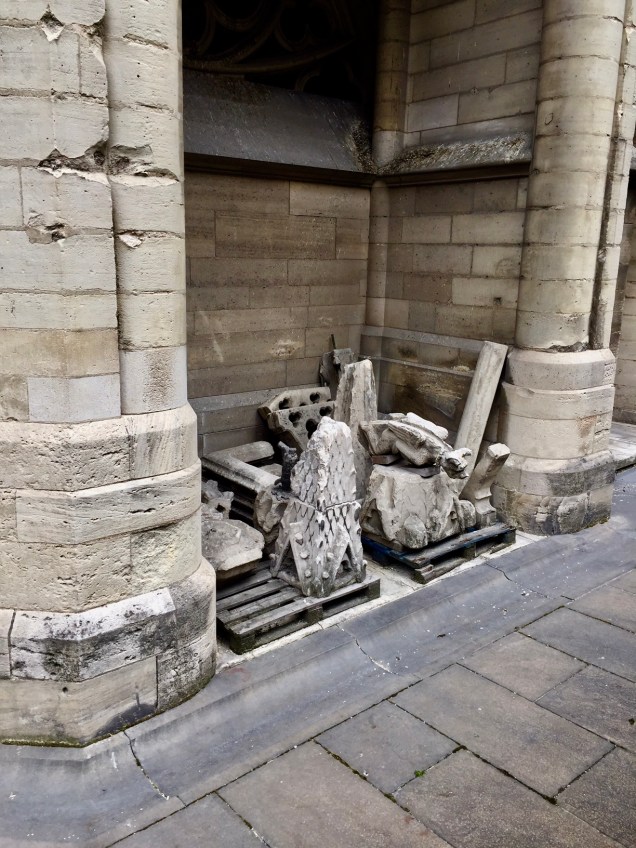
The Sainte-Chapelle (holy chapel) is the royal chapel in the Gothic style, within the medieval Palais de la Cité, the residence of the Kings of France until the 14th century, on the Île de la Cité in the River Seine in Paris.
Construction began after 1238; the chapel was consecrated on 26 April 1248. The Sainte-Chapelle is considered among the highest achievements of the Rayonnant period of Gothic architecture. It was commissioned by King Louis IX of France to house his collection of Passion relics, including Christ’s Crown of Thorns – one of the most important relics in medieval Christendom, later hosted in the nearby Notre-Dame Cathedral until the 2019 fire, which it survived.
Along with the Conciergerie, the Sainte-Chapelle is one of the earliest surviving buildings of the Capetian royal palace on the Île de la Cité. Although damaged during the French Revolution, and restored in the 19th century, it has one of the most extensive 13th-century stained glass collections anywhere in the world.
The royal chapel is a prime example of the phase of Gothic architectural style called “Rayonnant,” marked by the feeling of weightlessness and strong vertical emphasis. It stands squarely upon a lower chapel, which served as parish church for all the inhabitants of the palace, which was the seat of government. The King Louis IX was later recognized as a saint by the Catholic Church. His title became Saint Louis.
The Sainte-Chapelle, in the courtyard of the royal palace on the Île de la Cité (now part of a later administrative complex known as La Conciergerie), was specifically built to house Louis IX’s collection of relics of Christ, which included the Crown of Thorns, the Image of Edessa and some thirty other items.
Louis purchased his Passion relics from Baldwin II, the Latin emperor at Constantinople, for the sum of 135,000 livres, though this money was actually paid to the Venetians, to whom the relics had been pawned. The relics arrived in Paris in August 1239, carried from Venice by two Dominican friars.
Upon arrival, King Louis hosted a week-long celebratory reception for the relics. For the final stage of their journey they were carried by the King himself, barefoot and dressed as a penitent, a scene depicted in the Relics of the Passion window on the south side of the chapel.
The relics were stored in a large and elaborate silver chest, the Grand-Chasse, on which Louis spent a further 100,000 livres.
The entire chapel, by contrast, cost 40,000 livres to build. In 1246, fragments of the True Cross and the Holy Lance were added to Louis’ collection, along with other relics. The chapel was consecrated on 26 April 1248 and Louis’ relics were moved to their new home with great ceremony.
As well as serving as a place of worship, the Sainte-Chapelle played an important role in the political and cultural ambitions of King Louis and his successors. With the imperial throne at Constantinople occupied by a mere Count of Flanders, and with the Holy Roman Empire in uneasy disarray, Louis’ artistic and architectural patronage helped to position him as the central monarch of western Christendom. In this way, the Sainte-Chapelle fit into a long tradition of prestigious palace chapels.
Just as the Emperor could pass privately from his palace into the Hagia Sophia in Constantinople, so now Louis could pass directly from his palace into the Sainte-Chapelle.
More importantly, the two-story palace chapel had obvious similarities to Charlemagne’s palatine chapel at Aachen (built 792–805)—a parallel that Louis was keen to exploit in presenting himself as a worthy successor to the first Holy Roman Emperor.
The contemporary visitor entering the courtyard of the Royal Palace would have been met by the sight of a grand ceremonial staircase (Grands Degres) to their right and the north flank and eastern apse of the Sainte-Chapelle to their left.
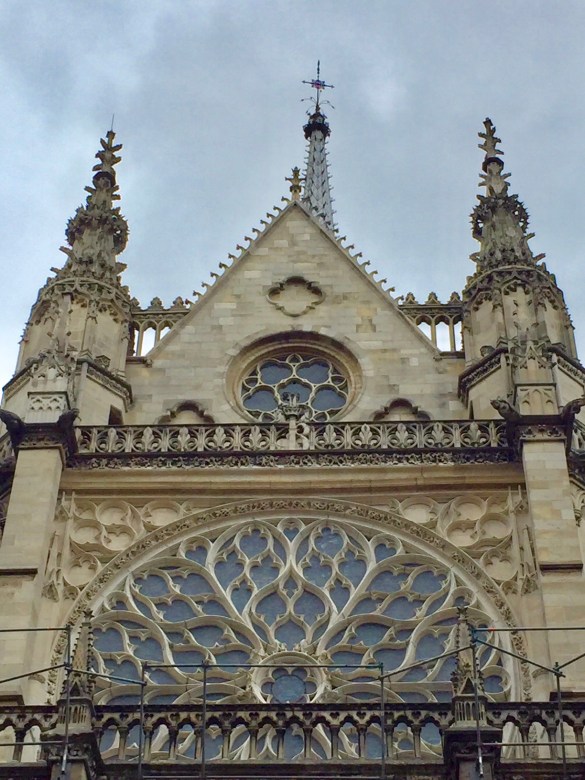
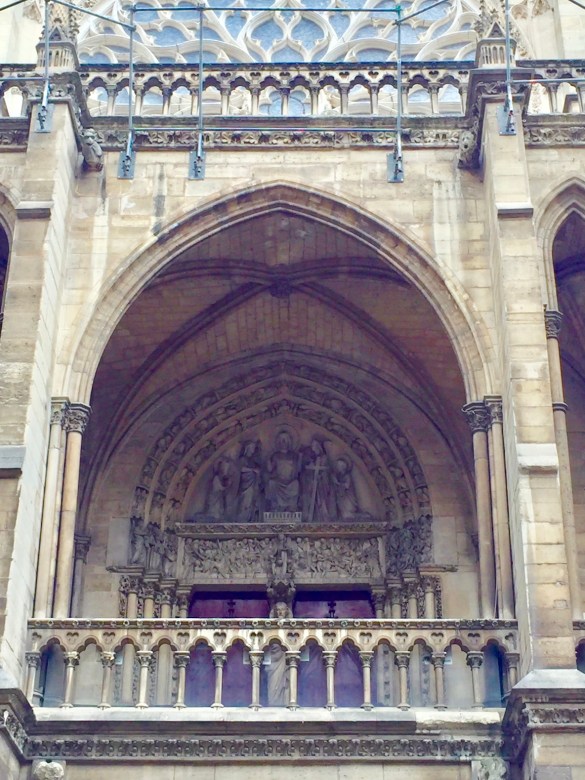
The chapel exterior shows many of the typical characteristics of Rayonnant architecture—deep buttresses surmounted by pinnacles, crocketted gables around the roof-line and vast windows subdivided by bar tracery.
The internal division into upper and lower chapels is clearly marked on the outside by a string-course, the lower walls pierced by smaller windows with a distinctive spherical triangle shape. Despite its decoration, the exterior is relatively simple and austere, devoid of flying buttresses or major sculpture and giving little hint of the richness within.
No designer-builder is named in the archives concerned with the construction. In the 19th century it was assumed (as with so many buildings of medieval Paris) to be the work of the master mason Pierre de Montreuil, who worked on the remodelling of the Royal Abbey of Saint-Denis and completed the south transept façade of Notre-Dame Cathedral in Paris. Modern scholarship rejects this attribution in favor of Jean de Chelles or Thomas de Cormont, and the hand of an unidentified master mason from Amiens.
The Sainte-Chapelle’s most obvious architectural precursors include the apsidal chapels of Amiens Cathedral, which it resembles in its general form, and the Bishop’s Chapel (c. 1180s) of Noyon Cathedral, from which it borrowed the two-story design. As has often been argued, however, the major influence on its overall design seems to have come from contemporary metalwork, particularly the precious shrines and reliquaries made by Mosan goldsmiths.
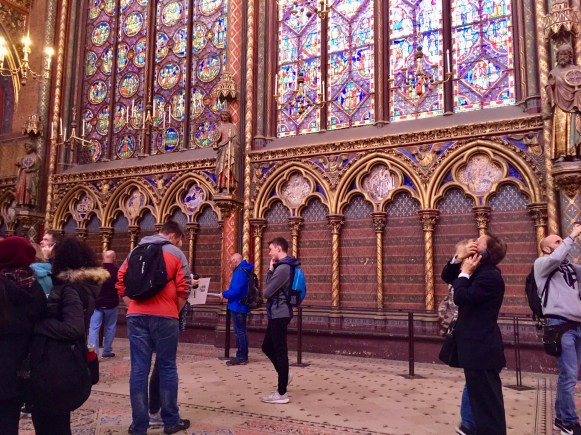
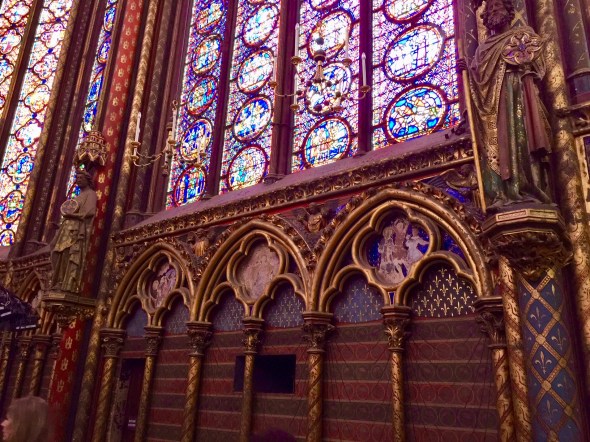
The Parisian palatine chapel, built to house a reliquary, was itself like a precious reliquary turned inside out (with the richest decoration on the inside). Although the interior is dominated by the stained glass, every inch of the remaining wall surface and the vault was also richly colored and decorated. Analysis of remaining paint fragments reveals that the original colours were much brighter than those favoured by the 19th-century restorers and would have been close to the colors of the stained glass. The quatrefoils of the dado arcade were painted with scenes of saints and martyrs and inset with painted and gilded glass, emulating Limoges enamels, while simulated rich textiles hangings added to the richness of the interior.
Above the dado level, mounted on the clustered shafts that separate the great windows, are 12 larger-than-life-sized sculpted stone figures representing the 12 Apostles (six of these are replicas—the damaged originals are now in the Musée du Moyen Age). Each carries a disk marked with the consecration crosses that were traditionally marked on the pillars of a church at its consecration. Niches on the north and south sides of the chapel are the private oratories of the king and of his mother, Blanche of Castile.
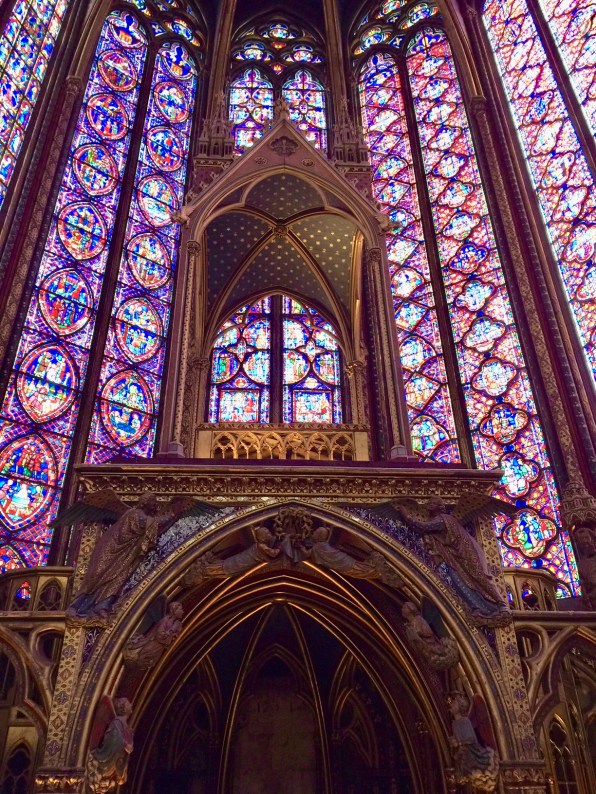
The most famous features of the chapel, among the finest of their type in the world, are the great stained-glass windows, for whose benefit the stone wall surface is reduced to little more than a delicate framework. Fifteen huge mid-13th-century windows fill the nave and apse, while a large rose window with Flamboyant tracery (added to the upper chapel c. 1490) dominates the western wall.
Arranged across 15 windows, each 15 metres high, the stained glass panes depict 1,113 scenes from the Old and New Testaments recounting the history of the world until the arrival of the relics in Paris.
Despite some damage, the windows display a clear iconographical program. The three windows of the eastern apse illustrate the New Testament, featuring scenes of The Passion (center) with the Infancy of Christ (left) and the Life of John the Evangelist (right). By contrast, the windows of the nave are dominated by Old Testament exemplars of ideal kingship/queenship in an obvious nod to their royal patrons. The cycle starts at the western bay of the north wall with scenes from the Book of Genesis (heavily restored).
The next ten windows of the nave follow clockwise with scenes from Exodus, Joseph, Numbers/Leviticus, Joshua/Deuteronomy, Judges, (moving to the south wall) Jeremiah/Tobias, Judith/Job, Esther, David and the Book of Kings.
The final window, occupying the westernmost bay of the south wall brings this narrative of sacral kingship right up to date with a series of scenes showing the rediscovery of Christ’s relics, the miracles they performed, and their relocation to Paris in the hands of King Louis himself.
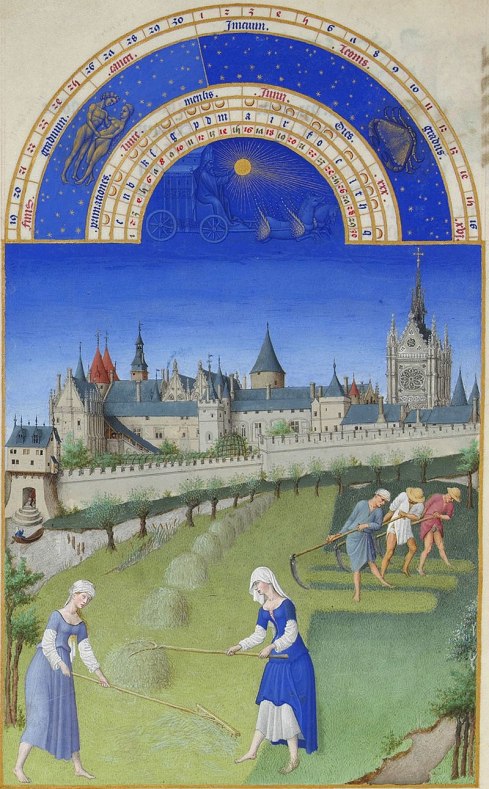
Above, the Sainte-Chapelle rises above the rooflines of the royal palace. Miniature by the Limbourg brothers, c. 1400
Much of the chapel as it appears today is a re-creation, although nearly two-thirds of the windows are authentic. The chapel suffered its most grievous destruction in the late eighteenth century during the French Revolution, when the steeple and baldachin were removed, the relics dispersed (although some survive as the “relics of Sainte-Chapelle” in the treasury of Notre Dame de Paris), and various reliquaries, including the grande châsse, were melted down.
The Sainte-Chapelle was requisitioned as an archival depository in 1803. Two metres’ worth of glass was removed to facilitate working light and destroyed or put on the market. Its well-documented restoration, completed under the direction of Félix Duban in 1855, was regarded as exemplary by contemporaries and is faithful to the original drawings and descriptions of the chapel that survive.
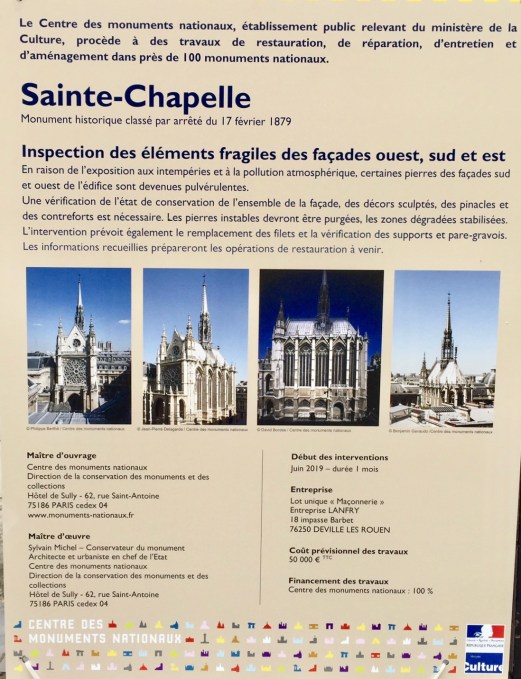
The Sainte-Chapelle has had various stages of restoration from the 1970s onwards. Air pollution, the elements, and the large number of visitors all cause damage to the stained glass windows. Also, in 1945 a layer of external varnish had been applied to protect the glass from the dust and scratches of wartime bombing. This had gradually darkened, making the already fading images even harder to see.
In 2008, a more comprehensive seven-year programme of restoration was begun, costing some €10 million to clean and preserve all the stained glass, clean the facade stonework and conserve and repair some of the sculptures. Half of the funding was provided by private donors, the other half coming from the Villum Foundation.
Included in the restoration was an innovative thermoformed glass layer applied outside the stained glass windows for added protection. The project was completed in 2015 in time for the 800th anniversary of the birth of St. Louis, who had ordered the construction of the chapel.
https://www.monuments-nationaux.fr/en/Discovery-area/Sainte-Chapelle-Paris
A bronze replica of the south door of the Baptistery by Andrea Pisano was unveiled today on the feast day of Florence’s patron saint John the Baptist. The copy of Andrea Pisano’s masterpiece was made using 700-year-old techniques.
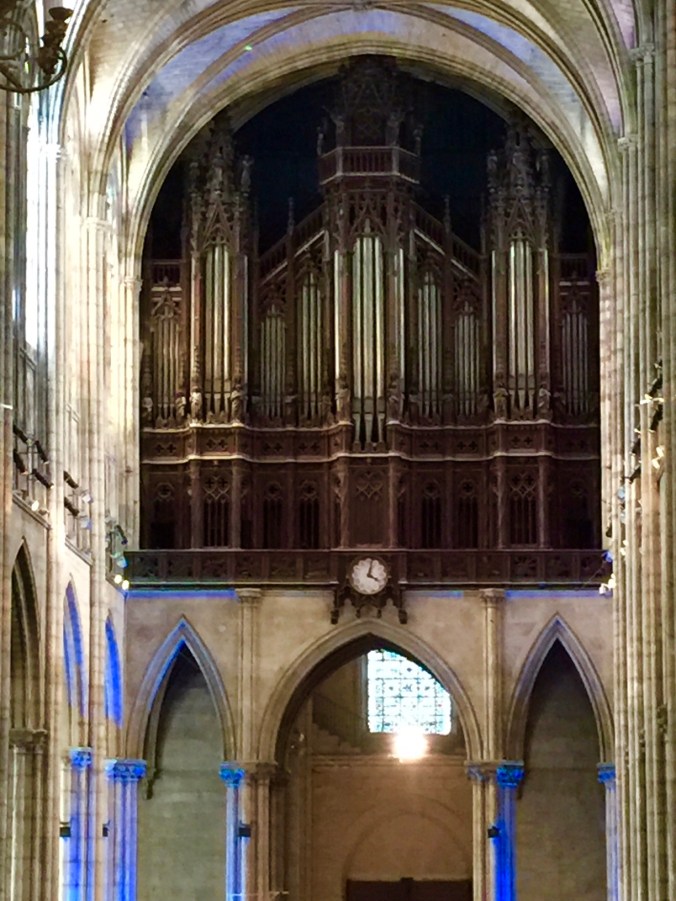
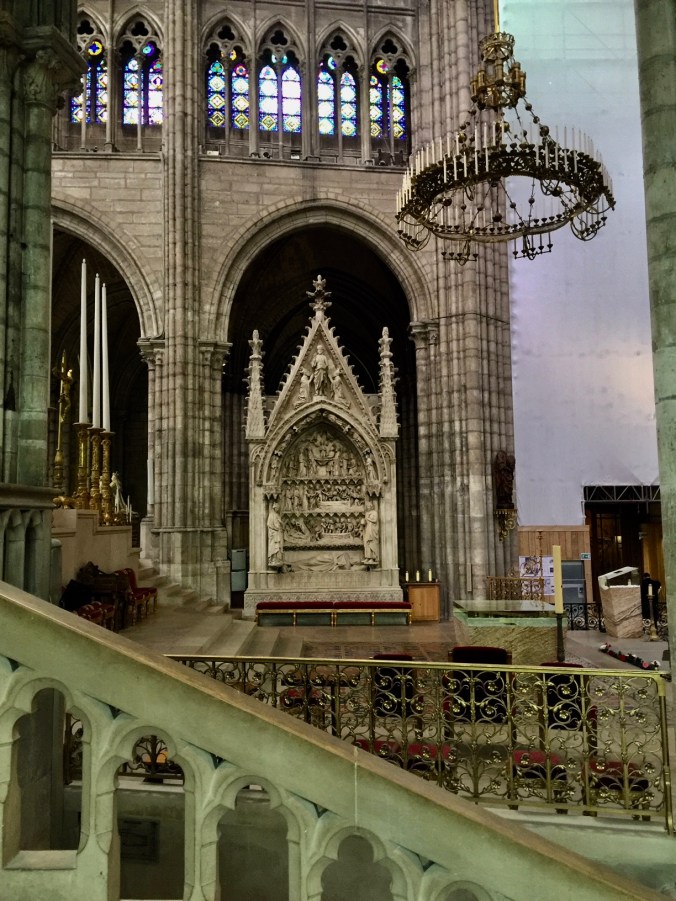
La Basilique Royale de Saint-Denis is not only the first true example of the Gothic style of architecture, but also the burial place for French royalty. It would be an understatement to state that it is a major church in Christendom.
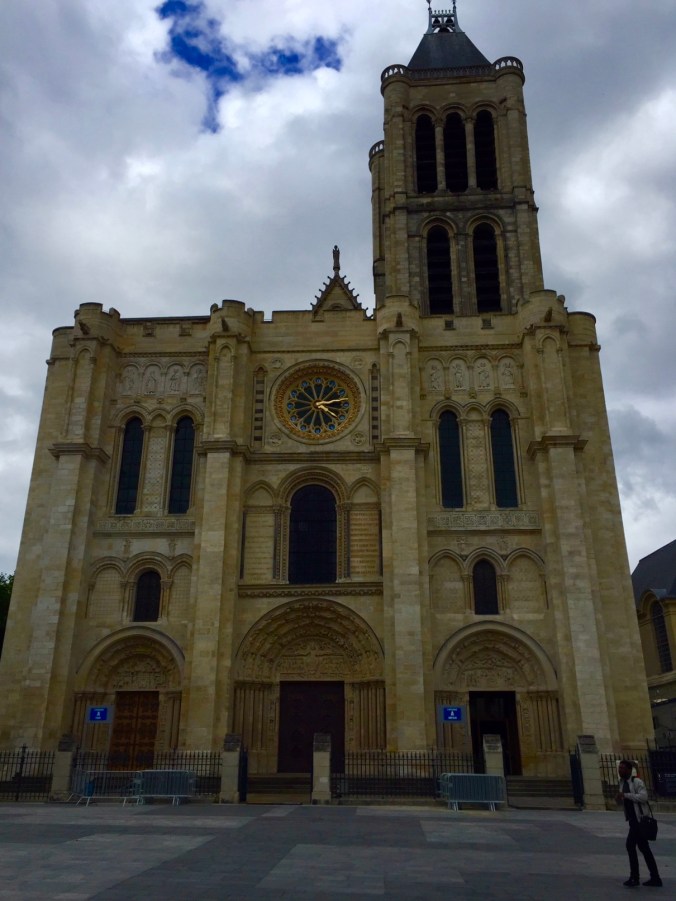
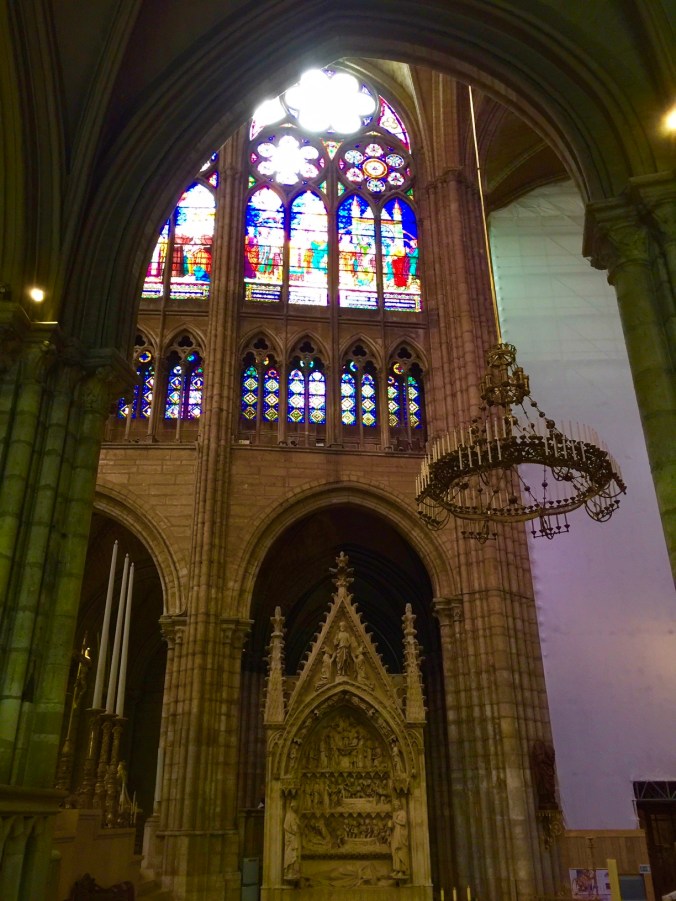
The Basilica of Saint-Denis (French: La Basilique royale de Saint-Denis, or simply Basilique Saint-Denis) is a large medieval abbey church in the city of Saint-Denis, now a northern suburb of Paris. The building is of singular importance historically and architecturally as its choir, completed in 1144, shows the first use of all of the elements of Gothic architecture. Watch this brief Khan Academy video to get up to speed on Gothic.
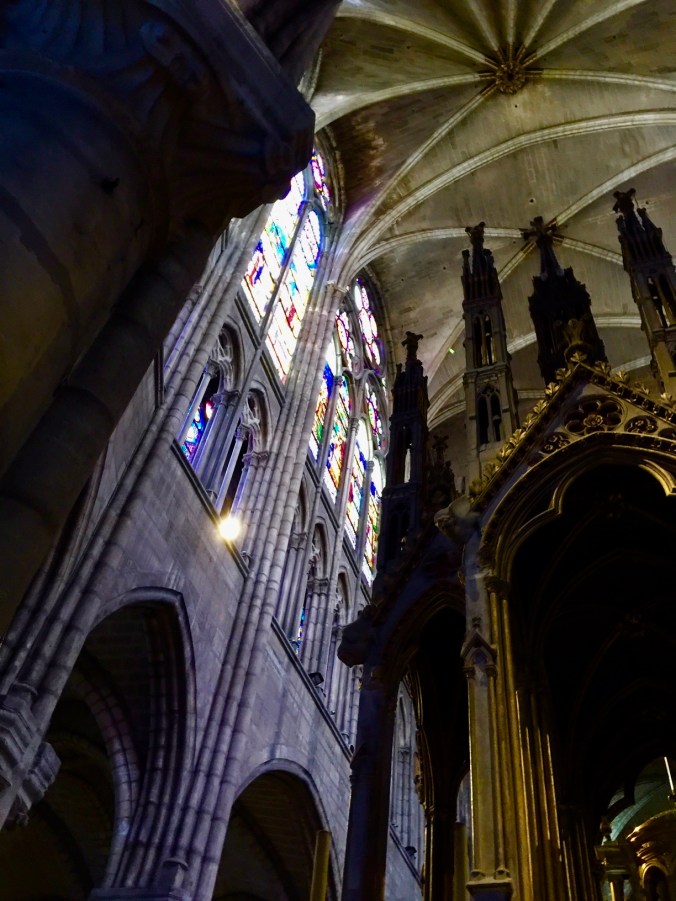
Saint Denis was the patron saint of France and became the first bishop of Paris. He was decapitated on the hill of Montmartre in the mid-third century with two of his followers, and is said to have subsequently carried his head to the site of this current church, indicating where he wanted to be buried. A martyrium was erected on the site of his grave, which became a famous place of pilgrimage during the fifth and sixth centuries.
The site originated as a Gallo-Roman cemetery in late Roman times. The archeological remains still lie beneath the cathedral; the people buried there seem to have had a faith that was a mix of Christian and pre-Christian beliefs and practices.
Around 475 St. Genevieve purchased some land and built Saint-Denys de la Chapelle. In 636 on the orders of Dagobert I the relics of Saint Denis, the patron saint of France, were reinterred in the basilica.
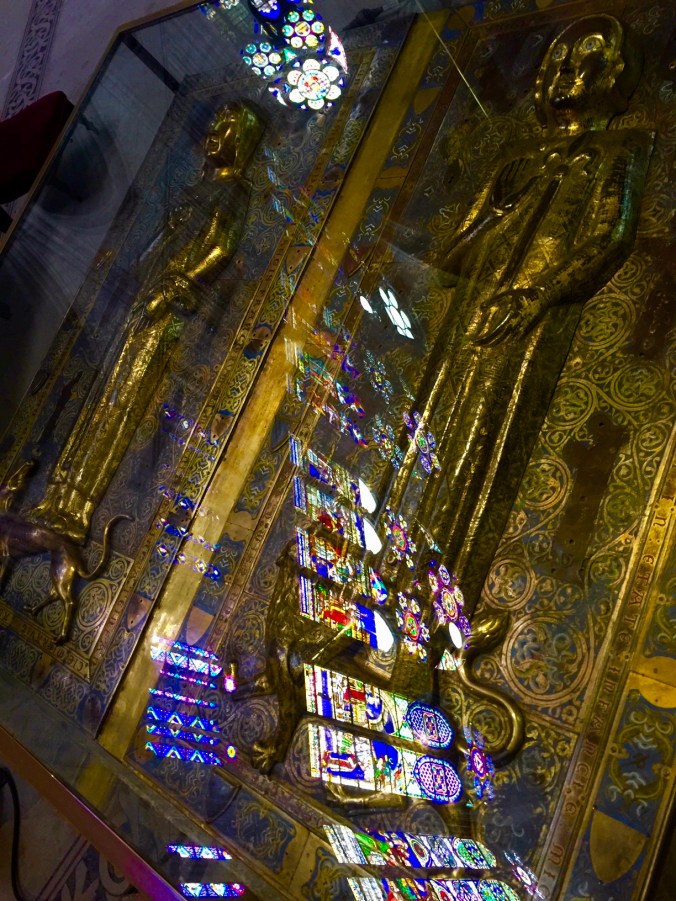
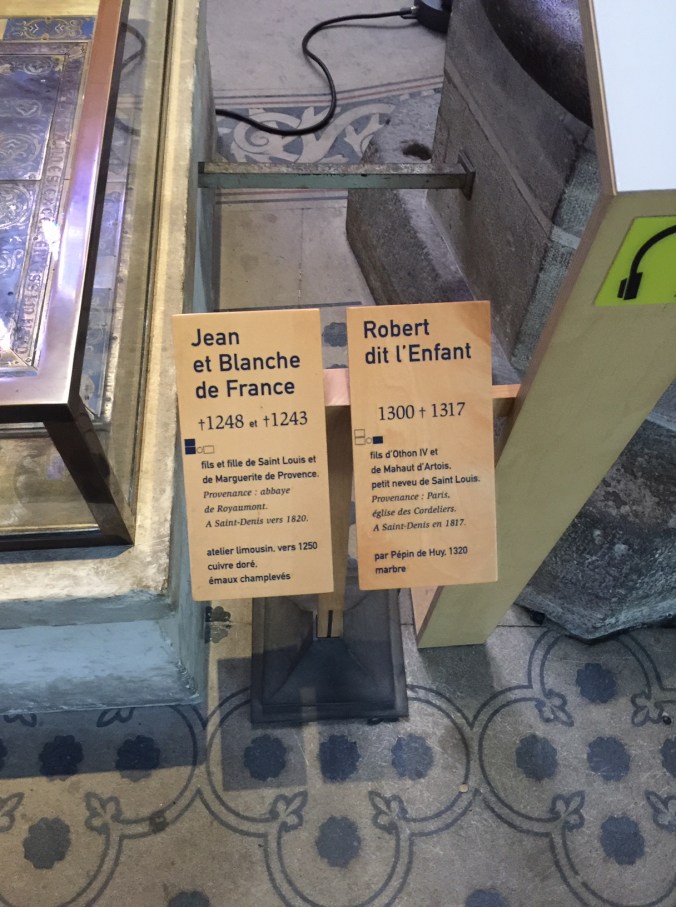
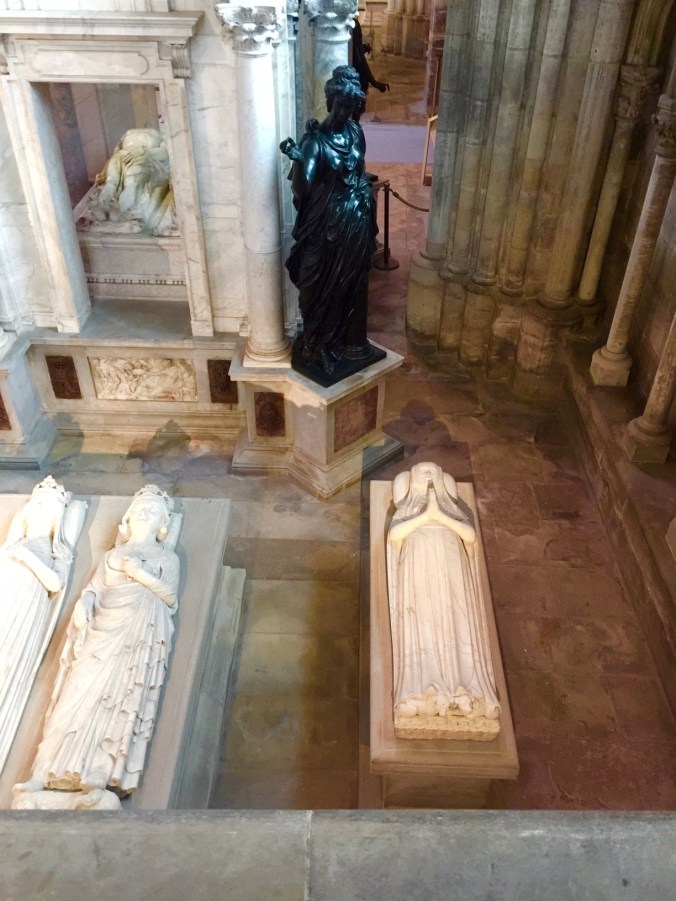
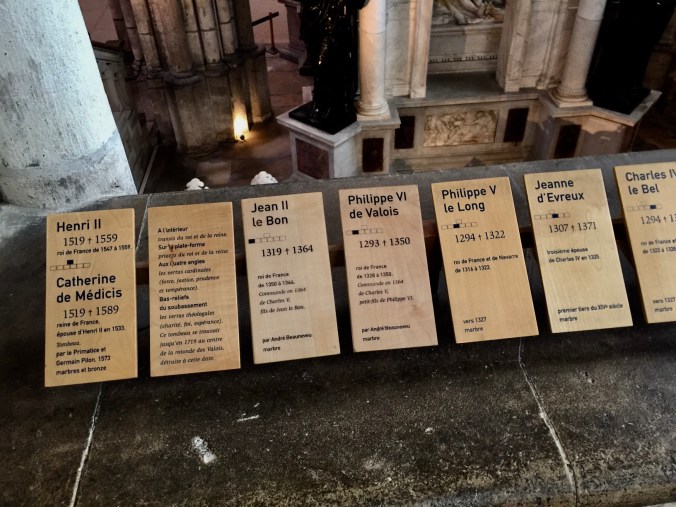
The basilica became a place of pilgrimage and the burial place of the French kings and queens, with nearly every king from the 10th to the 18th centuries buried there. Moreover, there were many royal tombs from previous centuries.
St. Denis was not used for the coronations of kings, that function being reserved for the Cathedral of Reims; however, French Queens were commonly crowned there. “Saint-Denis” soon became the abbey church of a growing monastic complex.
All but three of the monarchs of France from the 10th century until 1789 have their remains here. Some monarchs, like Clovis I (465–511), were not originally buried at this site. The remains of Clovis I were exhumed from the despoiled Abbey of St Genevieve which he founded.
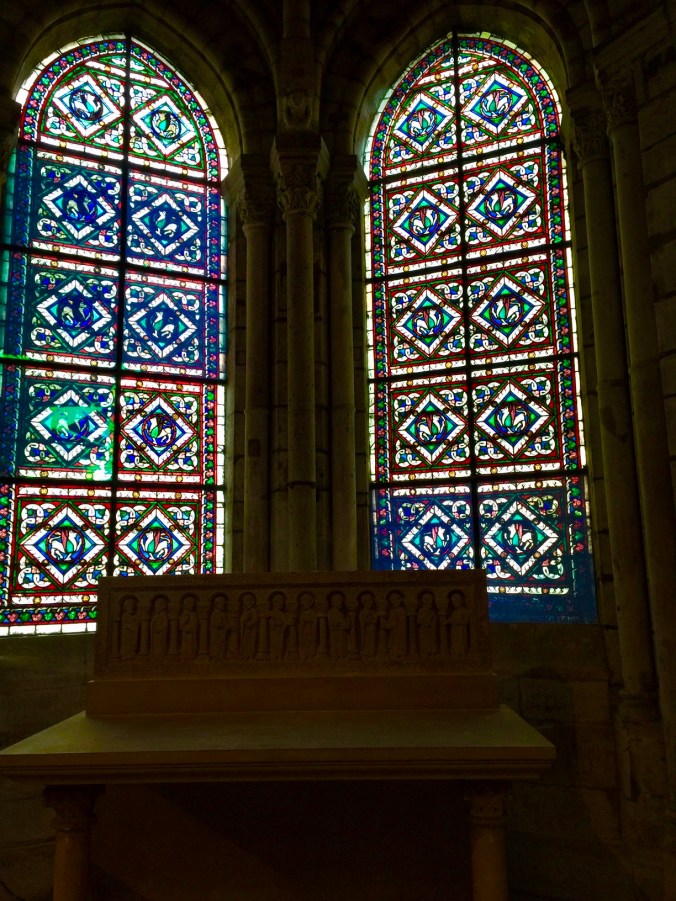
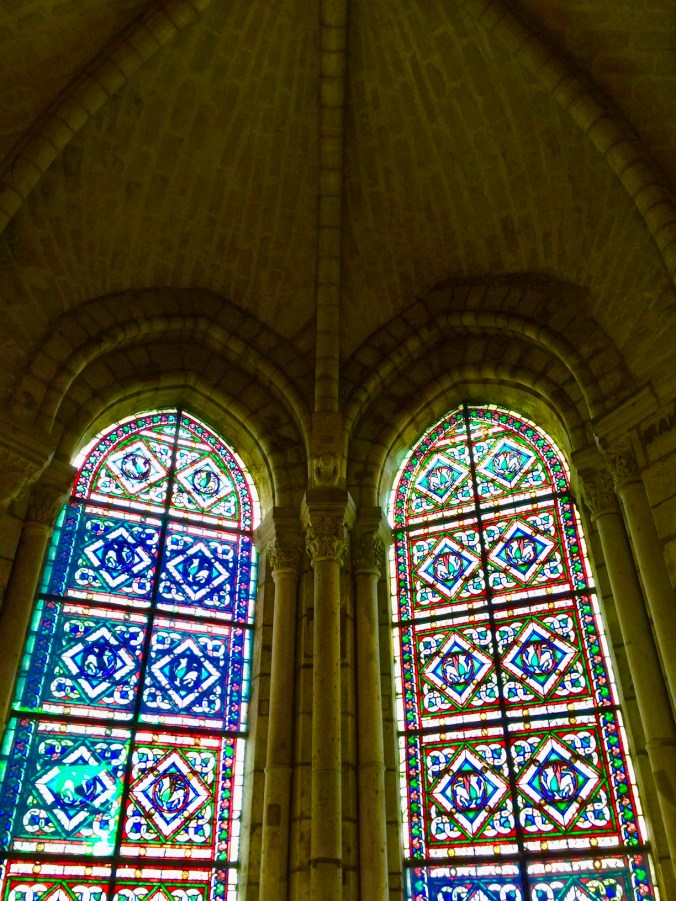
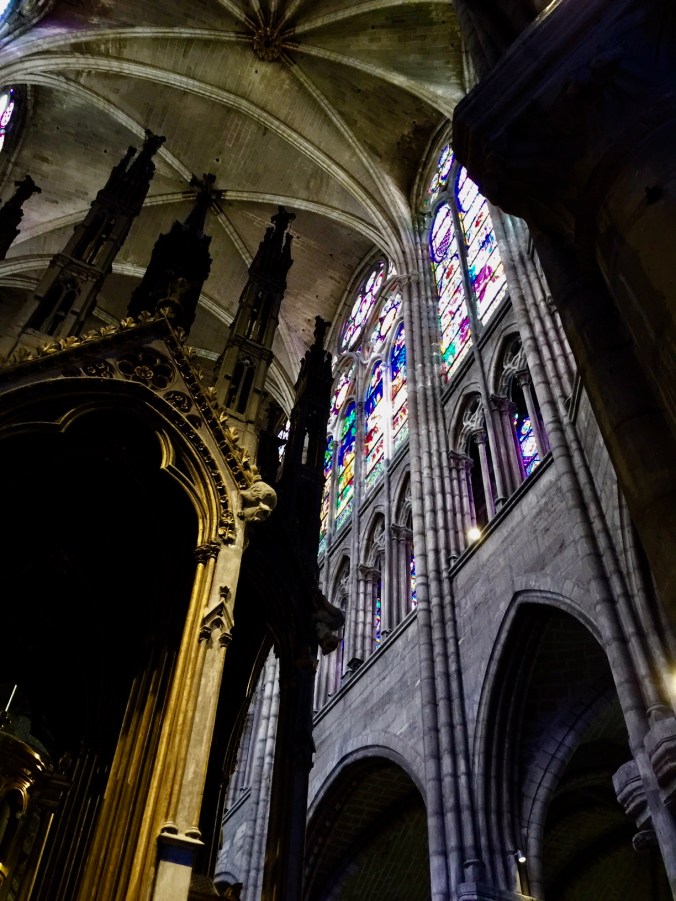
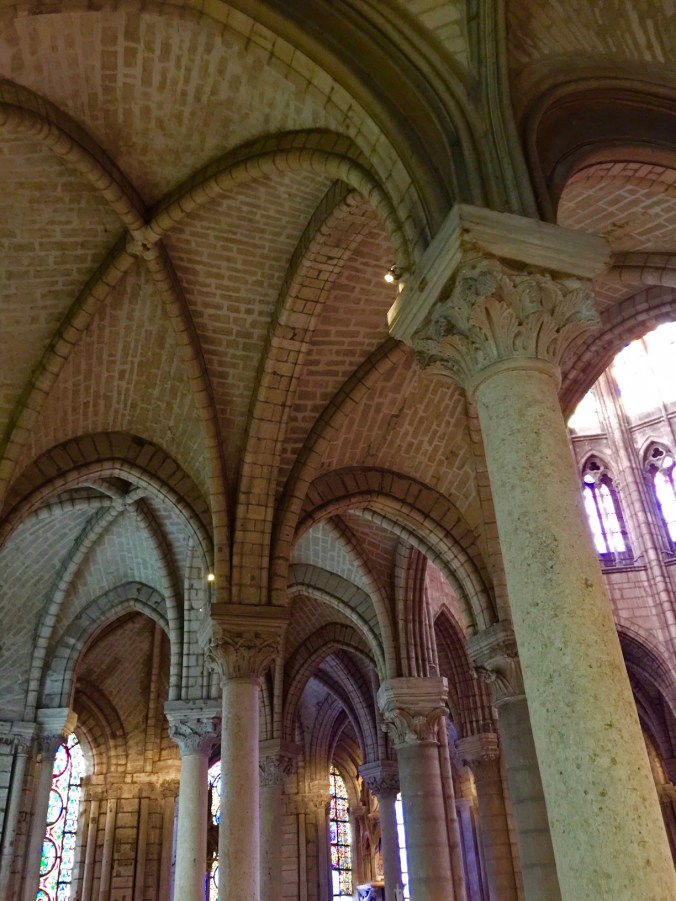
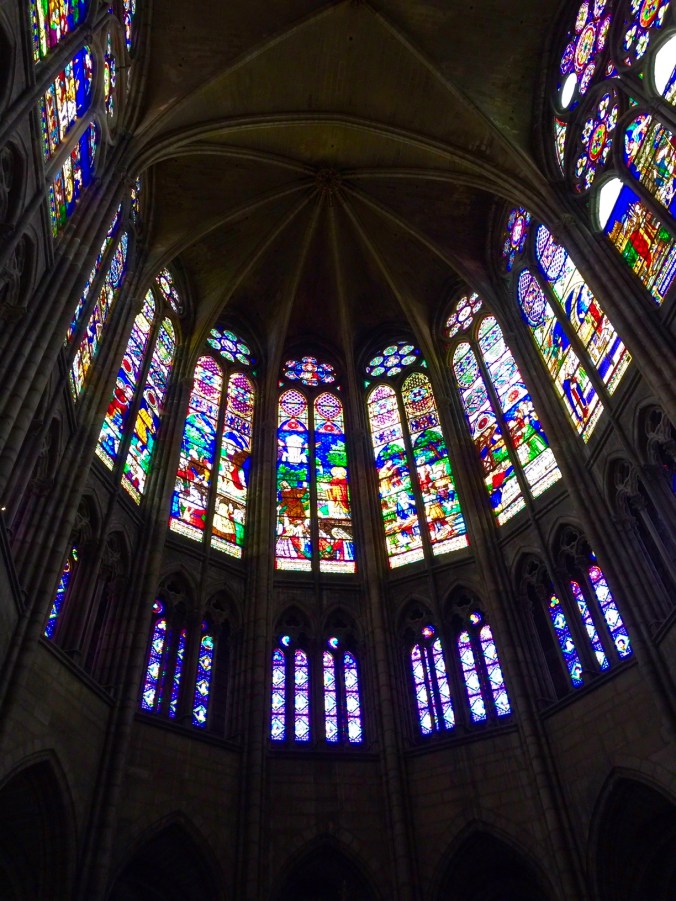
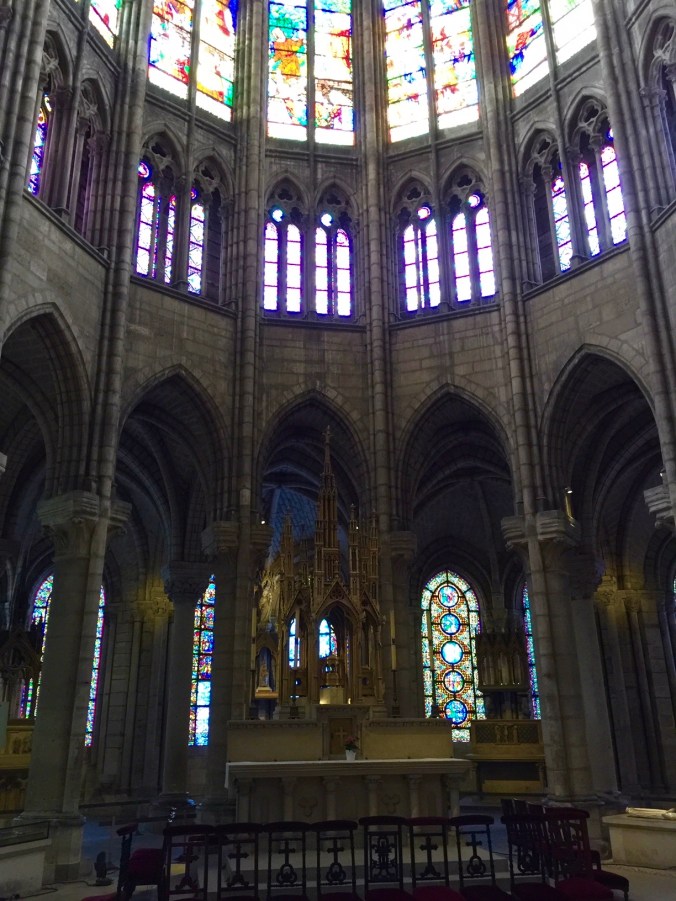
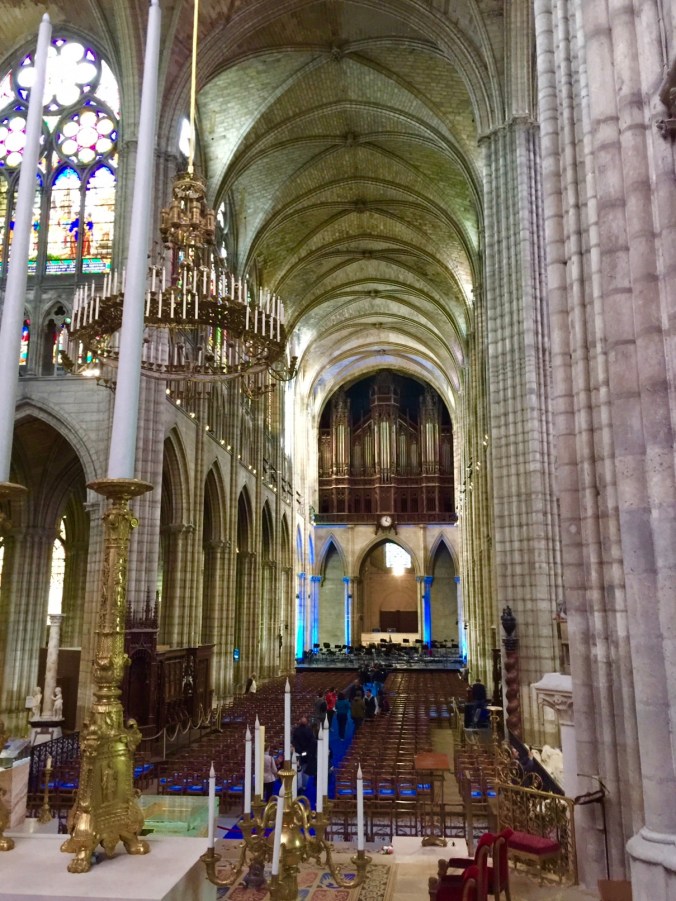
In the 12th century, the Abbot Suger rebuilt portions of the abbey church using innovative structural and decorative features. In doing so, he is said to have created the first truly Gothic building. The basilica’s 13th-century nave is the prototype for the Rayonnant Gothic style, and provided an architectural model for many medieval cathedrals and abbeys of northern France, Germany, England and many other countries.
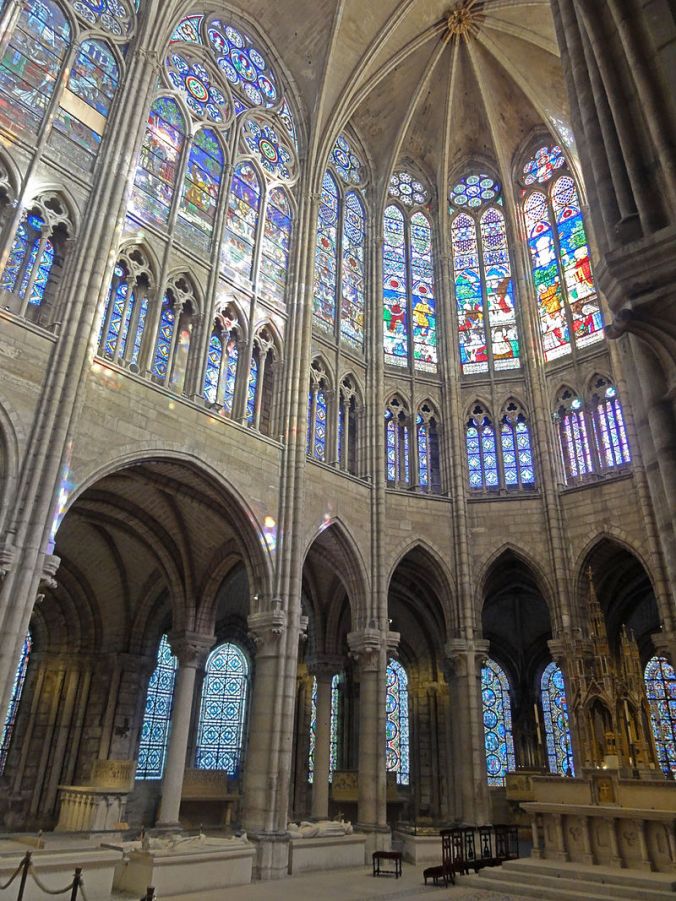
Above: the Rayonnant Gothic choir of St Denis.
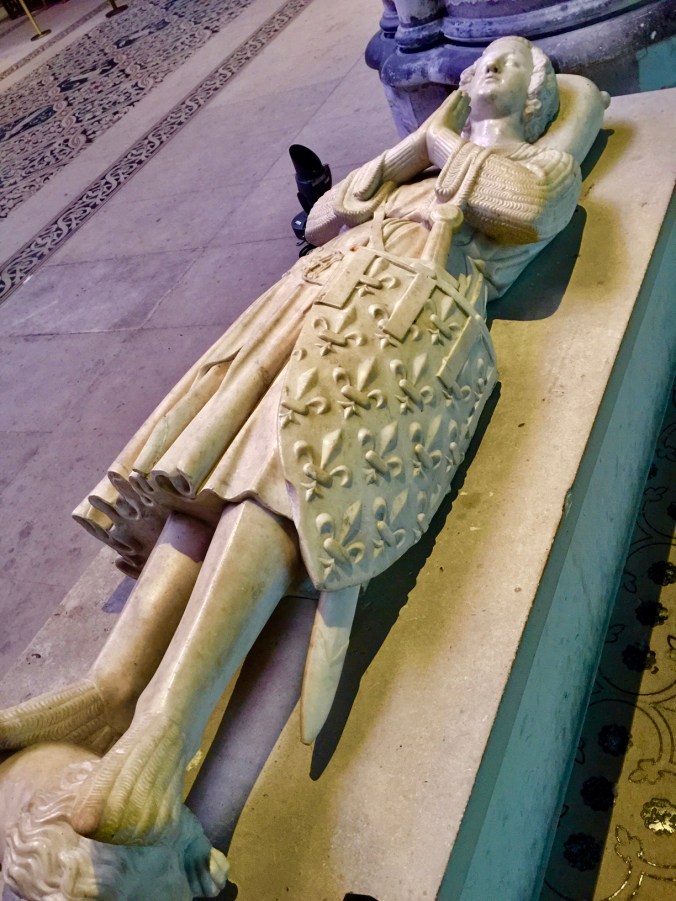
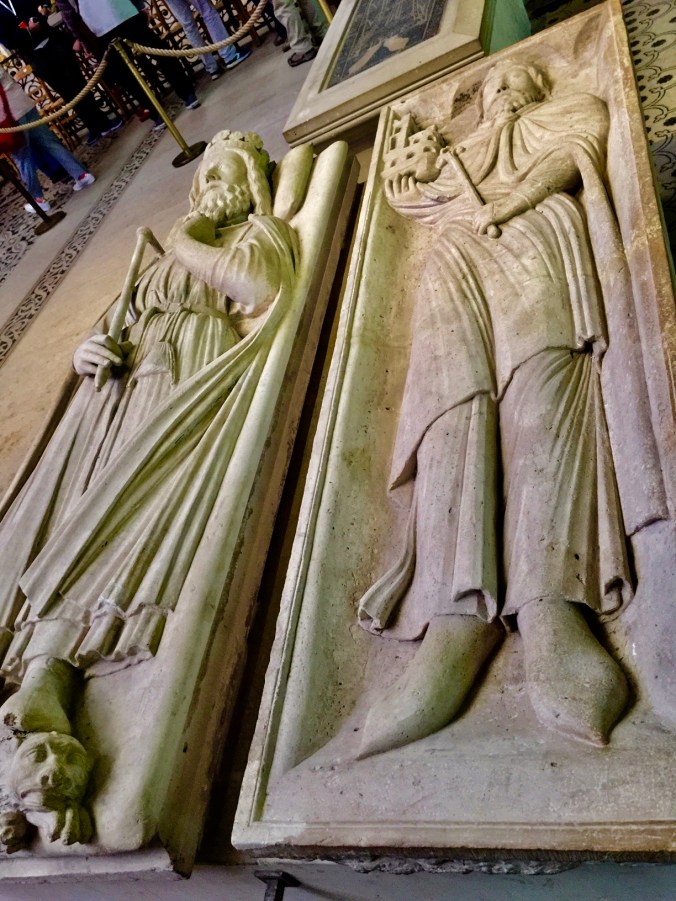
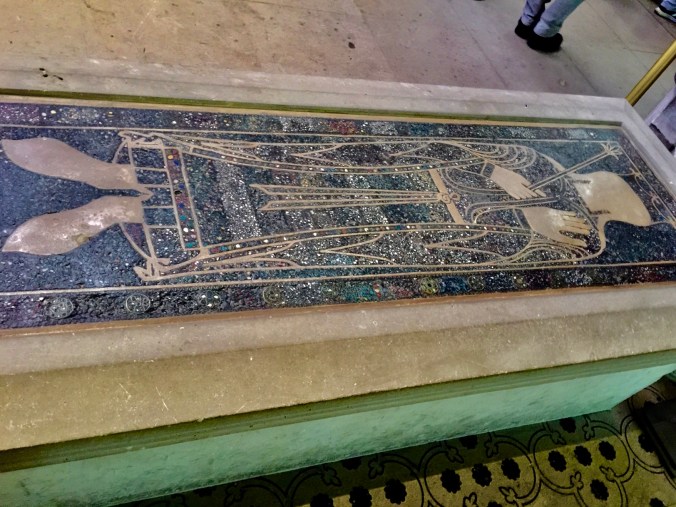
Dagobert, the king of the Franks, reigned from 628 to 637, and he refounded the church as the Abbey of Saint Denis, a Benedictine monastery. Dagobert commissioned a new shrine to house the Saint Denis’s remains, which was created by his chief councillor, Eligius, a goldsmith by training.
King Dagobert’s own tomb in St. Denis below:
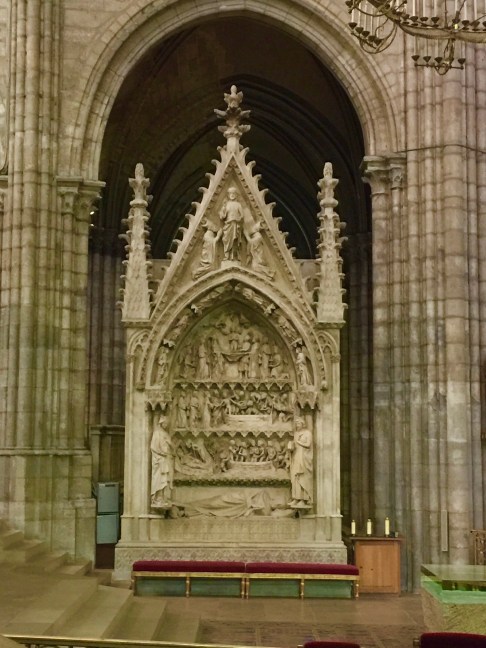
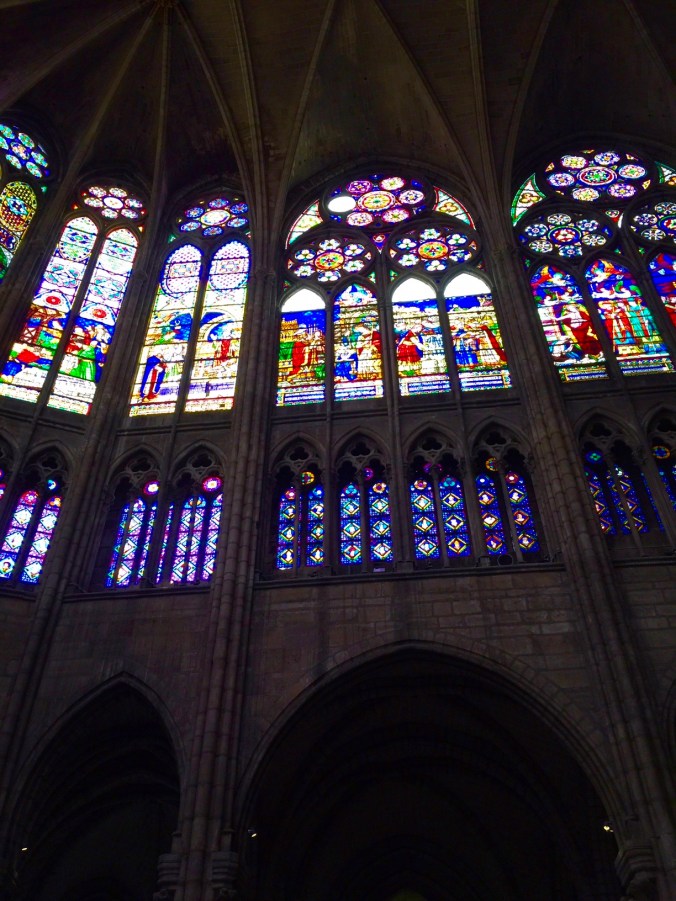
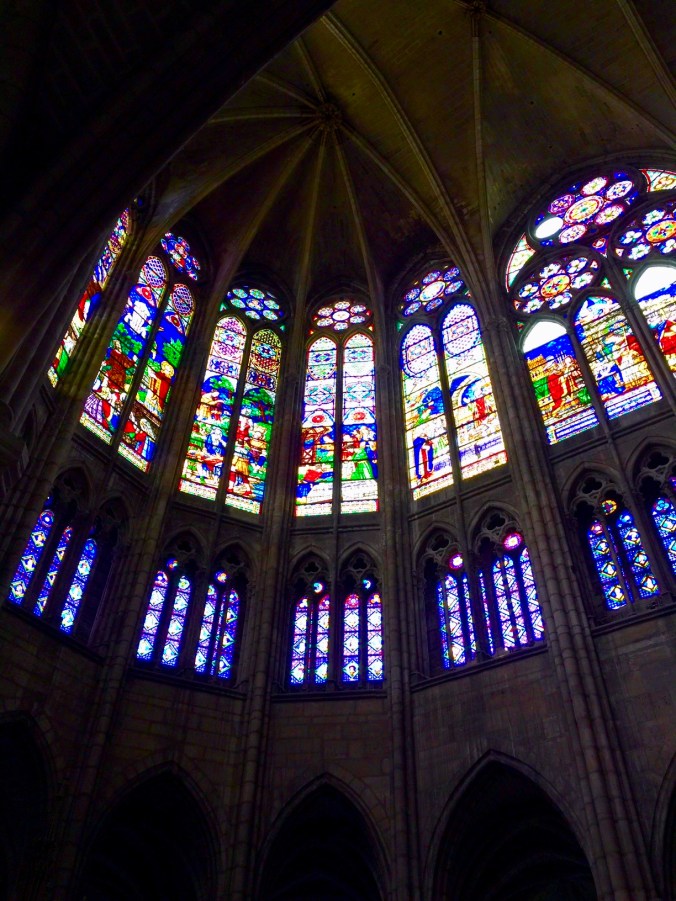
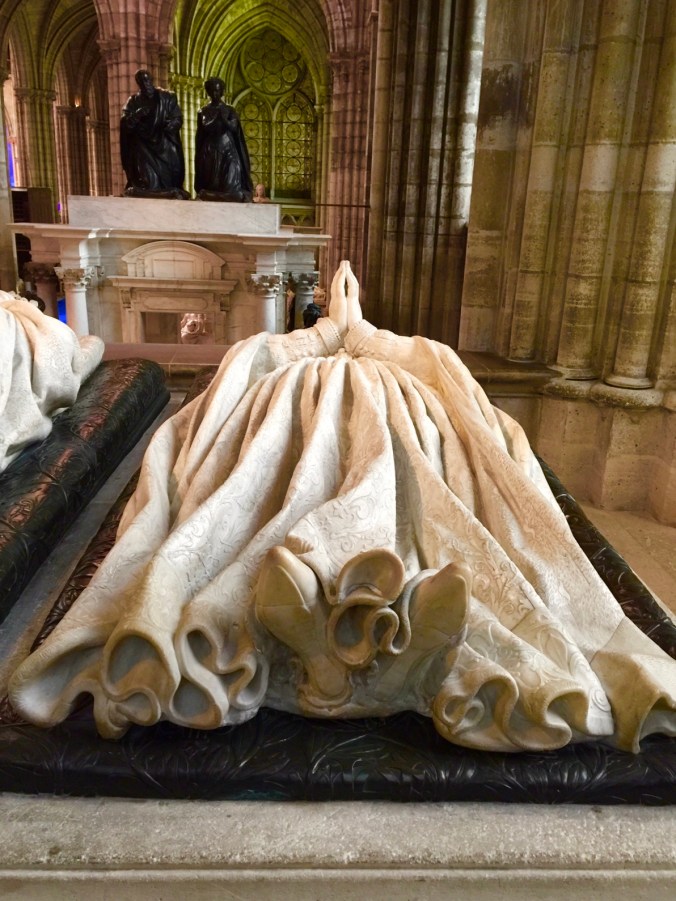
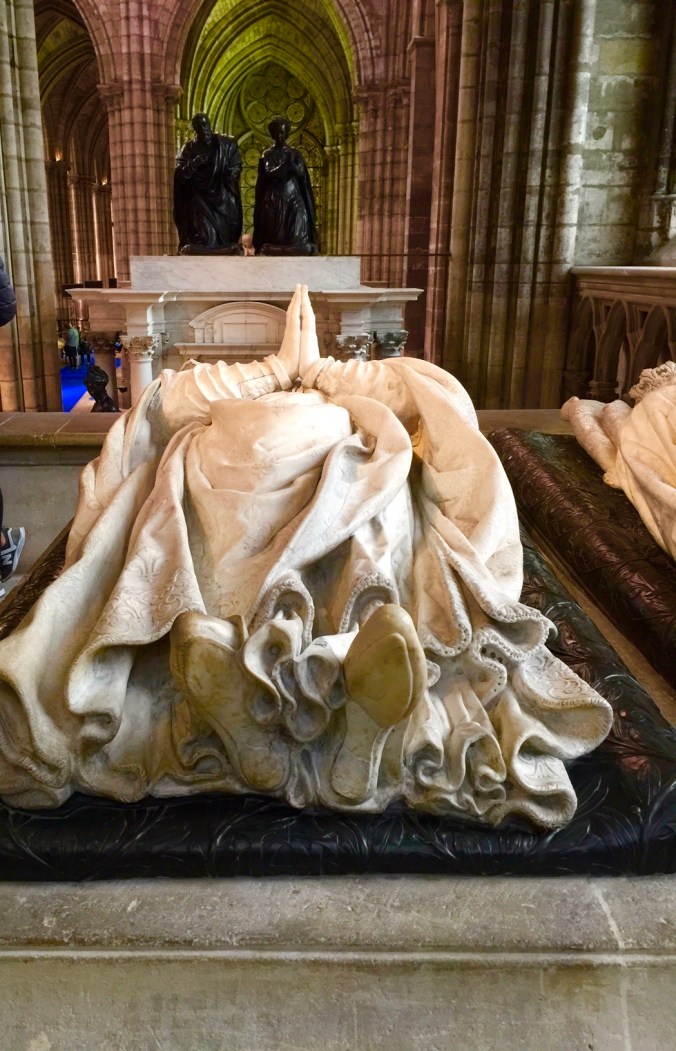
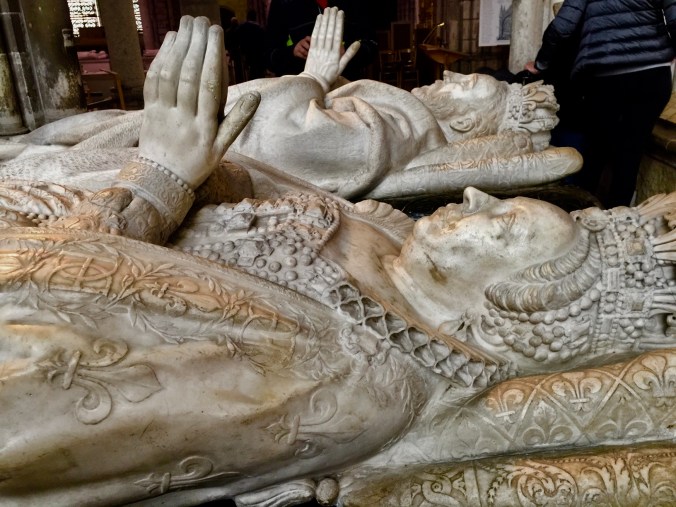
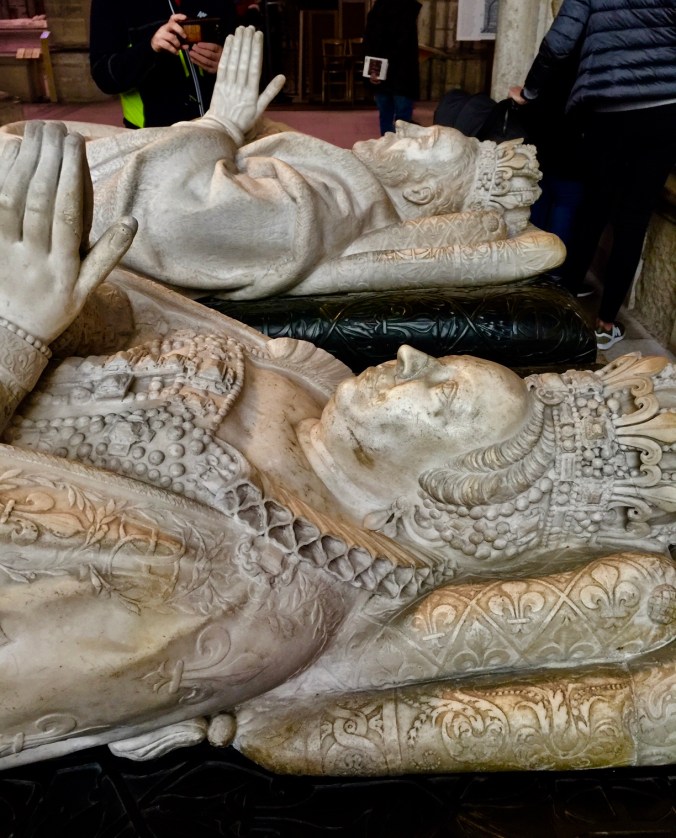
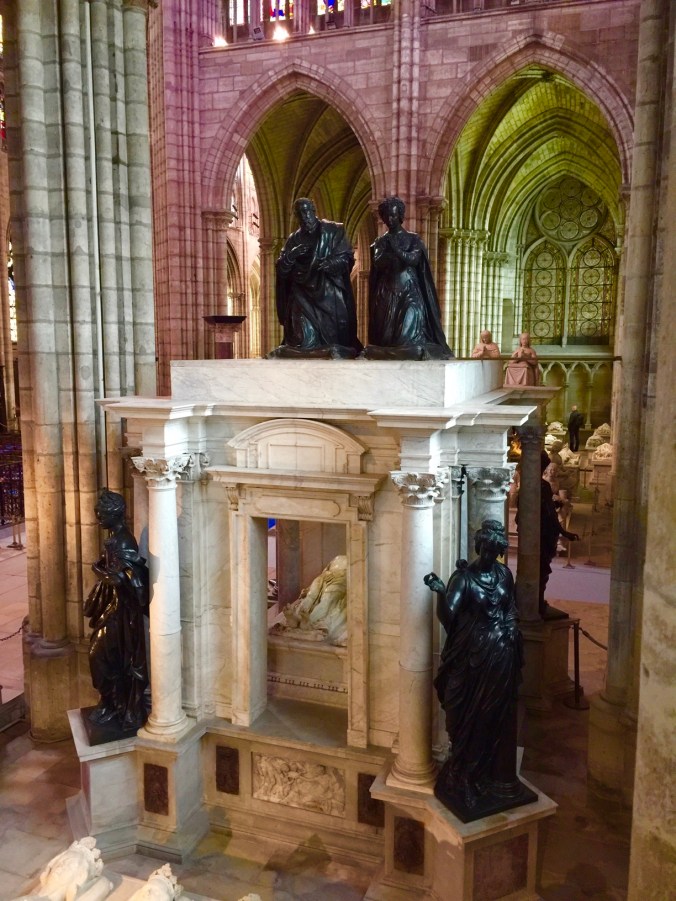
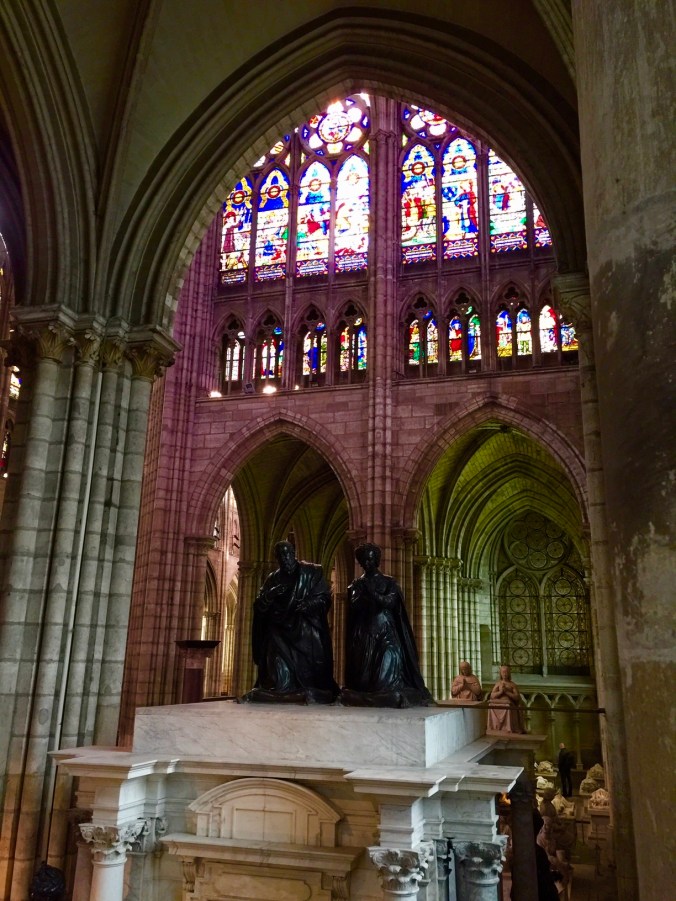
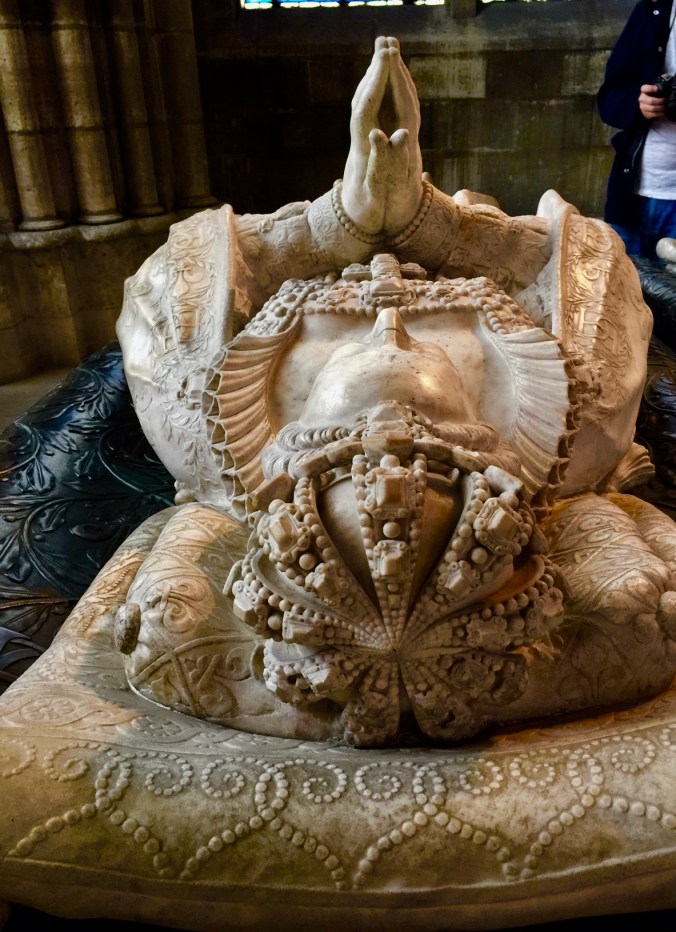
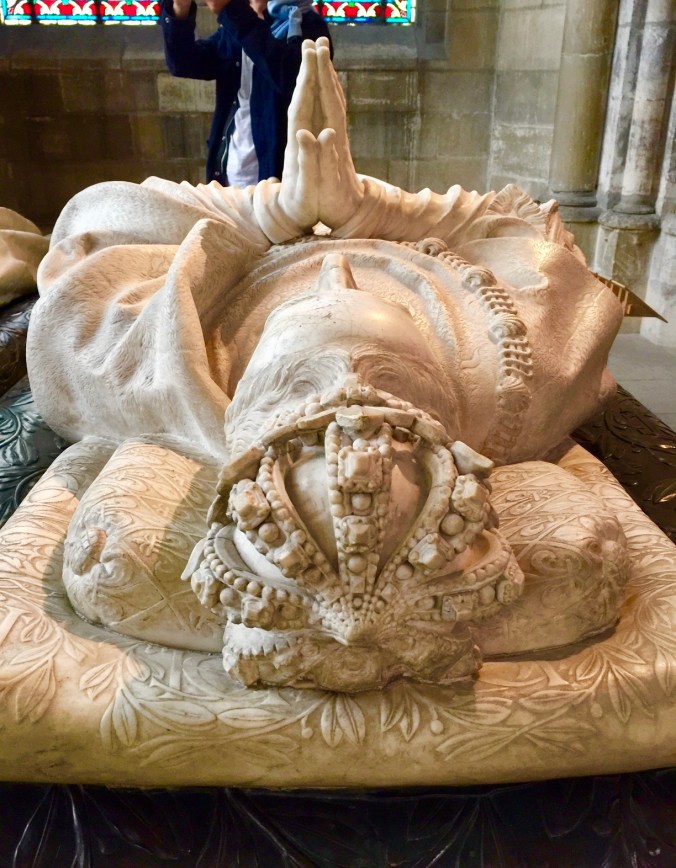
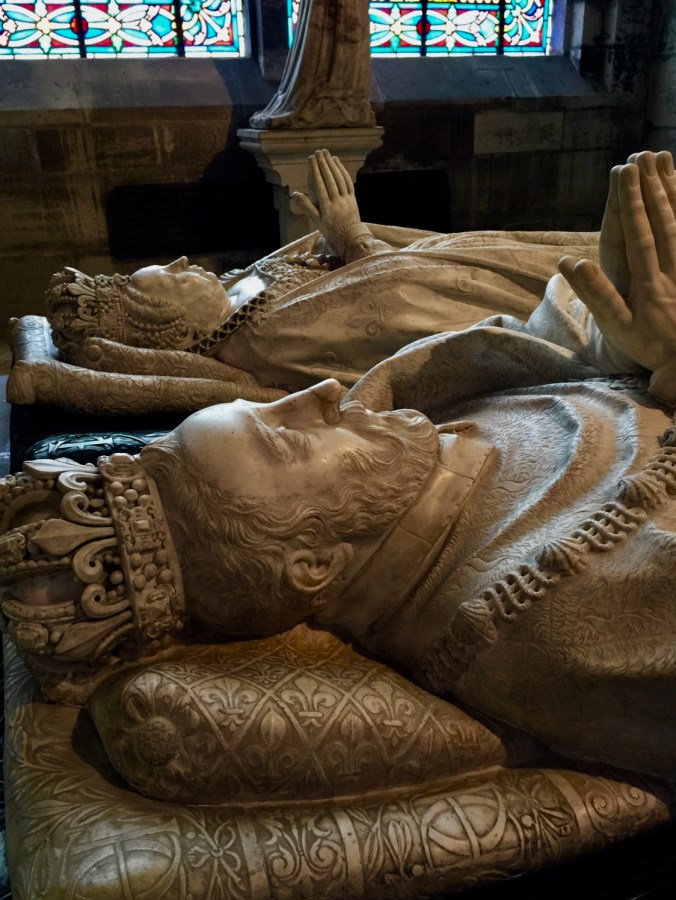
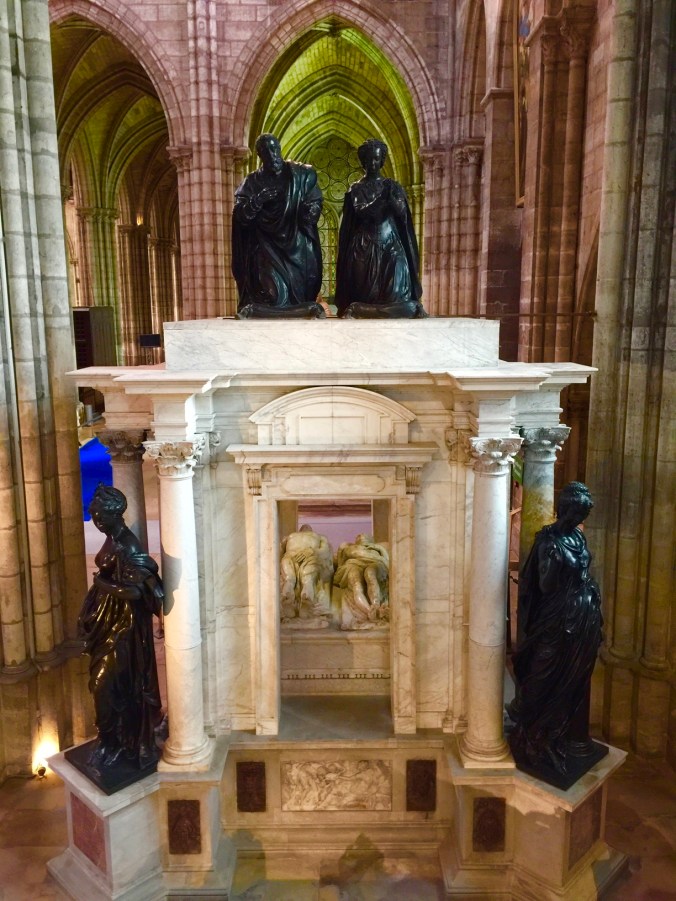
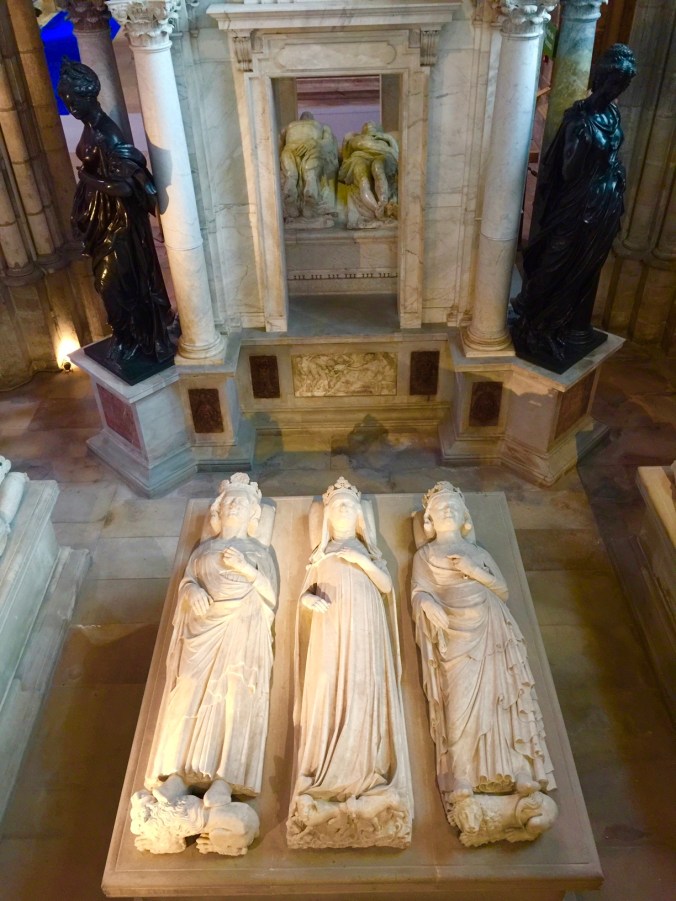
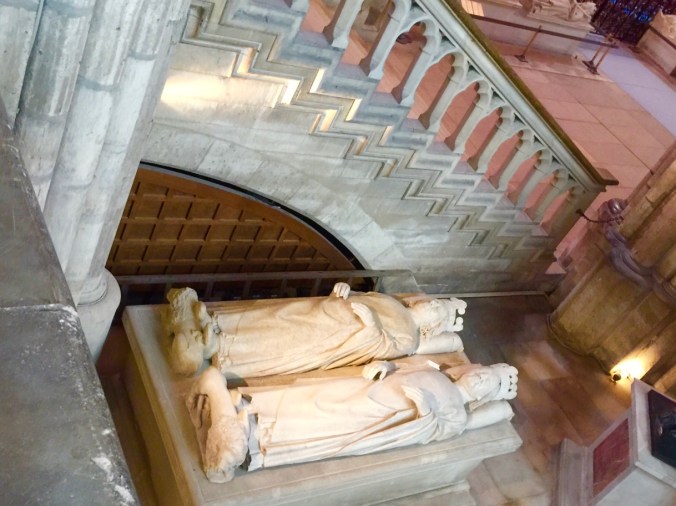

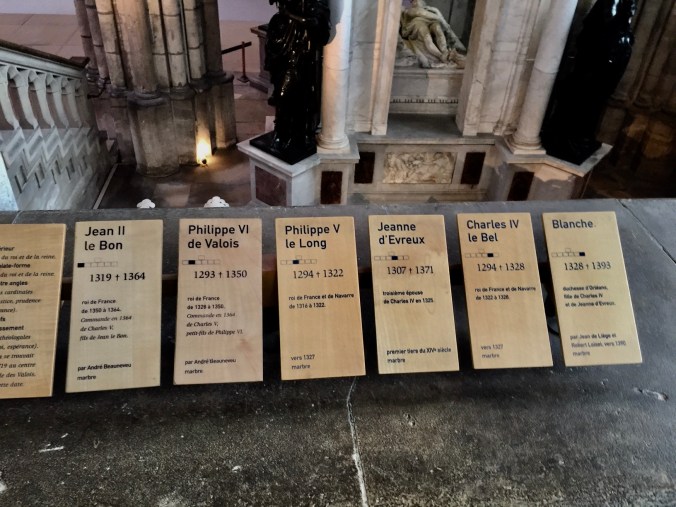
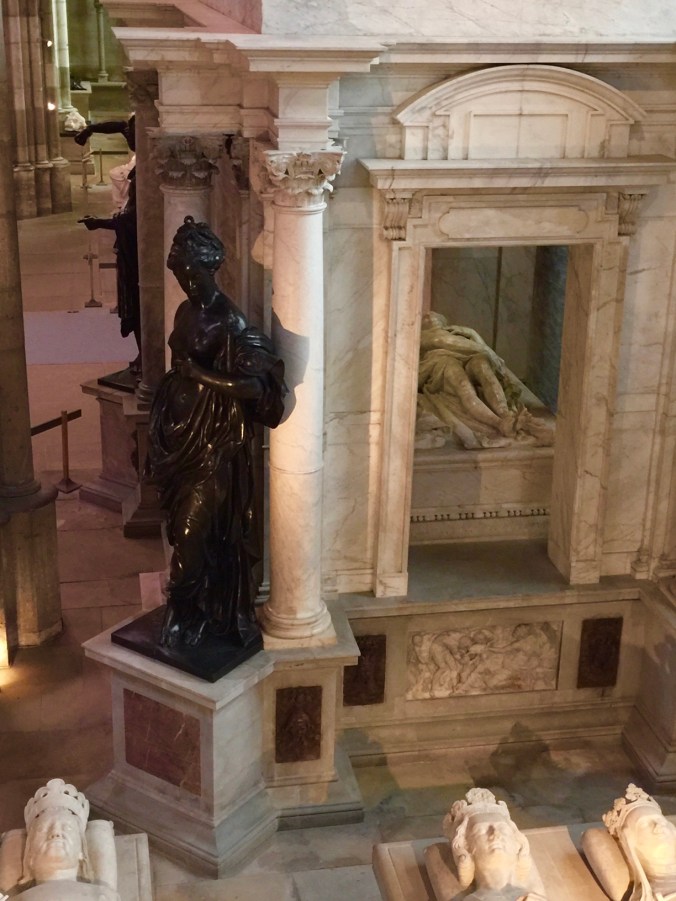
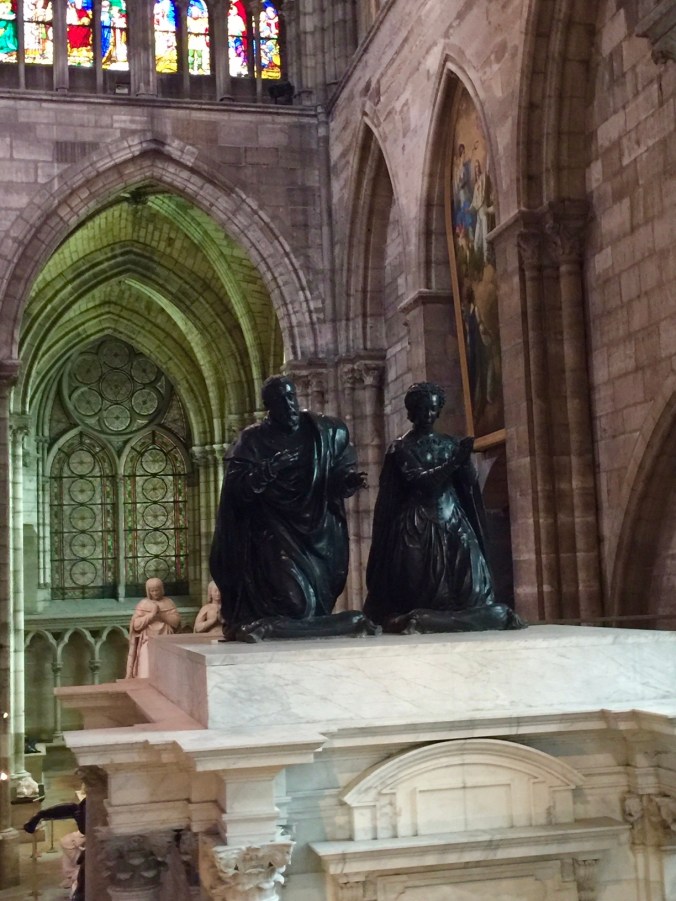
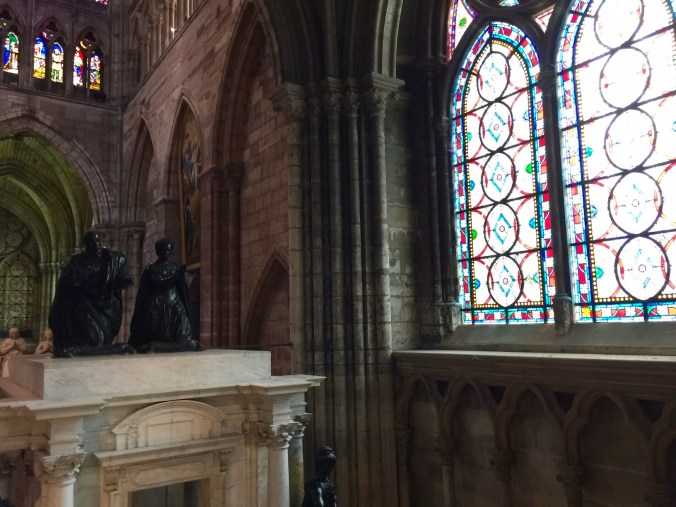
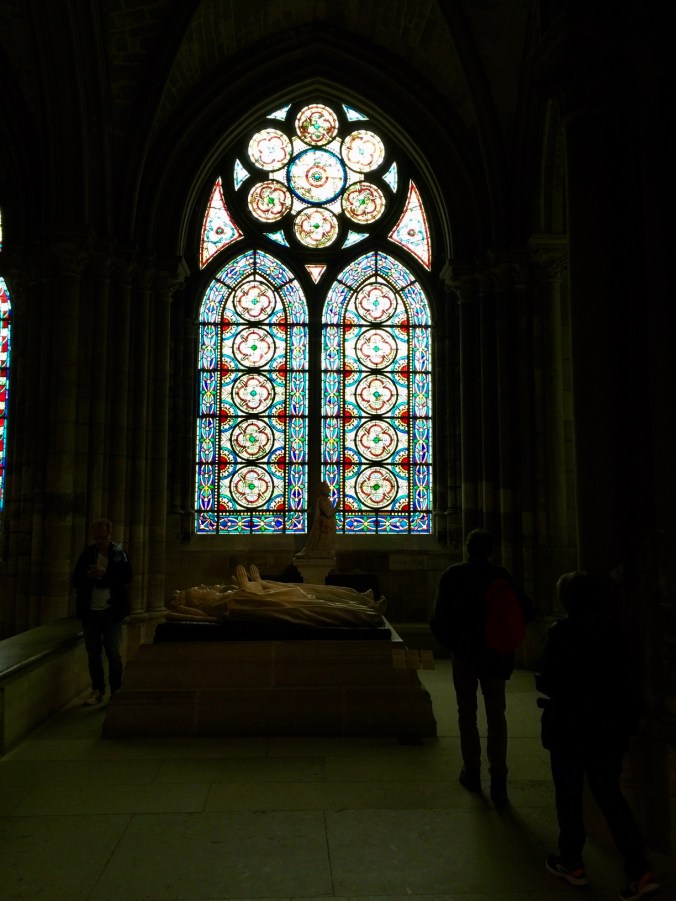
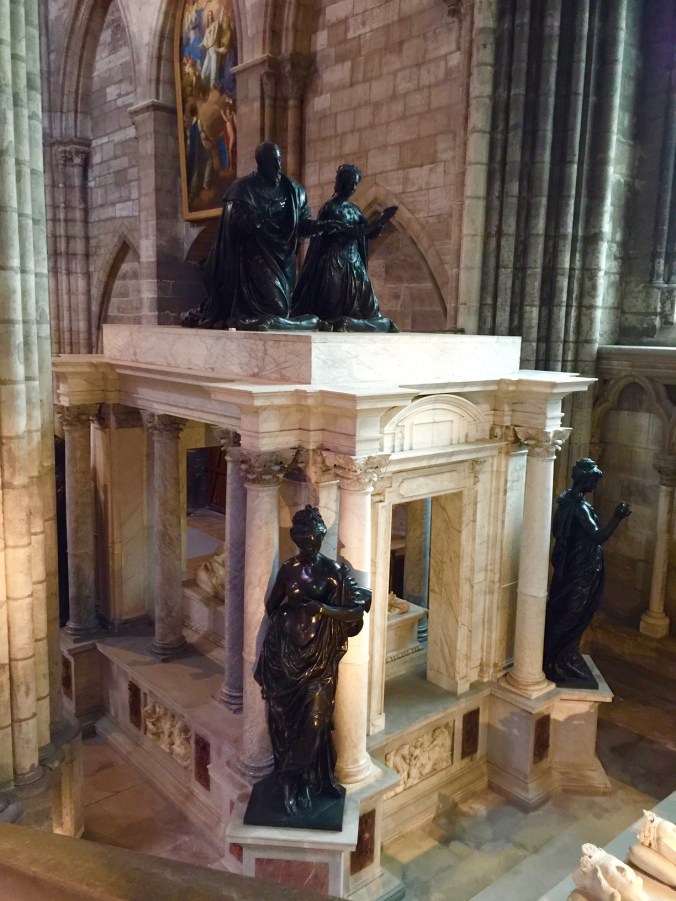
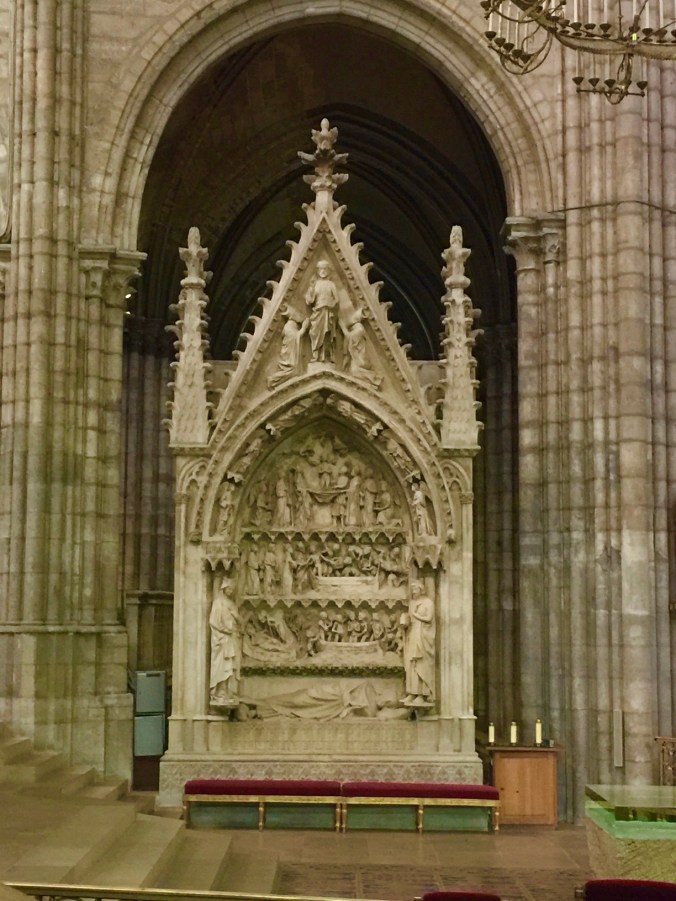
Above and below: the tomb of King Dagobert
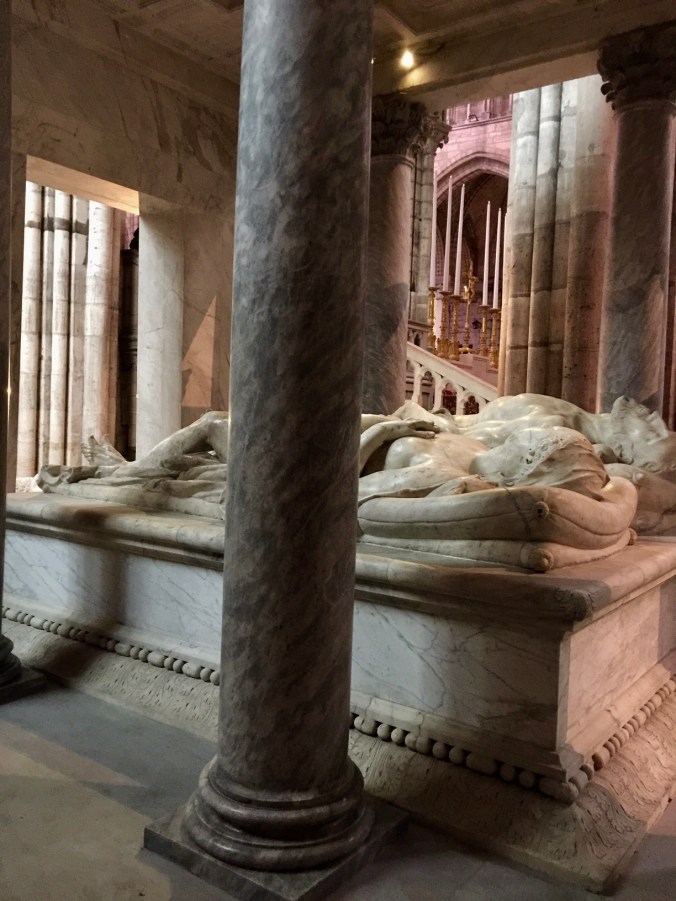
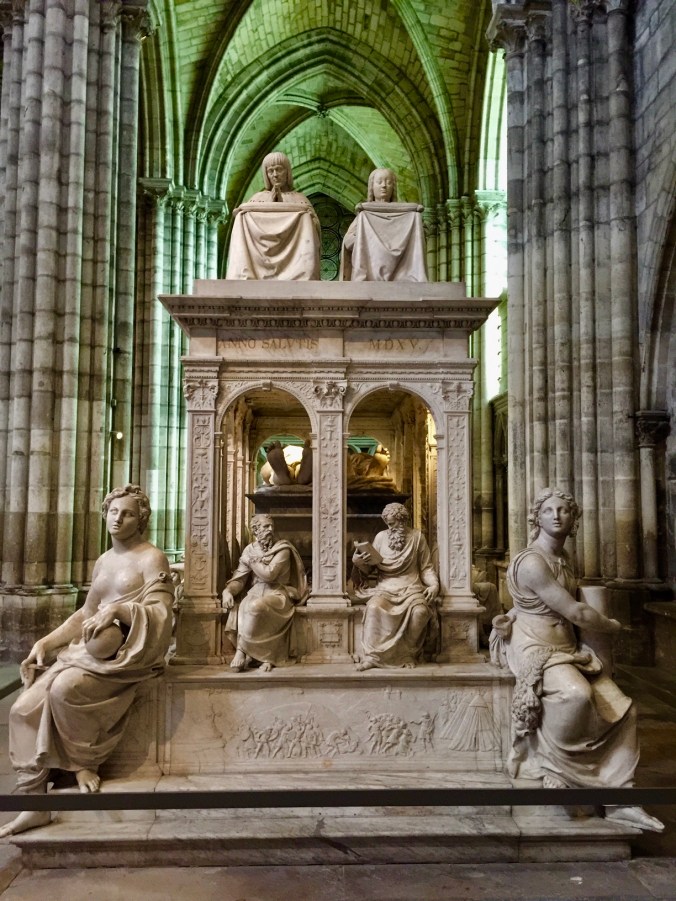
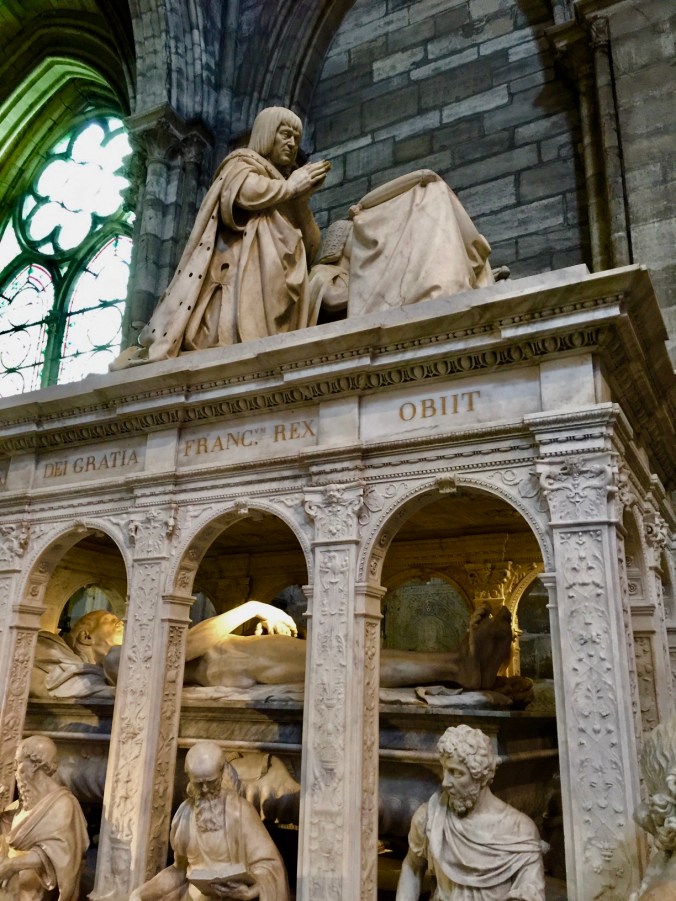
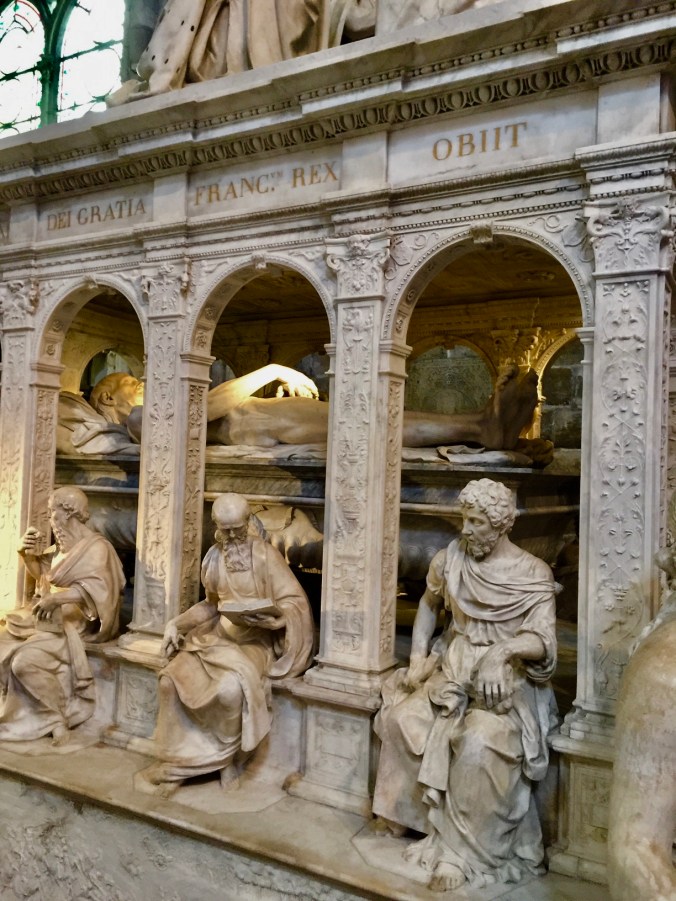
When Abbot Suger was modifying the church, the façade was also redesigned and included tall, thin statues of Old Testament prophets and kings attached to columns (known as “jamb figures”) flanking the portals.
These jamb statues were an attractive addition to the Gothic façade, and were subsequently used at the cathedrals of Paris and Chartres, constructed a few years later, and became a feature of almost every Gothic portal thereafter.
Above the doorways, the central tympanum was carved with Christ in Majesty, displaying his wounds while the dead emerge from their tombs below. Scenes from the martyrdom of St. Denis were carved above the south (right hand) portal, while above the north portal was a mosaic (now lost), even though this was already retardataire, or, as Suger put it: “contrary to the modern custom.”
The French Revolution, havoc wreaked:
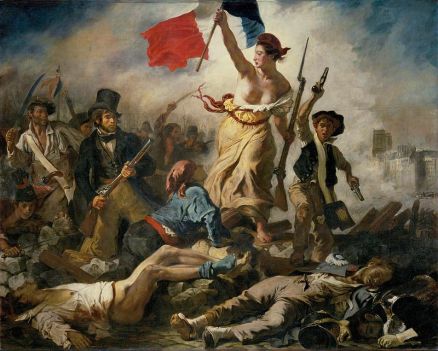
Delacroix’s Liberty Leading the People.
Because of the church’s connections to the French monarchy and proximity to Paris, the abbey of Saint-Denis was a prime target of revolutionary vandalism. All of the medieval monastic buildings were demolished in 1792 and, unfortunately, the facade of the church suffered much mutilation at the hands of the revolutionaries. They mistakenly believed that the jamb statues depicted the kings of France. In this mistake, they battered the Gothic statuary, leaving little of the exterior’s decorative program intact.
Fortunately, especially for the study of the history of art, we have a record of how the jamb sculptures appeared in Montfaucon’s drawings.
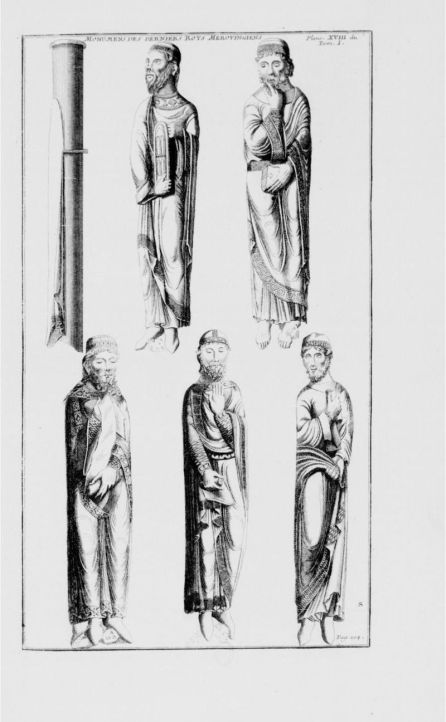
The portal tympana sculpture was also defaced.
The tombs and effigies were obviously at risk during this chaotic time and so they were wisely relocated, by calmer minds than those of the pesky revolutionaries, to the Musée des Monuments Français by Alexandre Lenoir in 1798.
For a relatively brief period, the relics of St-Denis were transferred to the parish church of the town in 1795; they were returned to the abbey in 1819.
Of the original sculpture, very little remains, most of what is now visible being the result of rather clumsy restoration work in 1839. Some fragments of the original sculptures survive in the collection of the Musée de Cluny in Paris.
Although the revolutionaries left the church itself standing, it was deconsecrated, its treasury confiscated and its reliquaries and liturgical furniture melted down for their metallic value (although some objects, including a chalice and aquamanile donated to the abbey in Suger’s time, were successfully hidden and survive to this day) and the remaining royal tombs desecrated.
The church was reconsecrated (reopened) by Napoléon in 1806 and the tomb sculptures returned to Saint-Denis when Lenoir’s Musée des Monuments Français was closed after the restoration of the monarchy.
The royal remains, however, were left in the mass graves to which they had been placed in 1798.
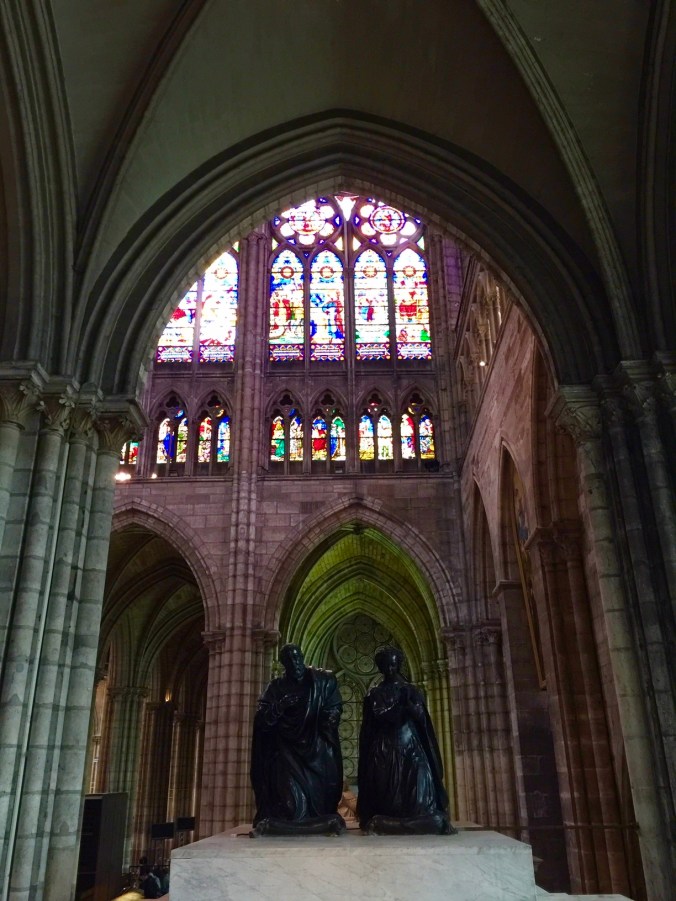
Below is the Bourbon crypt, or the Memorial to King Louis XVI and Queen Marie Antoinette, sculptures (1830) by Edme Gaulle and Pierre Petitot
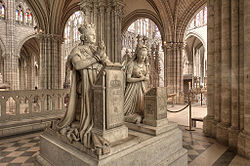
Under the direction of architect Viollet-le-Duc, famous for his work on Notre-Dame de Paris, church monuments that had been taken to the Museum of French Monuments were returned to the church. The corpse of King Louis VII, who had been buried at Barbeau Abbey and whose tomb had not been touched by the revolutionaries, was brought to Saint-Denis and buried in the crypt. In 2004, the mummified heart of the Dauphin, the boy who would have been Louis XVII, was sealed into the wall of the crypt.
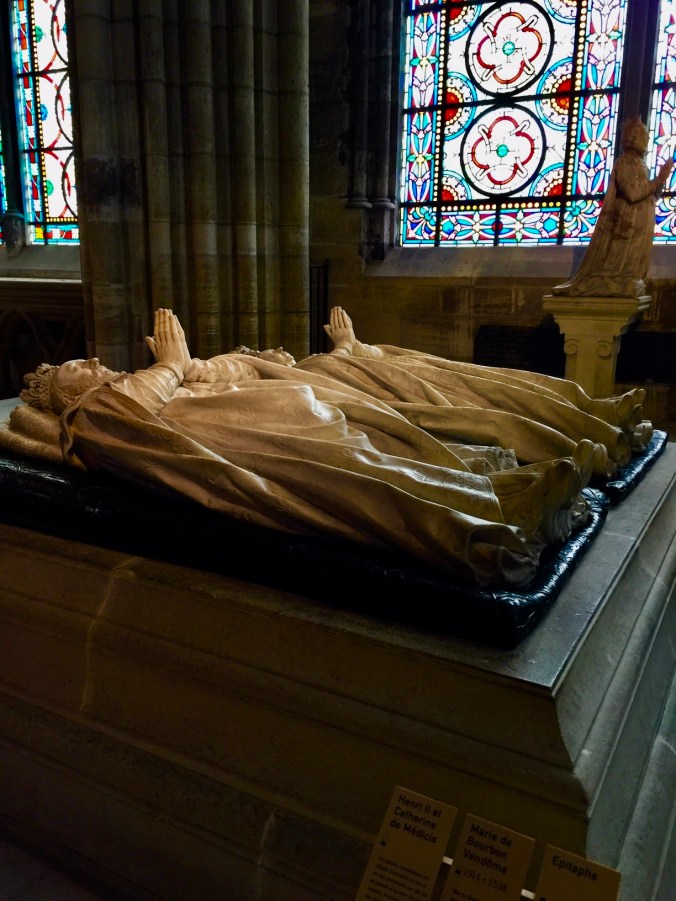
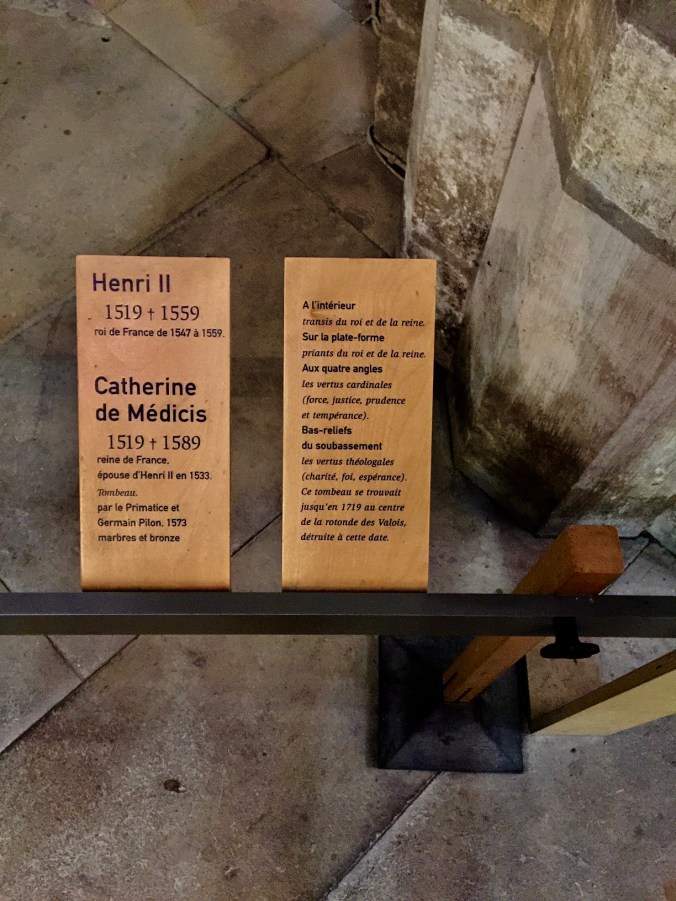
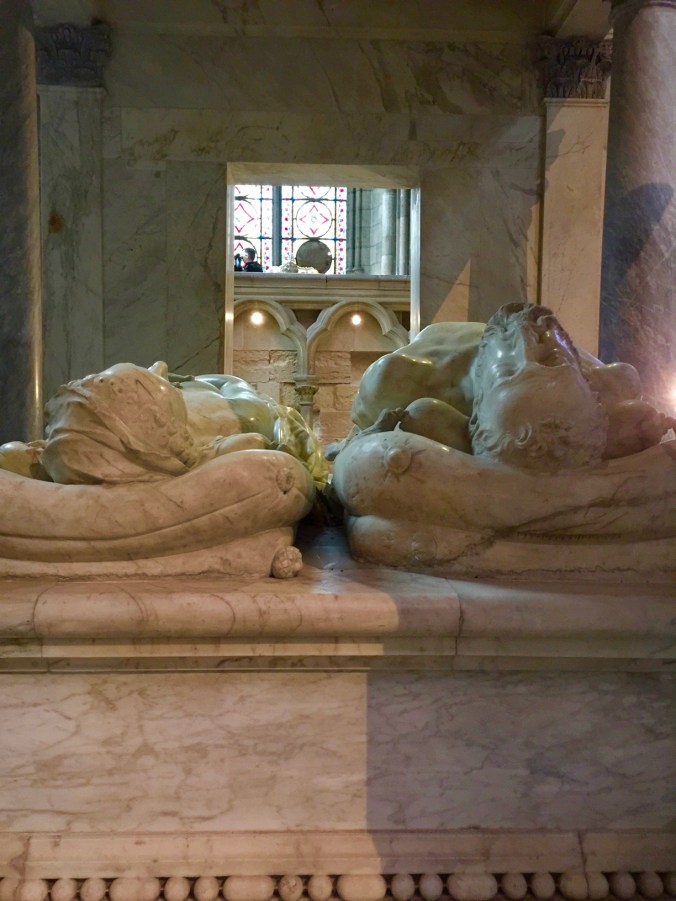
The abbey church contains some fine examples of cadaver tombs. The effigies of many of the kings and queens are on their tombs, but their bodies were removed during the French Revolution. The ancient monarchs were removed in August 1793 to celebrate the revolutionary Festival of Reunion, then the Bourbon and Valois monarchs were removed to celebrate the execution of Marie Antoinette in October 1793. The bodies were dumped into three trenches and covered with lime to destroy them.
Archaeologist Alexandre Lenoir saved many of the monuments by claiming them as artworks for his Museum of French Monuments. The bodies of several Plantagenet monarchs of England were likewise removed from Fontevraud Abbey during the French Revolution.
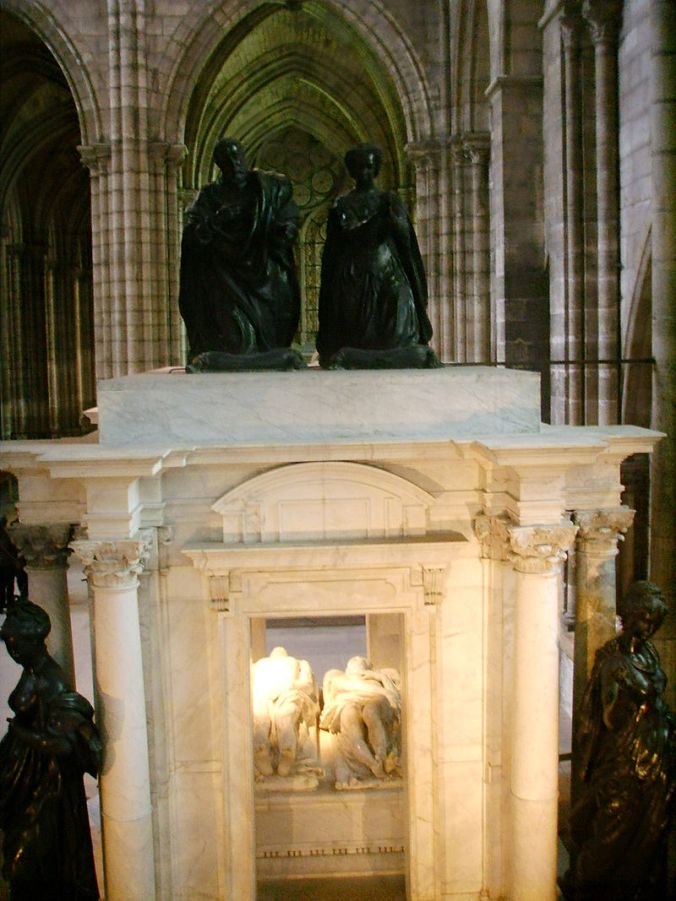
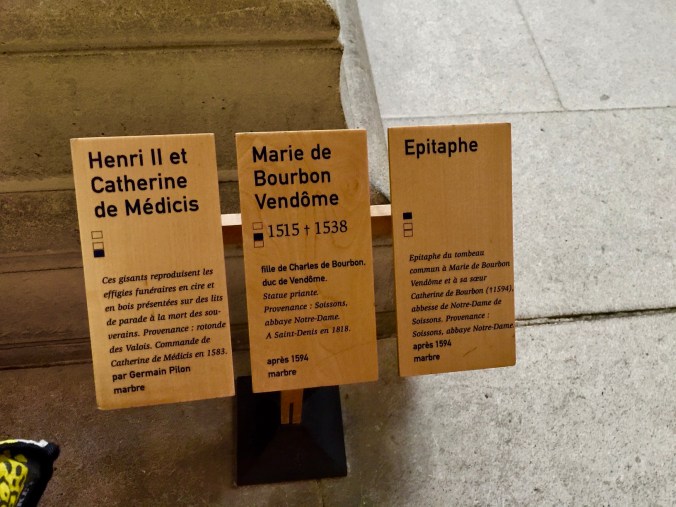
At top are Effigies on the tomb of Henry II and Catherine de’ Medici, carved by Germain Pilon.
The bodies of the beheaded King Louis XVI, his wife Marie Antoinette of Austria, and his sister Madame Élisabeth were not initially buried in Saint-Denis, but rather in the churchyard of the Madeleine, where they were covered with quicklime.
The body of the Dauphin, who died of illness and neglect at the hands of his revolutionary captors, was buried in an unmarked grave in a Parisian churchyard near the Temple.
In 1817, the restored Bourbons ordered the mass graves to be opened, but only portions of three bodies remained intact. The remaining bones from 158 bodies were collected into an ossuary in the crypt of the church, behind marble plates bearing their names.
During the restoration the Bourbons ordered search for the corpses of Louis XVI and Marie Antoinette, but only a few bones were found that were presumably the king’s and a clump of greyish matter containing a lady’s garter, were found on 21 January 1815. They were brought to Saint-Denis and buried in the new Bourbon crypt.
King Louis XVIII, upon his death in 1824, was buried in the center of the crypt, near the graves of Louis XVI and Marie Antoinette. The coffins of royal family members who died between 1815 and 1830 were also placed in the vaults.
The church, including the architectural sculpture and stained glass windows (of which very little medieval glass survives) was heavily restored in the mid-nineteenth century by Eugène Viollet-le-Duc, the same architect responsible for the restoration of the Cathedral of Notre-Dame. Under Viollet-le-Duc’s direction, church monuments that had been taken to the Museum of French Monuments were returned to the church.
The present location of the tomb effigies does not correspond to their medieval locations.
The corpse of King Louis VII, who had been buried at Barbeau Abbey and whose tomb had not been touched by the revolutionaries, was brought to Saint-Denis and buried in the crypt. In 2004, the mummified heart of the Dauphin, the boy who would have been Louis XVII, was sealed into the wall of the crypt.
The Jardin du Luxembourg is in the 6th arrondissement of Paris. It was created by and for Marie de’ Medici, the widow of King Henry IV of France, for a new residence she constructed, the Luxembourg Palace. The complex was begun in 1612.
The palace: the Queen wanted it to resemble the Palazzo Pitti in Florence. Does it? Yes and no.
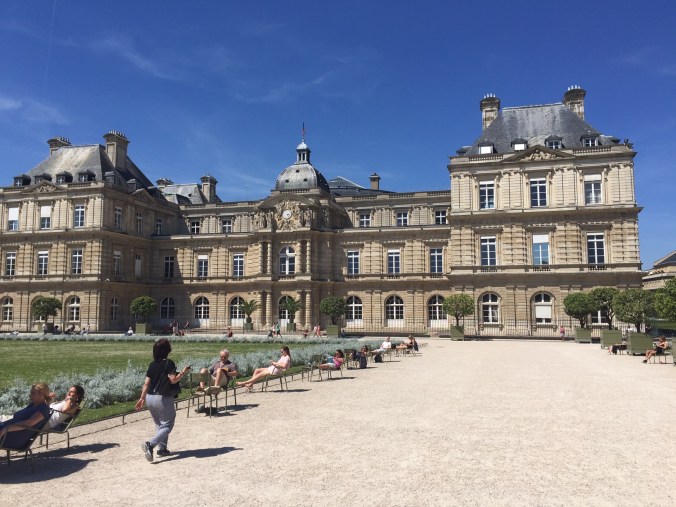
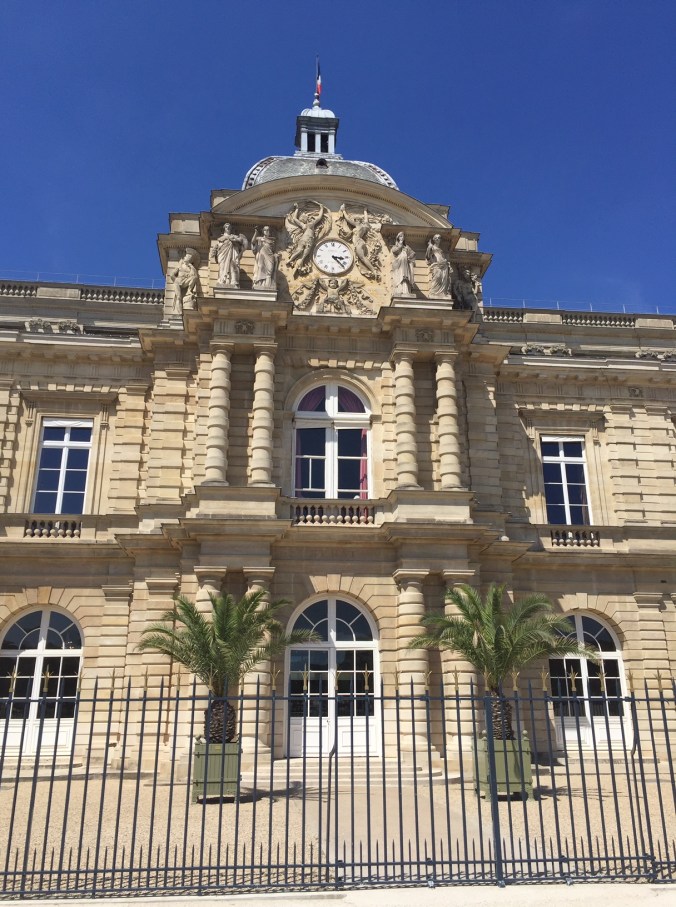
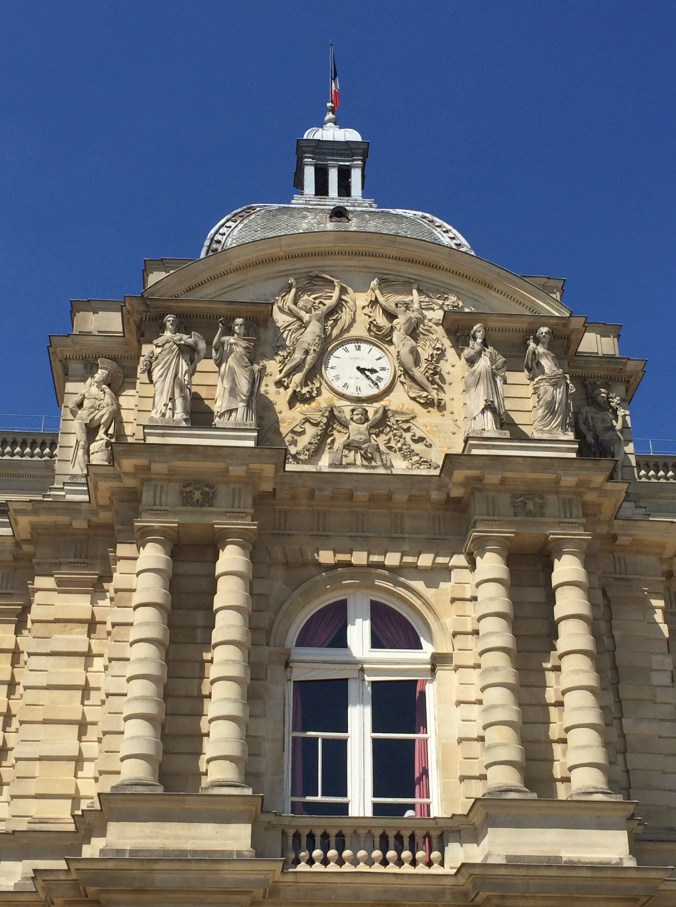
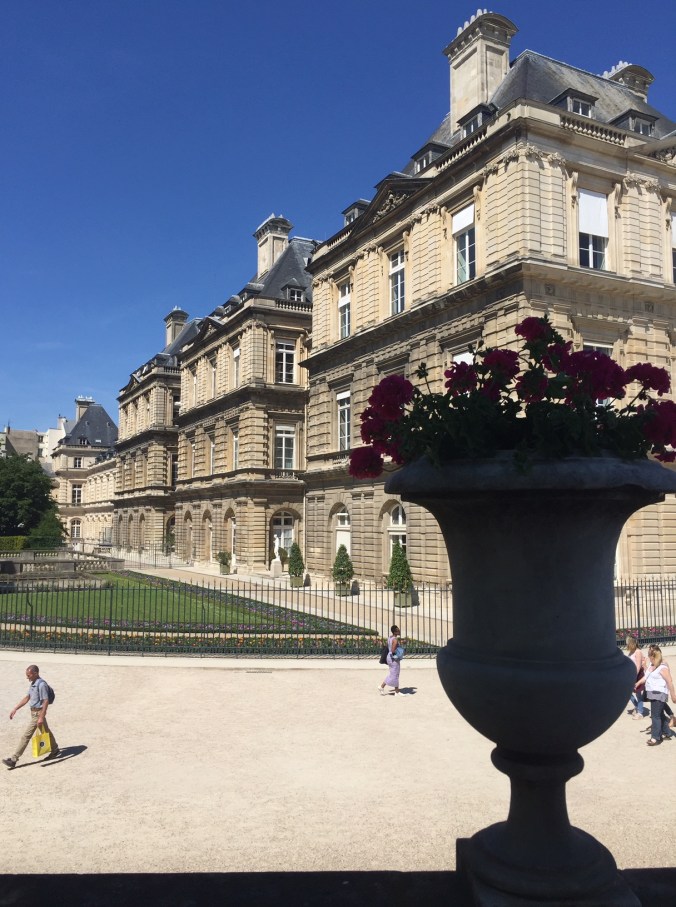
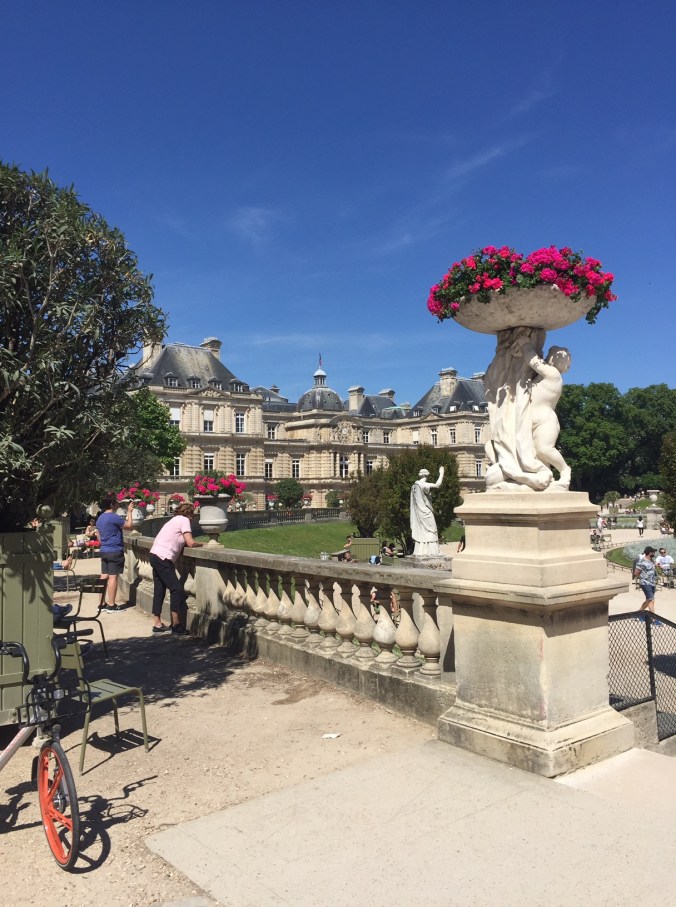
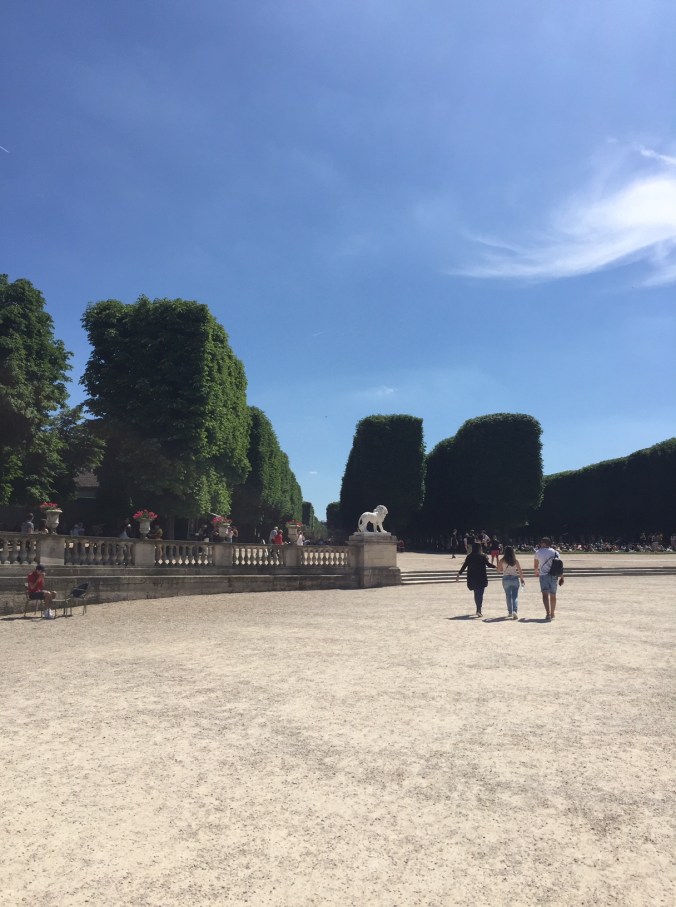
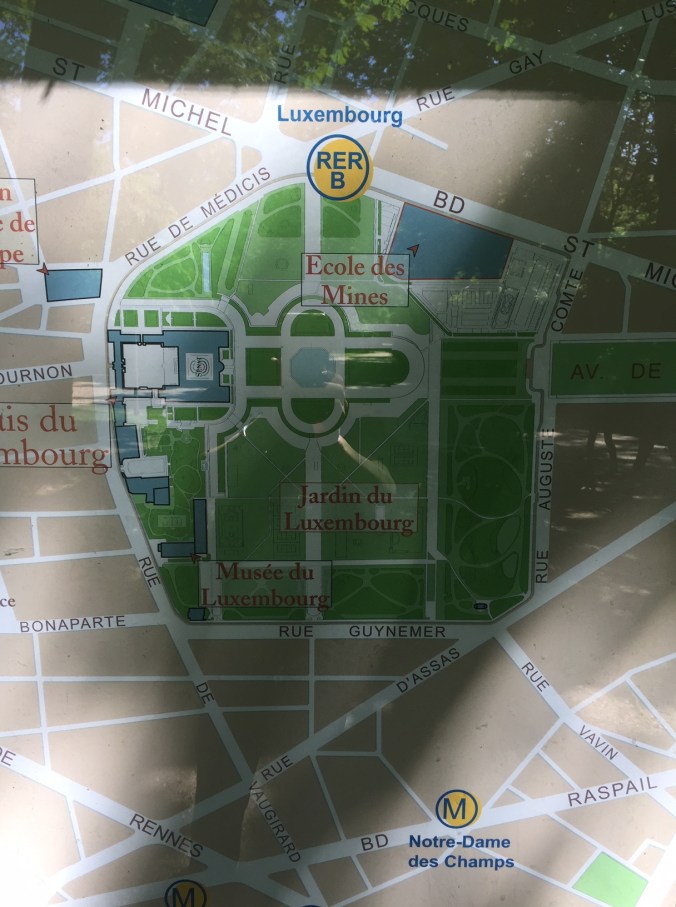
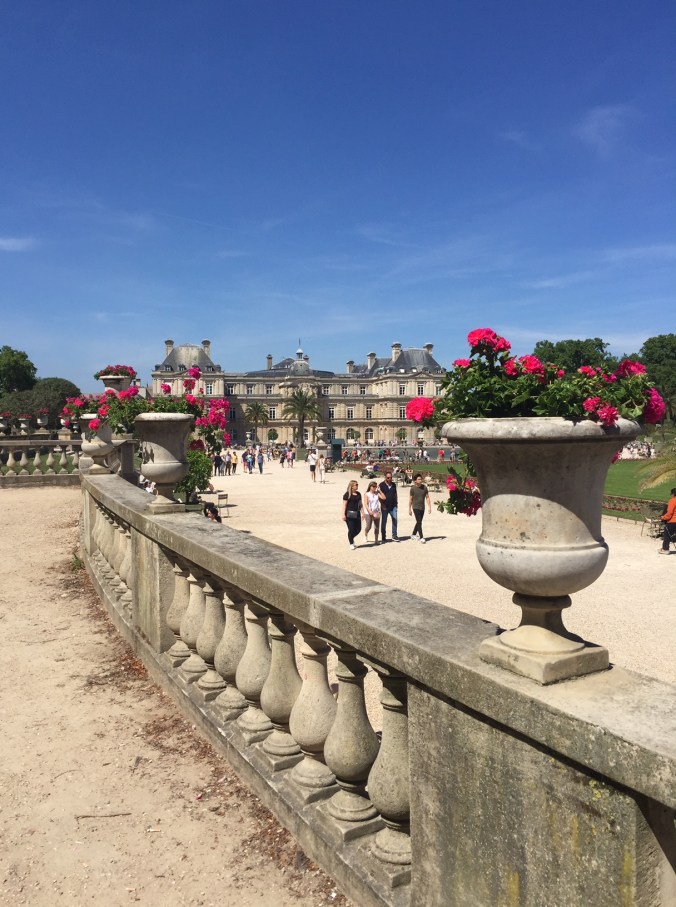
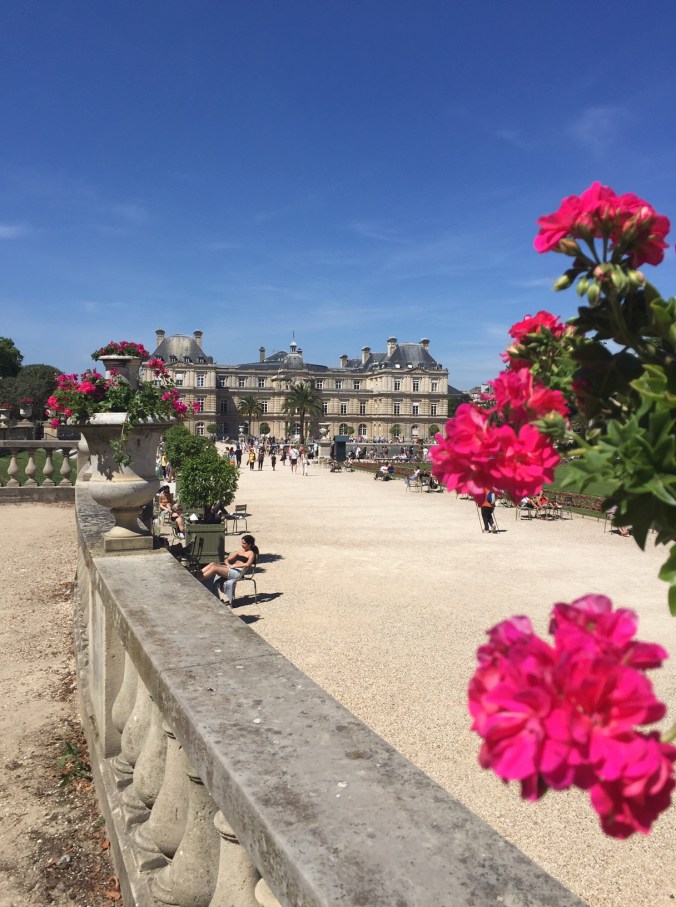
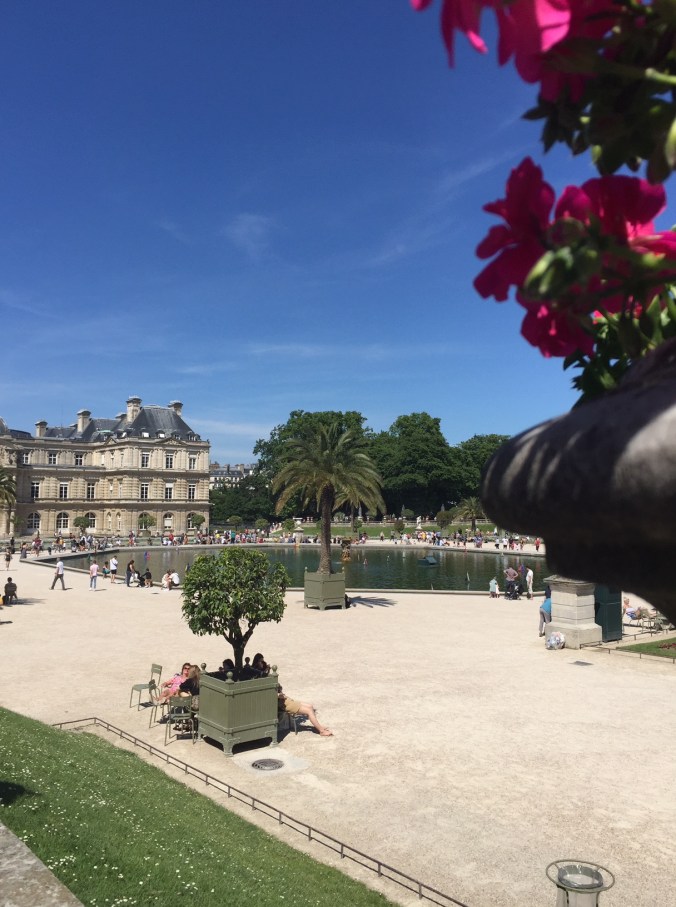
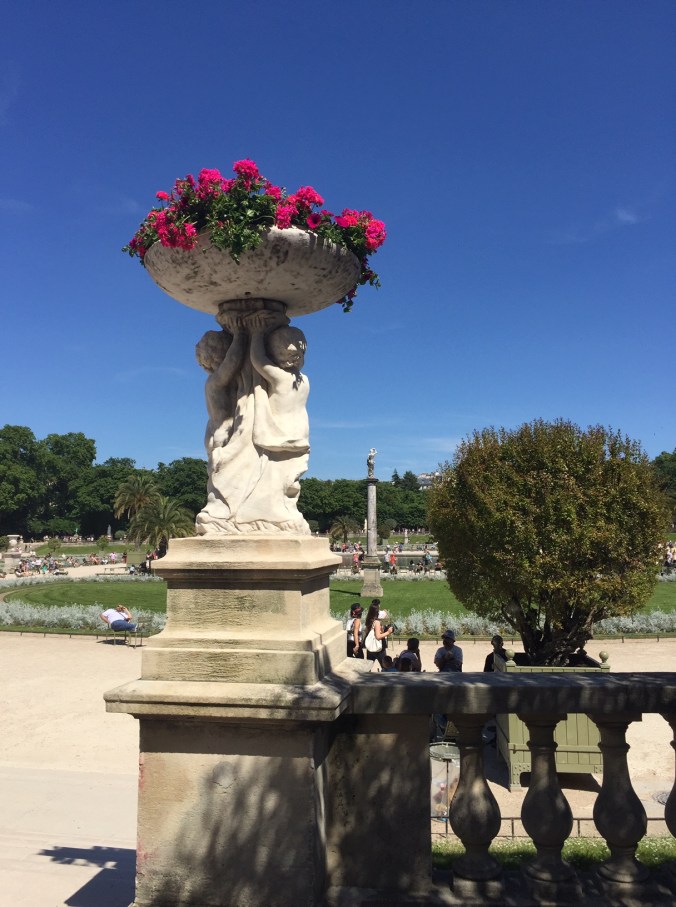
Today the garden is owned by the French Senate, which meets in the Palace. It covers 23 hectares and is known for its lawns, tree-lined promenades, flowerbeds, model sailboats on its circular basin, and picturesque Medici Fountain, built in 1620. The name Luxembourg comes from the Latin Mons Lucotitius, the name of the hill where the garden is located.
In 1611, Marie de’ Medici, the widow of Henry IV and the regent for the King Louis XIII decided to build a palace in imitation of the Pitti Palace in her native Florence. She purchased the hotel du Luxembourg (today the Petit-Luxembourg palace) and began construction of the new palace. She commissioned Salomon de Brosse to build the palace and a fountain, which still exists.
In 1612 she planted 2,000 elm trees, and directed a series of gardeners, most notably Tommaso Francini, to build a park in the style she had known as a child in Florence.
Francini planned two terraces with balustrades and parterres laid out along the axis of the chateau, aligned around a circular basin. He also built the Medici Fountain to the east of the palace as a nympheum, an artificial grotto and fountain, without its present pond and statuary.
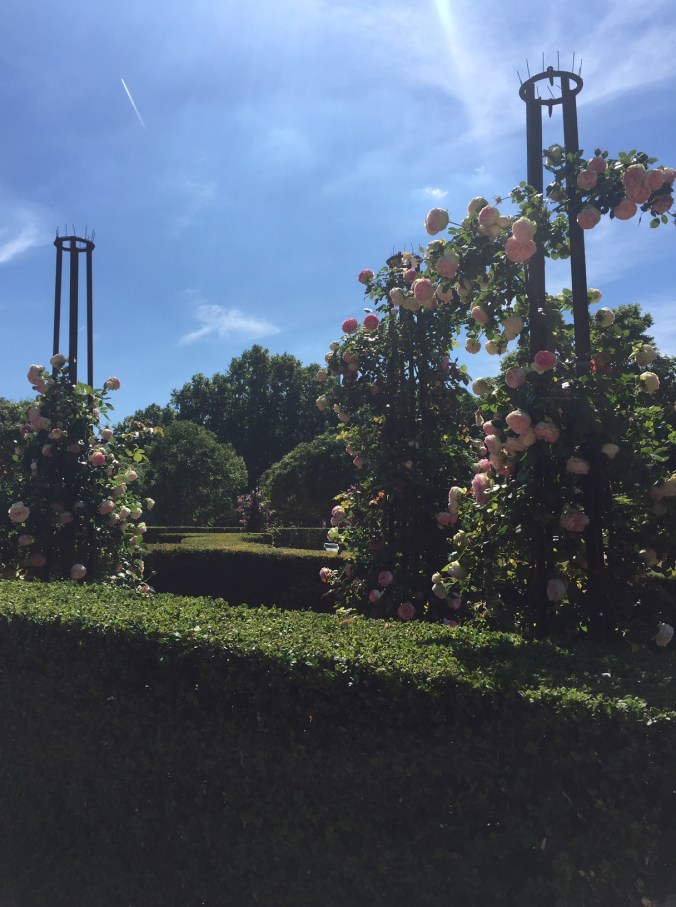
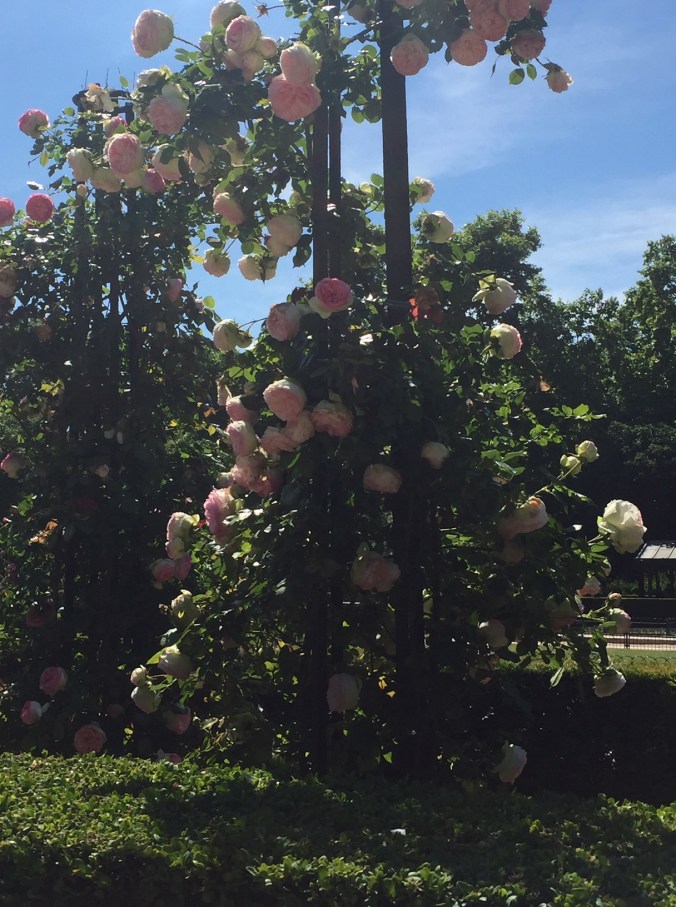
The original garden was just eight hectares in size. In 1630, the Queen bought additional land and enlarged the garden to thirty hectares, entrusting the work to Jacques Boyceau de la Barauderie, the independent designer of the royal gardens of Tuileries and the early garden of Versailles. He was one of the early theorists of the new and more formal garden à la française, and he laid out a series of squares along an east-west alley closed at the east end by the Medici Fountain, and a rectangle of parterres with broderies of flowers and hedges in front of the palace. In the center he placed an octagonal basin with a fountain, with a perspective toward what is now the Paris observatory.
Later monarchs largely neglected the garden. In 1780, the Comte de Provence, the future Louis XVIII, sold the eastern part of the garden for real estate development. Following the French Revolution, however, the leaders of the French Directory expanded the garden to forty hectares by confiscating the land of the neighboring religious order of the Carthusian monks.
The architect Jean Chalgrin, the architect of the Arc de Triomphe, took on the task of restoring the garden. He remade the Medici Fountain and laid out a long perspective from the palace to the observatory. He preserved the famous pepiniere, or nursery garden of the Carthusian order, and the old vineyards, and kept the garden in a formal French style.
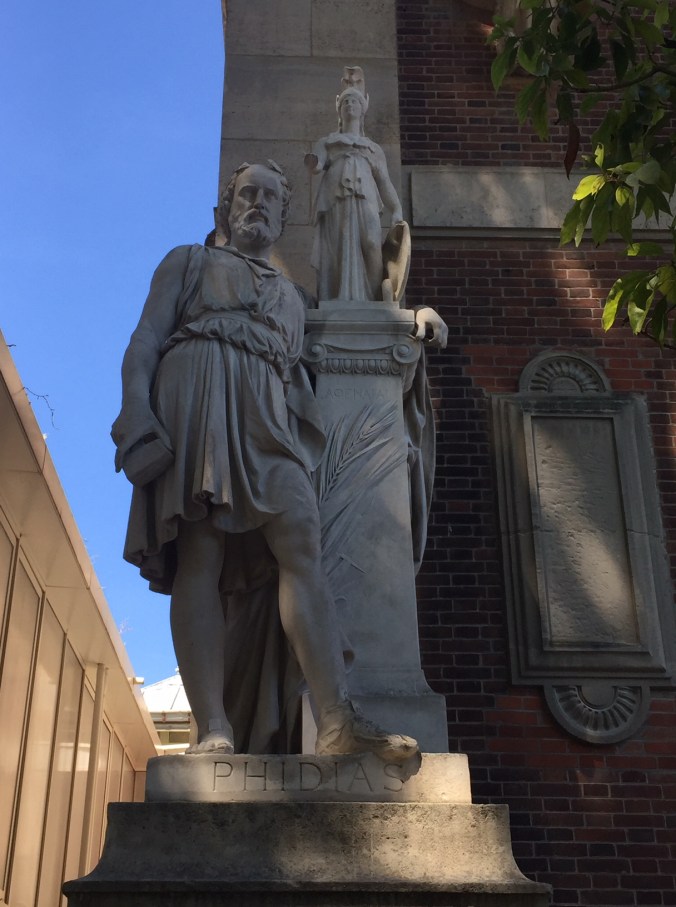
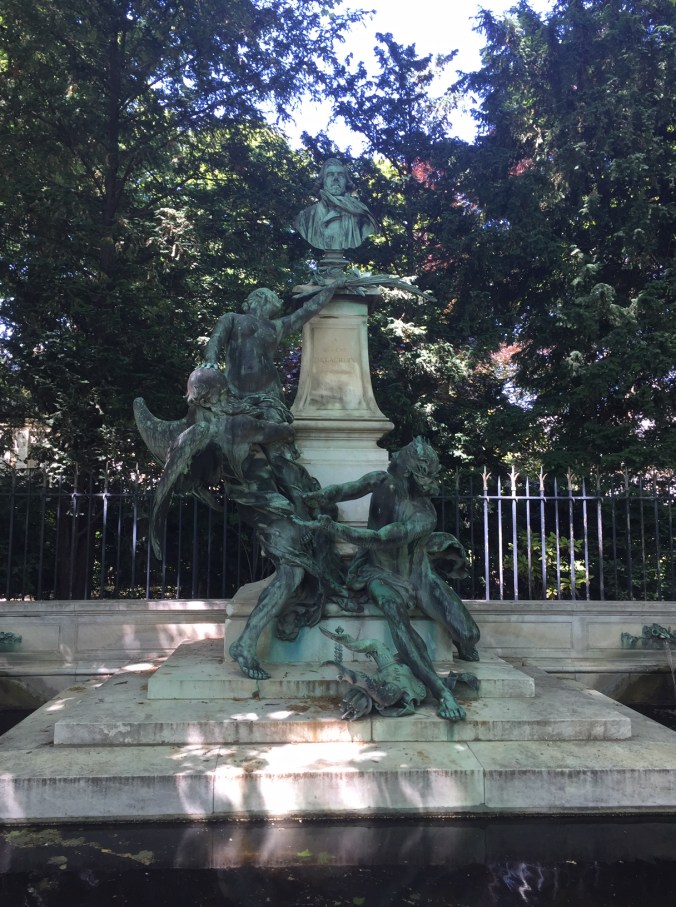
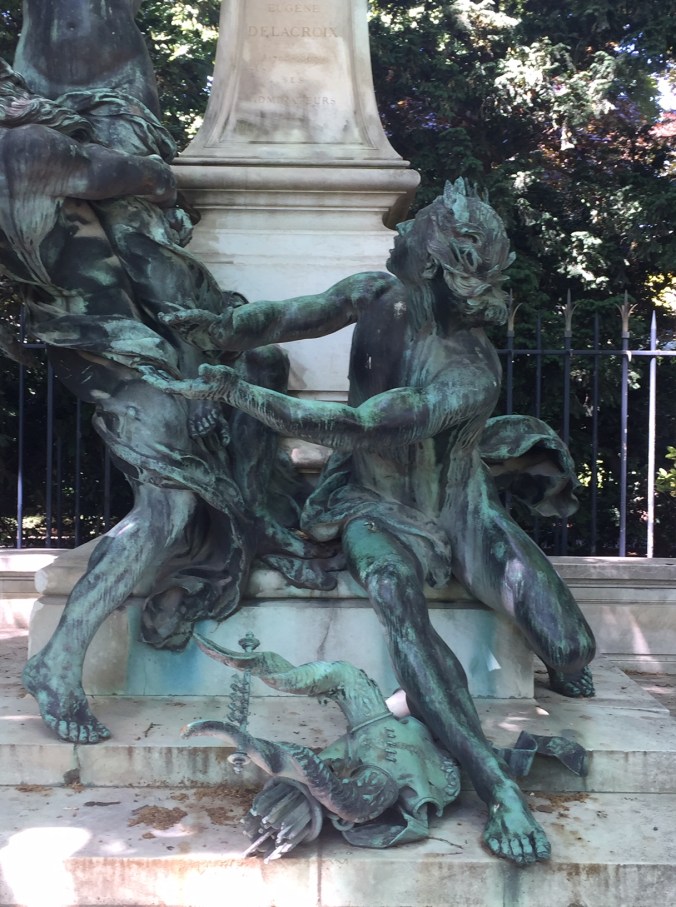
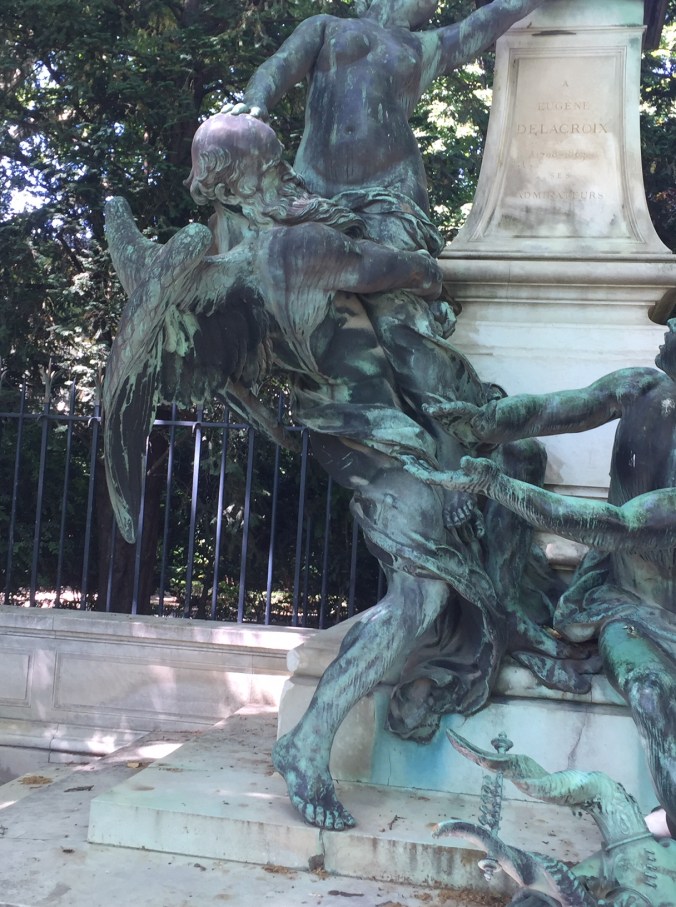
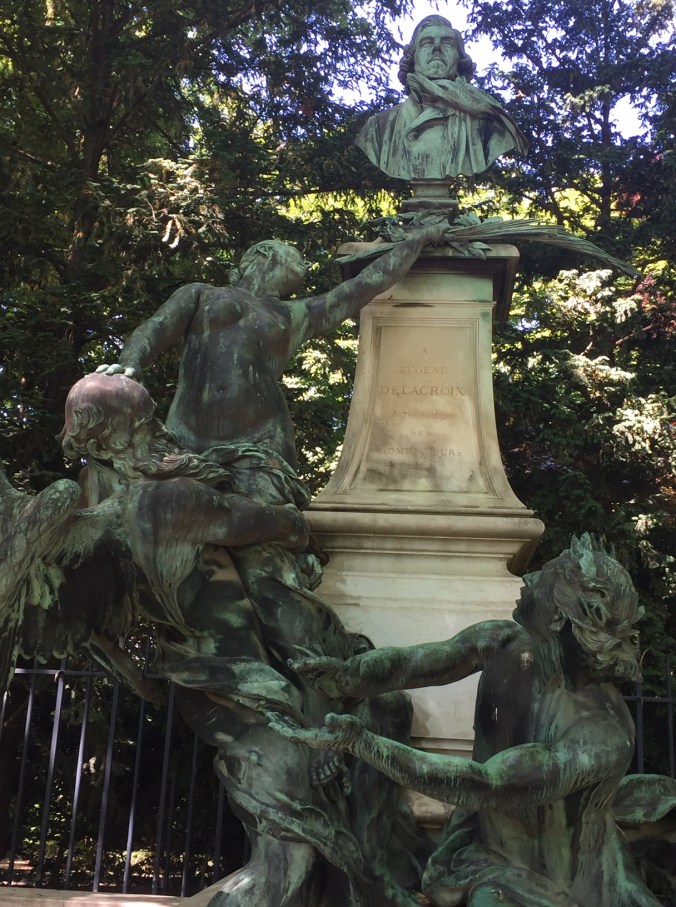
During and after the July Monarchy of 1848, the park became the home of a large population of statues; first the Queens and famous women of France lined the terraces; then, in 1880s & 90s, monuments to writers and artists were added. A small-scale model by Bartholdi of his Liberty Enlightening the World (commonly known as the Statue of Liberty) and one modern sculpture by Zadkine.
In 1865, during the reconstruction of Paris by Louis Napoleon, the rue de l’Abbé de l’Épée, (now rue Auguste-Comte) was extended into the park, cutting off about seven hectares, including a large part of the old nursery garden. The building of new streets next to the park also required moving and rebuilding the Medici Fountain to its present location. The long basin of the fountain was added at this time, along with the statues at the foot of the fountain.
During this reconstruction, the director of parks and promenades of Paris, Gabriel Davioud, built new ornamental gates and fences around the park, and polychromed brick garden houses. He also transformed what remained of the old Chartreux nursery garden, at the south end of the park, into an English garden with winding paths, and planted a fruit orchard in the southwest corner. He kept the regular geometric pattern of the paths and alleys, but did create one diagonal alley near the Medici fountain which opened a view of the Pantheon.
In the late 19th century the Jardin was also home to: a marionette theater, a music kiosk, greenhouses, an apiary or bee-house, an orangerie also used for displaying sculpture and modern art, a rose garden, the fruit orchard, and about seventy works of sculpture.
The garden is largely devoted to a green parterre of gravel and lawn populated with statues and centred on a large octagonal basin of water, with a central jet of water; in it children sail model boats. The garden is famed for its calm atmosphere. Surrounding the bassin on the raised balustraded terraces are a series of statues of former French queens, saints and copies after the antique. In the southwest corner, there is an orchard of apple and pear trees and the théâtre des marionnettes (puppet theatre).
The gardens include a large fenced-in playground for young children and their parents and a vintage carousel. In addition, free musical performances are presented in a gazebo on the grounds and there is a small cafe restaurant nearby, under the trees, with both indoor and outdoor seating from which many people enjoy the music over a glass of wine. The orangerie displays art, photography and sculptures.
The central axis of the garden is extended, beyond its wrought iron grill and gates opening to rue Auguste Comte, by the central esplanade of the rue de l’Observatoire, officially the Jardin Marco Polo, where sculptures of the four Times of Day alternate with columns and culminate at the southern end with the 1874 “Fountain of the Observatory,” also known as the Fontaine des Quatre-Parties-du-Monde or the Carpeaux Fountain, for its sculptures by Jean-Baptiste Carpeaux. It was installed as part of the development of the avenue de l’Observatoire by Gabriel Davioud in 1867.
The central axis of the garden is extended, beyond its wrought iron grill and gates opening to rue Auguste Comte, by the central esplanade of the rue de l’Observatoire, officially the Jardin Marco Polo, where sculptures of the four Times of Day alternate with columns and culminate at the southern end with the 1874 “Fountain of the Observatory”, also known as the “Fontaine des Quatre-Parties-du-Monde” or the “Carpeaux Fountain”, for its sculptures by Jean-Baptiste Carpeaux. It was installed as part of the development of the avenue de l’Observatoire by Gabriel Davioud in 1867.
The bronze fountain represents the work of four sculptors: Louis Vuillemot carved the garlands and festoons around the pedestal, Pierre Legrain carved the armillary with interior globe and zodiac band; the animalier Emmanuel Fremiet designed the eight horses, marine turtles and spouting fish. Most importantly Jean-Baptiste Carpeaux sculpted the four nude women supporting the globe, representing the Four Continents of classical iconography.
In spring, summer and fall, the garden is generally open between 7:30 am to dusk.
Statuary:
The garden contains just over a hundred statues, monuments, and fountains, scattered throughout the grounds. Surrounding the central green space are twenty figures of French queens and illustrious women standing on pedestals. They were commissioned by Louis-Philippe in 1848 and include: Anne of Austria, Anne of Brittany, Anne of France, Anne Marie Louise of Orléans, Bertha of Burgundy, Blanche of Castile, Clémence Isaure, Jeanne III of Navarre, Laure de Noves, Louise of Savoy, Margaret of Anjou, Margaret of Provence, Marguerite of Navarre, Marie de’ Medici, Mary, Queen of Scots, Matilda, Duchess of Normandy, Saint Bathild, Saint Clotilde, Saint Genevieve, and Valentina Visconti.
Jardin du Luxembourg in popular culture
The gardens are featured prominently in Victor Hugo’s novel Les Misérables. It is here that the principal love story of the novel unfolds, as the characters Marius Pontmercy and Cosette first meet. Several scenes of André Gide’s novel The Counterfeiters also take place in the gardens.
Henry James also uses the gardens, in The Ambassadors, as the place where his character Lambert Strether has an epiphany about his identity. The final scene of William Faulkner’s novel Sanctuary is set in the gardens. Patrick Modiano heard the news he had won the 2014 Nobel Prize in Literature via a mobile phone call from his daughter while walking through Paris, “just next to the Jardin du Luxembourg”.
Non-literary references include as the setting for a few episodes of French in Action, the 10th Joe Dassin’s 1976 studio album Le Jardin du Luxembourg, the cover of Tame Impala’s 2012 album Lonerism, the title of a song by the band The Ghost of a Saber Tooth Tiger and the gardens and palace being added as a mission in the video game Assassin’s Creed Unity.
All of Paris was out basking in the sun today! 2 days ago you needed a puffer coat to keep warm. Today it was 80 degrees, with full sunshine!
I wanted to see the Luxembourg Gardens and boy, did I see The Luxembourg Garden in its glory today. All ages of Parisians were enjoying this public park today! Young, old and in-between.
There were bocce games, pony rides, sailboat sailing, and Tai Chi. And these are just the videos! There was also tennis and lots and lots of sunbathers. A beautiful, historic park and a beautiful day!


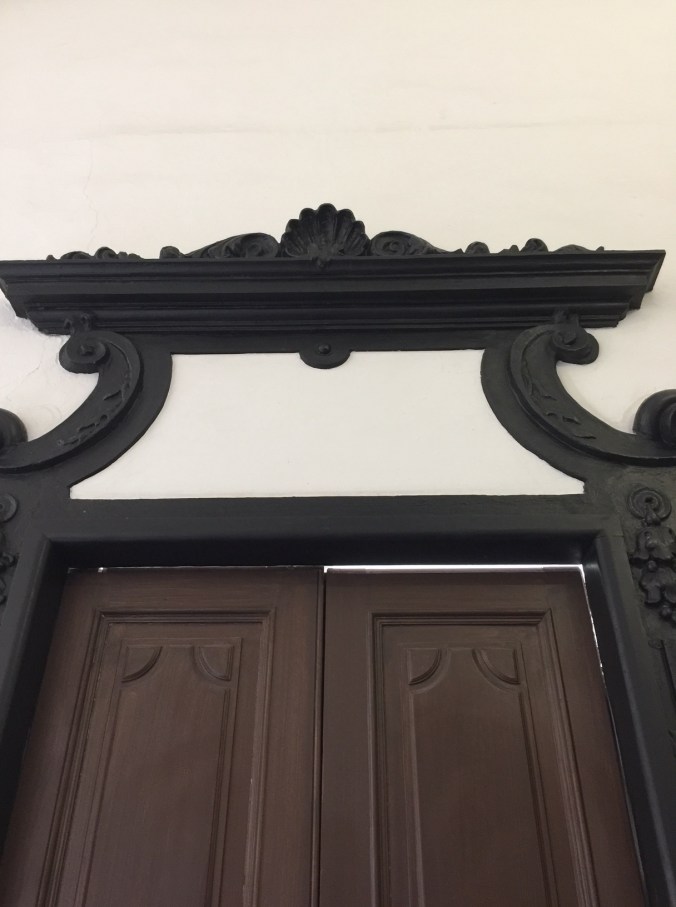

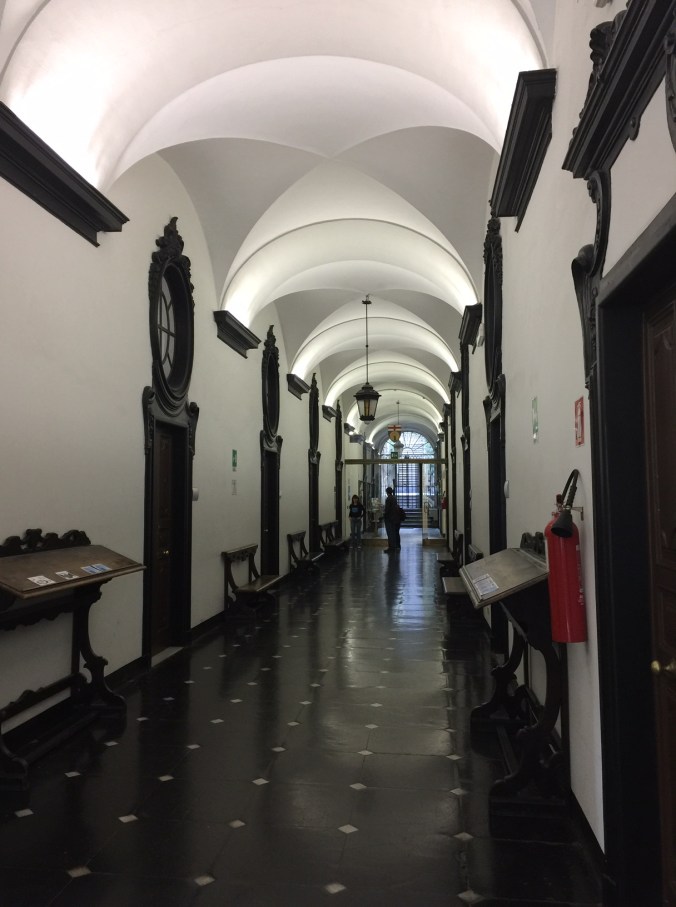


Inside the Jesuit chapel are found 9 bas-relief sculptures by Giambologna.


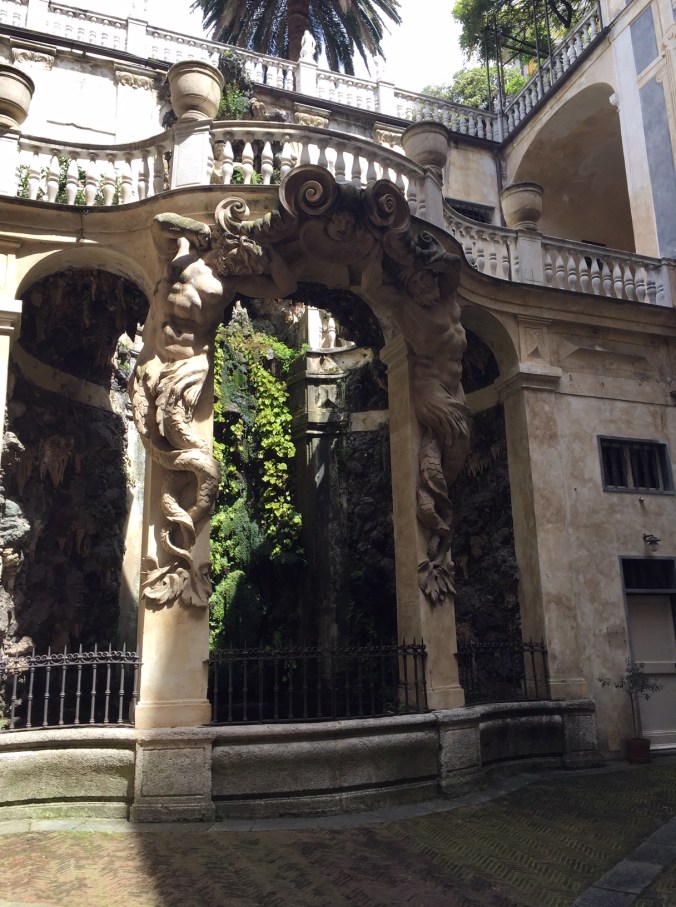
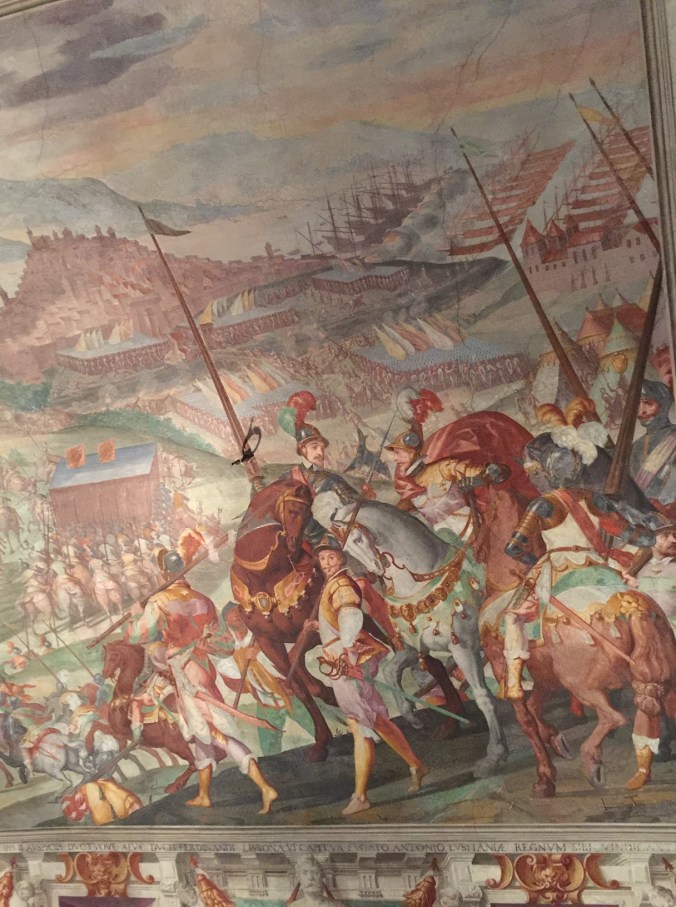
Another of the famous palazzi opened for Rolli Days in Genoa.


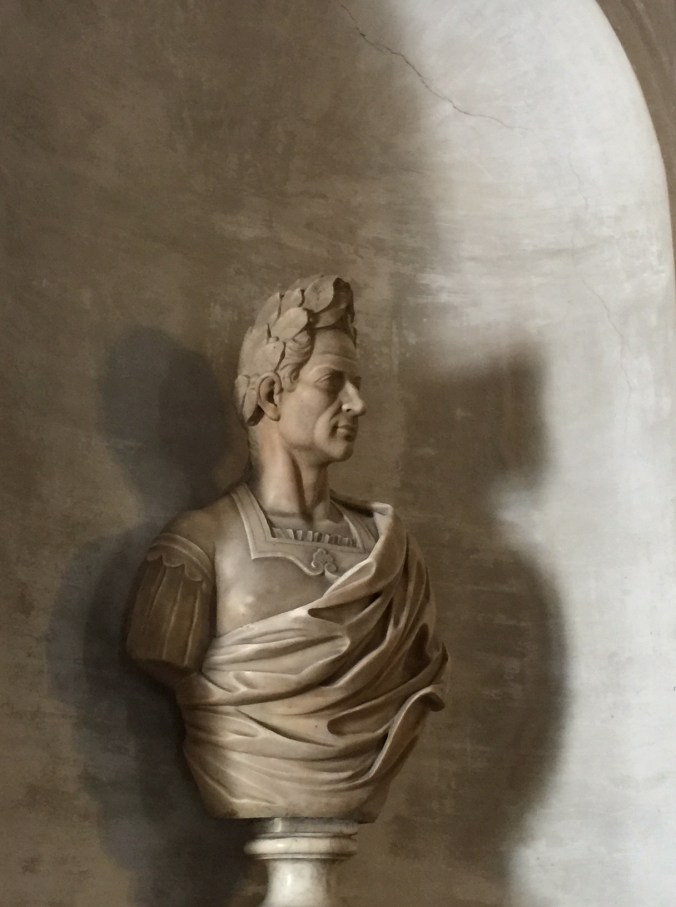


Genoa, Italy was once a naval powerhouse. Sometimes it outshone even the Venetian republic in its power and influence.
During the heyday of Genoa’s power, very rich families vied to impress each other by building magnificent palazzi. Today, more than 100 of them still survive and Genoa is protected under UNESCO status for these buildings.

Of the more than 100 palazzi still extant, about 31 of them are opened for viewing one or two times a year. The event is known as “Rolli Days.” Rolli means list in Genoa and the “list” referred to is the list of fabulous mansions that were kept on file by the political leaders of Genoa.

They kept this prestigious list and, when a dignitary came to town–which happened a lot–the leaders decided which of the 100 family mansions would be chosen to host any expected dignitary. It must have been an honor to be on that list, even though it meant that the family would foot the entire bill for housing and entertaining the dignitary. Some of these included Popes and European royalty, to name but a couple.

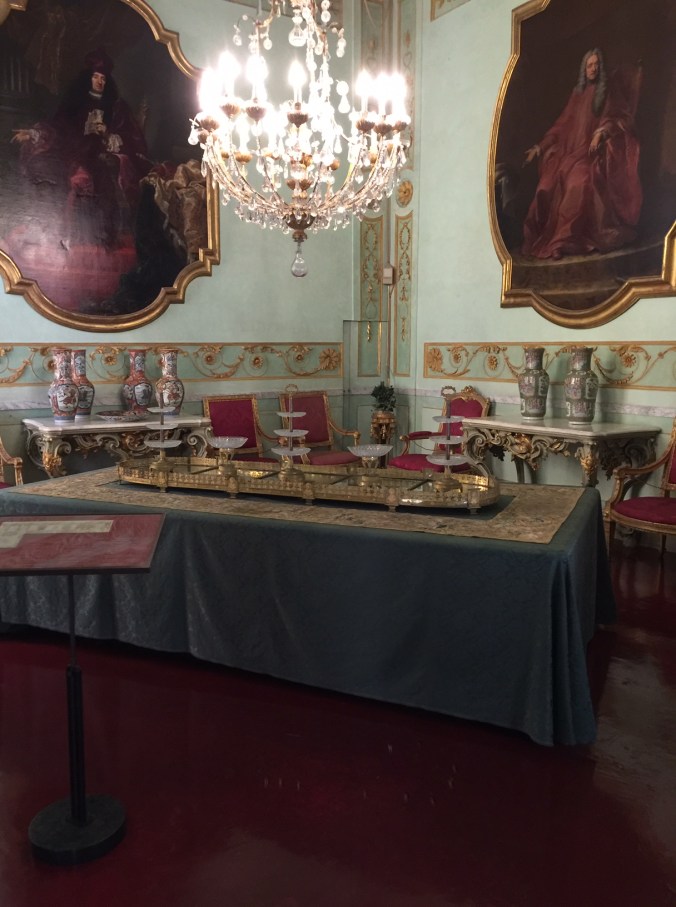
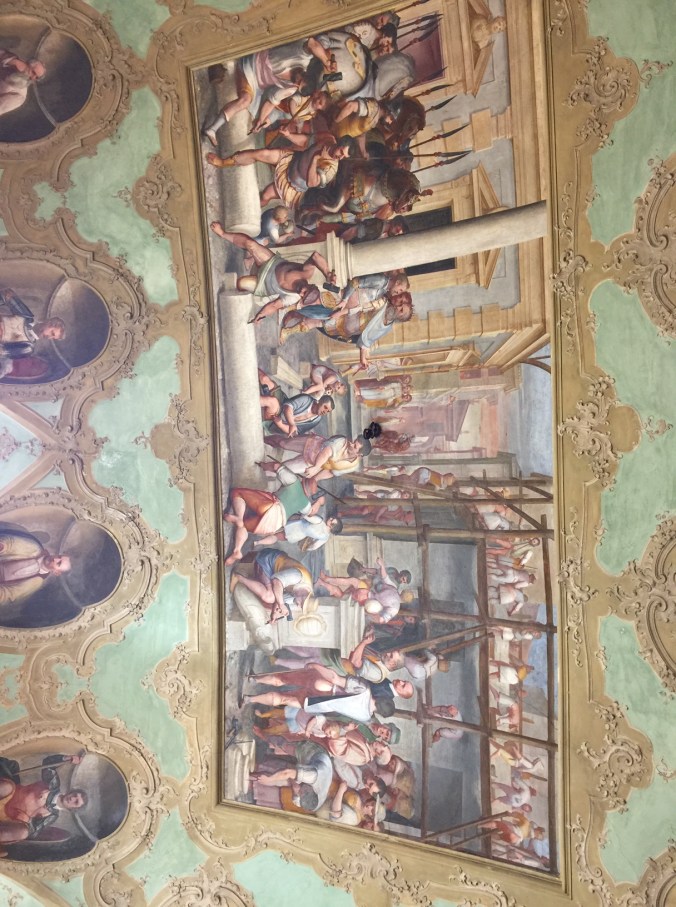
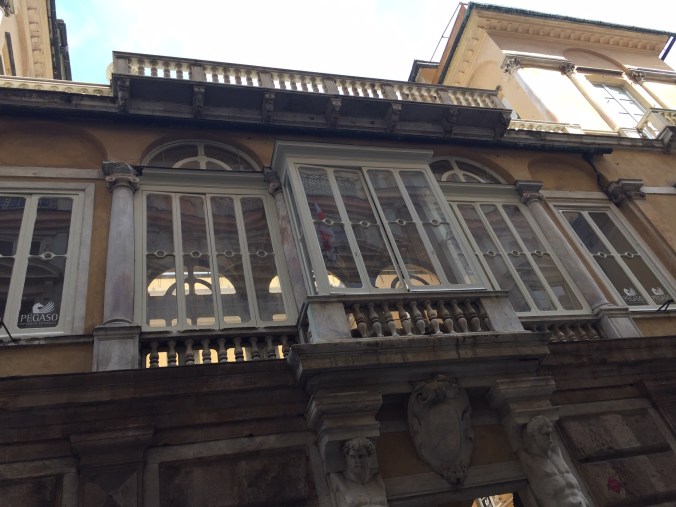
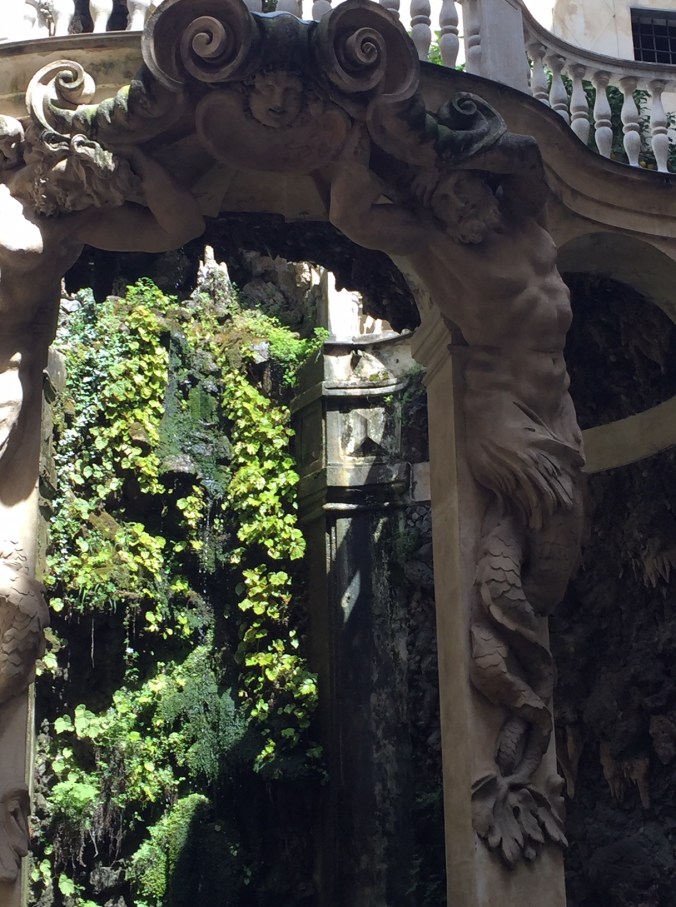
I had the pleasure of visiting Genoa recently to take advantage of the opportunity to see some of these amazing mansions. There were about 30 open and I saw a good number of them. One of the most impressive is the Palazzo Francesco Grimaldi, aka Galleria Nazionale di Palazzo Spinola. Below are just some of the fabulous things I saw:




The Grimaldi family tree. Now that’s how to illustrate a family tree!











The Genoa Gothic-style Cathedral was consecrated in 1118, completed 17th century. Interchangeably referred to as the Cathedral of Saint Lawrence (or, in Italian: il Duomo di Genova, Cattedrale di San Lorenzo), this magnificent edifice is a show stopper.


I have looked at a lot of art in my lifetime, and lots in particular of religious artwork in Italy. In all of my life, I have never seen any female figures shown while obviously pregnant, even though pregnancy is often a part of the narrative behind the work.
But, live and look and one day…you may see it!


 get back, lauretta!
You must be logged in to post a comment.