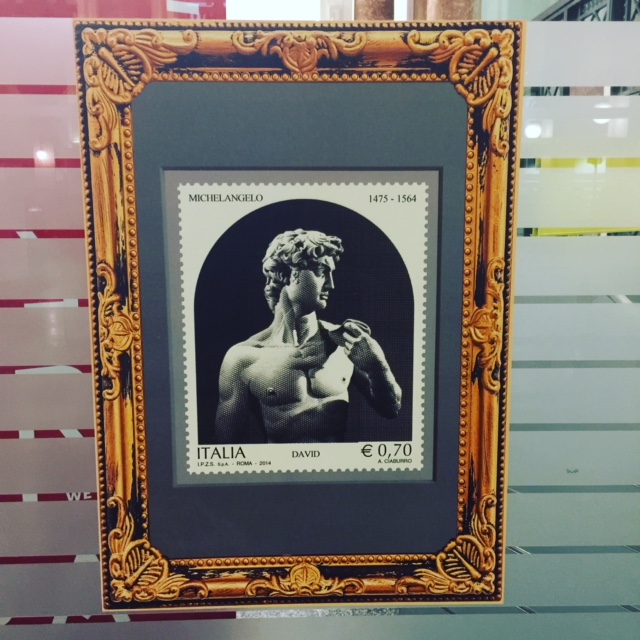
Should Michelangelo’s David be moved to an earthquake proof location?

Let’s ask the director of The Accademia, Cecilie Hollberg, where the statue stands today.  The following is an interview conducted by Helen Farrell of The Florentine:

Cecilie Hollberg | Ph. Leo Cardini


Helen Farrell
: Earlier this year, an architect from Padua made the international headlines with an idea to move the David to an earthquake-proof museum. At what stage is the Accademia in the creation of seismic protection for the world’s most famous statue?


Cecilie Hollberg: First of all, this architect has been publishing things in newspapers and magazines since 2008; there are plenty of experts who openly give us advice without being familiar with our site, or without having the experience or capabilities needed to understand what can be done here. Building an underground bunker in a city like Florence means moving the David, which is enough to show us they really haven’t thought this through. There’s all this chatter in a local newspaper about moving it in the front of the new opera house. Everyone’s been asking about it. This statue is fragile, and that’s why it gets everyone so agitated. Yet, at the same time, everyone’s ready to move it all over the place—it’s a very strange situation. In any case, we’ve been working on this for years. The Ministry conducted many investigations on the building, the structure itself, and the possibilities that may arise, and since I’ve been here, we’ve been closely monitoring the statue. It’s cleaned every two months, financed by the Friends of Florence, and with every cleaning we are able to monitor the statue very closely. Every weak or fragile spot is regularly scrutinized time and time again so if there were any changes we would see them immediately. This aspect is something that’s always been under control. But, and I’m going to open a parenthesis here, there are some real absurdities out there. There was someone who sustained that the heat makes marble melt: it’s absurd. Marble changes its state of aggregation at 900 degrees centigrade.


HF: He’ll be fine then, even with our summers…


CH: There are all of these things that end up in the press because these poor souls want to link their name to Michelangelo’s David, hoping to end up in newspapers. Of course, they do end up in newspapers and we have to waste our time explaining to them that, in reality, marble does not melt. In addition, we created a framework agreement with DICEA, the University of Florence Department of Civil Engineering and Environment, in which we continue the already initiated investigation on the structure of the building. The structure is what’s important in the event of any sort of {seismic} movement. The base that holds the statue and blocks it from falling is entirely useless if the ceiling comes down on it. Thus, we made this framework agreement and the inspection will follow shortly, the only thing missing before we can decide what to do. I have been in contact with many institutions; I’ve been to the U.S. to the Getty Institute where there are several earthquake experts. Yet the reality remains that no one has ever worked with a statue like the David. All of these platforms are just fine for structures from 2 to 2.5 metres, but the David weighs 5,660 kilos and stands 5.17 meters tall. No one has ever experimented on a statue of this kind. They’ve experimented with the Riace Bronzes, but they’re much smaller and bronze is an entirely different material—it’s more flexible than marble. It’s an entirely different conversation, and so we can’t adapt the research done for that kind of model and apply it to an icon of the Renaissance. We really have to think about what we’re doing. The last thing I need is this group of charlatans coming to me with advice without knowing anything about the situation.

You can read the entire interview here:

http://www.theflorentine.net/art-culture/2017/10/a-conversation-with-cecilie-hollberg/

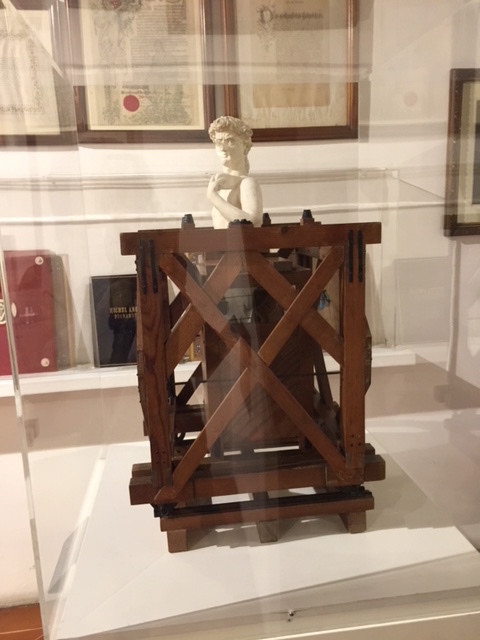
Incidentally, this week I visited the Casa Buonarroti, where a scale model of the apparatus that was used to move the David from Michelangelo’s studio to its original placement outside the Palazzo Vecchio (the original has since been moved to the Academia) is prominently on display.  Here’s a photo of that model:

IMG_6886IMG_6887

Michelangelo’s Madonna of the Stairs

I’ve enjoyed a week of Italian masterpieces, starting at the Uffizi Gallery last weekend.

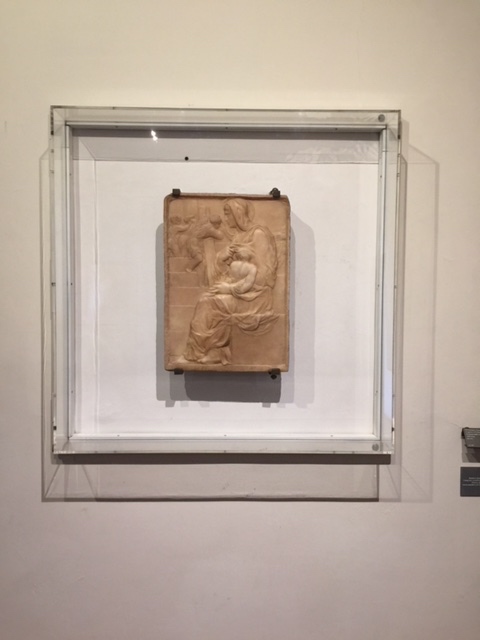
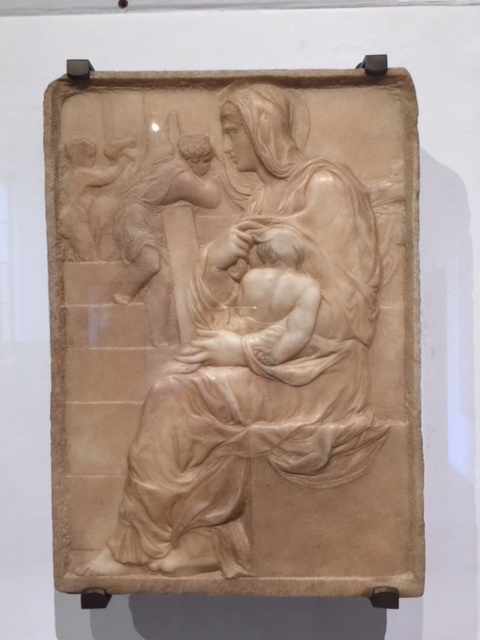
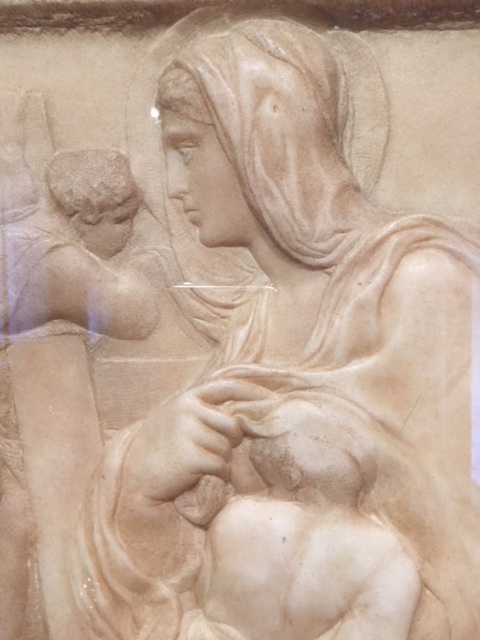
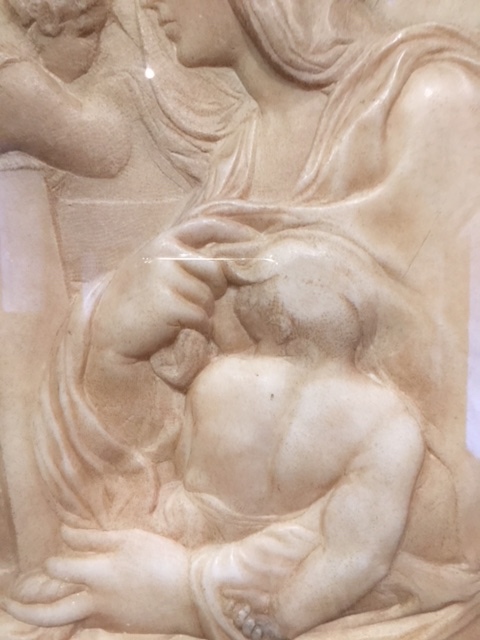
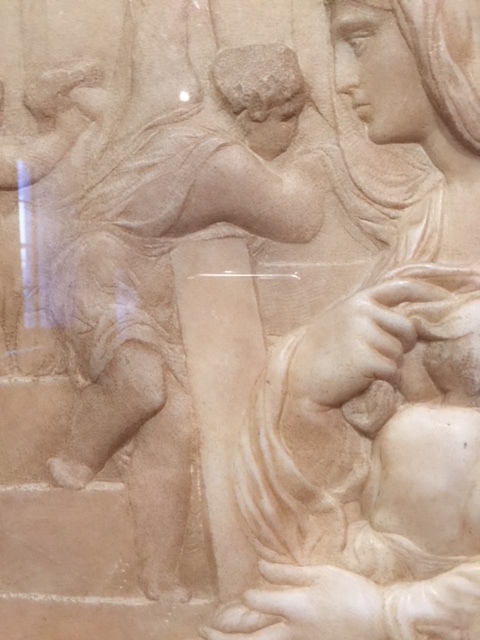
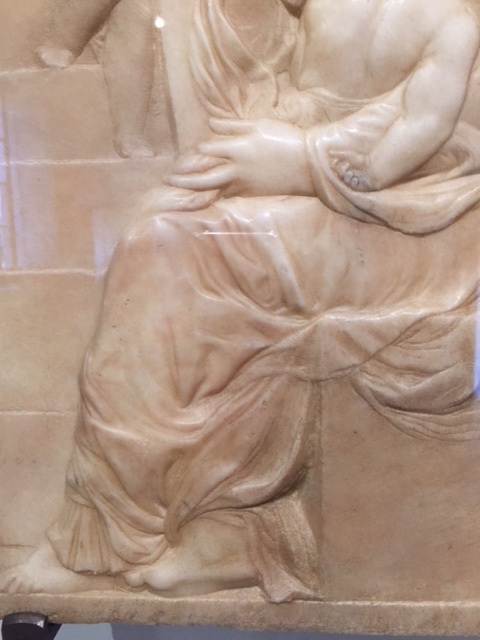
Yesterday I visited the Casa Buonarroti in Florence, where I had Michelangelo’s incomparable Madonna of the Stairs to myself.  Awesome.

IMG_6896

I’ve loved this sculpture since I first learned of it in an art history course.  The artist could paint or sculpt anything, in any style.  He could do a deep bas-relief and he could do the shallowest of carvings, achieving truly awesome results within the depth of a piece of paper.

IMG_6897IMG_6902IMG_6903IMG_6904IMG_6905IMG_6906

Orsanmichele, Firenze, 11 Dicembre 2017

My subtitle would be: I love Florence in the winter!
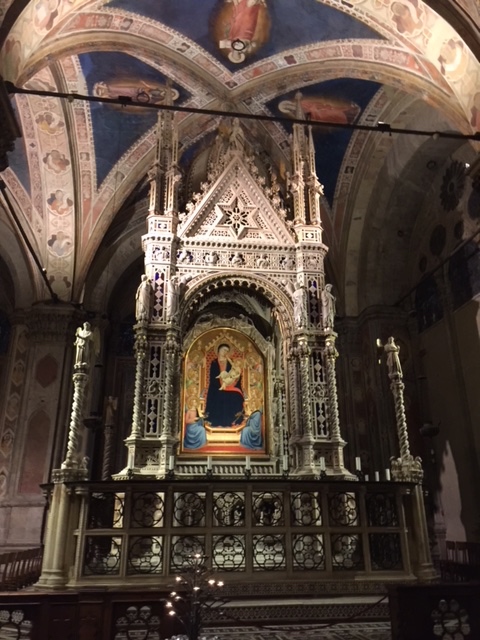
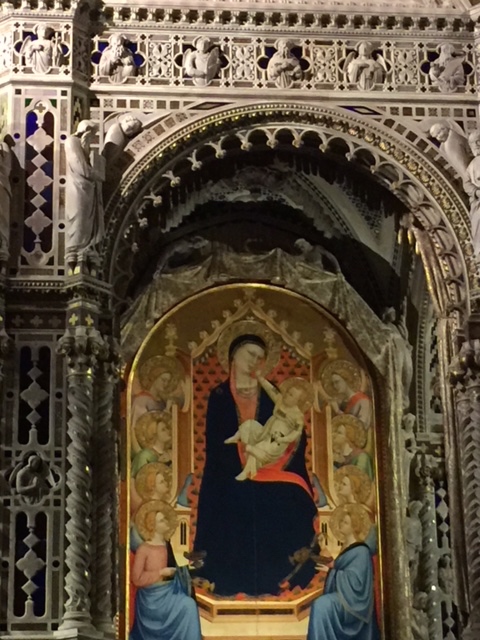
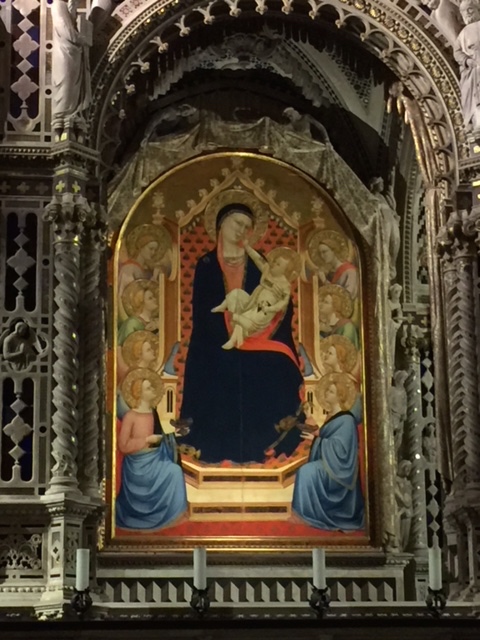
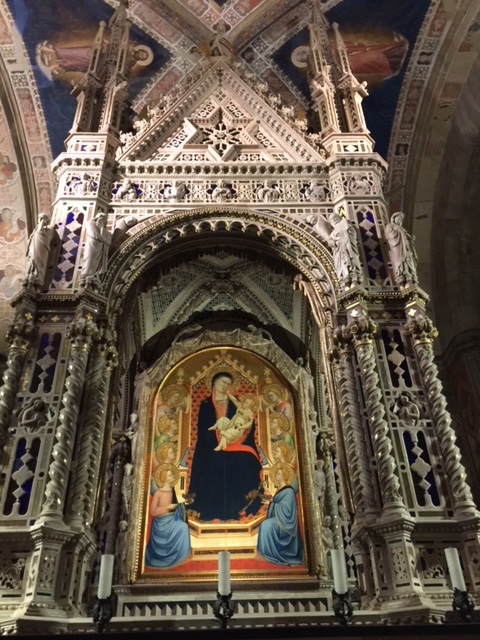
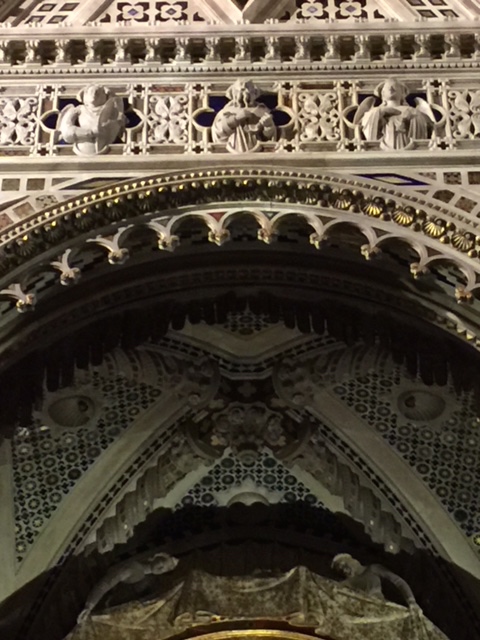
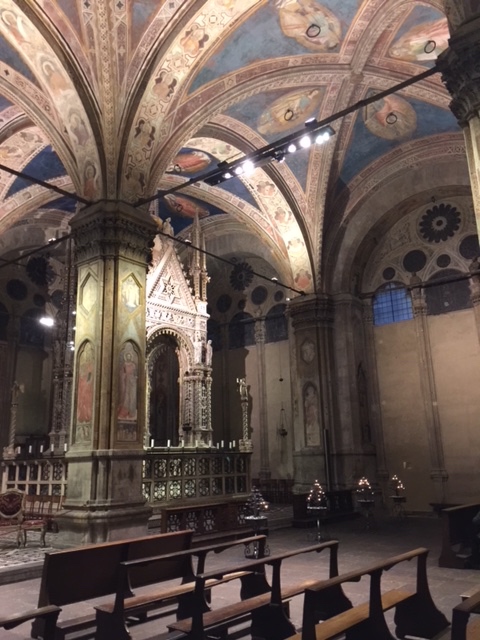
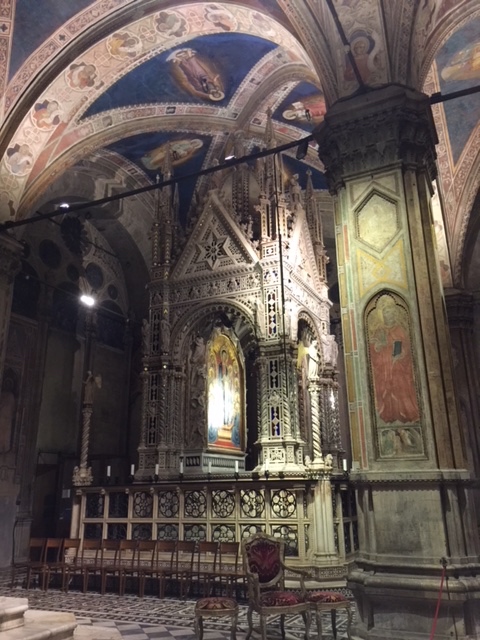
I wandered into Orsanmichele today and had the masterpiece all to myself.  I lit candles for some beloved family members and took a pew, gazing at Orcagna’s magnificent altarpiece for a long, long time.  It was a gorgeous moment in Florence, the kind of thing I live for.

IMG_6625

I started thinking about the name: Orsanmichele.  It is not a common name for a church.  What is the significance, I wondered?

“San Michele” or Saint Michael is easy to extract from the name, but I had to head to Wikipedia for the full answer.  Orsanmichele (or “Kitchen Garden of St. Michael“, from the contraction in Tuscan dialect of the Italian word orto) is a church that was constructed on the site of the kitchen garden of the monastery of San Michele, which no longer exists.

IMG_6626

Located on the Via Calzaiuoli in Florence, the square building was constructed as a grain depository and market in 1337 by Francesco Talenti, Neri di Fioravante, and Benci di Cione.

Between 1380 and 1404, the building was converted into a church, to be used as the chapel of Florence’s powerful craft and trade guilds.

From the exterior, the ground floor contains the 13th-century arches that originally formed the loggia of the grain market.

The second floor was devoted to offices, while the third housed one of the city’s municipal grain storehouses, maintained to withstand famine or siege.

Late in the 14th century, the guilds were charged by the city to commission statues of their patron saints to embellish the four facades of the church.[1]’

Orsanmichele’s sculptures are a relic of the fierce devotion and pride of Florentine trades, and a reminder that great art often arises out of a competitive climate. Each trade hoped to outdo the other in commissioning original, groundbreaking sculptures for public display on Florence’s most important street, and the artists hired and materials used (especially bronze) indicate the importance that was placed on this site.

The Renaissance sculptures have been removed to museums, but faithful copies of each work of art have been placed in the niches.

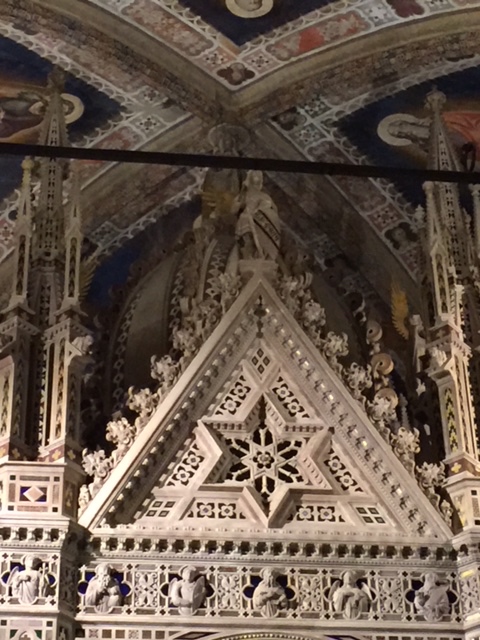
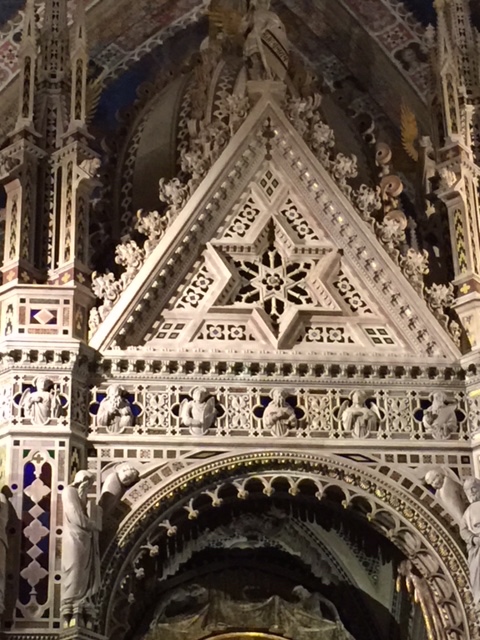
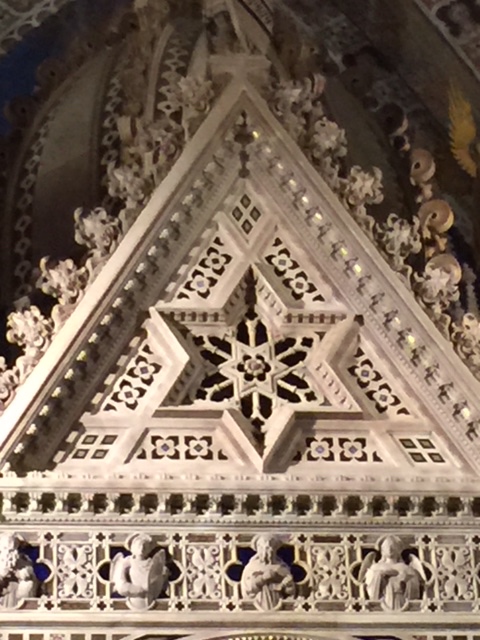
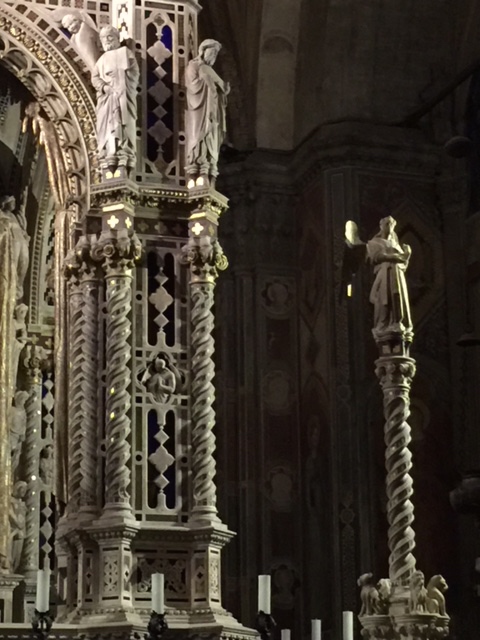
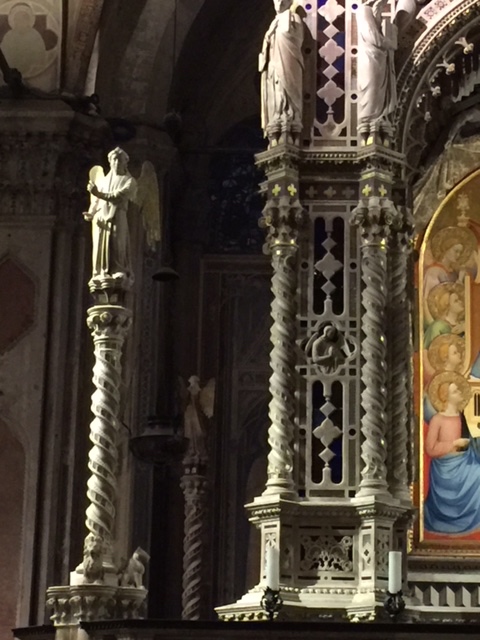
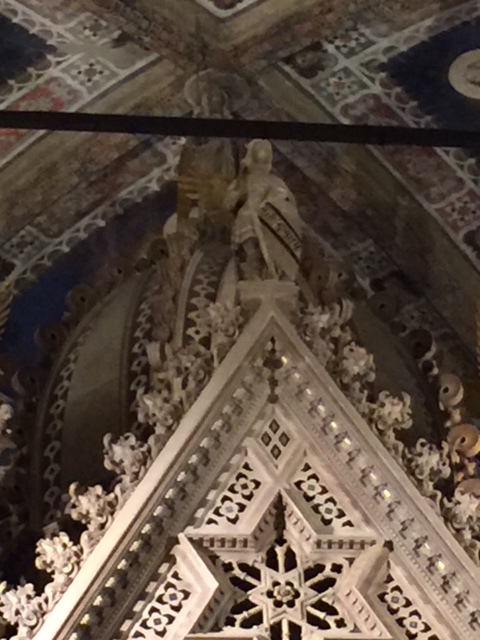
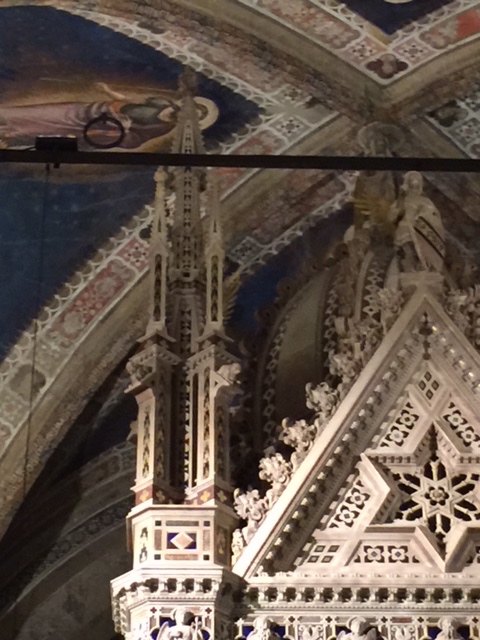
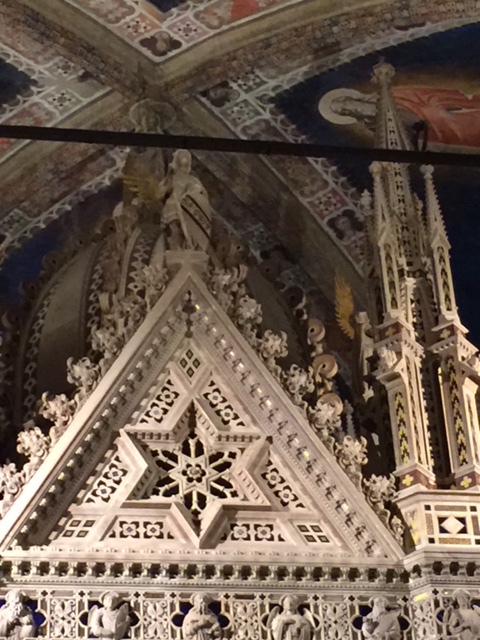
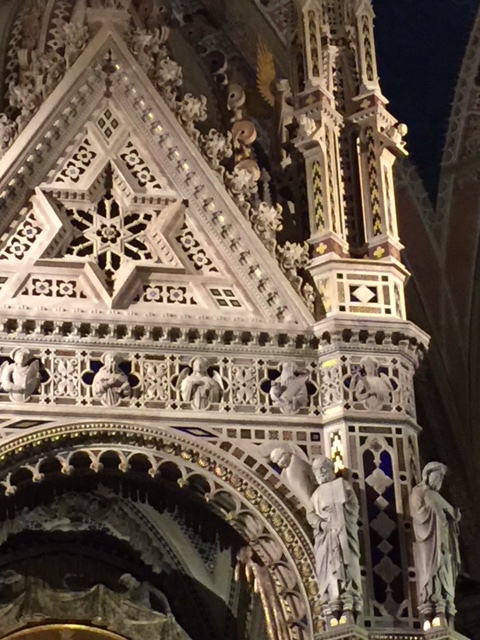
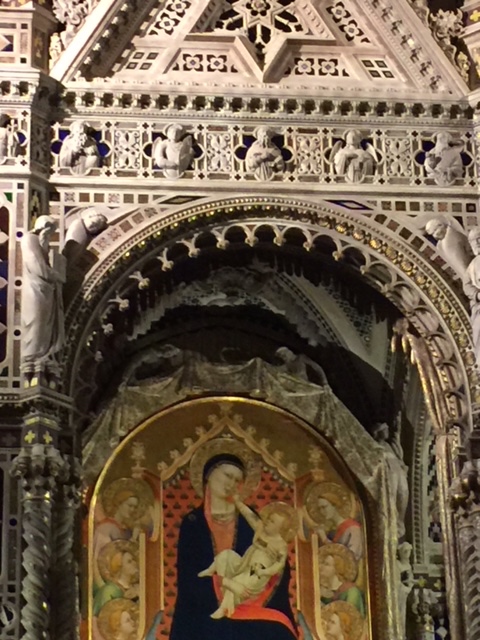
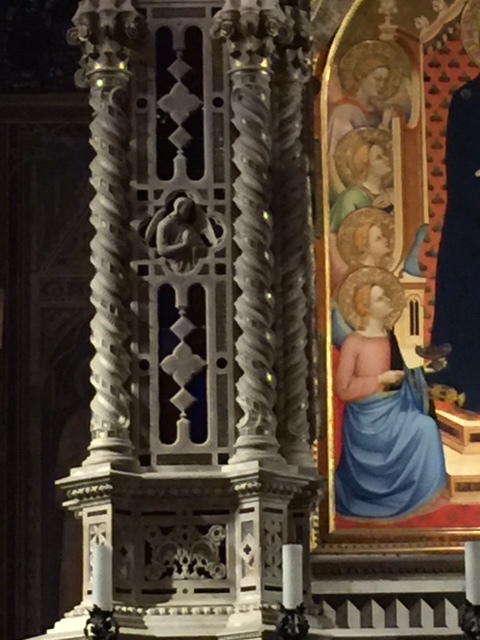
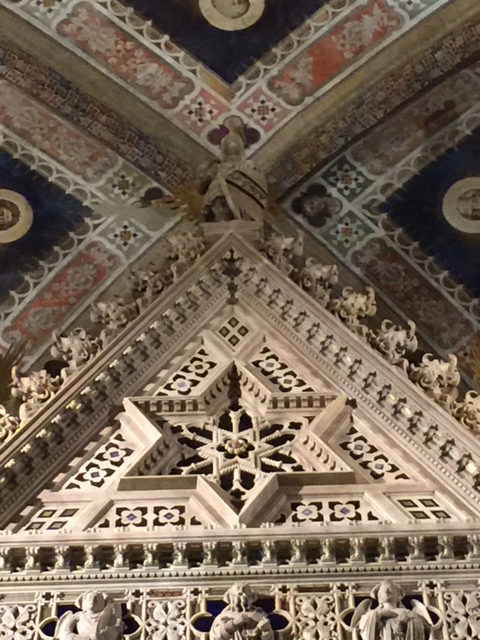
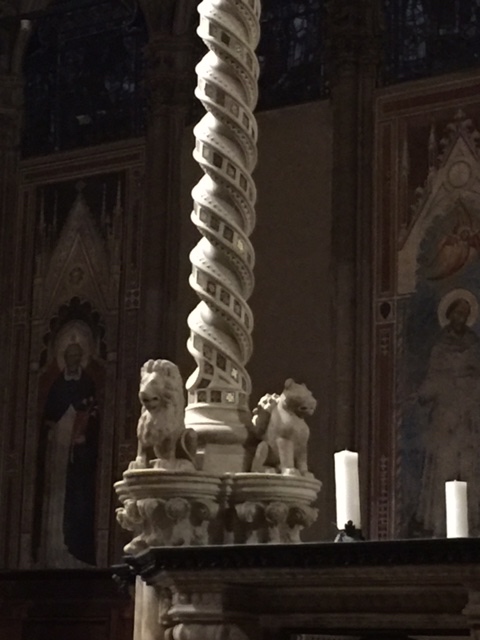
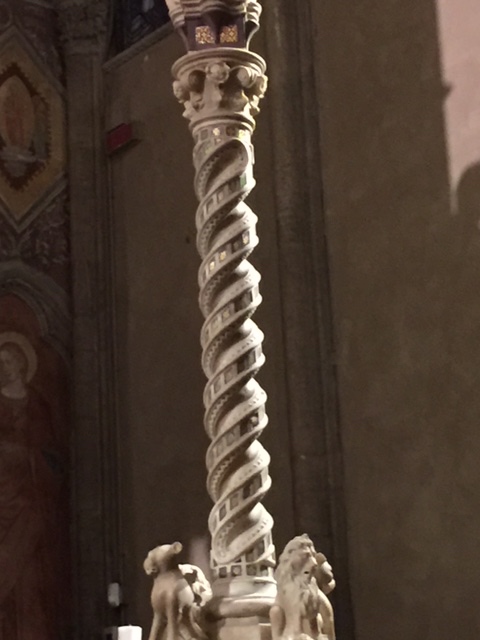
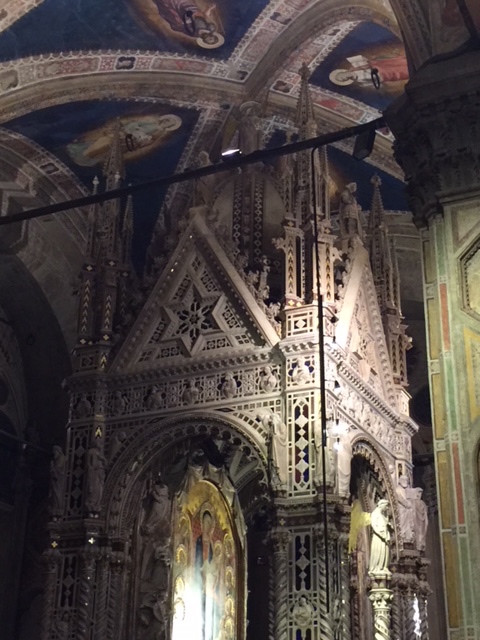
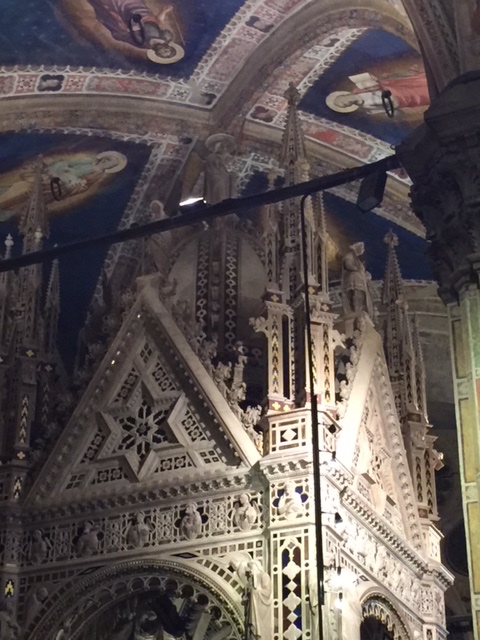
Another day I will illustrate the niche sculptures, but today I felt like sitting inside the church and studying Andrea Orcagna‘s seemingly bejeweled Gothic Tabernacle (1355-59), which encases a repainting by Bernardo Daddi‘s of an older icon, the ‘Madonna and Child’.[2]

I don’t think there are actual jewels in the tabernacle, but the encrusted mosaics make it seem that way.

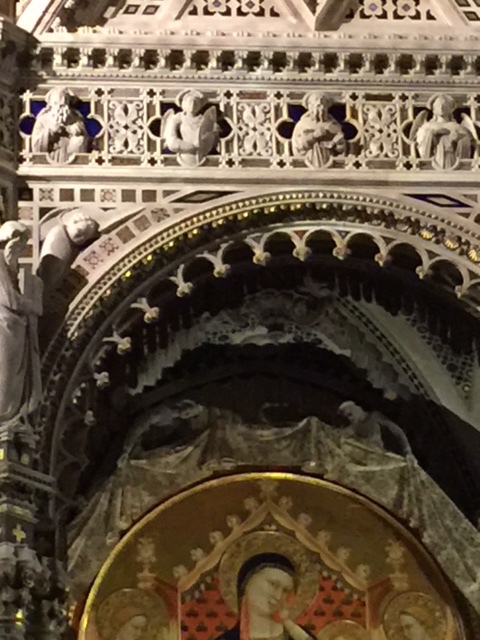
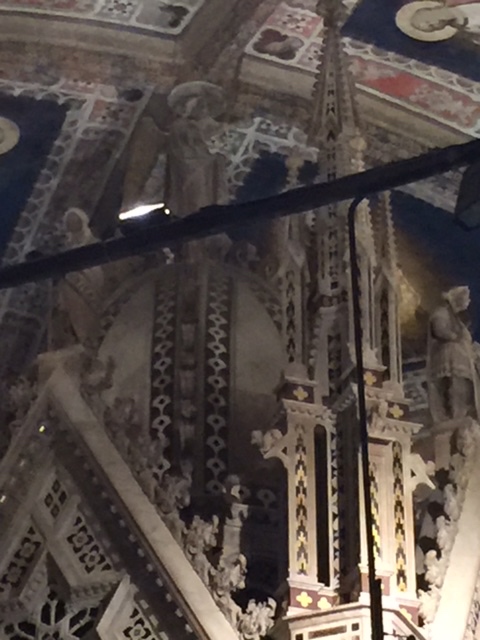
One of the first things I noticed is that the exterior of the cupola of the altarpiece is shaped and decorated like a Fabrege egg.  You can see what I mean in the photo below.

IMG_6627

Here’s a detailed look at the egg shape, right behind the triangle of the facade:

IMG_6632


IMG_6628


IMG_6629


IMG_6630


IMG_6631


IMG_6633


IMG_6634


IMG_6635


IMG_6636


IMG_6637


IMG_6638


IMG_6639


IMG_6641


IMG_6642


IMG_6643


IMG_6644


IMG_6645


IMG_6648


IMG_6653


IMG_6654


IMG_6655


IMG_6656


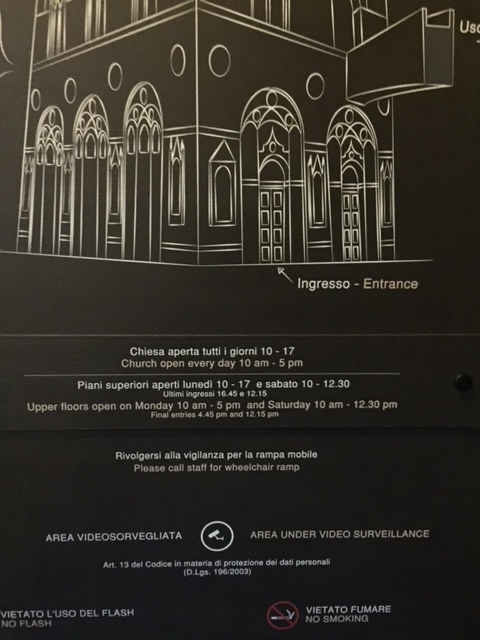
If you are ever fortunate enough to spend the winter in Florence, you can enjoy Orsanmichele all to yourself as well.  Here’s info on opening hours.  The museum on the upper floor is NOT to be missed.

IMG_6660

Giovanni Duprè, 19th century sculptor

Do you know the work of Giovanni Duprè (1817 – 1882),  the Italian sculptor?

This year marks the 200th anniversary of Duprè’s birth in Siena, and there is currently an exhibition honoring his work open in Sorano.

IMG_6081


images


Duprè was born in Siena, where his father was a sculptor and young Duprè learned his trade both in his father’s carving workshop and that of Paolo Sani.  They had a steady business in the production of fake Renaissance sculpture in marble.

Duprè was talented and ambitious and entered a contest held by the Florentine Academia di Belle Arti. He won first place with his Judgement of Paris, and later carved a life-size figure of the dead Abel, which won significant acclaim and was purchased by a Russian duchess (it is now in the Hermitage Museum and a bronze replica is in the Palazzo Pitti).
800px-Giovanni-Dupre-Abel-Hermitage
The raw naturalism of the figure of Abel, greeted with shock at the time, presaged the beginning of the end of Neoclassicism in Italian sculpture and earned for Dupré the encouragement of Lorenzo Bartolini.
He followed this with a more classical Cain (1840, also in marble at the Hermitage Museum and in bronze at the Pitti).
Dupre was honored with commissions for the figures of Giotto and Saint Antonino of Florence for façade niches on the Museo Uffizi.

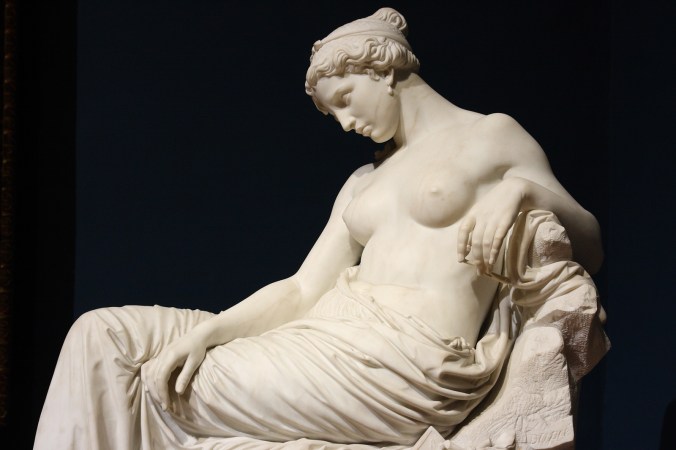
On a trip to Naples he passed through Rome and saw Antonio Canova’s funeral monument to Pope Pius VI, which influenced his style in a classical direction resulting in the brooding and melancholy statue of Sappho of 1857–61, with its Michelangelesque flavour (now in the Galleria Nazionale d’Arte Moderna in Rome); contemporary critics acclaimed it as his best work to date.

Giovanni Dupré - Saffo abbandonata - 3

The sculptor received many commissions and his work can be located in and around Florence, as well as Assisi, Turin and Siena.*** Perhaps his finest work, the Pietà (1860–65), was created for the family tomb of the Marchese Bichi-Ruspoli in the cemetery of the Misericordia, Siena. This group was awarded the Grande medaille d’honneurat the International Exhibition in Paris.

images-3

images-4


Duprè’s memoirs, Pensieri sull’arte e ricordi autobiografici (Florence, 1879, 2nd ed. Milan 1935), were translated into English by F. Peruzzi (Edinburgh, 1886). His daughter Amalia achieved some reputation as a sculptor.

***Many works of Giovanni Dupre can be found gathered in two particular places in Tuscany. The recently closed Dupre Museum in Fiesole was curated until recently by Dupre’s descendant, Amalia Dupre.

The other significant treasury of Dupre works, featuring plaster molds for many of his most famous marble sculptures including the Abel and two sculptures for the Loggia of the Uffizi is held in the gipsoteca, a secret museum near Siena’s Contrada dell’Onda in via Fontanella 1, beneath the Contrada’s Chapel. This was opened in 1961.


Piazza della Libertà, Firenze

Chances are, you don’t know this Florentine piazza, even though it’s right in the city.  Unless you live near this particular neighborhood, you probably wouldn’t have reason to ramble over to it.

IMG_5318

But, maybe you should!  The Piazza della Libertà.

IMG_5319

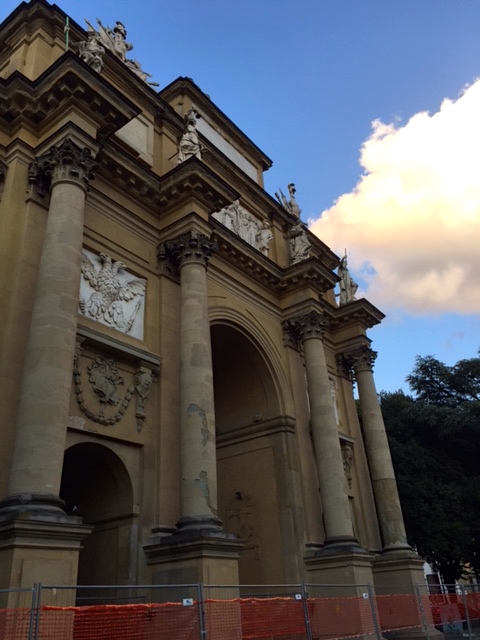
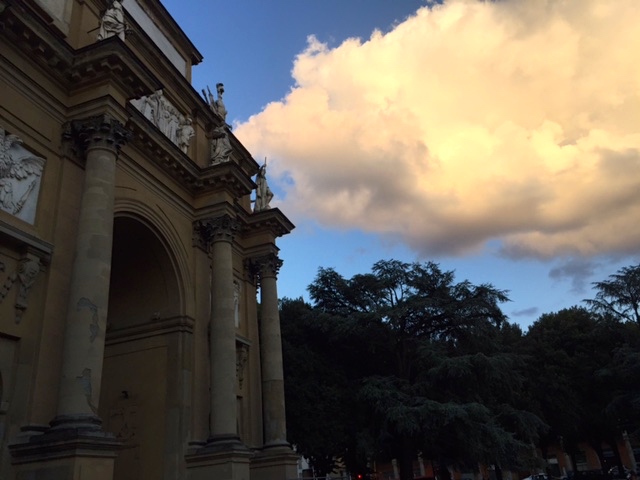
I happened to be there on a recent evening, on my way to meet a friend for dinner at a great neighborhood trattoria, and the sky was particularly dramatic as I walked by the piazza’s centerpiece, the neoclassical arch pictured above.

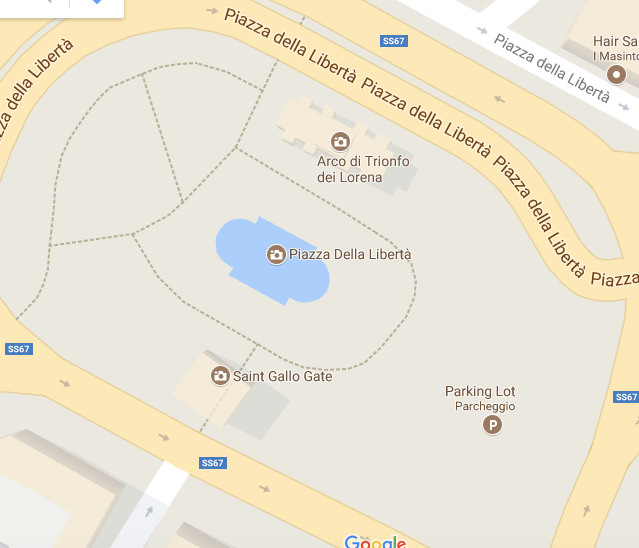
Piazza della Libertà is, in fact, the northernmost point of Florence’s historic center, at the end of Via Cavour. The piazza was created in the 19th century when the Viali di Circonvallazione was constructed around the city.   You can find the piazza in the center of this Google map.

Screen Shot 2017-10-28 at 10.04.36 PM.png

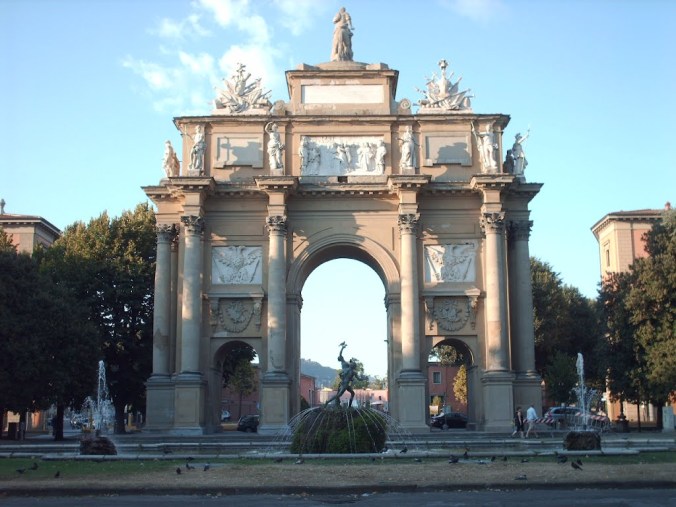
The most recognizable aspect of the piazza is the neoclassical Arco di Trionfo dei Lorena, or the Triumphal Arch of the Lorraine, which was constructed on this spot in the 1730s to celebrate the arrival of the new rulers of Tuscany, the Habsburg-Lorraine dynasty.

Screen Shot 2017-10-28 at 10.06.13 PM.png

IMG_5318

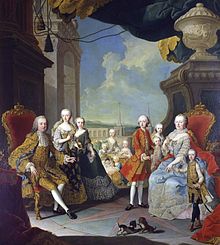
The arch was begun after 1737 in order to be finished in time for the January 1739 arrival of Francis Stephen of Lorraine, Holy Roman Emperor and Grand Duke of Tuscany.  Francis traveled to Florence with his wife, Maria Theresa, and his brother Charles.  They arrived on 20 January 1739 and stayed 3 months. Tuscany was governed by a viceroy, Marc de Beauvau-Craon, for the entire reign of Francis.

220px-Maria_Theresia_Familie Francis I and his family, by Martin van Meytens

The arch is attributed to Jean Nicolas Jadot, who was sent to Florence in anticipation of the arrival of the new ruler.  It is likely that Francesco Schamant of Lorraine also helped design the arch.  The statuary was added later, in 1744.

To celebrate the arrival of the Habsburg-Lorraine dynasty, the newly-constructed arch would have been decorated with many ephemeral elements, including tapestries, to greet the new rulers as they processed along the Via San Gallo and into Florence in January 1739.  Below are the Grand Duchy of Tuscany’s flag and coat-of-arms.

Flag
Coat of arms
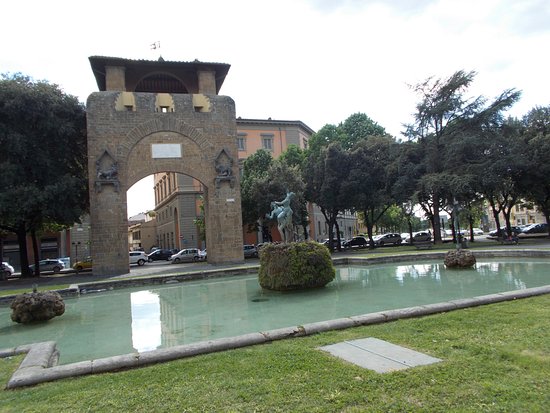
 The Arch was constructed just outside of the walls of Florence and in particular just outside the 14th-century Porto San Gallo, the main northern gate of the city. The gate is shown below.
nuova-inquadratura

The arch itself has 3 openings, a larger central one flanked by two smaller ones.  Ten classical columns with Corinthian capitals are attached to the arch. Most of the sculpture on the arch were added later, after the entry of the Habsburg rulers.  The sculptural program was probably produced locally.  They include bas-reliefs and depictions of flags and arms. The southern facade has two double-headed ages, which were the symbol of the Habsburg dynasty.  An equestrian statue is mounted on top of the arch; it is supposed to depict King Francis.

67021633


Six allegorical figures perch along the plinth, appearing to cringe as they are besieged by the swirling traffic that zooms around the piazza.

As for the rest of the elliptical shaped piazza, it was designed by architect Giuseppe Poggi in the 1860s and 70s; it is surrounded by palazzi Poggi designed, and has a pool with fountains in the center of the tree-lined park.

The square was originally named Piazza Camillo Cavour; it was changed in 1930 to Piazza Costanzo Ciano, in 1944 to Piazza Muti, and in the 1945 to Piazza della Libertà.