Great article here:
Sculpture
Prato and Michelozzo and Donatello, oh my! And don’t forget Fra Filippo Lippi either!
I had the great pleasure of visiting Prato for the first time yesterday. I am so sorry I waited so long to go! It is a hop, skip and a jump from Florence by train, for the high cost of 2.50 Euro! Best of all, it is a city full of great art! Va se può!
Yes, there is a large Chinatown in Prato and that development gets all of the attention for this fine, large city that is a neighbor of Florence. I’m here to talk about the art, come sempre!
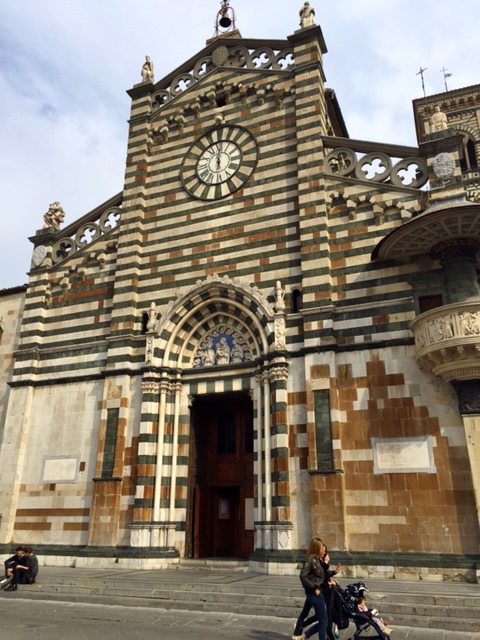
The duomo, or Cattedrale di San Stefano, is a lyrical design in the Gothic/Romanesque Tuscan vein. I found it beautiful! I am a huge aficionado of the striped marble facing many Tuscan churches.
The façade has a single central portal, surmounted by a lunette in glazed terra-cotta sculpture by Andrea della Robbia, depicting the Madonna with Saints Stephen and John.
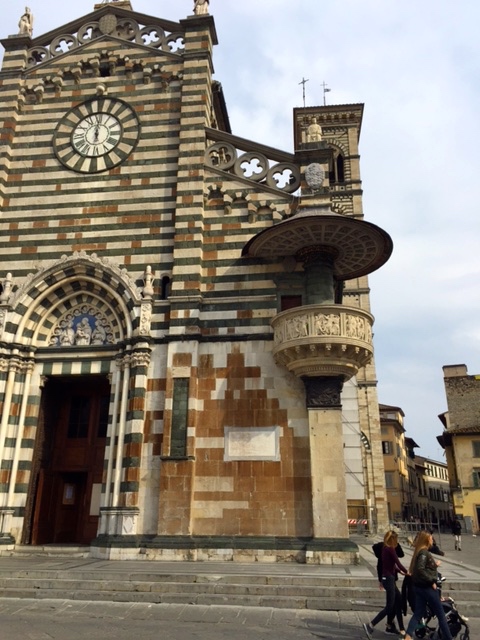
San Stefano has a very important relic, the Sacra Cintola or belt of the Virgin Mary, acquired during the 14th century. To house such an important relic, the church added a transept attributed to Giovanni Pisano, but probably the work of a pupil of Giovanni’s father, Nicola Pisano. The lavish interior Capella Cintola was also built at this time to house the relic.
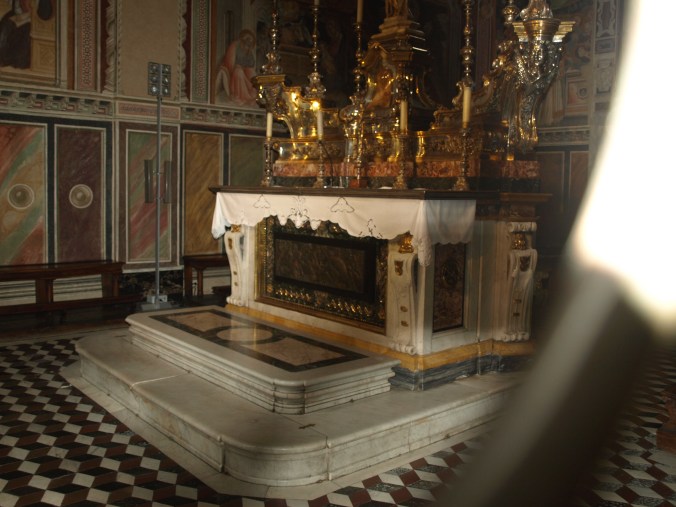
The picture below does no justice to this grand Capella. You notice it the second you walk into the lovely church.
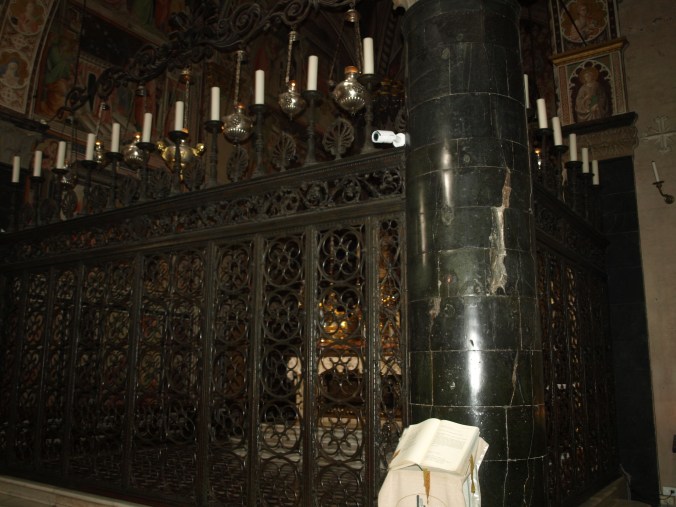
The picture below is of the interior of the Capella. Still no justice is done! The chapel was designed by Lorenzo di Filippo between 1386 and 1390.
The Sacra Cintola is a knotted textile cord meant to be used as a belt. According to a medieval legend, the belt was dropped by the the Virgin Mary as she lifted into heaven. She wanted Thomas the Apostle to have the belt, to prove to him (doubting Thomas) as proof of her assumption.
The Sacra Cintola or Sacro Cingolo is an 87-centimeter-long strip of fine material made from goat’s hair dyed green and embroidered with gold thread. It is encased in a glass and gold reliquary, and the reliquary is kept inside a silver casket within the altar of the special chapel.
(For more on the miraculous belt, see https://en.wikipedia.org/wiki/Girdle_of_Thomas).
The legend of the belt dropping by Mary was frequently depicted in the art of Florence and indeed, all of Tuscany, and the keeping and display of the relic at Prato generated commissions for several important artists of the early Italian Renaissance.
One of the most interesting aspects of the the duomo is the exterior pulpit on the facade. I have never seen such a feature on any other church. It was designed by Michelozzo and decorated by Donatello with seven relief sculptures between 1428 and 1438.
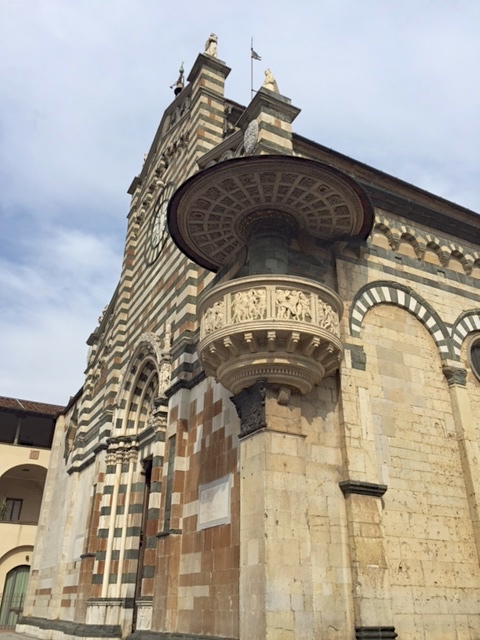
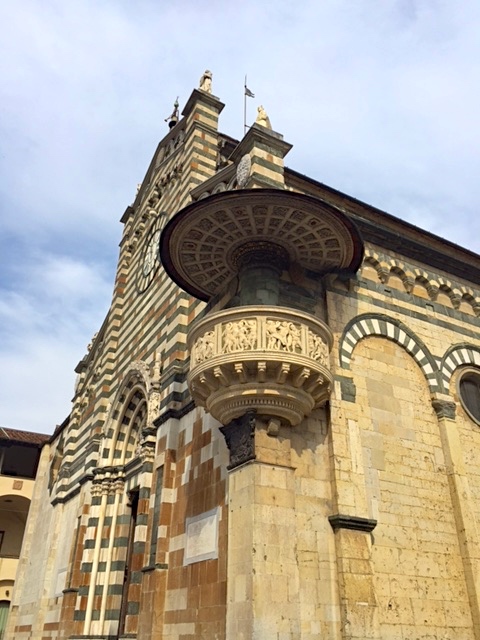
The seven original reliefs of the parapet were removed from the pulpit in 1967 and can be seen today in cathedral museum. This is a rather fortunate development for students of art history, because we can get up close and personal with the stunning sculptures by Donatello. It is possible to study the forms so closely you can sometimes see where the chisel landed on the marble.
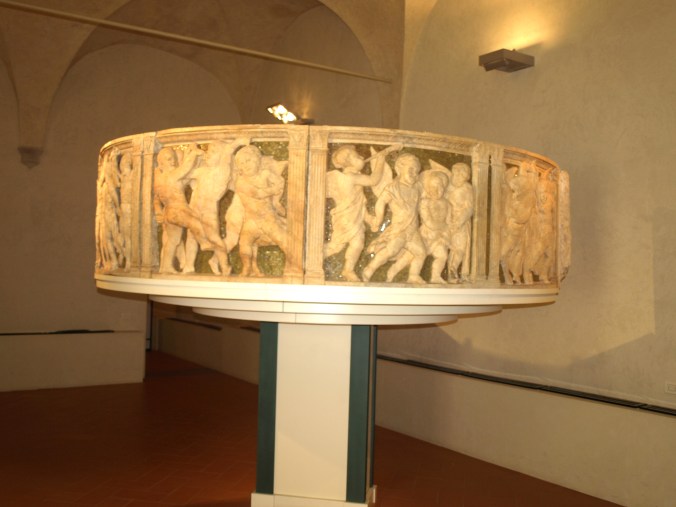
The subtle inlay of mosaic behind the shallow relief sculptures adds life to the forms.
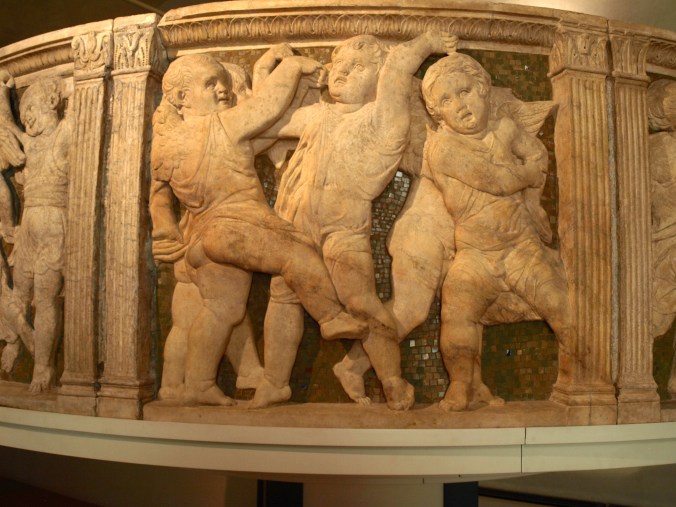
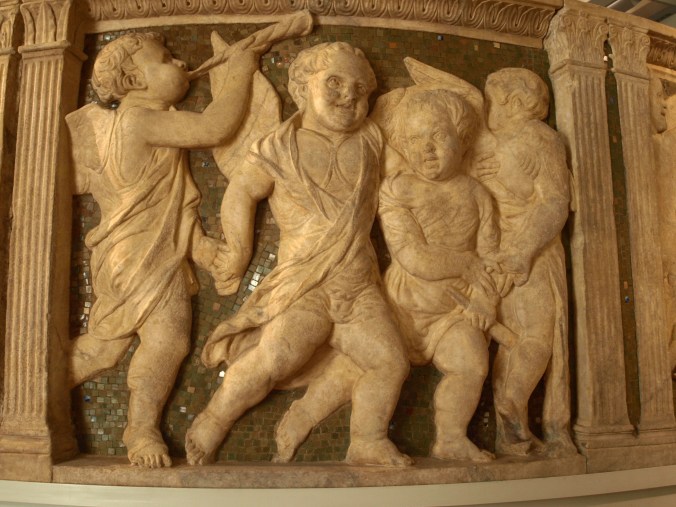
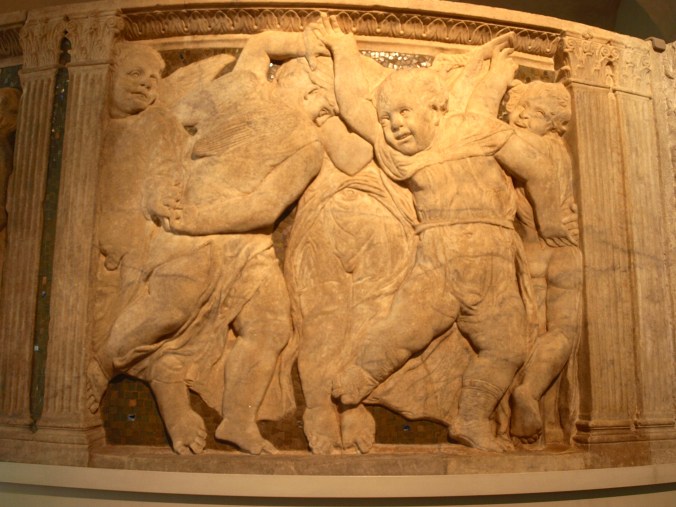
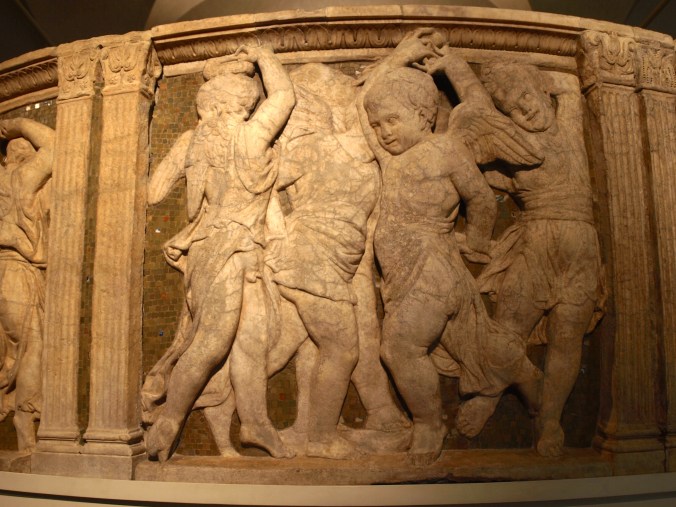
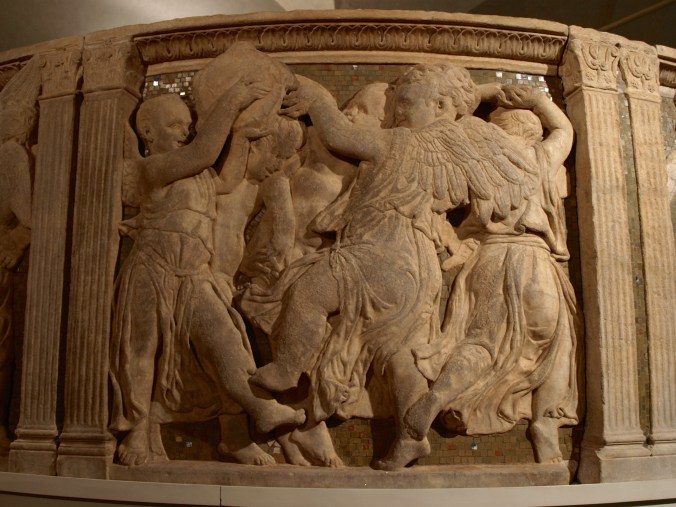
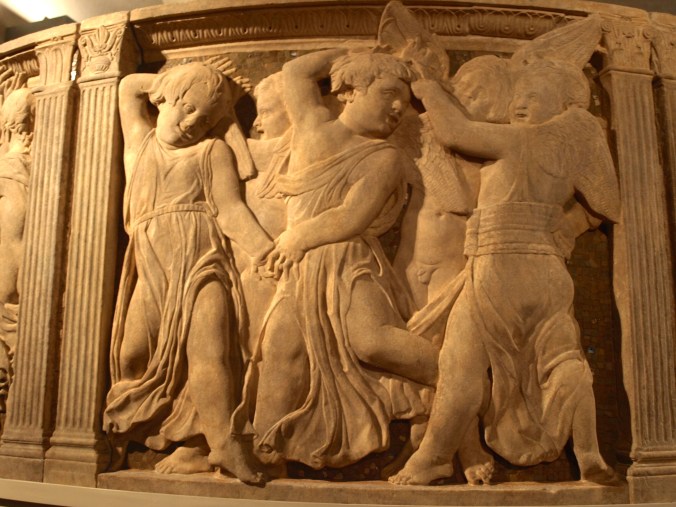
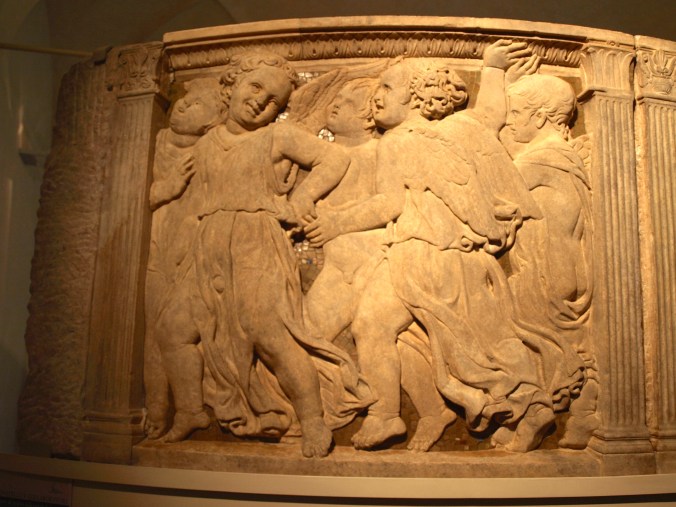
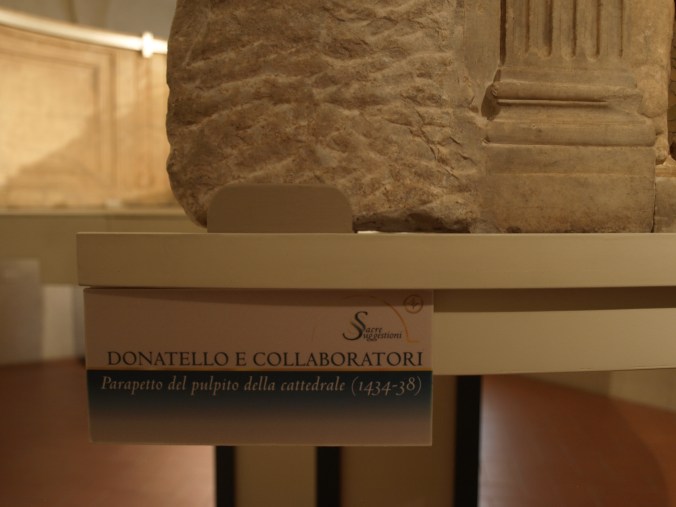
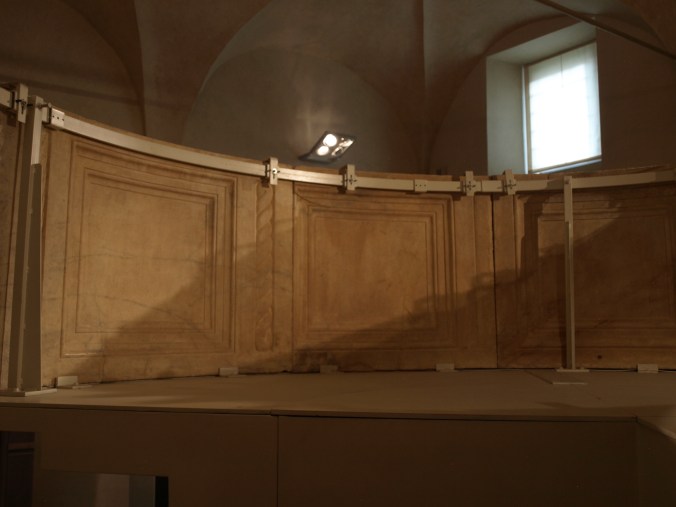
Another nice aspect about having the pulpit on display at eye level in the museum is the fact that one can see the interior of the pulpit as well, as below.
In the Middle Ages, few items of clothing were more symbolic than the belt from which important objects were hung, including a sword and keys. As the story of Mary’s belt in Prato spread, from about 1270 onwards, it prompted some of the most extraordinary iconography in the history of Renaissance art.
One such painting is Filippo Lippi’s Madonna of the Sacred Belt, in the collection of the Prato Civic Museum. Likewise, over the centuries, many illustrious pilgrims have visited Prato’s shrine, including Saint Francis of Assisi, Maria de’ Medici and several popes, including the late Pope John Paul II in 1986.
Each December 25, people flock to Prato to see the ceremony, which is repeated on four other occasions during the year as part of the Roman Catholic calendar:
Easter;
May 1, marking the month dedicated to the Virgin;
August 15, in celebration of Mary’s assumption;
and September 8, the day devoted to her nativity.
Following a procession through the city streets led by musicians and other people dressed in Renaissance costumes, a solemn mass is held in the cathedral, during which the archbishop of Prato will retrieve the Sacra Cintola from the casket using three keys (one key is always in his possession while the other two are kept in the mayor’s custody).
After passing an incense-burning censor over the relic, the prelate will then display it three times from Ghirlandaio’s loggia to the faithful seated inside the basilica before moving outside to the beautiful external pulpit decorated by Donatello. Here, he will hold it up high for the public in the piazza below to see, exhibiting it three times in three different directions.
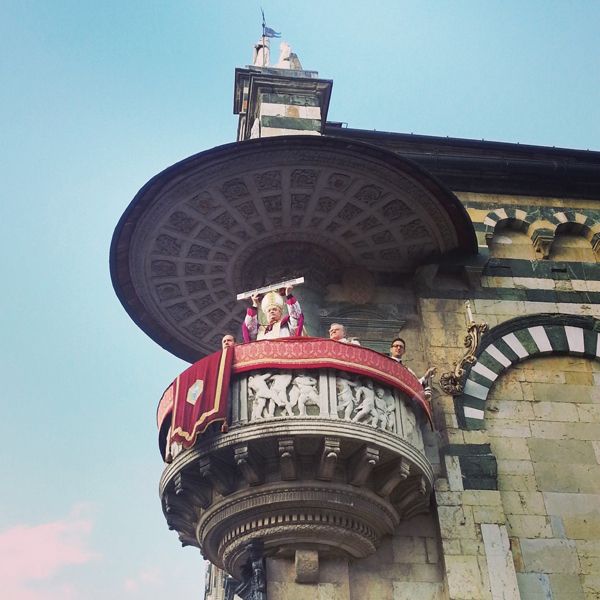
Finally, before the relic is returned to its vault, worshippers are invited to line up and kiss the reliquary.
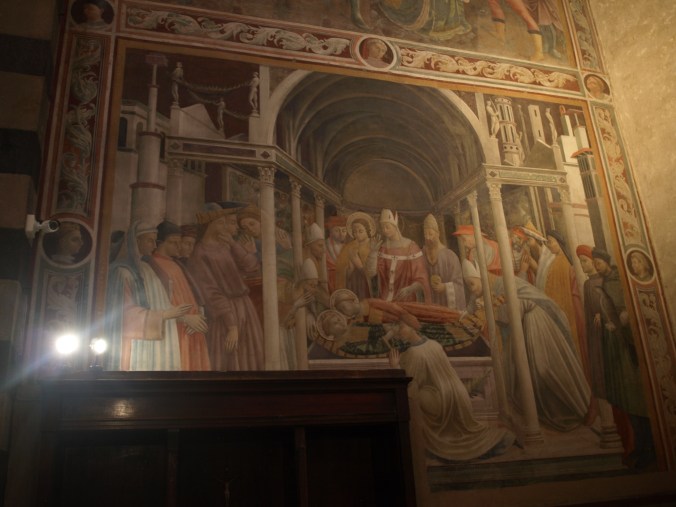
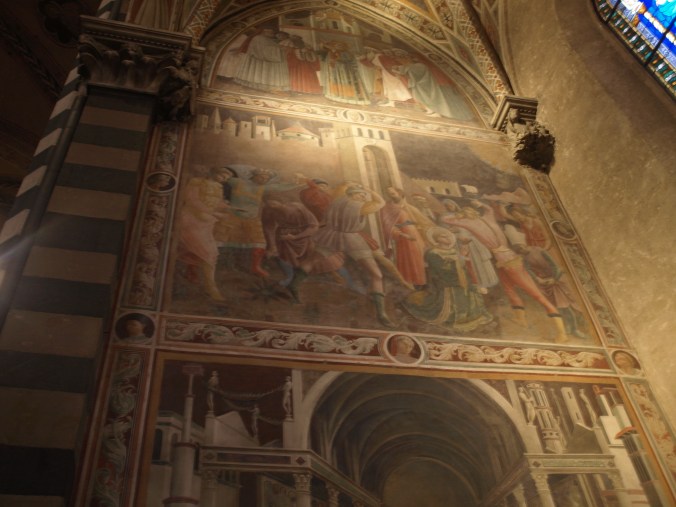
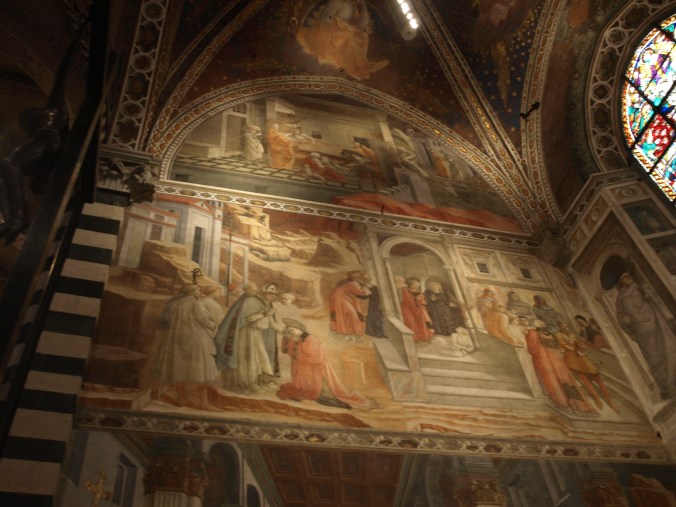
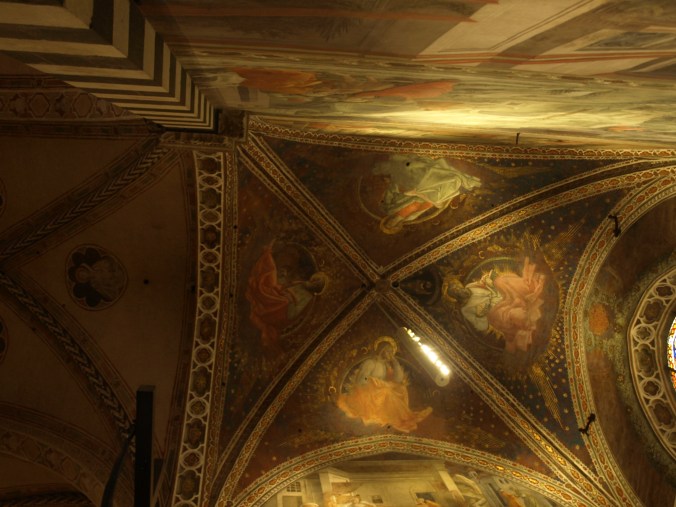
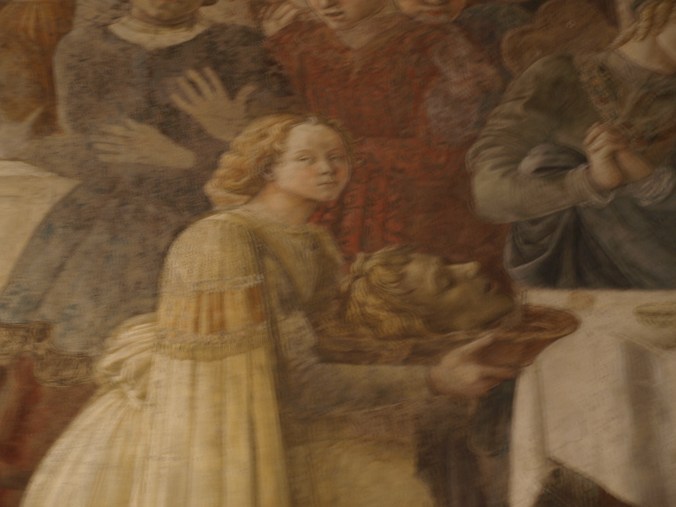
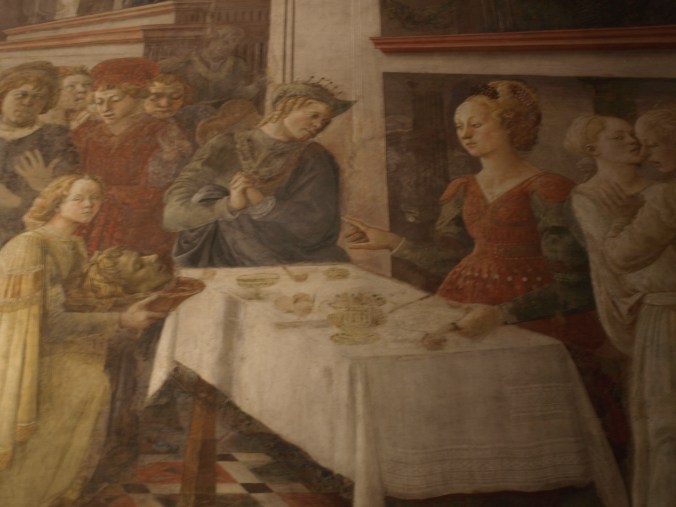
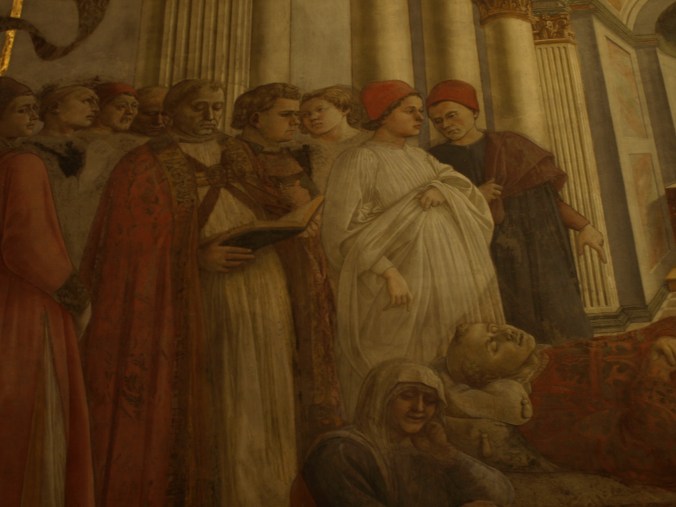
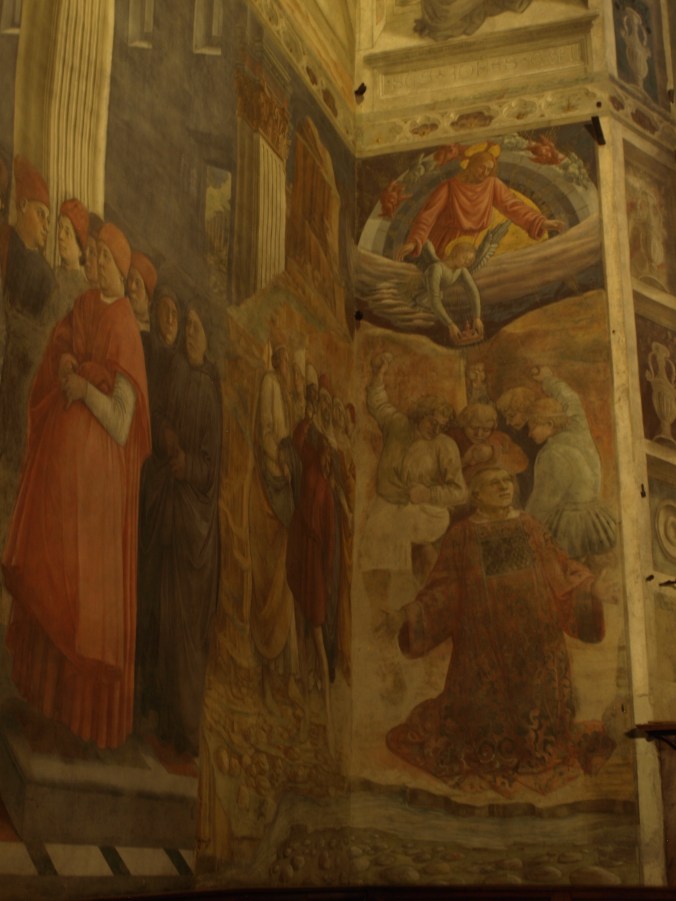
The Duomo houses yet another important treasure: a glorious fresco cycle depicting the stories of San Stefno and Saint John the Baptist by Filippo Lippi and his workshop from 1452 to 1465. The magnificent frescoes, which flank the main altar area, were restored in 2008.

OLYMPUS DIGITAL CAMERA

OLYMPUS DIGITAL CAMERA

OLYMPUS DIGITAL CAMERA
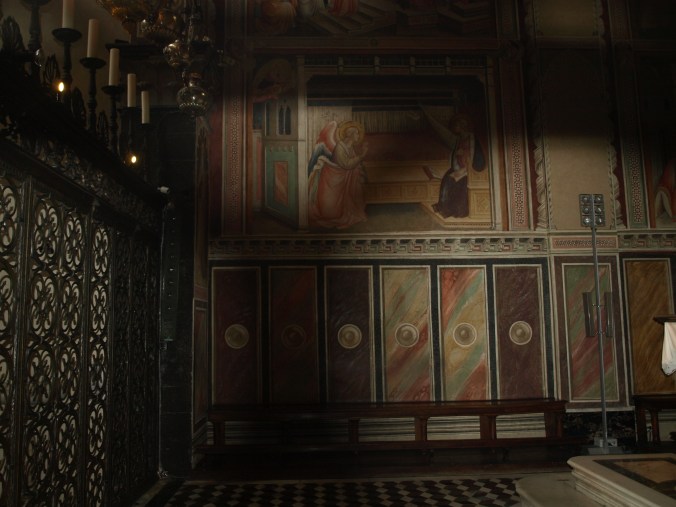
Scenes from the Madonna’s life and the story of the relic cover the chapel’s walls, frescoes done by Agnolo Gaddi in 1392-1395. Behind the additional protection of magnificent bronze gates created by Maso di Bartolomeo, Giovanni Pisano’s statue of the Madonna with Child looks down from the chapel’s altar.
The inimitable Bernini
The Palazzo Borgherini-Rosselli del Turco
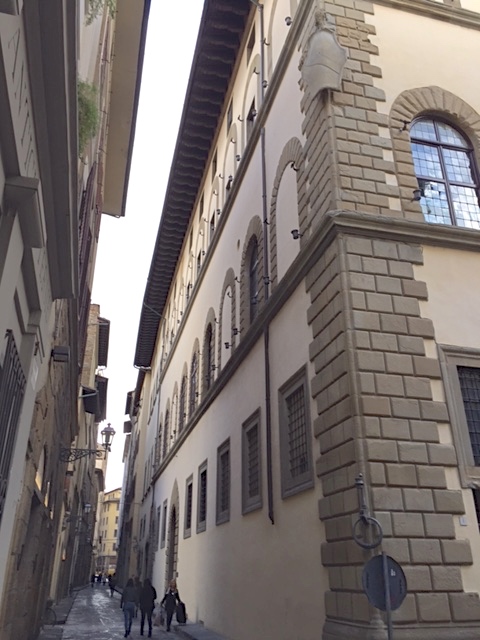
The Palazzo Borgherini-Rosselli del Turco is a Renaissance era palace in my neighborhood in Florence, located at Borgo Santi Apostoli 17.
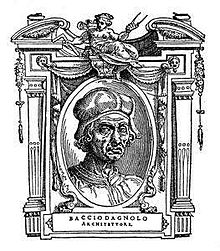
Commissioned by prominent Florentine, Pier Francesco Borgherini, around 1517 (a mere 500 years ago!), the palace was designed by one of the most famous architects of the period, Baccio d’Agnolo.
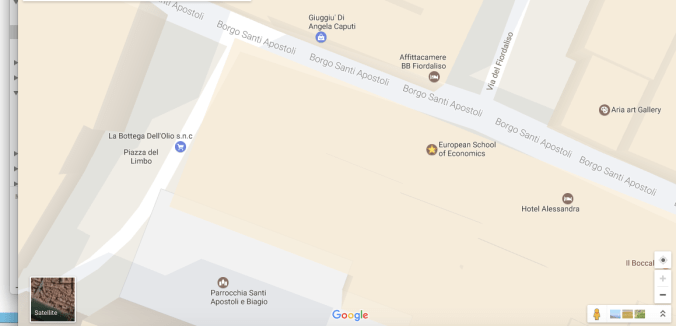
The building, completed by 1530, stands beside the church of Santi Apostoli and faces both the Piazza del Limbo and the Borgo Santi Apostali. In the map below, the palazzo covers the area starting on the right at Hotel Alessandra (which actually is inside part of the palazzo) and the European School of Economics. The palazzo runs continually along the Borgo Santi Apostoli, ending at the Piazza del Limbo. The building is further contained by the Santi Apostoli e Biagio church.
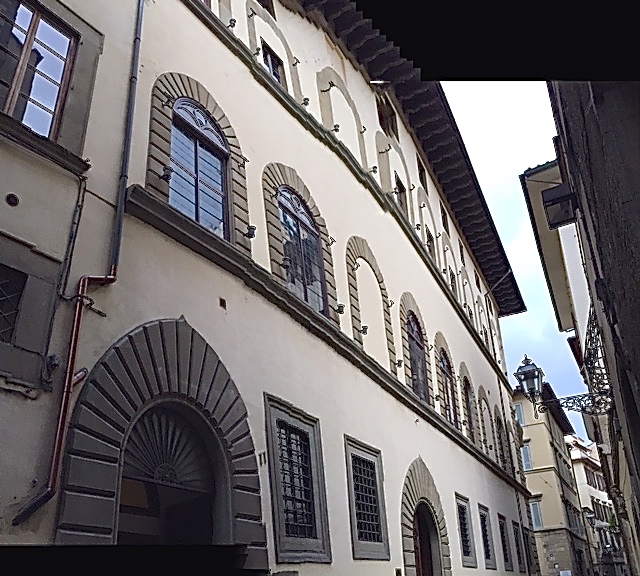
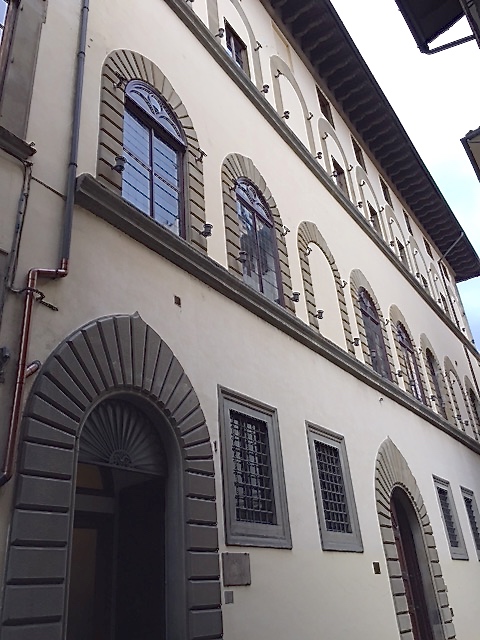
The photos below show the palazzo facing Borgo Santi Apostoli.
Baccio d’Agnolo also designed the nearby Palazzo Bartolini Salimbeni on Piazza Santa Trinita.
The Borgherini family had recently purchased property on which this palace was built, including the last available portion of the existing Limbo cemetery. In order to build this palazzo, the architect had to follow the contour of the left nave and apse chapels of the church, creating an unusual zig-zag profile on the southern side. There is, in fact, a private access to the church from inside the palazzo.
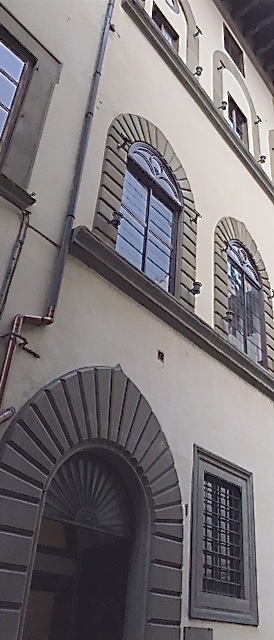
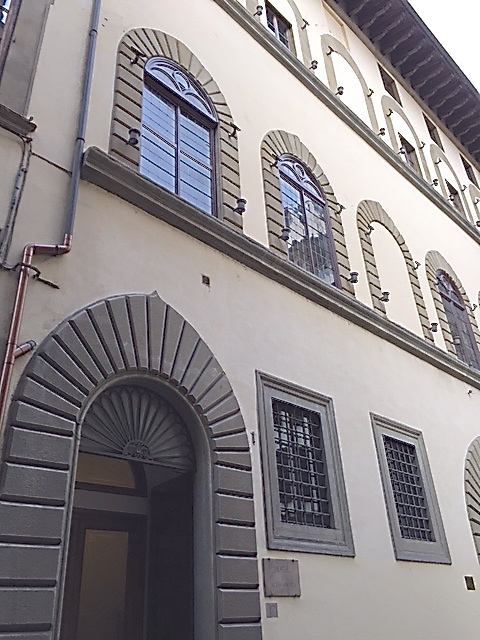
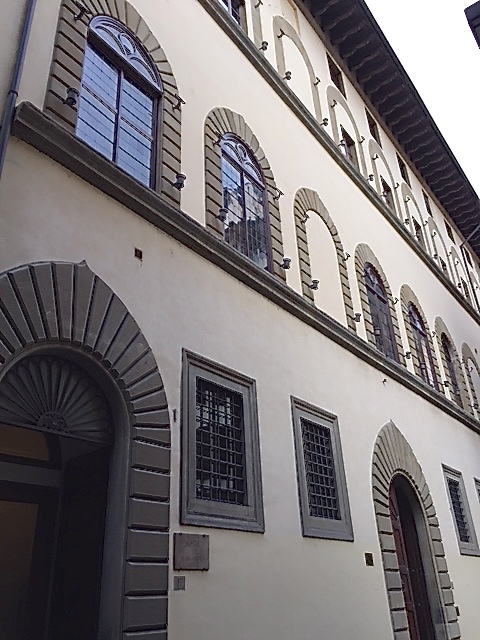
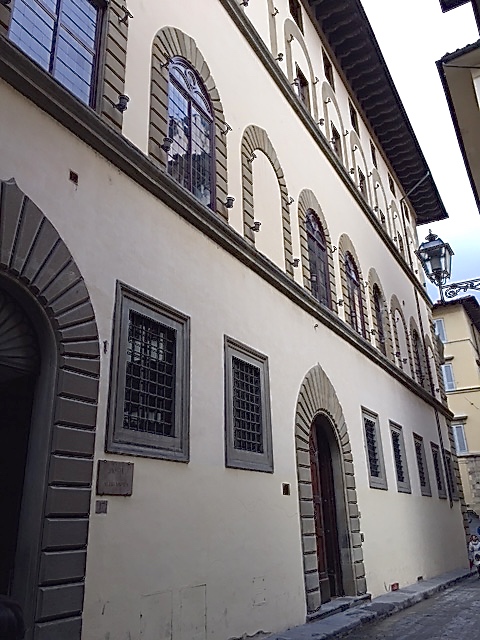

Because of the unusual plot, the architect was unable to create a central colonnaded courtyard typical of Florentine palazzi and instead designed a simpler atrium, which was needed to provide the light and air for the palace’s many rooms. The vestibule on the ground floor was used for commercial activities of the Borgherini family; this atrium has a vaulted ceiling, ending in fine corbels decorated with two bands of acanthus leaves.
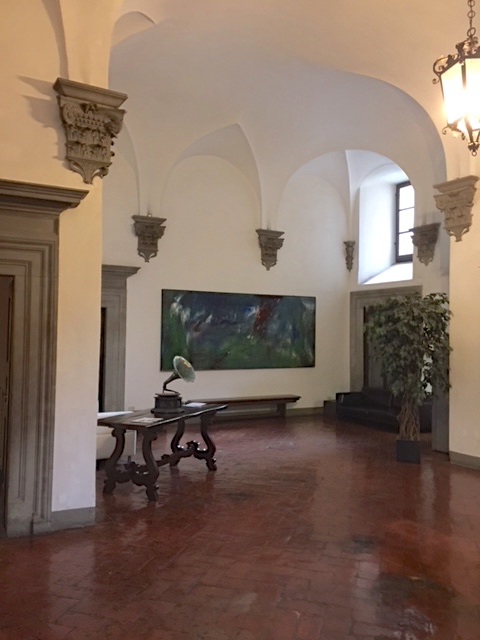
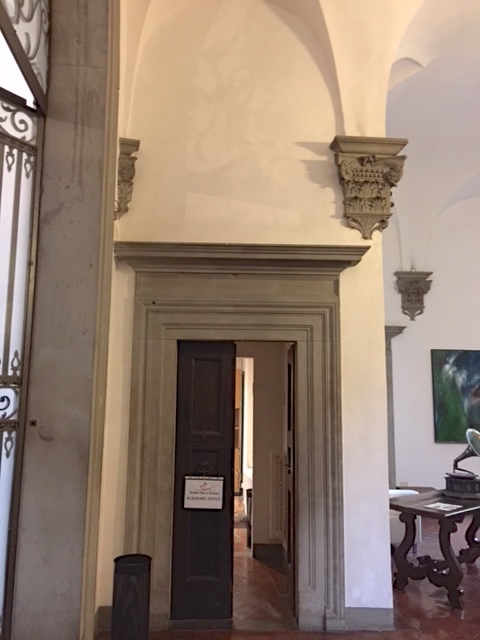
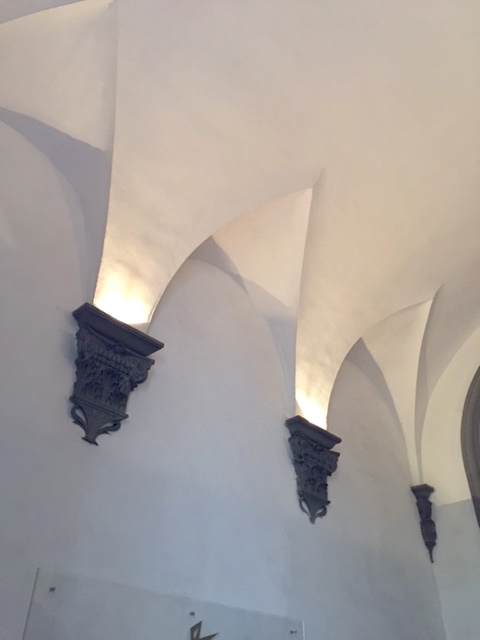
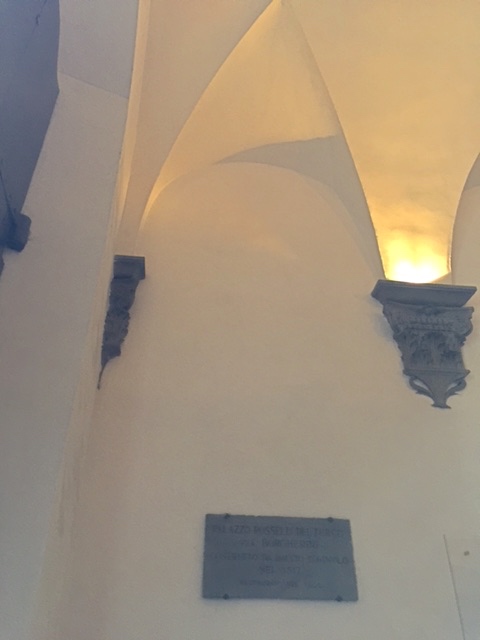
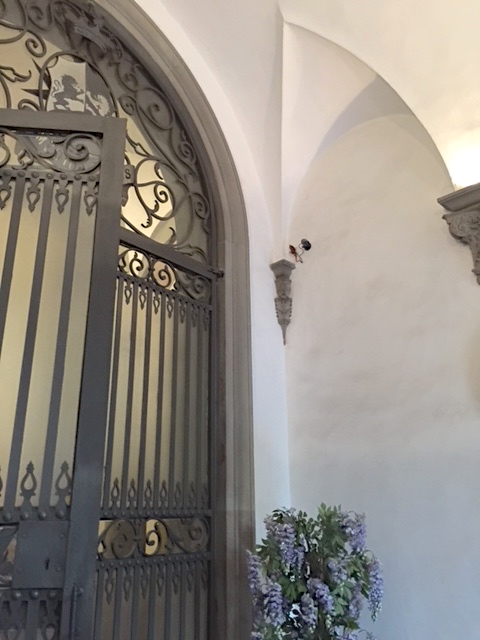
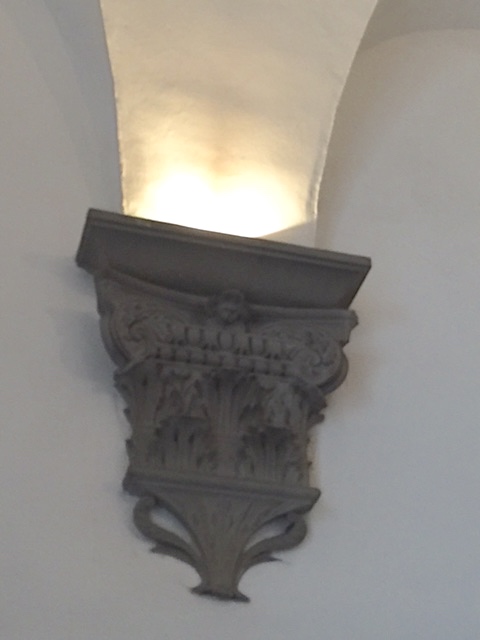
Another nearby room, with a barrel vault, gave access to the Limbo Square.The staircase to the upper floors leads off the atrium and along the wall which accesses the nave of the church. The ceiling of the stairs is made of planks of stone, which is quite unusual in Florentine palazzi designs.
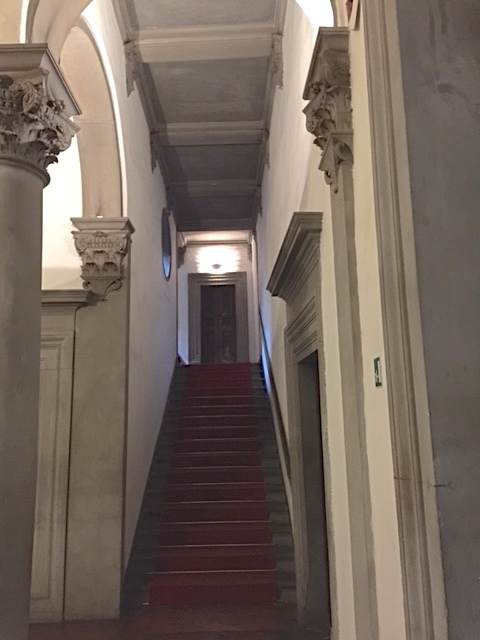
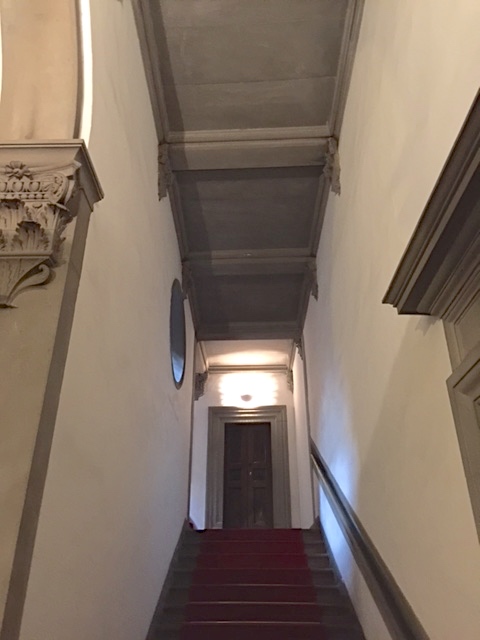
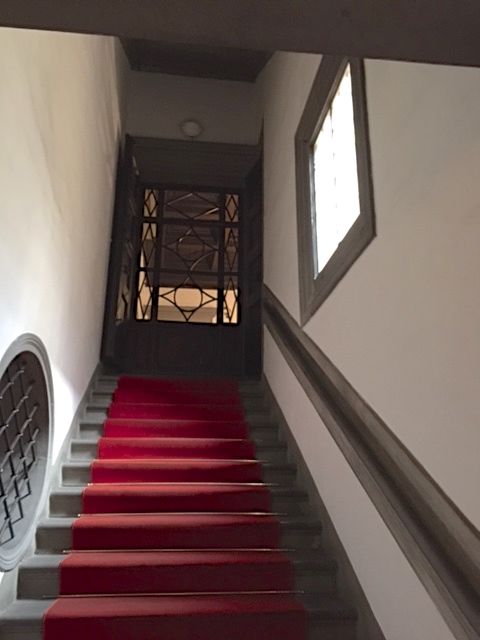
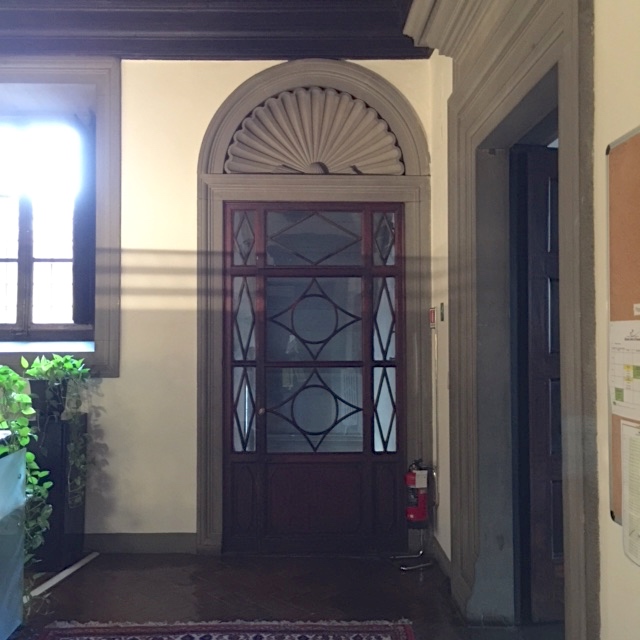
The first floor rooms were used for family life and face the north.
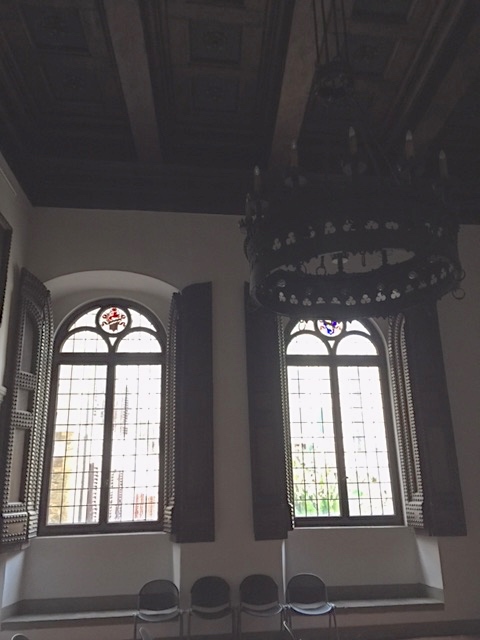
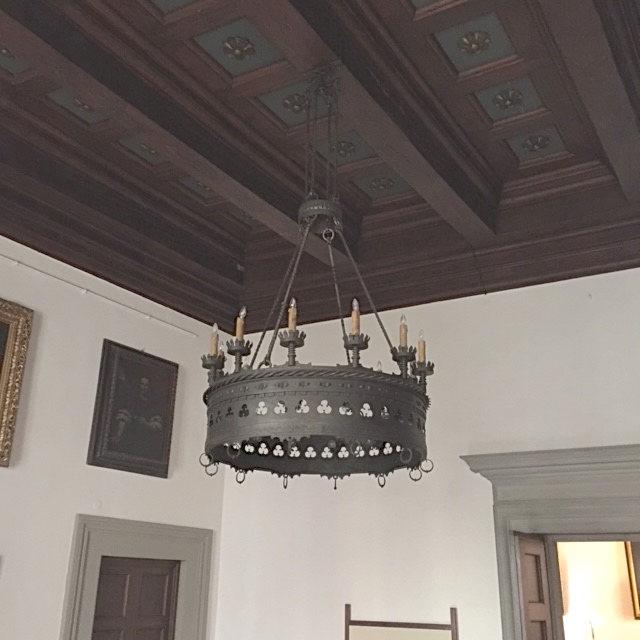
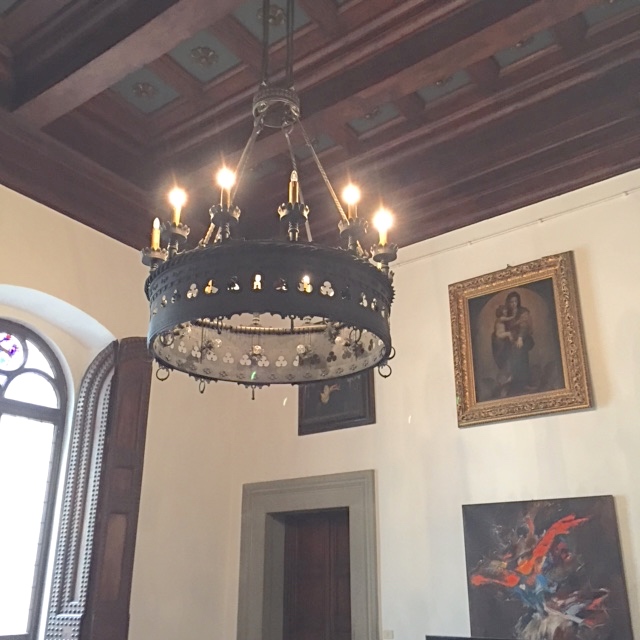
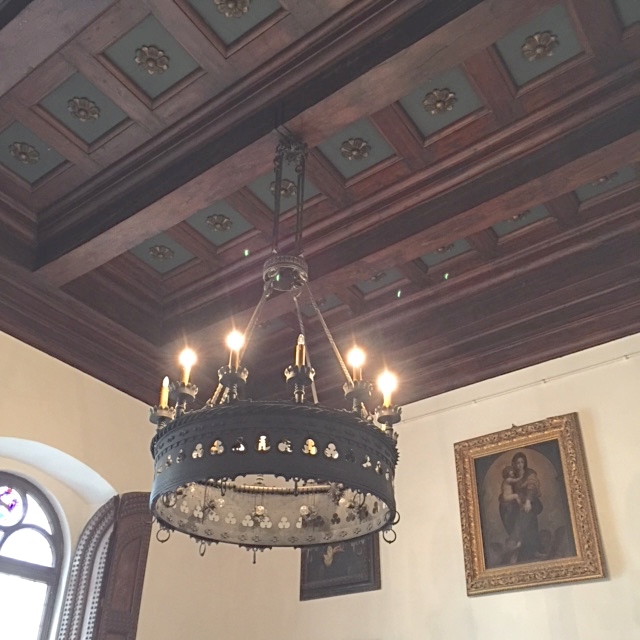
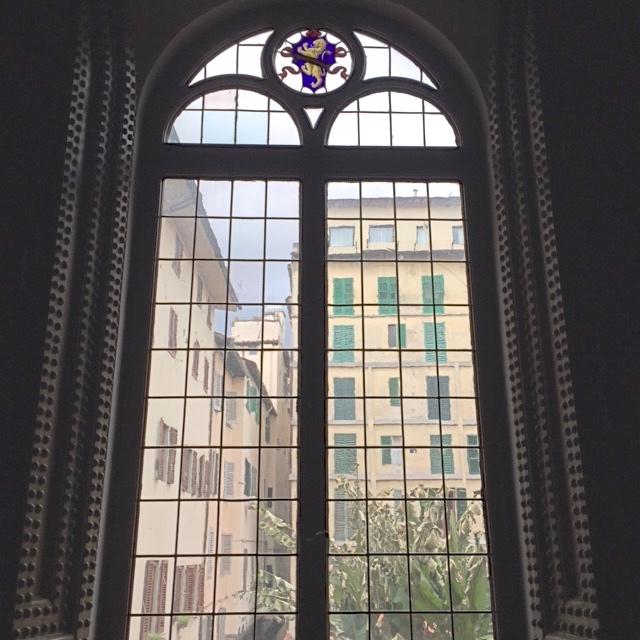
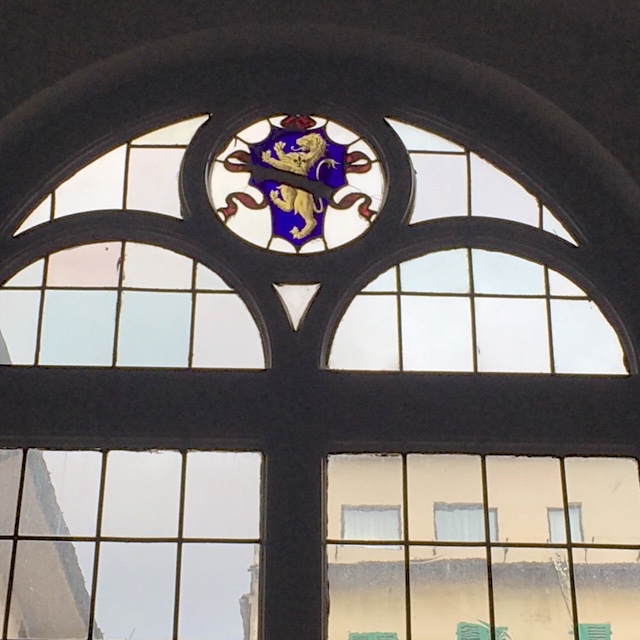
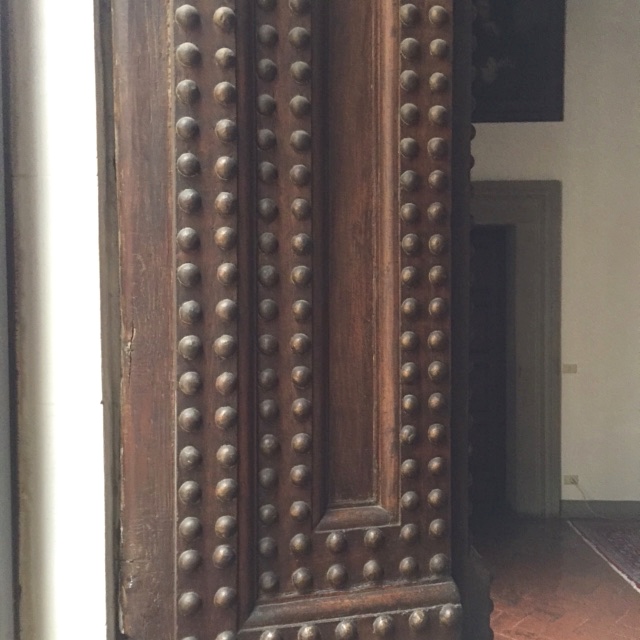
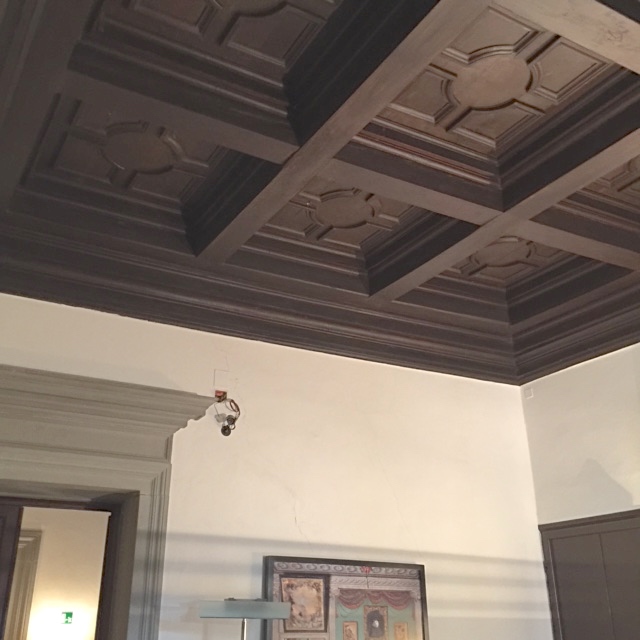
A small chapel (6.40 x 1.60 meters), not illustrated here, had a small window with a grate that opened directly on the clerestory of the left aisle of the church. It was thus possible to attend religious services without leaving home. The interior of the chapel is decorated with paintings in monochrome with cherubs and other religious subjects and the altar has a wooden bust of the Virgin and Child.
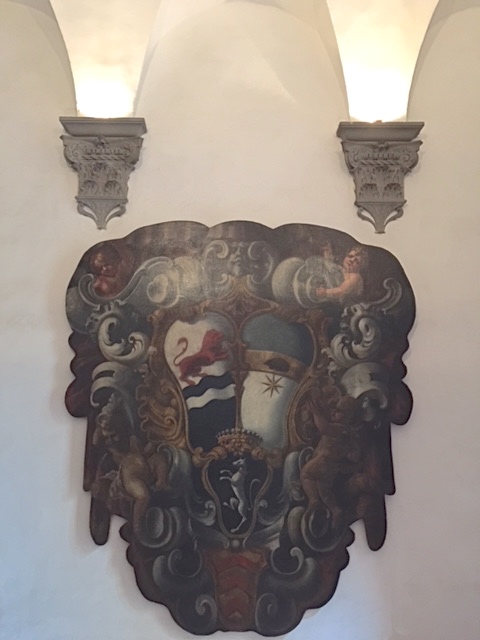
Above is the coat-of-arms for Borgherini family. This beautiful object hangs in the current vestibule to the palace.
The interior of the palazzo was decorated by Benedetto da Rovezzano,* among others. Da Rovezzano was a friend and collaborator of Baccio d’Agnolo; together they were also working on the new portal of the Church of the Holy Apostles. They each designed a fireplace for the Palazzo Borgherini. The one by Benedetto da Rovezzano, with low-relief sculpture, was in the living room; it is now in the National Museum at the Bargello. The other period fireplace is thankfully still in situ in a first floor room. It has the solemn linearity, without decorations, typical of the style of Baccio d’Agnolo.
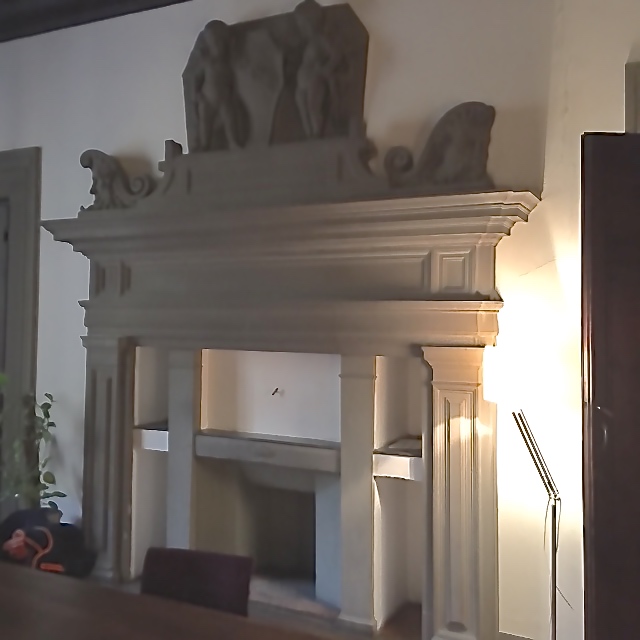
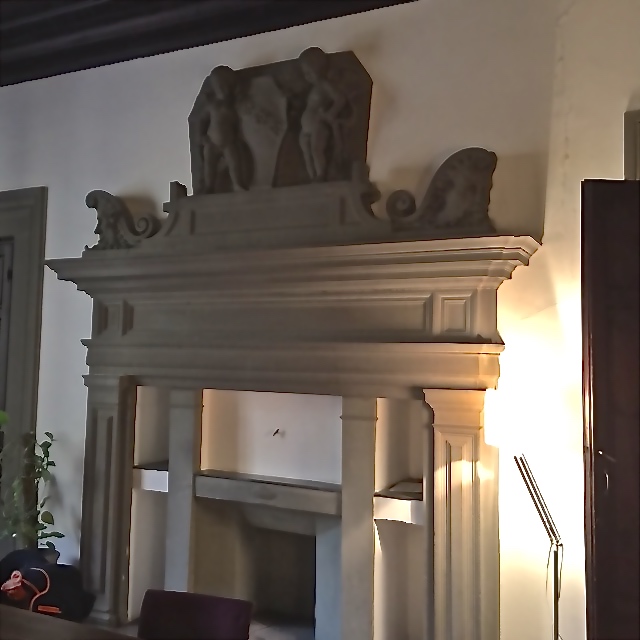
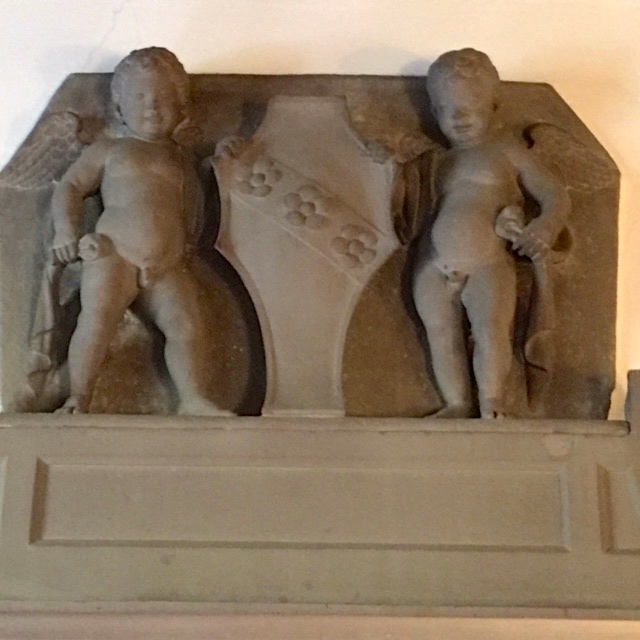
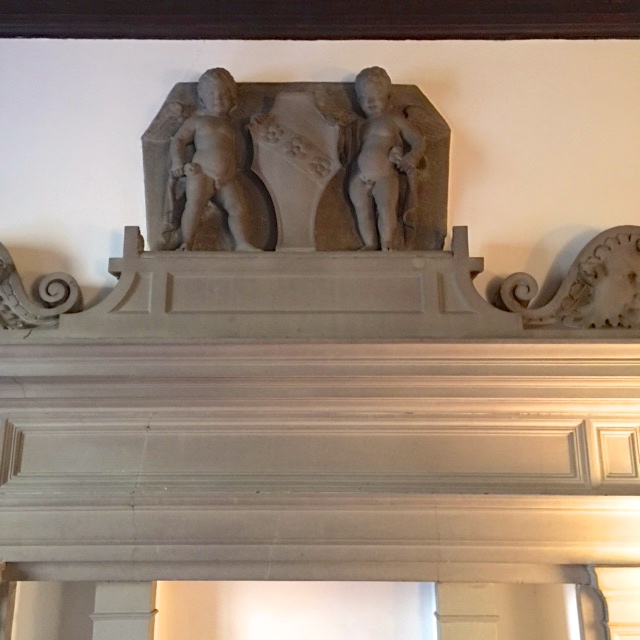
The Borgherini were among the most active supporters of the arts in Florence, and they lavished upon their prominent home many splendors by contemporary artists, including Andrea del Sarto, Pontormo, Bachiacca, and Granacci. Sadly, over the centuries, many of the best pieces by the finest artists have been sold off or confiscated, beginning as early as 1529, when the chests containing panels painted by Jacopo Pontormo for the Borgherini were expropriated. As noted above, the fine fireplace which da Rovezzano created for one of the rooms of the palazzo is now a part of the Bargello museum.
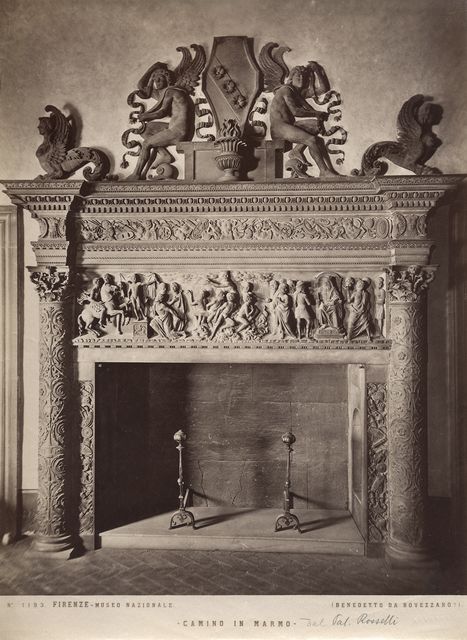
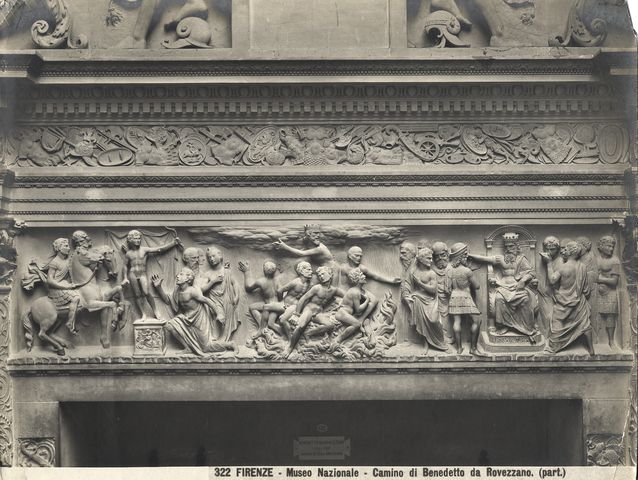
*(Benedetto Grazzini, best known as Benedetto da Rovezzano, was an Italian architect and sculptor who worked mainly in Florence. He was born in Pistoia in 1474, and adopted the name Rovezzano from the quarter of Florence in which he lived. Wikipedia Born: 1474, Pistoia; Died: 1552, Reggello)
No less a personage than Vasari described the luxurious interior of the building, in his work dedicated to the life of Baccio d’Agnolo:
( Lives by Giorgio Vasari [1568])
“He gave Pier Francesco Borgherini drawings of the house inBorgo Santo Apostolo,who at great expense had ornaments brought for the doors and chimneys, and in particular oversaw the creation of the finely carved walnut paneling of the room, which at its termination, was of great beauty.”
Borgherini even had a bridal chamber built in honor of the marriage of his son Pier Francesco and Margherita Acciaiuoli. Baccio d’Agnolo oversaw the wooden decoration of that room, which included painted panels embedded into the architectural design.
Baccio acted as an intermediary between the patron and the most important painters of the time, including Andrea del Sarto, Pontormo, Bachiacca and Granacci, all of whom were commissioned to decorate the panels for this room. The artists created paintings designed to tell the story of Joseph the Jew which probably were meant to allude to the young couple or the patron himself.
The fame and the beauty of this room were such that as early as 1584, some panels had already been sold by the order of Francesco I de’ Medici, who wanted the panels by Andrea del Sarto and Granacci for his own collection.
Today, the panels are scattered across various European museums, including the Uffizi.
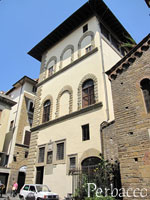
On the exterior, the palace’s solid plaster walls are divided into three floors, with windows and doors decorated with a course of typical bugnato (Florentine ashlar) and elegant wrought iron, which was used to hold torches and banners. For the stone detailing of the palazzo, Baccio d’Agnolo collaborated with Benedetto da Rovezzano on both exterior and interior details.
There is also a rooftop terrace, probably designed by Baccio d’Agnolo, although probably built at a later time.
The western, short side of the Palazzo Borgherini faces the Limbo square and has bas-reliefs and inscriptions and several license plates and registration. There can be found a monogram of Christ; two inscriptions in stone; and a small portrait in profile of the Madonna and Child, carved in low relief. The latter has traditionally been attributed to Benedetto da Maiano. (The Marian relief could instead be a copy of a similar work in the Church in San Frediano in Cestello, attributed to Francesco di Simone Ferrucci.)
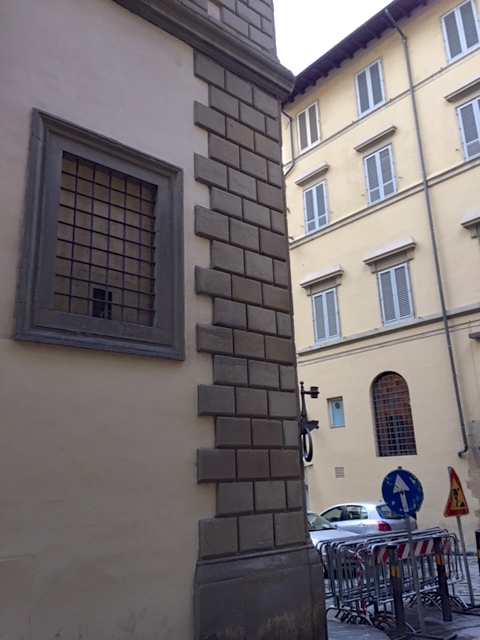
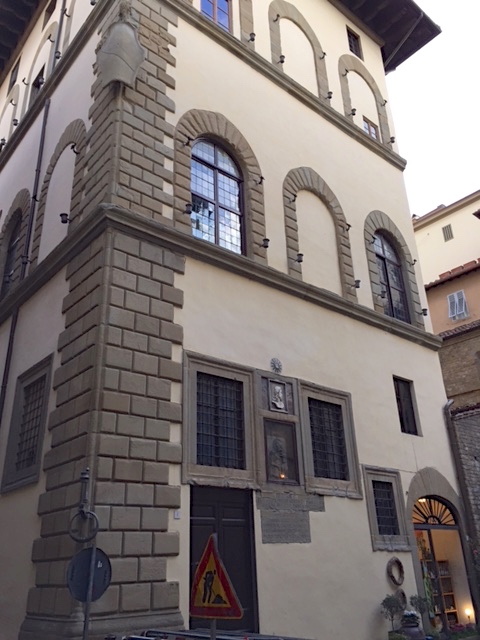
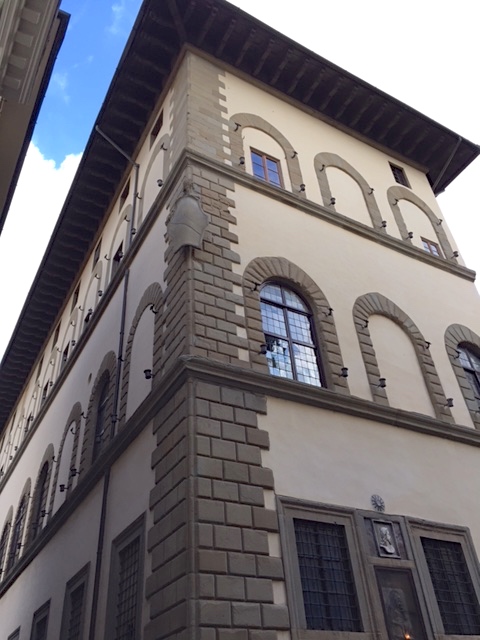
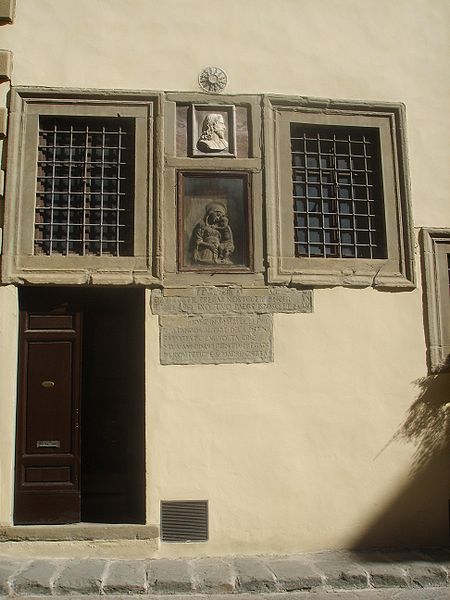
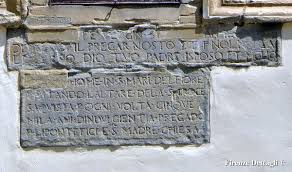
On the corner of the building is the coat of arts of Borgherini.
Soon I will be writing a post on the garden associated with this palazzo.
The Borgherini family lived in the palazzo until the mid-18th century, when the family was implicated in a scandal involving shortages from the Granai dell’Abbondanza granary. The family’s holdings and properties were confiscated by the Lorraine State and sold at judicial auction.
The Rosselli del Turco family acquired the property, which has been in their possession ever since. The Rosselli family was for having produced famous painters, such as Cosimo and Matteo Rosselli, and the antiquities scholar, Stefano Rosselli (1598-1664), author of manuscripts on the works of art found in Florentine churches of the 17th century.
In 1750 the palace was given to Giovanni Antonio, Stephen and Jerome of Turkish Rosselli , together with the garden and other adjacent buildings. This family was responsible for the restoration and conservation of no significant additions subsequent palace. Today it belongs to their descendants as well as one of the venues of the College of Higher Education in UK law European School of Economics , which here holds bachelor and master courses in the economic sector. The palace also houses the headquarters of the association in the World Fiorentini and didactic center of the Arch of Guelph .
Today the building hosts ESE Florence, while the garden is housed by ESE’s partner Aria Art Gallery.
Read more: http://www.eselondon.ac.uk/ese-centres/florence/history-of-palazzo-rosselli-del-turco.html#ixzz4Wbwm4Roi
Buon anno! Auguri!
Wherever you are, whatever you are doing to celebrate the arrival of 2017, I send you auguri!
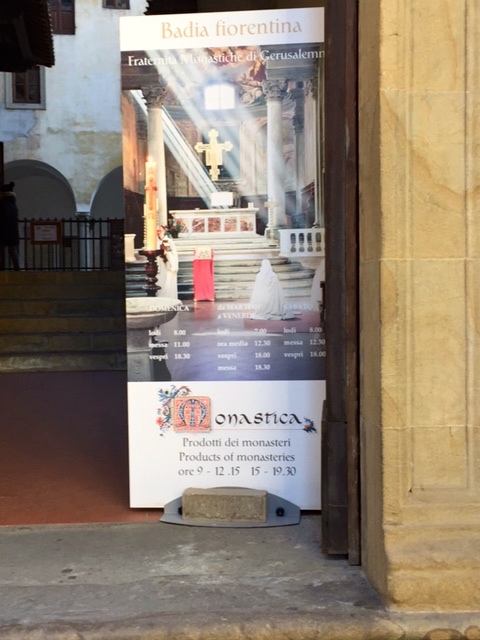
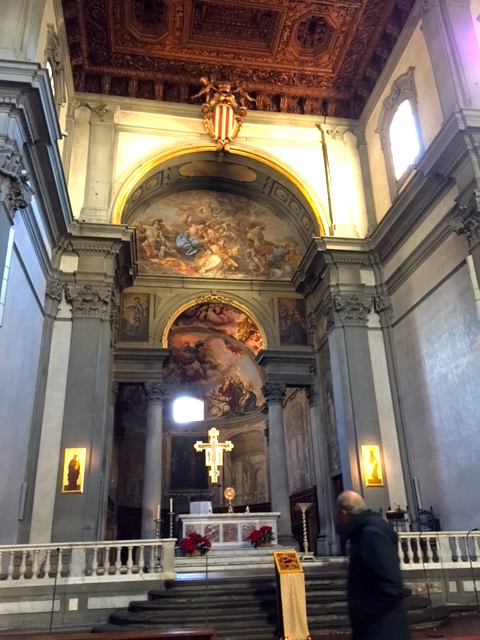
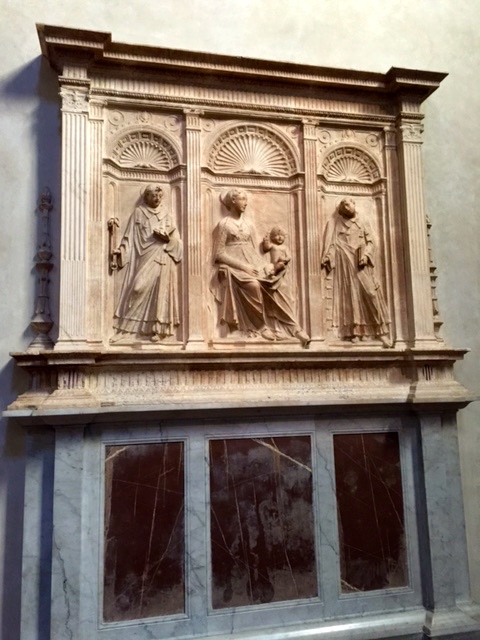
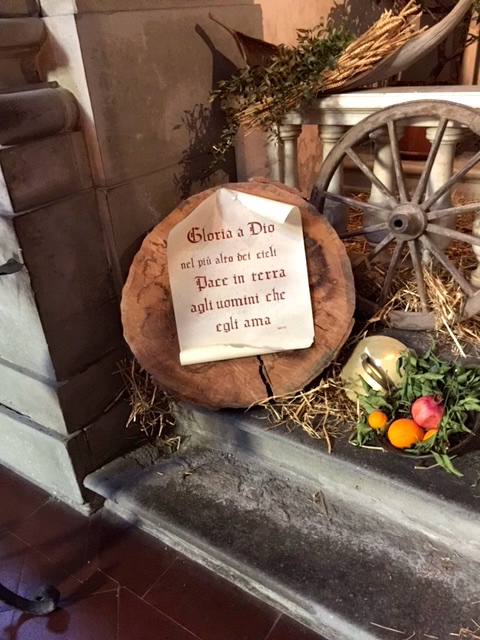
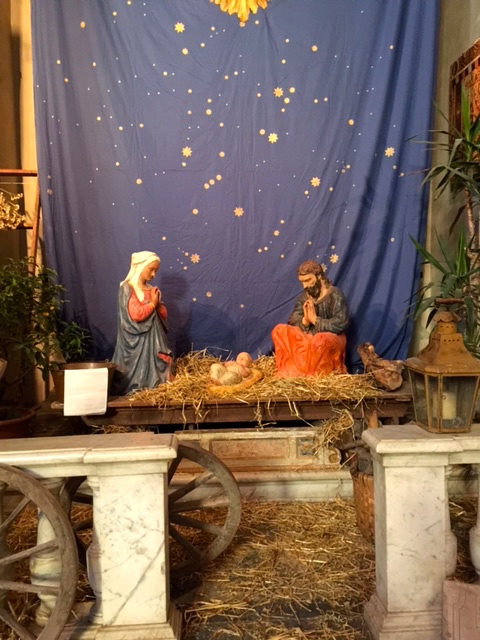
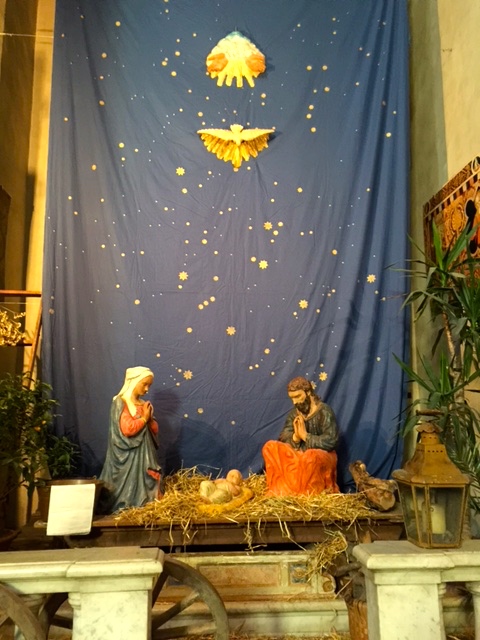
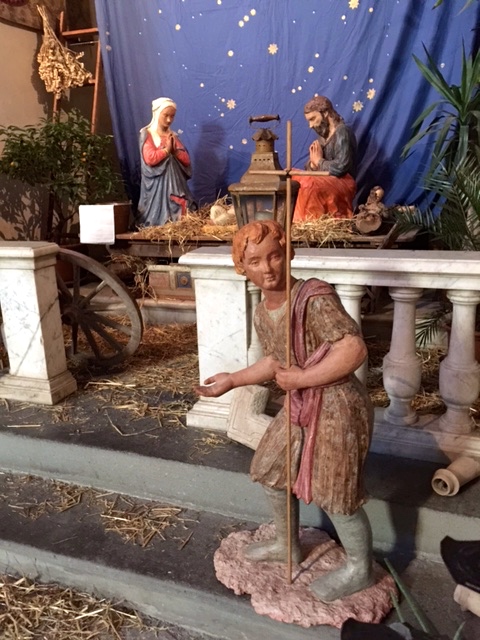
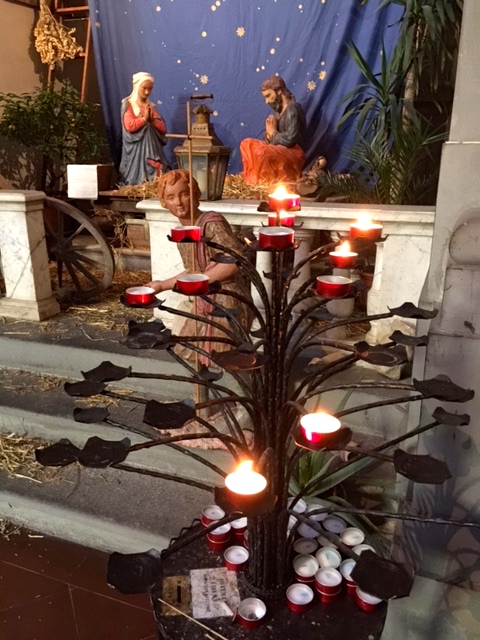
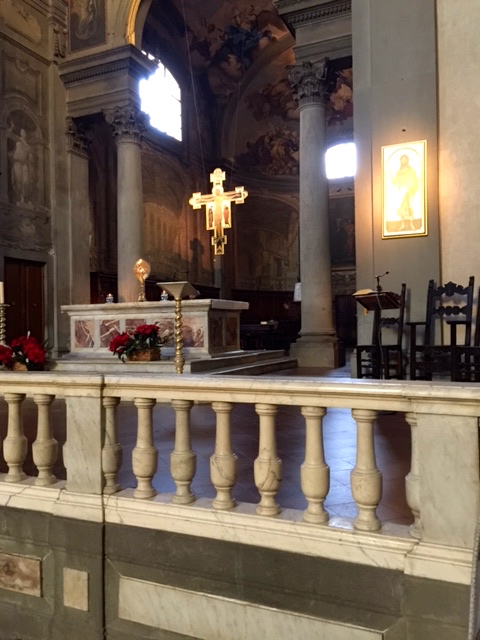
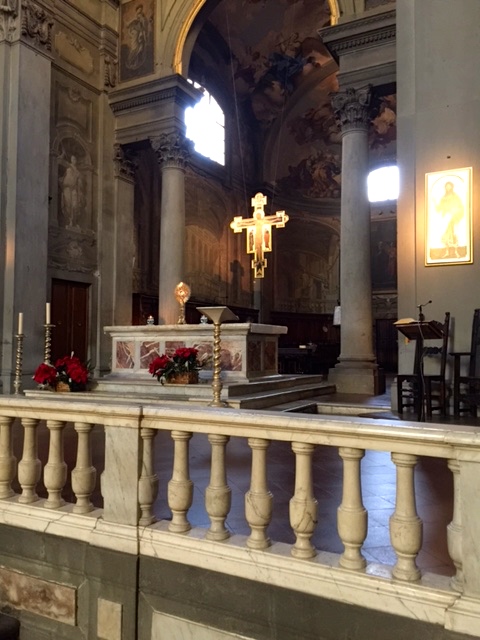
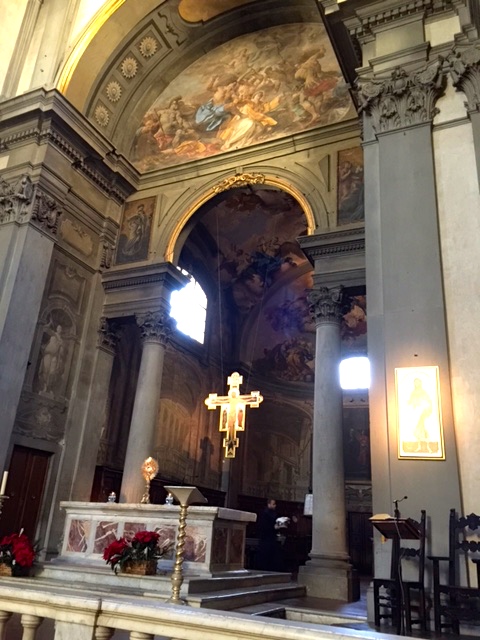
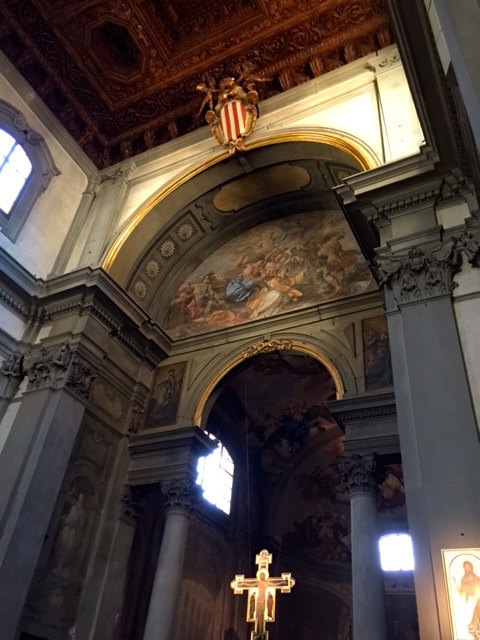
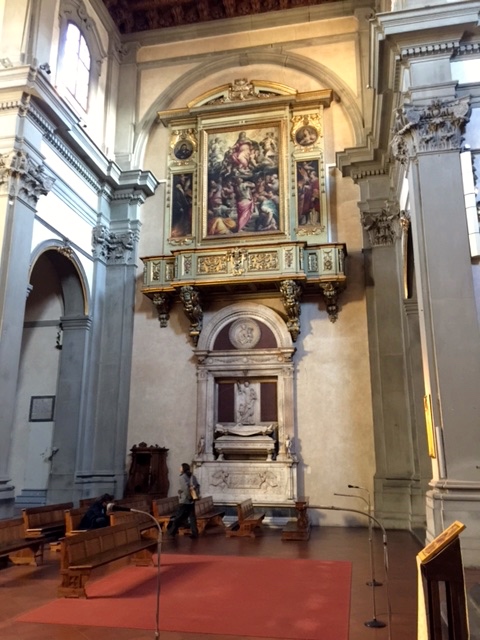
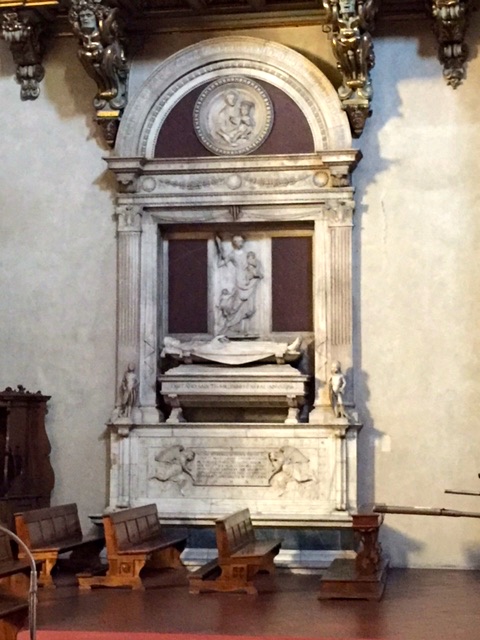
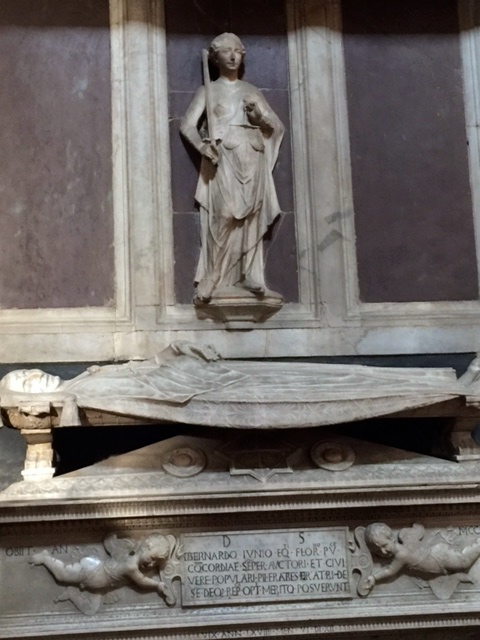
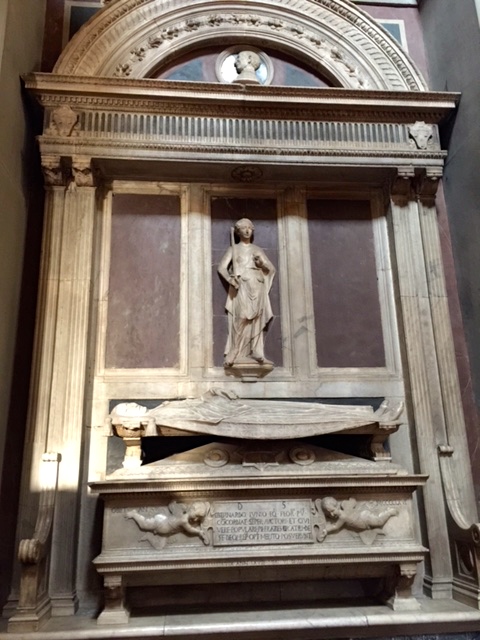
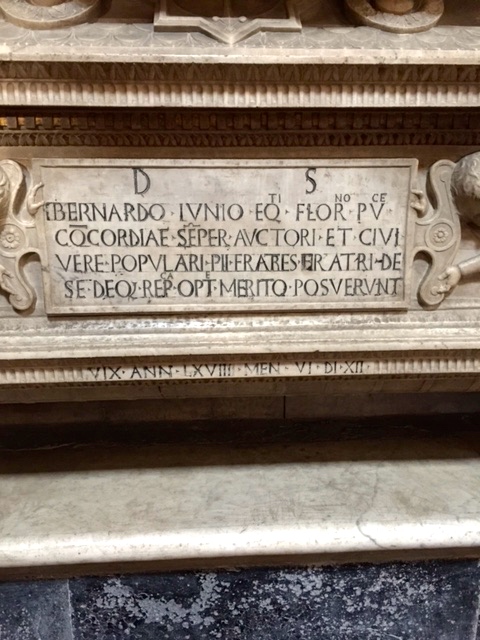
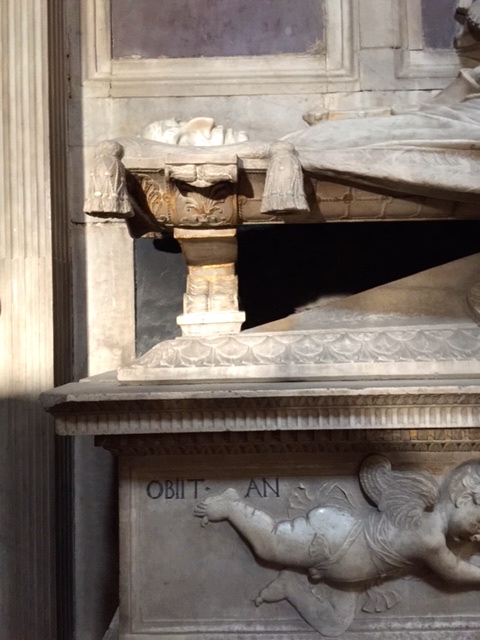
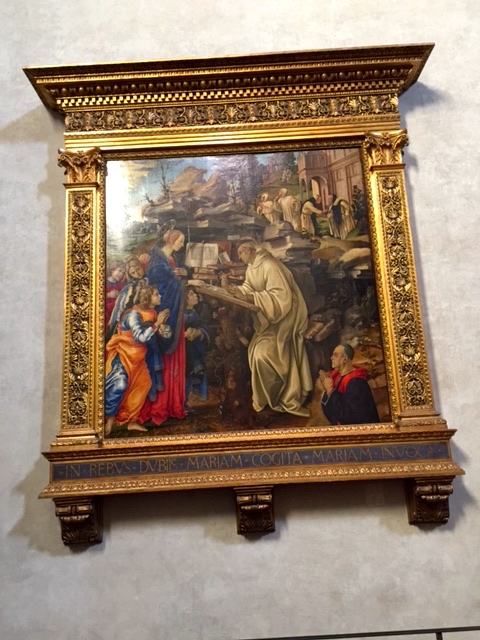
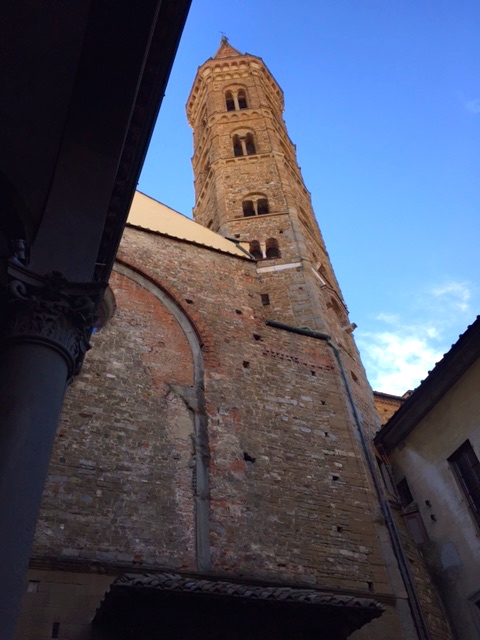
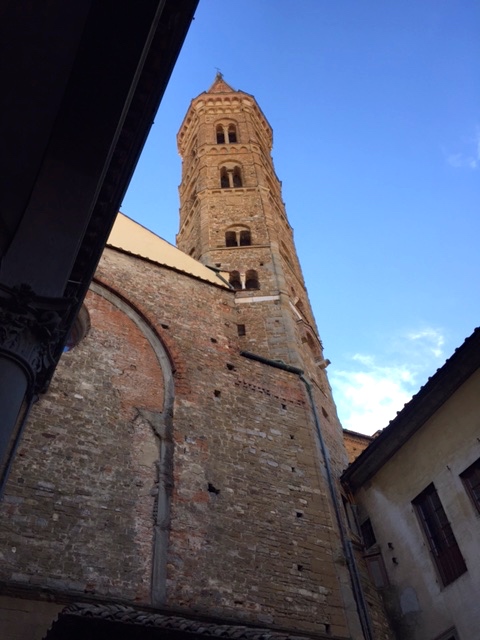
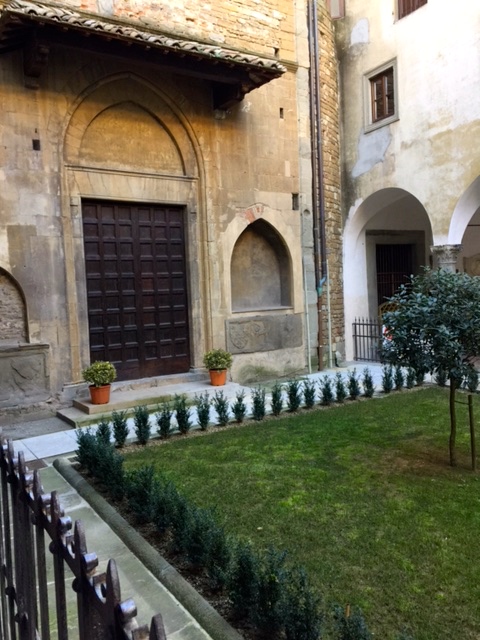
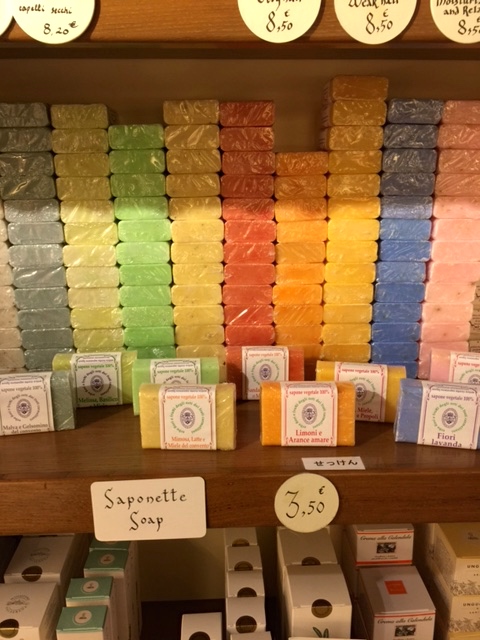
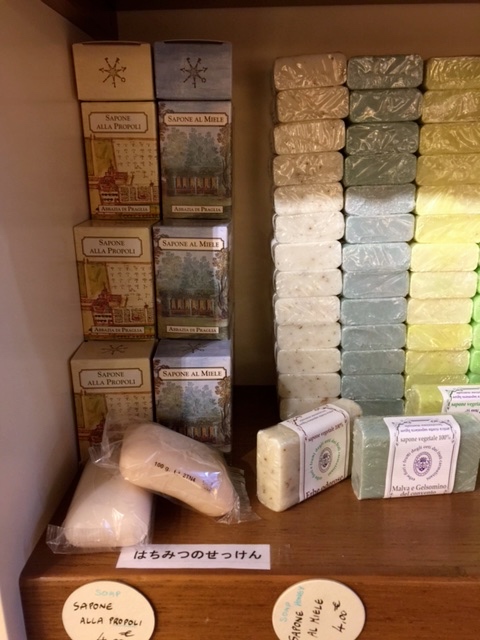
I’ve been busy, although I haven’t been posting much this past week. But today I share with you the photos I took today of the Badia fiorentina, complete with its Nativity scene. Two major tombs are part of the interior of this fine, ancient church in Florence, as well as a gorgeous coffered wood ceiling. Also, a fine altarpiece by Fra Filippo Lippi is still in situ.
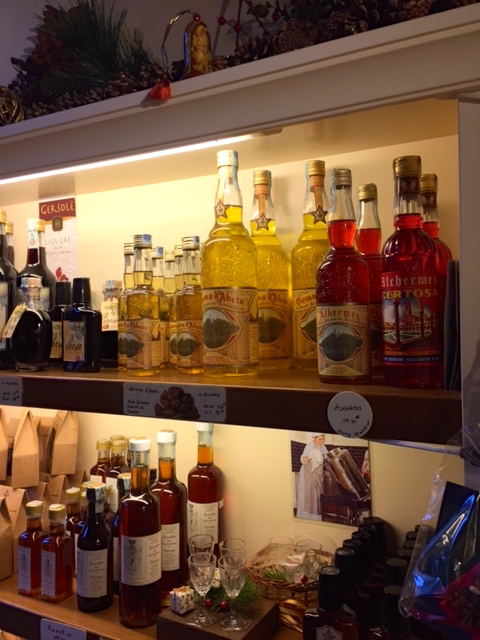
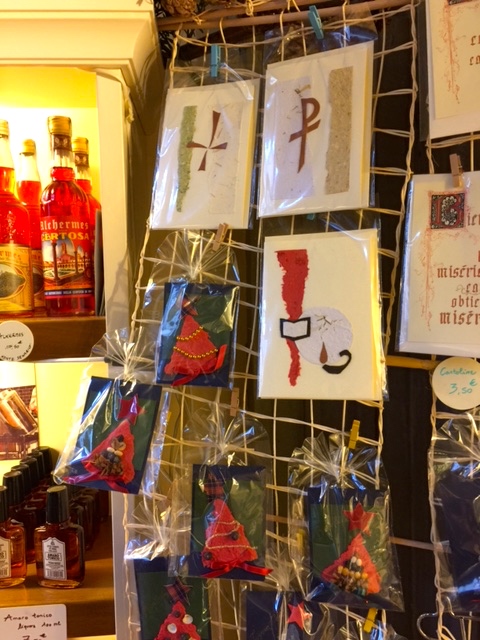
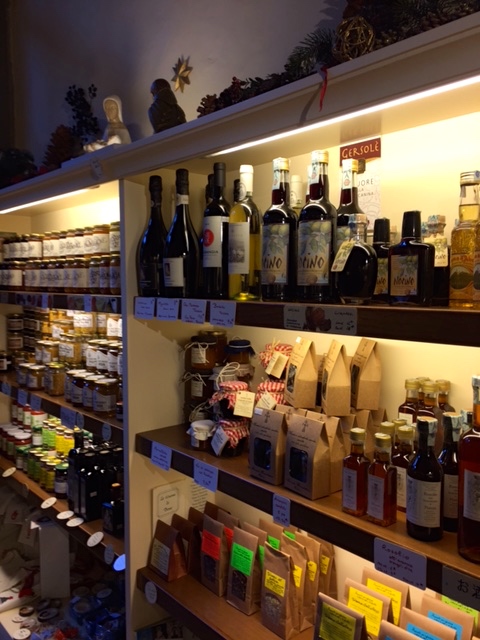
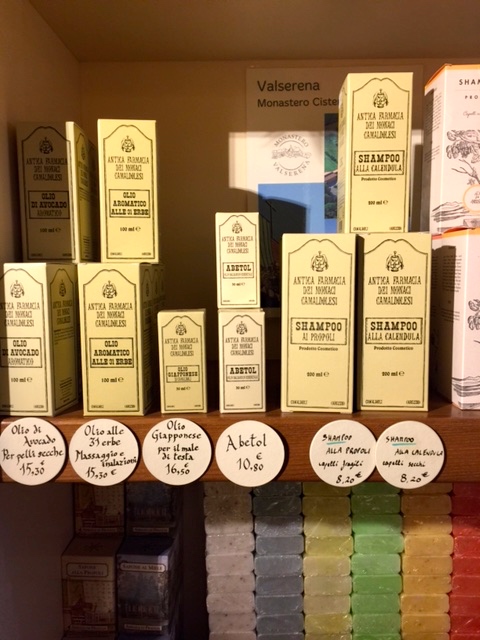
At the end of the pictures, I’ve included the offerings from the shop attached to the church. Here one may buy jams and jellies, spirits and wines, soaps and lotions, all made by the monastic orders.
Please enjoy!
Only in Italy: how to prop a door open
With a work of art, of course!

Now that’s what I call a sculpture!
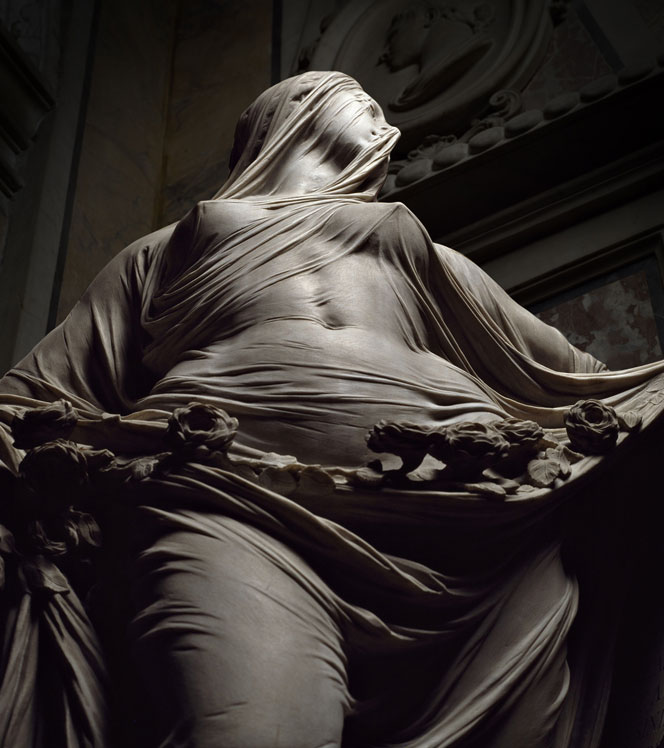
Antonio Corradini, Modesty.
You know you are an art historian when
You see the stance of Donatello’s David when you look at a little girl’s posture.


Angels in the architecture

To quote Paul Simon.
Or, perhaps the flying angel is taking a selfie?
Either way, I couldn’t resist.
xx, L
Art seen fully


The mighty lion carving at Santa Maria Novella in Florence is cut from a piece of stone so that it holds up a twisted column in the interior courtyard of the church.
 get back, lauretta!
You must be logged in to post a comment.