Pink confetti!

Confetti!

What does it say about me that I like the petals that have fallen, and the patterns they create, as much or more than I like the blooms on the trees?  Here you see the mossy trunk of a tree, the green of the lawn and the pink of the fallen cherry blossoms.

OLYMPUS DIGITAL CAMERA

See what I mean?  I love the textures and the way the pink petals have drifted to the edge of the grass, with the contrast of the concrete sidewalk.  It is so random and really catches my eye.  One second the petals are like this, the next they are gone.

OLYMPUS DIGITAL CAMERA

Have you ever seen a rosemary plant in bloom?  Unless you live on a coast, I’d wager  you haven’t.  So below is a close-up of how it looks.

OLYMPUS DIGITAL CAMERA

Who knew that rosemary had these lovely small lavender flowers in the spring?   I didn’t know until last week when I noticed them!

OLYMPUS DIGITAL CAMERA

Walking along the street I noticed someone (a child maybe?) had set out this offering to the flower gods.  It is composed of spent white camellias blossoms and the bright yellow heads of dandelion.  I love the fact that no distinction was drawn here in the value of the various flowers…dandelion right there with camellias.  Someone has a non-judgmental eye for beauty!

OLYMPUS DIGITAL CAMERA

See what I mean about the fading camellias?  These spectacular shrubs have been brightening the landscape here since late January, and are ending the show now in early April. In case you are unfamiliar with this species, you are looking at a pale pink blossoming camellia.  Some of the flowers have stayed on the plant as they have aged and turn whitish, then yellowish and then finally brown. Camellias have given us a pretty long running gift of pink, red, and white.  I bid you a fond farewell, camellias, and look forward to seeing you again next January.

Did you realize that gardeners are the most optimistic people?  Just check out the last sentence in the last paragraph and you will witness my proof.

And did you know that tea is made from a variety of the camellia?  From wikipedia we learn:

Camellia sinensis is the species of plant whose leaves and leaf buds are used to produce the popular beverage tea. It is of the genus Camellia (Chinese: 茶花; pinyin: Cháhuā, literally: “tea flower”), a genus of flowering plants in the family Theaceae.

OLYMPUS DIGITAL CAMERA

Typically, I don’t go for azaleas and rhododendron.  They are just too bright and gaudy for me (and I love gaudy marigolds…go figure).  But this foliage caught my eye and I decided to take their picture, because I think they were begging me to.  Lots and lots of people love these showy flowers.  Just not me.

OLYMPUS DIGITAL CAMERA

Back to the pink confetti.  Oh, how I love you!

OLYMPUS DIGITAL CAMERA

Our Italian word for the day:  confetti

Ciao for now, tutti!

Easter in Seattle, 2013

OLYMPUS DIGITAL CAMERA

If you are in Seattle in the next few days…

OLYMPUS DIGITAL CAMERA

Get yourself to 21st Ave. and Aloha Street…

For several blocks, 21st Avenue is awash in pink and scented with blossoms!

OLYMPUS DIGITAL CAMERA

It is almost too perfect! It feels like a Hollywood set for “spring.”

OLYMPUS DIGITAL CAMERA

No picture can capture the effect.  But, try picturing this:  sunny, warm, cool breeze, light fragrance, heady full pink blossoms.

OLYMPUS DIGITAL CAMERA

I suggest you wear your Easter bonnet.  You will feel right at home!

Bye!

Cherry Blossoms in bloom at UW quad.

Cherry Blossoms in bloom at UW quad

The sakura (cherry blossoms) are in bloom on the quad at the University of Washington!  I was there Tuesday, and they were at their peak.  The sky was blue, the sun was shining, and the effect of the very pale pink blossoms was awesome.

DSCN1360

Imagine the blue of the sky, the warmth of the sun, the pale pink of the flowers and the buzz of the bees.

You just about have it.  The fragrance was almost imperceptible.

DSCN1351

DSCN1352

Lots of people were out walking among the trees, taking pictures, or sitting on the grass below the petals.  It was a glorious day!

DSCN1353

DSCN1354

DSCN1355

DSCN1356

DSCN1357

DSCN1359

The UW campus has never looked more beautiful!

Sayonara!


The Seattle Art Museum’s got a brand new sign/artwork by Doug Aitken. Blog updated.

Seattle Art Museum has a brand new sign/artwork!

Yesterday the Seattle Art Museum unveiled Doug Aitken‘s new permanent installation entitled Mirrors. Three tall, shining letters, arranged vertically and created with mirror, delineate S-A-M. Now, when you are moving down First Avenue, you can quickly discern the museum from all the other nearby skycrapers.  This works perfectly if you are going south on First; the SAM letters look perfect.  It creates a bit of a problem if you are moving north on First, for then you see the S in SAM is backwards.

DSCN1412     Looking at sign from North.                       DSCN1413 Looking at sign from South.

Hmmm.  Still, it is nice to see the sign extending a bit over the sidewalk; it helps you identify the museum immediately.  The mirrored letters are outlined in white neon, which really helps them stand out, especially at night.

DSCN1429

In addition to the letters, the new installation brings an ever-changing face to the city’s landmark museum for, just behind the SAM letters, a large glass-covered screen has constantly changing video. Aitken shot all the  footage himself in the Pacific northwest. Images of local mountains, waterscapes, and the city itself flash across the screen in response to changing weather and light conditions.

DSCN1427

DSCN1430

There is a kalideiscopic effect going on here too; the images on the screen appear to be doubled and moving inward from the outside of the frames, or the reverse, I couldn’t stay in one place long enough to figure it out.  The only good vantage point for viewing the screen is from across the street on First.  I don’t know how you would get around this problem of limited sightlines using these materials and the exterior city elements, unless the entire facade of the building was used as a screen.  I suppose the cost would render this idea impossible. Still, despite these limitations, the installation seems to me to be an interesting way to integrate the outside of museum into the city, in a relatively unique way.

DSCN1425

This picture shows the Union Street facade of the building.  It has a second SAM sign as visible here.

DSCN1411

The installation is further enlivened with the use of narrow columns of colored lights that appear to run up and down the building’s western facade in the areas over the glass screen.    All of the light strips start about 20 feet off the ground and run up about 2/3rds of the building’s sides.

The lights go on and off at varying locations and speeds, so that the surface never appears static.  Nevertheless, this effect is relatively subtle, and you can look at the installation for a while before the lights actually register.  I appreciate this, because it never looks like a honky-tonk kind of advertisement.  It is much more sophisticated.

Aitken said: “I was interested in the idea of creating a living museum, a downtown building that could change in real time in relation to the environment around it. It‘s like an urban earthwork.” The artist works in both Los Angeles and New York, and has had prior installations at The Museum of Modern Art (MoMA) in New York, and the Centre Pompidou in Paris, as well as other prestigious museums. His work for SAM is his first-ever permanent museum installation.

Here at home…starting a Coursera course online…

Here at home...

With the arrival of spring this week, it is time to clean out and consolidate the stuff in my storage locker(s) at the EA.  This is almost as much fun as going to the dentist.  Only much more tiring and I am still cursing all of the stuff that I moved here from Denver.

Also, my boy is coming on Friday for 10 day spring break. So lucky he wants to spend it with his mom!

IMG_0706

This wonderful and aged camellia is still blooming.  It has been blooming its sweet heart out for about 6 weeks now.

IMG_0663                                        

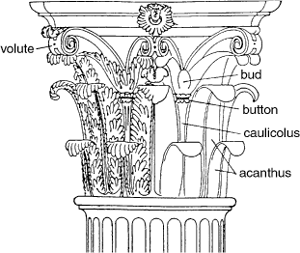
Here is a picture of the acanthus plant that grows with ease here in this temperate, moist climate.  I love acanthus because its leaves were the inspiration for the order of ancient Greek capitals known as Corinthian, see above and below.  If you remember Art History 101 you will recall Doric, Ionian, and Corinthian capitals.  It still amazes me that I am living in a place I can grow acanthus, and I have recently planted three of them in my “experimental gardens” at the EA.

corinthian capital


By the way, have you taken an online course with Coursera yet?  I just enrolled in four courses on a range of topics from English common law to Greek civilization.  The course on Greece was launched yesterday, and I am one of 30,000 online students taking the course taught by a prof from Weslyan University in Connecticut.  Some of us are busy introducing ourselves online, and we have students of all adult ages from Manilla, Russia, Australia, Spain, India, just to name a few, and students from all over the U.S. (including, incredibly, at least one mensa student of the ripe age of 11).  The lectures are online, as are the readings.  I finished the first unit on Minoan and Mycenaean cultures yesterday, and took the quizzes.  Eventually, if I pass all the quizzes (ha ha), I will get a certificate of course completion.  Obviously I am not working toward another degree, but it is very interesting and a brave new world.

Here’s some dope on the course, and visit here for more info:   https://www.coursera.org/

Current Session:
Mar 18th 2013 (7 weeks long) Go to class Enroll in Signature Track
Workload: 2-4 hours/week

About the Course
This course is a survey of ancient Greek history, covering the roughly 13 centuries that extended from the Minoan / Mycenaean Bronze Age (ca. 1800-1200 BCE) down to the death of Socrates in 399 BCE. Along with studying the most important events and personalities, we will consider broader issues such as political and cultural values and methods of historical interpretation.
Some of the topics we will cover include: relations between the Greeks and their neighbors to the East; Homer and the heroic ideal; the development of the type of community called the “polis”; the diffusion of Greek civilization from Southern Italy to the shores of the Black Sea; gods and mortals in myth, religion and ritual; the roles of women; Athenian drama; the treatment of slaves and foreigners; and the birth and evolution of democracy. We will strive to get as full an understanding as we can of this extraordinary, and extraordinarily influential, society.

Almost all the reading assignments are from ancient sources in translation. No previous knowledge of ancient history is assumed.