Città Nascosta, Firenze

cittanascosta

Chi siamo

Città Nascosta – Via Lungarno B. Cellini 25, 50125 Firenze

Tel. 055.68.02.590 / 055.68.01.680 | info@cittanascosta.it


Fondata nel 1994, Città Nascosta è un’associazione culturale nata per promuovere la conoscenza del patrimonio artistico e storico di Firenze e della Toscana.

Le attività proposte prevedono visite guidate, itinerari ed eventi personalizzati, esperienze uniche e indimenticabili, alla scoperta dei gioielli d’arte più nascosti della città e della regione.

Storici dell’arte, architetti, botanici, restauratori, proprietari e addetti ai lavori accompagnano i visitatori, offrendo sempre una prospettiva originale e privilegiata, con un’attenzione particolare alla qualità dei contenuti e alla modalità della loro divulgazione.


Le fondatrici

FOTO_B2_lowMarcella Cangioli, storica dell’arte e Presidente dell’Associazione, coordina e gestisce l’associazione.
Maria De Peverelli, storica dell’arte, lavora a Londra e si occupa di collezionismo privato.
Tiziana Frescobaldi, storica, si occupa dell’immagine e comunicazione dell’azienda di famiglia.


Città Nascosta oggi

Marcella Cangioli, presidente, storica dell’arte. Si occupa della promozione, del coordinamento e della gestione delle attività dell’associazione, e dei progetti speciali in italiano e in lingua straniera. Contatto: marcella@cittanascosta.it

Arianna Nizzi Grifi, segretario, storica dell’arte. Si occupa del programma dei soci “Percorsi d’Arte”, del coordinamento del programma dei soci “Sostenitori” e dell’organizzazione delle attività per clienti italiani. Contatto: arianna@cittanascosta.it

Sylvie Levantal, consigliere, storica dell’arte. Si occupa dell’organizzazione delle gite, viaggi e delle attività per i clienti stranieri, in particolare francesi. Contatto: info@cittanascosta.it

Emily Grassi, consigliere, storica dell’arte e guida turistica di Firenze e provincia. Si occupa della comunicazione, del coordinamento del programma “Grand tour fiorentino” e dell’organizzazione delle attività per i clienti stranieri, in particolare anglofoni. Contatto: emily@cittanascosta.it

Carlotta Quentin, consigliere, storica dell’arte. Si occupa della segreteria organizzativa e dell’accoglienza dei soci italiani e stranieri, in particolare anglofoni. Contatto: info@cittanascosta.it

Florence was literally carved out of the surrounding rocky hills

Screen Shot 2018-05-13 at 12.46.33 PM

Quarries and their role in the construction of Florence

An itinerary through Tuscany’s ‘cave’

Sabine Eiche
The Florentine, SEPTEMBER 8, 2006

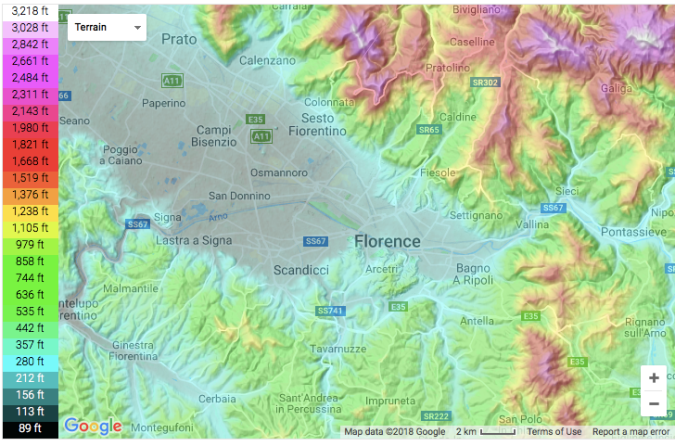
Has it ever occurred to you that the stony city of Florence was literally carved out of the surrounding hills?  It’s quite true. Countless local quarries provided the blocks of stone for the walls of medieval and Renaissance churches and palaces, and for the columns and architectural ornaments to decorate them. Pietraforte, a kind of light brown limestone, came from quarries at Costa San Giorgio, in the Boboli hill between Santa Felicità and Porta Romana, at Bellosguardo, and around Marignolle and Le Campore, all south of the Arno. To the north, the hills of Fiesole, Maiano and Settignano provided the blueish-grey sandstone pietra serena.

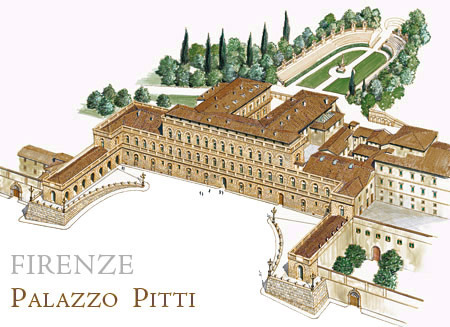
In the 13th century, load after load of pietraforte was hauled over the Arno to the outskirts of Florence to construct the enormous basilicas of Santa Maria Novella and Santa Croce. Even the piers inside these two churches are of pietraforte. Look at Palazzo Vecchio, the Log-gia dei Lanzi, the Bargello and Orsanmichele, and you are looking at pieces of the southern hills transformed into architecture. The gigantic blocks of rustication that you see on the façades of the 15th-century Palazzo Medici were cut out of pietraforte quarries. Filippo Strozzi, whose palace rivals that of the Medici in size, had endless loads of stone brought from quarries at Boboli and Marignolle. It is said that between November 1495 and March 1497, Strozzi’s heavily-laden carts rattled over the Arno more than a thousand times. At Palazzo Pitti, the builders had it much easier, since their source (the Boboli hill) was right behind the palace. In fact, Palazzo Pitti sits on the hollowed out part of one of these quarries.


If pietraforte was used mainly for the construction of walls, pietra serena was used above all for columns, stairs, doors and windows. The oldest of these quarries, dating back to Etruscan times, were at Monte Ceceri in Fiesole, and they continued to be worked during the Roman and early medieval periods. The demand for pietra serena was so high that in the 13th century new quarries had to be opened further east, around Vincigliata and Settignano. By the 15th century, when Brunelleschi’s architectural style boosted the popularity of pietra serena to unprecedented heights, it was also being extracted at Golfolina, west of Florence.


Brunelleschi chose quarries that would provide enormous blocks of pietra serena from which he could cut entire column shafts. He quarried the stone for the loggia of the Ospedale degli Innocenti at Trassinaia, near Vincigliata. The columns for San Lorenzo came from a site nearby, still known as the Cava delle Colonne.


http://www.theflorentine.net/art-culture/2006/09/quarries-near-florence/

Bagni di Lucca


bagni-di-lucca-artfestival-1024x683

In its heyday, Bagni di Lucca, with its cool climate and great variety of hot springs had been a very fashionable European holiday resort and spa town. Beautiful elegant hotels had been built all around the spas. Villas, owned by heads of state and various ambassadors and dignitaries were crammed with antique furniture, musical instruments and rare books.

Ponte della Maddalena, Tuscany

There were cultural centres, casinos, Anglican churches and cemeteries, restaurants and theatres. Famous poets, singers, playwrights, writers, actors and actresses used to flock there in the summer months. Presumably, many wars and marriages were arranged and important state decisions taken inside those thick stone walls, so far from indiscreet ears.

70

20120218-025200

With the advent of fascism in Italy, renewed nationalism and World War Two, the “guests” of Bagni di Lucca suddenly became completely undesirable, and were later either deported or forced to flee.

Their properties were confiscated which meant that the local fascist bosses, for the most part rude uneducated thugs, suddenly had access to and became owners of luxurious properties full of rare works of art. There are tales of grand pianos being chopped up for firewood, rare books being transported to the local paper mills  and being sold by the kilo, manuscripts being burnt on bonfires, and paintings being thrown out on to the grass where rain and sun eventually got the better of them.

Some of the villas miraculously passed into the hands of new owners. Deeds were drawn up, and illiterate mountain folk suddenly felt like princes and princesses. Some were used for more sinister purposes, housing torture and detention centres for political opponents, intellectuals and partisans or worse, boarding houses for Jewish and gypsy children before they left for their final destinations.

The grand rooms and theatres, which had housed great composers and musicians, were turned almost overnight into brothels or barracks for Mussolini’s troops.

At last! Many dignitaries thought that law and order has been restored. We are in charge again and those foreigners got what they deserved!

Of course, things didn’t quite turn out as expected. Italy did not get its empire, but instead a humiliating loss in which not only did it once again have to bow down to the overwhelming power of the Anglo-American armies, but it also had to sign really unfair future agreements, thus becoming a near slave to the foreign oil barons, military-industrial complexes, big Pharma religion and cars and motorways.

After the war there was no money for the upkeep and maintenance of the once magnificent hotels and spa complexes and anyway the whole of Italy was busy doing other things. People were emigrating in hordes, abandoning villages, hilltops and mountains for large industrial cities in the north, going to work in the booming car industries or in foreign cities.

The people were all working like busy bees for their new masters, building motorways and high rise blocks of flats, spraying clean fields, vineyards and fruit farms with toxic pesticides, getting rich and watching TV.

Bagni di Lucca became a ghost town. Gone were the shepherds and their flocks, the orderly rows of vegetables, the pigs, cows, geese and ducks, the large families and old traditions. Winters passed and vegetation covered the villages and country lanes. Vines grew over and smothered the beautiful old buildings until there was nothing left, except memories in books which no one ever opened.

Small factories sprang up in Bagni di Lucca: paper mills spewing out clouds of black smoke and colouring the rivers pink and blue, and the souvenir industry which exported plastic figurines to many parts of the world. The owners of these businesses became very wealthy and the only people left who had not emigrated elsewhere worked entirely for the “benefactors” who could therefore pay as little or as much as they liked, as people had no other alternative.

In the 1960s and 70s, people had started to talk about the possibility of starting up the tourist business once more but this was generally discouraged by the benefactors as it would have meant distraction for their workers. So by the time the international association arrived in town they were entering a world which might as well have been in a time warp.

Actually, as we later found out, they, being mostly highly intelligent and educated people, had vision and they had realised back then that it was time to flee the big cities before globalisation, the de-industrialisation of Italy, mass unemployment, climate change, wars for oil and water and social unrest hit us all. They were right about that, they just chose the wrong place.

Welcome to Tuscany.

Lord, Anna. Welcome to the Tuscan Dream: Italy’s Broken Heart (p. 63). Scribo Srl. Kindle Edition.


The quarries of Settignano, where Michelangelo lived

santerenziano

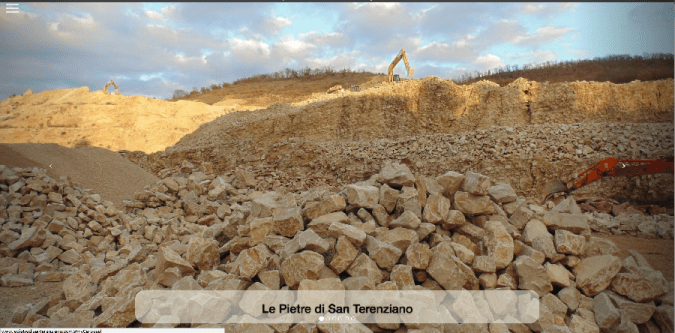
The Settignano quarries yielded macigno, a fine-grained grey sandstone that was much prized in Florence. It is a gravely beautiful material in a range of dark-greenish and bluish greys, fine enough to carve in crisp detail and with a quality of simultaneously absorbing and reflecting the light, producing a paradoxical impression of dark luminosity.

This is the material that Brunelleschi used for the columns and capitals of his buildings. Michelangelo would employ it in the same way in his projects at San Lorenzo in Florence.

The Florentines, being interested in this stone enough to make fine distinctions, gave names to the differing grades, the finest type being pietra del fossato, and the others including pietra serena and pietra forte.

Michelangelo, who had immense sensitivity to stone, went further than these broad categories. He knew that each quarry, every stratum, would produce material of subtly differing character. The contract for the stairs and two doors of the library Michelangelo was building at San Lorenzo in the 1520s stipulated that the pietra serena supplied should be of the same ‘colour and flavour’ (‘ colore et sapore’) as in the sample. ‘Flavour’ is a wonderful word to use of stone: bringing out its sensuous character as if it were actually edible.

When he designed buildings in Rome, Michelangelo was attentive to the qualities of the local material, travertine, a limestone noted for the pits and troughs in its surface – as different in its flavour and colour from Florentine sandstone as roast beef is from pâté de foie gras. His use of travertine for the walls of St Peter’s and the palaces on the Capitoline Hill made the most of its rugged nature.

For sculpture he used only the finest type of pure white marble, known as statuario, found particularly in certain quarries above Carrara. Even this sculptor’s marble, according to the sculptor and goldsmith Benvenuto Cellini, came in at least five or six grades, the first having a ‘very coarse grain’ and the softest, which he describes almost like flesh, ‘the most cohesive, the most beautiful and the tenderest marble in the world to work from’.

Michelangelo was renowned for his ability to discern the quality of a potential piece while it was still in the rockface. When he was engaged from 1516 onwards on large construction projects at San Lorenzo in Florence which involved the quarrying, transport, dressing and carving of huge amounts of both marble and macigno, a majority of the masons he employed were from Settignano.


Gayford, Martin. Michelangelo: His Epic Life (Kindle Locations 803-811). Penguin Books Ltd. Kindle Edition.

Spring equal camellias

Are you a fan of camellias? I am.

Discover the Gardens in Italy where you can admire them!

OLYMPUS DIGITAL CAMERA

OLYMPUS DIGITAL CAMERA

OLYMPUS DIGITAL CAMERA

OLYMPUS DIGITAL CAMERA

OLYMPUS DIGITAL CAMERA

OLYMPUS DIGITAL CAMERA

OLYMPUS DIGITAL CAMERA

OLYMPUS DIGITAL CAMERA

OLYMPUS DIGITAL CAMERA

OLYMPUS DIGITAL CAMERA

OLYMPUS DIGITAL CAMERA

OLYMPUS DIGITAL CAMERA

OLYMPUS DIGITAL CAMERA

OLYMPUS DIGITAL CAMERA

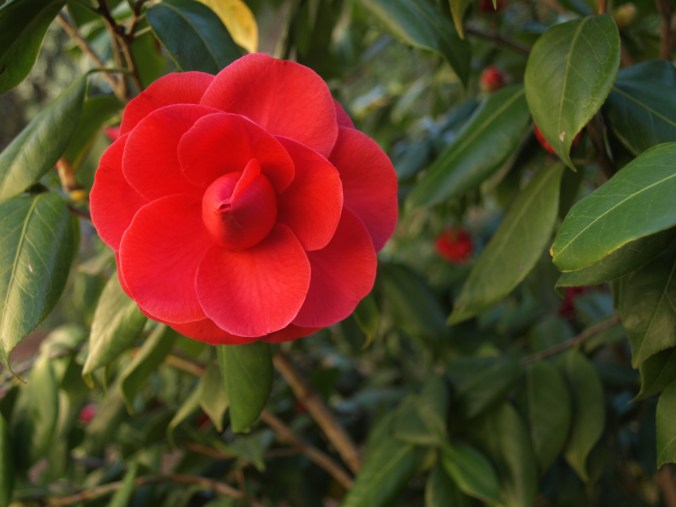
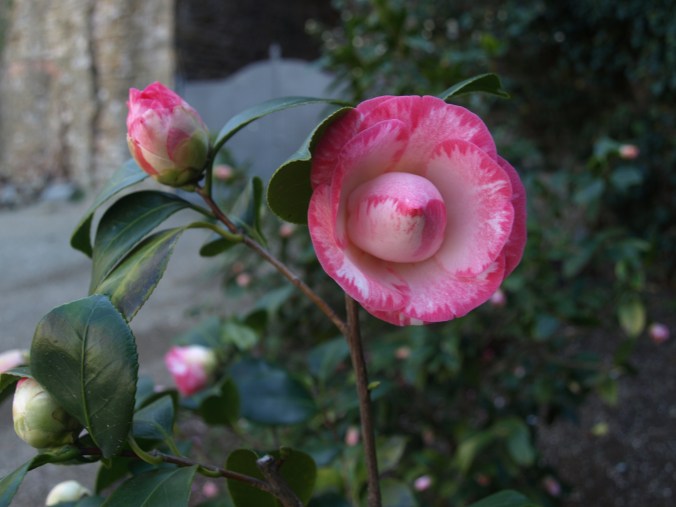
Today, beautiful specimens of Camellias can be admired in many gardens. Between Italy and the Canton of Ticino, from the first weeks of March and throughout April, it is possible to get lost among the colors and the scents of the Camellias in bloom. In Switzerland, in Locarno, a few miles from Lugano, is the Parco delle Camelie, inaugurated in 2005, to fascinate you with its 850 varieties of camellias cataloged, to which are added 70 still unidentified camellias , planted at the southern end of public paths, and 130 double camellias, which form a dividing hedge and are used primarily to provide cut flowers for the annual show held in spring.
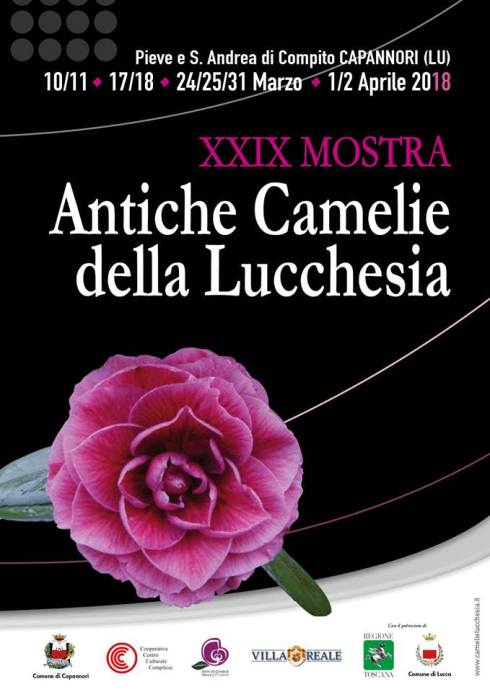
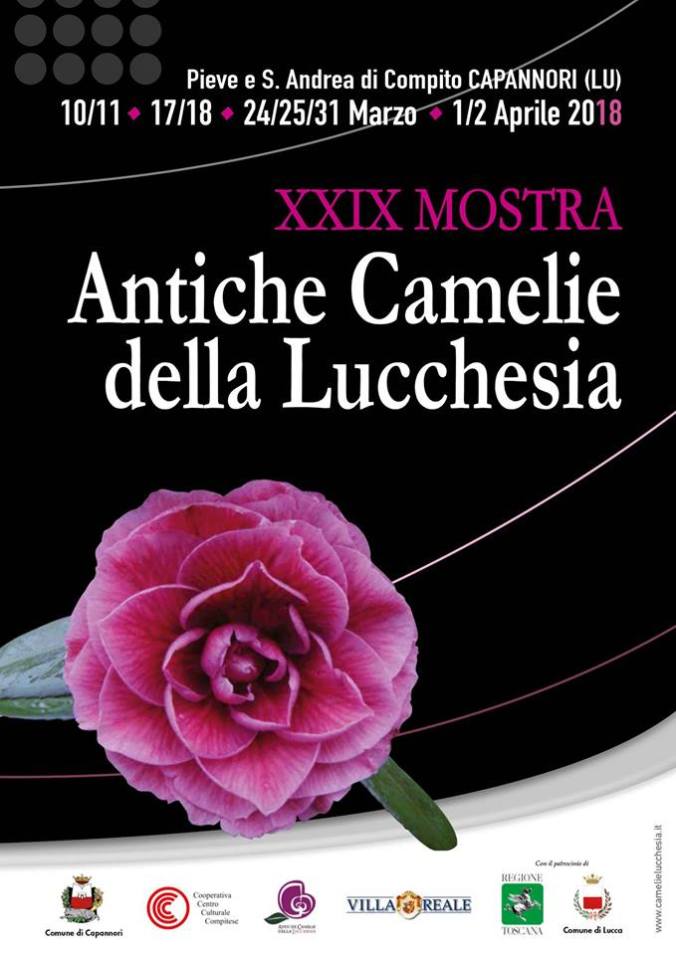
In Tuscany the wonderful Viale delle Camelie of the Giardino della Villa Reale di Malia (Capannori, LU) is waiting to give you an unforgettable walk, while in Florence in spring the flowering of the camellia grove of the Giardino Bardini , placed behind the wonderful belvedere on the city.

27336333_10156132894363588_2775332094118318956_n

You can find more info here:  http://www.grandigiardini.it/lang_EN/articoli-scheda.php?id=77

Signa, Italy and straw hats

Straw hat

Tip your hat to Signa

Signa is a comune (municipality) in the Province of Florence in the Italian region Tuscany, located about 12 kilometres (7 mi) west of Florence. As of 1 July 2013, it had a population of 19571 and an area of 18.8 square kilometres (7.3 sq mi).[1]

The municipality of Signa contains the frazioni (subdivisions, mainly villages and hamlets) Colombaia, Lecore, Sant’Angelo a Lecore and San Mauro a Signa. Signa is a typical Tuscan town. On the day after Easter, there is an important religious festival in honour of the Beata Giovanna. There is a procession that parades in the streets of Signa, and many people wear old costumes.

In Giacomo Puccini‘s Gianni Schicchi, the “molini di Signa” (mills of Signa) are the most coveted by his relatives of Buoso Donati’s properties. The 1875 novel Signa by Ouida (Mary Louise Ramé) is set in Signa.

A quick survey of the Tuscan straw hat town

Opera fanatics may recall Signa’s role in the Giacomo Puccini-penned “Gianni Schicchi,” but Puccini superfans and Florence area residents aside, it remains relatively unknown.

Right at the junction of three key Tuscan rivers—the Arno, Bisenzio and Ombrone Pistoiese—it’s home to a longstanding craft tradition with inextricable ties to the land itself.

Dig into the territory and its top product with these tips.


The signature craft in town is undoubtedly the straw hat, known in Italian as the cappello di paglia and highlighted in the Domenico Michelacci Straw and Weaving Museum. The museum’s namesake, Domenico Michelacci, was an enterprising 18th century man who was among the first to depart from cultivating wheat strictly for dietary purposes: instead, he intentionally set his sights on straw to be used in weaving.

Michelacci worked specifically with grano marzuolo, set apart for its tiny grains and small ears. A watershed moment for the local economy, this change introduced by Michelacci ultimately led the Florentine area to become the West’s first area for high-quality straw hat production, piquing the attention of wealthy clients around the world.

Demands of clients have naturally shifted through the centuries, as have the fashions themselves, but the straw hat remains the icon of Signa. A visit to the museum will illustrate why: each room showcases important elements of this niche market and its role in local history.

Those most interested in the links to the land will enjoy perusing the different types of wheat on display, while the more aesthetically minded might prefer the plethora of hats spanning the early 20th century to the 1970s. An additional room focuses entirely on the various machines and tools used to manually work with straw (although this type of equipment is dispersed throughout the museum).

For more, see http://www.turismo.intoscana.it/allthingstuscany/aroundtuscany/florence-straw-hats/

Tuscany in flowers

I love camellias.  They are my favorite flower along with peonies, penstemen, roses, lily-of-the-valley, violets, marigolds, lilac, viburnum, geranium, anything vining and specifically wisteria, iris, carnations, pinks….I could go on and on.

27336333_10156132894363588_2775332094118318956_n

But, my all-time favorite is the camellia.  Look whats happening in Tuscany this spring!

Lemon tree, so very pretty!

If I were still living my old and easy life, back in the USA, I would never write this kind of post.  However, as you know, I’m in Florence, building a new life from the ground up.  It takes time (ci vuole tempo) and a lot of perseverance and just plain hard work to build a new life in a new country, no matter how many times you were in that country on vacation.

I’m not complaining!  I love this challenge.  But my little daily victories might not seem like much of anything, but to me they are ginormous.  And that brings me to my new lemon tree!

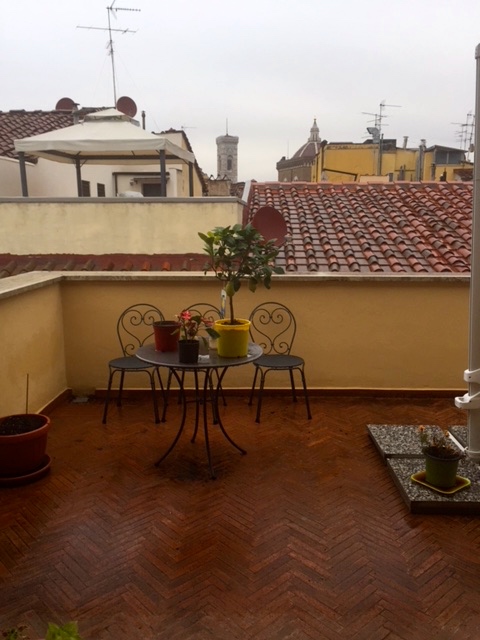
Here it is in all of its new splendor on my Florentine terrazzo.  Isn’t she pretty?  I think she will have a name and I’m considering the possibilities, but in the meantime, let me share my small win.
IMG_7333

So, first of all, I never dreamed in my life that I would ever be able to grow a lemon tree! And it remains to be seen if I can.  But, here I am, living in a place where it is possible to do!  That right there is a big victory for me.

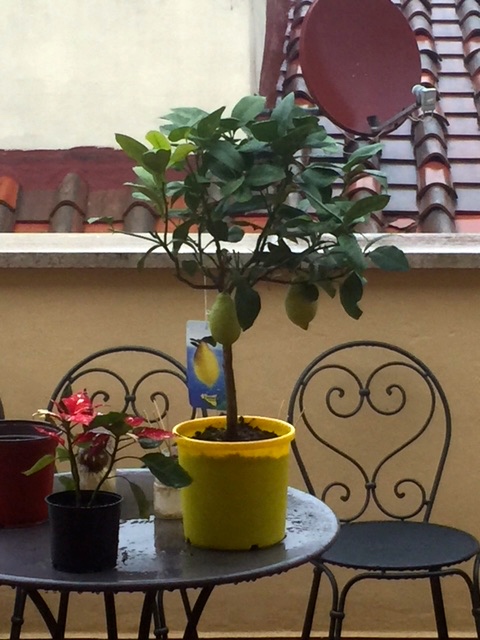
She has two large lemons already (can you see them, hanging near the bottom–the so-called “low lying fruit” that are so easy to pick when discussing politics) and I think I spotted a bud for a 3rd.
IMG_7334

Another aspect of this small win is that I spotted my tree in a forgotten corner of my local supermarket, a place I go at least every other day.  Don’t forget I carry all my supplies and groceries home, bag by bag, and you know I only have the two hands!

My lonely lemon tree was sitting next to one friend, who, I must say, was not as attractive as mine.  And it only had one lemon hanging.  I looked and looked, turning both pots around and around, looking for the price.  Not found.  So, I summoned up my courage and said mi scusi to the store manager, who is often to be seen sitting in his tiny cage of an office near the front door of the store.  He turned and I asked him, in my best student Italiano, “how much are the lemon trees?”

He looked confused (was it my accent, or my murdering of Italian?), then he asked me, in italiano, “what lemon trees?”

I replied that I would show him and he went with me to the outside corner of the store and he turned the two pots around and around and he couldn’t find a price for them either.  But he had a resource!  I followed him into his office and he looked the price up on the computer.

He told me that the trees were 24.99 Euro oggi (Wednesday), but he leaked some valuable info to me.  And here is where my victory begins!  I understood what he was telling me.  So, I casually asked, in Italian, “well, what will the price be tomorrow?”  The truth is I would have happily paid 25 Euro to become a lemon tree grower.

He smiled (Florentines are thrifty people) at me and said domani the price will be 19 Euro, but you have to have a Conad loyalty card!  I smiled back and said “I have a loyalty card” in italiano and I added, in italian, that I was afraid that if I waited until tomorrow my tree would be gone, someone else will buy it.  He hear and understood me and he offered me a solution. He said he would hold the tree for me!!

He got some paper and asked for my name.  Now, here is another virtue, for me personally, of living in Italia.  In every other place I have ever lived or visited, I have had to spell my long, unusual name.  Not a big deal, but it gets tiresome.  People usually misspell it anyway and so I typically, in the USA, say my name is Laura.  That’s the root of my name anyhow and much easier for people to navigate.

But, I’m living in Italia now and, by some quirk of destiny, I have an Italian name! How I came by my name is a long story, but just know that I have no Italian heritage and my grandmother had my name before me in a similar fluke history.

So, Wednesday, with the store manager in Florence, I proudly pronounced my name the correct way and he wrote it down without one missing letter!  and he didn’t turn any of the letters around either!  These are always very satisfying moments!

IMG_7334

So, I watched him write my name, tape it to the pot, and pick up and carry my tree to the back room.  I waited anxiously because the truth is that I didn’t know if he wanted me to pay for it then and pick it up tomorrow or if I was supposed to come back tomorrow.

I quickly decided to stop looking so needy and do what I’d do if I were at home in the states.  I left the store, planning to arrive the next day to pay and pick up my plant.

And, that’s what I did.  And it worked perfectly! And I got my new tree for 19.99Euro with my Conad card!

I’ll just add that yesterday, when I went to pick up my tree, it was pouring rain and the store was almost empty.  I have never seen it so deserted.  So, when I carried my lovely up to the cassa there were two bored cashier ladies, and their eyes lit up when they saw my beautiful tree come around the corner.  They kept remarking how “bellina” my tree is and asked me if I had a place outdoors to grow it.  I happily assured them that I did!  They seemed genuinely happy for me and my tree!

And, now my lovely little lemon tree is sitting in a place of honor my living room, waiting for warmer weather and the opportunity to grow as nature intended, in the heat and sun of a Tuscan summer!

Wish me luck! In bocca al lupo!