From the land of art!
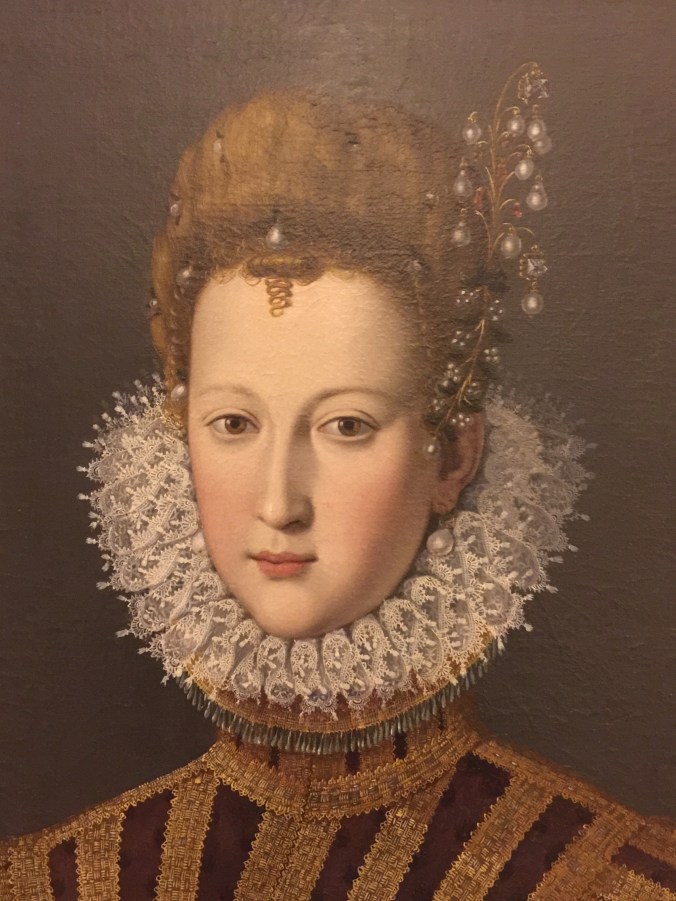
Painting in Casa Vasari, Arezzo.
From the land of art!
Painting in Casa Vasari, Arezzo.
All the marble from the Italian Renaissance came from these mountains in Carrara. I had a fly-by view of them from the train last summer. I plan to visit Carrara again soon.


OLYMPUS DIGITAL CAMERA
OLYMPUS DIGITAL CAMERA
OLYMPUS DIGITAL CAMERA
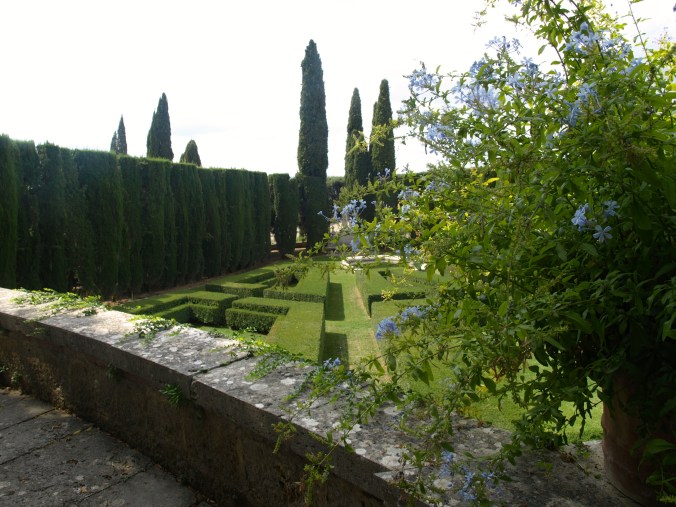
OLYMPUS DIGITAL CAMERA
Chances are, you don’t know this Florentine piazza, even though it’s right in the city. Unless you live near this particular neighborhood, you probably wouldn’t have reason to ramble over to it.
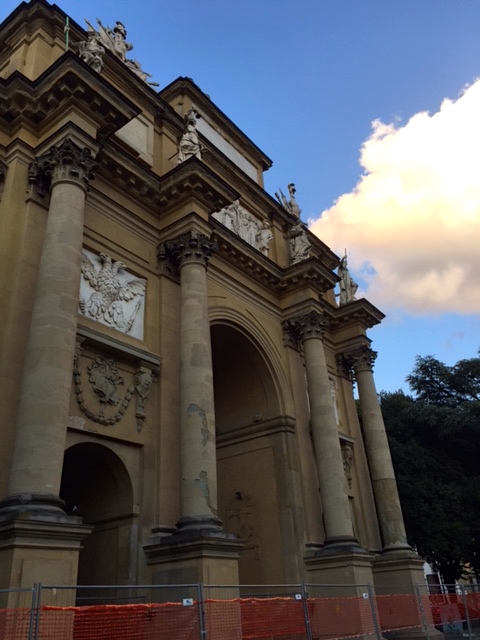
But, maybe you should! The Piazza della Libertà.
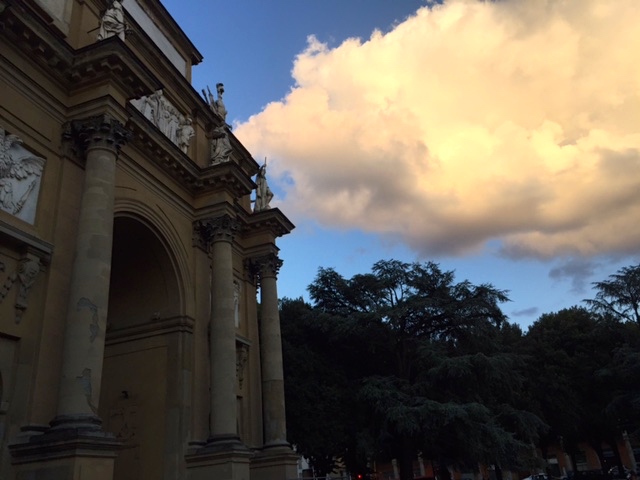
I happened to be there on a recent evening, on my way to meet a friend for dinner at a great neighborhood trattoria, and the sky was particularly dramatic as I walked by the piazza’s centerpiece, the neoclassical arch pictured above.
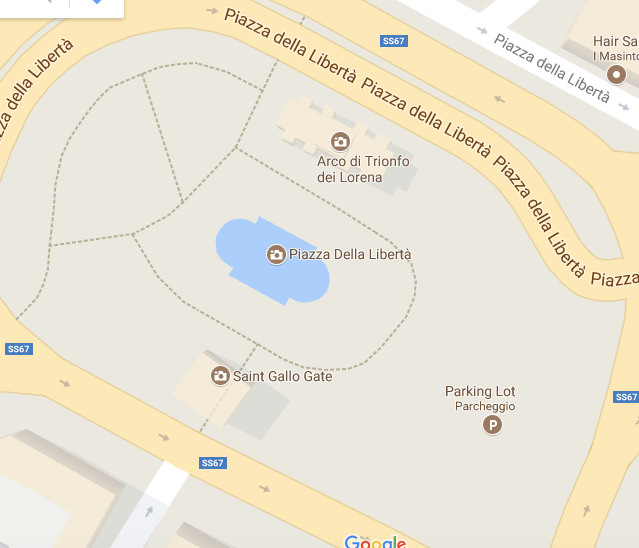
Piazza della Libertà is, in fact, the northernmost point of Florence’s historic center, at the end of Via Cavour. The piazza was created in the 19th century when the Viali di Circonvallazione was constructed around the city. You can find the piazza in the center of this Google map.

The most recognizable aspect of the piazza is the neoclassical Arco di Trionfo dei Lorena, or the Triumphal Arch of the Lorraine, which was constructed on this spot in the 1730s to celebrate the arrival of the new rulers of Tuscany, the Habsburg-Lorraine dynasty.
The arch was begun after 1737 in order to be finished in time for the January 1739 arrival of Francis Stephen of Lorraine, Holy Roman Emperor and Grand Duke of Tuscany. Francis traveled to Florence with his wife, Maria Theresa, and his brother Charles. They arrived on 20 January 1739 and stayed 3 months. Tuscany was governed by a viceroy, Marc de Beauvau-Craon, for the entire reign of Francis.
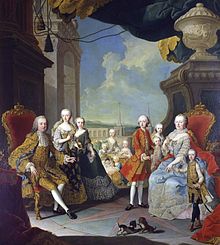 Francis I and his family, by Martin van Meytens
The arch is attributed to Jean Nicolas Jadot, who was sent to Florence in anticipation of the arrival of the new ruler. It is likely that Francesco Schamant of Lorraine also helped design the arch. The statuary was added later, in 1744.

To celebrate the arrival of the Habsburg-Lorraine dynasty, the newly-constructed arch would have been decorated with many ephemeral elements, including tapestries, to greet the new rulers as they processed along the Via San Gallo and into Florence in January 1739. Below are the Grand Duchy of Tuscany’s flag and coat-of-arms.
.svg)  |
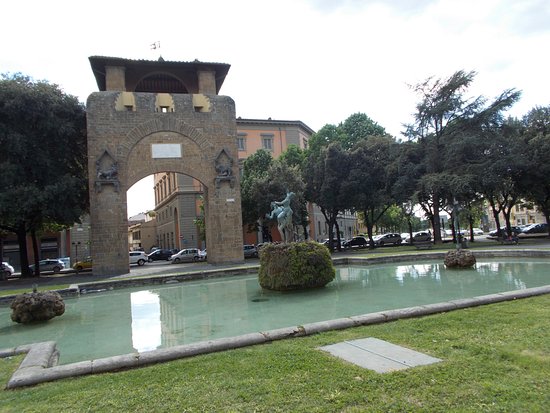
The arch itself has 3 openings, a larger central one flanked by two smaller ones. Ten classical columns with Corinthian capitals are attached to the arch. Most of the sculpture on the arch were added later, after the entry of the Habsburg rulers. The sculptural program was probably produced locally. They include bas-reliefs and depictions of flags and arms. The southern facade has two double-headed ages, which were the symbol of the Habsburg dynasty. An equestrian statue is mounted on top of the arch; it is supposed to depict King Francis.
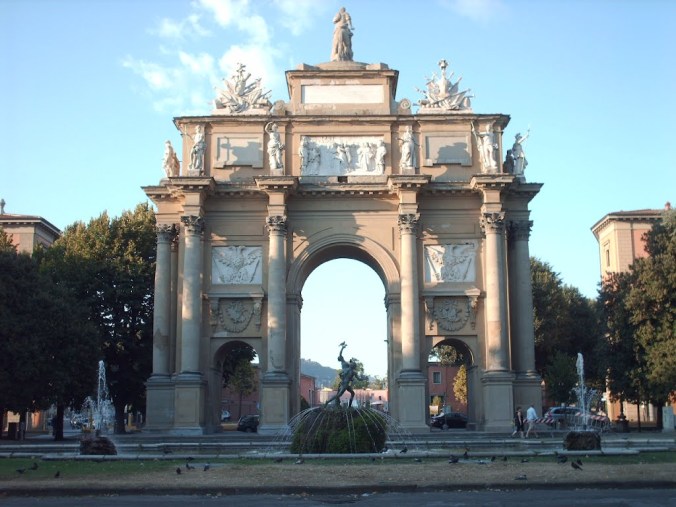
Six allegorical figures perch along the plinth, appearing to cringe as they are besieged by the swirling traffic that zooms around the piazza.
As for the rest of the elliptical shaped piazza, it was designed by architect Giuseppe Poggi in the 1860s and 70s; it is surrounded by palazzi Poggi designed, and has a pool with fountains in the center of the tree-lined park.
The square was originally named Piazza Camillo Cavour; it was changed in 1930 to Piazza Costanzo Ciano, in 1944 to Piazza Muti, and in the 1945 to Piazza della Libertà.
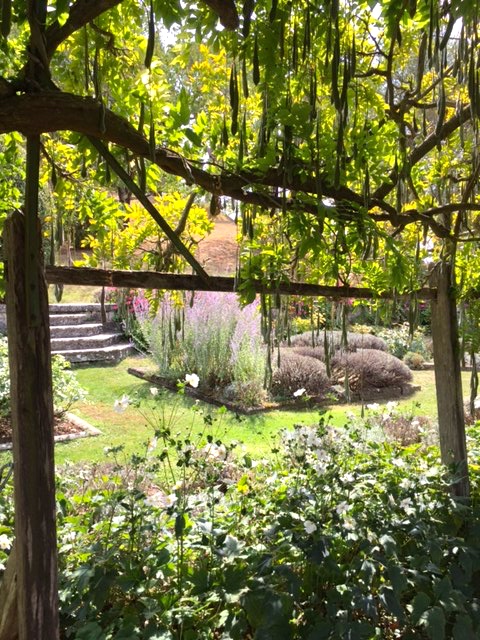
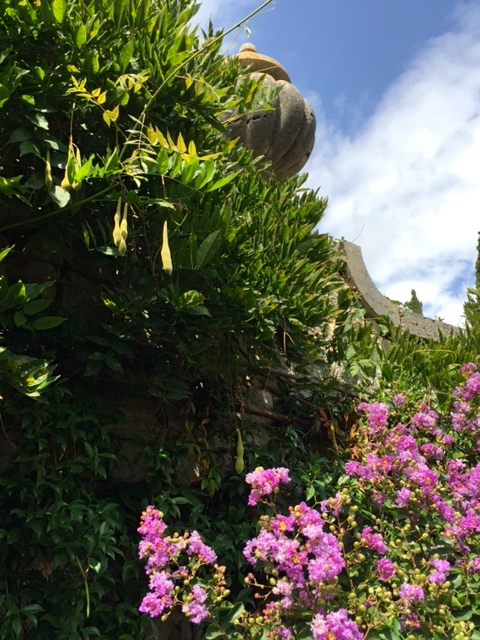
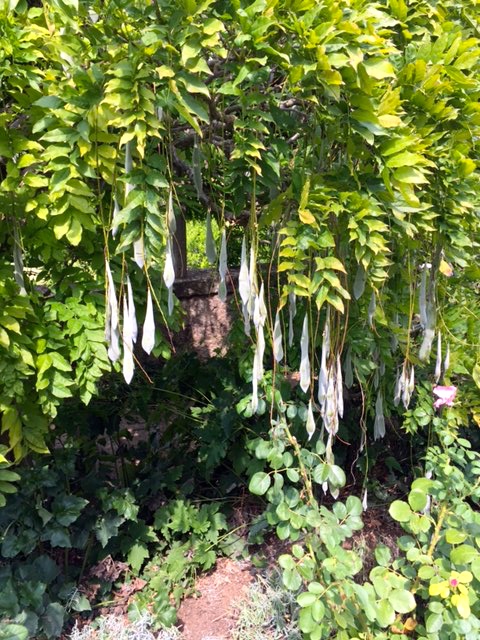
So artful, hanging from the vines in late summer, early fall.
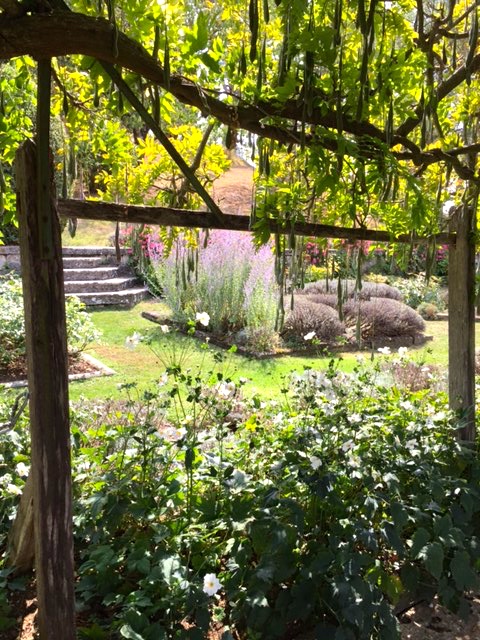

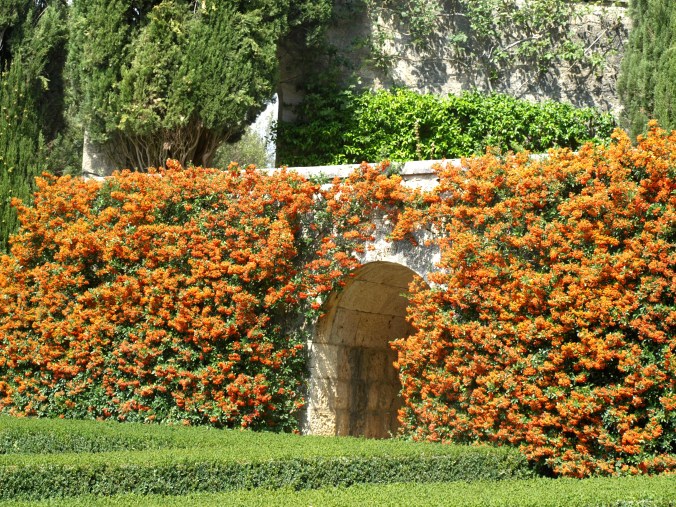
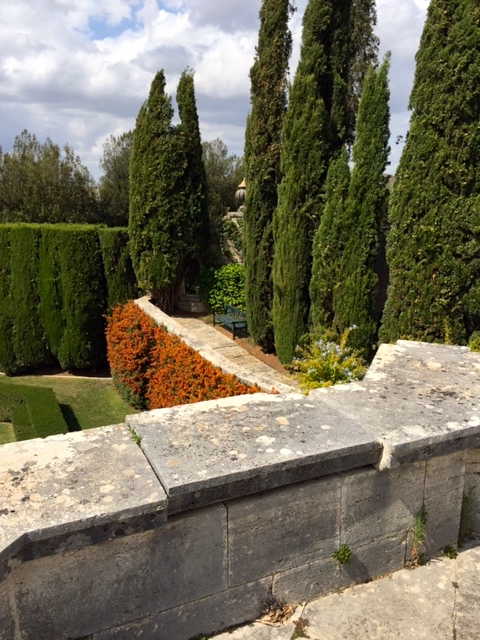
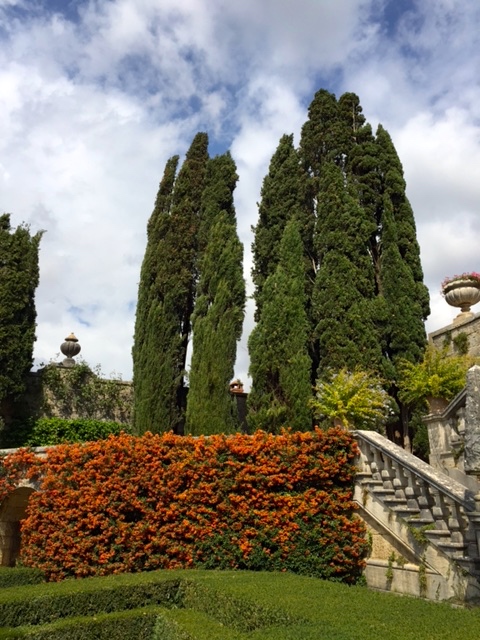
Glorious living wall of glowing orange. Villa la Foce.
OLYMPUS DIGITAL CAMERA
Let’s say you are one of the major sculptors of Renaissance Italy, and that you live in Florence. Where would you want to have your studio?
How about, right on the piazza around il duomo? Non e’ male!
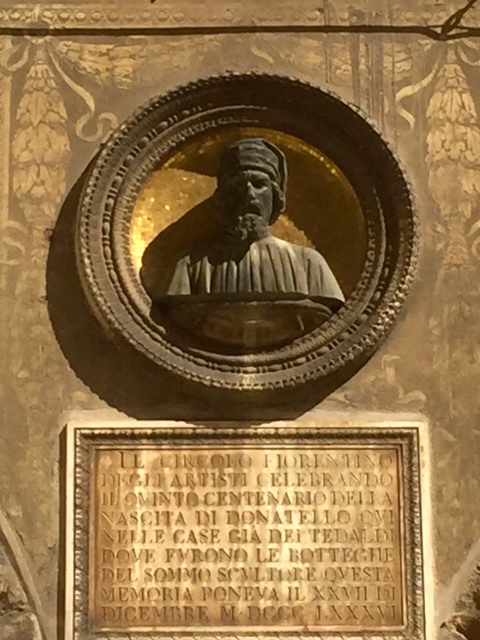
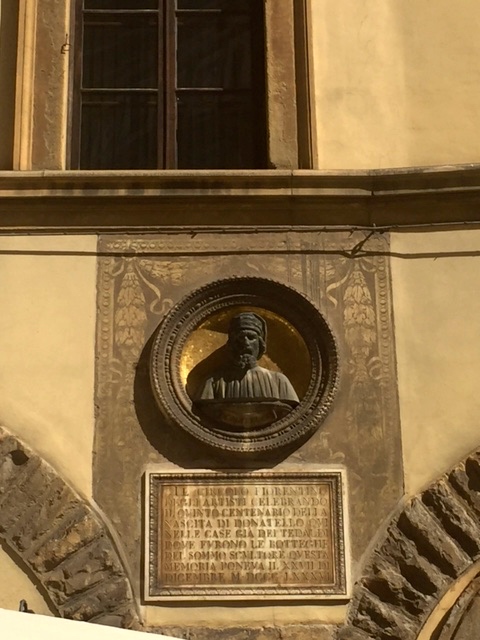

Using the map above, you will find the bust of Donatello and the plaque recording his studio location about where the P in “Panini Toscani.” You can find Panini Toscani words on the upper right side of the map.

We know some, but not enough, about Donatello (c.1386-1466). He was apparently born in Florence and grew up with the Martelli family, where it is hypothesized that he received early training from a goldsmith, before training and working in the studio of the famous metalworker and sculptor, Lorenzo Ghiberti.
There is very little known about his life as he was growing up; however, Vasari tells us a few stories which give insight to the generous and proud man that he was. Vasari, in his “Life of the Artists” where he wrote biographies of other artists, enjoys playing with the name Donato which is a variation on the Italian verb “to donate”. Several pieces of Donatello’s artwork were donated to those whom he held in high esteem.
It is possible to see many pieces of Donatello’s works throughout Florence – but be aware that several pieces available on display outdoors are expert copies since the originals have been moved indoors for safe keeping.
The map below shows the spots in Florence where you can find major Donatello works.

Both the Museo of the Opera del Duomo and the Bargello have extensive works by Donatello. It is so easy to forget that many pieces were made for a specific setting, like the facade of a church or an altar. Once they’re in a museum, even if the work is beautiful on its own, you sense that if viewed in its original position, the work of art would seem different.
If you decide to go outside of Florence and still want to see works he had a part in, here’s a short list to guide you:
In the San Matteo National Museum in Pisa, you can view the Reliquary of San Rossore, statue, gilded bronze. Via San Matteo in Soarta 1 (Pisa)
At the Villa Guinigi in Lucca, (also known as “pleasure palace” but which is now a national museum), you can admire Madonna and Child relief in tile. Piazza della Magione (ex Manifattura Tabacchi), Lucca
Inside the impressive Cathedral in the center of the historic part of Arezzo, you can admire the baptismal font with a bas-relief marble carving of the Baptism of Christ.
Between the Baptistery of San Giovanni, the Cathedral of Siena and the Museum dedicated to the artwork from the Duomo, you will find several works of art dating from the time Donatello worked in Siena.
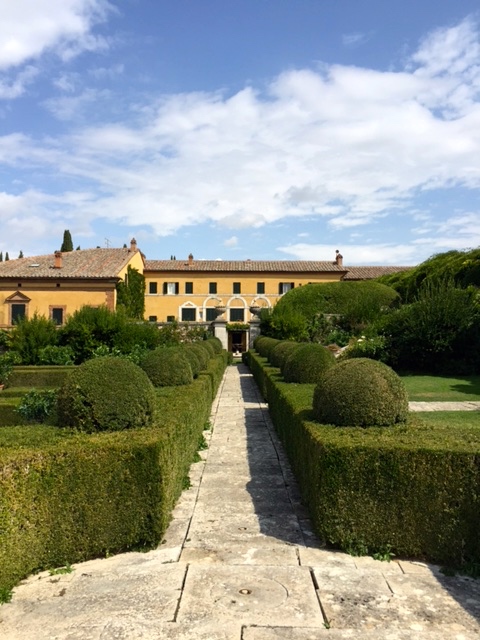

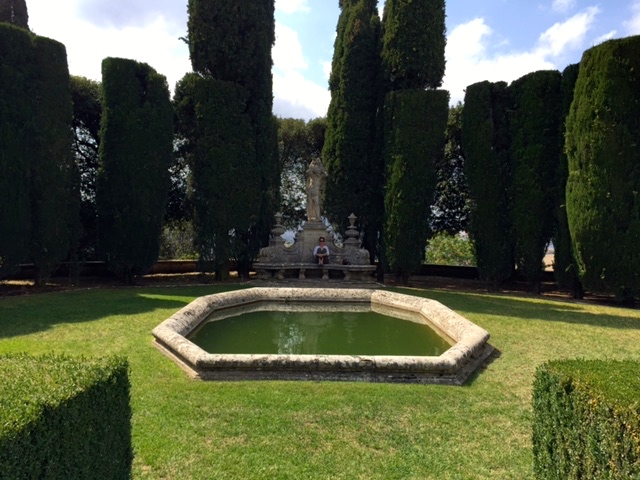
Because one post is not enough to reveal la bellezza!
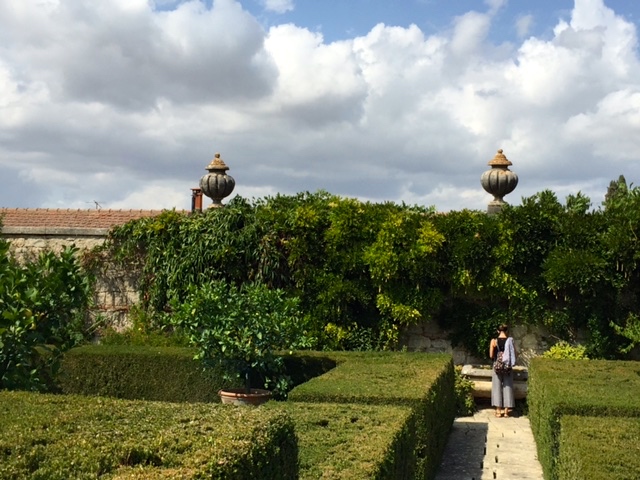
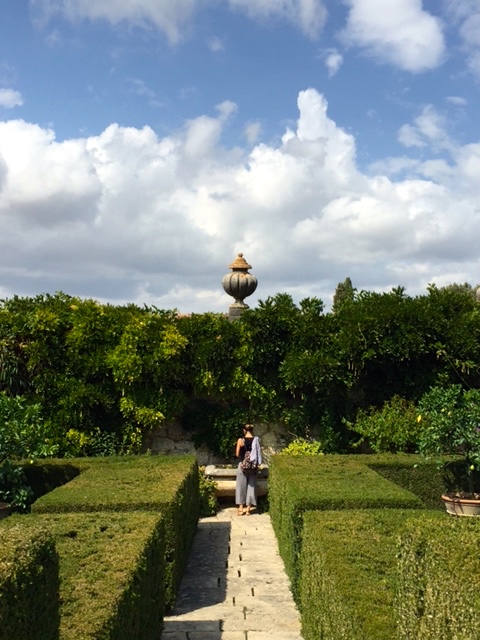
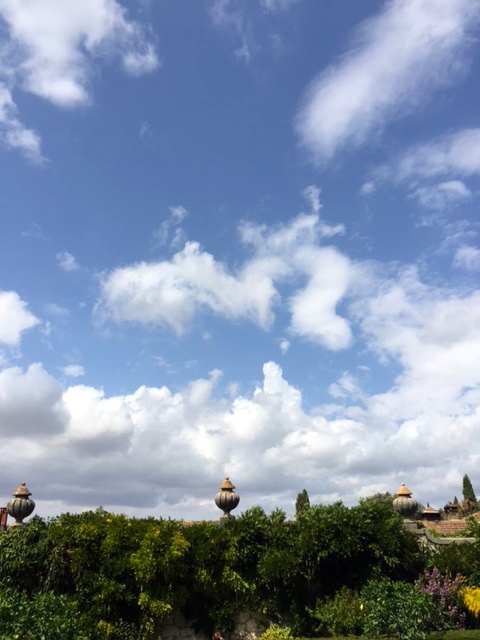

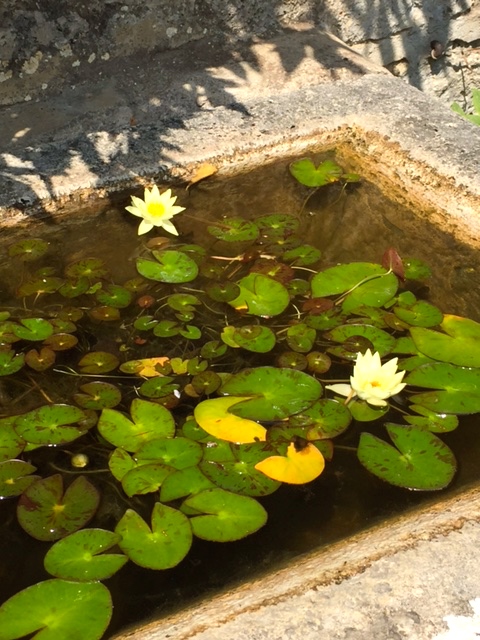


The perfect spot at which to end your day of visiting Val d’Orcia and Iris Origo’s Villa La Foce is at the restaurant owned by the descendants of Origo.
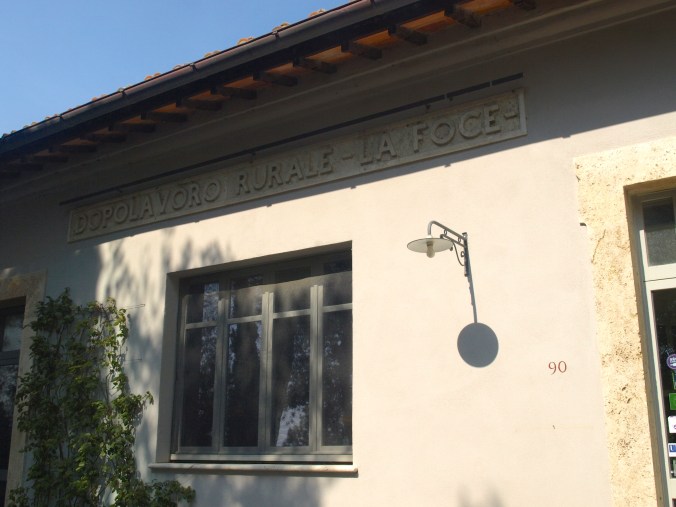
If you look hard at the picture below you will see the words: Dopolavora Rurale – La Foce. That’s the name of this great dining spot and its menu and dining garden will delight you.
OLYMPUS DIGITAL CAMERA
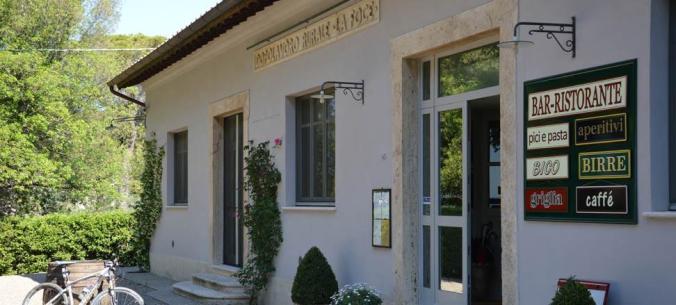
I enjoyed the steak and rustic potatoes.


The al fresco dining area is the stuff dreams are made of.
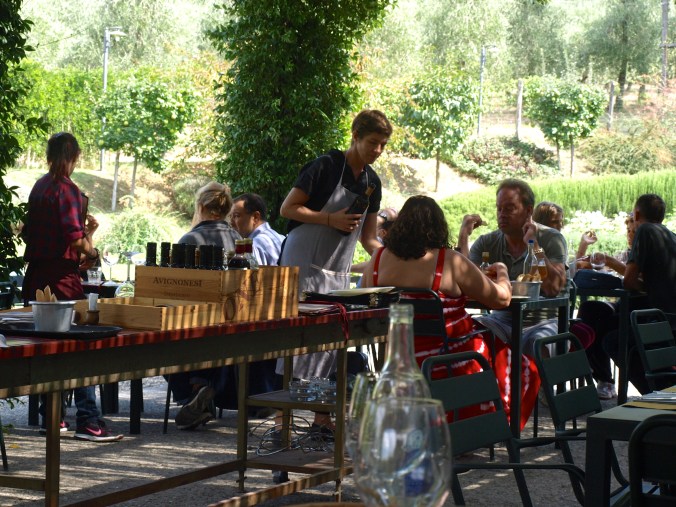
OLYMPUS DIGITAL CAMERA
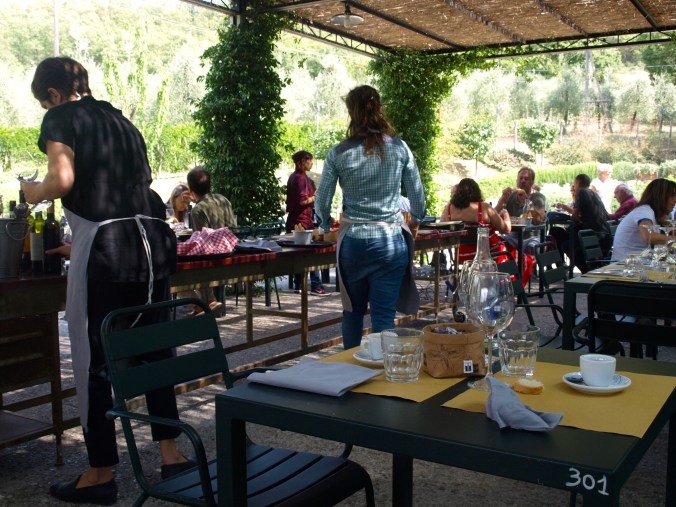
OLYMPUS DIGITAL CAMERA

The Dopolavoro La Foce was built in 1939 as a meeting place for the workers on the La Foce estate. Country dances and plays featuring the farmers’ children were held on the little stage, movies and news of the war were screened and people came from miles around to share a glass of wine and play a game of bocce (bowls) in the shade of the lime trees.
Along with the kindergarten, the school and the clinic, the Dopolavoro is part of a series of buildings built by the Origos in the 1920s and 1930s, when they carried out a vast plan of land reclamation and social innovation.
When Antonio and Iris Origo bought the vast estate of La Foce in 1924 the Val d’Orcia, for all its spectacular scenery, was a poor and uninhabited region, a land of low clay hillocks and stony, unfarmed soil. Not only did the Origos dream of reclaiming the barren fields and turning them into fertile countryside, they also aimed to improve the living conditions of workers on the estate.
Today the Dopolavoro once more belongs to the Origo family and reopens as a restaurant in which traditional Tuscan dishes are flavoured with the delicious La Foce extra-virgin olive oil and created with the best seasonal local produce. The restaurant boasts its own vegetable garden across the road, guaranteeing a genuine farm-to plate process. A path connects the vegetable garden to the famous La Foce gardens, which can be visited on request.
 get back, lauretta!
You must be logged in to post a comment.