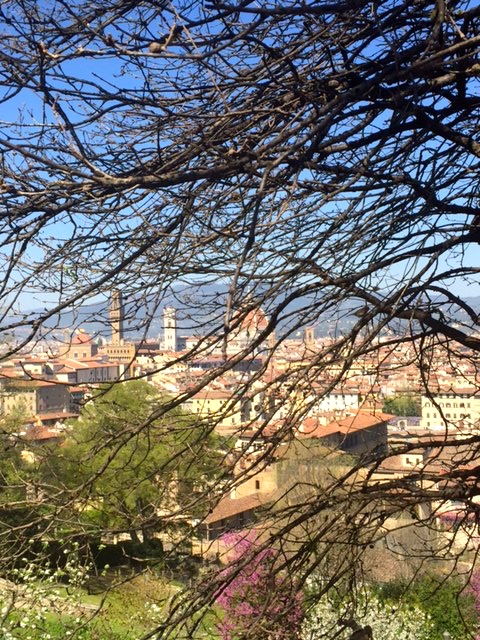
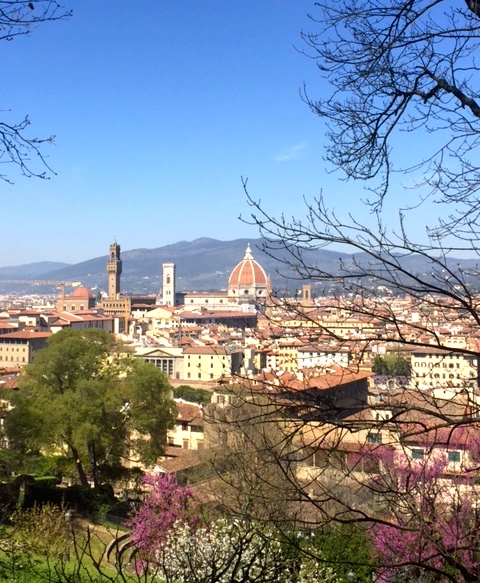
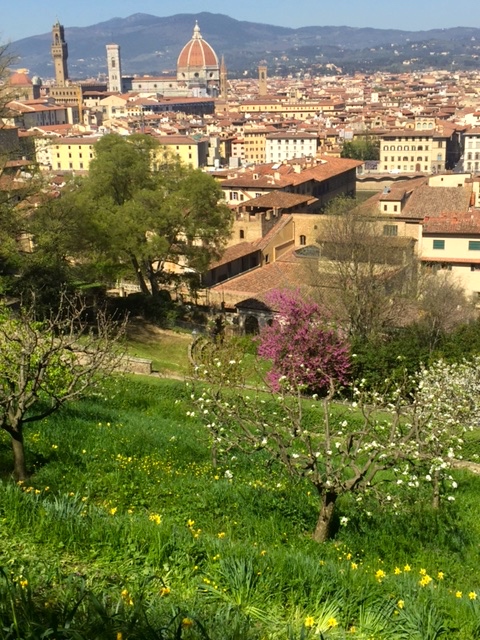
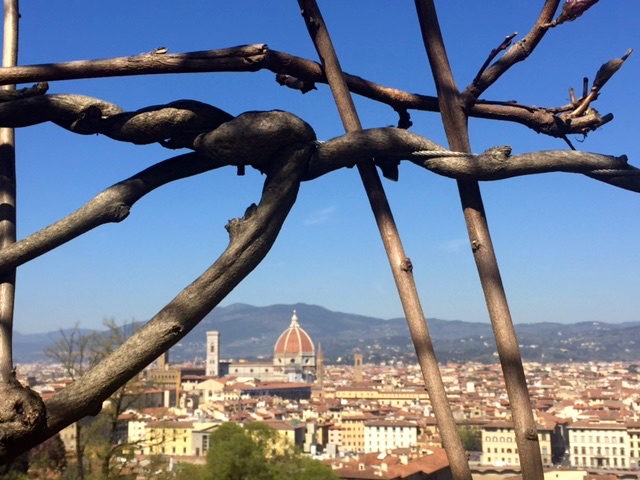
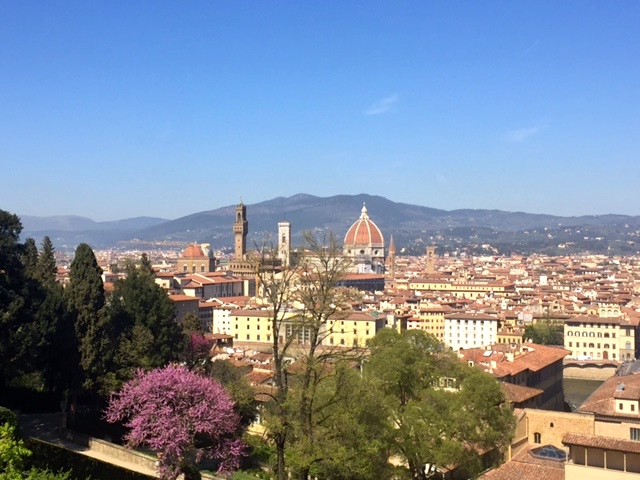
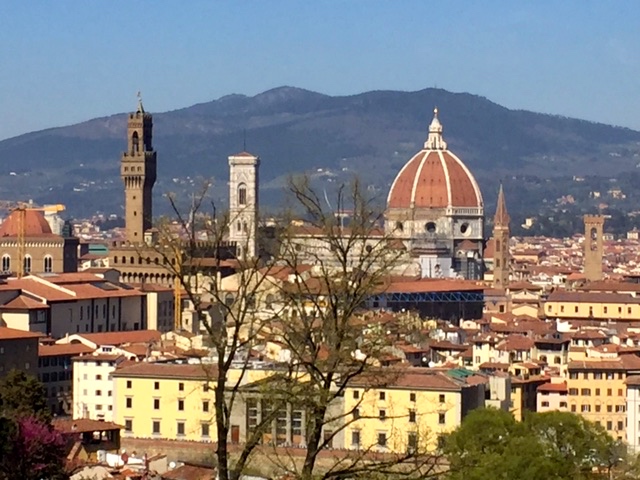
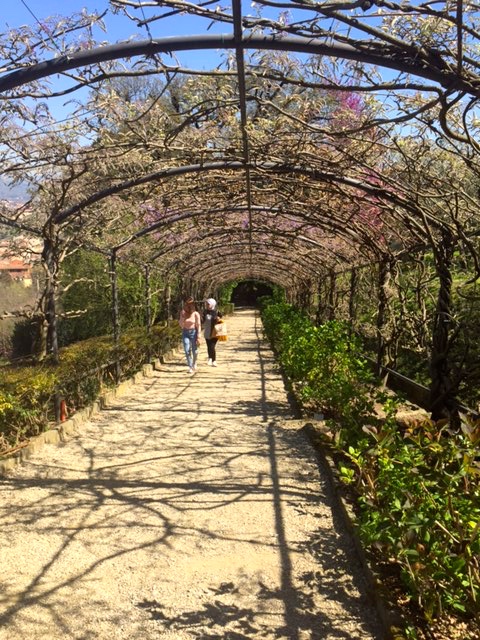
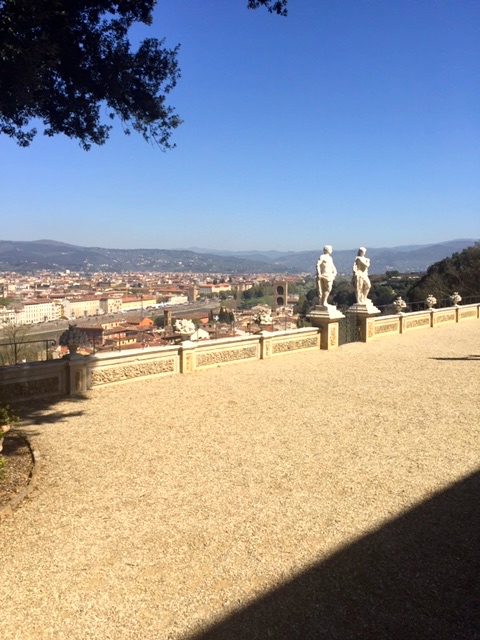
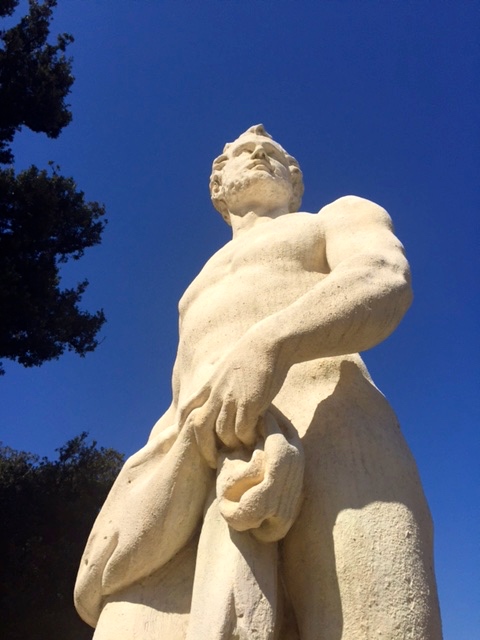
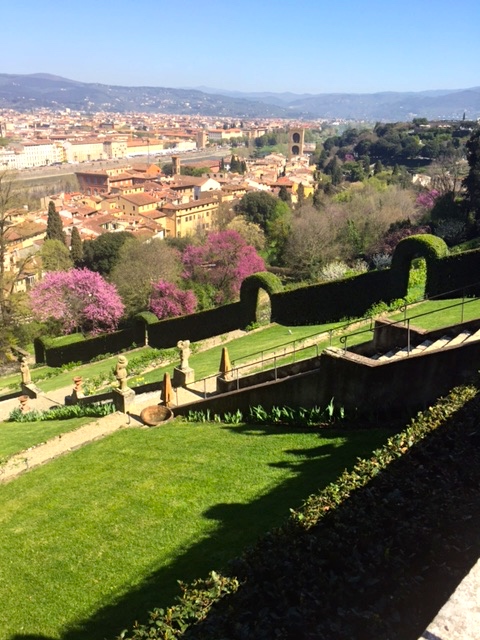
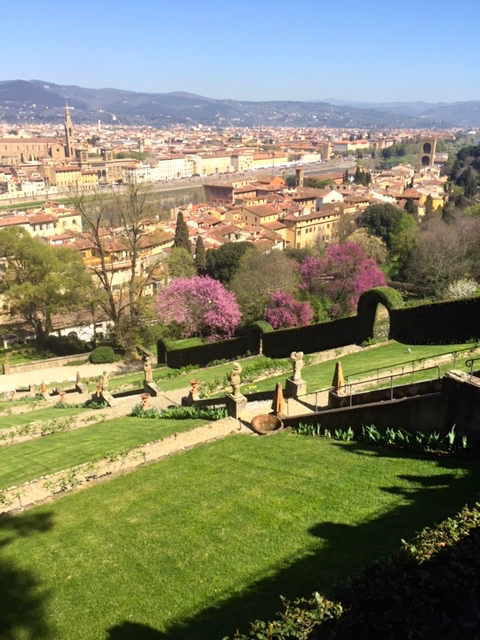
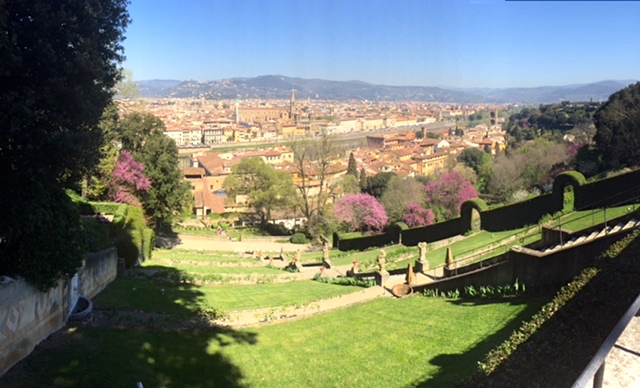
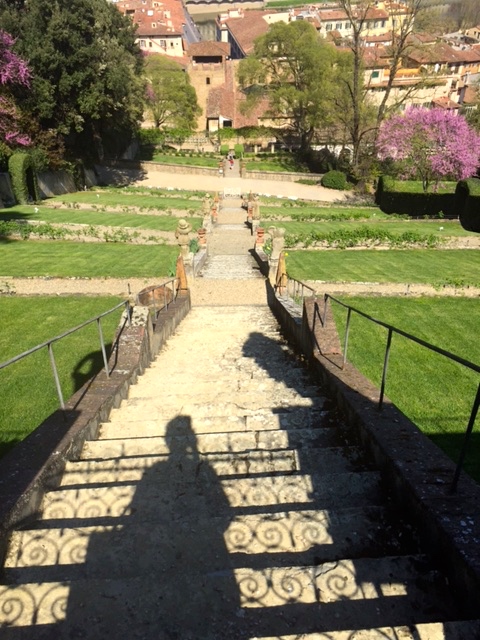
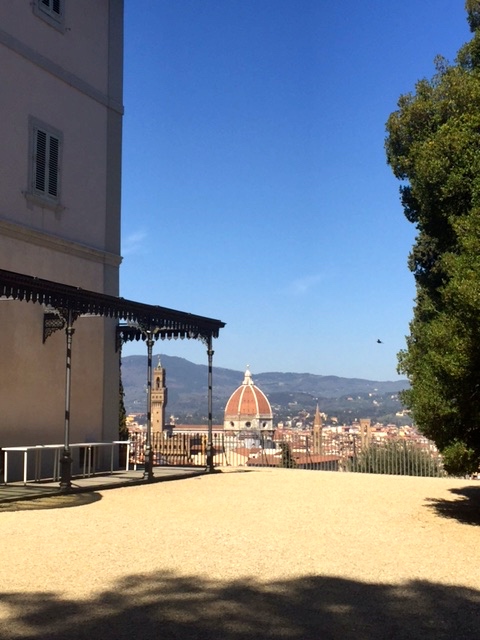
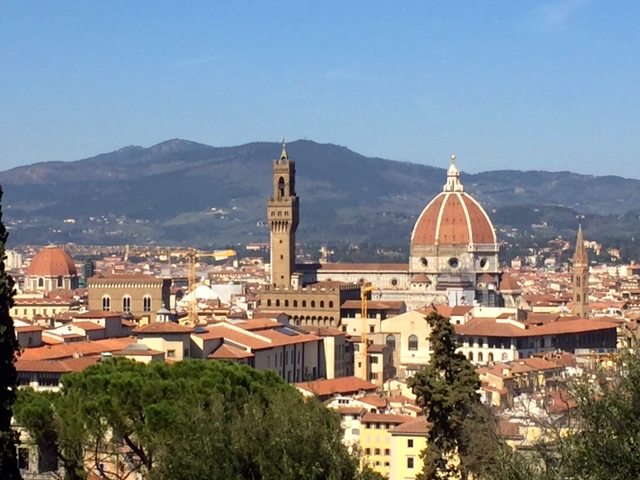
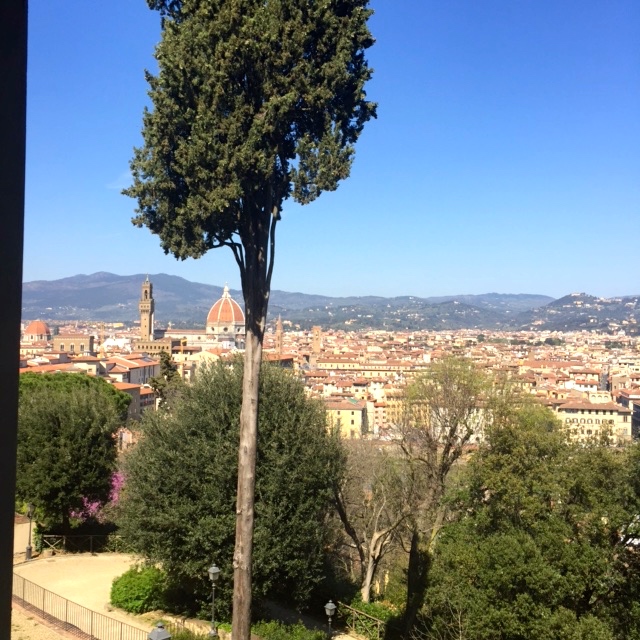
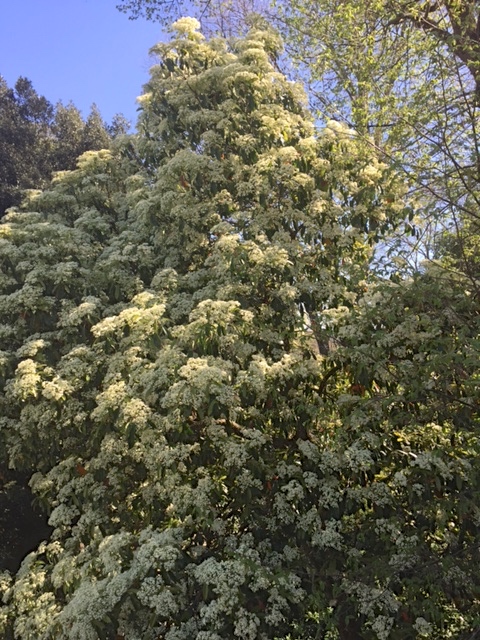
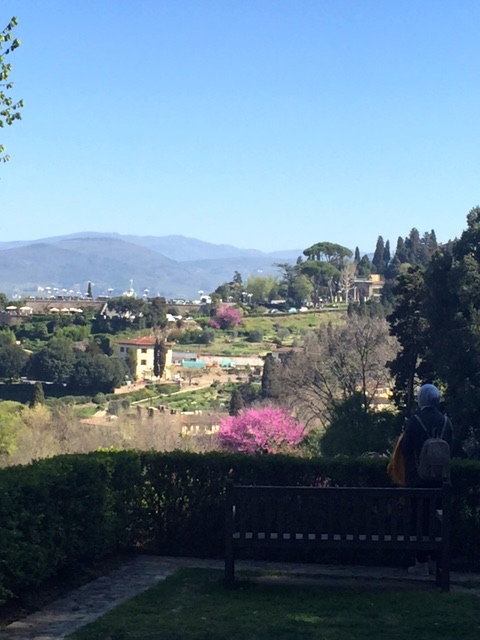
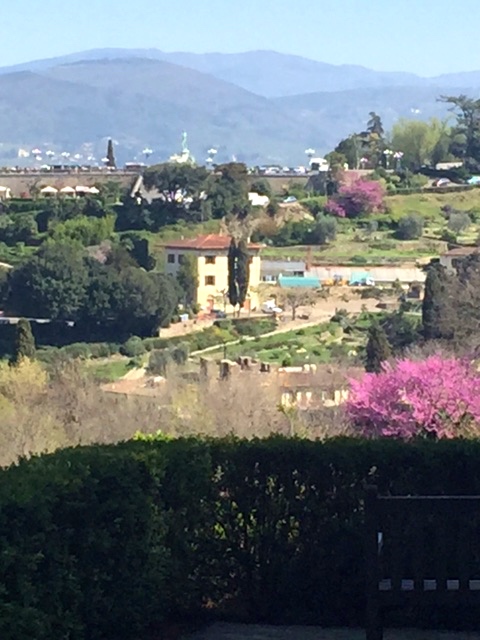
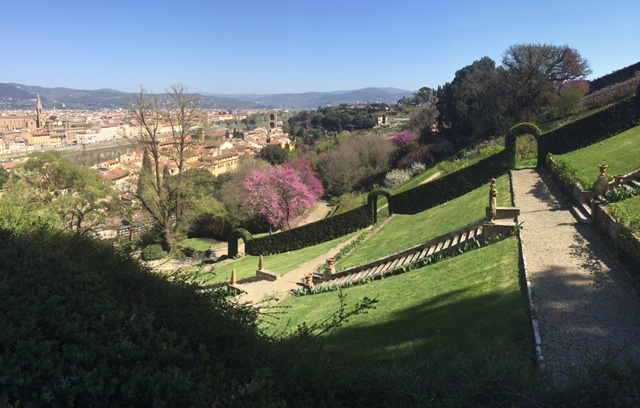
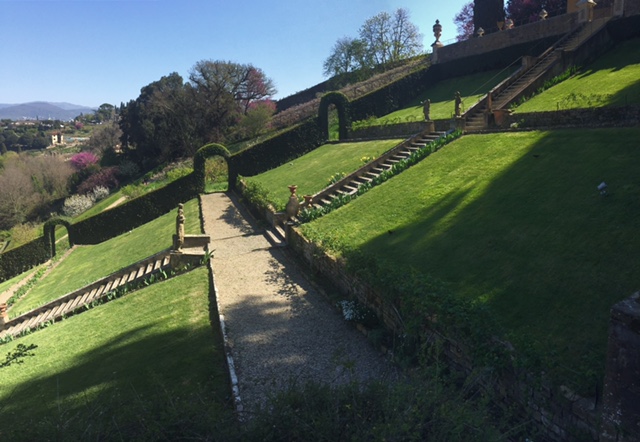
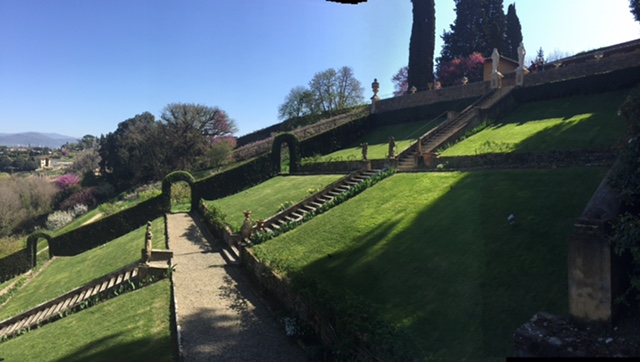
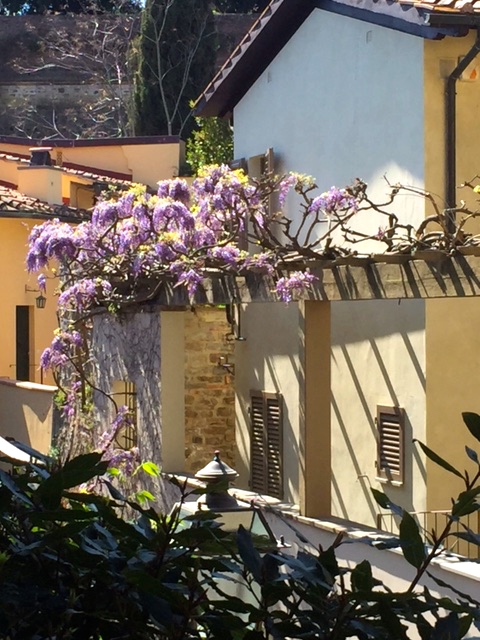
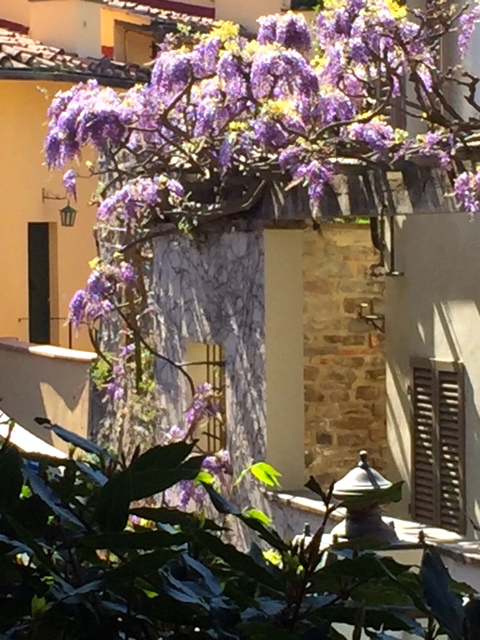
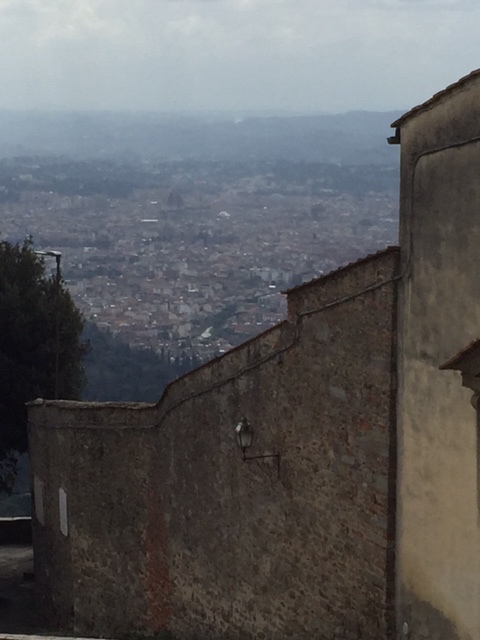
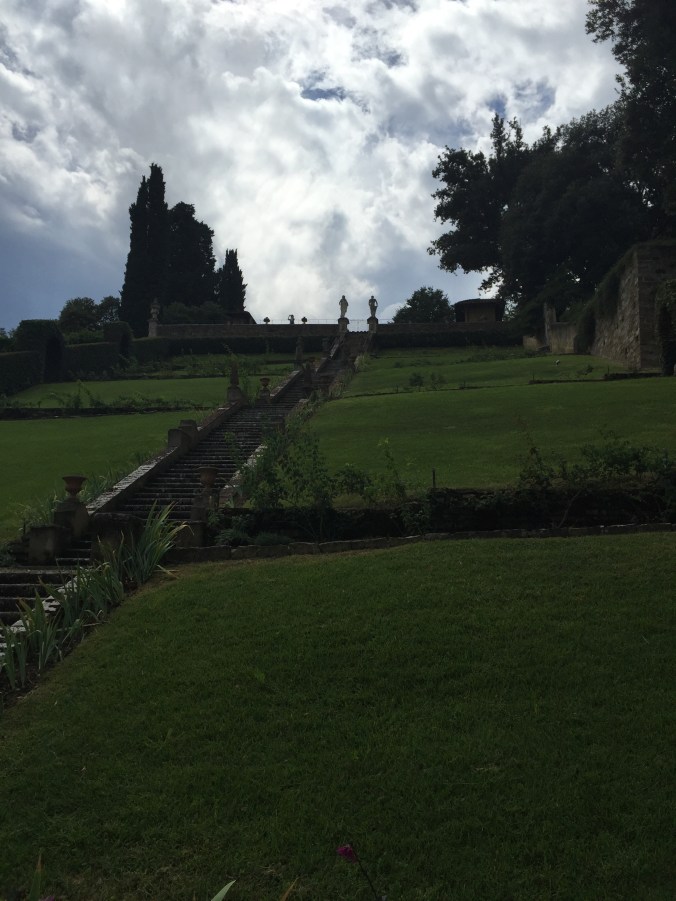
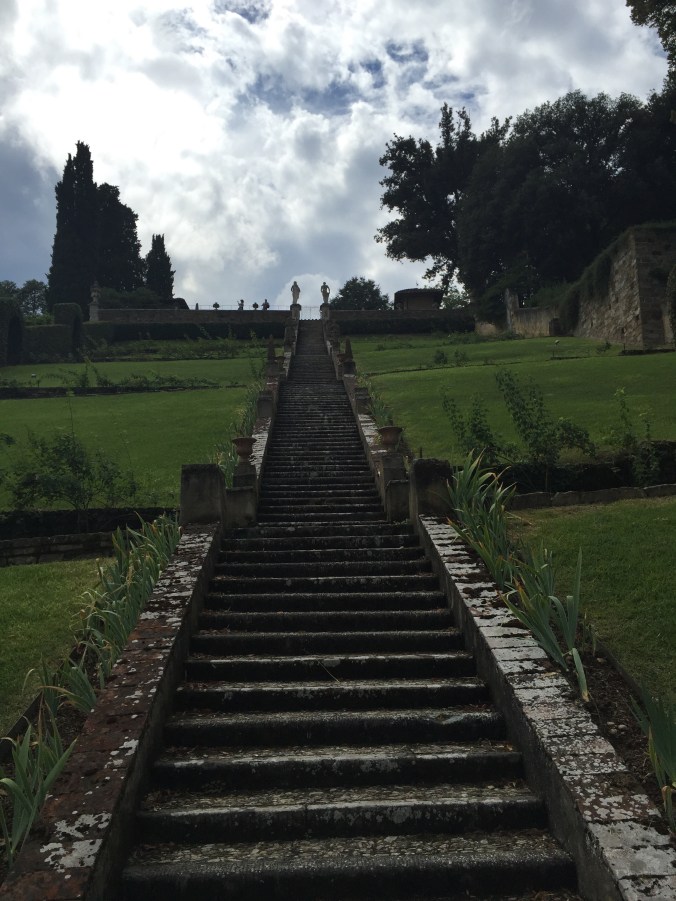
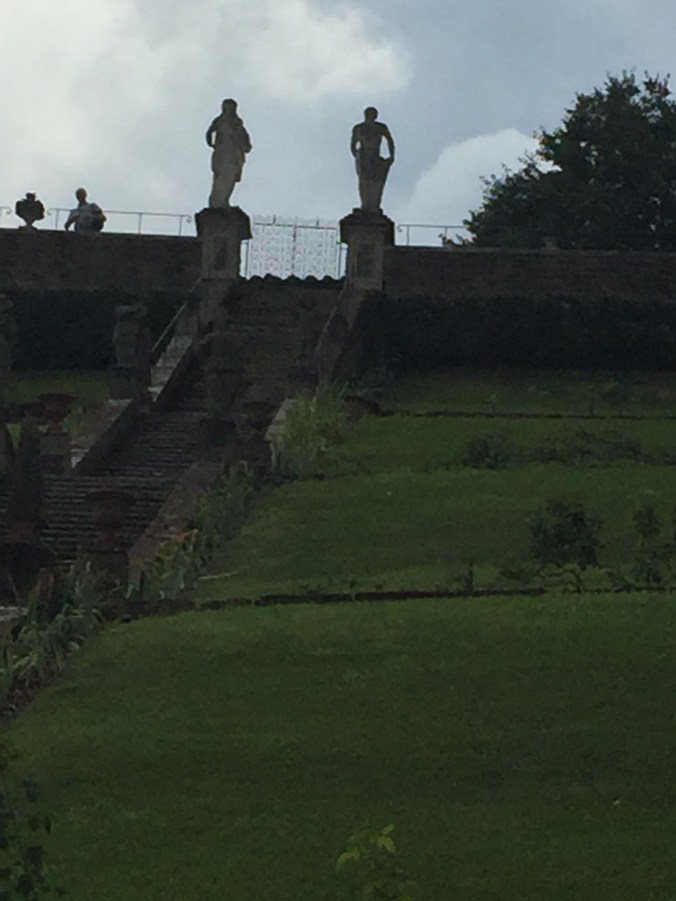
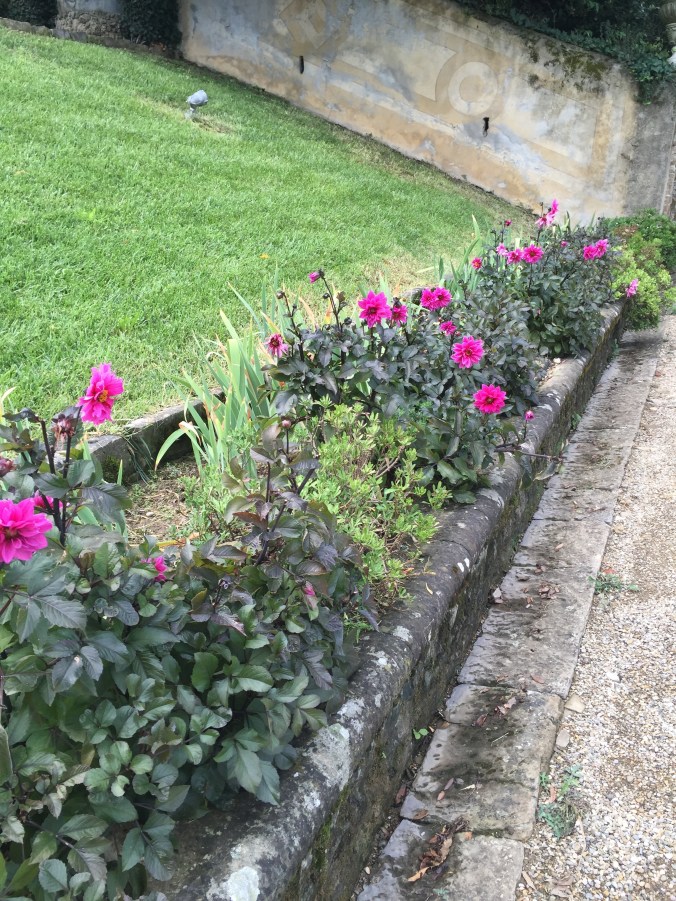
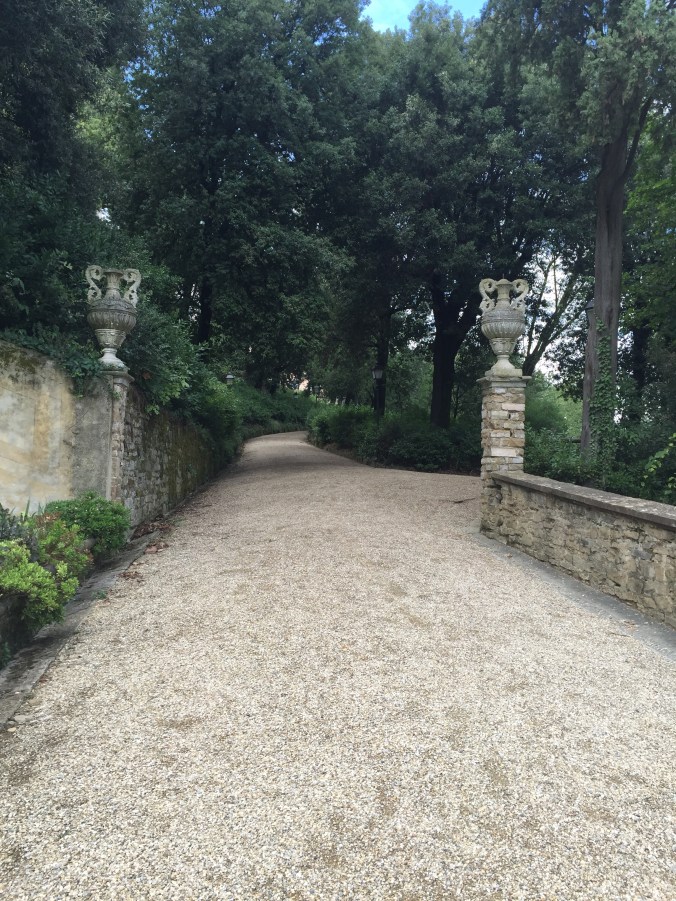
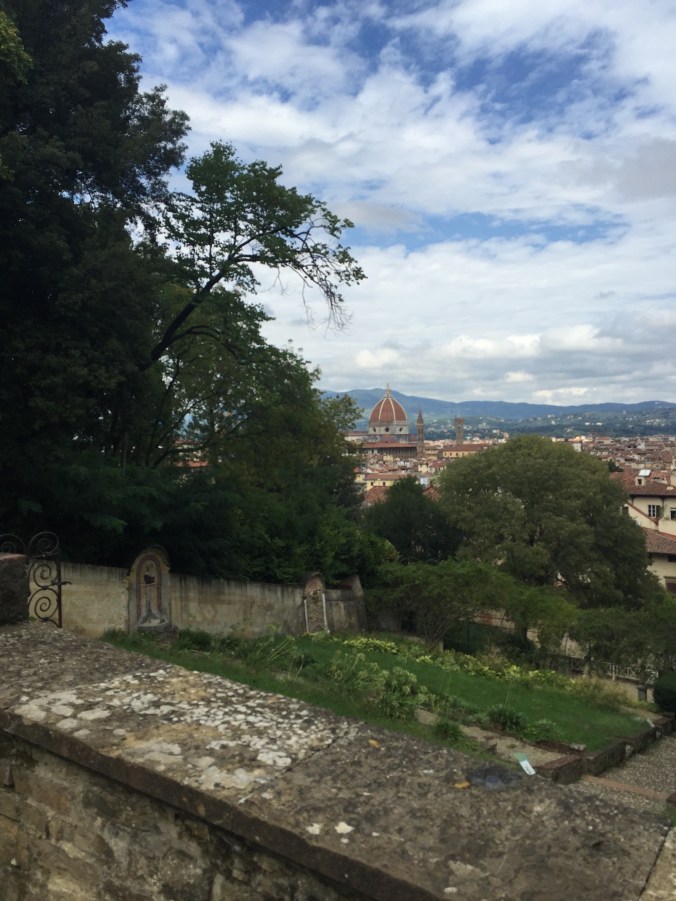
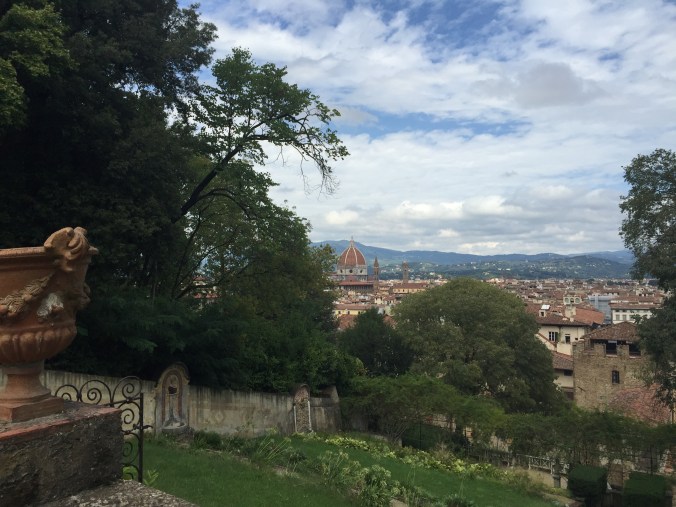
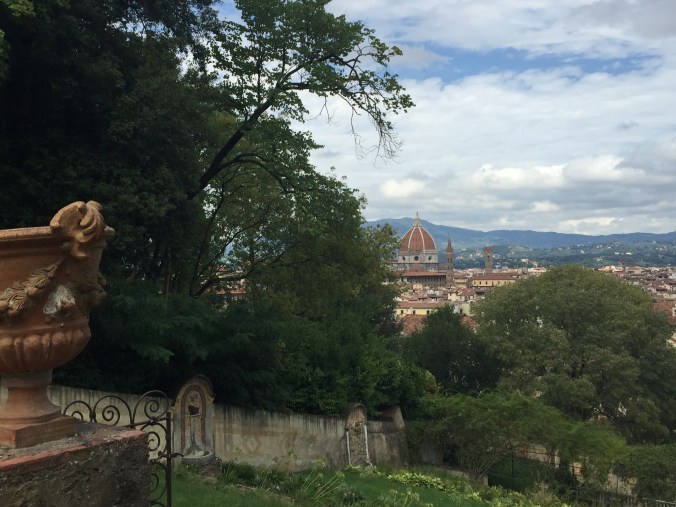
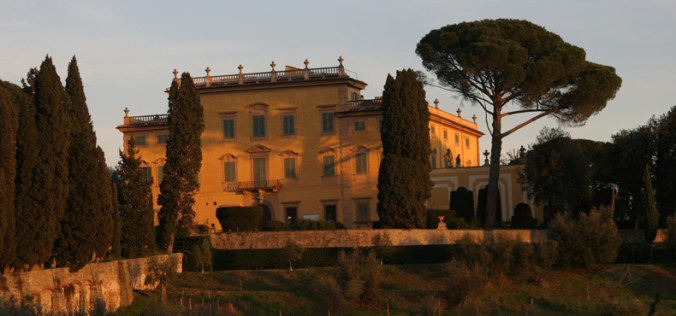
A different perspective.

One of my favorite passageways in Florence is not well-traveled.

It is where you enter the Boboli Gardens from the the Bardini Gardens.

To do this, you enter the Bardini at Costa San Giorgio # 2, purchase a ticket good for both the Bardini and adjoining Boboli gardens, and enter the Bardini.  

After enjoying this spectacularly-sited and maintained garden to its fullest (you will at least an hour), exit the Bardini and traipse across some back streets until you find this pictured below.

OLYMPUS DIGITAL CAMERAOLYMPUS DIGITAL CAMERAOLYMPUS DIGITAL CAMERAOLYMPUS DIGITAL CAMERA


These signs let you know you are on the right path.  After being lost for a little while, you will eventually spot the place where you may enter the Boboli.

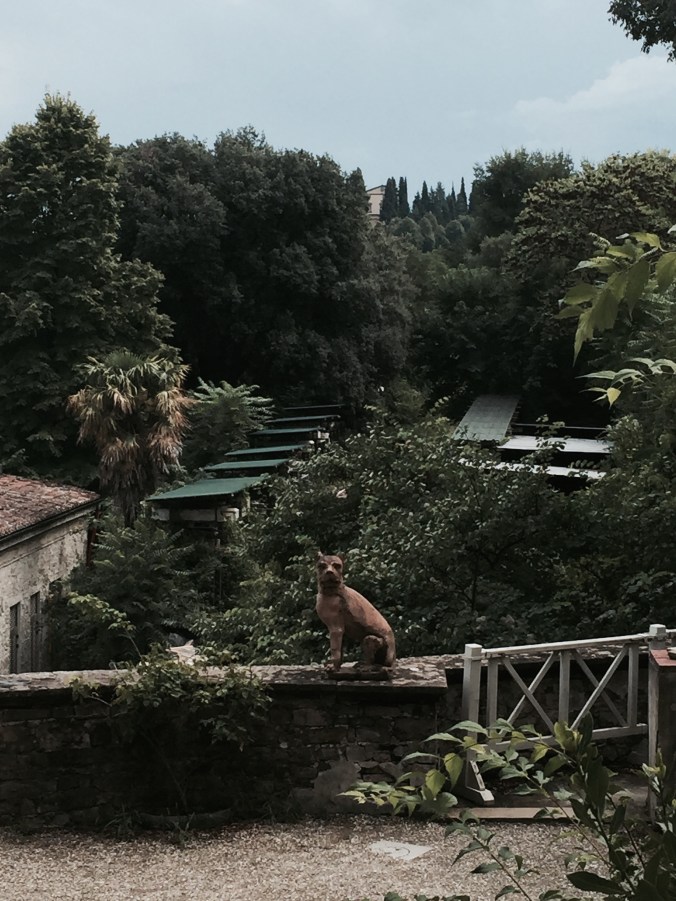
You will immediately gain an interesting and entirely different vantage on the Boboli, so different than when you enter from the courtyard of the Palazzo Pitti.  You will enter through leafy greens, and follow secretive paths with unexpected vistas.

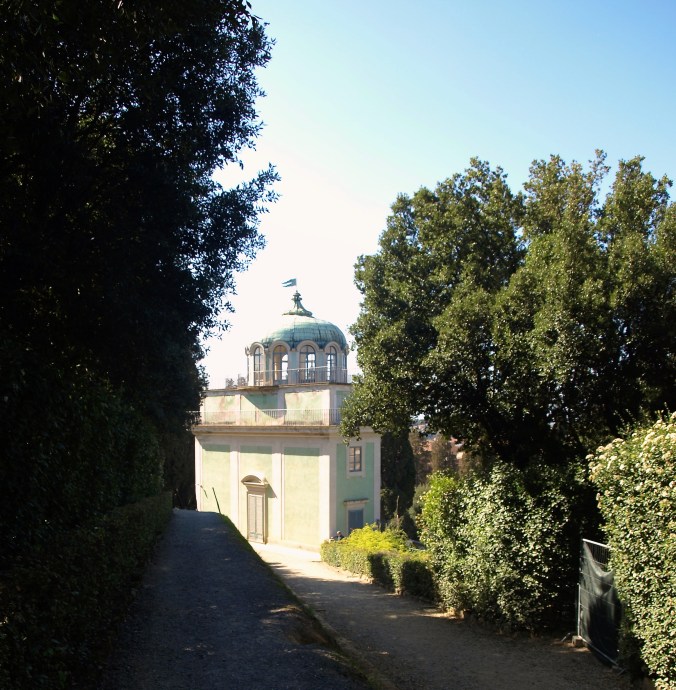
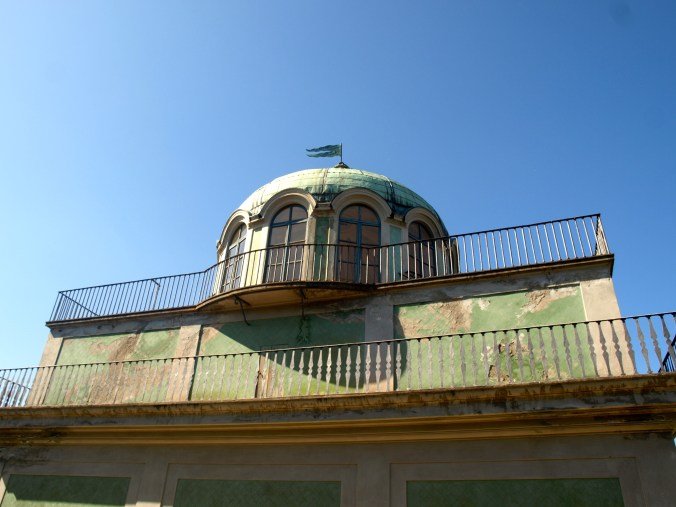
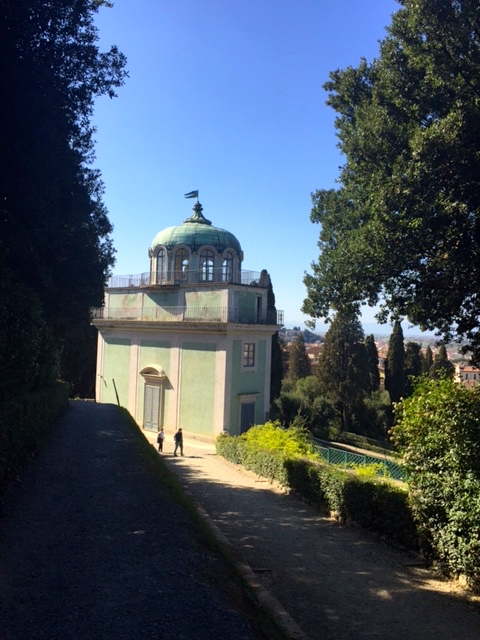
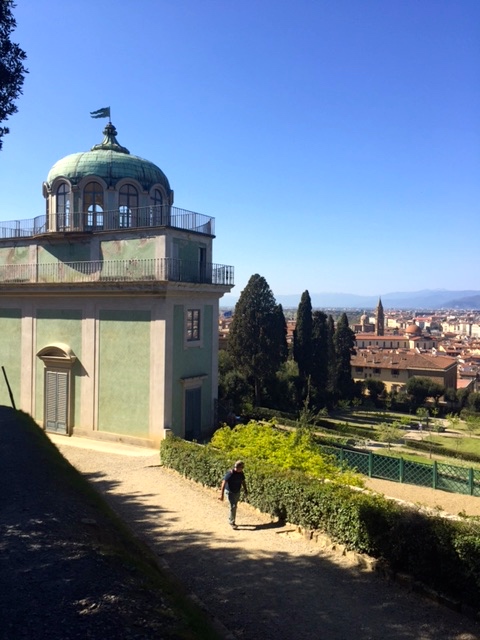
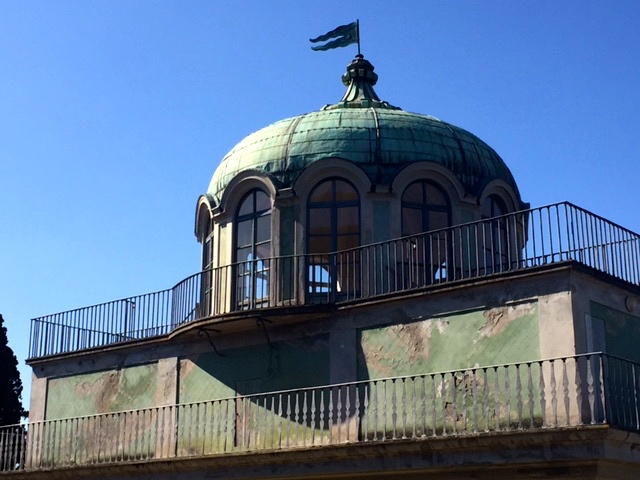
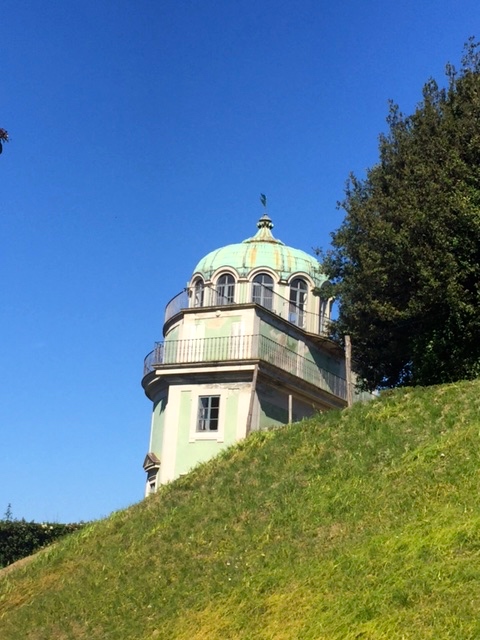
For example, after walking for a little while in the Boboli, you will see this lovely little folly, where I’d be happy to live for the rest of my life if only Florence would let me. :-)


OLYMPUS DIGITAL CAMERAOLYMPUS DIGITAL CAMERA

The perfect “green house” to my way of thinking!

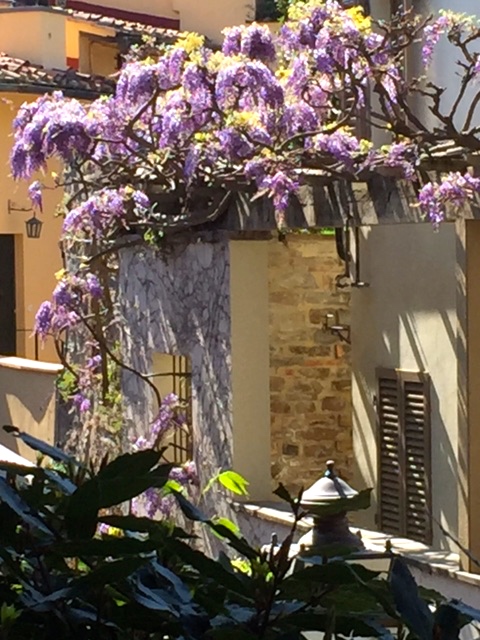
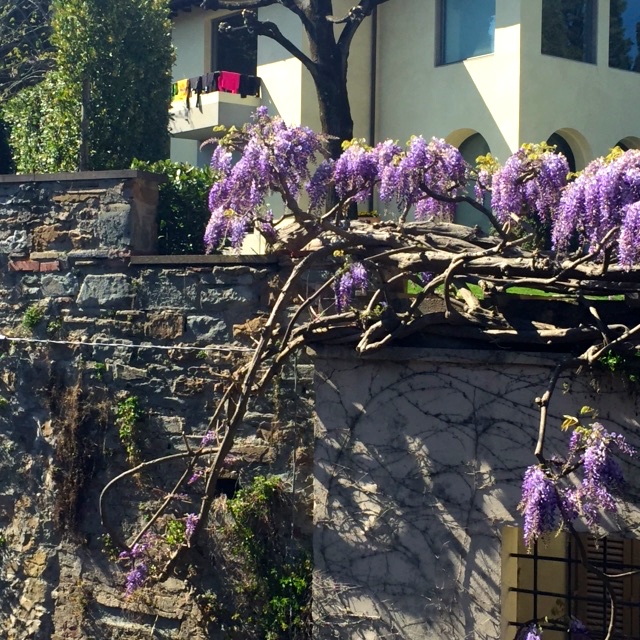
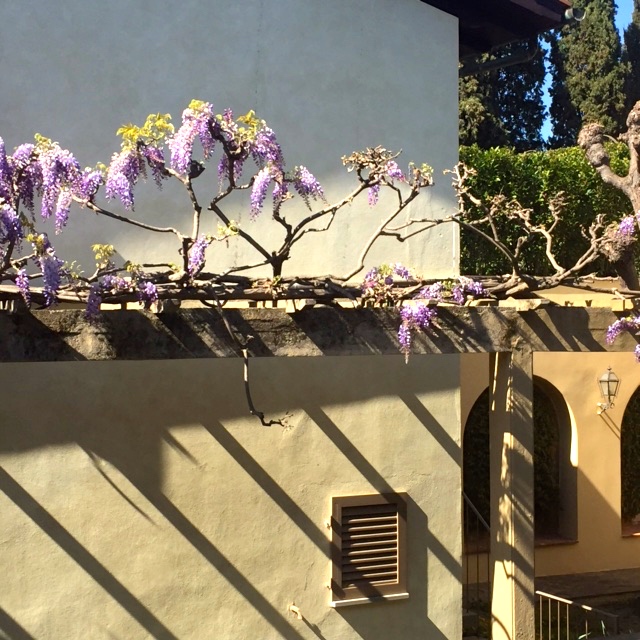
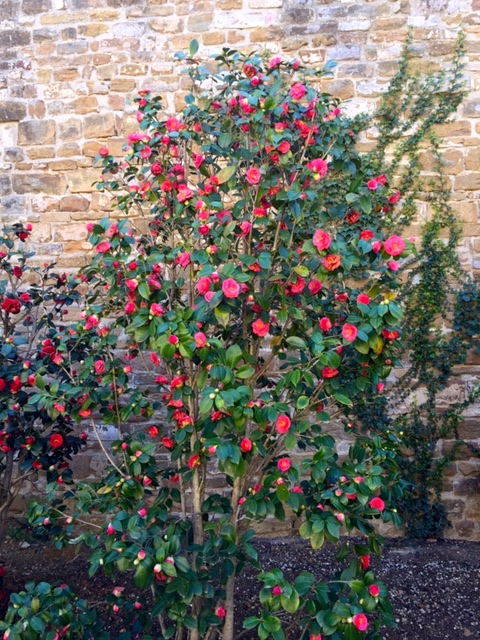
IMG_1588IMG_1590IMG_1592IMG_1594

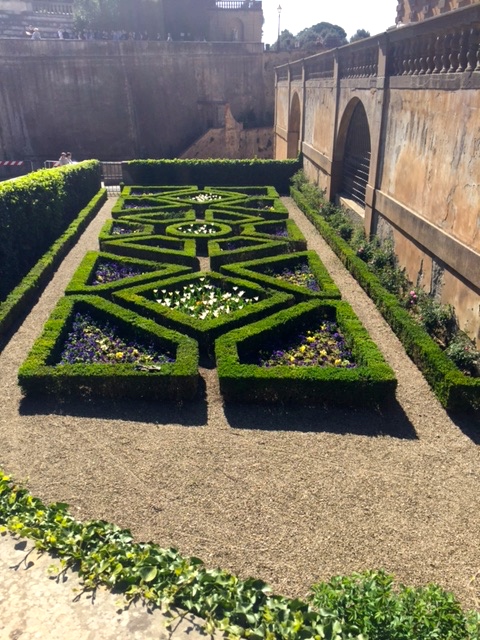
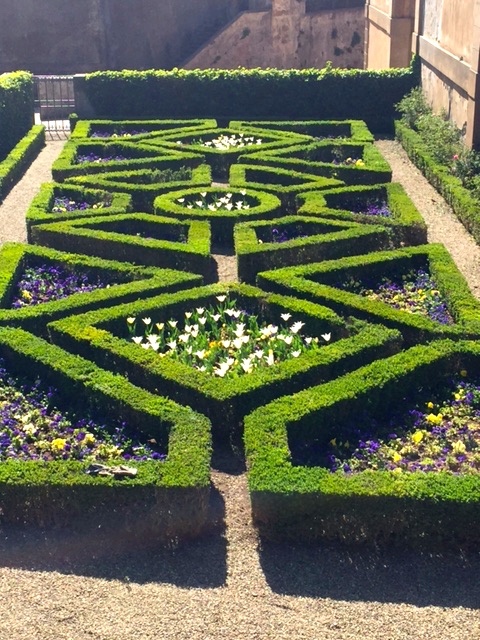
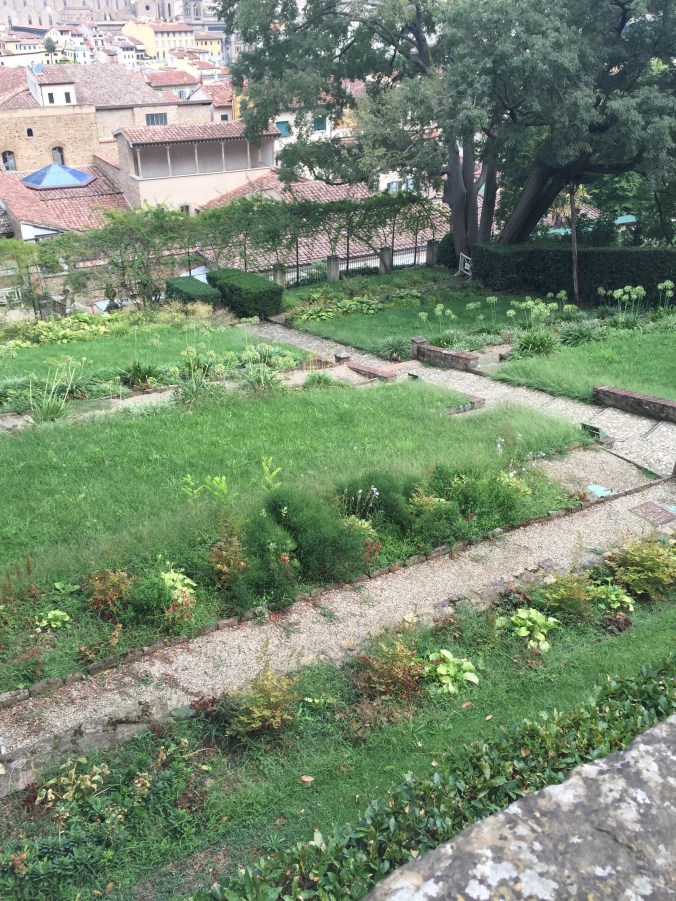
At the entrance to the Boboli from the Palazzo Pitti is this wonderful, immaculate knot-garden.  It is at its finest right now, when the eye is starved for the green and blossoms of spring.

IMG_1596IMG_1598

Just how poor was poor Michelangelo?

Well, it turns out that he wasn’t poor at all!

If you read about the life of this tormented artist, you will soon discover that he lived like a miser and lamented his poverty, among many other things.  While this image perfectly aligns with our modern-day notion of a struggling artist, the truth is, Michelangelo achieved riches.  In fact, he was one of the richest men of his time.  So, at least some of his misery he wallowed in was chosen.  What modern psychotherapist wouldn’t love to work with the great artist?!

In his book, The Riches of Michelangelo: How a Great Artist Deceived the Papacy, author Robert Hatfield reveals from his extensive research, the vast sums that Michelangelo earned over his lifetime, and how he wisely chose to invest his money in real estate, both in Florence and in Settignano.

518EDNQ7KBL._AC_US160_

I’m certainly not a psychologist, but even I can see that Michelangelo had daddy issues.  He and his father had a rocky relationship at best, and from what I’ve read, it would seem that Michelangelo was always trying to please his father, even hoping to restore the Buonarroti family to its former, lost, patrician status.  The artist purchased property around his family’s ancestral home in Settignano, which not only was a wise financial investment, but also revealed the artist’s consistent efforts to please his father.

The following paragraphs are taken from this fine article in The Florentine:

http://www.theflorentine.net/art-culture/2006/03/behind-the-agony-and-the-ecstacy/

“In 1508, using money that he had earned as a sculptor, together with what he expected to receive for the Sistine Ceiling, Michelangelo purchased three houses on via Ghibellina, core of the present Casa Buonarroti. His father and brothers, who had been renting a house in via San Procolo, promptly moved in. Michelangelo did some improvements in 1514 and purchased a fourth adjacent house.

“He joined his relatives when he returned to Florence in 1516, and things would have continued comfortably if only they had shared Michelangelo’s penchant for thriftiness. In 1523, because they failed to repay what he had loaned them, Michelangelo forced his father and brothers to cede to him their rights to t he entire Buonarroti family estate and make him the sole owner.

“Michelangelo’s father became hysterical, and together with his other sons promptly departed from via Ghibellina. Michelangelo moved out a year later and put the property up for rent. It was Michelangelo the Younger, son of Michelangelo’s nephew and heir, who nearly a hundred years later transformed the property into the Casa Buonarroti as it stands today.

“Michelangelo, acting through agents, acquired several farms to the south and west of Florence between 1506 and 1549, but his prime interest was the Buonarroti’s ancestral home south of Settignano, which had been in their possession since the fourteenth century.

“For fifty-five years, between 1507 and 1562, he steadily increased the size of the estate until he owned an unbroken sweep of land running down the hill as far as Rovezzano. It was approximately three-quarters of a kilometre long and measured a half kilometre at its widest point. The main house, now Villa Michelangelo, stands on the original part of the property, and although the villa has been altered in recent centuries, a few of its architectural features, such as the front loggia, probably date from Michelangelo’s lifetime.

“To the south is a property today called La Porziuncola (it was known as Scopeto in 1515 when Michelangelo bought it), which became Eleonora Duse’s home in 1902. A stroll down via Capponcina will take you past these villas and all along the western border of the former Buonarroti estate.

“Take the #10 bus, get off at Fermata 17, walk straight ahead, turn right into via Capponcina and continue down the hill. For a panoramic view, walk through Settignano and turn right into via Rossellino. When you are within a stone’s throw of Villa Gamberaia, look west and you’ll see Villa Michelangelo (with a squat white tower) on the crest of the hill in the middle distance.

“In 1534 Michelangelo left for Rome and never returned to Florence. Two years earlier he had bought the house in Rome where he’d lived and worked, on and off, since 1513. Located across from S.Maria del Loreto, it was demolished in 1902 to make way for the Vittorio Emanuele II monument, but the courtyard façade is believed to survive, reconstructed near Porta San Pancrazio on the Janiculum.

“Michelangelo died in February 1564. His house was found to be bare but for two beds, glasses, three barrels (two empty), twenty-four shirts, mostly old, a few of his own works of art and one horse, the latter a surprising luxury since most people rode around town on a mule. But what was discovered in his bedroom was even more mind boggling – a locked and sealed chest containing 8,289 gold ducats, a tidy sum to keep around the house, equal to about 66 pounds of solid gold in present terms.

“The fortune in cash, credit and property that Michelangelo’s nephew Lionardo inherited was enormous, greater than that amassed by any other artist up to that time. According to Hatfield’s calculations, Michelangelo’s salaries were staggeringly high. Moreover, he demanded, and got, huge advances. While he was engaged on the Laurentian Library, Clement VII paid him the equivalent of $600,000 a year.

“During the decades when he was working on the tomb of Julius II, which he never finished, the equivalent of millions of dollars flowed into his pocket. Hatfield neatly sums it up when he points out that Michelangelo’s lifetime earnings equalled five and a half times the value of the mid-16th-century Palazzo Pitti.”


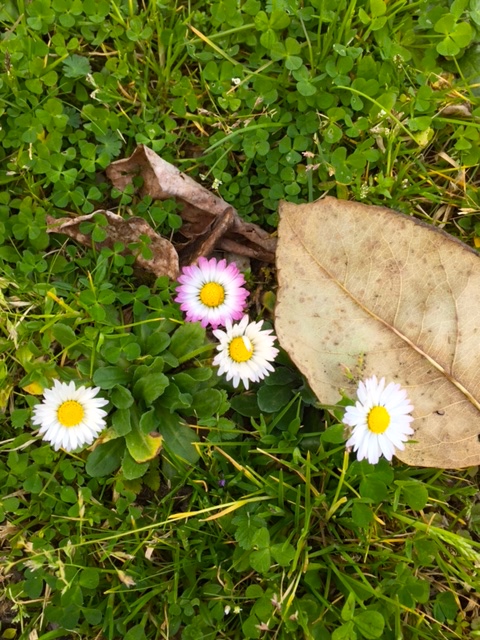
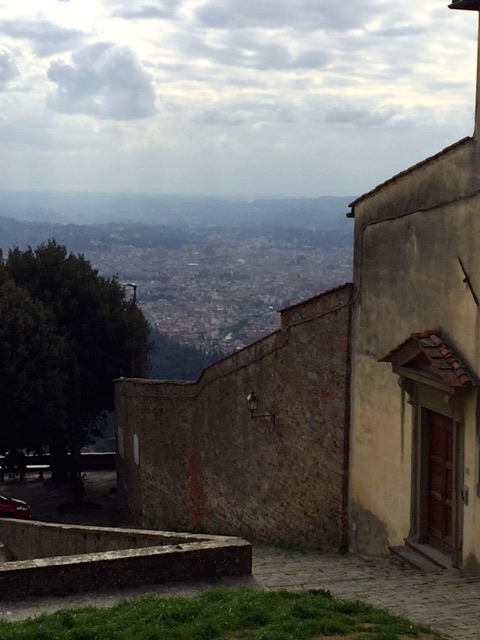
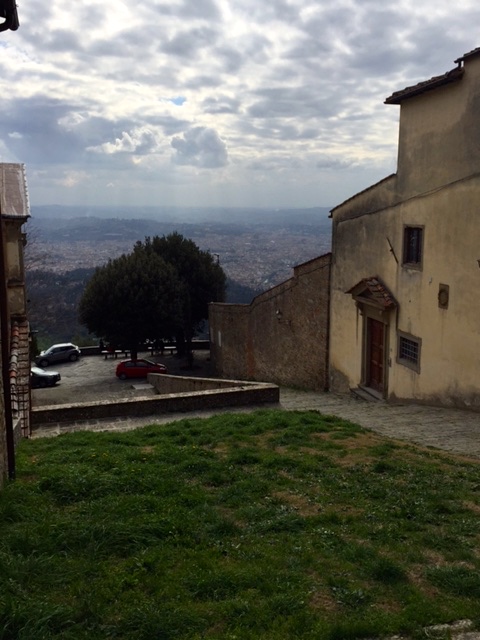
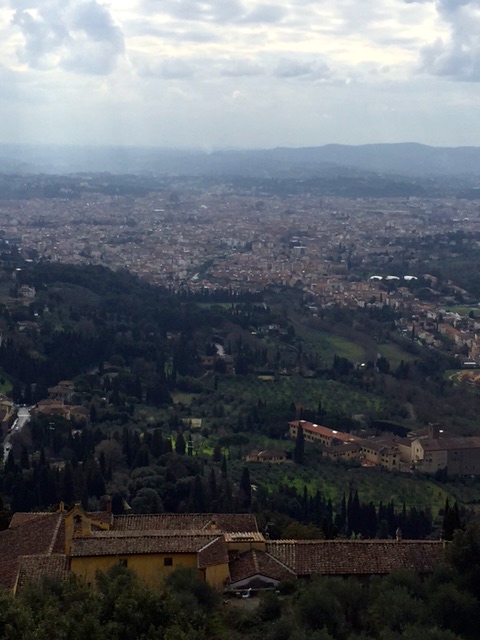
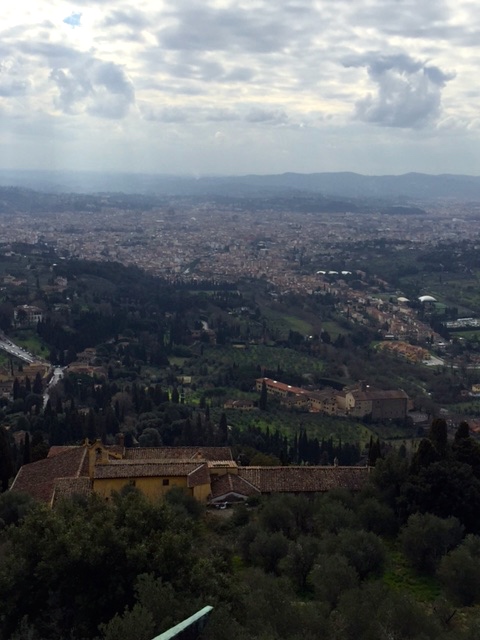
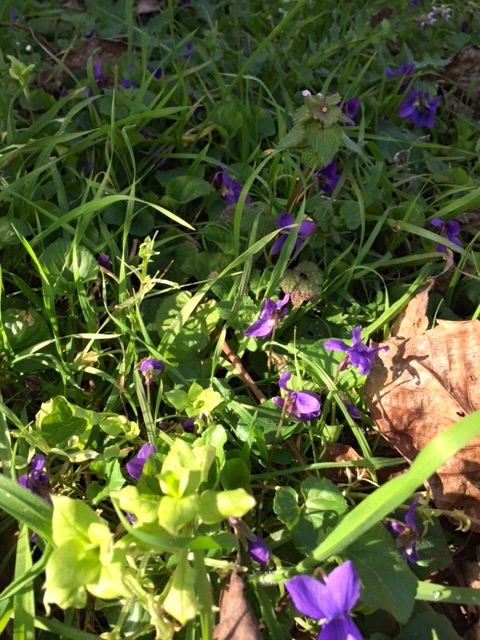
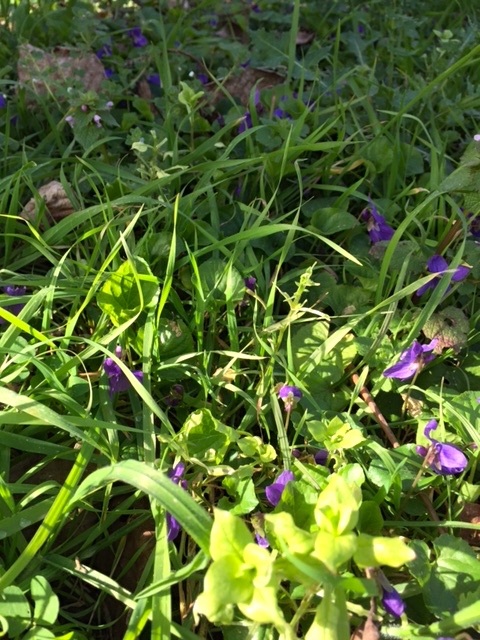
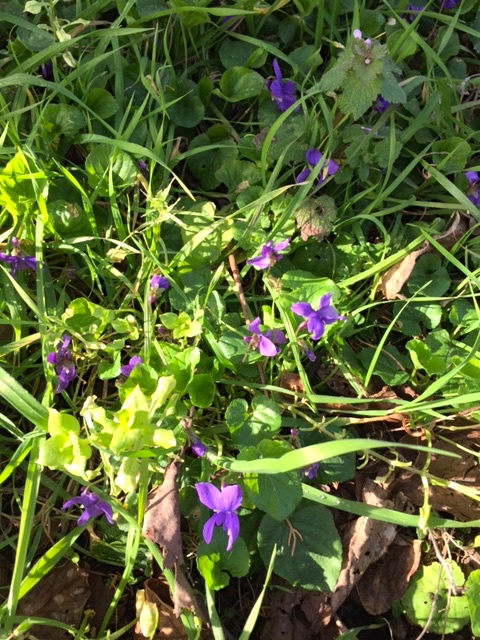
Fiesole in la primavera!

img_1041

Bella Fiesole!

For there below us Florence was laid out like a glittering carpet of gold, wrought by

a thousand Persian infidels. The Duomo was now no tiger sentinel, but a warm

copper bell, the Arno a twisting ribbon of gilt. A city of fable and

infinite beauty in the brand-new light of the day. **

img_1020

Fiesole was well established as an Etruscan stronghold in the 8th century BC, until the Romans were finally able to dominate, building a thriving town of their own over the remains.

For centuries it existed as a powerful rival to Florence, until once again it was subdued and its ruling nobles were forced to take up residence within the walls of the conquering city. In the 14th century, it became known as the new living quarters for the rich and famous Florentines looking for new territory to build their villas surrounded by cypress trees and spectacular gardens.

The hillside looms 295 meters above Florence, offering a special and stunning panorama of the Renaissance city. The city contains its historical museums, gardens & villas, picturesque streets, churches, trails and parks.

img_1042img_1043

img_1045

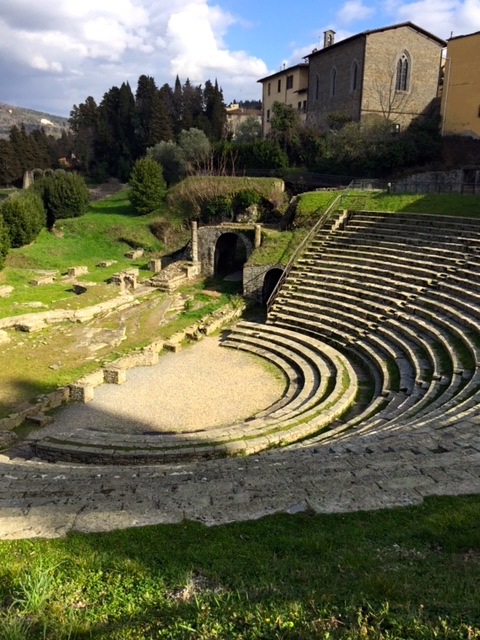
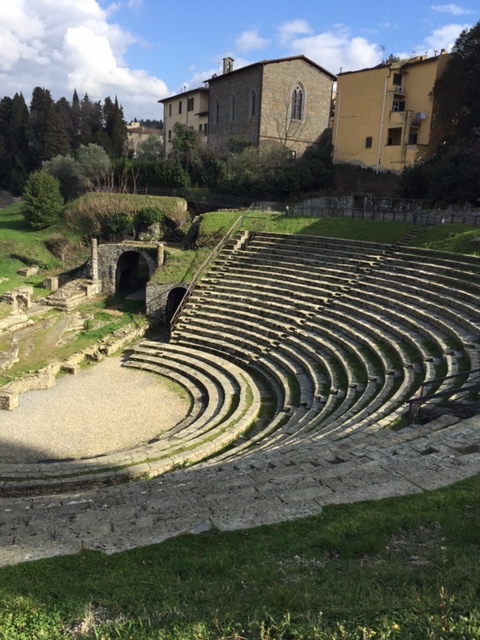
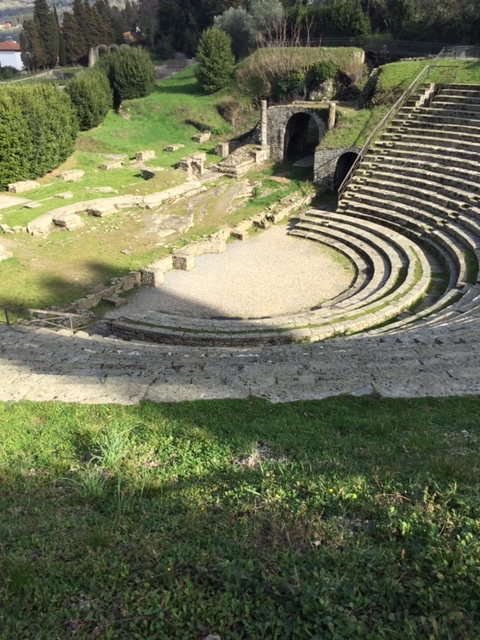
The Roman Theatre
Built into the natural rocks of one of the Fiesole’s hills, the Roman theatre has been extensively restored and still remains one of the best preserved buildings in Fiesole. It was built shortly after the reoccupation of the site in the first century BC and was situated along the Cardo, one of the Roman town’s main streets that led to the forum.
The best seats in the house, situated near the orchestra and tribunalia arcades were reached by a series of vaulted passages that ran under the cavea or rows of seats. Several flights of stairs that ran up through the cavea could be used for seating elsewhere. Each stairway consisted of three flights of ten steps. The original rightside staircase of the theatre are still visible today.
Only the foundations of the frons scenae or stage area remained. These are sufficient to show the three doors, actors used to access the stage. The most interesting area of the backstage is a semi circular room that would have been used to operate the mechanism that opened the theatre’s curtain.
The theatre was redecorated in the third century AD. Only a few fragments of the ornamentation of the multicoloured orchestra mosaics remains as well as marble reliefs of mythical scenes and deities, preserved in the site’s museum.
img_1046img_1047img_1044

img_1032img_1033img_1035img_1037img_1038img_1039img_1040

The mystical beauty of Fiesole, less than 10 km outside of Florence, encompasses centuries of history and it is amazing well preserved. Largely unknown by many, this small town hides a wealth of surprises: the massive stones that make up the Etruscan walls, the remains of Roman baths, the green hilltop where Leonardo da Vinci first experimented with the concept of flight, and the Roman amphitheater that still serves as a stage for the EstateFiesolana summer events. The small city center is home to a wide range of historical sites, churches and parks.

img_1020img_1021img_1022img_1023img_1024img_1028img_1029img_1031

img_1018img_1019

**Fiorato, Marina (2010-03-30). The Botticelli Secret (Reading Group Gold) (Kindle Locations 799-801). St. Martin’s Press. Kindle Edition.

One of the oldest Florentine churches, Santi Apostoli in the Piazza del Limbo.

If you’ve ever been to Italy, you know there are a lot of churches!  And, Florence is no slacker when it comes to houses of worship.  Florence has a lot of churches!

Near the Lungarno Acciaiuoli, about which I will soon be posting, there is a tiny piazza or city square, with the evocative name of Piazza del Limbo.  Not only is the small square a beguiling place to wander around, but it is purportedly the home of the oldest religious building in the city: the Chiesa dei Santissimi Apostoli.

The chiesa was built in the 11th century and, though it was remodelled in the 15th and 16th centuries, is one of the few in the city to have maintained its High Middle Ages features.

Tradition says that it was Michelangelo himself who convinced Bindo Altoviti, who planned to raise the ground level, not to rebuild, but to preserve the church.

The church faces the Piazza del Limbo–named because it housed a cemetery for children who died before having been baptized. It is adjacent to the Palazzo Borgherini-Rosselli del Turco.

chiesa_dei_santi_apostoli_firenze_italia_-_facciata_su_piazza_del_limbo


A slab on the façade attributes the foundation to Charlemagne and his paladin Roland in the year 800.  A paladin is any of the twelve peers of Charlemagne’s court, of whom the Count Palatine was the chief. A paladin is a knight renowned for heroism and chivalry. But scholars assign the church to the 11th century. A small bell tower was added by Baccio d’Agnolo in the 16th century.

The simple façade, in Romanesque style, has a portal attributed to Benedetto da Rovezzano. The tabernacle by Giovanni della Robbia and the tomb of Oddo Altoviti.

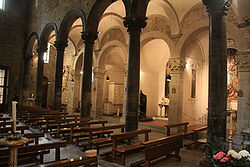
250px-inside_of_the_church_of_santi_apostoli_florence

Interior of Santi Apostoli

The church’s layout is the typical basilican plan, with a nave, two aisles, and a semicircular apse, still shows Palaeo-Christian influences. It has green marble columns that come from Prato, with capitals taken from ancient Roman remains. The Corinthian capitals may well have been taken from the Roman baths that existed in the area.

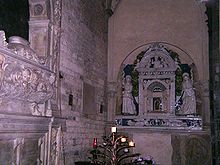
220px-santi_apostoli_tabernacolo2

The richly decorated wooden ceiling was added in 1333. Noteworthy is the pavement, with a mosaic from the original edifice which was later restored with the contributions of outstanding Florentine families (Acciaioli, Altoviti and others). The apse area appears to be Romanesque, with undecorated stones visible. The side chapels are from the 16th century.

On the left of the apse are a polychrome terracotta tabernacle by Giovanni della Robbia. To right of the entrance is the tomb with the bust of Anna Ubaldi, mother of the Gran Priore del Bene. The bust was sculpted by Giovanni Battista Foggini. The 2nd chapel on the right, chapel of San Bartolomeo was completed in the 16th century. The right wall has a stucco depicting San Paolo, and on the left wall the sepulchral monument of Piero del Bene (1530).

At the end of the nave above the door that leads to the Canon’s hall is the sepulchral monument of Bindi di Stoldo Altoviti (Bindo Altoviti) (1570) with a statue of Faith and two putti by followers of Bartolomeo Ammannati. In the apse, is the monument of Antonio Altoviti and busts of both Charlemagne and Antonio Altoviti by Giovanni Caccini. In the left nave is the monument to Oddo Altoviti (1507-1510 by Benedetto da Rovezzano.

The 4th chapel on the left has an altarpiece with the Adoration of the Shepherds and, on the wall, Archangel Raphael with Tobias and St Andrew Apostle (c. 1560 by Maso da San Friano). The 3rd chapel on the left contains the image of Archangel Michael defeating Lucifer (16th century by Alessandro Fei). The 2nd chapel has frescoes depicting the Glory of San Giovanni di Chantal by Matteo Bonechi. The first chapel has a Madonna, Child and Angels, a copy of a Paolo Schiavo originally on the facade of church.

The church houses three flints (Pietre del Santo Sepolcro) putatively from the Holy Sepulchre in Jerusalem. According to tradition, these flints were used to light the lamps of the tomb when Jesus was buried. Legend holds that they were given in 1101 to Pazzino dei Pazzi, who was among the first Christians to scale the walls of Jerusalem, leading to the capture of that city during the First Crusade.

From then on, the Pazzi included a flaming cup in their coat of arms. The flints are linked to the ceremony of Lo Scoppio del Carro and the lighting of fireworks from the Portafuoco after a celebratory mass.

Giardino Bardini, Florence

One of the prettiest places in Florence, with incredible views of the city, is Giardino Bardini.  Here are a few of my fav photos I took last summer of the garden and its views.

IMG_5463


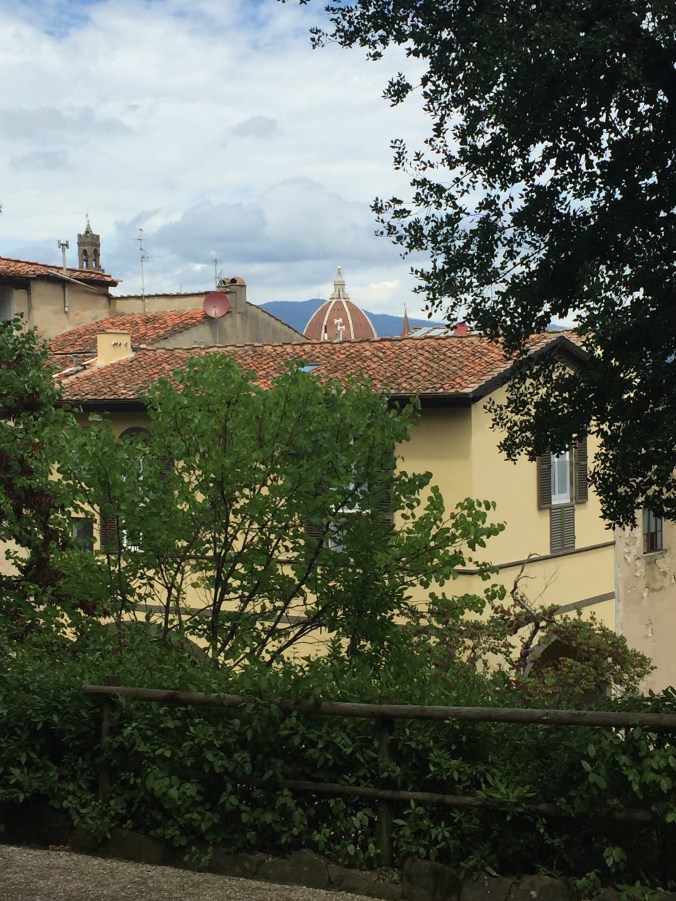
Here comes the first view of the Duomo dome as one walks up and into the garden.

IMG_5464


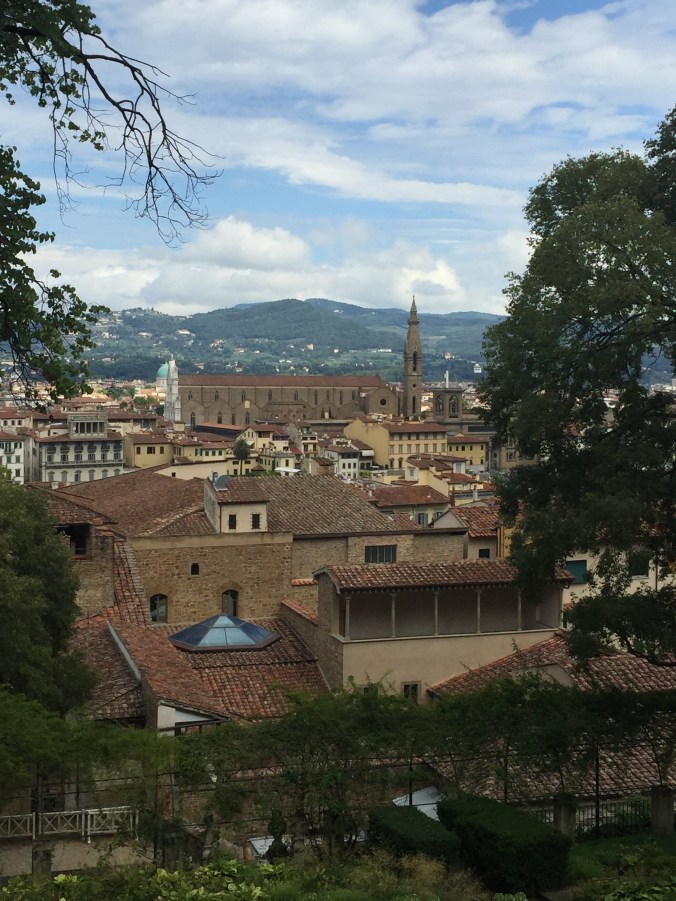
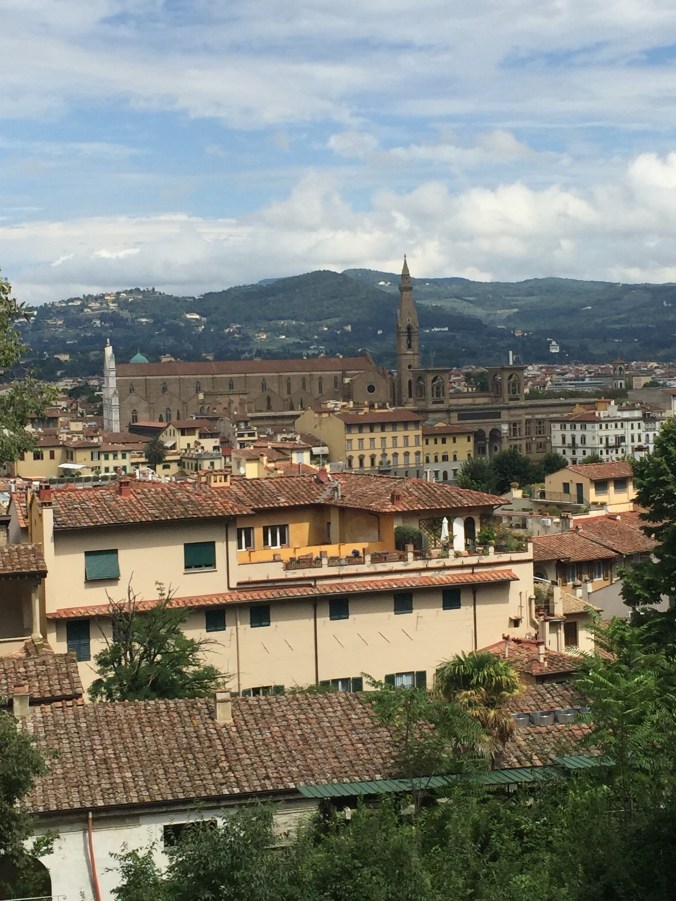
And here is a view of Santa Croce with it’s campanile at the back and its white marble encrusted facade at the front (left in picture below).

IMG_5465


Here’s a zoomed in shot of Santa Croce from Bardini garden.

IMG_5480


Now I am high enough in the garden to photograph the actual garden, for now some of it is below me.

IMG_5466


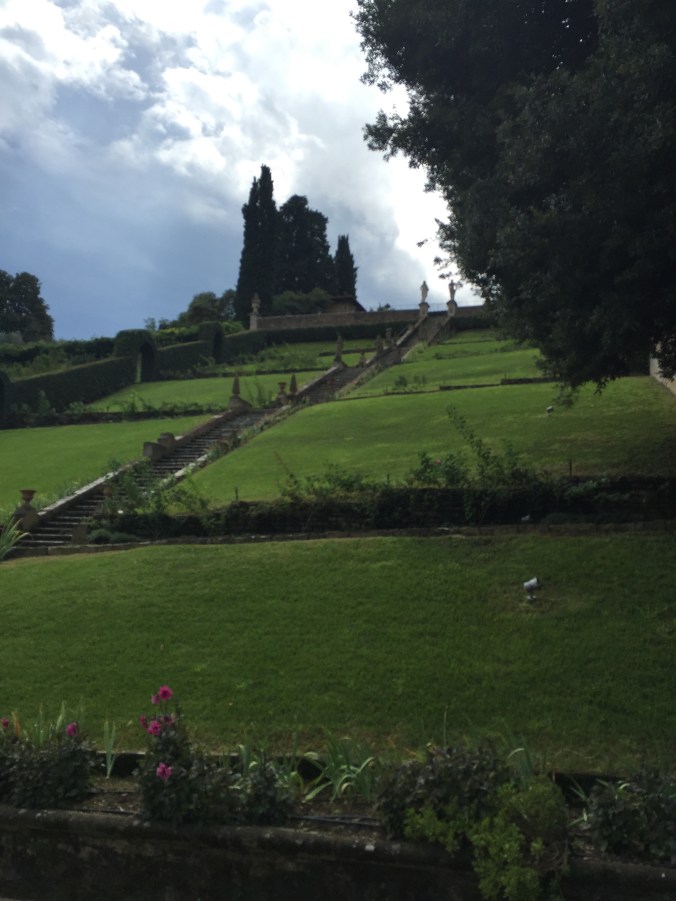
Turning around, here’s the garden terrace above me.  Those Renaissance landscape architects sure knew how to make use of a hill when creating a garden!

IMG_5467

IMG_5468

IMG_5469


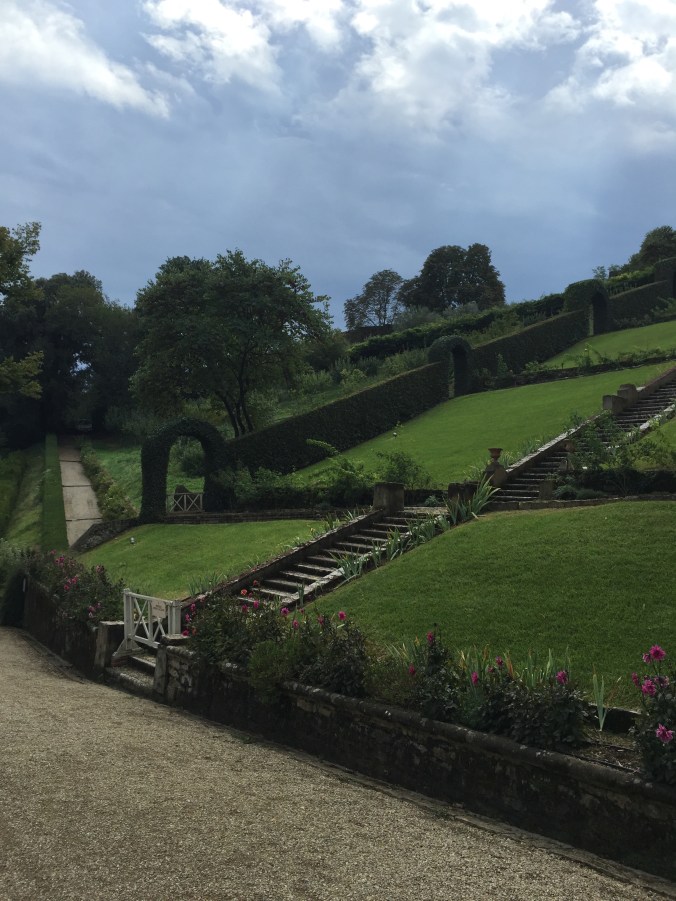
I mean, really, how lovely is this garden?  I love this shot below.  The sky is so dramatic!

IMG_5470

IMG_5475IMG_5471


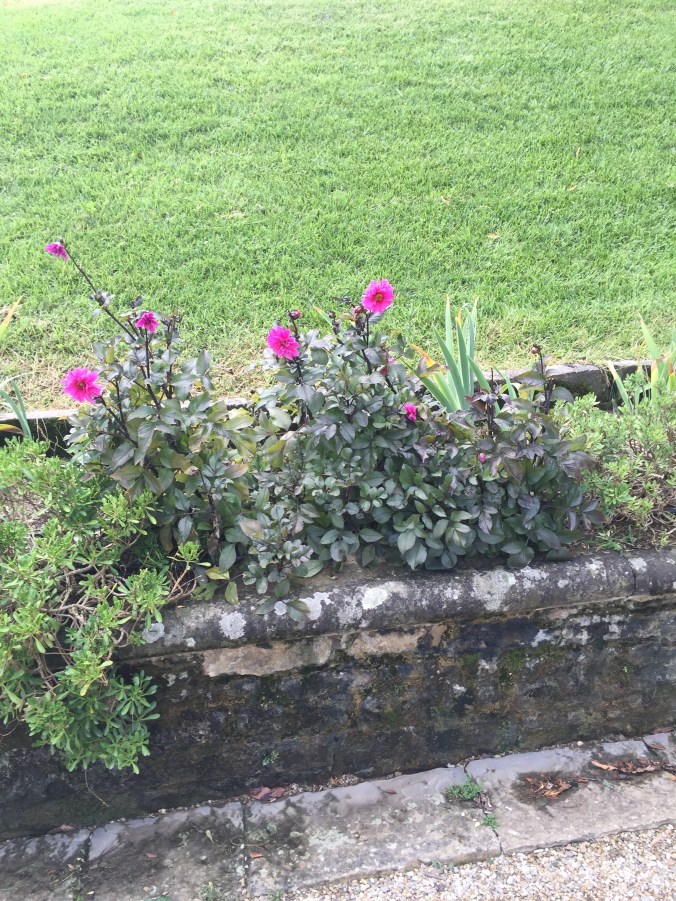
Some blooming dahlias in the garden.  Flowers are not a big part of Italian (or French) formal garden design.

IMG_5472

IMG_5473


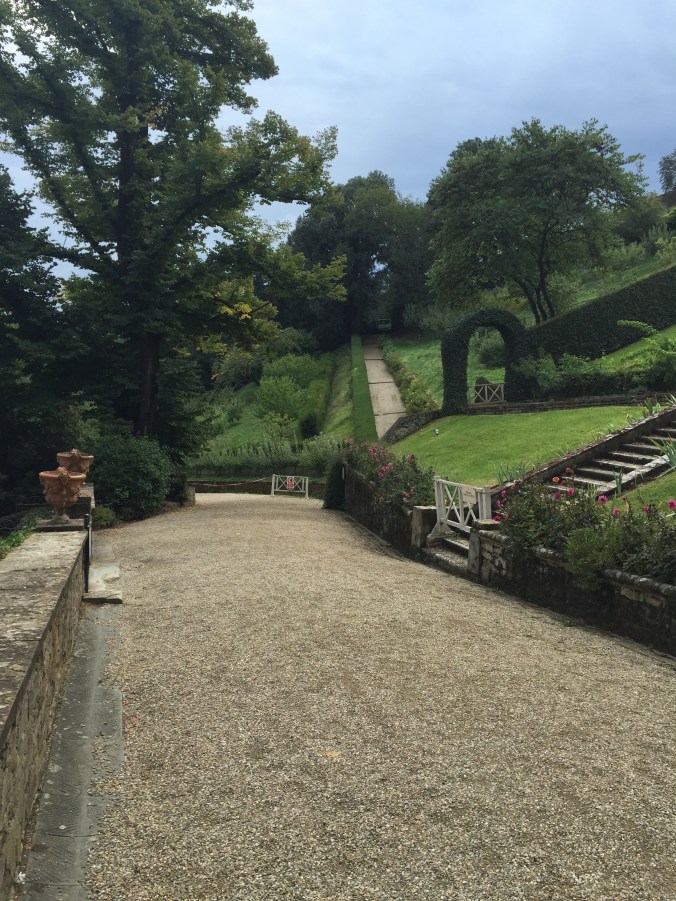
Here is the path I am following.  Gorgeous architectural and horticultural details all along the way to keep you intrigued.

IMG_5474


And it may be a hot summer day and you make have pea gravel in your sandals.  You may find the passage challenging because it is mostly uphill (because it is).  But then, there’s this:

IMG_5476


What a view!

IMG_5478IMG_5479

Come back soon for part 2 of this garden tour.  Ciao!