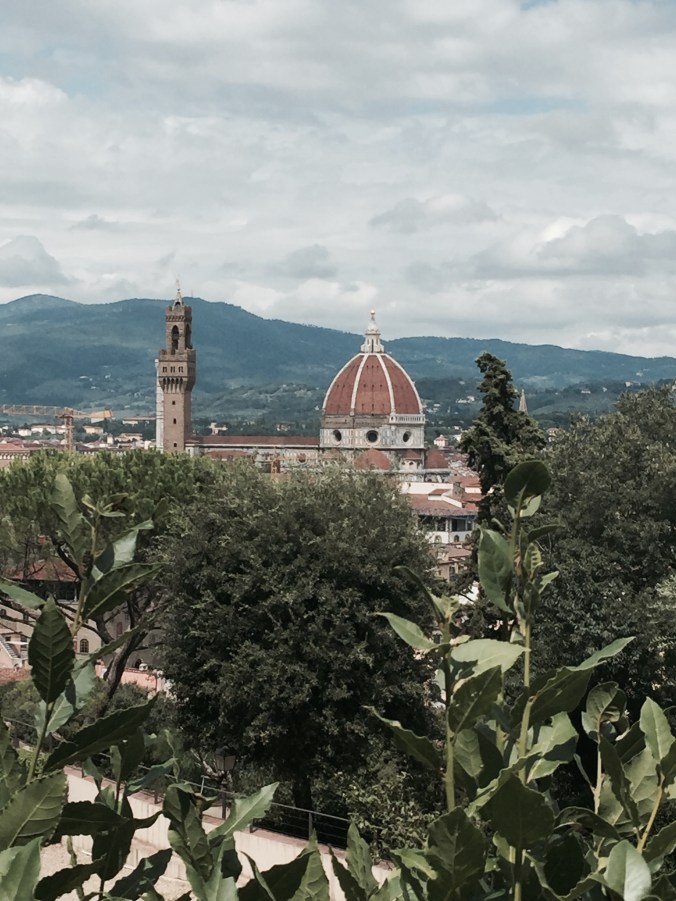
8 things I love about Santa Felicita in Florence

Among my favorite churches in Florence is Santa Felicita. I love this church for many, many reasons.  Let me count them.

images

1. Size: It is not too large and not too small.  It feels just right. You can walk in and not feel overwhelmed by the size and scale of architecture, altar, chapels and more.

IMG_5919


2. Location, location, location: Just steps from the world-famous Ponte Vecchio

Screen Shot 2016-04-25 at 12.44.36 PM


3. Little known and under appreciated.  Which means that it is never swarmed with tourists despite its premier location.  At all times of day and every season of the year the Ponte Vecchio seems to be covered with tourists from around the globe, and yet, Santa Felicita is rarely visited by the hordes.  It is an oasis within a sea of chaos.  Which is exactly what churches are meant to be, I think.

Santa Felicita is a jewel, awaiting a visit by cogniscenti. Tourists pass by, thinking the edifice is just a backdrop for their frenzied nearby shopping extravaganza.

images-3


4. Design: The cherry on top it is that the design is as fine as the church is petite.

IMG_5921IMG_5896IMG_5902

But oh, the loveliness that awaits those who enter.
IMG_5895

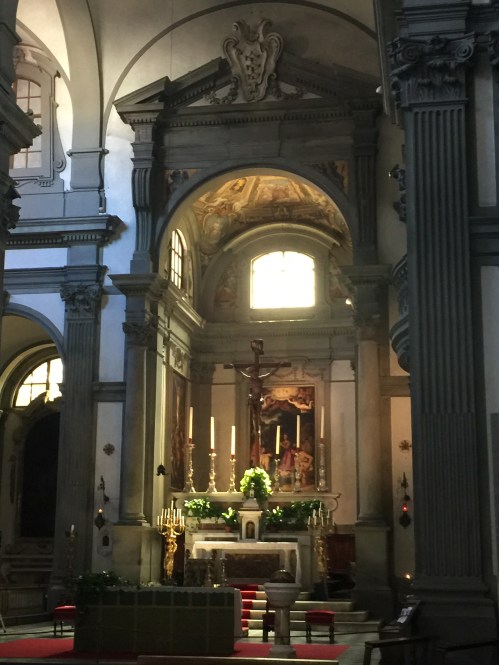
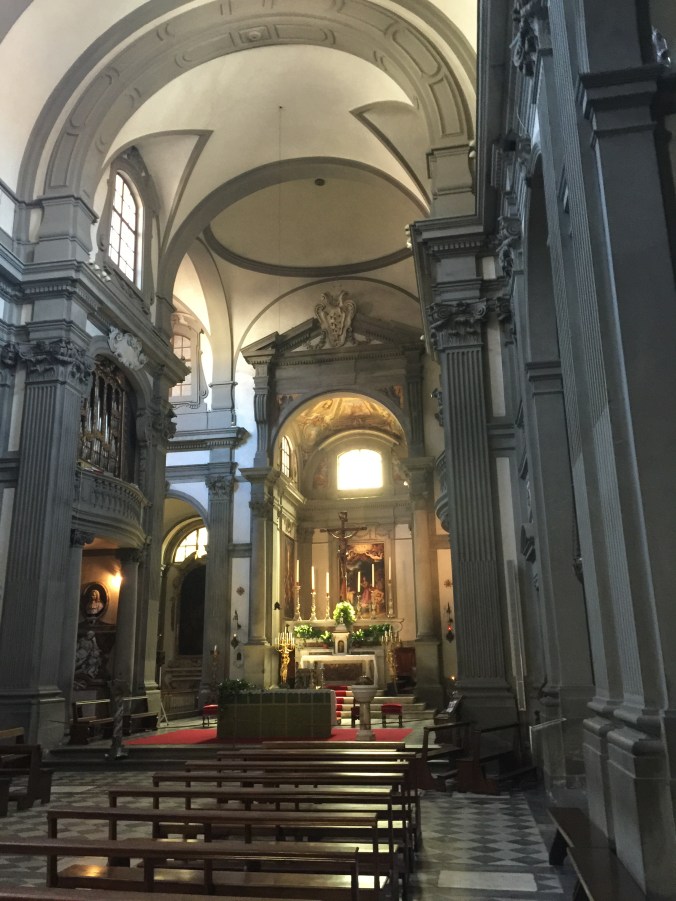
The serene gray hue of Tuscan pietra serena architectural details against the cool white plaster walls work together to create a calm, harmonized interior. The unadorned vaulted ceilings and the black and white marble floors and  provide just the right amount of understated elegance to finish the setting. The interior is flooded with ambient light from the high windows during daytime hours.

5. Another thing that sets this pretty church apart from all the others in town is that it probably the oldest in the city, right after San Lorenzo.  The first church on this site was probably built in the late 4th century and was dedicated to Saint Felicity of Rome. A new church was built in the 11th century and the current church largely dates from 1736–1739, under design by Ferdinando Ruggieri, who turned it into a one nave edifice.  Oh, the history!

IMG_5917IMG_5918IMG_5925


6. The Vasari Corridor passes through the façade of this church and on the inside there is large window, covered by a thick gate, where the Grand Dukes of the Medici family used to listen to the mass without being seen by the people staying at ground level.

images

images-4

The picture above is of the nave shot from the Vasari Corridor.


7. Masterpieces of Mannerist style paintings by Pontormo.  Pontormo is one of my favorite artists but I will admit that, like Campari, Pontormo is an acquired taste.  I love his work so much that I plan to devote a post to him soon.

IMG_5886


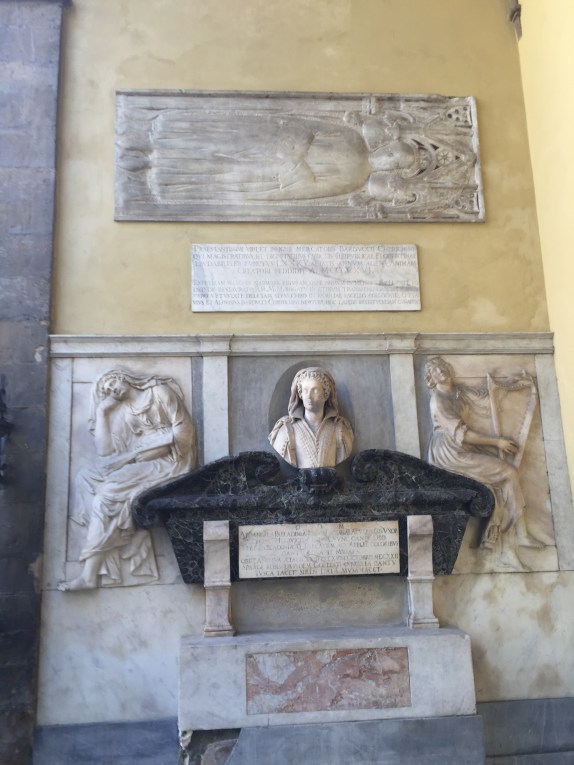
8.  The entry Vestibule is one of my favorite indoor/outdoor spaces in Florence.  It is simple and feels very Tuscan.  Here are some shots of what I love about the vestibule.

IMG_5916

The wrought iron separates the church from the hoi polloi in the the street and piazza outside.


Ever wonder what the walls would look like without a fresco adorning them?  Here’s the answer:

IMG_5899


IMG_5909

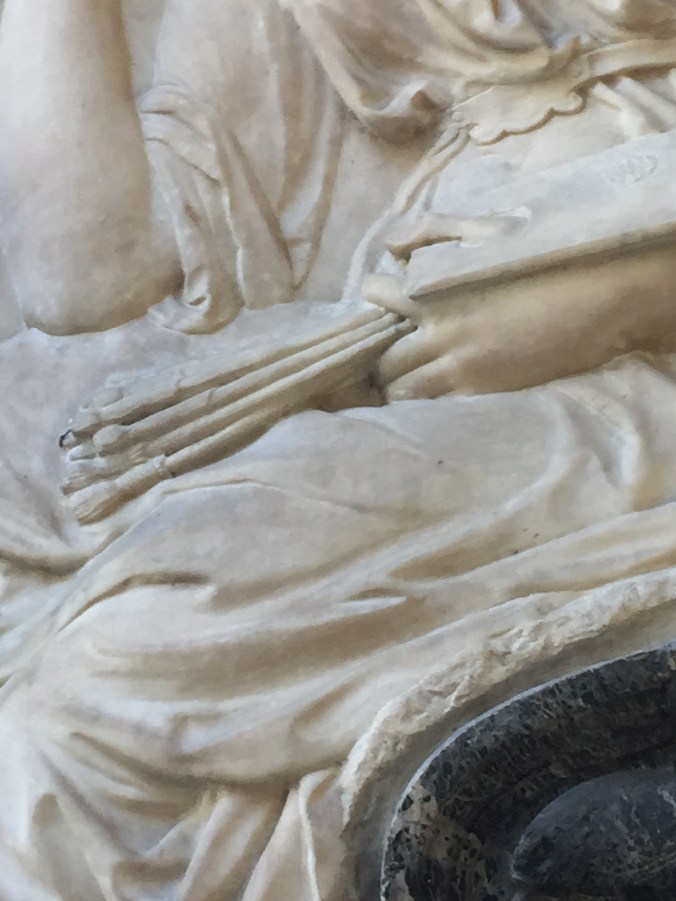
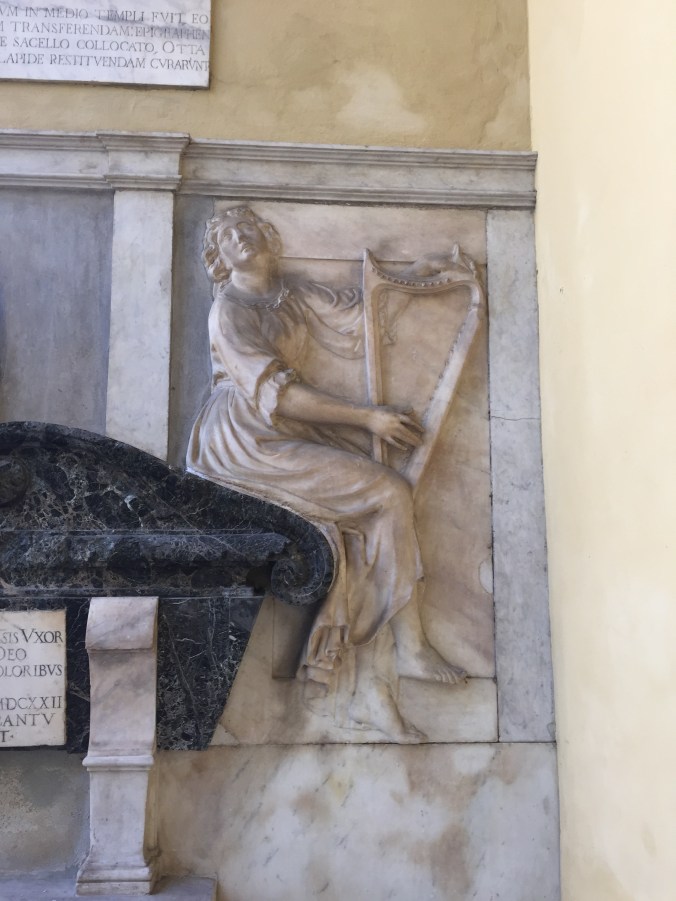
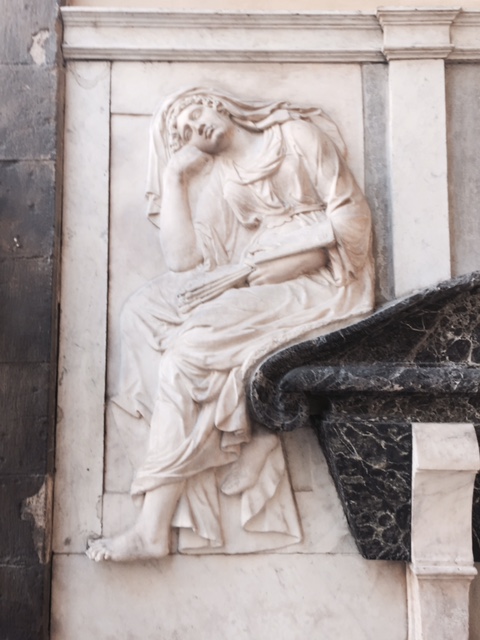
The muse of painting takes a nap while the muse of music plays a soothing tune.
FullSizeRenderIMG_5911IMG_5912

Santa Felicita, a Florentine jewel.

How Florence became Florence: the year 1300

A huge topic, no question.

IMG_5558

But I like to think about it.  Here’s a woodcut of Florence, followed by a description of what the evolving city would have been like around 1300.  It starts to fire the imagination of Florence taking shape as the jewel it would soon become :

1

“Under the government of the Guelphs, Florence grew and prospered. All its main streets…had been paved…[under the leadership] of a Milanese Podesta, Rubaconte da Mandello….the city’s population…seems to have increased to about 45,000, considerably more than London’s and some eight times that of Oxford, even though the university there was by that time well established.

site_162696-4042

The city’s banking houses were making immense profits through their dealings with foreign powers, in particular with the Kings of France and Sicily and with the Pope;

e319e91427ce4e1fd7f9e6c3961315c8

The trade of the city was increasing in volume year by year. Merchants dealt in spices and dyes, hides and silks, sendal [a type of silk] and taffeta, gold brocades and braid, and above all in wool.

wp129d1d88_05_06


Vast quantities of woolen cloth and bales of raw wool were imported from northern Europe, mainly from France, the Low Countries, the Algarve, Spain, and by the end of the 13th century, from England.

The wool was refined and dyed in the numerous workshops of Florence, the finished bolts of cloth being sold through so many agents beyond Tuscany’s borders, in French fairs and English markets, Flemish towns and Mediterranean ports.  Pope Boniface VIII was to say that the Florentines had become a kind of 5th element: wherever earth, air, fire, water were to be found there were sure to be Florentines as well.

In all weathers flat-bottomed barges piled high with cloth could be seen drifting down towards Pisa on the Arno, whose waters–polluted with dyestuffs, tannin and rubbish, when not dried up–drove the workshop’s mills and filled the tanks in which the wool was washed and dyed.

images-5Screen-Shot-2013-11-03-at-4.27.51-PM

The dyes used were faster, and of purer, brighter color, than any to be found elsewhere in Europe.  Some were of local origin: yellow dyes came from the crocus fields near San Gimignano; but the ingredients for others had to be transported from far away, insects for cochineal from the shores of the Mediterranean, lichen for the red dye known as oracle from Majorca, cinnabar for vermilion from the Holy Land. The bitter juice of aloes which made th eyes fast came from Alexandria and the Levant.

spindle

Throughout the year thousands of ill-paid men [and women] were hard at work in the city’s shops, in wash-houses and stretching-sheds, as well as in their own cramped houses, undertaking the numerous processes through which the imported wool had to pass, the fulling, spinning and carding, the combing, weaving, stretching and trimming, as well as the washing and dyeing and drying.

images-2

images-4

images-3

Nor was it only textiles that left Florence by river or on the backs of pack-horses which made their slow way to the coast or ambled north across the Apennines to Venice for shipment to the ports of the eastern Mediterranean; grain was exported, too, oil and livestock, timber and the fine wines of Tuscany.

1954729_f520

In this commerce the banks of Florence played an essential part, not only in supplying capital and in the investment of money for their clients, but in all manner of other activities, including the ensuring of ships and cargoes. As inventors of double-entry bookkeeping and the forerunner of the cheque, and as creators of the gold floor, and lire, sold and denier, later the lsd of British capitalism, the Florentines were already regarded as the world’s leading experts in international commerce; and their banks had the reputation of being safer and more solid business houses than any others.”

The arts were flourishing in this bustling capital as well.  By about 1300, “the last of the magnificent mosaics, some by Florentines, some by a master mosaicist from Venice, had been finished.  Andrea Pisano, a sculptor from Pontedera, who was succeed Giotto as capomaestro of the Campanile, was commissioned by the rich Arte di Calimala to provide wax models from which the bronze doors for the south side of the Baptistery might be cast.

Here are the works: the mosaic masterpiece in the dome of the baptistery,  the South Doors of the same structure by Pisano, and the Campanile by Giotto.

mosaic


South_Doors_of_the_Florence_Baptistry

Campanile


Christopher Hibbert, Florence, the Biography of a City, (New York and London, 1993) pp. 23-4 and 49. Illustrations are from all over the internet.