San Miniato al Monte

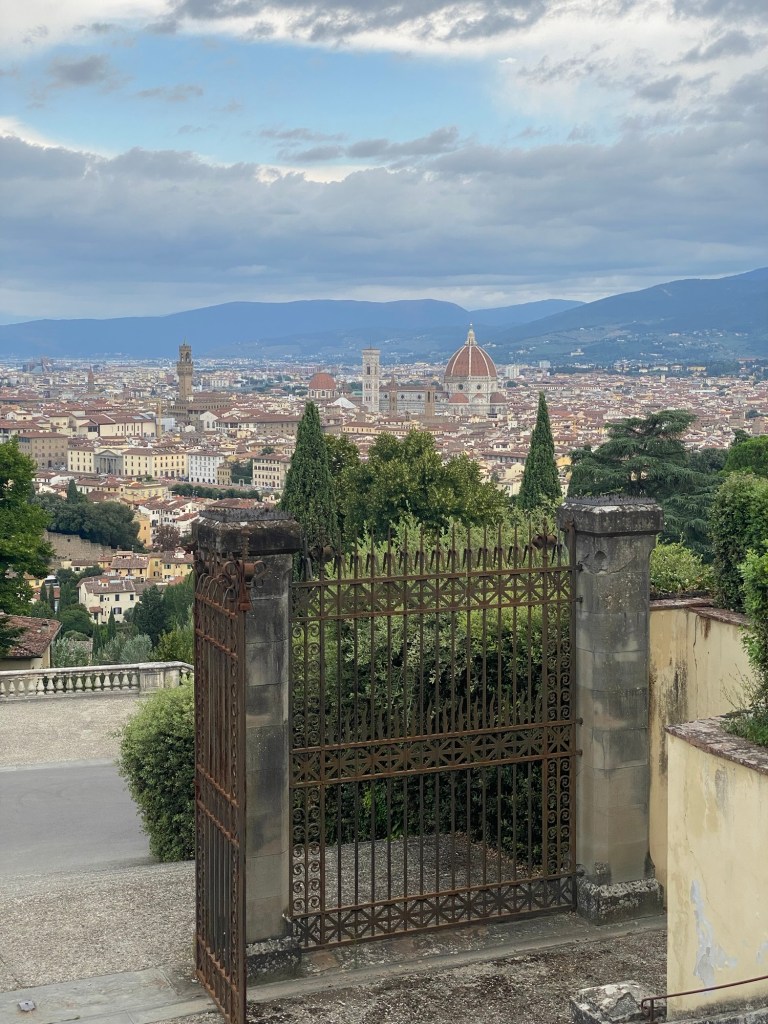
On a hill on the SE end of Florence is this famous church.

I haven’t been up here in quite some time, although I go by it often on my bus route #13, which is a relaxing way to view the city.

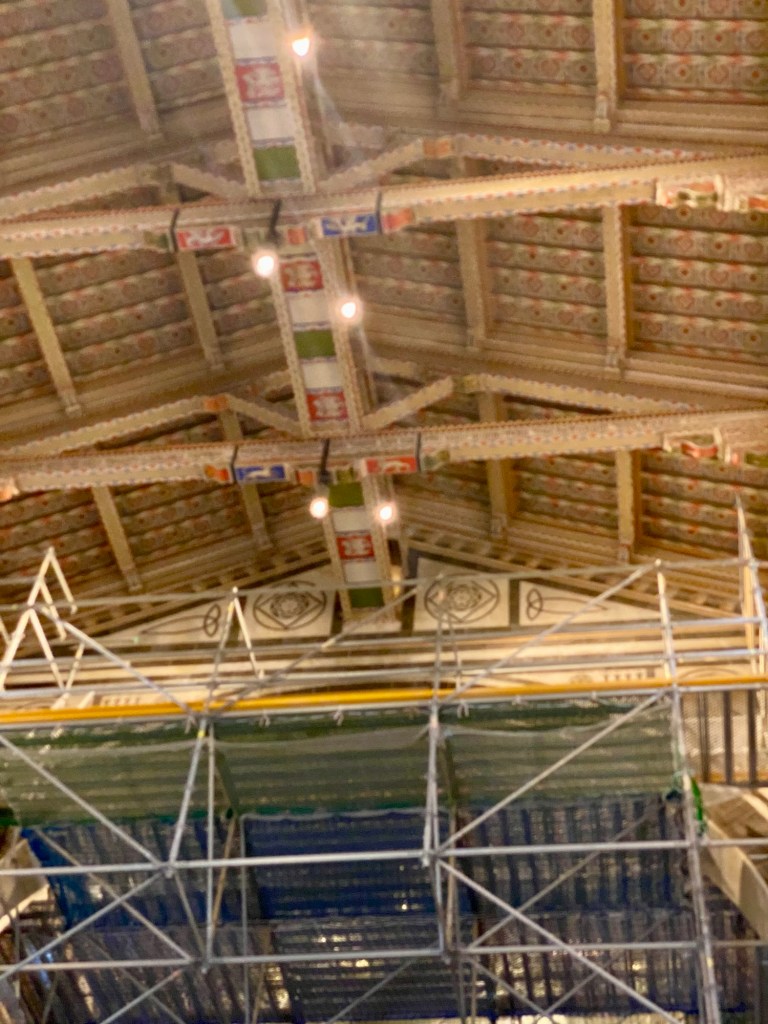
Why was I not surprised to discover, on this day, that the church is under scaffolding? If you read my posts, you will know this is never a surprise.

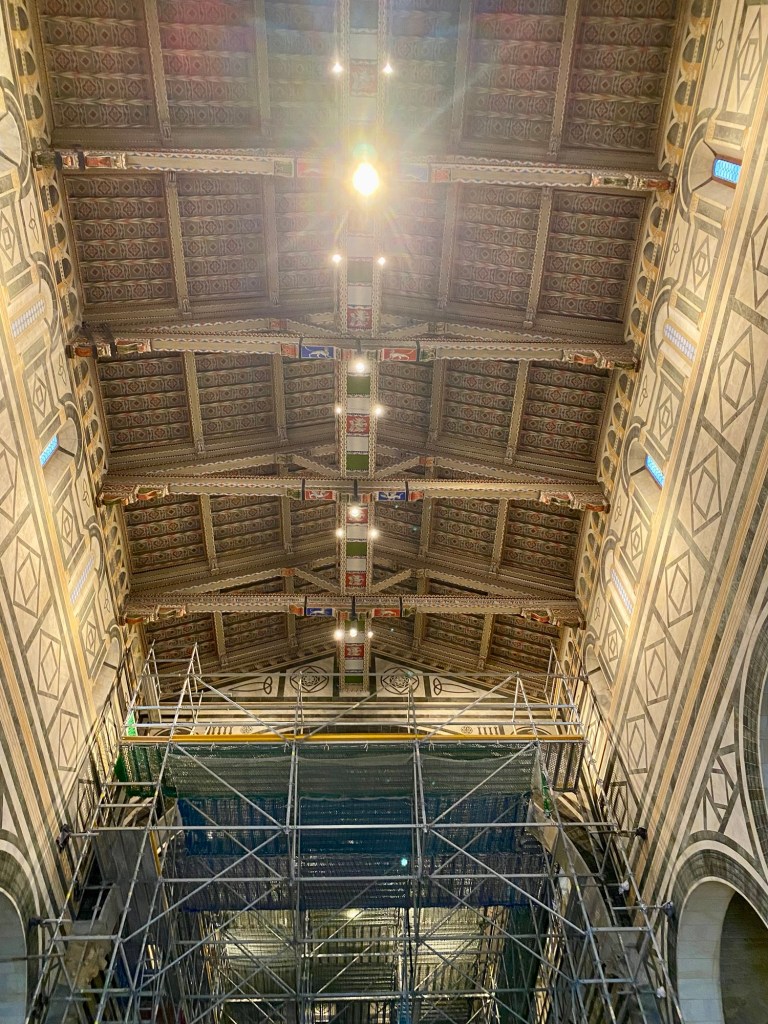
What I could see both outside and inside this church on this day was limited, but it was still a very worthwhile adventure and it fed me in the way these things always do.

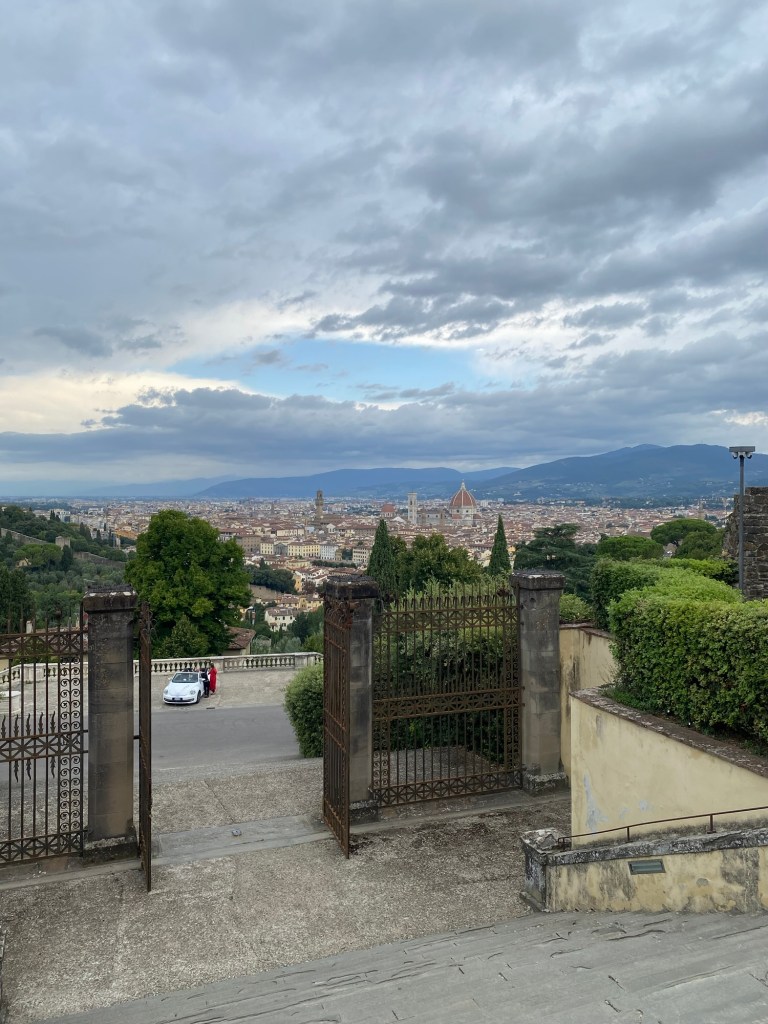
The views of Florence from up here are breathtaking.
I’m not going to give you a lesson on the church today. If you are interested, please Google it or look it up on Perplexity, the AI app that will tell you exactly what you want to know.
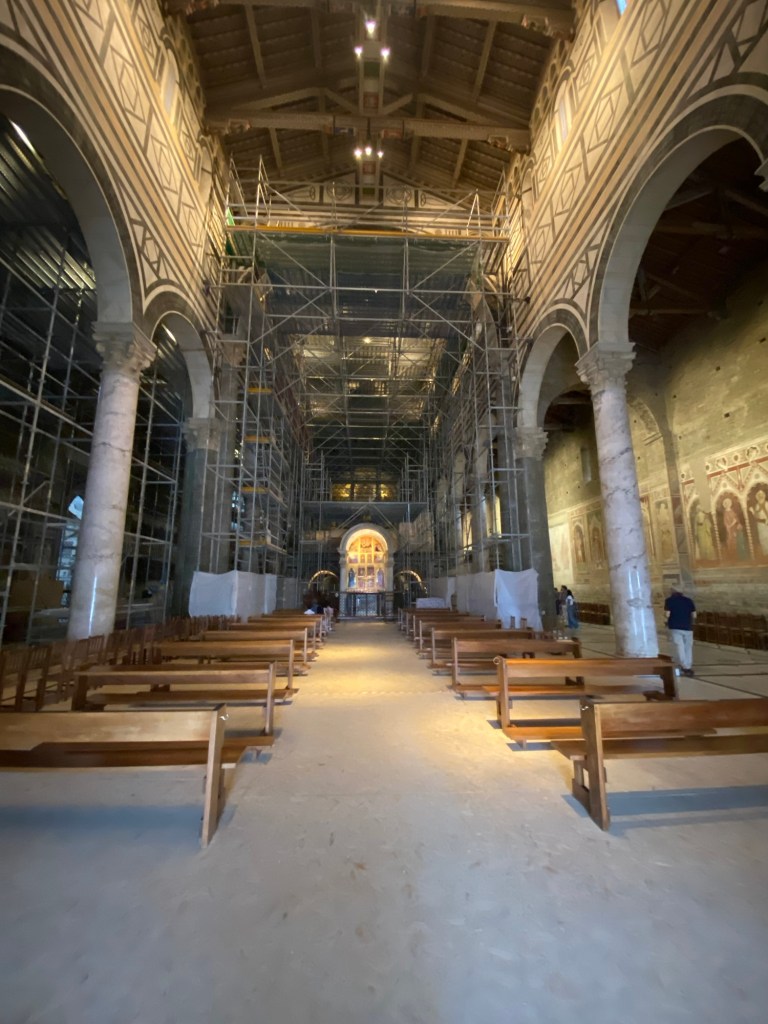
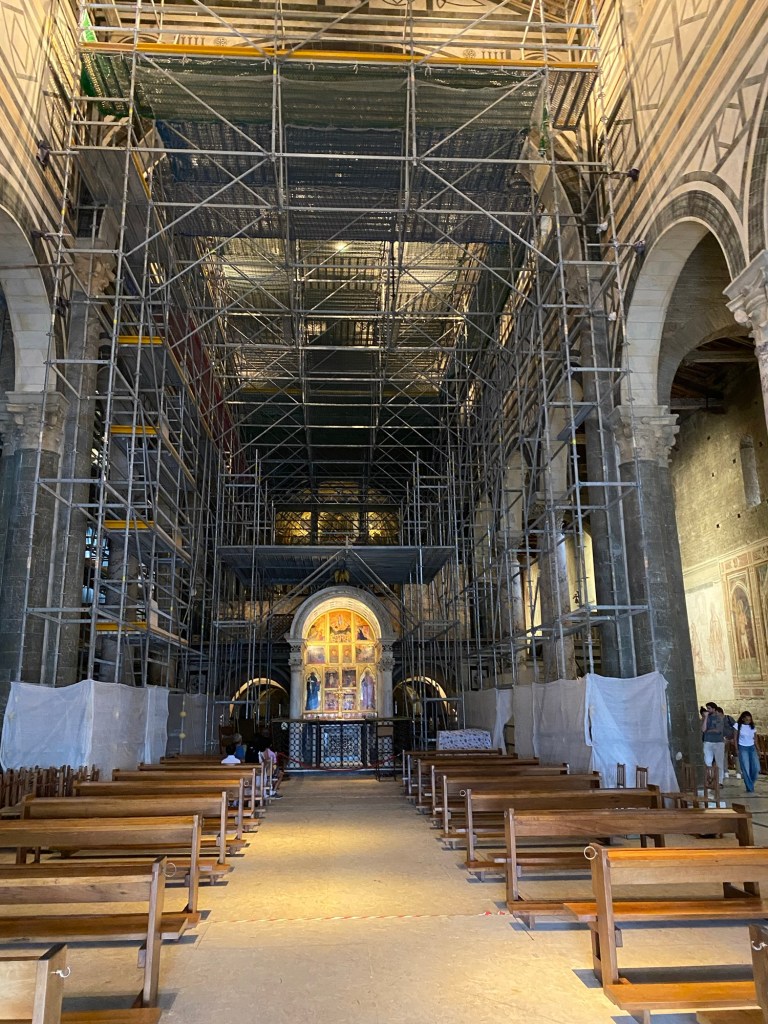
The picture above shows you the transept end of the basilica.
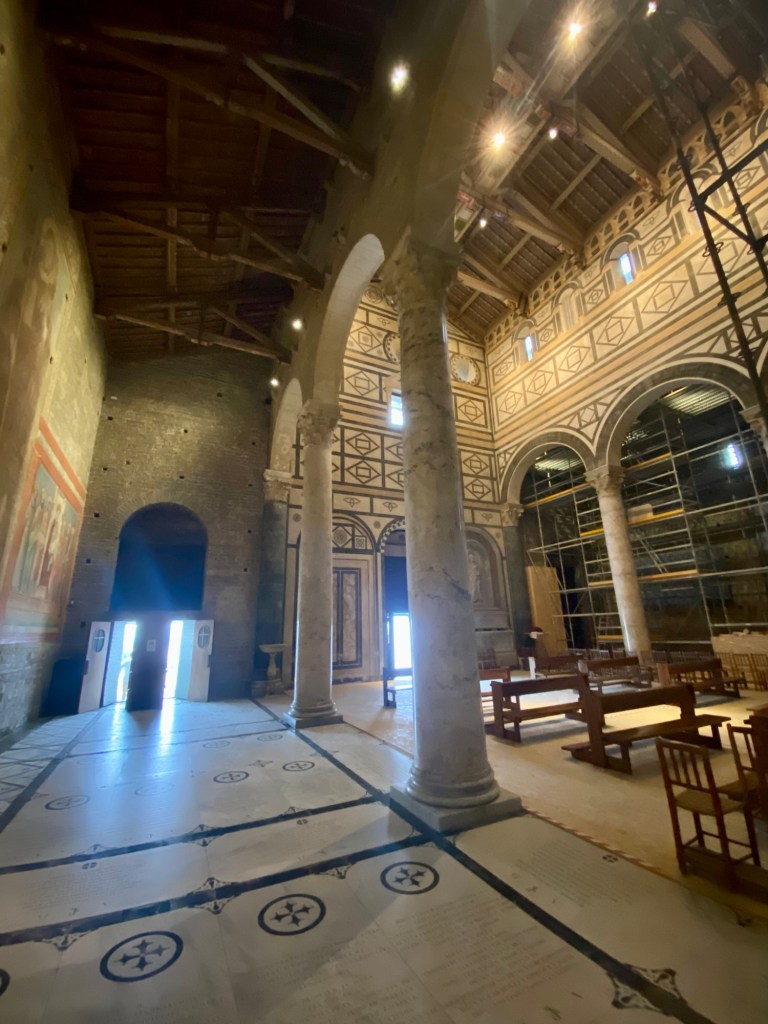
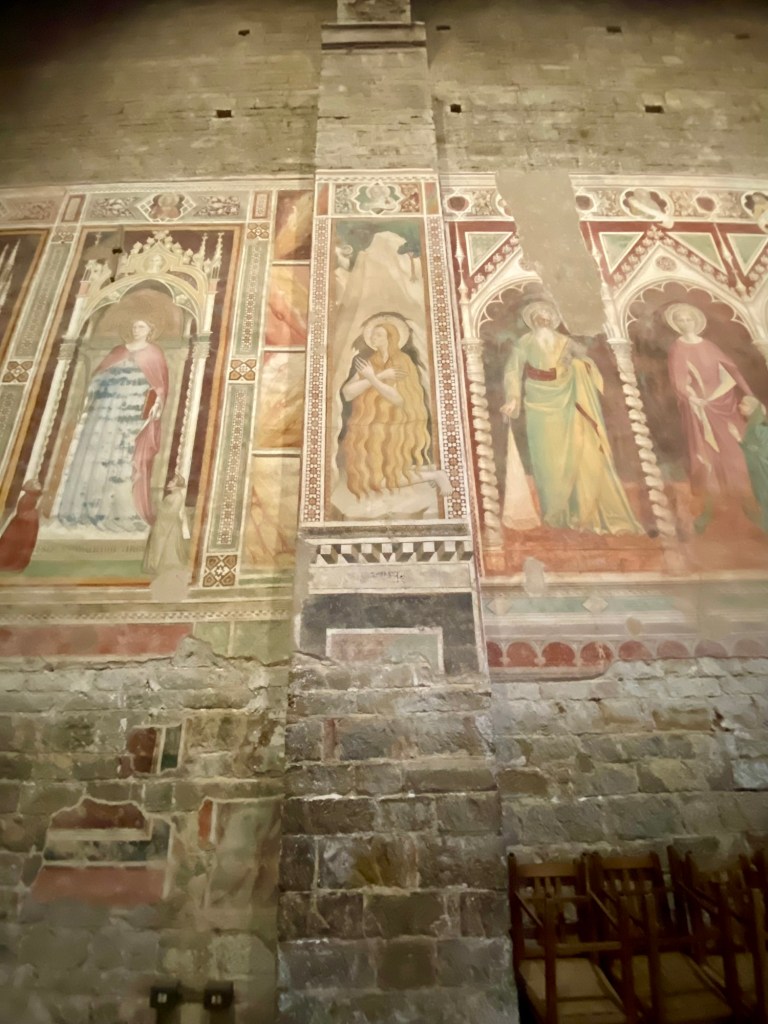
Below the pictures show you the side aisle visible from the nave. The inset stone patterns will influence subsequent building in Florence. This building is essential to an understanding of the city.

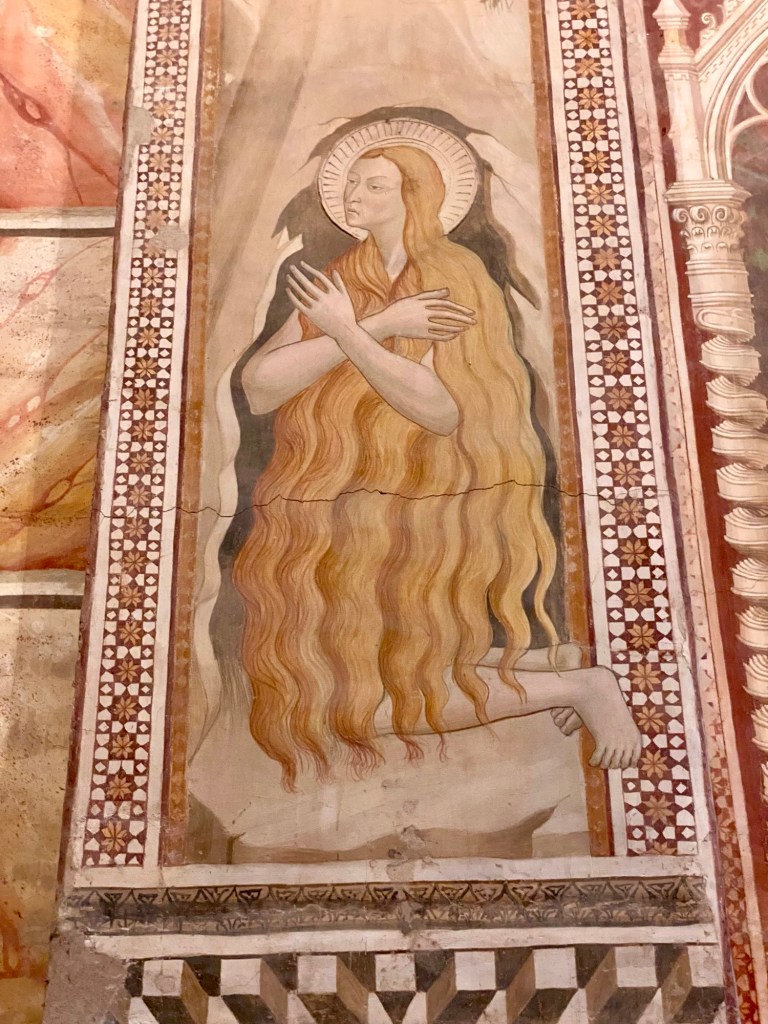
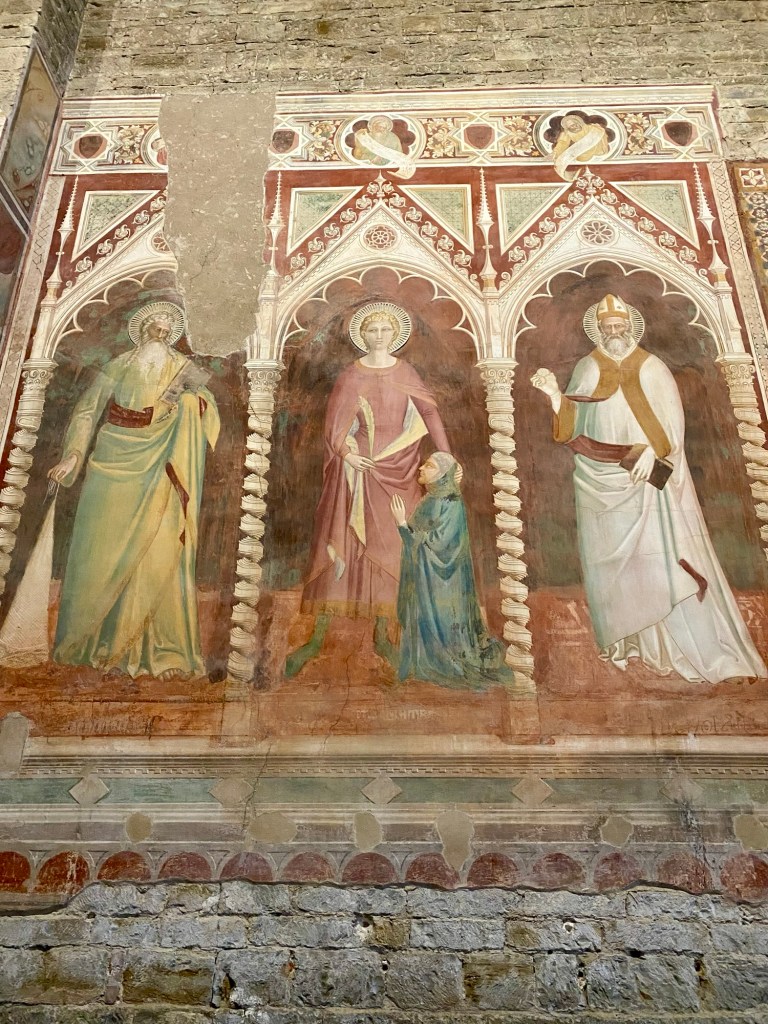
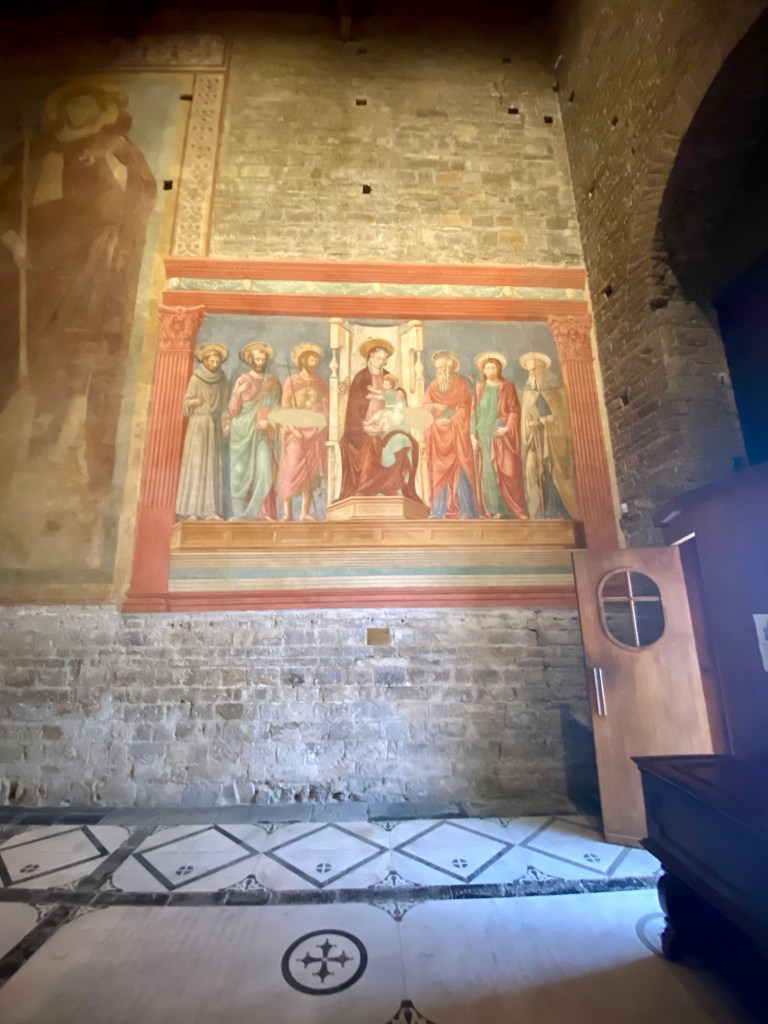
Only a portion of the church’s frescoes are visible currently, but I found it to be a good amount and plenty for one day’s viewing. I’ve been looking at this set of frescoes since 1979 and they affect me as much now as they did on that initial visit.
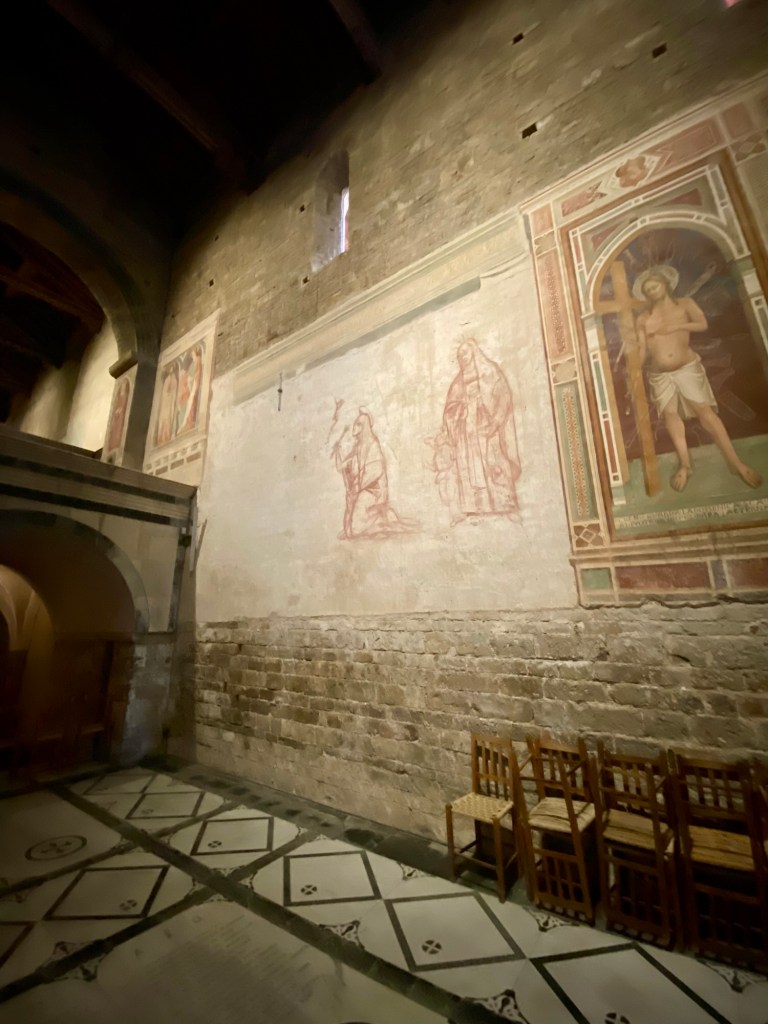
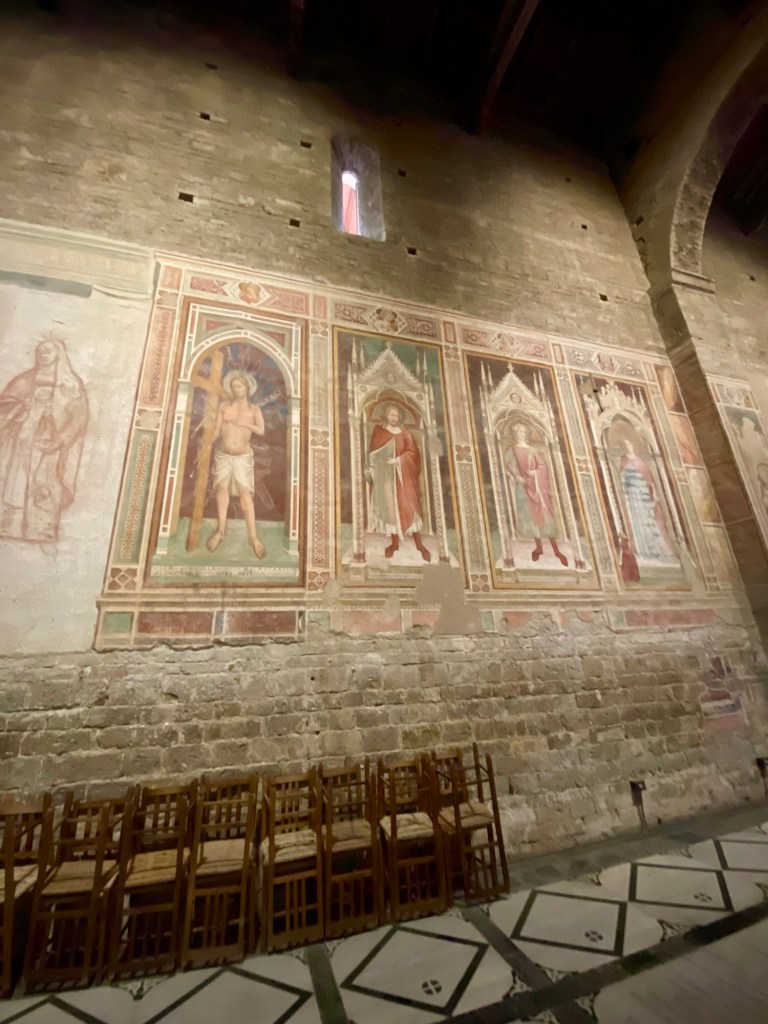
I’ll be back soon with more on this august complex.

A stop at Santa Trinità

After my fairly regular weekly bridge game in the Oltrarno of Florence, I like to cross the Ponte Santa Trinita and visit the basilica of the same name. It is one of my favorite churches in the city for a number of reasons. You will see some of them below.
In general, I like to make my posts as concise as possible and to deliver some kind of thoughtful information.

In this post today, I’m abandoning that goal and just sharing pictures I’ve accumulated over several visits. I still can’t believe my good fortune in being able to return again and again to my favorite places. I see something new on every visit.

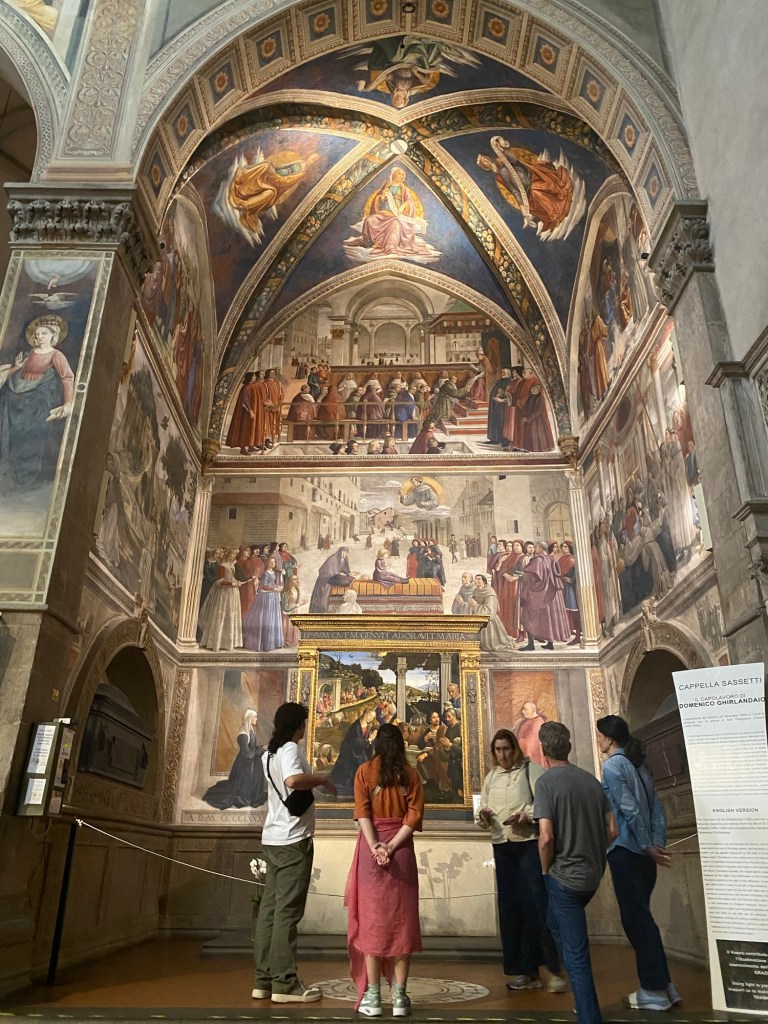
The standout of this church for me is this set of 15th century frescoes by the painter Ghirlandaio. I adore his work. You might have heard about him if you know anything about the life of Michelangelo; the future painter of the Sistine Chapel ceiling was apprenticed with Ghirlandaio in the late 1480s and learned the technique of fresco painting from the older master.

Look at these contemporary portraits of Florentine citizens by Ghirlandaio in the Sassetti Chapel at Santa Trinita. Many of them are identifiable.

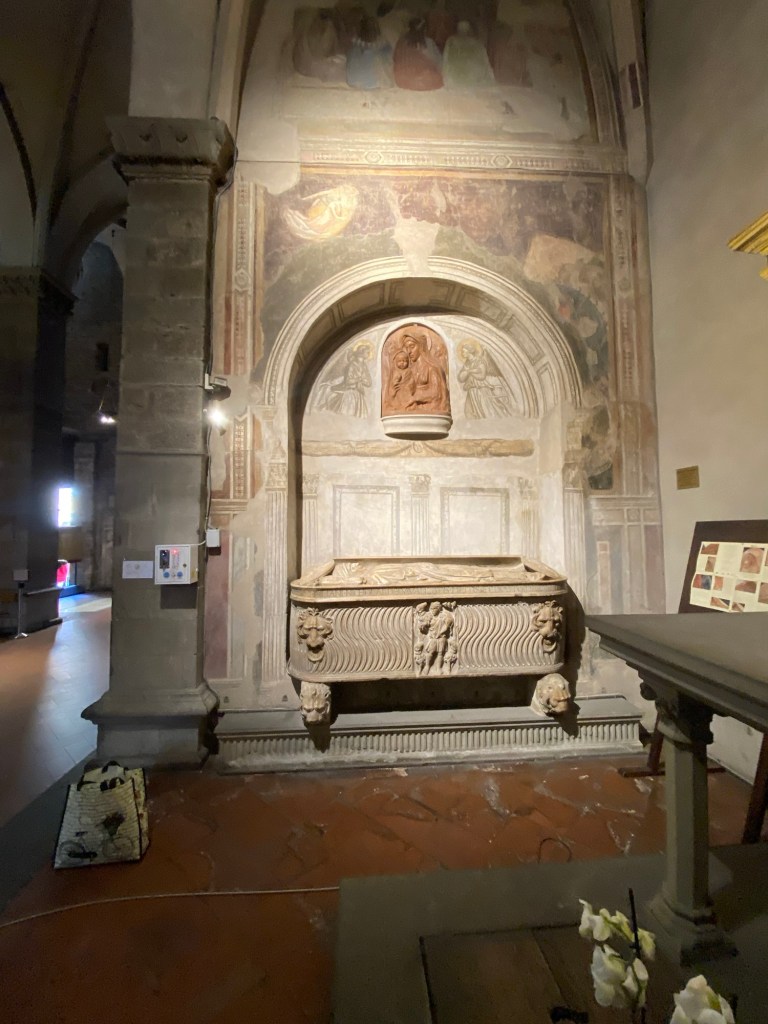
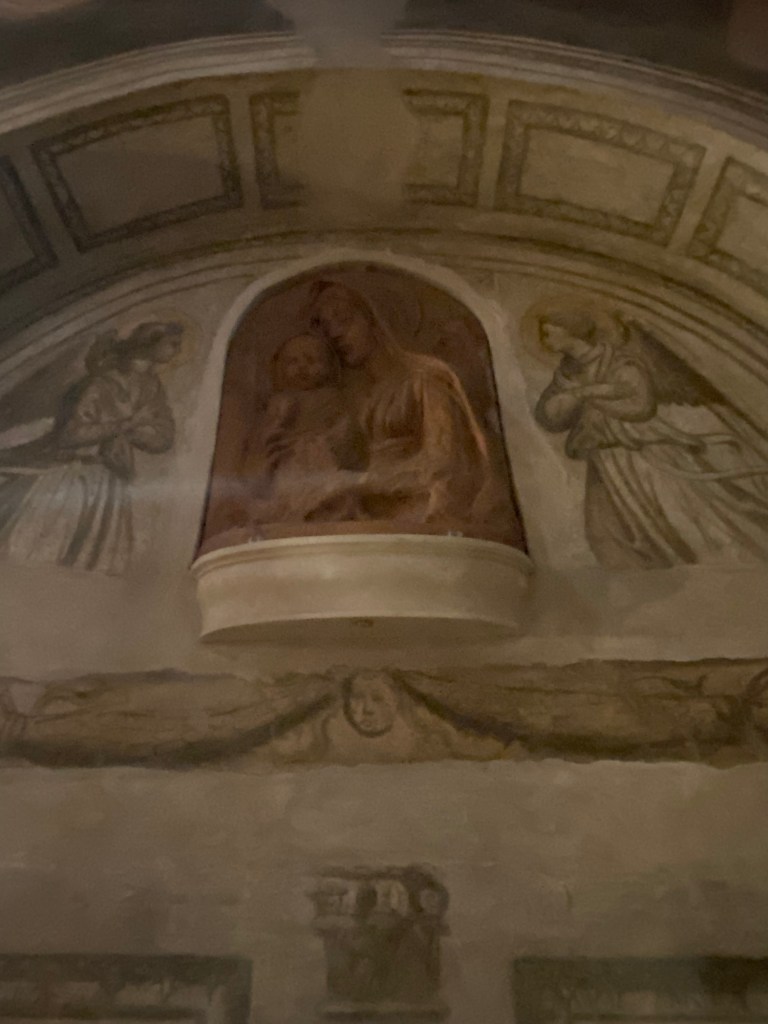
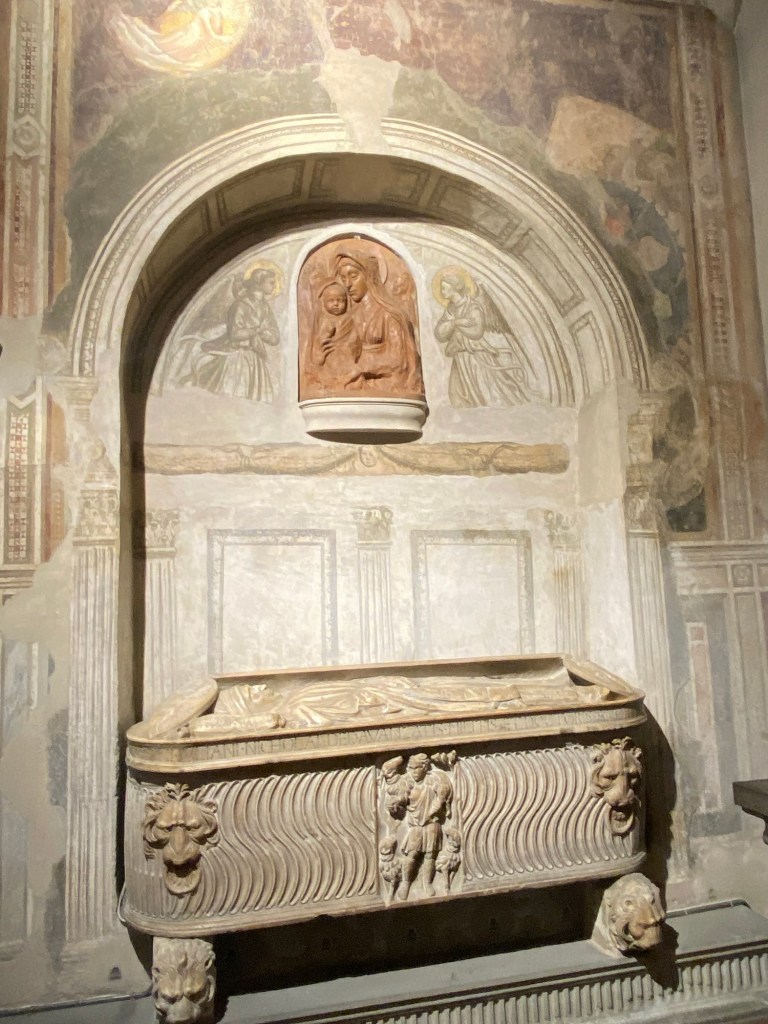
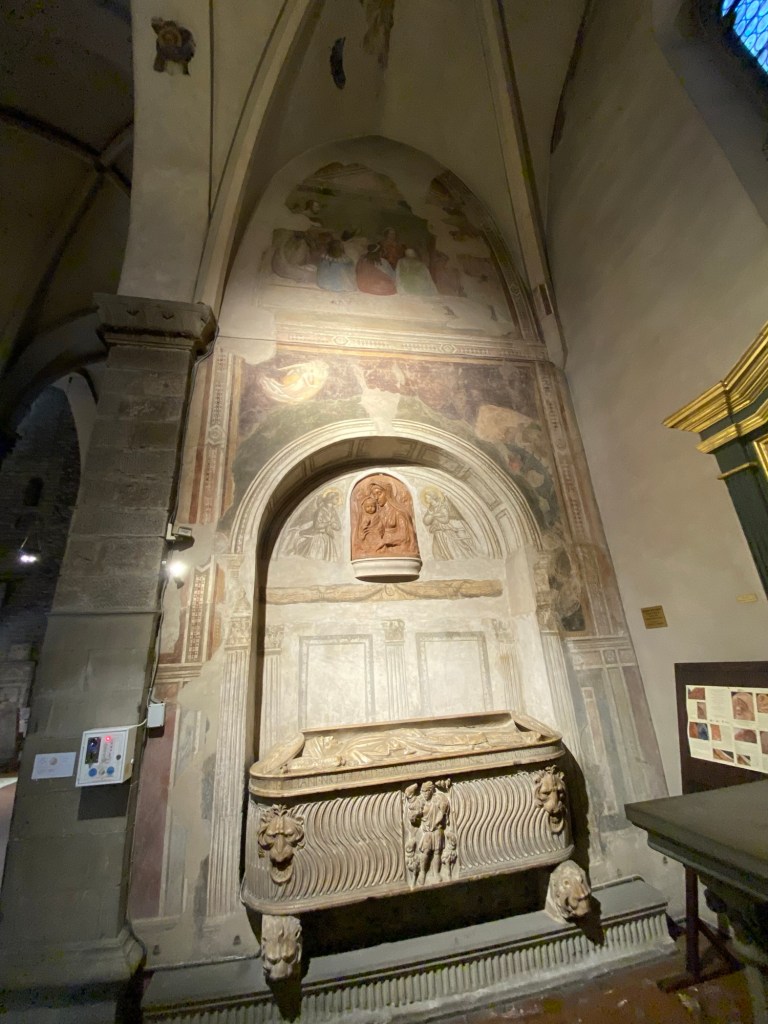
The same church also houses the Davanzati chapel which houses a significant sculpture attributed to another Quattrocento great, Donatello.

You can see the bust, flanked by painted angels, in the arched niche below.

It’s hard to get a good picture of it in this light.

The terracotta bust was restored in 2014 and information about that process is displayed in the chapel.

The next shot is a detail from the frescoes above the Donatello work.

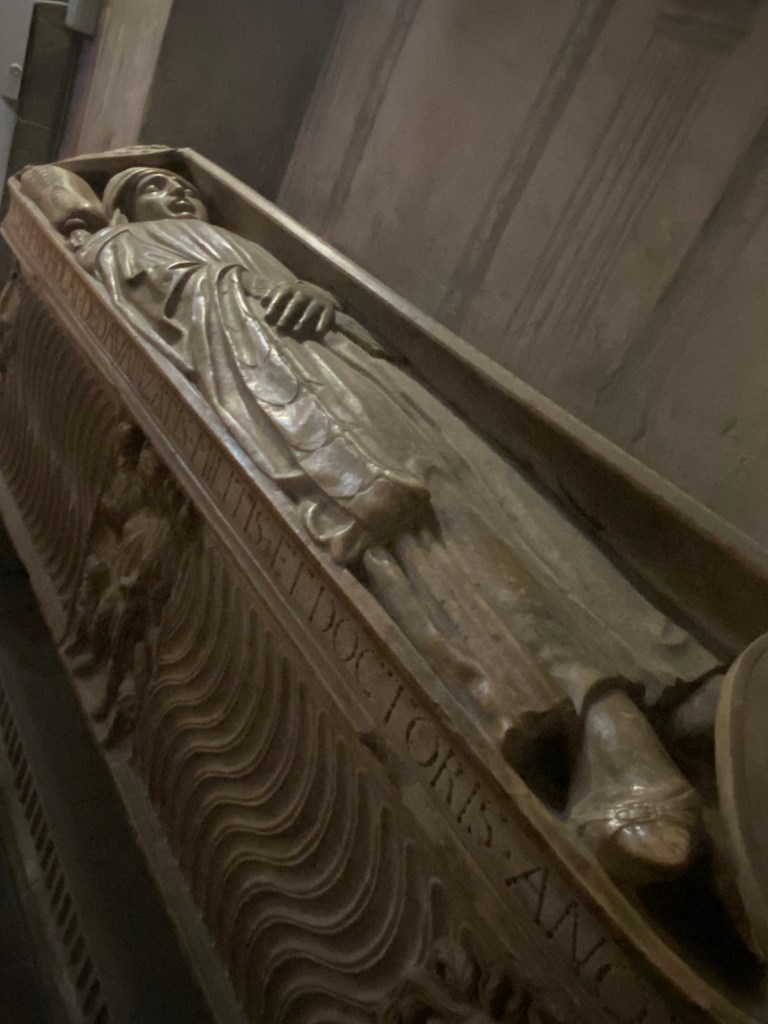
In the Davanzati chapel is the funeral monument of Giuliano Davanzati. This is comprised of a Roman sarcophagus from the 3rd C AD, topped with a lid of a recumbent figure of the deceased, which has been attributed to the renowned Renaissance artist Bernardo Rossellino. It is said that the sculpture depicts a shepherd with lambs, interpreted in a somber, almost monastic manner.

Below is the ancient sarcophagus

The classical tomb and its incorporation of ancient elements reflect both the devotional and commemorative ambitions of the Davanzati family, and makes it one of the most distinctive private memorials within the basilica.

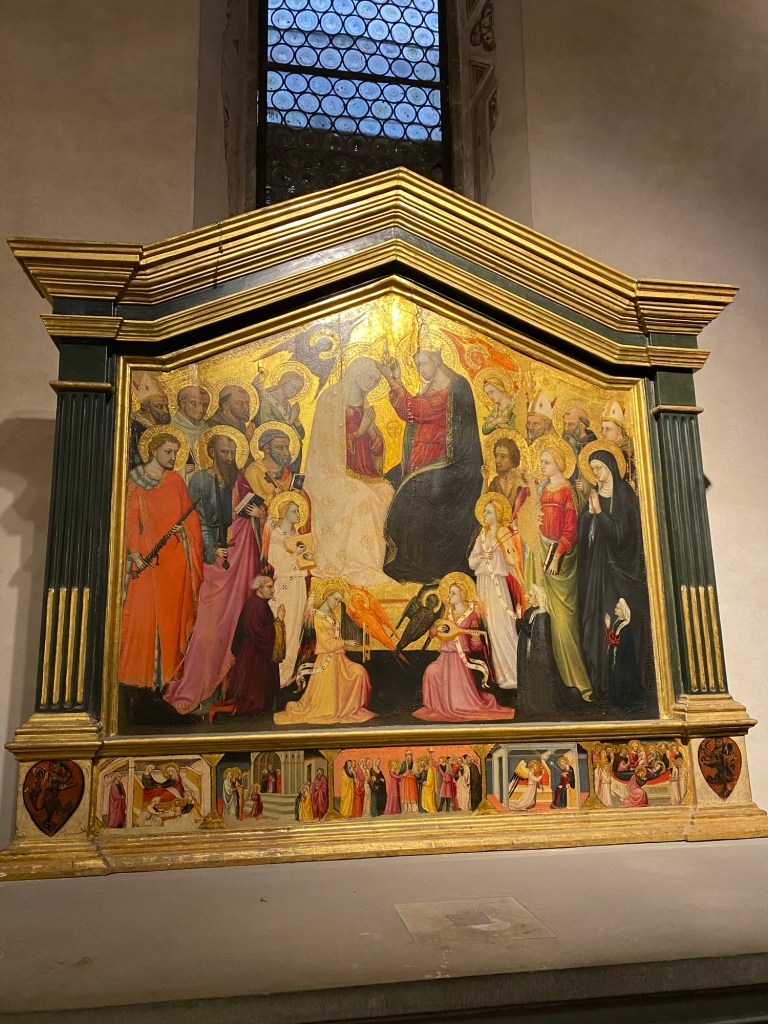
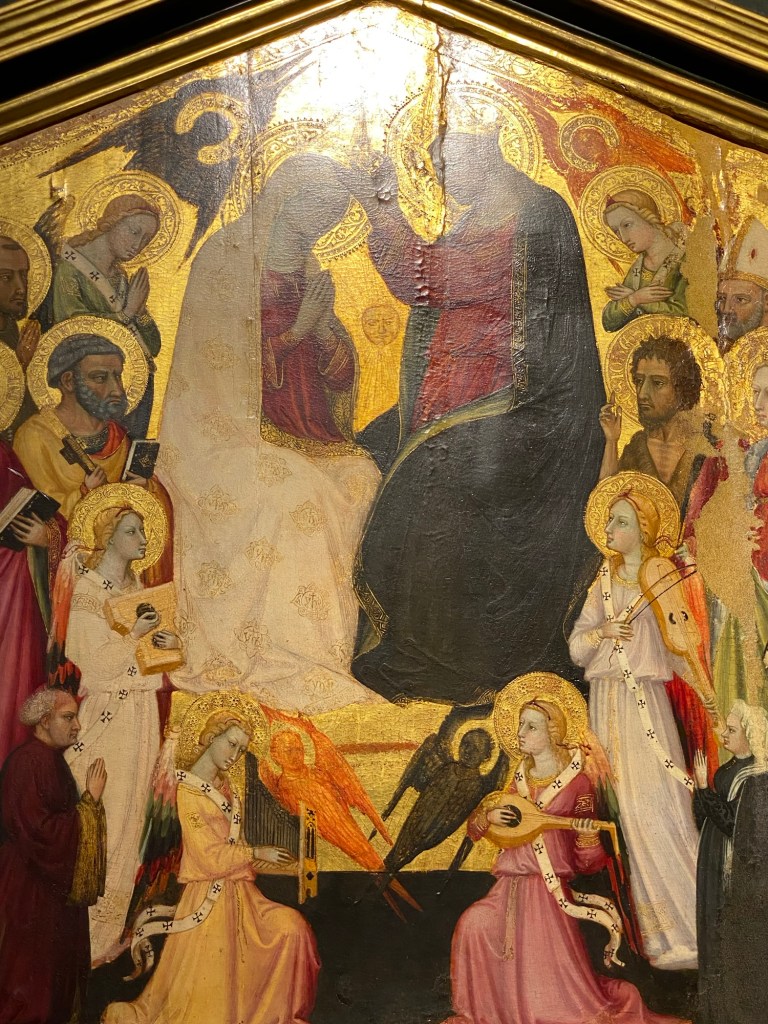
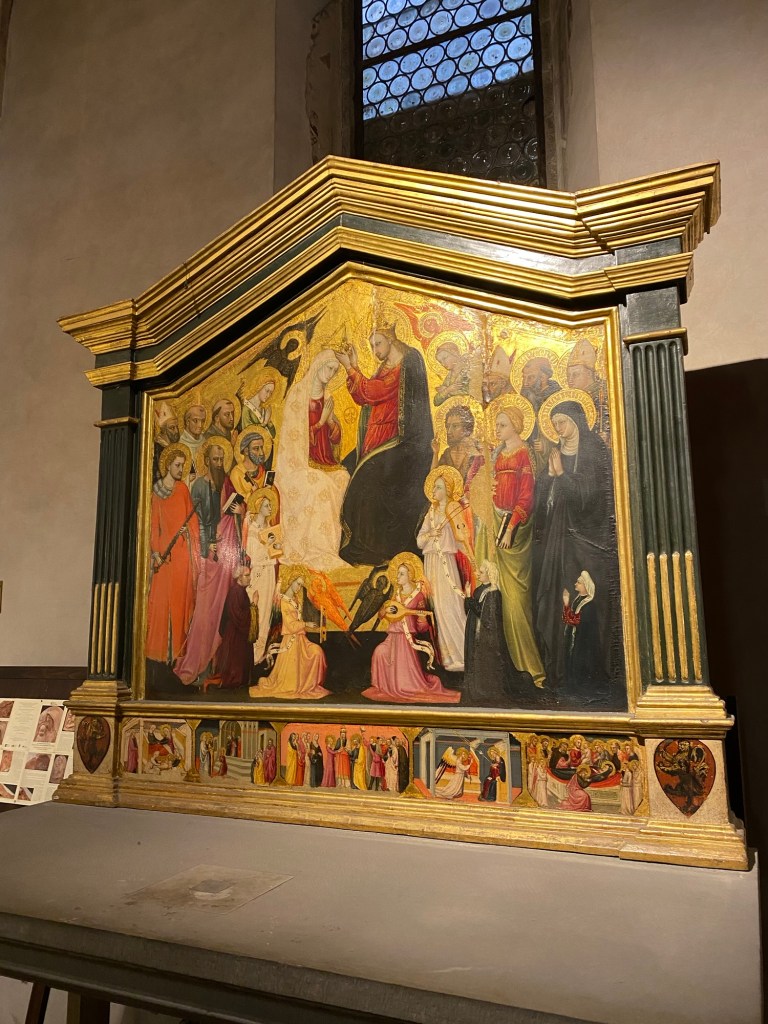
Also in this important chapel is the tempera painted altarpiece:

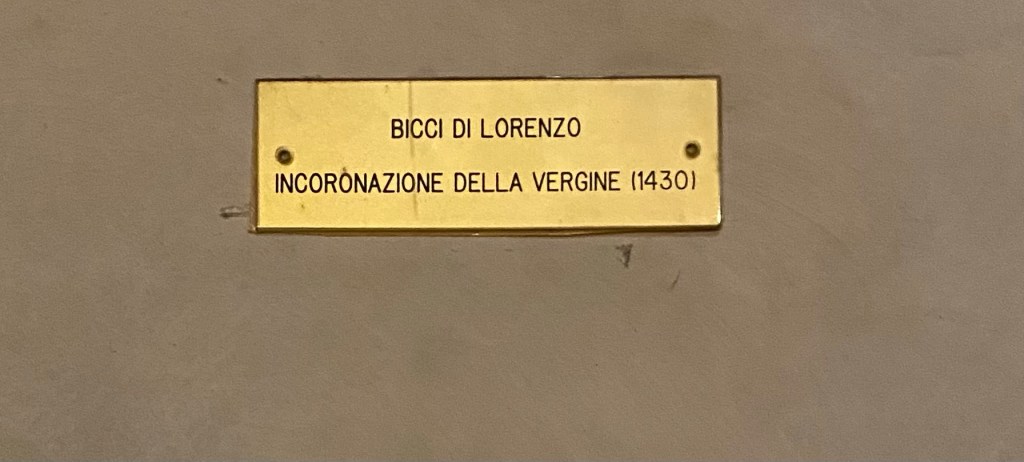
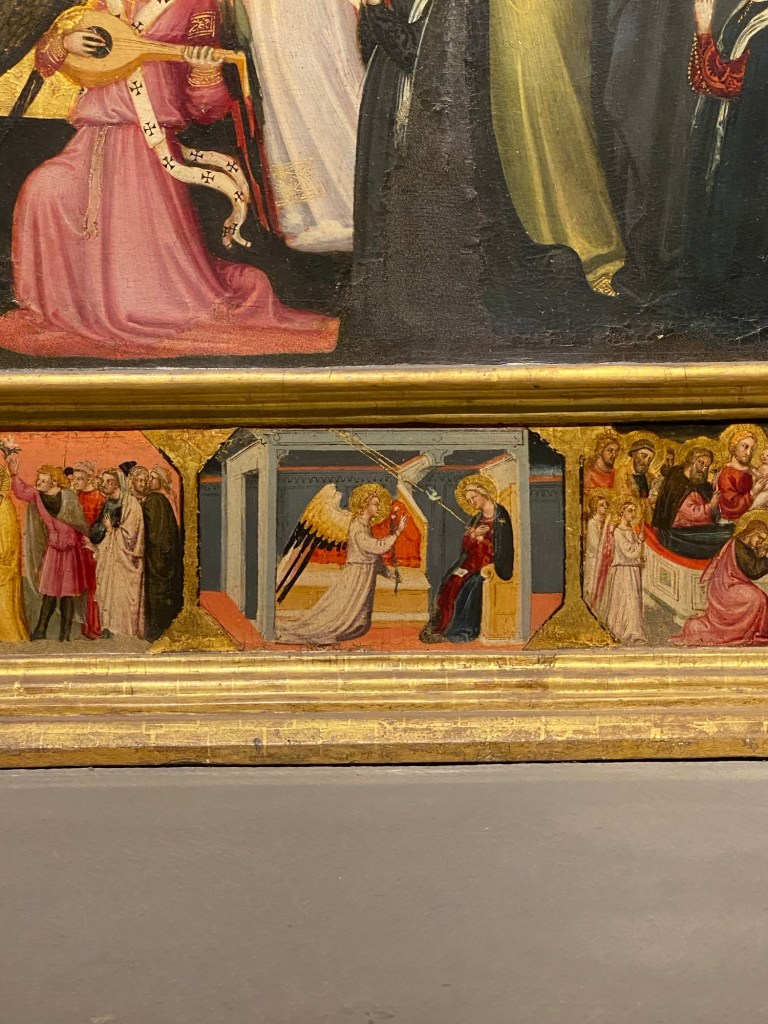
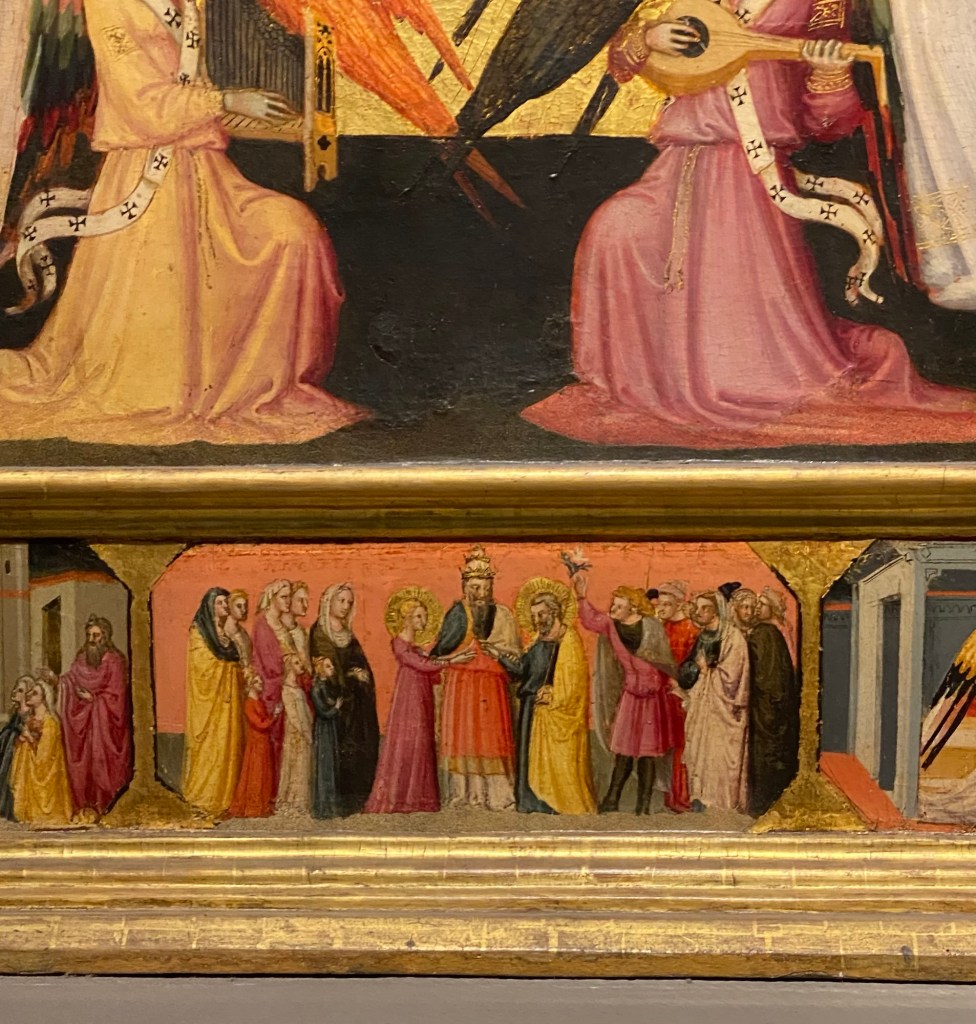
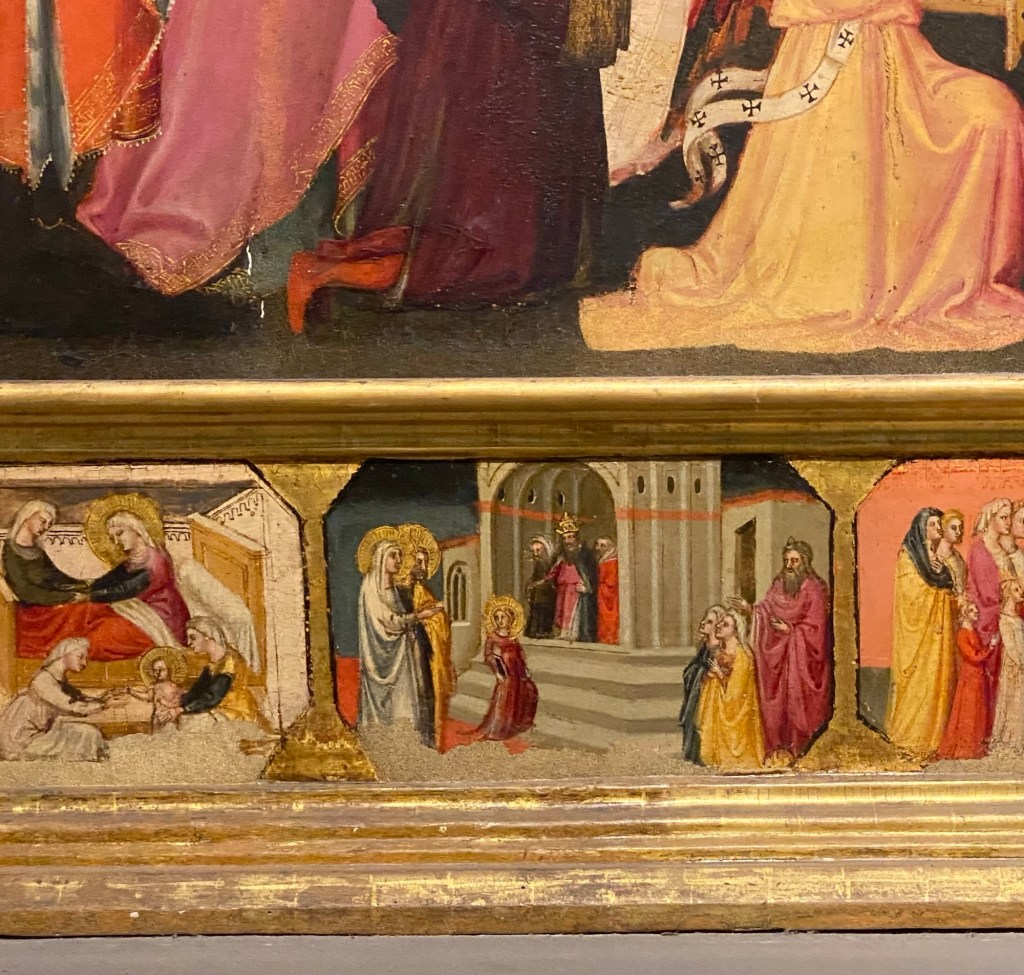
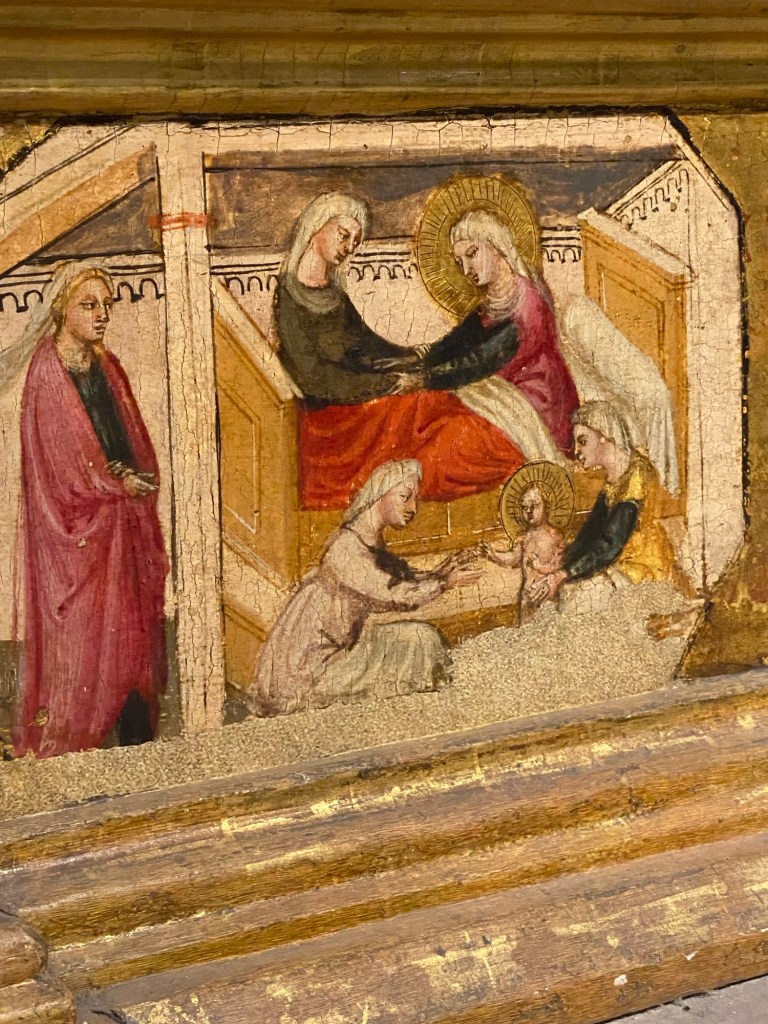
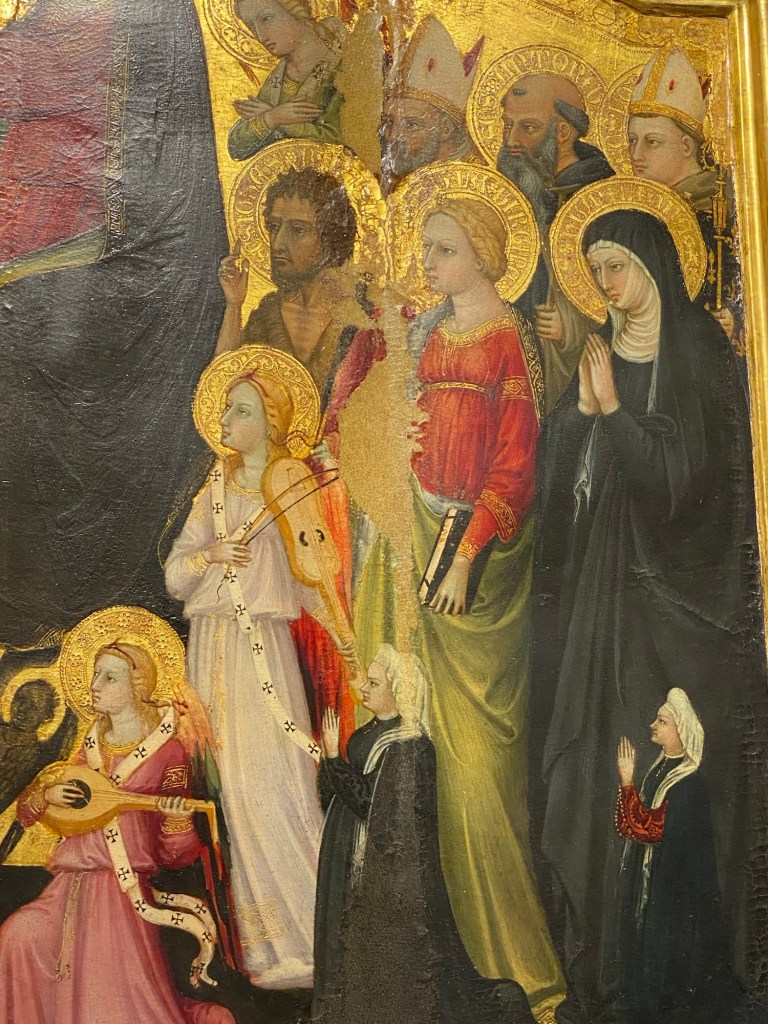
Above and below are pictures of The Crowned Virgin with 12 Saints by Bicci di Lorenzo (c. 1373-1452).

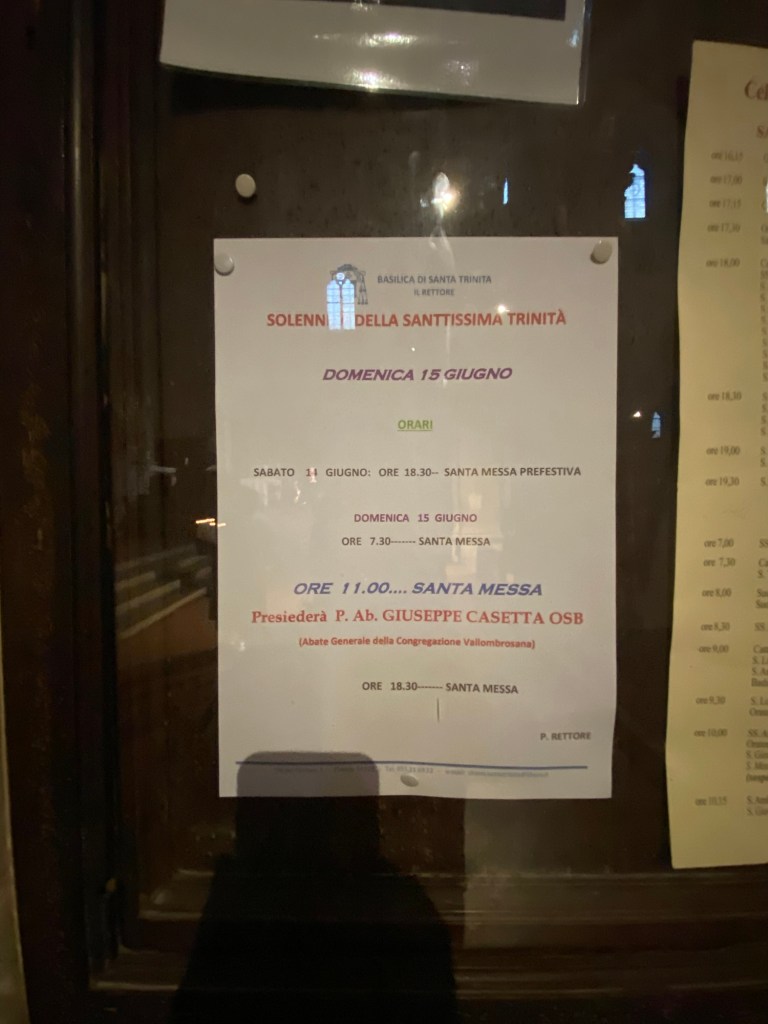
I’ll end this post with some of the informational documents that are displayed within the church.