The last Medici villa

I recently posted about the garden at Villa La Quiete, which was renovated and improved by Anna Maria Luisa de’ Medici, the last Medici to survive, in the 18th century. This space was the favored residence of several important women from the Medici family. In the 17th century, Grand Duchesses Cristina of Lorraine and Vittoria della Rovere frequently visited La Quiete, which, from 1650, housed the prestigious Montalve women’s college. The villa housed a school for girls right up to the early years of the 21st century, which is kind of mind-blowing when you think about it.

In the 18th century, Anna Maria Luisa, Electress of the Palatinate (wife of Johann Wilhelm, Elector Palatine) and the last descendant of the Medici lineage, indelibly linked her name to this Medici Villa. After returning widowed from Germany following a happy but childless marriage, Anna Maria chose to retire to Villa La Quiete to spend her final years living within the female community of the Montalve college. It was during this time that Anna Maria prepared to bequeath the entire Medici heritage to the city of Florence for the “ornament of the State, for the benefit of the Public, and to attract the curiosity of Foreigners”, as we read on the “Family Pact” document (1737). If you are interested you can Google that pact, which bequeathed to Florence the cultural patrimony that so many flock to see today!


If you take the guided tour of the Villa, you will, as I did, get to see the frescoed apartment of the Electress Palatine, the Church of the Holy Trinity with the Lower Choir, the 17th-century Pharmacy, and a collection of works by Renaissance artists such as Sandro Botticelli and Ridolfo del Ghirlandaio. Notably, the Baroque garden, the subject of my last post, is in the 18th-century form envisioned by the Electress Palatine and just opened to the public for the first time in spring 2025, after a careful restoration made possible thanks to EU PNRR funding.

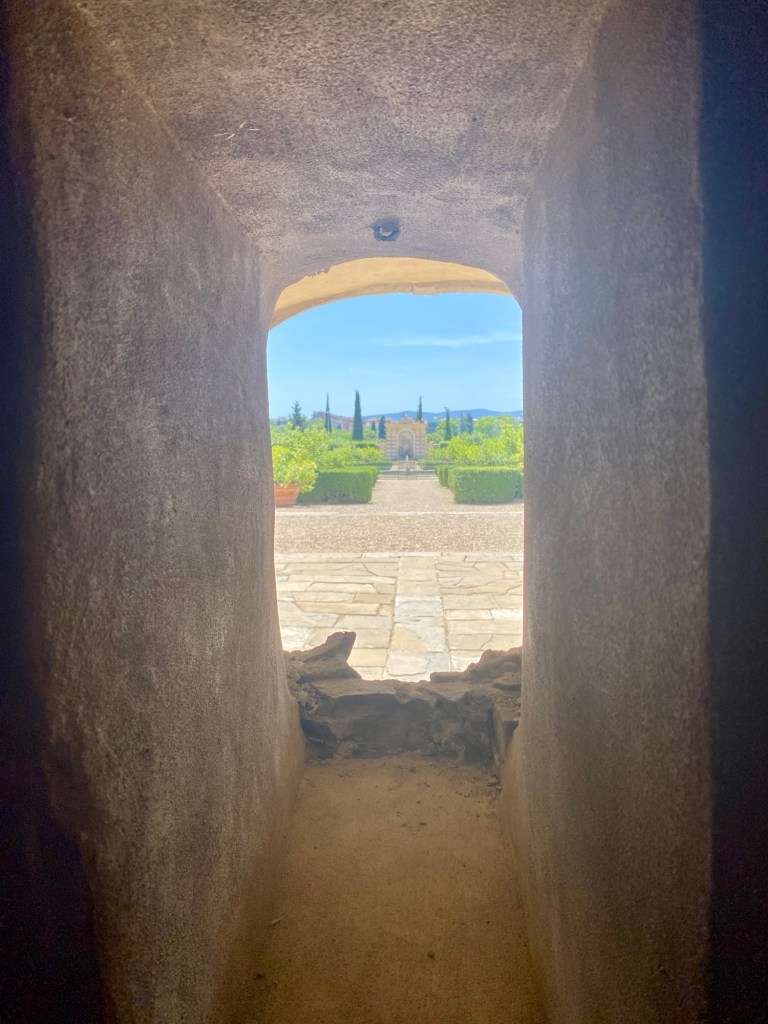
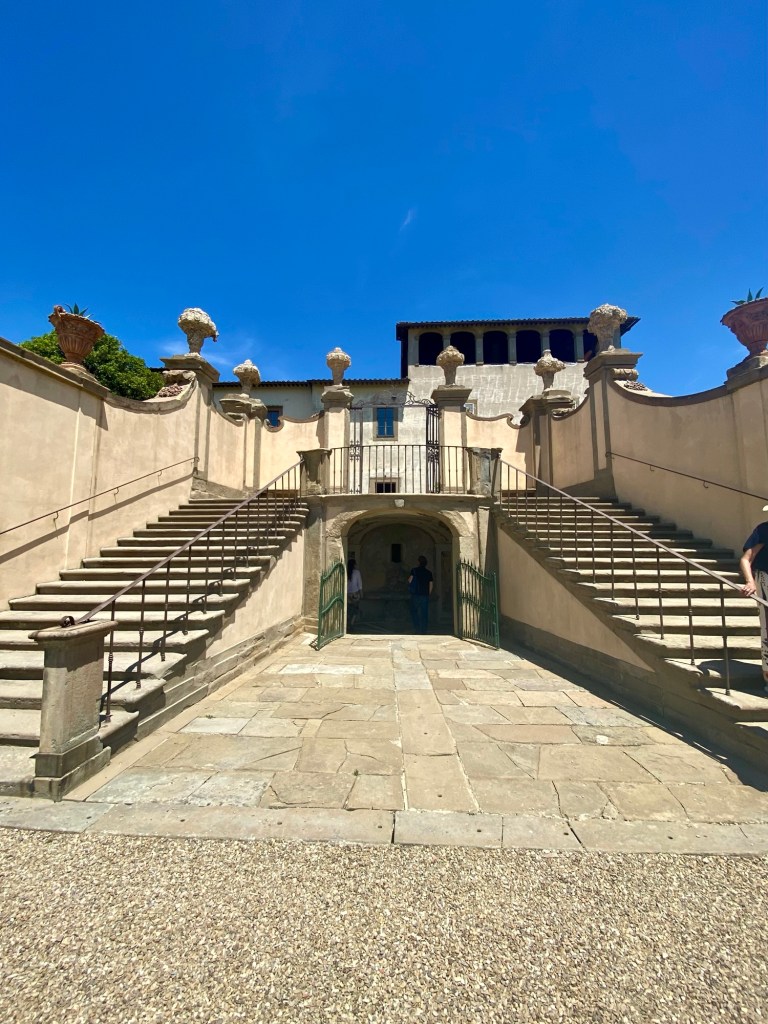
The pictures below are from my recent visit. I regret I did not take more, but I was highly distracted by the circumstances. I intend to go back in the fall when the villa is hosting an exhibit of treasures including their very own Botticelli if I heard correctly.
Anna Maria Luisa de’ Medici (1667-1743) was the last descendant of the Medici house. The only daughter of Grand Duke Cosimo III and Princess Marguerite Luise d’Orléans, in 1690 she became the second wife of Johann Carl Wilhelm I, Prince Elector of the Palatinate. In 1691 Anna Maria Luisa left for Düsseldorf, capital of the Palatinate; her wedding was celebrated in Innsbruck. In 1716, after a childless marriage and after the death of her husband, Anna Maria Luisa returned to Florence as the Electress of the Palatinate. Italians do love titles.


Upon her return she became a frequent visitor to the Villa. This interest materialized in 1716 with the assumption by the Princess of that patronage that was handed down within the ruling family. Her patronage resulted in the architectural evolution of La Quiete in a real villa in the style of the other Medici villas, among which that of Petraia and Castello. The project of restructuring of Villa La Quiete and its formal gardens started in 1720. This included the construction of the new wing destined for the Novitiate, and an apartment was created for Anna Maria Luisa de’ Medici, after the Princess’s decision to stay for longer periods at the Villa, especially during the summers.

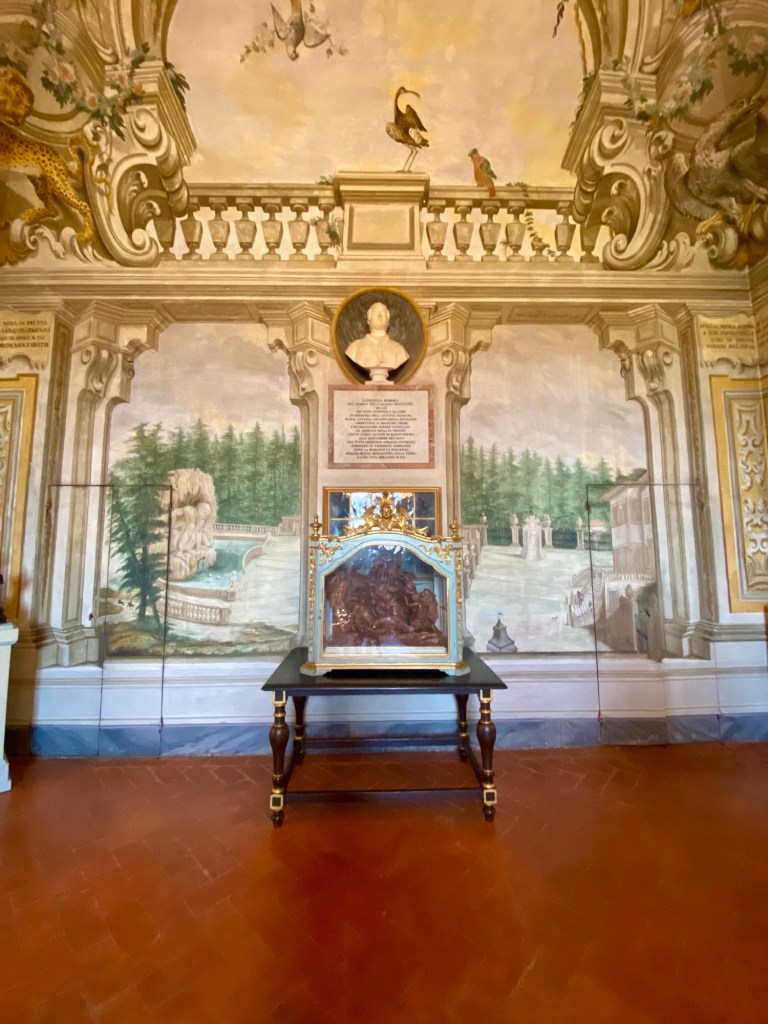
The next few pictures are from her grand salon in the villa. Some are taken from the Facebook Page for the Villa and some are mine.

Under Anna Maria Luisa’s patronage, more than eighty religious paintings and sculptures were brought to Villa, some from the Palazzo Vecchio and some from some of the most active artists in Florence at her time.

Fascinatingly, a door in her grand salon gave Anna Maria direct access to her private rooms on the floors above. We got to see her private stairway!


With the death of Cosimo III the Tuscan throne passed to the Franco-Austrian family of the Habsburg-Lorraine. After the death of her brother Gian Gastone, in 1737, Anna Maria Luisa remained the last descendant of the Medici dynasty. This was precisely the moment when she stipulated what would make the fortune of Florence; she made an agreement called the Family Pact with the new ruling dynasty of the Lorraine that nothing from the Medici dynasty could be transported “out of the capital and State of the Grand Duchy … Galleries, Paintings, Statues, Libraries, Jewels and other precious things … of the succession of the Most Serene Grand Duke, so that they would remain by ornament of the State, for the benefit of the public and to attract the curiosity of foreign visitors.”


With this pact, Anna Maria Luisa made sure that Florence kept the majority of the works of art that were part of the Medici patrimony did not suffer the fate of other art cities which, once their ruling families were extinct or moved away, were literally being emptied of their artistic and cultural treasures.

The historical archive of Villa La Quiete has a section of almost 300 parchments and more than 5000 units (envelopes, manuscript bundles, registers, notebooks, diaries), located within seven archival collections: Congregation of the Minime Ancille of the Blessed Virgin Mary; Congregation of the Minime Ancille of the Holy Trinity, Royal Institute of the Montalve, Brunini family, Baldesi family, Medici family, Gondi family.

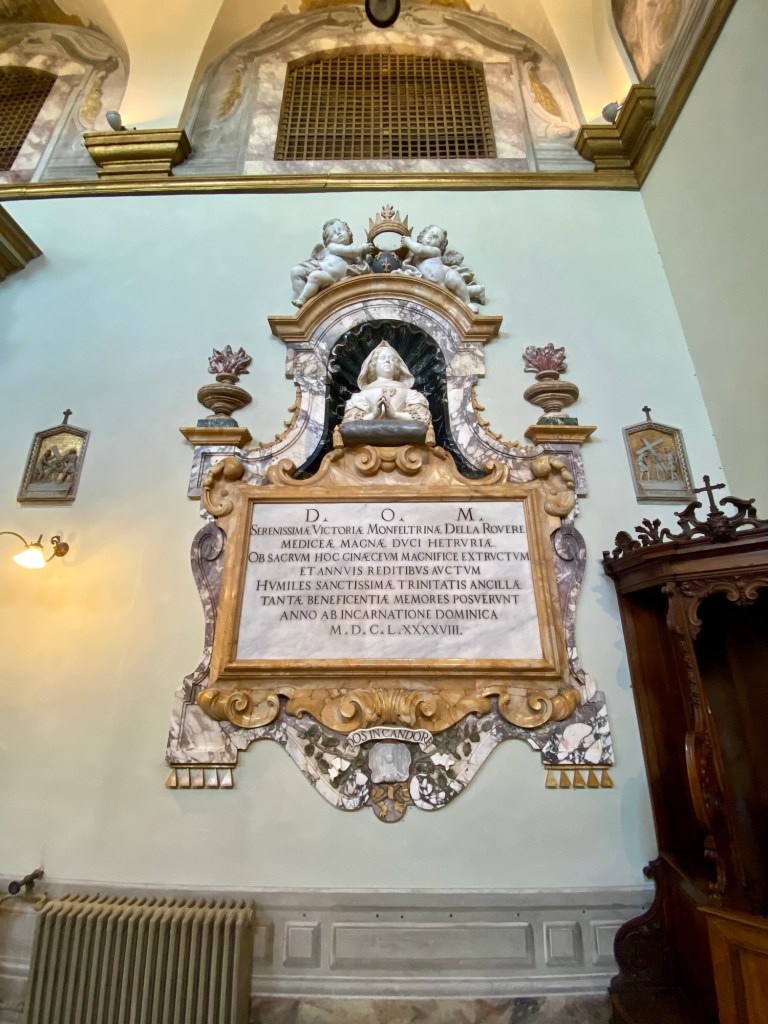
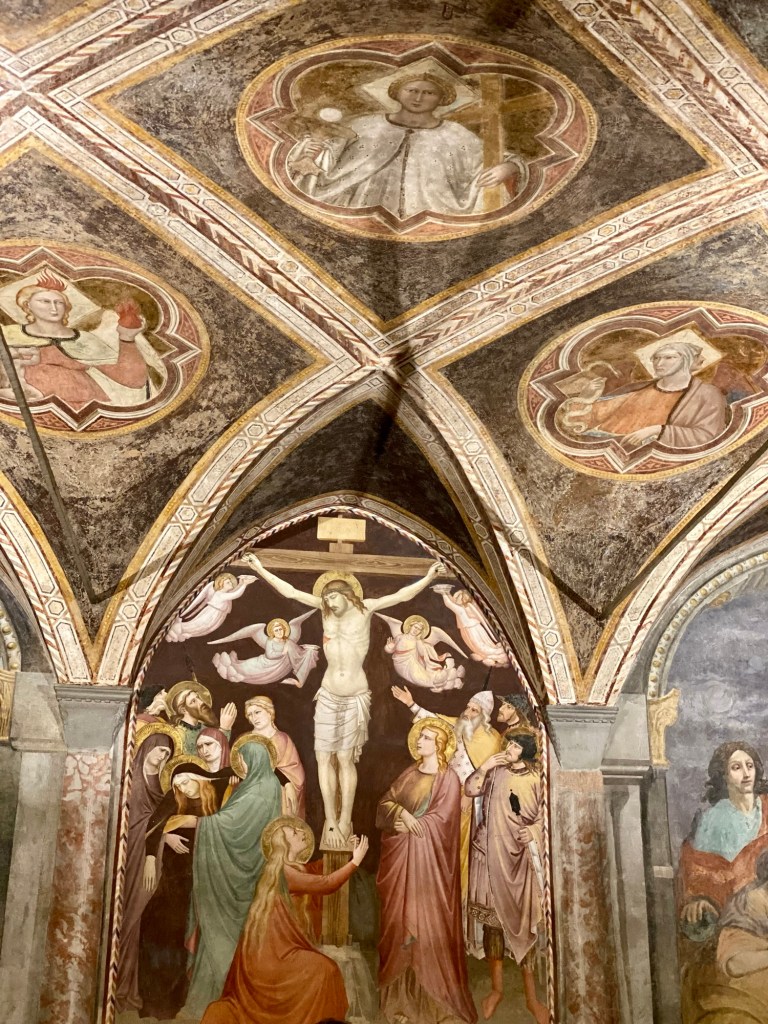
Below are pictures of the private chapel in the Villa, created, as you can see, during the Baroque period.

Above: the ceiling fresco


The documents kept refer to the period from the start of the welfare and educational activity carried out by Eleonora Ramirez de Montalvo, and in particular the foundation of the Minime Ancille of the Blessed Virgin Mary in 1626, to the closing of educational activity in the second half of the twentieth century.
The material produced refers to the general administration of the institutes, to the management of the estates, agrarian contracts and rent on their possessions, to the administration of the boarding school, the management of religious obligations, the administration of inheritances and that of their farms.
There is also material on topics such as history, art, literature, educational-pedagogical, social and religious subjects.
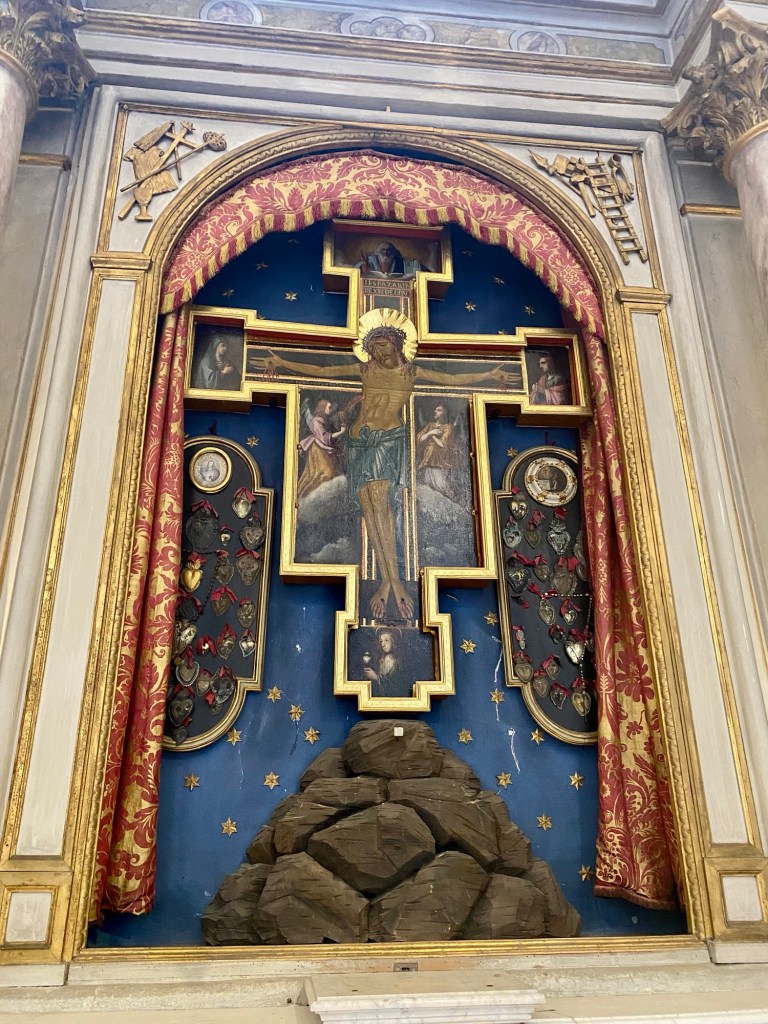
Below are religious paintings and ensembles from the chapel and the outer room, maybe the sacristy?

This villa and its gardens are a wonderful addition to the Florentine cultural scene. Florence has riches that have not yet been opened to the public and I love the chance to see them when they do become visible.

Il mio terrazzo, my terrace

One of the big reasons that I took my current apartment in Florence is because I have a huge terrace paved with travertine, outlined with a planter box, connected to my dwelling. I live in the city center and space and privacy are at a premium, so my terrace has 2 neighboring terraces, and that is just something I have to live with. Interestingly, the larger neighboring terrace appears to be unoccupied, or occupied only rarely, so that is quite nice. The smaller one has 2 nice neighbors with whom I share a greeting anytime we connect outside.

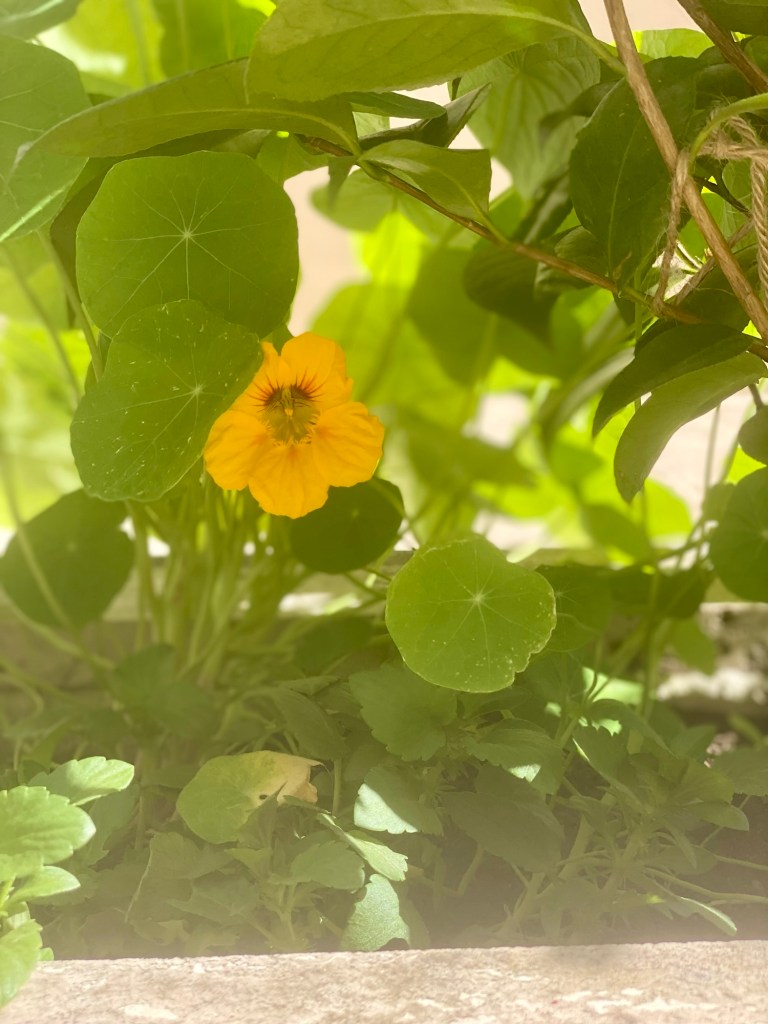
I planted nasturtiums from seeds last month and on May 28 I had this first yellow blossom! A welcome sight and a small sign of success. I also planted some small cherry tomato plants I bought at the outdoor market. We’ll see if I have enough direct light this year to grow a few pomodori. If they flourish, they will look pretty next to the geraniums!

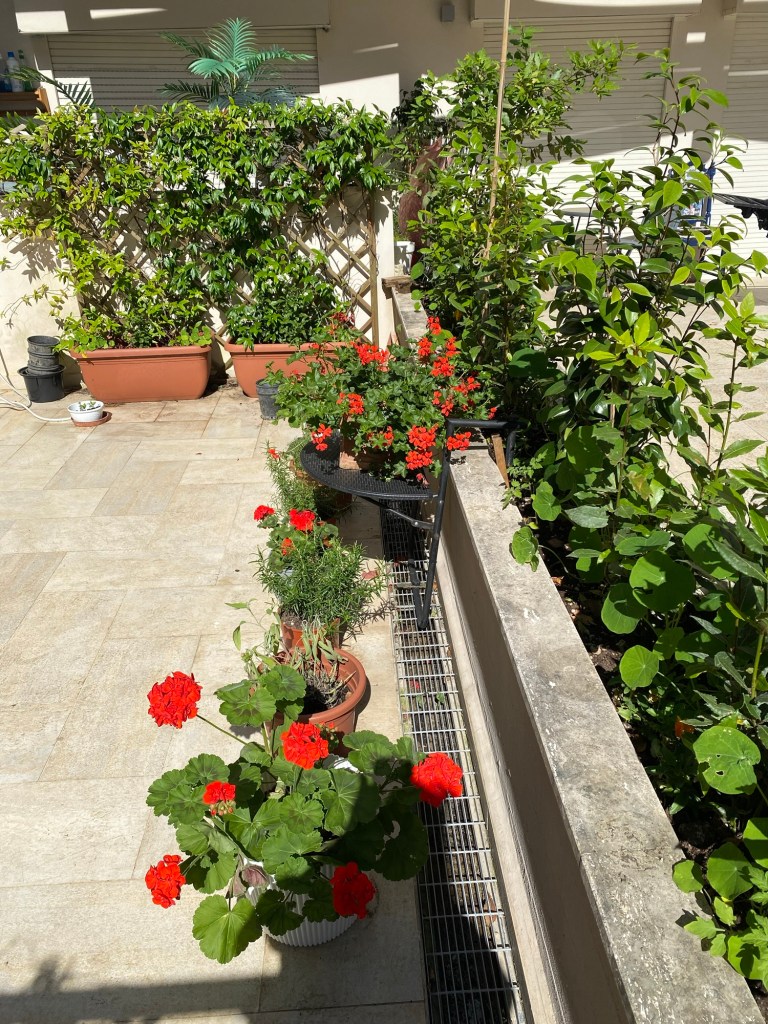
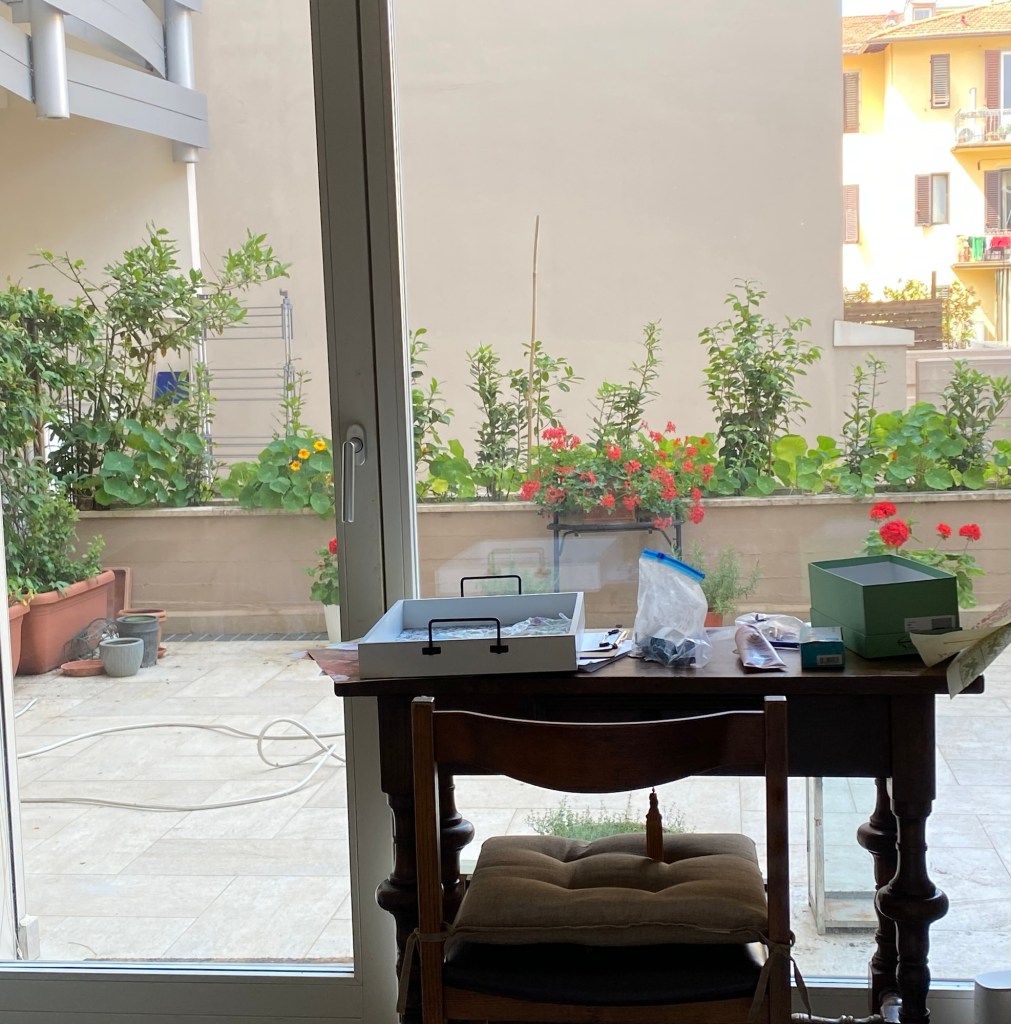
Here’s one view of my terrace, looking from the east towards the west. The 3 slatted metal doors you see are on the two neighboring terraces.

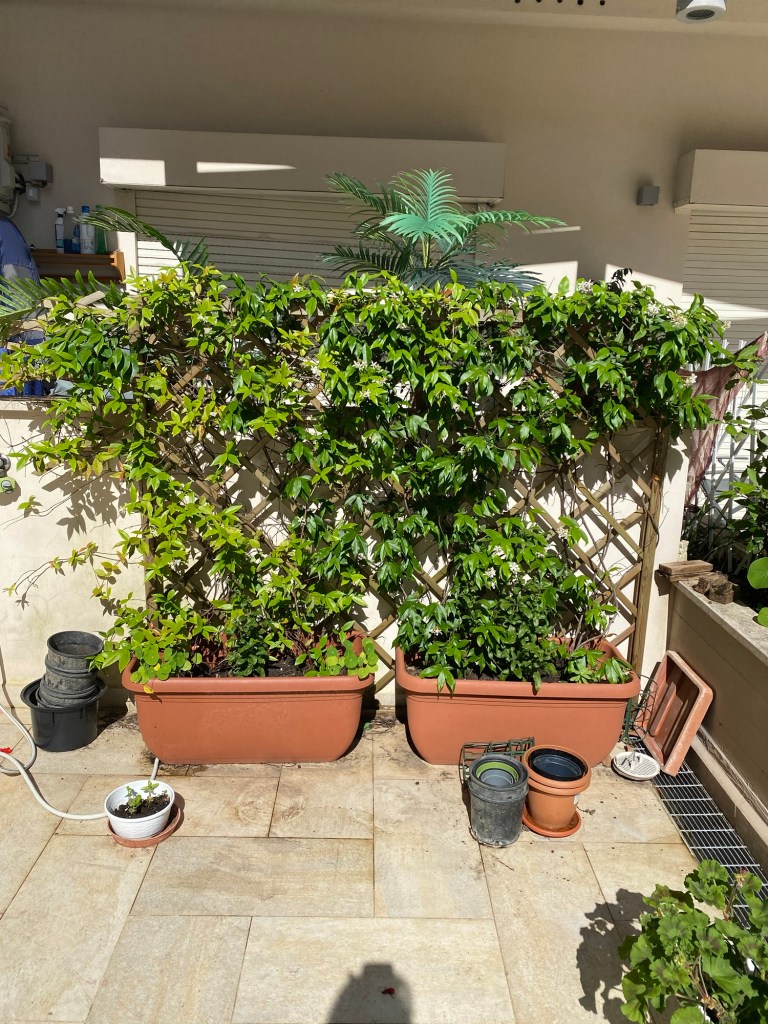
When I arrived to live here in January (4 months ago as I write this) this long planter was filled with dead shrubs. It was a job to remove all of the debris and another challenge to find small laurel shrubs to refill the space. Already in January I had planted 2 camellia plants. If you know me you know that if camellias are available, I’ll be planting some, even in the winter.

I further accomplished both clearing the debris and finding/planting new laurel shrubs over the winter and early spring. I’m happy to say my shrubs are doing really well. Did you know my name is based upon the laurel plant?

Above, you see 2 of the 4 planters the former tenant left me with trellises that hold jasmine plants. So grateful for these.

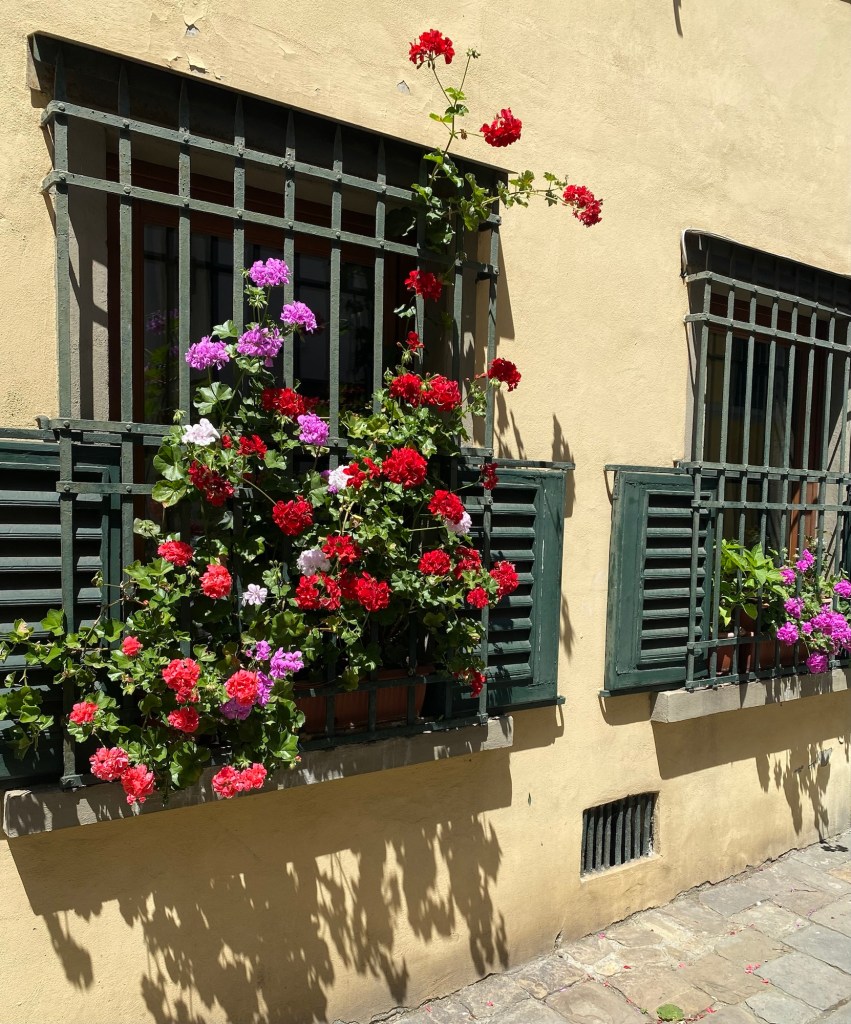
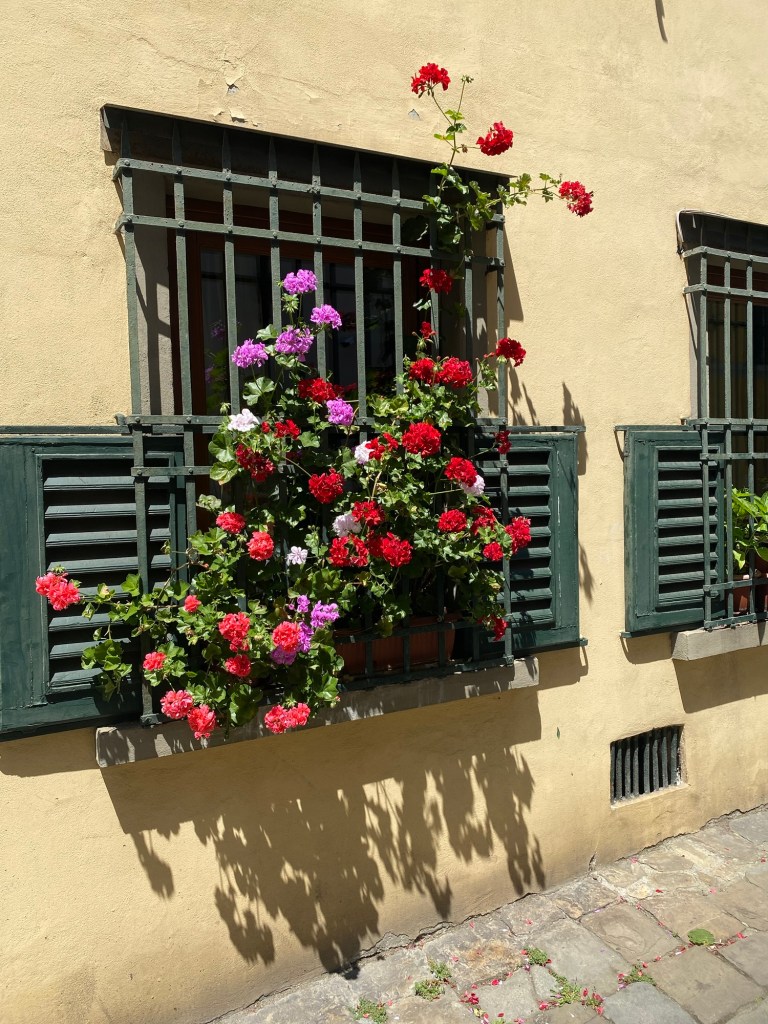
Below you can see my current planting of a row of laurel/camellia shrubs as well as the neighbors I have in other buildings. I’m fortunate to have my large terrace which will someday be home to some garden furniture and an umbrella, but step by step I am getting there. The plantings are first priority. I expect to be here for several years and I look forward to green shrubs and privacy. In the meantime, I love my bright red geraniums. You say the word geranium to me and this color that I see!

The last Medici garden, now newly reopened

Something truly great just happened in the hills outside of Florence! A completely restored Baroque garden at the Villa La Quiete has recently been opened to the public for the first time.

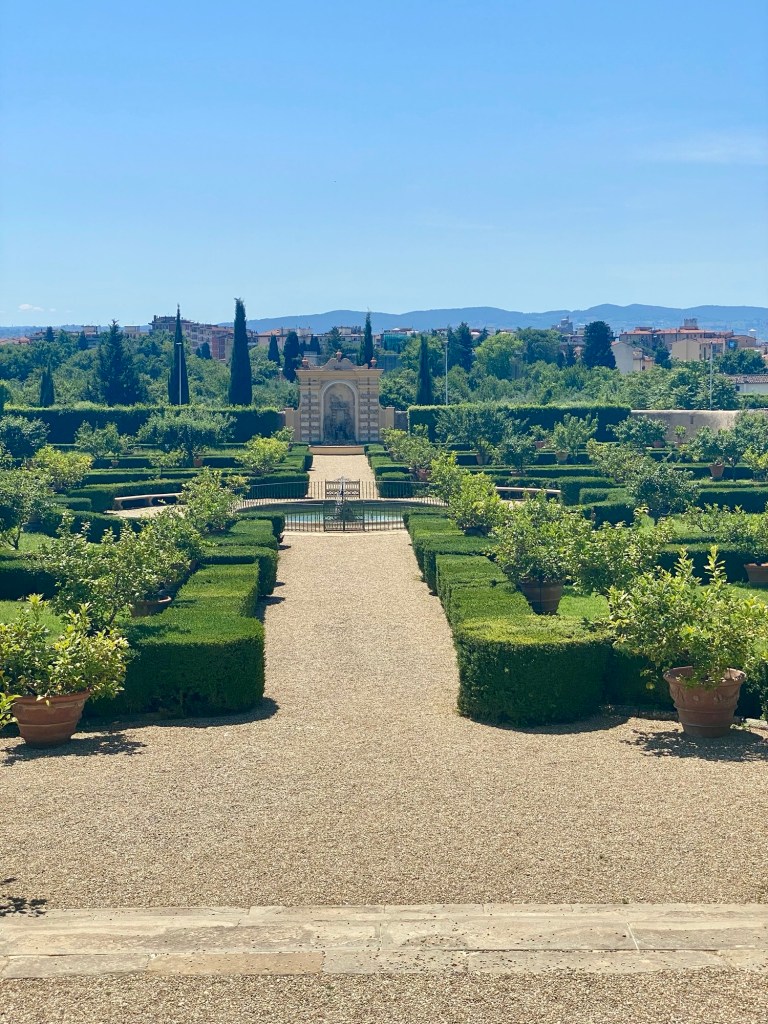
See this garden below which frames the buildings? It was created around 300 years ago by the last surviving Medici family member but was subsequently owned and managed by other entities and allowed to decay.

But, it has just been restored–within an amazing period of under 2 years!–to its former glory. And I was one of the first people to see it in its new state.

With a little effort, I could imagine that I was strolling through a space certified by Annamaria Luisa de’ Medici herself!

First, enjoy this video in Italiano. Even if you don’t comprehend the words, you’ll get a great overview of the garden and many beautiful details.

So, let’s have a look. Aside from the photo reproduced below from The Florentine magazine, all the photos and videos are mine, taken last week.

The historic garden of Villa La Quiete has opened to the public for the first time in its nearly 300-year history. The inauguration marks the University of Florence’s centennial celebrations and reveals a long-hidden jewel of Medici history and landscape architecture.

And the following pix and videos are mine.


The garden, a rare surviving example of 18th-century Medici landscape architecture design, was created between 1724 and 1727 at the behest of Anna Maria Luisa de’ Medici, the last descendant of the Florentine dynasty. She envisioned the garden as a green refuge for the villa and its adjacent girls’ school.

Thanks to extensive restoration work led by the University of Florence and funded by Italy’s Ministry of Culture with European Union support via theNextGenerationEU program (PNRR), the garden has been carefully returned to its original splendor. The project received a grant of 1.8 million, allowing for both botanical and architectural restoration, including the repair of historic fountains, stone seating, terraces, and decorative elements.

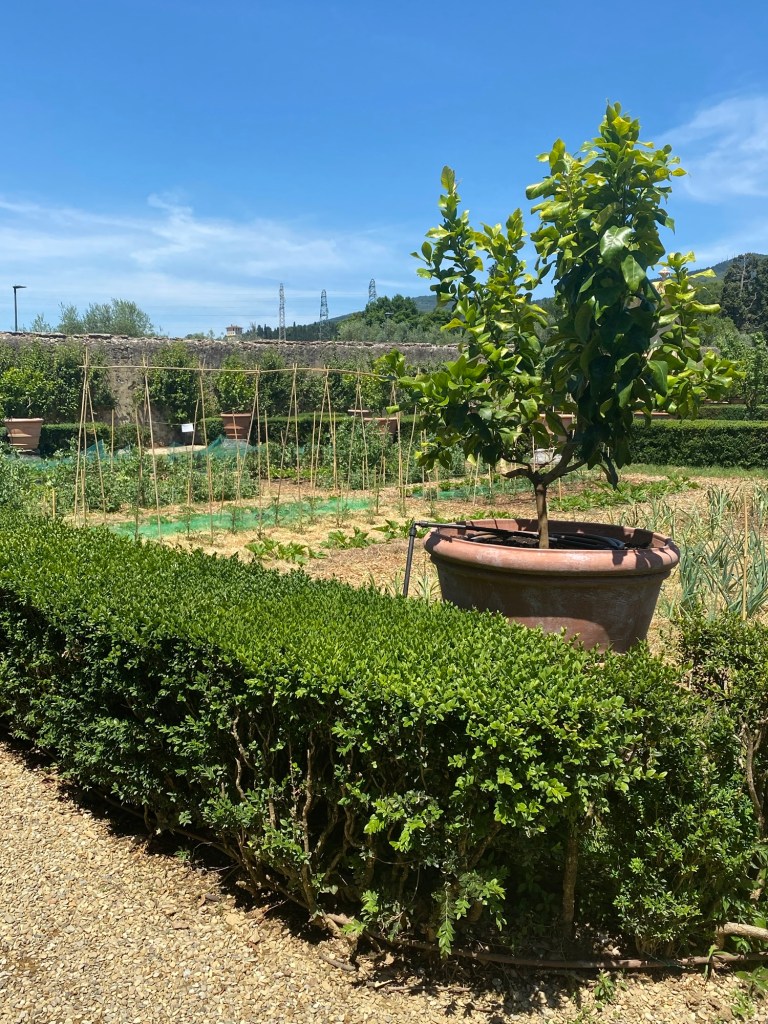
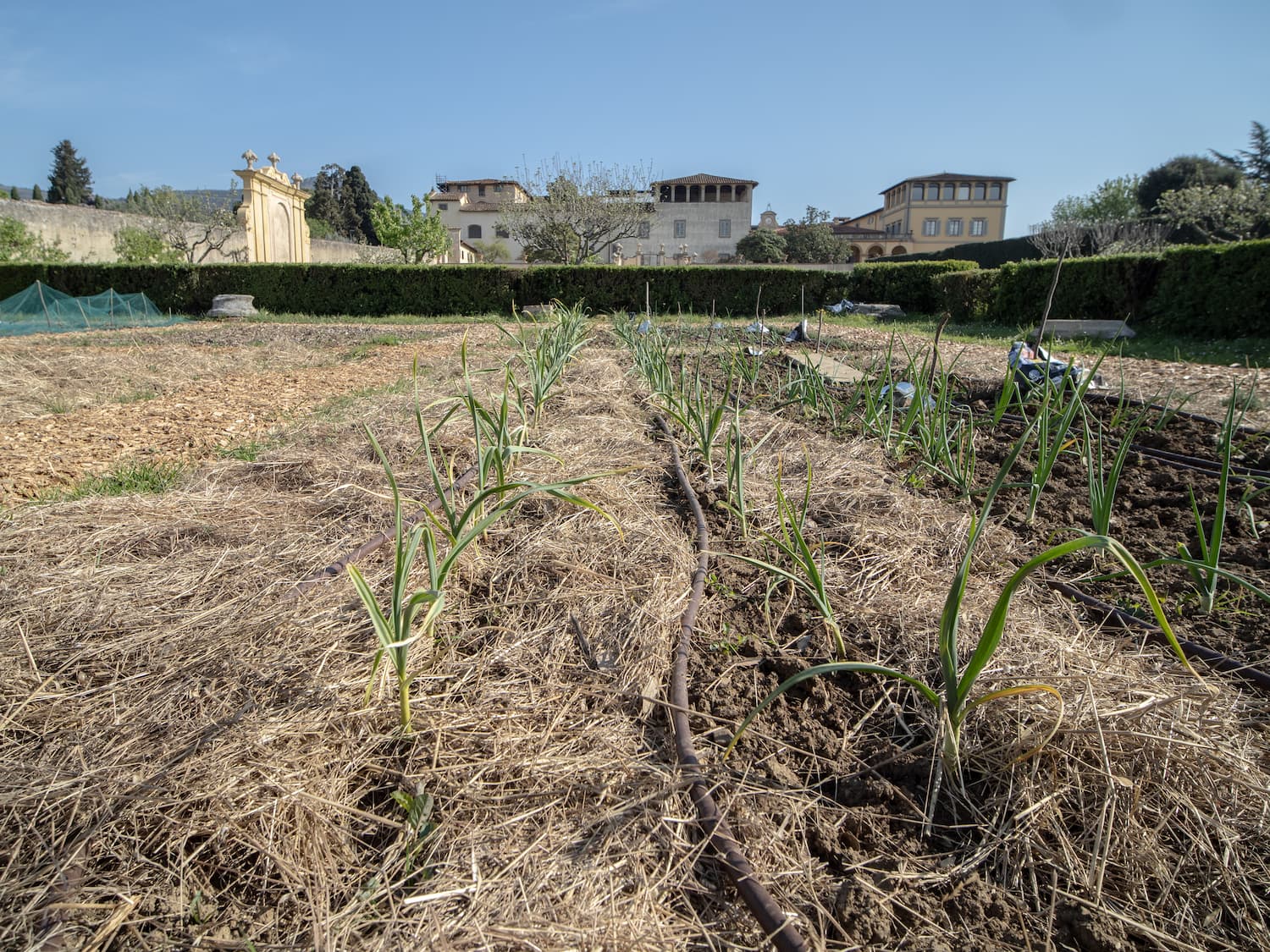
Above, one enclosed section of the garden has been used to create what the French call a potager, which in Italian is orto. Both words designate a kitchen garden. And our guide told us that the researchers in charge of this newly created garden used all the plants that the records show were planted by the Medici gardeners way back when.

Below: directly opposite the orto is a similar space set aside for wild flowers. Again, pains were taken to recreate what would have grown in the original 18th century garden. This will attract and provide homes for all kinds of insects like ladybugs (called coccinelle in Italian) bees (api), and butterflies (farfalle).

Villa La Quiete, located in the hills north of Florence, has a rich history intertwined with Medici women. Figures such as Cristina of LorraineVittoria Della Rovere, and especially Anna Maria Luisa, made the villa a favored residence. From the 17th to the early 20th century, it also hosted the Montalve, one of Europe’s most progressive lay congregations dedicated to the education of young noblewomen. Interestingly enough, it was Cosimo il Vecchio who first acquired the villa in the early 1400s for the Medici family. What with all his holdings around Tuscany, he eventually gave this villa away, but after a couple of centuries, Anna Maria Luisa de’ Medici bought it back. And she transformed it.

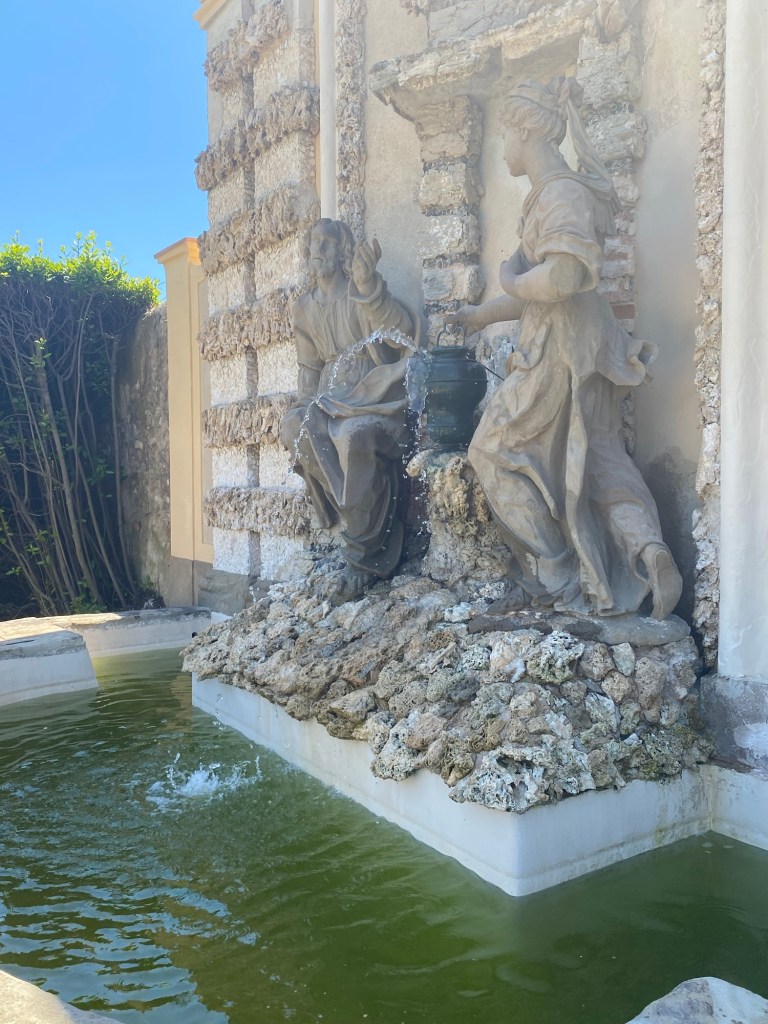
The newly reopened garden retains its original Baroque structure, featuring ten geometric flower beds, two main intersecting pathways, and a central pool. Signature elements include the “Samaritan Woman” and “Noli Me Tangere” fountains, a grotto with cascading water features, and terracotta vases from Impruneta. An adjoining ragnaia—a tree-lined enclosure once used the capture of birds for food—offers shaded green rooms for relaxation. More on the ragnaia in a later post. It is so interesting, it deserves its own post!

Regional President Eugenio Giani hailed the project as “a testament to what can be achieved when culture is supported by vision and resources.” Florence Mayor Sara Funaro emphasized the garden’s connection to Anna Maria Luisa de’ Medici, whose commitment to preserving Florentine art left a lasting legacy.

The garden will be open to the public on weekends through October of this year, with guided tours available by reservation.

Above and below, the Good Samaritan fountain.

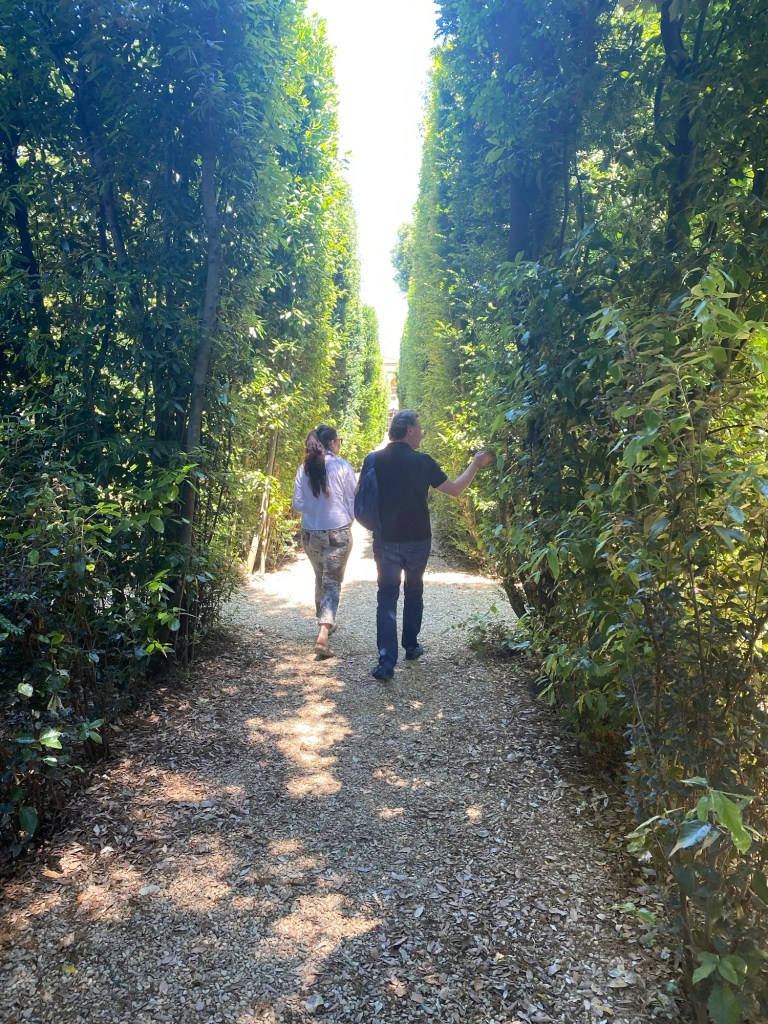
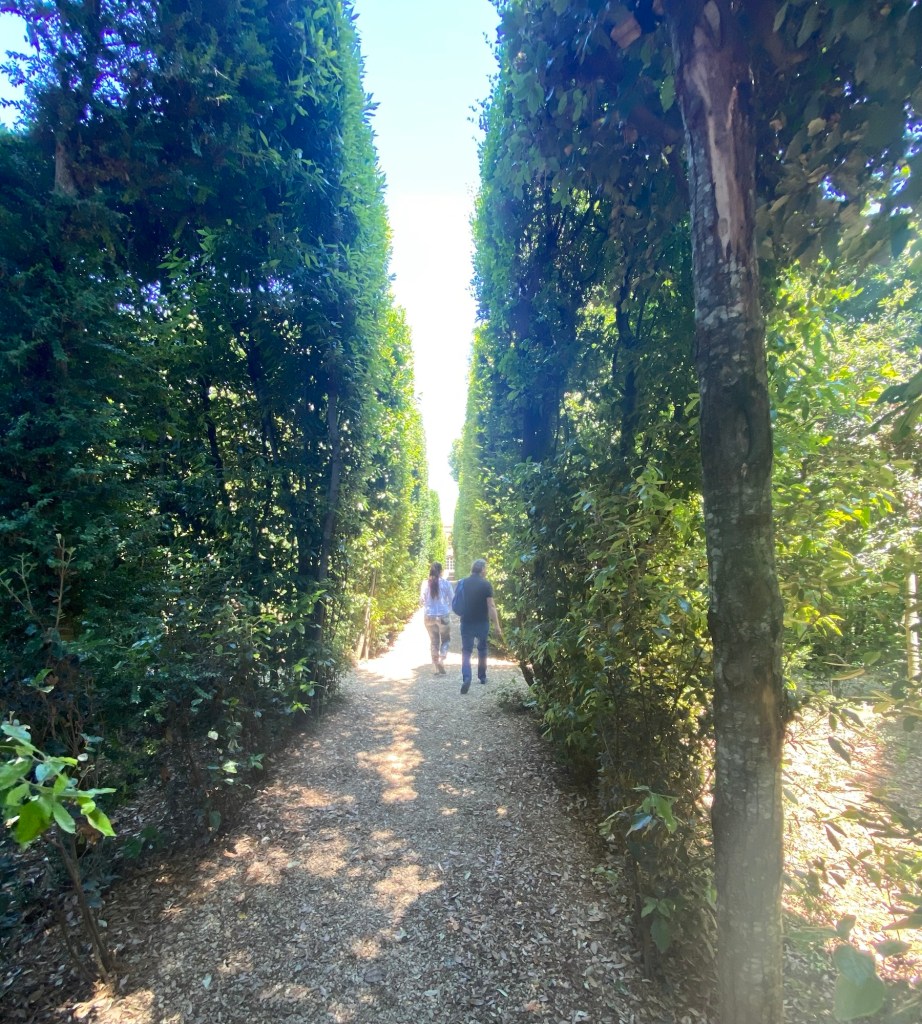
Below, the formal gardens have a marvelous planting of trees that are pruned to create some hidden walkway. Can you imagine how much fun the schoolgirls would have had here?

For the best way to get to the Villa by public transport, take the #20 bus out of Florence and go to this pasticceria. From there it is about a 15 minute walk up hill, and up some narrow streets. But, it’s doable.

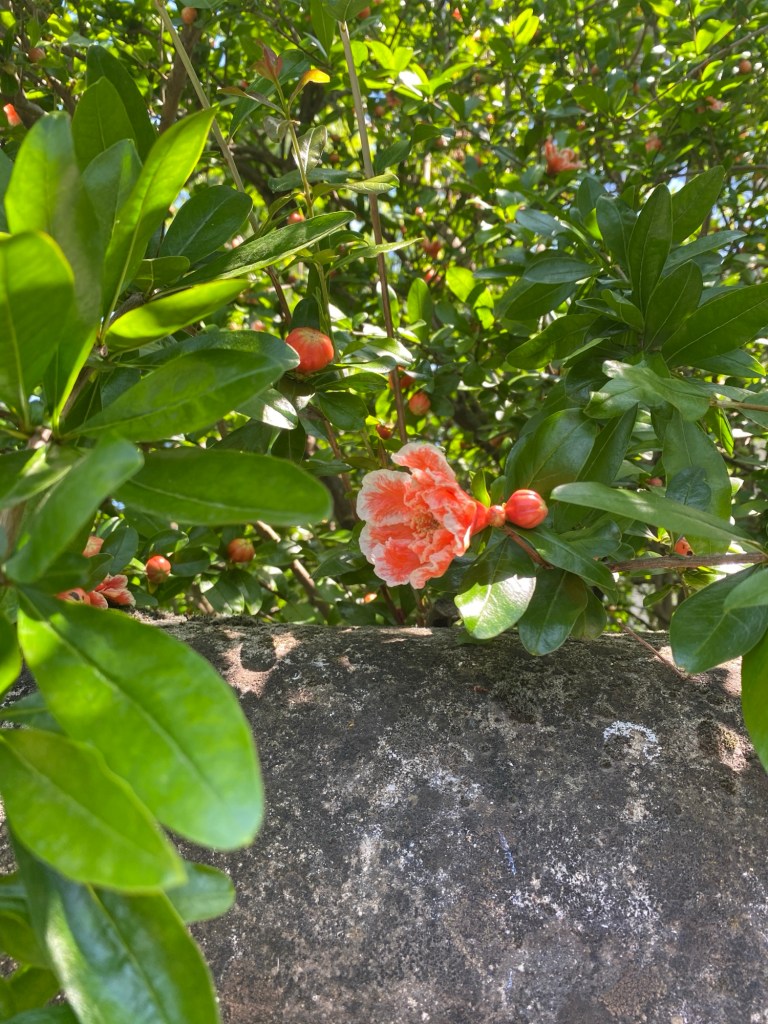
Walking from the villa to the pasticceria to catch the bus on the way back home, we passed this gorgeous shrub with spectacular blossoms. I looked it up on PlantNet app and, as I suspected, its from the pomegranate family. Lovely!

I’ll be posting more about the villa and a special feature of this garden soon. Alla prossima!

Baroque music concert in Florence

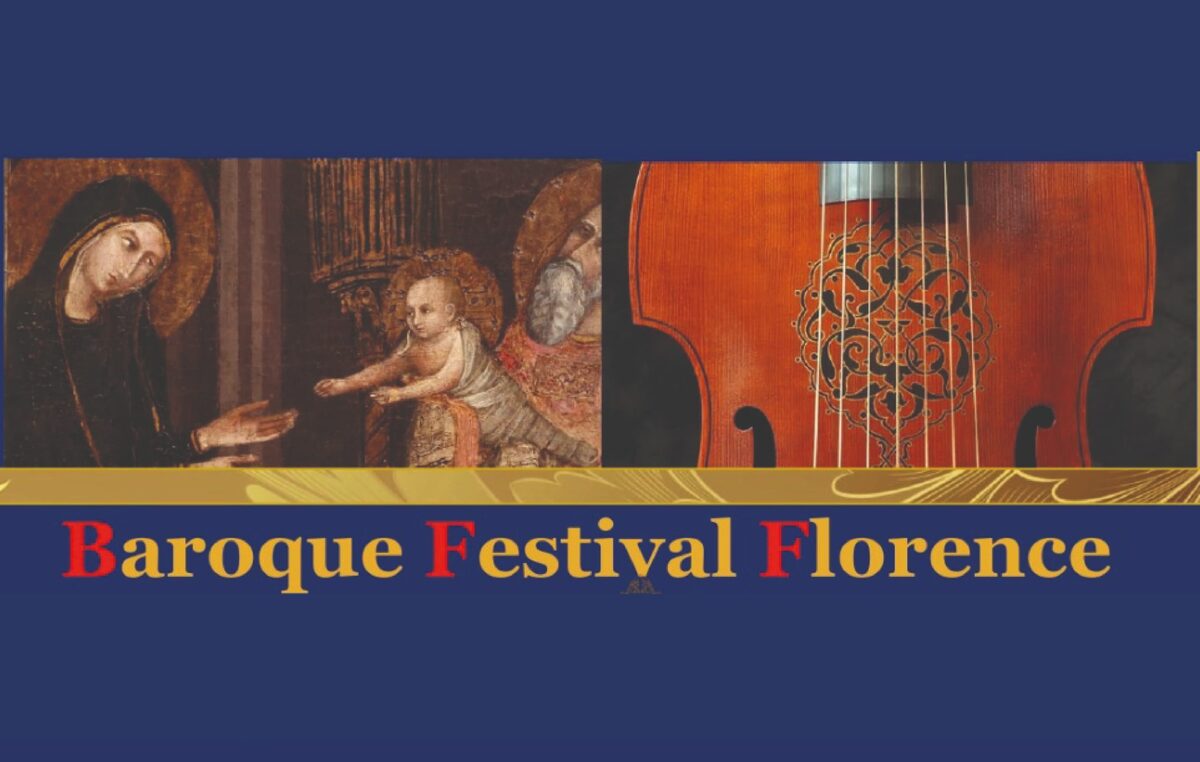
I love finding advertisements for cultural events around this great big amazing city I get to inhabit! Recently I saw this poster and I thought: perché no??

I looked it up and discovered that The Baroque Festival Florence includes great collaborations with internationally renowned musicians. The festival is organized by Konzert Opera Florence, a non-profit musical association that offers concerts of Renaissance and Baroque music in Florentine places of artistic interest. Sign me up!

I invited some new friends from Israel to go with me and we had dinner first at a lovely trattoria, and then we attended this amazing performance of a violinist and organist, both well-known musicians from Germany.

I never know how things will actually happen even if it seems to be as simple as something like attending a concert. It keeps me on my toes!

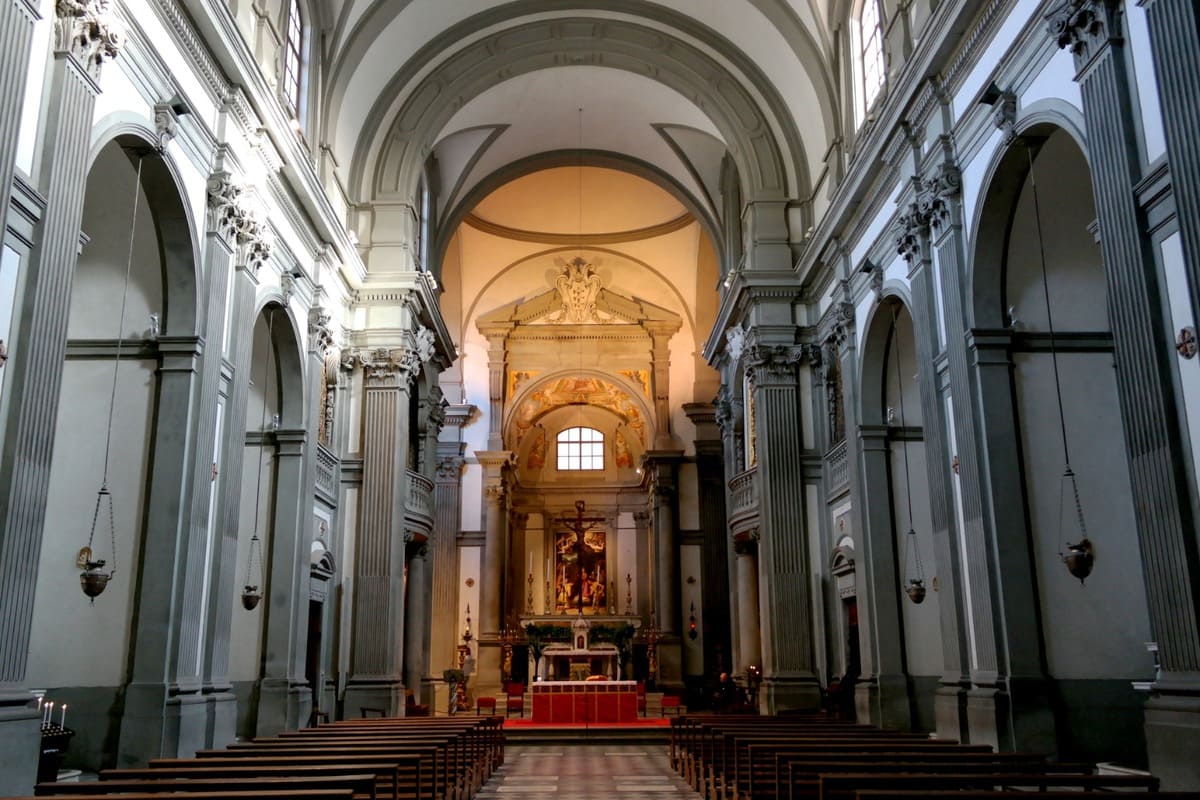
We arrived for the concert at the beautiful if small church of Santa Felicità near the Ponte Vecchio. I love this historic church which has the distinction of having the Vasari Corridor run through it on the 2nd level and I rarely miss an opportunity to run in and see the Pontormo fresco whenever I pass by and the doors are open!

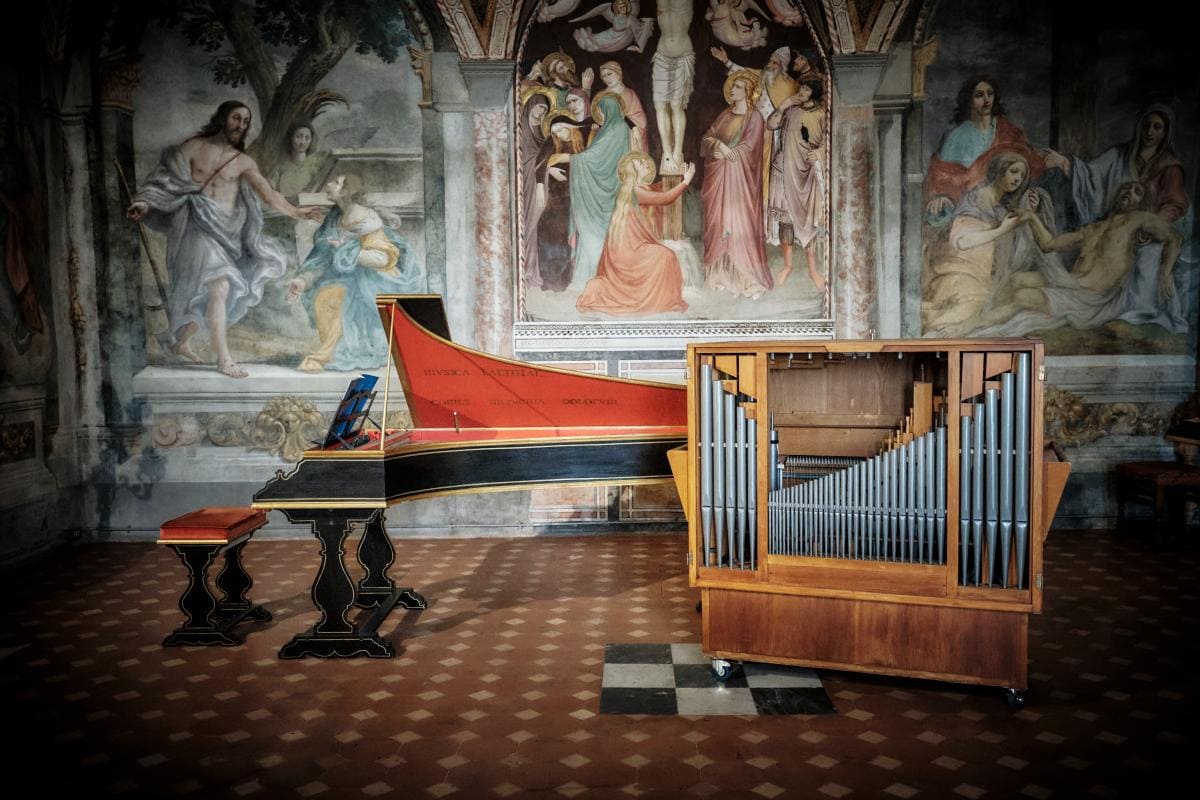
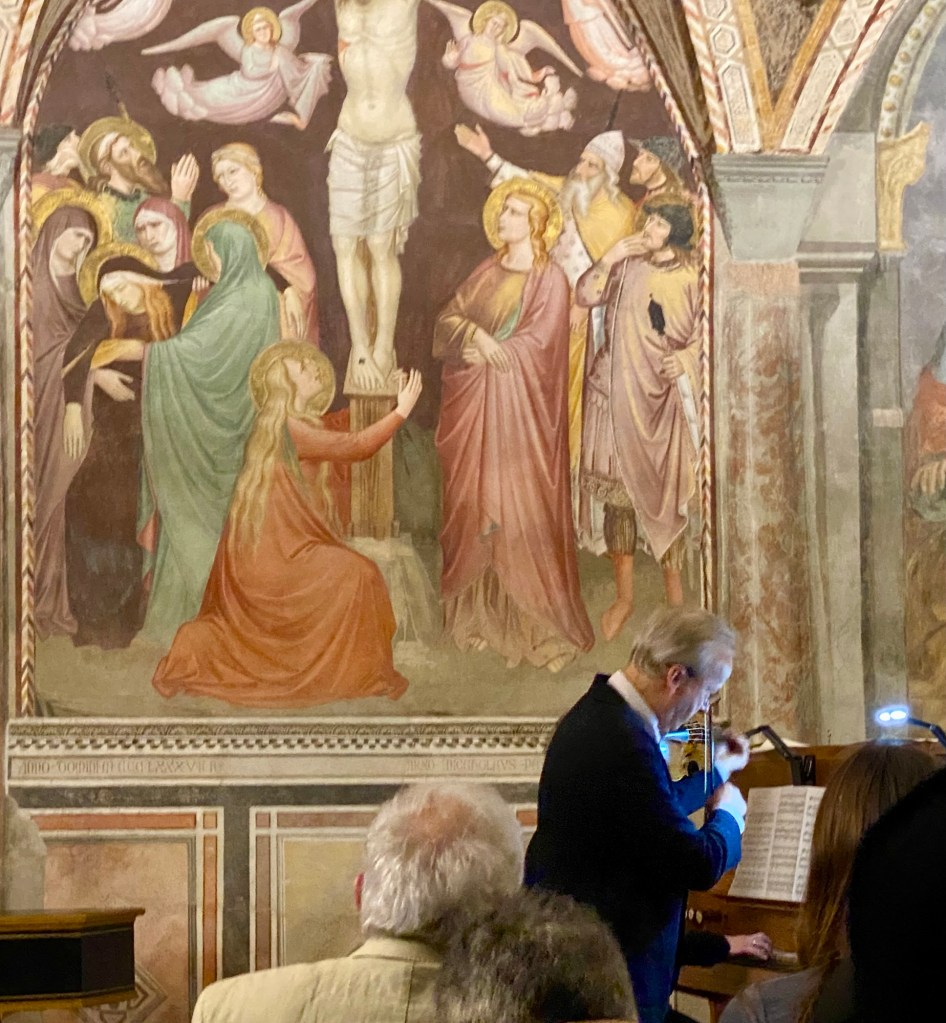
We were ushered into a side door, not the church itself, which was fine by me because I got to see this divine little chapel (and a corridor with 15th century frescoes and outdoor courtyard), known as the Sala Capitolare, which was set up with a small organ and a stand for the violinist. Best of all, for me anyway, were the frescoes that adorned this piccolo space. The central paintings on the back wall are surely Quattrocento and I have never had the chance to see them before, so this was a real treat.

It was crowded already when we arrived in this small chapel, but we found seats and I settled in for a full concert, but things would change.

A renowned German violinist played on his 17th century Italian violin, along with an organist also from Germany. The first part of the concert was held in the chapel and we were serenaded with music by Bach and Vivaldi.

Then we were all asked to go to the nave of the main church where the rest of the concert would take place, because the church’s big, 18th century organ, was required for the next part of the program! See what I mean about never knowing what to expect!


I’d love to attend more of these concerts.

This and that

Observing and thinking and learning are what makes me tick. But silliness is also necessary!

Dogs waiting for their master on an ordinary street in Florence!

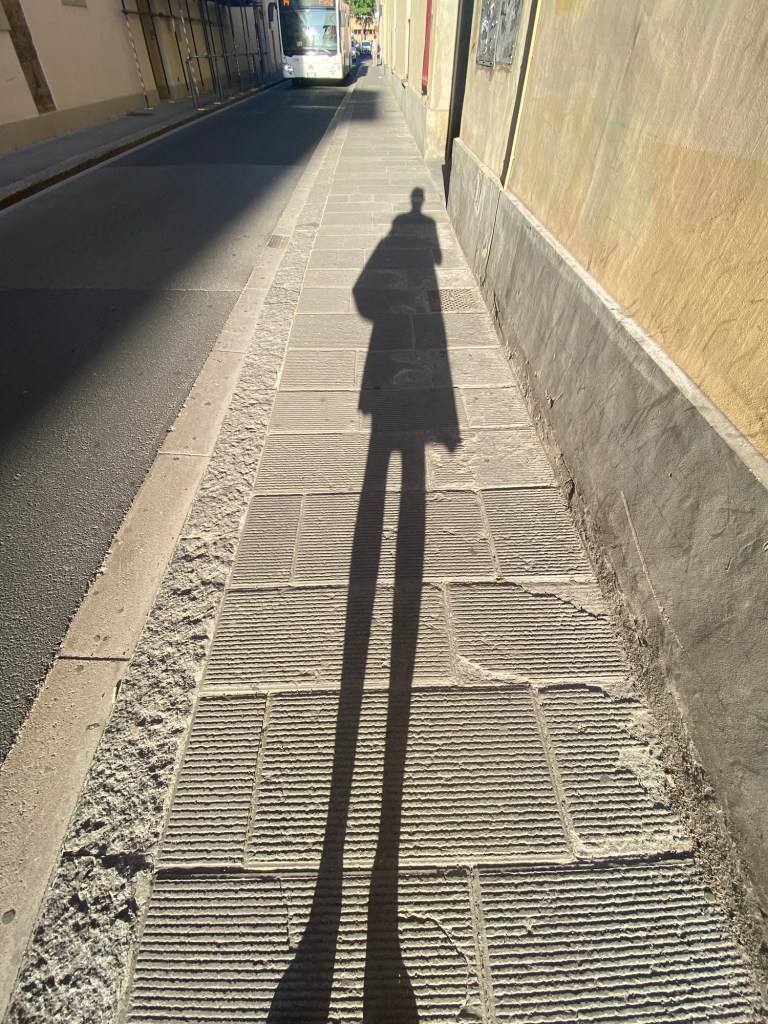
As I was walking home in the late afternoon I was shocked by my long legs!

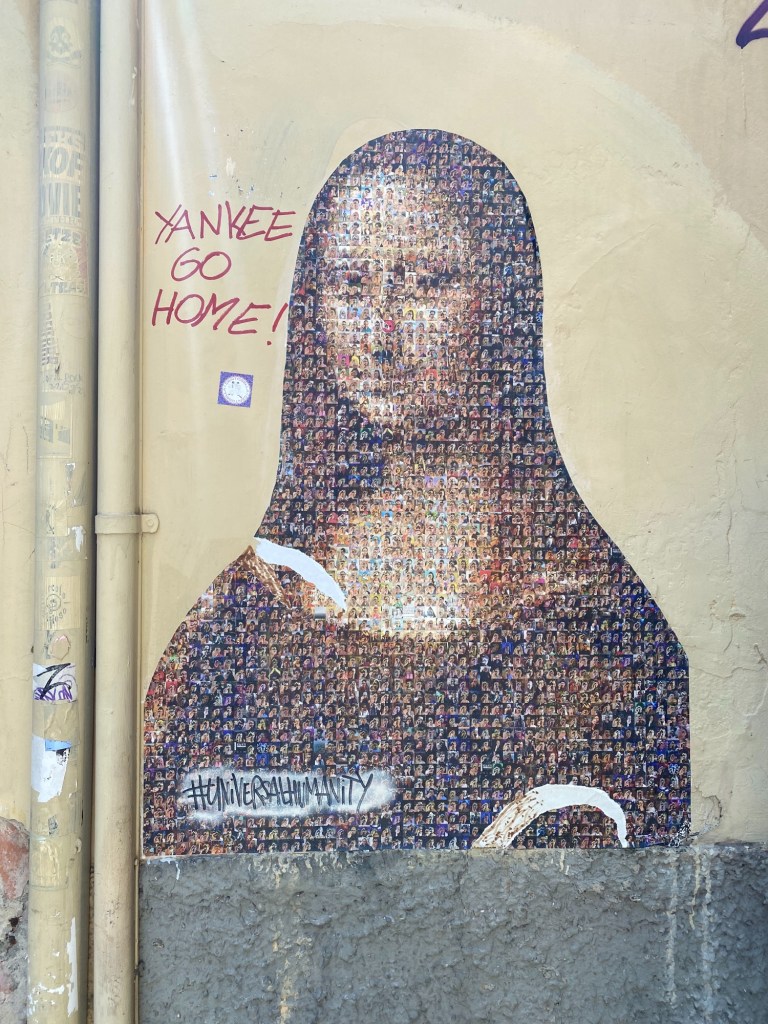
With internet and social media, English is ubiquitous! Plus there are a LOT of American foreign exchange students here on any given day!

At a favorite pizzeria!

English classes offered at a bus stop.

Oy! That hurts but it’s understandable.
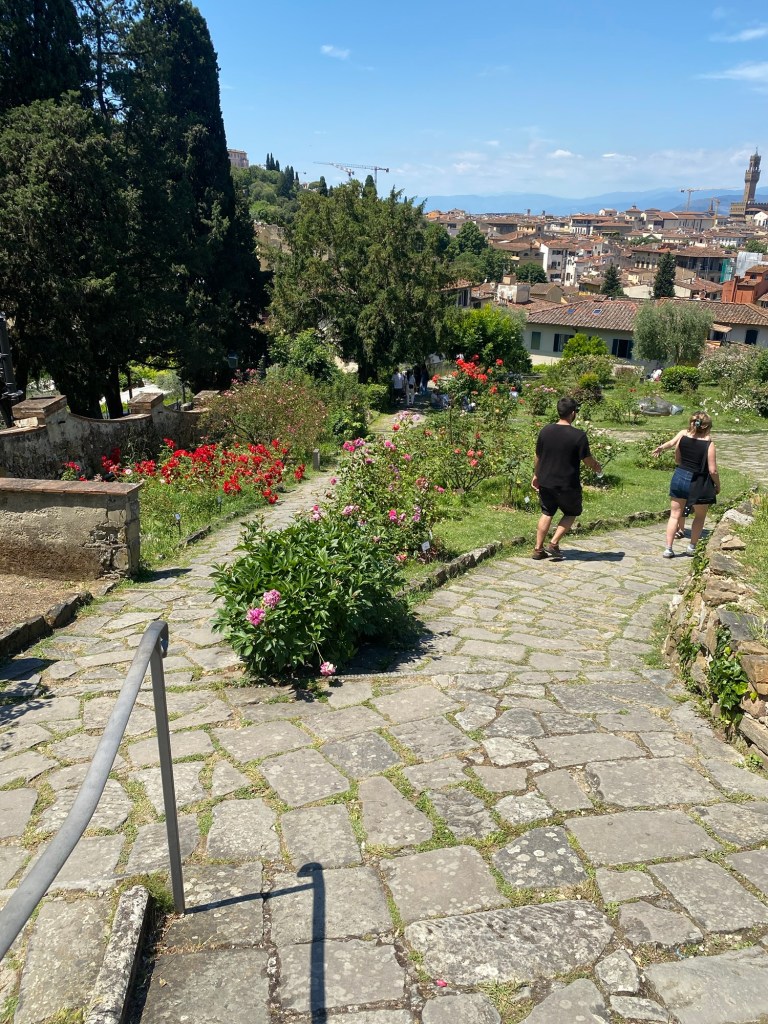
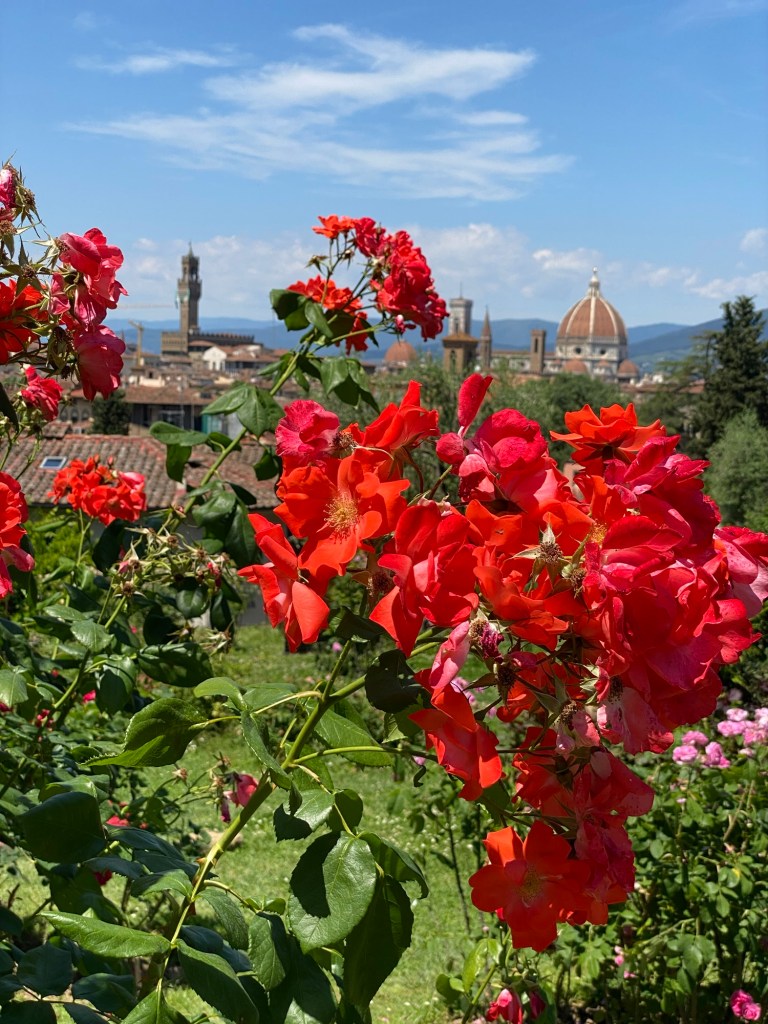
Florence’s Rose Garden on a Sunday afternoon in May

It was a spectacular day!

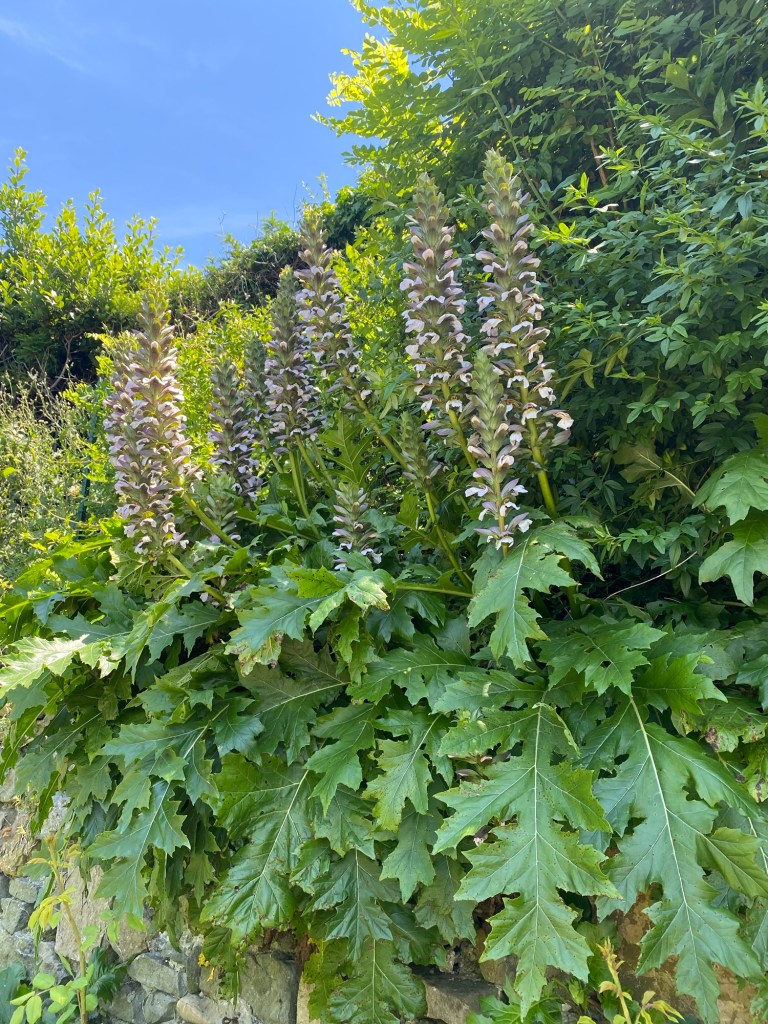
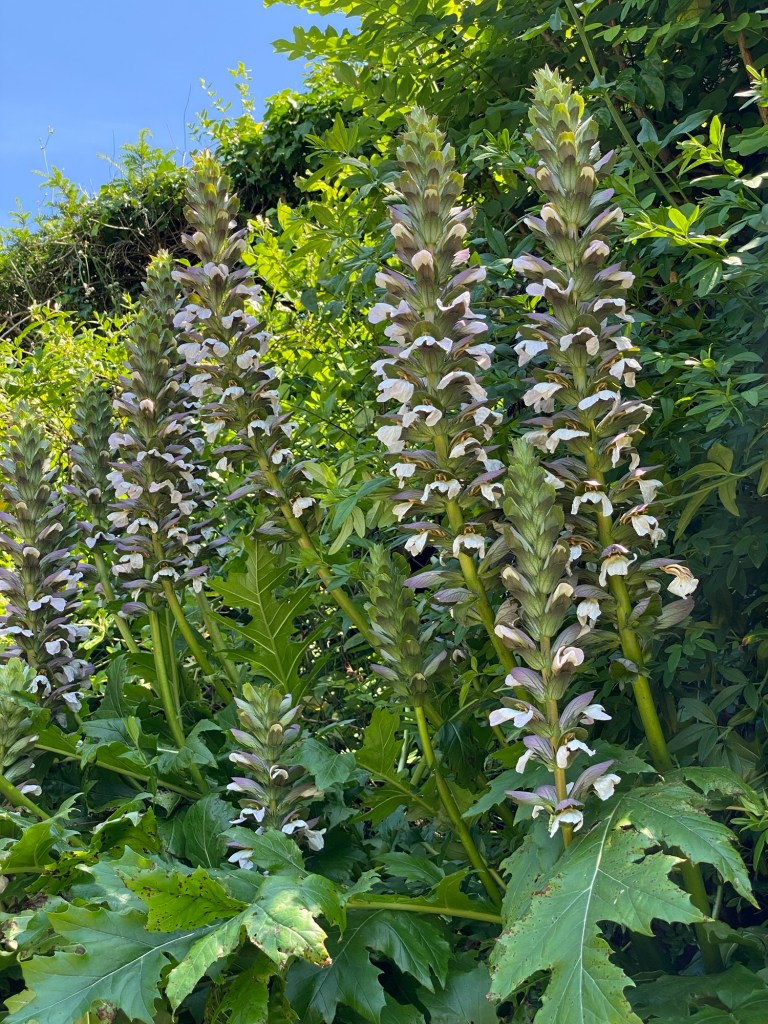
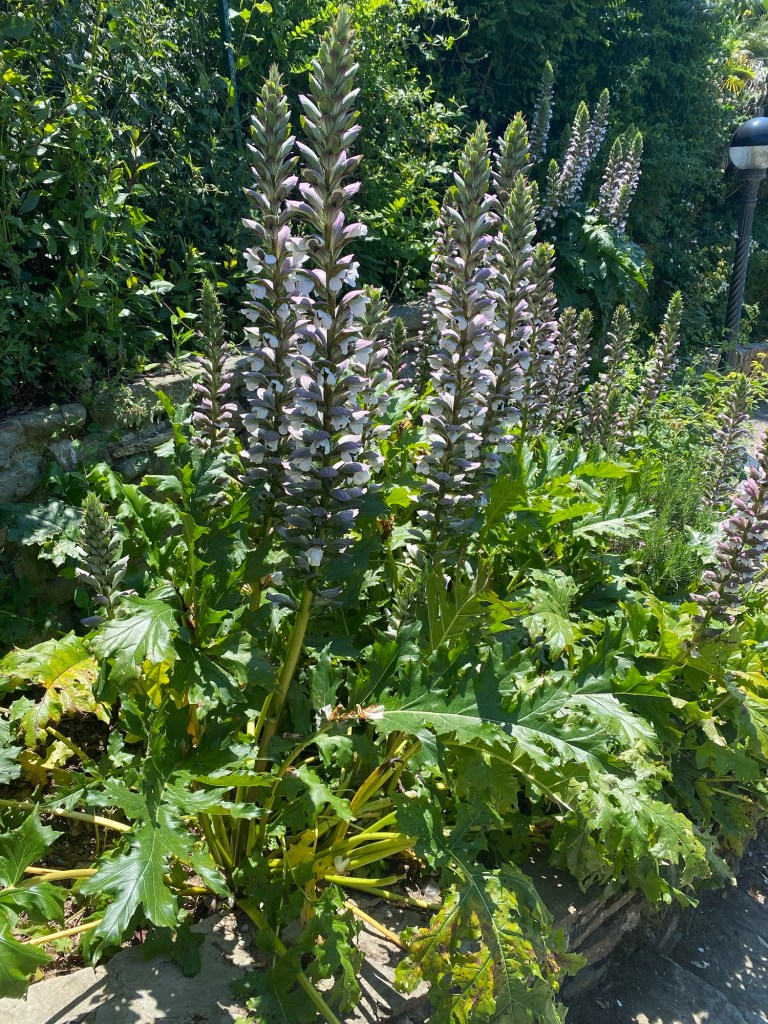
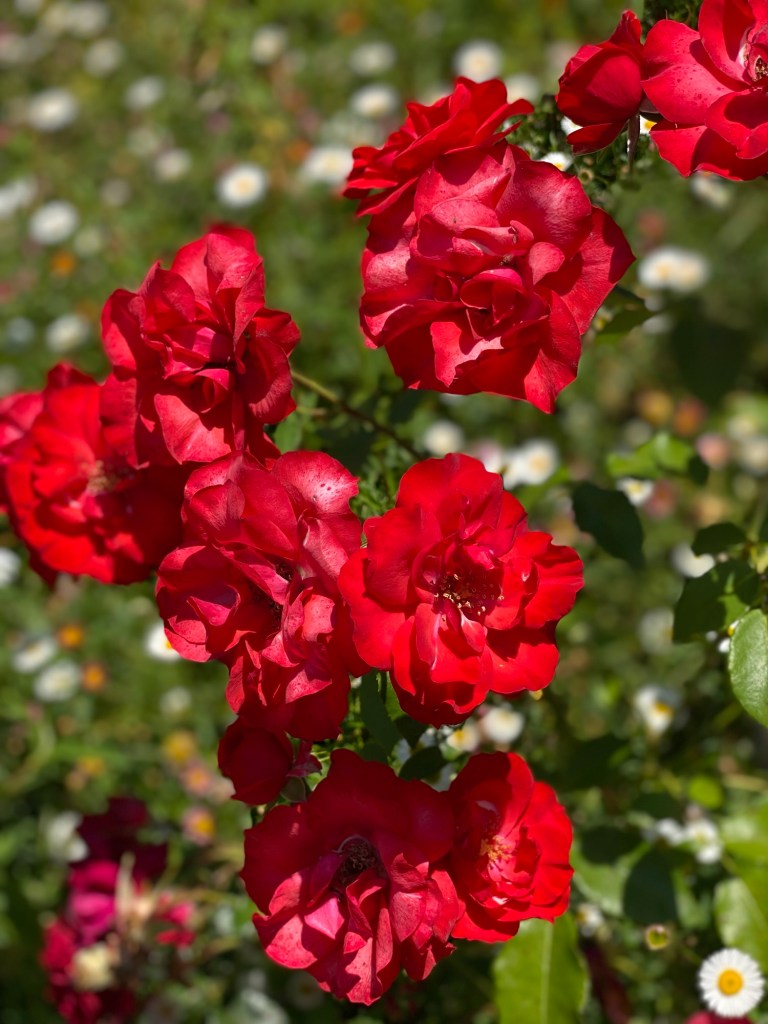
The first photos are of the acanthus plants, in full glorious bloom.

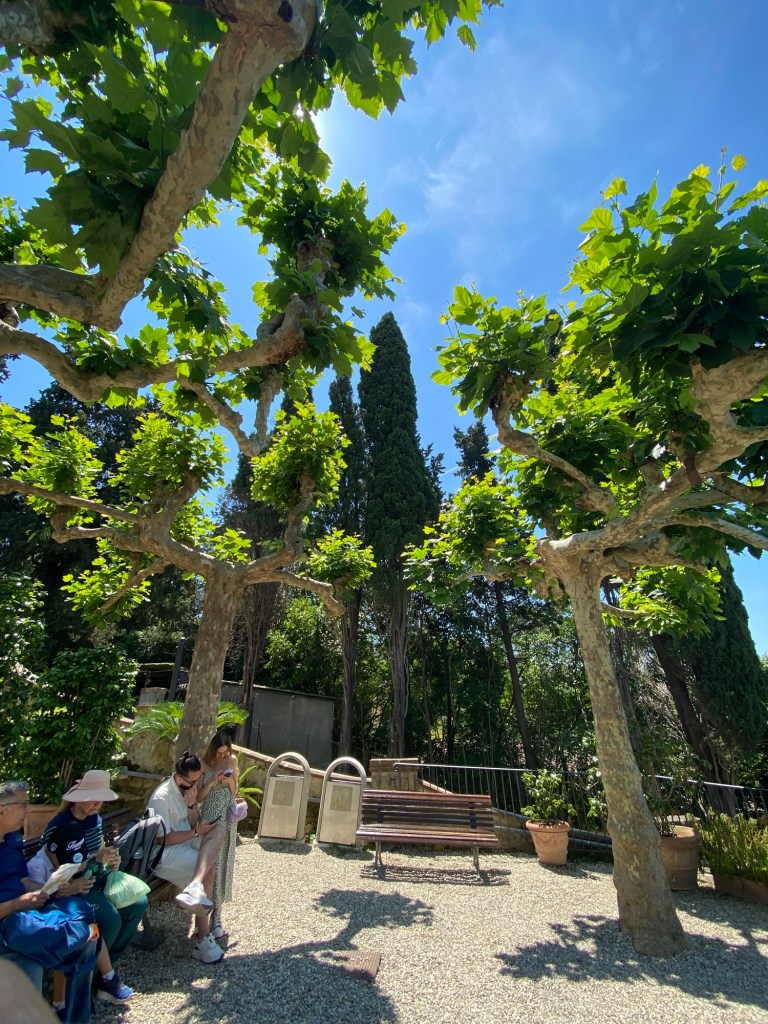
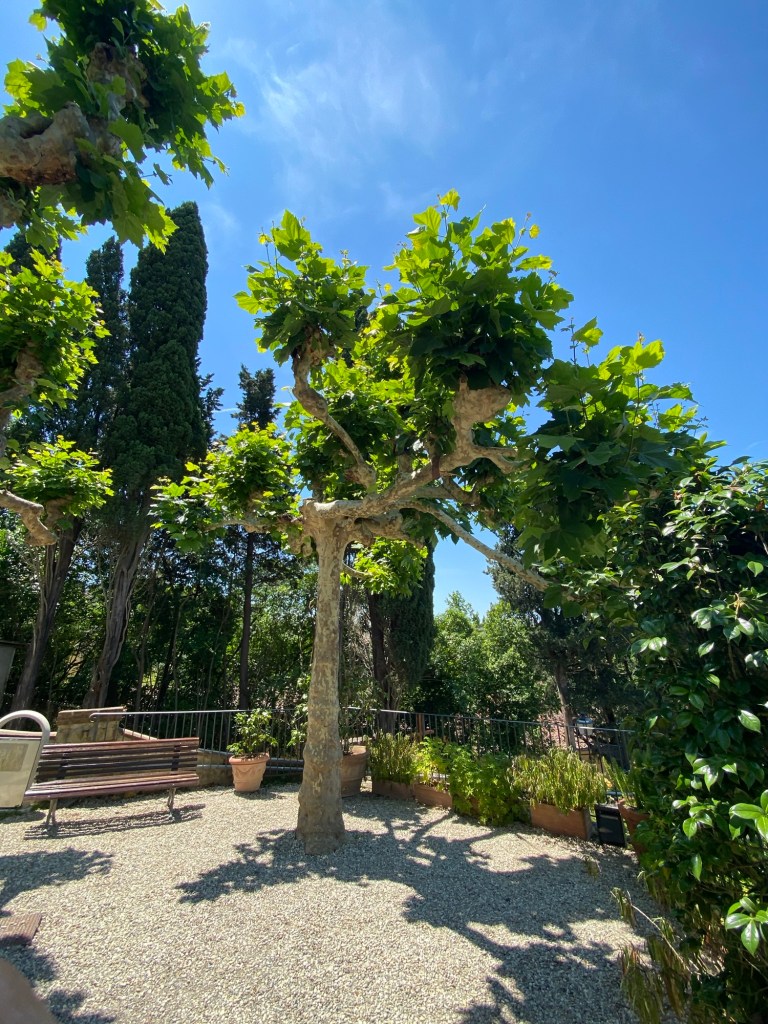
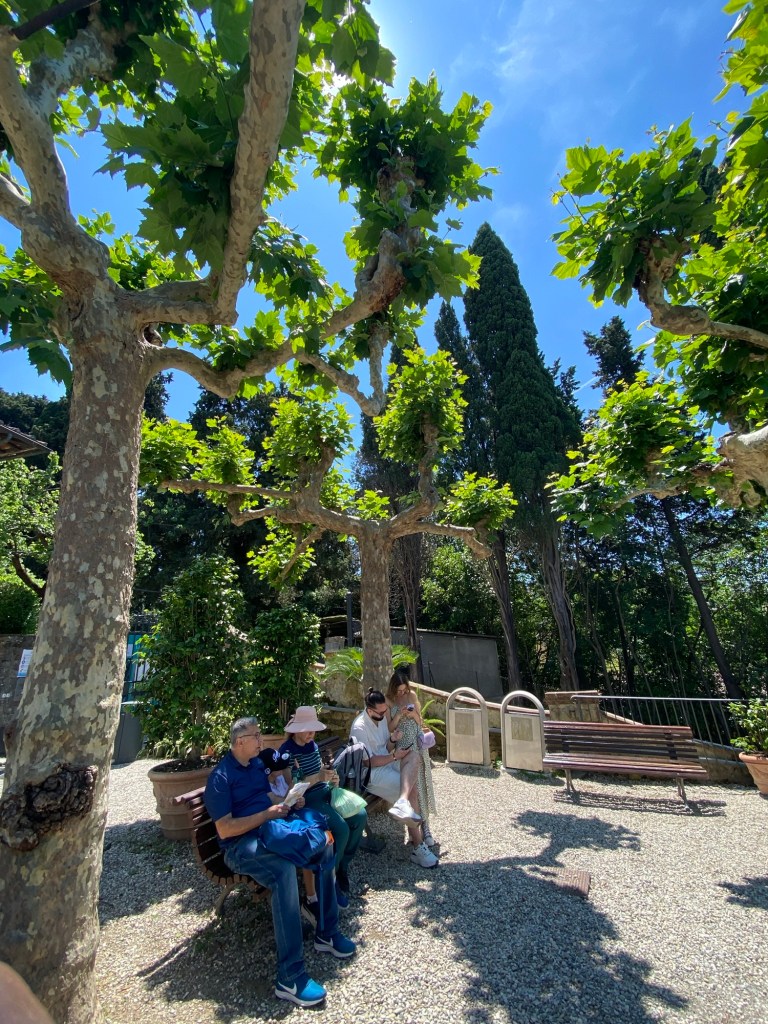
The next three photos are of a small seating area in the garden that is circled by these 3 trees which have been pruned to form a canopy surrounding the space. It’s quite spectacular in person, but hard to capture with snapshots.
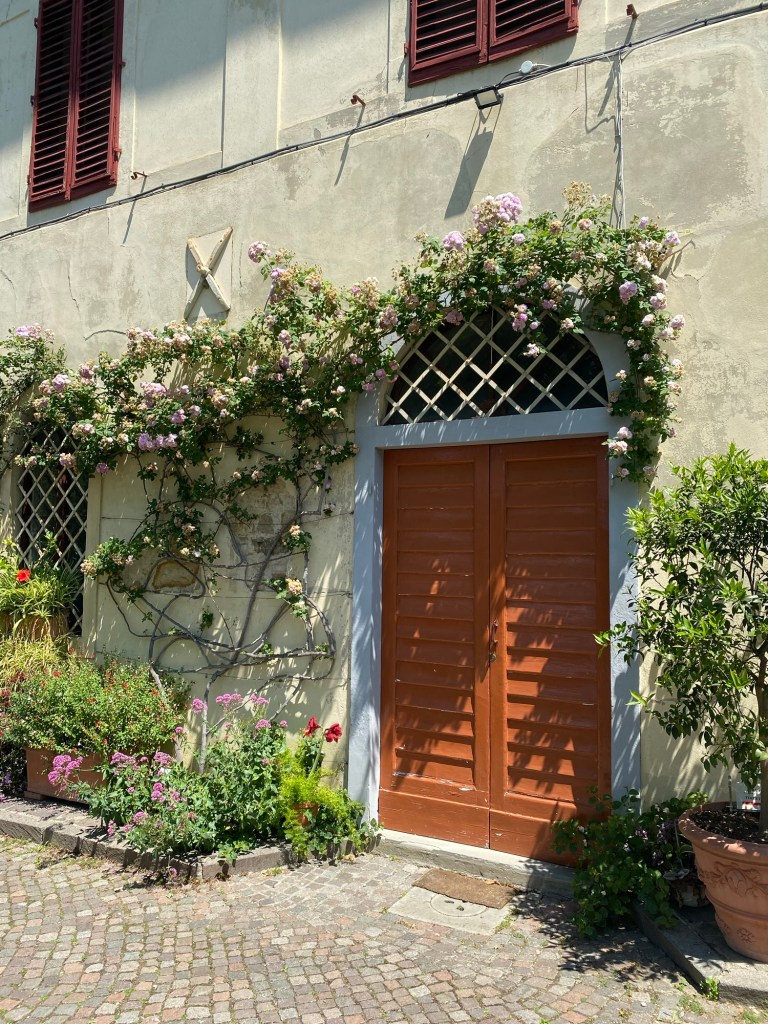
The next few photos are of one of my favorite buildings in all of Florence. I would love to live in a space like this with a pink rose climbing over the front door!

On a clear day, rise and look around you

The final blossom of a nearby magnolia tree

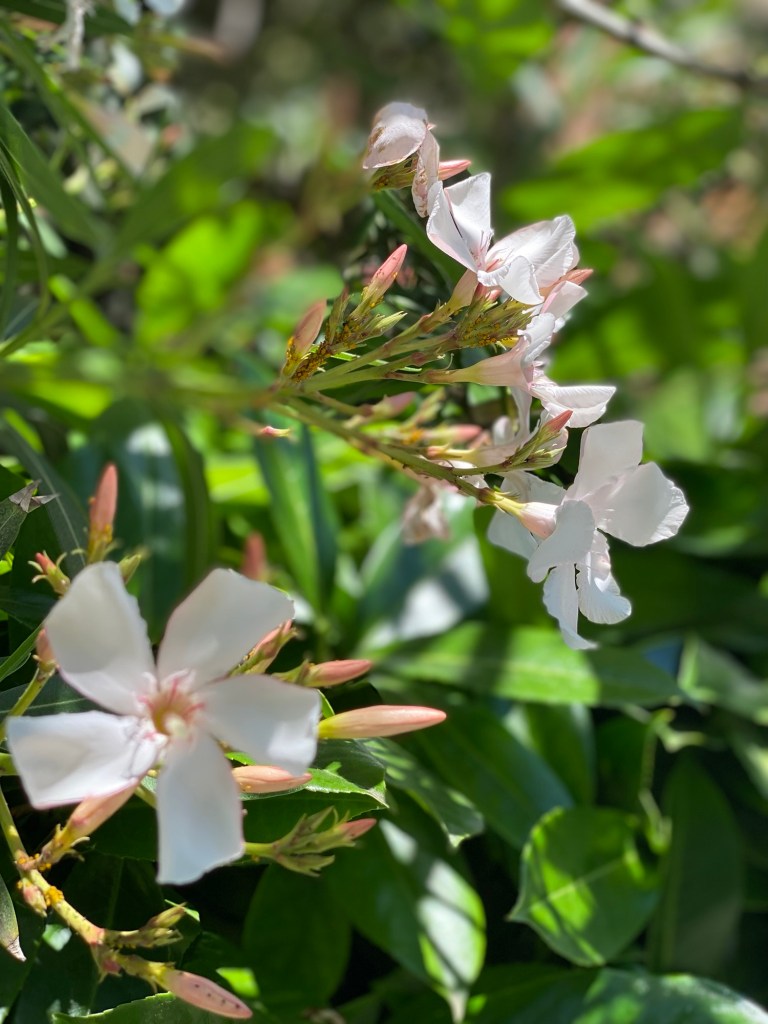
Some pale pink oleander

On the early afternoon of the last Sunday in May, I took a long walk up to the Piazzale Michelangelo and encountered some beautiful views along the way.

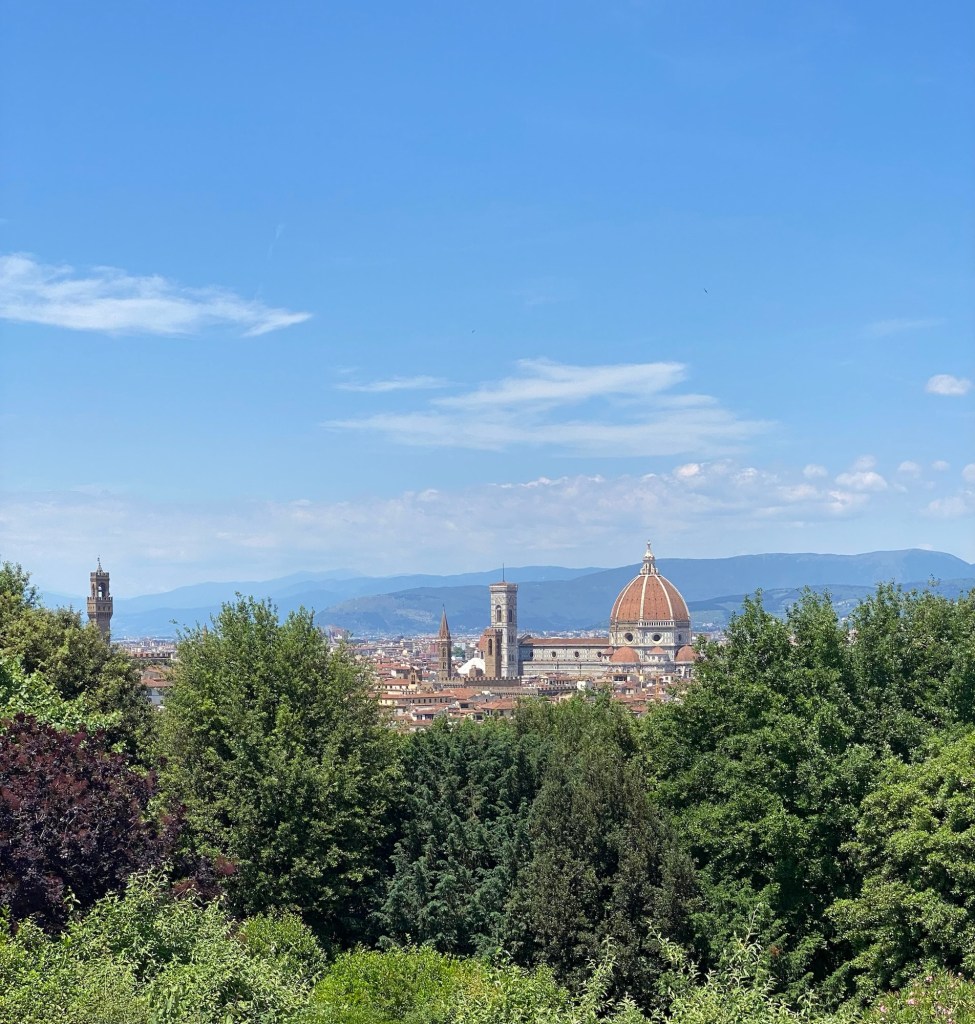
This view never fails to impress

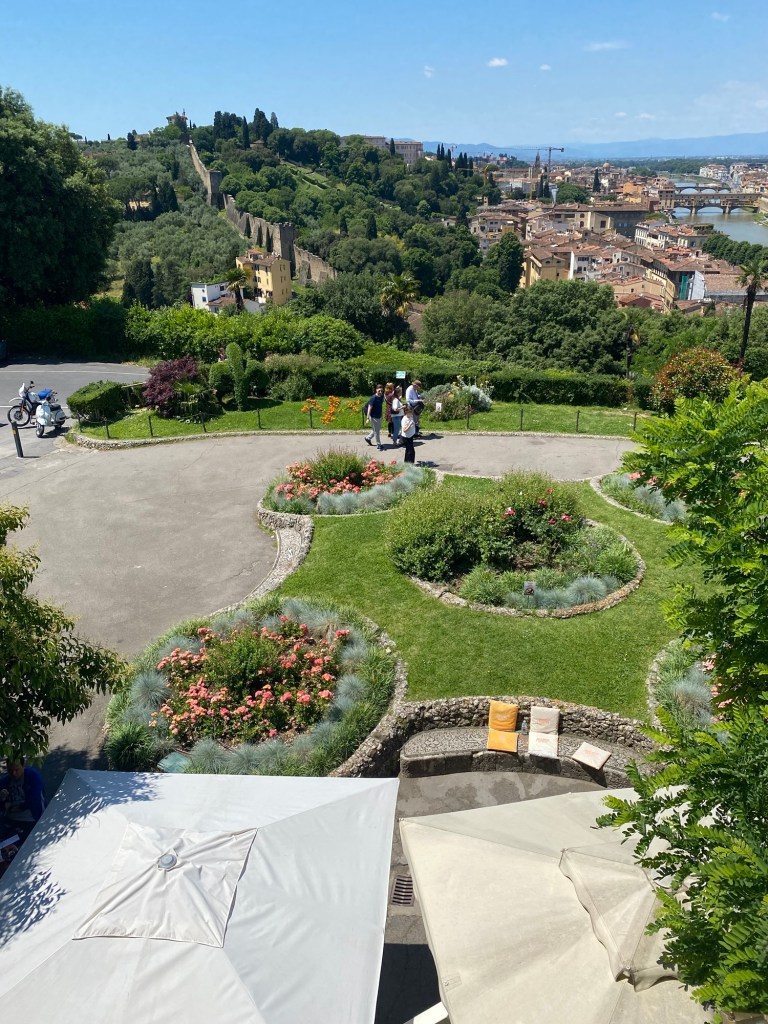
The same view from Piazzale Michelangelo

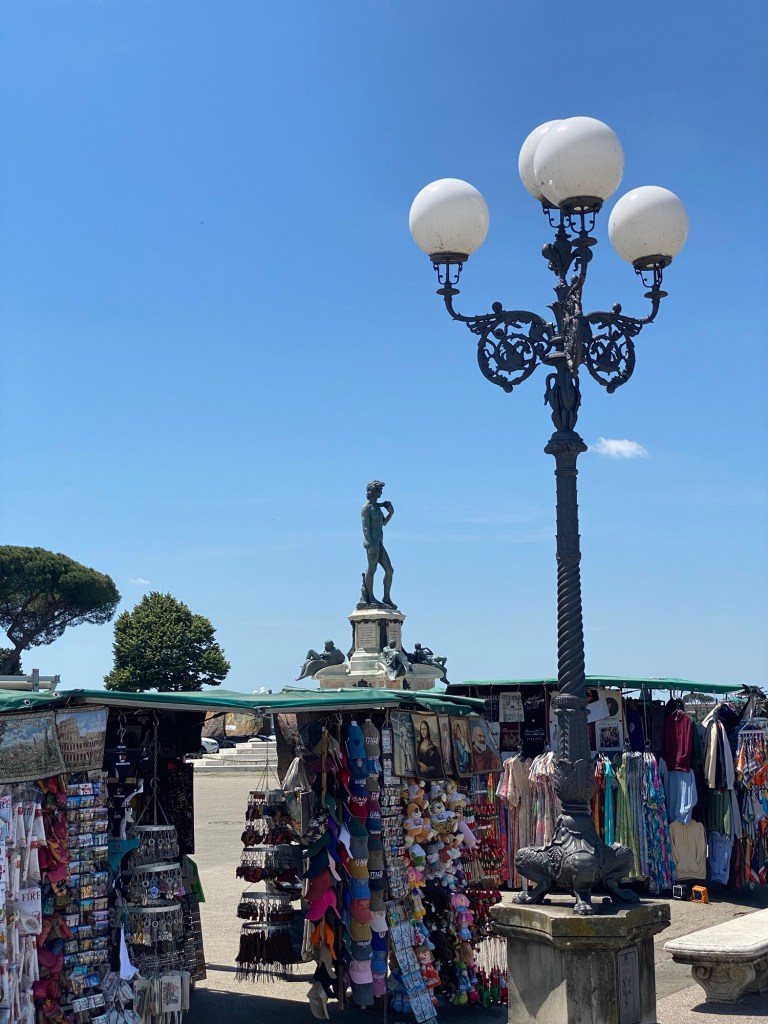
And, perche no, a view of the David from which the piazza takes its name.

Tourists are out in force and doing silly things. Their shirts say they are ballerine (plural for ballerina) but they don’t look like dancers to me.

After spending some time on the piazzale, I went down to the Rose Garden, which I’ll be posting about soon. Alla prossima!

Postscript: A few days later I walked by the same magnolia tree and was rewarded with the full blossom of the bud seen above.

Also, a pink oleander had begun to join in the fun!

The “dollar princesses” from America

Heiress: Sargent’s American Portraits

If you are lucky enough to be in London now or anytime before early October, you can catch a fascinating exhibition of some of John Singer Sargent’s portraits. I recently posted on another Sargent exhibition; he is definitely having a moment in honor of his death centenary.

To mark 100 years since the death of the painter John Singer Sargent, English Heritage has put on a show of 18 portraits of American heiresses that places their lives and notable achievements at the forefront of the story.

Known as the “dollar princesses”, the women were part of the transatlantic marriage phenomenon of the late 19th century. They travelled to the UK to marry into the British aristocracy, bringing wealth with them. The cash injection from one such marriage helped restore Blenheim Palace in Oxfordshire.

Many of the dollar princesses went on to make significant contributions to British society, including Nancy Astor, who became the first sitting female Member of Parliament (MP) in the House of Commons. She held her seat of Plymouth Sutton for 25 years.

Another of the sitters was Dame Jessie Wilton Phipps who also had a career in politics, being elected to London County Council in 1907 and later chairing the Central Council for the London Blind.

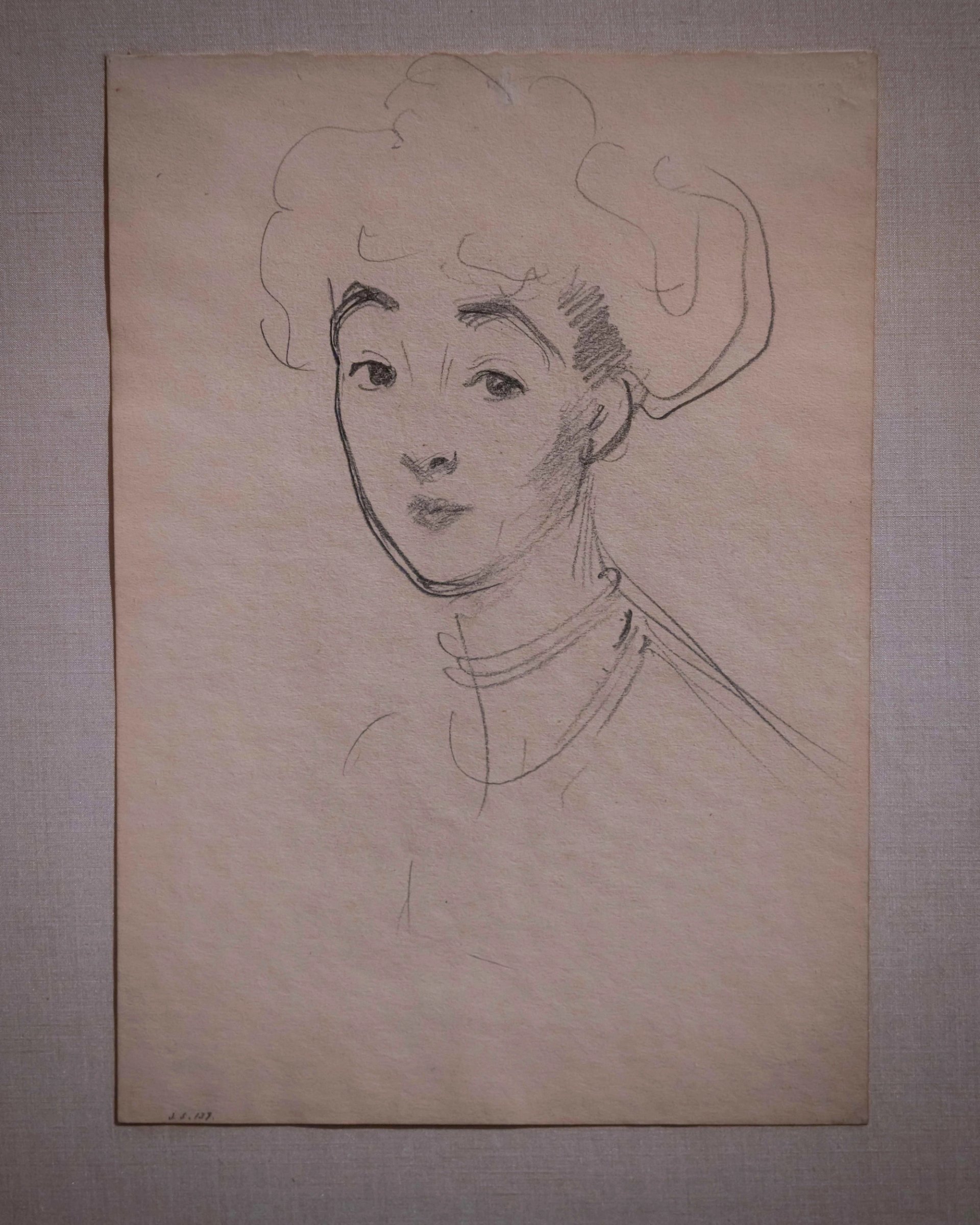
An example of the often loveless marriages of the dollar princesses was that of Consuelo Vanderbilt, whose charcoal portrait (above) has never been on public display until now. She was opposed to her marriage to the Duke of Marlborough and wept behind her veil on her wedding day. After the wedding the duke informed her he had only agreed to the marriage to save his ancestral home of Blenheim Palace.

Despite her unhappy marriage, the new duchess was revered by the poorer tenants on her husband’s estate and her progressive politics were reflected in her advocacy for social reforms and backing the Liberal Party’s welfare policies including free school meals, free medical checks for children and pensions for the elderly. She was also a supporter of women’s suffrage.

The exhibition, titled Heiress: Sargent’s American Portraits, is the first time the portraits have all been brought together in one place. Wendy Monkhouse, the curator, tells The Art Newspaper: “It is easy to simply view the [dollar princesses] as merely sitters to Sargent but here, we consider them as individuals, and their lives are described in the context of broader themes in women’s history.”

She added that the exhibition doesn’t shy away from the more troubling aspects of the portraits. She says: “We have tackled difficult and uncomfortable issues like misogyny, stereotyping and xenophobia head on, which all played a significant role in constructing the image of the American heiress in their lifetimes, and still do today. Sargent’s depiction of the women reflects the world of power and privilege they came from, but he also conveys their character, energy and vitality.’’

Sargent, an ex-pat American who lived and travelled across Europe, was the most sought-after portraitist of the Gilded Age. A Sargent commission was the perfect accompaniment for these new Anglo-American marriages, demonstrating the status, wealth and power that came with combining American new money and British nobility.

The portraits, a mixture of oil and charcoal sketches, are on display at Kenwood in Hampstead, London until 5 October. Jenny Abramsky, the chair of the Friends of Kenwood, said in a statement: “Art is at the heart of what we do, and being able to bring such outstanding art to Kenwood in Sargent’s centenary year reinforces our confidence in the future of Kenwood as a uniquely valuable asset for English Heritage and the wider community.”

Heiress: Sargent’s American Portraits, Kenwood, London, until 5 October

https://www.theartnewspaper.com/2025/05/20/john-singer-sargent-exhibition-london-shines-light-on-lives-of-dollar-princesses

The roadside tabernacles of Florence

Throughout this wonderful city are a multitude of sometimes very beautifully painted tabernacles, offering thanks to God and seeking protection from him. No wonder Florence is called an open air museum! Asking the gods for help is as old as mankind.

I walk by this particular tabernacle pretty often and always stop and admire the quattrocento style painting. We see Mary and her infant son, along with St. John the Baptist at our lower right and St. Peter on the left. Above the saints are two angels.

I love the trim work at the top of the throne on which Mary sits. It reminds me of many Gothic era picture altars and frames as well as the trim work on some buildings.

Above, St. John

Above, St. Peter with his key. I always wonder, who decided what the painter would paint? Was it the person/association that commissioned the work? Who had jurisdiction over this particular street corner. Was there some event that spurred the commission? Who was the artist? These and many more questions exist happily in my mind as I leave the beautiful work of art and wander on my merry way, delighted that I live in such a place that I can pass by this kind of thing on any given day!