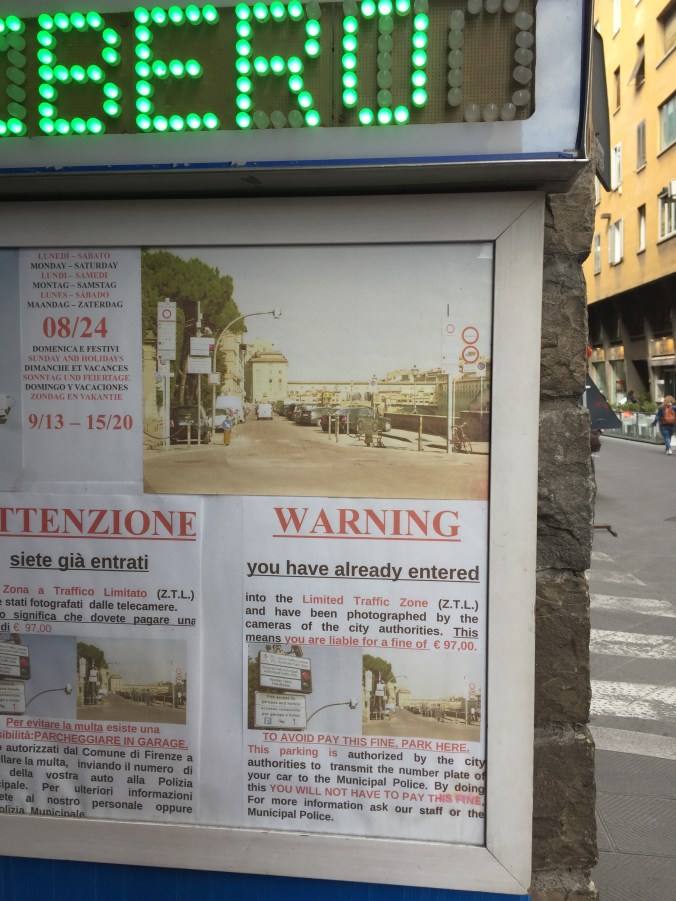
Warning: you have already entered the Z.T.L.

Florence is a pedestrian only city in the historic center.  I pay very little attention to where cars may and may not go, since I walk everywhere and don’t have a car.

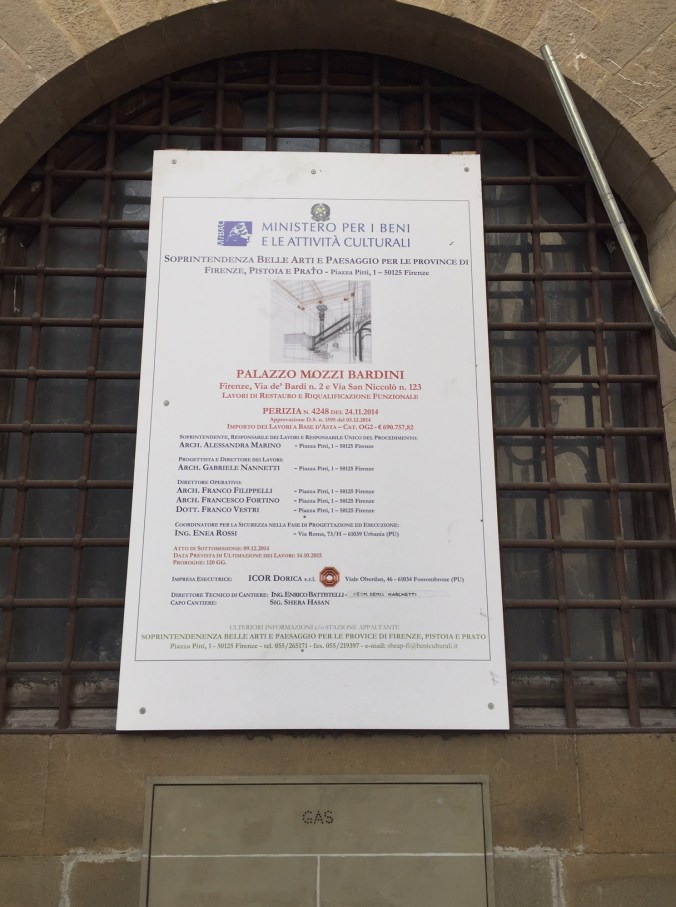
But I was struck by the dire quality of this notice and couldn’t resist taking a photo. The funny thing about this is that there isn’t ANY way any driver could even see the sign.  You would only see this sign if you are walking along the sidewalk, as I was.


8CF9EC64-2C08-42A7-B7B0-3122125C6F28.jpeg

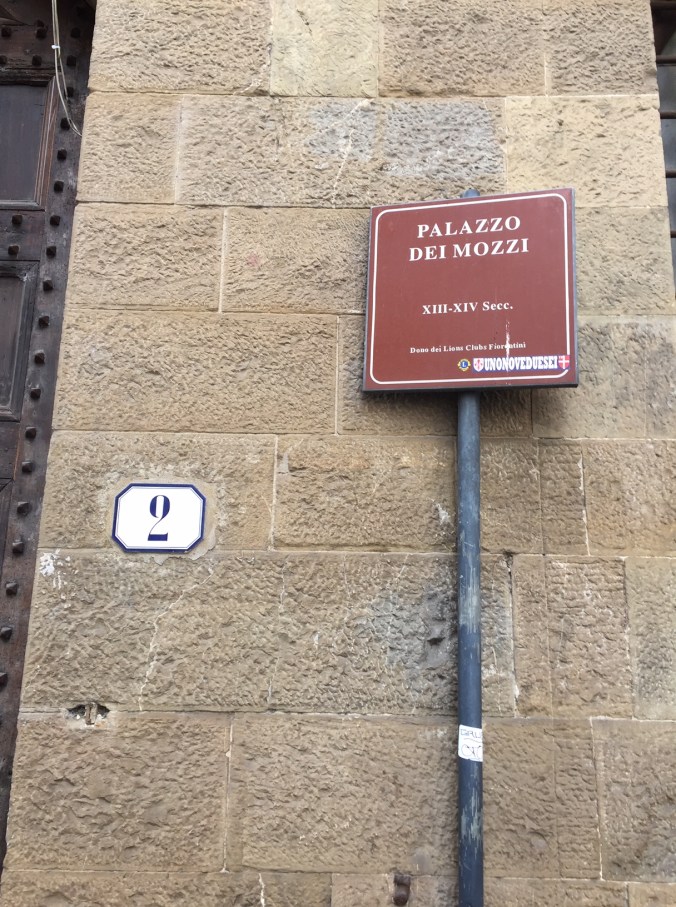
Palazzo dei Mozzi, Firenze

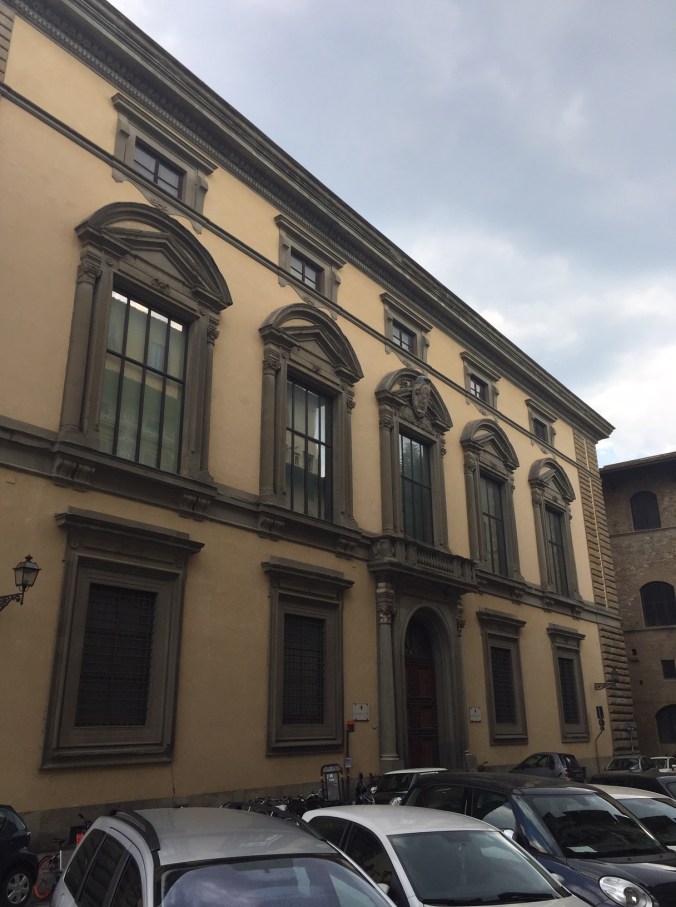
The Palazzo dei Mozzi is a grand old palace beautifully situated on the piazza of the same name, in the Oltrarno section of Florence. It was built around the middle of 13th century as a part of the fortifications guarding the old Ponte di Rubaconte (today’s Ponte alle Grazie): hence its fortress-like structure.

IMG_6427

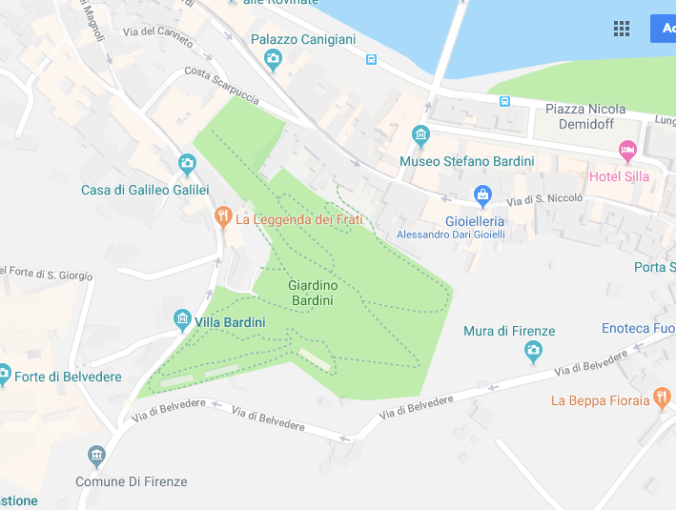
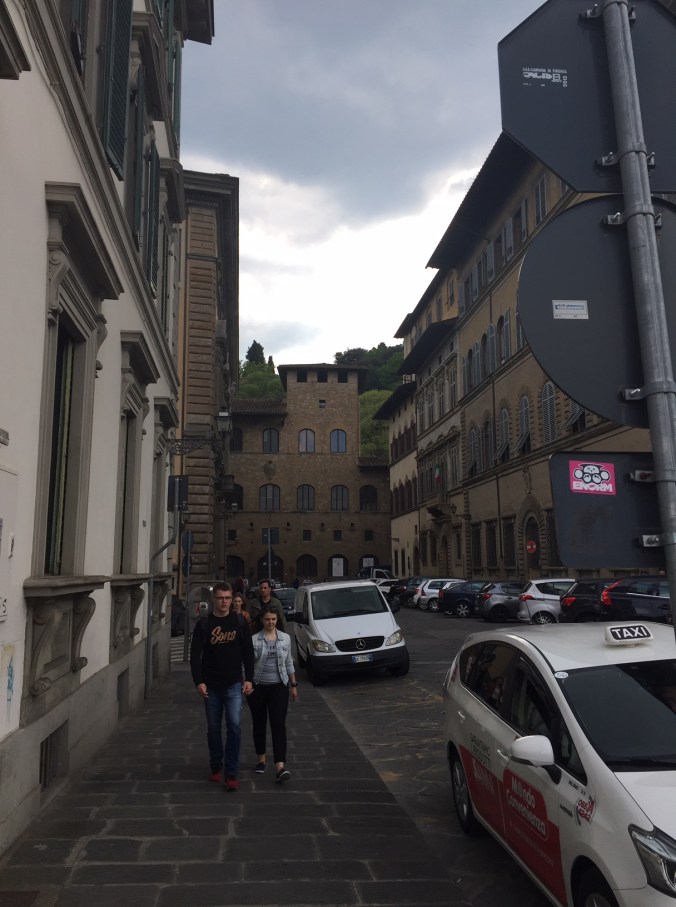
The palazzo is an early Renaissance building, located at the south end of the Piazza dei Mozzi that emerges from Ponte alle Grazie and leads straight to the palace where via San Niccolò becomes via de’ Bardi in the Quartiere of Santo Spirito (San Niccolò).

Screen Shot 2019-04-25 at 10.47.52

IMG_6423

The Mozzi family was among the most important and powerful families in the city in the Medieval period, and many important persons were received in the palace during their official visits in Florence; Pope Gregory X, for example, visited the palazzo in 1273.

IMG_6424

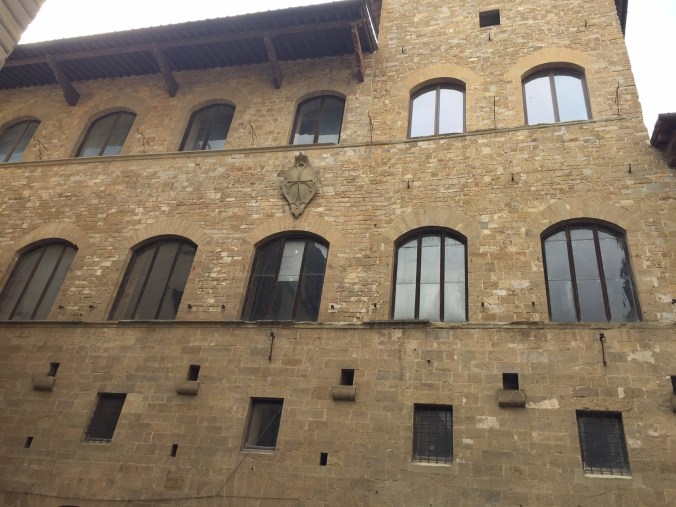
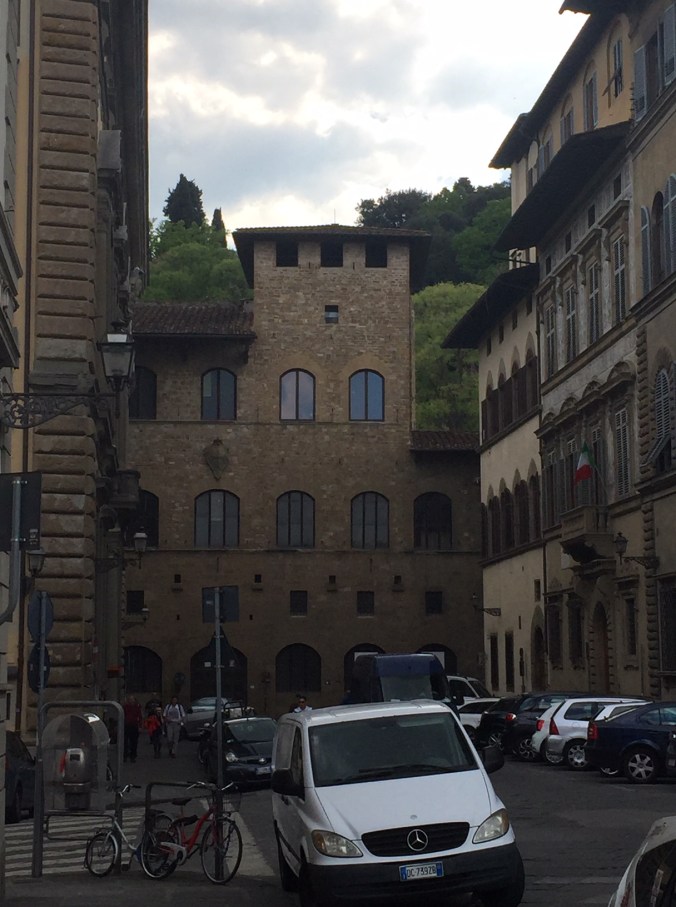
On the facade facing the Via de’ Bardi, we see the tower and the large coat-of-arms of the Mozzi family. Also note the tower’s crenellation, covered nowadays by a roof.

IMG_6425

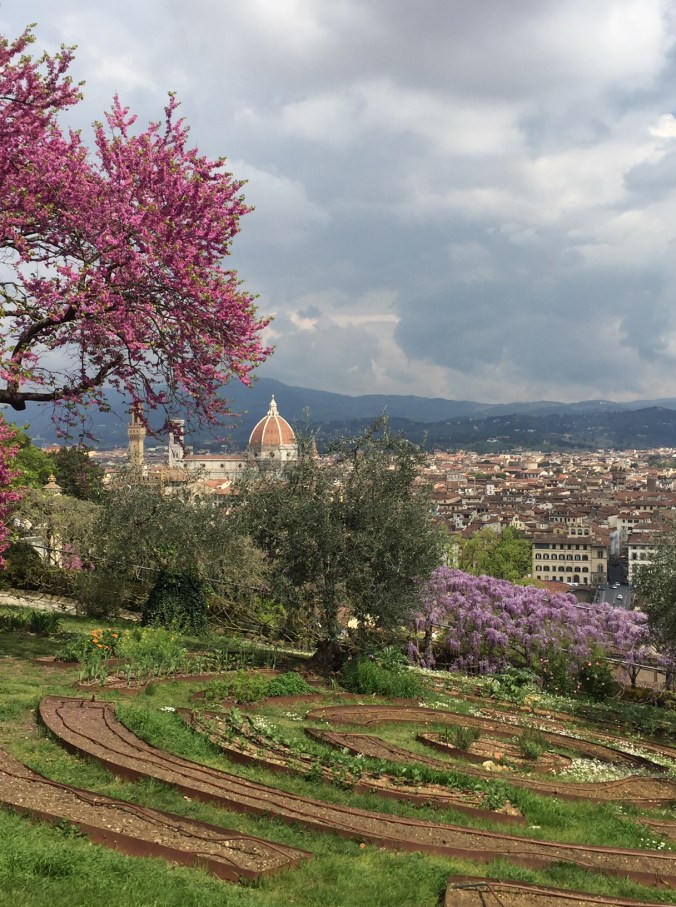
The large garden on the rear of the palace was built in 16th century, when the Mozzi bought a wide plot of ground in order to transform it into an olive-grove.

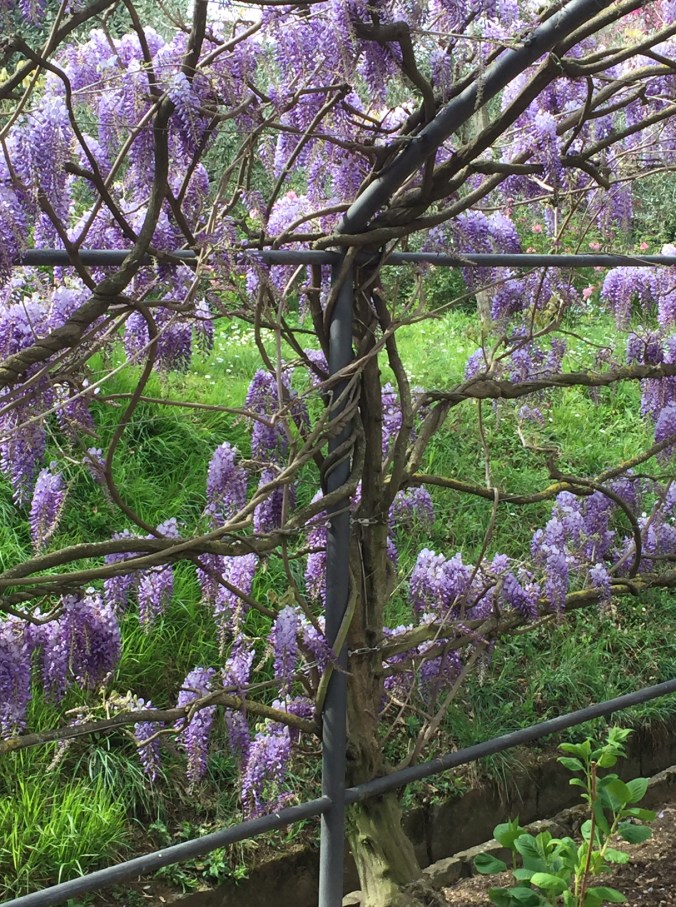
Around the middle of 19th century, the palace was purchased by the antiquarian Stefano Bardini, who owned another palazzo across the street (see pictures below). Today that amazing garden is open to the public as a part of the Museo Bardini complex. It is one of the most spectacular gardens in all of Florence, especially in spring when the trees and wisteria are in full bloom!

Screen Shot 2019-04-25 at 10.49.06

Bardini transferred his extensive art collections and laboratories to the Palazzo dei Mozzi and changed the olive-grove into a garden; he decorated the garden with statues and elements he saved from the demolition of ancient buildings in the center of Florence. In a subsequent time the garden was futher decorated with a loggia and big stairs.

After the death of Ugo Bardini, the son of Stefano, the palace remained closed for a long time, until it was bought by the Italian State; it is currently under restoration and will become a centre for exhibitions and cultural events.

IMG_6426


IMG_6511IMG_6512


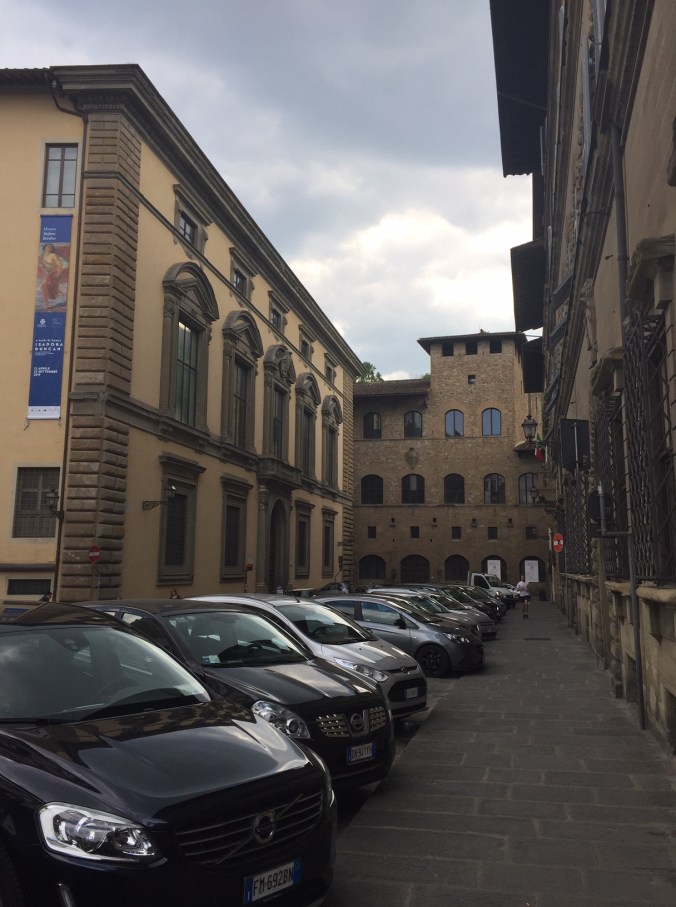
Palazzo Bardini on left, Palazzo dei Mozzi at far end.

IMG_6513IMG_6515IMG_6516


Below, another view of facade of Palazzo dei Mozzi, looking eastward along via San Niccolò.

800px-Palazzo_de'_Mozzi


Teaching English online

A couple of months ago I was laid up for about a month with a badly sprained ankle.  The doctor said, keep your foot elevated and stay off of it as much as possible.  Fortunately it was January and February, which aren’t necessarily great months to be outside in Florence, Italy.

During that time I decided to give an online English teaching company a whirl, to see if I liked it.  It turned out to be a pretty big commitment in terms of getting certified, but, as I said, I had a lot of sedentary time on my hands.  I did give it a whirl and much to my amazement, I really love teaching English to school children in China!

Today was a very gratifying day; I’m about 2 months into actual teaching.  One of my fav students drew my portrait today and I am only too proud to show it to you! I think the artist captured my essence and wiped away at least 10 years, which I appreciate!  :-))

fullsizeoutput_e3e

And here is Yang, the budding artist who drew me:

fullsizeoutput_e3f He is such a cutie and so sweet.  He is also a very good student!

Busatti, fine Italian textiles

images

What does it take to become a member of the Italian Historical Businesses Union? (the UISI in Italian: Unione Imprese Storiche Italiane)?  This art association was begun in Florence and allows as members only companies that make items of great Italian tradition and excellence and have been owned by the same family for more than 150 years.
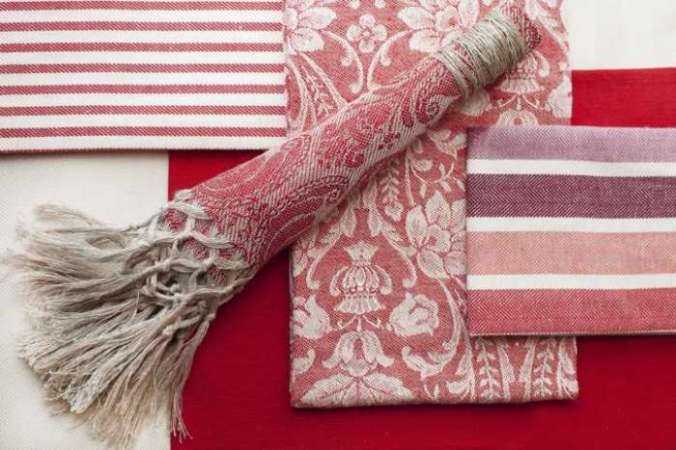
busatti-mood-board-fileminimizer

The Busatti company, producers of fine Italian textiles, is a proud member.

I recently visited the Busatti showroom in the Oltrarno section of Florence.  I’d been hunting for some of the beautiful cotton towels known as nido d’api (bee’s nest) in Italian, or waffle weave in English.  This fine company had the towels I was hunting, in a beautiful array of hues.  I chose the color I call “French blue, ” even though these are obviously Italian made!

1492036422806

Since 1842 the Busatti family has been weaving textiles in the cellars of the Palazzo Morgalanti in Anghiari, a Tuscan village.  The company can actually trace it’s ancestry further back than that: they had the first machines in Italy that could card wool in the late 18th century. When Napoleon invaded, his troops started producing uniforms for the Grande Armee in Anghiari.  To dye them the blue they wanted, they restarted cultivating a flower known in Italian as guado.  This is “woad” in English, a yellow-flowered European plant of the cabbage family. It was once widely grown, especially in Britain, as a source of blue dye, which was extracted from the leaves after they had been dried, powdered, and fermented.

In 1842 Busatti established itself as a producer of fine cotton textiles, using steam-powered machinery.  In the 1930s, the electric versions of the same looms were first utilized.  It was in the 1930s that the company acquired its current structure and look.

Busatti is still synonymous with quality and tradition, but also of innovation.  They can customize any of their production of tablecloths, draperies and toweling, and can make use of their exclusive embroideries when desired.

The Busatti business can trace its unique history starting with the Grand Duchy of Tuscany (Gran Ducato di Toscana), the contribution to Italian unification with a Garibaldi family member, through 2 World Wars and many economic crises. Fortunately, the company just keeps chugging along in Anghiari. As you wind through wooded hills to visit the ancient, walled town, it seems that nothing has changed there for hundreds of years. The illusion persists in the vaulted 16th-century showrooms of Busatti (www.busatti.com), where linens are still woven on 19th- and early-20th-century looms.

Clients include Miuccia Prada and Valentino, who order made-to-measure table sets in linen and cotton and me, who chooses ready-made, but still gorgeous, towel sets.