This was the view from my terrazzo yesterday afternoon:
And here was how Venice looked yesterday:

I found the following pictures of Venice yesterday on the Facebook page of Claudia Manzo. Great pictures!


This was the view from my terrazzo yesterday afternoon:
And here was how Venice looked yesterday:
I found the following pictures of Venice yesterday on the Facebook page of Claudia Manzo. Great pictures!
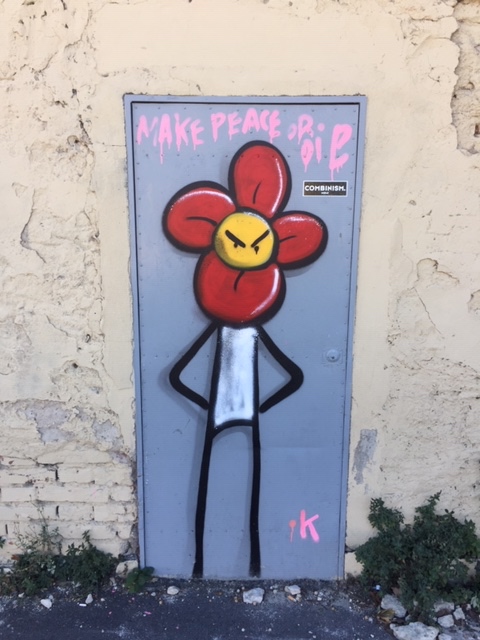
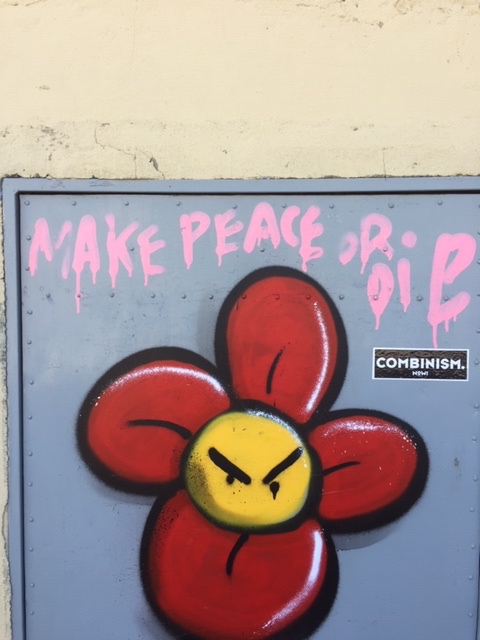
I love you, Florence and all of your creative residents!


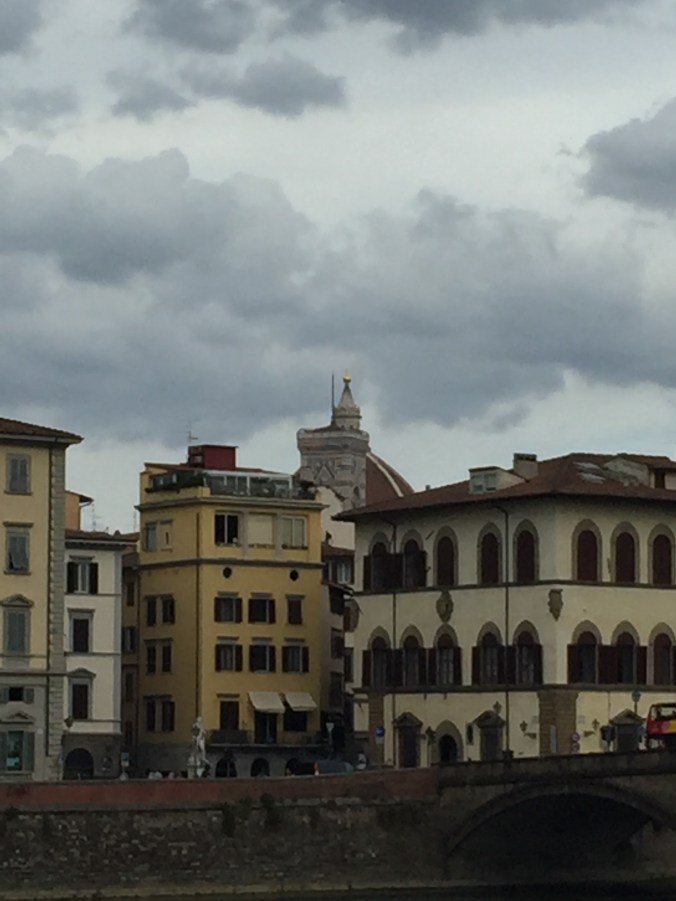
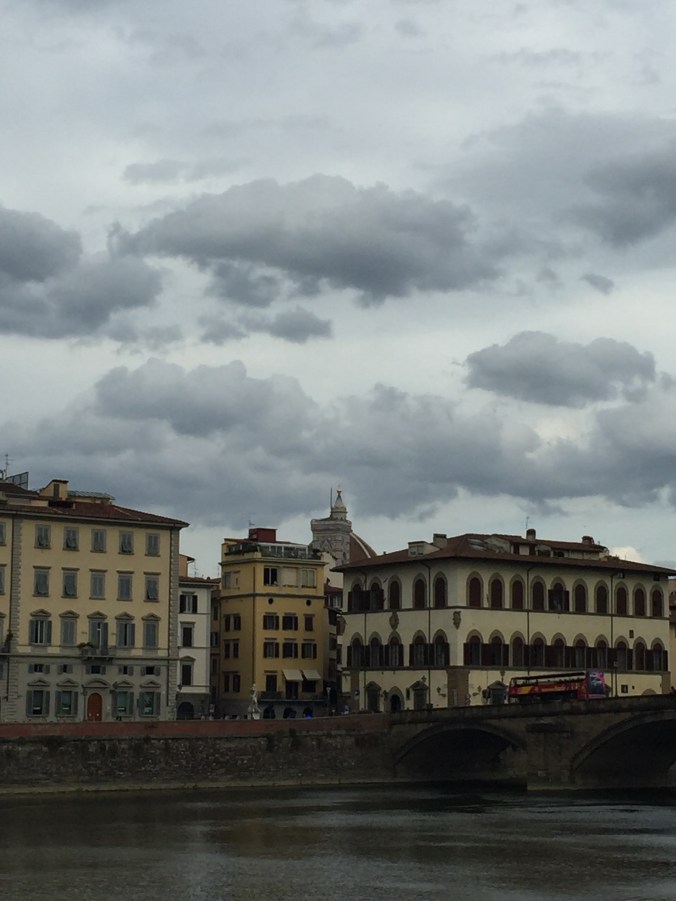
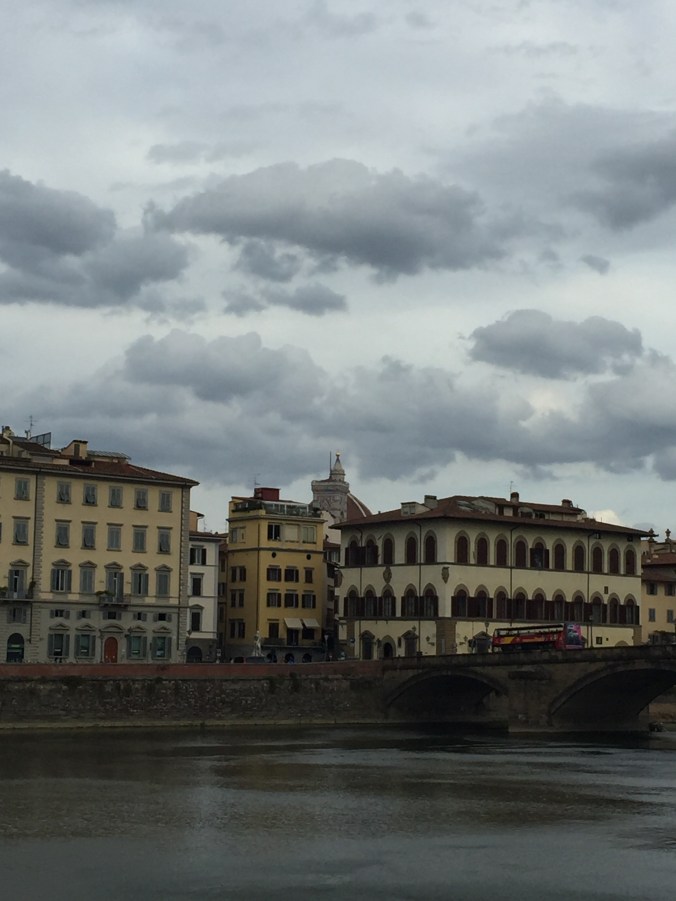
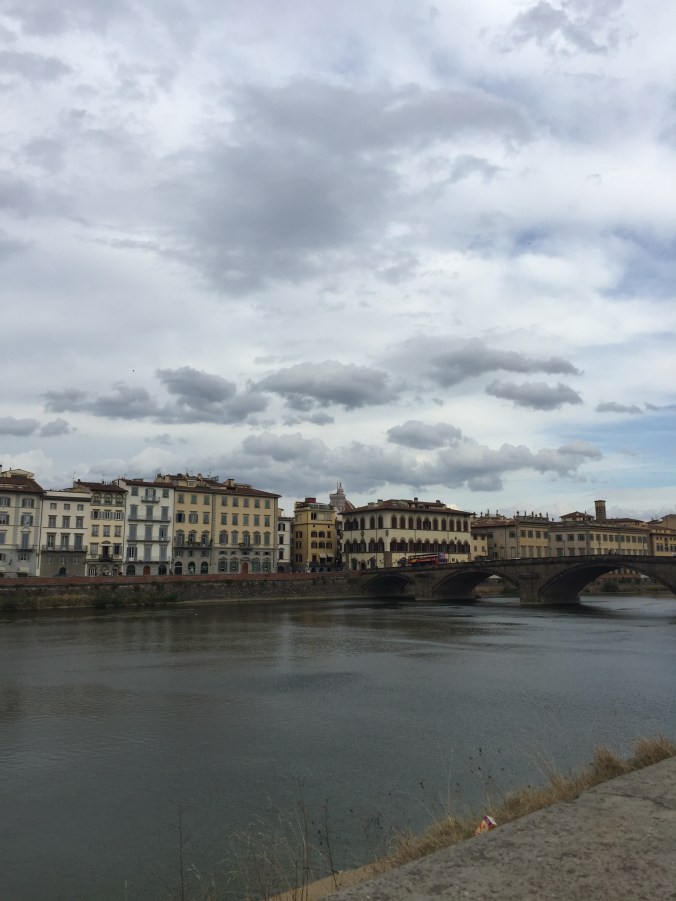
Strolling along the Lungarno in the Oltrarno today, I noticed Giotto’s campanile and Brunelleschi’s dome from a completely new angle. The clouds and unsettled sky-scape only added to the drama (apparently a cold front is making its way into Tuscany this weekend, putting an end to our beautiful Indian summer. It was 70 degrees today and many Italians were dressed in hats, scarves, and puffy coats to chase away the chills. I was in short sleeves and was still too warm :-)).



Fate is truly fickle.
You take 2 historic pharmacies, founded in Florence long, long ago. I’m speaking of the le farmacie di San Marco and di Santa Maria Novella. Santa Maria is still going strong, while the farmacia di San Marco shuttered its doors in 1995. It obviously had a good run!
I’ll be discussing the components of the facade below, but first please notice the little niche with a shelf above the lunette over the door. There was once a small marble statue, depicting the lion of San Marco, placed there.
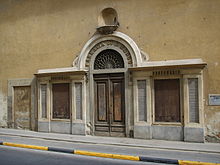
I’d never heard anything about the San Marco pharmacy, although I wasn’t surprised to learn the there once was a farmacia attached to this church complex. It was customary for conventi (in Italian, a convent denotes what in English we would call a monastery) to have a farmacia, selling medicinal products that the monks created.
But, many times a week I ride or walk by the old entrance to the pharmacy of San Marco on Via Cavour in Florence. The pharmacy is now defunct, but it is lovely that the authorities who closed the shop in 1995 left the old, 19th-century facade. It speaks volumes and is a charming relic of days gone by.

The San Marco pharmacy was established in 1450 by the Dominican friars, along with its twin, the still operating Farmacia di Santa Maria Novella. Cosimo de’ Medici had a particular interest in San Marco and there is little doubt that his patronage helped the church in all of its endeavors.
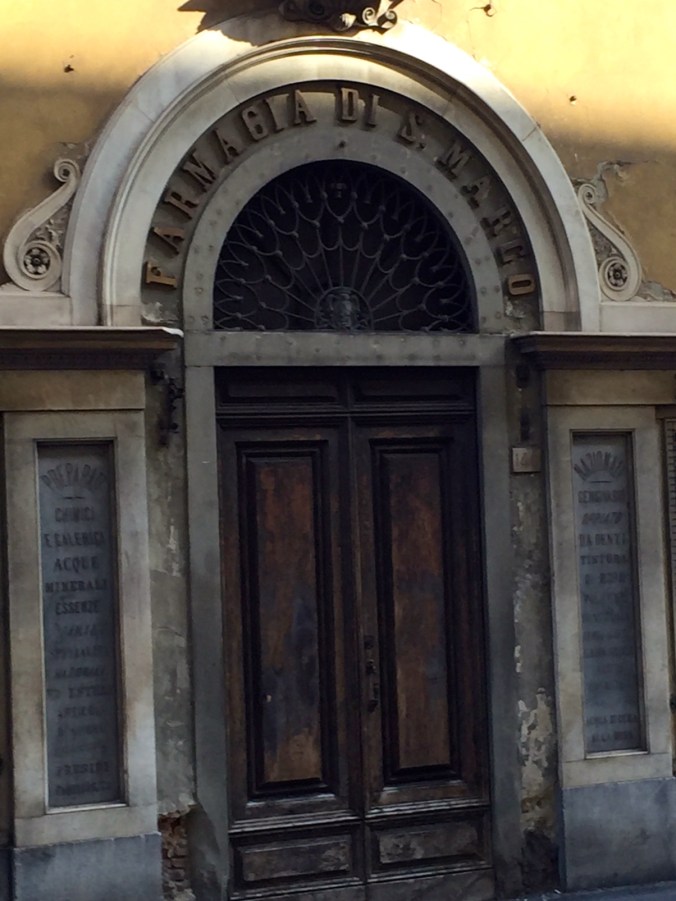
The Dominicans were known to be people with considerable culture. The medicinal preparations they created inspired confidence.
What were the medicines they had on offer? We know they sold at least the following:
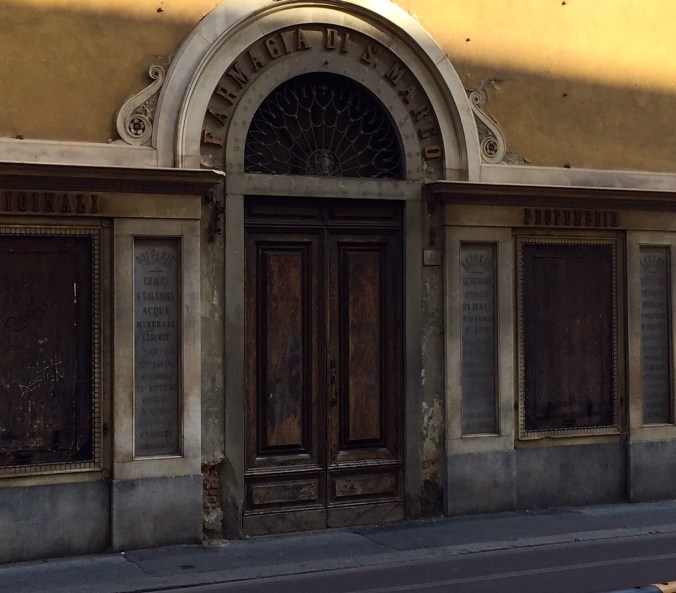
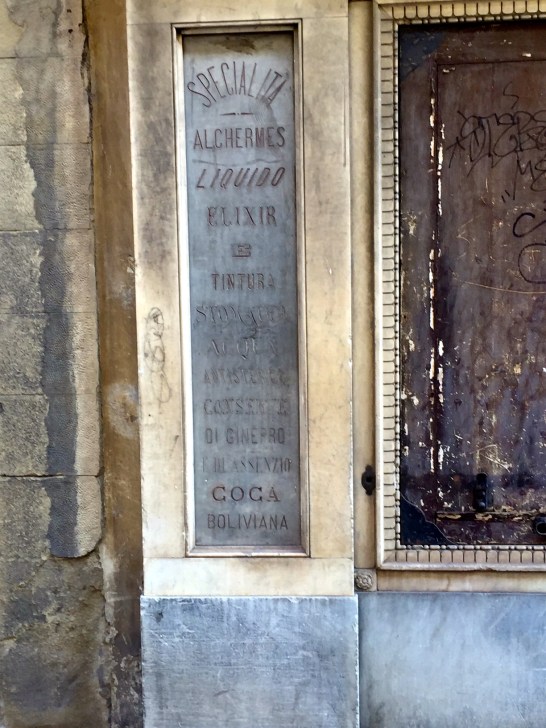
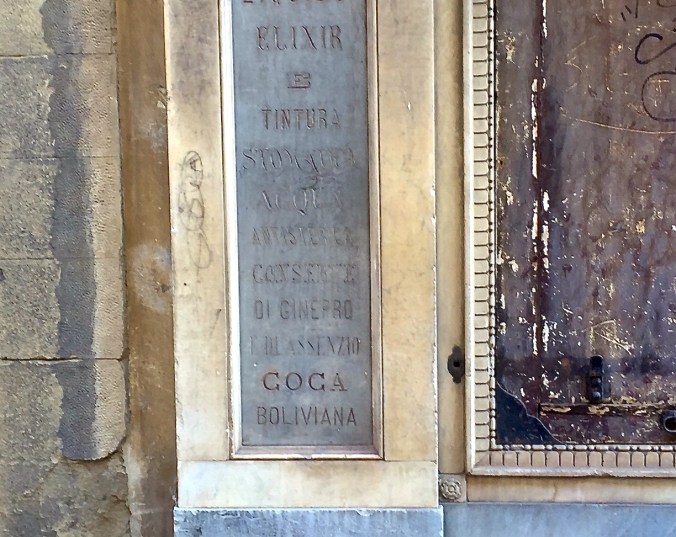
My favorite product listed on the engraved stone menus is “Coca.” This would indicate coca cola, which was invented as a medicinal elixir by a pharmacist in Georgia, USA, in the 1880s. So, that gives us a date for the facade of the old pharmacy. Would that we could see the earlier versions, now long lost.
I just love the concept of an American elixir on sale in the Florentine pharmacy.

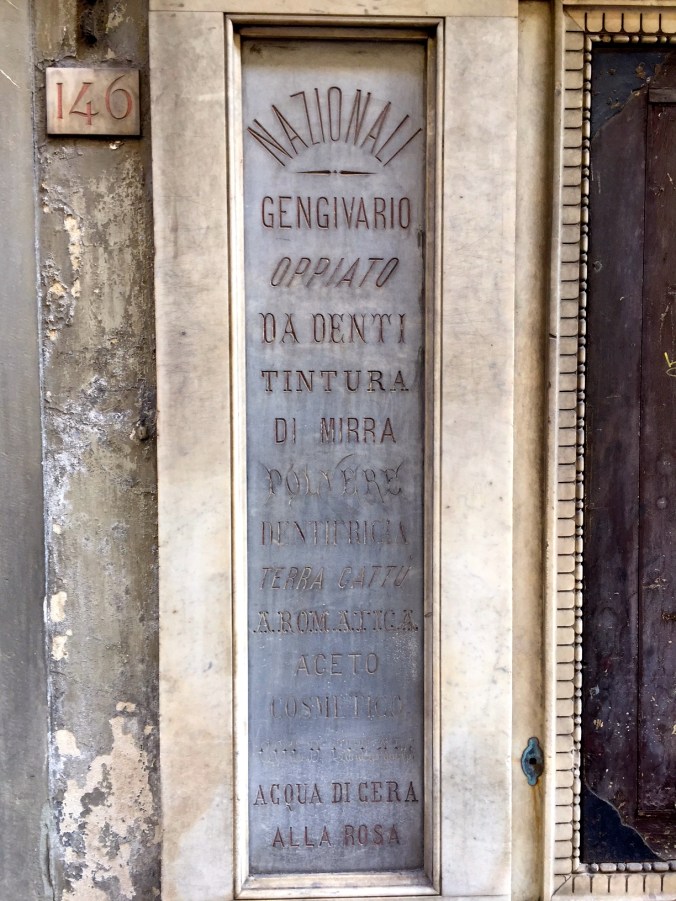
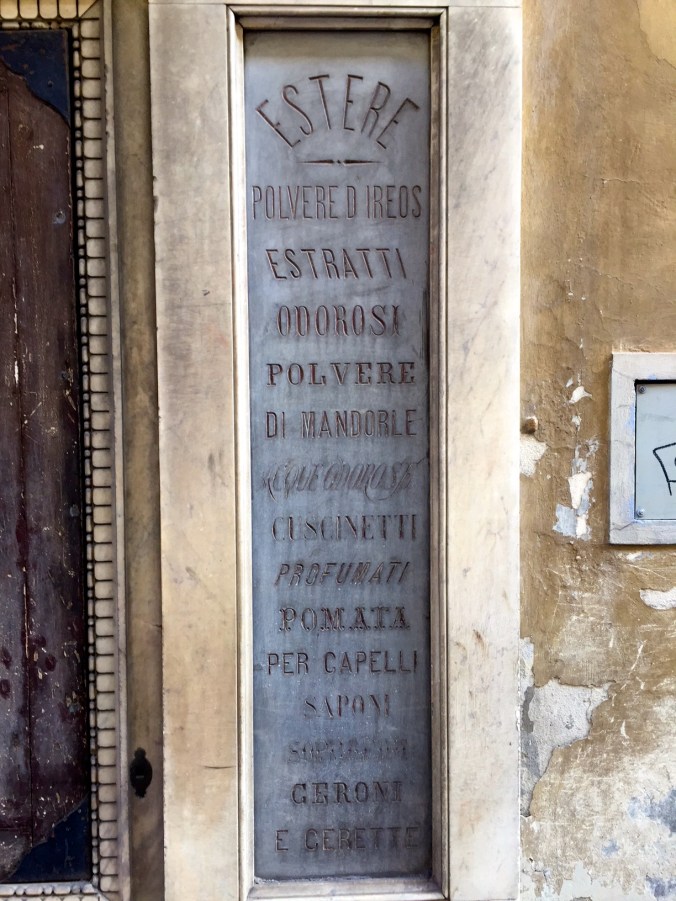
If you can, like I can, picture how this pharmacy must have seemed when these engraved stone tablets were new, then let your mind wander back in time.
The following info on the farmacia comes from: http://socialdesignzine.aiap.it/topografie/9172
The Ancient Pharmacy of San Marco was established by friar Antonino, with the generous support of Cosimo de ‘Medici, called il Vecchio, during the reconstruction of the San Marco complex in 1435. From 1450 the pharmacy, whose production was initially reserved for use inside the convent (monastery), was open to the public. The stone lintel of the ancient entrance, is one of the oldest examples of commercial signage with the logo “Fonderia: e: S. Marco pharmacy”, with a minimalist setting in a beautiful pre-humanistic character characterized by broken bar of A.
Among the most famous productions of the pharmacy was an alchermes, particularly appreciated by Lorenzo the Magnificent, and antihysteric water. In 1498 the stomatologic elixir, the Dominican liqueur, the herbal tea, elastin and Scots pine syrup were created.
Then rose water from 1700, about which the Dominicans wrote: <<Thanks to the peculiarity of the singular Rose of Bulgaria, from which it is directly distilled, rose water is miraculous to delay the sad prodromes of old age: wrinkles. Warmed up in a bain-marie, it will restore tiredness and vivacity to your eyes ».
Later, absinthe and the “Bolivian” coca were included among the specialties of the pharmacy. (If this writer is correct, then my assumption about Coca Cola is incorrect.) The pharmacy was closed in 1995.
The series of gray marble signs of the mid-19th century that surround the entrances give account of the many products of the pharmacy with a composition that incorporates a real typographic sample with graceful, linear, Tuscan, italics and ornate characters.
ADVISEMENT: THIS POST IS UNDER CONSTRUCTION. IT MAKES LITTLE SENSE NOW, I’LL REPOST IT WHEN IT IS FINISHED. GRAZIE!
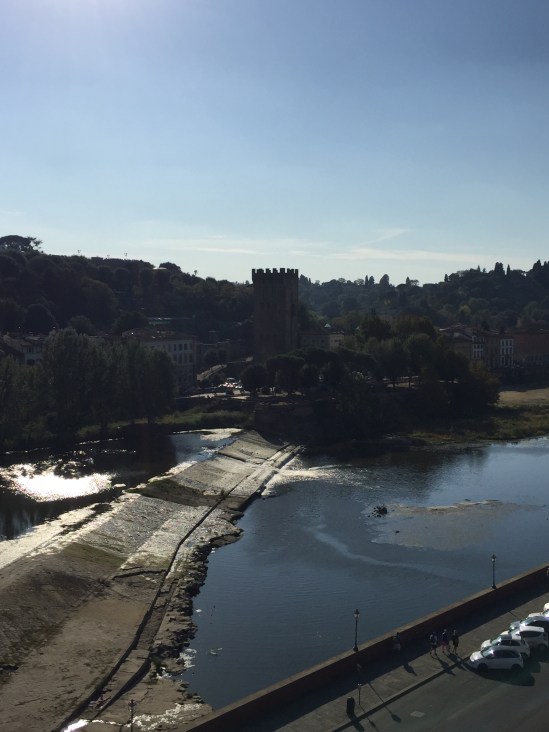
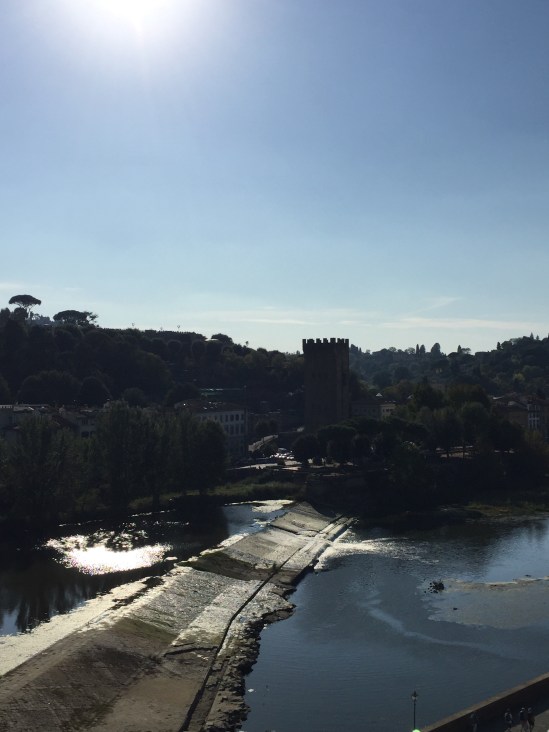
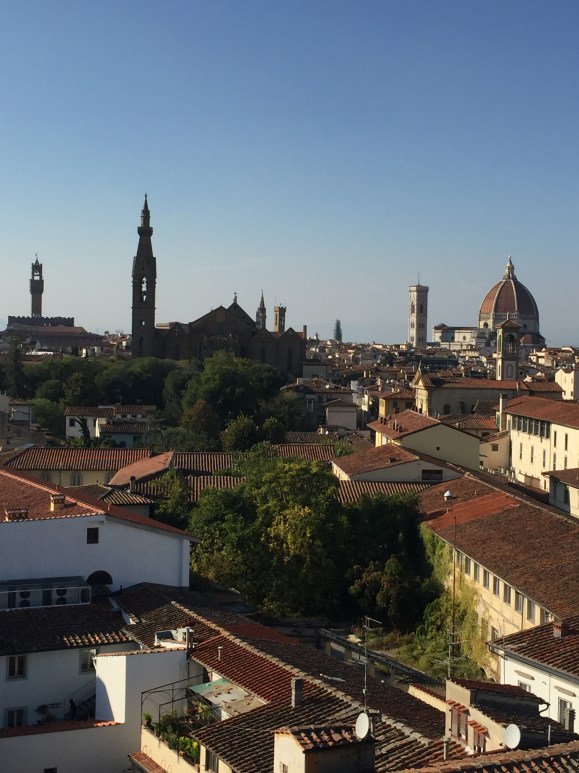
On a perfect autumn Saturday in Florence (20 Ottobre to be exact), I had the immense pleasure of climbing up inside La Torre della Zecca, located next to the Arno river and near the San Niccolo bridge. From the top of the tower, I filmed Florence in all its 360 degree glory!
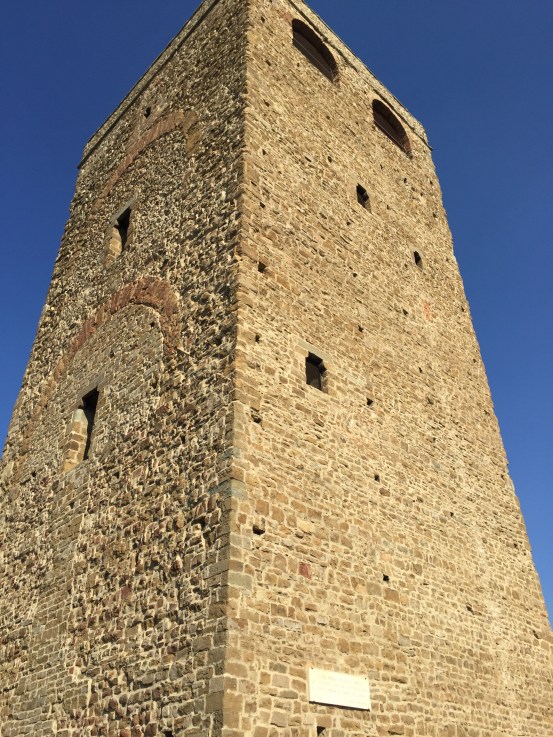
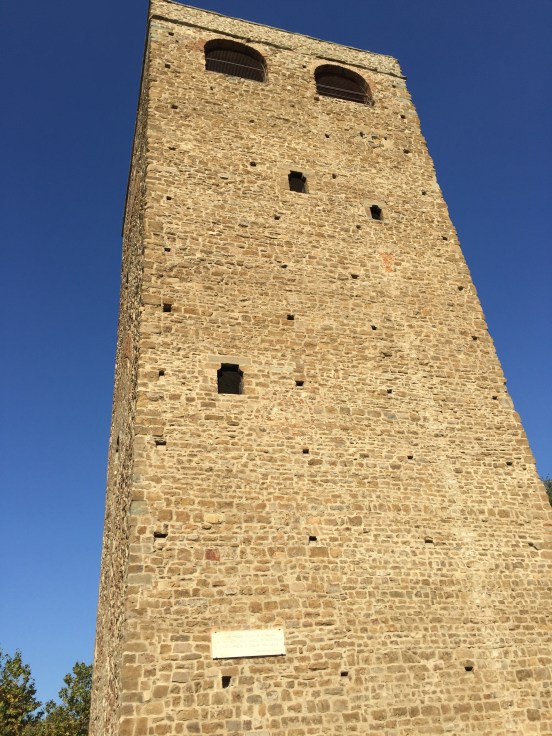
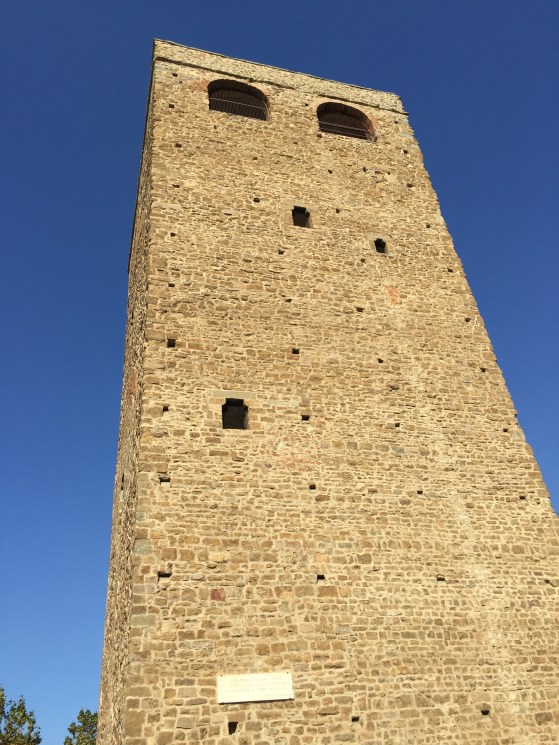
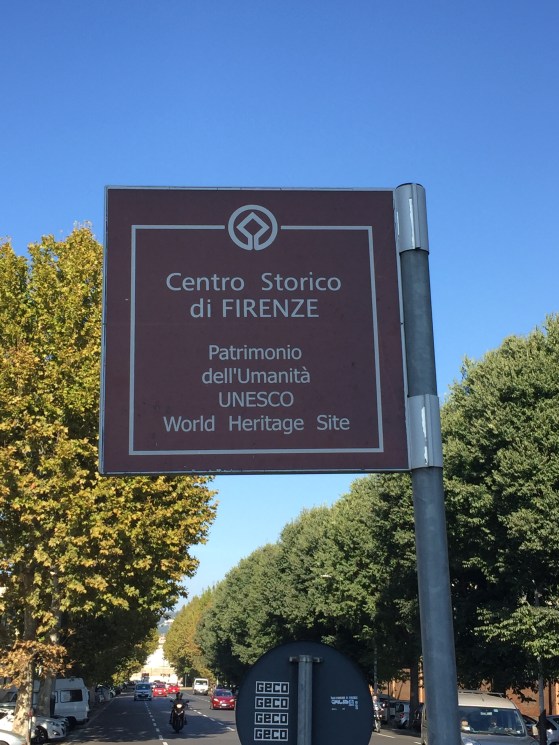
La Torre della Zecca (Mint Tower) was built as the gate to the medieval city. This monumental tower served to close the city off from the river Arno to the east and was thus known as a torre terminale. It is now lies isolated in the middle of a junction on the viali di Circonvallazione in Piazza Piave, near the Lungarno della Zecca Vecchia.
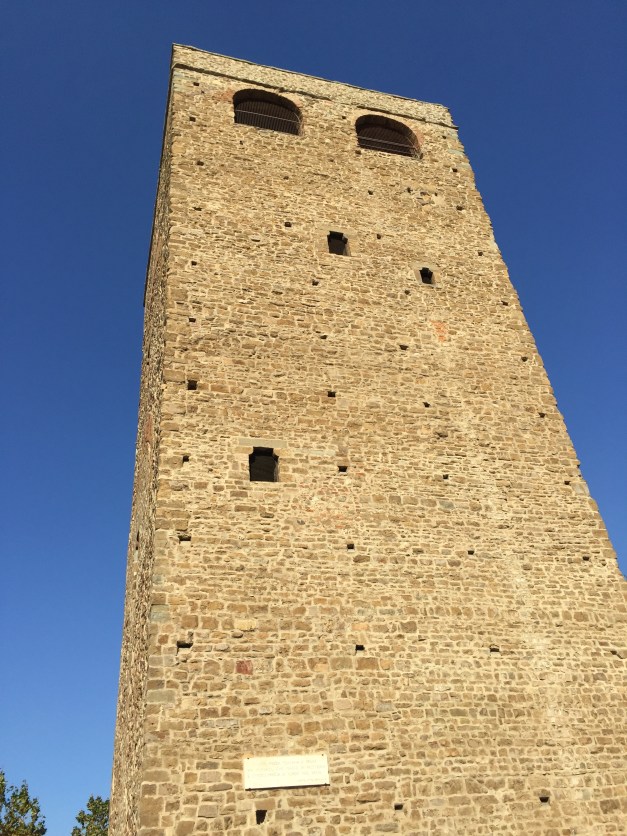
Above and below is how the Torre appears today.
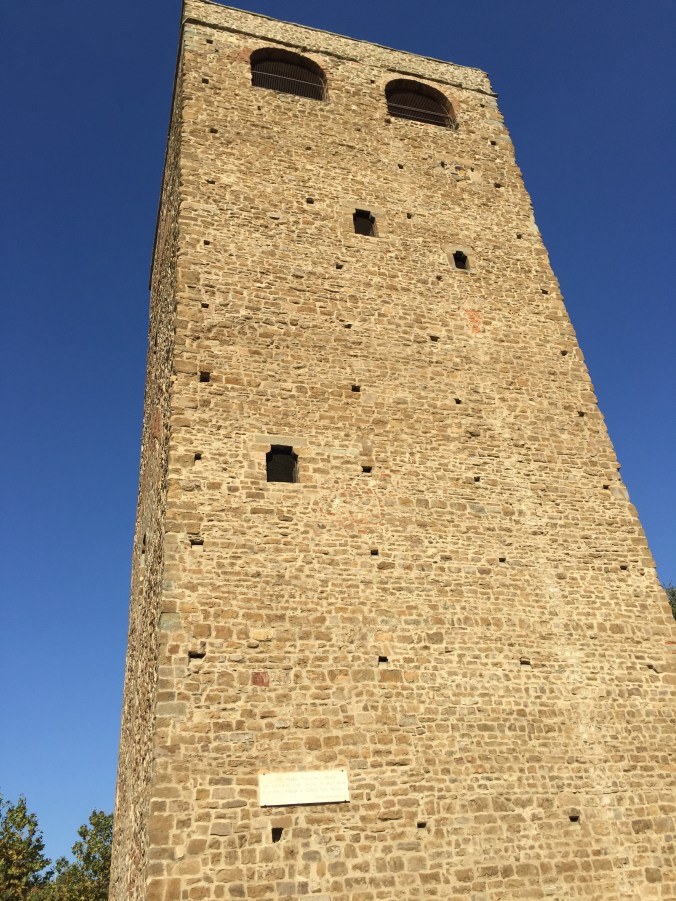
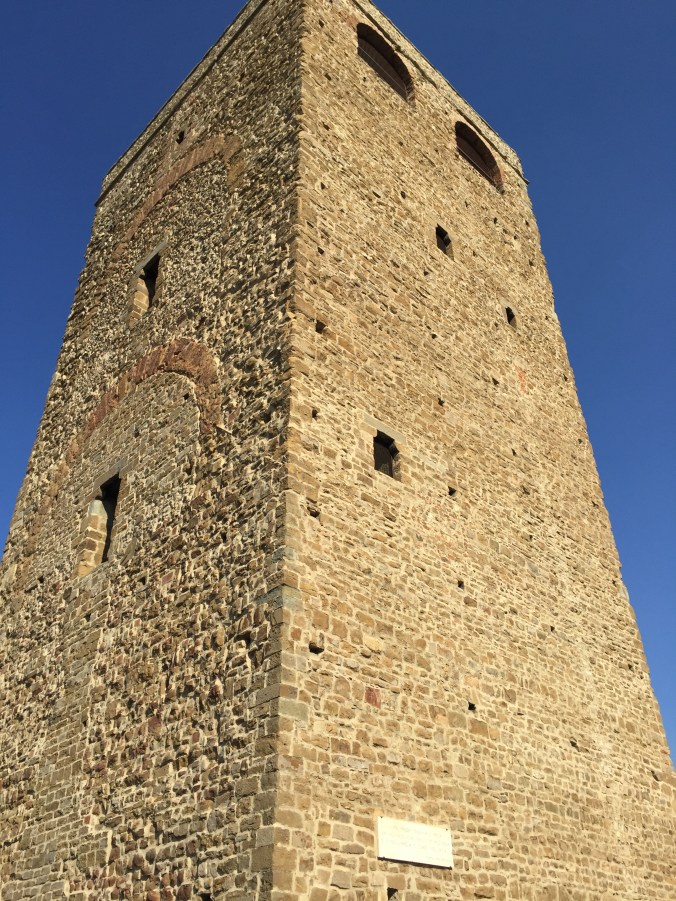
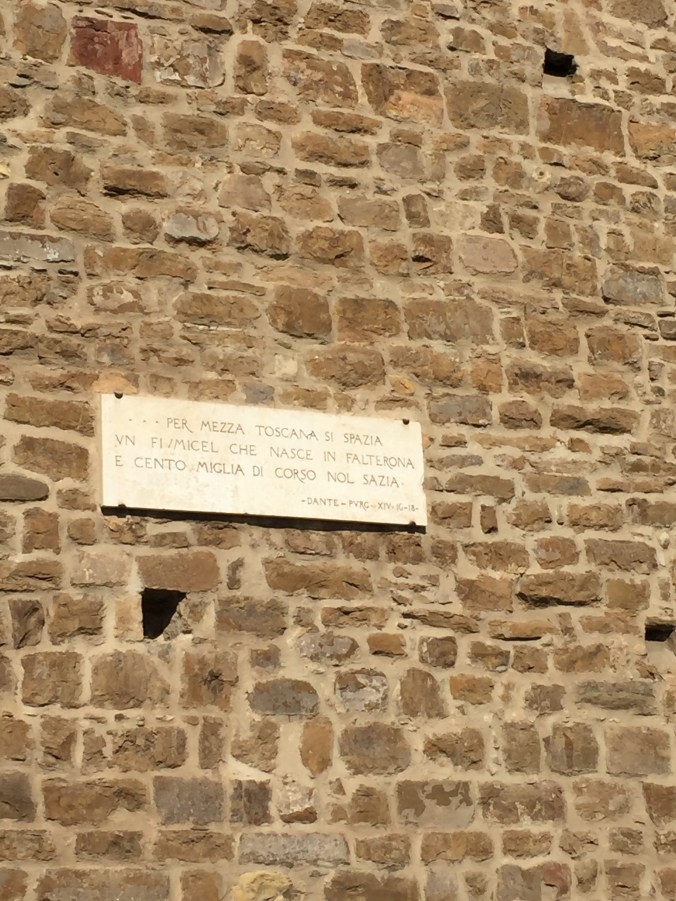
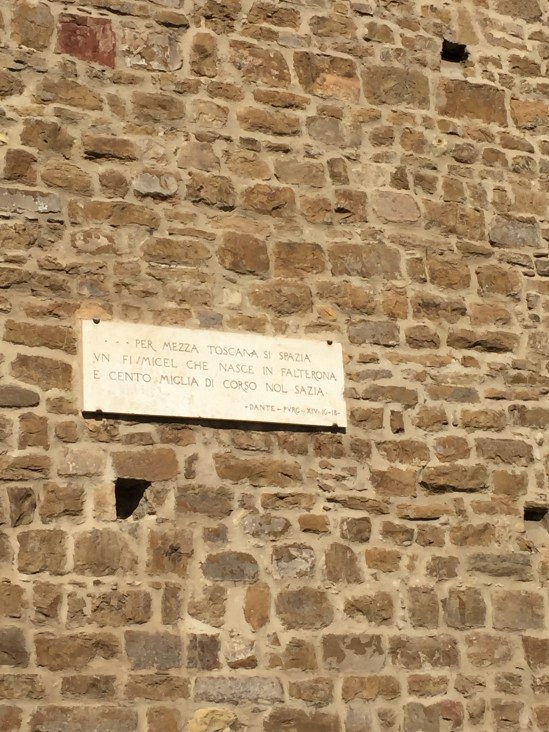
It has its own Dante inscription on a plaque.
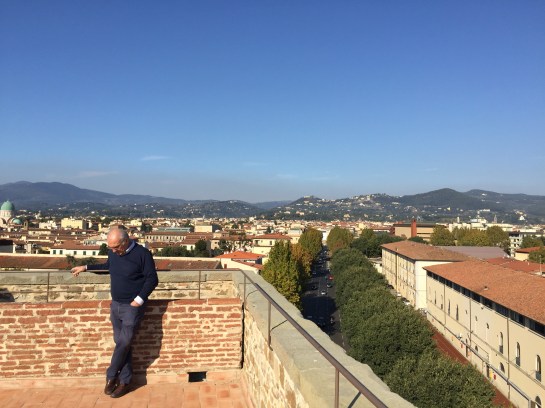
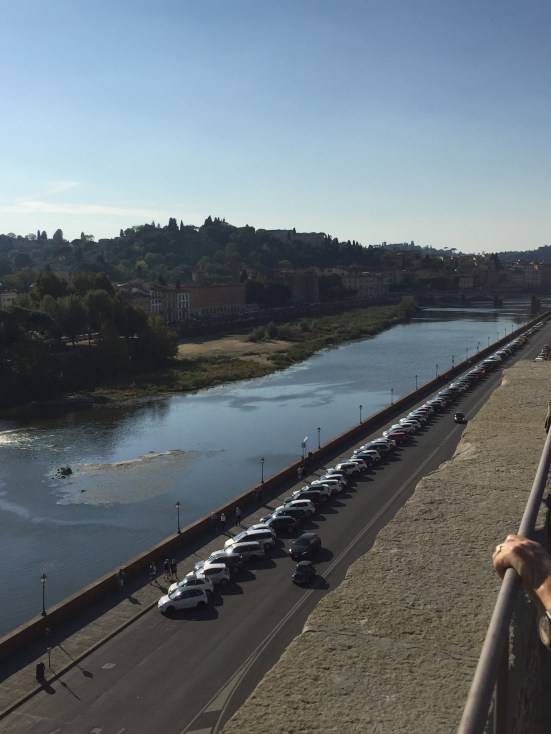
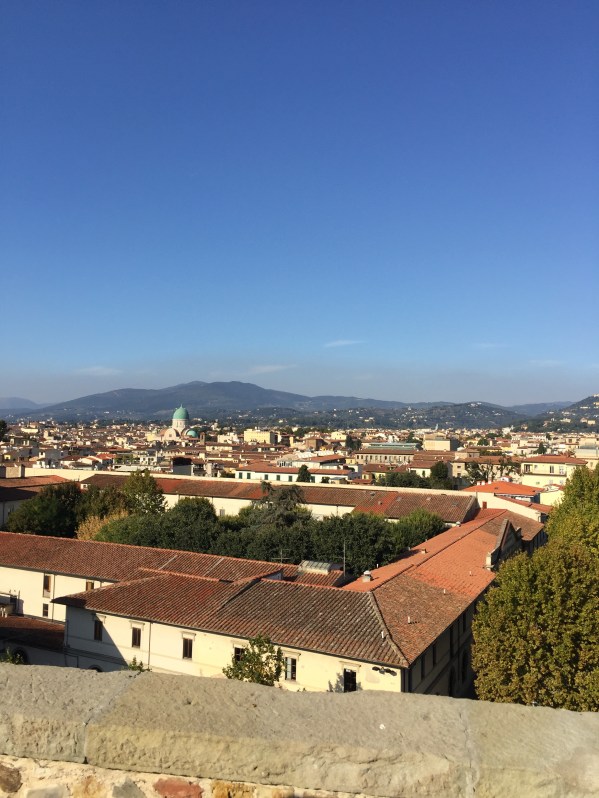
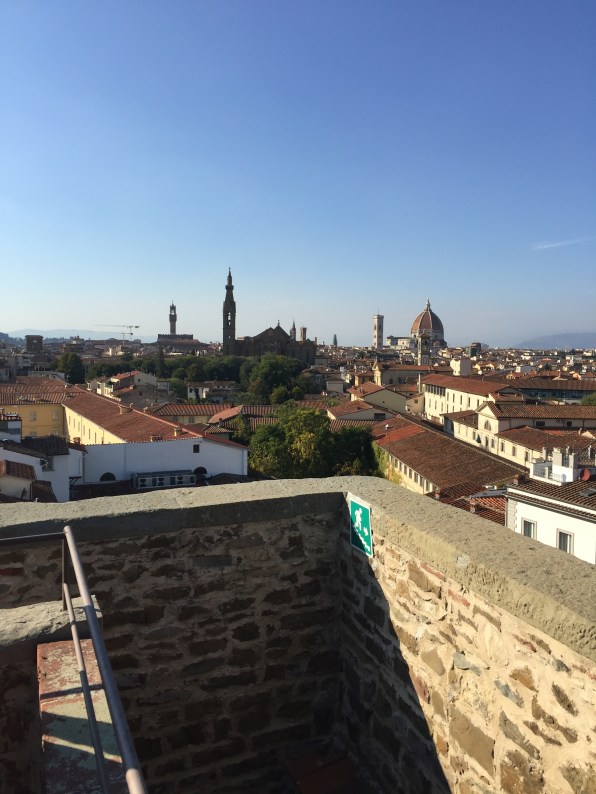
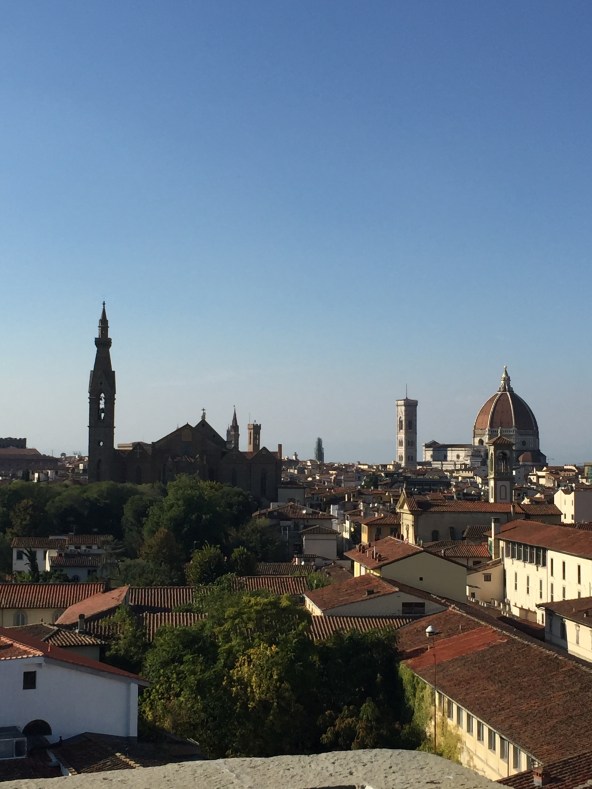
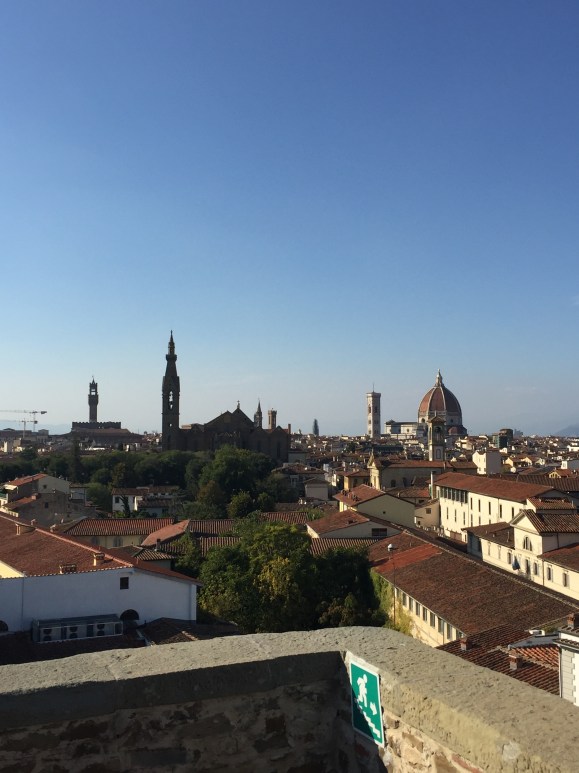
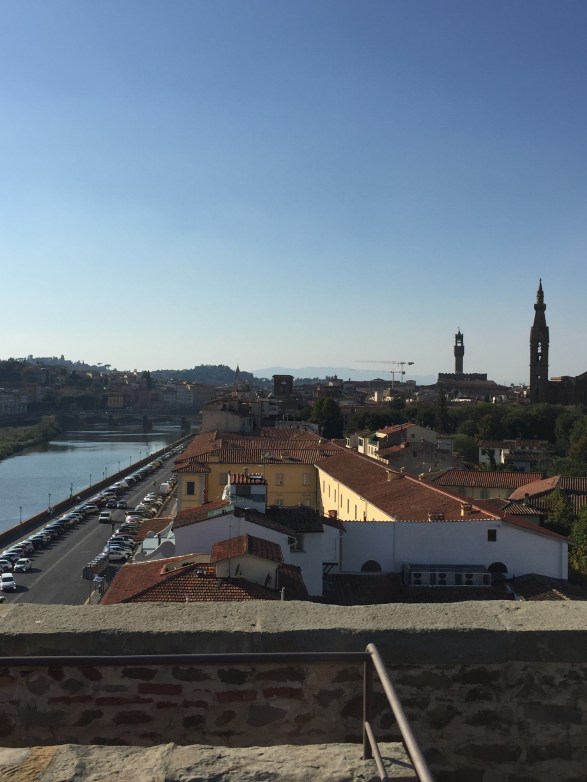
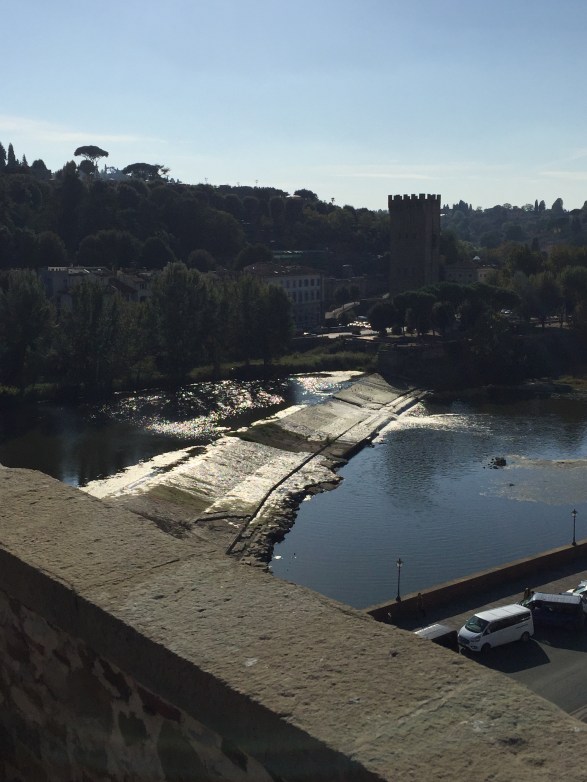
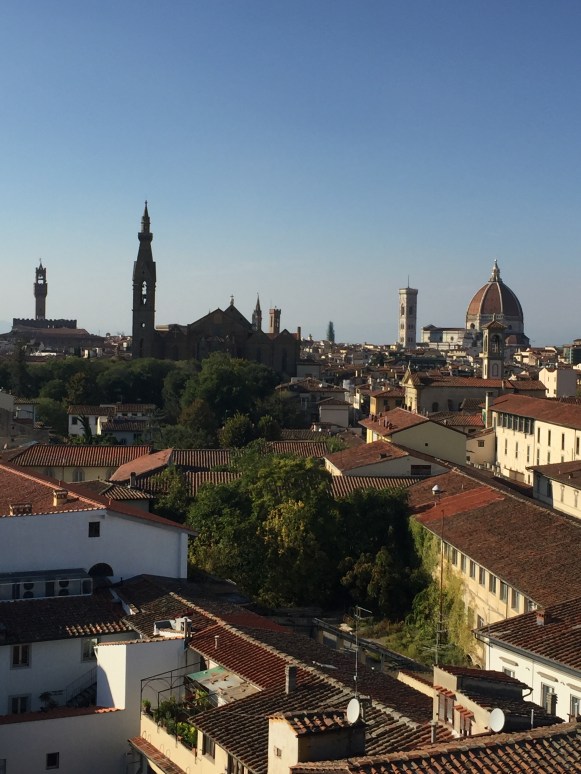
The views from the top of the tower are magnificent!
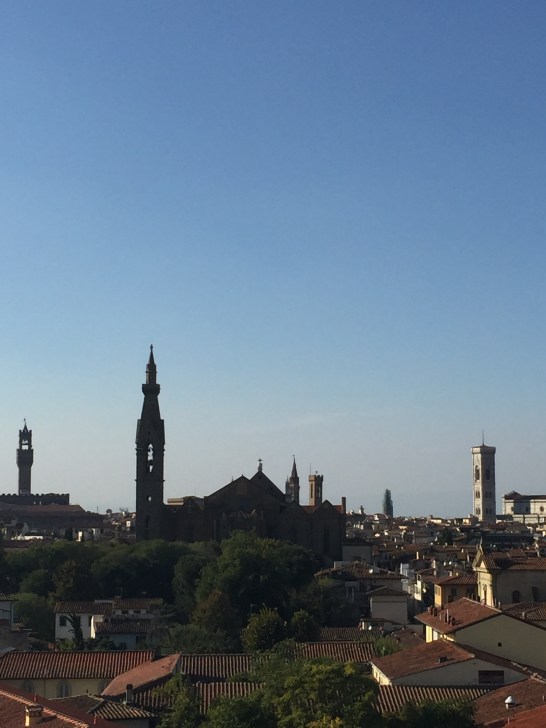
You’ve never seen Santa Croce from the back like this unless you too climbed up this tower.

From Italian wikipedia we discover: Prima dell’edificazione, nelle immediate vicinanze, dei mulini della zecca, la struttura era indicata come torre della notomia, o torre dell’osservazione. Ai primi del Cinquecento, l’edificio era anche conosciuto come torre di San Francesco, data la vicinanza dell’omonimo convento e ospedale.
Loosely translated, this says: Before construction, in the immediate vicinity of the mint mills, the structure was referred to as a tower of the notomia, or observation tower. In the early 16th century, the building was also known as the Tower of San Francesco, because it was close to a convent and hospital bearing that name.
Looking south, I spied the Piazzale Michelangelo, with the monumental bronze replica of Michelangelo’s David. You can make it out in the next 2 photos.
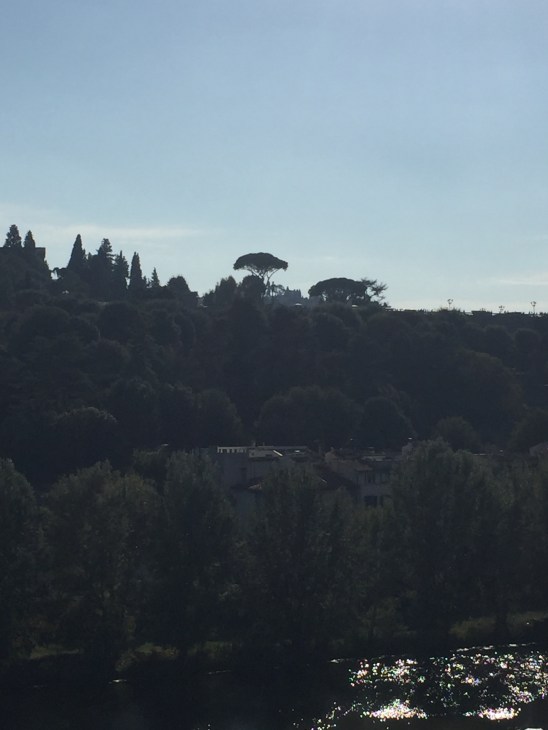
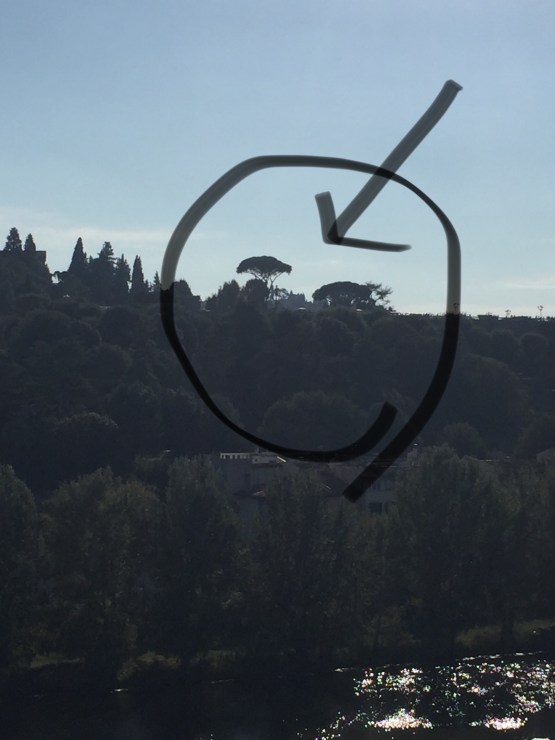
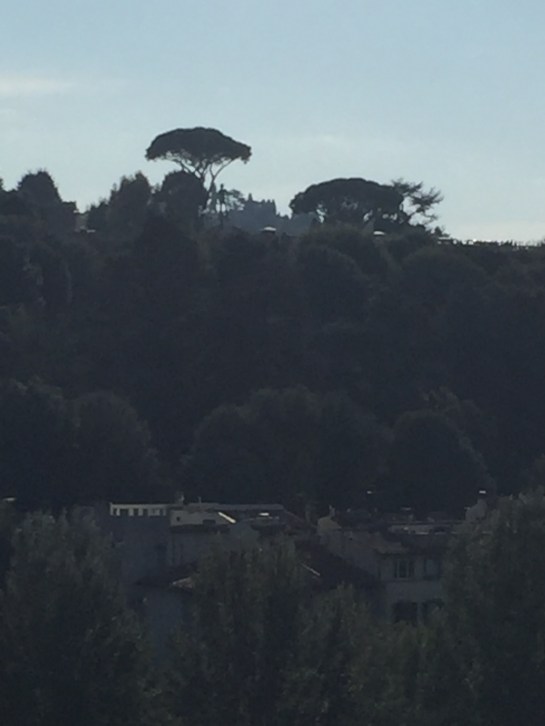
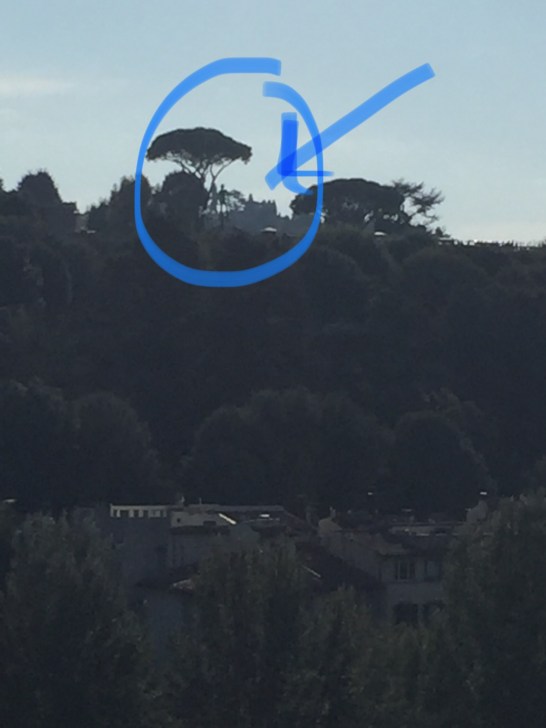
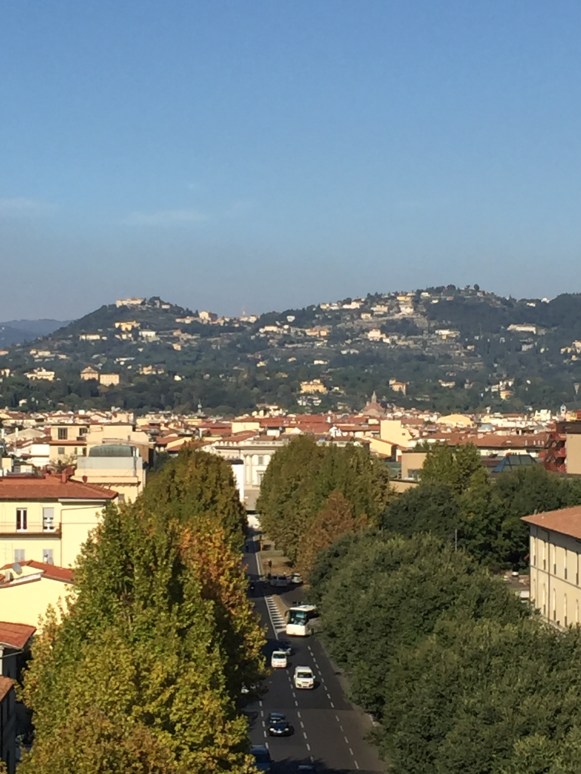
Looking southeast:
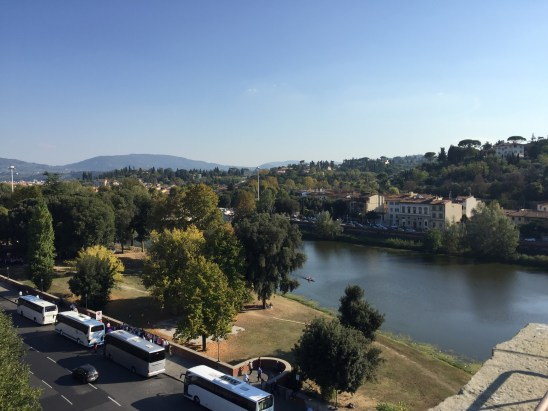
Here is Fiesole in the background:

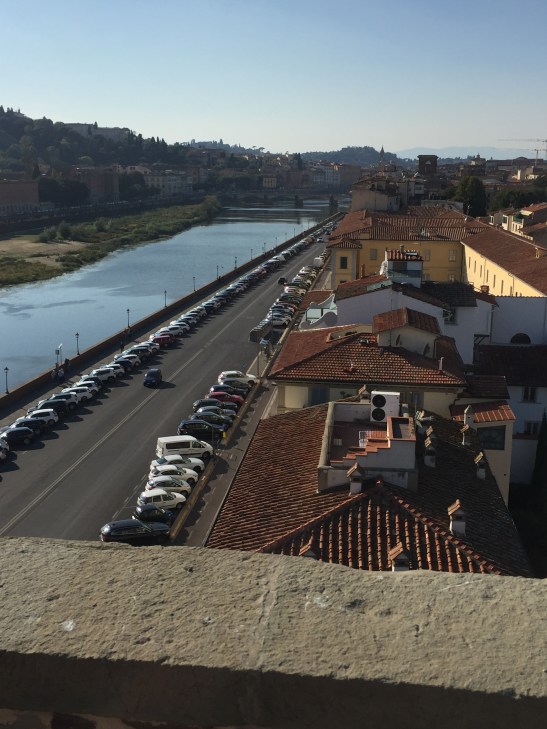
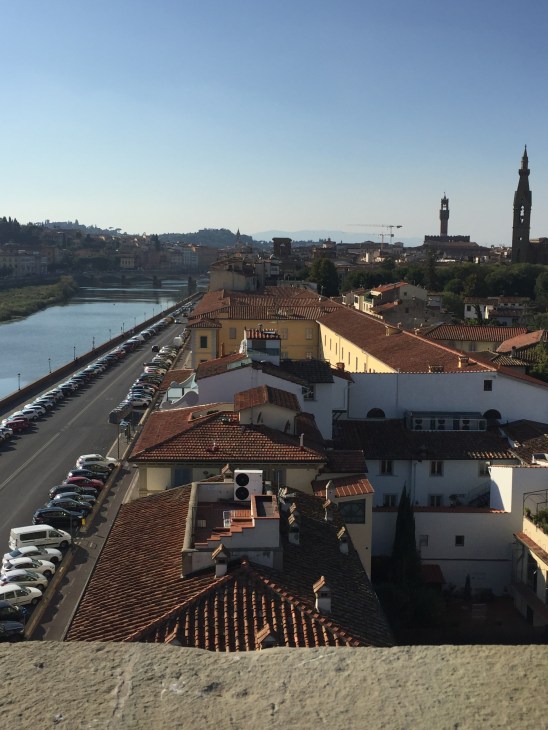
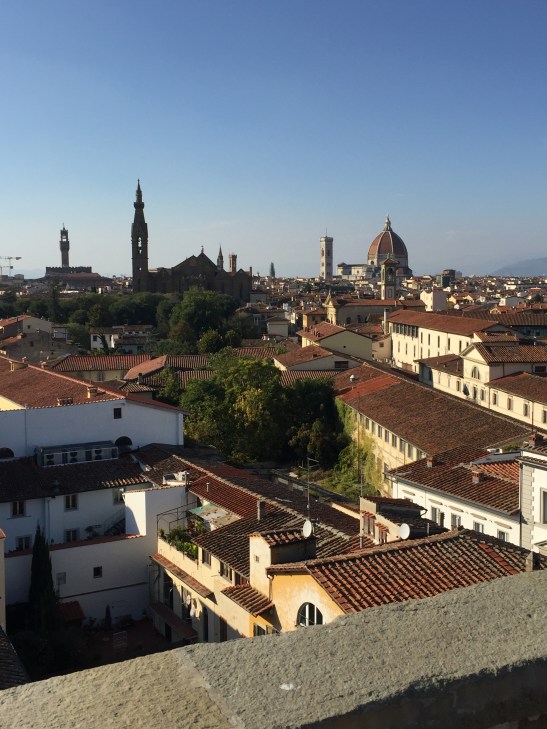
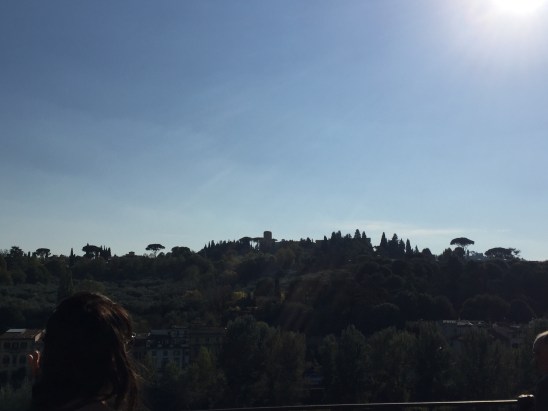
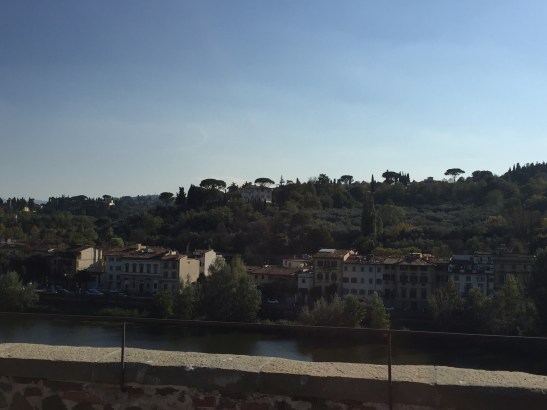
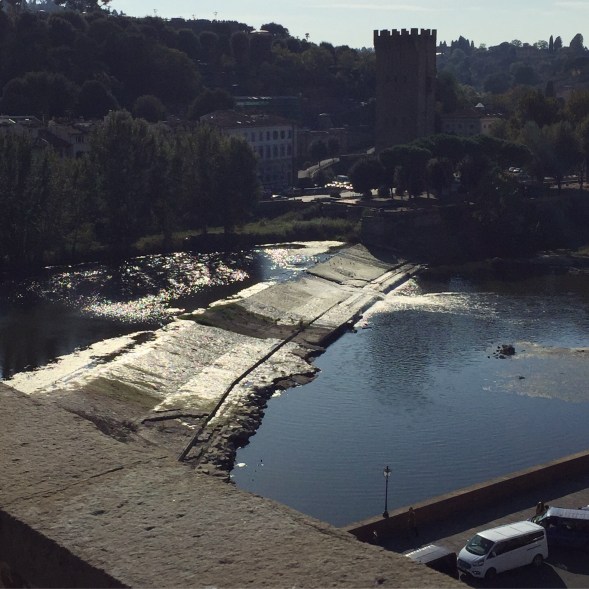
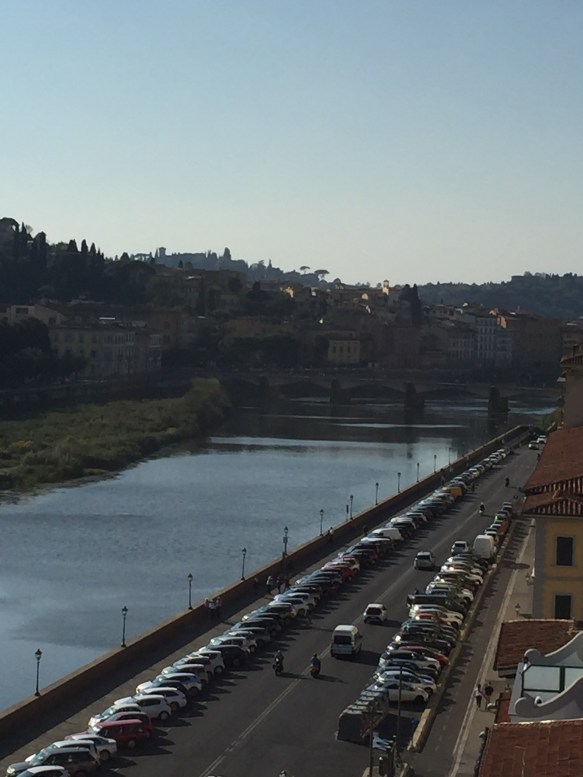
La Porta di San Niccolò, across the Arno, has never looked more beautiful than how she looks from the Torre della Zecca!




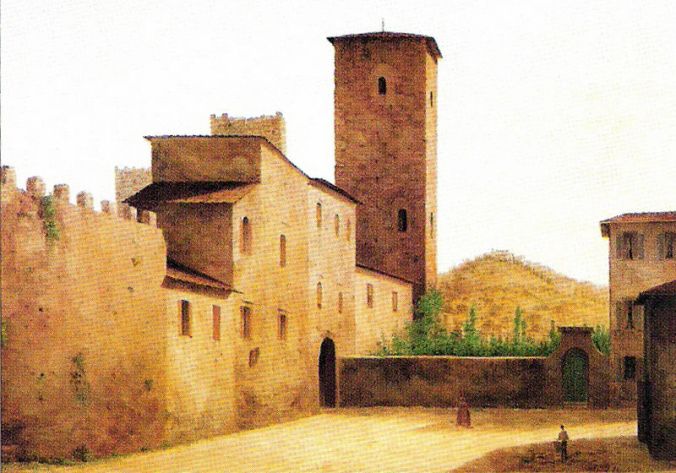 La torre prima della demolizione delle mura, dipinta da Fabio Borbottoni nell’Ottocento

La torre fu eretta a protezione del mai eseguito ponte Reale (progettato negli anni precedenti alla disastrosa alluvione del 1333, e così intitolato in onore di Roberto d’Angiò) e a difesa della parte della cerchia di mura che insisteva in questo tratto, a costituirne il termine sull’Arno. In origine, la torre doveva essere posta proprio sull’argine del fiume, come testimoniato anche dalla quattrocentesca mappa della Catena, dalla cinquecentesca pianta del Buonsignori e dall’ottocentesco catasto generale lorenese.
The tower was erected to protect of the never built ponte Reale (projected in the years preceding the disastrous flood of 1333 and named in honour of Robert of Angio) and to defend some parts of the wall che was built in this quarter, to construct the end of the walls on the Arno.
In origins, the tower had to be part of the argine of the river, as a testament also of the 1400s map of the Catena, from the 1500s plan of Buonsignori e of the 1800s Lorena General Catasto
In età laurenziana, la torre della notomia costituiva, insieme all’adiacente torre della giustizia, una delle due torri della munizione della Repubblica Fiorentina. L’arsenale ospitava armi, attrezzi, ma soprattutto esplosivi: la polvere da sparo era depositata nella stanza più alta, mentre l’umidità dei sotterranei concorreva alla conservazione del salnitro. Fra il 1495 ed il 1498, i magazzini vennero ulteriormente ampliati con l’aggiunta di una rimessa per le artiglierie e di una fonderia pubblica. Questo intero, articolato complesso formava la cosiddetta cittadella vecchia, quell’arce notomiae che sbarrava, insieme alla pescaia di San Niccolò, il passaggio sul fiume.[1]
In the Laurentian age, the tower of the terminus was built, together with the adjacent tower of justice, one of the 2 towers of the munition of the Florentine Republic. The Arsenale hosted the army, tools (machinery), but above all explosives: gunpowder was store in the highest room, while the humid of the underground contributed to the conservation of the saltpeter.
Between 1495 and 1498, the storage was amplified with the addition of a garage for artillery and a public foundry. This whole complex formed the so-called old citadel, that notorious arcs that barred, along with the fishery of San Niccolò, the passage on the river.
Nel 1526, l’ingegnere militare spagnolo Pietro Navarro propose che la torre “si abbasse et ingrossasse”, come riportato anche da Niccolò Machiavelli in una sua relazione sullo stato delle fortificazioni della città. Nel 1532, scapitozzata, fu incorporata su progetto di Antonio da Sangallo il Giovane nel baluardo di Mongibello, un bastione a sua volta collegato a gore, mulini e ad altri edifici che formavano in questa zona un tipico agglomerato. Tale progetto era stato voluto dal nuovo duca, Alessandro de’ Medici, per migliorare le difese della capitale, dopo il rischioso episodio dell’assedio di Firenze.
In 1526, the military engineer, the spaniard Pietro Navarro propose that the tower “get down and get bigger” as reported by Machiavelli in his reaction on the state of the fortifications of the city.
In 1532, scapitozzata, was incorporated on a project by Antonio da Sangallo the Younger in the bulwark of Mongibello, a bastion of his bastion in turn connected to gore mills and other buildings that formed a typical cluster in this area. This project was wanted by the new duke, Alessandro de ‘Medici, to improve the defences of the capital, after the risky episode of the siege of Florence.
Con l’arsenale trasferito nella fortezza da Basso, nella seconda metà del Cinquecento la torre rimase a protezione dei vicini mulini della zecca nuova, da poco aperti, e dai quali finì per prendere il nome. Fino ad allora, l’officina era stata sita nei pressi di Palazzo Vecchio, più precisamente sotto la loggia della Signoria, lì dove i magli del conio potevano essere azionati dall’acqua del torrente Scheraggio, che correva lungo via della Ninna.
With the arsenal moved to the fortress da Basso, in the second half of the 1500s, the tower remained a protection of the nearby mills of the new mint, a little open, and gave it its name. Finally, the office was sited near the Palazzo Vecchio, more precisely under the Loggia of the Signoria; it was there where the coins of the coin could be operated by the water of the stream Scheraggio, which ran along Via della Ninna.
Verso la fine del Settecento, l’architetto Gaspare Paoletti realizzò sulla sommità della torre un complesso sistema idrico che alimentava le fontane dei giardini di villa La Mattonaia, raccogliendo le acque del fiume e convogliandole in una lunga tubatura dislocata sulle antiche mura.
Nel corso dei lavori di ingrandimento della città di Firenze, progettati da Giuseppe Poggi, la torre fu isolata e posta a traguardo dei viali di Circonvallazione, mentre nella zona venivano condotti numerosi espropri sulla base delle perizie redatte da Felice Francolini nel 1868. Nel 1901, la torre appariva nell’elenco redatto dalla Direzione Generale delle Antichità e Belle Arti, venendo indicata quale edificio monumentale da considerare patrimonio artistico nazionale.
Finally at the end of the 1700s, architect Gaspare Paoletti realised on the summit of the tower a complex system water supply that fed the fountains of the Villa La Mattonaia gardens, collecting the waters of the river and conveying them in a long pipe spread over the ancient walls.
Curing the course of work for the expanding city, projected by Giuseppe Poggi, the tower was made more isolated and placed at the end of the avenues of the Circonvallazione, while numerous expropriations were carried out in the area on the basis of the surveys drawn up by Felice Francolini in 1868.In 1901, the tower appeared in the list drawn up by the Directorate General of Antiquities and Fine Arts, being indicated as a monumental building to be considered a national artistic heritage.
Alla metà del Novecento, alcuni ambienti furono occupati da un circolo ricreativo per alcuni anni.
In the mid 1900s, some circles were occupied by a recreational club for a few years.
Descrizione[modifica | modifica wikitesto]
La lapide dantesca. The Dante inscription
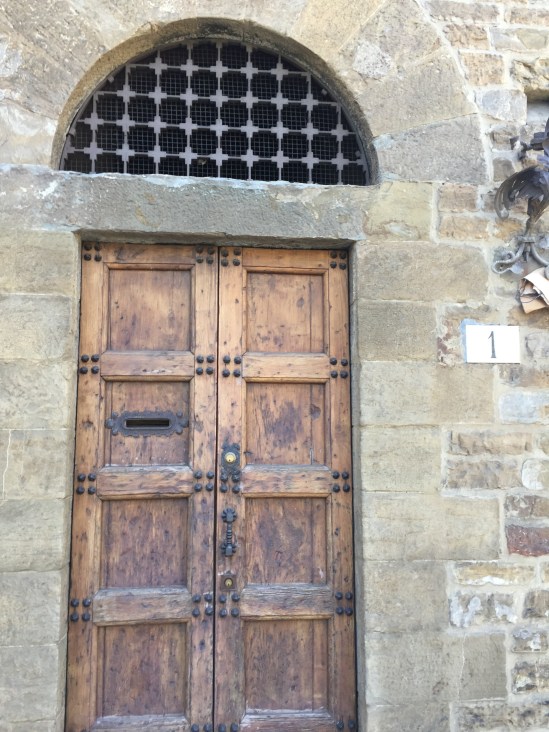
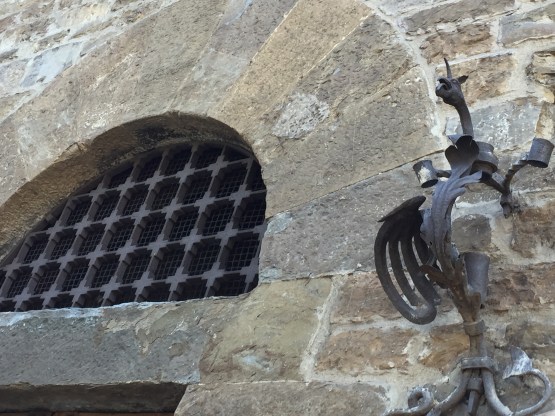
All’esterno la torre si presenta semplice e massiccia, con alcune piccole feritoie, e priva del coronamento merlato. Sul lato che guarda alla città è la porta d’accesso, con al lato un portabandiera in ferro di fattura novecentesca, mentre sul lato che prospetta verso l’Arno è posta una targa con alcuni versi di Dante dedicati al fiume.
Outside the tower is simple and massive, with some small iron loopholes, and lacks a crenellated crowning. On the side that looks to the city is the access dore, on the side an iron flag holder from of the 20th century, while on the side facing the Arno is a plaque with some verses of Dante dedicated to the river.
Rimosso da tempo il tetto cinquecentesco, l’ultimo piano dell’edificio presenta un’ampia terrazza, dalla quale si gode il panorama dell’intera città.
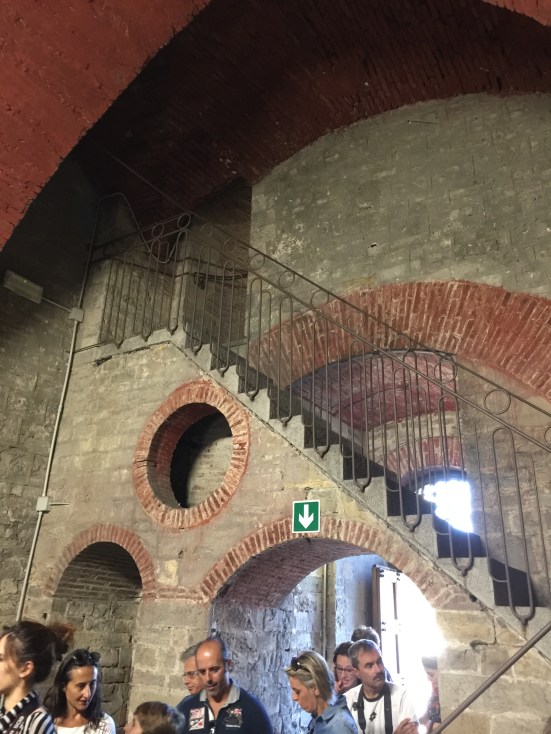
All’interno sono presenti ambienti voltati, connessi da strette scale in pietra, un tempo ad uso dei custodi dell’arsenale. Nei piani sotterranei si dipartono stretti corridoi fognari, anch’essi coperti da volte, uno dei quali passerebbe, secondo la tradizione, sotto il fiume, consentendo di raggiungere la sponda opposta. Del vecchio circolo ricreativo resta un bancone in pietra abbandonato.
La torre, restaurata fra il 2013 ed il 2016, è oggi aperta al pubblico.[2]
The 16th century roof has been removed for some time, the top floor of the building has a large terrace, from which one can enjoy the view of the entire city.
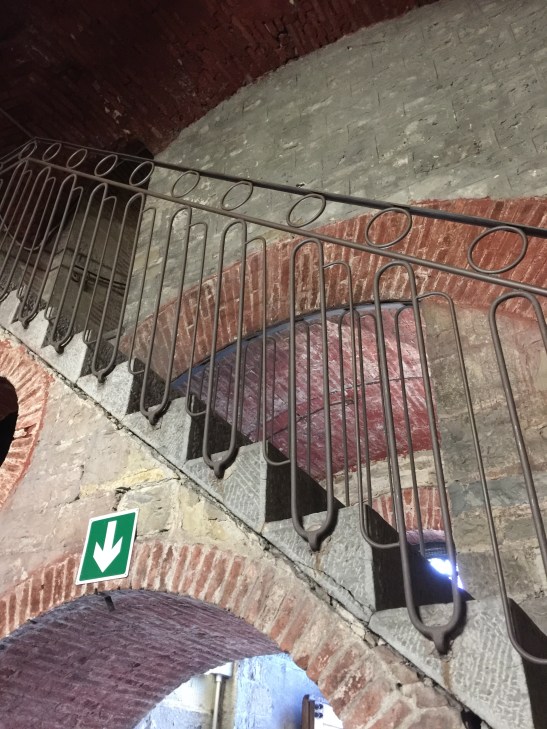
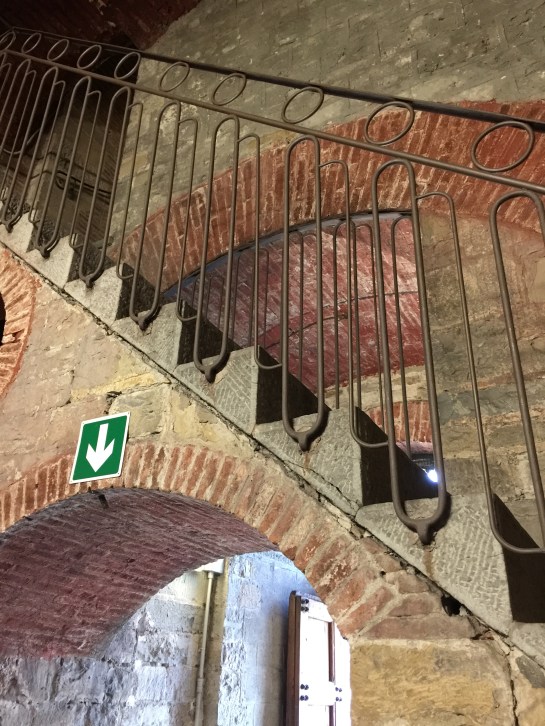
Inside there are vaulted rooms, connected by narrow stone stairs, once used by the arsenal custodians. In the underground floors, narrow sewage corridors, also covered by vaults, one of which would pass, according to tradition, under the river, allowing you to reach the opposite bank. Of the old recreational club there is an abandoned stone counter.
The tower, restored between 2013 and 2016, is now open to the public.
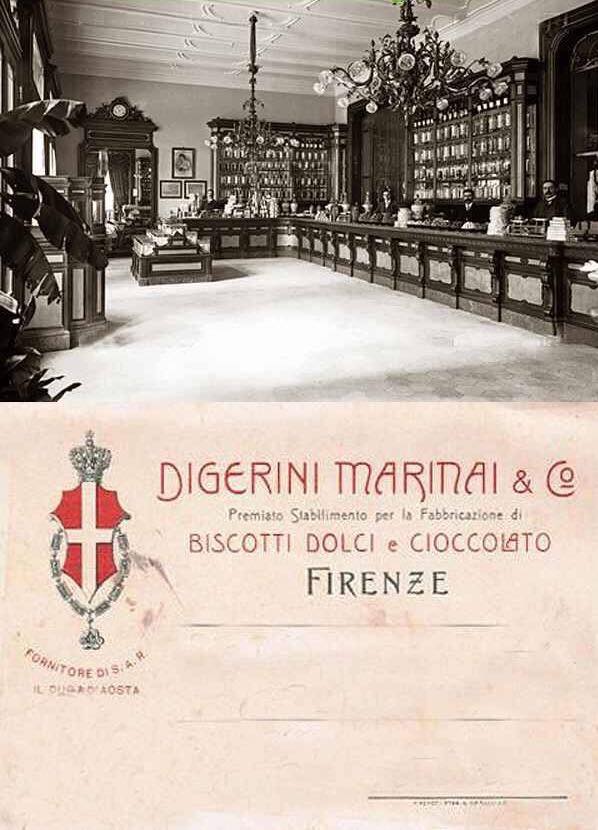
Il negozio di pasticceria Digerini e Marinai in via Vecchietti e uno dei tanti biglietti pubblicitari, a Firenze nel 1901.
…drift by my window, the autumn leaves of red and gold. But I’ll miss you most of all..


You must be logged in to post a comment.