When told she’s become “a star, ” because of this picture, the little girl said, “no, I’m a big girl.” She’s 3 and she thinks MO is a queen. I think she’s right.
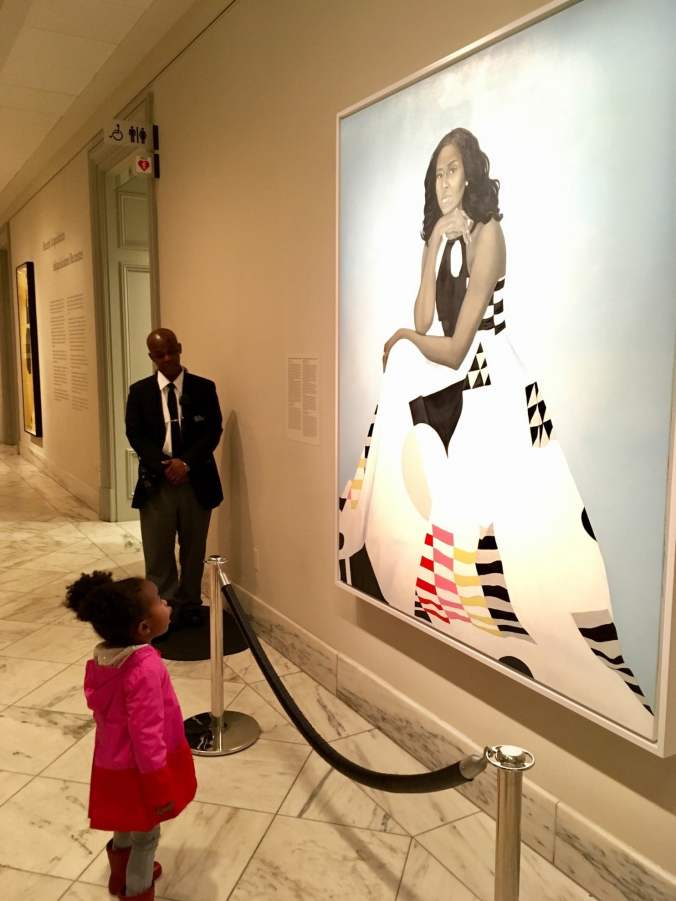
When told she’s become “a star, ” because of this picture, the little girl said, “no, I’m a big girl.” She’s 3 and she thinks MO is a queen. I think she’s right.
The analysis of the interior of the human body by dissection was one of the most extraordinary steps forward in knowledge taken in that supposedly backward era, the Middle Ages. The historian of medieval science James Hannam has described it as ‘one of the most surprising events in the history of natural science’.
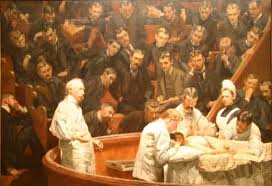 Thomas Eakins, 1889
There had been a powerful taboo against the cutting up and examination of dead bodies in almost every previous culture.
Classical knowledge of anatomy, as laid out in the writings of the ancient medical authority Galen, was largely based on the examination of dead animals, particularly pigs and apes.
Neither Roman nor Islamic regulations allowed the dissection of human corpses. Like several of the innovations that shaped modern life, this began in medieval Italy. (The invention of spectacles is another example.)
The first recorded dissections took place in the medical faculty of the great University at Bologna in the early fourteenth century. The teacher would expound from a lectern while assistants sliced up the cadaver of an executed criminal and the audience looked on from benches around.
This was probably the kind of dissection that Ghiberti advised artists to attend. The dissections that Michelangelo told Condivi about were clearly private, ad hoc affairs in which the artist was not just an observer but an active investigator. Michelangelo was one of the first artists to do this, but there was a precedent.
According to Vasari, Antonio del Pollaiuolo ‘understood about painting nudes in a way more modern than that of previous masters, and he dissected many bodies to view their anatomy’.
However, getting the necessary specimens – dead bodies that no one minded being cut up – was far from easy. Even a celebrated anatomist such as Andreas Vesalius (1514– 64), half a century later, admitted to resorting to grave-robbing, quickly flaying the skin off a dead woman so her relatives wouldn’t be able to recognize her, and – in a particularly macabre scientific mission – at dusk secretly retrieving the singed limbs of a criminal who had been burnt at the stake.
Gayford, Martin. Michelangelo: His Epic Life (p. 153). Penguin Books Ltd. Kindle Edition.
For his part, Girolama Savonarola was very soon (in 1498) to be walking towards death. In March his support collapsed after an awkward failure.

The Franciscans of Santa Croce challenged Savonarola’s Dominicans to an ordeal by fire, to discover which was truly favoured by God. It ended on 6 April in a stand-off.
An elaborate raised structure, packed with brushwood and soaked in pitch, oil and gunpowder, was set up in front of the Palazzo della Signoria.
An assistant of Savonarola, Fra Domenico da Pescia, had volunteered to pass through this fiery passage, but the Franciscans made a series of objections to the arrangements and, eventually, it began raining.
The result was that nobody walked through the flames, but Savonarola was the loser.
The Florentines had expected a miracle, and no miracle was forthcoming.
The next day, the convent of San Marco was besieged; Savonarola and his lieutenants were taken prisoner. He was tortured, forced to confess to being a liar and a fraud, recanted, was tortured again and finally hanged with two of his companions on 23 May.
Their bodies were then burnt and Savonarola’s ashes scattered to prevent his relics becoming the focus of a cult.
That stratagem did not work. The friar’s death was the end of an epoch in Florentine history, but the cult of Savonarola was just beginning.
Gayford, Martin. Michelangelo: His Epic Life (p. 142). Penguin Books Ltd. Kindle Edition.

There is a law somewhere that says that when one person is thoroughly smitten with the other, the other must unavoidably be smitten as well.
Amor ch’a null’amato amar perdona. Love, which exempts no one who’s loved from loving, Francesca’s words in the Inferno.
Aciman, André. Call Me by Your Name: A Novel (Kindle Locations 390-393). Farrar, Straus and Giroux. Kindle Edition.



who is fascinated by European supermarkets!
Check out this great article on French yogurt!
there’s a way!
In Italiano, se dice “Volere e’ potere.”

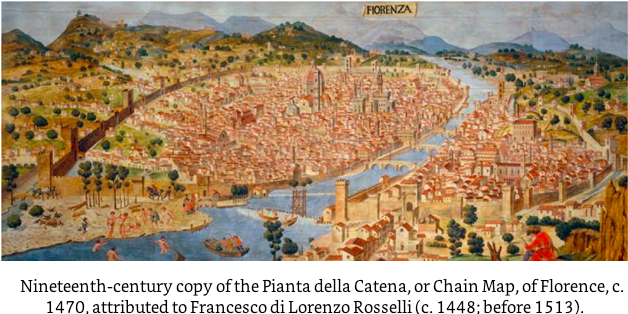
Fifteenth-century Florence was a small place, even by the standards of European cities at that time. We can get a sense of it from a late-fifteenth-century view known as the Veduta della Catena, or Chain Map. It shows a dense concentration of buildings clustering within protective walls on both sides of the river Arno.
The Palazzo Vecchio, major churches and the swelling dome of the cathedral rise above a jumble of streets and houses. Beyond the gates, there are some scattered farms, villas and monasteries; in the distance, a ring of encircling hills. Just outside the walls, young men are seen bathing almost naked in the Arno. At this time Florence contained some 60,000 inhabitants and could be walked across within half an hour. Nonetheless, it was divided into four large subdivisions – the quartiere – and sixteen smaller districts known as gonfaloni, or banners. There were four gonfaloni within each quartiere. Each of these was a little world of densely interconnected relations, friends and neighbours (again, the crucial trio of Florentine parenti, amici, vicini).
Via de’ Bentaccordi is still visible there, a curving street that follows the outer wall of the vanished Roman amphitheatre, the miniature Coliseum of the classical city of Florentia. It is almost a fossil record of the classical building. The street is in the quartiere of Santa Croce and the gonfalone of Lion Nero, the Black Lion. Both of these localities and the people who lived in them continued to be of importance to Michelangelo throughout his life.
Source: Gayford, Martin. Michelangelo: His Epic Life (Kindle Locations 662-668). Penguin Books Ltd. Kindle Edition.


You must be logged in to post a comment.