The Tuscan stripe, Pistoia and beyond

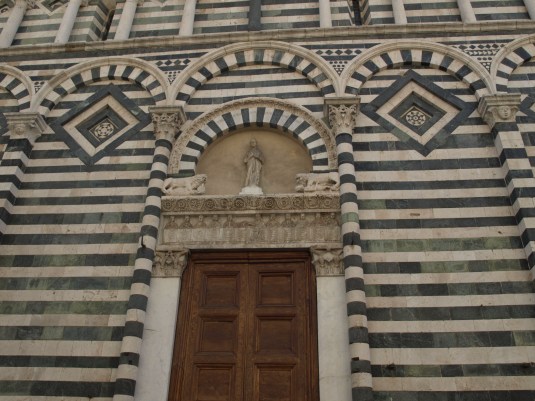
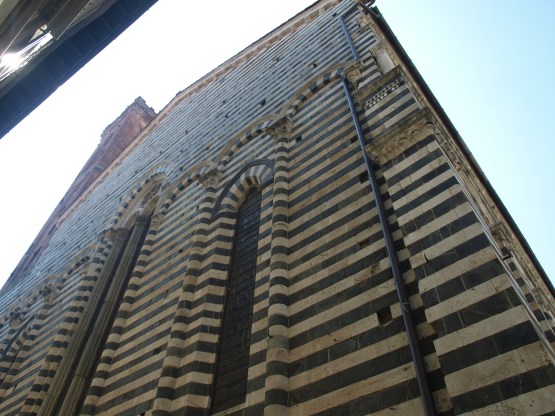
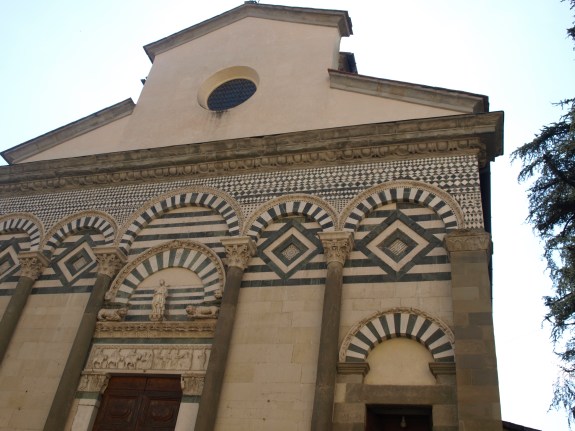
I love the dark green and cream colored striped churches found throughout Tuscany!

This past weekend I went to Pistoia for the first time and look what I saw!
OLYMPUS DIGITAL CAMERA

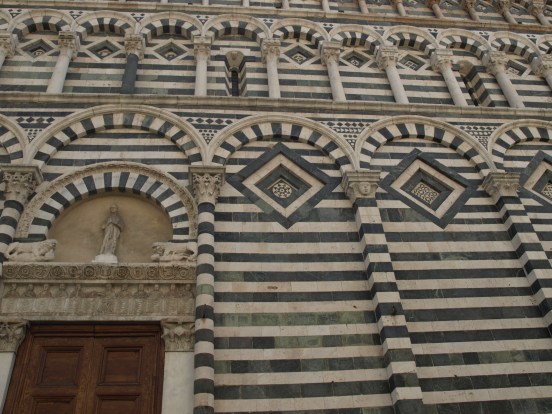
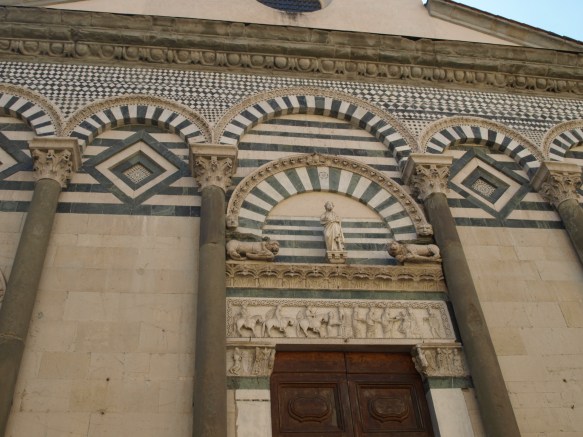
San Giovanni Fuoricivitas

Above and below, the Romanesque church of San Giovanni Fuoricivitas, (12th–14th century)
OLYMPUS DIGITAL CAMERAOLYMPUS DIGITAL CAMERA


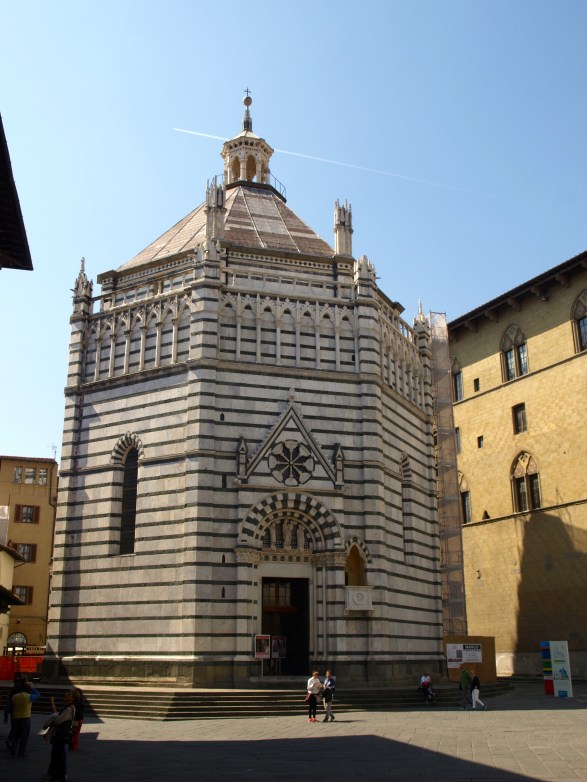
Then there is the Duomo and the beautiful 14th century Baptistry in the Piazza.
OLYMPUS DIGITAL CAMERA

Baptistry, Pistoia


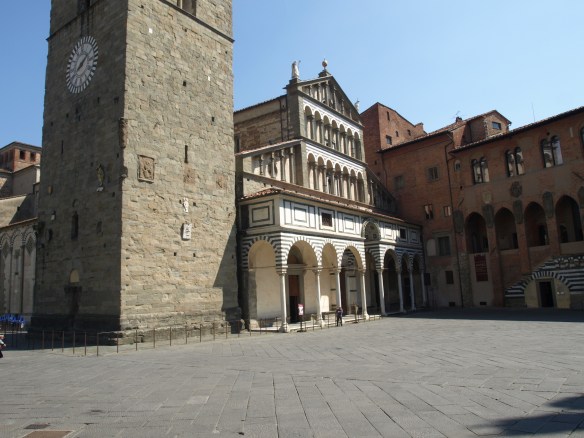
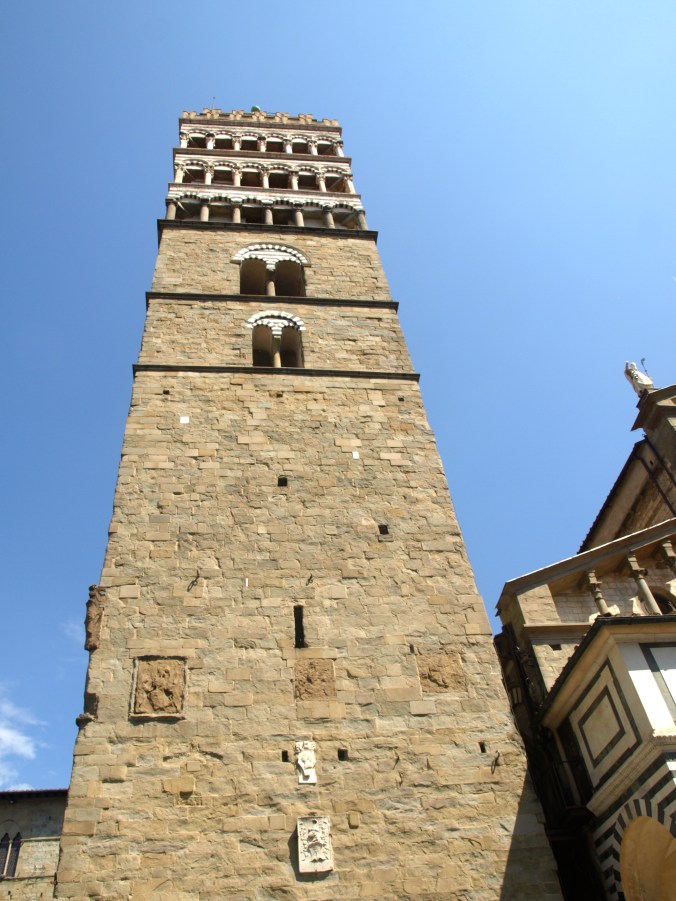
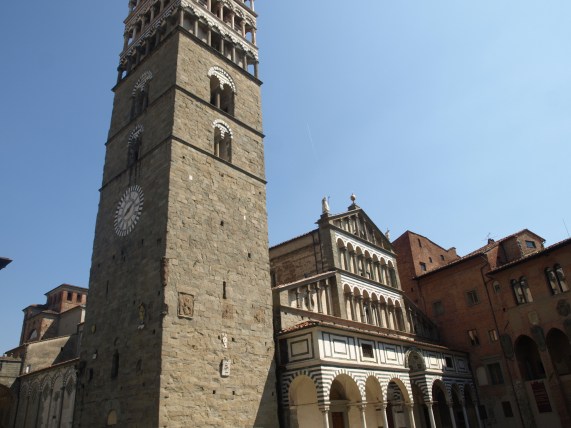
Across the Piazza del Duomo sits Il Duomo with its beautiful campanile.
OLYMPUS DIGITAL CAMERAOLYMPUS DIGITAL CAMERAOLYMPUS DIGITAL CAMERA

The Cathedral of San Zeno was started in the 5th century, but the building we see today took shape in the 12th century.  While the facade is Romanesque, the duomo’s interior is all Baroque.

The iconic Romanesque campanile, standing at some 67 metres (220 ft), was erected over an ancient Lombard tower.
OLYMPUS DIGITAL CAMERA

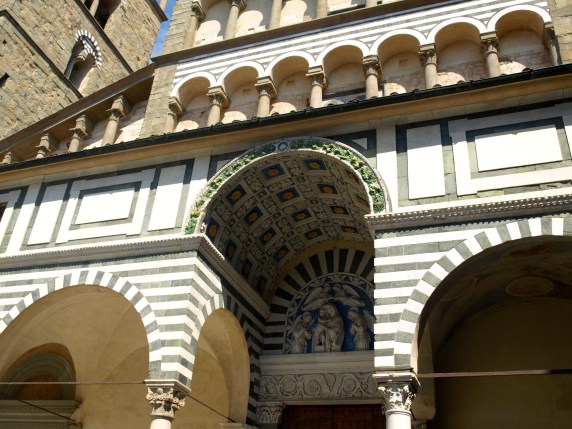
Andrea della Robbia designed the beautiful and prominent glazed ceramic sculptures over the central doorway.
OLYMPUS DIGITAL CAMERAOLYMPUS DIGITAL CAMERAOLYMPUS DIGITAL CAMERAOLYMPUS DIGITAL CAMERA

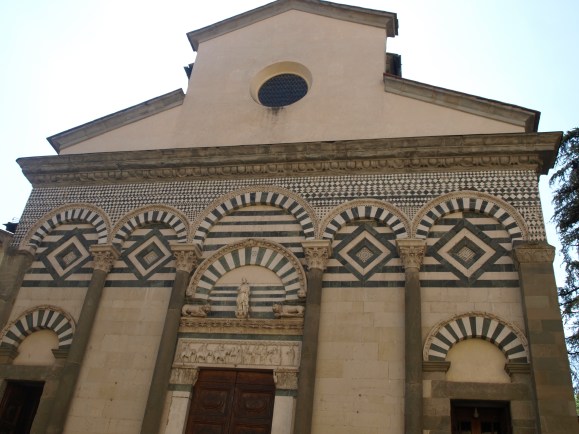
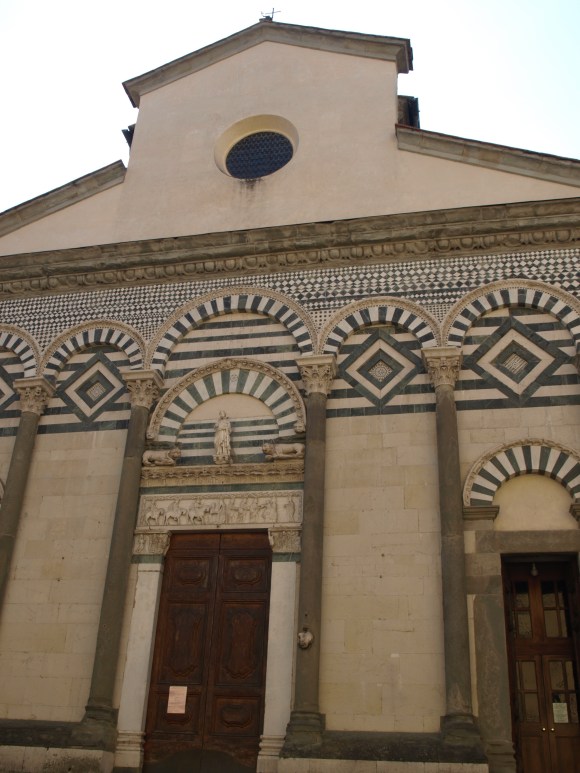
As you walk through the lovely, medieval city center, you run across several typical Tuscan Gothic/Romanesque churches.  The one above is Sant’ Andrea.  I’ll be writing more about it soon.


Citrus and Sicily and D.H. Lawrence


images-7

D. H. Lawrence began the period of voluntary exile after WWI that he referred to as his ‘savage pilgrimage’, a journey that took him to Sicily between 1920 and 1922. In ‘Sun’, a short story set in his sexually charged version of the Sicilian landscape, he returns again and again to images of citrus trees and their fruit, making Juliet, the angry and frustrated American heroine, meander naked through a ‘dark underworld of lemons’, discovering freedom and sensuality for the first time in her life.

images-9


Attlee, Helena (2015-01-05). The Land Where Lemons Grow: The Story of Italy and Its Citrus Fruit (Kindle Locations 56-59). Countryman Press. Kindle Edition.

World’s 1st museum open to the public, Florence. “Dress decently and leave your sword at the door.”

When the son of Francis I, Duke of Lorraine, Pietro Leopoldo arrived in Florence, he found the majority of the people shockingly uneducated, their lives blighted by famine and the inefficient bureaucracy, high taxes and old-fashioned legal system imposed by the Medici and left unreformed by his father, who succeeded the Medici as rulers.

Pietro Leopoldo modelled his new administration on Enlightenment principles, taking it upon himself to disseminate information about science and the natural world in the belief that knowledge was a tool that could be used to combat suffering, superstition and tyranny.

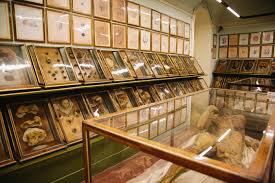
He believed in giving the citizens of Florence a chance to educate themselves, and to this end he founded a new science and natural history museum called La Specola [https://en.wikipedia.org/wiki/La_Specola] on Via Romana, the narrow street that runs from Palazzo Pitti to the Porta Romana.

images-6

When its doors opened in 1775, La Specola was the first museum in the world to be accessible to the general public, although initially a distinction was made between the lower classes, who could enter between eight and ten in the morning, ‘if decently dressed’, and ‘the intelligent and well educated’, who had free access from one o’clock, as long as they removed swords and overcoats and left them by the door.

Attlee, Helena (2015-01-05). The Land Where Lemons Grow: The Story of Italy and Its Citrus Fruit (Kindle Locations 221-224). Countryman Press. Kindle Edition.

Hans Christian Andersen sees Italy for the first time: “here is Paradise!”


hans

images-2

Hans Christian Andersen, the Danish author and poet best known for his fairytales, visited Italy in 1833, and when he saw citrus groves for the first time he responded with the mixture of rapture and envy that Italy can still provoke among visitors from colder and less romantic countries.  He wrote to a friend:

“Just imagine the beautiful ocean and entire forests

with oranges and lemons,

the ground was covered with them; mignonettes and gillyflowers

grew like weeds.

My God, my God!

How unfairly we are

treated in the north; here, here is Paradise.”

Attlee, Helena (2015-01-05). The Land Where Lemons Grow: The Story of Italy and Its Citrus Fruit (Kindle Locations 47-48). Countryman Press. Kindle Edition.