Another piece of art nouveau, but I am afraid, as lovely as it is, it is overshadowed by its next door neighbor.
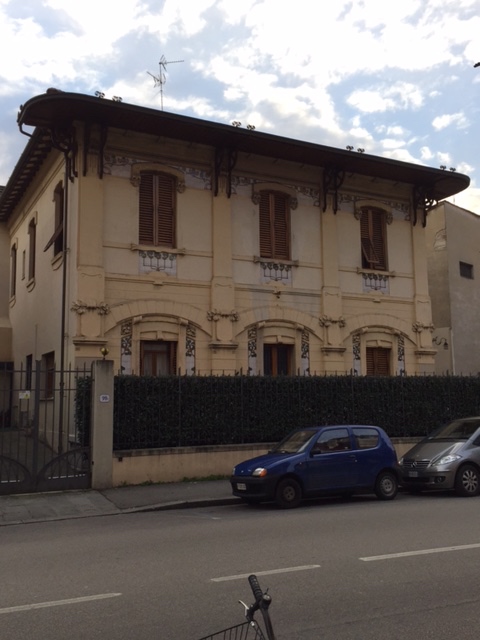
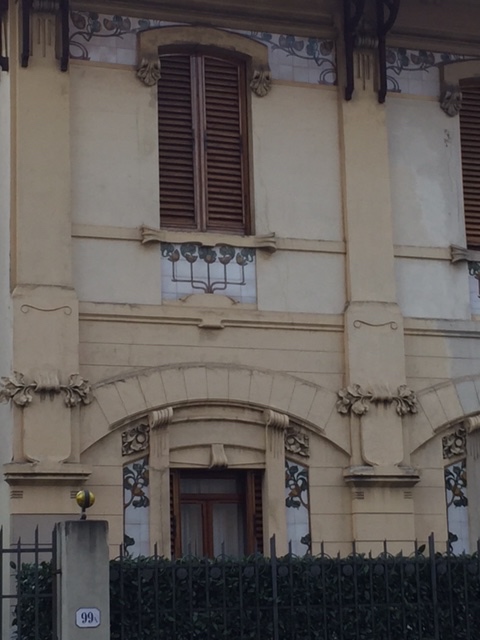
Still, this building is a knock out. I’ll go back for more photos soon.
Another piece of art nouveau, but I am afraid, as lovely as it is, it is overshadowed by its next door neighbor.
Still, this building is a knock out. I’ll go back for more photos soon.
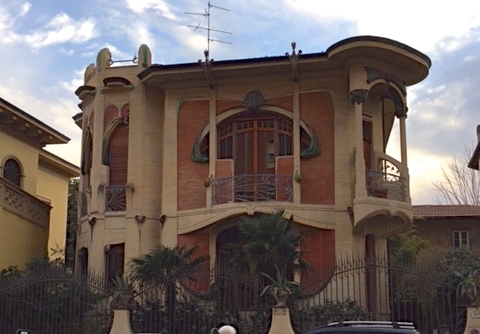
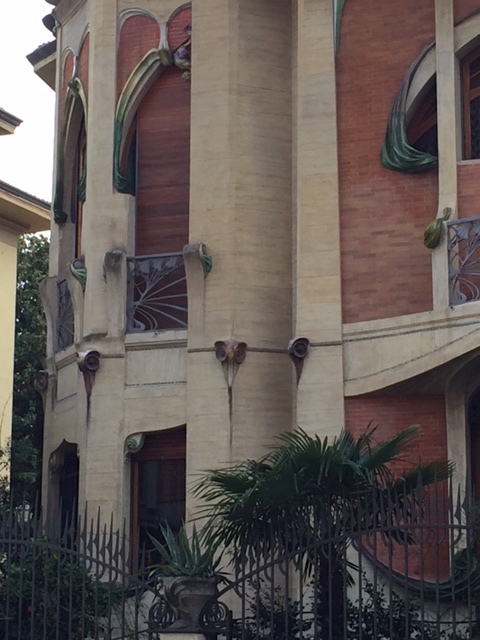
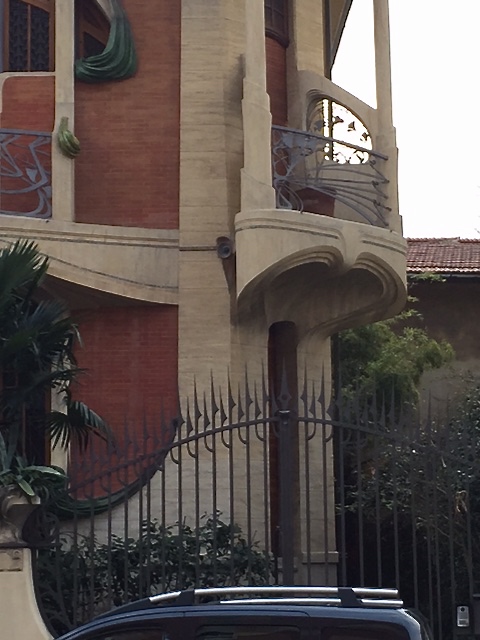
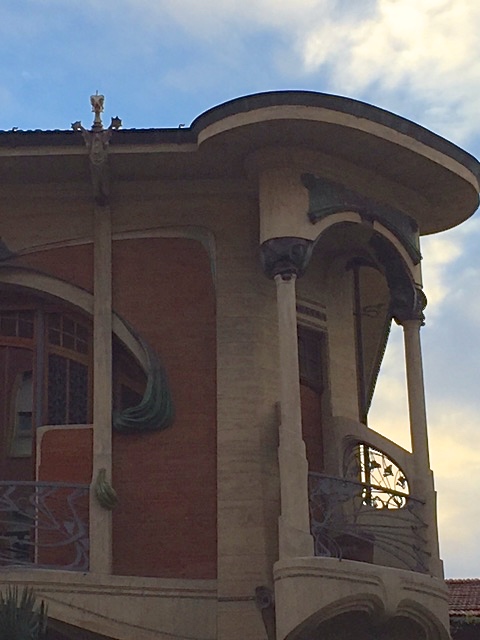
I stumbled upon an architectural gem today in Florence. A living, breathing piece of art nouveau, in situ, complete.
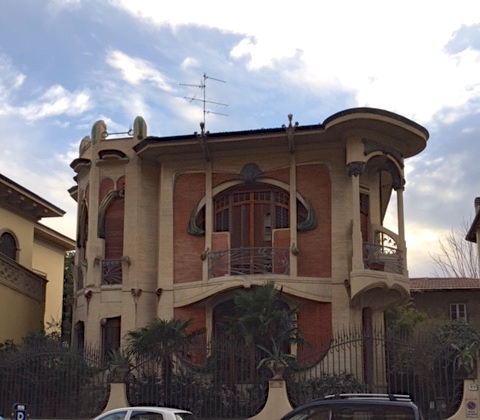
I honestly don’t think that I’ve ever seen art nouveau in any form in Florence. I’ve seen it in Lucca in the so-called “Liberty” style decorating some buildings.
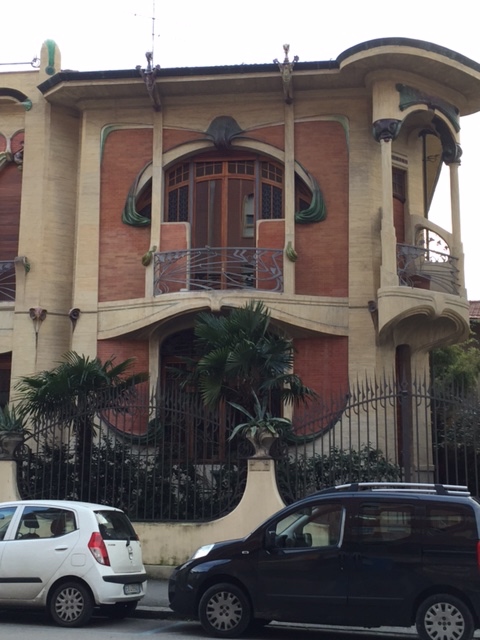

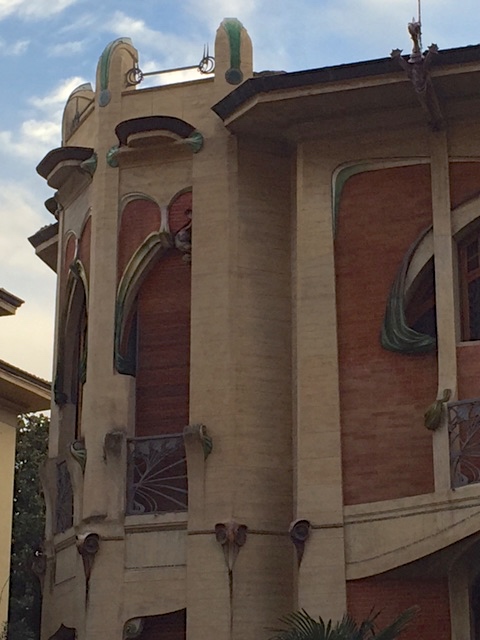
I’ll be going back for more photos soon. Maybe when the sun is out??
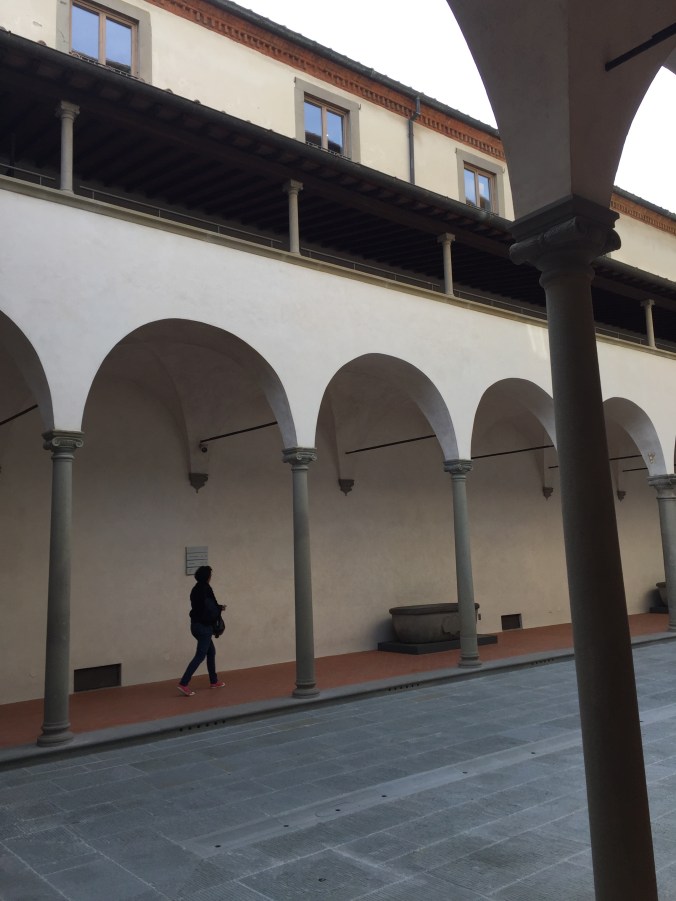
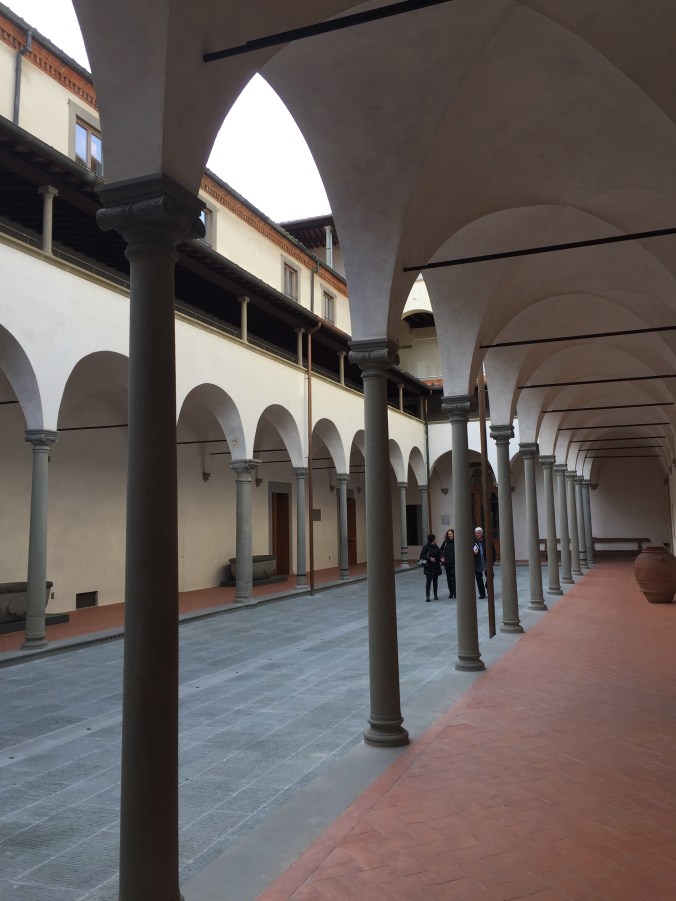
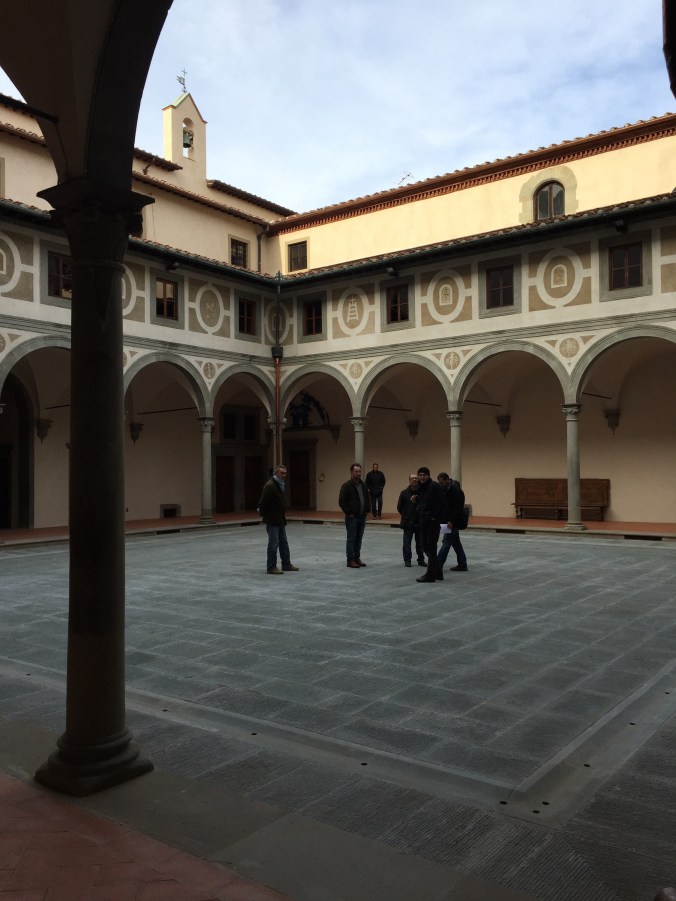
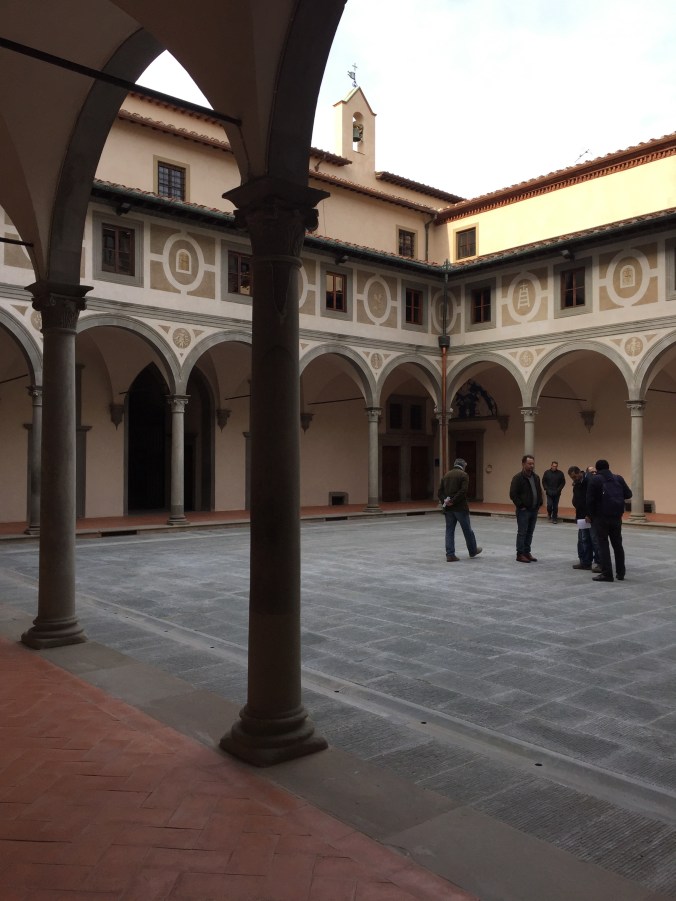
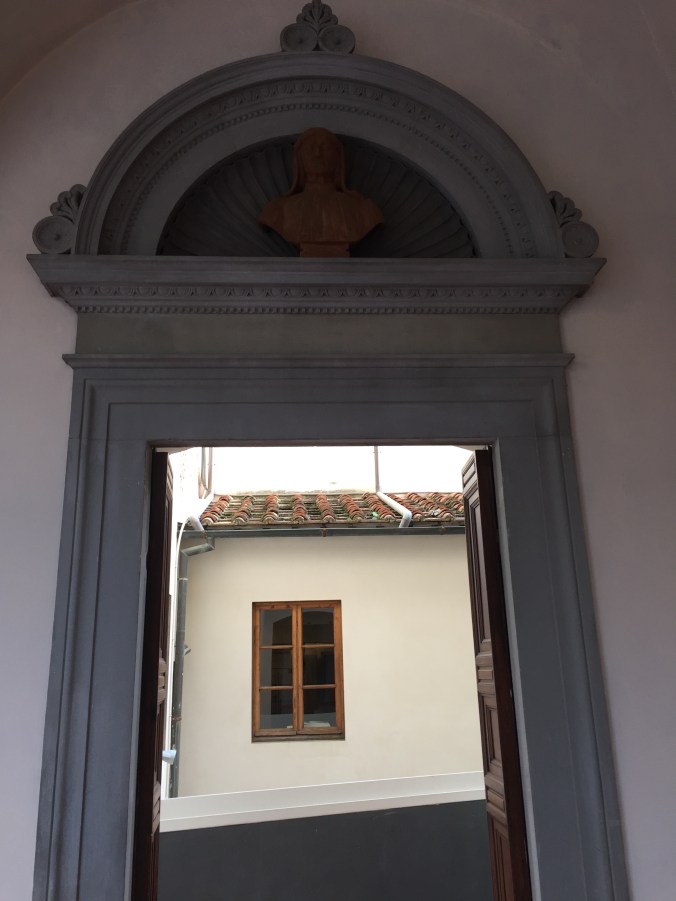
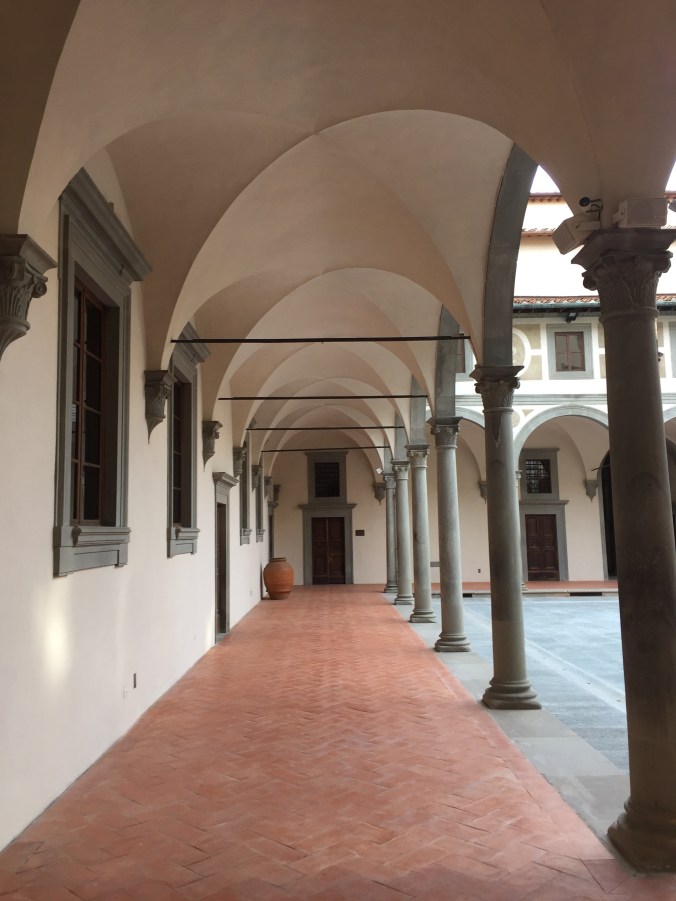
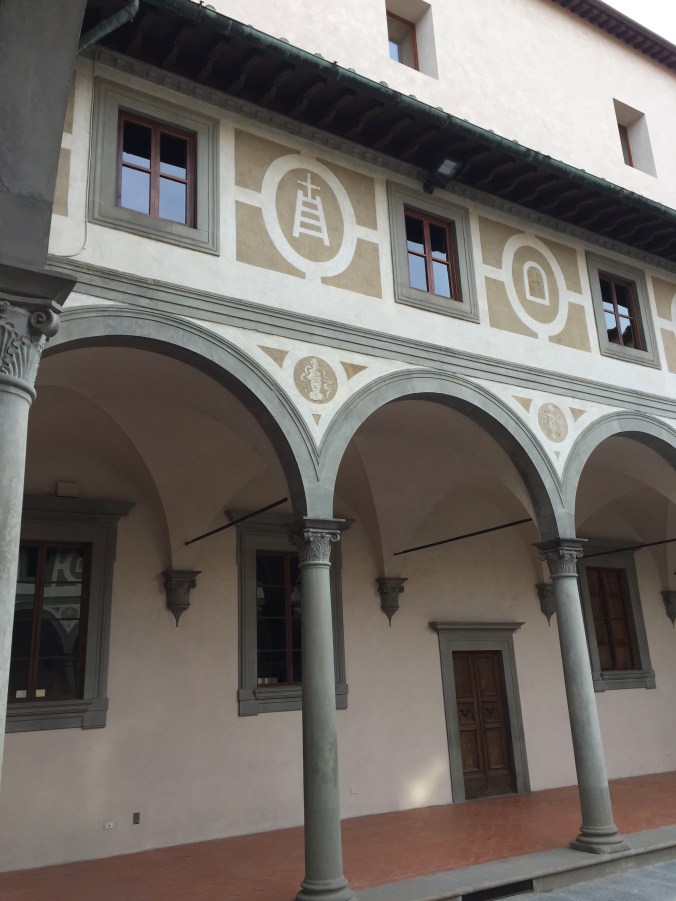
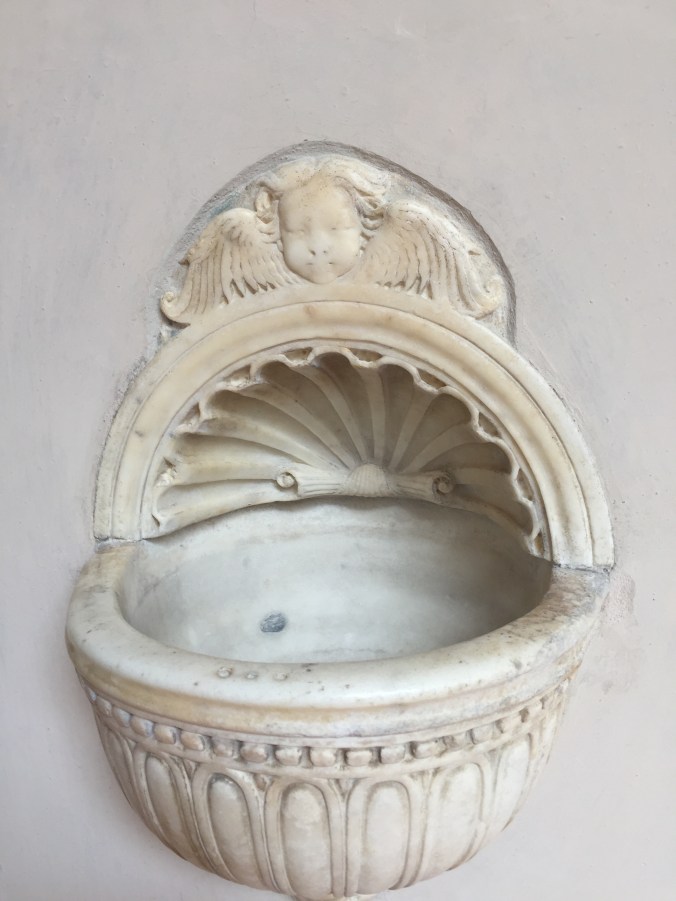
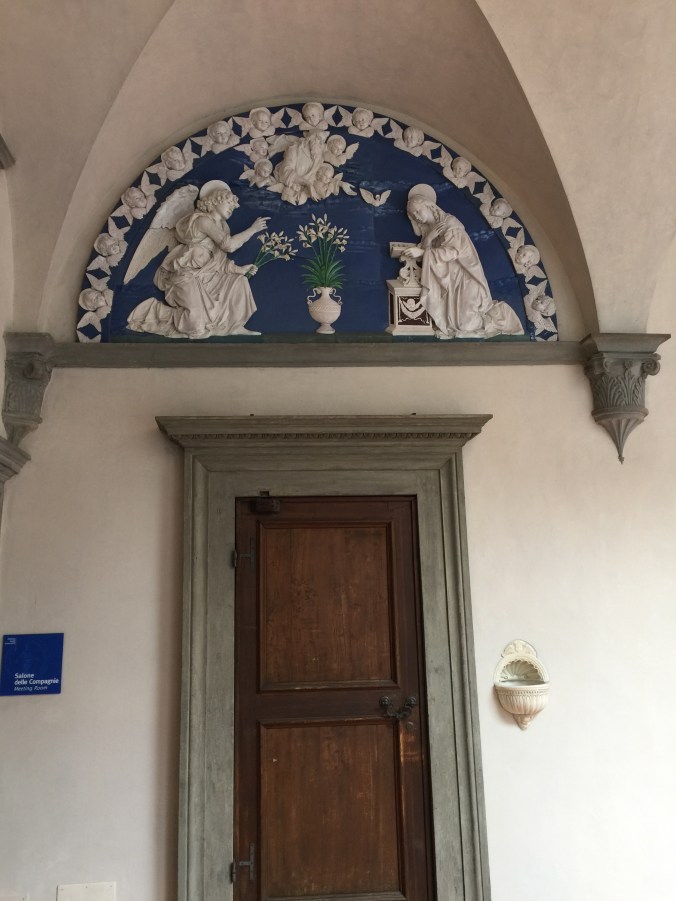
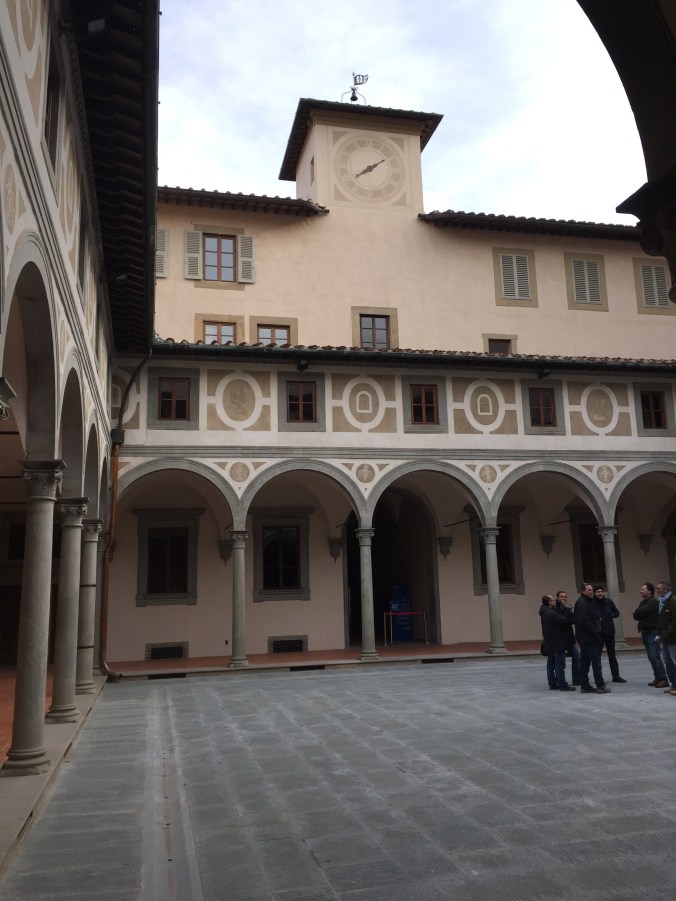
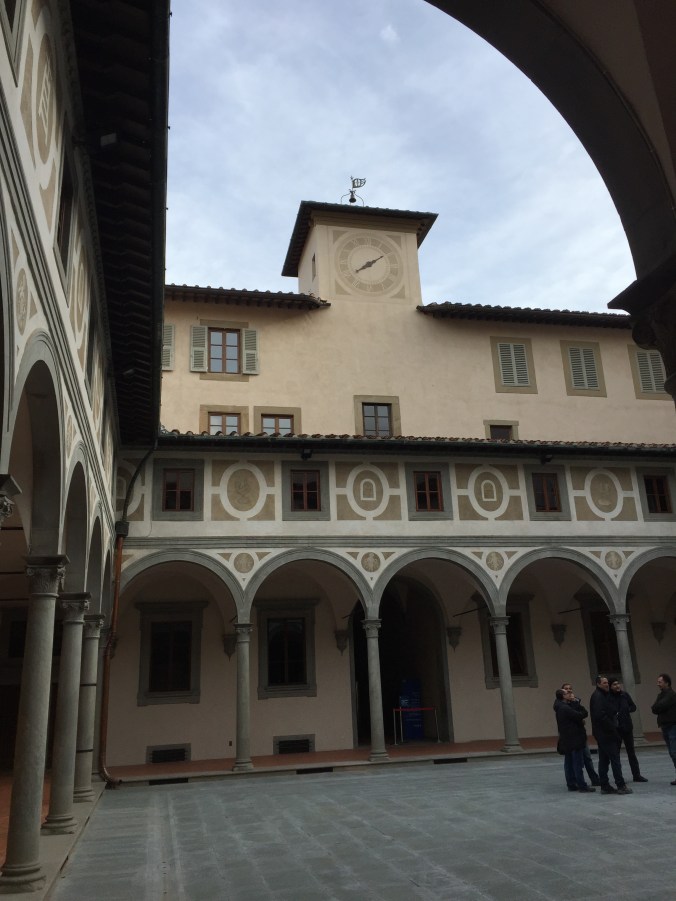
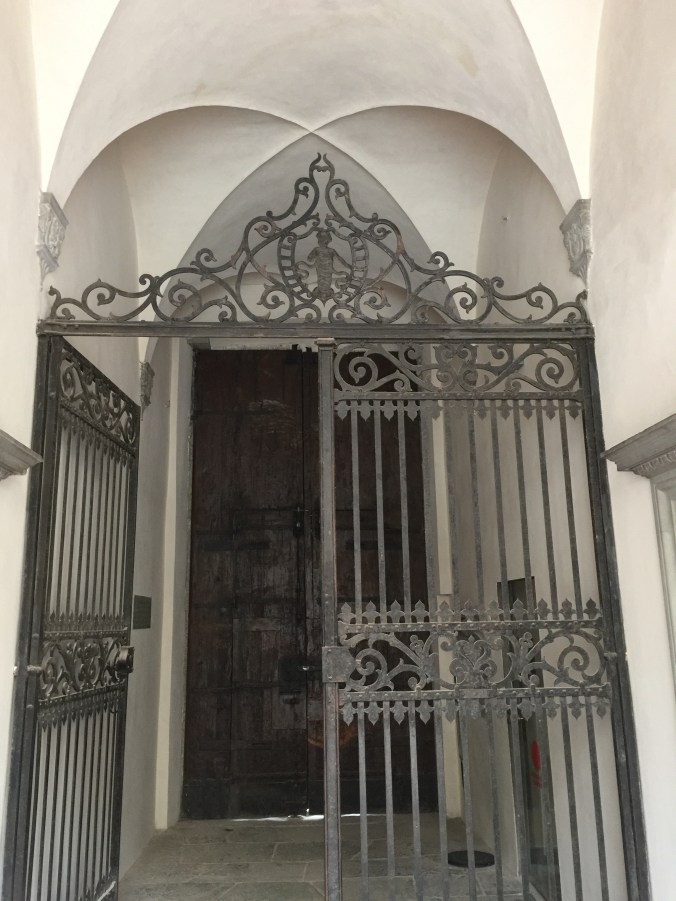
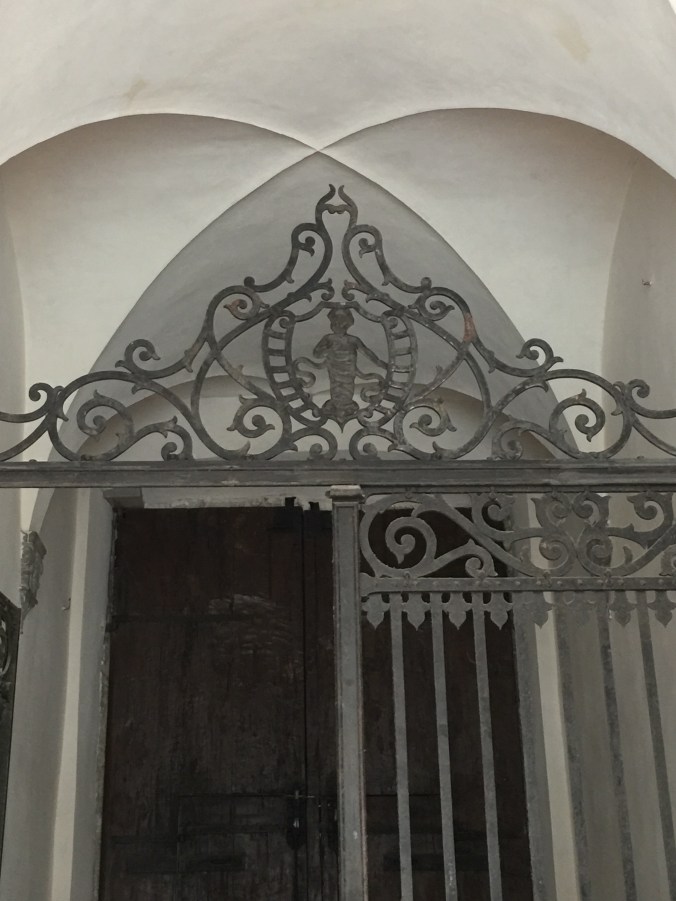
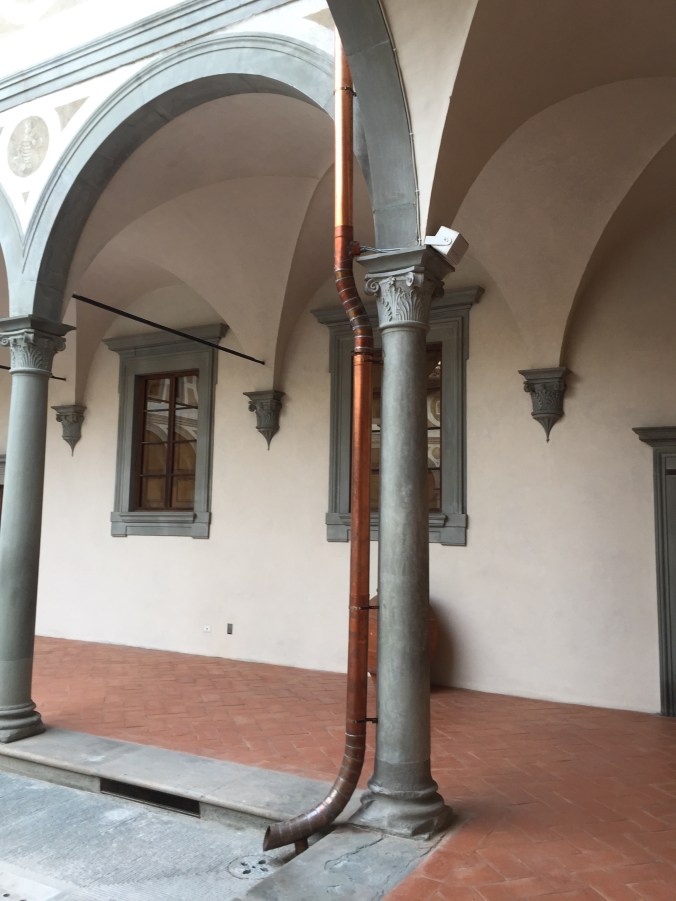
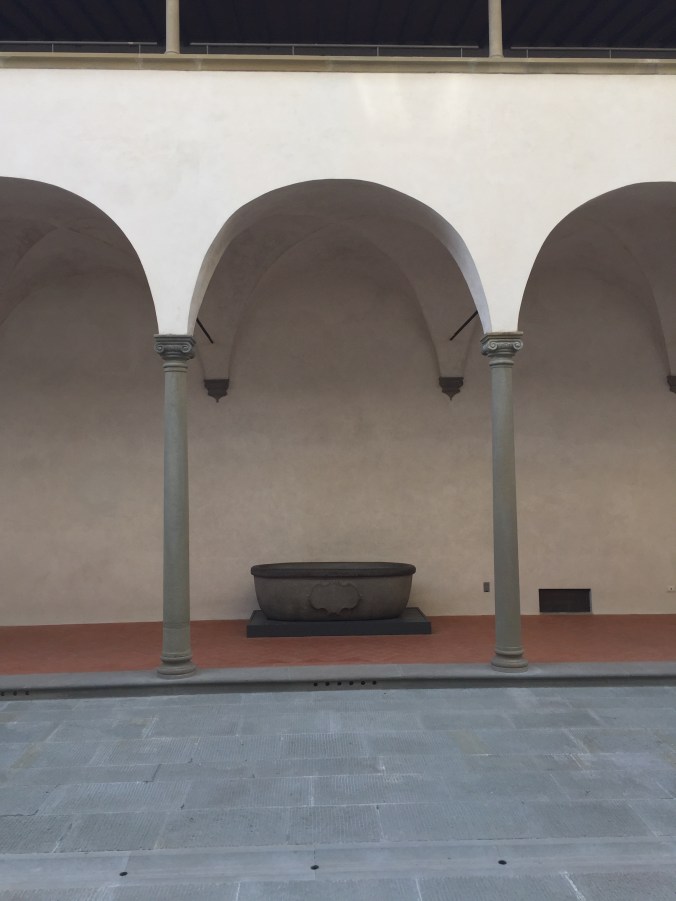
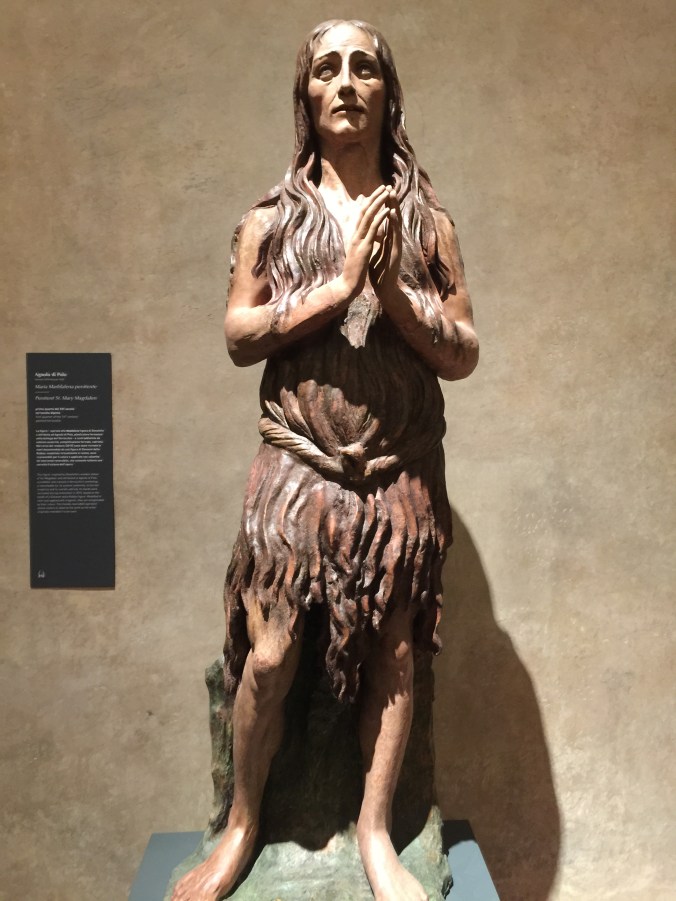
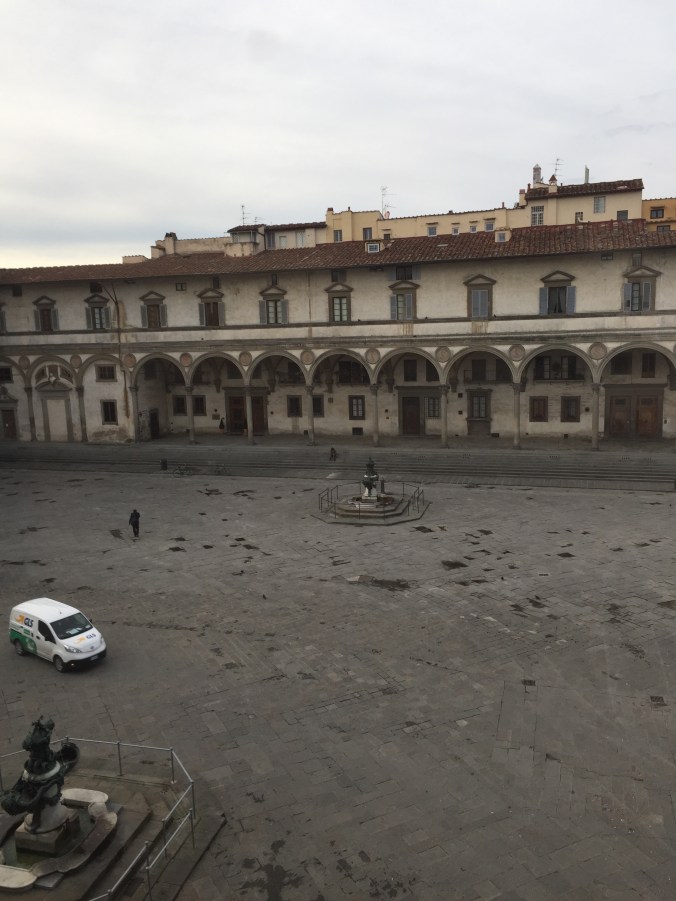
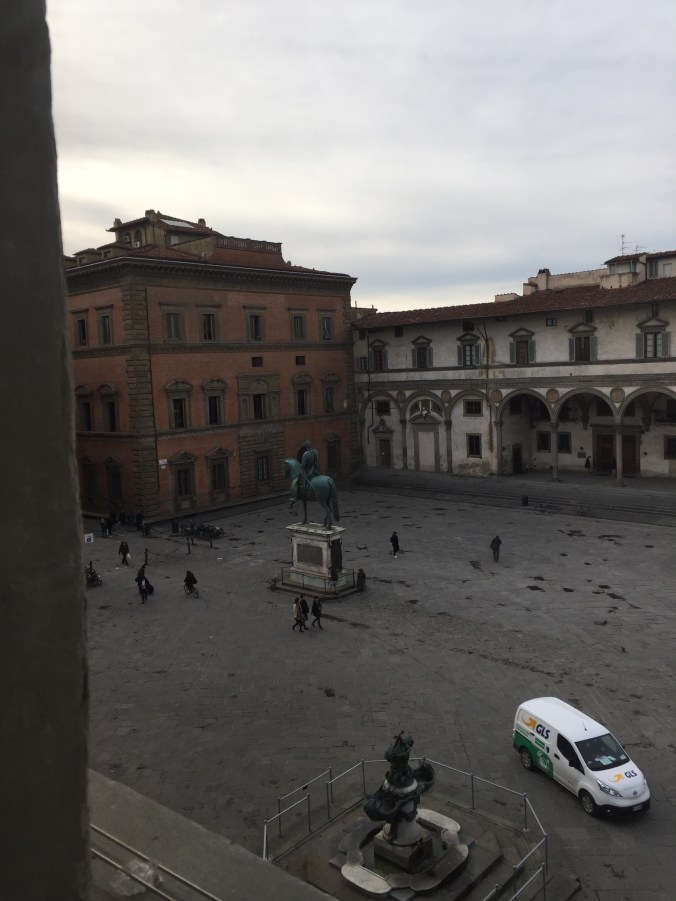
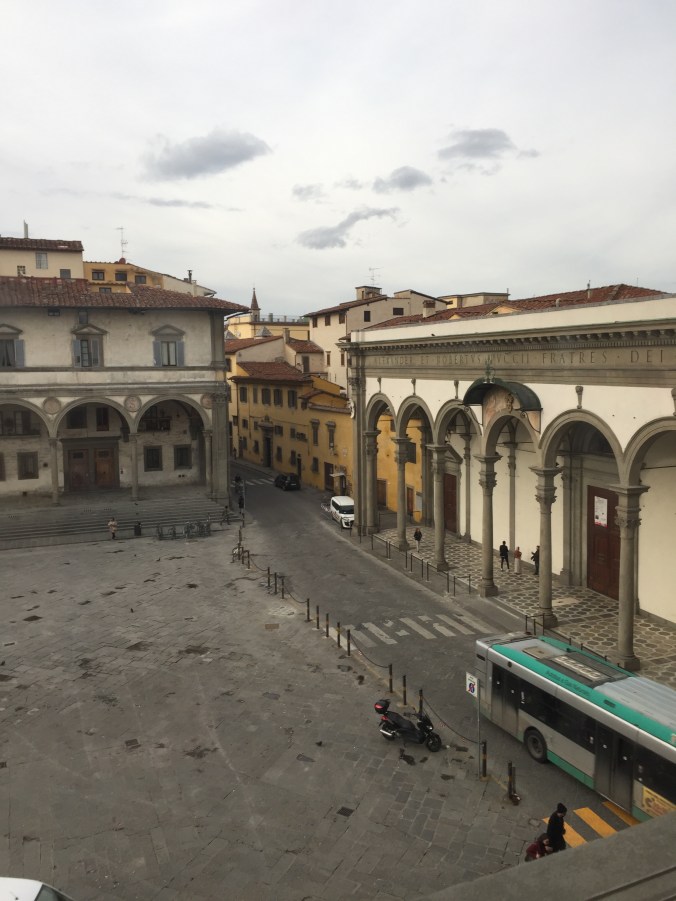
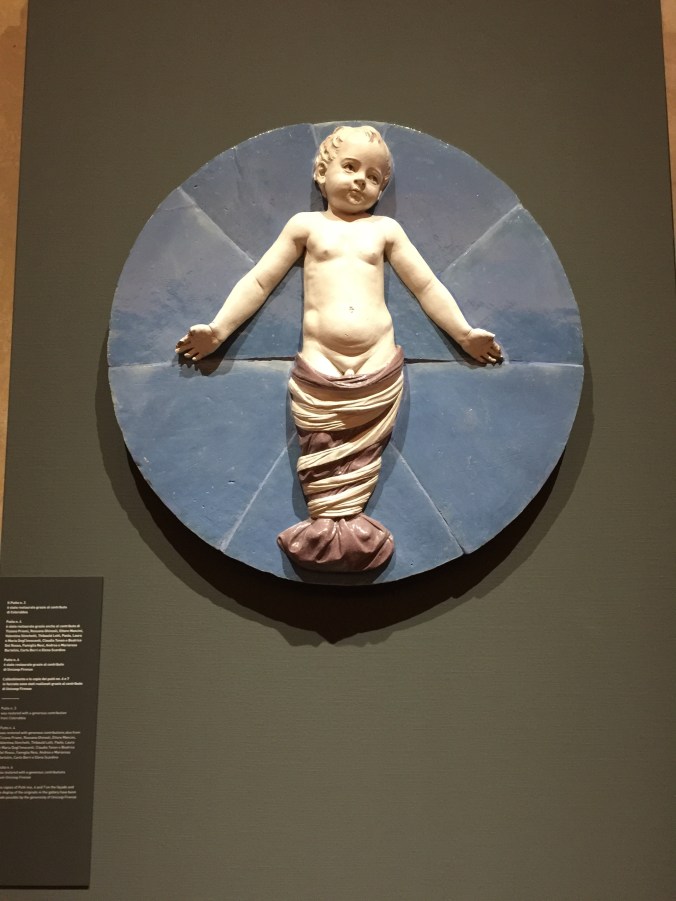
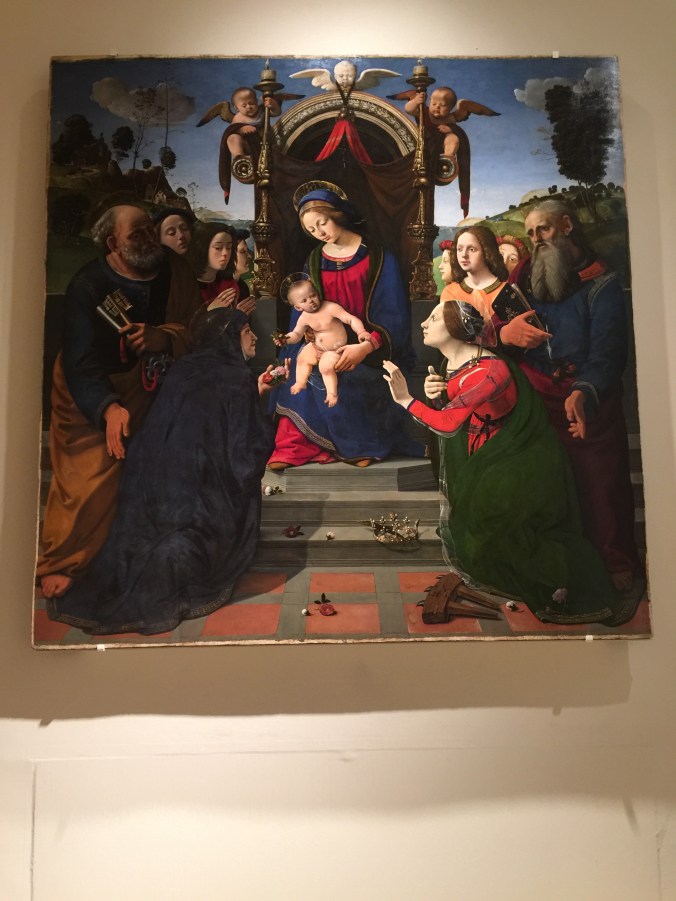
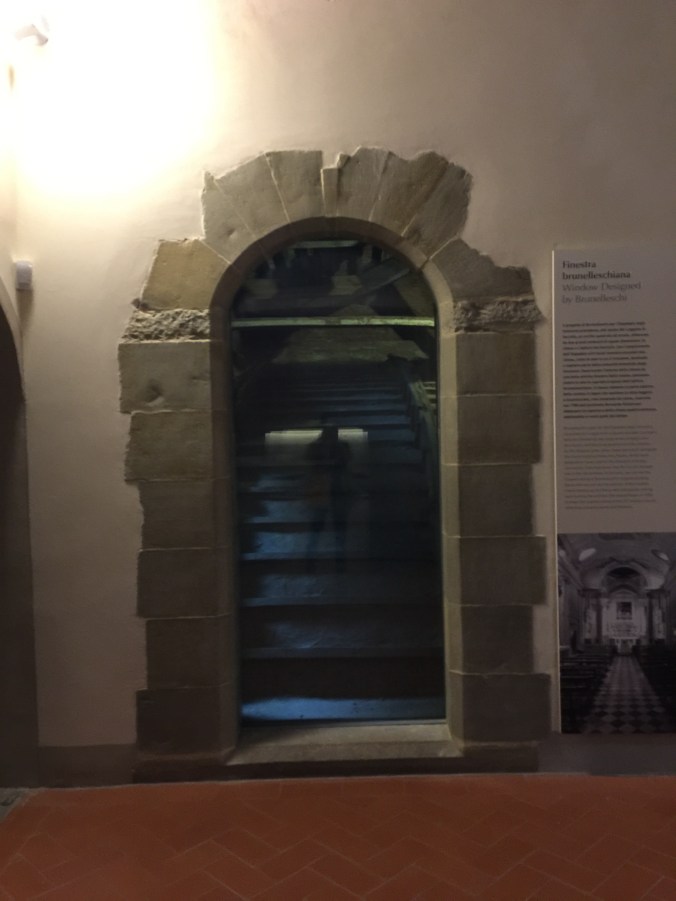
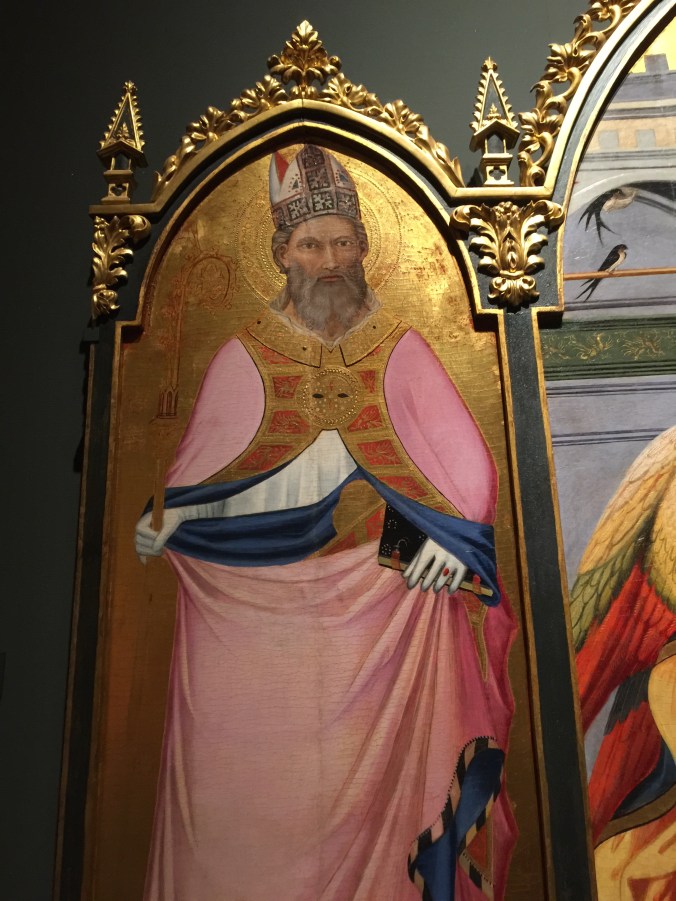
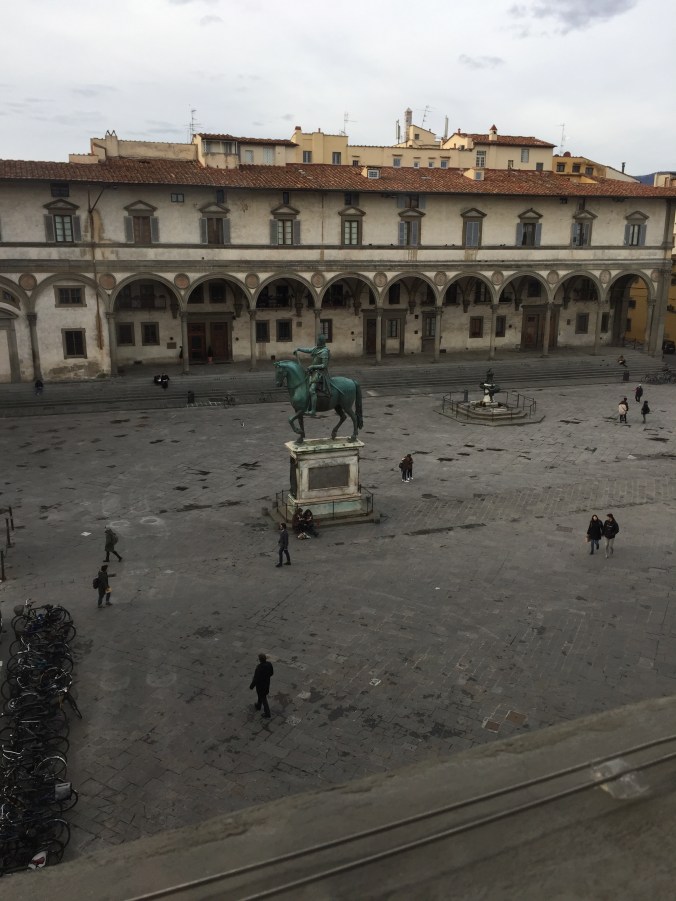
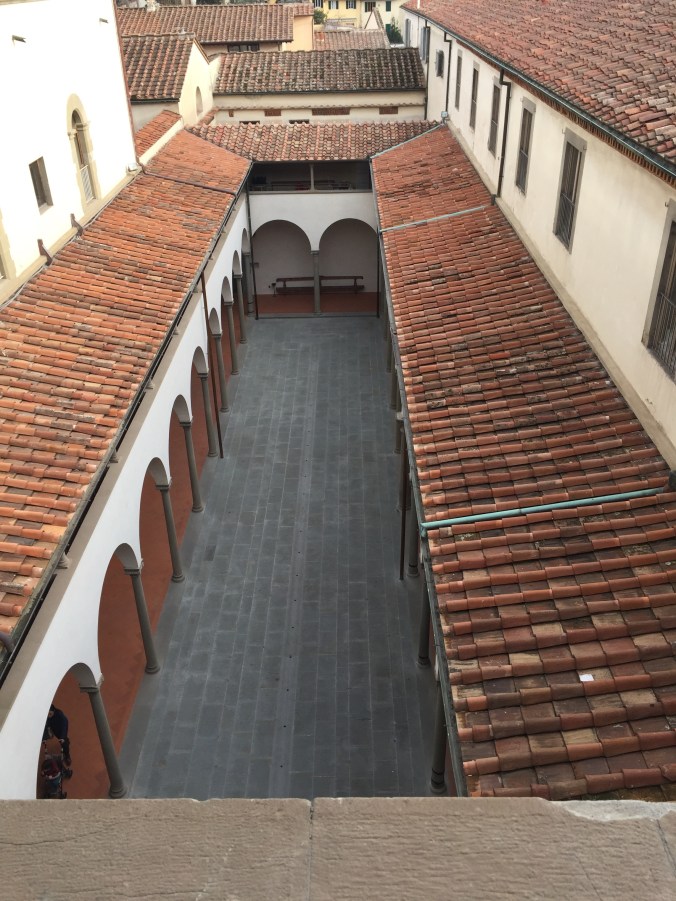
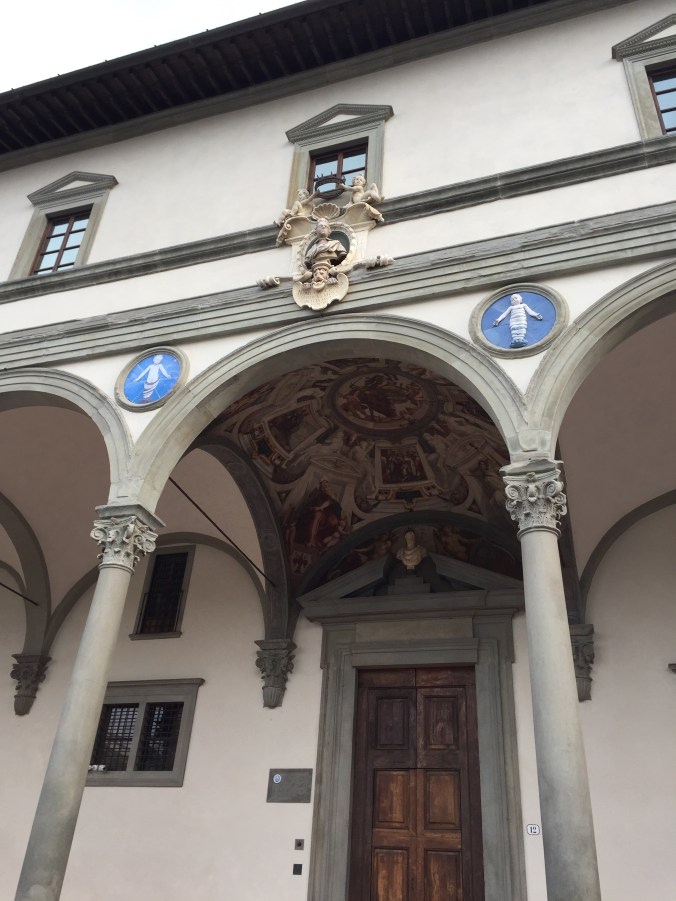
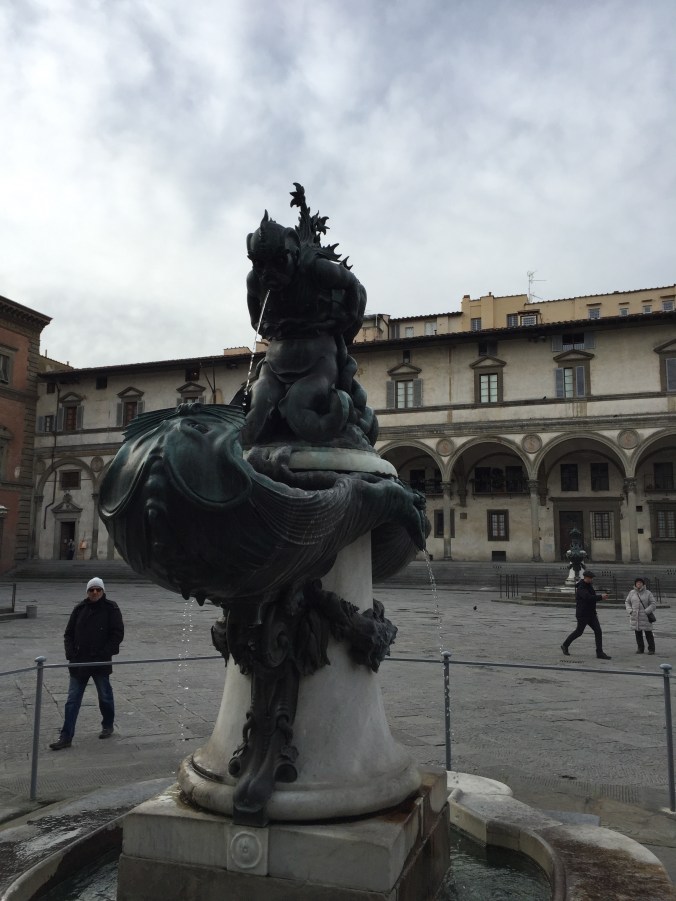
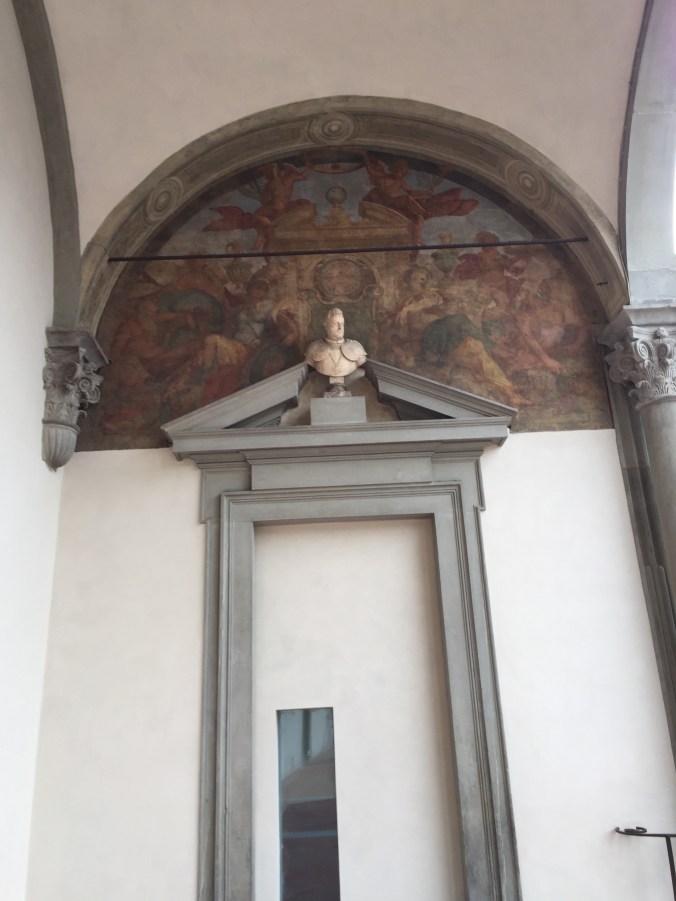
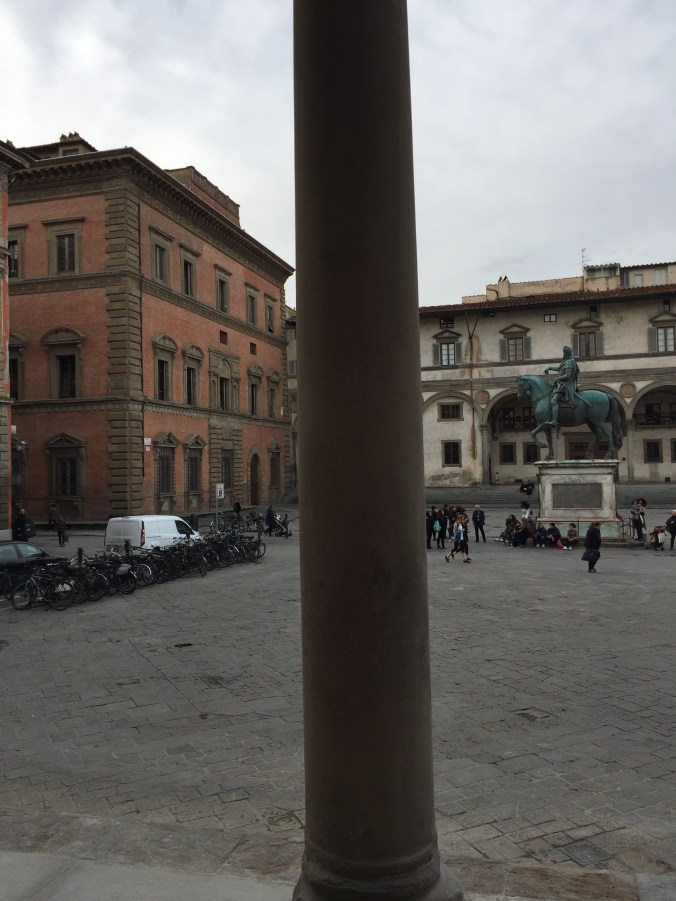
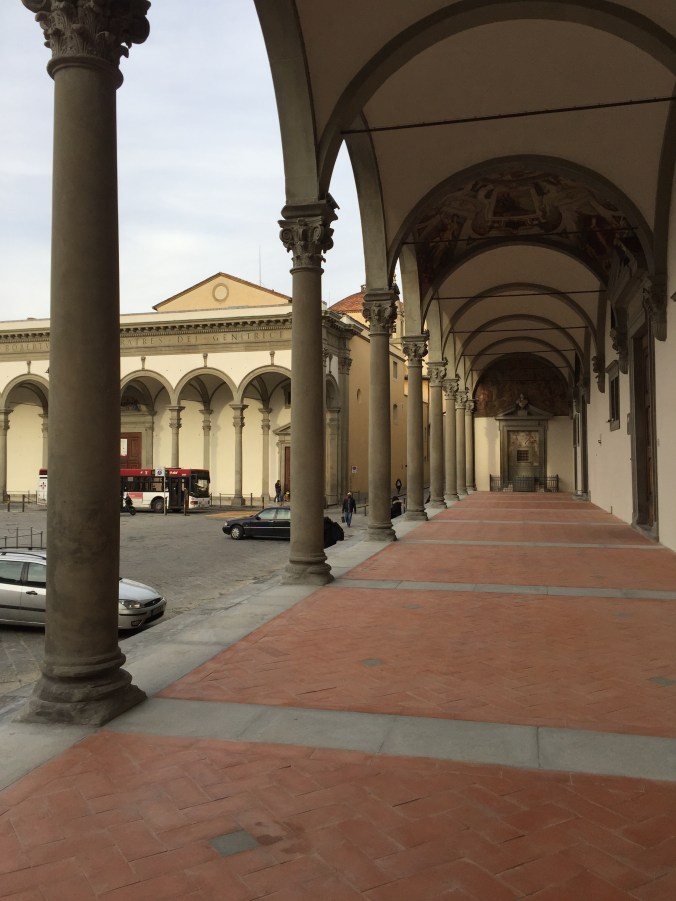
Today I was happy to visit the Renaissance masterpiece by Brunelleschi, the Ospedale deli Innocenti. What a way to spend an afternoon.
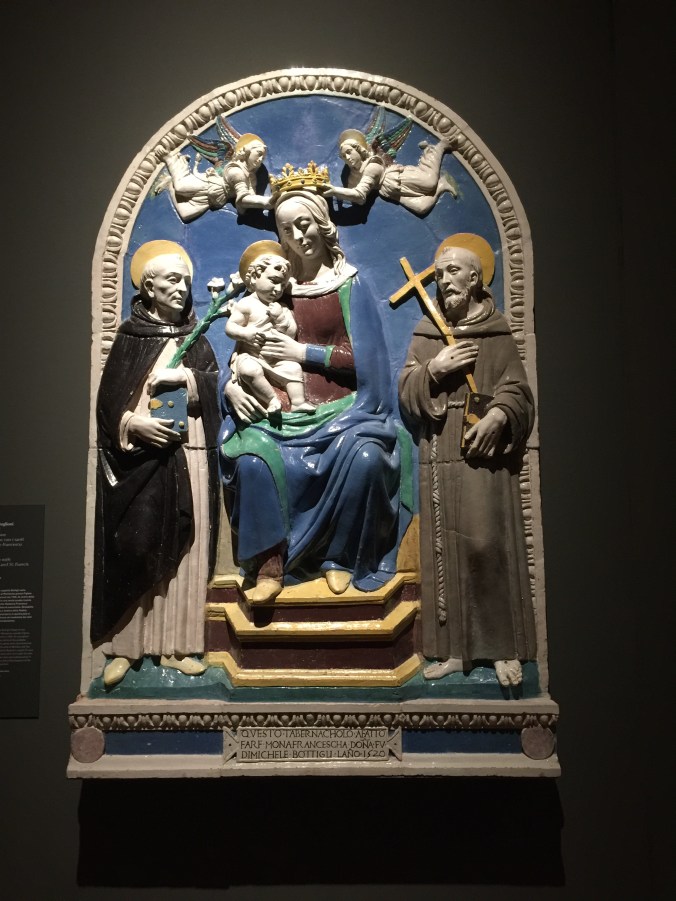
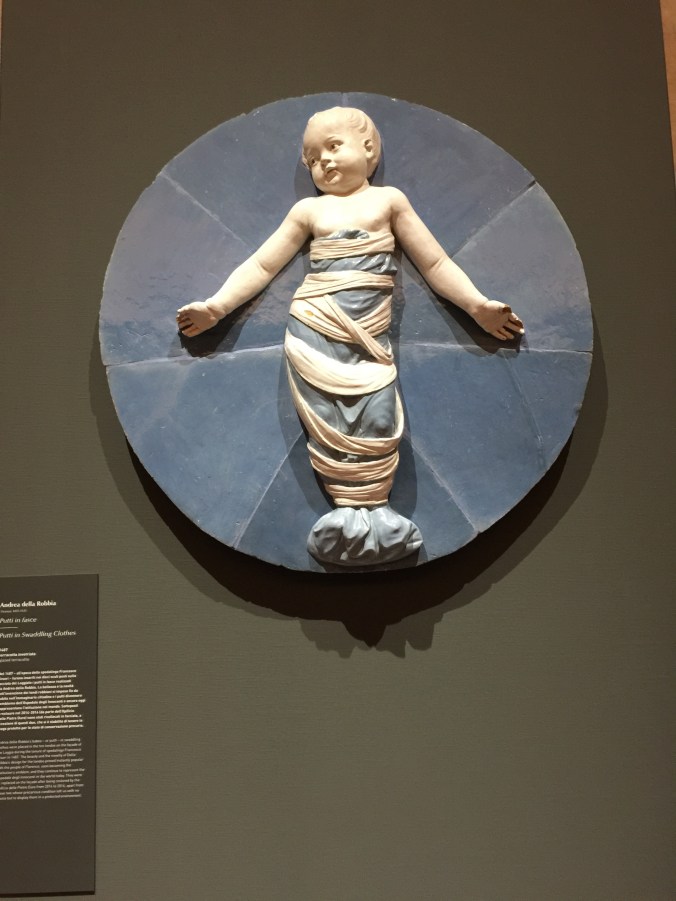
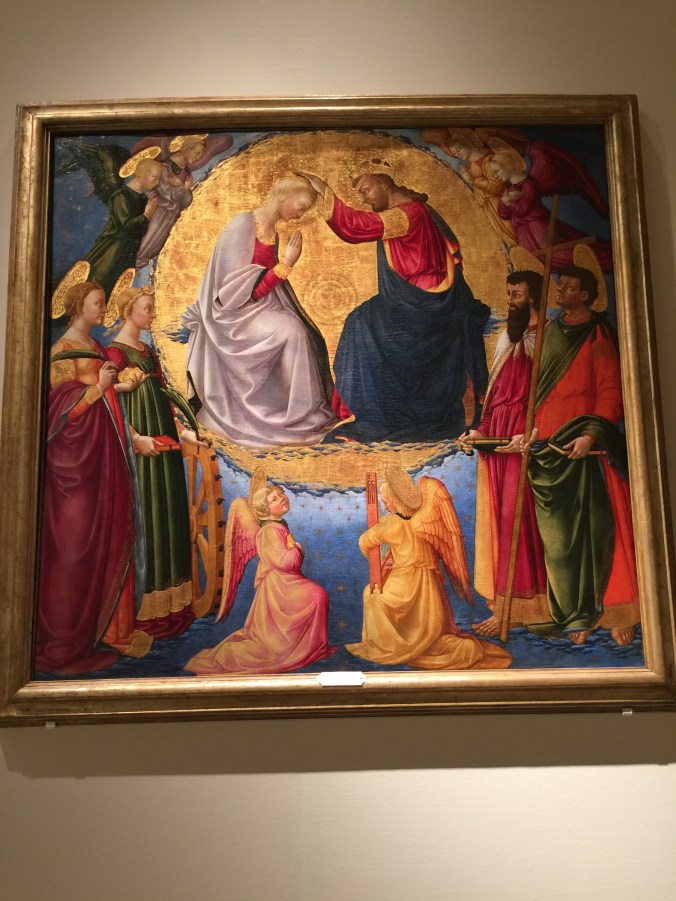
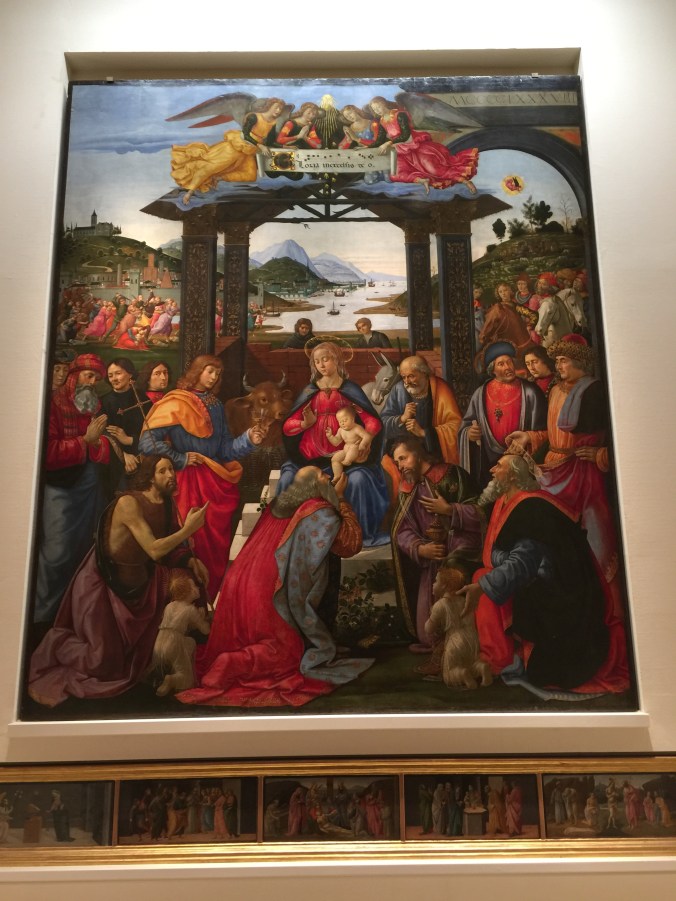
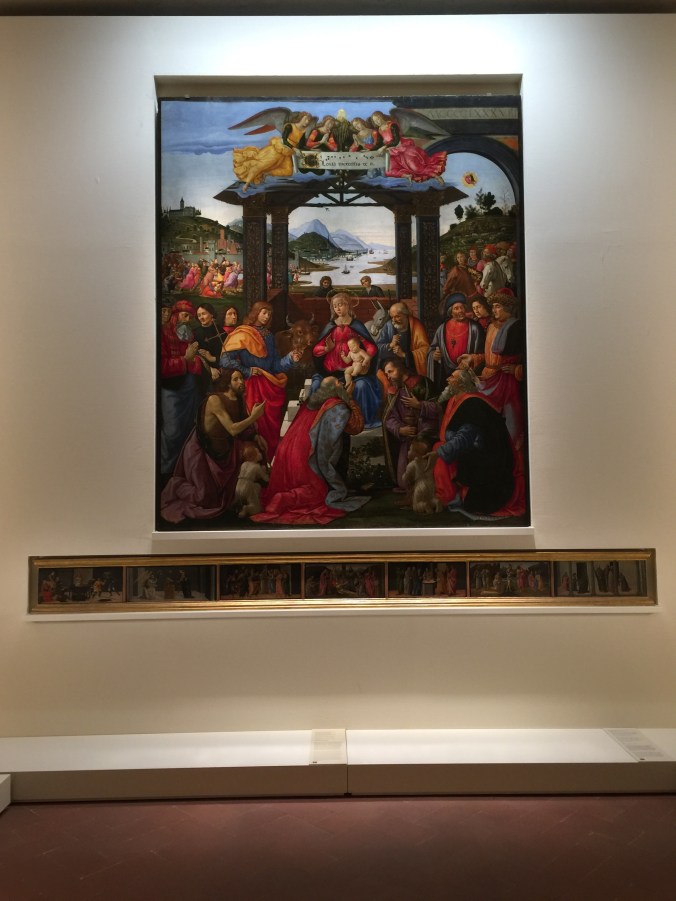
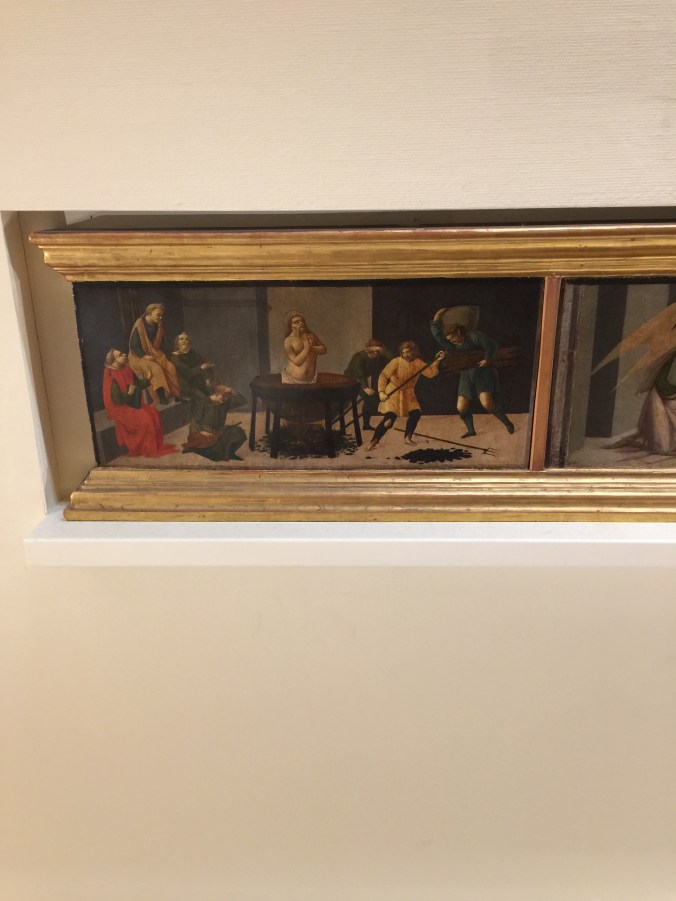
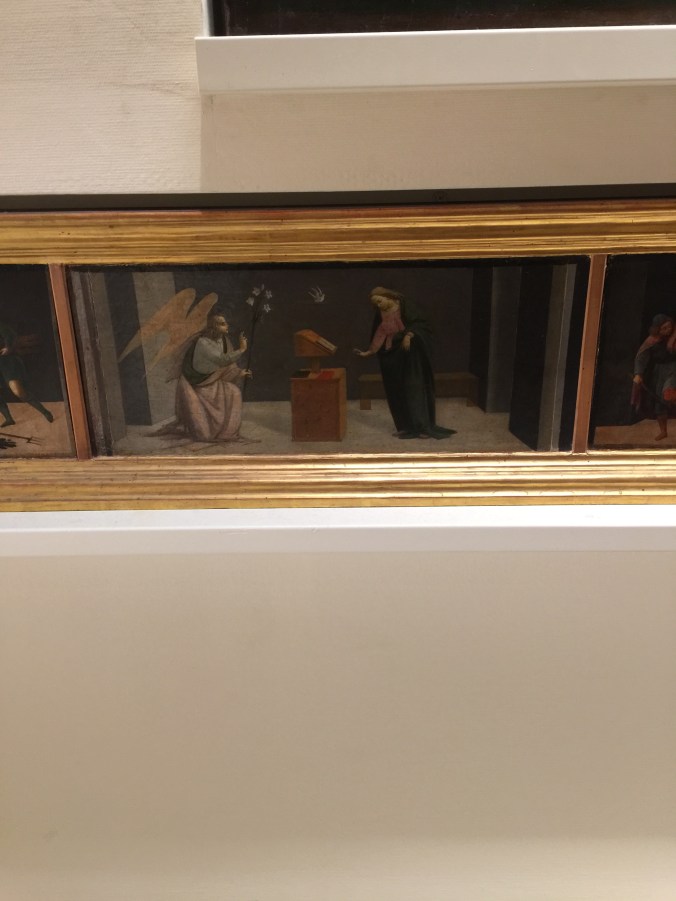
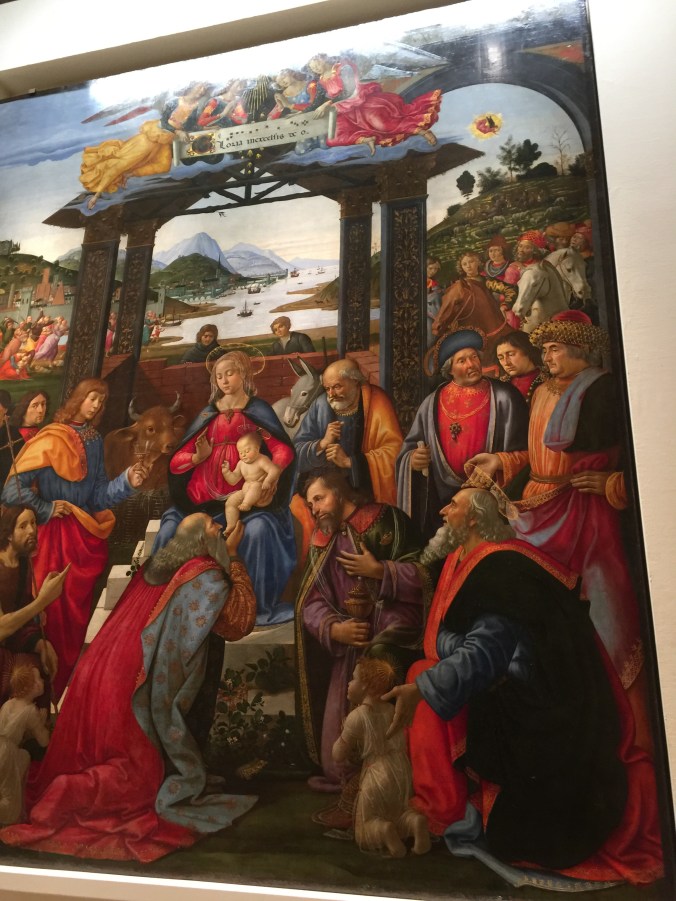
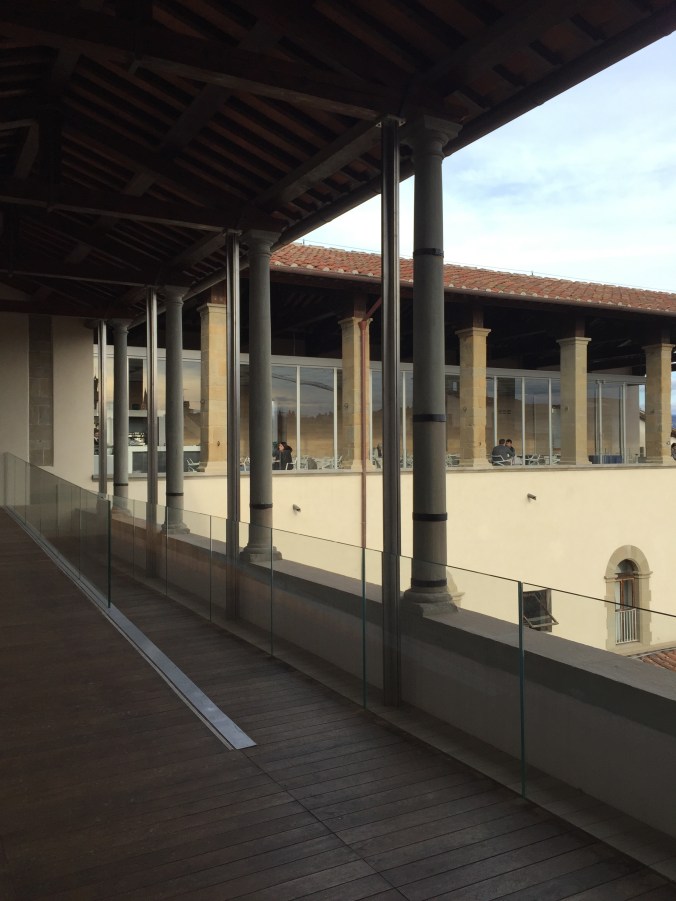
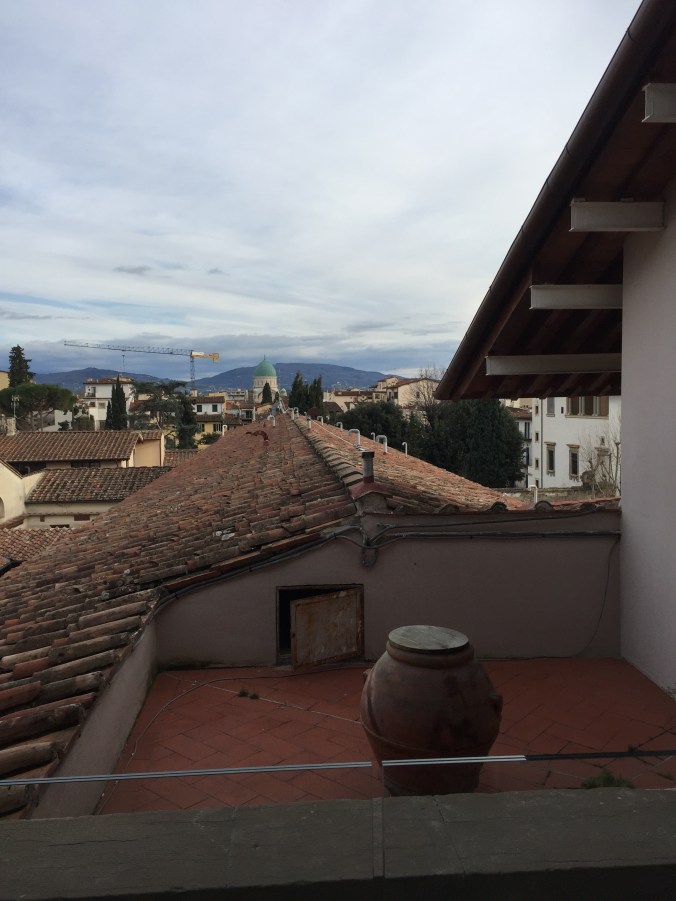
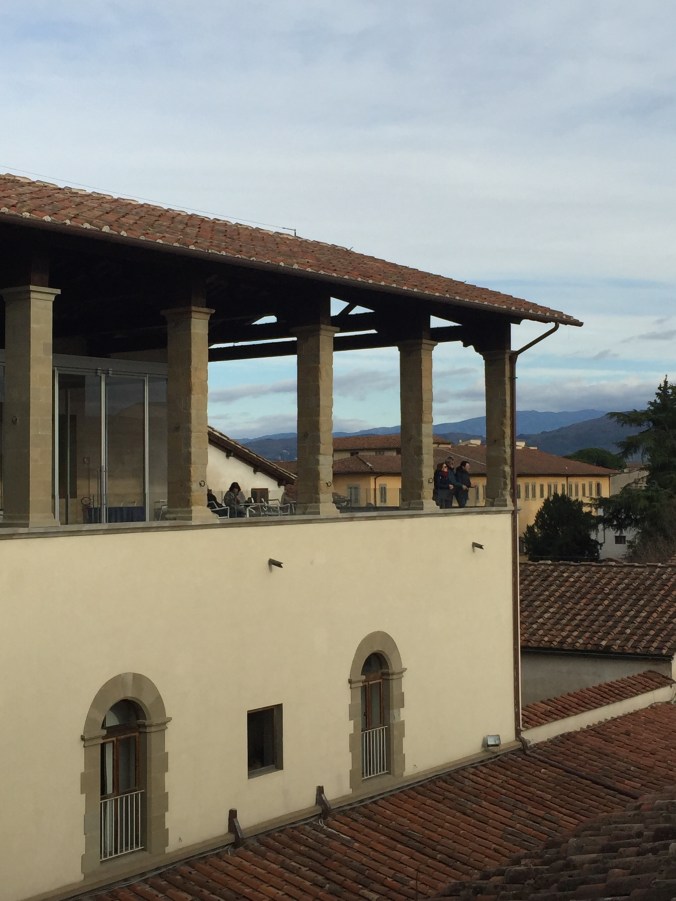
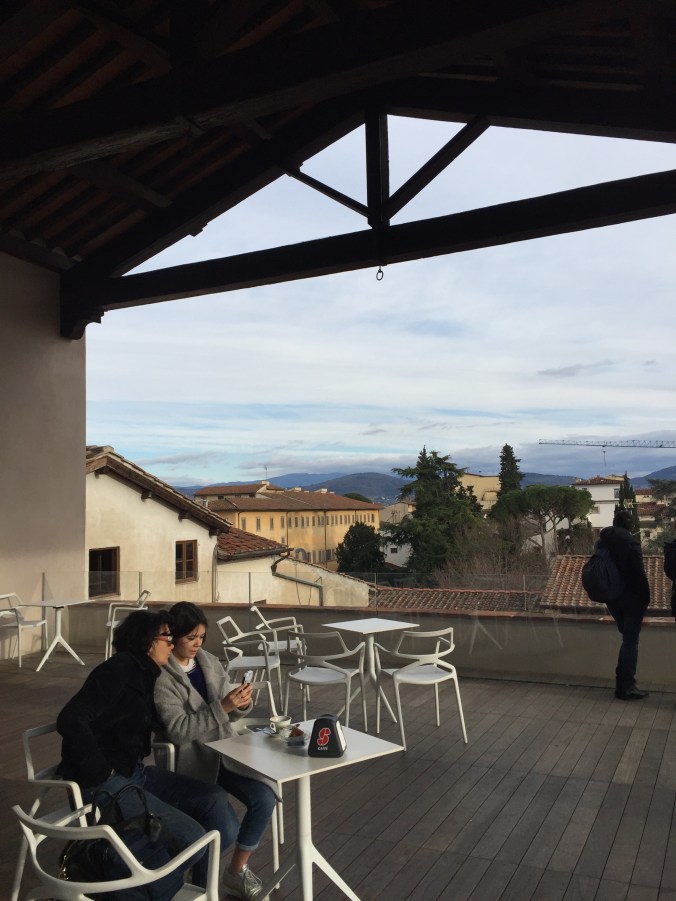
This newly opened museum has something for everyone. Gorgeous Renaissance architecture and the amazing history, beautifully presented with cutting edge museum design, of one of the world’s first orphanages. If that isn’t enough, there is also a small but choice collection of paintings and some sculpture, including a Botticelli. And, as if that isn’t enough, there is a lovely rooftop cafe, serving lovely drinks and coffees, and some nice food! Beautiful views!
I can’t recommend this museum highly enough.

Great technology presents the history of the institution and the building.

The history of the institution is presented in a very understandable and visually interesting manner.

No detail is overlooked.


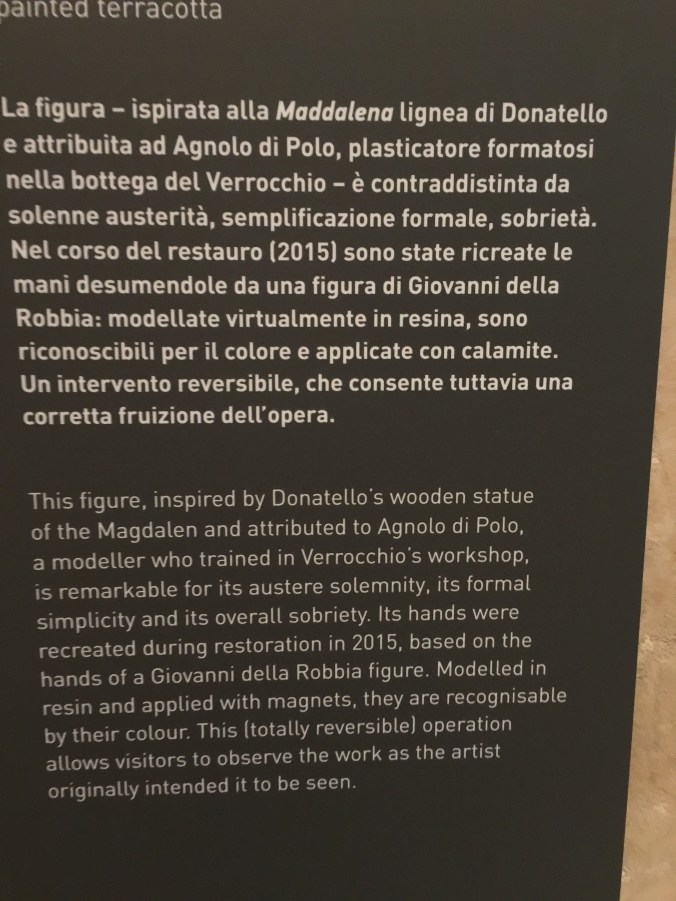
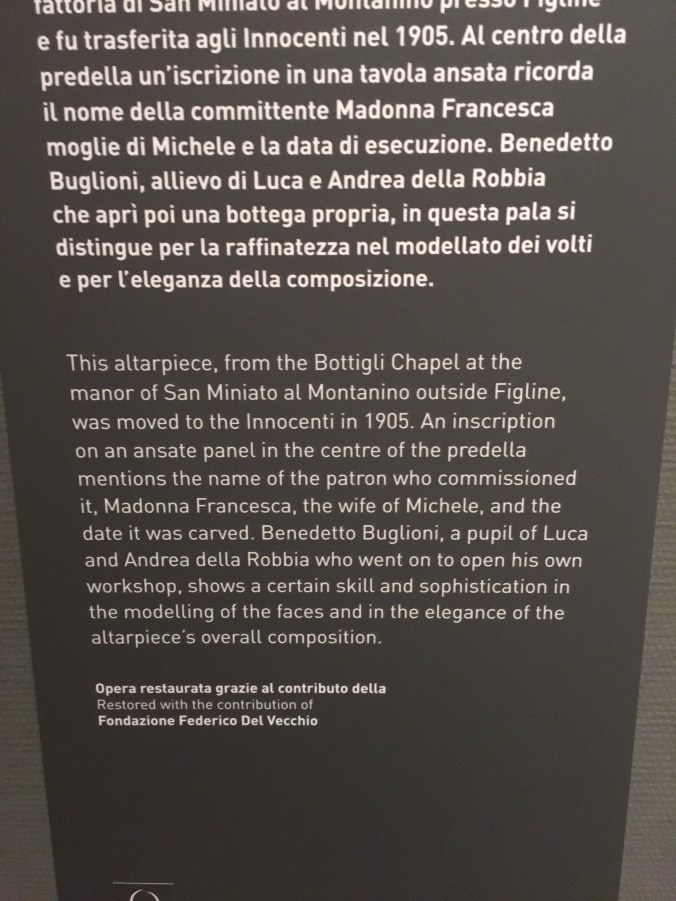
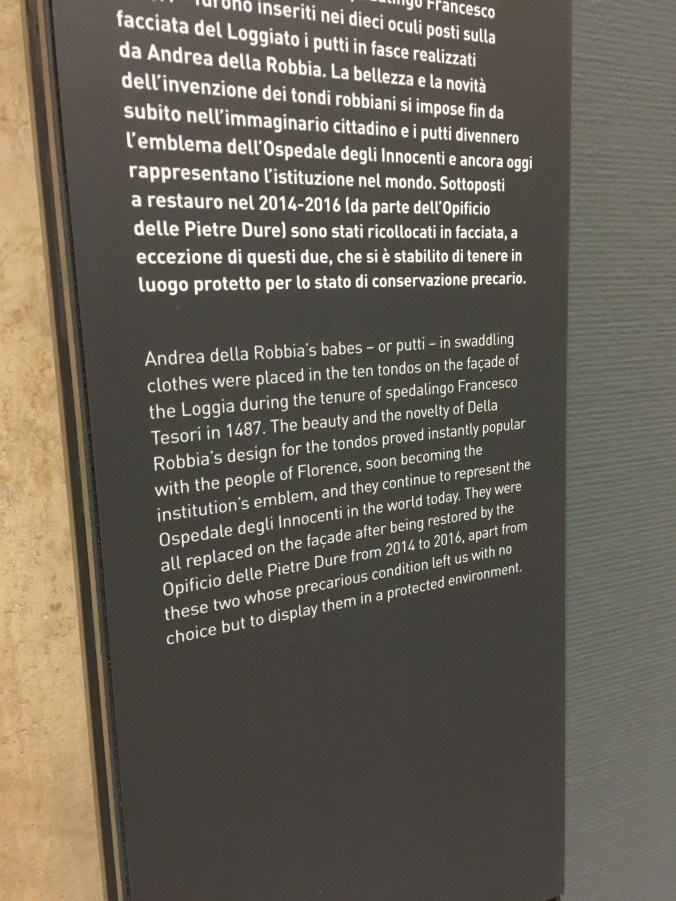
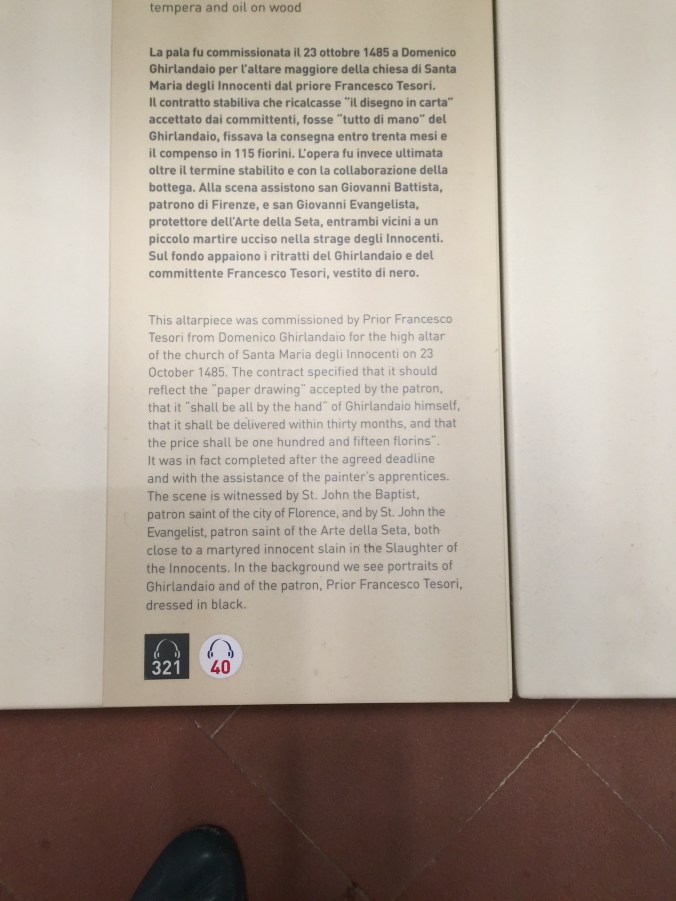
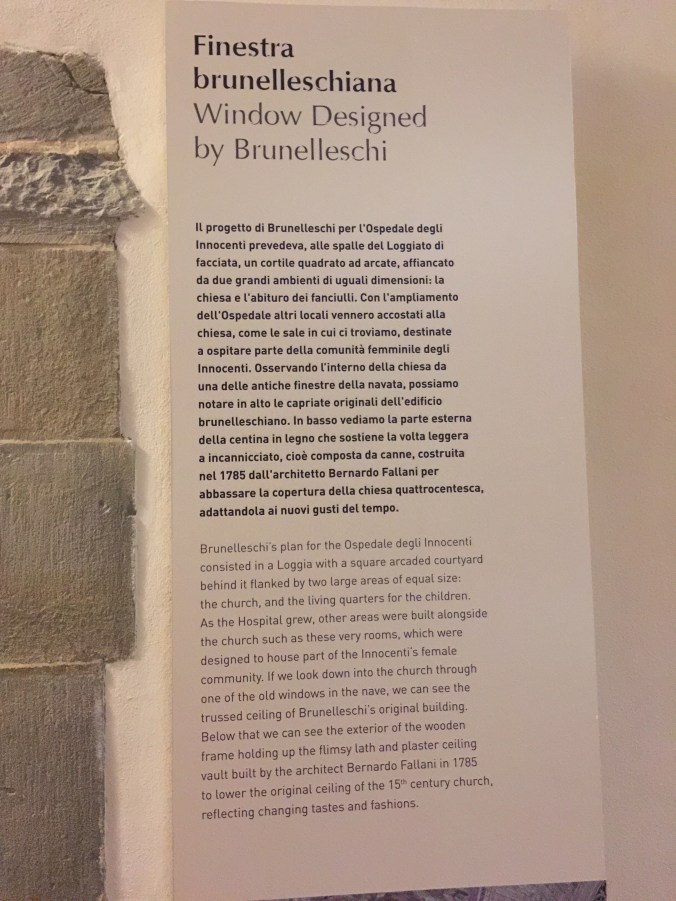
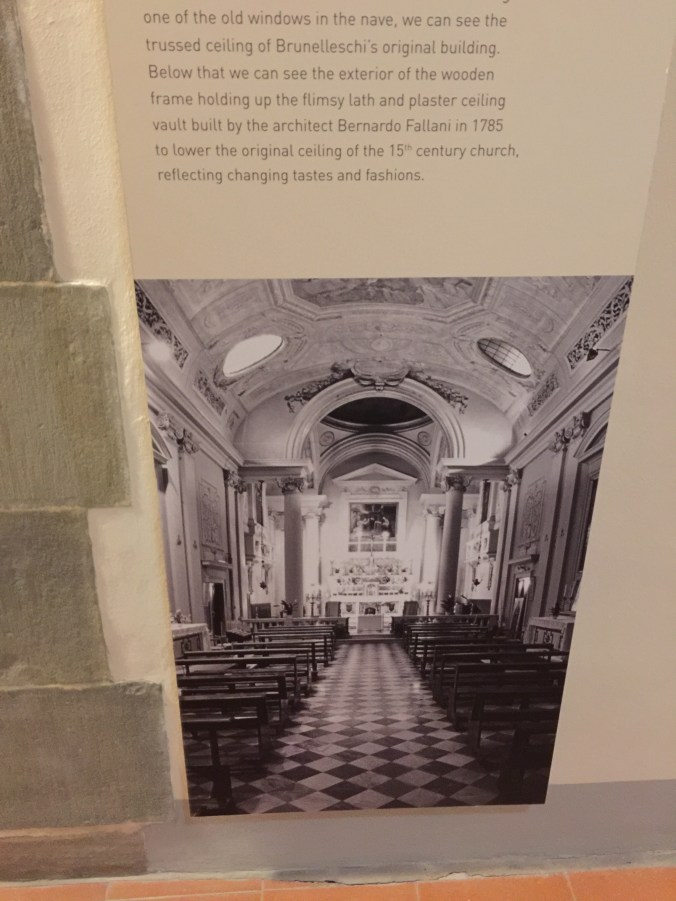
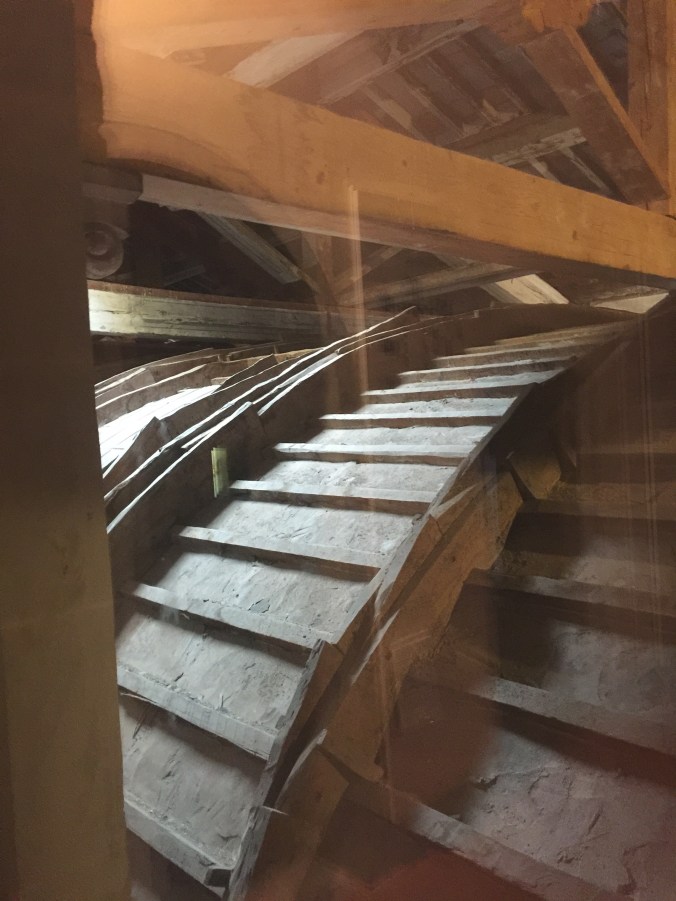
The labels are very understandable. I didn’t listen to the audio available, but you can see on the sign below that the audio tour stops here.


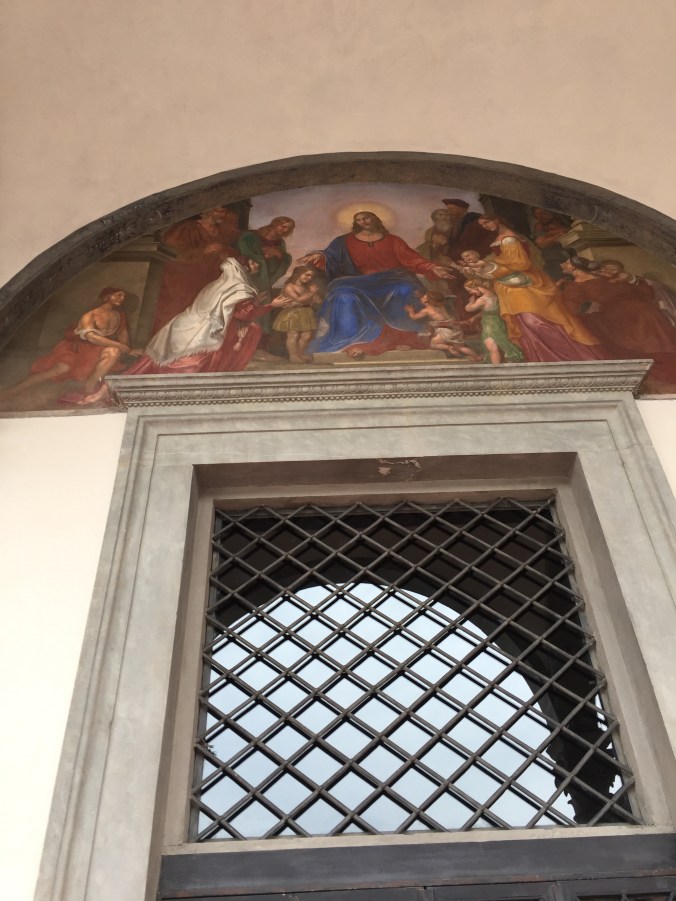
Over time, the ospedale not only took in and cared for orphans, it also provided technical training for many children. This being Florence, of course one of the technical vocations trained for was artist’s assistant!

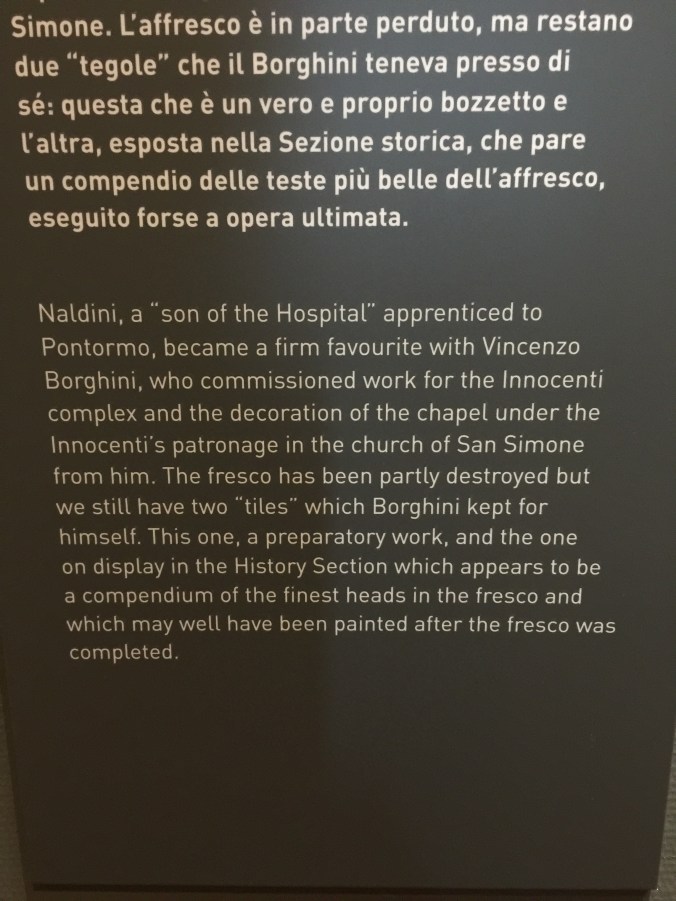
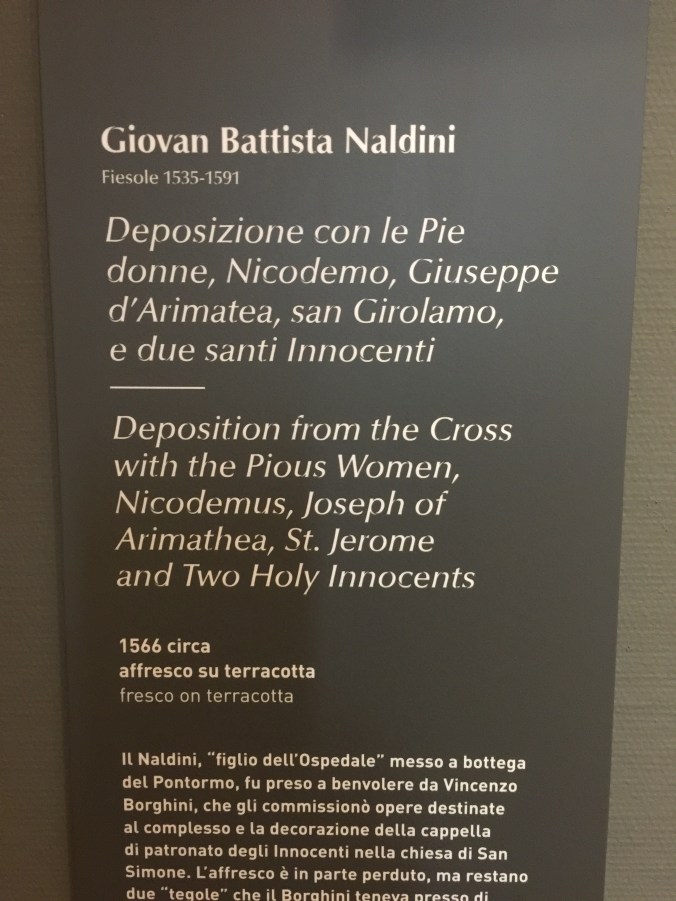
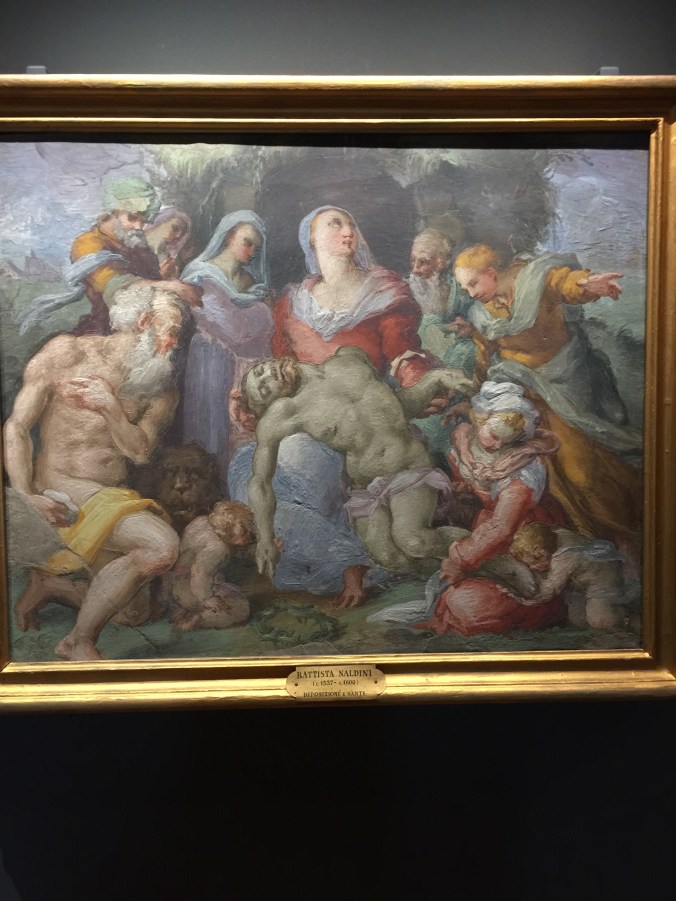
At least one of the children who found support at the ospedale was Giovan Battista Naldini, who had artistic talent which found expression after Pontormo.


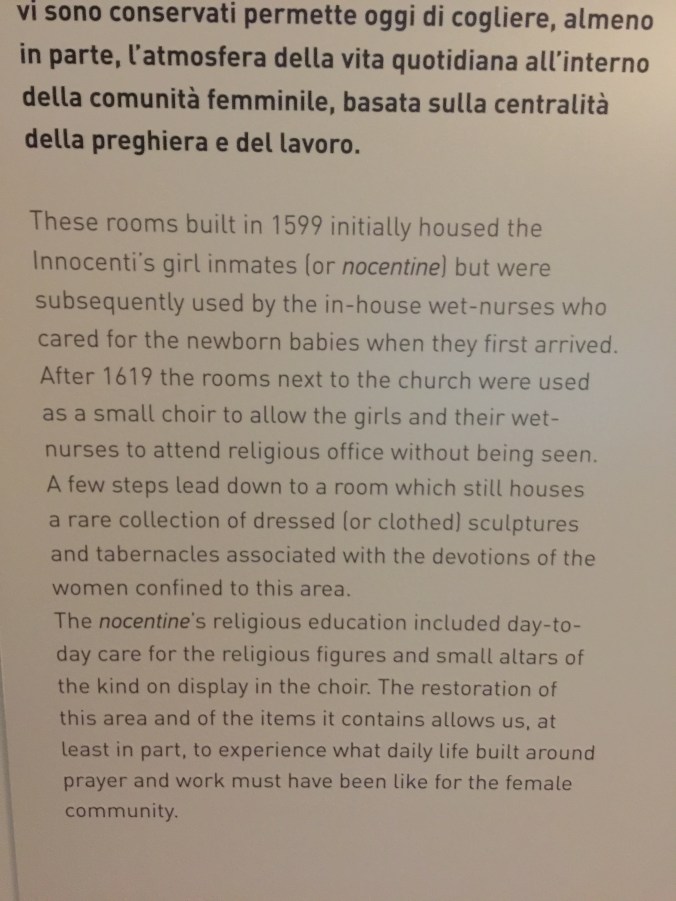
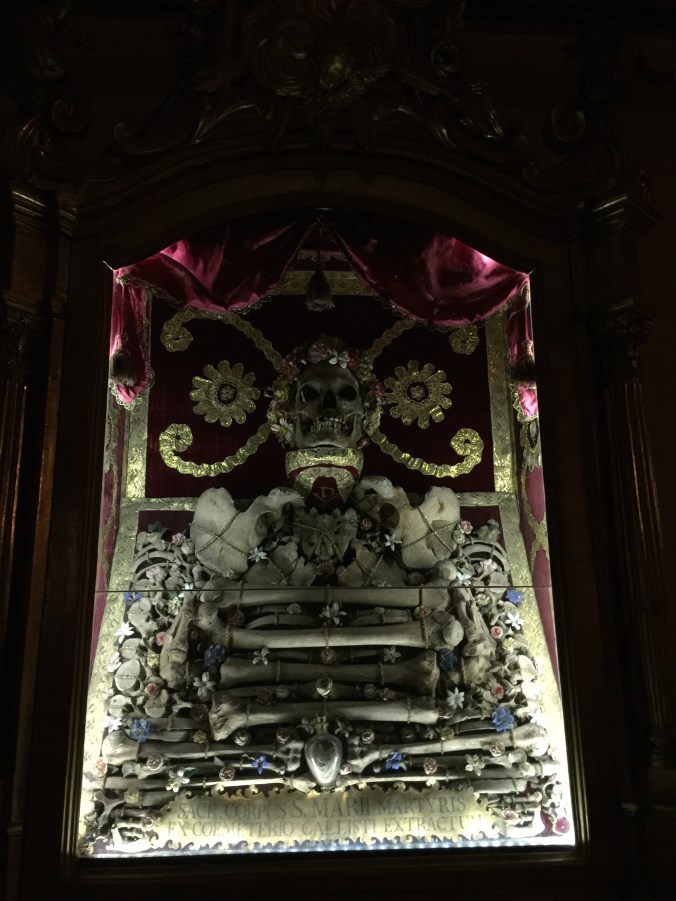
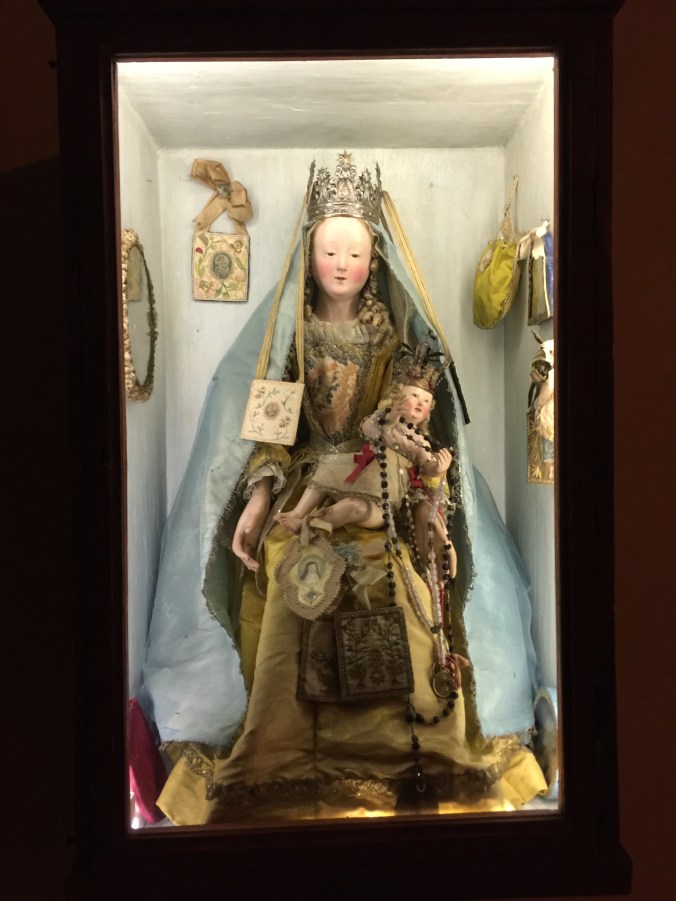
One of the rooms in the museum has this amazing display of 140 small objects left with the babies deposited at the ospedale. You can open any of the drawers and see the evocative mementos sometimes left with the babies.


The association of salt — with the preservation of health— survived in Florence: a small supply of salt left with a child dropped anonymously at the Ospedale degli Innocenti, the foundling hospital, meant the infant was unbaptized.
King, Ross (2012-10-30). Leonardo and the Last Supper (p. 235). Bloomsbury Publishing. Kindle Edition.















R u ready?
The beautiful Rivoire stands at the ready, with beautiful chocolates on display. The storied coffee shop/restaurant/chocolatier was closed for a couple of weeks, for refurbishment. They are back in business now, ready to provide any chocolates you may need!


I’m sure Shakespeare or somebody must have written about the joyful face of the humble primrose. If not, he/she should have!
P.S. a few minutes of Google and this I found (I’m feeling poetic now):
Ring-ting! I wish I were a primrose,
A bright yellow primrose blowing in the spring!
The stooping boughs above me,
The wandering bee to love me,
The fern and moss to creep across,
And the elm-tree for our king!
William Allingham
Wishing. A Child’s Song.
It rained and rained. And for a moment the sky cleared and the sun came out.
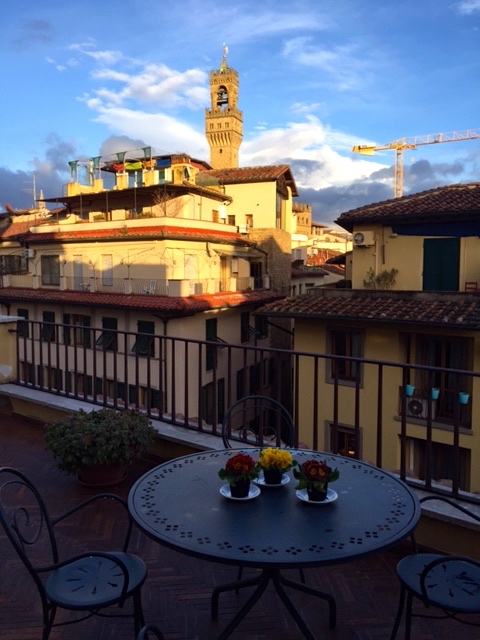
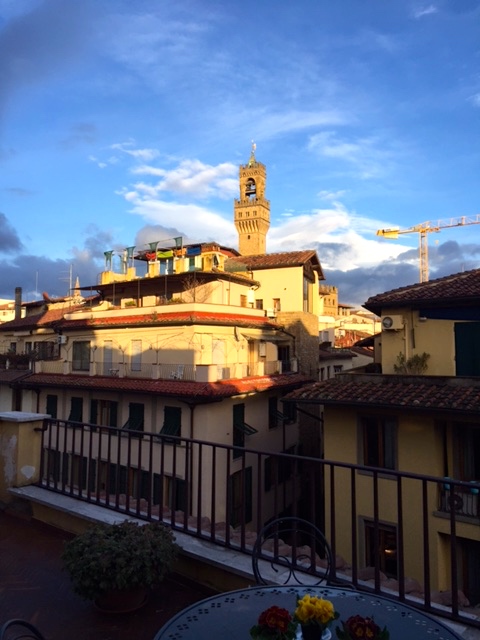
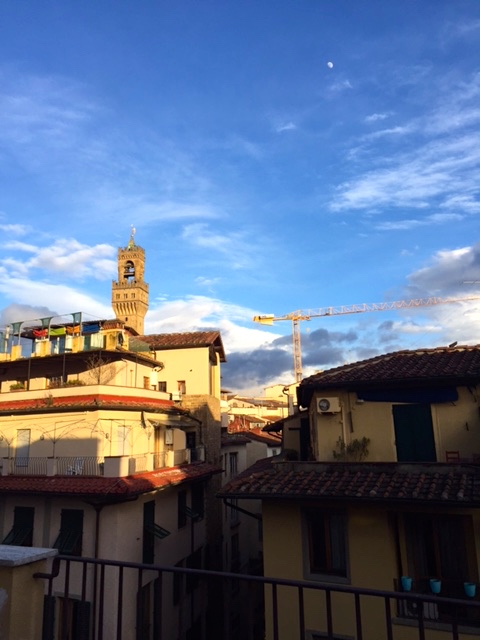
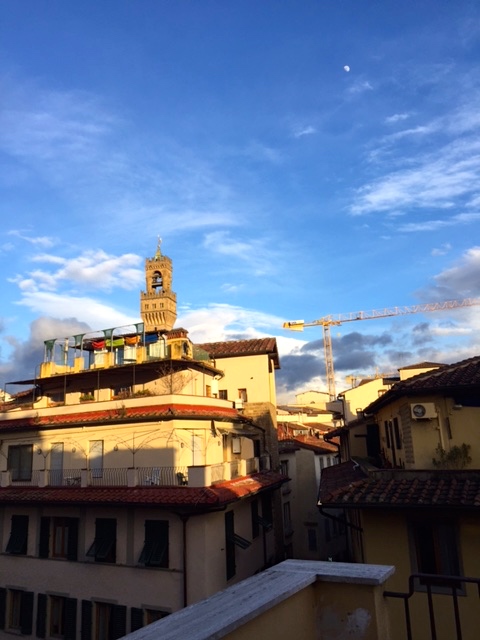
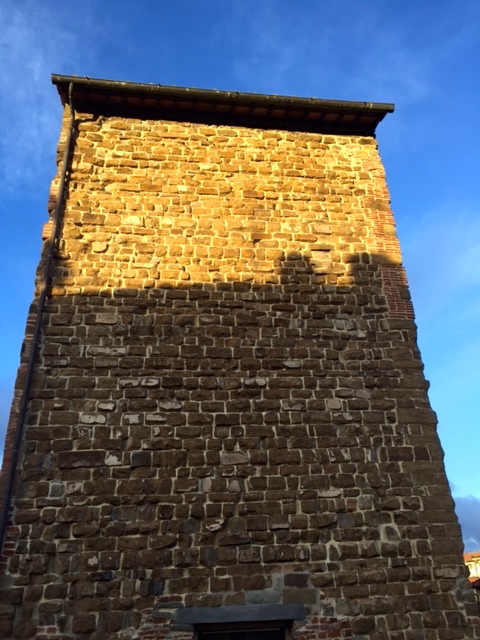
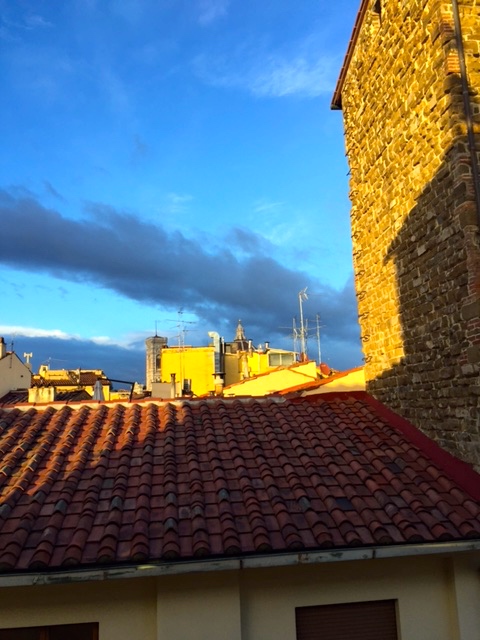
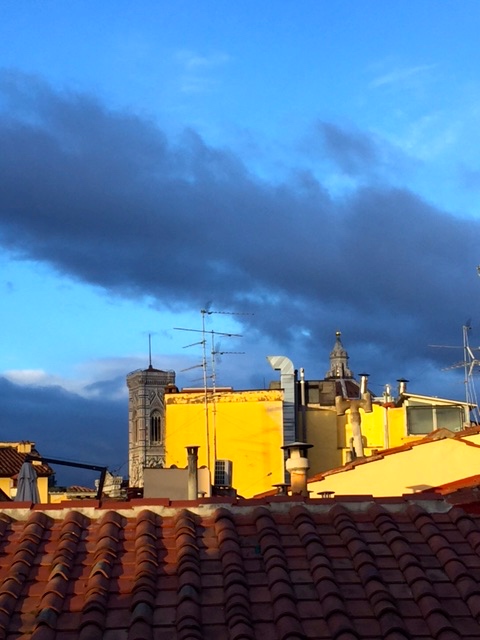
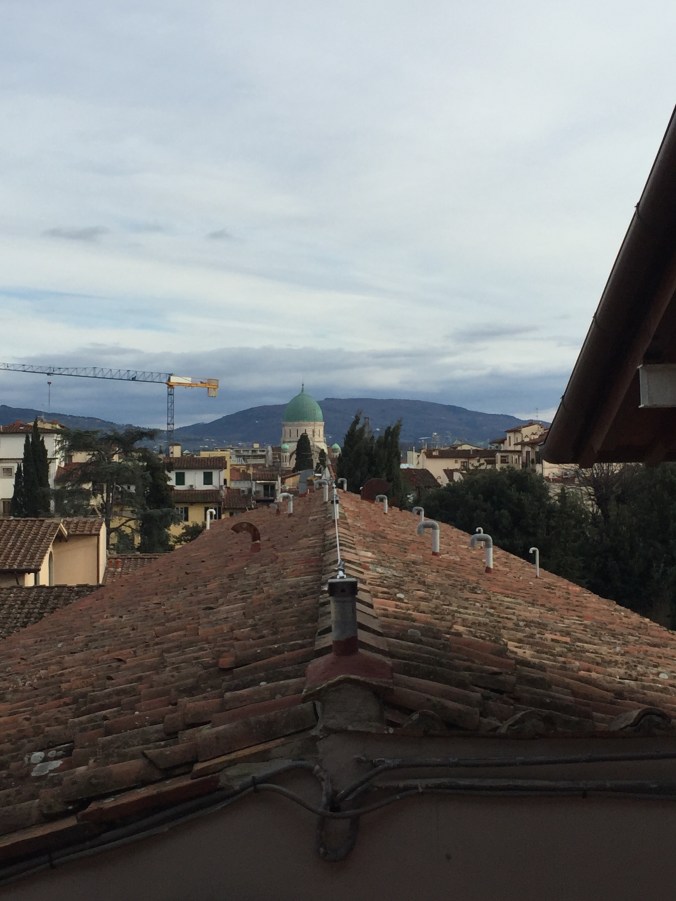
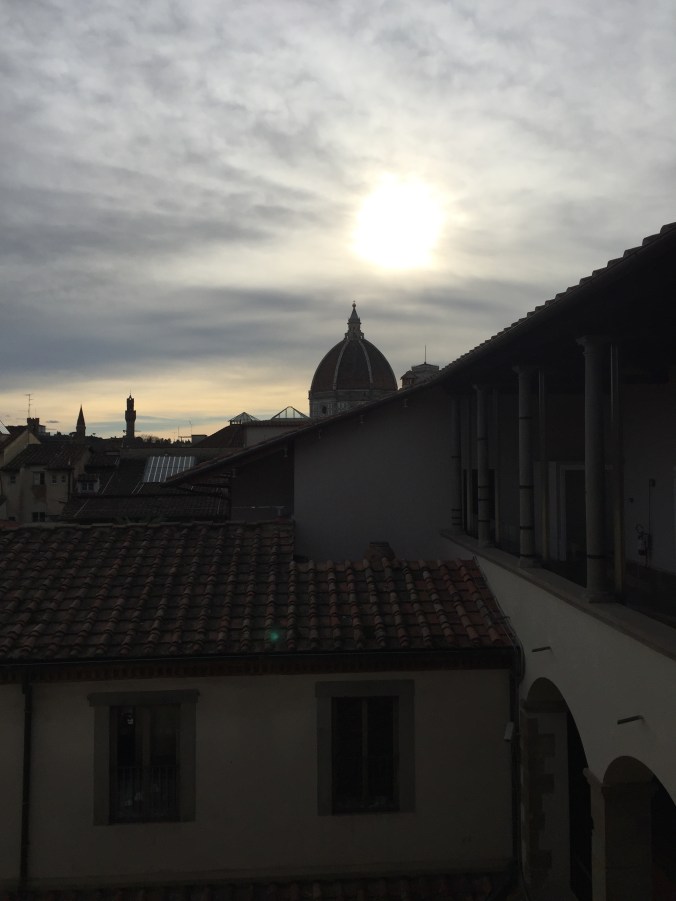
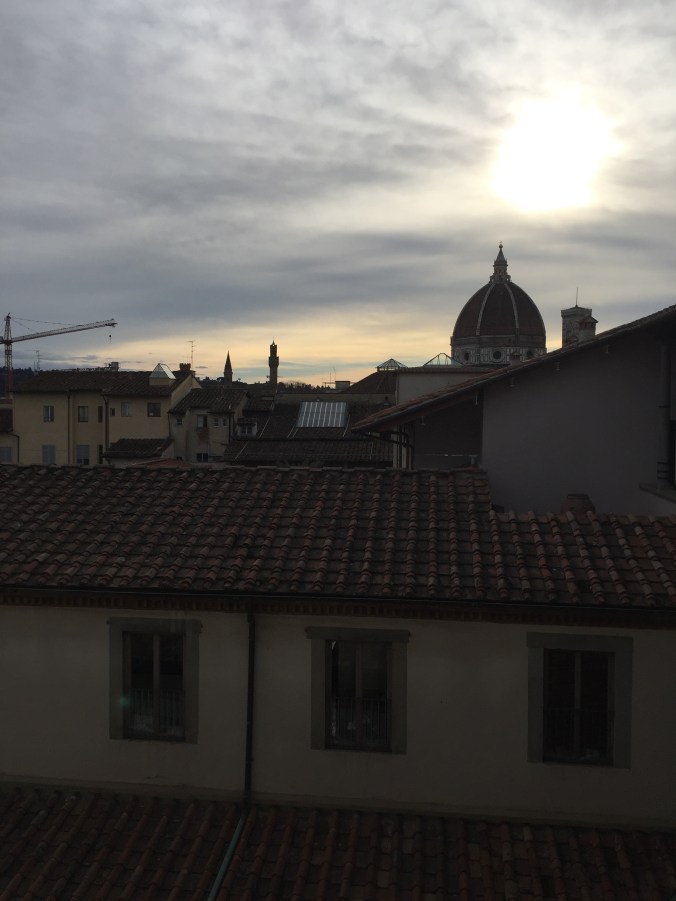
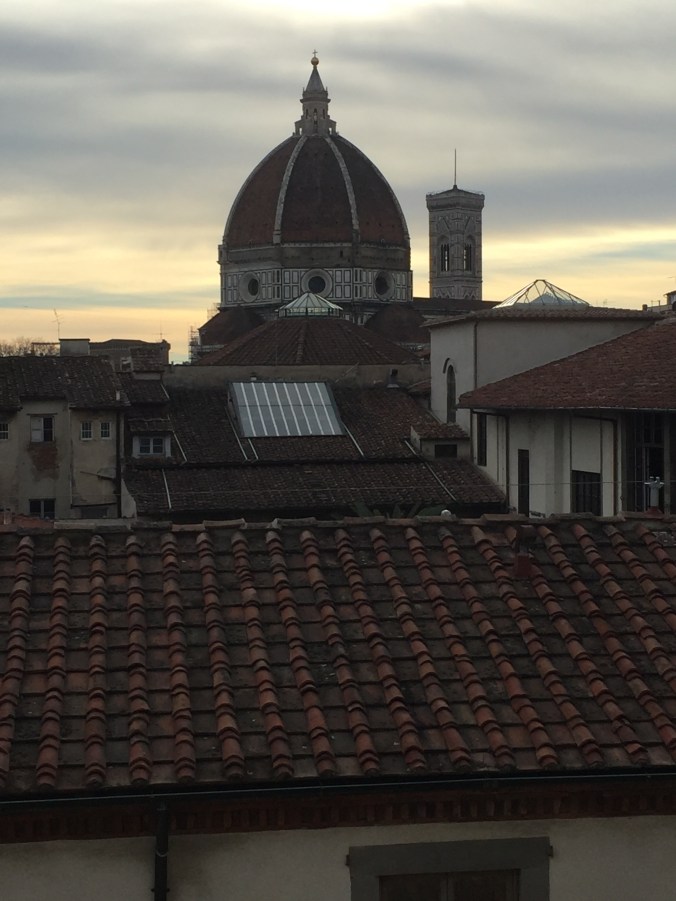
You can see Giotto’s campanile and the lantern of the Duomo from my terrace, if you look over the rooftops in the middle ground.
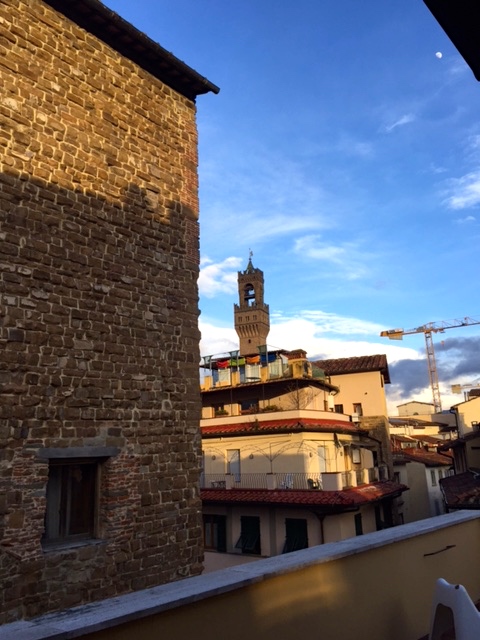
And then back to the Palazzo Vecchio. I could never tire of this view!
Prepare yourself: I’m about to look over the edge, down 4 stories to the street level below. Not a view for the faint-hearted:


Okay, breathe easy: we are back on the terrace. Check out the sky!

Now, let’s look over the ledge here. Ready, set, look!


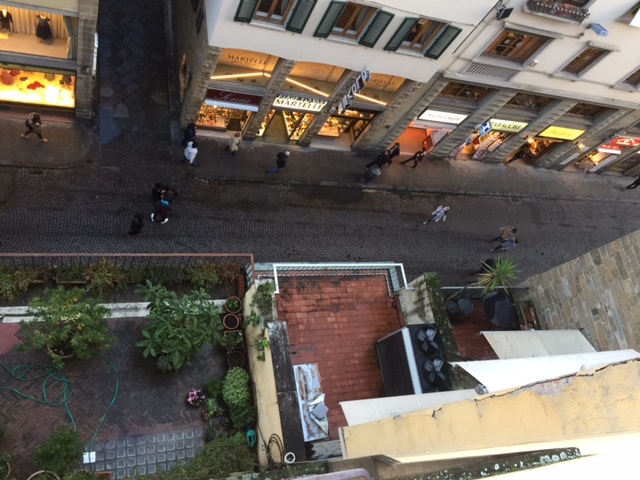
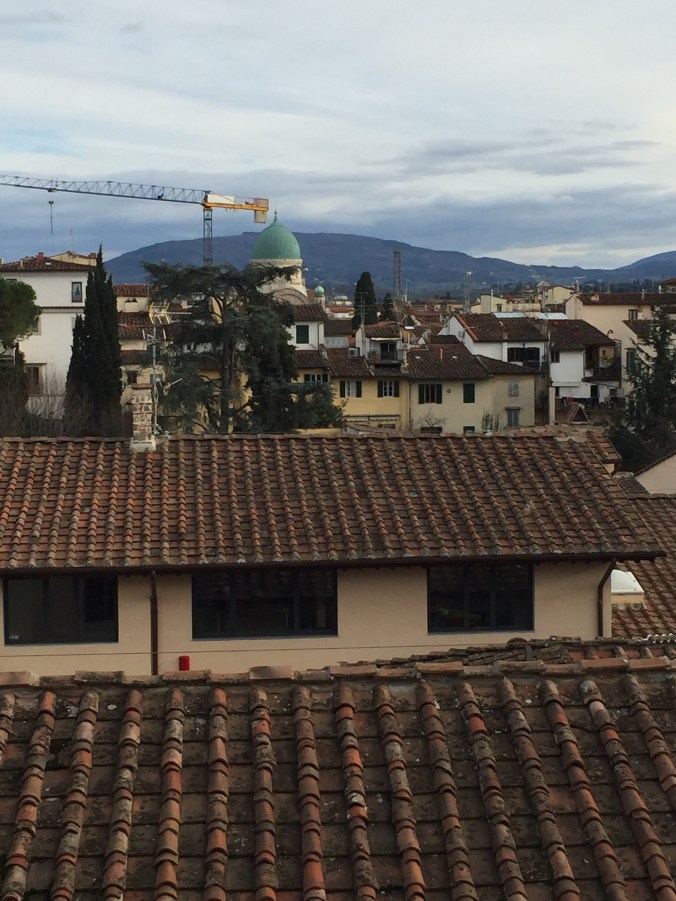
And looking straight ahead, see the zebra striped deconsecrated church? I love this view too.


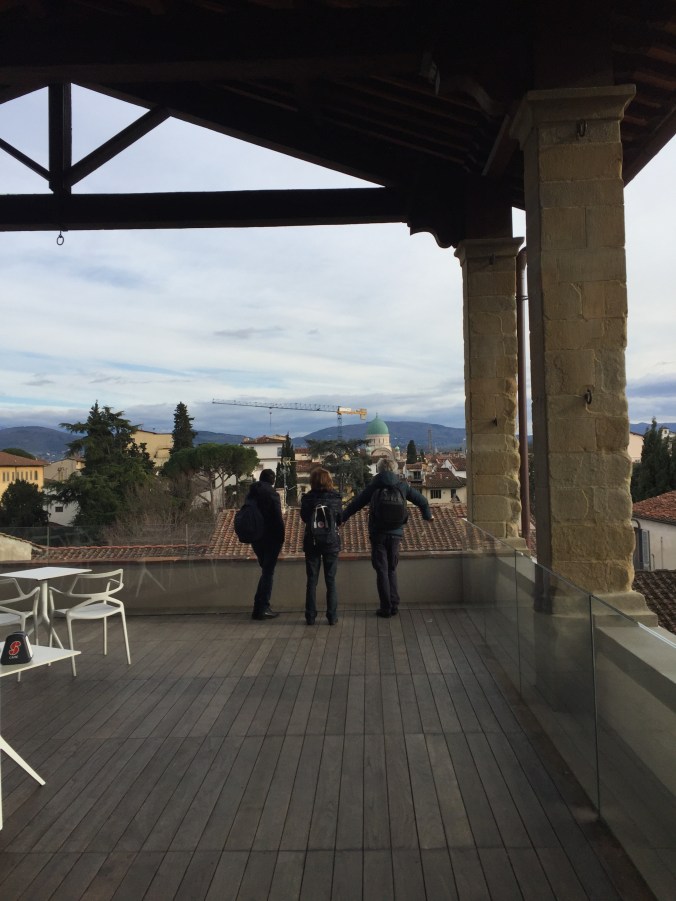
The Florentines know how to take advantage of roof top views!
‘I am the hailstorm that shall smash the heads of those who do not take cover.’
And that, he was.
Have you ever wandered the streets of Florence and happened upon the via dei leoni, the street of lions? Do you, like me, ask yourself why there is a street devoted to lions in the center of the historic citta?
No, you don’t?
Well, humor me, okay?
See this street running roughly north-south in the center of Florence, right behind the Palazzo Vecchio?

It turns out that the street, located at the rear facade of the Palazzo Vecchio, was so-named because from the 14th – 16th centuries, a menagerie of exotic animals–including some lions–were kept here. Wild and exotic animals were bred in Florence from at least the Middle Ages, both as objects of curiosity and symbols of wealth and prestige. In Florence, particular importance was given to the lions, because they were the very symbol of the city of Florence, as in the Marzocco.
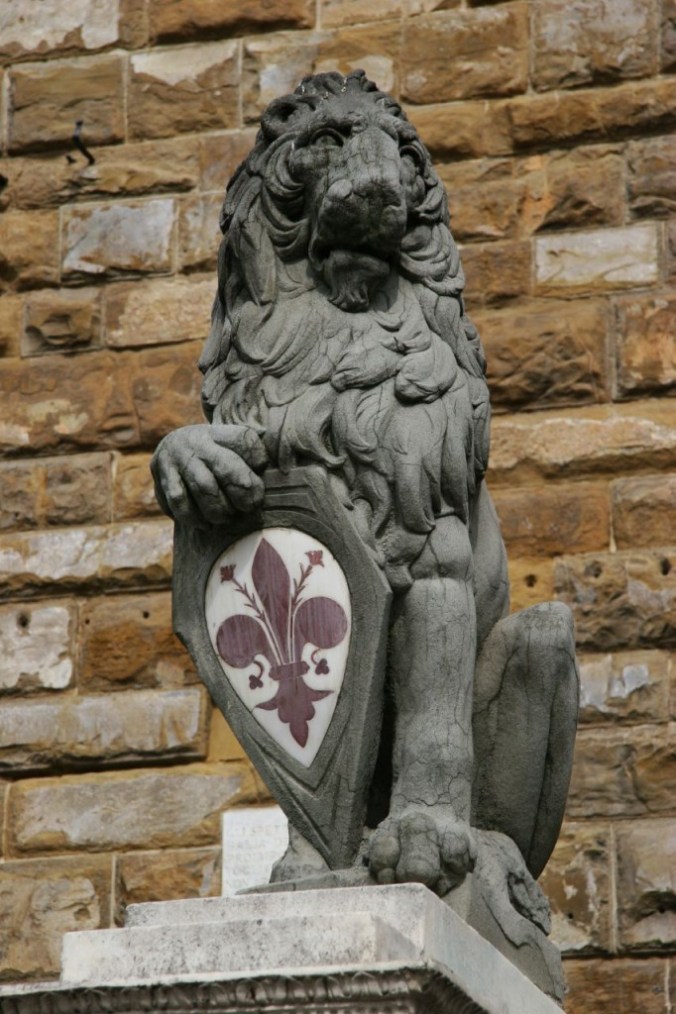
The presence of these animals in Florence has been documented since the 13th c., although probably they were there even earlier. Initially they were kept at the expense Republic in cages at the Palazzo del Podesta (now the Bargello ), then on the site of the what is now known as the Loggia dei Lanzi and, c. 1350, moved behind the Palazzo Vecchio, on the streets called the Via dei Leoni.

Mystery solved!
P.S. As I sit at my studies on this rainy Florentine Sunday, I see out my window this view of the campanile of the Palazzo Vecchio.
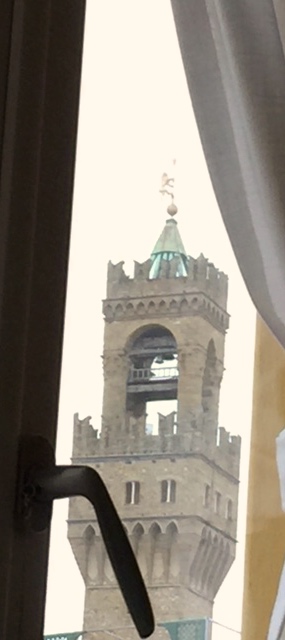
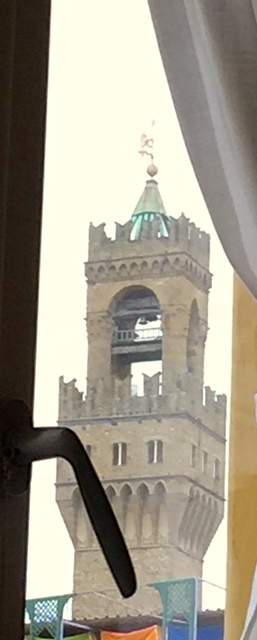
Do you see the Marzocco at the very top of the structure, holding aloft the Florentine lily? Lions and lilies and Florence, oh my!
Thank god the inhumane practice of keeping wild animals in captivity is no longer a part of Florentine life.
If so, you might try the remedy used by Lorenzo de Medici, involving pearls and precious stones.
By this stage Lorenzo was being attended by the celebrated Lazaro da Ticino ‘a very creative physician’, who had arrived from Milan. According to Poliziano: ‘in order not to leave any method untested, he tried a highly expensive remedy which involved grinding pearls and precious stones of all sorts’. This was a traditional remedy deriving from classical times, which almost certainly arrived in Europe from China, where such concoctions were thought to be ingredients of the fabled ‘elixir of life’.

Strathern, Paul (2015-08-15). Death in Florence: The Medici, Savonarola, and the Battle for the Soul of a Renaissance City (p. 2). Pegasus. Kindle Edition.

Footnote: or maybe not. The remedy didn’t work and Lorenzo died soon after.
I draw the line when it comes to giving free advertisement to this particular American fast food chain. Suffice it to say, it can be found in Italy, a lot (too much).
But, I will admit, I kinda get a kick out of this particular store of the chain, located near the train station in Florence. For example, I love the fact you can order and pay at a kiosk and then simply pick up your order at the counter:

I love the fact you can order a bun filled with Nutella at this all-American fast food joint. I promise you that this item is not available in the USA, right “Sweety?” (It should be “sweetie” btw.)

And it looks like this, which is very unappetizing to me!

But, I love the fact that this joint has an espresso bar. If only, back in America!


You must be logged in to post a comment.