August 15, 2024: Assumption Day Holiday in Bavaria

Just when I think I’m beginning to get the hang of living (temporarily) in Bavaria, life shoots me another surprise! Woo hoo! This is why I travel! So that I am always a little off balance. It keeps me young. Or, it will kill me. The verdict is still out!

So I’ve learned the hard way that food stores are closed in Germany on Sundays, so you had better plan in advance if you want to eat on the day of rest. Restaurants are open, so it isn’t a catastrophe unless you are not located near one.

But that was Berlin! And now I’m in Munich. Capital of Bavaria if you didn’t know (I didn’t until now).

Today I walked to the little food market near my apartment to fill my little refrigerator with the finest of Bavaria fruits and veg for the coming days. There is a little cafe attached to my market, serving coffee and pastries. These pastries in Germany are my undoing. I love them! And I am trying my best to avoid them so I can continue to wear the 3 outfits I brought in my backpack on this (planned to be short) sojourn that has been extended by circumstances having to do with the availability of my new Florentine apartment (is isn’t going to free until end, way end, of September).

As I was walking to my market this morning, I noted that the little parking lot was completely empty which seemed odd. I’ve never seen it full, but I have seen it moderately active with locals filling the trunks of their cars with cases of beer. I’m not being judgmental. I’ve seen that every day I have been at the market. Germans drink A LOT of beer. It’s not a stereotype for nothing.

It looked from a distance like the lights were off in my market, but the lights were on in the attached cafe, so I thought the market must be open too but the intense morning sunshine was making it hard to see the lights. As I got nearer the door, I saw the lights were off, but I proceeded. There are 2 automatic sliding glass doors that admit one to the market. When I approached the first one, it opened and I stupidly entered to see if the other one would also open, even though by then I could see the lights were off in the market.

So now guess what happened? I was now trapped in the vestibule between 2 glass doors, neither of which would open. I panicked.

I had seen the cafe employee sitting outside the cafe about 20 feet from where I was trapped as I approached the building, so I knocked hard of the unmoving outer glass door, assuming she would hear me and come over to investigate. Unfortunately, this employee was not snoopy like I am, and she was unmoved. I added a yell for help. She did not come.

I had my phone, so I thought about calling my apartment building manager for help, and wondered when the market would reopen. I was panicking still

I knocked and yelled some more, but she didn’t budge. I couldn’t see her, but I knew she could hear me.

About 5 minutes later I saw a man arriving on foot and he obviously thought the market was open too. He saw me and I stared waving. He approached slowly, seeing a crazy woman caught behind glass in a closed market entrance, but he approached. When he got into the right position, the door slid open and I slid out, happy to be free. He and I asked the employee if the market was closed for the day and she said yes, its some Christian holiday in Bavaria today.

He left, I lingered. I asked her if she heard me and she said yes. I asked her how you call for help in German and she said “helfer” or something, but that almost all Germans speak English. We laughed together for a moment and I left.

Back in my apartment, I Googled “holidays in Bavaria.” Here’s what I found out:

August 15, 2024:

Note: Assumption Day is only observed in predominantly Catholic communities in Bavaria.

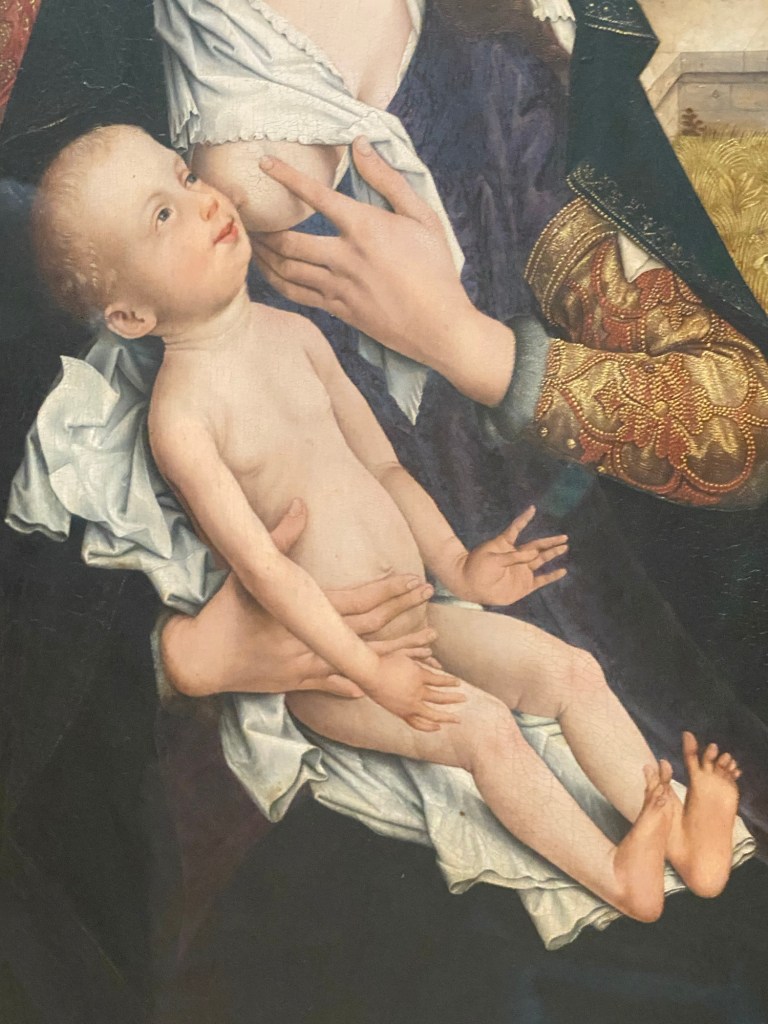
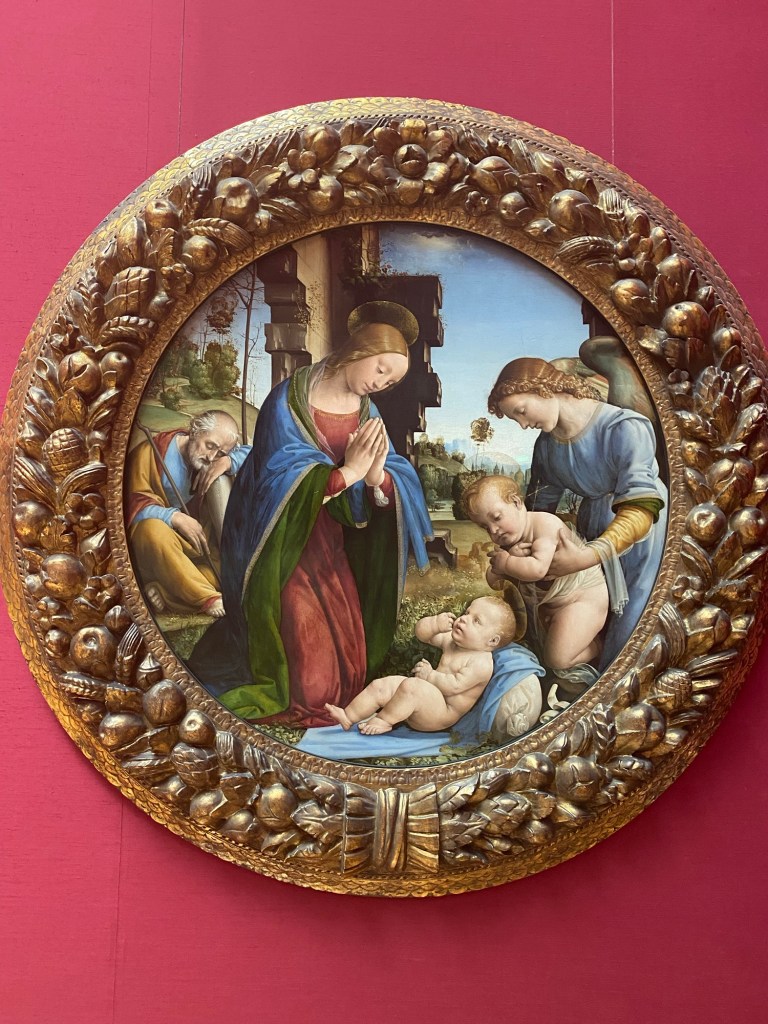
According to Roman Catholic tradition, Assumption Day is the most important feast to “the Blessed Virgin,” who gave birth to Jesus Christ. It is not exactly the belief that Mary “ascended” to Heaven, but it is believed that her body and soul were “assumed,” meaning taken by God into Heaven, on this day.

Not until the fifth century A.D. does belief in the Assumption first appear in the historical record, and it was not established officially as a Catholic feast day until 451 A.D. at the Council of Chalcedon. The date of 15 August however, was not fixed until about 700 A.D.

Mary is thought to have lived with the Apostle John, into whose care Jesus entrusted her as he died on the cross, and to have travelled with him to reside in Ephesus when John became pastor of the church there. Both Ephesus and Jerusalem lay claim to the death-place of Mary. Her grave has been identified by some in Jerusalem, but Catholic tradition continues to maintain her tomb is, like Christ’s, an empty one.

In Bavaria and Saarland, there are many special masses, ringing church bells, and religious pilgrimages on Assumption Day. When two churches are close to one another, they often ring their bells in unison. In some areas, there are processions and summer festivals on 15 August as well.

I had to laugh a little about this experience, because today is a holiday in Italy of course too, but having been gone for 2 years, I forgot.

I hadn’t known that Bavaria was so Catholic, because I am uneducated about Germany. I am learning about the 30 Years War that followed Martin Luther and becoming a bit more informed. It’s why I travel. To become more educated and I assure you I will not forget today and what I learned!

The ancient Greek art collection at the Altes Museum, Berlin, Part 1

Wow, wow, wow! I knew I was starved for art, having lived for the past 2 years in Denver, but I didn’t realize just how starved.

Being is Berlin is a gift! It’s my first trip to Germany and although I had always known that there were great collections of art here, it didn’t hit me until I visited this museum early in my visit.

As I admired the cutting of the marble to form strands of hair and folds in drapery, I rejoiced. Sounds dramatic, right? But, I promise you, its true.

In Berlin I marveled even more at the history of these objects I was lucky enough to witness. Not only had they survived sine the 6th century BC, but think of the 20th century history of them. Is it not a triple miracle, at least? They were created, miracle one. They survived from the Greek world in the period of BC, miracle 2. Their saviors successfully kept them safe through the turbulence of WWI and WWII. Miracle 3 for sure.

Such a gift to see these masterworks in person. In the round. The dawn of Western culture.

As I gazed at the so-called “Berlin Goddess,” I was entertained to watch the young girl you see with the headphones at the back left. She was delightful. She had her own strategy for enjoying the art of this gallery and while it was quite different from mine, I loved watching her zig zag quickly through the sculptures and taking whatever she wanted/could from each of them.

But then, I was left alone to admire the “Berlin goddess.” Wow. It was worth the trip just for this moment.

Isn’t she lovely?

I alway love statues of recumbent lions. This ancient one seemed less ferocious and more domesticated. I paused to admire the way the sculptor achieved the patterns with his hammer and chisels.

And then I encountered Athena from around 400 B.C. It speaks through the ages and tells us of Athens.

Next, the head of Dionysus. Simply beautiful.

I needed another month in Berlin to appreciate the incredible collection of Greek red figure pottery. Each vase or dish conveys so much information about what animated Greek life at the time it was created.

But the marble always calls me back. Look at this form and that draperies that reveal rather than obscure it. The goddess of love, indeed.

Relief sculpture is a favorite of mine. The format will reach its crescendo with Donatello and Michelangelo, but the Greek forerunners are impressive to say the least. Study the shallow relief that conveys the overlapping horses and their legs. Imagine carving that.

The so-called “Berlin Athlete.”

Torso of a dancer. A Roman era copy in marble of a Greek bronze original. Contemplate those words. Think what they tell us.

And then look at how beautiful the carving is. Coincidentally, think of the 20th century fashion and textiles of Fortuny in Venice. Then tell me ancient artworks are boring! I defy you.

I’ll be back soon with even more of these incredible works of art from Berlin. Prepare yourself. They are awesome.

The grand finale of the Charlottenburg Palace, part 6

I’ve saved the best for last from my visit to this lovely summer palace in the city of Berlin. The dining room and the incredible ballroom!

First, a video and a couple pix of the “dining hall” that precedes the ballroom. Imagine banquets in this space for couples dressed in their finest.

And now here is the gorgeous green painted ballroom, highlighted throughout with gold leaf.

Charlottenburg Palace, part 5

Next up, an exquisite room finished with silver leaf! It’s normal to walk through one of these rooms throughout Europe and see gold leaf finishing. But, I can’t recall ever seeing silver leaf used in the same way. I found it striking and beautiful. The choice of chandeliers in each room is also something special to behold.

And then you enter this room, finished with the sheerest of white fabrics over a dark pink field. The designs are composed of folded fabric. I have never seen anything like this before. Please see the label at the bottom.

And then we enter another magnificent room, filled with repeating design on all the walls and the ceiling. I liked it!

And finally, we pass through the upper landing of an amazing stairway. The label below bears some valuable info.

Berlin!

Berlin isn’t Paris or anything like Italy, both of which places I can’t seem to get enough pictures. But it has its own charm, which is incredible when you think that 80 years ago it was bombed almost to smithereens.

Above, the avenue known as Kurfurstendamm, where I was lucky enough to be at home during my stay.
Above and below, neighborhood boys play soccer.

Below: Other parks for other children, where grandparents swing their progeny.

The leafy streets and the famous German store named Manufactum and a strawberry stand.

Bells tolling from the Kaiser Wilhelm Memorial, the remnants of a church that was all but destroyed during WWII. Sidewalk cafes.

Above, the Spree River is a source of pleasure cruising.

Miscellaneous interesting things.

Gesundheit. The first word of German I ever learned. I was 3 years old at the time! I still remember who taught the word to me!

Pretty doorways

A taste for tacos

A taste for sushi

A taste for books. It says “buys more books!”

A hair salon’s menu with pricing.

A cafe menu, as one sees in France or London.

Attractive apartment buildings

Attractive bookshops.

The influence of Italian coffee culture is everywhere in Berlin. I enjoyed some excellent coffee here.

The baked goods! OMG!

The soviet era TV tower at Alexanderplatz

The high speed train service.

The terraces with flowers.

The interesting architecture.

The confusing but excellent Ubahn

Museuminsel: my home away from home in Berlin.

The Vespas!

The elegant sidewalk cafes.

More beautiful architecture

Learning German

Did I mention the baked goods?!

I’m sure you’re visually exhausted, so let me condense the last group of this and that taken in Berlin.

Charlottenburg Palace, Part 2

We have more exterior shots to look at before heading inside. I think you can tell that I was very attracted to this lovely summer palace.

I believe the rather unusual ducks below are known as Mandarin ducks. I may be wrong. I always thought the dish on Chinese restaurant menus called “Mandarin duck” was the way in which the fowl was cooked. Maybe it refers to the type of duck? Can anyone tell me?

To the sides of the central formal garden are these more naturally styled areas that evolve into totally irregular and natural formations to the boundaries of the property.

I’ll soon be back with more!