
for more, see:
That was exactly my goal recently, longing to go back, even just for a couple of hours, to a simpler time when better men were President of the USA and the world seemed full of possibilities.
That’s a lot to ask of a film, but I found one when I stumbled upon It Started in Naples. Starring Clark Gable and Sophia Loren, and set in gorgeous southern Italy, what could be better?

Gable is perfect for his role in the movie and Loren is, well, Loren. Thanks to the advancement of women that has happened in the past 60 years, the silly woman Loren plays is a thing of the past. I must admit I cringed a few times with the actions and words required for her part.

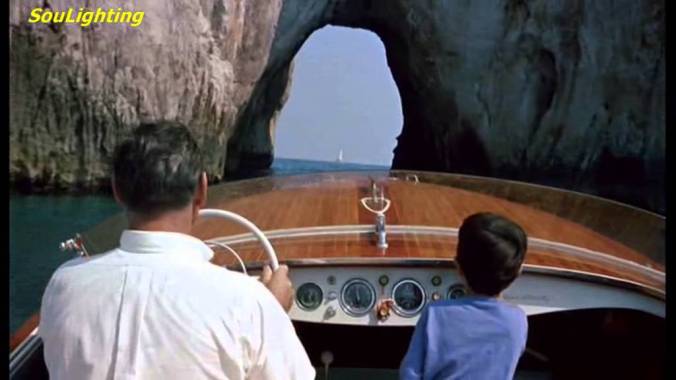
I am able to overlook those weaknesses for the chance to travel, vicariously, to Naples and environs. The child actor steals the show, as does the scenery.


CCA-F-000111-0000
Roman Holiday, 1953, William Wyler, Gregory Peck, Audrey Hepburn, poster
Mandatory Film Credit / Collection Christophel/Alinari Archives
Image date: 1953
Place of photography: Italy
Collection: Christophel/Alinari Archives

ULL-F-050152-0000
The actres Audrey Hepburn (1929-1993) in the movie “A Roman Holiday” directed by William Wyler, Italy 1953
Mandatory photo credit: Ullstein Bild / Alinari Archives
Place of photography: Rome
Collection: Ullstein Bild / Alinari Archives

INT-F-495654-0000
The actors Audrey Hepburn and Gregory Peck in “Roman Holiday”, directed by William Wyler, USA 1953
Mandatory photo credit: Archiv Friedrich / Interfoto/Alinari Archives
Image date: 1953
Place of photography: Rome
Collection: Interfoto/Alinari Archives

TOP-F-028999-0000
Audrey Hepburn in “Roman Holiday” for which she won an Oscar in 1954
Mandatory photo credit: 2005 / TopFoto / Alinari Archives
Image date: 1954
Collection: TopFoto / Alinari Archives
Photographed here is a beautifully-dressed Alice Austen:
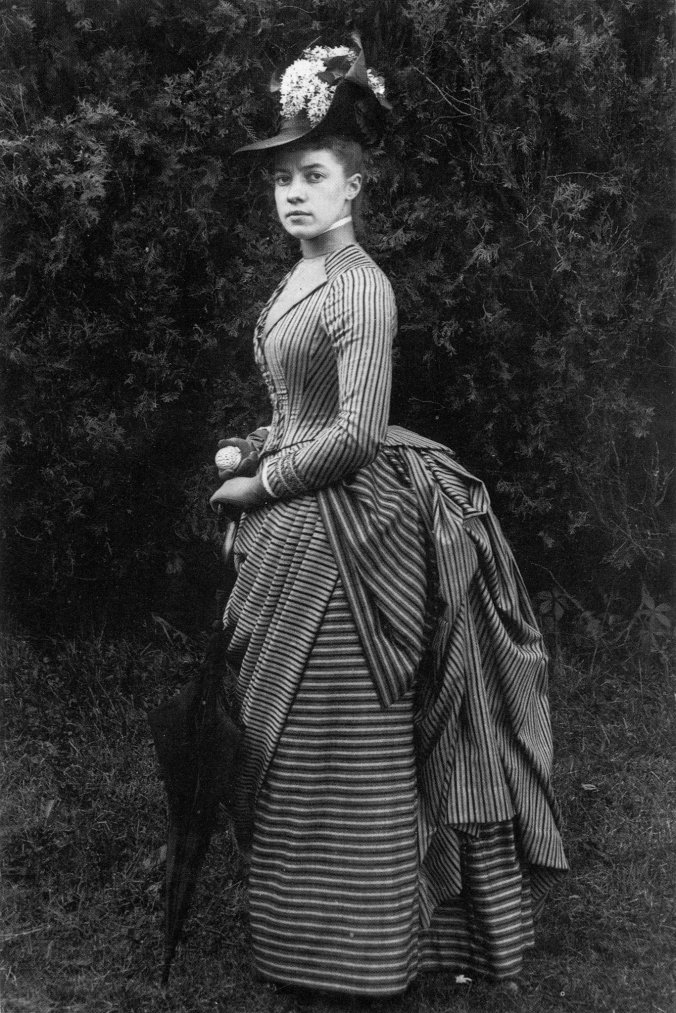
Before Diane Arbus and Helen Levitt, there was Austen, one of the earliest female photographers in the country, who produced more than 8,000 images over the course of a long life that began in 1866.
She was, additionally, a landscape designer, a cyclist, an expert tennis player and the first woman on her native Staten Island to own a car. She took her camera everywhere — documenting immigrant communities in New York, street life, lawn tennis matches, her friends, parties, interiors. She often lugged around equipment weighing as much as 50 pounds.
source:
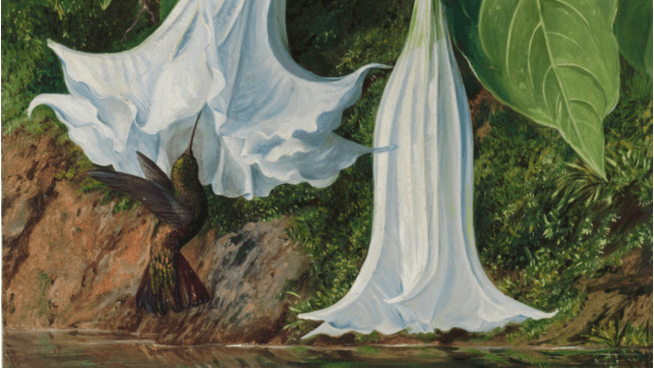
It wasn’t uncommon for early women explorers to have a taste for solitude. Take Marianne North, the Englishwoman who in the 1800s circumnavigated the globe unaccompanied, spending thirteen years traveling and skirting Victorian convention.
Her paintings of flowers and landscapes hang at the Royal Botanic Gardens at Kew, outside central London.
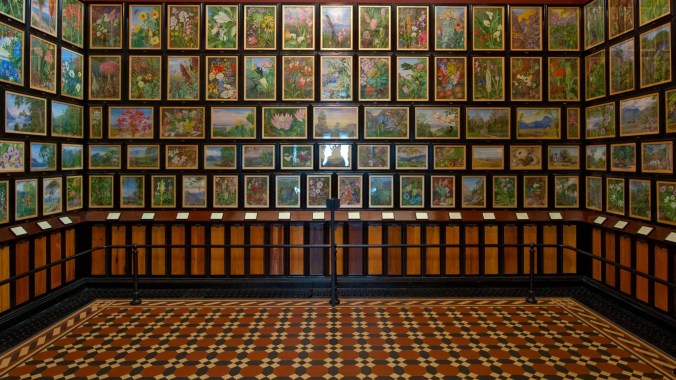
In her autobiography she recounts her travels, which she didn’t begin until she was forty.
In Nainital in the Himalayas in India’s Uttarakhand state, she liked sitting in the sun.
In Philadelphia, she walked the parks and Zoological Gardens enjoying idle days.
In the Bunya Mountains of Queensland, Australia, she said she enjoyed “my entire solitude through the grand forest alone.” Today, a genus of tree and several plant species are named for her.**
You can see North’s work here: https://www.kew.org/mng/gallery/
**Rosenbloom, Stephanie. Alone Time: Four Seasons, Four Cities, and the Pleasures of Solitude, Penguin Publishing Group. Kindle Edition.
It had been a kind of liberation, of both mind and desire, that Berenson had discovered in reading the works of Walter Pater and in beginning to study the paintings of the Italian Renaissance, and this still rang through to his visitors seventy years later. Lewis Mumford wrote to Berenson of a visit in 1957, “To behold your own spirit burning so purely and brightly still, gave a new meaning to Pater’s old figure: ‘a hard gem-like flame.’”
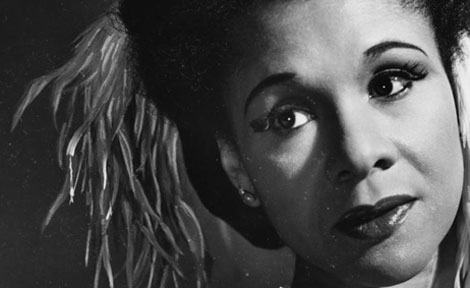
With Katherine Dunham, the African American anthropologist, choreographer,and dancer, Berenson had a sort of platonic love affair when he was just shy of ninety. He wrote that Dunham “is herself a work of art, a fanciful arabesque in all her movements and a joy to the eye in colour.” She from the first felt in him the “vitality, charm, and wisdom that are found only in truly great people” and would eventually write to him, “I left a part of myself that is deep and inner with you.”
Rachel,Cohen. Bernard Berenson (Jewish Lives) Yale University Press. Kindle Edition.
This is just something I never would have believed had happened, but it apparently did. It is discussed in a very interesting book on Berenson by Rachel Cohen, which I quote below. Lee Radziwill left her impression of the sophisticated but very much older Berenson:
“Nicky Mariano [Berenson’s amour and assistant) was sometimes jealous…of Berenson’s flirtations and affairs and of the great many women who made up what she called ‘B.B.’s Orchestra.’ “
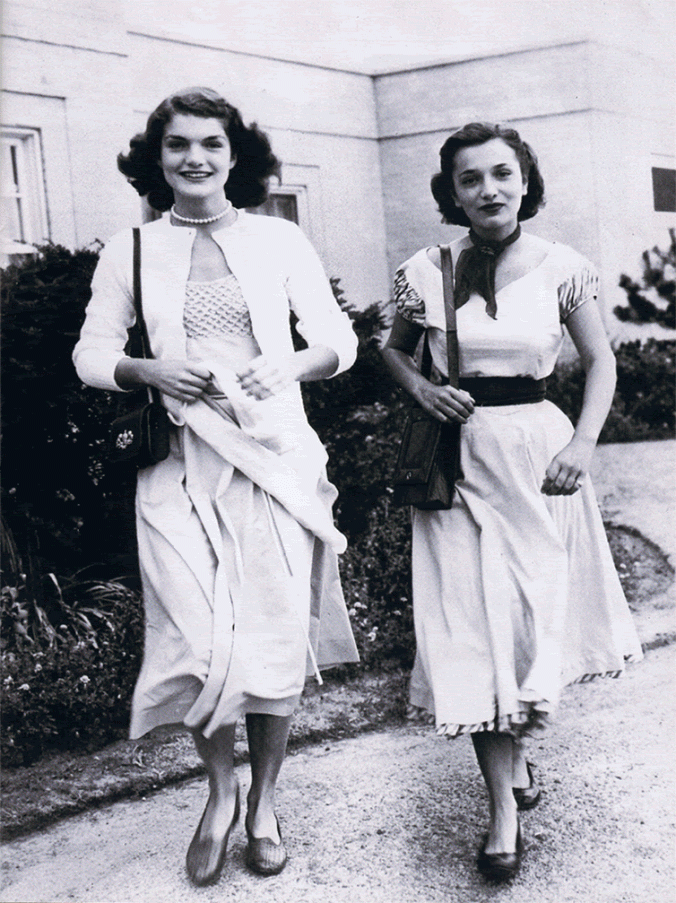
In fact, as he aged, Berenson’s seductive power became somewhat legendary. Lee Radziwill (Lee Bouvier when she visited Berenson in 1951 with her sister, who became Jacqueline Kennedy Onassis) still thought of Berenson as “one of the most fascinating men I ever knew,” sixty years later. She compared his powerful appeal to Jawaharlal Nehru’s: they were “seductive mentally, rather than physically.”
Berenson’s catalog of mistresses and of epistolary romances, like all his other collections, was exhaustive. He had first found both sexual tolerance and a large network of youthful romantic friendships with women and men in bohemian and Edwardian circles, and among the expatriates in Italy.
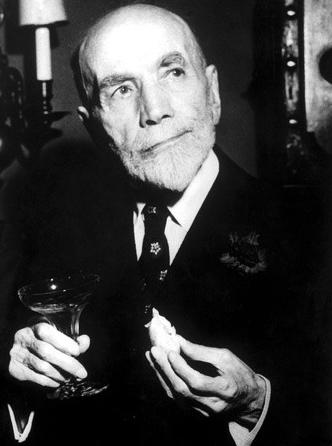
In the years of his maturity, he found a similar atmosphere among his mistresses and flirtations in the aristocratic milieu of the European art world. Berenson adored, and was adored by, titled women, and he was interested in beauty wherever he saw it. Attractive young women who visited I Tatti were regularly surprised by his physical attentions.
After WWII…Berenson nce again he appeared to be a magician. There were those who found his presence staged, but others felt that even to be near him was a magical experience.
The young sisters who became Jackie Kennedy and Lee Radziwill wrote to their mother of visiting Berenson in the summer of 1951 and of how they saw him approaching through the woods at I Tatti. Berenson sat down and immediately began to speak to them of love, distinguishing between people who are “life-enhancing” and “life-diminishing.”
“He is a kind of god like creature,” they wrote. “He is such a genius, such a philosopher, such a pillar of strength and sensitivity, and such a lover of all things. He is a man whose life in beauty is unsurpassable.”
Rachel,Cohen. Bernard Berenson (Jewish Lives) Yale University Press. Kindle Edition.
Cudjo Lewis was getting old, and Zora Neale Hurston had something to prove.
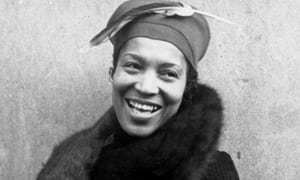
Hurston, pictured above, was the prolific African American author best known for “Their Eyes Were Watching God,” She was just starting her career in 1928 when she traveled down to Plateau, Ala., to meet with Lewis. The man was in his 80s. He was widely believed to be the last African man alive who had been kidnapped from his village, shackled in the cargo of a ship and forced into slavery in America. Hurston, competing with other anthropologists of the day, set out to document his life more thoroughly than the rest.
 get back, lauretta!
You must be logged in to post a comment.