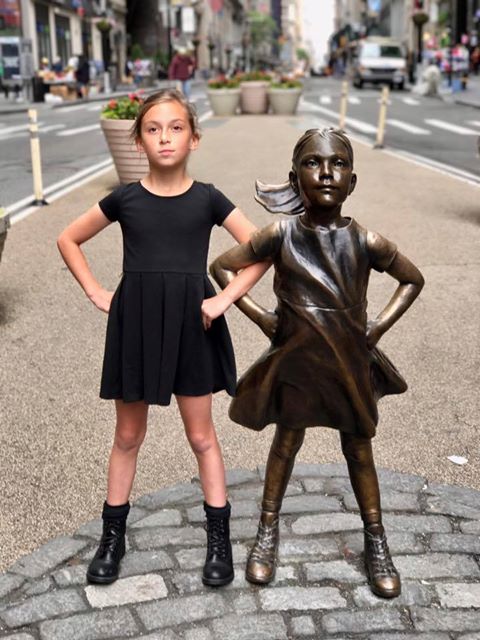
This post is in celebration of all the mighty girls, everywhere, and at all times. The girls who won’t take no for an answer. Who don’t know/won’t accept that they shouldn’t expect everything anyone else expects.
The work of the French 18th-century painter, Elisabeth Louise Vigée Le Brun (1755–1842), is being featured in an exhibition at the Metropolitan Museum in New York right now. Amazingly, this is the first retrospective and only the second exhibition devoted to Vigée Le Brun in modern times. The 80 works on view include oil paintings and a few pastels from European and American public and private collections.
The images and information in this post is taken largely from the Met’s website.
One of the finest 18th-century French painters and among the most important of all women artists, Vigée Le Brun is a beacon of inspiration to all women. She was remarkable not only for her technical gifts but for her understanding of and sympathy with her sitters.
With her exceptional skills as a portraitist, she achieved success in France and Europe during one of the most eventful, turbulent periods in European history and indeed the path of her own life reflects that turbulence.
To wit: At the age of 21, she married the leading art dealer in Paris. Her husband’s profession created a conflict of interest that at first kept her from being accepted into the prestigious Académie Royale de Peinture et de Sculpture. Nevertheless, through the intervention of Marie Antoinette, she was admitted at the age of 28 in 1783, becoming one of only four women members.
However, her association with the royalty forced her to flee for her safety from France in 1789; she traveled to Italy, where in 1790 she was elected to membership in the Accademia di San Luca, Rome. She worked independently in Florence, Naples, Vienna, St. Petersburg, and Berlin before returning to France, painting portraits of, among others, members of the royal families of Naples, Russia, and Prussia.
Despite the fact that she was in exile, she exhibited at the Paris Salons. That seems pretty amazing to me.
Let’s look at a few of the key objets in the exhibition:
Here’s her portrait of her brother, painted when she was 18 and he was 15.
Etienne (1758–1820) is presented as a draftsman holding an artist’s portfolio and porte-crayon. He later developed a reputation as a witty poet and playwright. The French Revolution marked his life in serious ways as well as that of his sister.
Here’s her portrait of her stepfather, whom she disliked intensely:
The stepfather, Monsieur Le Sèvre (1724–1810), was a gold- and silversmith who brought Vigée’s family to live above his shop on the rue Saint-Honoré. He is shown seated at a desk, reading, in a satin robe and nightcap, typical at-home attire for men of the time. The sympathetic portrayal belies the intense dislike Vigée felt for him. She accused him of hoarding her income.
Her mother, Madame Jacques François Le Sèvre:
The sitter (1728–1800) had married our artist’s father, Louis Vigée (1715–1767), a portraitist and official at the Académie de Saint-Luc. After his death, she married Jacques Le Sèvre, a goldsmith. Madame Le Sèvre encouraged her adolescent daughter’s professional aspirations by chaperoning her sittings and taking her to see works of art. Vigée’s mother wears a satin cloak trimmed with swans’ down and bows of a color the artist particularly favored.
Her allegorical interpretation of “Poetry.”
Vigée was nineteen when officials sealed her studio on the pretext that she was painting professionally without having joined a guild. She therefore applied and was admitted to the Académie de Saint-Luc. Of the works she contributed to her first exhibition, three were allegories of the arts: Painting, Poetry, and Music. Here, Poetry, a draped nude, writes in a portfolio with a goose quill. She looks upward, conveying a moment of inspiration.
Her patron, the queen Marie Antoinette in Court Dress:
In 1777, Empress Maria Theresa of Austria wrote to her daughter Marie Antoinette (1755–1793) asking for a portrait. Vigée Le Brun received the commission, her first from the queen. She remembered that the queen “walked better than any other woman in France, holding her head very high with a majesty that singled her out in the midst of the entire court.”
The Duchesse de Polignac in a Straw Hat
Vigée Le Brun shows the duchess (1749–1793), a close friend of Marie Antoinette, bathed in pale golden light. She wears the straw hat and costume of an elegant courtier-shepherdess.
Marie Antoinette in a Chemise Dress
The queen and her circle had grown weary of the discomforts of the formal attire worn at Versailles. In the early 1780s, in private settings, they therefore abandoned their corsets and hoops for draped, loosely belted muslin chemise dresses, which were relaxed and natural.
With the support of Marie Antoinette and Louis XVI, Vigée Le Brun became one of fourteen women (among 550 artists) admitted to the Académie royale de peinture et de sculpture before the Revolution. At her first Salon, she displayed a number of portraits, including one of the queen in a white muslin dress and straw hat. The characterization of the monarch was admired. However, the pastoral costume was condemned as inappropriate for the public portrayal of royalty and the artist was asked to remove it from the exhibition.
Comtesse de Ségur
VigÈe-Le Brun Elisabeth Louise (1755-1842). Versailles, ch?teaux de Versailles et de Trianon. MV5962.
The countess (1756–1828) shared in the work of her husband, a diplomat, historian, and supporter of the American War of Independence. With her lips parted in a smile, she here abandons the mask of impassivity traditionally embraced by courtiers.
This luminous, subtly painted image is in the new style Vigée Le Brun adopted after she saw Peter Paul Rubens’s Presumed Portrait of Susanne Lunden.
Baronne de Crussol Florensac
The baronne de Crussol Florensac turns to gaze at the viewer over her shoulder. She holds a musical score and wears a splendid red costume with a deep black velvet collar and a matching hat. Little is known of this woman of great beauty, elegance, and distinction. The support, a wood panel, contributes to the lustrous surface of the picture.
Marie Antoinette and Her Children
In 1785, by order of Louis XVI, the office of royal households commissioned this important portrait of Marie Antoinette from Vigée Le Brun, the first woman to attain the rank of painter to the king. Inspired by depictions of the Holy Family, the work was intended to extoll the queen’s maternal role. The empty bassinet alludes to her fourth child, who had recently died.
You can see many more images from the exhibition at the Met’s website linked above.
Vote! unless you want Roe v. Wade overturned and other atrocities. Whose body is it anyway, ladies? Tell politicians to get their rosaries off your ovaries! We won’t go backwards. Tell ’em!
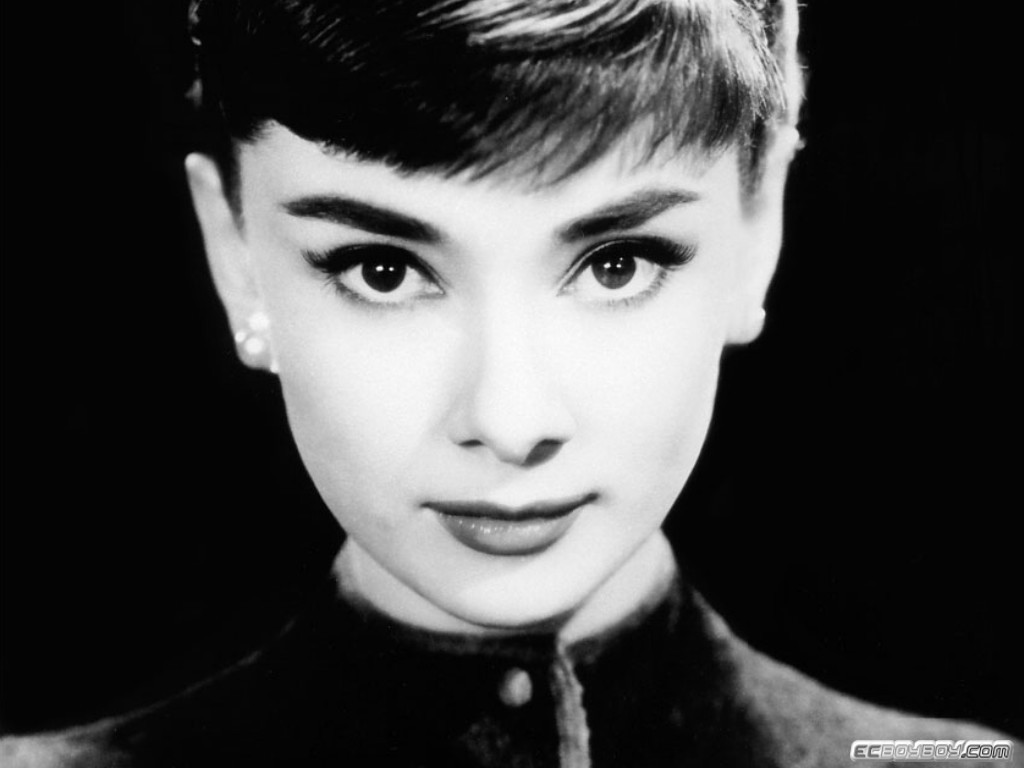
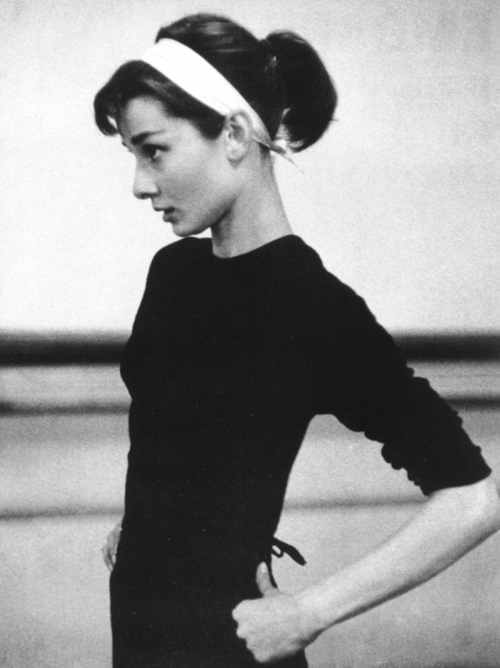
In case you hadn’t noticed, I tend to be very verbal. However, there are just some times in life when words cannot express how I feel. This is one of those times. This woman is my idol. I worship at her feet. Color is not needed either. Just black and white film, the model, and the camera. Done. Perfection achieved.
Born in Brussels in December of 1946, von Fürstenberg would study economics at the University of Geneva in Switzerland. She moved to Paris and worked as an assistant to Albert Koski, the fashion photographer’s agent. Next she left Paris for Italy, to work as an apprentice to textile manufacturer Angelo Ferretti. It was in Italy that she designed and produced her first silk jersey dresses. She rose to prominence when she married into the German princely House of Furstenberg as the wife of Prince Egon of Furstenberg. Following their divorce in 1972, she continued to use his family name, although she was no longer entitled to use the title of princess.
In 1970, with a $30,000 investment, von Fürstenberg began designing women’s clothes. She moved to New York, met with famed Vogue editor Diana Vreeland, who was kind enough to declare her designs “absolutely smashing,” and then had her name listed on the Fashion Calendar for New York Fashion Week. Not a bad way to launch. It helps to have contacts. And thus her business was created.
Miss v F is best known for her knitted jersey “wrap dress” first introduced 1974. One of her vintage wrap dresses is in the collection of the Costume Institute of the Metropolitan Museum of Art, having earned the spot as a result of the dress’s influence on women’s fashion design. The dress is feminine and flattering to many body types. The fact that these wrap dresses were made from knitted jersey made them easier to wear than any woven fabric ever.
I know, I had one. I wore it almost to death.
After the phenomenal success of the wrap dress, von Fürstenberg was featured on the cover of Newsweek magazine in 1976. The cover picture was intended to be of Gerald Ford, the winner of the Republican presidential nomination, but at the last minute was changed to a picture of the gorgeous Miss v F in one of her own dresses. I don’t know about you, but I’d rather look at Miss v F any day rather than Gerald Ford. Apparently the editors at Newsweek thought that would be the prevailing sentiment. The accompanying article declared her “the most marketable woman since Coco Chanel.”
During the mid to late 1970s, I was a serious aficionado of Miss Von Furstenburg’s designs. I was between college and grad school and wasn’t earning a lot of money. But I had to have one of these dresses that made the designer so famous.
Fortunately for me, I had the two necessary ingredients for getting one of these wrap dresses: I had a mother who was a skillful seamstress and Miss Von Furstenburg’s willingness to create patterns for the home sewer for the Vogue company. I rushed to Frederick and Nelson department store in downtown Seattle, where I was working as a stockbroker, and purchased the patterns and some of the green and white printed cotton jersey and shipped them to my mother. A few weeks later, I was dressed in a Diane Von Furstenburg wrap dress and I was verrrryyyyy happpppyyyyyy!
Thanks mom!
I have always loved wearing dresses. Always. It just seems like the simplest way to dress to me. One piece, shoes, you are done. I love that!
Miss Von Furstenburg is one of the most chic women ever. I want to be just like her when I grow up.
And while she has stayed true to her muse with full-skirted printed dresses, she has also stayed current with the times.
You go girl!
Everything she designs is designed to win.
Here is our first lady, the fashionable Michelle Obama, wearing Miss Von Furstenburg just last month. Lovely!







 get back, lauretta!
You must be logged in to post a comment.