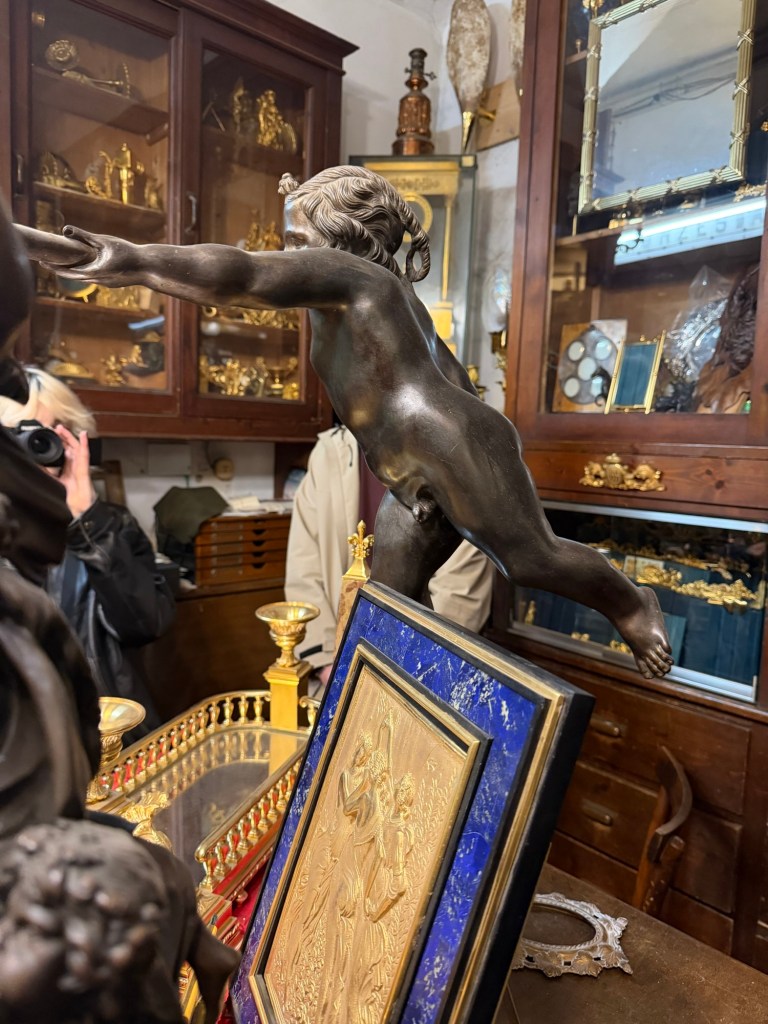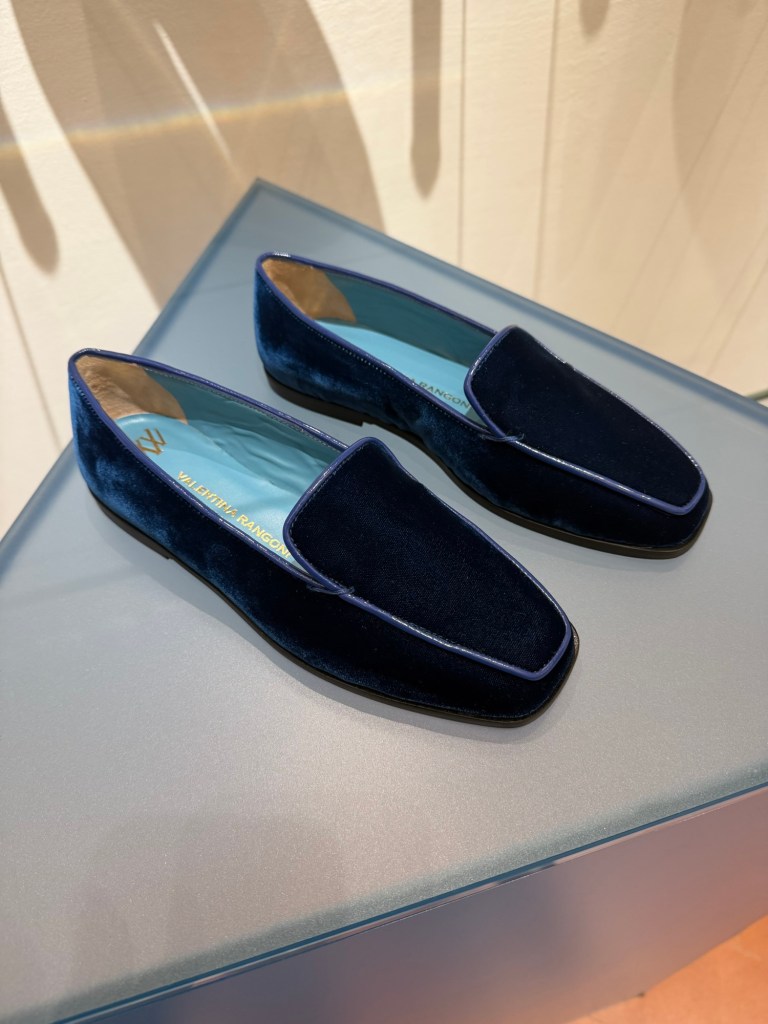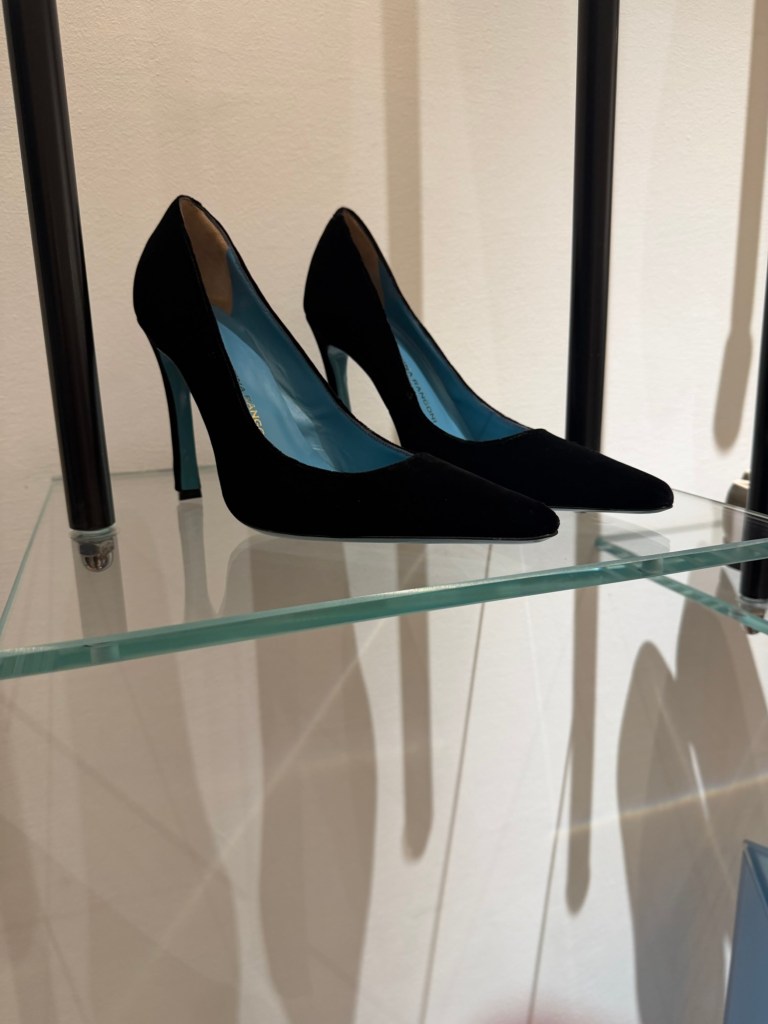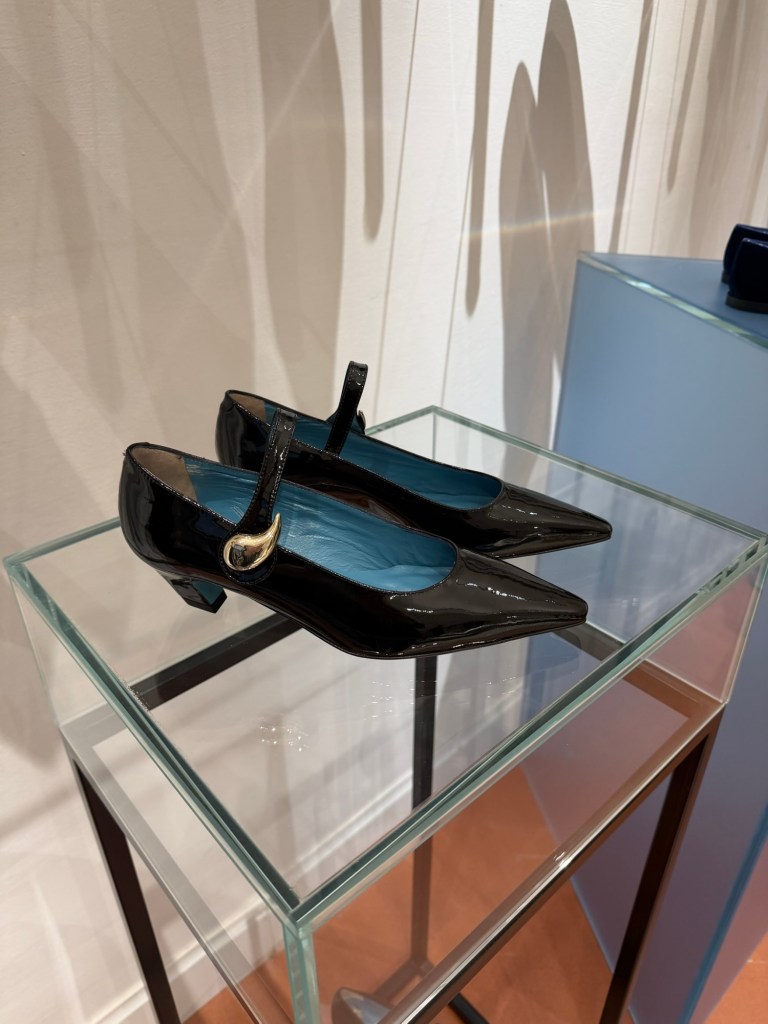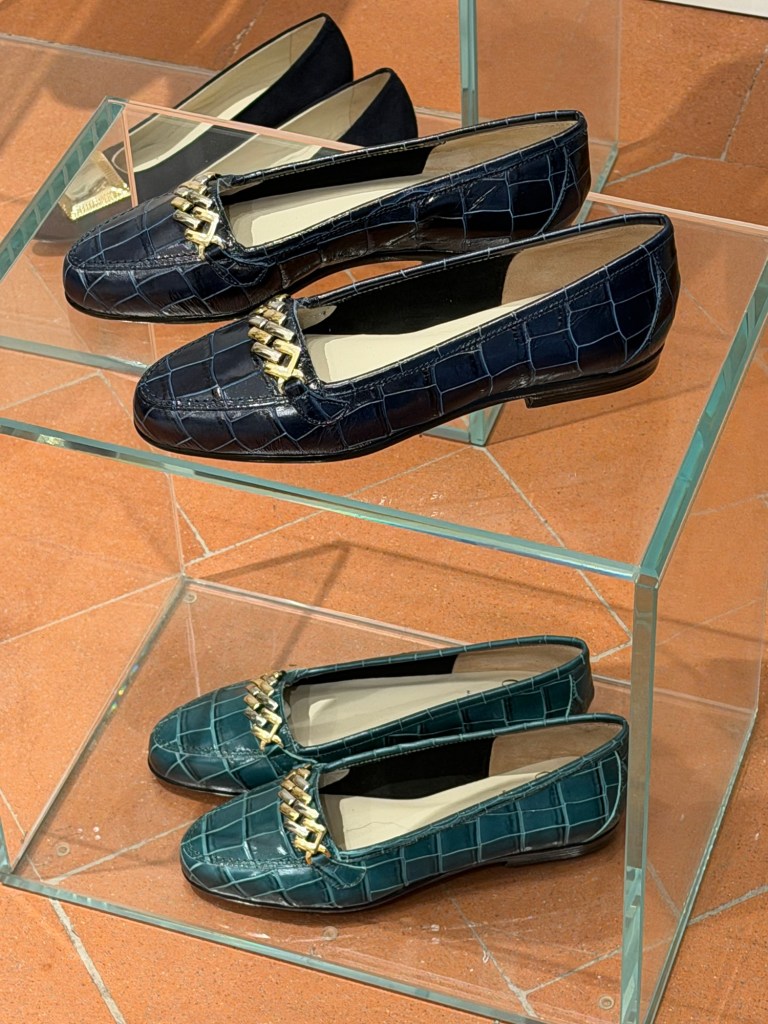
There is even more to appreciate in Pisa at this fine museum about which I recently posted.


There is even more to appreciate in Pisa at this fine museum about which I recently posted.


Looking forward to seeing Tender Art in the future!
https://www.theflorentine.net/2025/07/31/new-chopin-movie-shot-florence/


A quick trip to neighboring Pisa is always a treat for me. Many people think the only thing to see there is the famous tower, but that isn’t correct. Pisa was heavily damaged during the Second World War, but I am here to argue that the city is nevertheless a vital place and that even much remains that can take us back to its medieval past. See the bottom of this post for info about war destruction in Pisa and the city’s subsequent rebuilding.
This is an excellent museum:


I highly recommend visiting this fine museum for any serious art lovers.
The 20th century history of Pisa is as tragic as it was seen as essential by the Allies:


High above the earth, research and writing goes on in our world’s finest institutions. I feel lucky to be living in Florence where I can brush elbows with the excellent if heady work that is going on at the Kunsthistoriches Institut. I attend as many of their presentations as I can as well as those by the Medici Archive project. I recently came across this study, which is very interesting indeed for someone who cut their art historical teeth on 19th century American marble (and bronze) sculpture.
https://www.khi.fi.it/de/forschung/abteilung-wolf/the-aesthetics-of-marble.php
I don’t know about you, but in the summer heat of Italy, the best place in the middle of the afternoon, when Italians traditionally disappear from public life for their daily pausa, you will find me in my air conditioned apartment reading. And I am so grateful for the plethora of excellent books available online. What a great time to be alive!
Here are some of the best of the best of my recent reading.

A great read. Kept me in suspense to the last page. Bravo!

Fabulous writing, incredible story, all based on painful truths. Highly recommend.
A sprawling saga, well drawn, recommend! There are worse things than having an estranged adult child as you will read in this book.

Edith Wharton is one of my favorite authors and I had not read this book before. I enjoyed it thoroughly. There are all kinds of parent/child relationships in humankind. This is a short study of one type.

An easy, light read. Sweet and summery.

By the same author, The Curious Charms of Arthur Pepper, an uplifting book that is as charming as it title suggests. Honestly.

A prequel to the same author’s book, Long Island, about which I posted 2 book posts back. Enjoyable, light read.
The Dressmakers of London. I was sucked in immediately and could not stop until I finished it.
And Then She Was Gone. Recommend!

Fabulous novel.

First Born Girls by Bernice L. McFadden. Liked it a lot.
The Winemaker’s Wife by Kristin Harmel. Tells a great story and educates the reader about the resistance in occupied France during WWII.

How does this view strike you?! It’s from a public library, a place I frequent frequently, in the heart of historic Firenze.


Here are 2 videos showing you a view of the lovely courtyard outside the entrance to the library complex.
The next 3 photos will tell you everything the Oblate wants you to know about itself.


Did you read above that the hospital, which is what the Oblate was founded as, was funded by Falco Portinari? Did that name ring a bell for you? He was the father of Beatrice, who was the muse for Dante’s Divine Comedy of course.

Portrait of Folco Portinari by Hans Memling, c. 1490


Below is just a quattrocento fresco depicting the Annunciation. You know, like you find in your average library anywhere in the world. Ha ha.


The Oblate has an excellent spaces for readers and researchers, as well as a fine little cafe for sustenance from all the hard thinking that goes on here. The open air loggia outside the cafe, where the views of the dome of the duomo are to be enjoyed, is without parallel in the city. Sigh. What a wonderful world!
On a day when we were blessed with a 10 degree drop in the temperatures, I went out for a long walk in one of my favorite Florentine neighborhoods. I adore the summer sound of cicadas, and they were out in force this day as you will hear!
There are many beautiful little villas lining this gorgeous boulevard in the Oltrarno. Here are some views and details.


The villa above is partially shielded from public view by a stand of bamboo.


Across the street are some art deco and art nouveau era villas.

I was impressed with this brave solo ivy vine climbing its way up a tree trunk. I like spunk wherever I find it!

I stopped and looked up where the loudest sound of cicadas chirring came from. It was a beautiful view with the sun hiding behind a white cumulus cloud for a brief moment.


There’s a school called Liceo Sacro Cuore (Sacred Heart High School) along the boulevard. I thought you would find it interesting that a student can get an American high school diploma here, according to the billboard.


Ad advertisement for the city painted on a sidewalk, complete with a QR code.

Soon, the dome of the duomo comes into view. It never ceases to impress.

There is a collection of bronze statuary along here, just where the boulevard reaches the Arno River. I’ll be danged if I know what message the sculptures are intended to convey.

How’s this for a beautiful little townhouse? I adore it!


And another palazzo with lovely decoration.


And, nearing home, after crossing the river I come upon my favorite grove of gigantic deciduous trees. The cicadas were very boisterous here as well!


I came home, happy to return to a/c and a good book after all the visual stimulation provided by this amazing city!
The wisteria is undergoing its second florescence of the season, and this remarkable specimen caught my eye when I walking down a narrow city street in the center. I am always charmed by the sight of buoyant nature living in connection with medieval architecture; it is such a contrast.


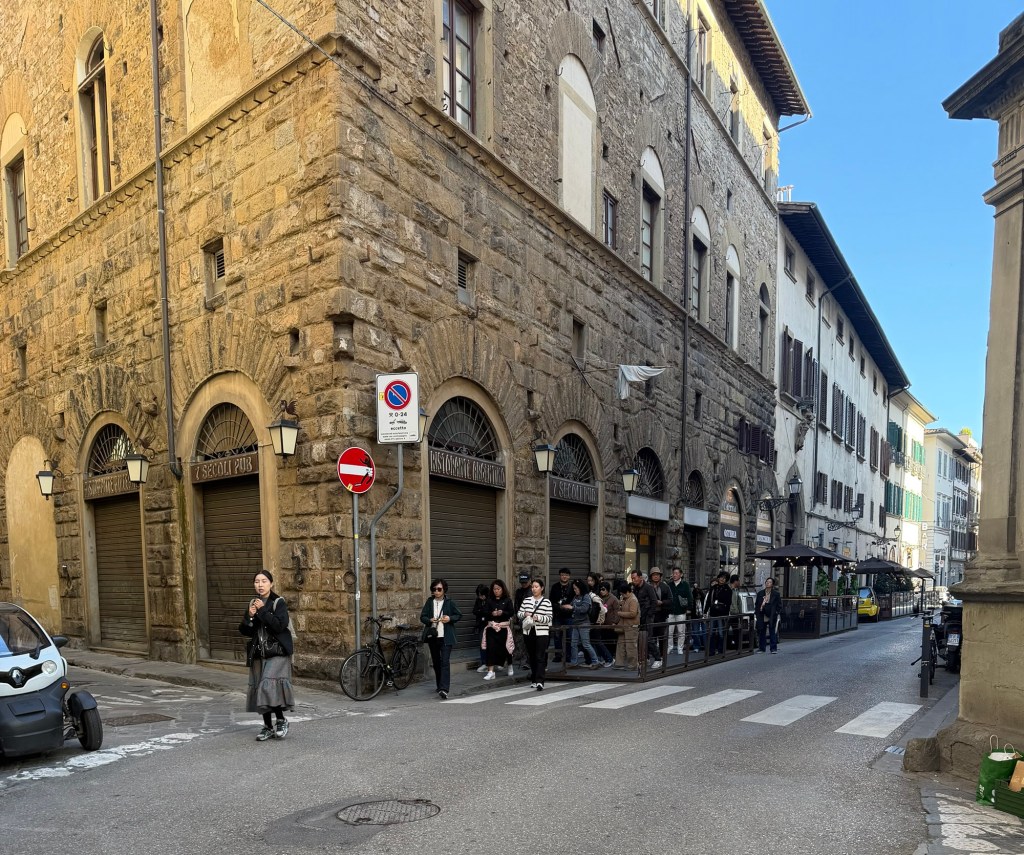
The engraved marble plaque below notes that Giuseppe Garibaldi stayed in this building on 22 October 1867. It doesn’t seem like the tourists who are crowded around the entrance to the building care a bit about that! They are looking at the menu posted for the restaurant called Osmo.

Down the street on which I live is this artisanal glass making enterprise. The ancient looking brown facade at the end of a long drive way is visible from the street.

I followed the driveway to the end and found this lovely building facade, that looks like a building that Ruskin would like.

To the right is the entrance to the shop.

I never cease to be entertained by the fact that I live within an enclave with streets named after some of Italy’s finest painters!

I was struck by the loveliness of this courtyard with magnolia trees and pretty paving stones. I like the way the iPhone camera handles the direct sunlight. Back in the days of film cameras, we did everything to avoid this kind of shot. But now I like it.

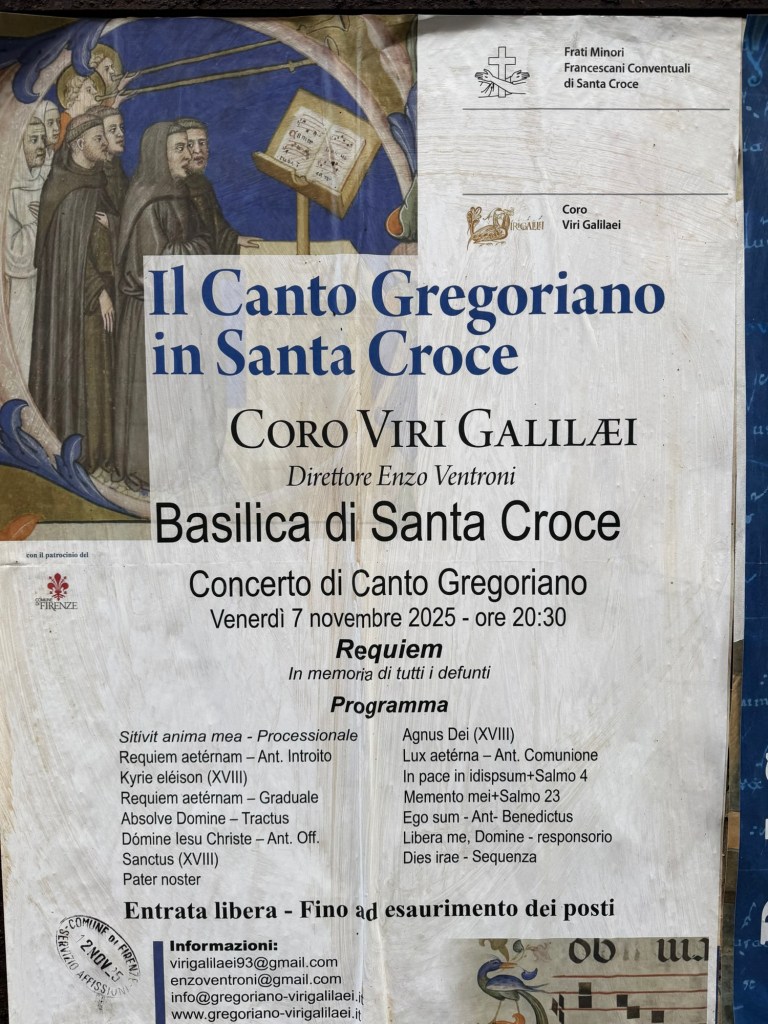
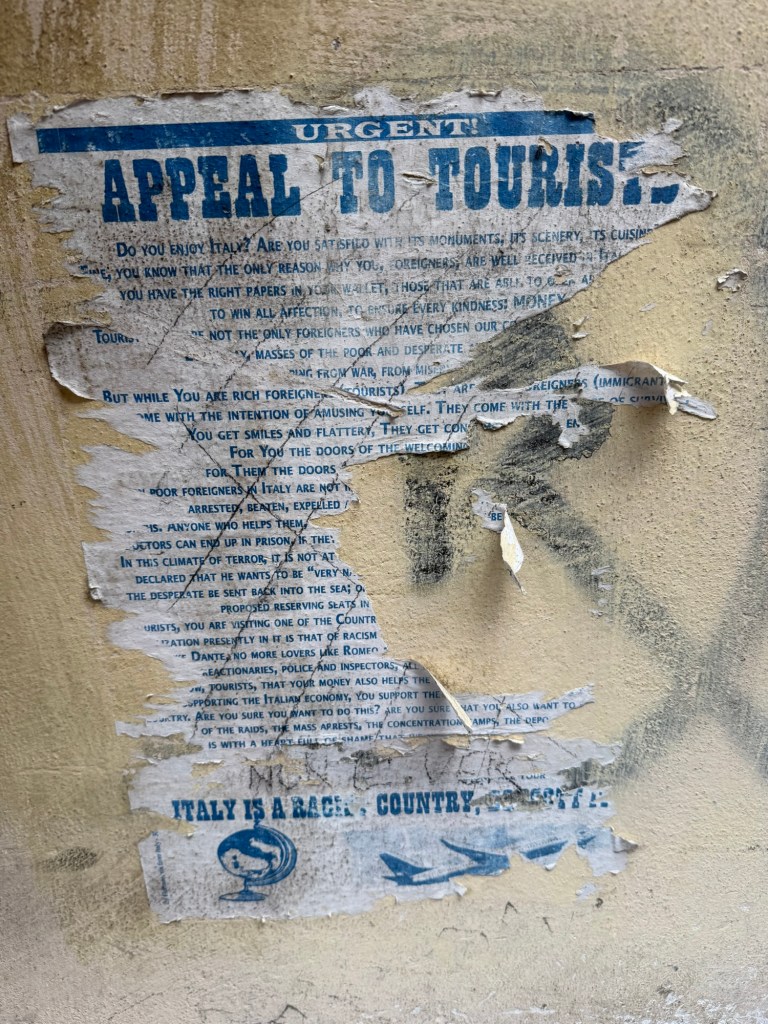
You see signs like this one all around the city. It says Vietato L’affissione, which mean, it’s forbidden to write graffiti or attach posters to the wall. This one is explicit: I’ve never seen a sign like this before that actually cites the precise penal code number.

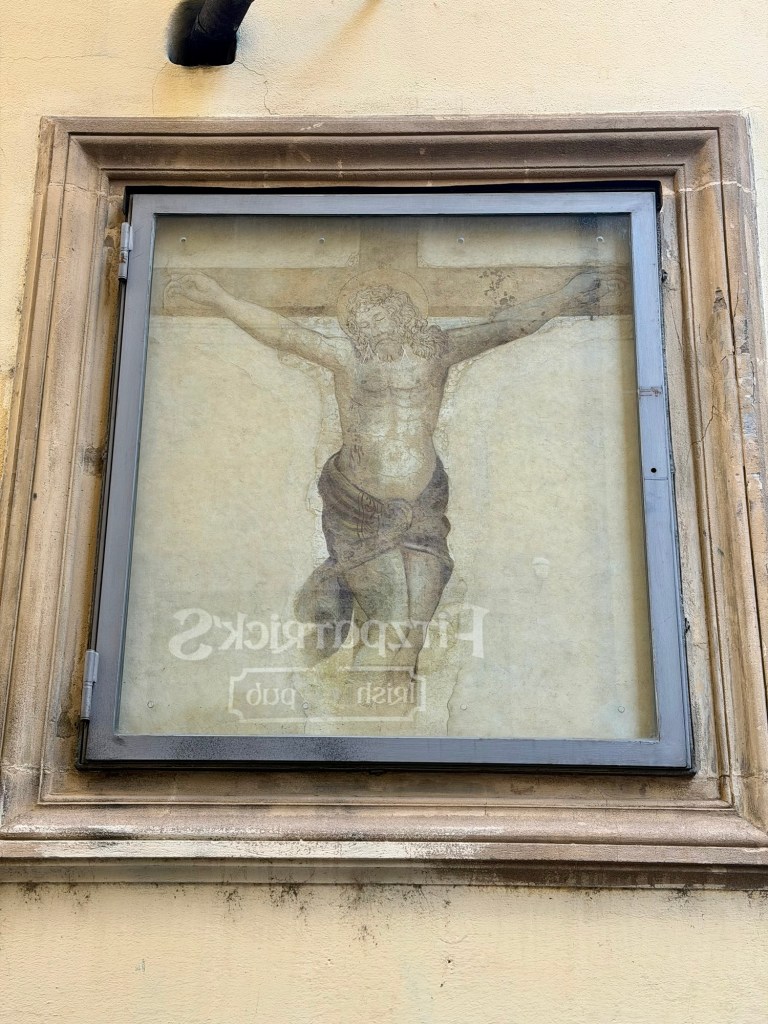
Sitting on the bus, I noticed that this particular police station is blessed with an image its patron saint (not sure who, sorry). I come from America and I’m not used to religious figures associated with the police.

I see carabinieri vehicles often in the city, but this was a rare sighting of a van especially for the penitentiary. I shudder to think.

You find snack bars on every corner in Italy so you can get a coffee, but you also find vending machines for the same purpose, just in case you are in need of a quicker fix! This one was very interesting in its vast array of offerings. I saw it in Ferrara but added it here because it’s an wildcard among my pix.

I end with a pretty hibiscus blossom. In a city made of stone, it’s not often I happen upon such a pretty flower on its streets.

I’ve tried all of the gelaterie in every place I’ve been in Italy over a lifetime, and the clear winner is this Florentine company. Without a doubt.

I can’t treat myself to this heavenly stuff more than once a month, just for health reasons. But this was my July treat. I’m already looking forward to agosto!

This day I chose caramello salato which is salted caramel. It was insanely good!
But typically I go here for their Buontalenti flavor, which was developed by the 16th century architect of the same name, according to tradition. And tradition is everything!


Once you get hooked into Savonarola, as I have in several posts here since the early spring, he shows up everywhere.
I was watching an interior design show and someone identified a chair as a “Savonarola chair.” I almost fainted. How did I live to be this age and spend as much time in Italy and studying Italian art and culture and never hear that this type of chair has this type of name?!!

Above is a sea of Savonarola chairs, at my favorite spot about 20 minutes from my home. I go there almost every Saturday morning. It’s become kind of a ritual, to start my weekend.
I’ve sat on many of these chairs while studying the gorgeous Renaissance fresco, plus I have seen these chairs and sat on many of them all over Italy. And again, never did I know the name!
An X-chair (also scissors chair, Dante chair or Savonarola chair) is a chair with an x-shaped frame. The form was known to have been used in Ancient Egypt, Rome and Greece. The Christian faldstool is a type of X-chair. Did you just say to yourself, but what is a faldstool? I did and looked it up and I thank you, Wikipedia:
Faldstool (from the O.H. Ger. falden or falten, “to fold,” and stuol, Mod. Ger. Stuhl, “stool”; from the medieval Latin faldistolium derived, through the old form fauesteuil, from the Mod. Fr. fauteuil) is a portable folding chair, used by a bishop when not occupying the throne in his own cathedral, or when officiating in a cathedral or church other than his own; hence any movable folding stool used during divine service.

All of the folding stools above, my friends, are faldstools.
Wikipedia says this about the so-called Savonarola chair:
A type of folding chair with a frame like an X viewed from the front or the side originated in medieval Italy. Also known as a Savonarola or Dante chair in Italy, or a Luther chair in Germany, the X-chair was a light and practical form that spread through Renaissance Europe. In England, the Glastonbury chair made an X-shape by crossing the front and back legs, while in Spain X-chairs were inlaid with ivory and metals in the Moorish designs.
The use of the name Savonarola chair comes from a 19th-century trade term evoking Girolamo Savonarola, which is a folding armchair of the type standardized during the Italian Renaissance. It is said that a chair like this was found in Savonarola’s small room (known as a cell, but having nothing to do with prison) at the monastery of San Marco right here in Florence! Who knows if that is true, but it is said that’s where the name comes from. It’s a good story, regardless.
The chair in the illustration consists of a wooden flat-arched back rail carved with a coat-of-arms in low relief and connected to the back of the straight arms of the chair and a seat made of narrowly fitted wooden slats. The wood used in the construction of the chair is the typical walnut, as in other gothic and renaissance furniture.
From this source:
We also learn:
Savonarola Chair: This is another type of X-frame folding chair with arm rests and a back rest, but instead of having four legs, it has several narrow wooden slats, also typically wavy like Dante chairs. It was also named in the 19th century for a famous Renaissance figure, in this case the moralistic Dominican friar who led Florence during the 1490s and is famous for his Bonfire of the Vanities. It is possible that Savonarola did in fact have a chair like this, since monks often used folding chairs in their small cells (below).


You must be logged in to post a comment.