Just an ordinary Saturday in spring in Florence

Grandfather and granddaughter? Father and daughter? What do you think?

Above and below, the Lutheran Church of Florence.

Below: I outta be able to paint this kind of version of the duomo!

Below, the horse appears everywhere throughout Florence. Times gone by, still remembered.

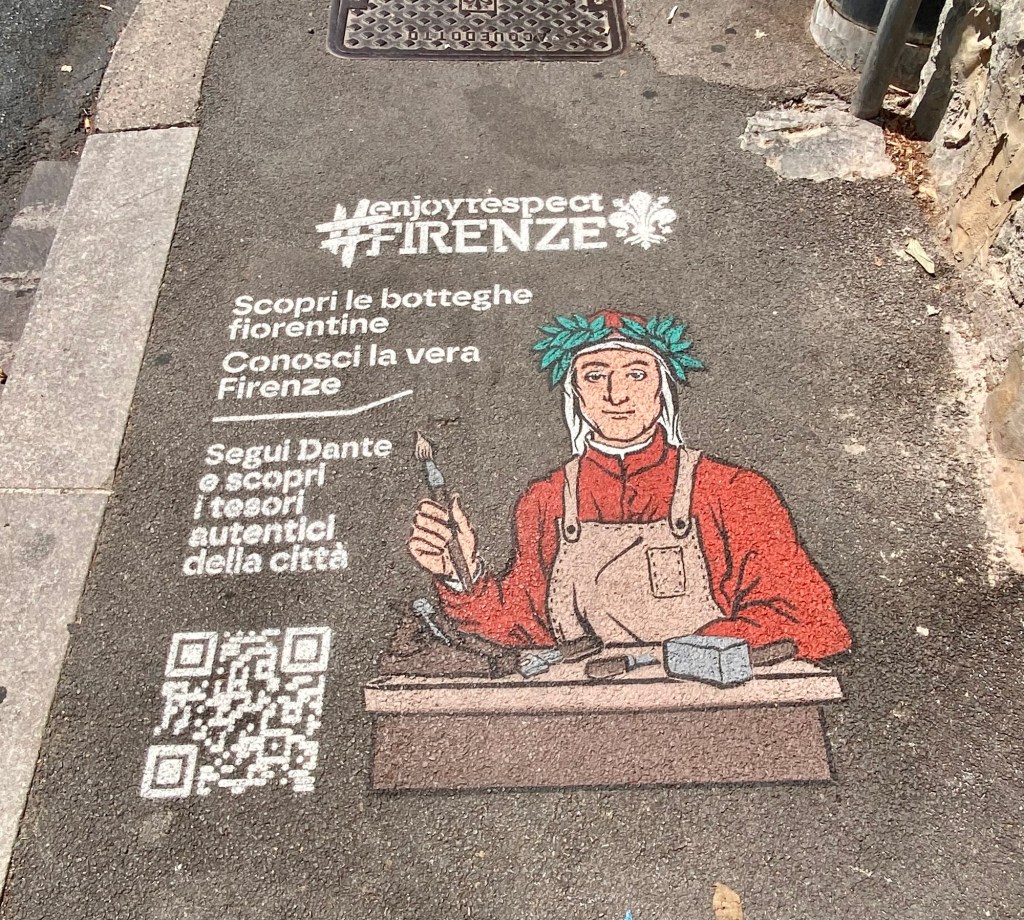
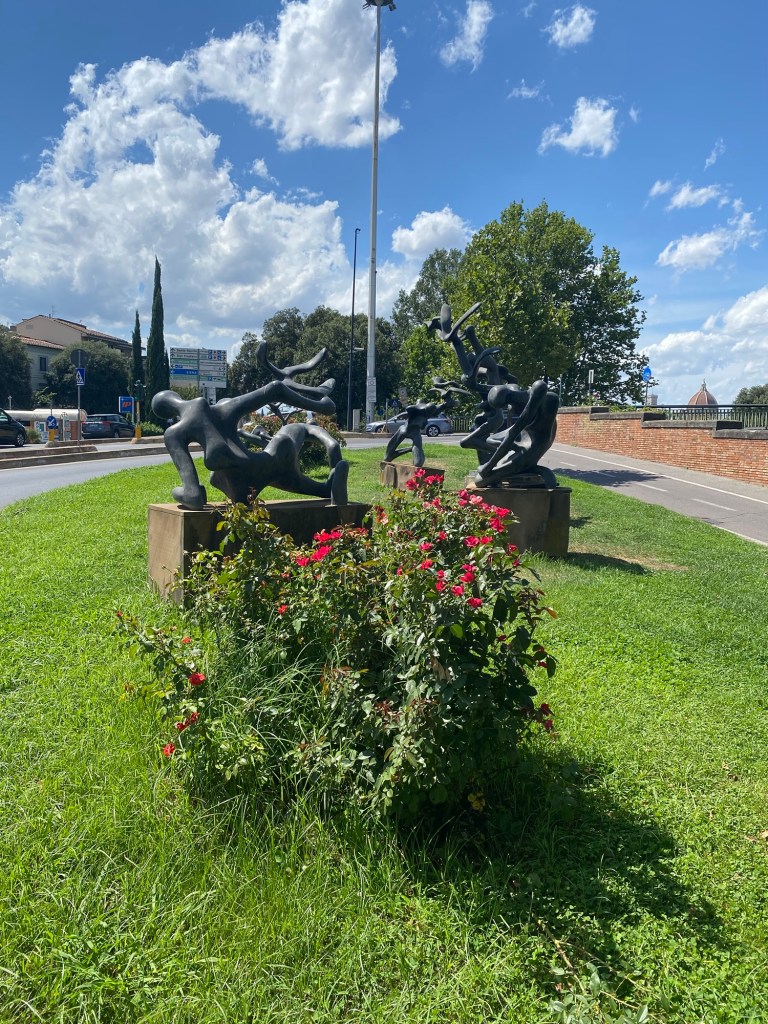
My kind of street art!

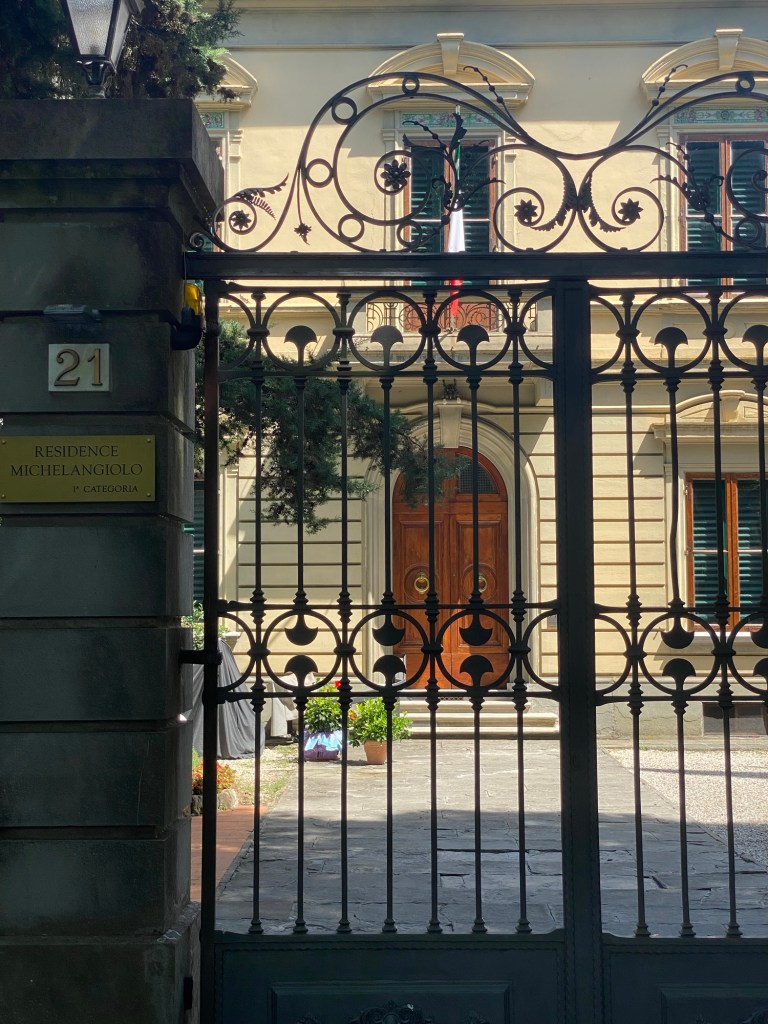
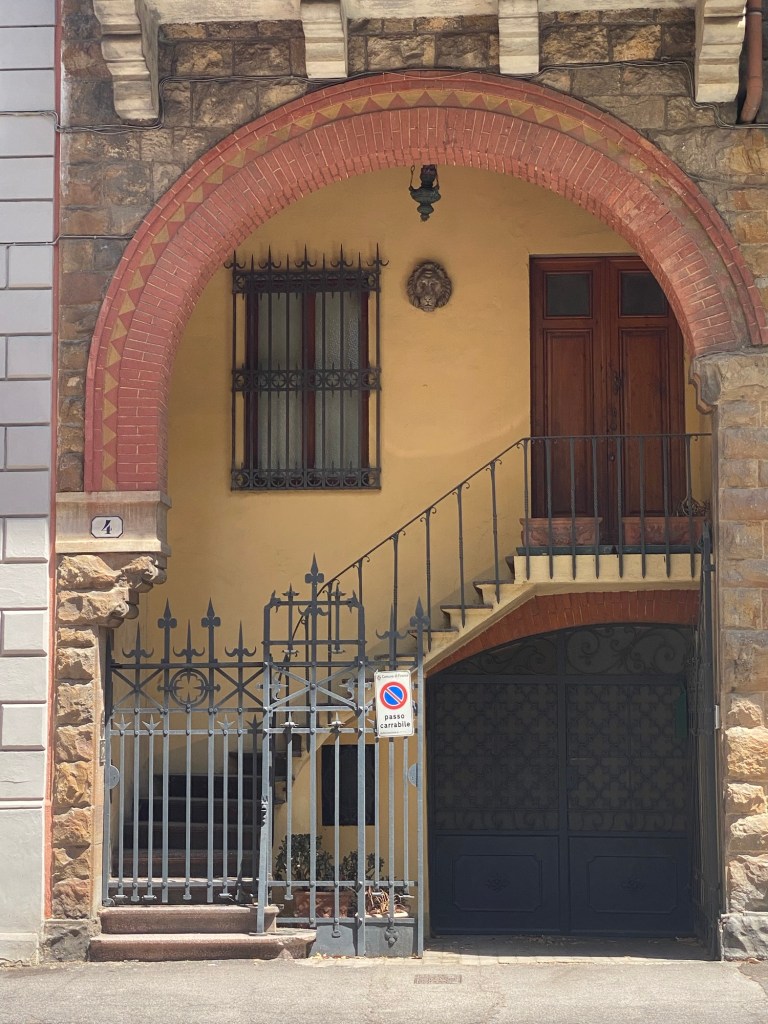
Many fine homes in Italy have these elaborate grates over the windows. Usually there is a big oval space created towards the bottom, but this building had rather unique round spaces. Have never seen this before.

All over the city, wisteria reigns!

Below, on the fabric of the old walls that once encircled Florence, we find a plaque that moves me very much. In English is says: In this square on the eve of the liberation of Florence, July 17, 1944, defeated fascismn cowardly murdered five innocent citizens: Ivo Poli, aged 8, Igino Bercigli, Corrado Frittelli, Aldo Arditi, and Umberto Peri. Their memory in the climate of the new democracy gives certainty of the advent of civilization of Freedom and Justice. The citizens of the Oltrarno, July 17, 1945.

Wow. Horrendous history. It’s a remarkable testament that the citizens got this plaque up in place in exactly a year when you stop and consider how awful the circumstances of life were immediately following the war. Bravissimo!

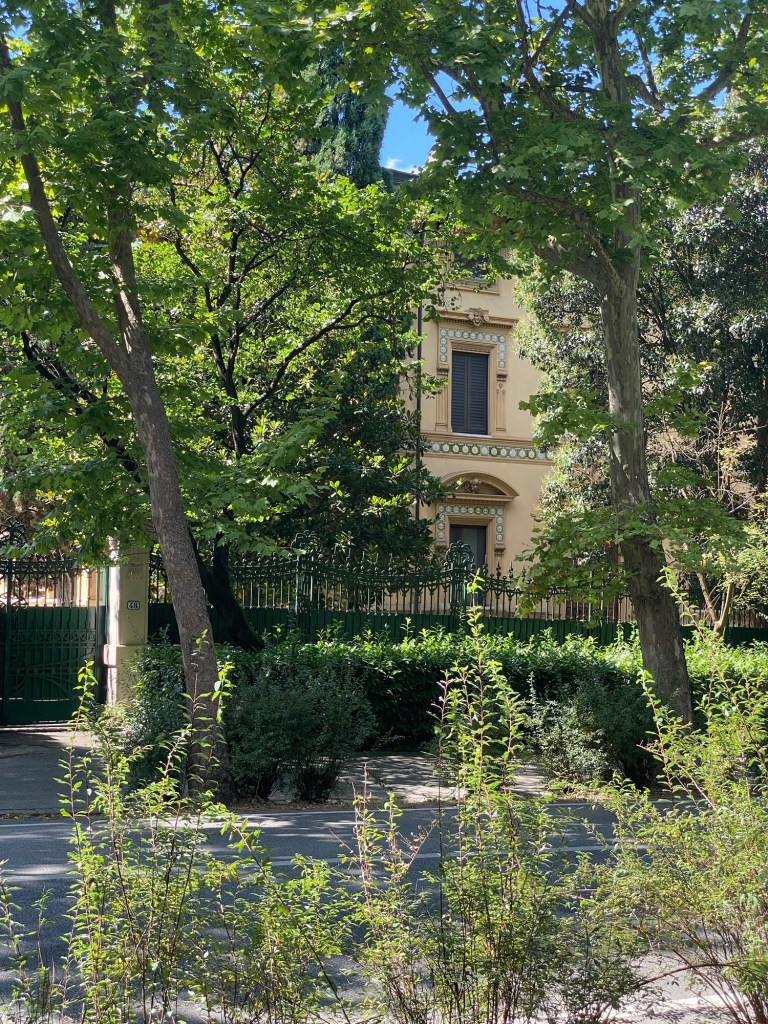
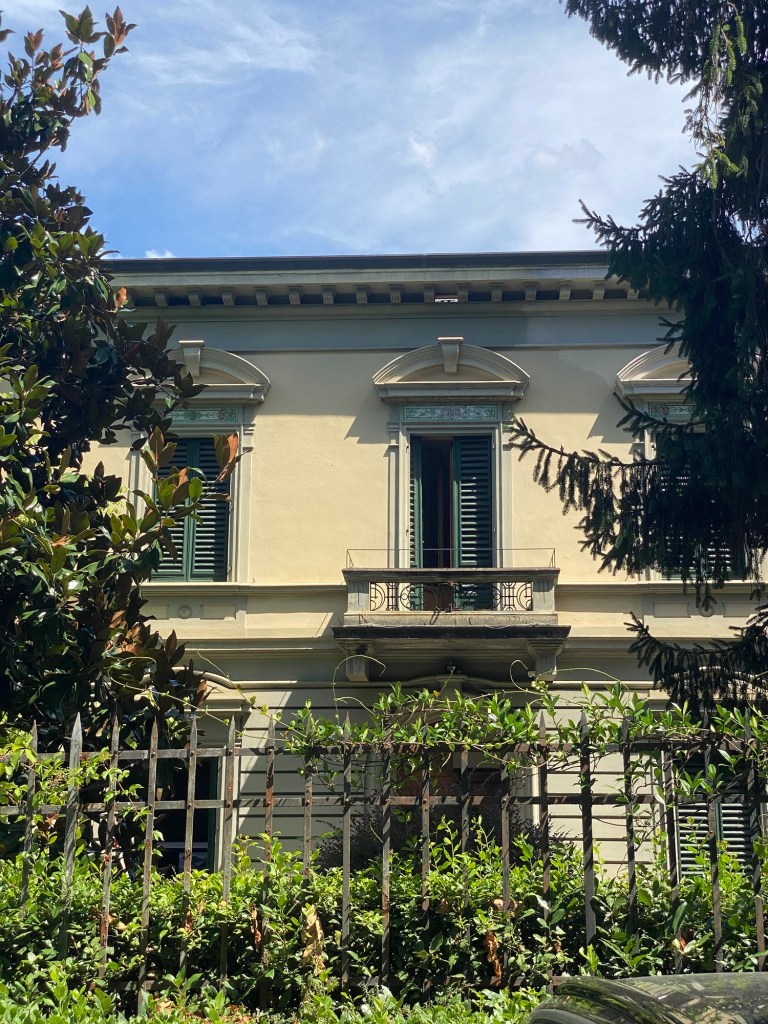
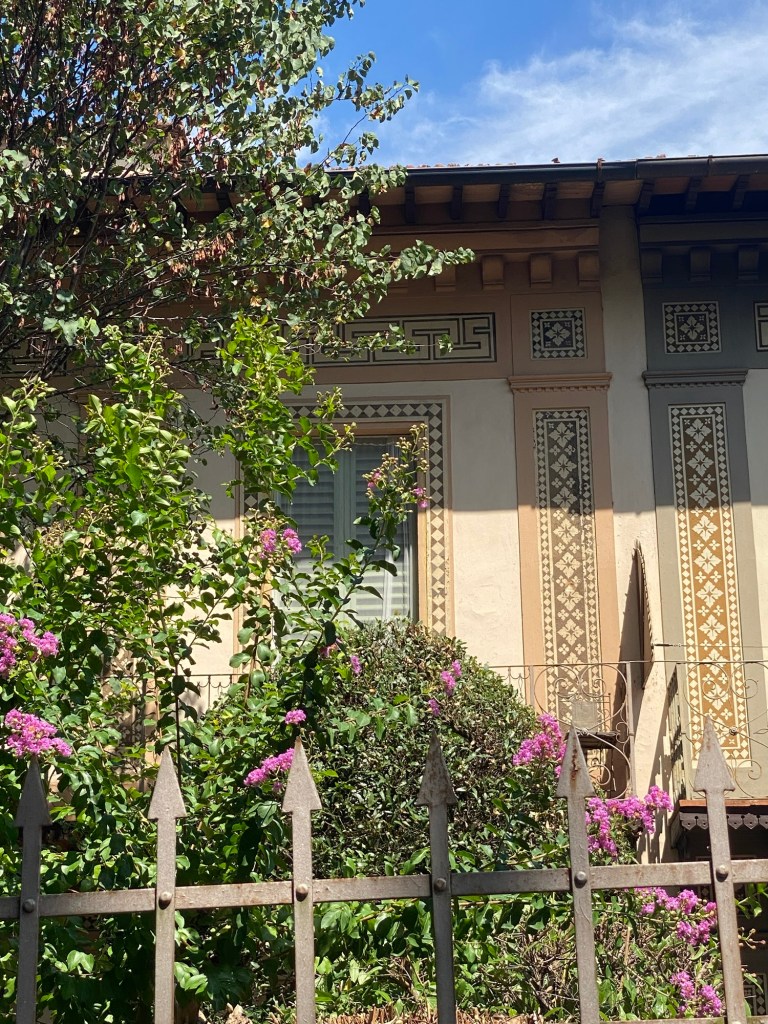
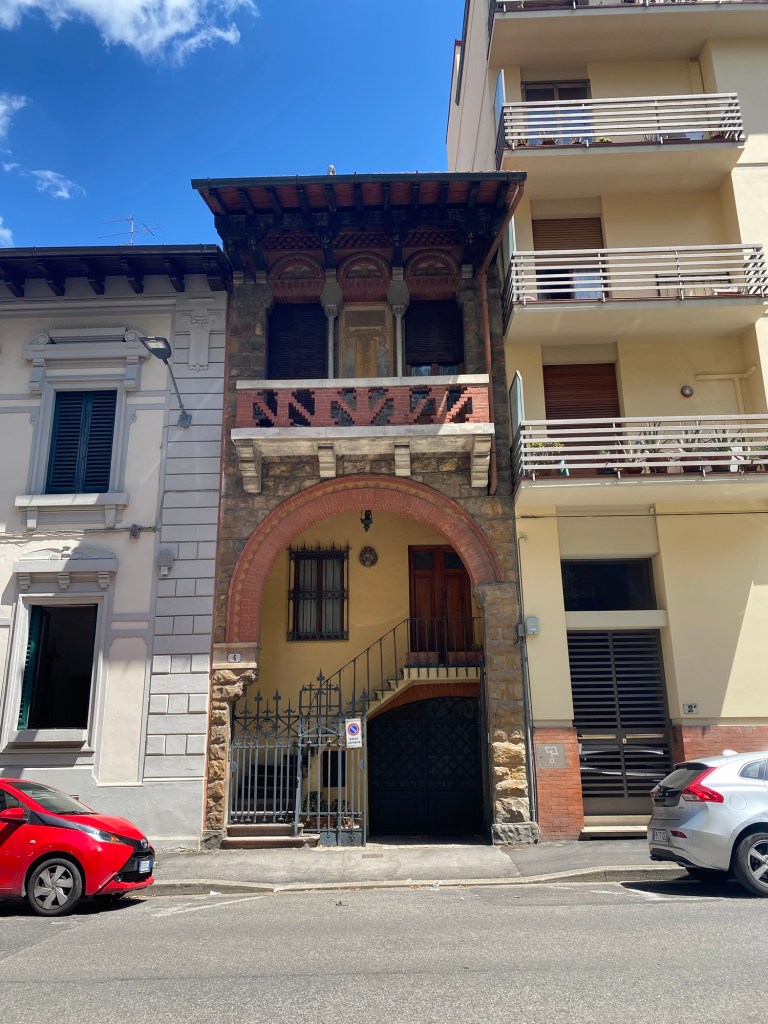
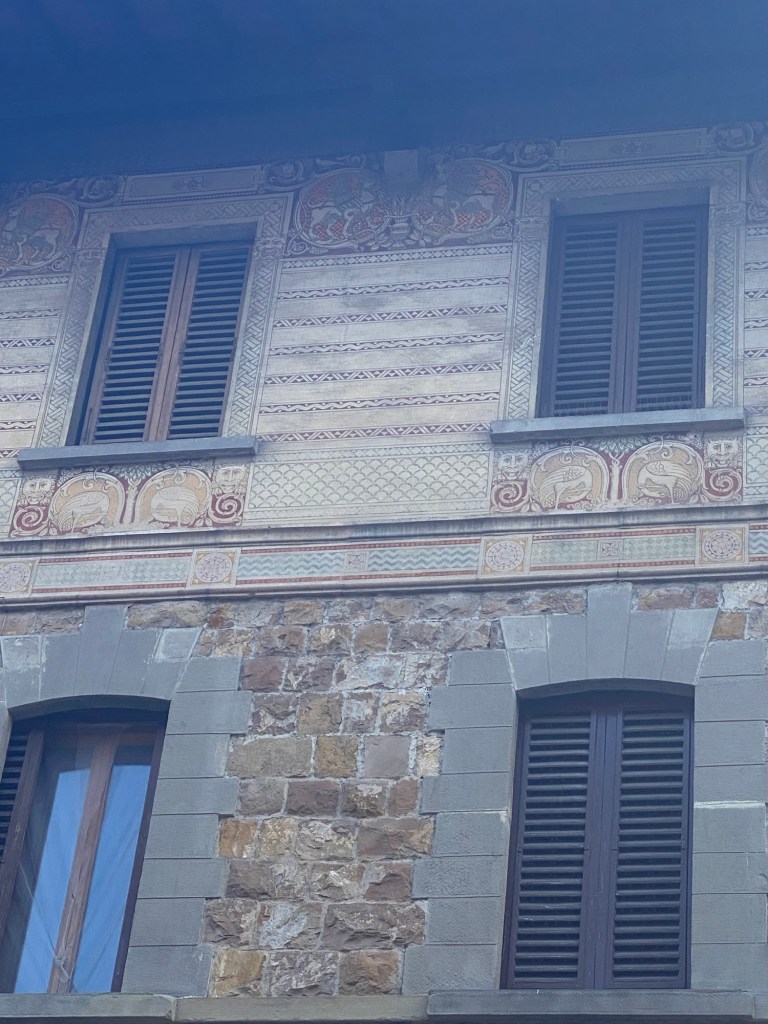
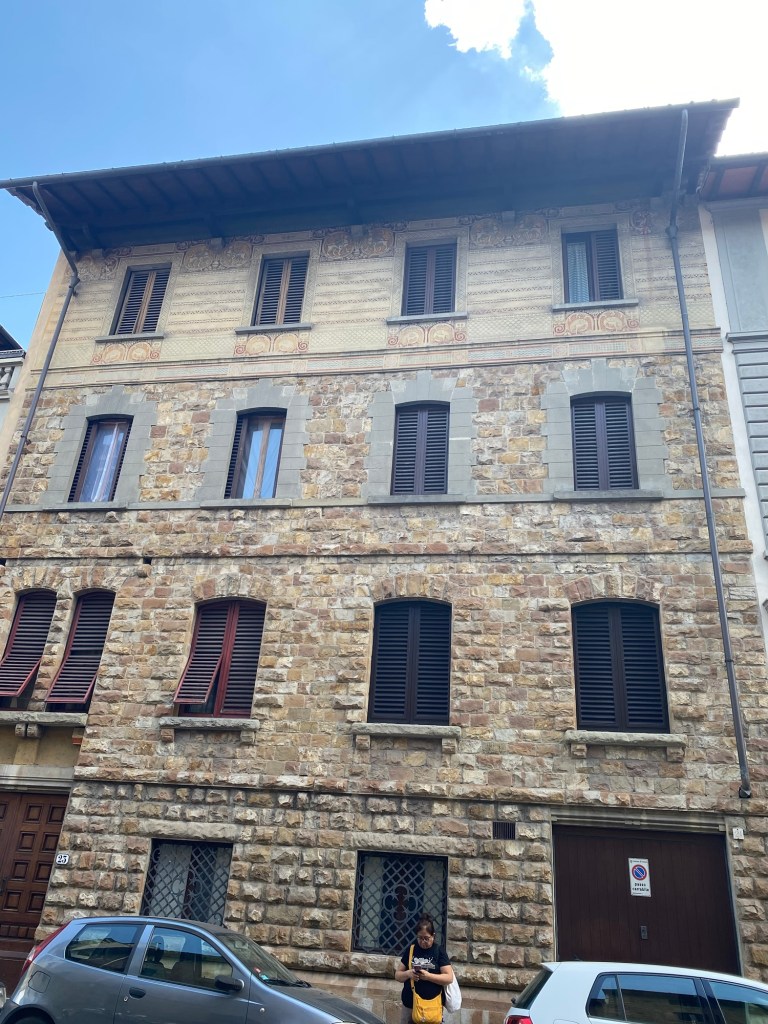
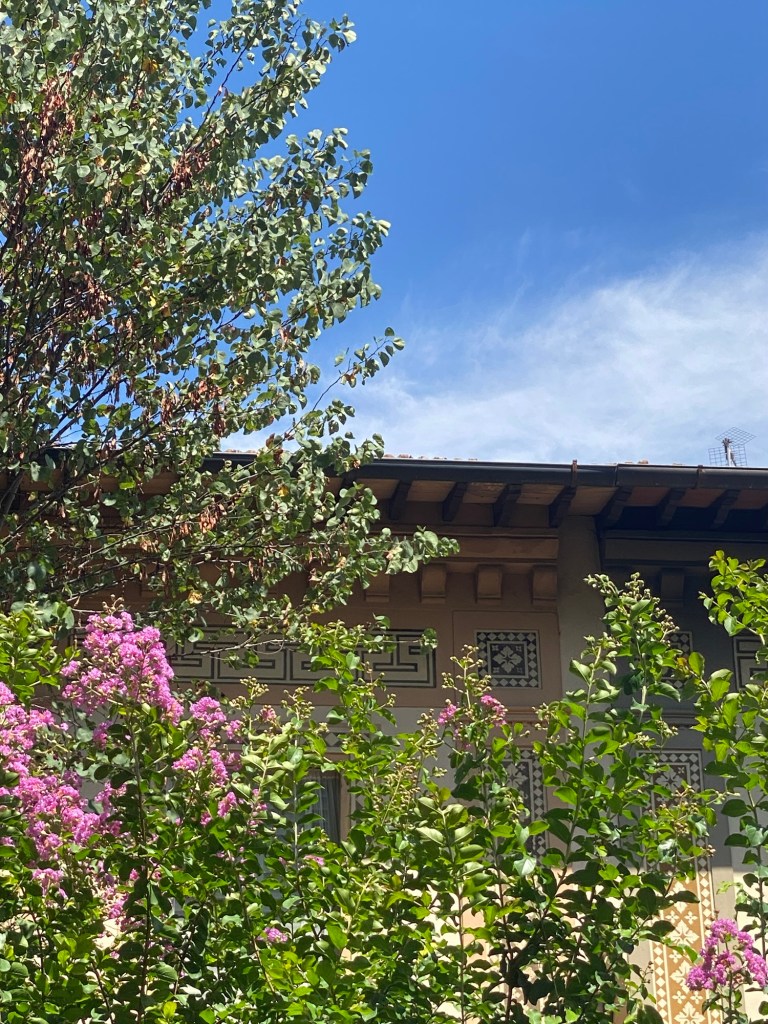
A villino (little villa) in the Oltrarno built with a decidedly art nouveau appearance. Surely built between the 2 world wars.

More wisteria. Look at the closeup, with that background!

Lots of interesting shops in Florence. This a a Japanese language bookstore, not something you’d automatically expect!

I spotted some lilac growing above the wall around this palazzo. I adore lilac and there isn’t a big use of it here. It made me think of the bunch of lilac I bought on the street in Paris in April of 2022. Sweet memories of that perfect month in Paris. You don’t see bunches of lilac for sale here.

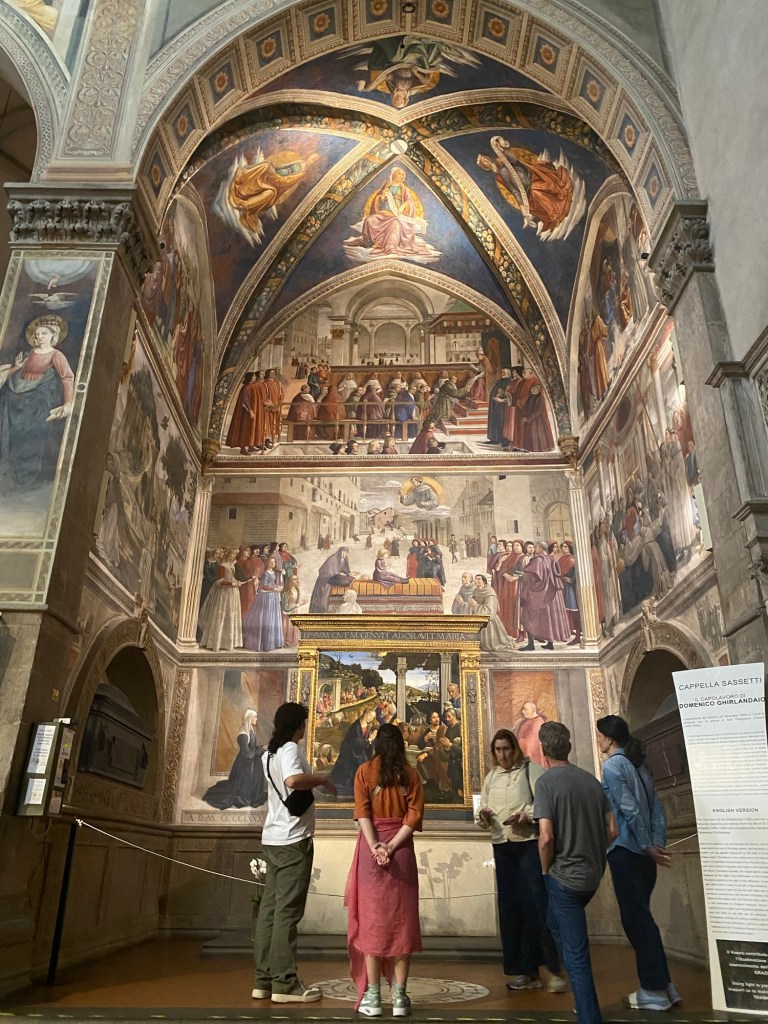
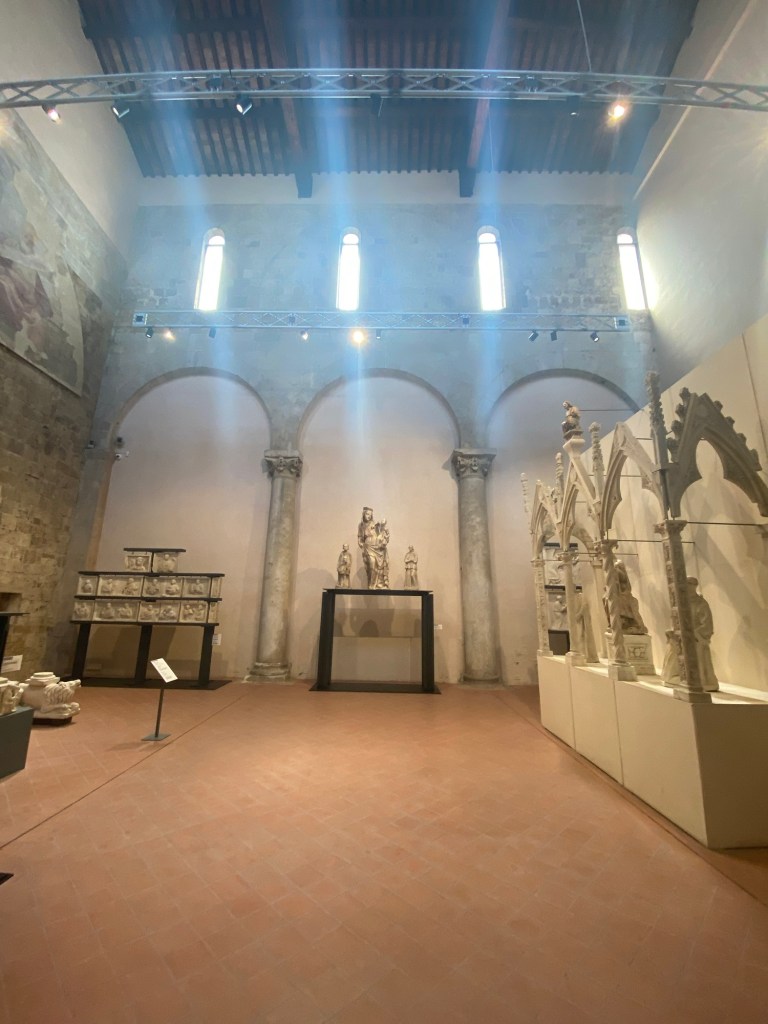
And, last but most certainly not least, the whole reason I was out in Florence on this gorgeous morning was to attend a lecture on the new scholarly art history discoveries on Florence’s 1000 year old baptistry. It was held in a great space, seen below. The lecture hall had wonderful views! But the talk itself was great and fired my mind! I’m so fortunate to be living here, where this kind of interplay is possible.

Oh, the good fortune to be alive this day in Florence! What a gift!

Come with me into the beautiful Giardino Bardini, Firenze

It’s the very best time of the year for a visit! I’m sure you will agree!

Above is an overview taken from Google and likewise here is a plan of this unusual site.

Once inside the premises, the thoughtful viewer will notice this wonderful lunette-shaped painting by Utens that depicts this unique garden in a most delightful fashion.

The 2 pix below of the Utens painting are my snapshots.

As I have remarked in another post, Florence is above all a city of brown stone and medieval architecture, so the fleeting delicate beauty of a flower blossom is a glorious thing!

One of the first “rooms” one encounters is this lovely landing. It was a little breezy that day! Quel giorno tirava un po’ di vento!

There it is! The dome of Florence cathedral. It looms over the city like a flying saucer. I don’t know why that particular turn of phrase comes to my mind, but it always does.

The first view of the marvelous steps to the top.

The willowy wisps of the yellow blooming shrub.

The steps to the top! Marvelous vista!

Turn around while climbing the stairs and this is your reward!

Turn around again and continue climbing!

There are more cranes in Florence, busy building or restoring, than I’ve ever seen before. I guess the economy post-covid is growling if not roaring.

Now we angle off to this steep incline (steeper than the photo suggests) to get to the wisteria tunnel.

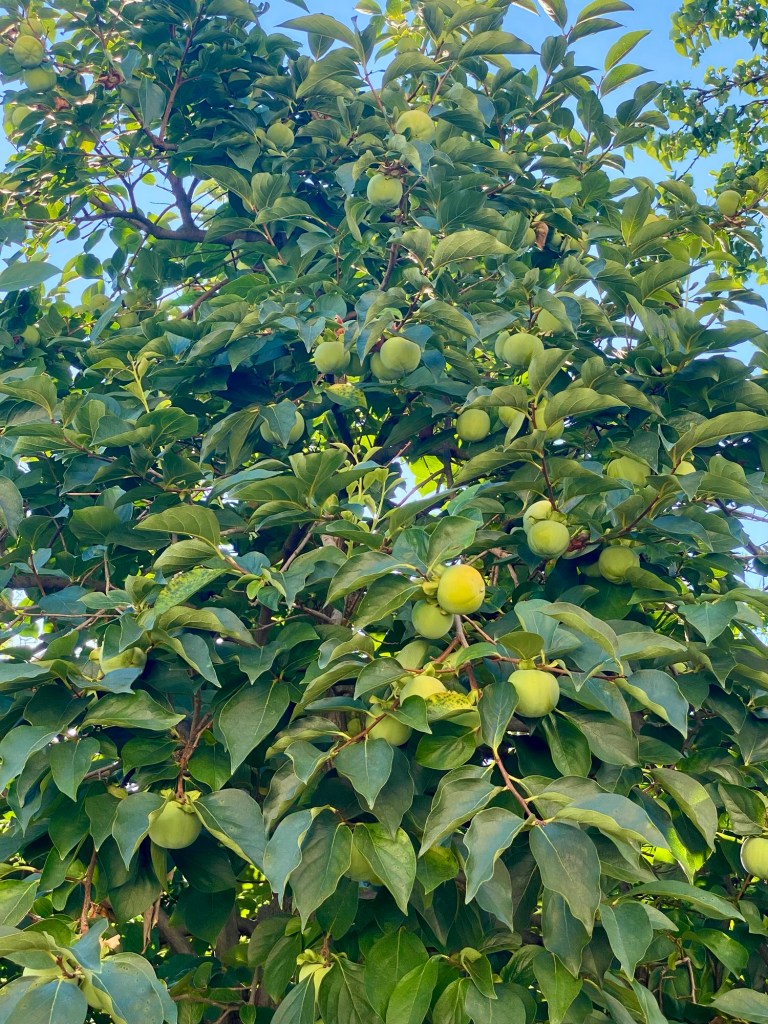
All along the way I am distracted by the gorgeous blooming fruit trees and the views they offer of my favorite city.

Did I make it to the wisteria tunnel? Was it in bloom? Check back soon for Part 2.

Alla prossima!

Buds, blossoms and blooms for days and days (giorni e giorni)!

Did you know that Florence is named for flowers?

There are several scholarly opinions on from what the name of Florence originated, but the theory I like best relates the city to the natural world of blooming.

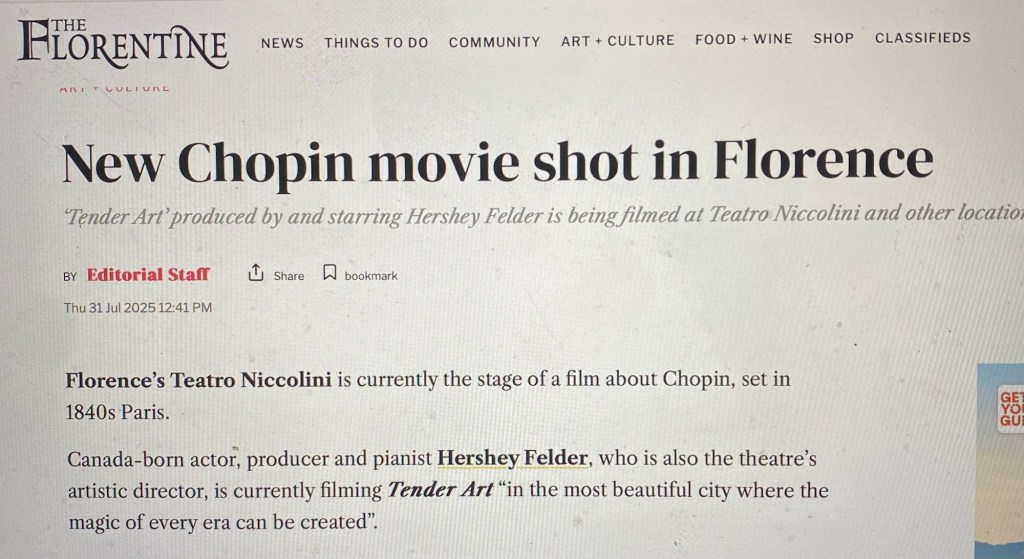
Here’s what the local English language newspaper, The Florentine, says about the origin of the name:

I also love the fact that the Florence Cathedral is truly called the Cathedral of Saint Mary of the Flower (Italian: Cattedrale di Santa Maria del Fiore). It would seem that in la primavera, the city sets out to show us where its name came from! How can anyone deny it?

These pretty blossoms and blooms speak for themselves. All you need to do is wander around the city and its environs and you will be richly rewarded.

The photos below are from a different tree, although the color of the blossoms is almost identical to the ones above. But the plant’s habit is entirely different.

Then there is this prolific shrub which is so lovely!

Many people have asked me the name of this brightly colored shrub, so here it is:

Above, I love the contrast of the old tree trunk, pruned to perfection, bearing its young branches and veil of blossoms, all set against the old fabric of the city. Florence is quintessentially a city of stone; brown rock quarried locally makes up the fabric throughout area. The juxtaposition of rough stone with delicate, ephemeral blossoms is so fascinating.

And then there is the wisteria. Oh my god, how I do love this vine!

Above, and again, I love the contrast of the old architecture with the delicate blossoms. Here the architecture is tamer, more classically treated, but the poignancy of the flowers against stone remains the same for me. The stems of wisteria tell you that while this plant blooms afresh, it’s actually very old (and probably very wise, I mean, think of what it has witnessed).

To end this post, I’m throwing in a bonus of 2 short videos filled with birdsong.

April Fool’s Day!

In France and Italy on this day each year it was a tradition to pin a picture of a fish on the back of an unsuspecting victim. I love this old French greeting card image!

Nobody ever did anything better than the flappers!

And below is a photo from Rome from the 1950s. Think away the red circle.

In the USA, we simply pull little tricks on friends or family members and then when they react, we say April Fool’s! This is especially fun for elementary school children. What a sweet time!

Pope Urban VIII was here

Walking down any major street in the historical center of Florence provides lots of visual entertainment if you keep your eyes wide open. I try to do that always and I am rarely not rewarded for the effort.

Strolling down the Borgo Pinti recently, my peripheral vision fed me an image of this magnificent coat of arms, which my brain at first registered as a face with 2 large eyes and eyebrows, a mustache, and a mouth. Nah, I thought, that can’t be correct. So I stopped and studied and realized 3 bees roughly formed the features of the face I thought I saw. Do you see what I saw?!
The split second I recognized the bees and realized it was a coat of arms, I knew we were standing in Barberini country. I’m obsessed with the Barberini family, their piazza in Rome, the baldachino over the tomb of St. Peter in the Vatican, and anything else having to do with this famous family. I even have a tattoo of a bee in their honor.

My interest started with the bees. When I was a baby art history student I grabbed on to the bees as a simple way to remember this family. What can I say, I have always liked bees!


Above is an archival photo of this very same coat of arms of Pope Urban VIII. The Alinari photo tells us this site in Florence that I happened to be walking by was the former cloister of St. Maria Maddalena dei Pazzi. You can see the papal crown and 2 keys connecting Urban with St. Peter, the first pope. The face of a cherub is inset below the crown, with the cherub’s 2 wings extended sideways. In the center area are three large bees. Tassels extend from the sides and bottom. The plaque below the entire work reads Urban XIII, Pont Opt Max.

So, naturally, I wanted to know more. First, what was this building?

Santa Maria Maddalena dei Pazzi is a Renaissance-style Roman Catholic church and a former religious building located in Borgo Pinti in central Florence, Italy.

The foundation dates back to 1257, dedicated to Santa Maria Maddalena delle Convertite, in the place where there was already a home for women with bad reputation who followed the rule of San Benedetto; later on the structure passed to the Cistercians of Badia a Settimo, who settled there in 1442. In 1629 the Cistercian monks literally exchanged ownership with the Carmelites of San Frediano in Cestello. The nuns also brought with them the mortal remains of the sister Maria Maddalena de ‘Pazzi who in 1669 was beatified and thus gave the church its name.

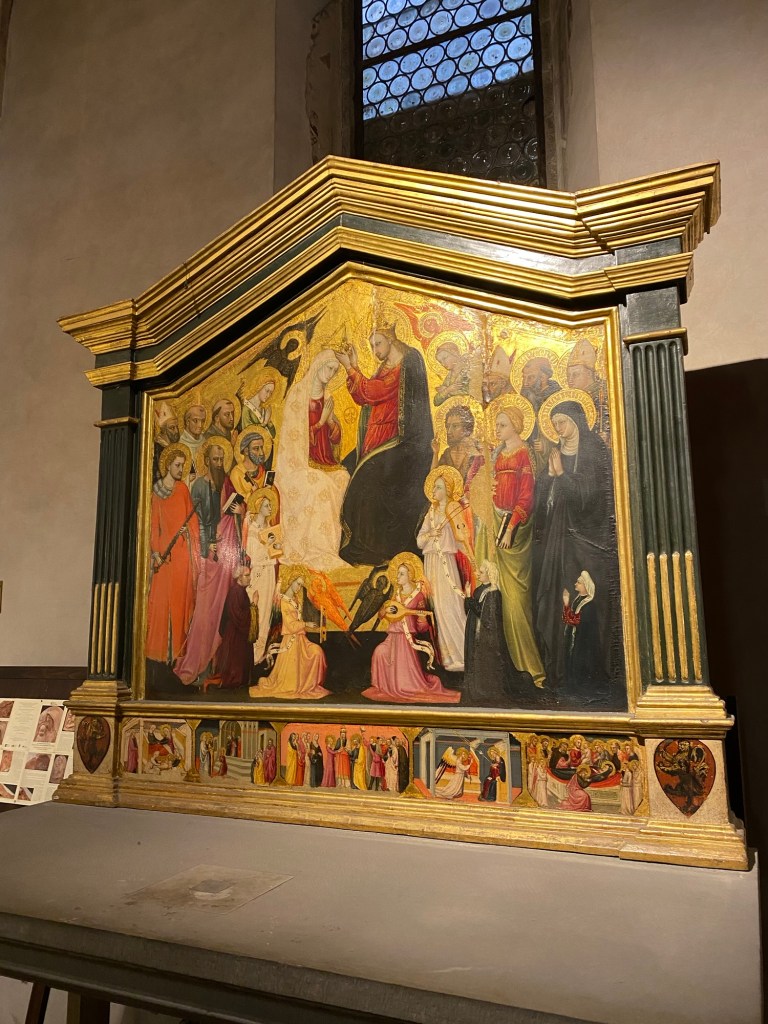
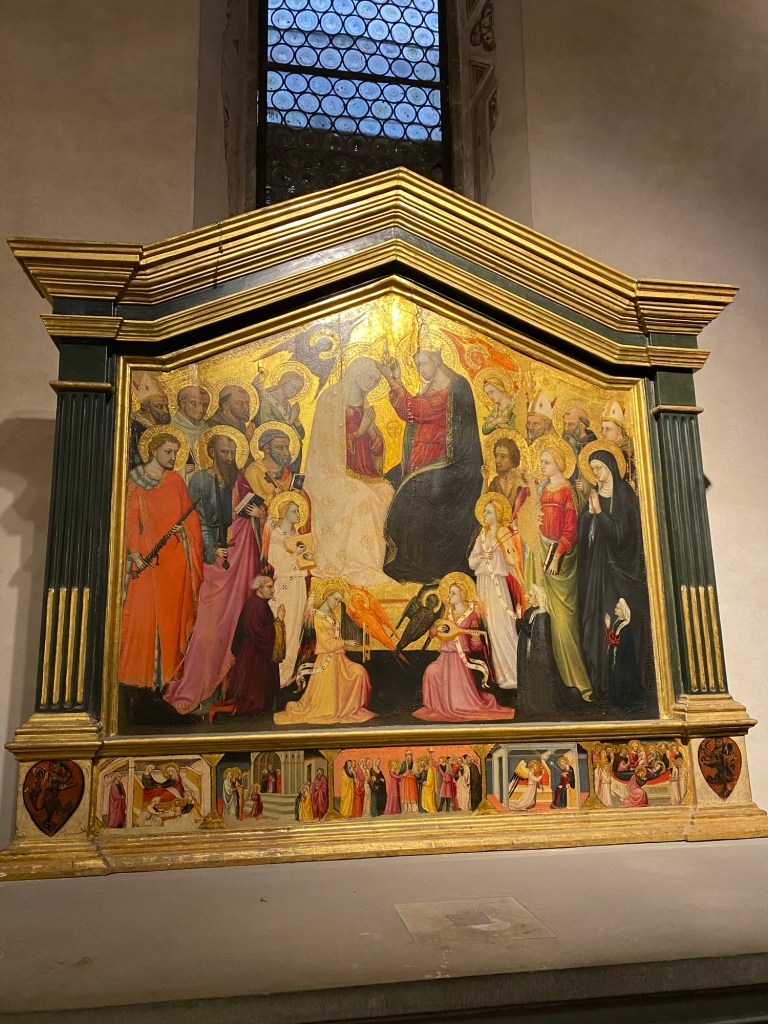
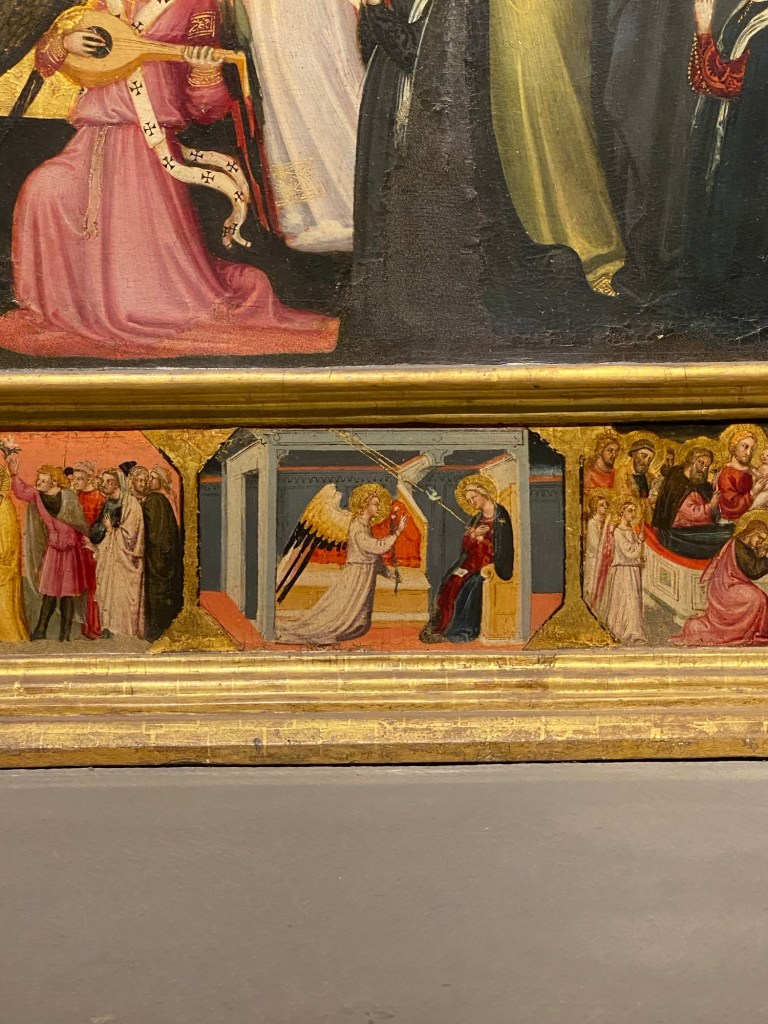
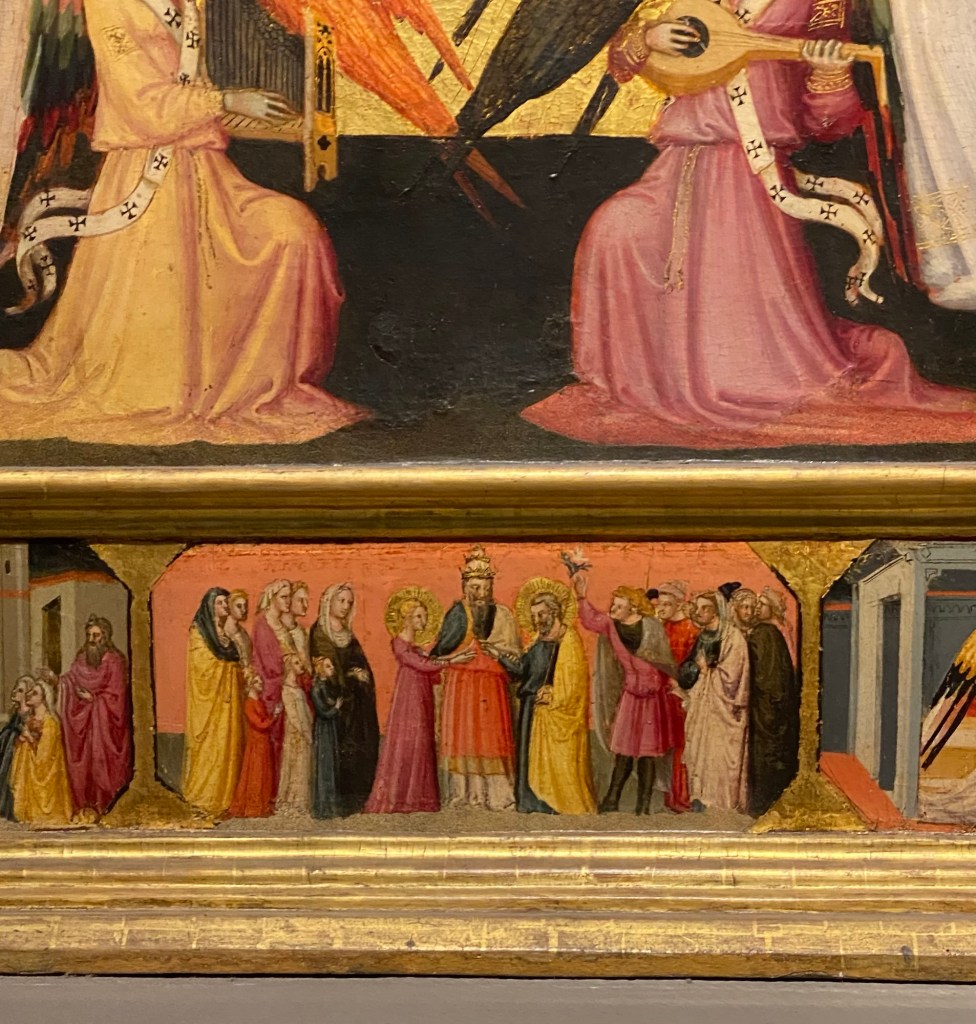
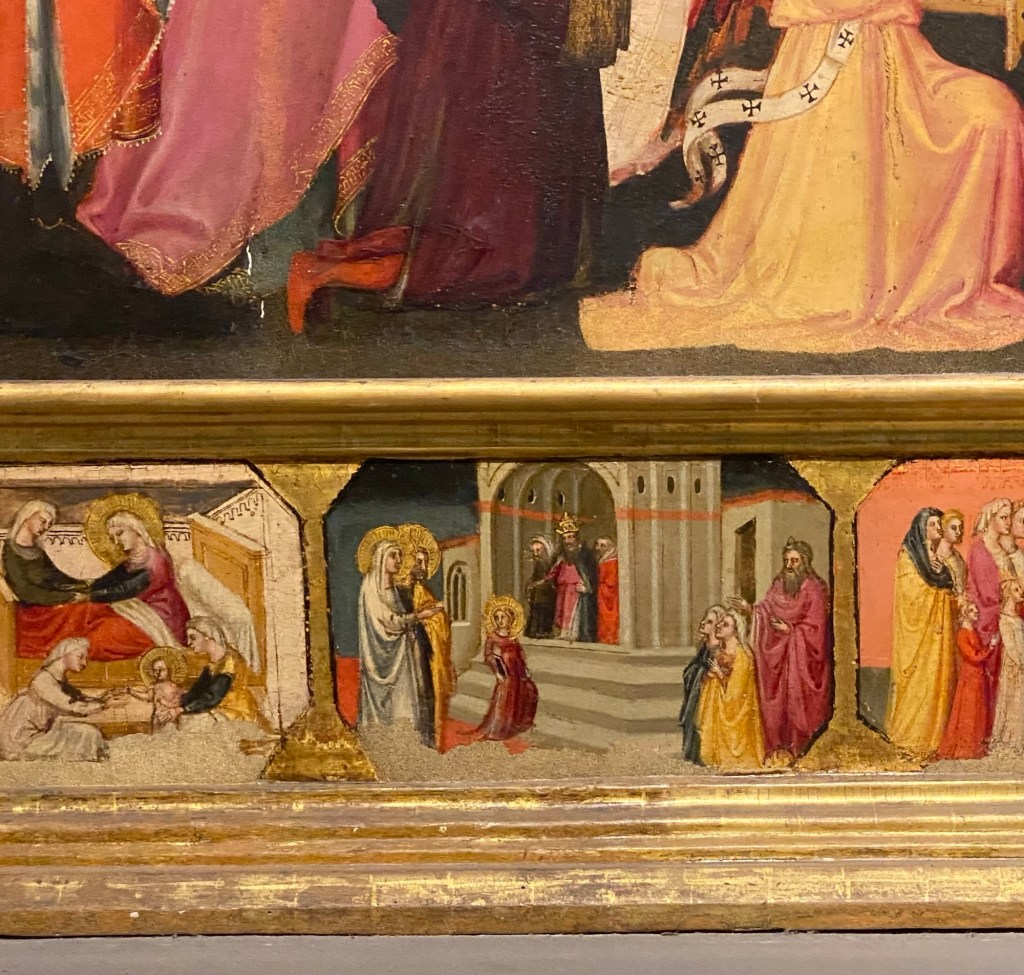
Inside you can admire works by Carlo Portelli, Alfonso Boschi, Domenico Puligo. Of particular interest are the martyrdom of Saints Nereo and Achilleo by Domenico Passignano and the large altarpiece by Cosimo Rosselli depicting the Coronation of the Virgin. In the Chapter Room there is the famous Crucifixion by Perugino.

And what’s notable about Urban VIII?

Portrait of Urban VIII by Gian Lorenzo Bernini, c. 1631–1632
(oil on canvas, Galleria Nazionale d’Arte Antica)

Well, I’m happy you asked!

Pope Urban VIII 1568 – 1644), was born in 1568 as Maffeo Vincenzo Barberini. He was the 5th son of a prominent but non-aristocratic family. His father died when he was three and he went to Rome to live with family and was educated by the Jesuits. He took his higher education at Pisa and He would become head of the Catholic Church and ruler of the Papal States from 6 August 1623 to his death, in July 1644. As pope, he expanded the papal territory by force of arms and advantageous politicking, and was also a prominent patron of the arts, commissioning works from artists like Gian Lorenzo Bernini and a reformer of Church missions. His papacy also covered 21 years of the Thirty Years’ War.

The massive debts incurred during his pontificate greatly weakened his successors, who were unable to maintain the papacy’s longstanding political and military influence in Europe. He was also an opponent of Copernicanism and was involved in the Galileo affair, which saw the astronomer tried for heresy. He is the last pope to date to take the pontifical name Urban.

I read somewhere that Urban visited Florence as Pope and I’m guessing that if that is true, he probably made a procession down this major street and the coat of arms was added to welcome him. I can’t find my source as I finish this post. The other info about Urban comes from Wikipedia.

Every street corner in Florence has something to tell us. Are you listening?

Happy 2 month anniversary!

I remember when my son was born, I would mark each week of his new life with a sense of anniversary. Some people laughed at me, but it felt important.

I’ve been in Florence for exactly 2 months today and I am celebrating it. Of course I’ve lived here before, but I was away for 3 years, and I’ve lost a lot of my Italian and life has changed here since Covid, like the rest of the world. So, in some ways, I’m starting completely from scratch.

There have been ups and there have been downs. But I wake up every day happy to have the privilege of living here. Where art is a living, breathing thing.
Alla prossima, L