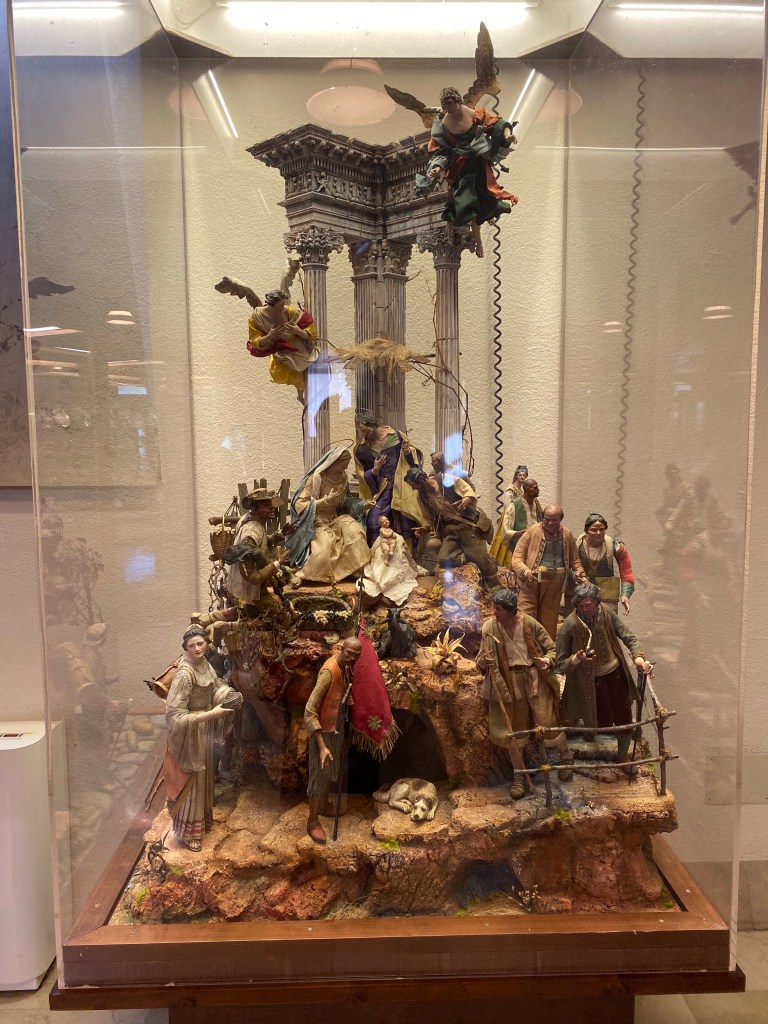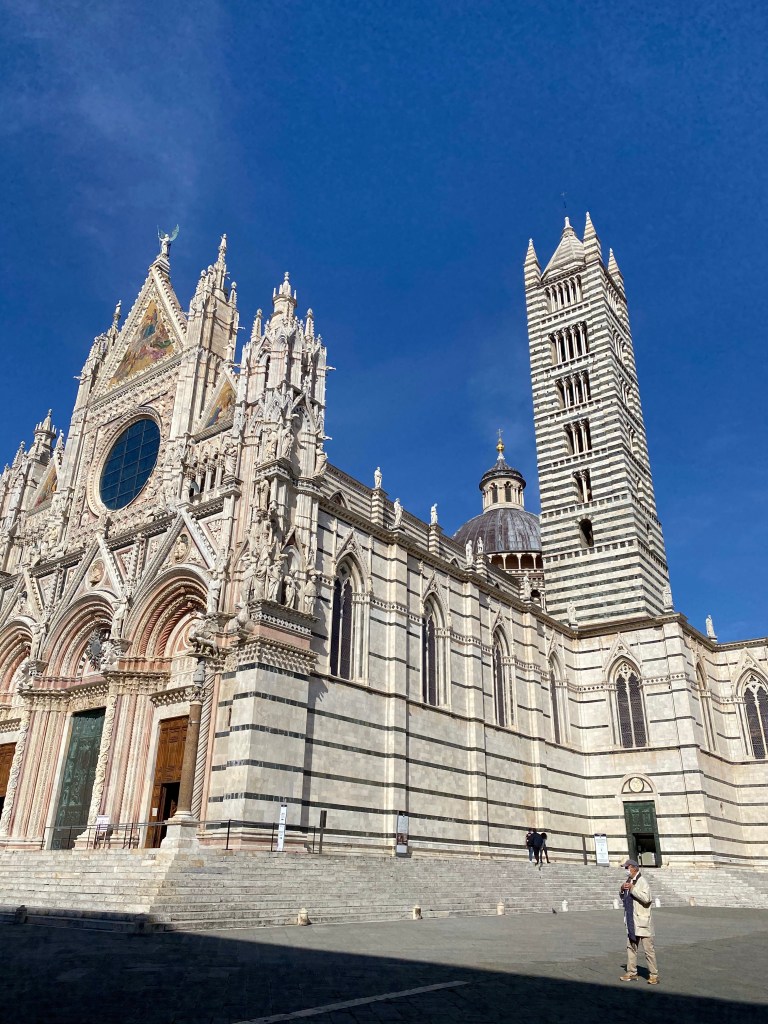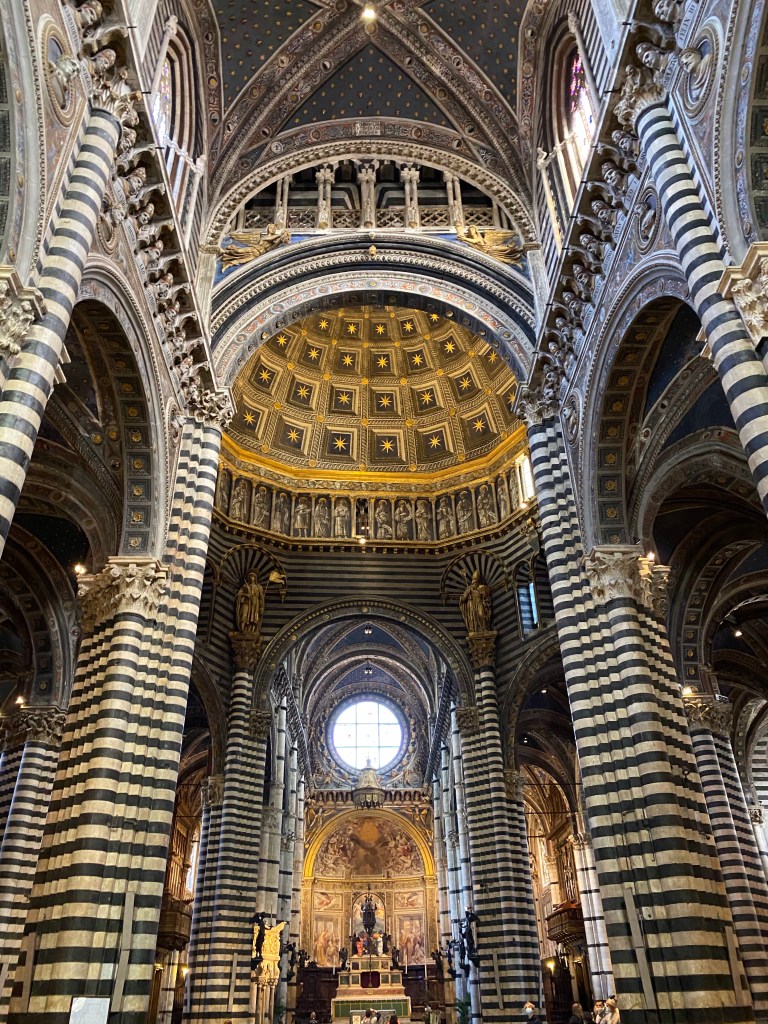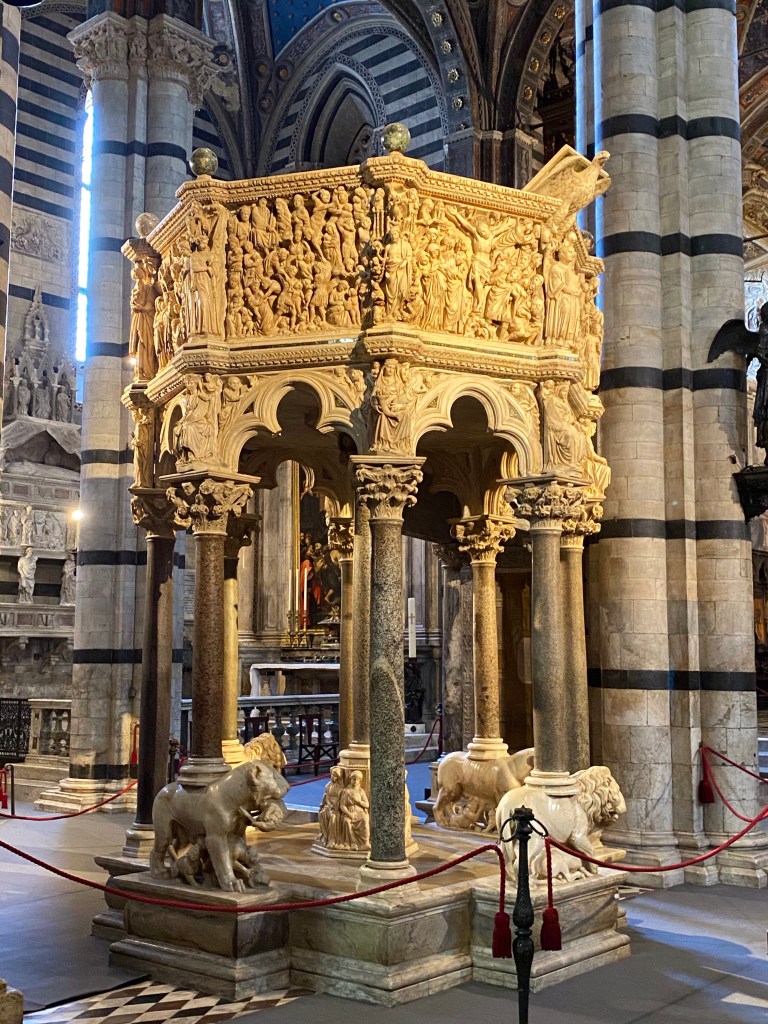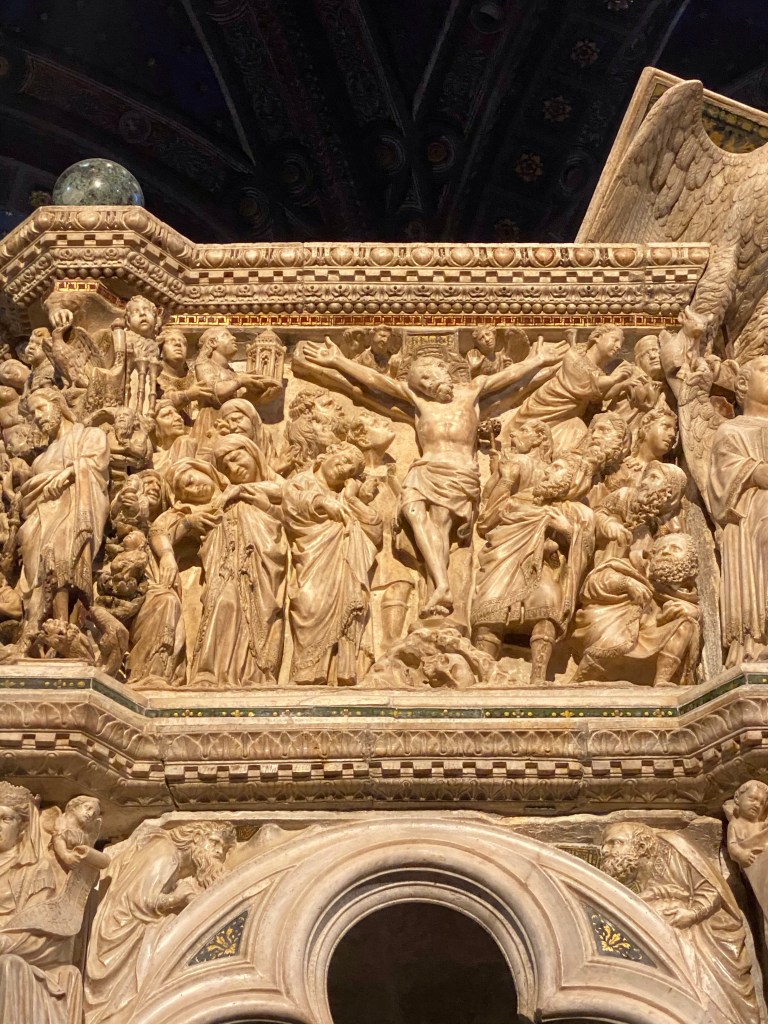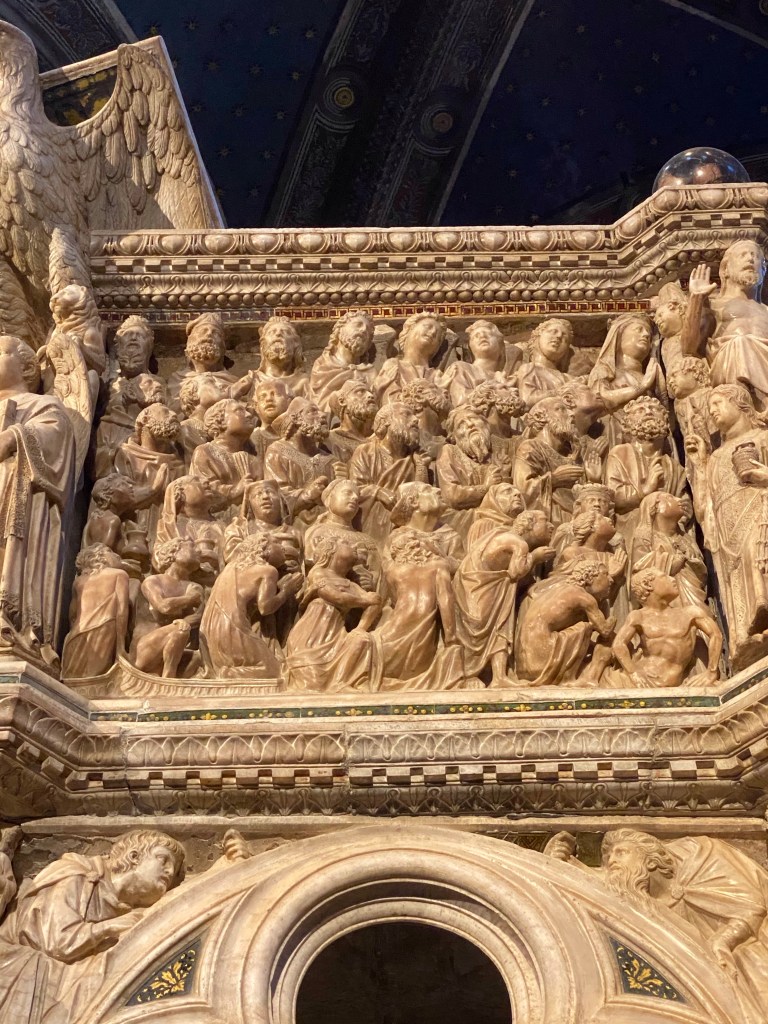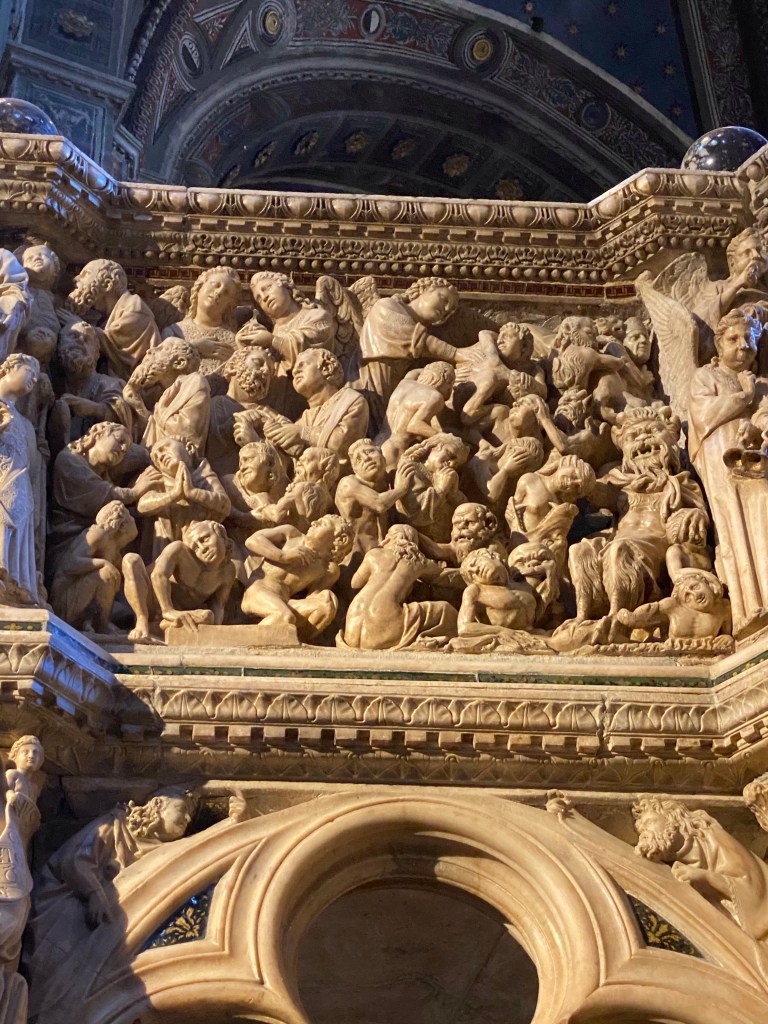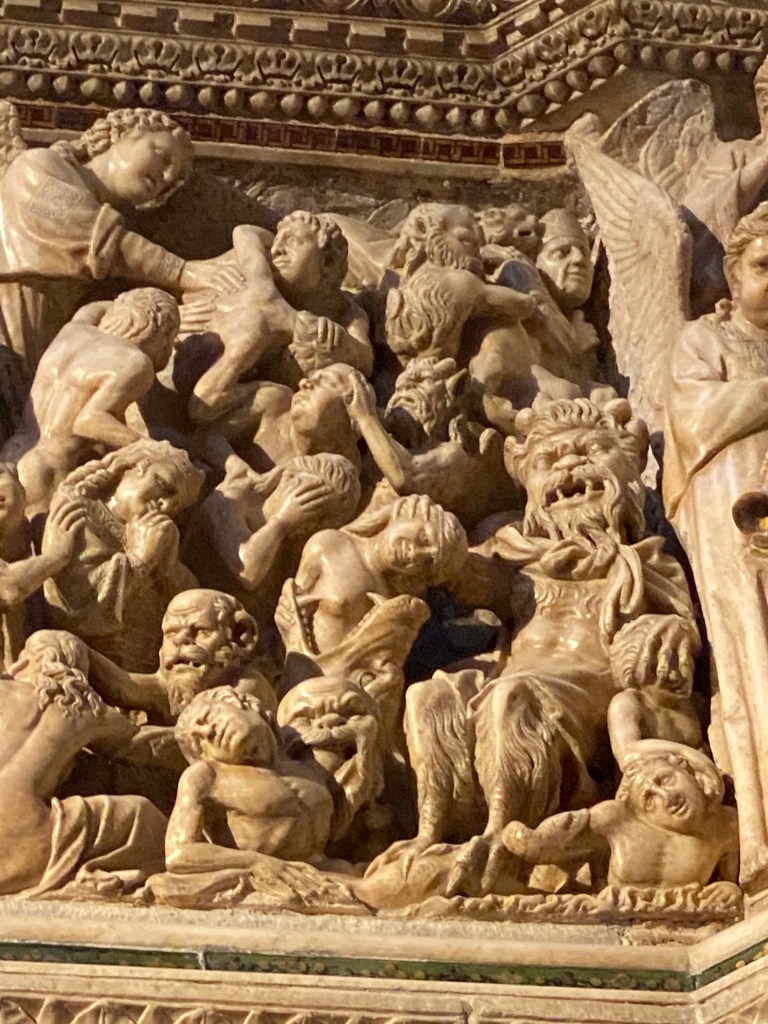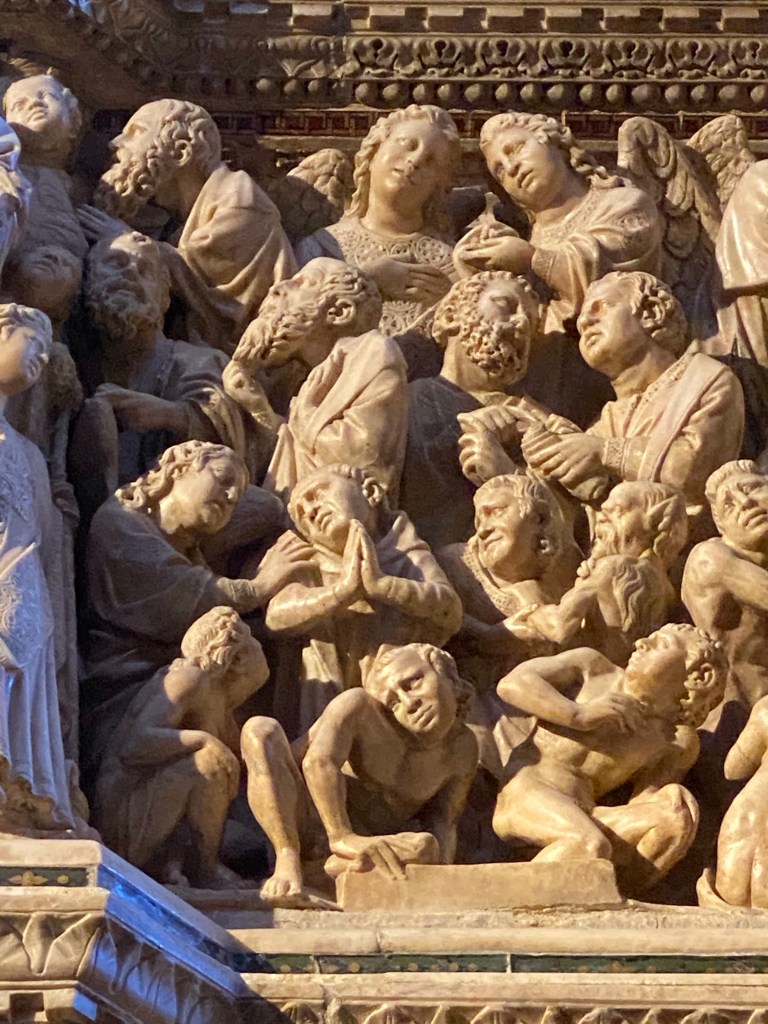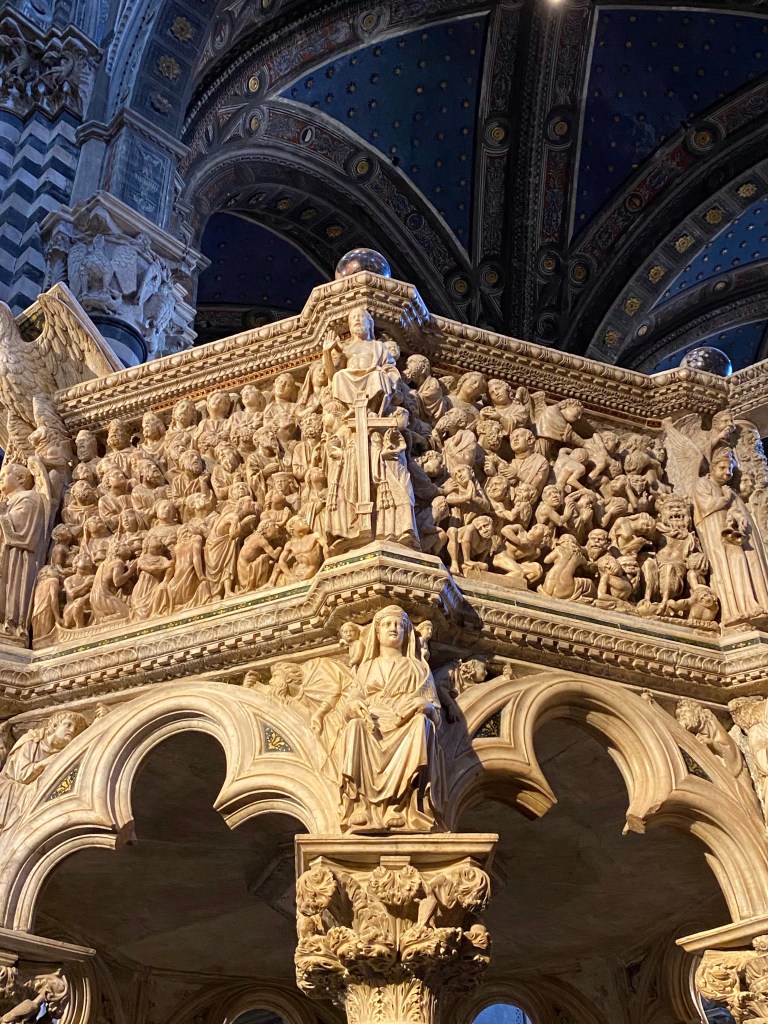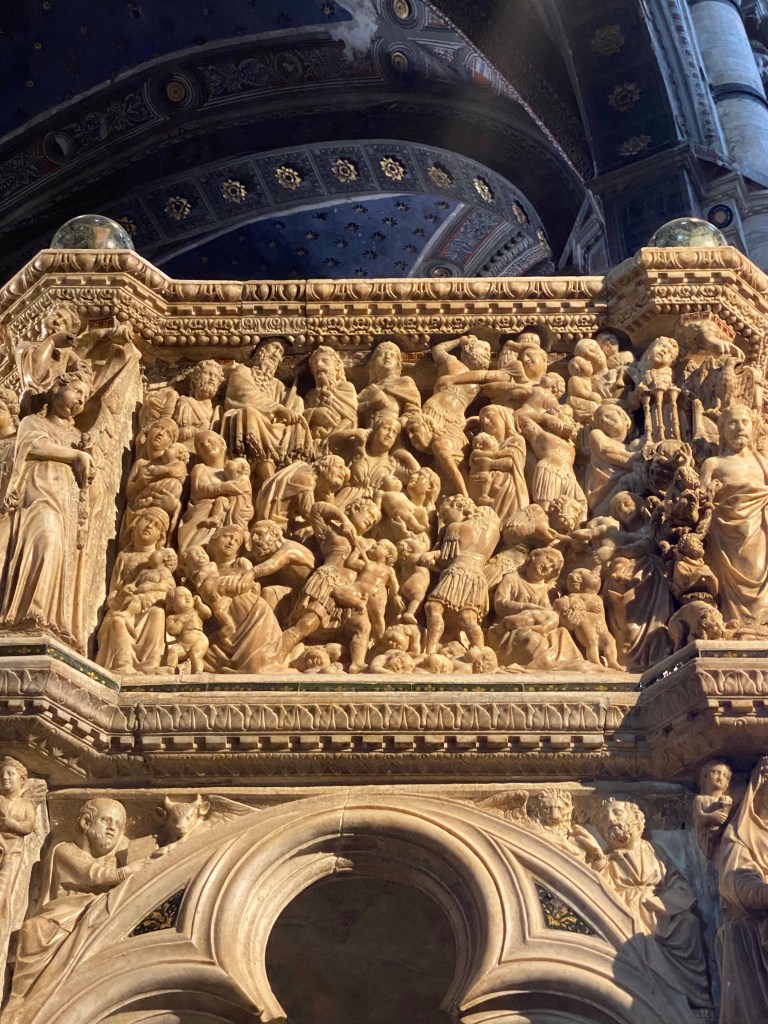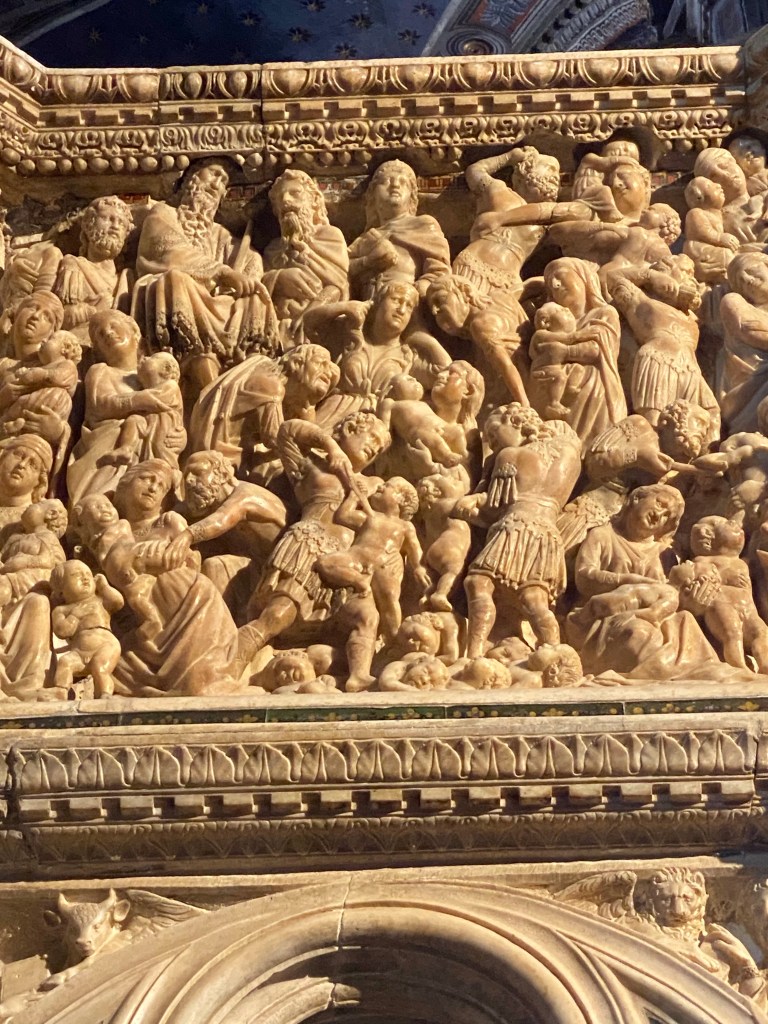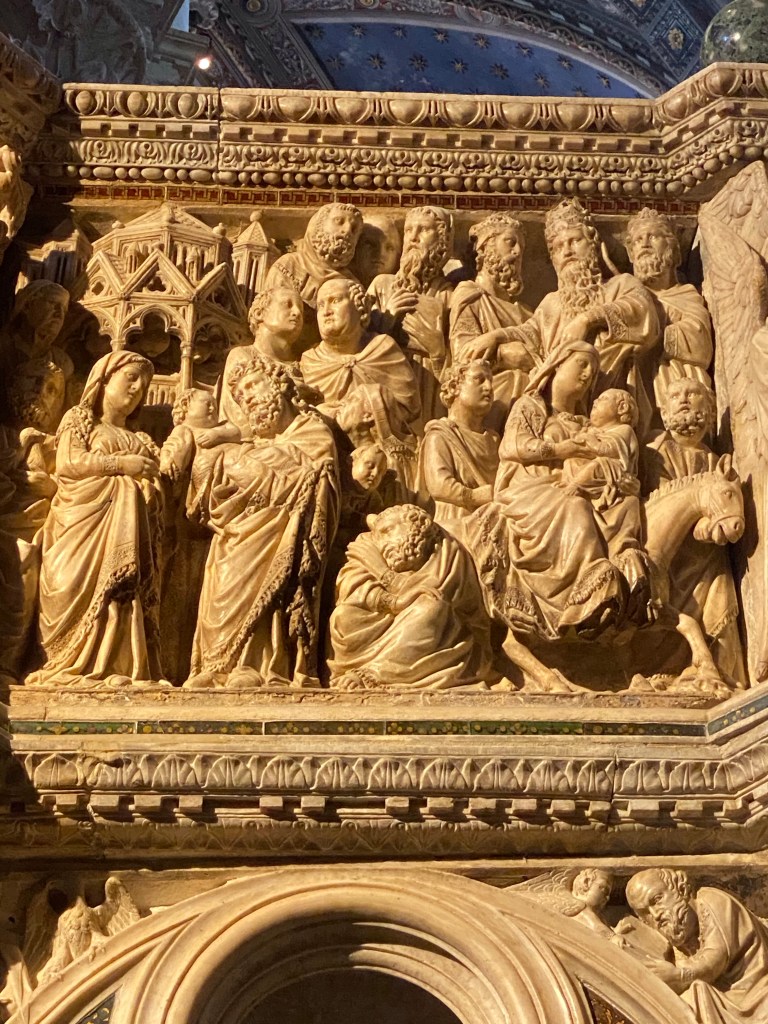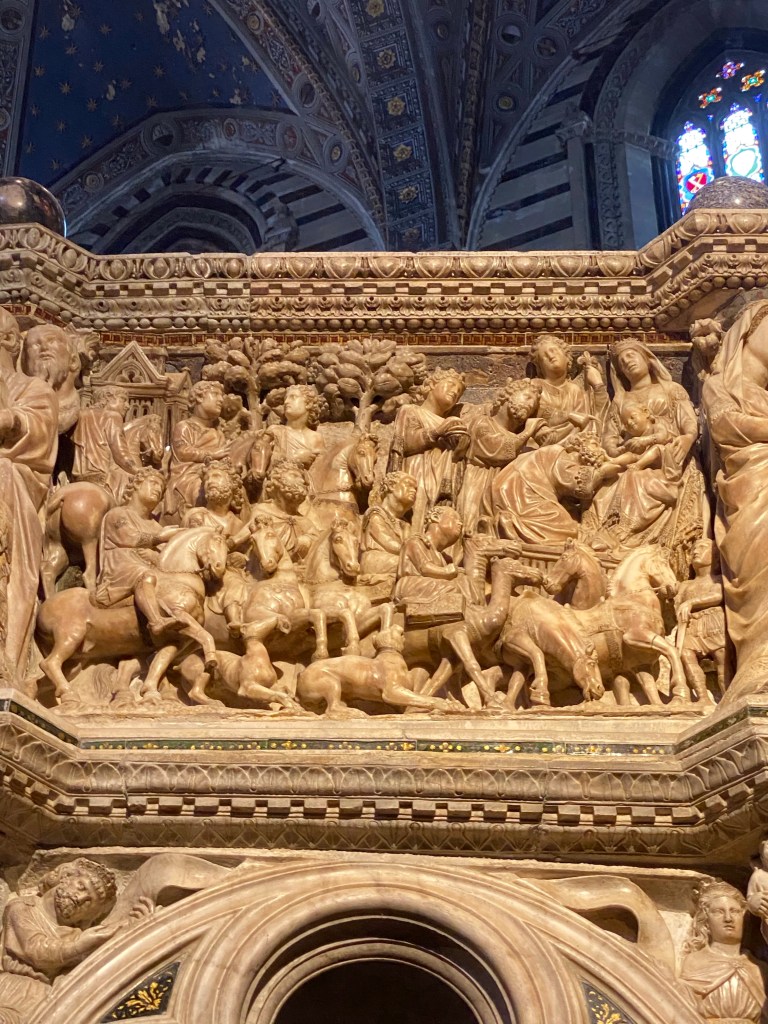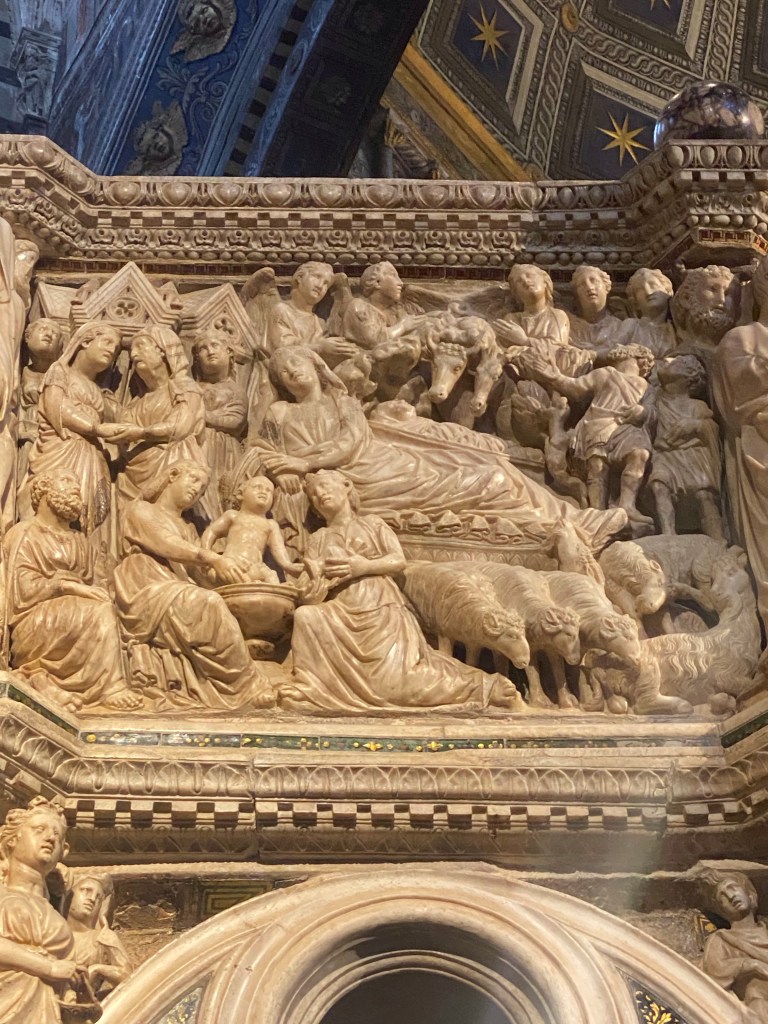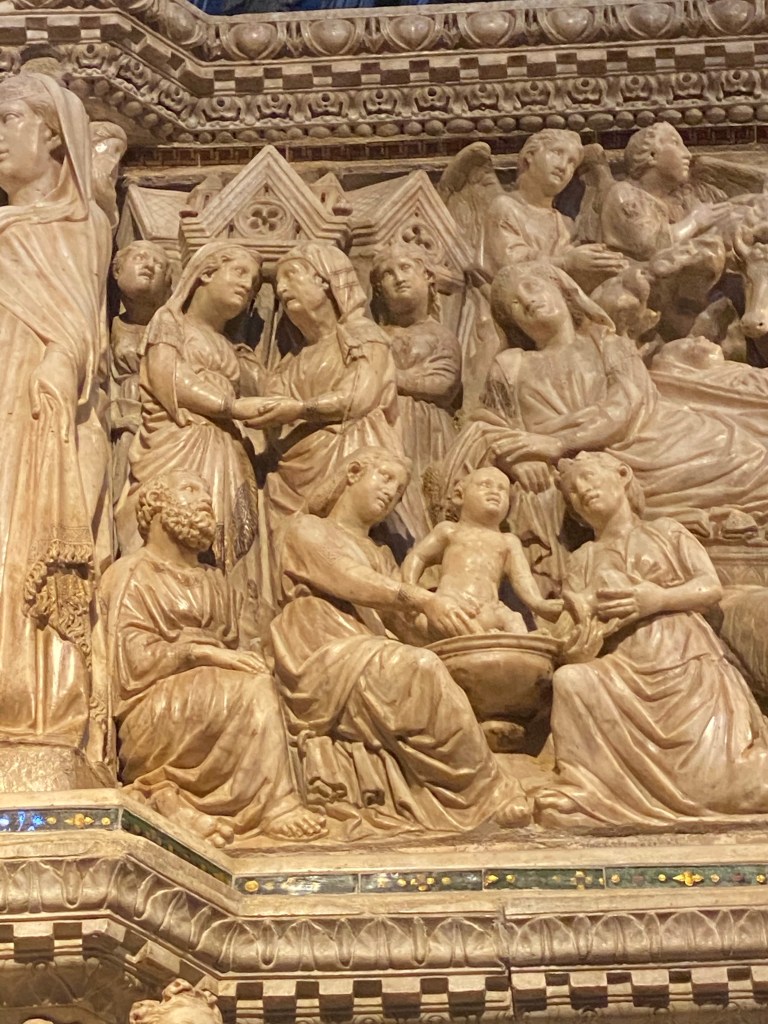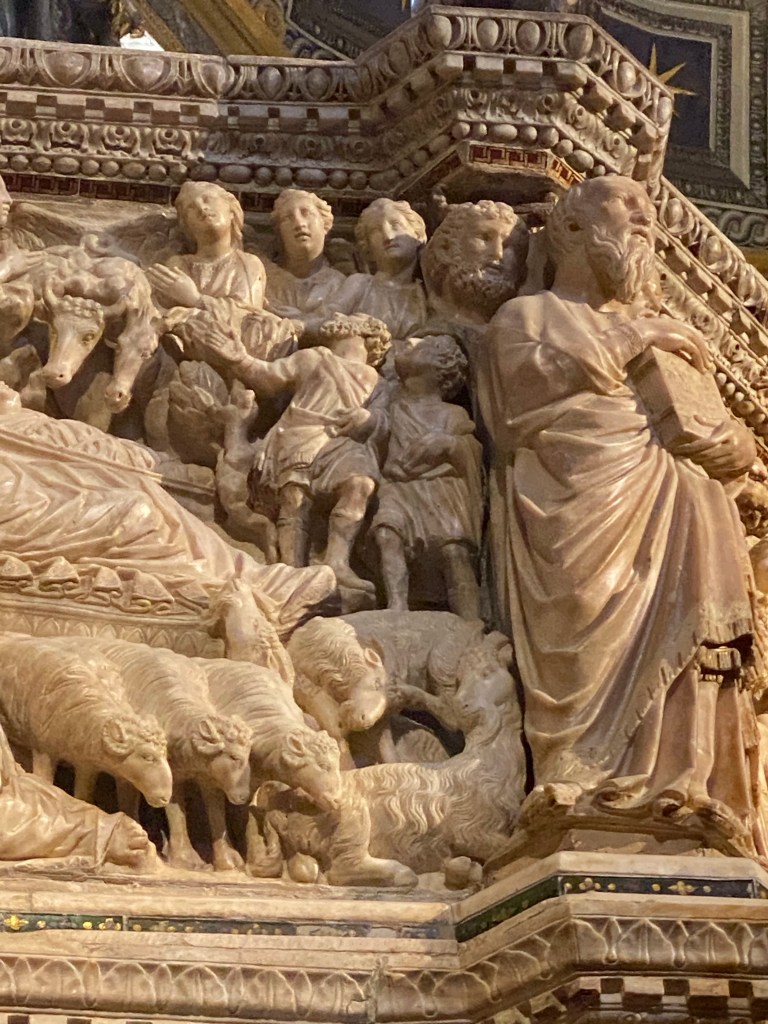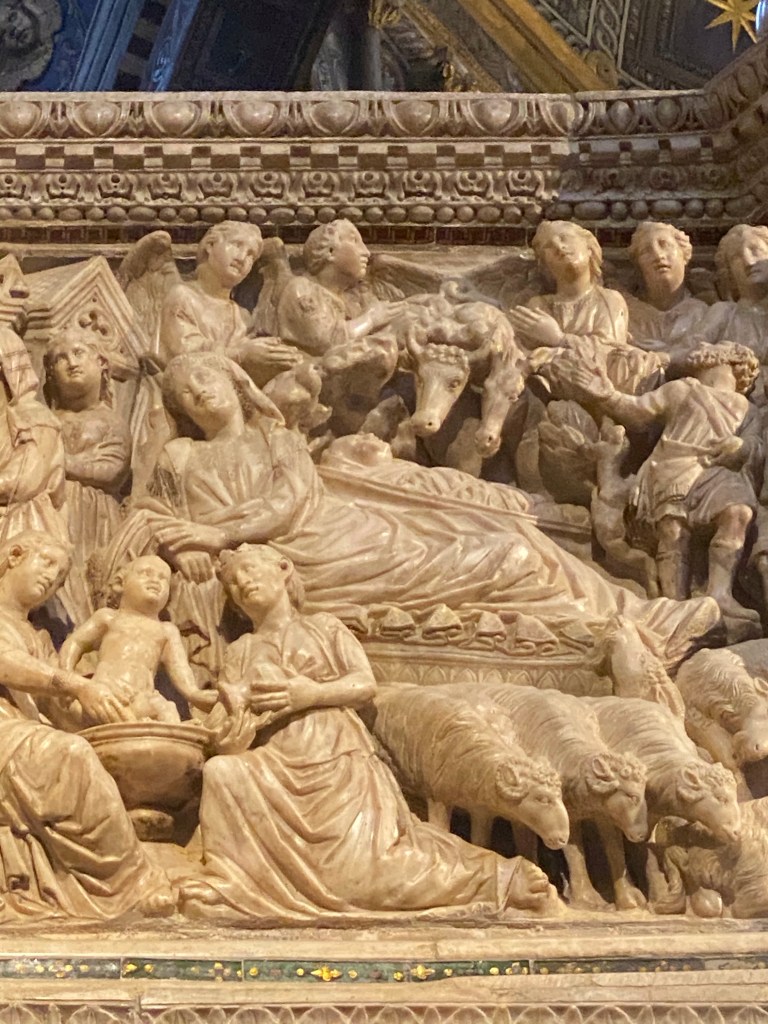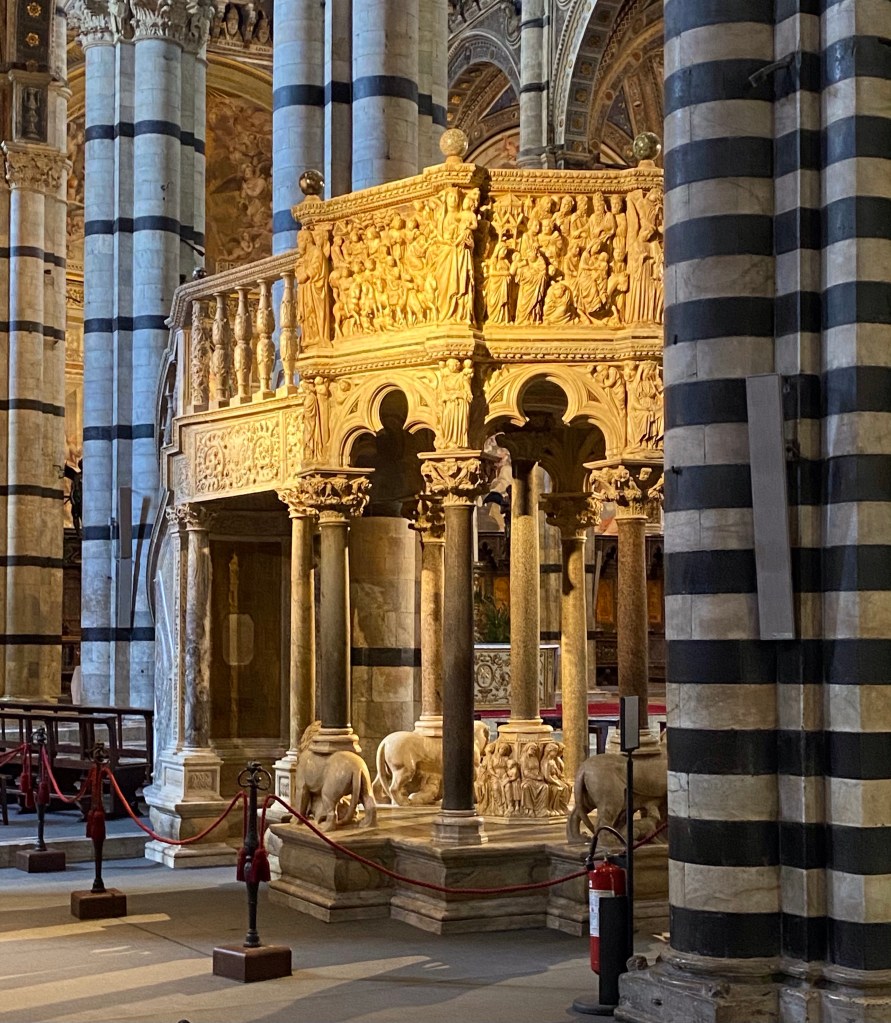
There are so many things about Siena’s cathedral to admire, it is sometimes difficult to zero in one what would be main attractions in any other church.


There are so many things about Siena’s cathedral to admire, it is sometimes difficult to zero in one what would be main attractions in any other church.


I’m happy to say that I am just beginning my 5th year of living in Florence! Hip hip! It’s an accomplishment in so many ways! And a pleasure.
This is my 5th (or 6th really, because I spent another December in 2014 here as well) December in Florence and if there is one thing I know, late November and December is the time of rain.
This year is has been extra dreary because of the Covid lockdown. Until 2 days ago, we were in the Red zone, which meant you were not allowed to go out for extraneous activities and you had to carry a document with all the details of your venture out of your house, in case the authorities stopped you.
But 2 days ago we were switched back to the Orange zone, which means we can walk about as desired. Despite the rain, I needed to get out of the house and so I decided to trace the Mugnone torrente, that flows in front of my apartment, to its confluence with the Arno River. It was about a 4 mile walk and it was partly cloudy, terrifically rainy and windy, and finally, sunny. I got wet, my umbrella turned inside out, and I was tired, but it was a great day despite all of that.
My video shows the end of the long, long torrente Mugnone, just before it joins the Arno at the Ponte all’ Indiano.

The picture above is taken from the bridge you saw in the video. That’s the Mugnone on the left, as it flows into the Arno, at the western most end of the Cascine Park.

And again, a little further backwards.


This being Italy, the street artists were sure to snap up the space of the bridge supports to use for art.

A detail of the right side above.

A detail of the left side above.

Above: Looking down the Arno from the bridge, as it flows off towards Pisa.
There’s a short street in the historic center of Florence with the very interesting name of Via del Melarancio, or the street of the pomegranate. I love this fruit and drink a freshly squeezed glass of it whenever I am in the center of Florence. Not all bars serve it, but I have my favorites!

The famous and beautiful Palazzo Pubblico is the town hall in Siena. Construction began on the building in 1297, which was to serve as the seat of the Republic’s government. Chambers were needed for both the Podesta and the Council of Nine. These were the Republic’s elected officials.
Within the palazzo is the Sala di Balia. This room was created at the beginning of the fourteenth century and was so named because it was used by the magistratura di Balia, a council gathered to execute government policy. The council met in the Sala from 1455 until the end of the Republic and Gilberto da Correggio, the commander of the Sienese army against Piccinino (1455) was executed here, for treason it is said.


The room is richly frescoed. On the vaults, the Sienese Martino Bartolomeo painted the Evangelisti – The Evangelists – between 1407 and 1408, when he completed the six busts of emperors and warriors. Spinello Aretino, helped by his son Parri, at the same time took on the task of painting the remaining walls with Storie di Alessandro III – Episodes from the Life of Alexander III – Pope Rolando Bandinelli. One of Siena’s great sons, during the course of his twelfth century papacy Alexander III helped unite northern Italian cities with varying success, in an extended struggle Emperor Frederick I, known as Barbarossa. This pictorial cycle, divided into sixteen, starts with two lunettes on the arch over the exit.


The frescoes show a simple but effective vitality – clearly influenced by the Giotto’s late period – showing episodes from the life of this Pope: his coronation, his expulsion from Rome by Barbarossa’s troops, his alliance with the Venetians, the foundation of the Piedmont city of Alessandria, named after him. Amongst the events depicted, the Battaglia di Punta San Salvatore – Battle at Punta di San Salvatore – is remarkable for richness of detail, such as the naval battle between the Venetian and German fleets. This painting, showing the Venetian victory, covers the entire lower wall leading to the exit. Equally marvellous is the depiction of Ritorno a Roma di Alessandro III – Pope Alessandro III returns to Rome – above the entrance. In this last fresco, the Emperor Barbarossa is shown, defeated yet forgiven, accompanying the Pope into the Eternal city.
Both before and after Spinello, only Sienese artists painted in this room and its decoration – in terms of artist, concept and iconography – is unique in the Palazzo.


Today in Florence: I took a walk, over 5 miles long, heading west from my apartment, following the course of the Mugnone, the “torrente” (it’s a big creek, essentially) that streams in front of me 24/7. I knew the Mugnone eventually joined the Arno River, and today was the day I was going to track down that confluence. It was sunny, it rained, the wind bent my umbrella inside out, it spit a bit of hail, and then it calmed down into a gorgeous afternoon.
In another post I’ll write more about the torrente itself, but I saw some beautiful architecture along the way. The palazzi pictured below are all situated on my street, the Via XX Settembre, and I time traveled by studying these lovely facades. My area of town was developed in the late 19th, early 20th century, and I can picture how that development went as I look at these wonderful old buildings. They are, by the way, very much occupied and alive today.


The inscription of MCMXV over the door tells the story: this lovely old palazzo was constructed in 1915. Before the first world war. Think of what has transpired in the 105 years. WWI, Armistice, the rise of Fascism, WWII, Florence occupied by German forces, Florence freed by Allied forces. All the while, this building sat here. It has seen it all. I suspect Covid-19 will not bother it in the least.


One of the interesting things about Italy is the way the local laws are posted on the street. You see this all of the time.

Already it seems like a distant dream, but just a month ago I had the pleasure of a visit to the beautiful city of Siena. Here are a few of her charms.


There are a lot of reasons to go to Siena. Visiting the duomo is just one of them. But, did you realize that a trip to see the just the pavement of the cathedral alone is well worth the travel to Siena? Well, it definitely is.

I was lucky enough to visit Siena last month before the Covid restrictions clamped down any chance of travel. Parts of the astounding pavement were on view, which isn’t always the case. Here are pictures from that visit.


The photos above and below show one area depicting the Massacre of the Innocents. The gruesome story is told in amazing detail on the floor of this outstanding church.


What I saw today.
You must be logged in to post a comment.