This and that

Observing and thinking and learning are what makes me tick. But silliness is also necessary!

Dogs waiting for their master on an ordinary street in Florence!

As I was walking home in the late afternoon I was shocked by my long legs!

With internet and social media, English is ubiquitous! Plus there are a LOT of American foreign exchange students here on any given day!

At a favorite pizzeria!

English classes offered at a bus stop.

Oy! That hurts but it’s understandable.

Florence’s Rose Garden on a Sunday afternoon in May

It was a spectacular day!

The first photos are of the acanthus plants, in full glorious bloom.

The next three photos are of a small seating area in the garden that is circled by these 3 trees which have been pruned to form a canopy surrounding the space. It’s quite spectacular in person, but hard to capture with snapshots.

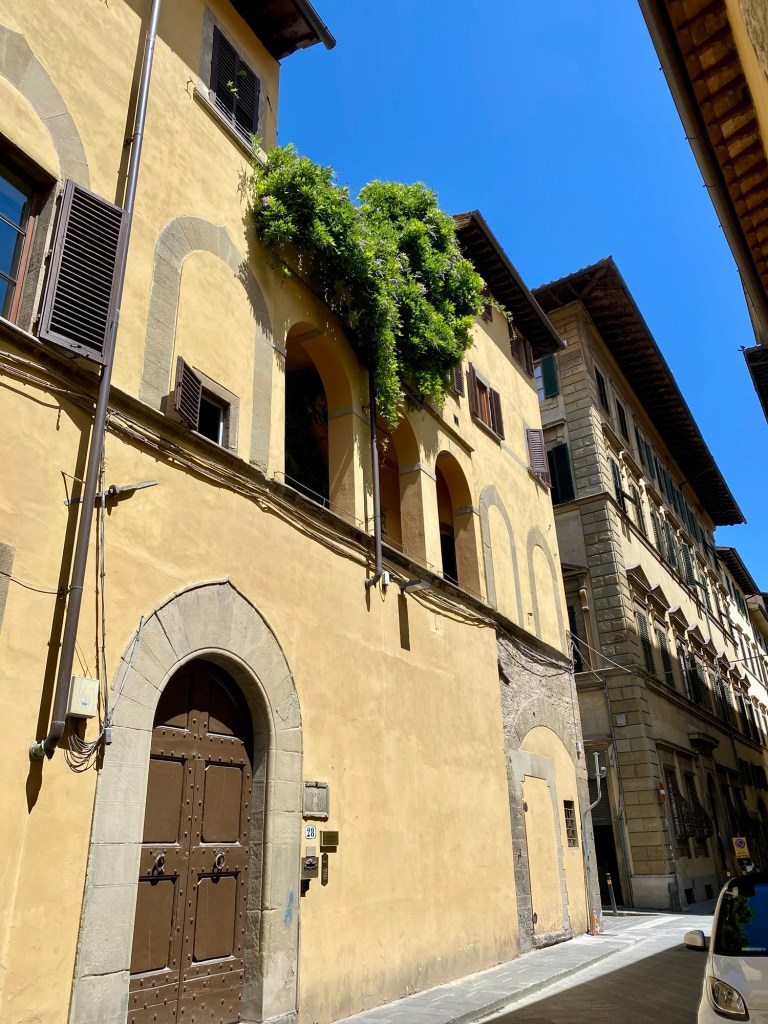
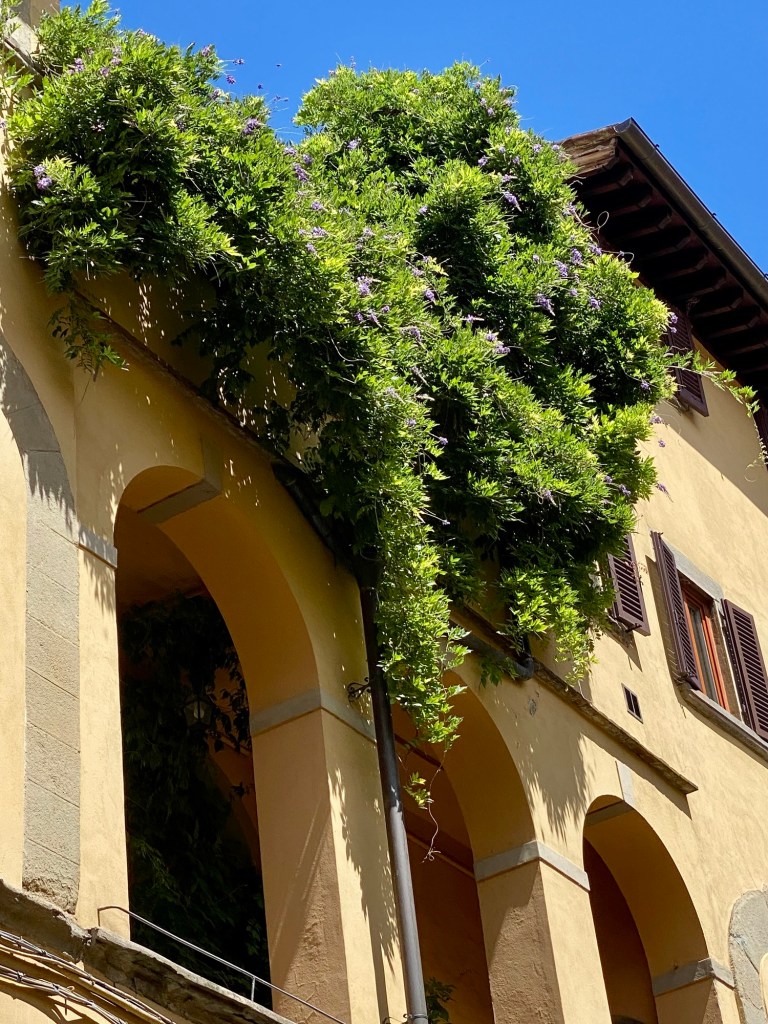
The next few photos are of one of my favorite buildings in all of Florence. I would love to live in a space like this with a pink rose climbing over the front door!

On a clear day, rise and look around you

The final blossom of a nearby magnolia tree

Some pale pink oleander

On the early afternoon of the last Sunday in May, I took a long walk up to the Piazzale Michelangelo and encountered some beautiful views along the way.

This view never fails to impress

The same view from Piazzale Michelangelo

And, perche no, a view of the David from which the piazza takes its name.

Tourists are out in force and doing silly things. Their shirts say they are ballerine (plural for ballerina) but they don’t look like dancers to me.

After spending some time on the piazzale, I went down to the Rose Garden, which I’ll be posting about soon. Alla prossima!

Postscript: A few days later I walked by the same magnolia tree and was rewarded with the full blossom of the bud seen above.

Also, a pink oleander had begun to join in the fun!

The “dollar princesses” from America

Heiress: Sargent’s American Portraits

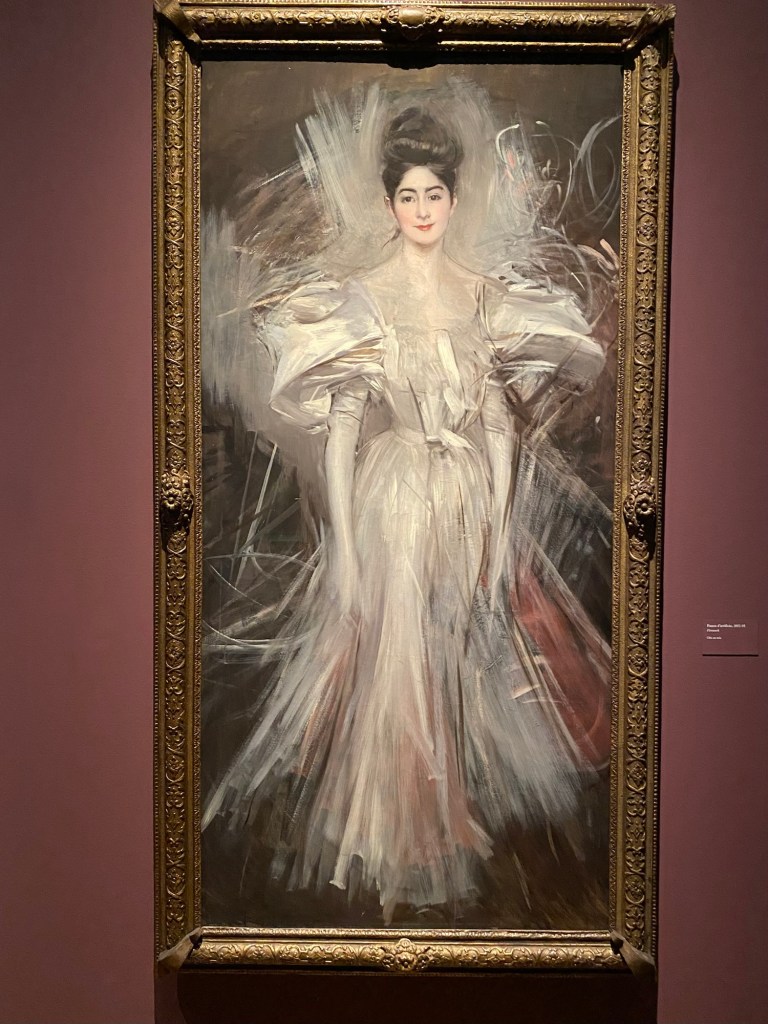
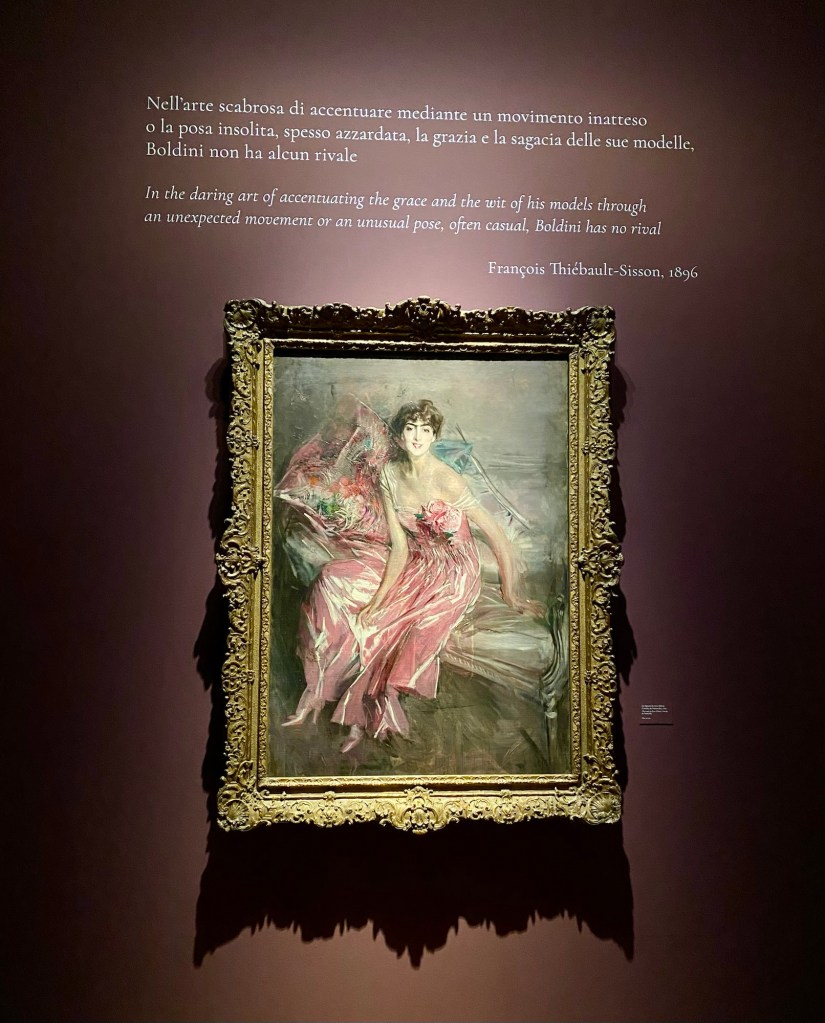
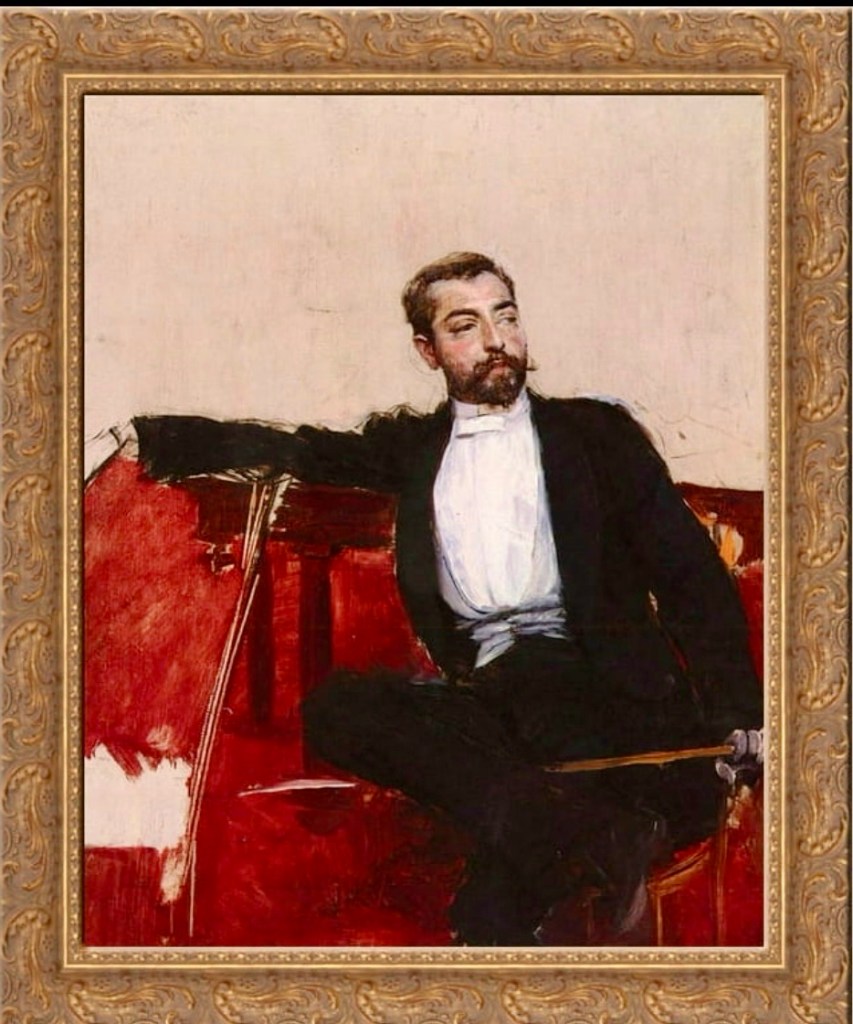
If you are lucky enough to be in London now or anytime before early October, you can catch a fascinating exhibition of some of John Singer Sargent’s portraits. I recently posted on another Sargent exhibition; he is definitely having a moment in honor of his death centenary.

To mark 100 years since the death of the painter John Singer Sargent, English Heritage has put on a show of 18 portraits of American heiresses that places their lives and notable achievements at the forefront of the story.

Known as the “dollar princesses”, the women were part of the transatlantic marriage phenomenon of the late 19th century. They travelled to the UK to marry into the British aristocracy, bringing wealth with them. The cash injection from one such marriage helped restore Blenheim Palace in Oxfordshire.

Many of the dollar princesses went on to make significant contributions to British society, including Nancy Astor, who became the first sitting female Member of Parliament (MP) in the House of Commons. She held her seat of Plymouth Sutton for 25 years.

Another of the sitters was Dame Jessie Wilton Phipps who also had a career in politics, being elected to London County Council in 1907 and later chairing the Central Council for the London Blind.

An example of the often loveless marriages of the dollar princesses was that of Consuelo Vanderbilt, whose charcoal portrait (above) has never been on public display until now. She was opposed to her marriage to the Duke of Marlborough and wept behind her veil on her wedding day. After the wedding the duke informed her he had only agreed to the marriage to save his ancestral home of Blenheim Palace.

Despite her unhappy marriage, the new duchess was revered by the poorer tenants on her husband’s estate and her progressive politics were reflected in her advocacy for social reforms and backing the Liberal Party’s welfare policies including free school meals, free medical checks for children and pensions for the elderly. She was also a supporter of women’s suffrage.

The exhibition, titled Heiress: Sargent’s American Portraits, is the first time the portraits have all been brought together in one place. Wendy Monkhouse, the curator, tells The Art Newspaper: “It is easy to simply view the [dollar princesses] as merely sitters to Sargent but here, we consider them as individuals, and their lives are described in the context of broader themes in women’s history.”

She added that the exhibition doesn’t shy away from the more troubling aspects of the portraits. She says: “We have tackled difficult and uncomfortable issues like misogyny, stereotyping and xenophobia head on, which all played a significant role in constructing the image of the American heiress in their lifetimes, and still do today. Sargent’s depiction of the women reflects the world of power and privilege they came from, but he also conveys their character, energy and vitality.’’

Sargent, an ex-pat American who lived and travelled across Europe, was the most sought-after portraitist of the Gilded Age. A Sargent commission was the perfect accompaniment for these new Anglo-American marriages, demonstrating the status, wealth and power that came with combining American new money and British nobility.

The portraits, a mixture of oil and charcoal sketches, are on display at Kenwood in Hampstead, London until 5 October. Jenny Abramsky, the chair of the Friends of Kenwood, said in a statement: “Art is at the heart of what we do, and being able to bring such outstanding art to Kenwood in Sargent’s centenary year reinforces our confidence in the future of Kenwood as a uniquely valuable asset for English Heritage and the wider community.”

Heiress: Sargent’s American Portraits, Kenwood, London, until 5 October

https://www.theartnewspaper.com/2025/05/20/john-singer-sargent-exhibition-london-shines-light-on-lives-of-dollar-princesses

The roadside tabernacles of Florence

Throughout this wonderful city are a multitude of sometimes very beautifully painted tabernacles, offering thanks to God and seeking protection from him. No wonder Florence is called an open air museum! Asking the gods for help is as old as mankind.

I walk by this particular tabernacle pretty often and always stop and admire the quattrocento style painting. We see Mary and her infant son, along with St. John the Baptist at our lower right and St. Peter on the left. Above the saints are two angels.

I love the trim work at the top of the throne on which Mary sits. It reminds me of many Gothic era picture altars and frames as well as the trim work on some buildings.

Above, St. John

Above, St. Peter with his key. I always wonder, who decided what the painter would paint? Was it the person/association that commissioned the work? Who had jurisdiction over this particular street corner. Was there some event that spurred the commission? Who was the artist? These and many more questions exist happily in my mind as I leave the beautiful work of art and wander on my merry way, delighted that I live in such a place that I can pass by this kind of thing on any given day!

The American Wing at the Metropolitan Museum of Art, New York

Many moons ago when I was an ambitious and dedicated student of American art, I was so fortunate to receive two separate Fellowships at the Met’s American Wing. Almost unbelievably, the Met sponsored the extensive research and writing of my doctoral dissertation over nearly four years on American 19th century sculpture and while there, I was asked to contribute to several scholarly publications being produced by the department. I knew then, as I know now, these were my halcyon days.

Last year the American Wing celebrated its 100th birthday and this video was produced as a part of that effort. I think you will learn a lot about the department and be impressed with its holdings and the way in which they display their incomparable collections.

23 May 1494: death of Savonarola

Today, by pure serendipity, I had the incredible opportunity to observe one of the hallowed ceremonies performed annually in Florence. It was the first time I’ve ever been present for this event and I must admit I am still kind of stunned that I caught it at all, let alone that I caught ALL of it!

On this day we remember Girolamo Savonarola, the consequential friar who could be said to have played with fire.

The photo above shows the plaque that is installed in the pavement in the Piazza della Signoria, marking the spot where the friar was executed in 1494. It was a gruesome end for the priest: he was first hanged and then burned, as were 2 of his devotees.

Every year, on the morning of the anniversary of his death, there is a Renaissance era type parade from the Palazzo della Parte Guelfa to the main governmental square known as the Piazza della Signoria. The parade stops in front of the Palazzo Vecchio where a gorgeous floral wreath is ceremoniously laid on the plaque which marks the spot where the burning took place.

It was in this self same square where, at the height of his power, he held the infamous Bonfire of the Vanities during the periods of Lent in 1497 and 1498. Non-Christian books, artworks depicting any subjects not sanctioned by the church, and objects of earthly passion and distraction, such as cards, precious fabrics, jewelry, make-up and wigs, were burned in the square on a platform made of seven steps, symbolizing the Seven Vices.

Savonarola was an extremely influential preacher who had called for great reforms of the church at the beginning of his career in Florence, which provoked anger from Pope Alexander VI. In 1491 Savonarola was made prior of San Marco monastery in Florence and his ascent to power began. Soon he was preaching in the city’s cathedral and his influence spread like wildfire. When the Medici family was thrown out of Florence in 1494, due to a sharp decline in its popularity after the death of Lorenzo the Magnificent de’ Medici and the incompetence of his son Piero, Savonarola filled the power void and substituted a theocratic government for the humanist thought and neo-platonic philosophy of the former regime.

Viva Fiorenza!

Savonarola reorganized the city-state’s government and, inspired by the model of Venice, increased political representation to 1500 people. He then commissioned an extension to the town hall, the Salone del ‘500, where the newly enlarged government could meet. He referred to this room as the Hall of Christ.

His sermons increased in religious fervor and he claimed that Christ was speaking through him. He attacked the papacy, who initially offered him a cardinal’s hat to silence him. He rejected this and was excommunicated. The Pope’s son, Cesare Borgia, was the head of the papal army and came to Florence where a forced confession was taken from the friar, followed by his execution in the town square.

The ashes of Savonarola and his two followers were carted away and scattered in the Arno river, in order to prevent devotees from searching for relics, although the cult of Savonarola continued throughout the 16th century. The morning after the executions, flower petals covered the area where the event took place. Nowadays a commemorating plaque (near the Neptune fountain) indicates the exact point where Savonarola was executed and is annually commemorated.

Visitors to the beautiful San Marco monastery can enter his cell where many of the sermons would have been written and can see the bell that used to call the Florentines to hear him speak. This bell was exiled to the dreaded enemy of the Dominicans, the Franciscan church San Salvatore al Monte, after his death. A few years later the Gonfaloniere Pier Soderini, head of the Republic, in an act of clemency, returned the bell to the Dominicans.

In commemoration of Savonarola, whom many Florentines respect greatly for his early efforts to reform the corrupt Catholic Church, a traditional parade and laying of a wreath takes place on May 23 of each year. It has taken place annually since the Renaissance, not counting periods such as the World Wars, etc. Known as La Fiorita, on May 23rd rose petals and flowers are placed on the plaque in Piazza della Signoria. This event is officially celebrated with a 10 am mass inside the Priori’s Chapel in Palazzo Vecchio, followed at 10.30 by the Fiorata, and at 11 the historical parade proceeds to the Ponte Vecchio where a Florentine woman from the parade throws more rose petals in the Arno river.