
Me, drying lavender, in the Tuscan sunshine
Summertime
Photo from 1955, taken at Villa Romana del Casale in Piazza Armerina, Sicily
Excavations at the Villa Romana have revealed one of the richest, largest, and varied collections of Roman mosaics in the world, for which the site has been designated as a UNESCO World Heritage Site. The villa and artwork contained within date to the early 4th century AD.

Michelangelo’s David, atop the Duomo, as originally planned
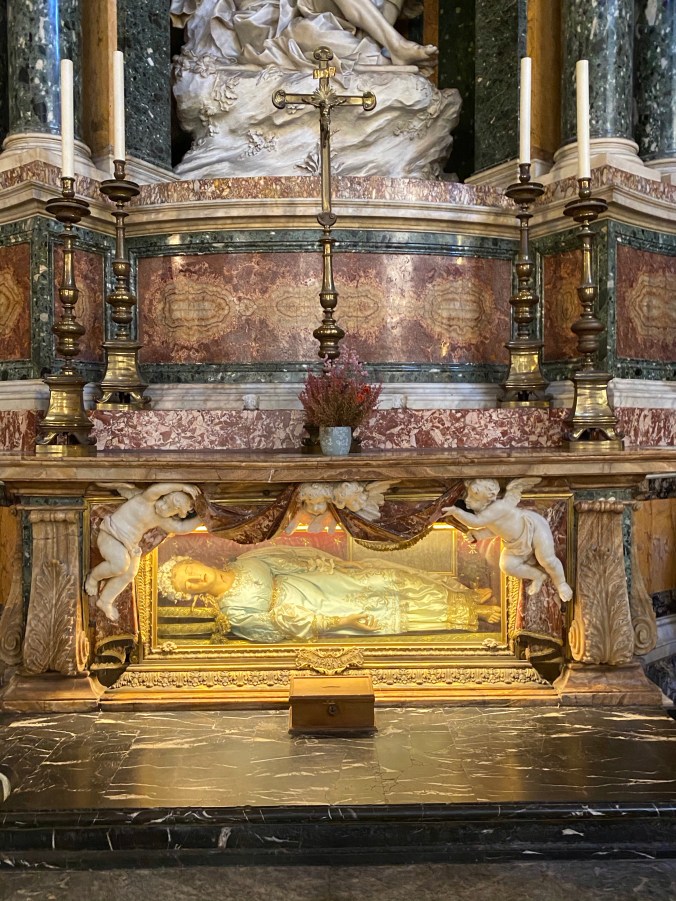
Santa Maria Vittoria, Rome
No visit to Rome would be complete without a stop at this august church to admire, among many things, the sculpture of Bernini.

I happened upon this favorite church on my recent visit just as mass was wrapping up and I had to surreptitiously take some of these pictures, which accounts for their poor framing. Luckily, my iPhone camera takes good pictures, in terms of color and sharpness, no matter how bad the aim.
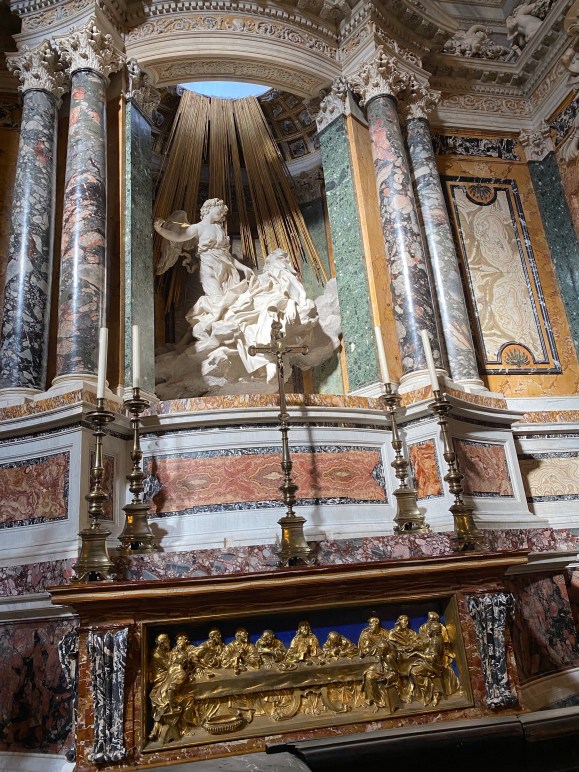
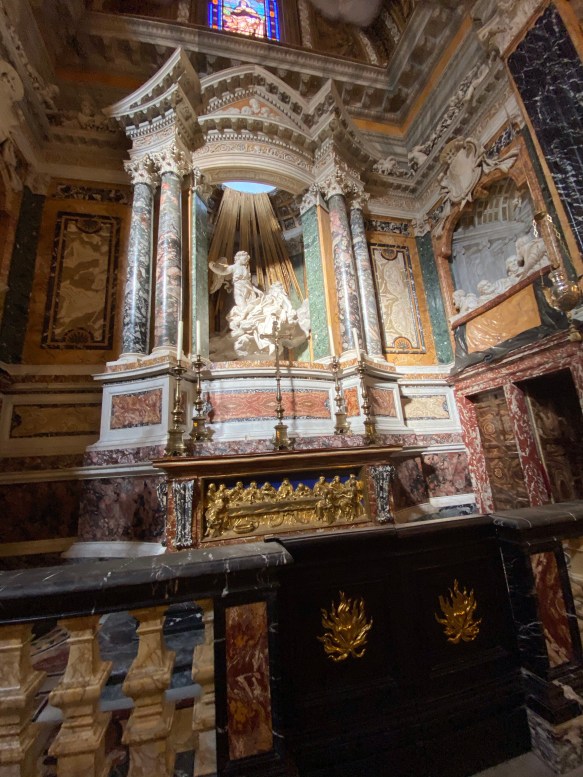
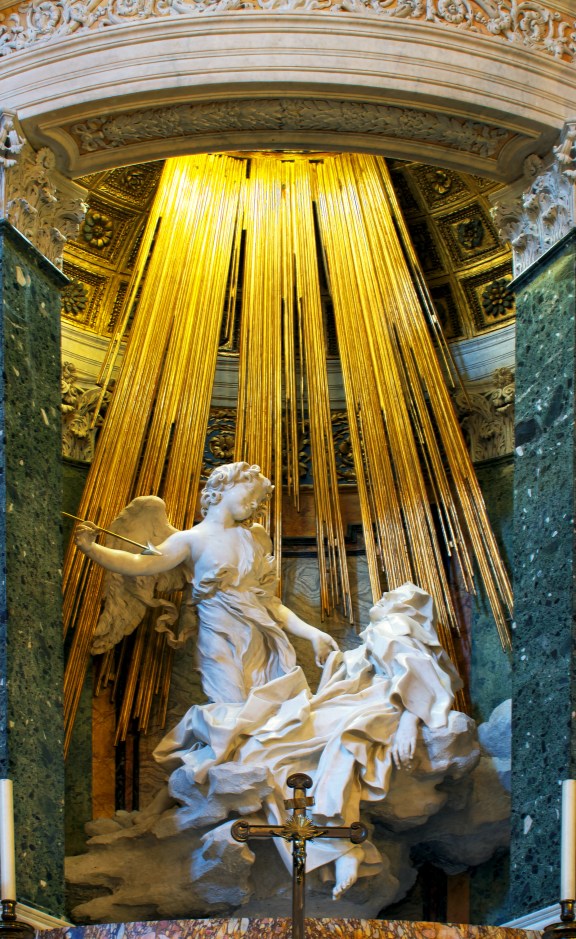
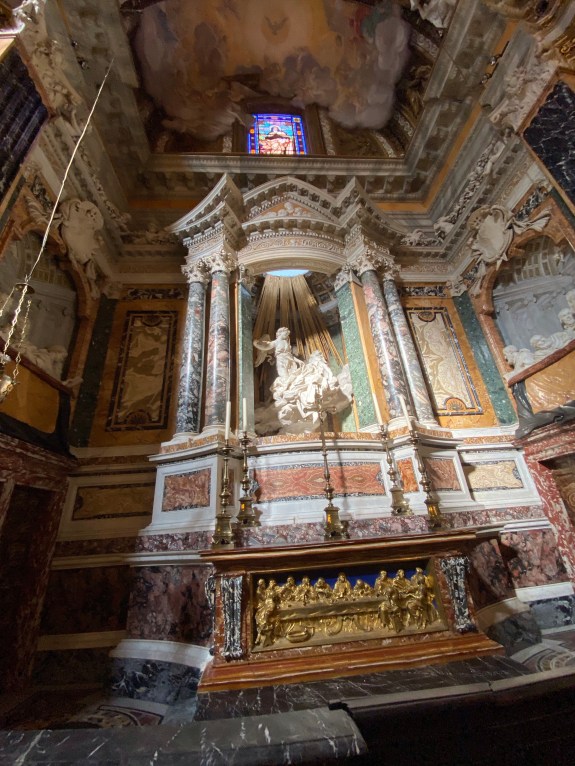
What I had not realized on earlier trips is how the artist arranged this chapel as a theater box. You must remember I spent most of my art history career studying American art, so I hope I can be forgiving for not knowing a lot of details of this great Italian Baroque period. I am an avid student of the Baroque now, so I am filling in the gaps in my understanding, work by work.
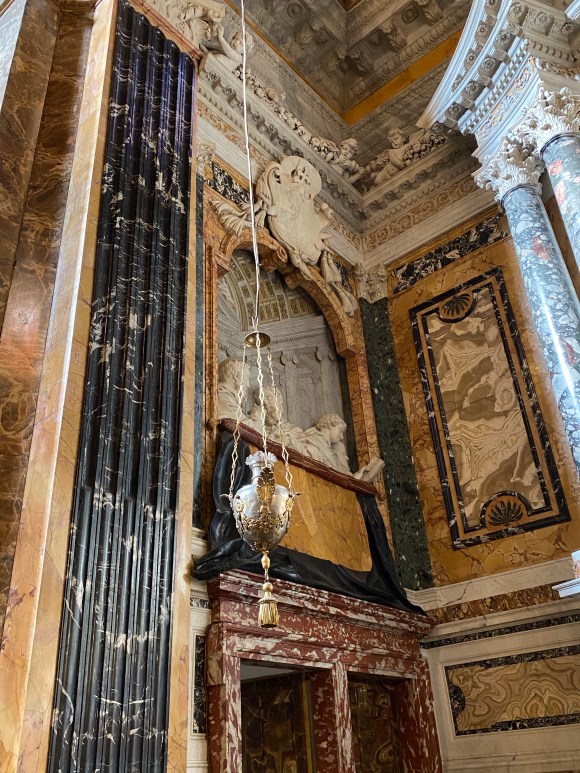
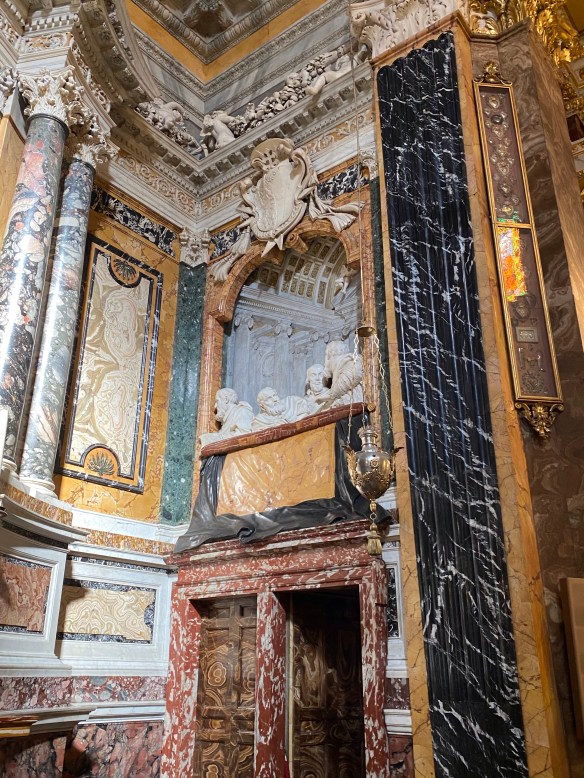
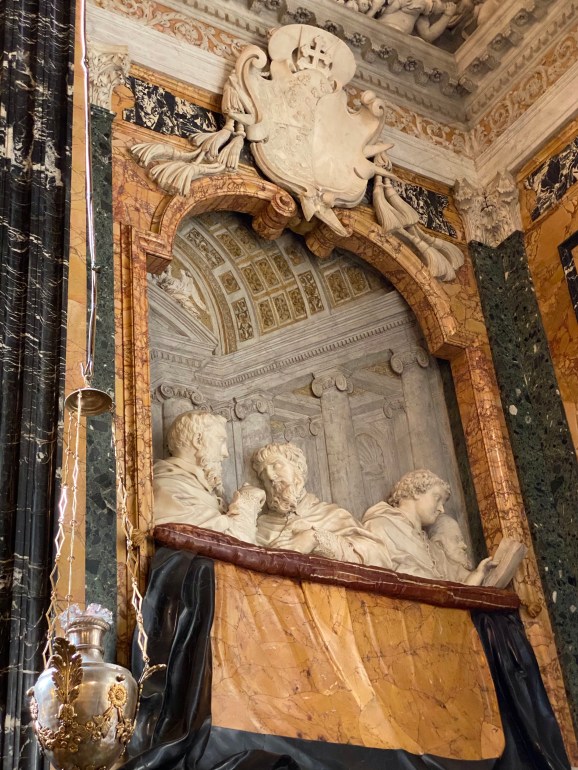
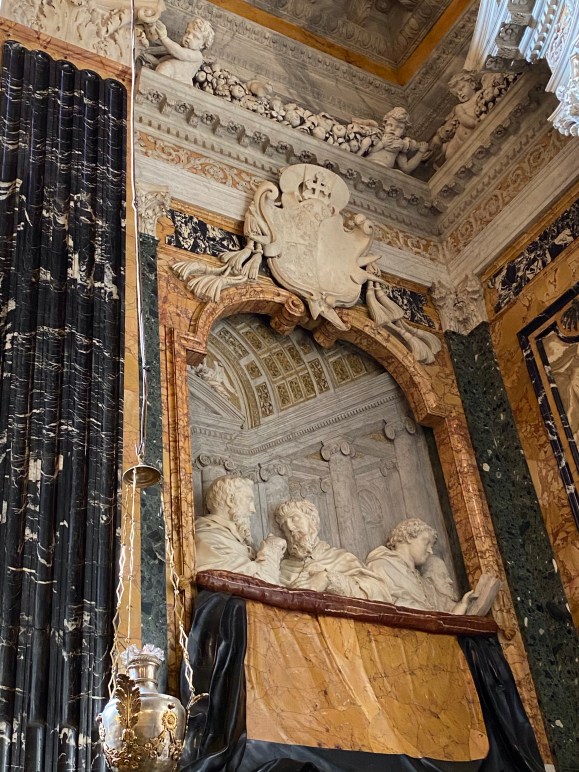
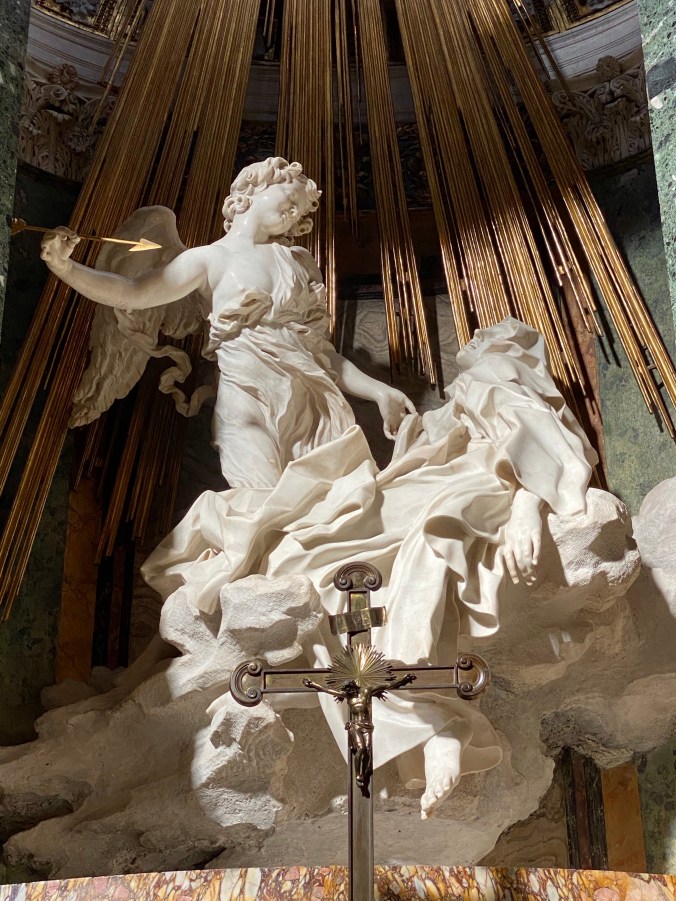
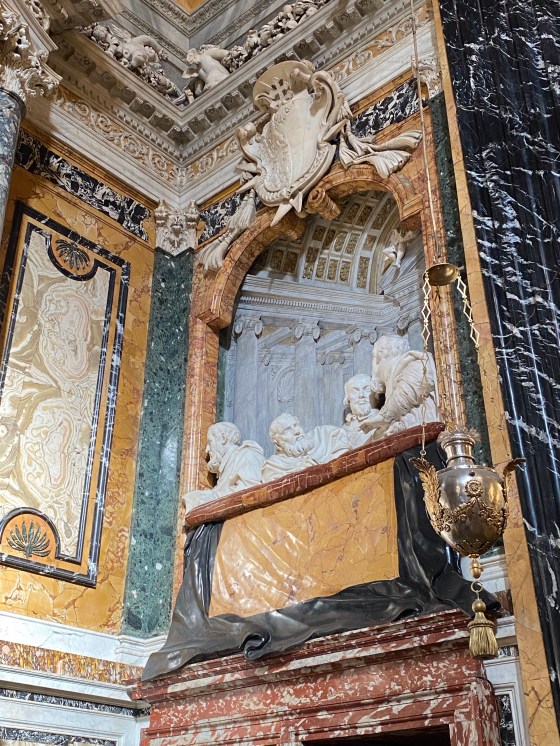
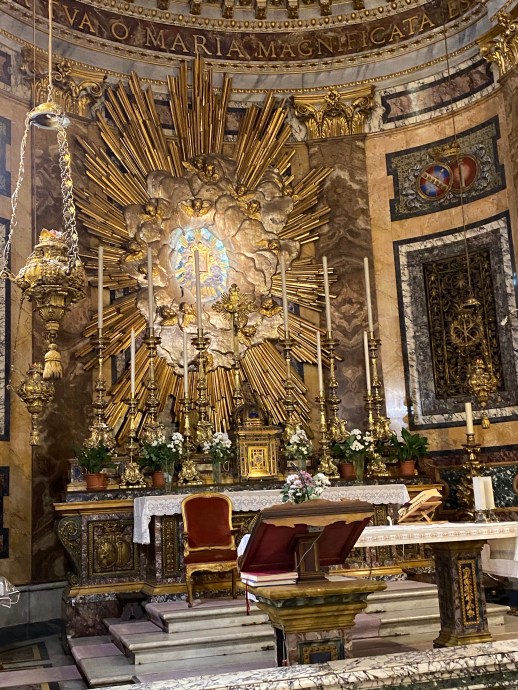
The high altar of the church was later made to imitate Bernini’s spectacular sculptural group.
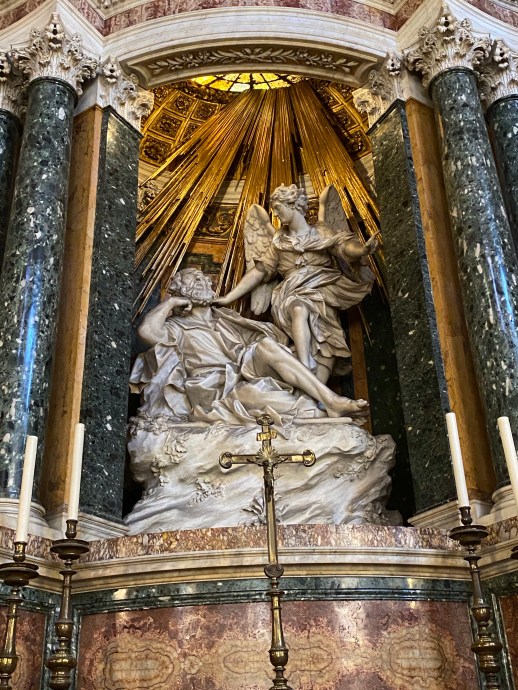
And, on the other side of the church, directly opposite to Bernini’s chapel, is this companion sculptural arrangement. Bernini is a tough act to follow.

Before departing, I had a last long look at the amazing ceiling of this lovely church.
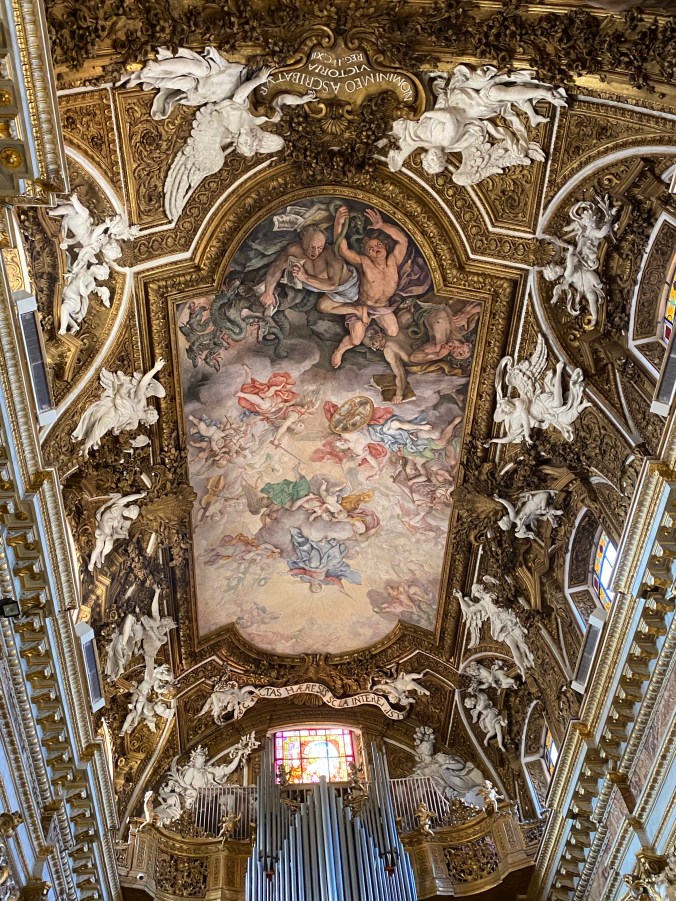
Chiesa di Sant’ Ignazio, Rome
With the plethora of churches in Rome, you might think it would be hard to have a favorite. But, for me, The Church of St. Ignatius of Loyola at Campus Martius is my favorite.
It is a Roman Catholic titular church dedicated to Ignatius of Loyola, the founder of the Society of Jesus.
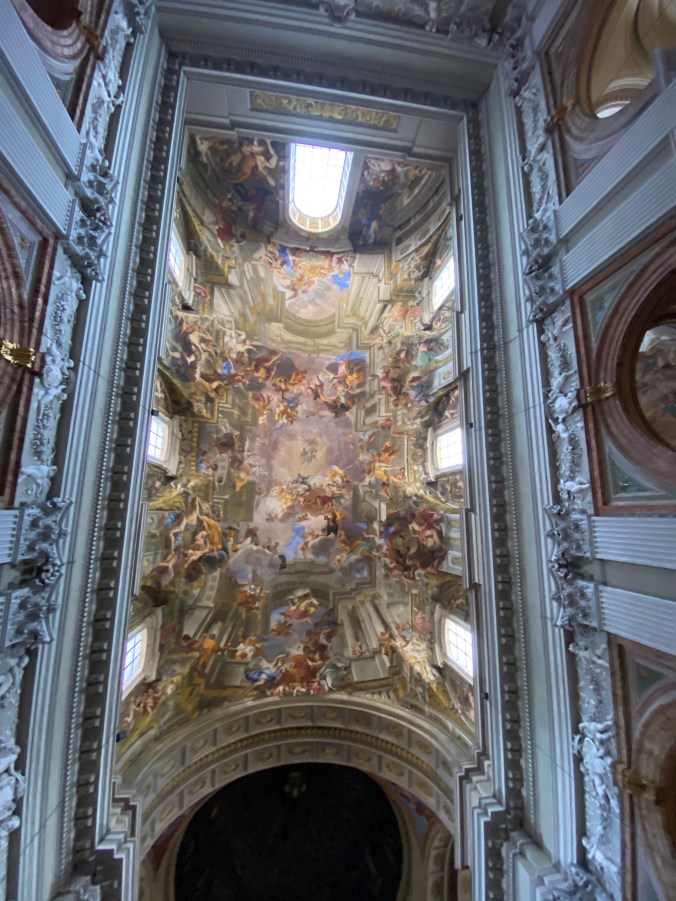
What I love about it is the ceiling fresco:


The story of this incredible building and its surroundings begins with the gift, in 1560, from Vittoria della Tolfa, the Marchesa della Valle. She donated her family isola, which was an entire city block and its existing buildings, to the Society of Jesus in memory of her late husband the Marchese della Guardia Camillo Orsini. This was also the founding the Collegio Romano and the beginning of the building of a church with a different name from the one that is discussed in this post.
Although the Jesuits received the marchesa’s land, they did not get any funds from her for completing the church. They were able to build a church, but it would later be dismantled so that this current church could be built on the site and was used by the Collegio Romano. Over time, the old church became insufficient for over 2,000 students of many nations who were attending the College at the beginning of the 17th century.
Pope Gregory XV, who was a former student of the Collegio Romano, was strongly therefore attached to the church. Following the canonization of Ignatius of Loyola in 1622, he suggested to his nephew, Cardinal Ludovico Ludovisi, that a new church dedicated to the founder of the Jesuits should be erected at this site.
The young cardinal accepted the idea, asked several architects to draw plans, among them Carlo Maderno. Cardinal Ludovisi finally chose the plans drawn up by the Jesuit mathematician, Orazio Grassi, professor at the Collegio Romano itself.
The foundation stone was laid on August 2, 1626, four years later, a delay which was caused by the fact that a section of the buildings belonging to the Roman College had to be dismantled. The old church was eventually demolished in 1650 to make way for the massive Church of St. Ignatius of Loyola, which was begun in 1626 and finished only at the end of the century. In striking contrast to the earlier Church of the Annunciation, which occupied only a small section of the Collegio Romano, the Church of St. Ignatius of Loyola took up a quarter of the entire block when it was completed.
The church was opened for public worship only in 1650, at the occasion of the Jubilee of 1650. The final solemn consecration of the church was celebrated only in 1722 by Cardinal Antonfelice Zondadari. The church’s entrance faces the Rococo Place of San Ignazio was planned by the architect Filippo Raguzzini.

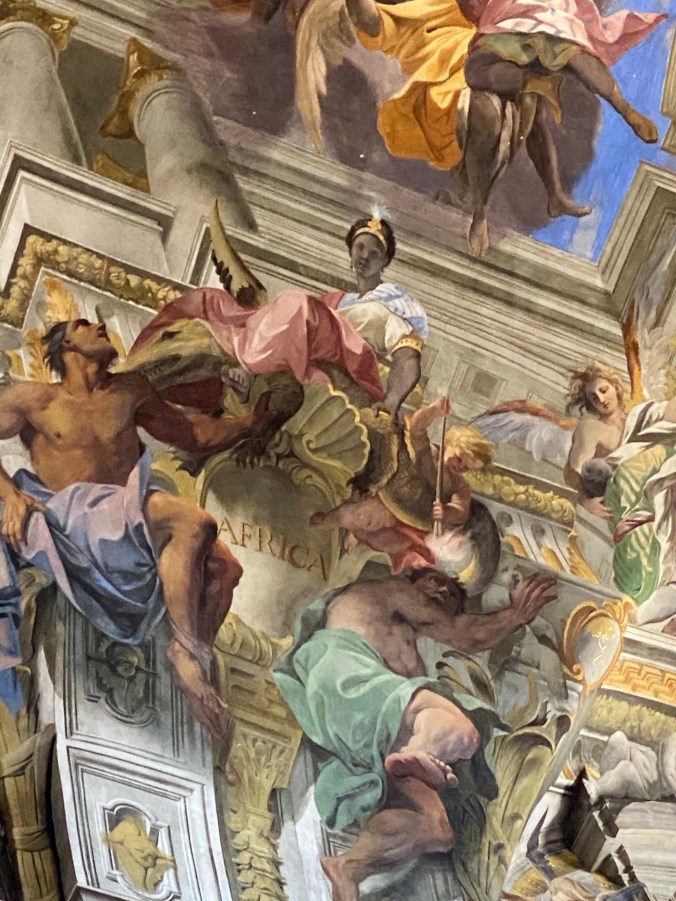
Andrea Pozzo, a Jesuit lay brother, painted the grandiose fresco that stretches across the nave ceiling (after 1685). The fresco celebrates the work of Saint Ignatius and the Society of Jesus in the world, presenting the saint welcomed into paradise by Christ and the Virgin Mary and surrounded by allegorical representations of all four continents.
Pozzo’s work seems to visually dissolve the actual surface of the nave’s barrel vault, arranging a perspectival projection to make an observer see a huge and lofty sky filled with floating figures.
A marble disk set into the middle of the nave floor marks the ideal spot from which observers might fully experience the illusion.
A second marker in the nave floor further east provides the ideal vantage point for the trompe l’oeil painting on canvas that covers the crossing and depicts a tall, ribbed and coffered dome. The cupola one expects to see here was never built and in its place, in 1685, Andrea Pozzo supplied a painting on canvas with a perspectival projection of a cupola. Destroyed in 1891, the painting was subsequently replaced.
Pozzo also frescoed the pendentives in the crossing with Old Testament figures: Judith, David, Samson, and Jaele.
Pozzo also painted the frescoes in the eastern apse depicting the life and apotheosis of St Ignatius. Pozzo is also responsible for the fresco in the conch depicting St. Ignatius Healing the Pestilent.

It is, of course, the depiction of the American continent that delights me the most. I never tire of craning my neck to look up at this masterpiece.




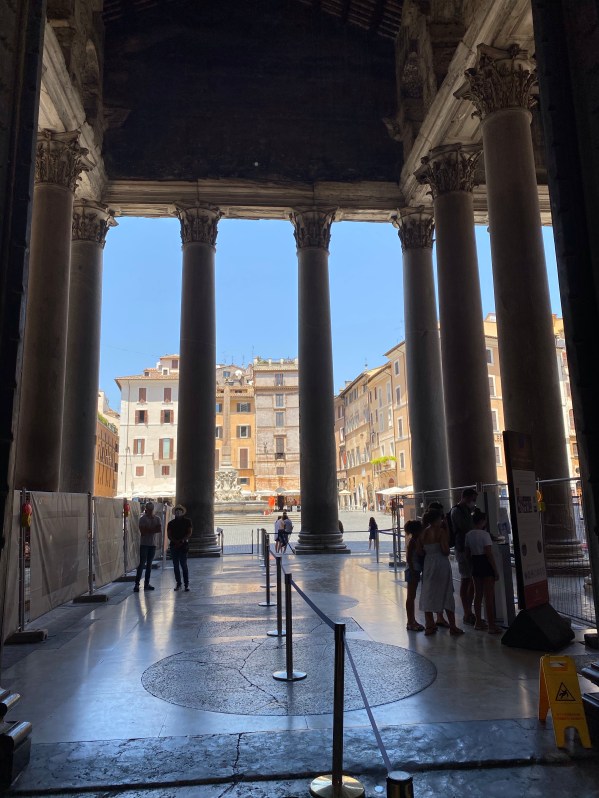
The Pantheon, Rome
No visit to Rome is complete in my book without stopping in to visit this august structure. Without the normal crowds, my visit was superb!


Raphael is on my mind, for I will be visiting the Raphael exhibition the following day. Here is his tomb inside the Pantheon.




Borromini’s Chiesa of San Carlo
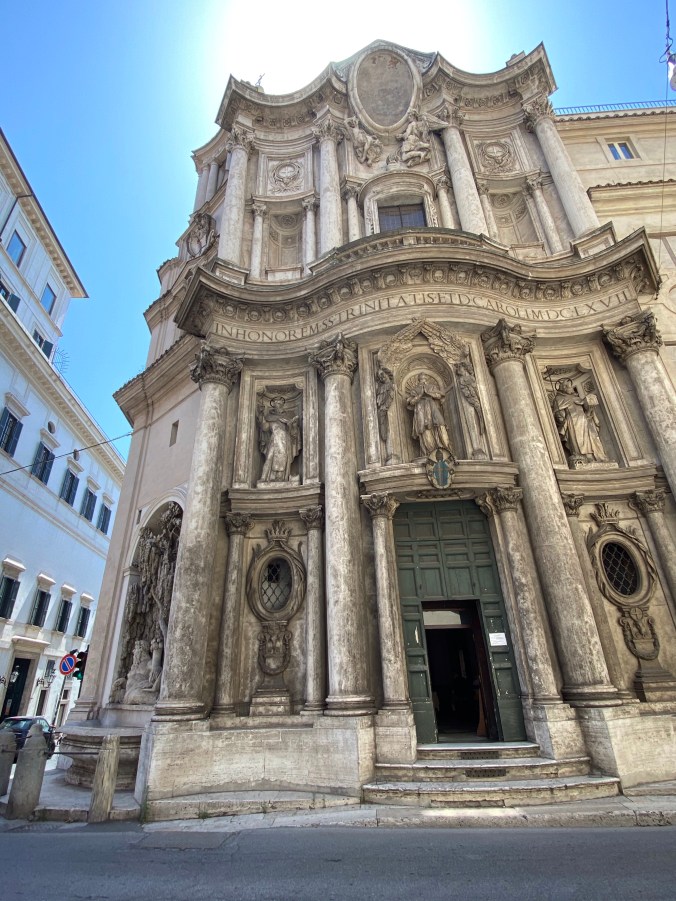
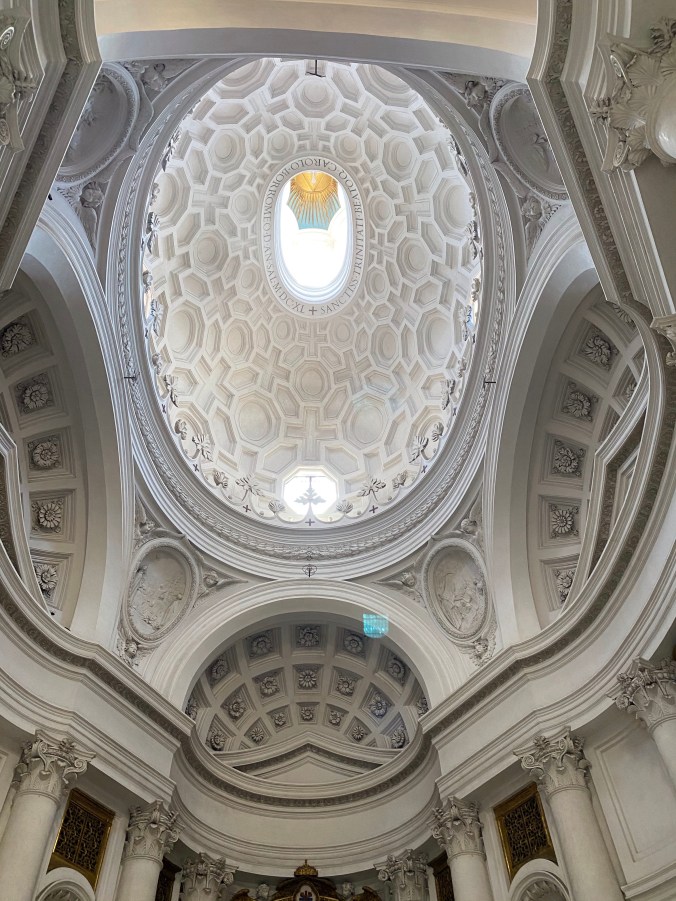
I love the Baroque church of San Carlo alle Quattro Fontane, by Francesco Borromini, which is located next to the fountain ensemble of the same name: Quattro Fontane. I always try to make a drive by visit to this lovely, calm interior on any trip to Rome. Here is evidence of my last drive by (walk by, in fact).
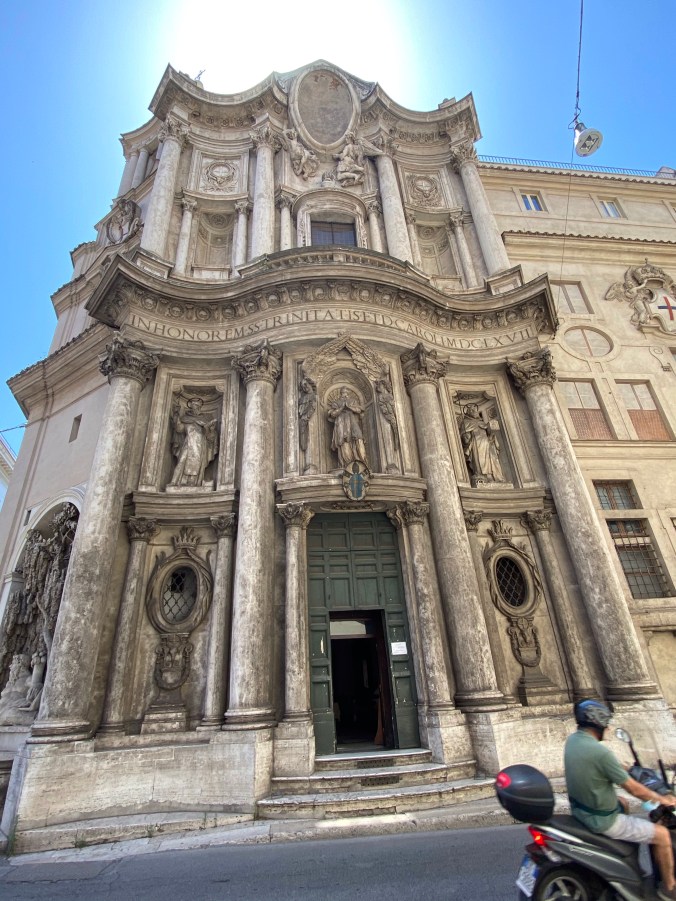
The church was designed by the architect Francesco Borromini and it was his first independent commission. It is an iconic masterpiece of Baroque architecture, built as part of a complex of monastic buildings on the Quirinal Hill for the Spanish Trinitarians, an order dedicated to the freeing of Christian slaves.
Borromini received the commission in 1634, under the patronage of Cardinal Francesco Barberini, whose palace was across the road. However, this financial backing did not last and subsequently the building project suffered various financial difficulties.
It is one of at least three churches in Rome dedicated to San Carlo, including San Carlo ai Catinari and San Carlo al Corso.

The Quattro Fontane, Rome
Yet more (see here, for example) gorgeous watery landmarks in Rome: The Quattro Fontane. Walking through this intersection is never easy, even shortly after Covid has cleared the streets. But, I did my best.

The Quattro Fontane (the Four Fountains) is an ensemble of Late Renaissance fountains located at oblique angles at the intersection of Via delle Quattro Fontane and Via del Quirinale in Rome. They were commissioned by Pope Sixtus V, built at the direction of Muzio Mattei, and installed between 1588 and 1593.
The figure of one fountain is said to represent the River Tiber, in front of an oak-tree; a she-wolf, the symbol of Rome, was a later addition.
A second fountain represents the River Aniene, a tributary of the Tiber, called Anio in ancient Rome, which provided most Roman aqueducts with water. Pope Sixtus proposed to build a canal to bring the water of the Aniene to Rome.
The other two fountains feature female figures believed to represent the Goddess Diana; the symbol of Chastity; and the Goddess Juno, the symbol of Strength, but it is possible that they may also represent rivers.
The fountains of the Aniene, Tiber, and Juno are the work of Domenico Fontana. The fountain of Diana was designed by the painter and architect Pietro da Cortona.
The later Baroque church of San Carlo alle Quattro Fontane, by Francesco Borromini, is located near the fountains, and takes its name from them.

It would so be nice if you could observe the fountains without risking your life from traffic, but I’ve never yet had that experience, despite visiting the ensemble at least 20 times one my lifetime! I had thought that right after Covid, but, no. Maybe someday…


Piazza Navona, Rome
Rome in July of 2020, after Covid has cleared the streets.


You must be logged in to post a comment.