Throughout this wonderful city are a multitude of sometimes very beautifully painted tabernacles, offering thanks to God and seeking protection from him. No wonder Florence is called an open air museum! Asking the gods for help is as old as mankind.
I walk by this particular tabernacle pretty often and always stop and admire the quattrocento style painting. We see Mary and her infant son, along with St. John the Baptist at our lower right and St. Peter on the left. Above the saints are two angels.
I love the trim work at the top of the throne on which Mary sits. It reminds me of many Gothic era picture altars and frames as well as the trim work on some buildings.
Above, St. John
Above, St. Peter with his key. I always wonder, who decided what the painter would paint? Was it the person/association that commissioned the work? Who had jurisdiction over this particular street corner. Was there some event that spurred the commission? Who was the artist? These and many more questions exist happily in my mind as I leave the beautiful work of art and wander on my merry way, delighted that I live in such a place that I can pass by this kind of thing on any given day!
Many moons ago when I was an ambitious and dedicated student of American art, I was so fortunate to receive two separate Fellowships at the Met’s American Wing. Almost unbelievably, the Met sponsored the extensive research and writing of my doctoral dissertation over nearly four years on American 19th century sculpture and while there, I was asked to contribute to several scholarly publications being produced by the department. I knew then, as I know now, these were my halcyon days.
Last year the American Wing celebrated its 100th birthday and this video was produced as a part of that effort. I think you will learn a lot about the department and be impressed with its holdings and the way in which they display their incomparable collections.
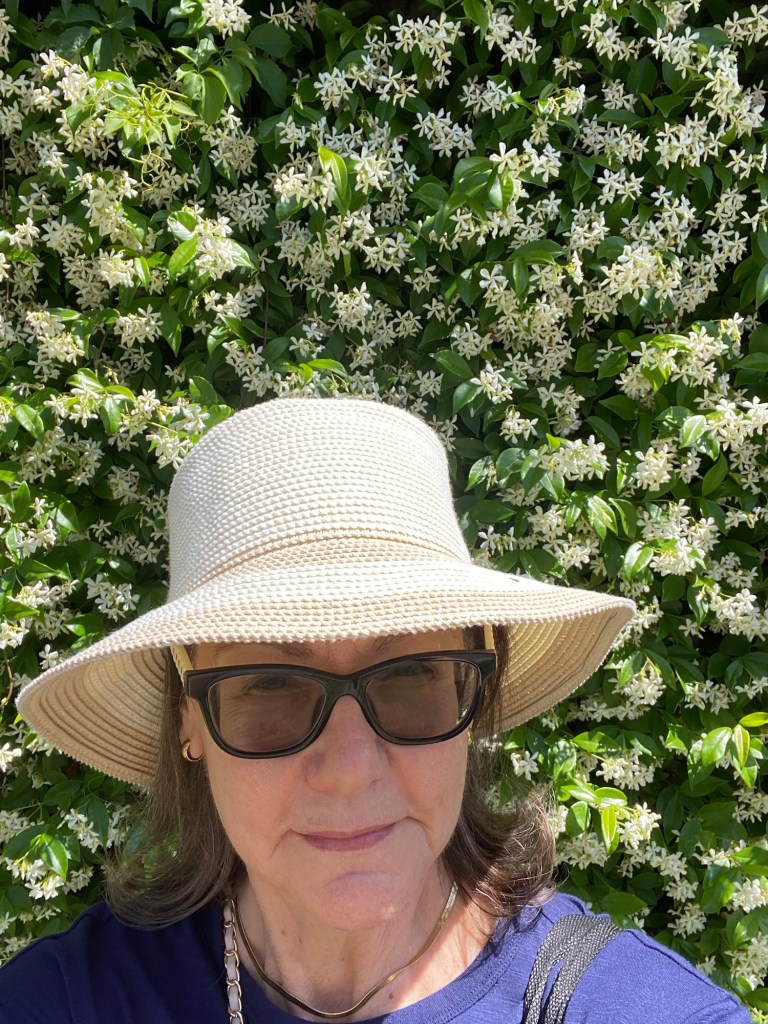
In late May the jasmine is covering the city and smells divine. I loved this wall of flowers on my way into the Sant’Ambrogio market and even went so far as to snap a couple pictures of myself in front of it. I generally don’t indulge in this behavior, but it was so beautiful, I thought, perche no?
John Singer Sargent is one of my absolute favorite American artists and his work is the subject of a current spectacular exhibition in New York. Please watch and enjoy. I think you’ll like Sargent’s work a lot!
Today, by pure serendipity, I had the incredible opportunity to observe one of the hallowed ceremonies performed annually in Florence. It was the first time I’ve ever been present for this event and I must admit I am still kind of stunned that I caught it at all, let alone that I caught ALL of it!
On this day we remember Girolamo Savonarola, the consequential friar who could be said to have played with fire.
The photo above shows the plaque that is installed in the pavement in the Piazza della Signoria, marking the spot where the friar was executed in 1494. It was a gruesome end for the priest: he was first hanged and then burned, as were 2 of his devotees.
Every year, on the morning of the anniversary of his death, there is a Renaissance era type parade from the Palazzo della Parte Guelfa to the main governmental square known as the Piazza della Signoria. The parade stops in front of the Palazzo Vecchio where a gorgeous floral wreath is ceremoniously laid on the plaque which marks the spot where the burning took place.
It was in this self same square where, at the height of his power, he held the infamous Bonfire of the Vanities during the periods of Lent in 1497 and 1498. Non-Christian books, artworks depicting any subjects not sanctioned by the church, and objects of earthly passion and distraction, such as cards, precious fabrics, jewelry, make-up and wigs, were burned in the square on a platform made of seven steps, symbolizing the Seven Vices.
Savonarola was an extremely influential preacher who had called for great reforms of the church at the beginning of his career in Florence, which provoked anger from Pope Alexander VI. In 1491 Savonarola was made prior of San Marco monastery in Florence and his ascent to power began. Soon he was preaching in the city’s cathedral and his influence spread like wildfire. When the Medici family was thrown out of Florence in 1494, due to a sharp decline in its popularity after the death of Lorenzo the Magnificent de’ Medici and the incompetence of his son Piero, Savonarola filled the power void and substituted a theocratic government for the humanist thought and neo-platonic philosophy of the former regime.
Viva Fiorenza!
Savonarola reorganized the city-state’s government and, inspired by the model of Venice, increased political representation to 1500 people. He then commissioned an extension to the town hall, the Salone del ‘500, where the newly enlarged government could meet. He referred to this room as the Hall of Christ.
His sermons increased in religious fervor and he claimed that Christ was speaking through him. He attacked the papacy, who initially offered him a cardinal’s hat to silence him. He rejected this and was excommunicated. The Pope’s son, Cesare Borgia, was the head of the papal army and came to Florence where a forced confession was taken from the friar, followed by his execution in the town square.
The ashes of Savonarola and his two followers were carted away and scattered in the Arno river, in order to prevent devotees from searching for relics, although the cult of Savonarola continued throughout the 16th century. The morning after the executions, flower petals covered the area where the event took place. Nowadays a commemorating plaque (near the Neptune fountain) indicates the exact point where Savonarola was executed and is annually commemorated.
Visitors to the beautiful San Marco monastery can enter his cell where many of the sermons would have been written and can see the bell that used to call the Florentines to hear him speak. This bell was exiled to the dreaded enemy of the Dominicans, the Franciscan church San Salvatore al Monte, after his death. A few years later the Gonfaloniere Pier Soderini, head of the Republic, in an act of clemency, returned the bell to the Dominicans.
In commemoration of Savonarola, whom many Florentines respect greatly for his early efforts to reform the corrupt Catholic Church, a traditional parade and laying of a wreath takes place on May 23 of each year. It has taken place annually since the Renaissance, not counting periods such as the World Wars, etc. Known as La Fiorita, on May 23rd rose petals and flowers are placed on the plaque in Piazza della Signoria. This event is officially celebrated with a 10 am mass inside the Priori’s Chapel in Palazzo Vecchio, followed at 10.30 by the Fiorata, and at 11 the historical parade proceeds to the Ponte Vecchio where a Florentine woman from the parade throws more rose petals in the Arno river.
Today I had the opportunity to walk by the Renaissance architectural masterpiece known as the Ospedale dell’ Innocente, which was a Medieval orphanage, and is seen above.
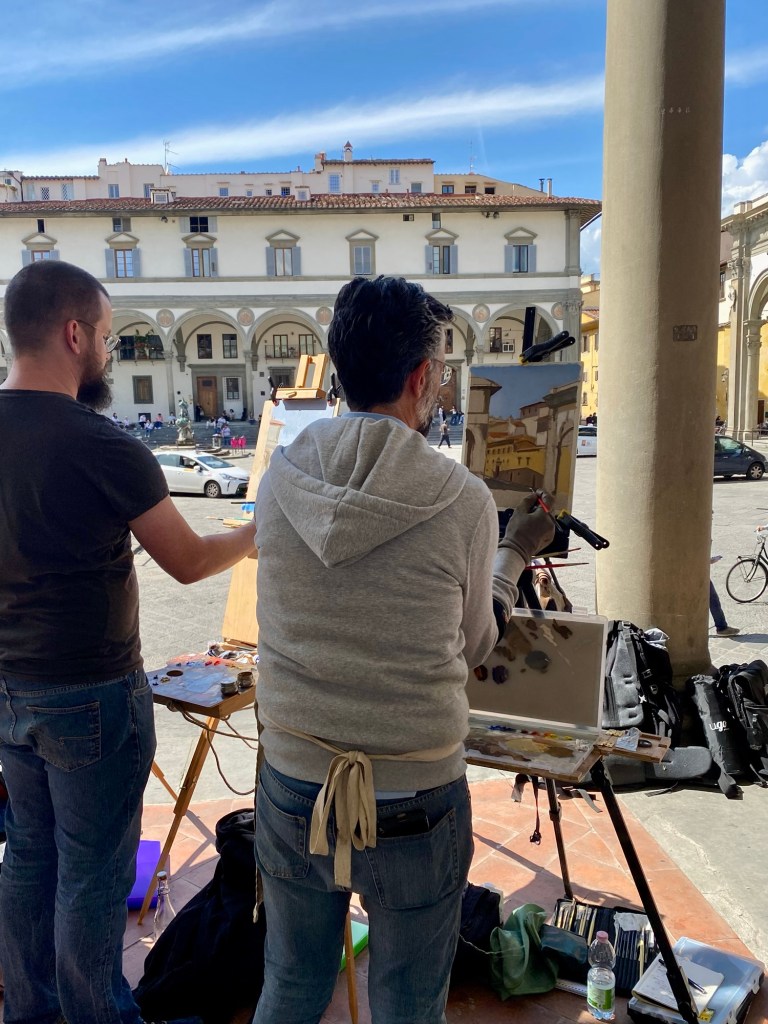
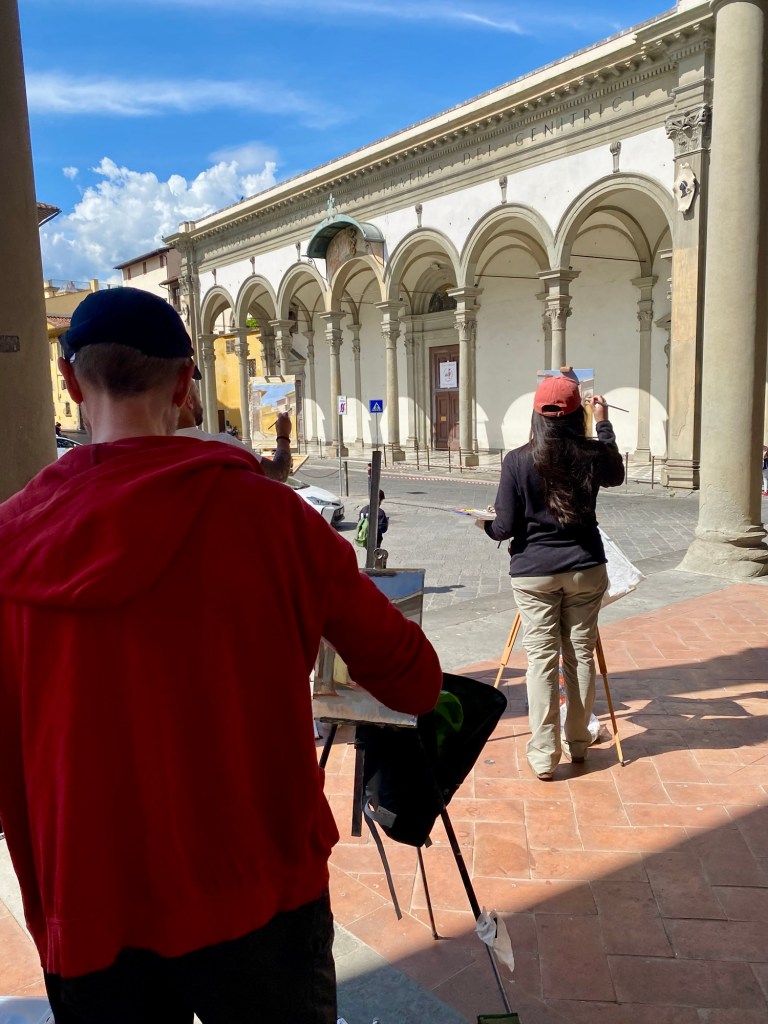
Much to my surprise I saw the loggia of the Ospedale being used for something rather unusual, although it made perfect sense and I thought how lucky these aspiring artists were to be standing in this space and practicing their craft.
The instructor seemed to be the man in the foreground in a blue baseball cap.
These painters were really very good!
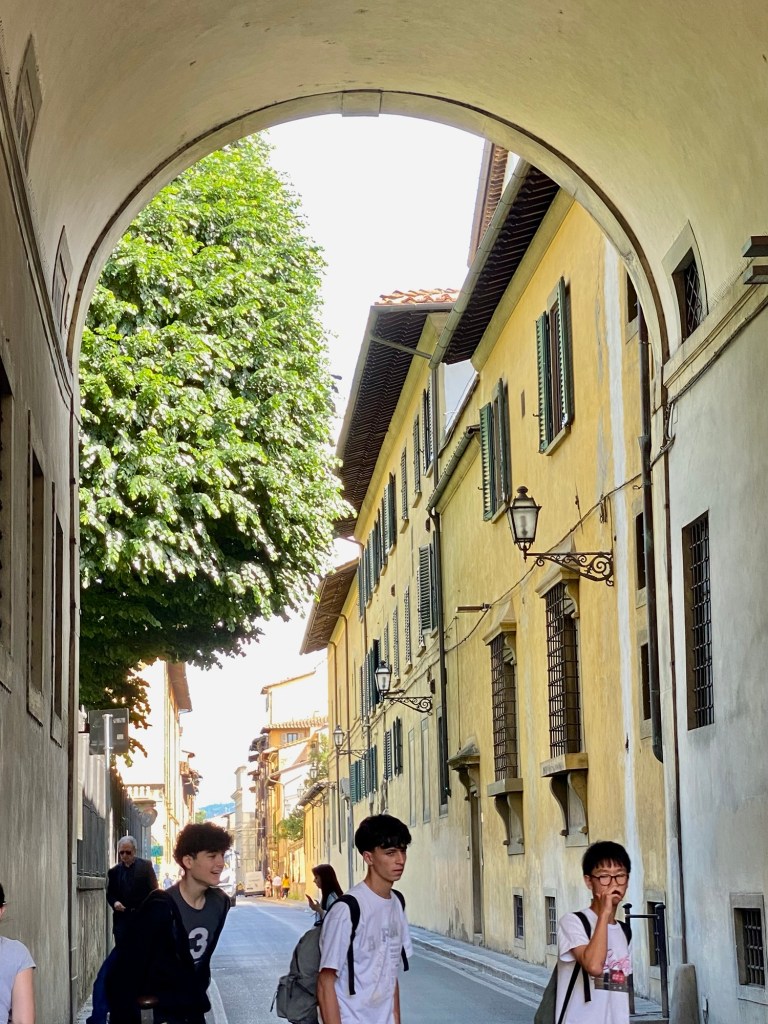
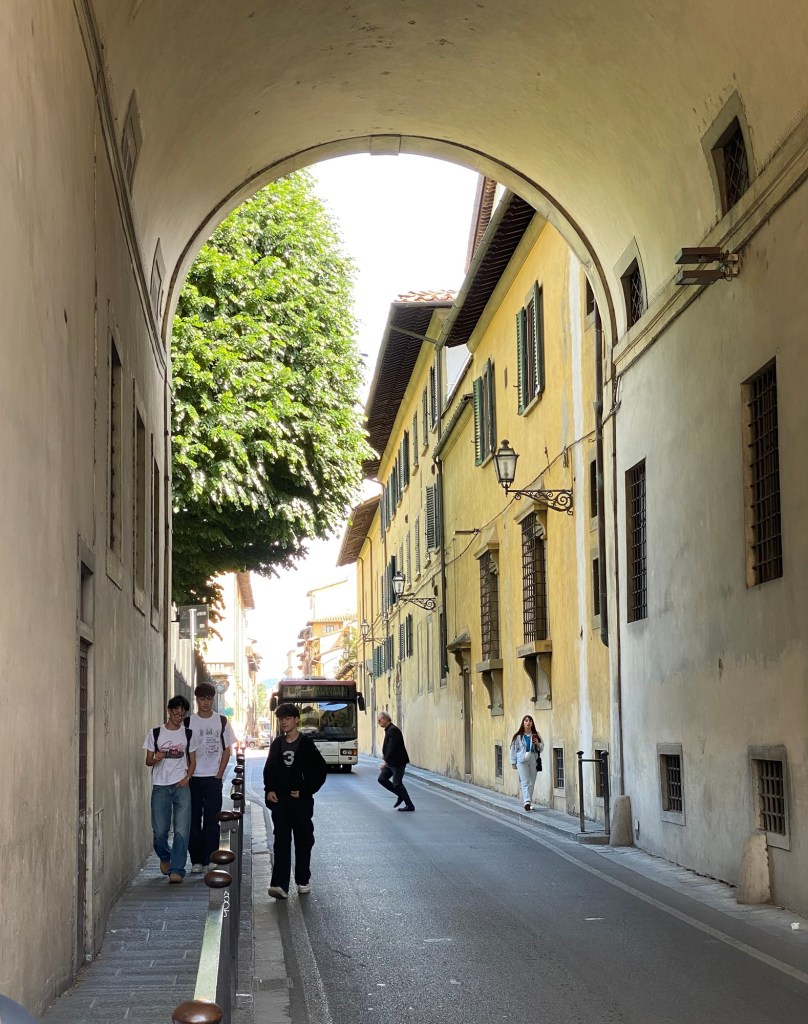
Upon leaving the loggia I walked through this covered roadway in the historic center of Florence. I have always loved this vaulted passage and it looked extra good today with the big green tree on the left side from the exquisite little garden attached to the Archaeological Museum. I couldn’t resist catching a few images.
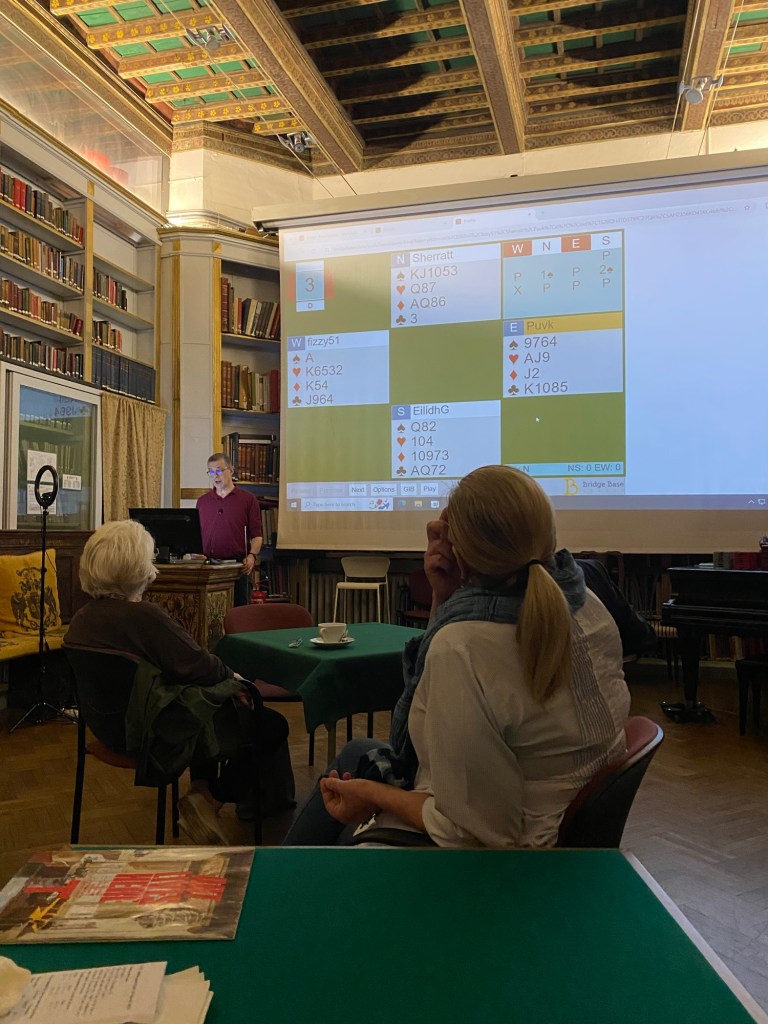
Sometimes life is just too good to be true. (And sometimes it’s the reverse.) Case in point: the British Institute in Florence hosts a weekly bridge game for new and somewhat experienced players once a week. If I had sat at home in the USA and tried to dream up something in Florence that would make me happy right this minute, it would be this bridge group!
The fearless leader is Gustavo de Santis, who is wickedly intelligent and equally funny. His dry humor can catch you unaware. I enjoy him immensely. You see him showing his students how to bid a game below. He is a professor at a local university.
The British Institute in Florence is a haven for long-term residents who speak English. It has a long and storied history in the city and is housed in a magnificent palazzo. Just going there makes me happy. Just look at it, sitting proudly on the left bank of the Arno!
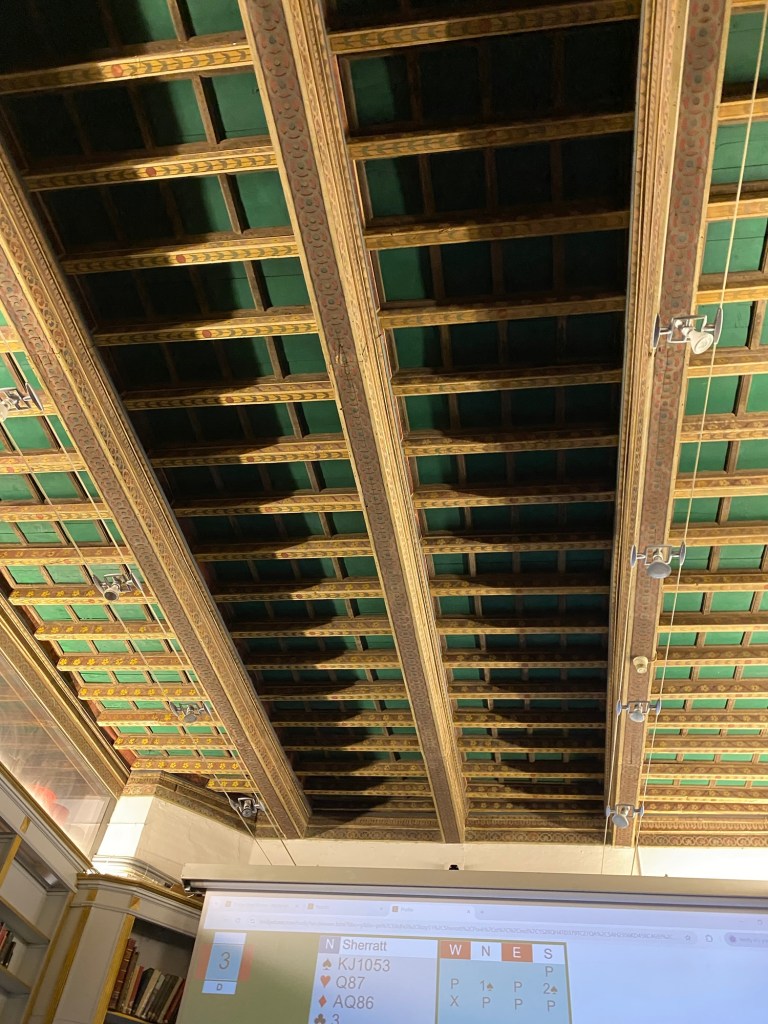
We are so lucky to play our bridge games in the Ferragamo room at the library. I didn’t have a chance to get any good shots on this day, but I snapped a few of the beautiful ceiling.
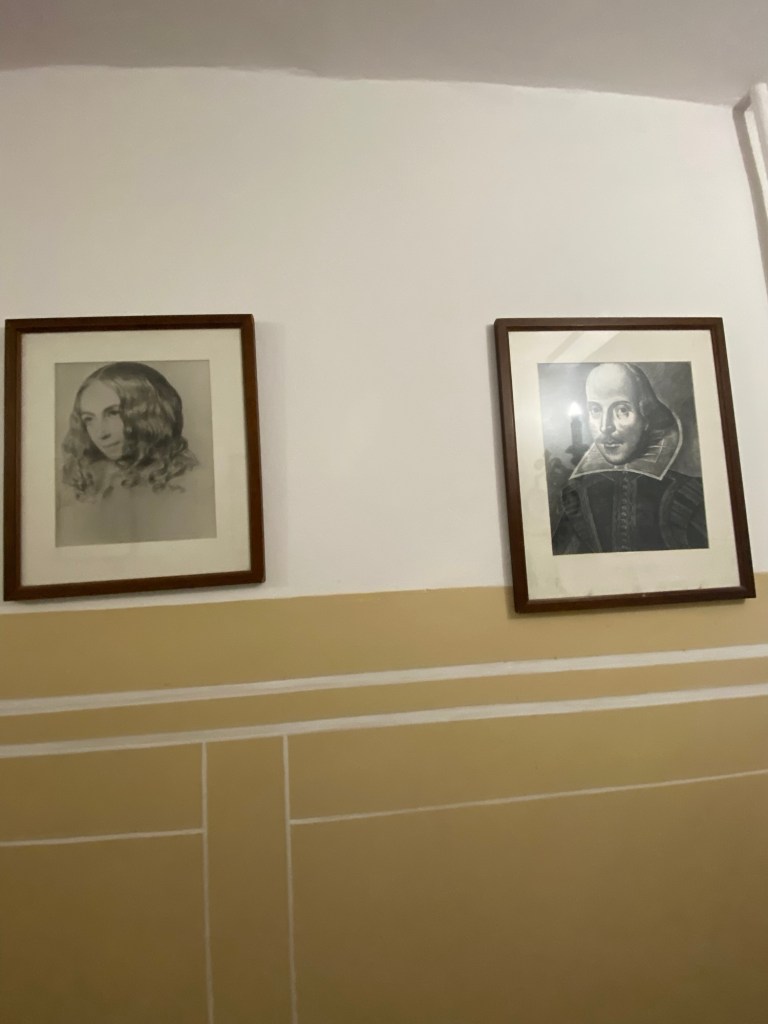
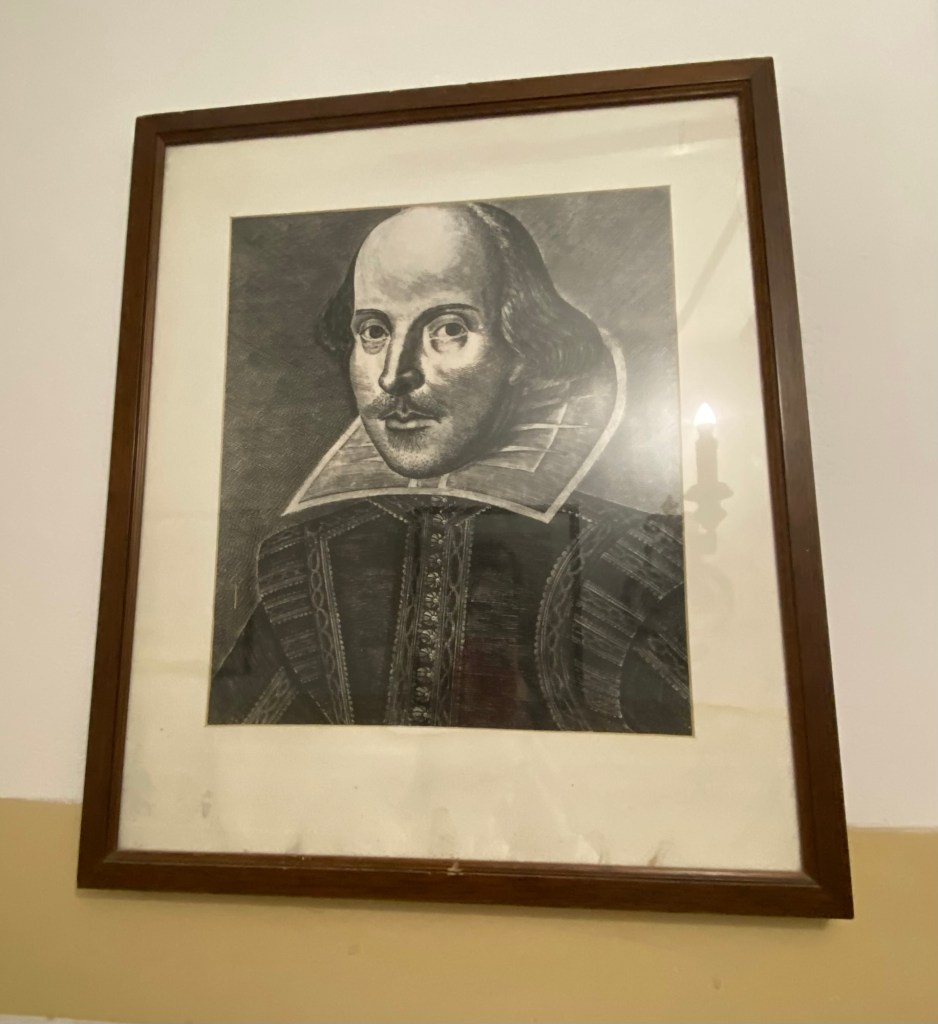
In the long hallways are hung pictures of notable Brits. I love this juxtaposition of William and Elizabeth. You know the last names, right?
It’s possible to visit Elizabeth’s home in Florence. Just thinking about her here is a romantic exercise. She has a beautiful white marble monument marking her gravesite in the English cemetery in Florence, which I recently posted about.
Here’s the exterior of the palazzo she lived in. I’ve visited it and the interior is just about what you’d expect for a 19th century ex pat to decorate in Italy.
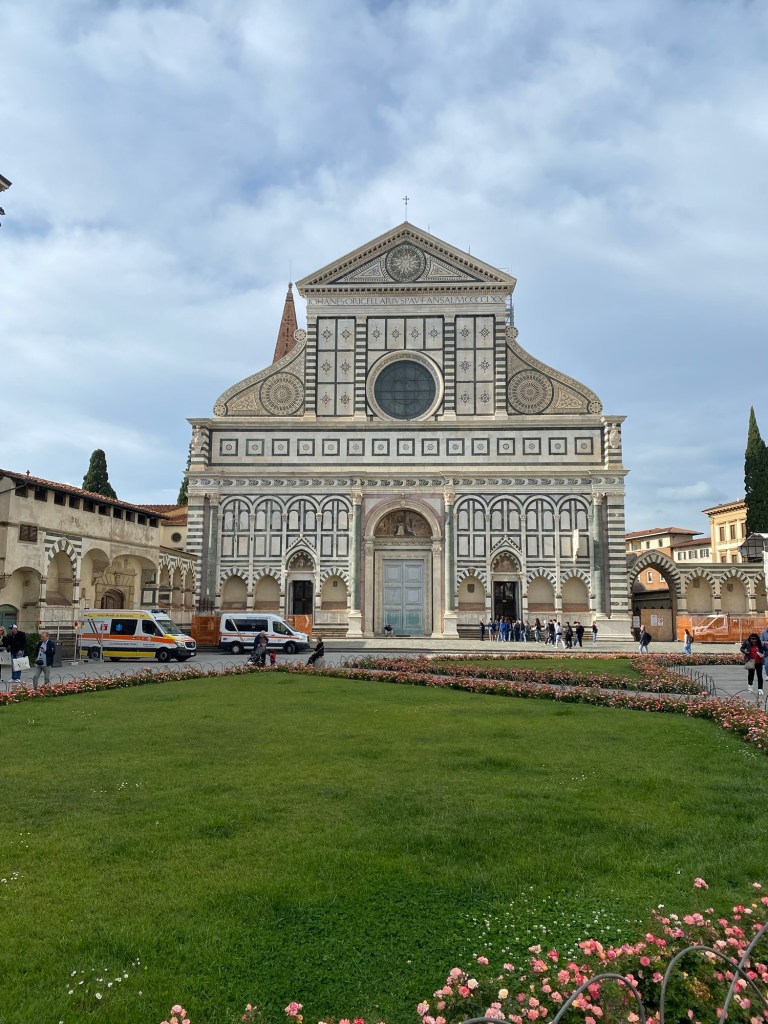
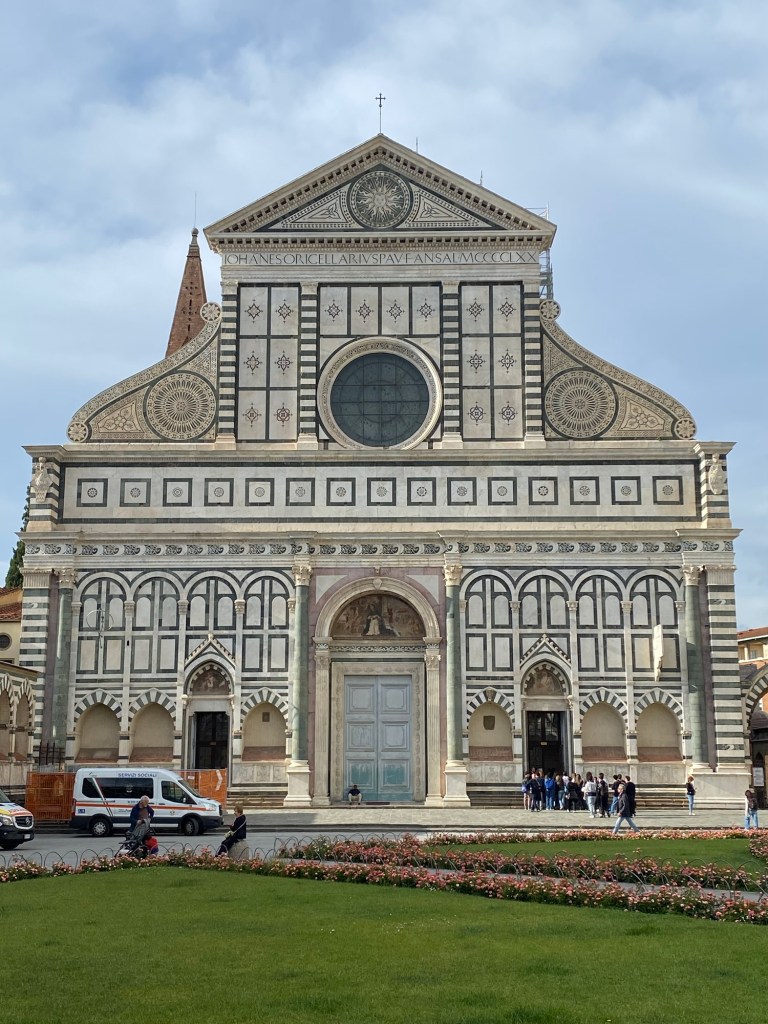
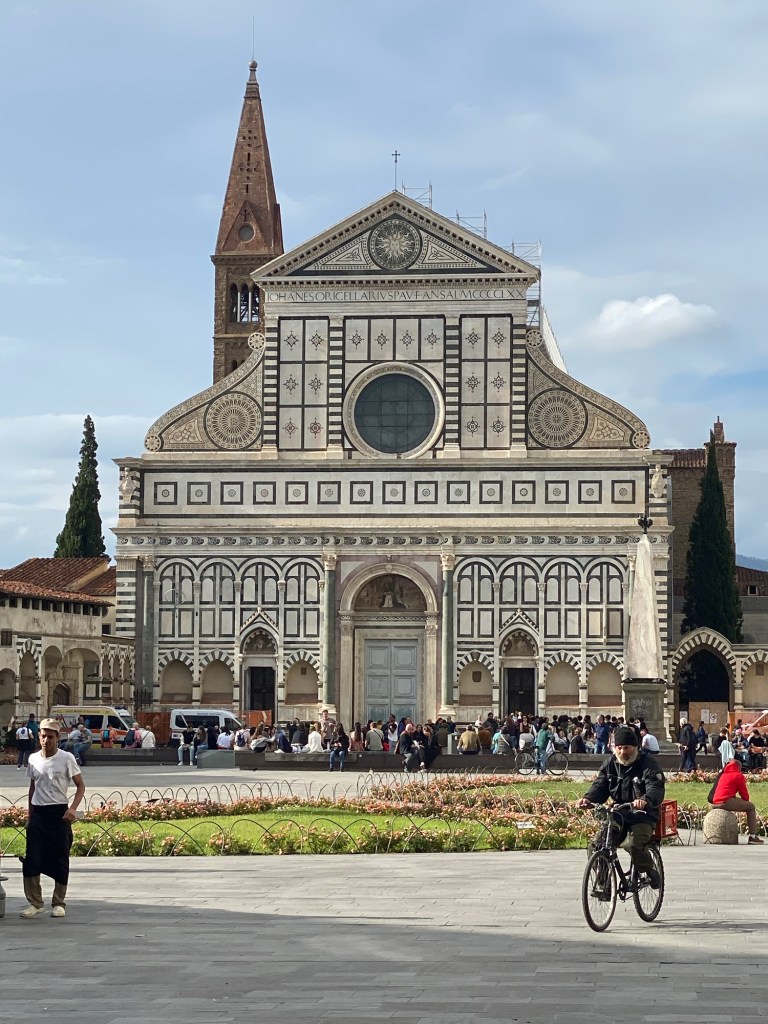
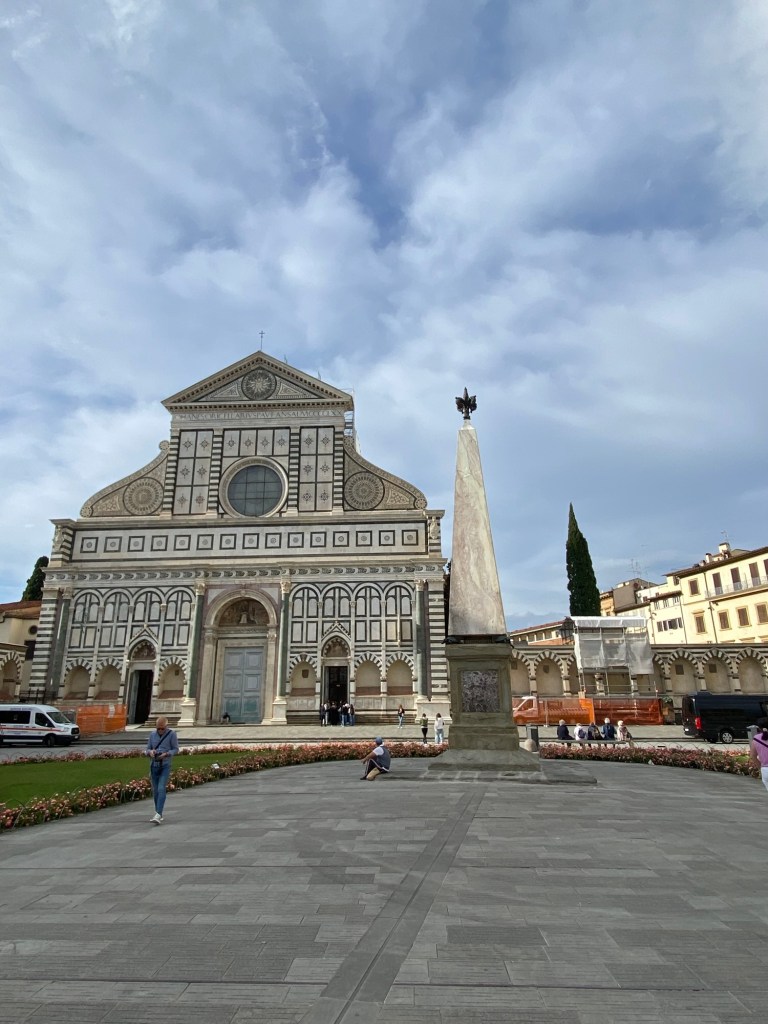
On some days the sunlight is stunning as it hits some of Florence’s main monuments. In my humble opinion, there was never a finer Renaissance facade than Santa Maria Novella and on this afternoon, it was reflecting the sunlight in a very gorgeous manner. At times like this, I am compelled to snap some pix.
And then there is the duomo and bell tower. Now, it is important to keep in mind that the facade of the cathedral is from the 19th century, not the Renaissance, but the bell tower is purely Medieval and very, very Florentine. Art historians are not supposed to like the church facade because it isn’t old enough, but in this sunlight, it was quite amazing! :-))
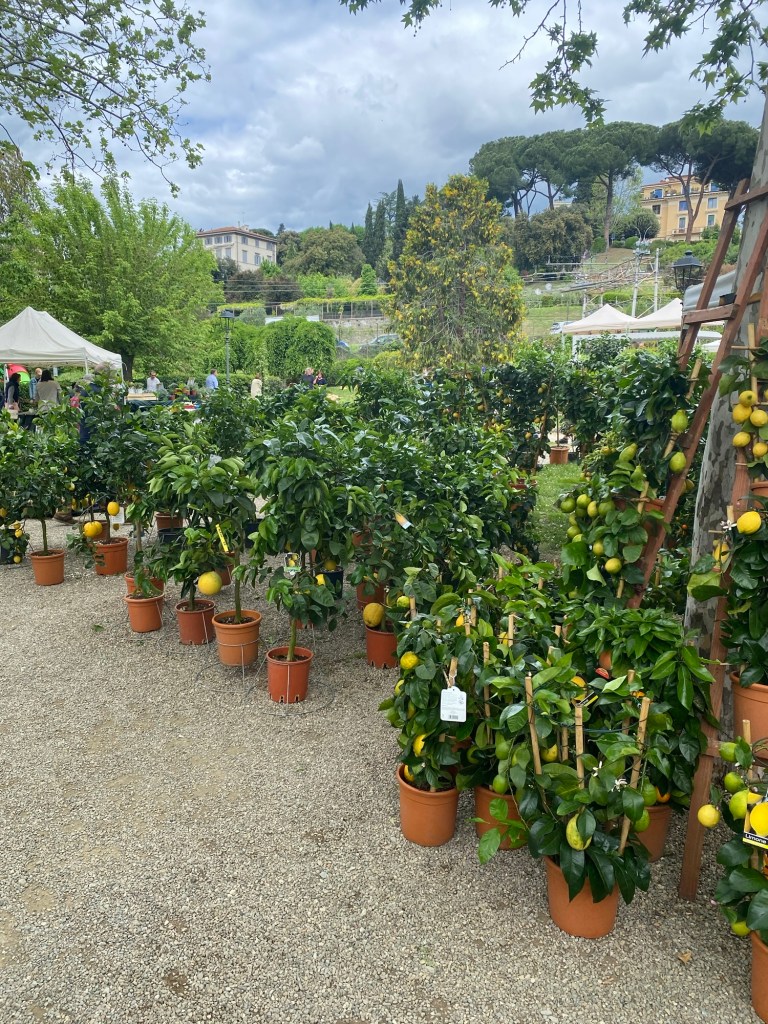
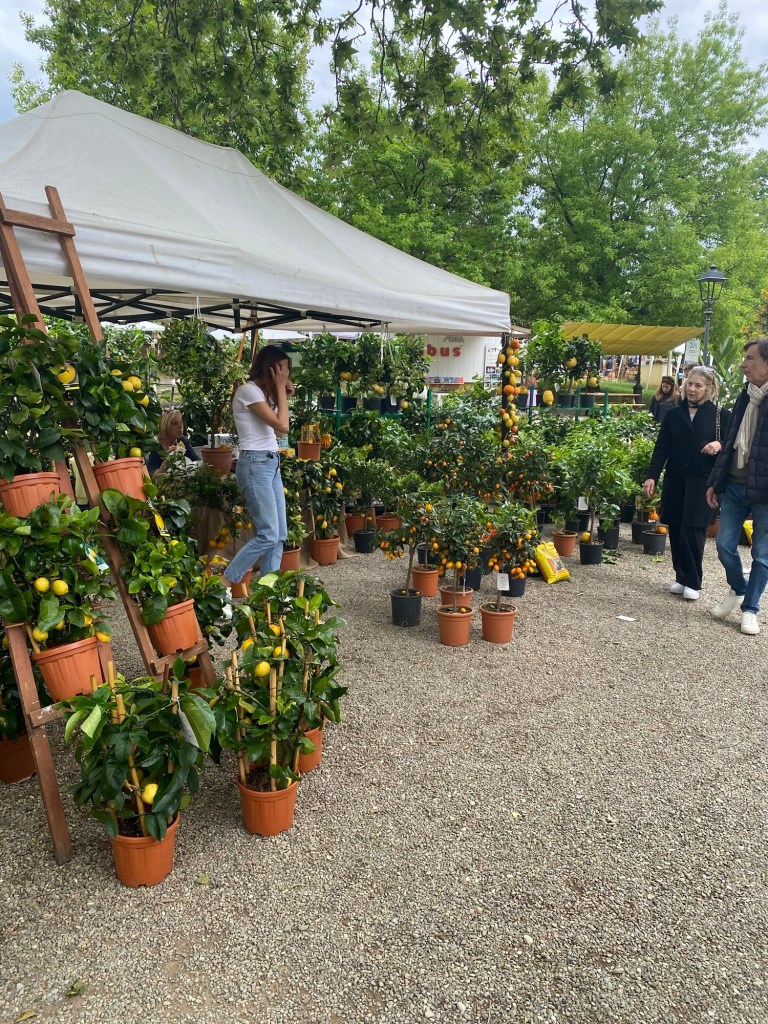
Twice a year at this wonderful little garden on the north end of Florence a plant show/sale is held. Every spring and fall you can find a gorgeous display of horticultural wonders for sale at very good prices and meet knowledgeable people! It’s a thrill I never want to miss.
Below the video shows the entrance to the recent spring sale.
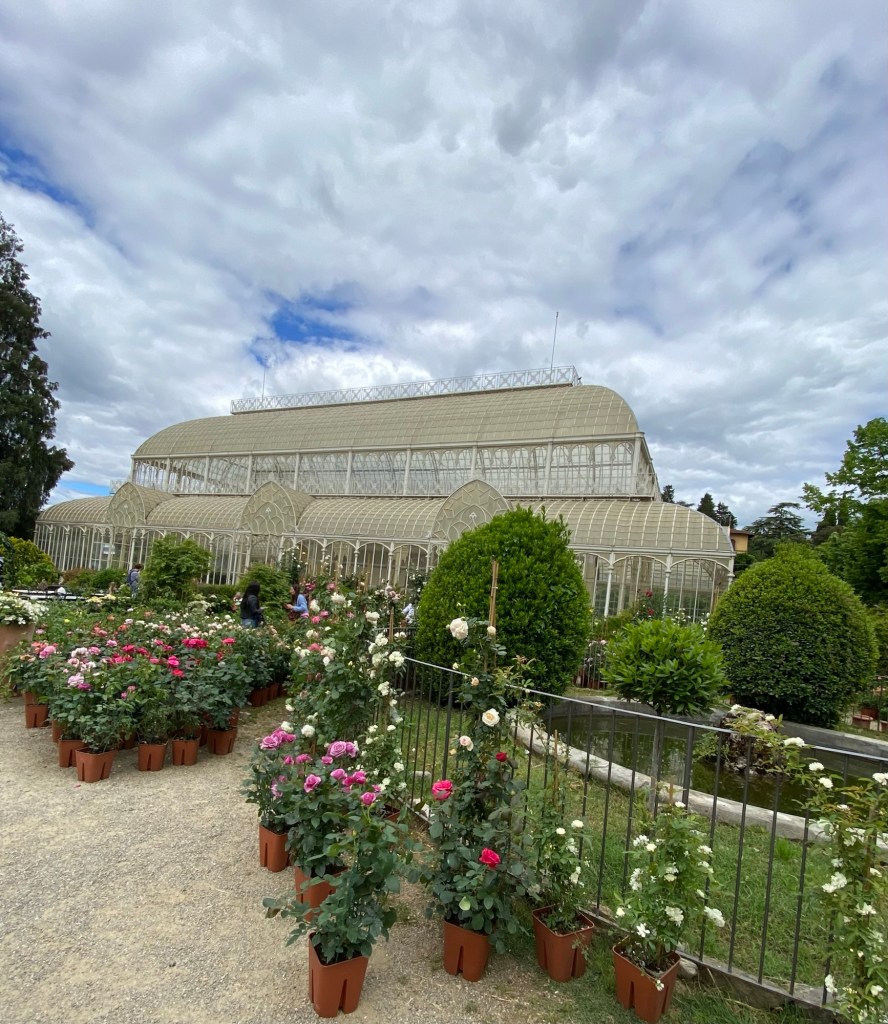
A little further back into the garden and we come upon the highlight of this garden, the 19th century glass house. It is beautiful! I come back again and again to admire this structure. It has a small grotto inside and nowadays is used to house certain public functions. There is also a branch of the city library here and I used to live in this neighborhood and took advantage of the glass house and the library often.
The booth shown below features two plants: clematis and iris. Two spring favorites! And some white roses.
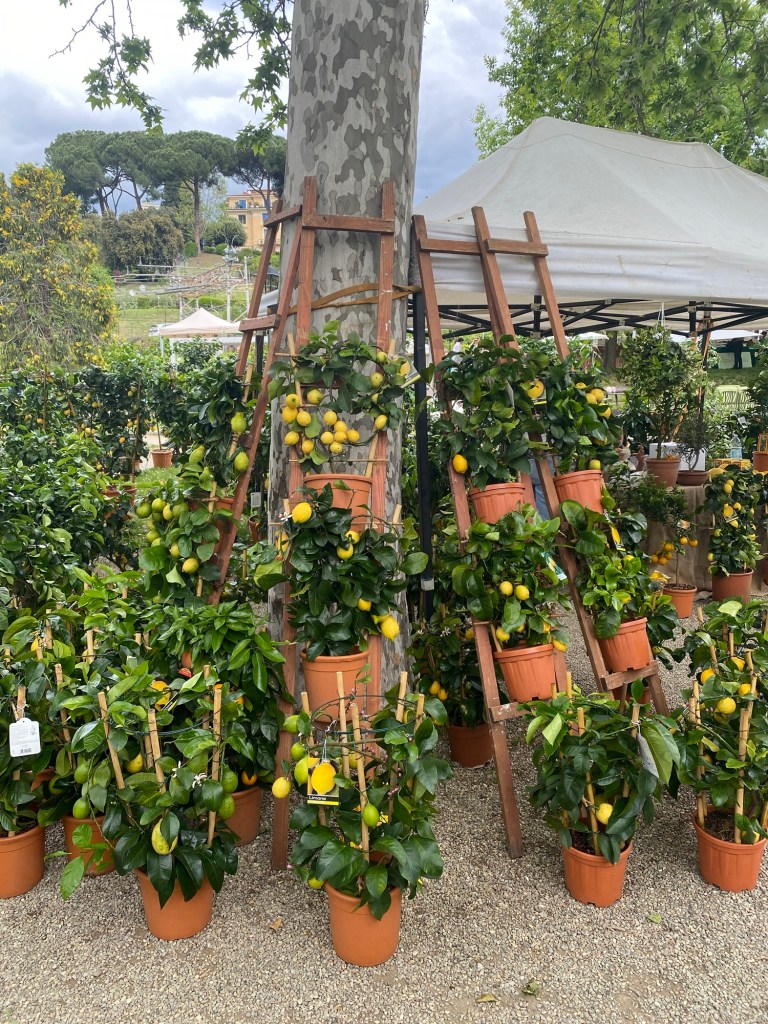
Below, I never get over the novelty of growing citrus! I tried my hand at one plant a few years ago and it failed.
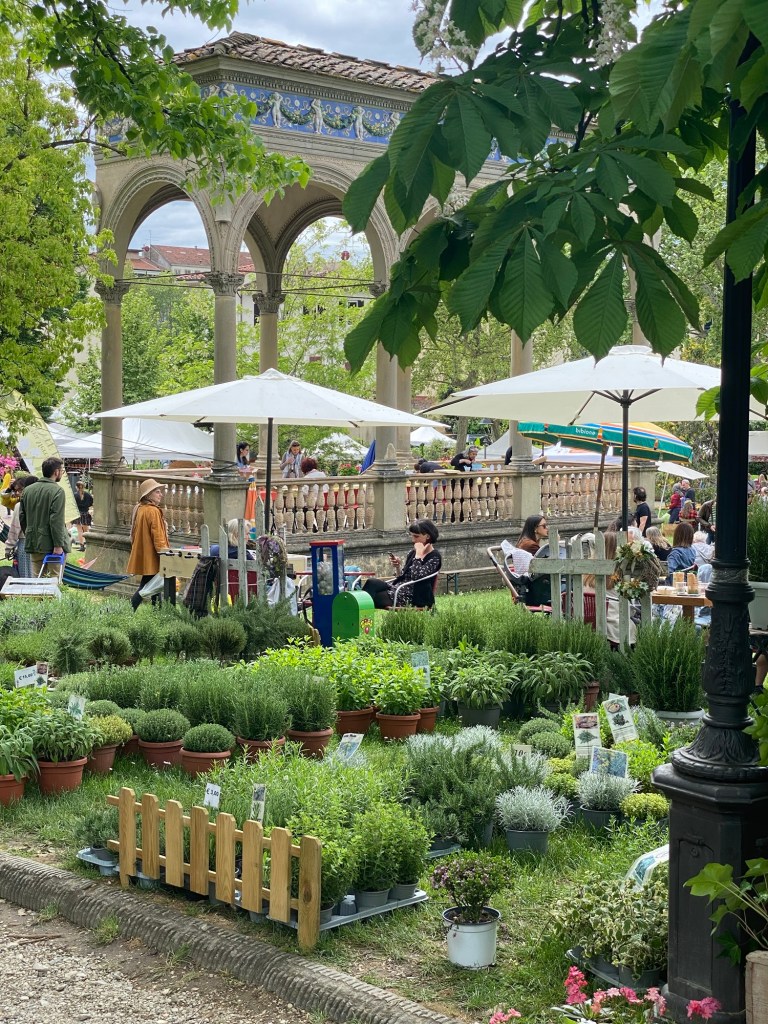
The other architectural feature in this fine, small garden is this Renaissance style loggia. I love it!
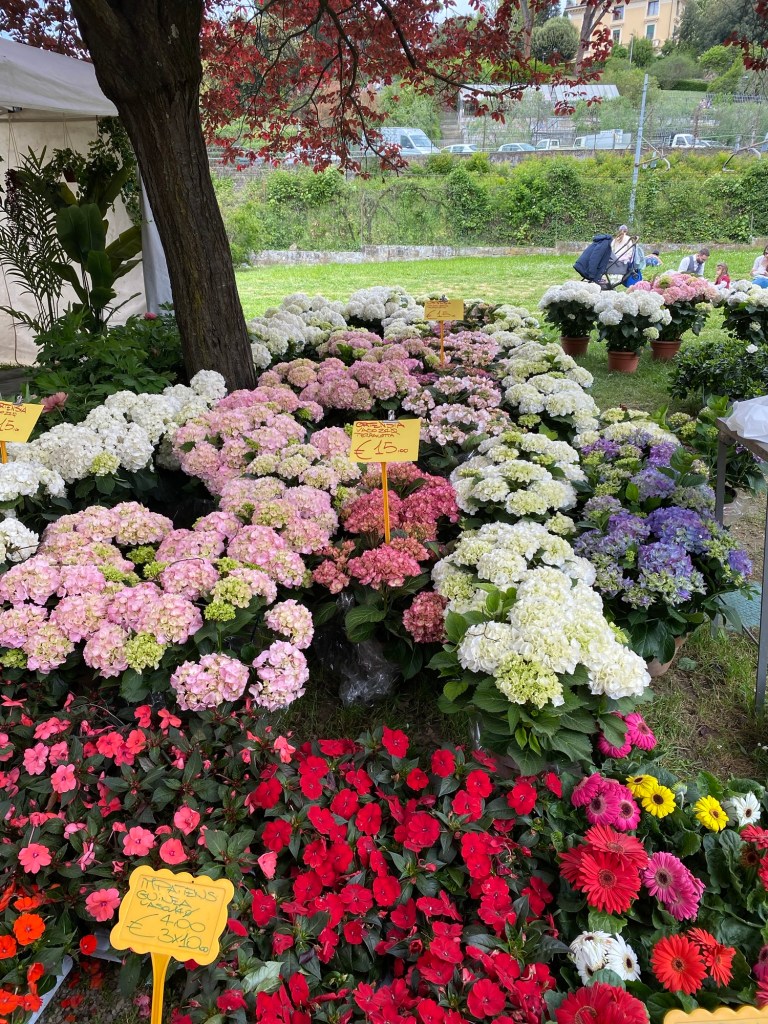
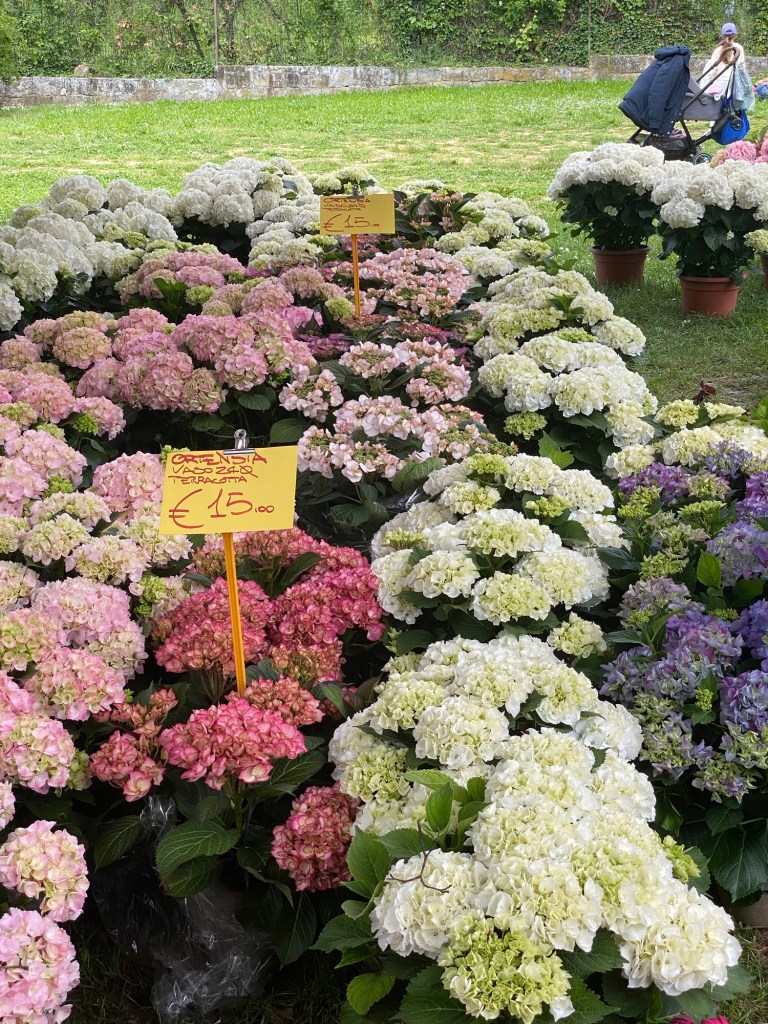
Do you like azaleas and hydrangeas? I love the name of hydrangea in Italian: hortensia. If I ever name a female anything again I will name her Hortensia.
I love this place so much that I came twice during its week long run. I was hunting for the beautiful blue-flowering plumbago that does so well here, but I never found it. However, I did find laurel bushes for sale at a great price and bought 10 of them to create a wall on my terrace. More on that later.
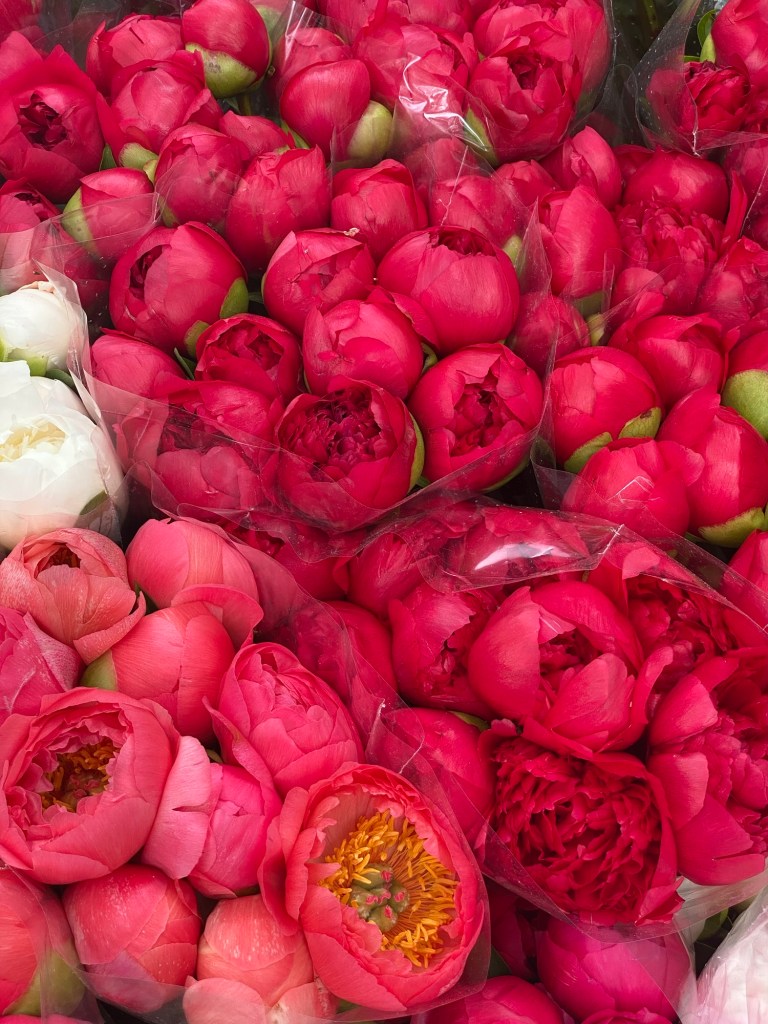
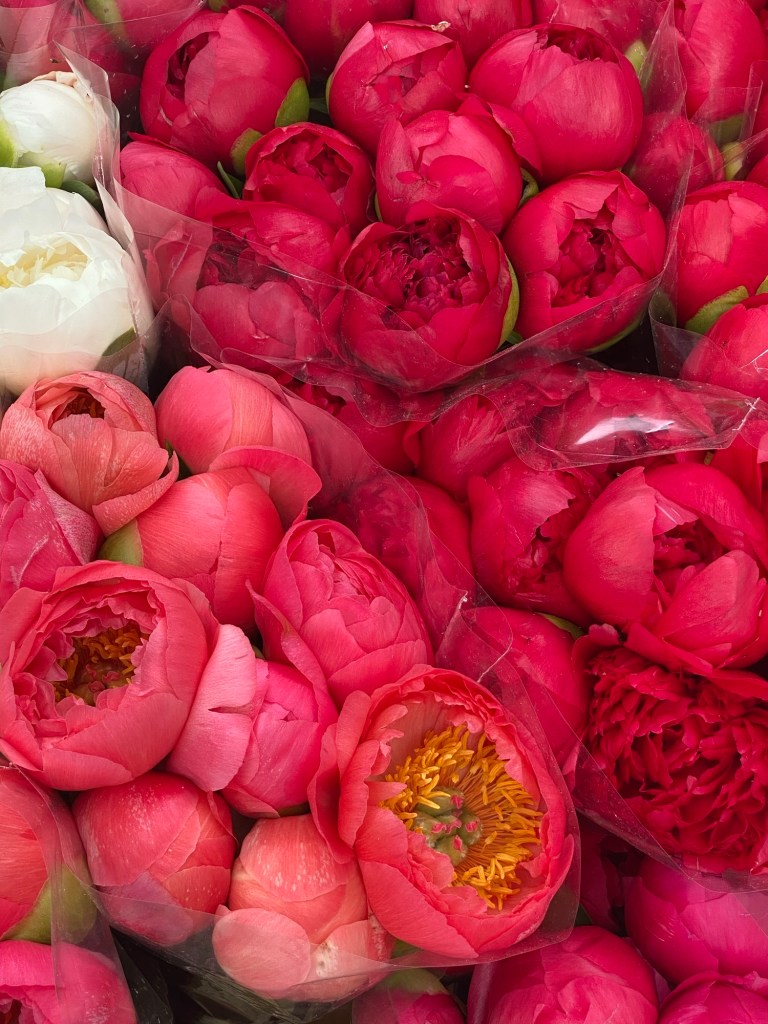
Fresh cut flowers are not a big feature of the plant sale, but these peonies were on offer and I had a very tough time resisting a bunch of them. However, when you are carrying 10 laurel bushes and don’t have a car, you find you have a lot of willpower. I also bought a fiddle leaf fig tree plant for inside my apartment.
These coral colored peonies stole my heart for sure!
And I always love ranunculus!
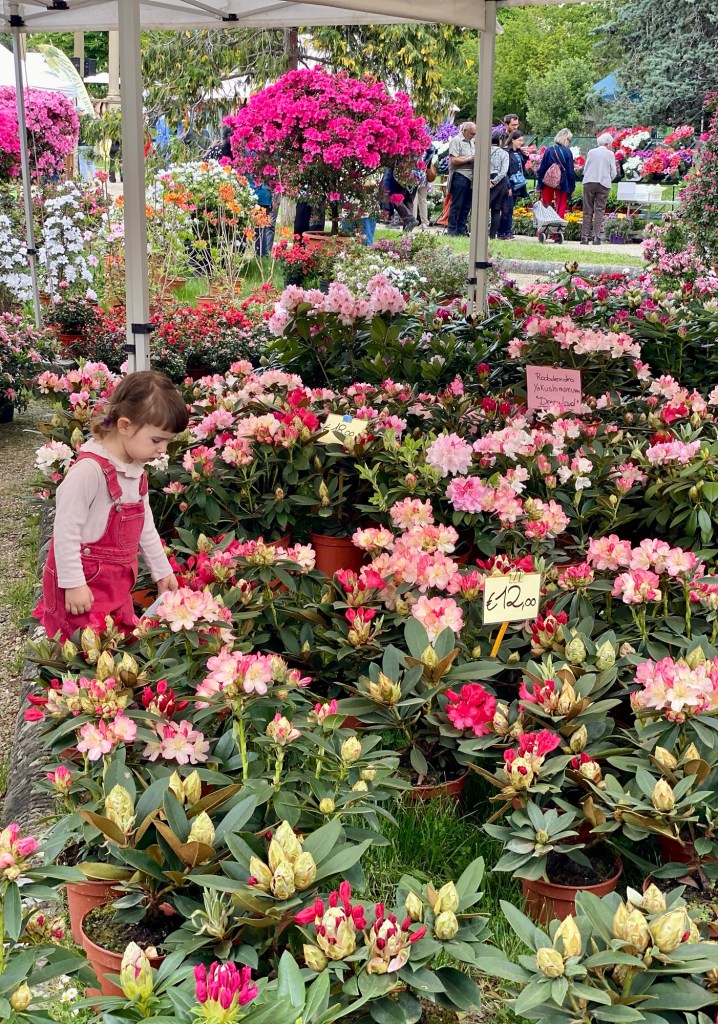
But, without a doubt, the star of the event for me appeared on the 2nd day I was at the sale. This adorable bambina seemed dressed for a flowery adventure among the azalea plants that were almost bigger than she. What a creature!
Below, what I brought home. It doesn’t look like a lot because I camouflaged them a bit. But I will soon have a new hedge separating my terrace from my neighbor’s. Whoo hoo!
Below are the plants I brought home from my first day at the sale. My normal sized shopping bags sufficed.
Below are the plants I brought home from second visit. IKEA bags were needed this time!



















 get back, lauretta!
You must be logged in to post a comment.