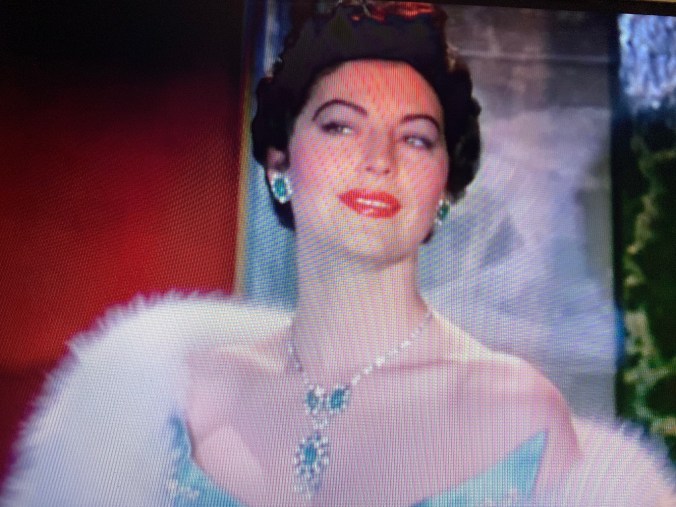
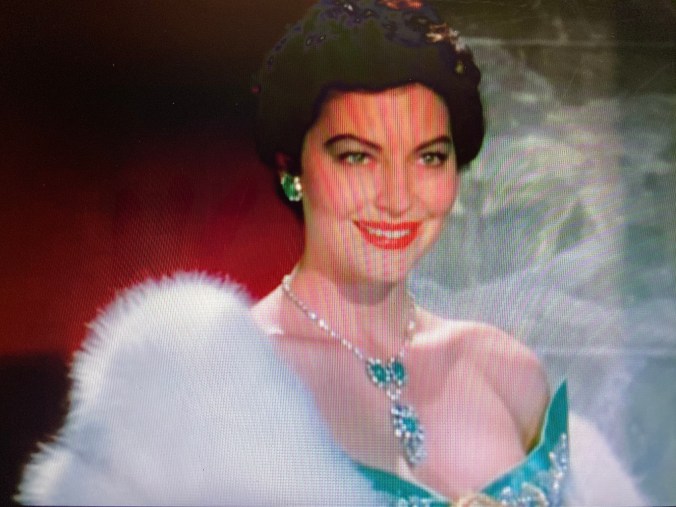
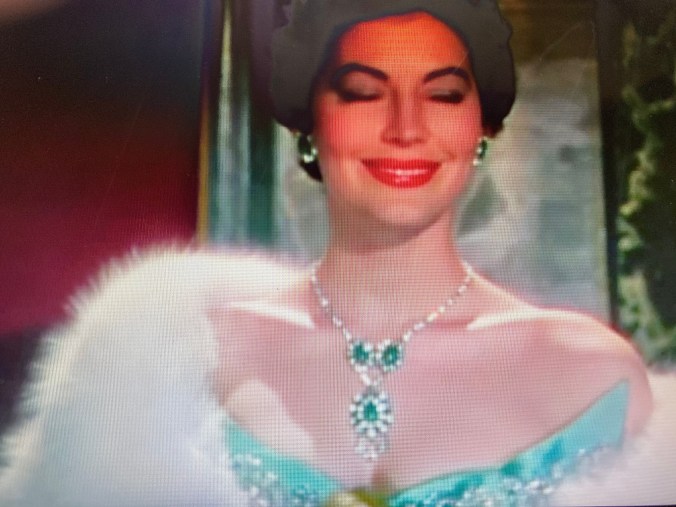
The Wallace Collection, London. Wow! …and Manolo Blanik too.


IMG_9866

If you are a regular reader of my blog, you know that I rarely post images of the decorative arts.  I am typically not a fan of fussy porcelains or fine cabinetry.  I just don’t seem to have the gene that lets me appreciate that stuff.

But, today in London, I visited the Wallace Collection and it knocked my socks off.  I mean, this place is crazy!  The former mansion of the Wallace family was gifted to the country of Britain in the last years of the 19th century, and is still set up in a similar manner to the way in which the family lived.

Screen Shot 2019-07-21 at 19.23.54

As you might know, I’ve been to a few museums and house museums in my day, but this place is more opulent than any other.

All I can say is WOW!  And then show you some (a lot, probably too many) pictures of this amazing place.

Oh, and p.s….Manolo Blanik shoes were also on display.  I’ve never owned a pair and never will.  But, to see the shoes interspersed with the collections added an element I’d not thought of before.  My guide at the Wallace Collection told me that Blanik was an Anglophile and was particularly interested in the Wallace Collection.  This is a new point of approach for me, and I could dig it!
IMG_9939

Let’s go!

The first thing I heard in the excellent tour I joined, is that when this Japanese chest (and its matching partner) arrived in Europe, it absolutely blew the minds of connoisseurs.  They were obsessed with the black lacquer and wanted to emulate it.  They couldn’t, it turned out, because the plant that produces the lacquer did’t grow in the west.

IMG_9838


Here’s my guide, standing in front of the Japanese chest.

IMG_9836

That didn’t daunt them.  The king of France set up a artisanal workshop, patronizing the best of the artistic producers known to France, and they experimented and experimented, trying to produce–if not lacquer itself–at least something that looked very close to it.

IMG_9834

Above, King Louis XV, the king who developed the French fine arts.

This is the time period in which France is lifted by the decorative arts.  France would no longer import fine luxury goods–they would produce them.  It started then and is still going strong today.

The wardrobe below was produced in this workshop.

IMG_9837

IMG_9839


Before having a gander at the million photos I took today, introduce yourself to the Wallace Collection here with the director:


Now, please join me as I wander through the collection:

IMG_9840


IMG_9863

IMG_9835


IMG_9864


Can you say “opulence?”

IMG_9867


IMG_9868


IMG_9869


IMG_9884


IMG_9885


IMG_9886


IMG_9887


IMG_9888


IMG_9889


IMG_9890


IMG_9891


IMG_9892


IMG_9893


IMG_9894


IMG_9895


IMG_9896


IMG_9897


IMG_9898


IMG_9899


IMG_9900


IMG_9902


IMG_9959


IMG_9960


IMG_9961


IMG_9962


IMG_9963


IMG_9964


IMG_9965


IMG_9966


IMG_9969


IMG_9971


IMG_9972


IMG_9973


IMG_9974


IMG_9977


IMG_9978


IMG_9979


Also, the Wallace Collection has a lovely restaurant!

IMG_9980


And then, on to the armor!

IMG_9981


IMG_9982


And to a Gothic crown.  Because, why not?

IMG_9983


Check out the line of matching armor head pieces and shields.

IMG_9984


IMG_9900


Below: a portrait of Madame de Pompadour, commissioned by herself.  My guide told the fascinating story of this woman and her involvement with the French king, and discussed the fascinating iconography of this portrait.  Please note her tiny shoe peeking out from under her “Pompadour pink” gown, for which she set the fashion of the day.  This is the type of detail by which Blanik was inspired.  Looking at his shoes today, I could see it.

IMG_9911

IMG_9901


IMG_9902


IMG_9903


IMG_9906


And, then there is this Jean-Honoré Fragonard masterwork: The Swing (1767).

IMG_9907


IMG_9909


IMG_9910


IMG_9912


IMG_9913


IMG_9914


IMG_9915


IMG_9916


IMG_9917


IMG_9918


IMG_9919


IMG_9920


IMG_9921


IMG_9922


IMG_9923


IMG_9924


IMG_9925


IMG_9926


IMG_9927


IMG_9928


IMG_9930


IMG_9931


IMG_9932


IMG_9933


IMG_9934IMG_9935


IMG_9936


IMG_9937


IMG_9938


IMG_9939


IMG_9940


IMG_9941


IMG_9942


IMG_9943


IMG_9944


IMG_9945


IMG_9946


IMG_9947


IMG_9948


IMG_9949


IMG_9950


IMG_9951


IMG_9952


IMG_9953

Animals in War: the London memorial

Without a doubt, the most moving monument I’ve seen in the few short days I’ve been in London so far is the Animals in War Memorial.  They had no choice.  Simple. Direct. Heartbreaking.

fullsizeoutput_13dffullsizeoutput_13de

fullsizeoutput_13dd

Animals-in-War

arts-graphics-2004_1154201a

The Animals in War Memorial is a war memorial, in Hyde Park, London, commemorating the countless animals that have served and died under British military command throughout history. It was designed by English sculptor David Backhouse and unveiled in November 2004 by Anne, Princess Royal.

The memorial was inspired by Jilly Cooper’s book Animals in War, and was made possible by a specially created fund of £1.4 million from public donations of which Cooper was a co-trustee. The memorial consists of a 55 ft by 58 ft curved Portland stone wall: the symbolic arena of war, emblazoned with images of various struggling animals, along with two heavily laden bronze mules progressing up the stairs of the monument, and a bronze horse and bronze dog beyond it looking into the distance. The horse was modelled on a retired Charger from The King’s Troop Royal Horse Artillery called Ben Bragg.

The inscriptions on the moving monument are in various fonts and sizes and are all uppercase. In addition to the ones on the front, here are several inscriptions on the rear or outside, and on the inner edges of the wings (in the gap), attributing the creators and funders.

On the face of the right wing when viewed from the front or inside
Main heading, with the largest and heaviest cut inscription:
Animals in War
Directly beneath the main heading:
This monument is dedicated to all the animals
that served and died alongside British and allied forces
in wars and campaigns throughout time
Beneath and to the right of the main heading:
They had no choice
On the face of the left wing when viewed from the rear or outside (on the reverse of the main heading):
Many
and various
animals were employed
to support British and Allied Forces
in wars and campaigns over the centuries
and as a result millions died · From the pigeon to the
elephant they all played a vital role in every region of the world
in the cause of human freedom · Their contribution must never be forgotten


The amazing Albert Memorial, London

When Queen Victoria built something, she really built something.  She had this memorial constructed to memorialize her beloved husband, Prince Albert, who died in 1861 of typhoid fever at the age of 42.

Albert_Memorial,_London_-_May_2008


The Albert Memorial in Kensington Gardens is one of London’s most ornate monuments. Located opposite the Royal Albert Hall, this elaborate memorial was designed by George Gilbert Scott.

It would seem that the Albert Memorial was influenced by the series of 13th Century Eleanor Crosses (Charing Cross perhaps being the most famous) and other statues in Edinburgh and Manchester. The Albert Memorial is, without a doubt, one of the grandest high-Victorian gothic extravaganzas anywhere.
The memorial shows the seated figure of Prince Albert, who holds the catalogue of the Great Exhibition, held in Hyde Park in 1851, behind which he was a major moving force, for he helped to organize it.

Marble figures representing Europe, Asia, Africa and America stand at each corner of the memorial, and higher up are further figures representing manufacture, commerce, agriculture and engineering. Yet further up, near the top, are gilded bronze statues of the angels and virtues.

All around the base of the memorial the Parnassus frieze depicts celebrated painters, poets sculptors, musicians and architects, reflecting Albert’s enthusiasm for the arts. There are 187 exquisitely carved figures in the frieze.


Albert Memorial

The Albert Memorial from the south side

Location Kensington Gardens, London
The Albert Memorial, directly north of the Royal Albert Hall in Kensington Gardens, London, was commissioned by Queen Victoria in memory of her beloved husband Prince Albert, who died in 1861.

Designed by Sir George Gilbert Scott in the Gothic Revival style, it takes the form of an ornate canopy or pavilion 176 feet tall, in the style of a Gothic ciborium over the high altar of a church, sheltering a statue of the prince facing south. It took over ten years to complete, the £120,000 cost (the equivalent of about £10,000,000) met by public subscription.

The memorial was opened in July 1872 by Queen Victoria, with the statue of Albert ceremonially “seated” in 1876.

The central part of the memorial is surrounded by the elaborate sculptural Frieze of Parnassus (named after Mount Parnassus, the favorite resting place for the Greek muses), which depicts 169 individual composers, architects, poets, painters, and sculptors. Musicians and poets were placed on the south side, with painters on the east side, sculptors on the west side, and architects on the north side. Henry Hugh Armstead carved the figures on the south and east side, the painters, musicians and poets (80 in total), and grouped them by national schools. John Birnie Philip carved the figures on the west and north side, the sculptors and architects, and arranged them in chronological order.


The sculptor Henry Hugh Armstead coordinated this massive effort among many artists of the Royal Academy, including Thomas Thornycroft (carved the “Commerce” group), Patrick MacDowell (carved the “Europe” group, his last major work), John Bell (carved the “America” group), John Henry Foley (carved the “Asia” group and started the statue of Albert), William Theed (carved the “Africa” group), William Calder Marshall, James Redfern (carved the four Christian and four moral virtues including Fortitude[8]), John Lawlor (carved the “Engineering” group) and Henry Weekes (carved the “Manufactures” group). The Scottish sculptor William Calder Marshall carved the “Agriculture” group. The figure of Albert himself, although started by Foley, was completed by Thomas Brock, in what was Brock’s first major work.

1024px-Virtues_of_the_Albert_Memorial_in_London,_spring_2013

800px-Albert_Memorial_-_Interior_Mosaic


800px-Albertmemorial


Armstead created some 80 of the figure sculptures on the southern and eastern sides of the memorial’s podium. The north and west sides were carved by the sculptor John Birnie Philip. Armstead also sculpted the bronze statues representing Astronomy, Chemistry, Rhetoric, and Medicine.

Henry Weekes carved the allegorical work Manufactures (1864–70). Although Weekes was not on Queen Victoria’s original list of sculptors, being selected to work on the project only after John Gibson declined to participate, his group occupies the preferable south side of the finished monument. A central female figure holds an hourglass, symbolising the critical nature of time to industry, while an ironworker stands at his anvil and a potter and weaver offer their wares.[6][9]

At the corners of the central area, and at the corners of the outer area, there are two programmes of allegorical sculpture, or at least sculptures of personifications: four groups depicting Victorian industrial arts and sciences (agriculture, commerce, engineering and manufacturing), and four more groups representing the traditional four continents: Africa, the Americas, Asia and Europe at the four corners, each continent-group including several ethnographic figures and a large animal: A camel for Africa, a bison for the Americas, an elephant for Asia and a bull for Europe. These groups represent something of a blend of traditional iconography for the continents personified, and an attempt to update them.

The 4 corners of the outer memorial are marked with sculptures representing the earth’s 4 continents.

Here is Asia:


The form of the monument “is clearly derived” from the Gothic Scaliger Tombs outside a church in Verona, The mosaics for each side and beneath the canopy of the Memorial were designed by Clayton and Bell and manufactured by the firm of Salviati from Murano, Venice.

The memorial’s canopy features several mosaics as external and internal decorative artworks. Each of the four external mosaics show a central allegorical figure of the four arts (poetry, painting, architecture and sculpture), supported by two historical figures either side. The historical figures are: King David and Homer (POESIS – poetry), Apelles and Raphael (painting), Solomon and Ictinus (architecture), and Phidias and Michelangelo (sculpture). Materials used in the mosaics include enamel, polished stone, agate, onyx, jasper, cornelian, crystal, marble, and granite.

Around the canopy, below its cornice, is a dedicatory legend split into four parts, one for each side. The legend reads: Queen Victoria And Her People • To The Memory Of Albert Prince Consort • As A Tribute Of Their Gratitude • For A Life Devoted to the Public Good.

The pillars and niches of the canopy feature eight statues representing the practical arts and sciences: Astronomy, Geology, Chemistry, Geometry (on the four pillars) and Rhetoric, Medicine, Philosophy and Physiology (in the four niches).

Near the top of the canopy’s tower are eight statues of the moral and Christian virtues, including the four cardinal virtues and the three theological virtues. The virtues are: Faith, Hope, Charity and Humility, and Fortitude, Prudence, Justice and Temperance. Humility is considered to be annexed to the virtue of temperance. Above these, towards the top of tower, are gilded angels raising their arms heavenwards. At the very top of the tower is a gold cross.


Here is Africa:


Here is America:

IMG_9776

IMG_9777

IMG_9778

IMG_9779

IMG_9780

IMG_9781

IMG_9782

IMG_9783

IMG_9784

IMG_9785

IMG_9786


Here is Europe:

IMG_9795

IMG_9796

IMG_9797

IMG_9798

IMG_9799

IMG_9800

IMG_9801

IMG_9793

IMG_9794


And here is America:


Londontown

Let’s get it straight from the get go. When in Britain, ya gotta look both ways! And I mean this metaphorically as well as literally!

Here are just a few teaser photographs from my first few days!

London showers bring London flowers!


The wee ones go on field trips.


The buskers perform feats of magic.  I cannot understand how they manage this one!


And the famous hats are easy to find.  Oh, if only I had a place to wear one…hmmm!

Monet’s Water Lilies, Musée de l’Orangerie

Claude Monet is known as one of the most famous painters of the Impressionist movement, which took its name from one of his paintings, Impression, soleil levant [Impression, Sunrise], dated 1872 (Musée Marmottan, Paris).

Screen Shot 2019-07-12 at 09.35.33

From the late 1890s to his death in 1926, the painter devoted himself to the panoramic series of Water Lilies, of which the Musée de l’Orangerie has a unique series. In fact, the artist designed several paintings specifically for the building, and donated his first two large panels to the French State as a symbol of peace on the day following the Armistice of 12 November 1918.

He also designed a unique space consisting of two oval rooms within the museum, giving the spectator, in Monet’s own words, “an illusion of an endless whole, of water without horizon and without shore,” and making the museum’s Water Lilies a work that is without equal anywhere in the world. Monet’s eight compositions were set out in the two consecutive oval rooms, both of which have the advantage of natural light from the skylights, and are oriented from west to east, following the course of the sun and one of the main routes through Paris along the Seine. The two ovals evoke the symbol of infinity, whereas the paintings represent the cycle of light throughout the day.

Monet greatly increased the dimensions of his initial project, started before 1914. The painter wanted visitors to be able to immerse themselves completely in the painting and to forget about the outside world. The end of the First World War in 1918 reinforced his desire to offer beauty to wounded souls.

The first room brings together four compositions showing the reflections of the sky and the vegetation in the water, from morning to evening, whereas the second room contains a group of paintings with contrasts created by the branches of weeping willow around the water’s edge.


The Water Lilies were installed according to plan at the Musée de l’Orangerie in 1927, a few months after Monet’s death. This unique set of canvases were designed as a real environment and crowns the Water Lilies cycle begun nearly thirty years before.

The setting for the paintings is one of the largest monumental achievements of early twentieth century painting. The dimensions and the area covered by the paint surrounds and encompasses the viewer on nearly one hundred linear meters which unfold a landscape dotted with water lilies water, willow branches, tree and cloud reflections, giving the “illusion of an endless whole, of a wave with no horizon and no shore” in the words of Monet. This unique masterpiece has no equivalent worldwide.

IMG_8753


IMG_8754


IMG_8755


IMG_8756


IMG_8740


IMG_8741


IMG_8742


IMG_8743


IMG_8744


IMG_8746


IMG_8747


IMG_8748


IMG_8749


IMG_8750


IMG_8751


IMG_8752


IMG_8737


IMG_8738


IMG_8739


You can take a virtual tour of the Water Lilies cycle here:

https://www.musee-orangerie.fr/en/article/water-lilies-virtual-visit