Did you know? Firenze
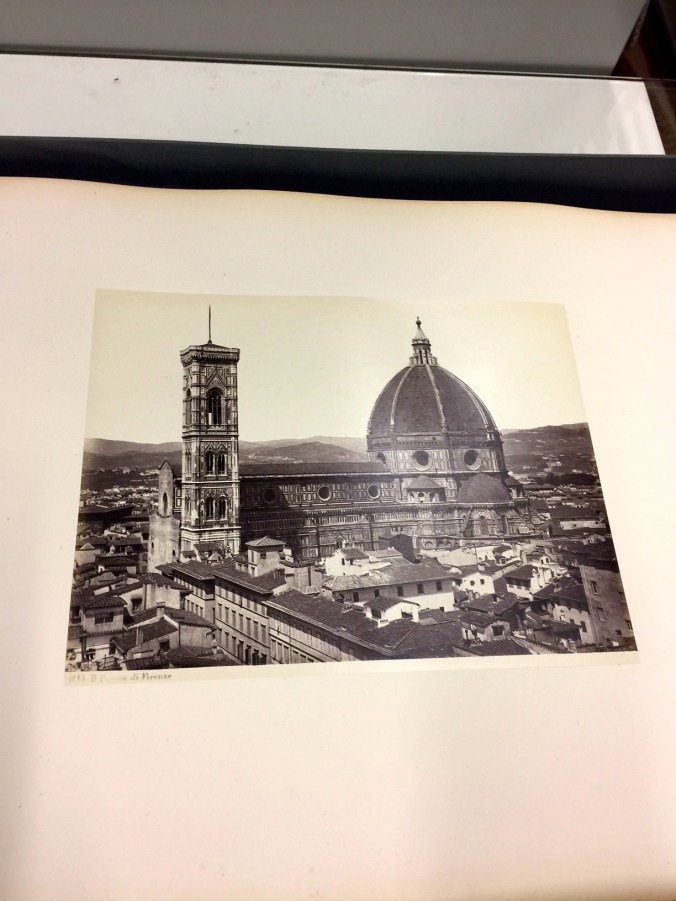
When looking through a photograph album at the Alinari archives, I was shown this photograph of the Duomo in Florence taken sometime before 1874 when the album was created.

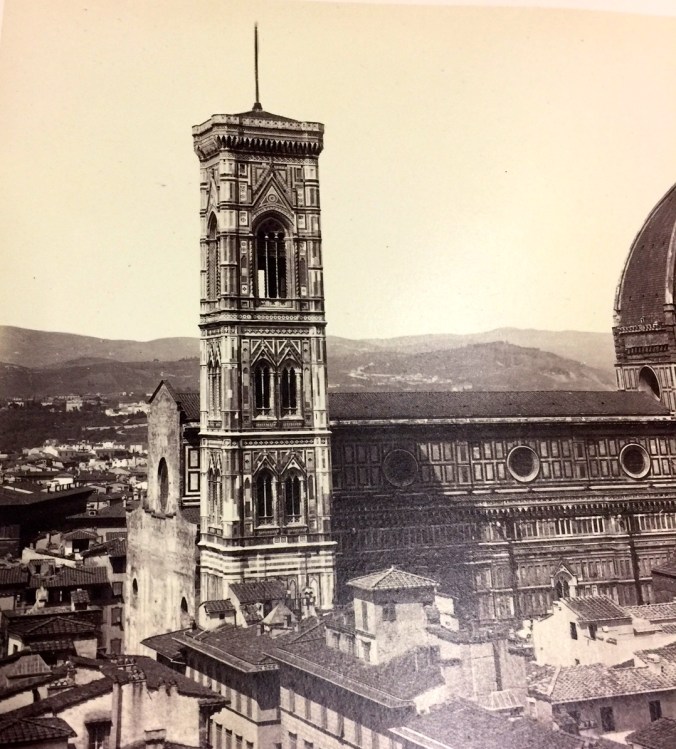
When you zero in on the facade of the Duomo, things get very interesting. Instead of the brightly colored and highly embellished facade on the cathedral that one sees nowadays in Florence, this photograph reveals that the facade was left unfinished and unembellished after the Renaissance.
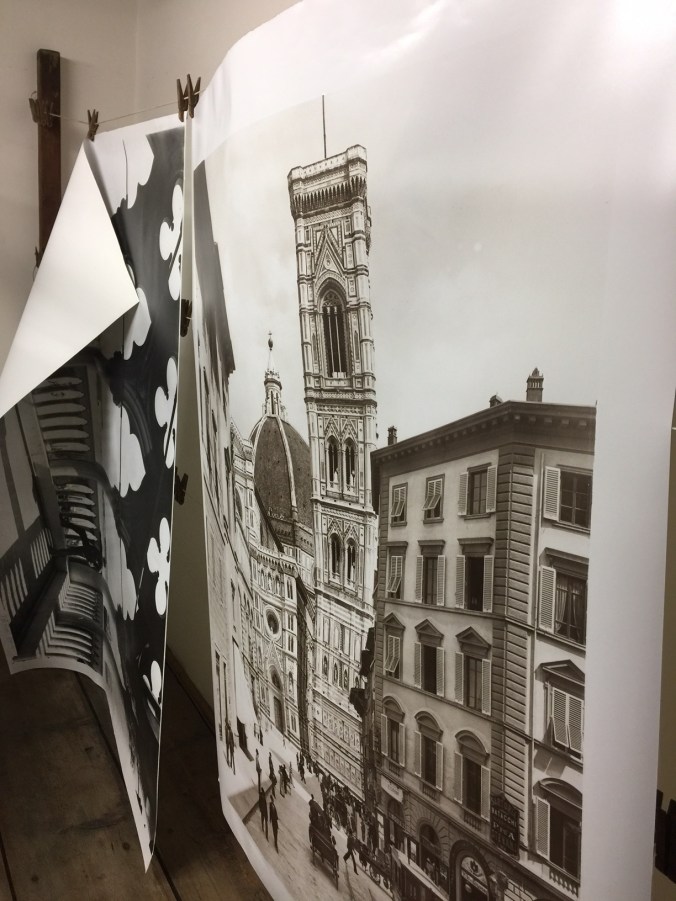
The following photo, of the Duomo today, shows the facade that was added to the building in the 1870s.
The reasons why Italian cemeteries are so interesting to visit
Wealthy middle-class Italians of the 19th century seldom established art collections as their counterparts did in Britain and Germany. Their most conspicuous expenditure on visual art was on funerary sculpture, on the creation of vast, ornate, often beautiful monuments to deceased members of their families.
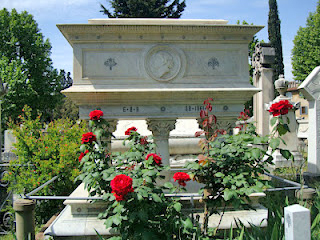 Tomb of Elizabeth Barrett Browning, Florence
The erection of these was traditionally a private matter even for public figures – the Venetian Republic did not provide them for its doges – except in the case of remote heroes such as Dante, who was awarded a dismal cenotaph in Florence’s Santa Croce in 1829.
The state concerned itself with public statues of heroic and exemplary men, works that could be seen not in a chapel or a cemetery but in the middle of a square.
Gilmour, David (2011-10-25). The Pursuit of Italy: A History of a Land, Its Regions, and Their Peoples (Kindle Locations). Farrar, Straus and Giroux. Kindle Edition.
San Miniato al Monte, a Gothic masterpiece
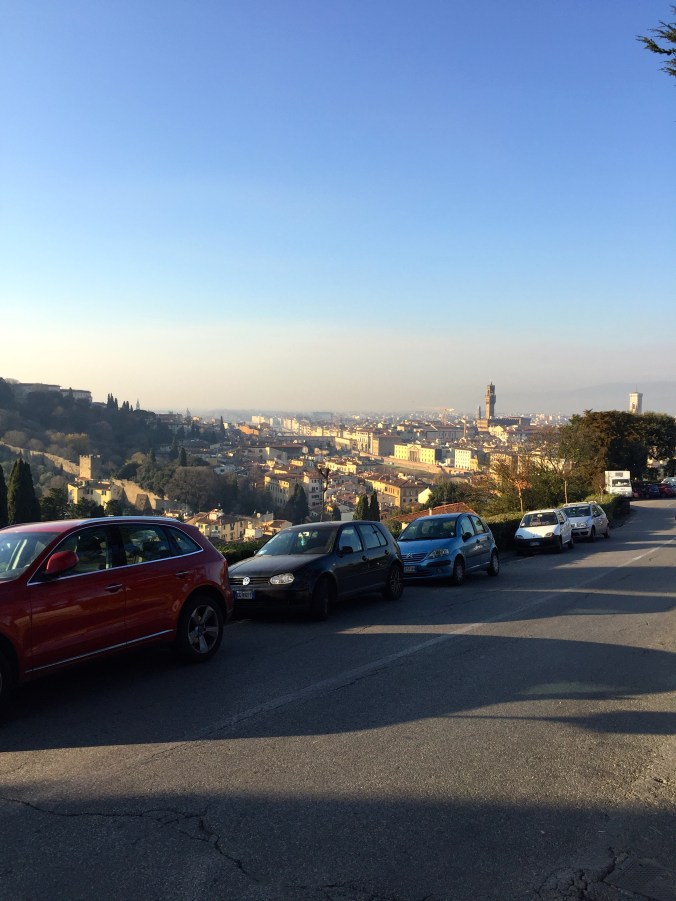
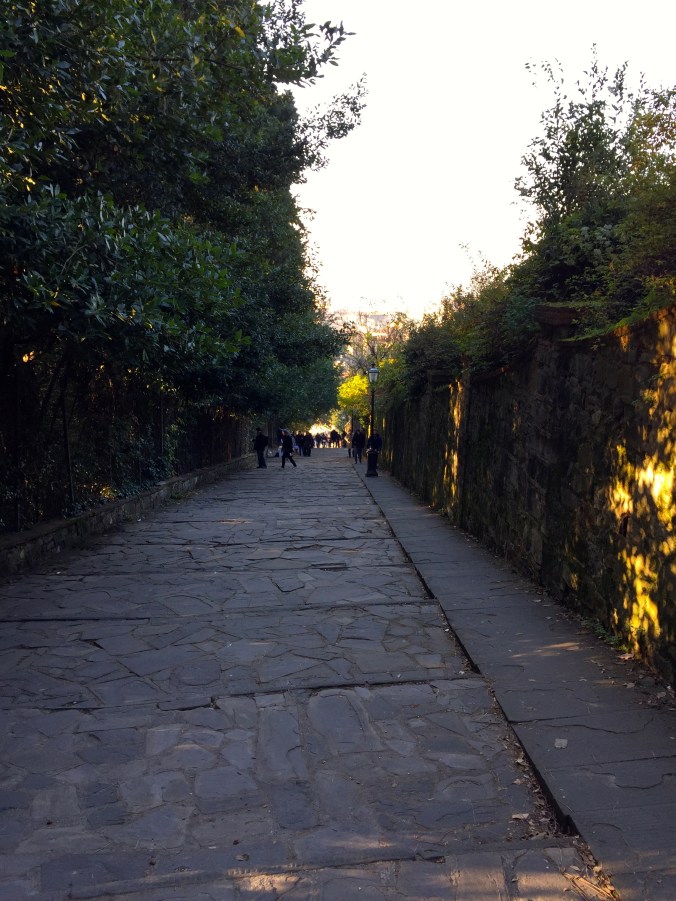
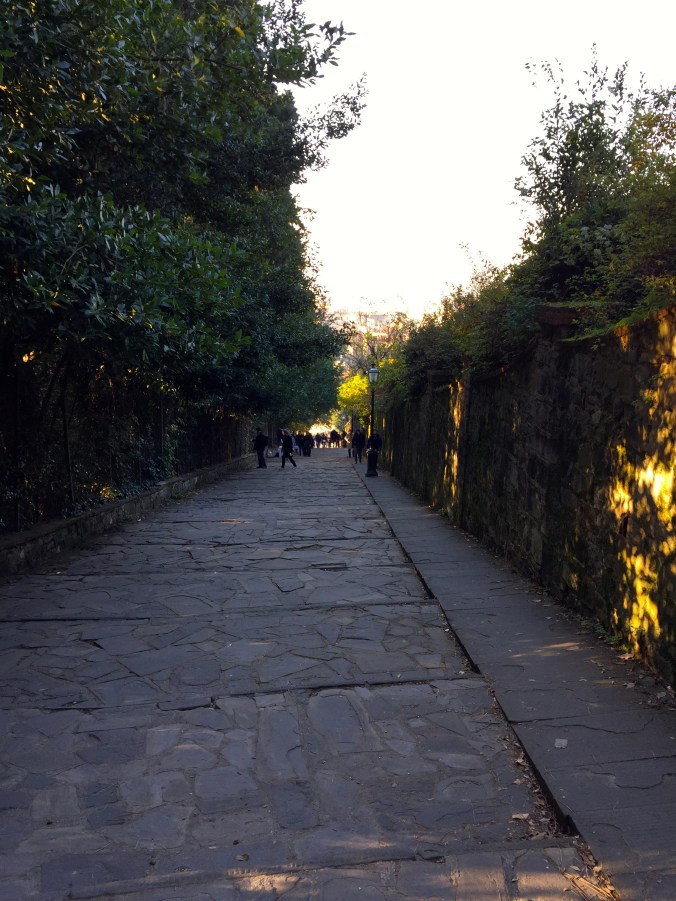
On one of the beautiful hills surrounding Florence sits this masterpiece of Italian Gothic architecture. It is perfect. Here are some pictures taken last winter. I’m a little late in getting posts written!
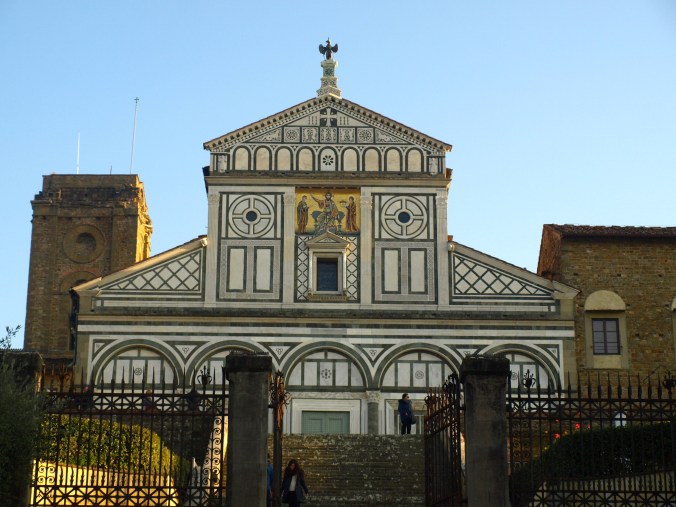
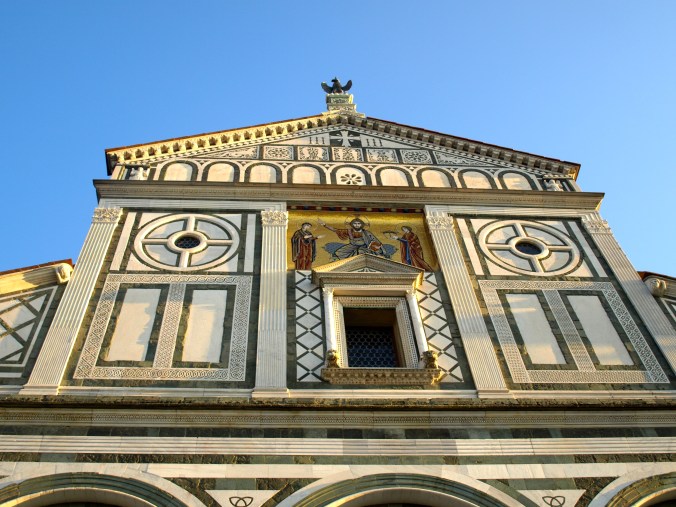
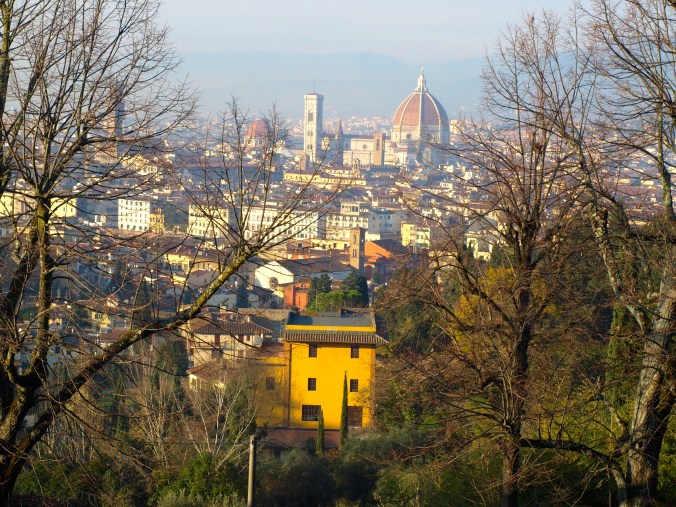
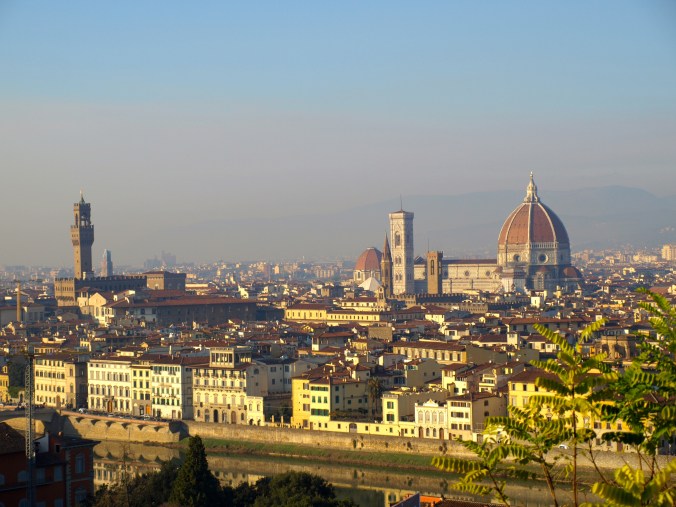
Not only is the hike to the church worthwhile, but the views of lovely Florence are breathtaking as well.
Did you know? Venezia
Sometimes I pick up the best information in the most off-hand ways. When I had a guided tour through the Alinari archives in Florence, I was shown this image dating to 1874 or earlier in Venice.

Look carefully at that gondola. According to my guide, gondolas were enclosed back in the day. Much more private than today, when anyone can see anybody in any gondola.
I would have liked to be in the olden days (but I am happy we have antibiotics now!).
Have you had your Aperol spritz yet today?
Grand Tour photo albums, a travel souvenir
If you were a young, aristocratic European man in the late 18th through 19th centuries, you might well have taken a Grand Tour. After finishing your formal education, you would take a kind of gap year (or year and a half), traveling to and through the finest European capitals, including, in Italy, cities such as Venice, Milan, Florence, Rome and Naples.

You might have asked Alinari Brothers or another similar firm to create an album for you, comprised of their photographs of your favorite places. The Fratelli Alinari archives in Florence have many of these albums in their archives, and I had the opportunity to look at one of them from 1874.
It begins with a hand-tooled red leather cover. The book measures roughly 20 x 30 inches.
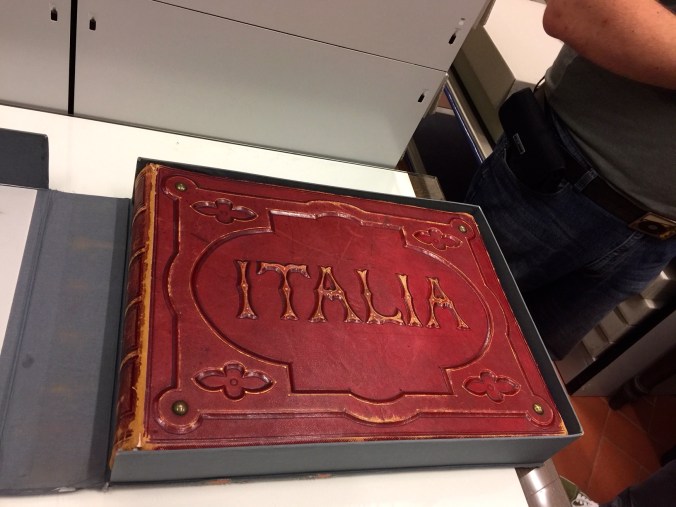
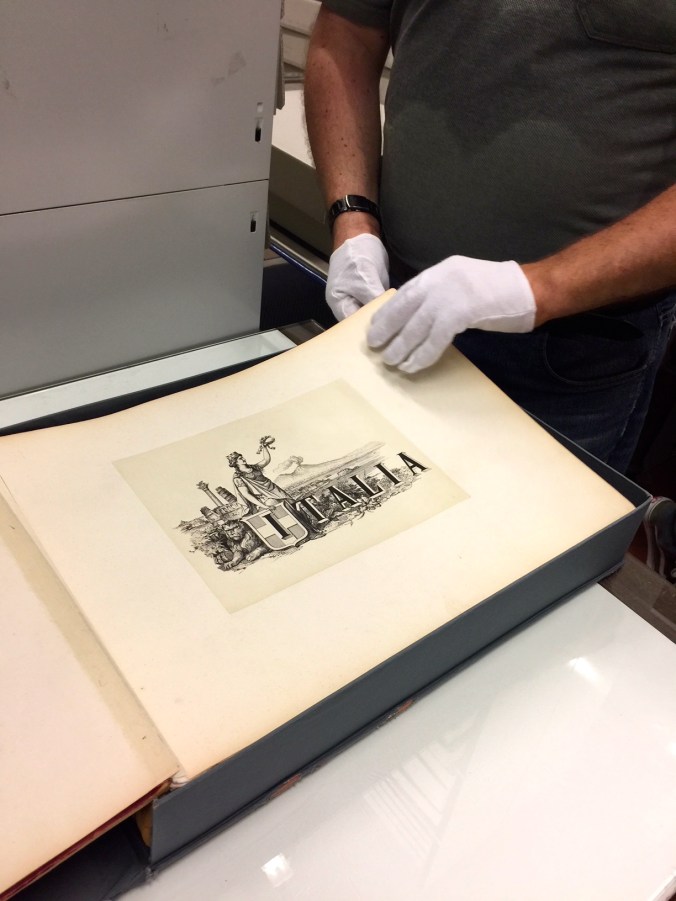
The Frontispiece reveals that this album was created in Naples, by the Giorgio Sommer firm.
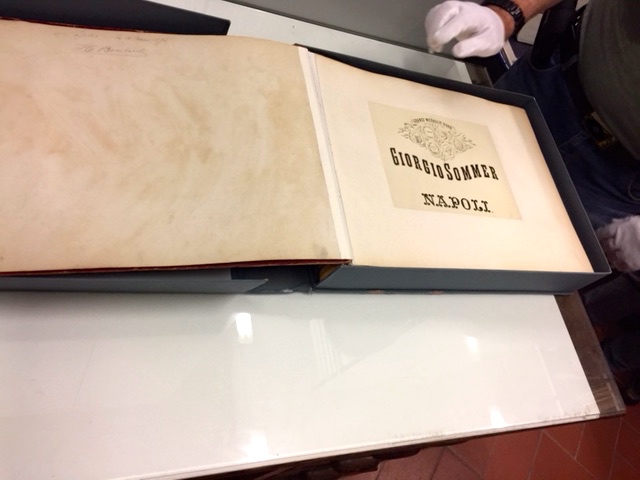

This particular album begins with photographs of Torino, Milano, and Venice, as here:
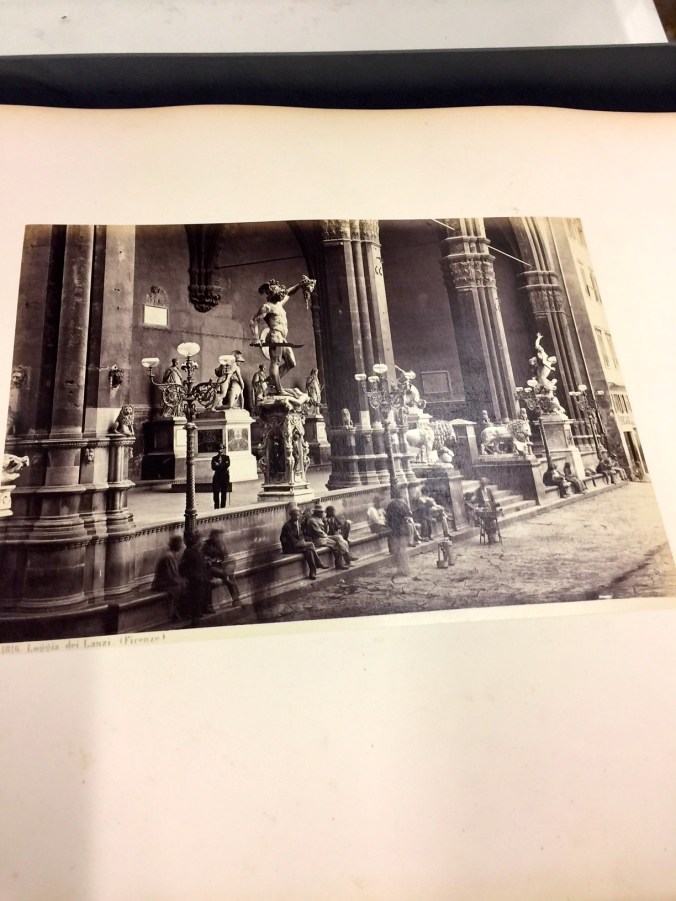
This album then moves to Firenze, and here are 3 images from this section of the book:
Next, the book moves on visually to Rome. Here is a picture of oxen pulling carts through the Roman forum.

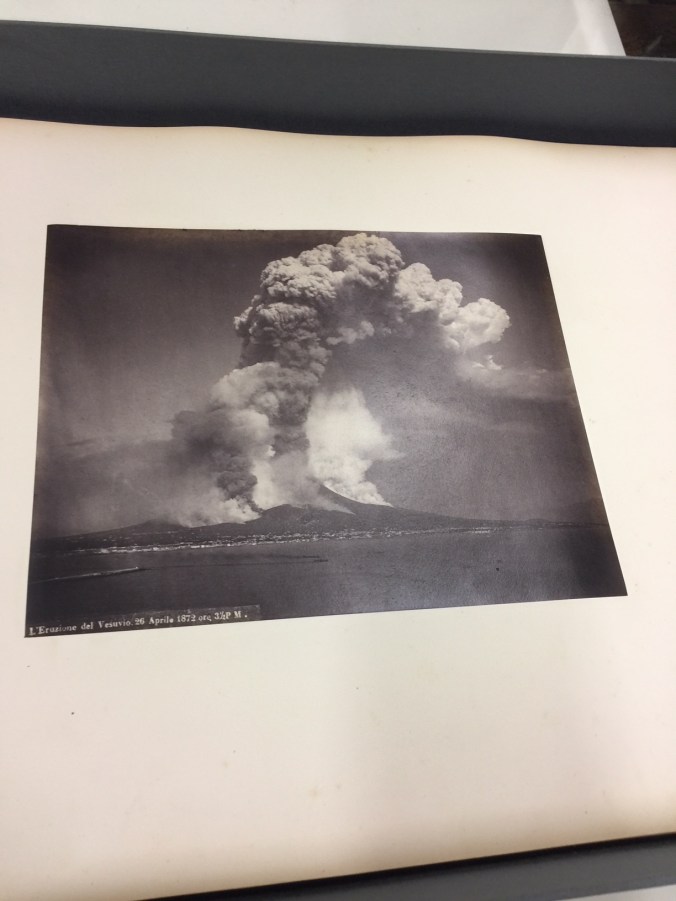
Then it was on to Naples. The following is a picture of Mt. Vesuvius erupting in 1872.
I could (and will) spend hours looking through these albums!
According to my guide at the Alinari archives, an album like this would have cost a young gentleman about $1500 in today’s money.
Brunelleschi’s amazing Florentine dome
Fratelli Alinari, Firenze, archivi fotografici
Today I had an amazing opportunity for art historians: I got to take a guided tour of the Fratelli Alinari headquarters here in Florence.
What a story.
What an archive.
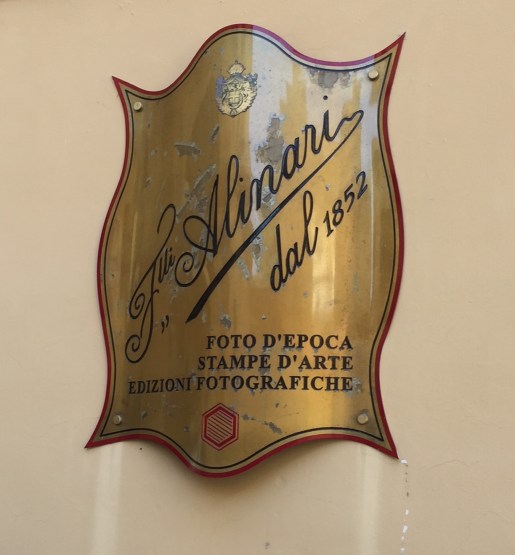
As you can read on the sign above, this photographic business began in Florence in 1852. What you might not know is that this firm was the world’s first of its kind.
When you consider that it was only in 1839 that that Louis-Jacques-Mandé Daguerre developed the first commercially viable photographic process, you understand that these Florentine brothers were astute businessmen, beginning their firm in 1852.
If you want a good source of info, go here: http://www.britishmuseum.org/research/search_the_collection_database/term_details.aspx?bioId=185116
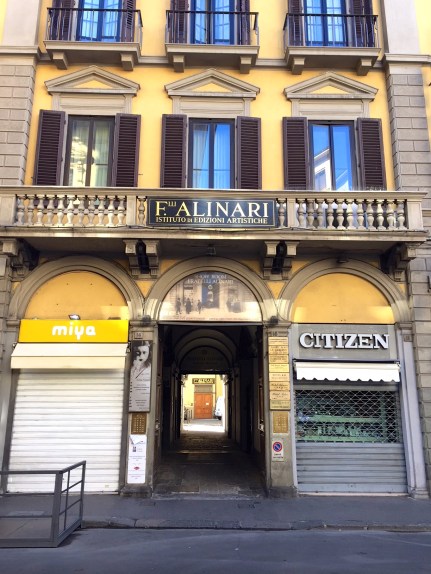
The shop is still in its original location in Florence, not far from the train station.

When you pass into the courtyard, you find the company’s bookshop, where you are offered an array of great posters and books, and also the actual entrance to the Alinari business.
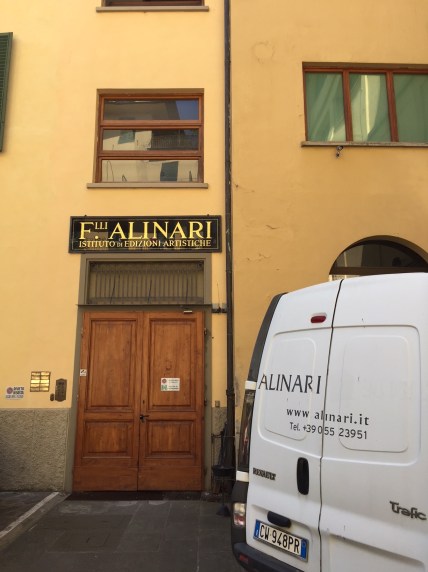
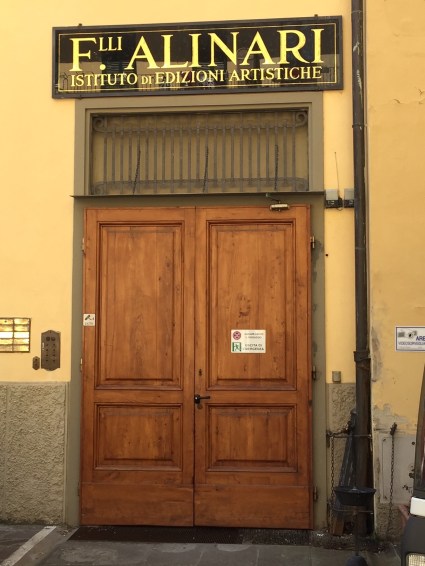
Our guide showed my group some of the earliest cameras ever made and described the methods used to make glass plates.


He also showed us some of the rooms where the vast archives are kept, including rooms where the hundreds of thousands of glass plates are stored.
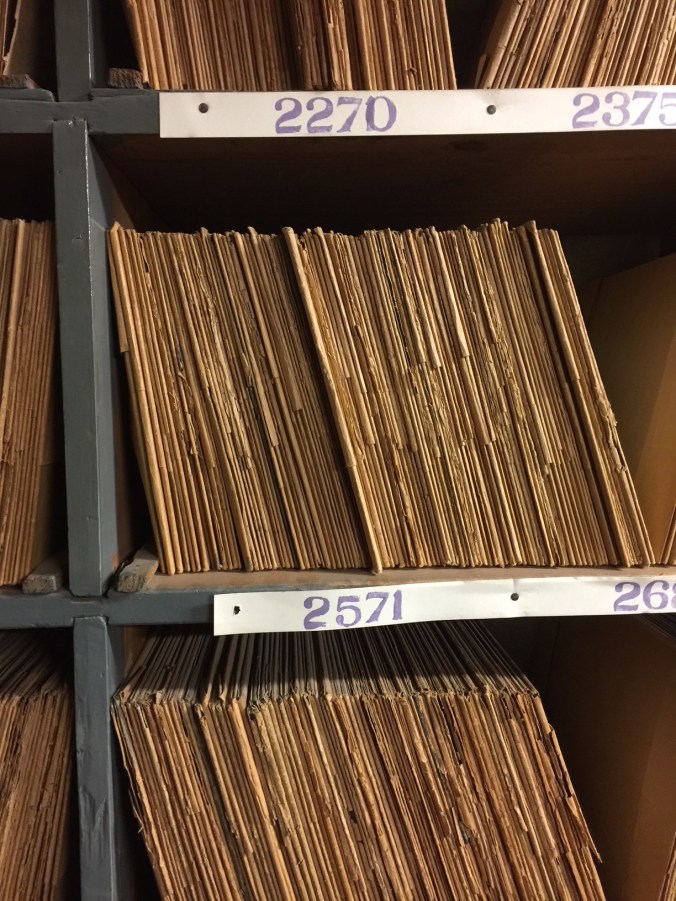
There used to be a museum of the Alinari photographs, but according to Google Maps, it is permanently closed. Fortunately, the online archives are vast.
The Alinari firm was the first to be entrusted with photographing some of the world’s finest collections of art, including the Vatican and the Louvre.
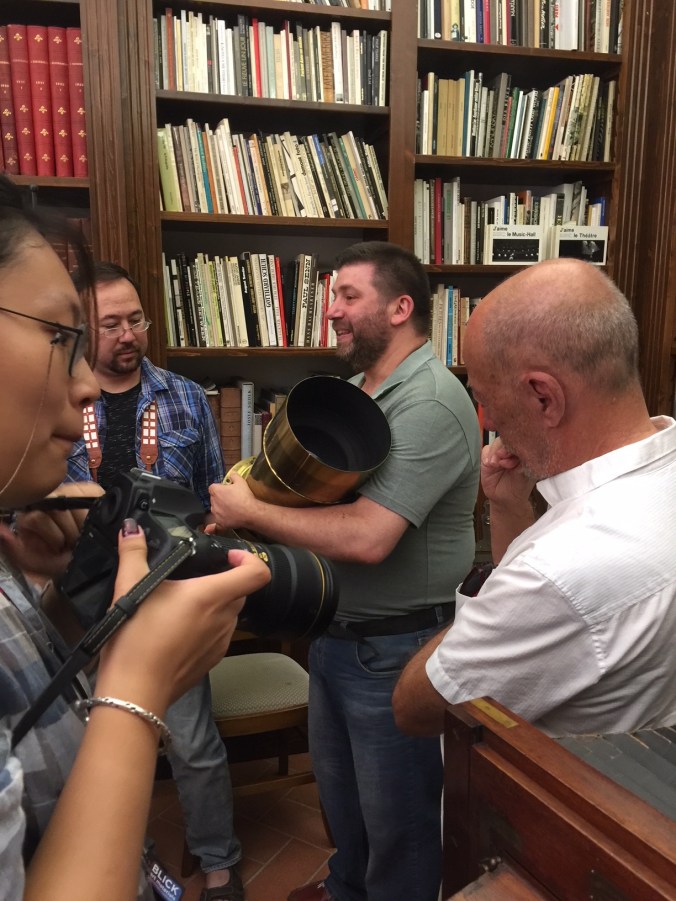
The large object our guide (in green shirt) is showing us was the lens that Alinari built in the 19th century to photograph the Sistine Chapel ceiling. Very impressive.
Elephants in Florence!
Yes, you read that right! This vintage photo (credit to Facebook page Vecchia Firenze Mia) shows 6 or so elephants aligned in Piazza Independenza around 1960. Poor elephants.
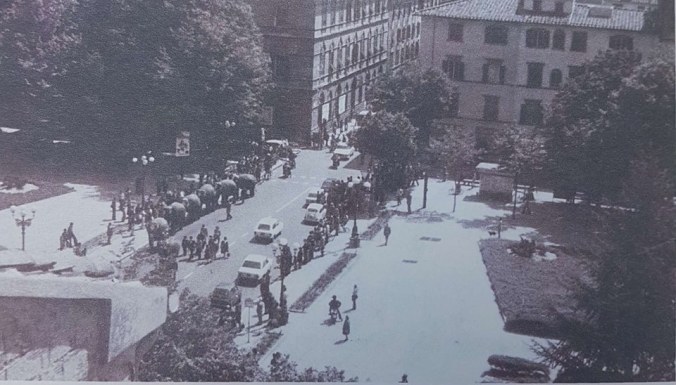
Anni 60. Elefanti di un circo transitano in Piazza Indipendenza


You must be logged in to post a comment.