Last night there were fireworks in Florence. Something was definitely up!

And that’s because today, March 25, is the date marking the beginning of the new year according to Florentine tradition. The city commemorates the occasion with a major parade which begins at the Palazzo Vecchio and makes a pilgrimage to the Santissima Annunziata. That church is important because of it houses a medieval fresco of the Annunciation, which is believed (by some people at least!) to have been partially painted by angels.
The fresco and the church of Santissima Annunziata (the Most Holy Annunciation) has always been the centerpiece of the Florence’s New Year festivities in late March. The fresco can still be viewed on the inner wall to the left of the entrance.
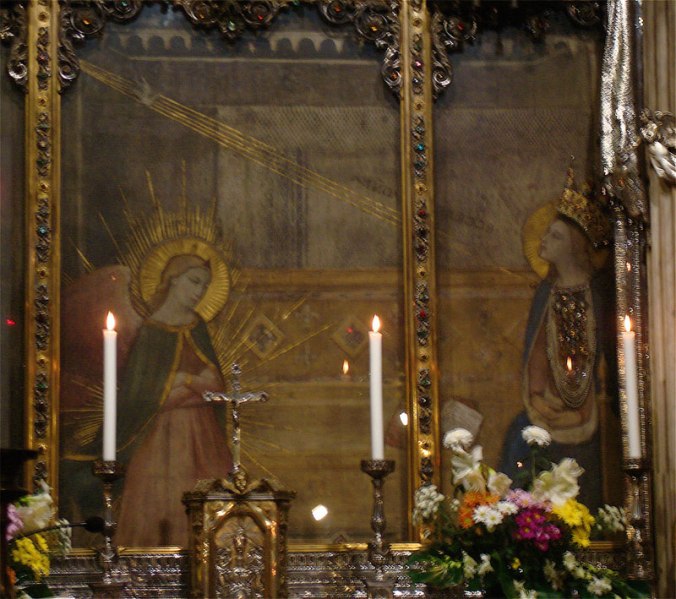
The story goes that the artist commissioned to paint the Annunciation fell asleep after completing all but the face of the Virgin Mary. Upon his awakening, he found a completed, beautiful blonde Madonna – angelic masters had finished the fresco for him.
From 1250 to 1750, the people of Florence gathered in the church of SS Annunziata to welcome the arrival of spring and to officially celebrate the Annunciation, or the moment when the Angel Gabriel told Mary that she would be the mother of Christ. March 25 of course is exactly 9 months before Christmas, when the Christ child was born.
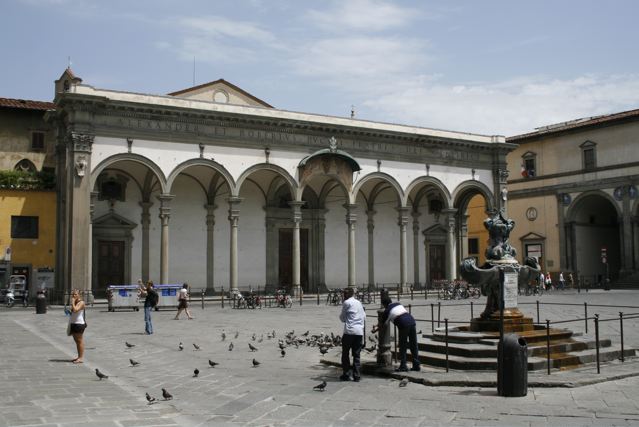
In order to celebrate the event, the municipality of Firenze organizes a parade with traditional costumes, music and flag-wavers. The historical procession (called the corteo storico) of the Florentine Republic, starts around 2:45 pm at the palace of the Palagio di Parte Guelfa, heading toward the Basilica SS. Annunziata.

Florentines were so devoted to the Madonna that until 1750, they refused to accept the Gregorian calendar year that begins on January 1. This devotion remains a part of the culture and was celebrated again today.






 https://www.thelocal.it/20180316/remains-of-ancient-port-discovered-under-naples-seafront?utm_source=dlvr.it&utm_medium=twitter

 get back, lauretta!
You must be logged in to post a comment.