
A portrait of present-day Florence in a few minutes
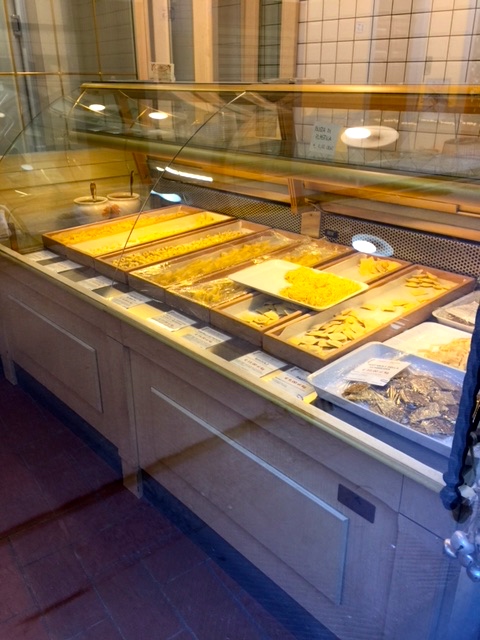
Pasta fresca

Carrara marble quarries
The blog post below is a good one on the subject of the Carrara marble quarries. If you would like to see the pictures, you can find the post here: https://livingwithabroadintuscany.blogspot.it/2012/04/going-inside-marble-mountains-of.html
| Everybody who drives or takes the train along the west coast of Italy has seen them from a distance. Anybody who has read The Agony and the Ecstasy has read about them. The white marble mountains of Carrara are interesting from afar—many people mistake the shining white marble for snow—but up close they are truly amazing. And there is no better way to see them than by going up the steep, unpaved roads in a 4×4 vehicle to drive right into the quarries, indeed right inside the mountains themselves. |
Lucy and I, along with friends Steve and Patti, have booked an excursion with Cave di Marmo Tours, which takes us on a three-hour excursion into the heart of the land where Michelangelo came to select the marble slabs he used to create his masterful sculptures. The mountains above Carrara are basically one huge block of crystallized calcium carbonate, which originated during the Jurassic era. Marble is created when limestone crystallizes under extreme pressure and heat. Limestone itself is formed from layer upon layer of sea shells. Tectonic action first buries the limestone, squeezing it until it crystallizes before thrusting it upward to form mountains.
Our German-Italian guide Heike fearlessly drives us up rugged, rain-rutted service roads overlooking the marble quarries, the city of Carrara and numerous small islands in the Mediterranean. The ride reminds us of Disneyland, with the added thrill of knowing that we are not on a secure track and that the scenery was originally created by the hand of God rather than man. As we bounce and skid first up and then down the steep slopes, Lucy tries to close her eyes and think about something else, but Heike keeps pointing out sights to see and takes pleasure in the knowledge that her tour is thrilling on a variety of levels.
We learn that the Romans discovered marble here in 176 BC, which meant they no longer had to import it from other countries. They built a port at Luni and roads into the mountains. Then they faced the puzzle of where to find strong workers willing to wield mallets and chisels and endure extreme weather conditions while working year-around in dusty quarries? No problem. They were rulers of most of Europe, so they just took some hearty northern Europeans as slaves and put them to work in the quarries. Heike says you can still see many light-haired, blue-eyed Italians in Carrara who are descendants of these early quarrymen.
The first blocks were taken from the mountains to the sea by slave power alone. Later came oxen, then trains. Now huge front-end loaders and dump trucks are used. All of the methods made use of wheels, and the city’s motto is “My strength is in the wheel.”
Harvesting techniques have also changed. Marble contains natural pressure fractures, and early workers used chisels and wooden wedges to widen the fractures and break off slabs. Later, explosives were used, but this had to be carefully done to avoid fracturing the slabs. Hand saws have also been employed.
Current techniques use drills and a type of chain saw incorporating industrial diamonds fastened to a flexible cable. Holes are drilled in the marble and the chain inserted in one end and pulled out the other. Then the cable is looped around a pulley powered by an electric motor and run for hours at a time until a clean cut is made. All the while, water is running in the hole to cool the chain and minimize the dust.
Much of the work is now done inside the mountains so as not to disturb the terrain, and we are able to go inside to observe the process up close. It is difficult to describe the scene in words, and photos don’t do it justice as well. The walls and ceiling are flat, though not uniformly so, as some support pillars remain. It reminds me of being inside a large cathedral, but instead of being built by adding marble slabs, it is what remains after removing slabs from the center. Moisture drips from the ceiling, and the floor is covered with a quarter inch of wet marble powder. The workers spend most of their time monitoring and repositioning the saws. It is dark, damp and dirty work, but I’m sure it would be a dream job for the first slaves forced to do everything by human strength alone.
The 188 quarries are all privately owned by very wealthy families, Heike says. The country should be earning more income from this lucrative business, but the quarry owners still benefit from an ancient agreement they reached with the duchy of Modena. They agreed to provide Modena with the choicest marble, and the duchy agreed not to tax them. I’m not sure how this agreement survived to the modern age, but Heike suggests it has much to do with money, politics and corruption, which Italy has long been famous for, so we are inclined to believe her.
Toward the end of the tour, we travel through an old railway tunnel, and I have read that this tunnel is 400 meters long, 400 meters above sea level and has 400 meters of stone above it.
Off the beaten path in Florence
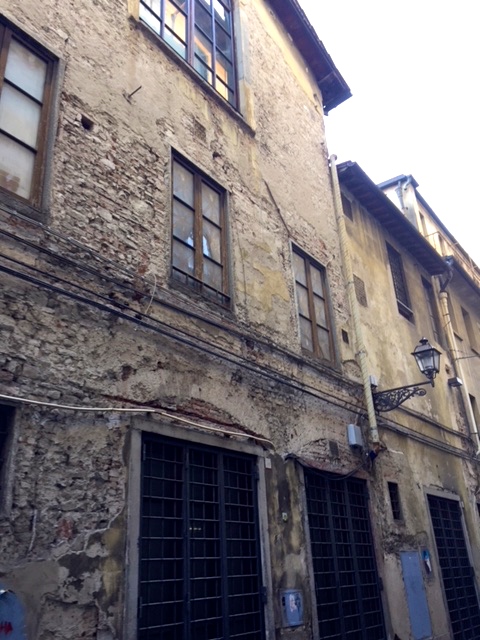
Whenever possible, I choose the less traveled roads as I traverse this fascinating city. Without a car or a bike–or even a Vespa–I walk a lot. Every day. Every place. And, I love it.
Recently I wandered down a street that is less than 5 minutes from the touristic center of Florence, where the streets are well washed and no litter survives a few hours, let alone a day.
And this old street, with its decrepit buildings, spoke to me. Does it speak to you?


L’italia al gelo (frosty Italy)
Today in Rome (no snow in Florence):

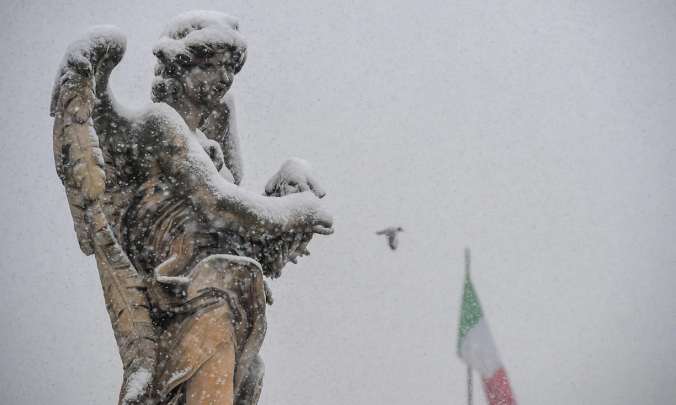
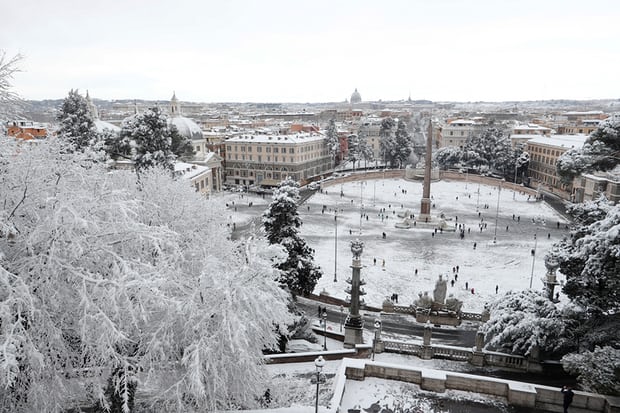
Oggi a roma!
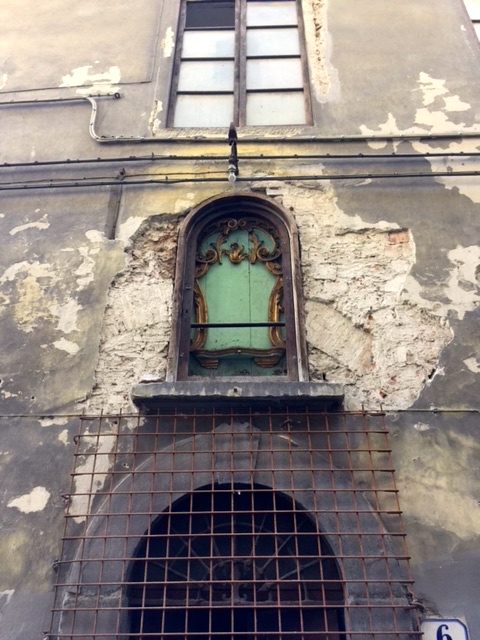
Street shrines in Florence
They are everywhere! This one is much better cared for than most of them. I love the random nature of this picture; I shot it through a windshield of a motorcycle, not even realizing it at the time!


Un occasione a praticate il vostro italiano ed guardate la città allo stesso tempo
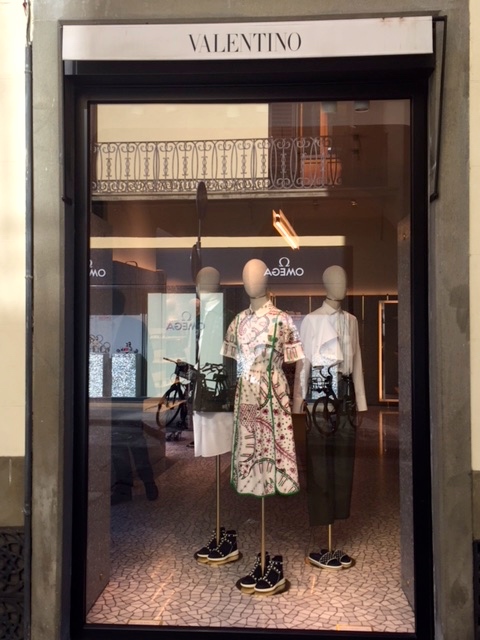
Via de’ Tornabuoni, Firenze
An occasional window shopping expedition along Florence’s “Rodeo Drive” is fun from time to time.
Valentino objets below:

Ferragamo next:
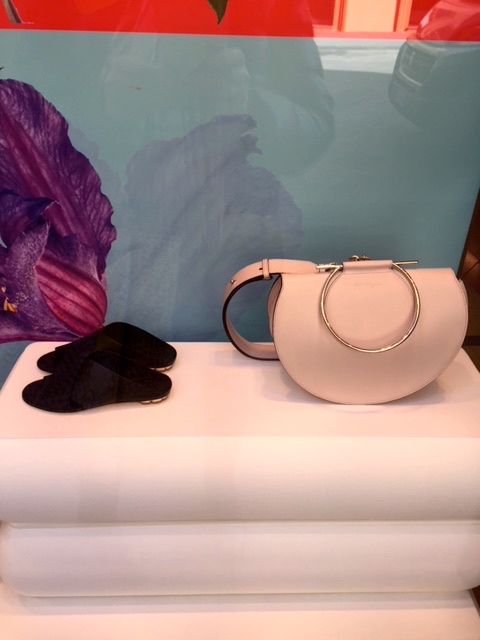
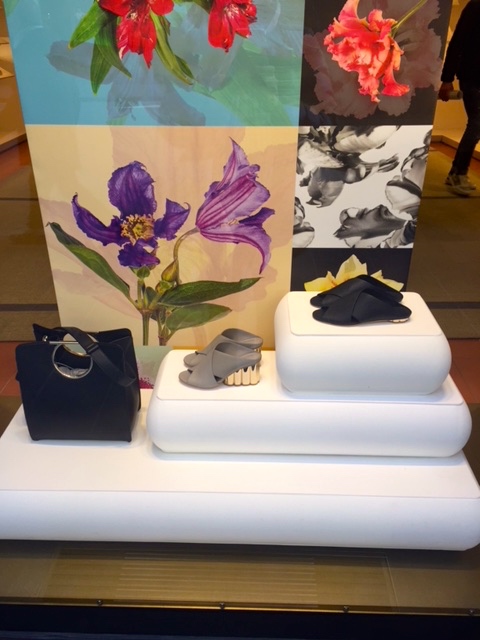
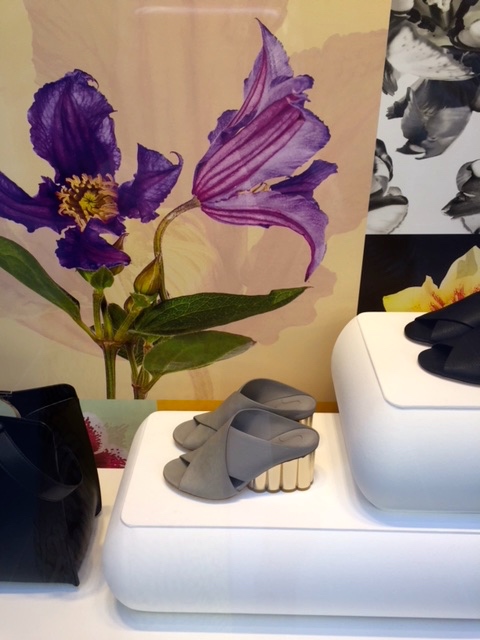

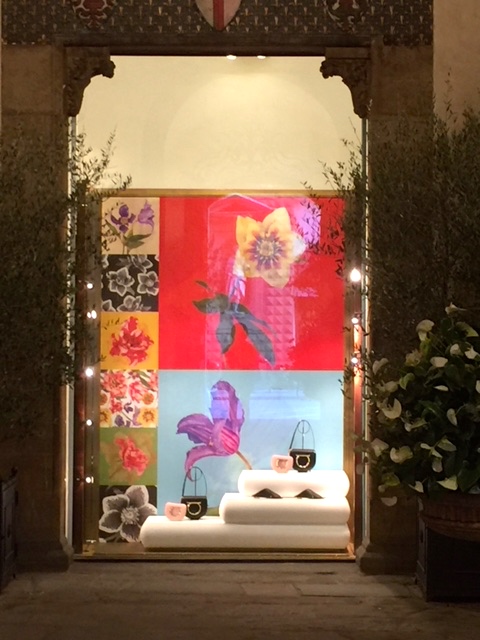
The Ferragamo shop is housed inside a Renaissance palazzo. The building itself is more interesting to me than the goods for sale.
 get back, lauretta!
You must be logged in to post a comment.