Italian coffee magic

We know that coffee culture is supreme in Italy. I just came across this funny take on a comparison of Italian with French coffee:
ASK HIM FOR A CAFE AU LAIT ONLY IF YOU WOKE UP WITH HIM
It’s almost impossible to find a drinkable cup of coffee in Paris: the coffee here is among the worst I’ve ever had. Before Francophiles race to chime in about how bad American coffee is, yes, I agree with you. There’s a lot of bad coffee in America. The difference is there’s the possibility of finding a good cup in the States.
Plus North Americans have an excuse: we don’t share a border with Italy, that magical kingdom of coffee, where each tiny sip is a multisensory explosion of flavor.
From the moment the barman puts that little cup under the spigot, until I polish off the last of the syrupy espresso that trickles out of the tiny cup, my mind can’t concentrate on anything but that intense dose of masterfully extracted coffee. Ah—il espresso perfetto.
In a country where there’s such an emphasis on fine dining, whose good food is celebrated not just here, but around the world, it’s stupefying why Parisian coffee is so vile that fed-up French food writer Sophie Brissard described it as “donkey piss.” The only good coffee I’ve found in Paris has been in places run by Italians. To them, serving bad coffee would be an insult to their entire culture. When I asked the woman at the Italian tourism office how she was able to live in Paris and subsist on the coffee served here, she looked as if I’d made her queasy just by mentioning it. “I will not drink coffee in France,” she responded. “I only drink tea.”
Lebovitz, David. The Sweet Life in Paris: (pp. 165-166). Crown/Archetype. Kindle Edition.
Buon Natale da Firenze
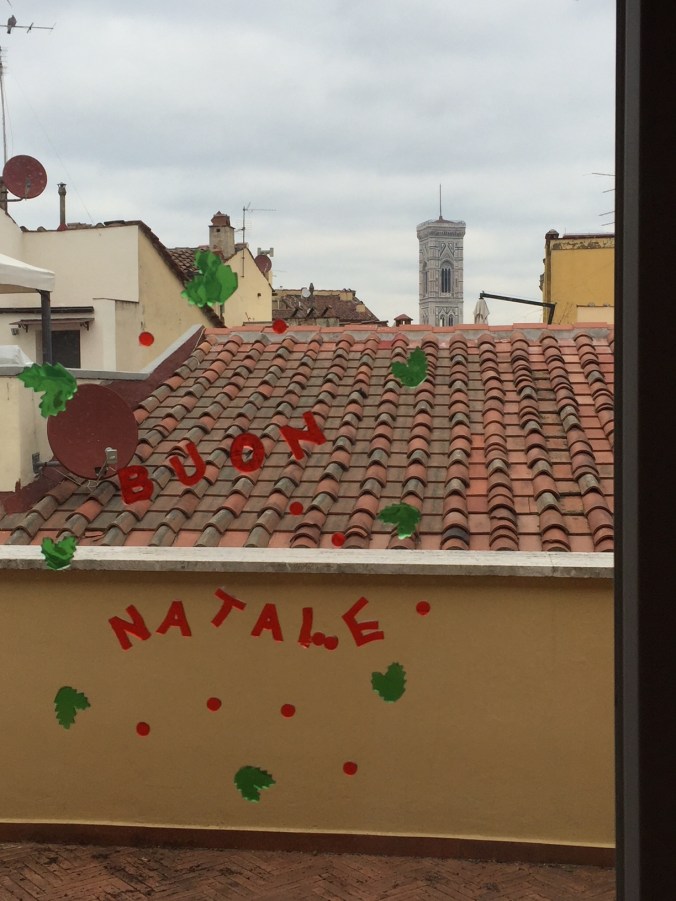 From my kitchen window (with Giotto’s Campanile in the background) to your’s, Merry Christmas!
Should Michelangelo’s David be moved to an earthquake proof location?
Let’s ask the director of The Accademia, Cecilie Hollberg, where the statue stands today. The following is an interview conducted by Helen Farrell of The Florentine:

Cecilie Hollberg | Ph. Leo Cardini
Helen Farrell: Earlier this year, an architect from Padua made the international headlines with an idea to move the David to an earthquake-proof museum. At what stage is the Accademia in the creation of seismic protection for the world’s most famous statue?
Cecilie Hollberg: First of all, this architect has been publishing things in newspapers and magazines since 2008; there are plenty of experts who openly give us advice without being familiar with our site, or without having the experience or capabilities needed to understand what can be done here. Building an underground bunker in a city like Florence means moving the David, which is enough to show us they really haven’t thought this through. There’s all this chatter in a local newspaper about moving it in the front of the new opera house. Everyone’s been asking about it. This statue is fragile, and that’s why it gets everyone so agitated. Yet, at the same time, everyone’s ready to move it all over the place—it’s a very strange situation. In any case, we’ve been working on this for years. The Ministry conducted many investigations on the building, the structure itself, and the possibilities that may arise, and since I’ve been here, we’ve been closely monitoring the statue. It’s cleaned every two months, financed by the Friends of Florence, and with every cleaning we are able to monitor the statue very closely. Every weak or fragile spot is regularly scrutinized time and time again so if there were any changes we would see them immediately. This aspect is something that’s always been under control. But, and I’m going to open a parenthesis here, there are some real absurdities out there. There was someone who sustained that the heat makes marble melt: it’s absurd. Marble changes its state of aggregation at 900 degrees centigrade.
HF: He’ll be fine then, even with our summers…
CH: There are all of these things that end up in the press because these poor souls want to link their name to Michelangelo’s David, hoping to end up in newspapers. Of course, they do end up in newspapers and we have to waste our time explaining to them that, in reality, marble does not melt. In addition, we created a framework agreement with DICEA, the University of Florence Department of Civil Engineering and Environment, in which we continue the already initiated investigation on the structure of the building. The structure is what’s important in the event of any sort of {seismic} movement. The base that holds the statue and blocks it from falling is entirely useless if the ceiling comes down on it. Thus, we made this framework agreement and the inspection will follow shortly, the only thing missing before we can decide what to do. I have been in contact with many institutions; I’ve been to the U.S. to the Getty Institute where there are several earthquake experts. Yet the reality remains that no one has ever worked with a statue like the David. All of these platforms are just fine for structures from 2 to 2.5 metres, but the David weighs 5,660 kilos and stands 5.17 meters tall. No one has ever experimented on a statue of this kind. They’ve experimented with the Riace Bronzes, but they’re much smaller and bronze is an entirely different material—it’s more flexible than marble. It’s an entirely different conversation, and so we can’t adapt the research done for that kind of model and apply it to an icon of the Renaissance. We really have to think about what we’re doing. The last thing I need is this group of charlatans coming to me with advice without knowing anything about the situation.
You can read the entire interview here:
http://www.theflorentine.net/art-culture/2017/10/a-conversation-with-cecilie-hollberg/
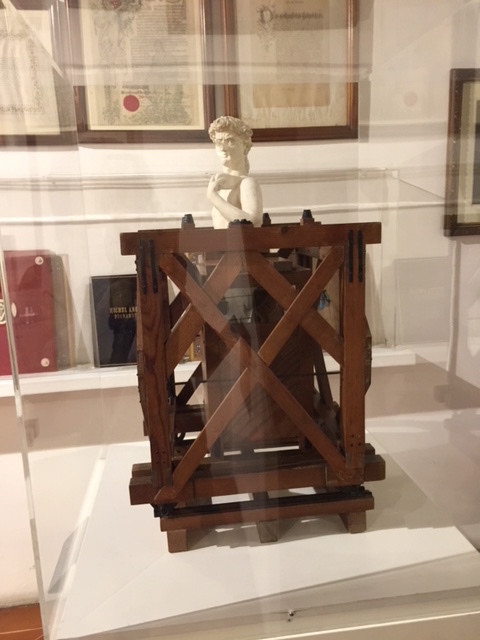
Incidentally, this week I visited the Casa Buonarroti, where a scale model of the apparatus that was used to move the David from Michelangelo’s studio to its original placement outside the Palazzo Vecchio (the original has since been moved to the Academia) is prominently on display. Here’s a photo of that model:

14th century Florentine textile exhibit

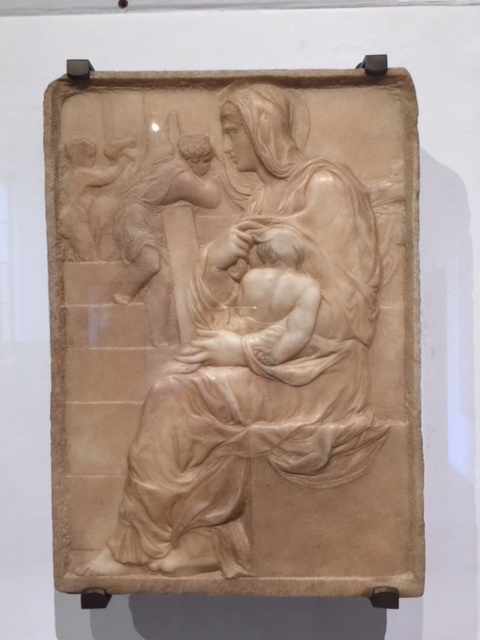
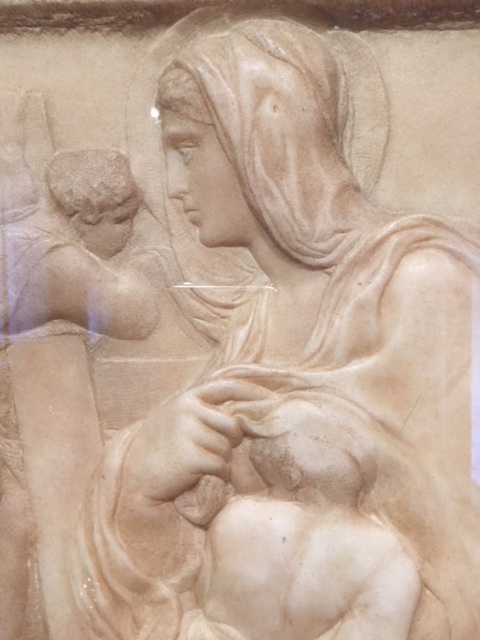
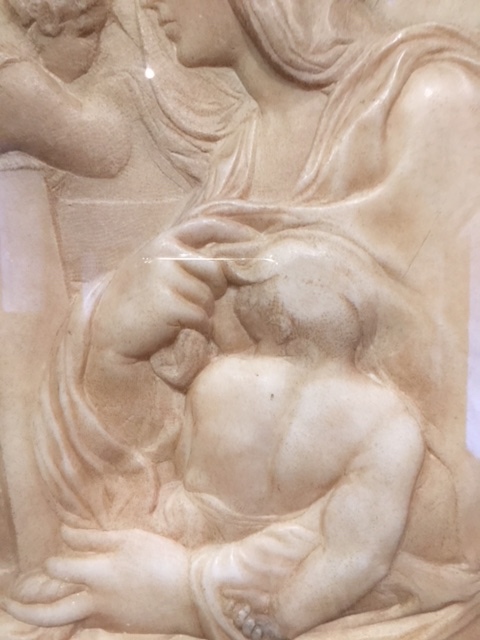
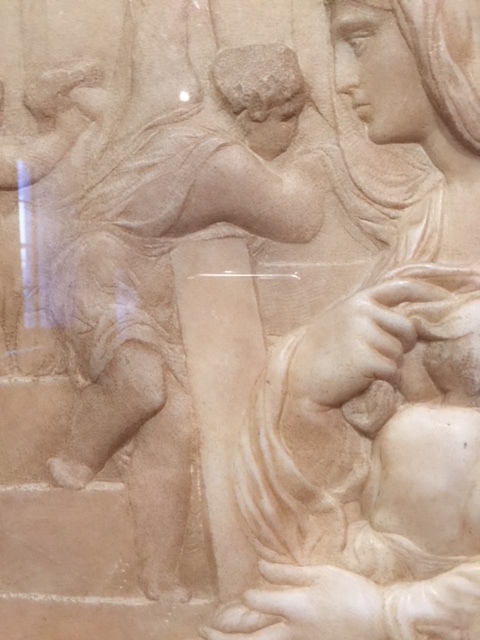
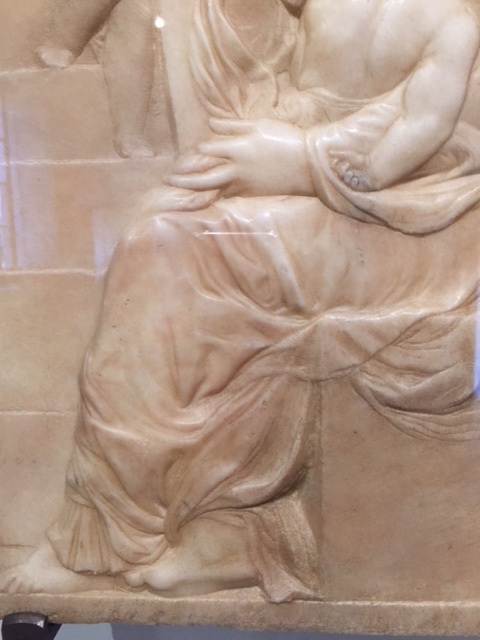
Michelangelo’s Madonna of the Stairs
I’ve enjoyed a week of Italian masterpieces, starting at the Uffizi Gallery last weekend.
Yesterday I visited the Casa Buonarroti in Florence, where I had Michelangelo’s incomparable Madonna of the Stairs to myself. Awesome.
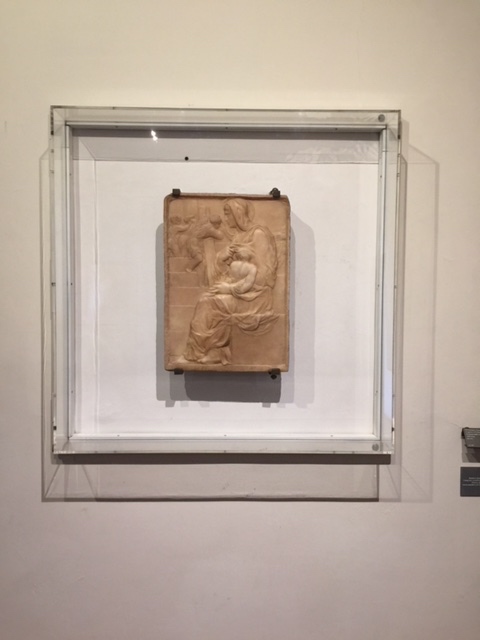
I’ve loved this sculpture since I first learned of it in an art history course. The artist could paint or sculpt anything, in any style. He could do a deep bas-relief and he could do the shallowest of carvings, achieving truly awesome results within the depth of a piece of paper.

Winter (solstice) and Vivaldi

What to wear for Christmas
The awesome riches of Venice in late 16th century

Giovanni Botero (1544—1617), an eye-witness, wrote of Venice:
Not only is there bread in abundance; there is also an incalculable wealth of all goods and delicacies, which are brought hither, not only by the rivers and canals of the mainland, but also by the sea, from as far afield as Egypt, Syria, the Archipelago, Constantinople and the Black Sea.
To Venice come the oils of Apulia, the saffrons of the Abruzzo, the malmseys of Crete, the raisins of Zante, the cinnamon and pepper of the Indies, the carpets of Alexandria, the sugar of Cyprus, the dates of Palestine, the silk, wax and ashes of Syria, the cordovans of the Morea, the leathers, moronelle, and caviar of Caffa.
There is such a variety of things here, pertaining both to man’s well-being and to his pleasure, that, just as Italy is a compendium of all Europe, because all the things scattered through the other parts are happily concentrated in her, even so Venice may be called a summary of the universe, because there is nothing originating in any far-off country but it is found in abundance in this city.
The Arabs say that, if the world were a ring, then Ormuz, by reason of the immeasurable wealth that is brought thither from every quarter, would be the jewel in it.
The same can be said of Venice, but with much greater truth, for she not only equals Ormuz in the variety of all merchandise and the plenty of all goods, but surpasses her in the splendor of her buildings, in the extent of her empire, and, indeed in everything else that derives from the industry and providence of men.
Scotti, Dom Paschal. Galileo Revisited: The Galileo Affair in Context (p. 28). Ignatius Press. Kindle Edition.
Uffizi masterpiece: Duccio’s Rucellai Madonna
As Christians around the world prepare to celebrate the birth of Jesus on December 25, it seems like the right time to talk about some Uffizi masterworks.
Let’s start at the beginning of the Italian Renaissance with Duccio’s break-taking Rucellai Madonna. This large painting shares a room with two other altarpieces by contemporary artists, whom I’ll discuss in upcoming posts.
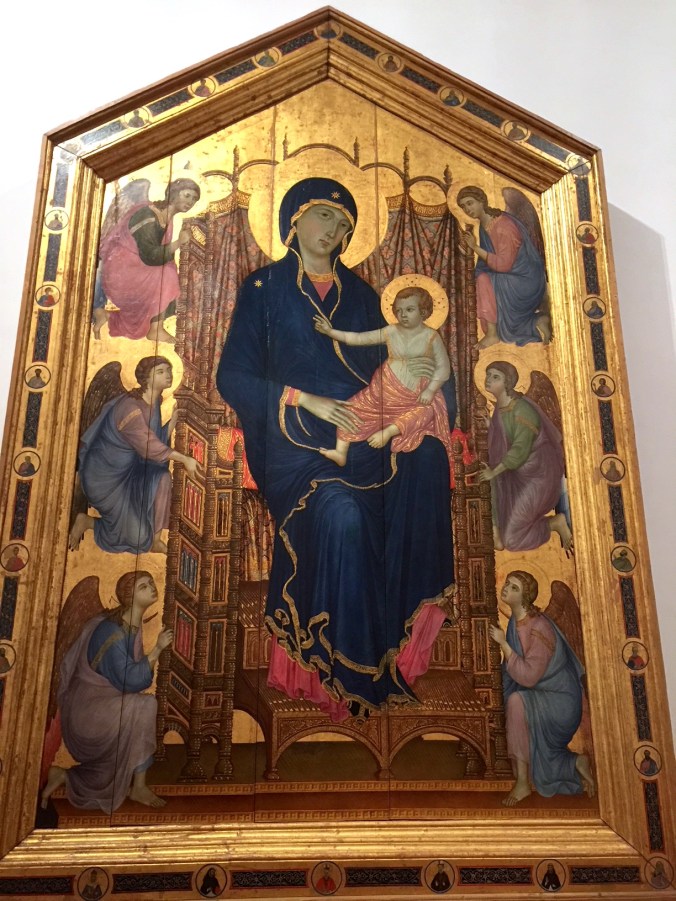
Duccio, The Rucellai Madonna, 1285-86, tempera on panel, 177″ x 114″
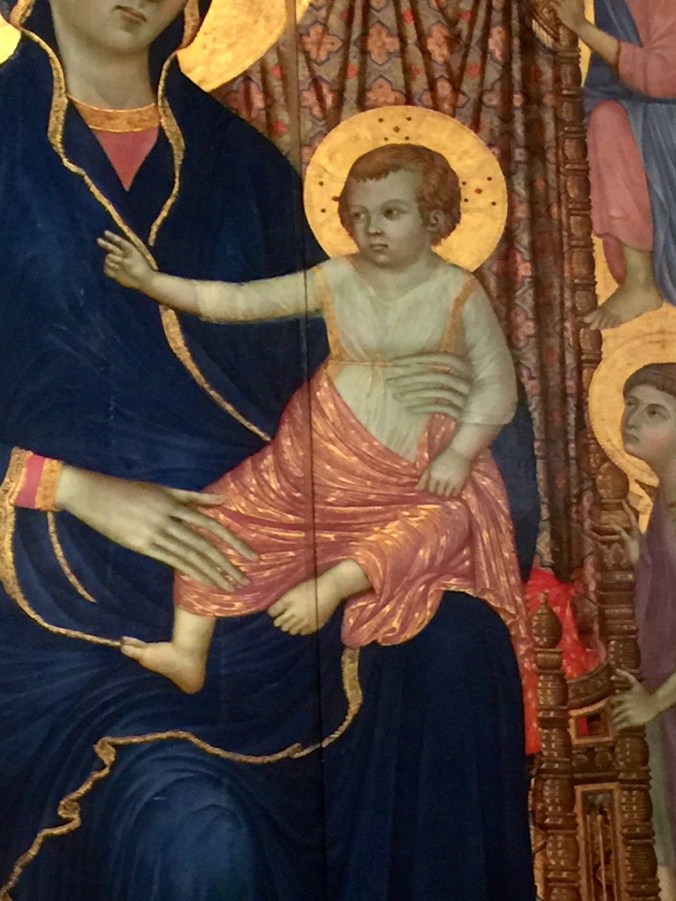
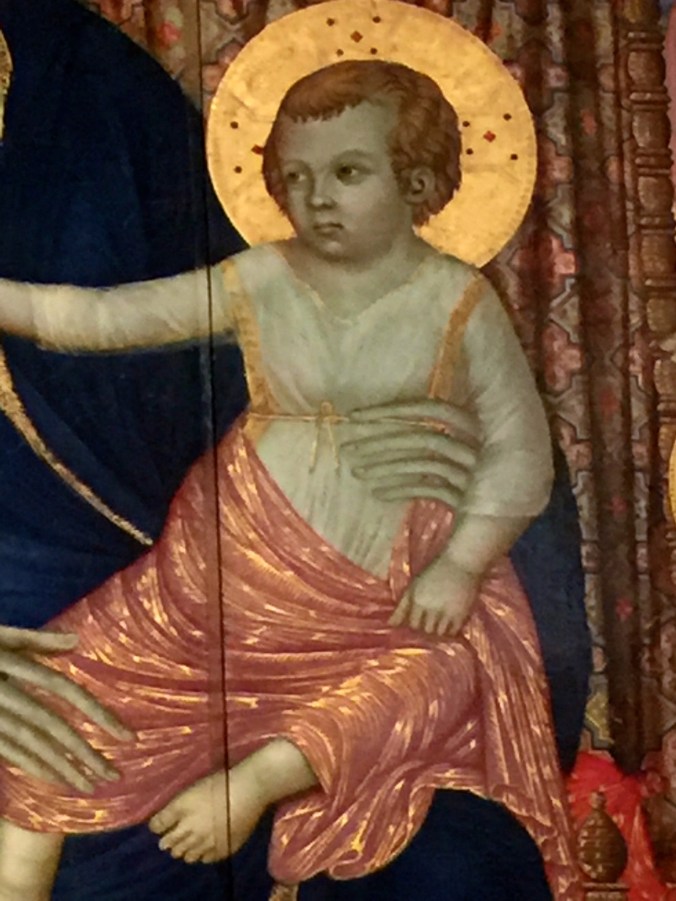
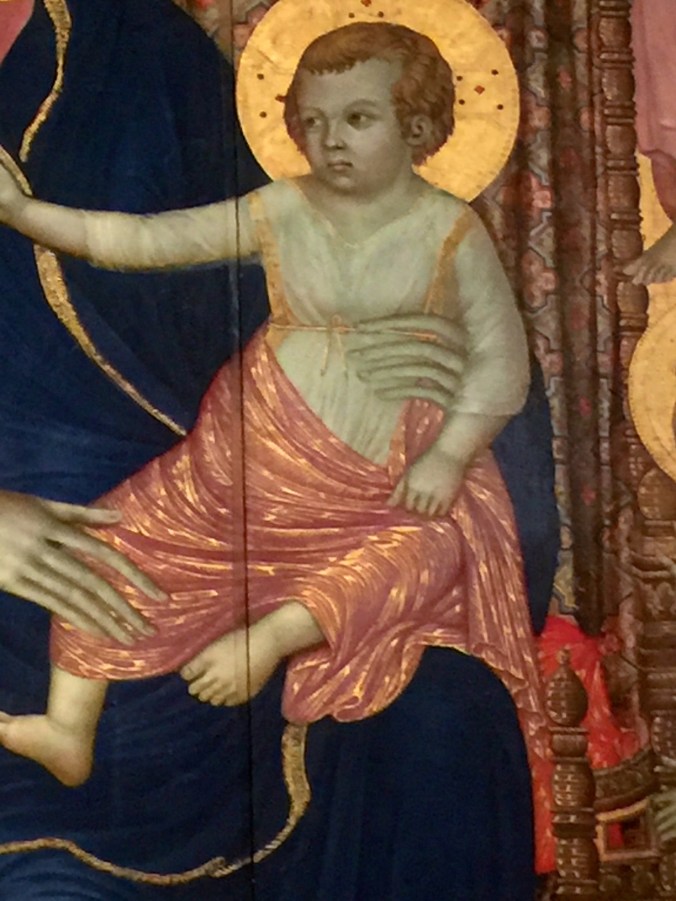
I could wax on about this gorgeous work of art, but instead I’ll direct you to the Khan Academy instead:
https://cdn.kastatic.org/KA-youtube-converted/1JL5ZR-ocOs.mp4/1JL5ZR-ocOs.mp4#t=0
 get back, lauretta!
You must be logged in to post a comment.