Wrapping purchases

The time and care expended by shop assistants in Italy on the wrapping of gifts can be astonishing.

GetImage.ashx

The cost of the purchase is irrelevant. The same care will be taken in wrapping a discounted paperback book or a pair of diamond earrings.

26057_XXX_v1

Blithely indifferent to the queue building up behind you, the assistant will patiently fold over corners to form perfect isosceles triangles, use different-colored (but always exquisitely contrasting) wrapping paper to create diagonal stripes across the package, and then tie it with a length of ribbon that is made to end in delicate spirals.

The finished package will then be handed to you with aplomb.

Hooper, John. The Italians (pp. 77-78). Penguin Publishing Group. Kindle Edition.

Opera: the quintessential Italian art form

IMG_5559

If Pirandello is the archetypal Italian writer, then opera— packed with searing emotion expressed without reserve— is the quintessential Italian art form. Its origins, in the late sixteenth century, are exclusively Italian.

It grew out of the discussions and experiments of the Camerata, a group of Florentine writers, musicians and intellectuals whose main aim was to revive the blend of words and music that was known to have existed in classical Greek drama.

An Italian, Jacopo Peri, composed the earliest recorded opera, Dafne, which was first performed in 1598. And it was in an Italian city, Venice, that the first public opera house, the Teatro San Cassiano, was opened in 1637.


Hooper, John. The Italians (p. 66). Penguin Publishing Group. Kindle Edition.

Update on Piazza della Repubblica arch inscription

IMG_5639

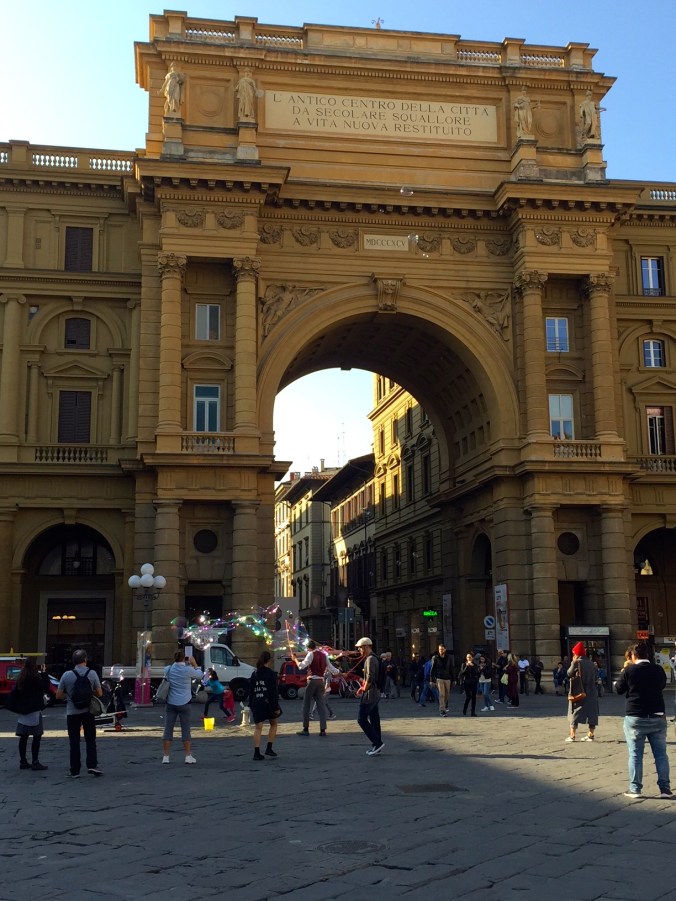
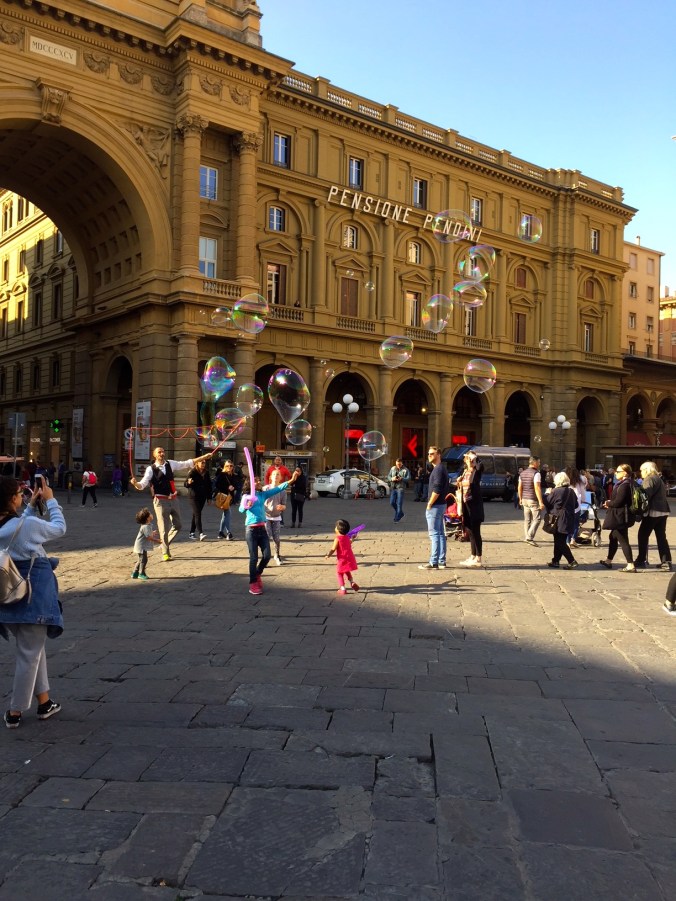
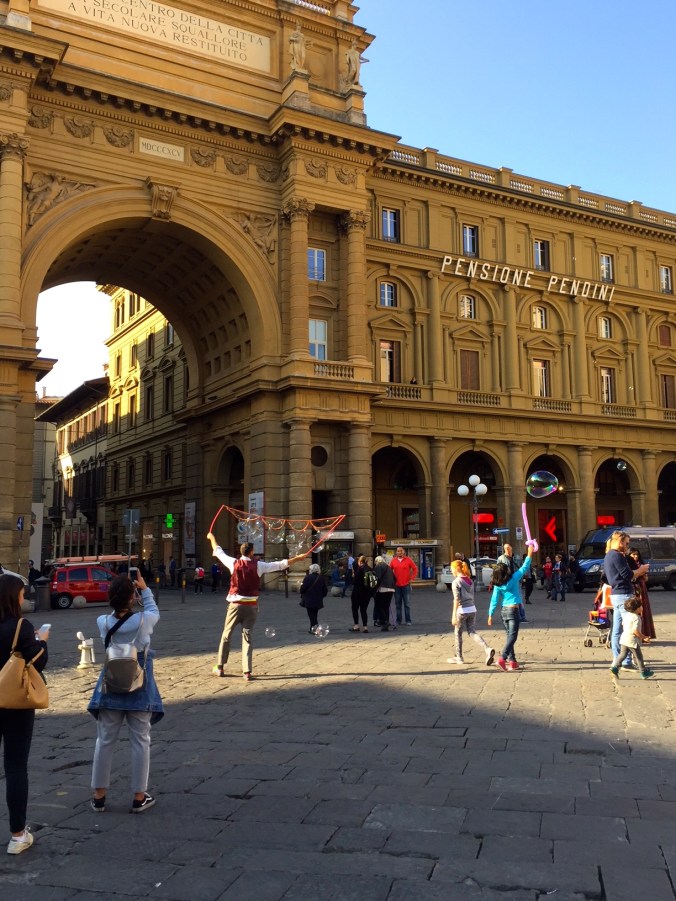
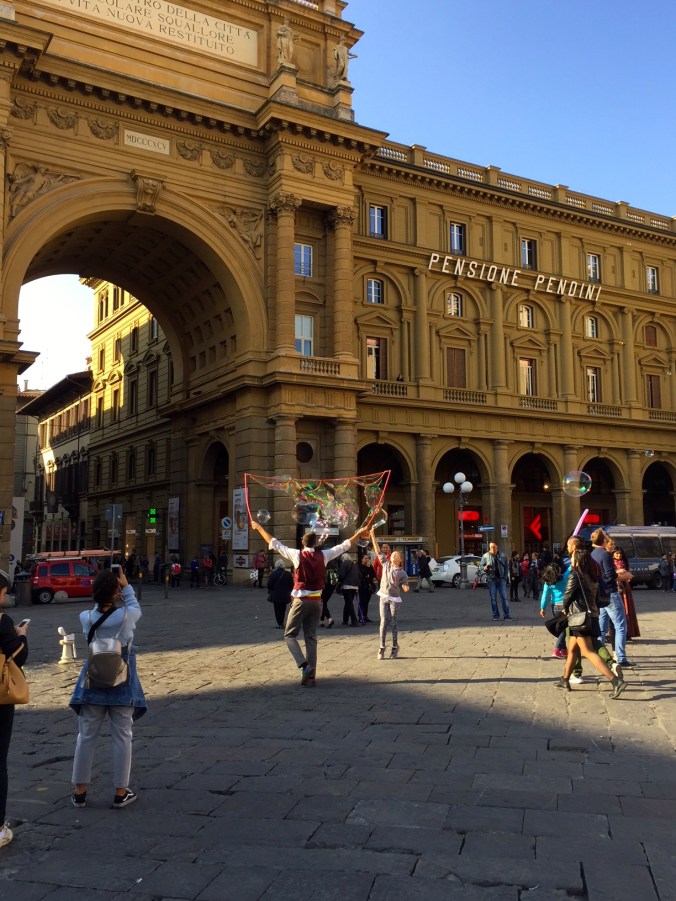
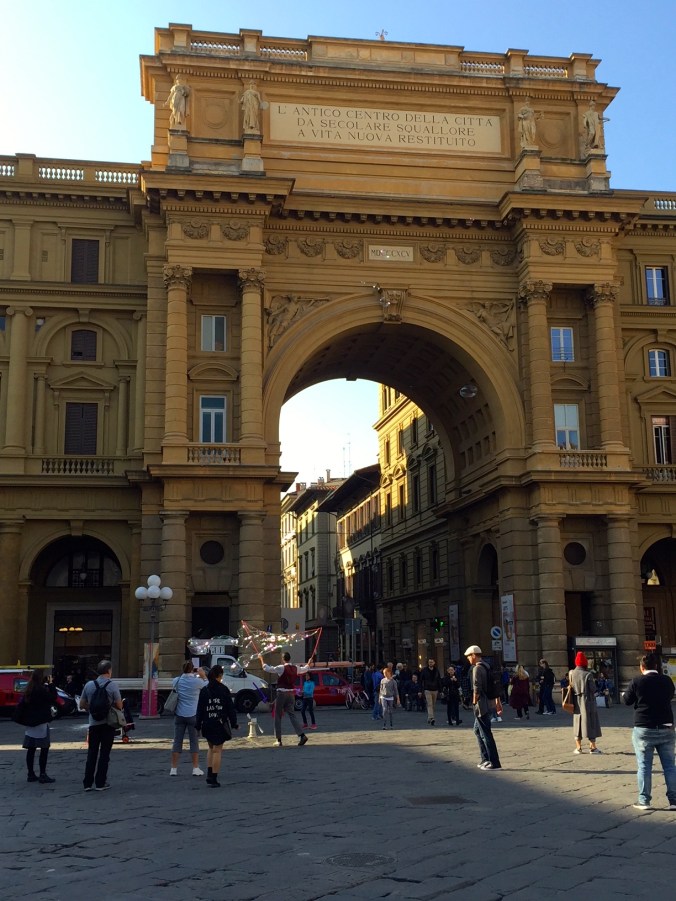
A while back I posted about this inscription on the arch on the south end of the 19th century Piazza della Repubblica.  I’ve just come across additional info and wanted to update:

The inscription reads “L’antico centro della città da secolare squallore a nuova vita restituito,”

Translated to English says: “The old center of the city restored to new life after centuries of squalor.”

Isodoro del Lungo, a city councilor, wrote the inscription especially for the Arcone.


Sheer enthusiasm for beauty

IMG_5731IMG_5734IMG_5639

That is another reason for the importance of what is visible: the sheer enthusiasm for beauty that infuses life in Italy. Unless they go back to classical times, Italians cannot take pride in a glorious imperial past. Even the Venetian Empire was pretty small beer when compared with the empires of Spain and Portugal, or more recently those of Britain and France. There were moments when the states of central and northern Italy were richer than any in Europe.

IMG_5576


And from Galileo Galilei to Enrico Fermi, Italians have more than held their own in the area of scientific discovery. But their truly outstanding contributions to mankind have been in the arts, and particularly the visual arts.

Historically, Italians have stood out in anything that has to do with what is visible, be it the art of the Renaissance or modern car design.

The areas in which they have excelled include painting, architecture, sculpture, cinema and of course opera, which gives visual expression to music.

As for fashion, they have been setting international trends since Shakespeare had York in Richard II cite Report of fashions in proud Italy, Whose manners still our tardy apish nation Limps after in base imitation . . .

Hooper, John. The Italians (p. 76). Penguin Publishing Group. Kindle Edition.

What the hey? LD

I see interesting signs all over Italy.  Recently I noticed this heavily covered-with-stickers street sign located on Ponte Santa Trinita.  I feel sorry for any drivers who need to know that the road slants to the left as the cars exits the bridge!

But, about the stickers:

IMG_5620

I noticed on that says “LD.”  I’d love to know what that refers to, because these are my initials too.

IMG_5621