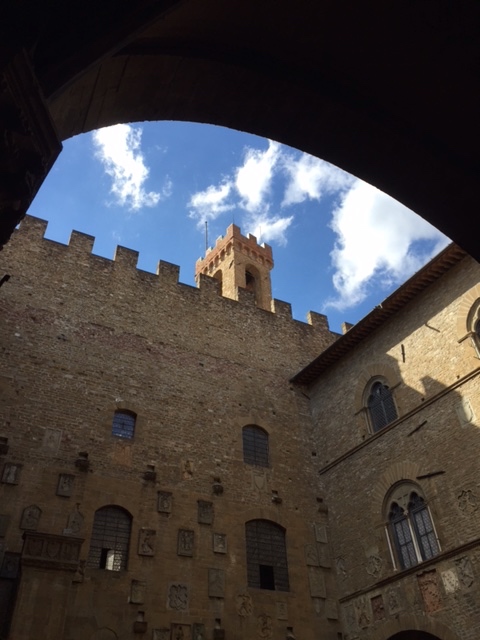
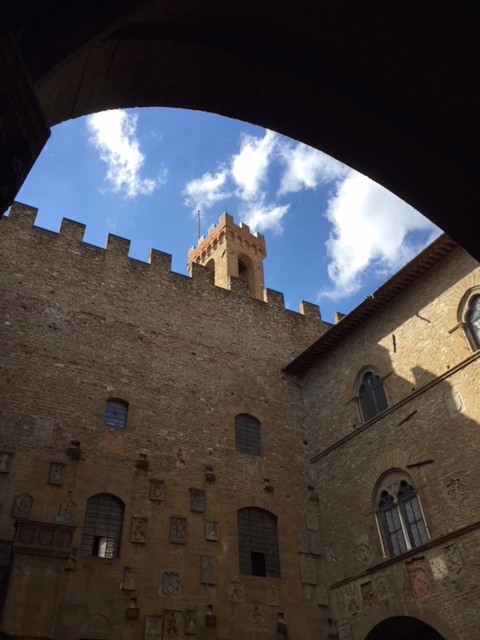
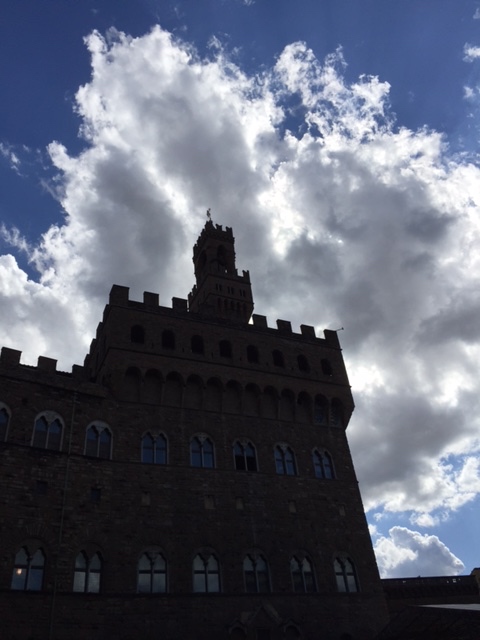
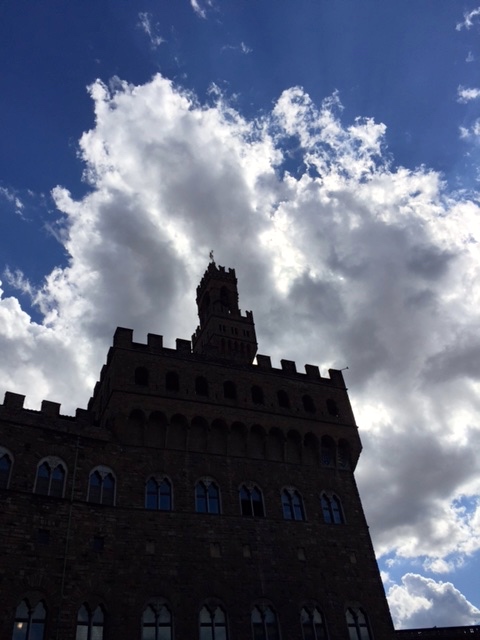
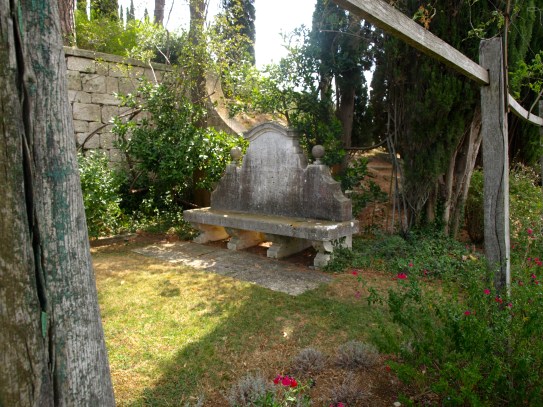
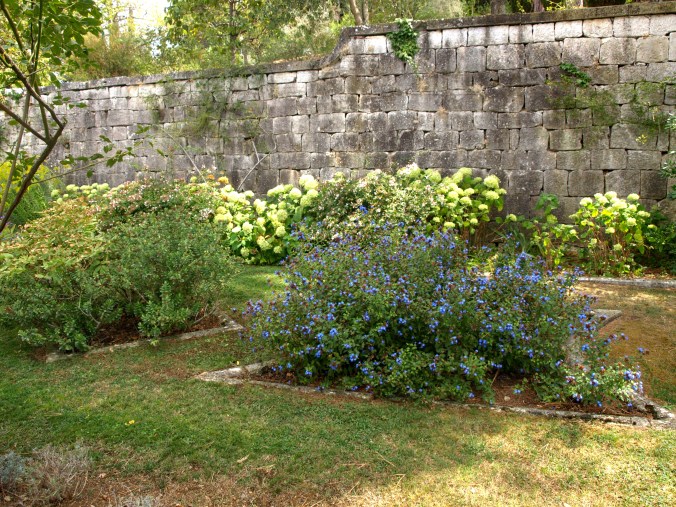
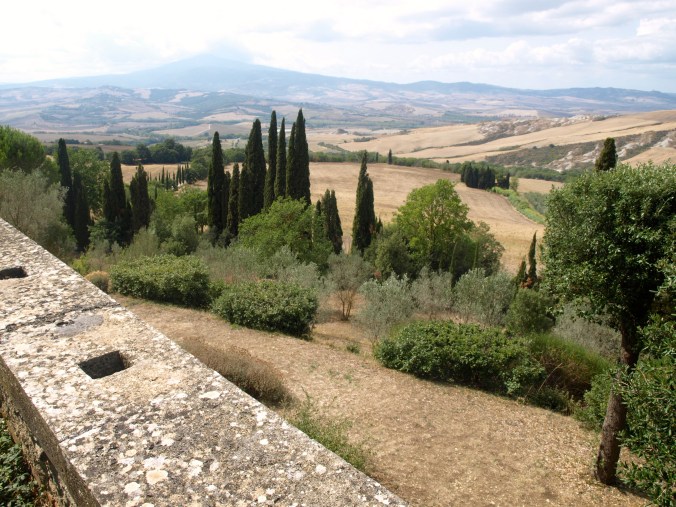
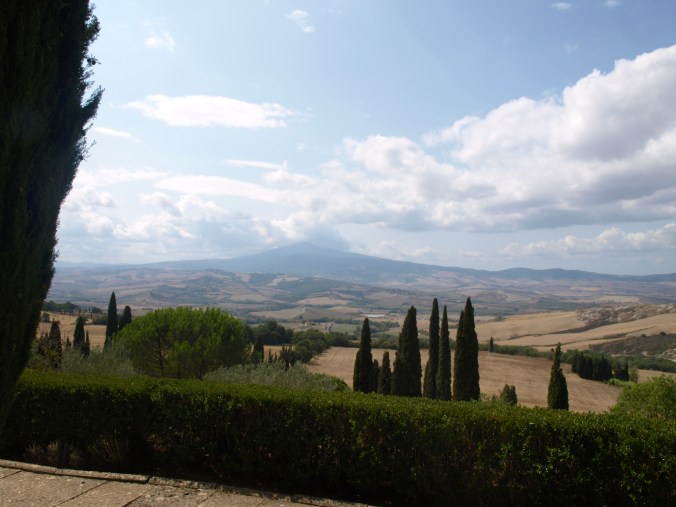
A Room with a View, still ravishing after all these years.


The ravishing film, of course, was based upon the book of the same title by E.M. Forster.  The book is a lovely read, but honestly, I think Where Angels Fear to Tread by the same author and on the same period is far better.


In 1985, A Room with a View was nominated for eight Academy Awards, including Best Picture and Best Director.  The film won three awards, for Jhabvala’s adaptation of Forster’s novel, for Best Costume and for Best Production Design.
A Room With a View was also voted Best Film of the year by the Critic’s Circle Film Section of Great Britain, the British Academy of Film and Television Arts, the National Board of Review in the United States and in Italy, where the film won the Donatello Prize  for Best Foreign Language Picture and Best Director.
US director James Ivory awarded with the 'Fiorino d'Oro', Florence, Italy - 05 Oct 2017
22196188_1699375533430051_2633005952246625126_n22196209_1699375550096716_7345193732756508899_n

Kindred spirits

cropped-21767943_10155871607471318_334486059363085891_n.jpg


I can’t get the lovely lyrics of “Mi Chiamano Mimi” from Puccini’s La Boheme out of my mind since I saw the opera last weekend.  It feels like Mimi and I share the love of beautiful things:

“Yes, they call me Mimi, but my true name is Lucia.

I love all things that have gentle sweet smells, that speak of love, of spring,
of dreams and fanciful things,

Those things that have poetic names, do you understand me?”


21767943_10155871607471318_334486059363085891_n

Italy’s immense appeal

I often think Italy is too popular for her own good.  When I pass through the piazza del Duomo in the middle of the day, on a nice day I can barely move through from the sheer numbers of tourists.  The trash trucks and street washers (a type of vehicle) travel up and down the streets all of time, picking up after the people.

On the flip side, Italy reacts in general to the immense tourist population by constantly opening new sites to appeal to them.  As someone who has visited Italy a lot over the past 30 years, I am constantly amazed when I learn new archaeological sites, for example, are newly available to be visited.  As below.


Nel blu dipito di blu (aka “Volare”)

Think of Italian music and you are likely to start humming this classic pop number: Nel blu depito di blu.  Or, as it is more popularly known: Volare.

Nel blu dipinto di blu” (literally “In the blue that is painted blue”), popularly known as “Volare” (meaning “To fly”), is the iconic song recorded by Italian singer-songwriter Domenico Modugno.  Modugno and Franco Migliacci wrote the song together an edit was released as a single in 1958.

images-4

So here it is, the original song by the songwriter himself, in the 1950s, on the Ed Sullivan Show:


And now for your listening pleasure is the same song, reworked by Gianna Nannini.  I love the song in both of its forms!


Buon ascolta!

And then, when you want to know the lyrics in Italian (first) or English (after), here you go:

Penso che un sogno così non ritorni mai più
Mi dipingevo le mani e la faccia di blu
Poi d’improvviso venivo dal vento rapito
E incominciavo a volare nel cielo infinito

Volare, oh oh…
Cantare, ohohoho…
Nel blu dipinto di blu
Felice di stare lassù

E volavo, volavo felice
Più in alto del sole ed ancora più su
Mentre il mondo pian piano spariva, lontano laggiù
Una musica dolce suonava soltanto per me

Volare, oh oh…
Cantare, ohohoho…
Nel blu dipinto di blu
Felice di stare lassù

Ma tutti i sogni nell’alba svaniscono perché
Quando tramonta, la luna li porta con sé
Ma io continuo a sognare negli occhi tuoi belli
Che sono blu come un cielo trapunto di stelle

Volare, oh oh…
Cantare, ohohoho…
Nel blu degli occhi tuoi blu
Felice di stare quaggiù

E continuo a volare felice
Più in alto del sole ed ancora più su
Mentre il mondo pian piano scompare negli occhi tuoi blu
La tua voce è una musica dolce che suona per me

Volare, oh oh…
Cantare, ohohoho…
Nel blu degli occhi tuoi blu
Felice di stare quaggiù

Nel blu degli occhi tuoi blu
Felice di stare quaggiù con te

Flying (In the blue painted  blue)

I think such a dream will never come back
I painted my hands and my face blue
Then suddenly I was ravished by the wind
And I started flying in the infinite sky

Flying, oh oh…
Singing, ohohoho…
In the blue painted  blue
Happy to be up there

And I was flying, flying happily
Higher than the sun and even higher
While the world was slowly disappearing, far beneath
A soft music was playing just for me

Flying, oh oh..
Singing, ohohoho…
In the blue painted  blue
Happy to be up there

But all the dreams fade away at dawn, because
While setting, the moon takes them away
But I keep dreaming in your beautiful eyes
Which are as blue as a sky quilted with stars

Flying, oh oh…
Singing, ohohoho…
In the blue of your blue eyes
Happy to be down here

And I keep flying happily
Higher than the sun and even higher
While the world is slowly disappearing in your blue eyes
Your voice is a soft music playing for me

Flying, oh oh…
Singing, ohohoho…
In the blue of your blue eyes
Happy to be down here

In the blue of your blue eyes
Happy to be down here with you


A culture of beauty

The Italian culture loves beauty, depends on beauty, is addicted to beauty. The single word to describe all good things, whether they mean great, terrific, wonderful, marvelous, fantastic, satisfying, or well done, is bello.

The roots go way, way back.

Even the Etruscans, the people who occupied the peninsula between the Arno (Florence) and Tiber (Rome) Rivers in the first millennium B.C. before they were ultimately conquered and wiped out by the Romans toward the end of that period, were lovers of beauty. Visit the Etruscan museum at the Villa Giulia in Rome and you will see their civilization, taken whole from the many burial grounds they left behind. There are perfume bottles, containers for makeup, rings that went into hair, and large baskets into which all the combs, brushes, ointments, and powders were put in an effort to please the gods, to make themselves beautiful in the eyes of the deities so that the beauty of their bodies would reflect the beauty of their souls.

bf7c69fe98c332e83dac325df4503559--ancient-artifacts-bronze-sculpture

And that’s how it stood until Judaism and then Christianity came along to break the connection between outer magnificence and inner purity. The one no longer had anything to do with the other.

Epstein, Alan. As the Romans Do: The Delights, Dramas, And Daily Diversio (pp. 75-76). HarperCollins. Kindle Edition.

Mimi

Giacomo Puccini’s famous opera, La Boheme, is packed with fantastic arie, like the one Mimi sings: “Mi chiamano Mimi.”  When Rodolfo reveals to her that he has fallen in love, he wants to know all about her. He asks her to tell him something about her. Mimi’s reply begins by telling him she is called Mimi, but her true name is Lucia.

The English translation is as follows:

Yes, they call me Mimi
but my true name is Lucia.
My story is short.
A canvas or a silk
I embroidery at home and outside…
I am happy happy and at peace
and my pastime
is to make lilies and roses.
I love all things
that have gentle sweet smells,
that speak of love, of spring,
of dreams and fanciful things,
those things that have poetic names …
Do you understand me?
They call me Mimi,
I do not know why.
Alone, I make
do by myself.

I do not go to church,
but I pray a lot to the Lord.
I stay all alone
there in a white room
and look upon the roofs and the sky
but when the thaw comes
The first sun, like the
first kiss, is mine!
Buds in a vase…
Leaf and leaf I spy!
That gentle perfume of a flower!
But the flowers that I make,
Alas! no smell.
Other than telling you about me, I know nothing.
I am only your neighbor who comes out to bother you.


You can listen to a diva perform it here:

The Italian lyrics are as follows:

Si. Mi chiamano Mimì
ma il mio nome è Lucia.
La storia mia è breve.
A tela o a seta
ricamo in casa e fuori…
Son tranquilla e lieta
ed è mio svago
far gigli e rose.
Mi piaccion quelle cose
che han sì dolce malìa,
che parlano d’amor, di primavere,
di sogni e di chimere,
quelle cose che han nome poesia…
Lei m’intende?
Mi chiamano Mimì,
il perché non so.
Sola, mi fo
il pranzo da me stessa.
Non vado sempre a messa,
ma prego assai il Signore.
Vivo sola, soletta
là in una bianca cameretta:
guardo sui tetti e in cielo;
ma quando vien lo sgelo
il primo sole è mio
il primo bacio dell’aprile è mio!
Germoglia in un vaso una rosa…
Foglia a foglia la spio!
Cosi gentile il profumo d’un fiore!
Ma i fior ch’io faccio,
Ahimè! non hanno odore.
Altro di me non le saprei narrare.
Sono la sua vicina che la vien fuori d’ora a importunare.