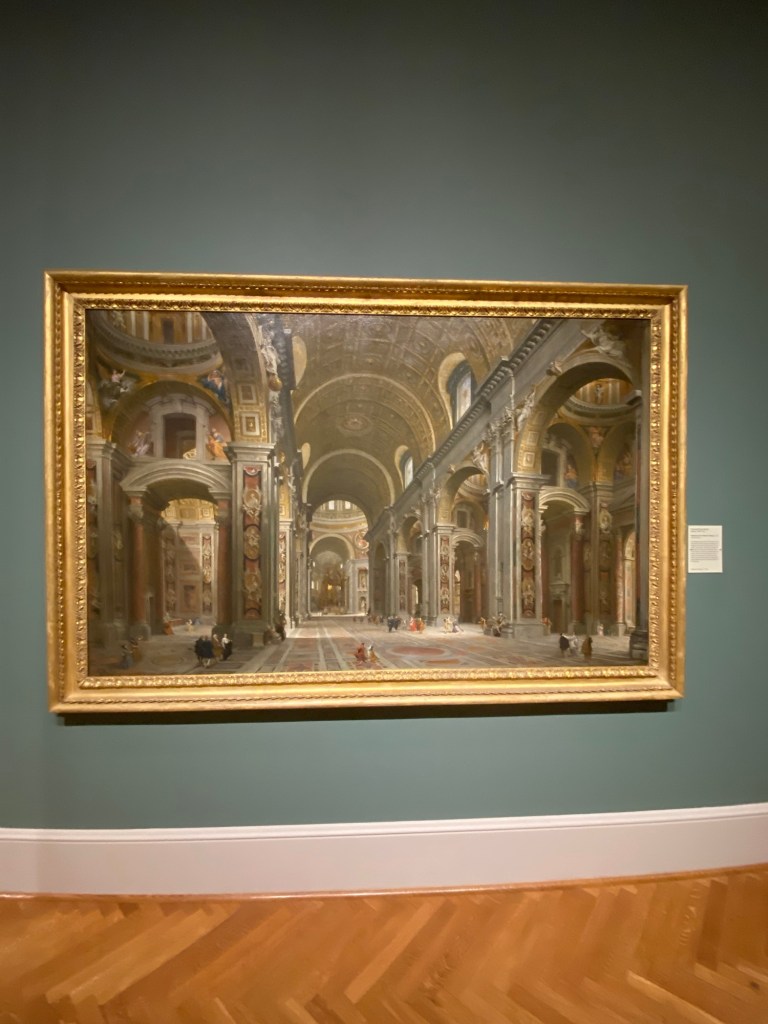
If there is an Italian painting in the house, I’m bound to find it! I was delighted to see this rendition of the interior of St. Peter’s in Rome from 1731 by Panini. Large and magnificent! And not just because of the subject matter!
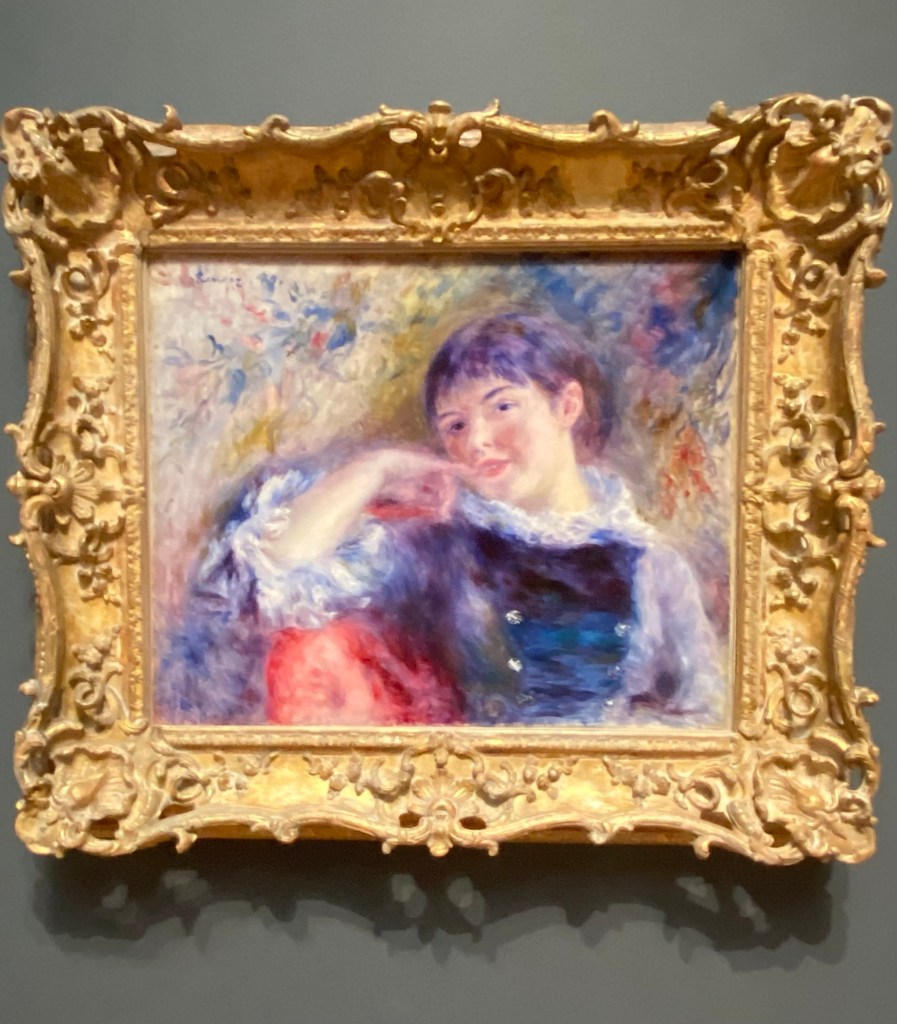
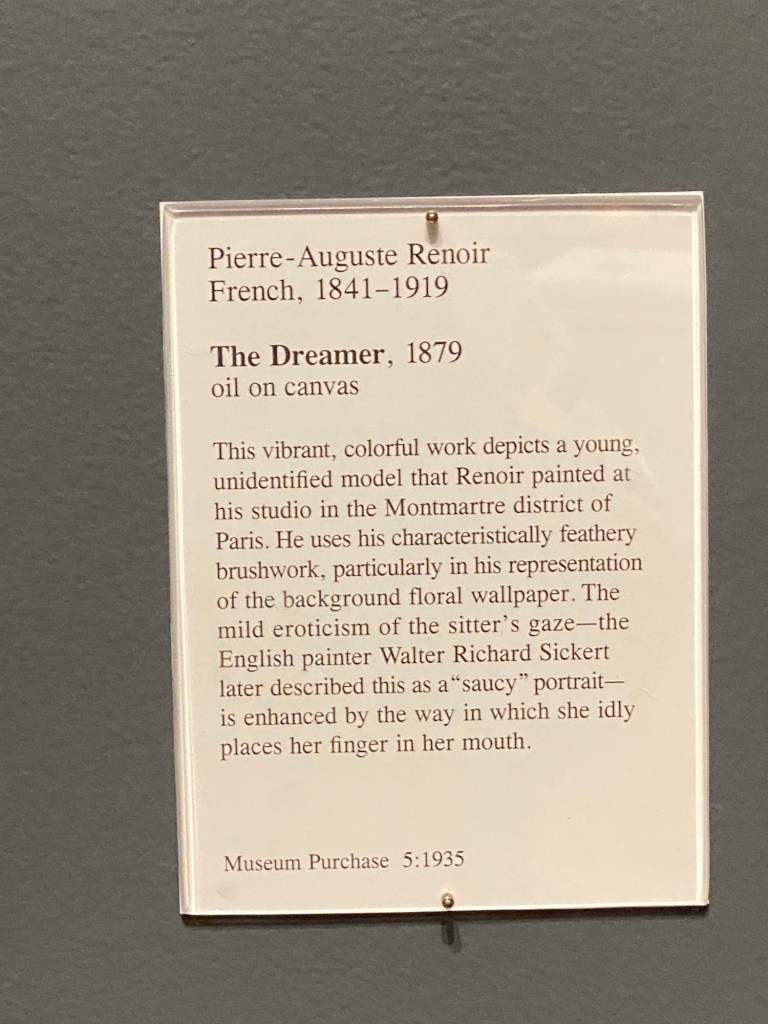
I’m not always a fan of Renoir’s work, but I liked the canvas below very much.
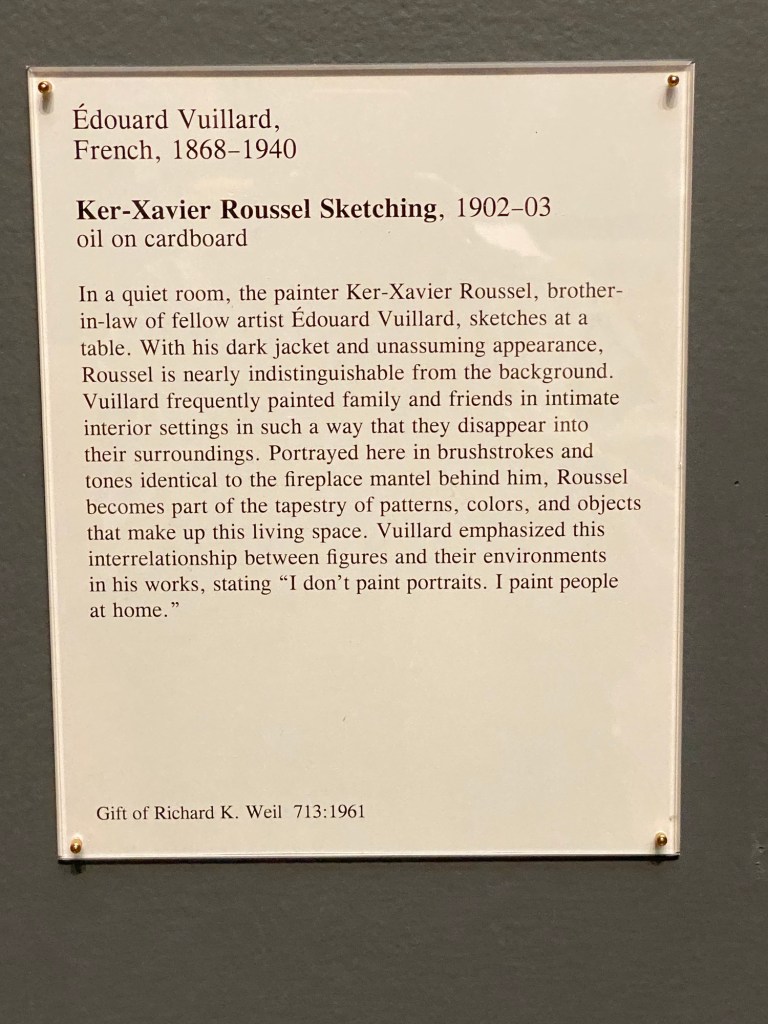
I very much like almost anything painted by Edouard Vuillard and finding this painting in St. Louis was a lovely surprise.
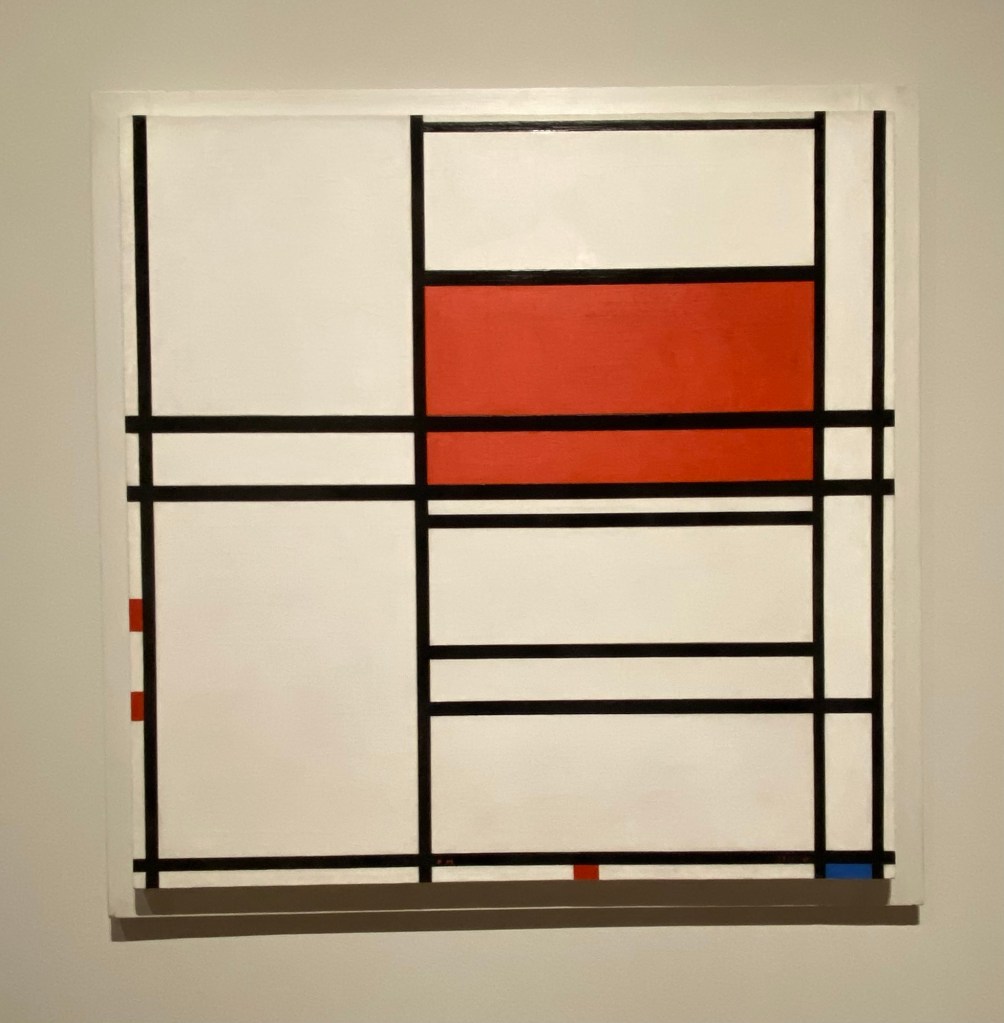
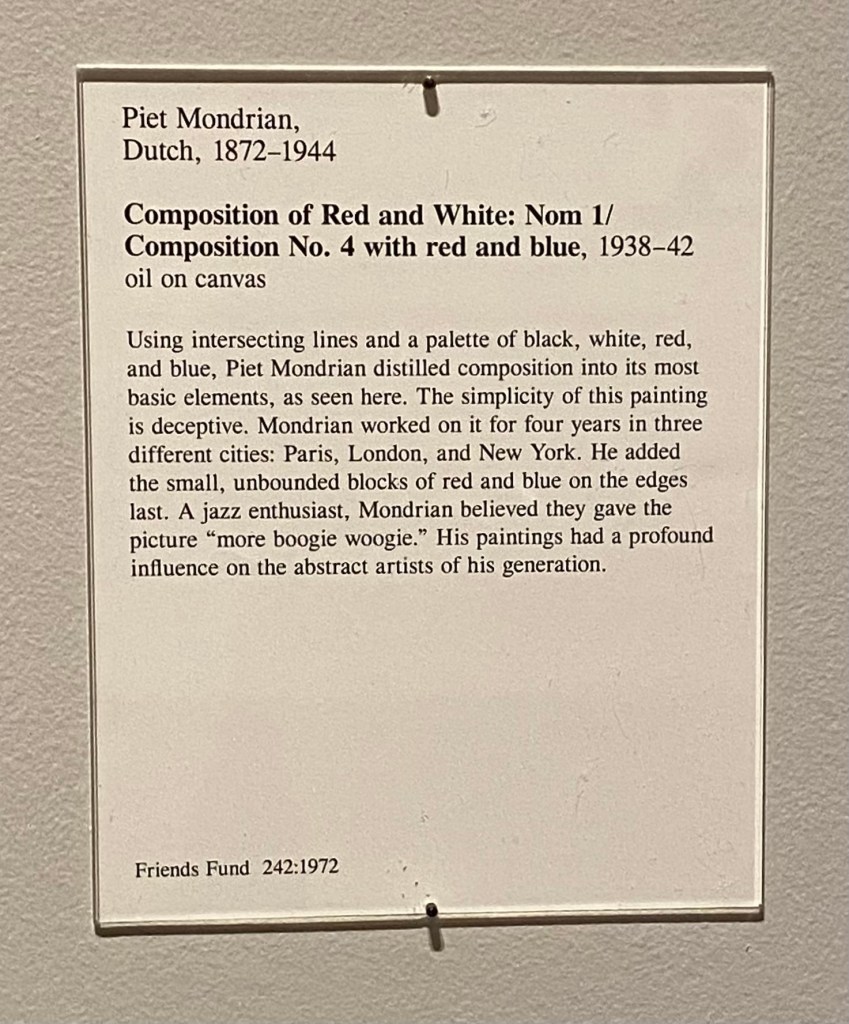
Love Mondrian and was happy to make the acquaintance of this work.
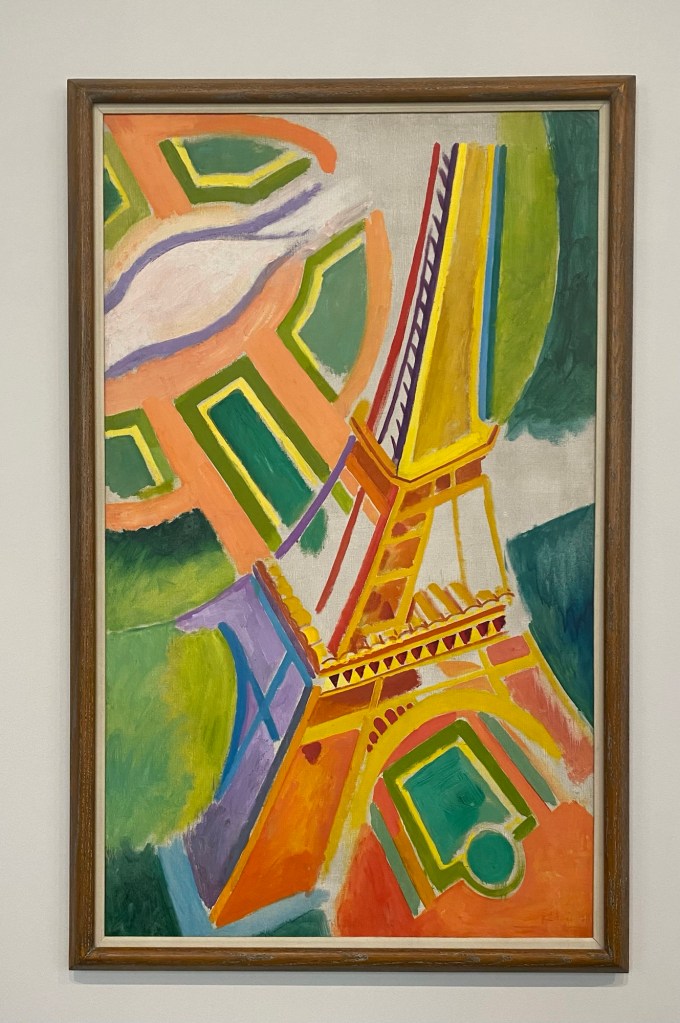
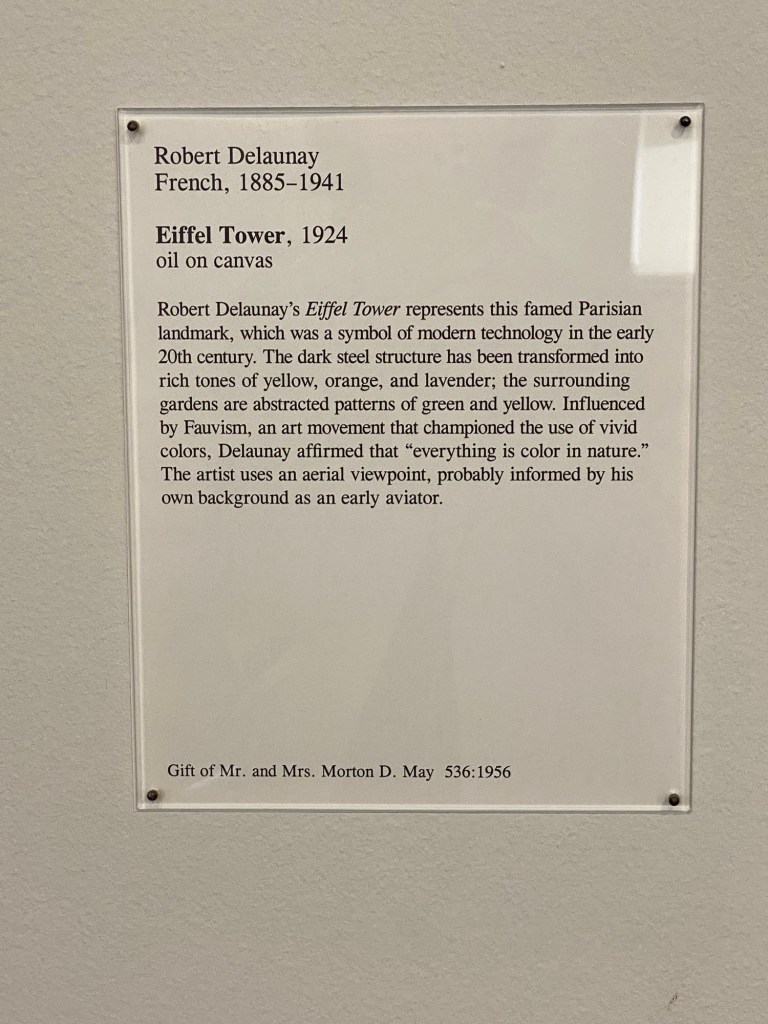
Also enjoy Delaunay and who wouldn’t love his bird’s eye version of the Eiffel Tower? How did he get this drone’s gaze?
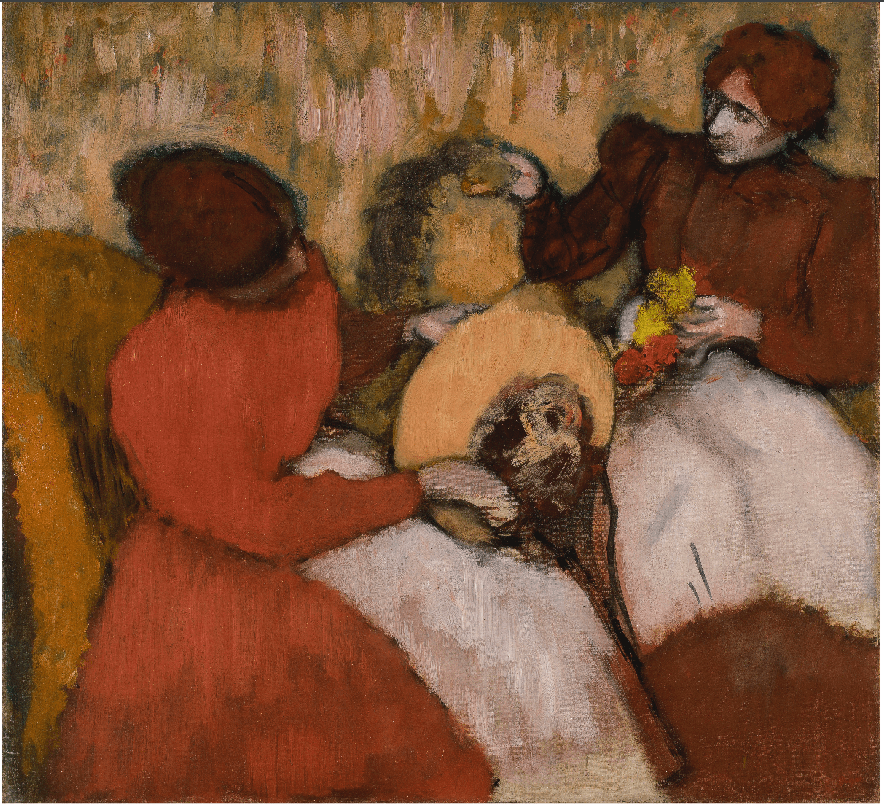
On my recent visit to SLAM, a gallery talk was being held behind Degas’ ballet dancer and right in front of his pastel of The Milliners. Without knocking someone off their stool, I could not get good photos. What you see below is a result of my best efforts.
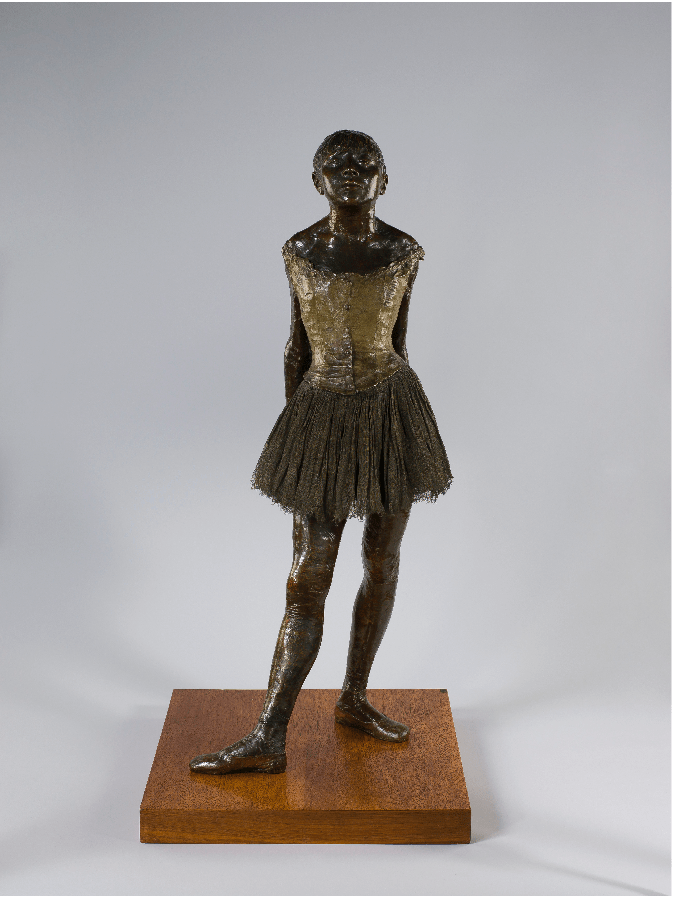
Oh, how I do love Degas’ dancer! I’ve seen various editions (all virtually the same) in a variety of art museums and have loved it since the first one I ever saw!
This work is one of many posthumous bronze casts completed after a wax sculpture displayed at the sixth Impressionist exhibition in 1881.The wax figure was the only sculpture that Edgar Degas showed during his lifetime. The artist meticulously created the form of the teenage ballet dancer Marie van Goethem with chin raised and eyes half-closed. The naturalism of the figure was enhanced by the artist’s use of real materials including a muslin dress and satin bow. The stark realism of Degas’ treatment caused the girl’s facial features to be caricatured by critics at the time as “monkey-like.” Art critics: what can you do? An eternal problem.
A. A. Hébrard in Paris had an arrangement with Degas’s heirs to oversee the posthumous casting of Degas’s sculptures, including Little Dancer of Fourteen Years, into bronze. The arrangement involved making casts for Hébrard himself, for the heirs, and another set for sale.
The sculpture stands about 38.5 inches tall.
Below is a photo from SLAM’s website.
SLAM purchased the sculpture in 1957 from the gallery, M. Knoedler & Co., New York, NY.
The Milliners:
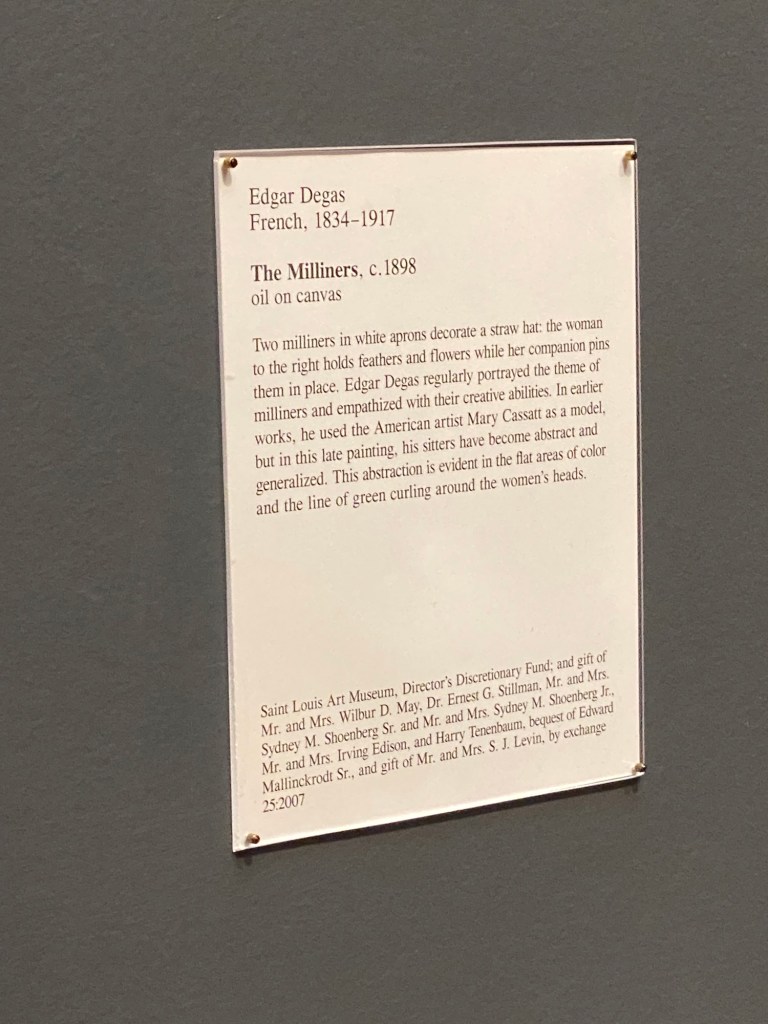
Two milliners in white aprons decorate a straw hat: the woman to the right holds feathers and flowers while her companion pins them in place. Edgar Degas regularly portrayed the theme of milliners and empathized with their creative abilities. In earlier works, he used the American artist Mary Cassatt as a model, but in this late painting, his sitters have become abstract and generalized. This abstraction is evident in the flat areas of color and the line of green curling around the women’s heads.
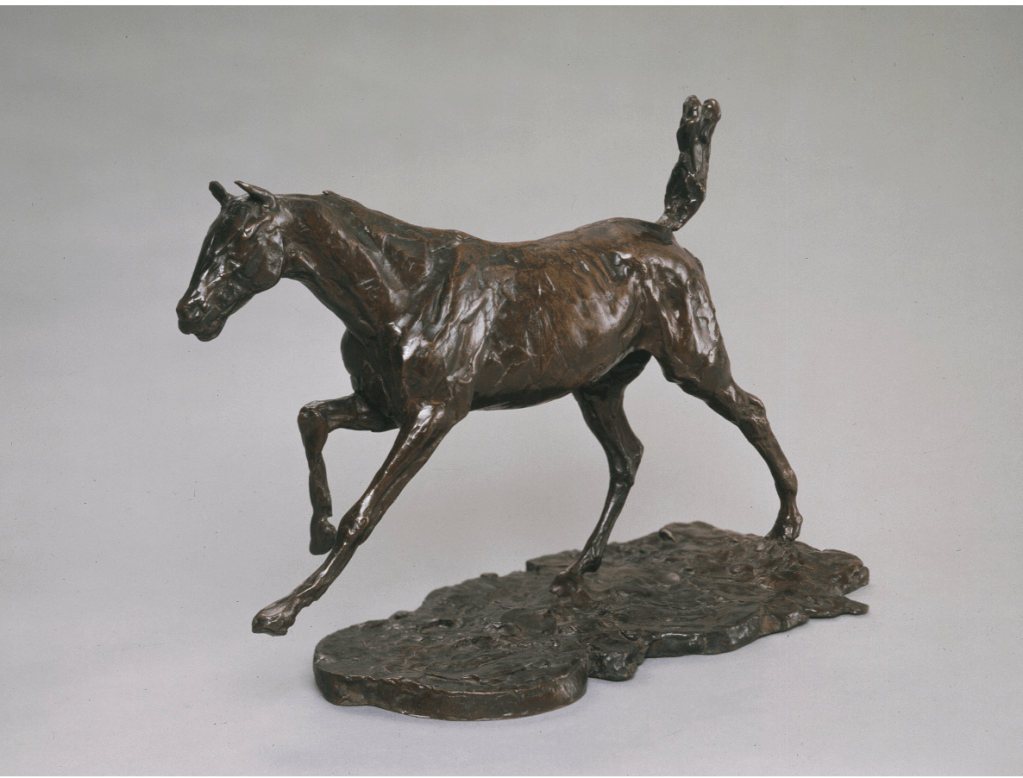
SLAM also owns a Degas bronze entitled Galloping Horse, though I didn’t see it on my recent visit.
Edgar Degas produced about fifteen sculptures of horses in which he aimed to capture the complexity of horses in motion. A regular visitor to the racetrack, he focused on elegant thoroughbreds rather than workhorses. This sculpture shows a running horse with head intently forward, tail raised, and front legs elevated; Degas succeeds in rendering the energy and tense musculature of the animal. Degas may have been influenced by Eadweard Muybridge’s sequential photographic studies of running horses, published in 1879.
All text above, except my personal observations, is borrowed from SLAM’s website.
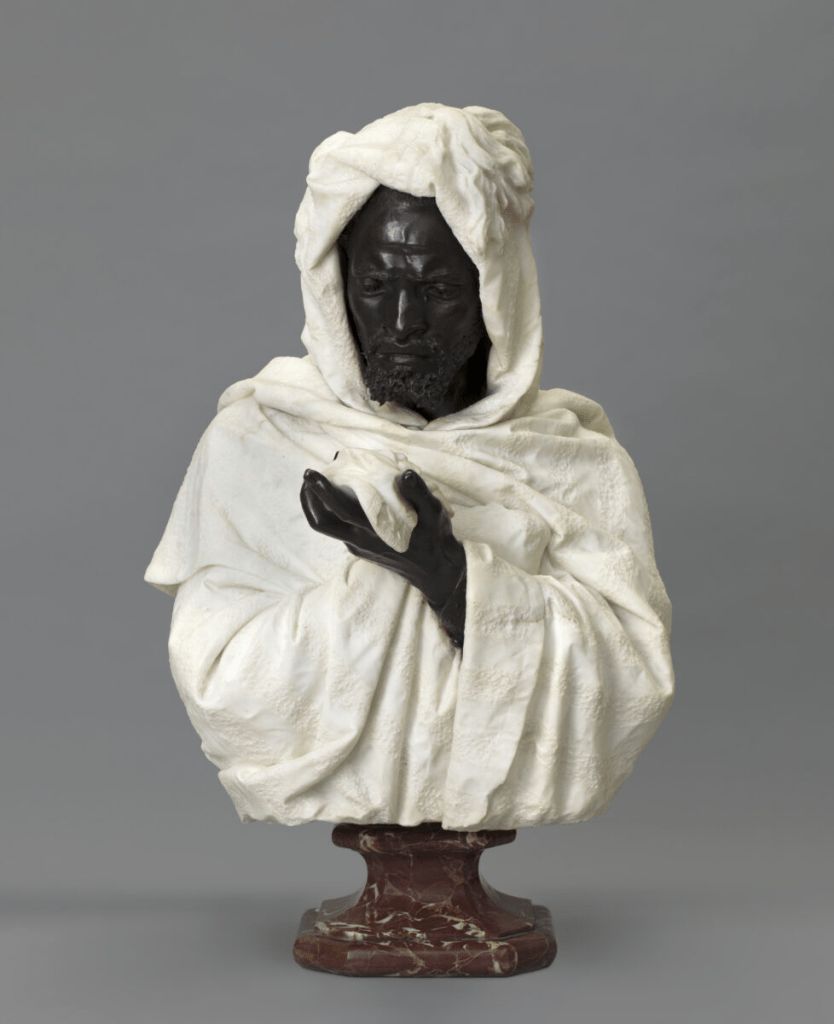
Beginning our tour of the galleries (and avoiding the teenagers there on a school field trip which we heartily applaud!), I was first arrested (truly!) by this magnificent and unusual 19th century sculpture.
Inscribed on back: Calvi fece (Made by Calvi)
Pietro Calvi was widely recognized during his lifetime for his skill and creativity as a sculptor. Born in Milan in 1833, he studied at the Accademia di Brera, learning techniques for working with both marble and bronze. An interest in ethnography led him to explore the creation of sculptures featuring people or popular characters of color—not a common subject for sculpture in this period. The results were dramatic works that combined white marble with the dark patina of cast bronze, an uncommon and even rebellious approach that moves away from the purity of the white marble works that had long dominated. Calvi’s sculptures were widely exhibited, including at the Parma Exhibition of 1870—a noted, pan-Italian exhibition intended to celebrate the newly unified states of Italy—as well as at the Royal Academy in London, the Paris Salon, and in a number of world’s fairs. In fact, Calvi exhibited pendant busts of “Selika” and “Othello” at the Royal Academy in 1872. In addition to his own works, Calvi also contributed to the sculptural programs of the Galleria Vittorio Emanuele and the Duomo cathedral in Milan. Source: https://www.slam.org/press/saint-louis-art-museum-acquires-calvis-bust-of-selika-a-19th-century-work-complementing-museums-othello/
This work is probably modeled on the Black actor Ira Aldridge (1807–67), who was internationally known for his portrayal of Othello, “the Moor,” and used his fame to speak out against slavery. Although Calvi’s sculpture was modeled a year after Aldridge’s death, the actor’s appearance was well known from photographs and prints. Source: https://art.thewalters.org/detail/98789/othello/. The Walters also has a version of this bust.
We are off to a fine start, admiring the holdings of SLAM. Will be posting more soon.
Last week Cindy snd I paid a visit to the first real art museum I ever got to know. I was a freshman in college at nearby Lindenwood College when my bff, Sarah, introduced me to the world of art through this institution. I’ve never looked back.
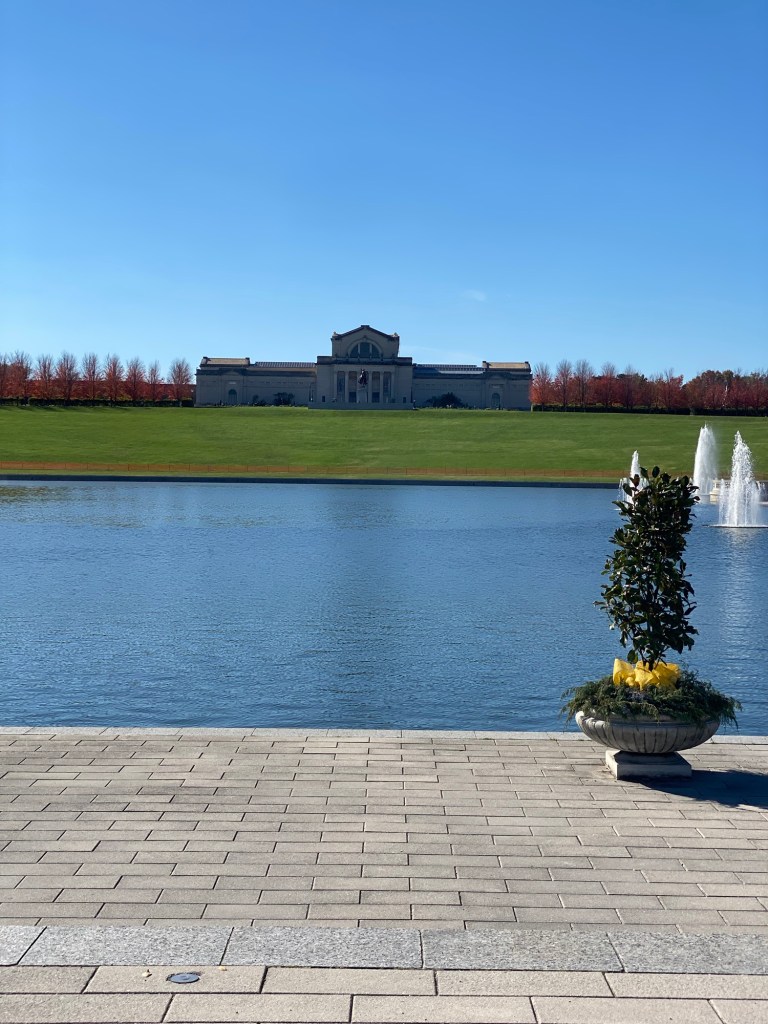
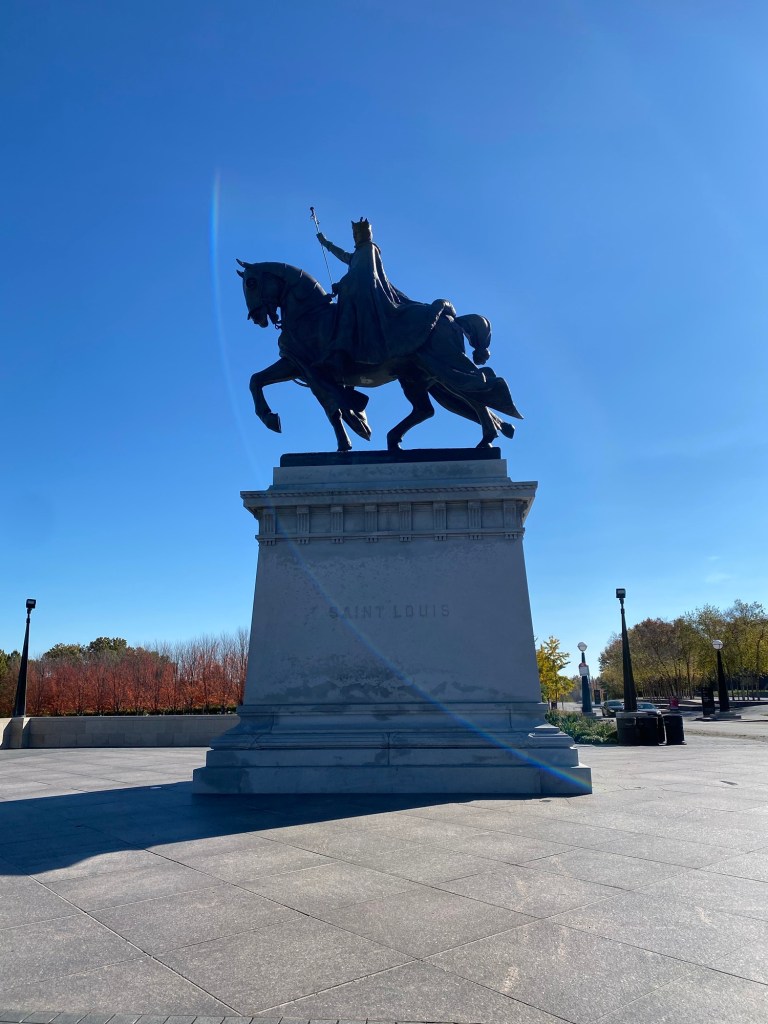
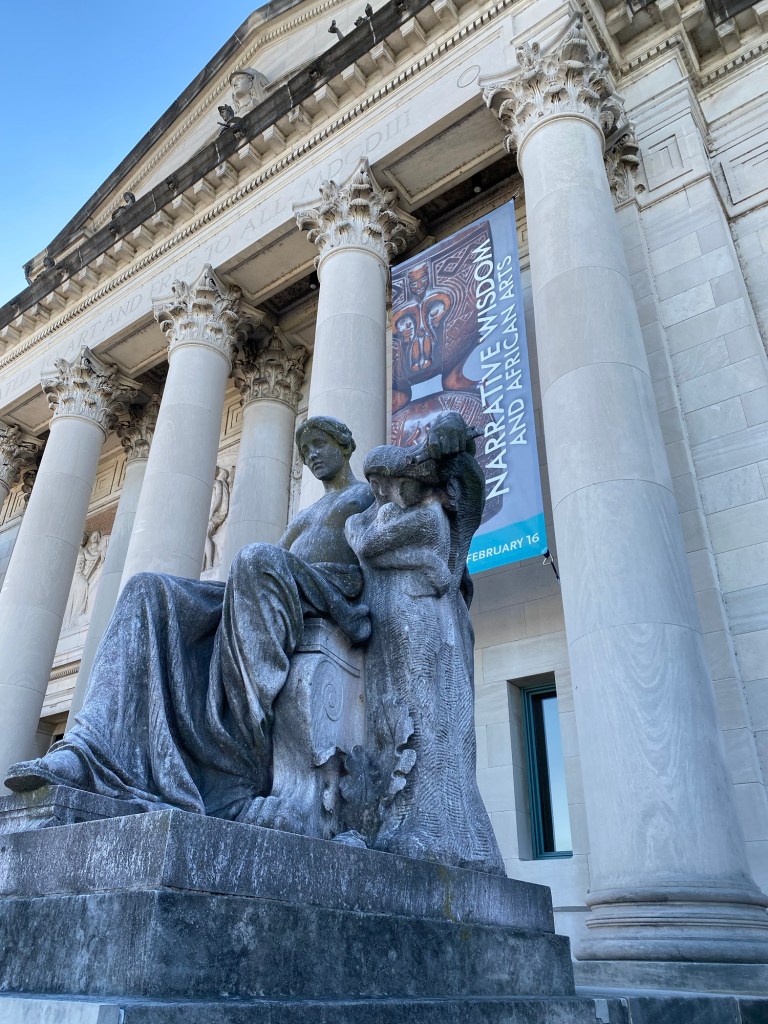
The museum looks fantastic from across Forest Park. The museum stands in a part of the siting of the 1904 World’s Fair.
This is the final post on the amazing museum. The first shot shows some folk art. I didn’t seem to take a label picture, so who knows what really caught my eye here.
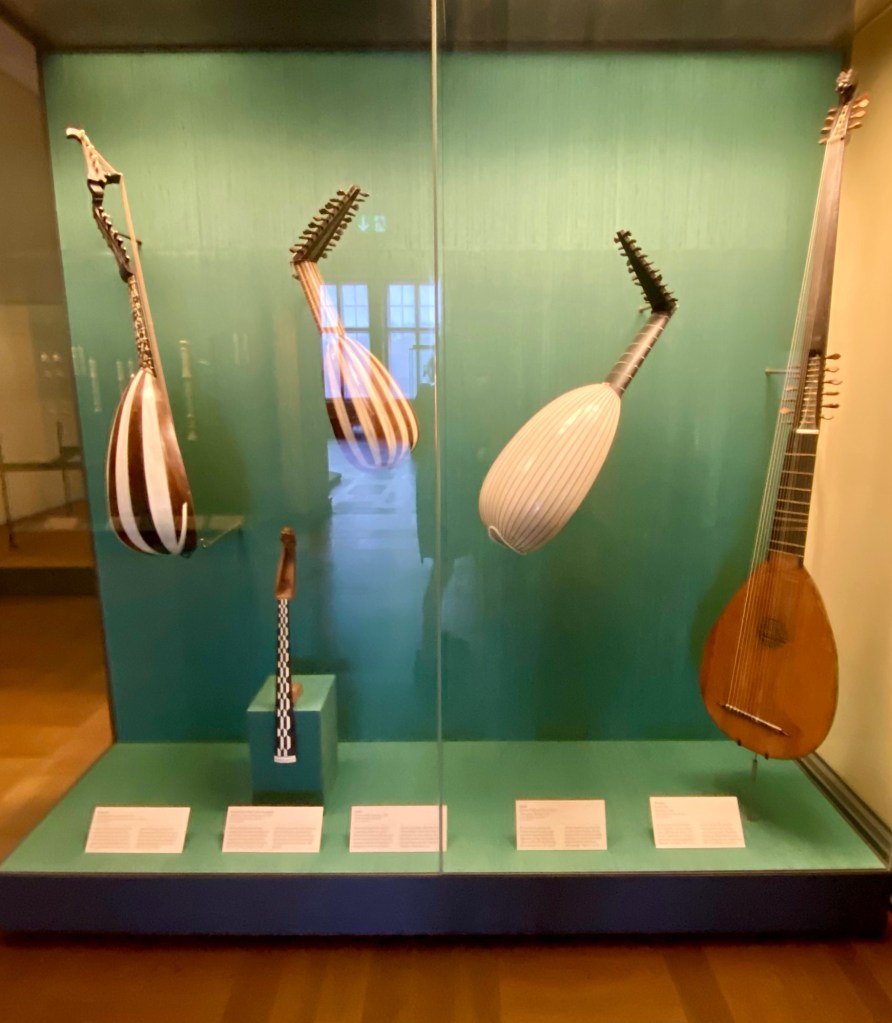
But the next gallery was as lovely as it was comprehensive. Musical instruments from the Renaissance. I’m lost in revery.
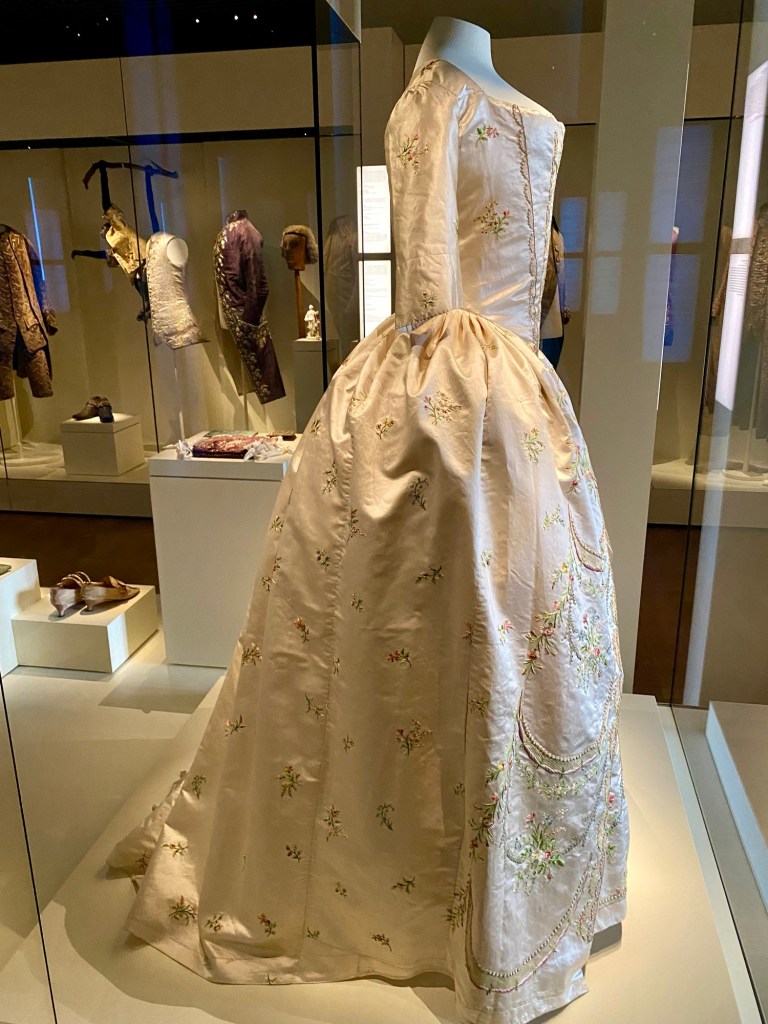
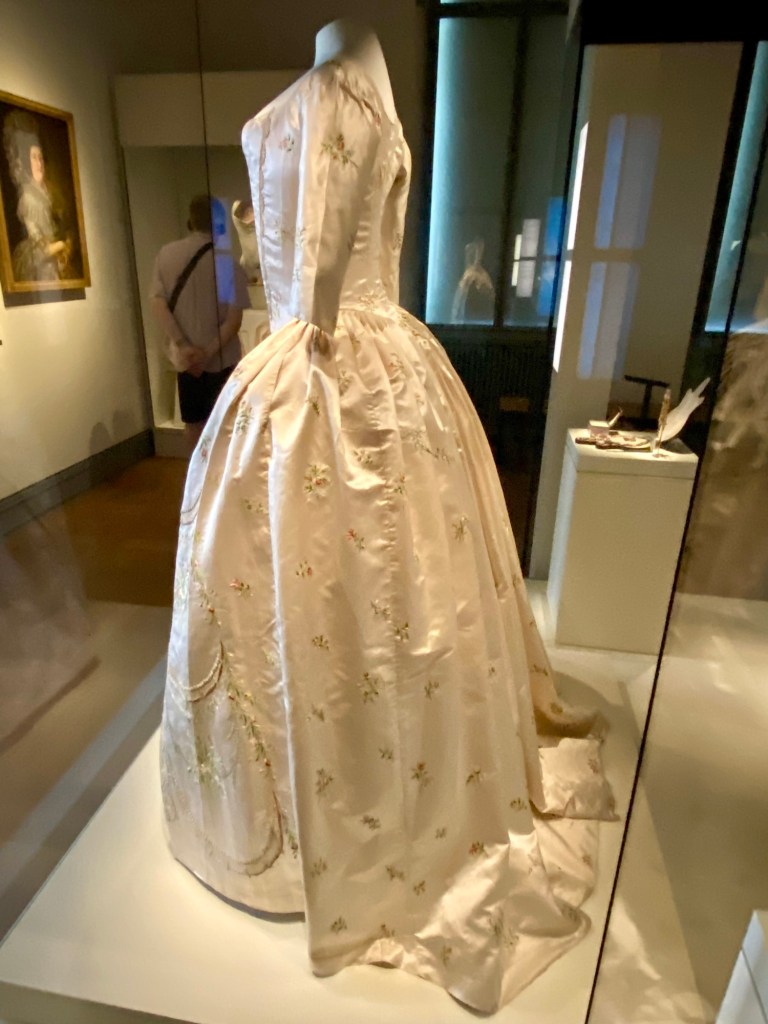
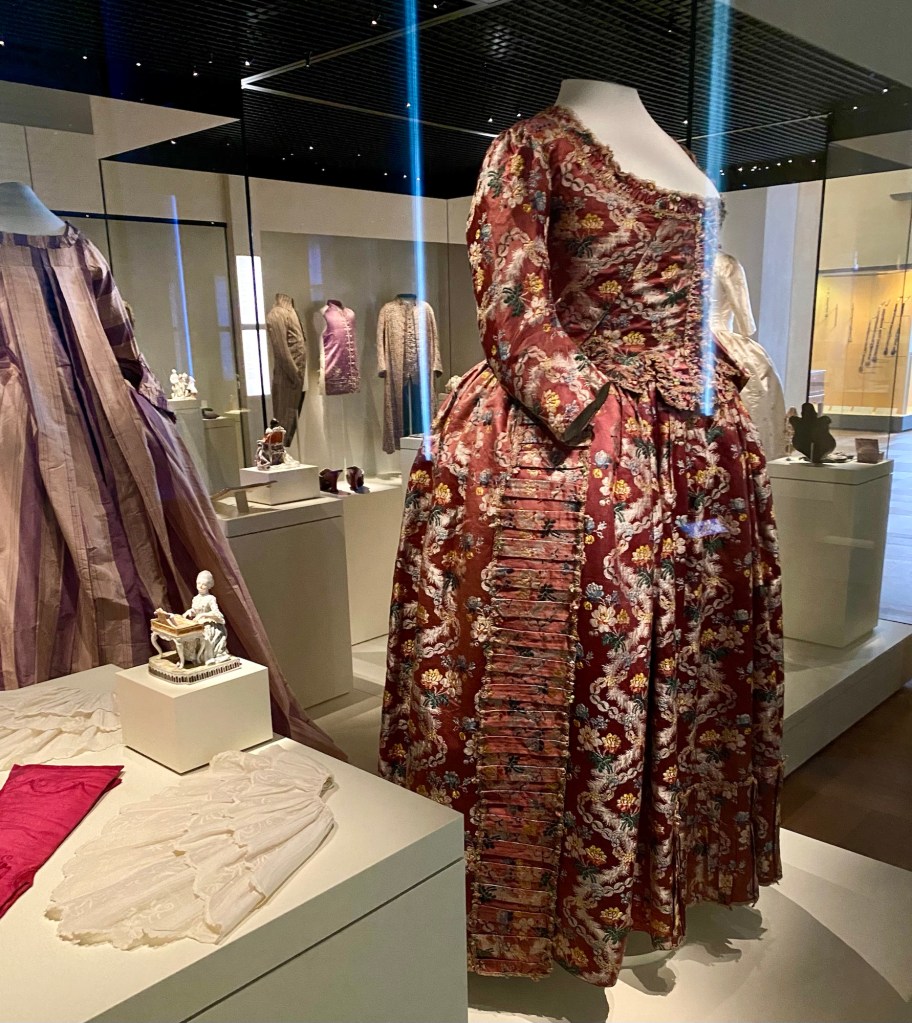
And then, the period clothing! Oh my ! what a great collection and fabulous exhibitions. Just because a museum has great holdings doesn’t mean they show they off in an engaging, beautiful, informative way. This museum delivers!
Love the next display! Fascinating to see what held those crazy gowns. Can you imagine walking around in the shape of a hedge?
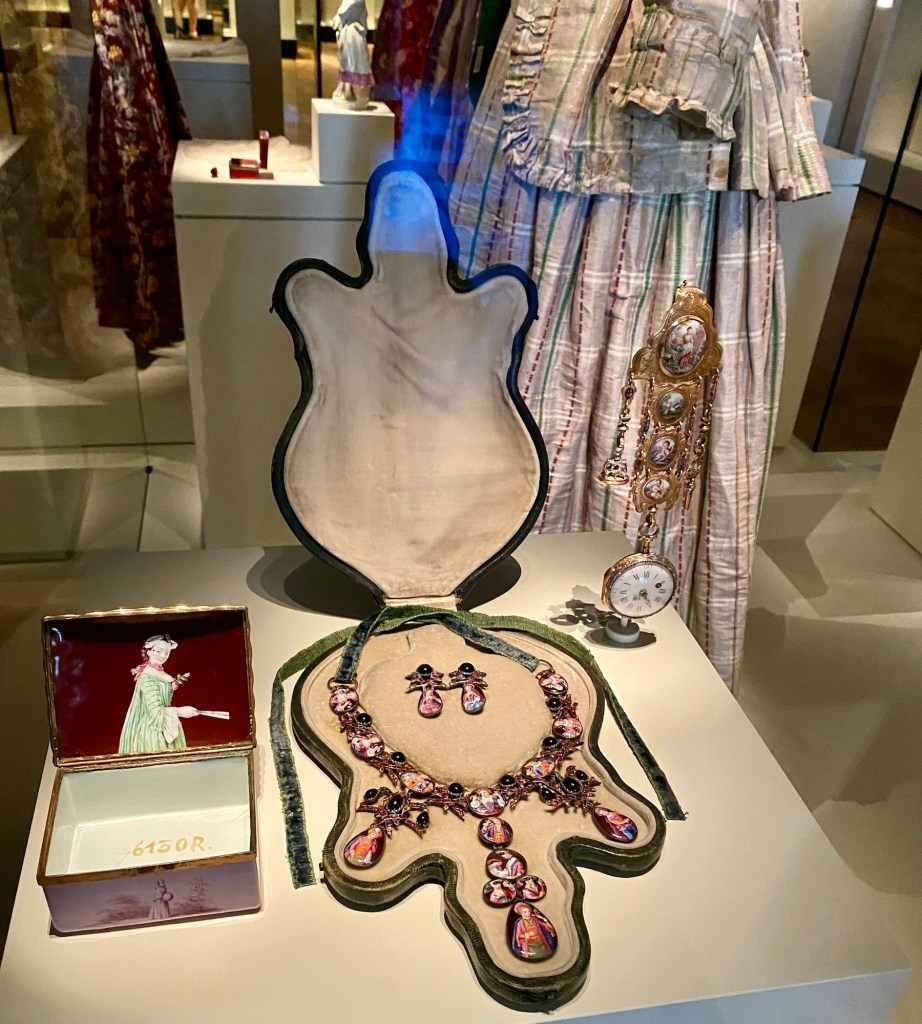
Look at this jewelry and its original case from c. 1760! My oh my!
The new style that swept Europe in the 1770s!
And children’s clothing too!
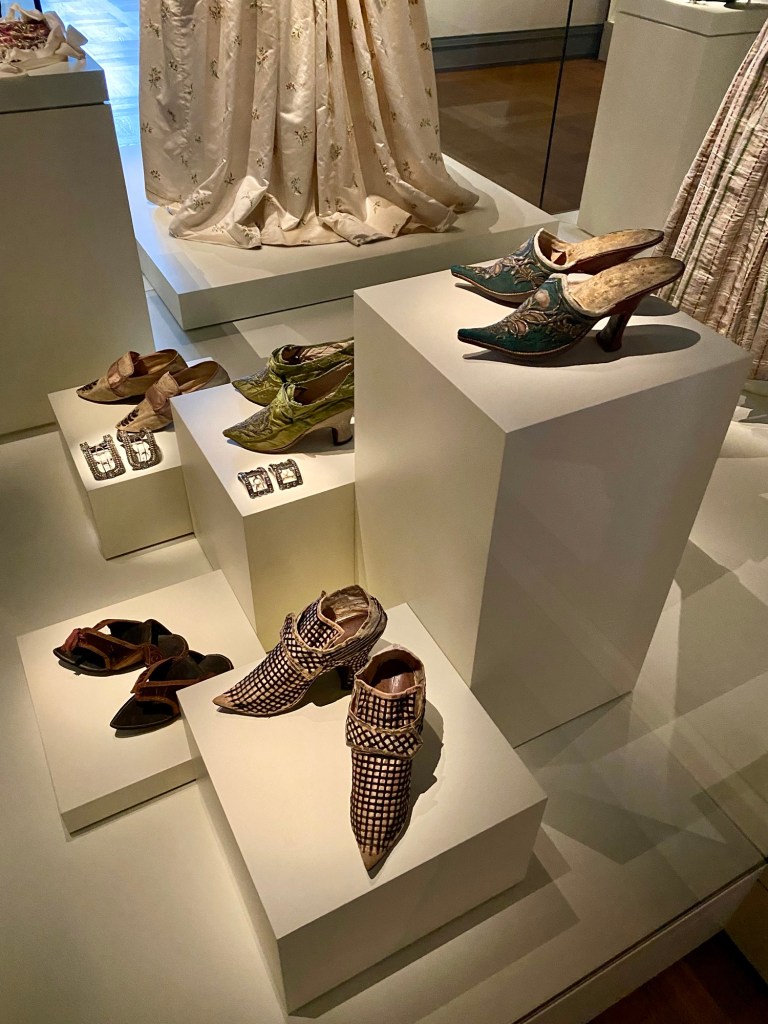
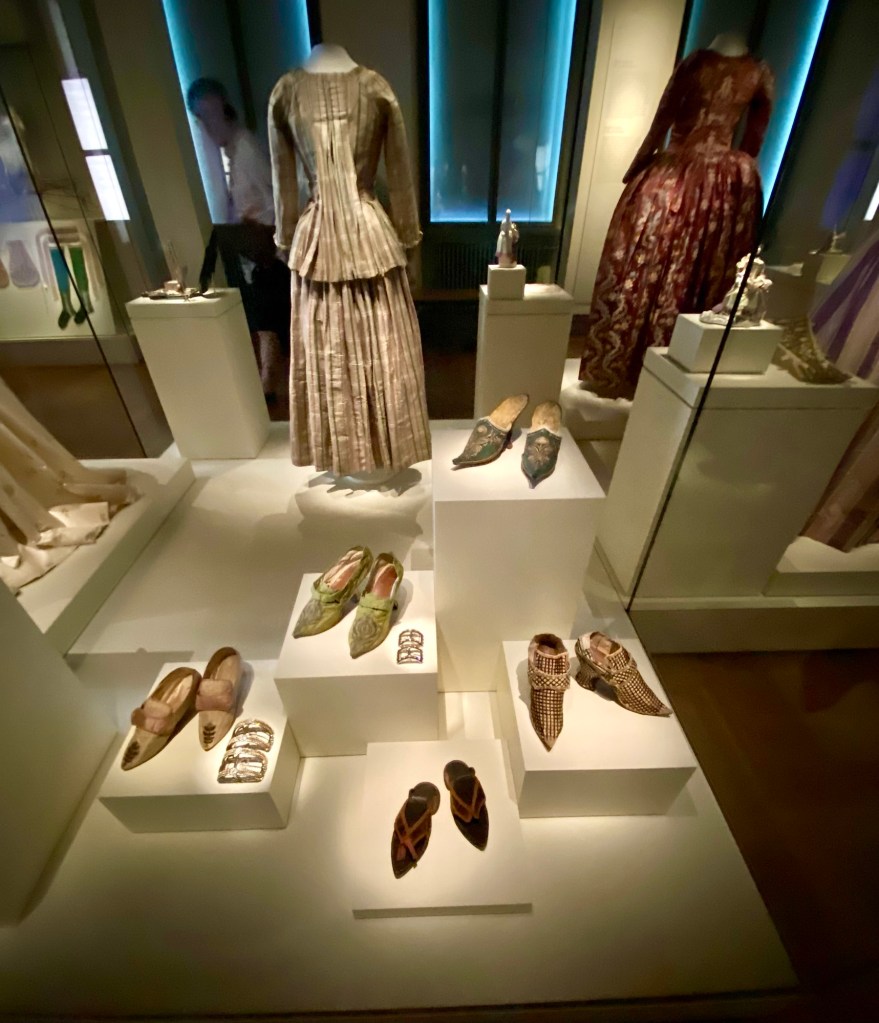
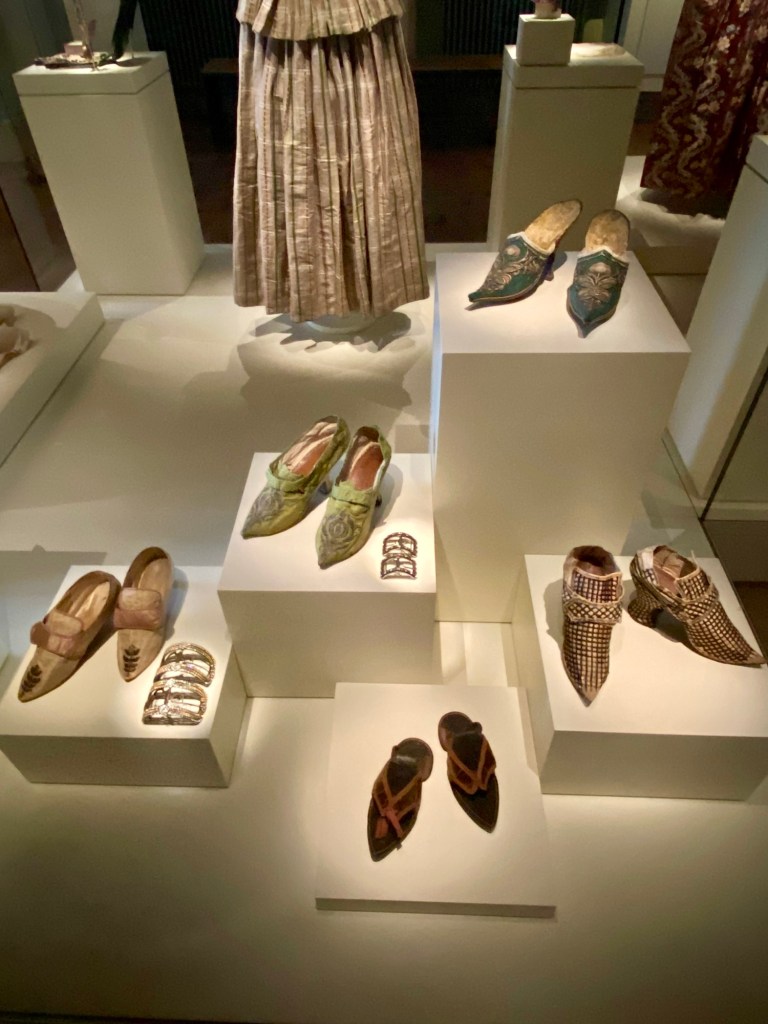
And the shoes!
And the ivory collections! The tusks alone are worth the visit!
One last look at this marvelous place as I depart. A museum goer’s dream!
They may not have had electricity or antibiotics, but they had style! At least in the royal cultures of Europe!
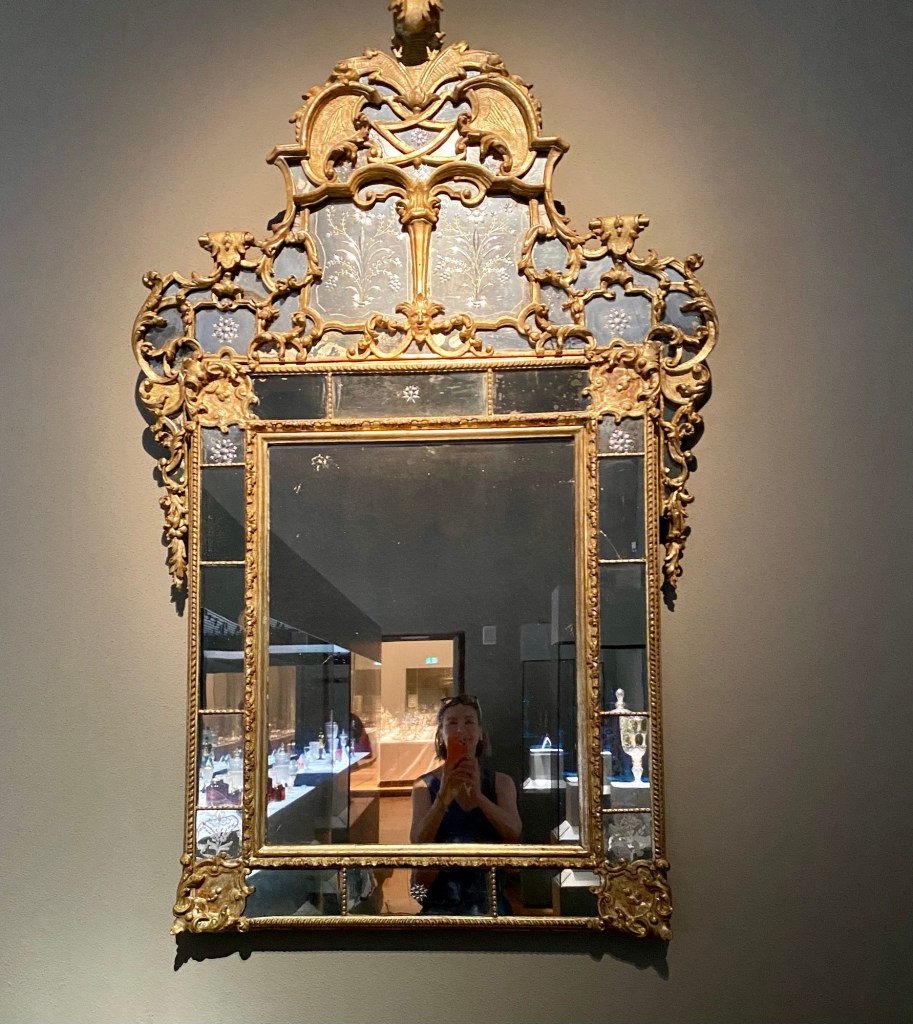
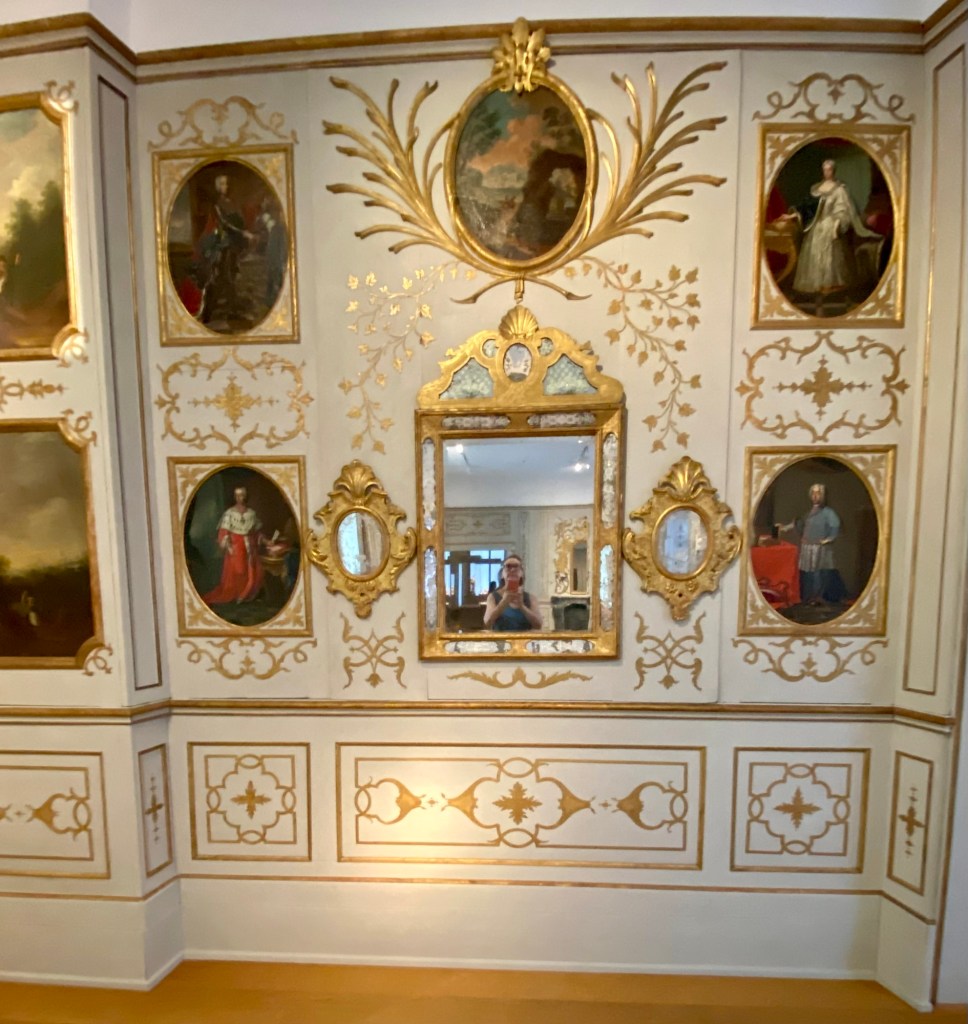
And boy, did they have mirrors! I suppose certain people had a lot of free time to gaze at themselves!
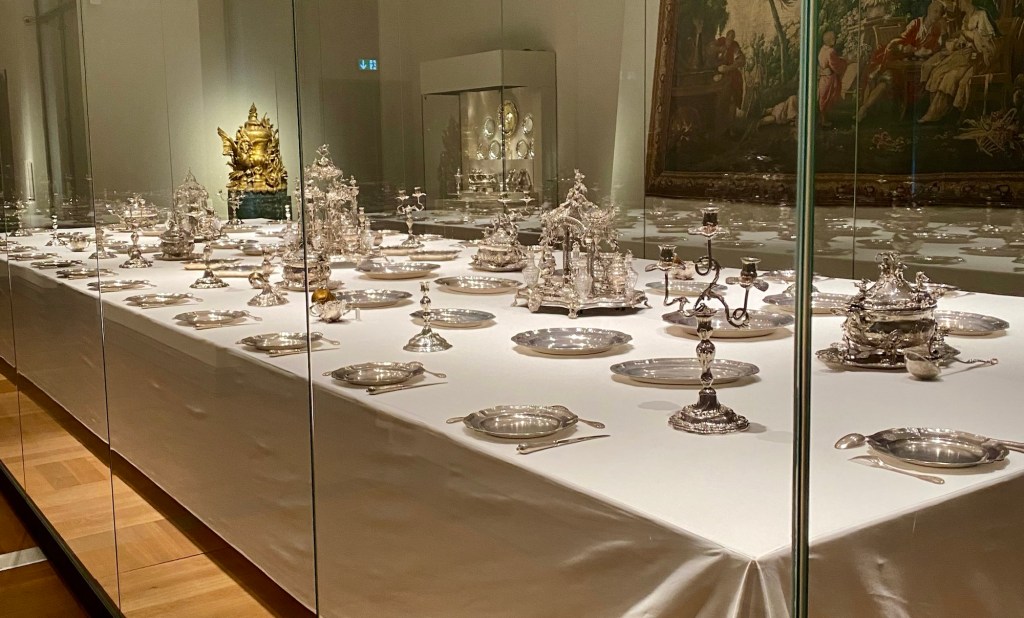
And they had silver services for huge numbers. I’ve never seen so much silver dinnerware in one grouping.
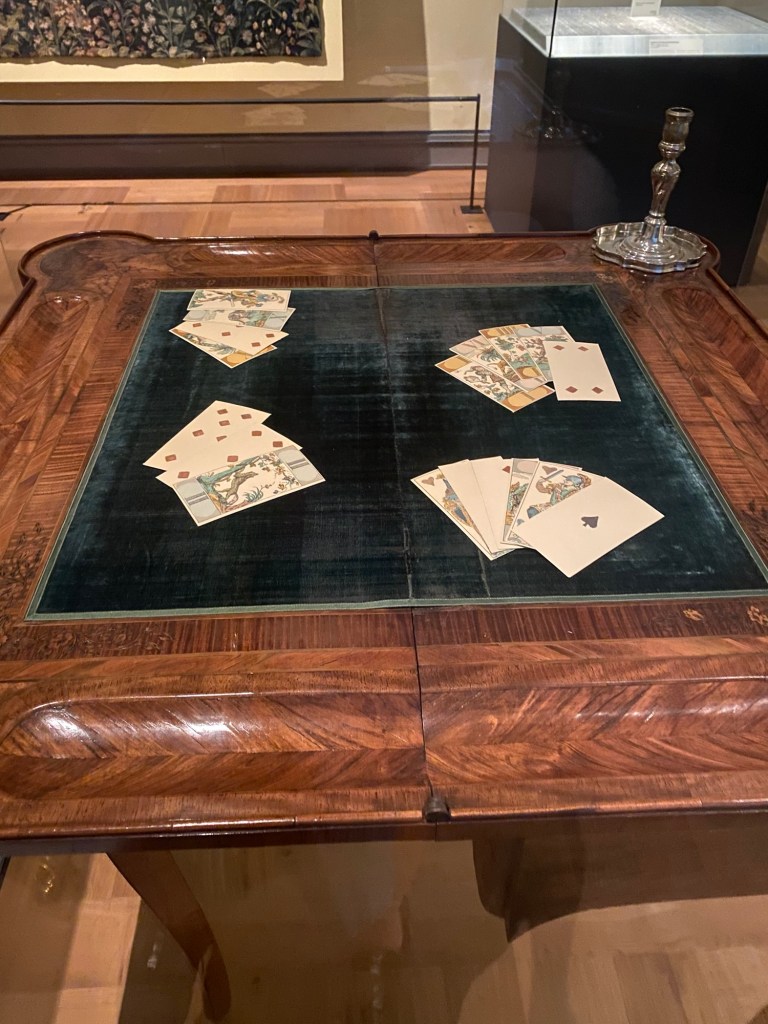
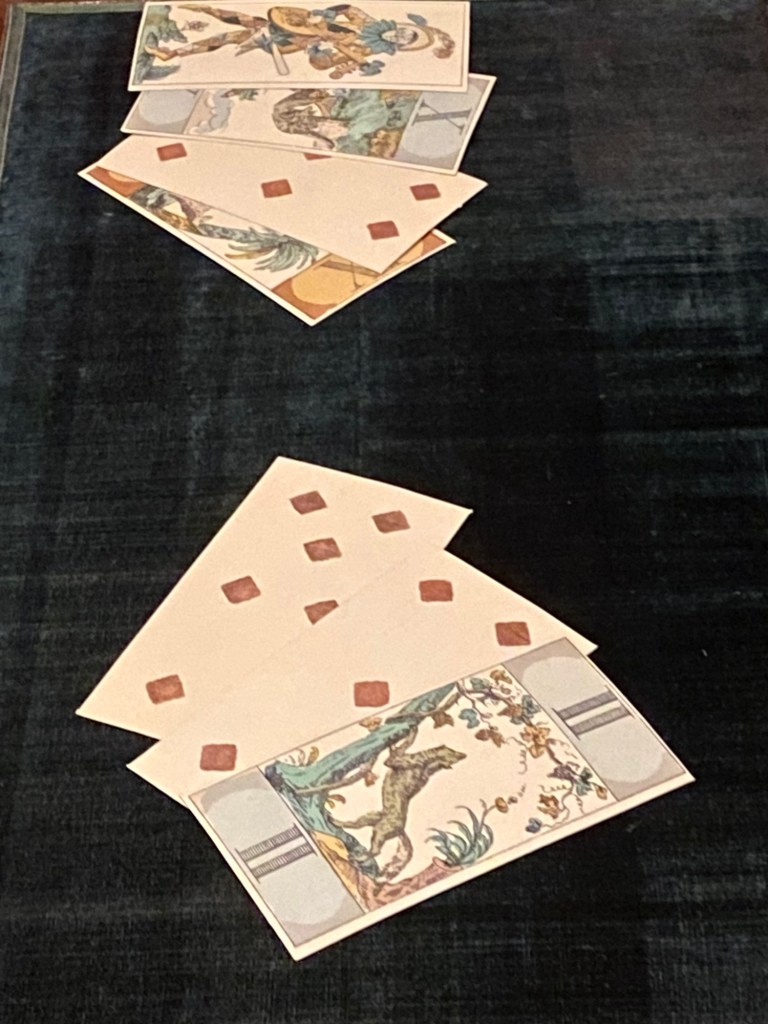
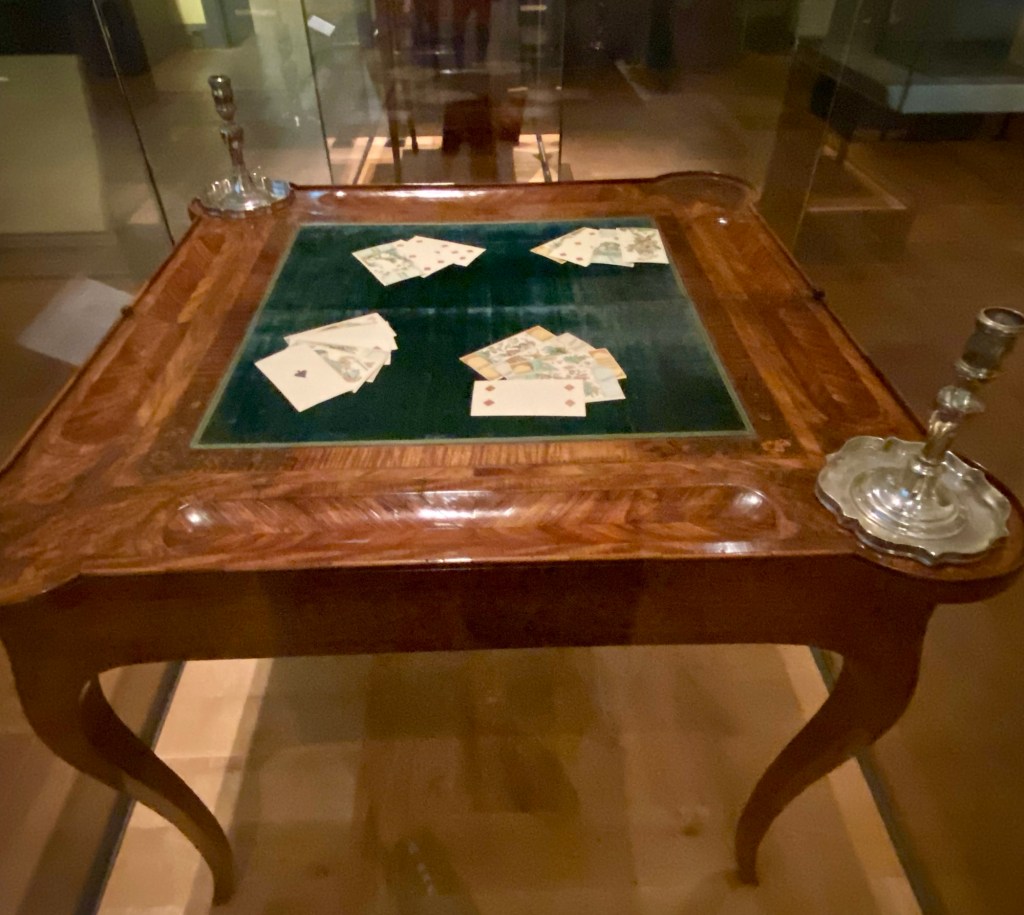
But by far my favorite are the card tables. I come from a long line of card players, and my current obsession is with the game of bridge. I would love to time travel back to Munich in the 18th century and try my luck at cards with these experts!
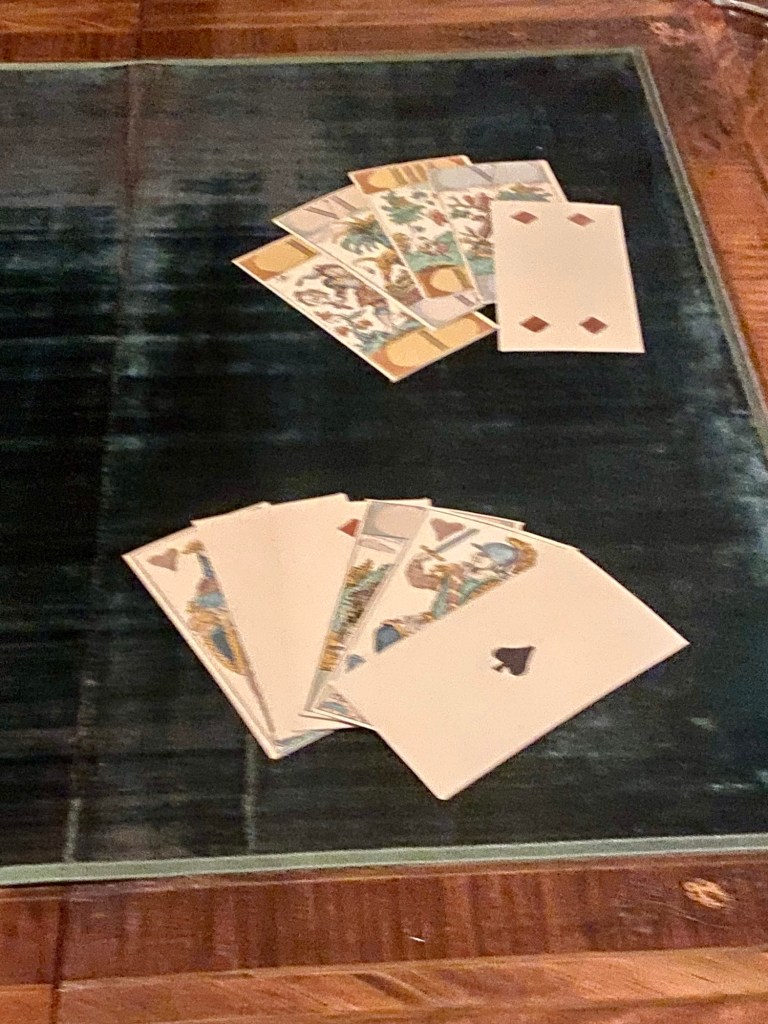
Below, diamonds and spades! Such gorgeous playing cards!
And you could play at nighttime too, with the aid of candlesticks on all 4 corners.
Wouldn’t you love to pass some time in this collection in Munich!??
The collection of Neo-classical art of the 19th Century is strongly influenced by works that once belonged to the Wittelsbach family. Thus, from the estate of Maximilian’s father King Ludwig I are magnificent presents given to him by Napoleon Bonaparte! These works speak to the strong connection between France and Bavaria. Of special importance is for example a splendid table with precious wood with a rich porcelain decor, a gift Napoleon gave in 1806 to the Crown Prince Ludwig.
The Art Nouveau Department highlights the aspects first developed in France that then spread throughout Western Europe: the floral art direction inspired by the plants and animals. The collection of fine glass, porcelain and ceramics includes many objects of high artistic and technical quality of the most important centers of this epoch in Europe and the United States. The museum displays a major collection of Art Nouveau objects, including the work of Louis Comfort Tiffany, René Lalique, Émile Gallé and several Bavarian artists.
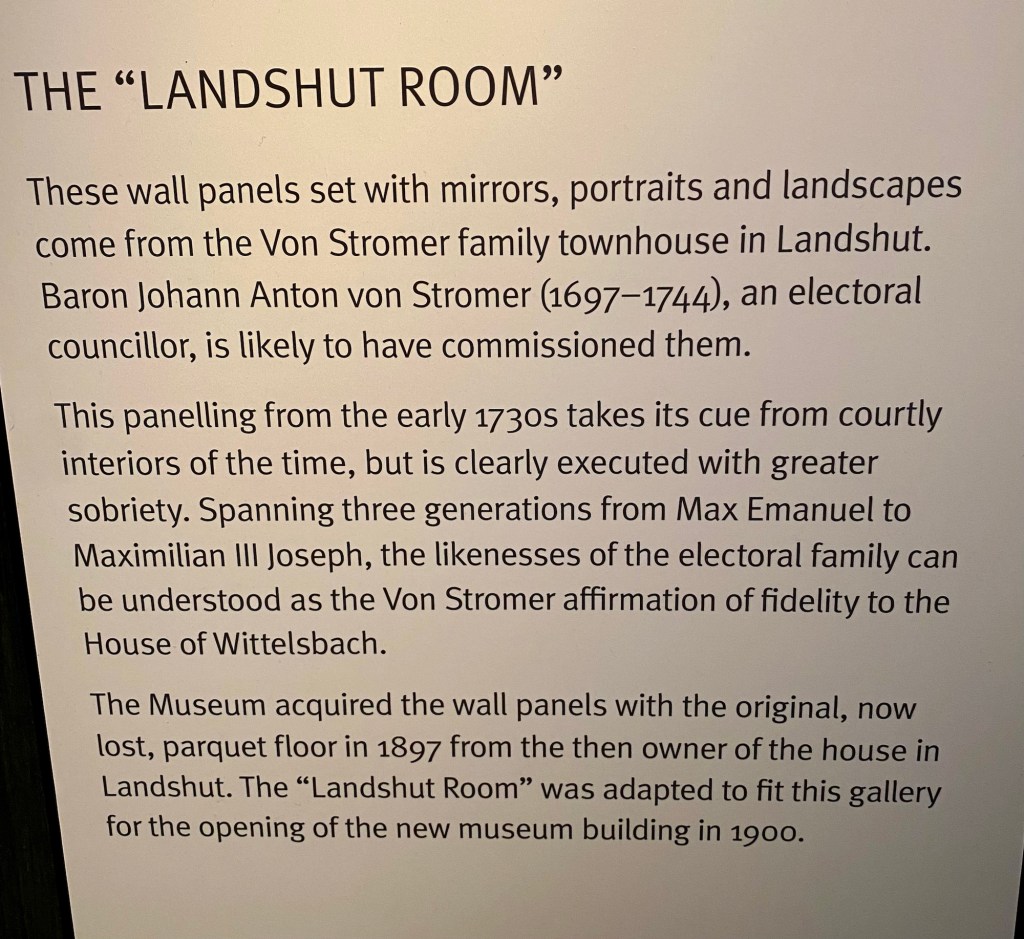
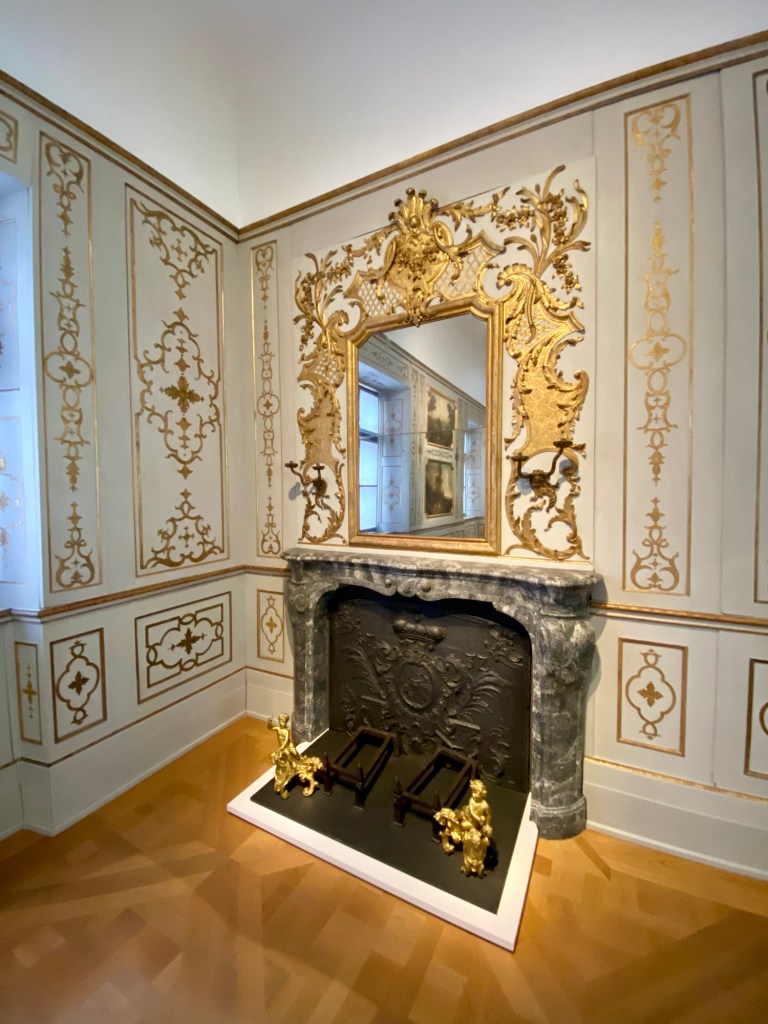
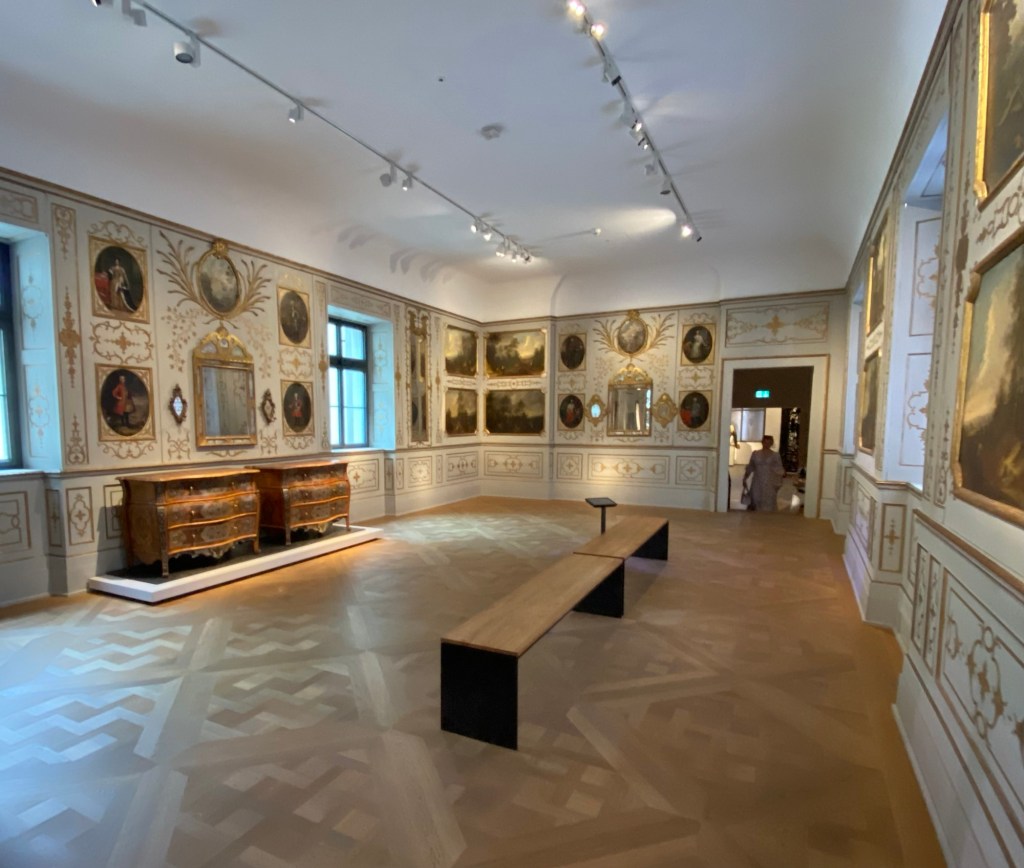
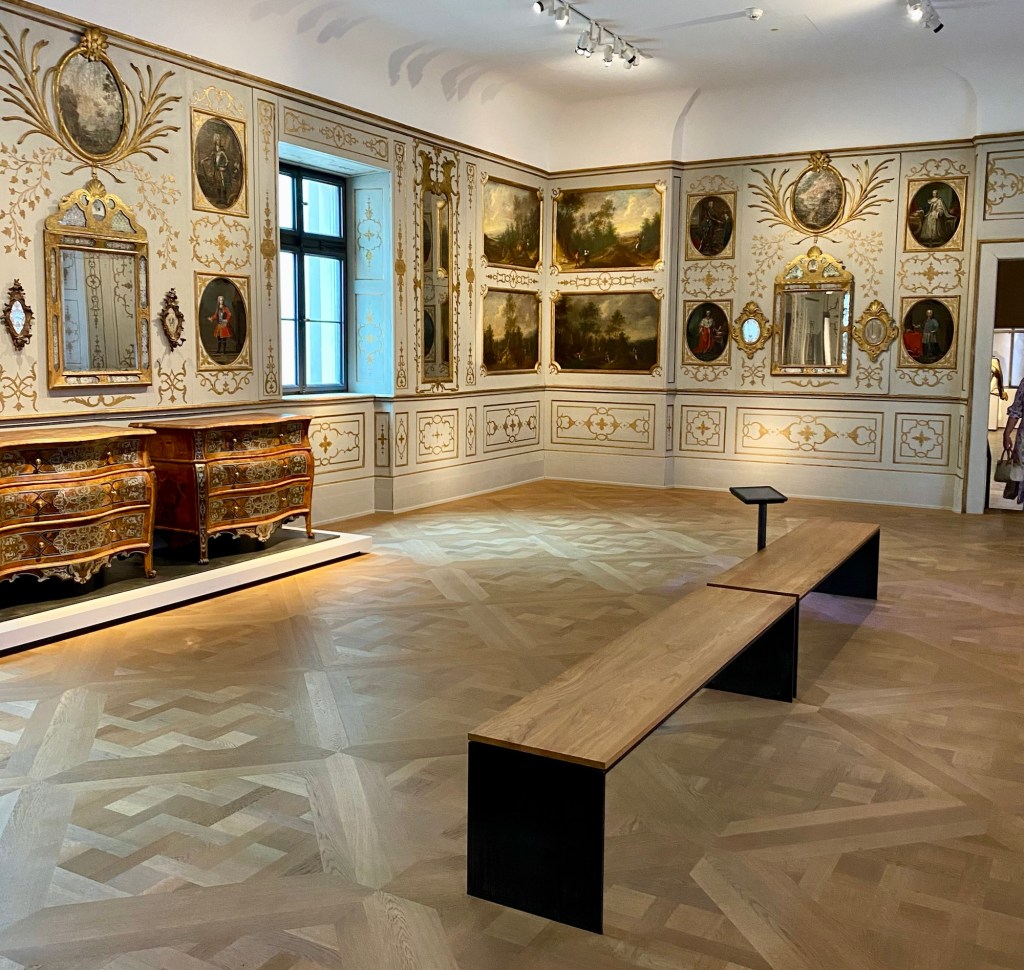
Many of the museum’s treasures are displayed in antique rooms moved to the museum. For example, the armor is in one of several rooms featuring Gothic ribbed vaulting form medieval buildings, magnificent Renaissance furnishings are displayed in rooms roofed with decorative wood-beamed and mullioned ceilings form the 14th and 15th centuries, and the Baroque objects in rooms with 16th century wood paneling and decorative ceilings.
The folklore collection houses for example traditional Bavarian furnitures, rural pottery, crockery and religious folklore including an outstanding collection of Neapolitan, Sicilian, Tyrolian and Bavarian wood carvings including street scenes and Nativity Scenes.
The museum holds an extensive collection of Nativity scene from the fifteenth through early nineteenth centuries, dramatically and imaginatively displayed. Many of the scenes display wonderful craftsmanship and detailed workmanship, some are worked in precious materials, others show exotic elements, like a Flight into Egypt intended to astonish 18th century viewers with the monkeys, crocodiles and hippopotamuses Mary and Joseph encounter on the Nile.
You’d need a week to throroughly see and study the vast holdings of this magnificent museum. Below are some things I thought deserved to be added to my post.
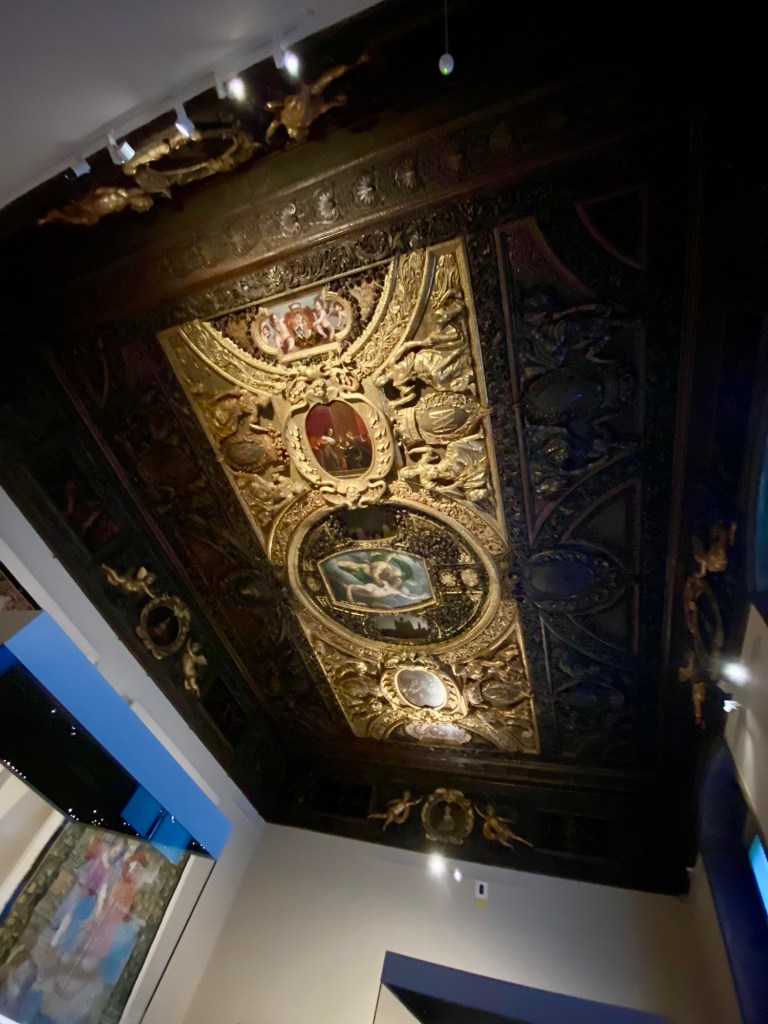
Below: an amazing inlaid ceiling, fit for Electors, Kings or Queens!
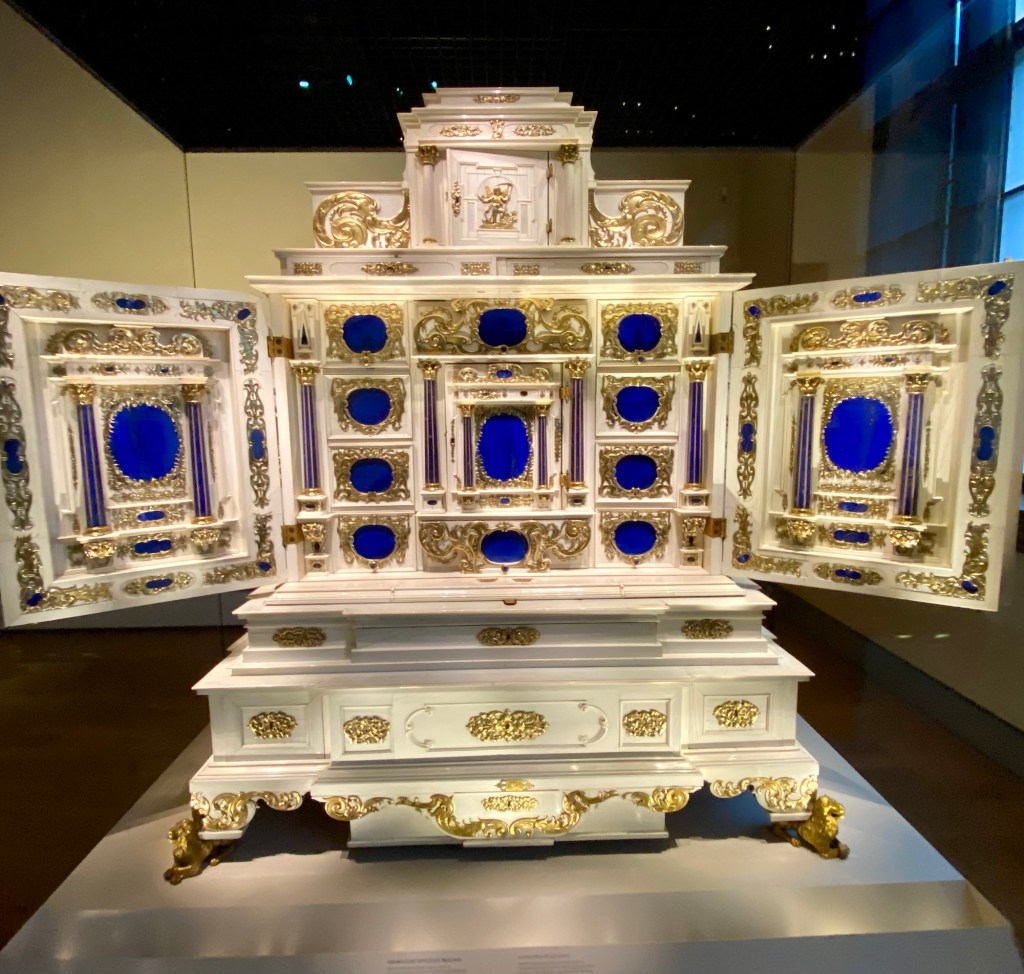
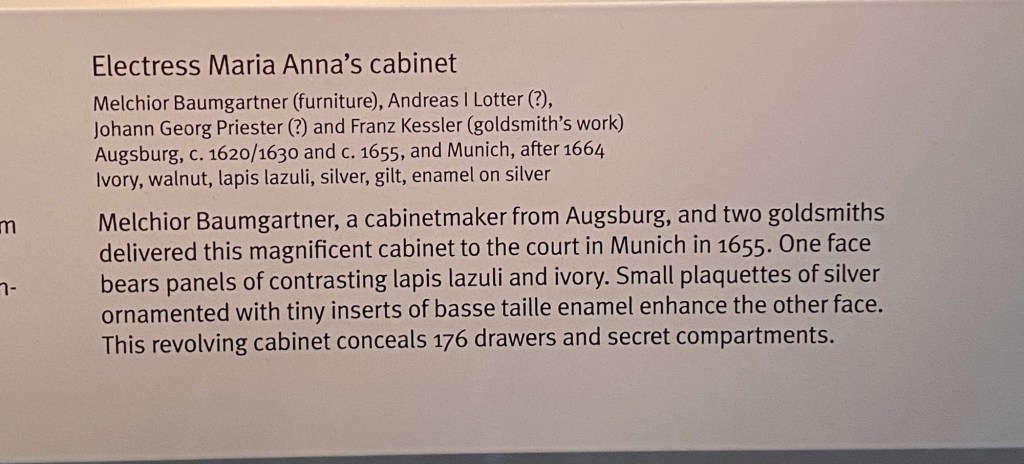
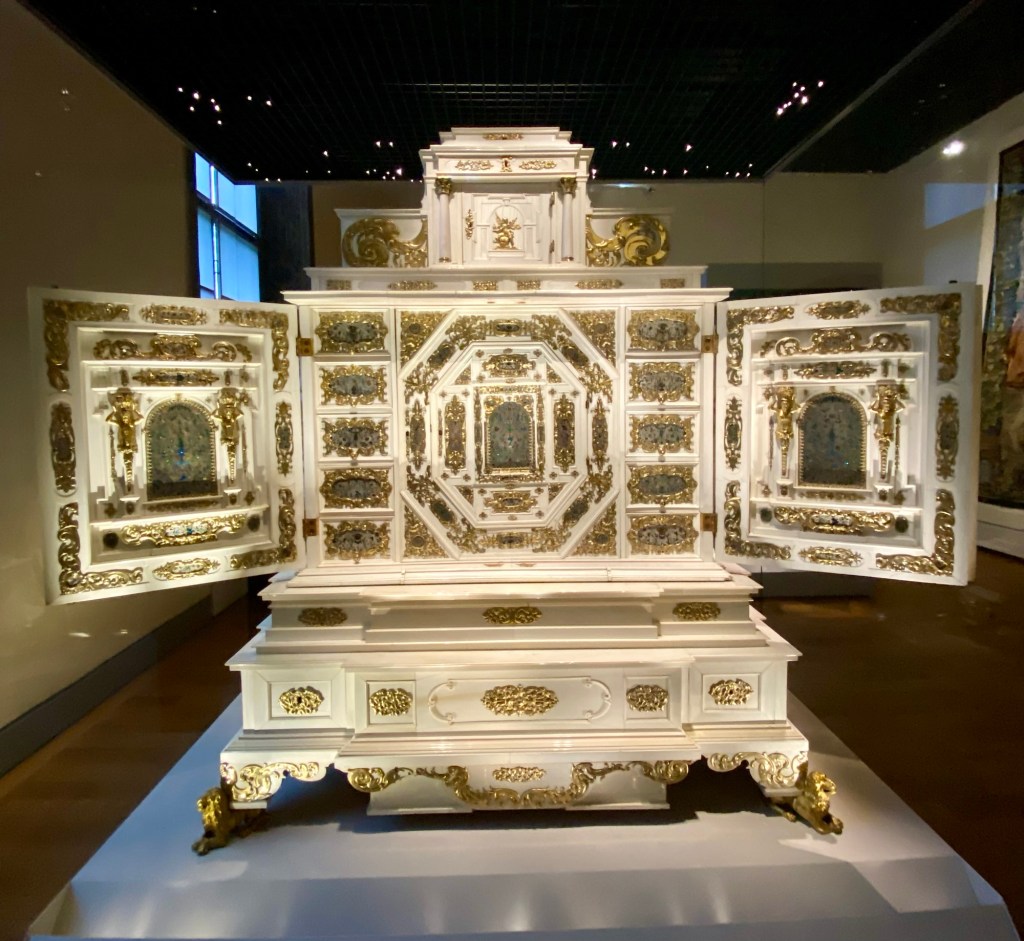
Below, a portable (if you have servants) altar. It stands about 5 feet tall and 4 feet wide, unopened. Large panels of lapis lazuli are juxtaposed against the white ivory. Talk about objects created for royalty!
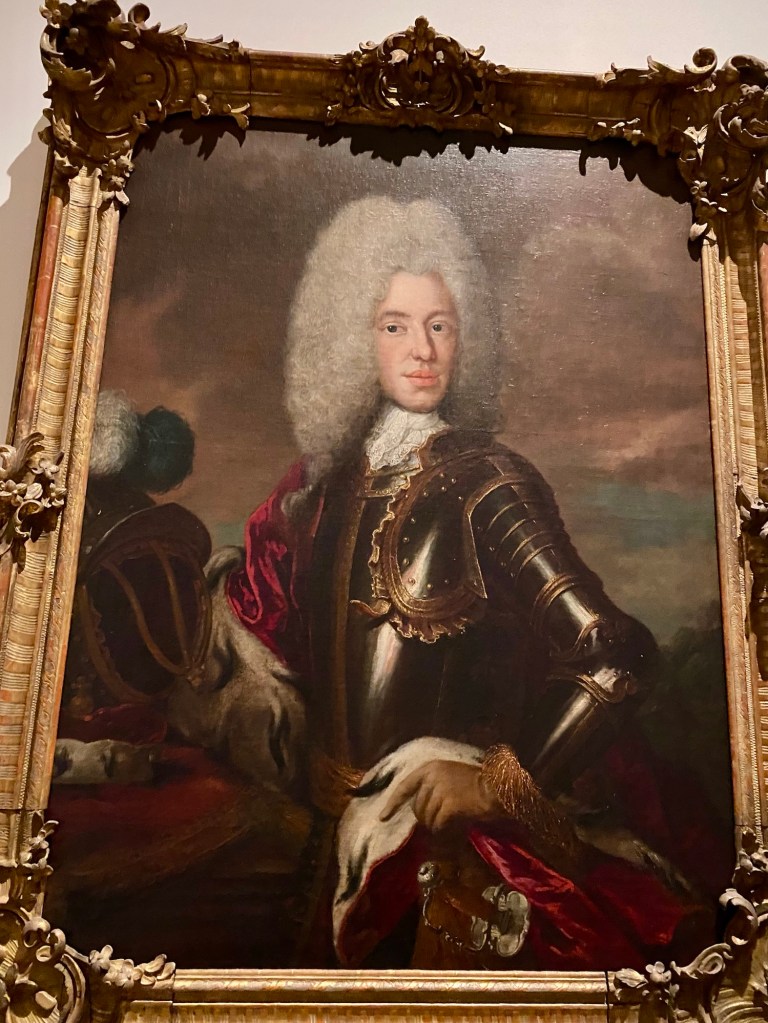
You know I love an Italian connection and so of course I loved seeing this portrait of princess Violante Beatrix at age 1, who would go on to marry Duke Ferdinando de’ Medici.
The Bavarian National Museum (Bayerisches Nationalmuseum) in Munich is one of the most important museums of decorative arts in Europe and one of the largest art museums in Germany. The museum was founded by King Maximilian II of Bavaria in 1855. It houses a large collection of European artifacts from the late antiquity until the early 20th century with particular strengths in the medieval through early modern periods.
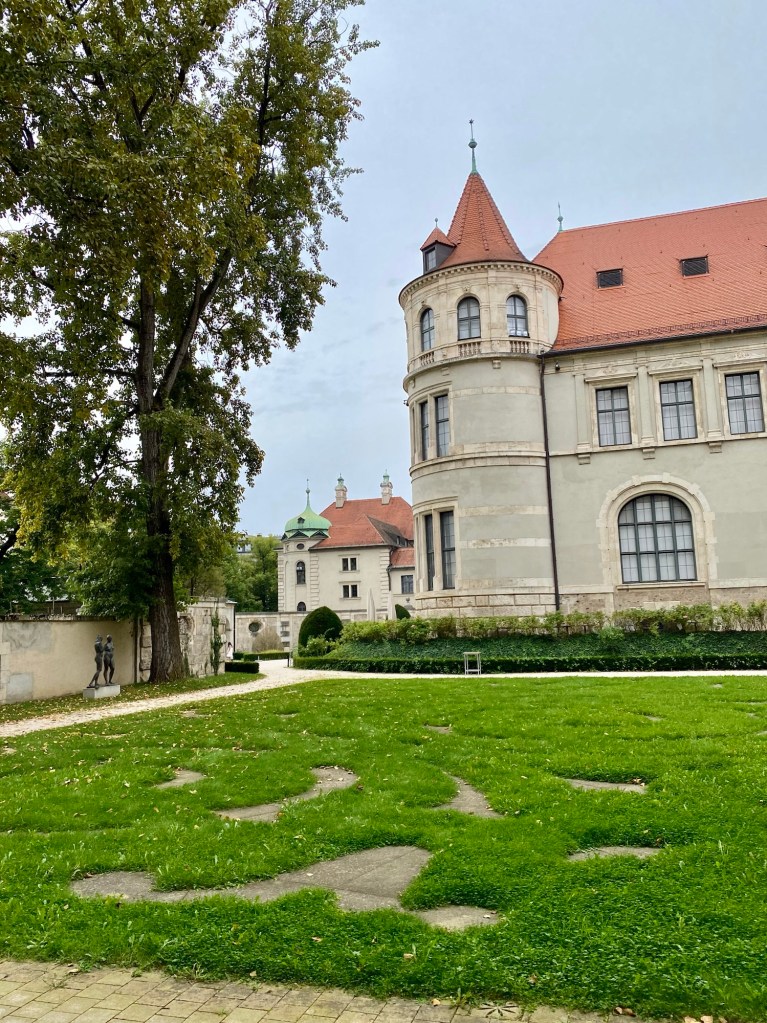
The building, designed in the historicism style by Gabriel von Seidl 1894-1900, is one of the most original and significant museum buildings of its time. It is situated in the Prinzregentenstraße, one of the city’s four royal avenues.
The main building of the Bavarian National Museum includes exhibition rooms on 3 floors. The core of the collection dates from the art collection of the Wittelsbach family. This gives the National Museum an importance far beyond the local area. Diversity and breadth of the collections, however, were particularly motivated by the new additions in subsequent periods. The collection is updated continuously not only through acquisitions, but also by significant foundations and bequests. Support experienced by the National Museum, in particular, by the 1960 launched club “Friends of the Bavarian National Museum.”
Of great note: In 2012, the Museum restituted a bronze statue to the heirs of a Jewish collector named August L. Meyer whose art collection was seized by Nazis before he was murdered in the Holocaust. The museum had acquired the bronze in 1937. Efforts have also been made to return some silver objects to the heirs of other Holocaust victims as well.
The National Museum has several branch museums throughout Bavaria. A new building behind the museum houses as addition the Bavarian State Archaeological Collection (Archäologische Staatssammlung) from the first settlement in the Paleolithic Ages through the Celtic civilization and the Roman period right up to the early Middle Ages.
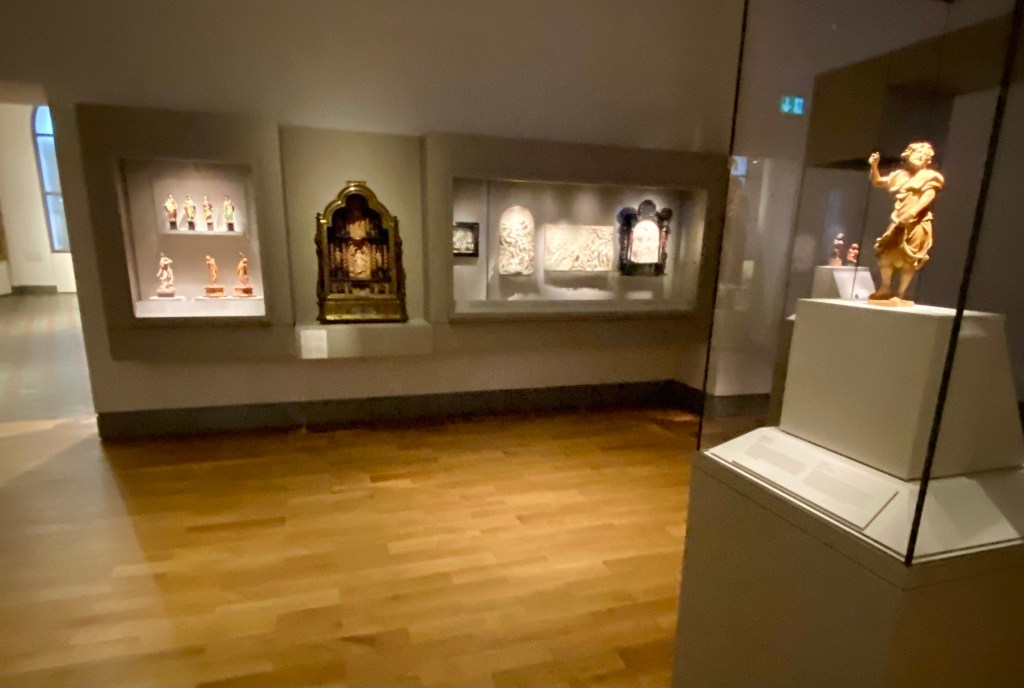
The museum is especially noted for its collections of carved ivory, goldsmith works, textiles, glass painting, tapestries and shrines. The displayed sculptures were created by noted sculptors including Erasmus Grasser, Tilman Riemenschneider, Hans Multscher, Hans Leinberger, Adam Krafft, Giovanni Bologna, Hubert Gerhard, Adriaen de Vries, Massimiliano Soldani Benzi, Johann Baptist Straub, Ferdinand Tietz [de], Ignaz Günther, Matthias Steinl, and Ludwig Schwanthaler.
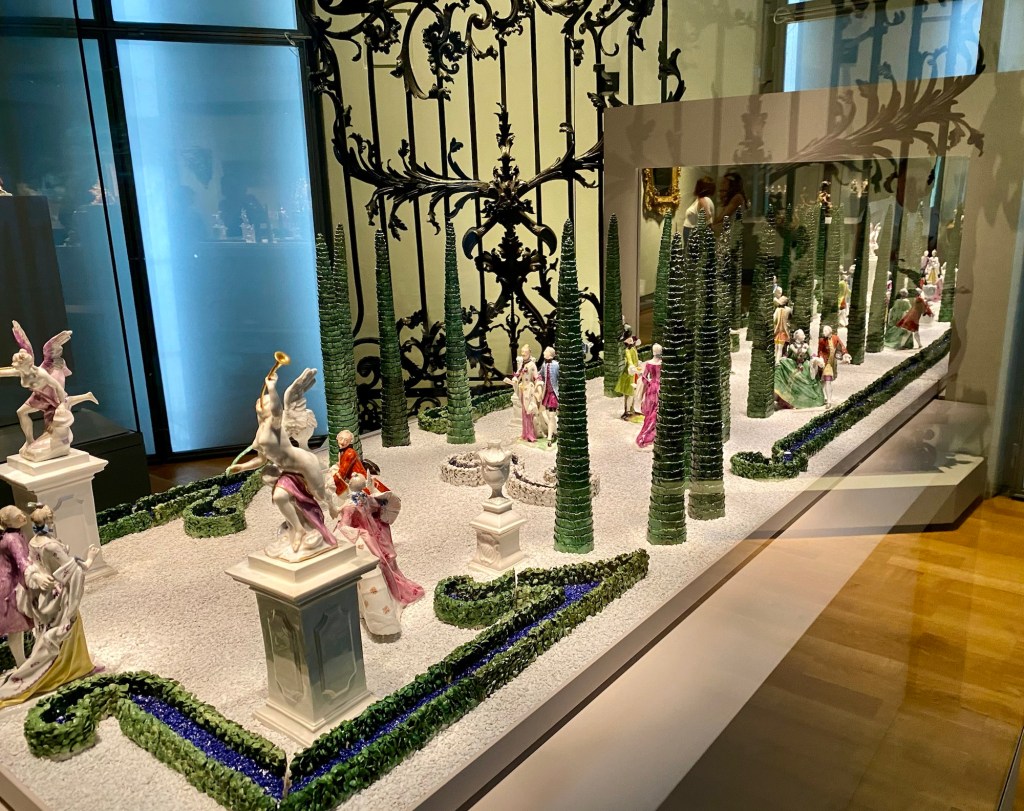
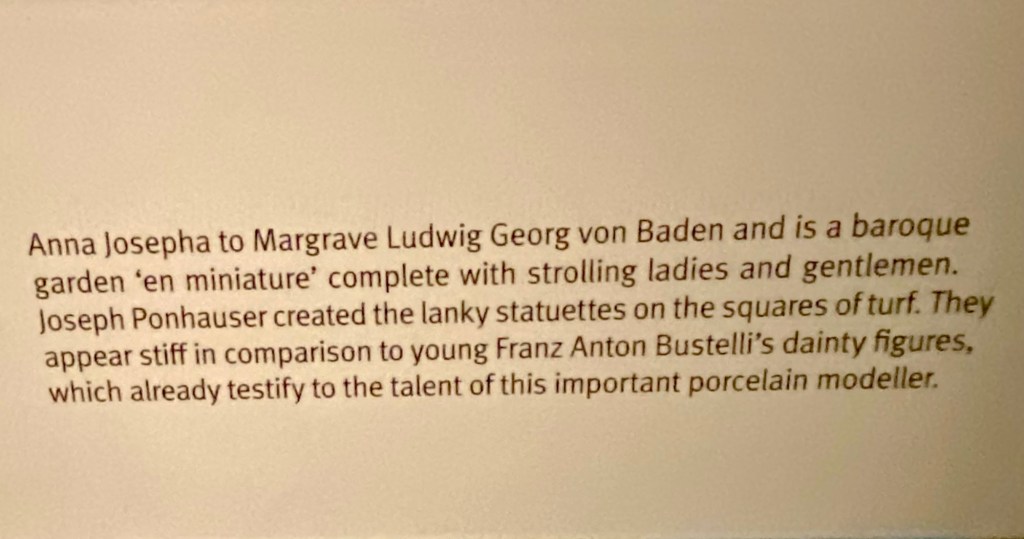
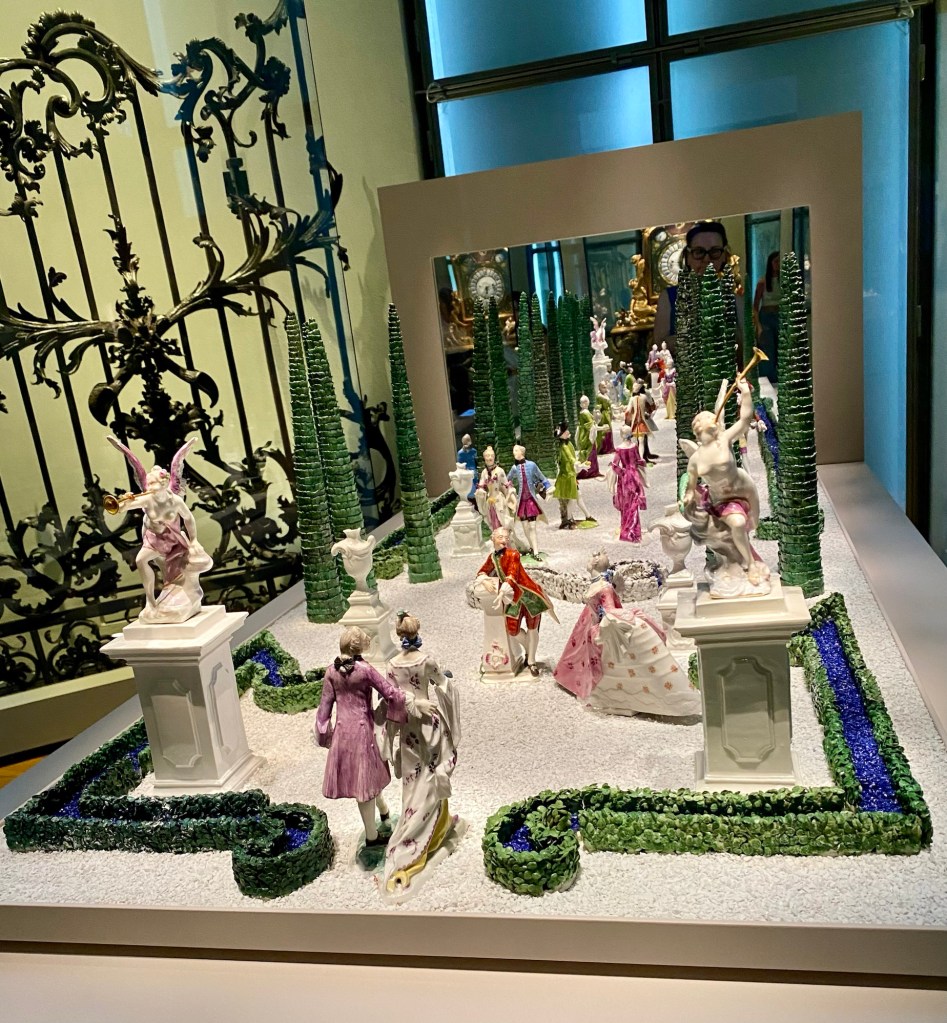
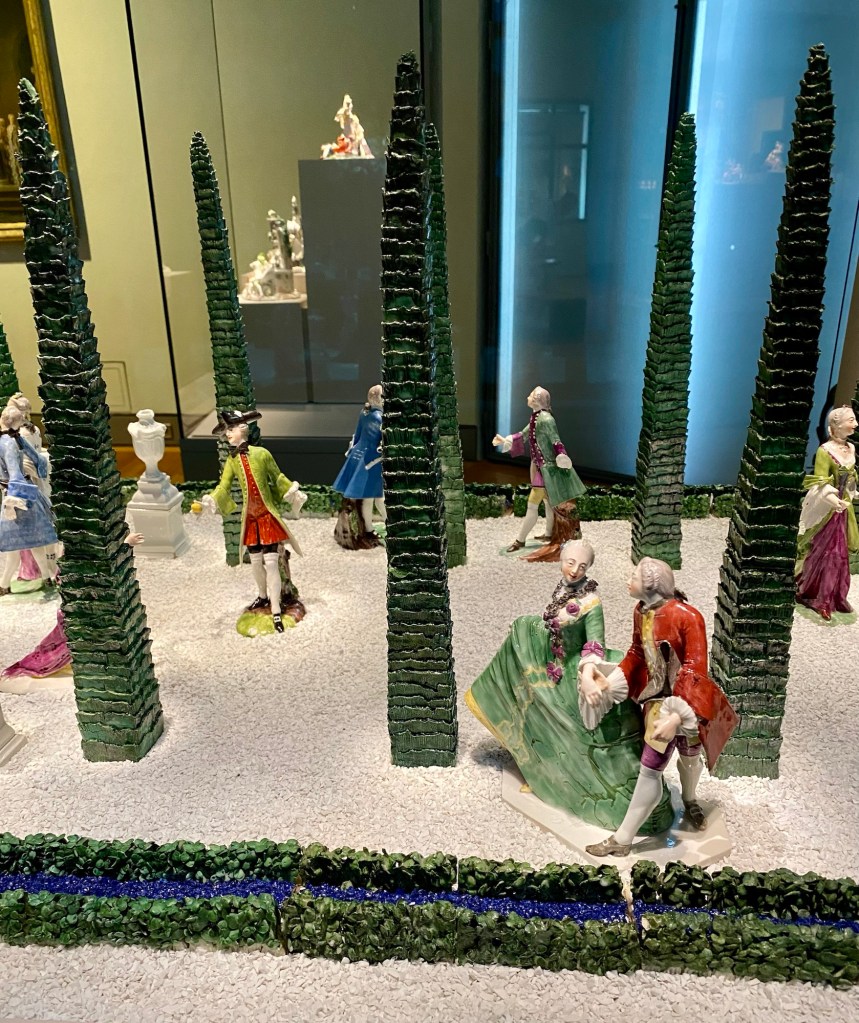
The museum is famous for its collections of courtly culture, musical instruments, furniture, oil paintings, sketches, clocks, stoneware, majolica, miniatures, porcelain and faience, and its statues. It has probably the world’s best collection of the Nymphenburg porcelain figures of Franz Anton Bustelli (1723–63).
The Romanesque period is astoundingly represented by stone sculptures from the monastery of Wessobrunn and the marble lions from Reichenhall. Important pieces of Romanesque art include wooden figures of crucifixion groups from Bamberg, Schongau and Kaufbeuren, and several works of metal and ivory. The Kasten der Heiligen Kunigunde (jewelry box of Holy Cunegonde), is a unique masterpiece made in the year 1000 in Scandinavia of wood, bronze and narwhal tusk. Reliefs from the Magdeburg Ivories, plaques probably from an antependium of Emperor Otto I and a relief of the West Roman imperial court with one of the oldest representations of the Ascension among the most famous works in the ivory collection.
Key works of ivory art, important stained glass windows, and not least excellent testimonies of textile are found in the Gothic department. On display are also historic Gothic chamber ensembles such as the magnificently painted Zunftstube of Augsburg weavers, one of the finest Gothic cabinets at all.
The Bavarian National Museum displays one of the largest and most important collections of late medieval sculpture from the German-speaking countries. Special attractions are the great knight’s hall with the ceremonial armor of the 15th and 16th Century and the true to scale wooden Renaissance models of the Bavarian ducal capitals.
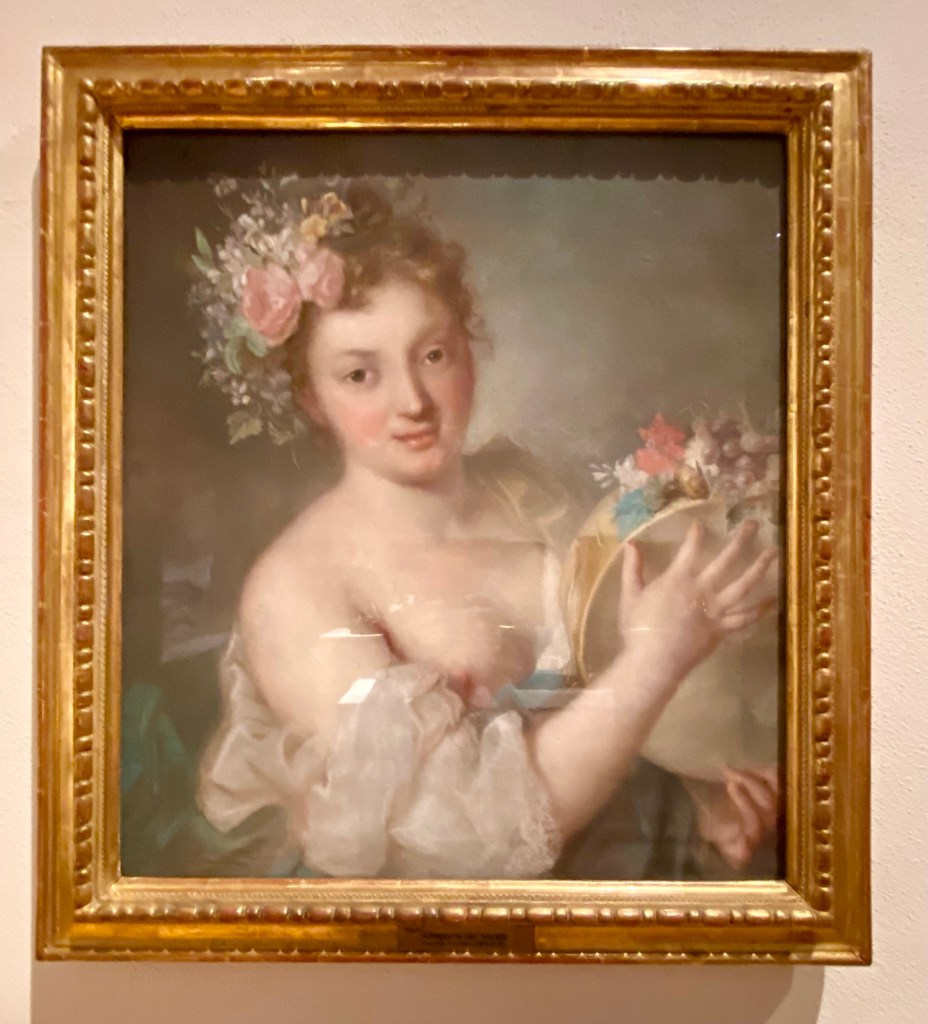
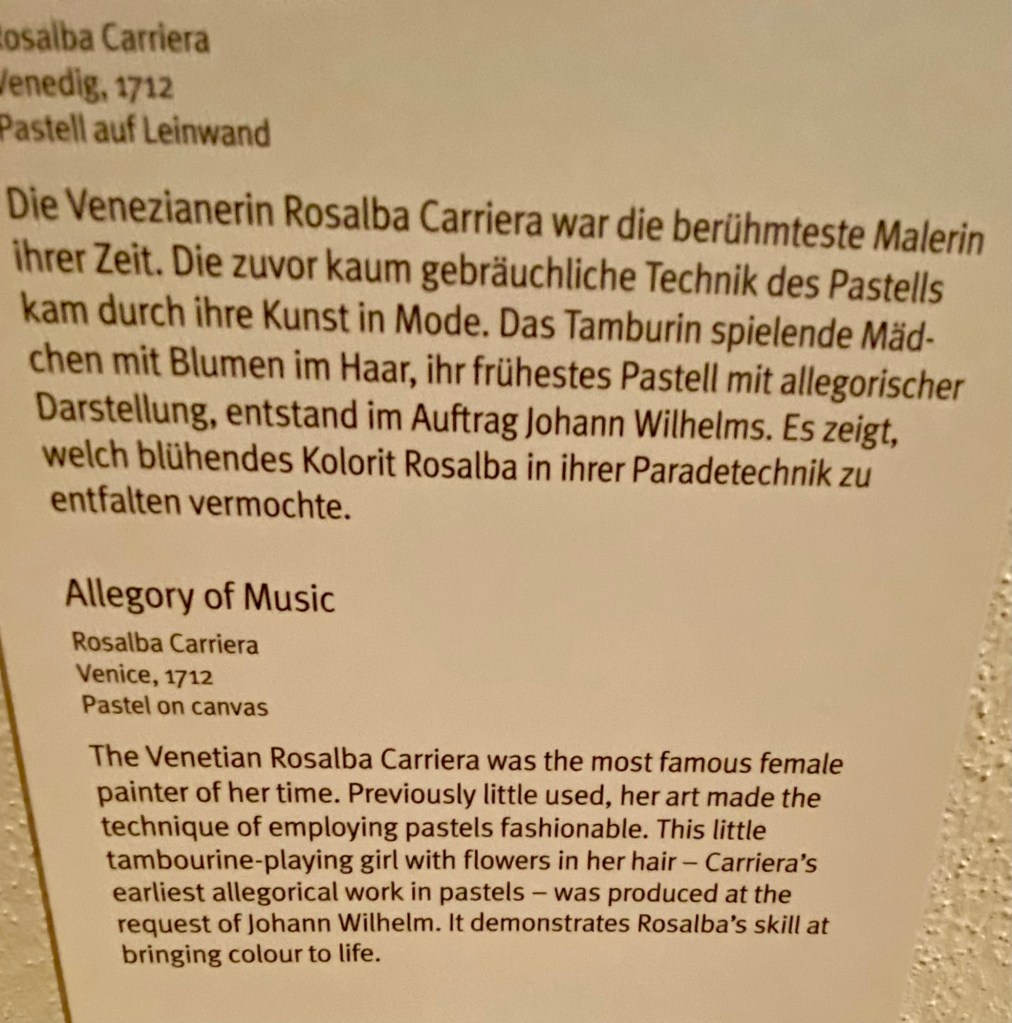
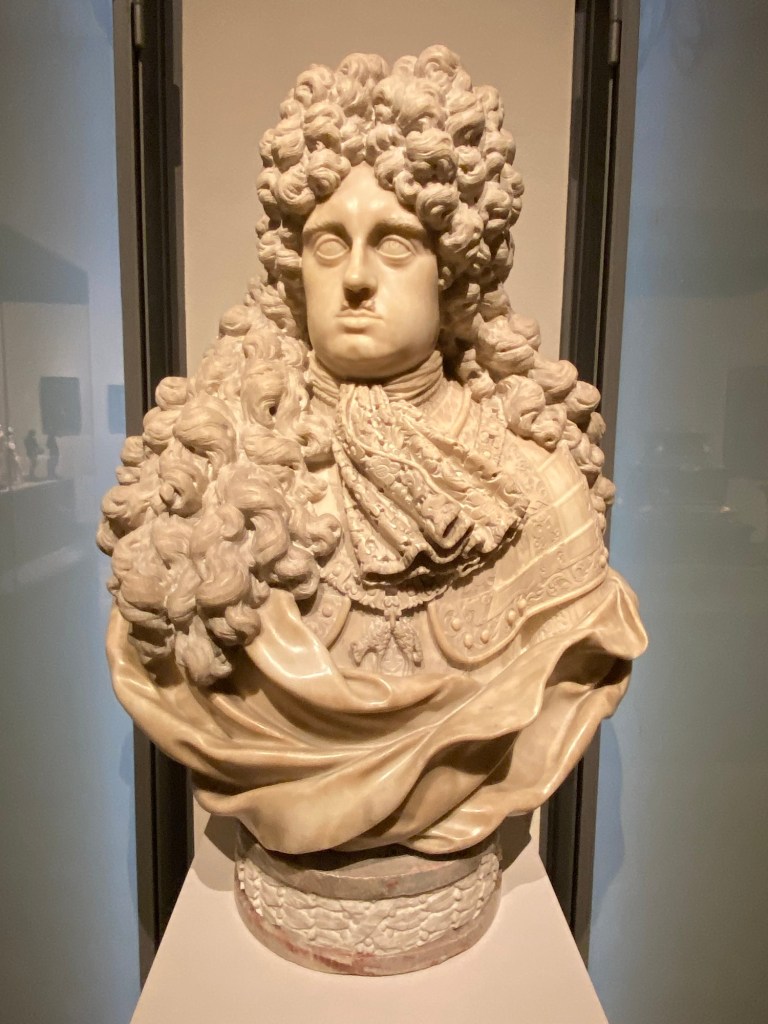
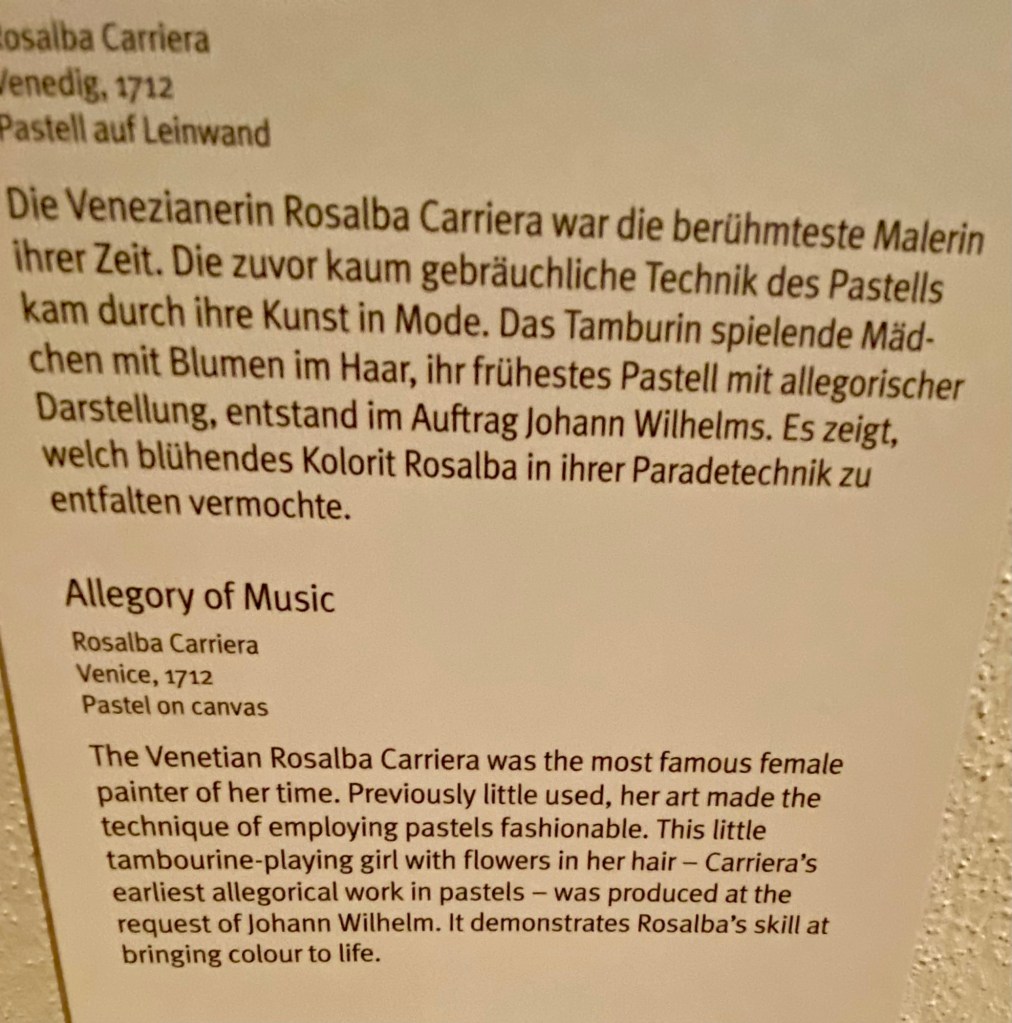
The portrait art of the Renaissance is represented by medals, miniatures, paintings and full plastic sculptures. Many items come from the art chamber of the Wittelsbach family. From the possession of the Wittelsbach the Bavarian National Museum also presents unique Baroque objects from all areas of craft and artistic production, such as ostentatious furniture, jewelry, weapons, musical instruments, watches, glasses, miniatures, ivories and bronzes. Of importance are especially Florentine bronzes from the collection of the Medici and pastel paintings from Venice including works of Rosalba Carriera. The Bavarian National Museum has the most important collection of the Bavarian Rococo sculpture. A rich collection of architectural models and designs for frescoes and altarpieces documents the new buildings and conversions of churches in the competition of the various monasteries and convents. A unique court ensembles are the silverware of the Prince-Bishop of Hildesheim and the service and figurative centrepieces of Nymphenburg and Meissen porcelain manufacturers. Rare furnitures testify to the high rank of the most famous German cabinetmaker manufactories of the 18th Century.
There is so much to see and think about in this fantastic museum that one post will not suffice. Below are some of the fascinating objets I encountered on my visit. I’ll be posting soon about some other aspects of the collections.
When I happened upon this lovely ceramic figurine, I momentarily thought I had wandered into a Tang China display! Closer inspection revealed it may look Chinese to me, but it is thoroughly Italian. From Ferrara to be specific. It beautifully shows us St. George and his nemesis, the dragon.
The wooden sculpture of the Virgin Mary below is one part of a 2-part sculptural group of The Annunciation, created in Tuscany c. 1410. Lovely in its own right, it would be wonderful to see it with its partner representing the Angel Gabriel.
The next picture shows a gorgeous ceiling. I love its massive simplicity.
Next is a polychromed sculpture from the workshop of Lorenzo Ghiberti. I am feeling right at home.
The works by Luca and Andrea della Robbia are immediately identifiable and always dazzle my eyes. I could spend an eternity in their presence.
The next photo of a relief in bronze and a bronze statue by Giambologna are especially fine.
The German Renaissance! Let’s learn. I know next to nothing about this era.
And, with the next work of art, we are back with an Italian connection. Read the label and you’ll understand that an Italian living in Nuremburg commissioned this unusual lidded drinking vessel. He sought to have his family’s crest, including the head of a Moor from the Pucci family coat-of-arms and the eagle from that of the Strozzi family, rendered here. It is quite something!





































 get back, lauretta!
You must be logged in to post a comment.