Local flavor! Love the first pic the most!

Local flavor! Love the first pic the most!
I physically left the city a while ago, but it still occupies my mind and my library of photos. I have a few strays left over that are just too good not to post.
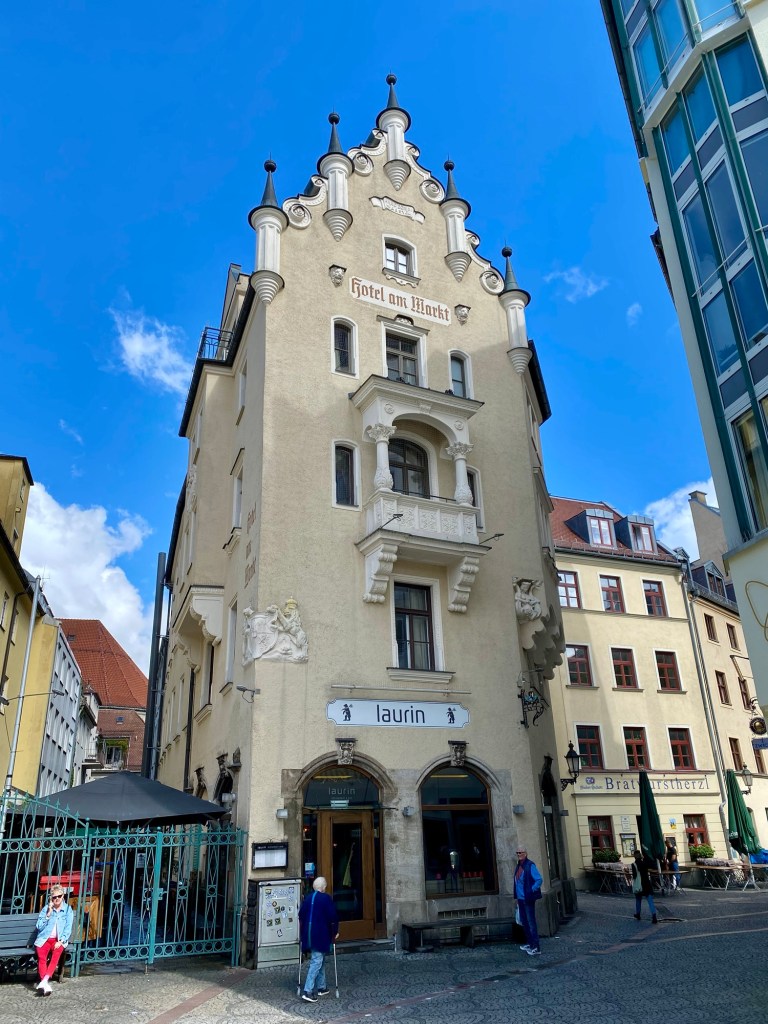
Above, a great example of local architecture.
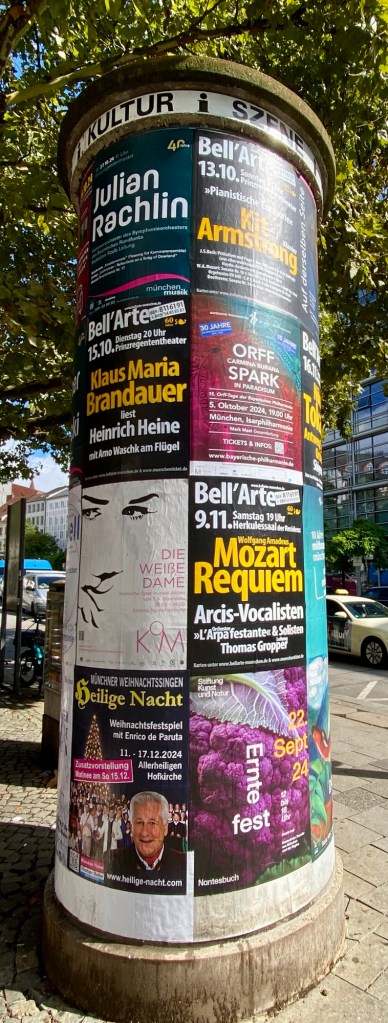
I love these kultur kiosks found around the city. In whatever city I am ever in, I enjoy studying the various posters advertising upcoming cultural events. You can tell a lot about a city from these sources.
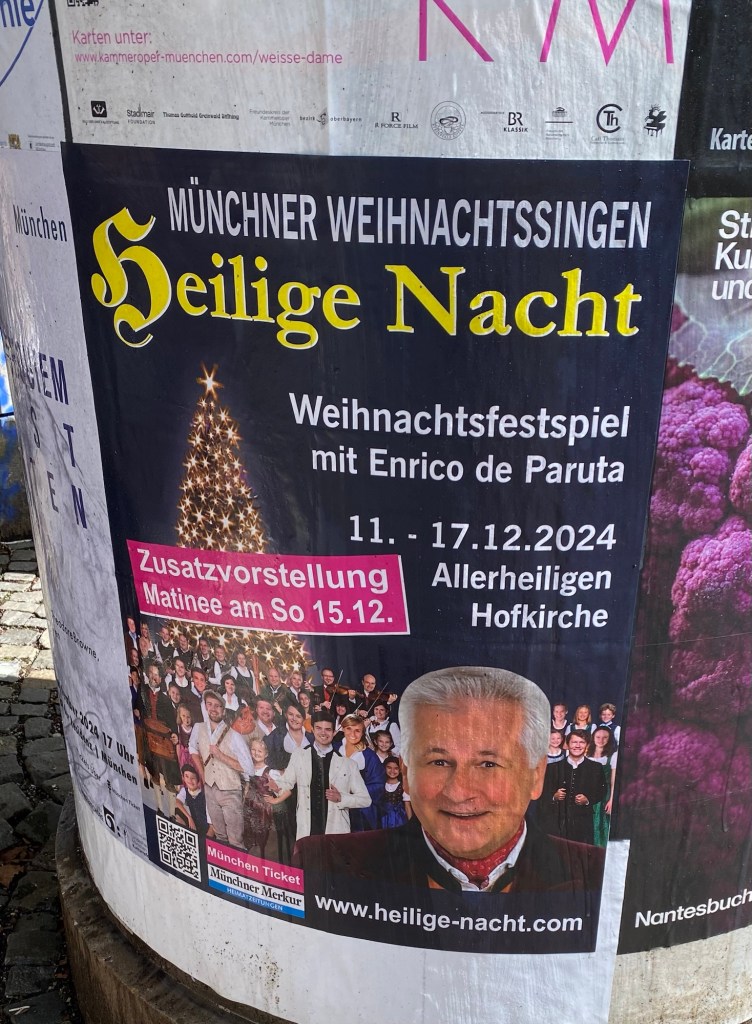
According to Google Translate, the poster above advertises “a night of Munich singing, called Holy Night.” You can enjoy this event from Dec. 11 – 17 this year at All Saint’s Church. I’d love to attend. Want to go with me?
This next poster advertises something with which I was totally unfamiliar.
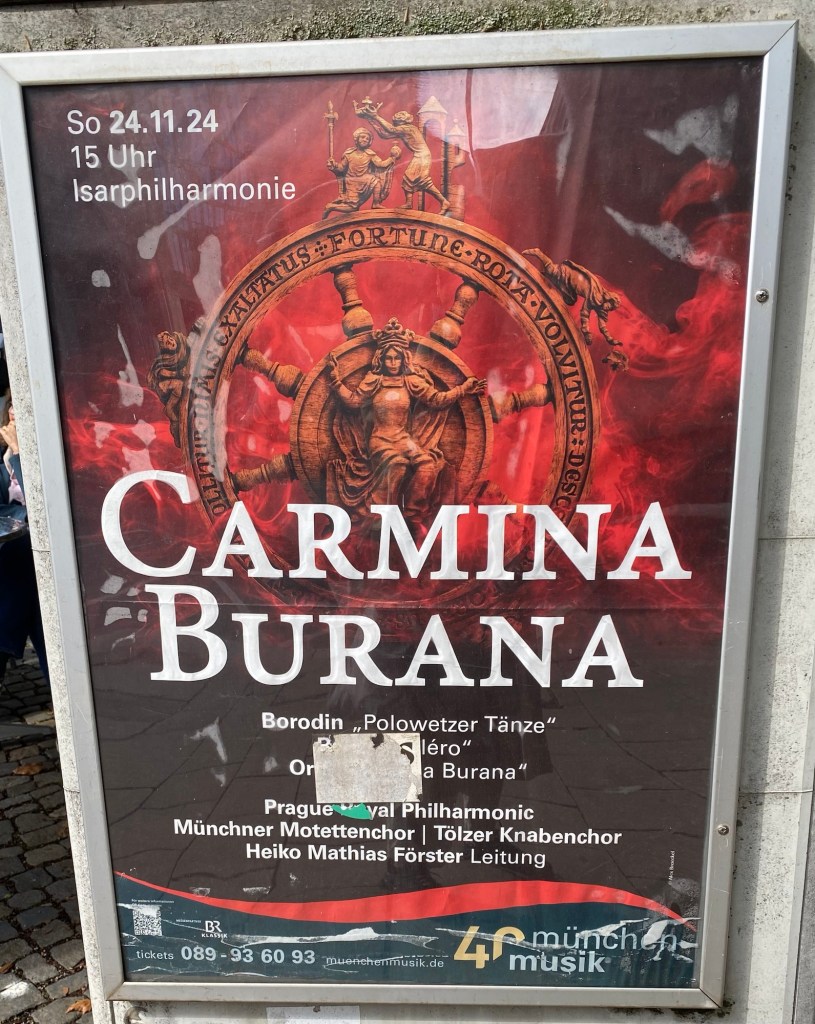
So of course I looked it up and Wikipedia tells me the following:
Carmina Burana is a cantata composed in 1935 and 1936 by Carl Orff, based on 24 poems from the medieval collection Carmina Burana. Its full Latin title is Carmina Burana: Cantiones profanae cantoribus et choris cantandae comitantibus instrumentis atque imaginibus magicis (Songs of Beuern: Secular songs for singers and choruses to be sung together with instruments and magical images). It was first performed by the Oper Frankfurt on 8 June 1937. It is part of Trionfi, a musical triptych that also includes Catulli Carmina and Trionfo di Afrodite. The first and last sections of the piece are called Fortuna Imperatrix Mundi (Fortune, Empress of the World) and start with O Fortuna.
The autograph manuscript of the work is preserved in the Bavarian State Library, and was issued as facsimile edition by Schott Music.
If you want to hear a sample, click on this link: https://en.wikipedia.org/wiki/File:Carl_Orff-Carmina_Burana-O_Fortuna.ogg. Don’t you just love living in 2024 with the Internet?
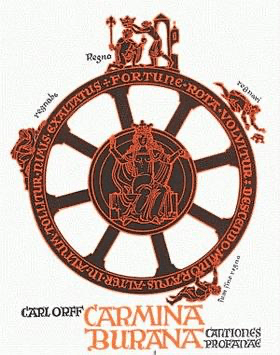
If you are lucky enough to be in Munich on November 24th, you can attend this event.
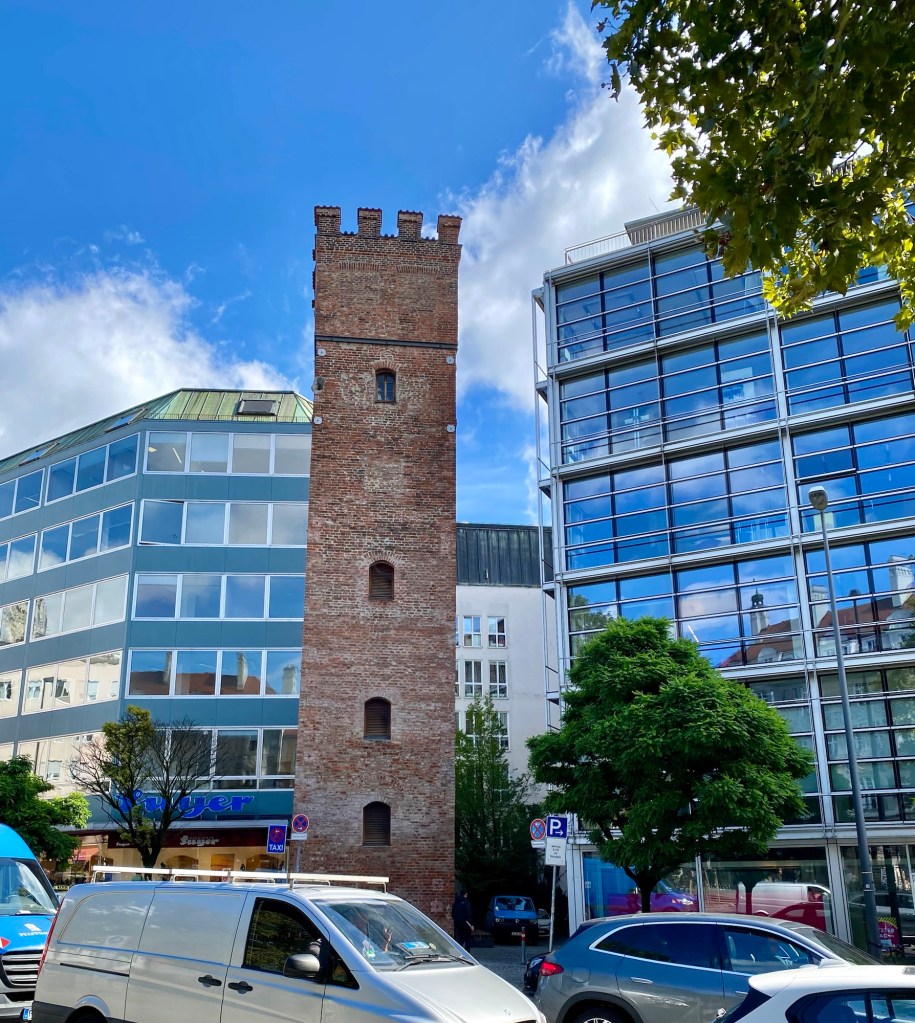
Throughout the city there are random reminders of Munich’s past, juxtaposed with its present. I love this medieval tower that has been preserved.
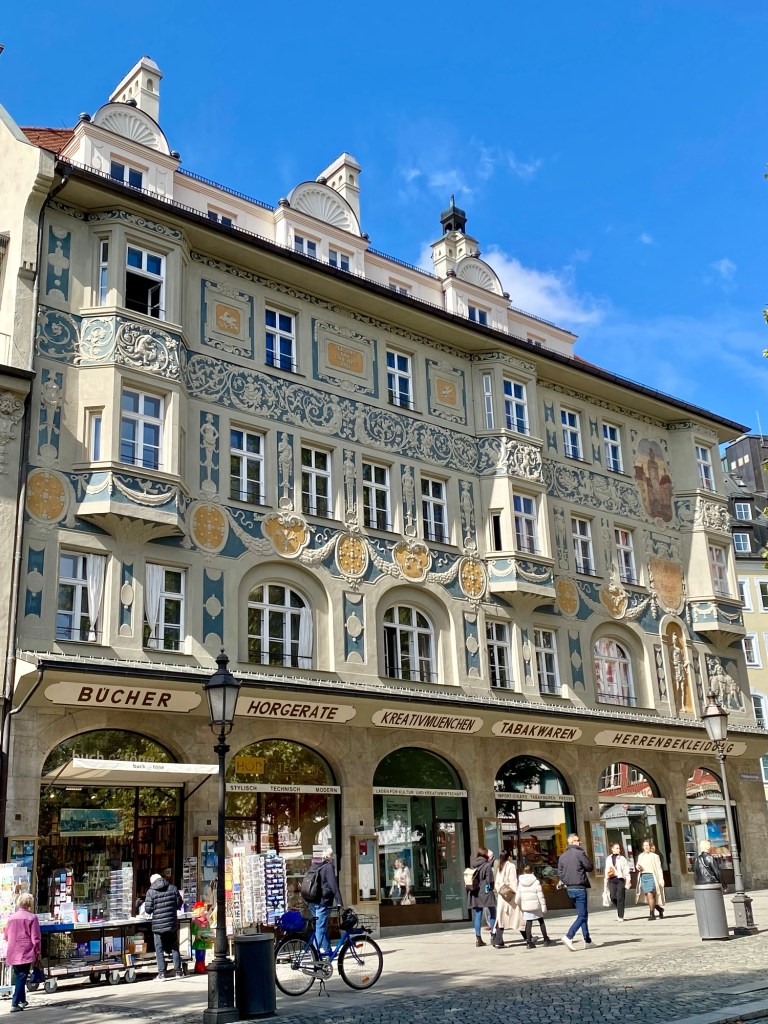
Below, another example of beautiful local traditional architecture.
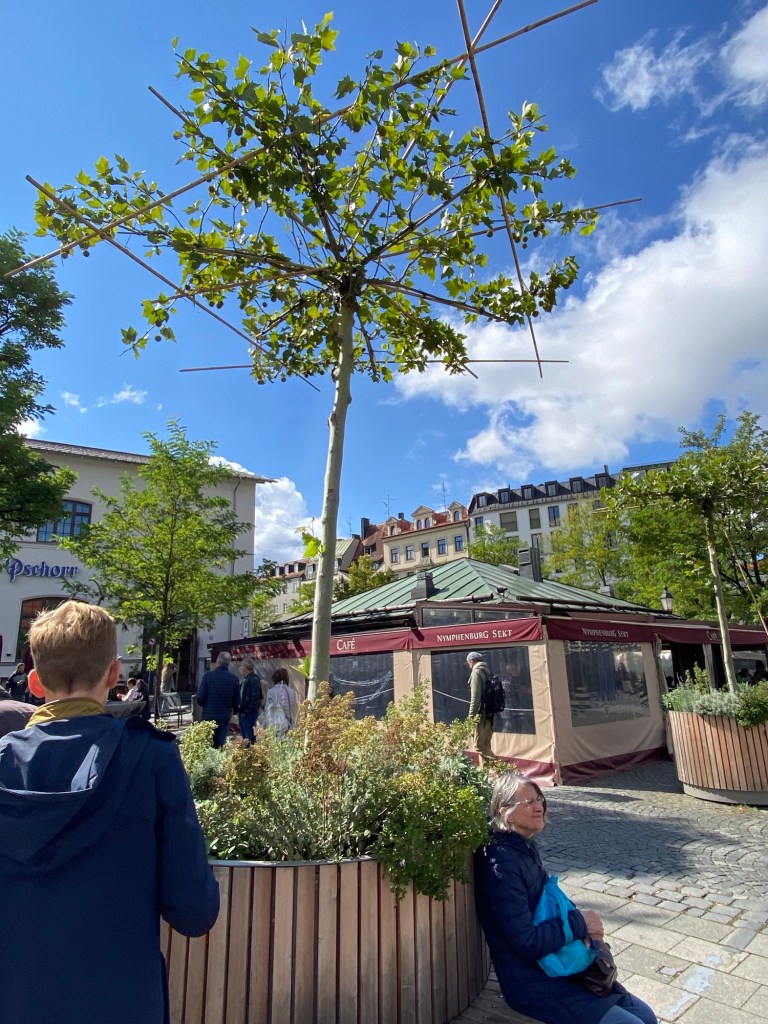
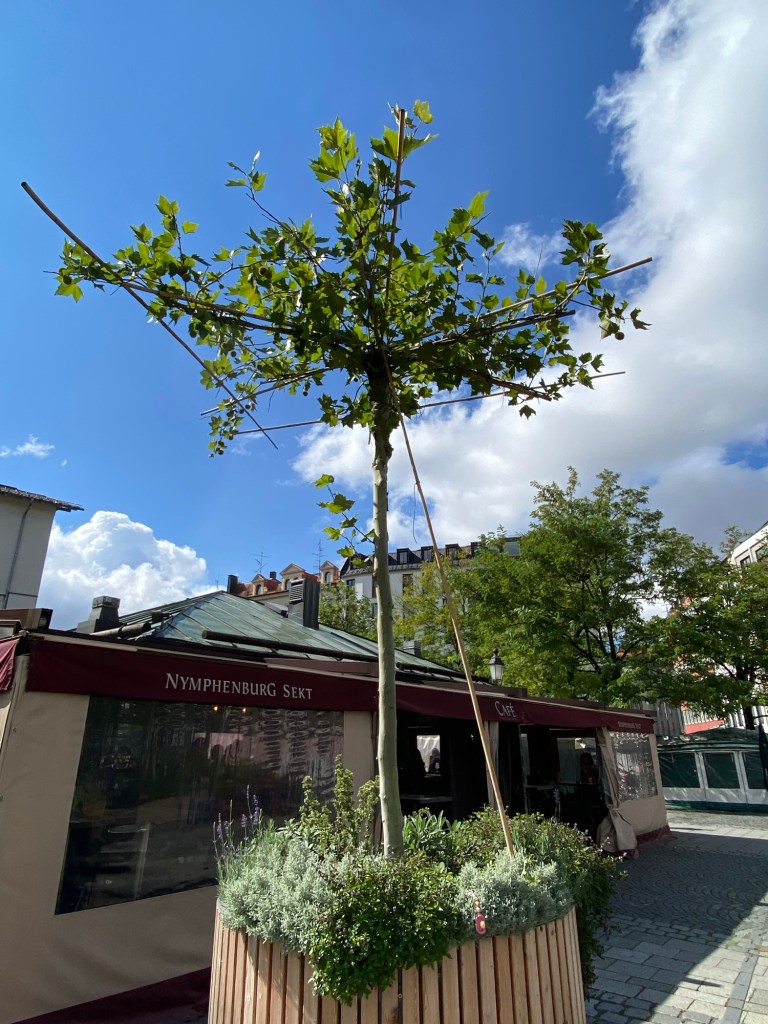
I the famous Viktualmarkt I spotted these young trees which are being trained to provide a canopy of shade in the shape of an umbrella. This is a completely new concept to me; I’ve never seen anything like it before and I love it! I want to try it at home!
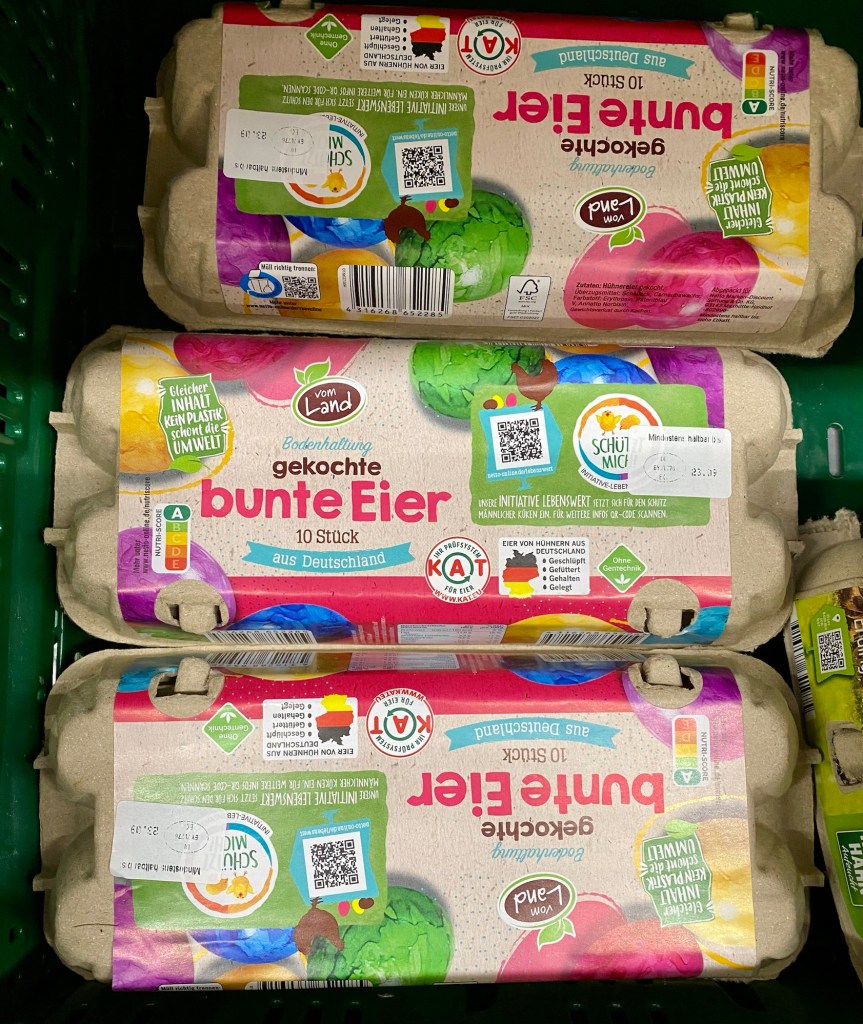
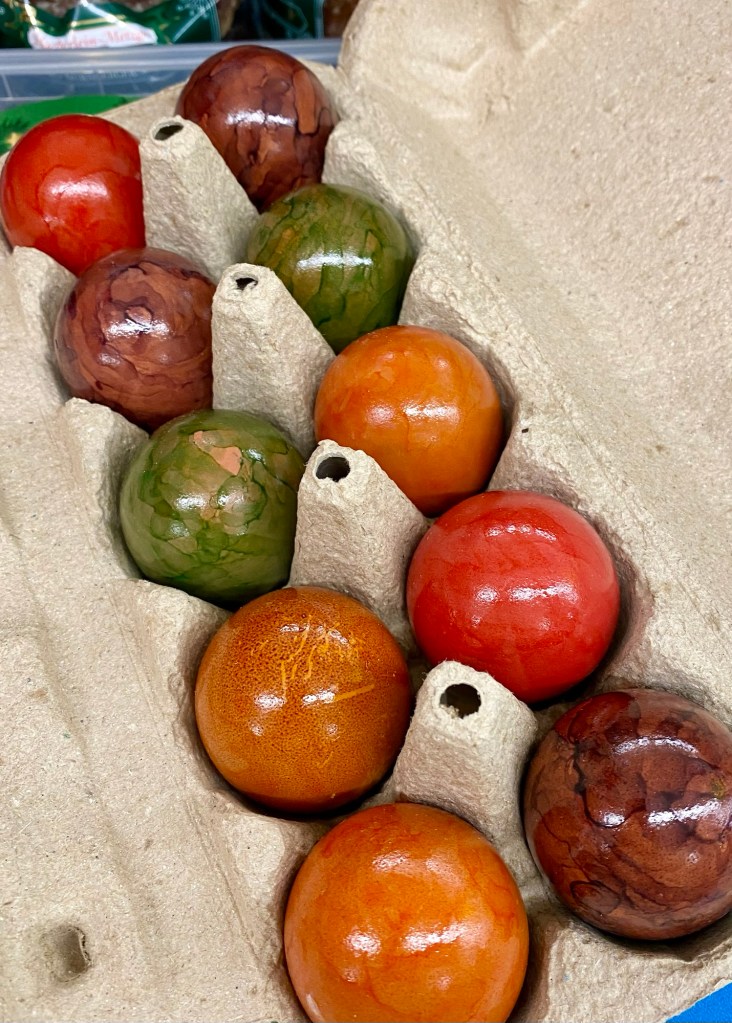
In the grocery stores I frequented in Munich I spotted these packages of eggs, displayed right next to the offerings of fresh eggs. I explored the containers and found out that the Germans sell colored eggs, much like we make at Easter, apparently all year round! The eggs are hard boiled and they were available every time I was in a store in August and September, far from Easter.
That wraps up my miscellaneous discoveries in Munich for now. I hope to return someday soon!
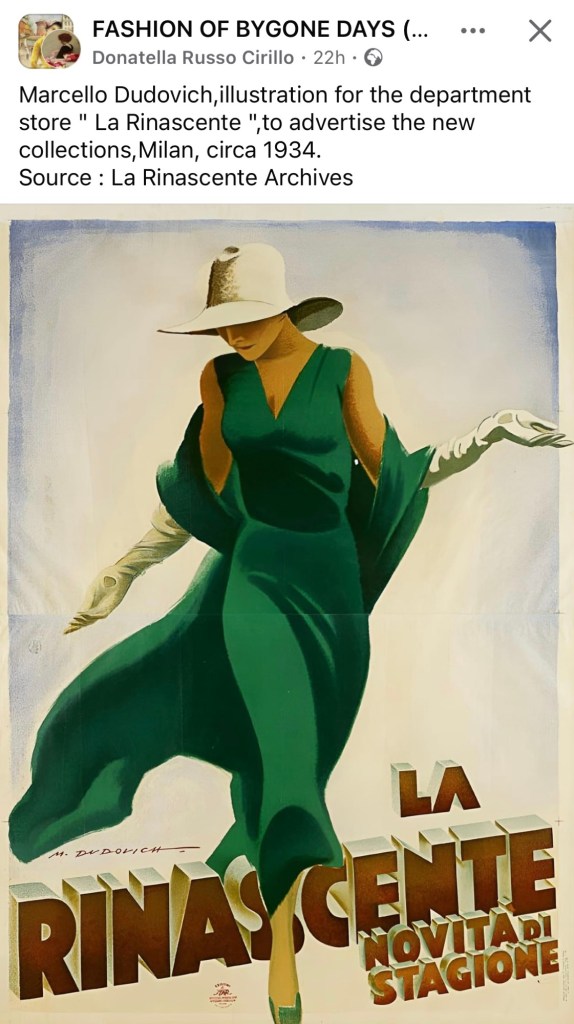
What a gorgeous illustration! During Fascism and before WWII. Crazy to think about.
In the heart of the Viktualienmarkt in Munich stands this tall, decorative “tree.” I saw a few of these throughout Bavaria and thought they were interesting. I don’t know if this is the so-called “May tree,” but I can’t find anything else to explain it. Maybe one of my readers will know and can enlighten me in the comments?

According to what I’ve read online, t,he May tree is one of the most popular traditions in Bavaria. This custom dates back to the 16th century and has been a symbol for national identity in Bavarian villages since the 18th century.
Anyone walking through Bavarian villages will probably be very familiar with the image of the maypole. Tall, straight tree trunks with no branches at all are a permanent fixture in Bavarian tradition. The maypoles used to be felled during Walpurgis Night or on the morning of 1 May.
Today, this is done much earlier so that the tree can still be festively decorated.
Traditionally it is painted in the colours of the coat of arms, blue and white, and the treetop is decorated with a green wreath. However, the maypole may look different in every region. In some places it is raised with the bark still on, in others this is removed.
Some trees have colourful ribbons hung on them instead of the blue and white painting, others are decorated with carved figures and decorative signs. Whatever it’s like, the appearance plays a major part everywhere: villages compete every year to see who has the tallest and most magnificent maypole.
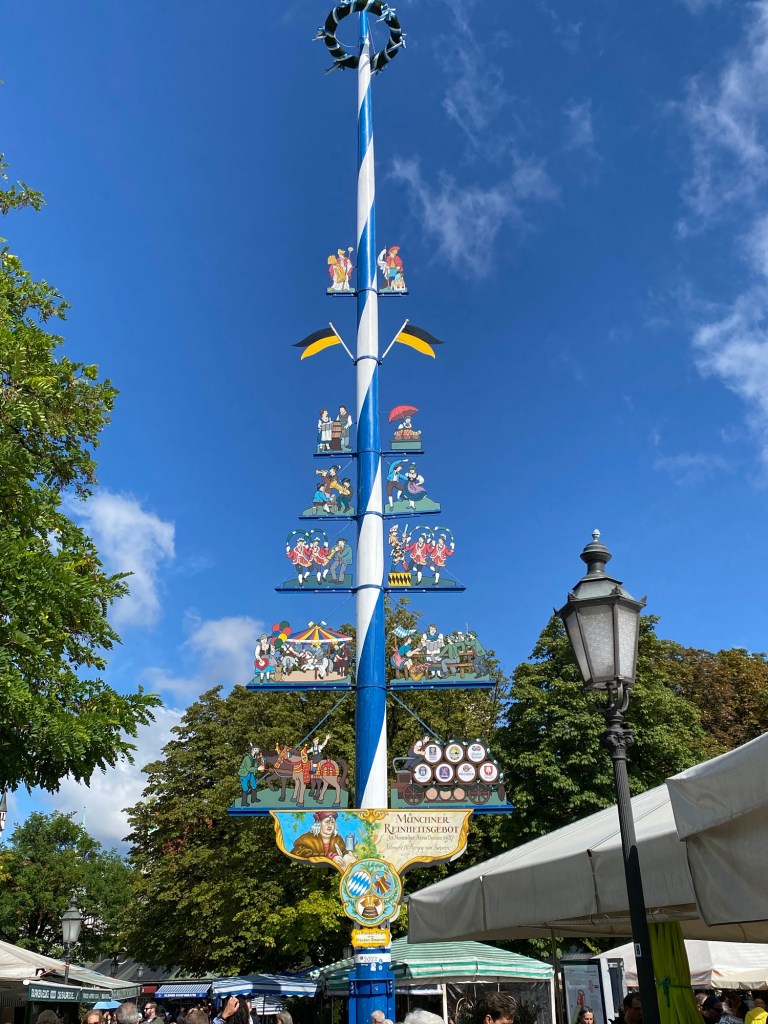
Other states, other customs – Bavaria is not the only state where traditions have formed around the maypole. The maypole is used as a custom for love in Cologne, Aachen and Bonn. Single men place a maypole in front of the houses of their sweethearts, carve their names into the tree and pick it up again a month later. In return they receive an invitation to dinner, a crate of beer or in extremely lucky cases, a kiss! Our Scandinavian neighbours are also famous for their festively decorated trees for their Midsummer Festival. Regardless of where and for what occasion the maypole is being used, it always ensures a happy moment.

Please enlighten me if you know more! Danke!
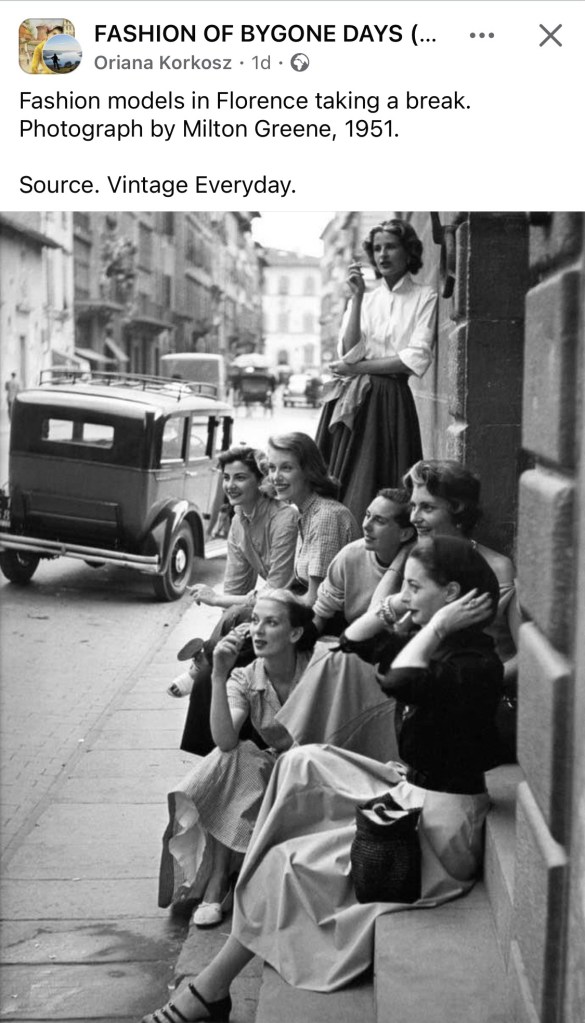
Let your mind wander. Post-war Florence. The optimism of the atomic age. The benefit of the Marshall Plan. Beautiful clothing. I’m I heaven just thinking about it all.
May it continue as long as I live!
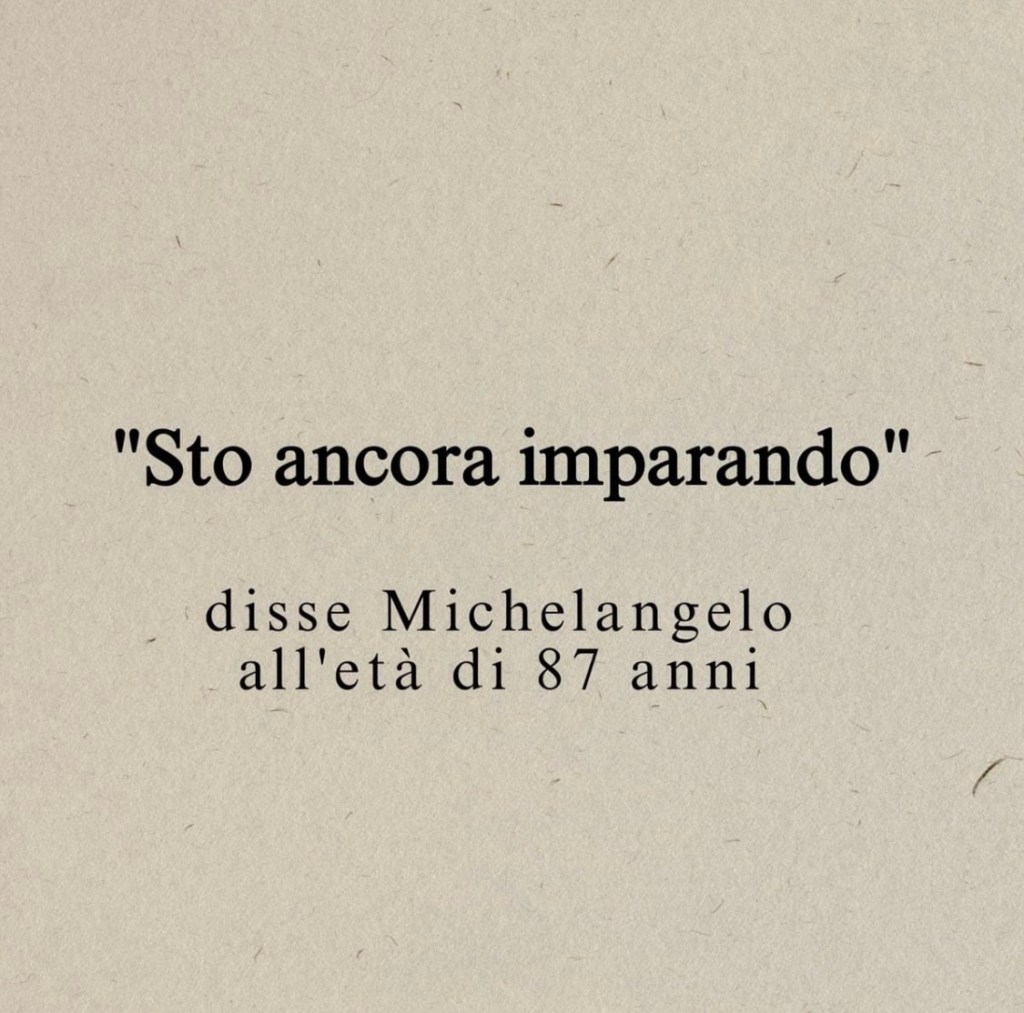
It says: I am still learning, said by Michelangelo at the age of 87 years.
Posting pictures is what I do best, it would seem. I decided to give special attention to my favorite of these things once in a while.
You’d think that seeing nuns and priests out and about was something quite common in Italy, but it isn’t. I had to act quickly to capture these!
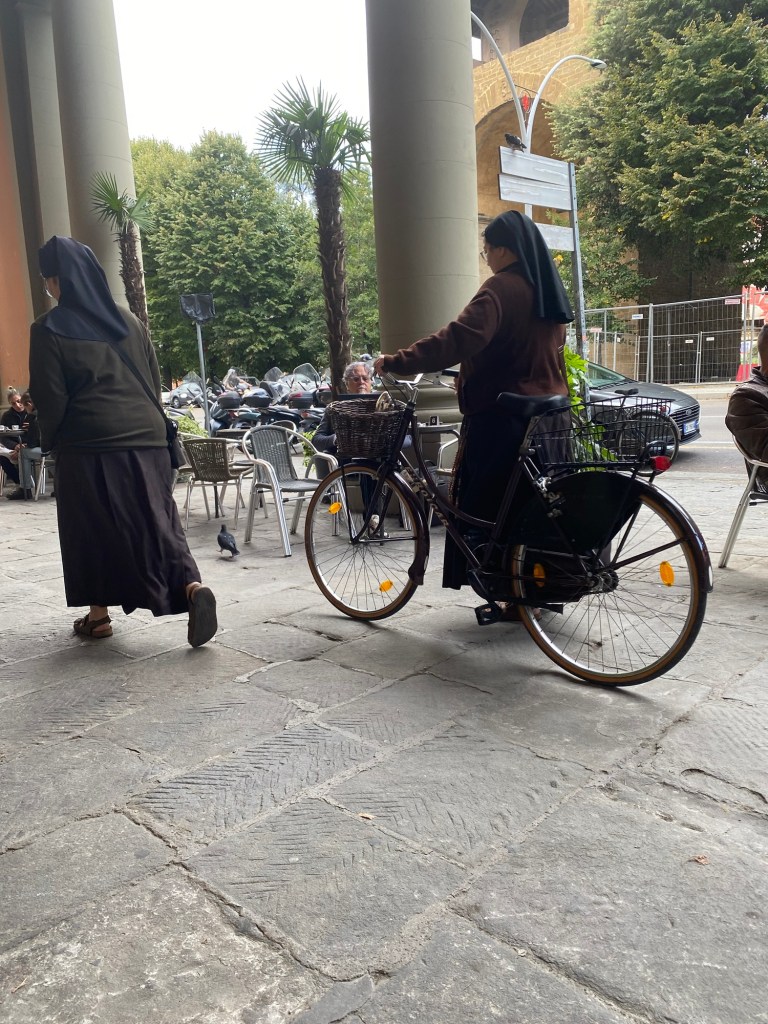
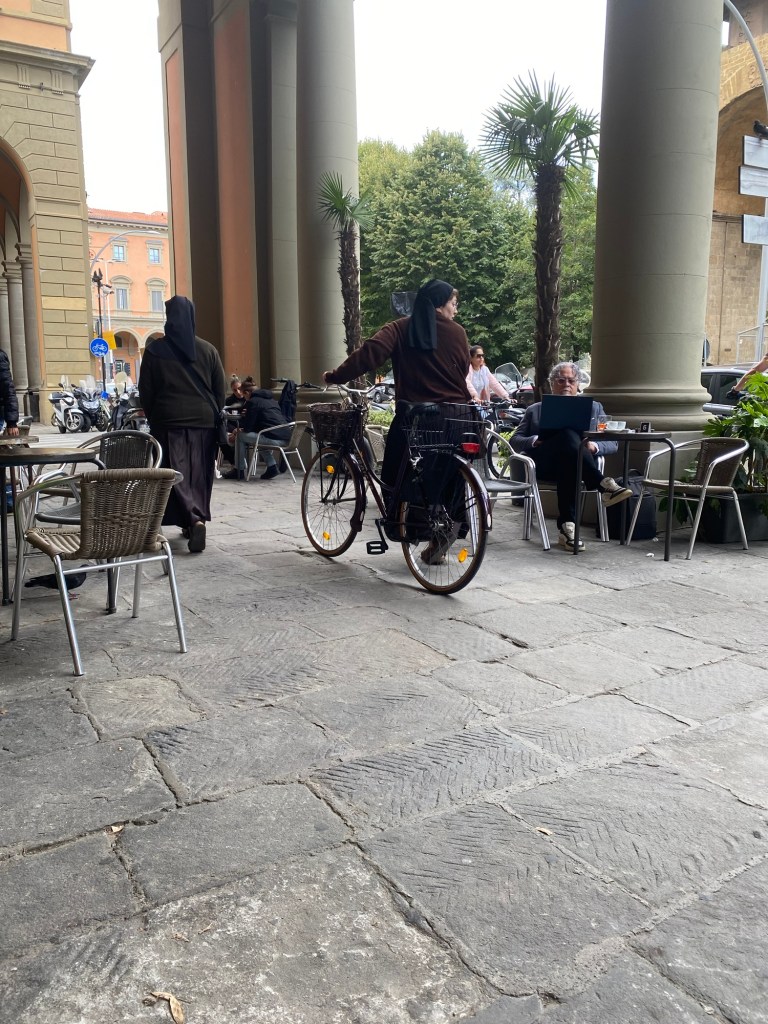
So I went out and found some. I’m feeling a bit better now.





One of the most fun discoveries I made during my 6 weeks living in Munich was this delicatessen. I knew nothing about it and happened upon it while exploring. What a delight it turned out to be!
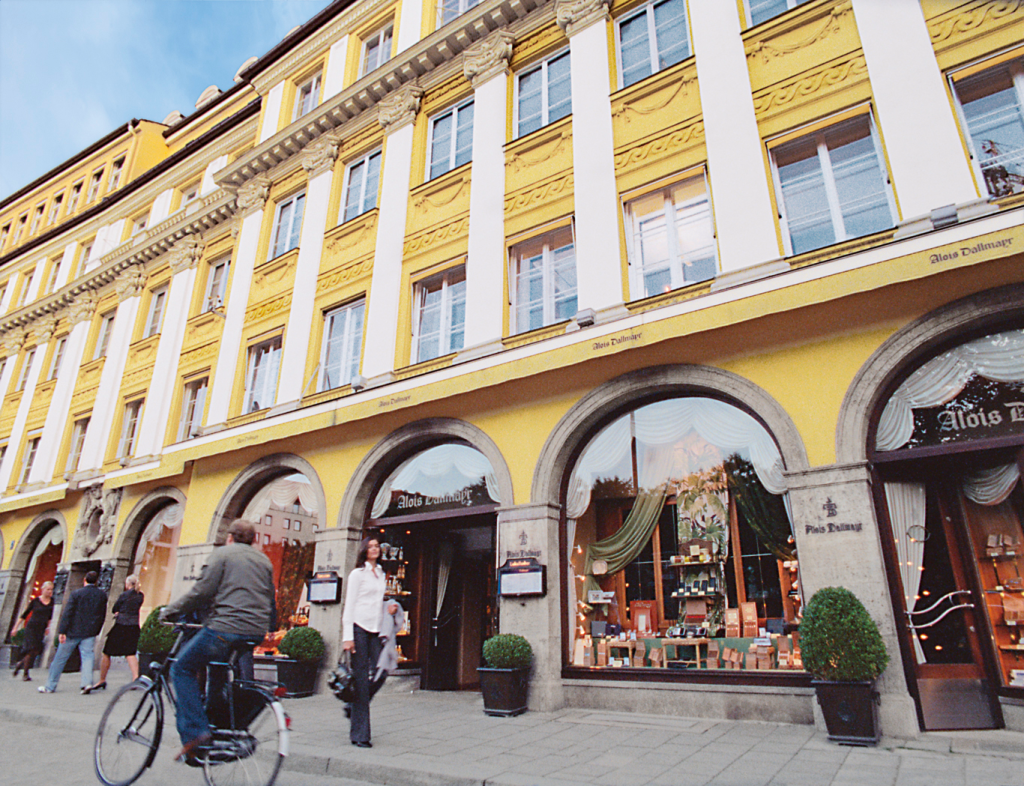
Alois Dallmayr, usually abbreviated to Dallmayr, is the largest delicatessen business in Europe and one of the best-known German coffee brands: The company has a history of over 300 years and is still in family ownership today. The Stammhaus (original store) in Munich attracts around 2.8 million visitors per year. That’s the store I enjoyed.
delikatessengeschäft
The origins of the company can be traced back to the year 1700. At this time, the Munich merchant Christian Reitter ran a business that is considered the direct precursor of the present company. Around 1870, the business came into the ownership of Alois Dallmayr, whose name the company still bears today. He sold the business to Therese and Anton Randlkofer in 1895. Under the management of Therese, a remarkable businesswoman, the Stammhaus developed into one of the leading delicatessens in Europe, with no less than 15 royal purveyor titles.
In 1933, Dallmayr’s coffee era began: In this year, a coffee merchant from Bremen, Konrad Werner Wille, came to Munich and established a specialist coffee department in the “Delikatessenhaus Dallmayr” that still exists today, which has achieved international renown, amongst other things, due to the television advertisement for Dallmayr Prodomo. The coffee business developed so successfully that in 1985 it was established as a spin-off, the independent subsidiary Alois Dallmayr Kaffee OHG, which represents “Coffee & Tea,” now the largest business unit in the company. The Nestlé corporate group acquired an interest in Alois Dallmayr Kaffee OHG.
“Der Dallmayr,” as the Stammhaus in Munich is known, is the largest delicatessen house in Europe. The store is divided into 19 specialist departments (coffee, pralines, wine, sausage & ham, fruit & vegetable, fish, cheese, bread, pasta, meat, cold & warm buffet, tea, etc.). Due to the television advertisement for the brand Prodomo, the coffee department is the best-known of all: Just as in the advertisement, the coffee is still weighed with beam scales today. In the center of the shop is the Putten (cherubs) fountain, in which crayfish wait to be sold. To a large extent, the goods offered in the Stammhaus are self-produced.

The small “Dallmayr” restaurant, which focuses on classic-modern cuisine is located in the first floor of the Stammhaus. It was re-opened in 2006 and is one of the three Munich restaurants that have been accredited with two Michelin stars. Chef de cuisine is Diethard Urbansky. The wine list includes more than 700 items.

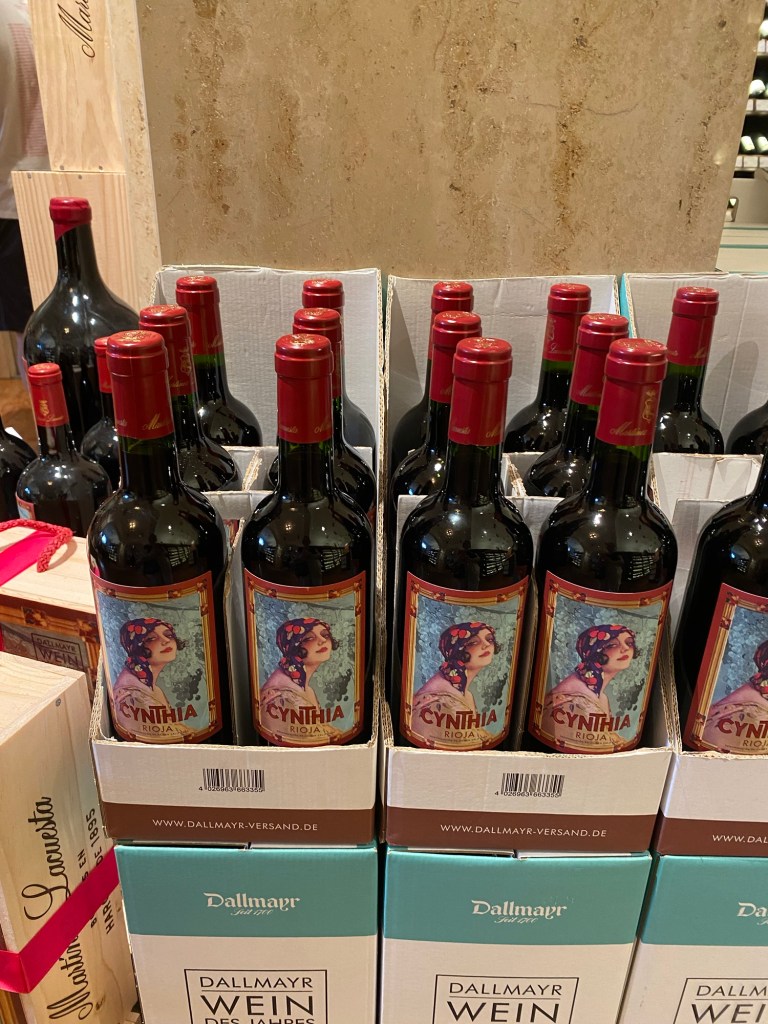
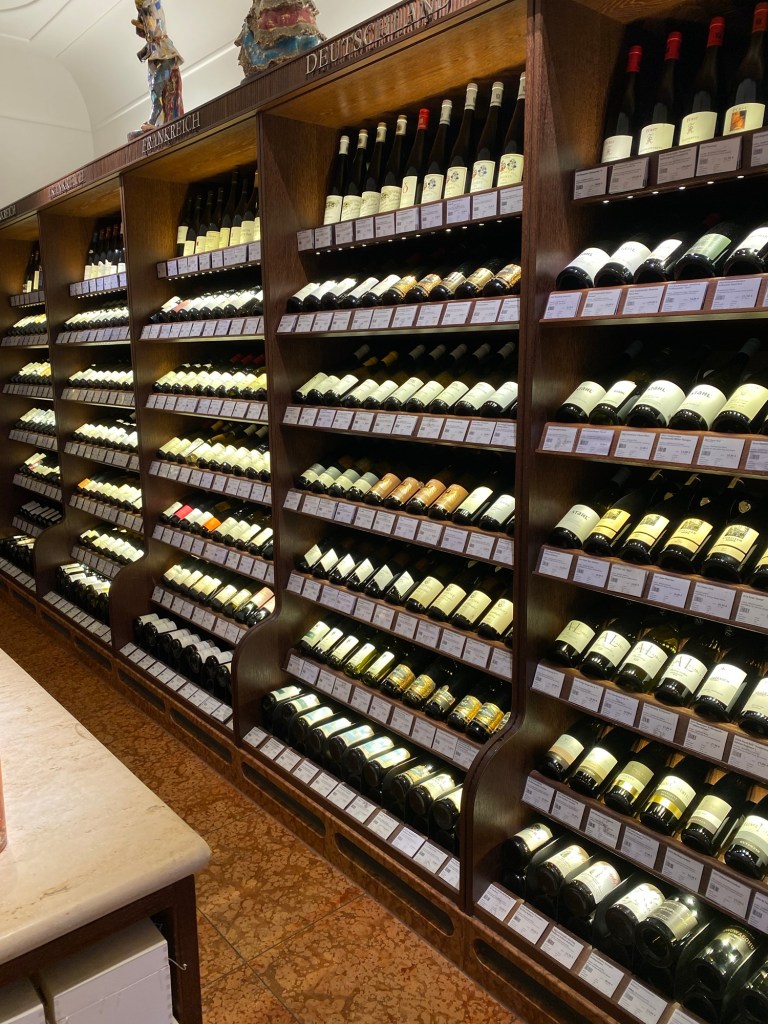

On the second floor, there is a production kitchen, in which 70 chefs create gourmet salads, dishes for the warm buffet and cream cakes. The wine department, in which wines in particular from France, Italy, Germany and Austria are sold, was re-designed in 2008. What Dallmayr cannot produce on-site for reasons of space – such as smoked salmon or chocolate – is produced in their own factories in and around Munich. In Dallmayr’s praline factory near Munich, more than 40 tonnes of handmade pralines and fruit jellies are produced annually in around 70 different varieties. Furthermore, on 29 June 2003, Dallmayr opened a shop in Terminal 2 of Munich airport, to which a café is also attached.
Visiting an art museum can be a serious undertaking if you plan to look and think, maybe even read labels and think.

But, it isn’t all work.

I love the art museums in Germany. They have lovely cafes attached to most of them.

And the Glyptothek in Munich even had some unorthodox works on display that I very much enjoyed. Have a look at the next 4 photos of some very clever “works of art.” Someone has clipped parts of famous artworks and paired them with unexpected additions. Simone Martini’s angel Gabriel from the world-renowned Annunciation panel painting (housed at the Uffizi in Florence) and an added leopard! The angel embraces the cat in a forest where it seems snow is falling?
I love that! And not only because I love that Simone Martini painting beyond anything else!
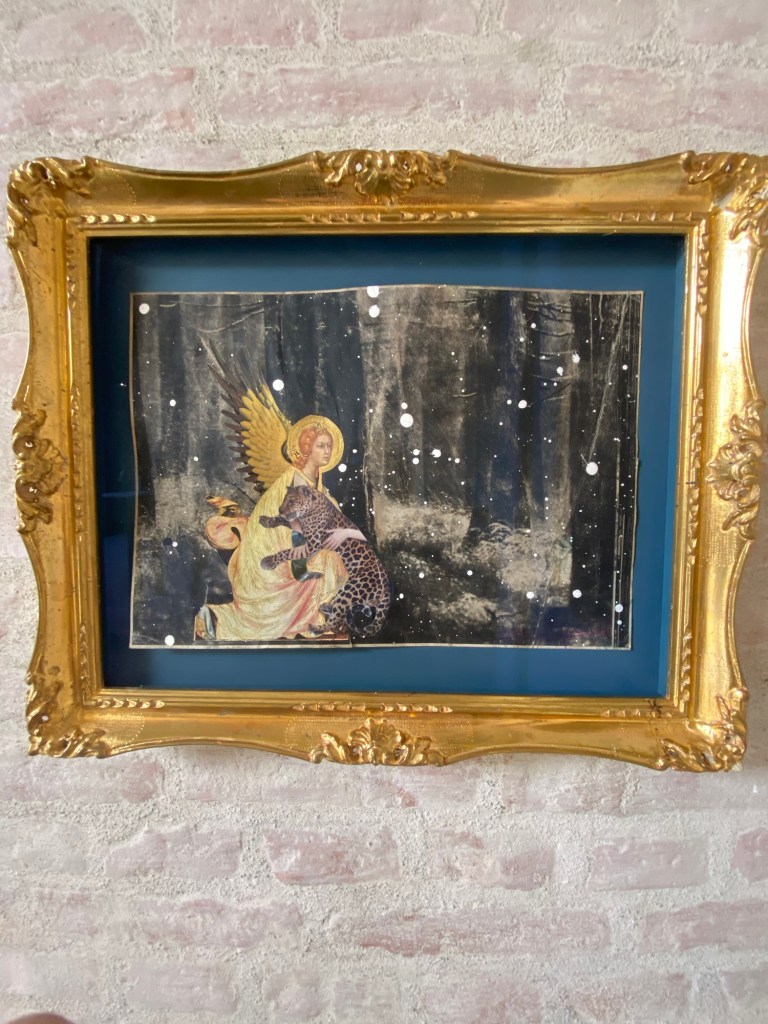
You get the drift. Aren’t these fun? I’m inspired!
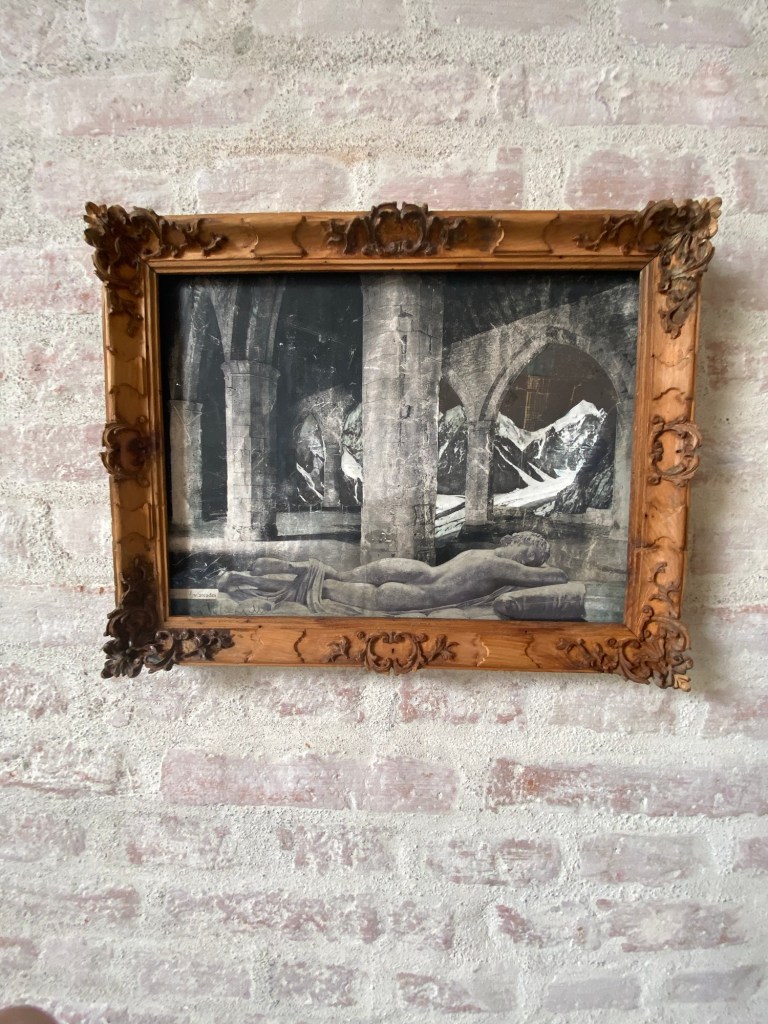


Now why didn’t I think of making these?
 get back, lauretta!
You must be logged in to post a comment.