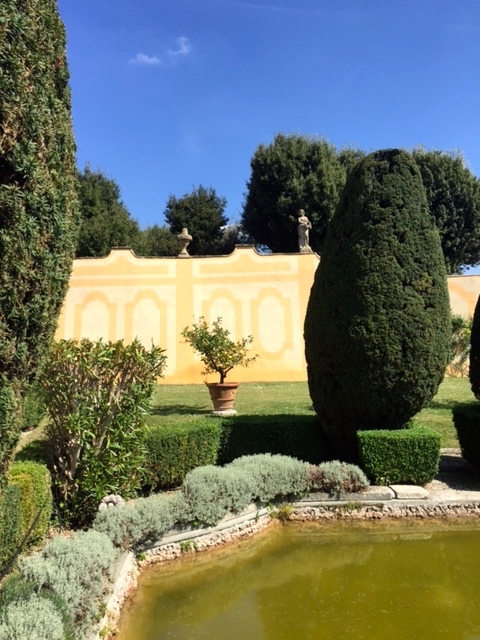
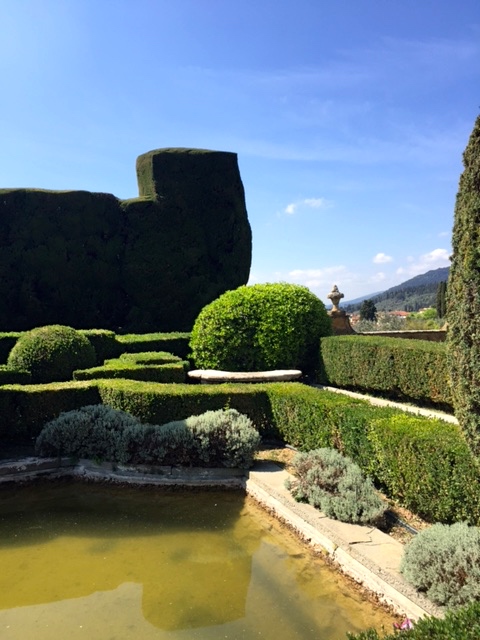
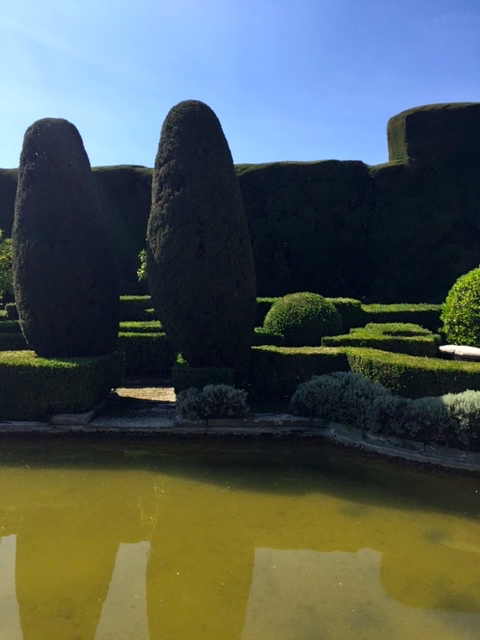
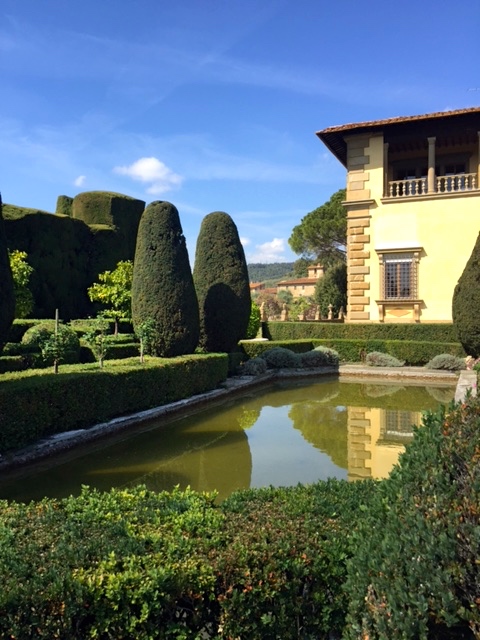
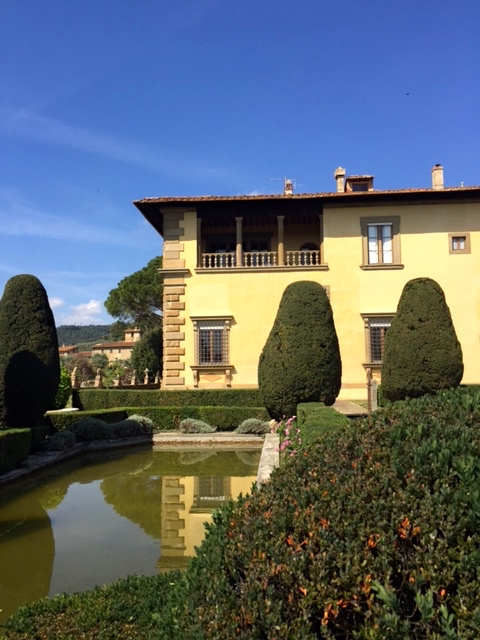
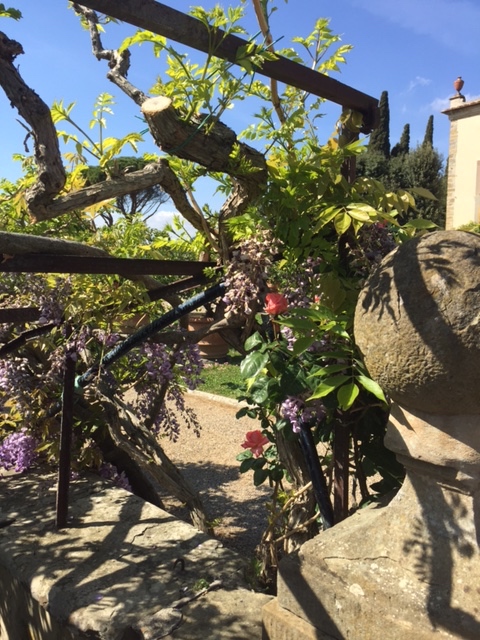
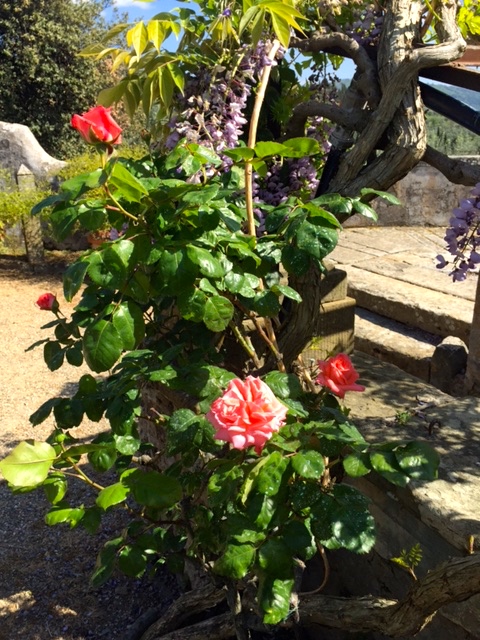
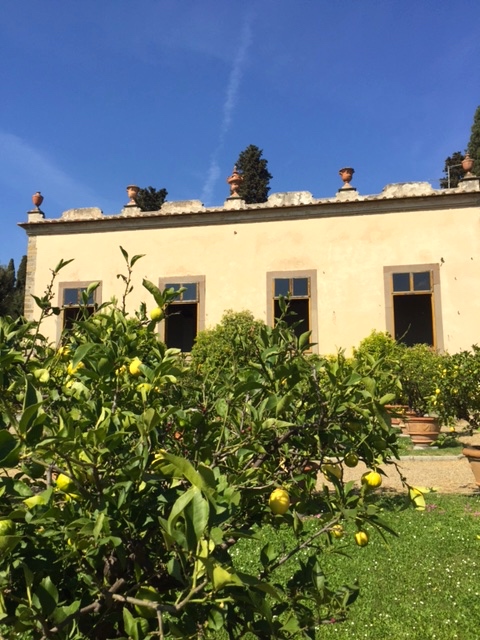
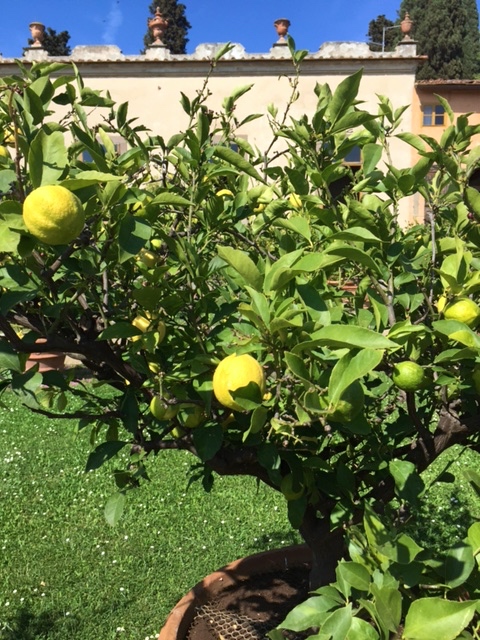
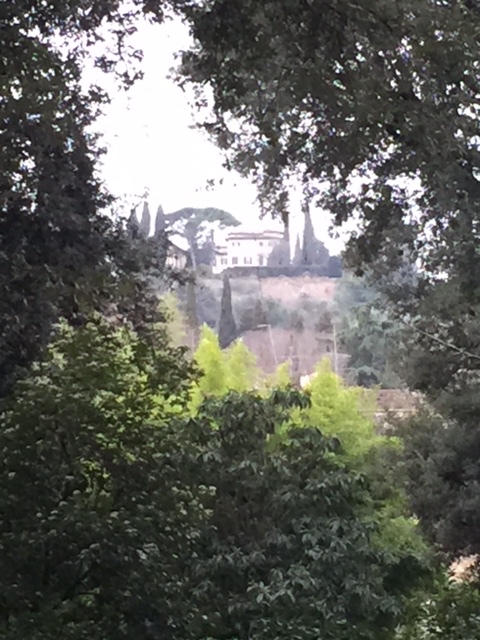
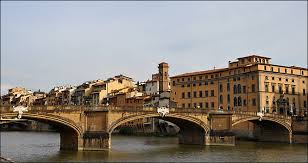
Villa Gamberaia, Settignano

There’s a beautiful spot just outside Florence.
images-5

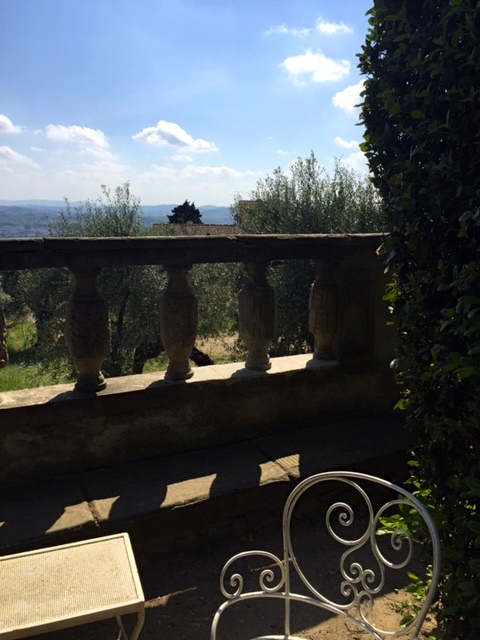
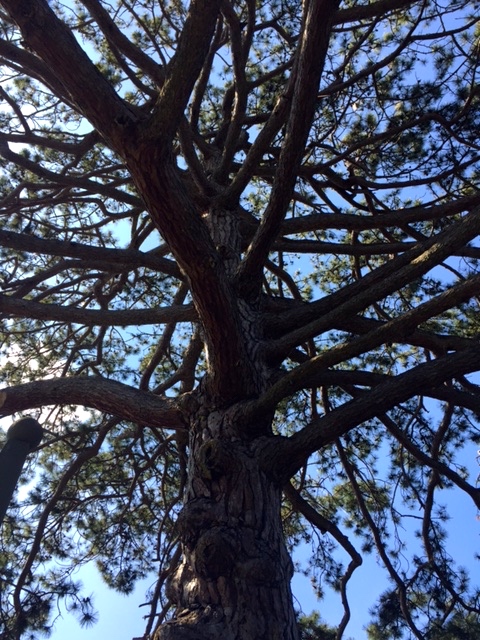
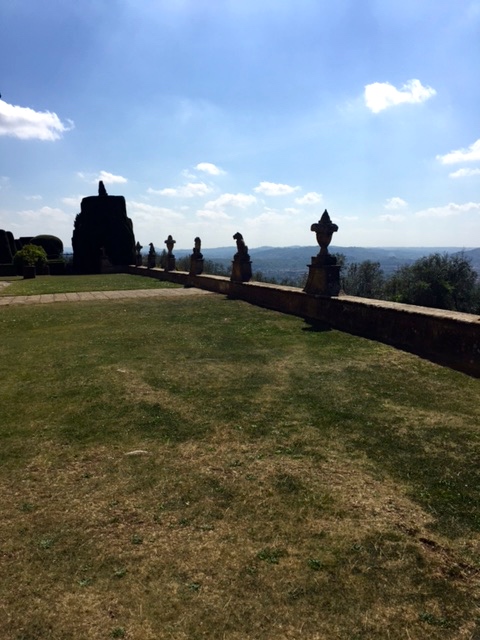
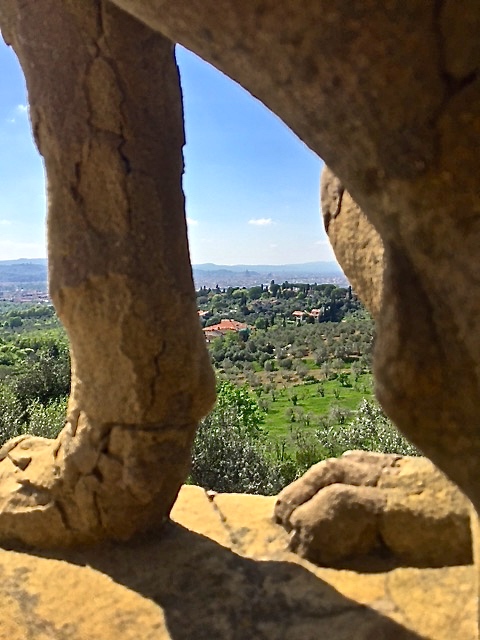
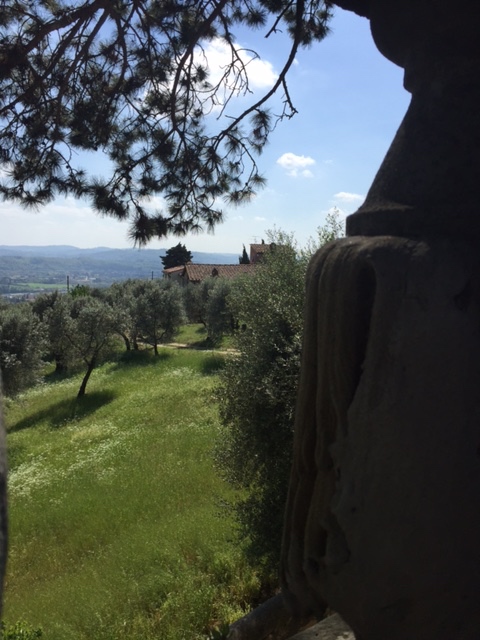
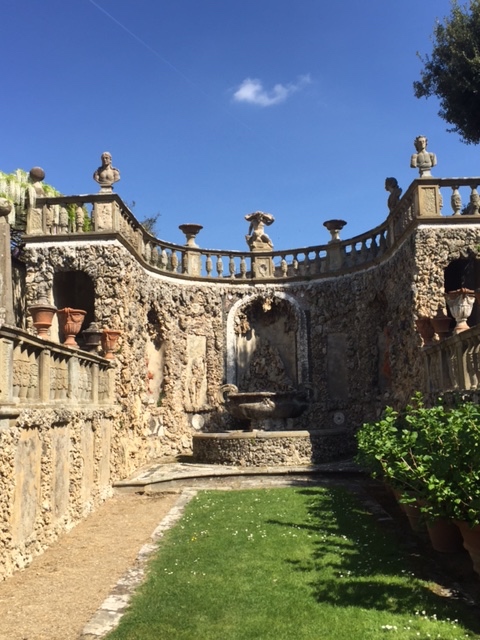
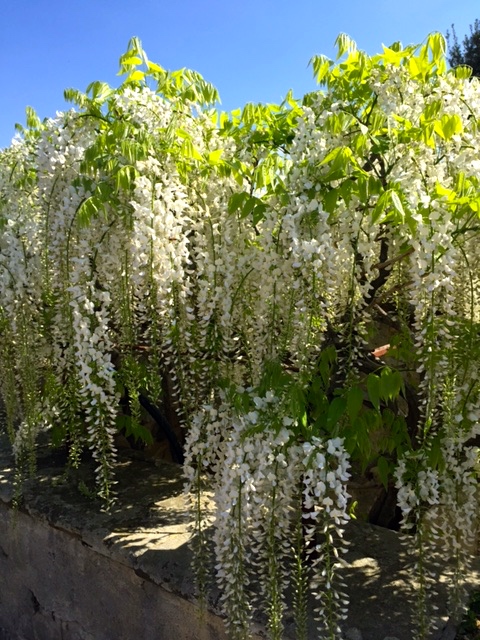
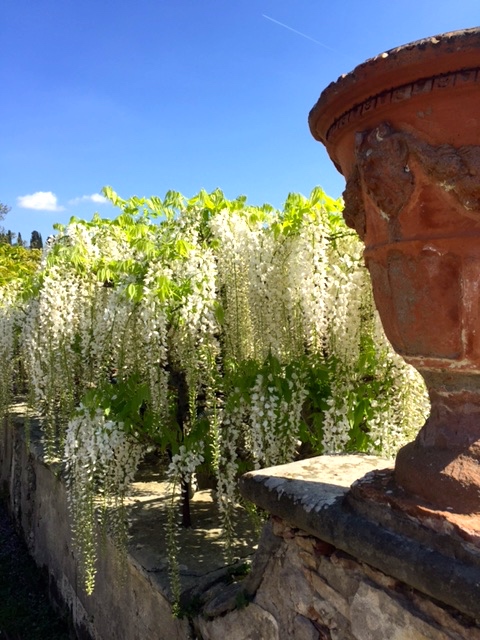
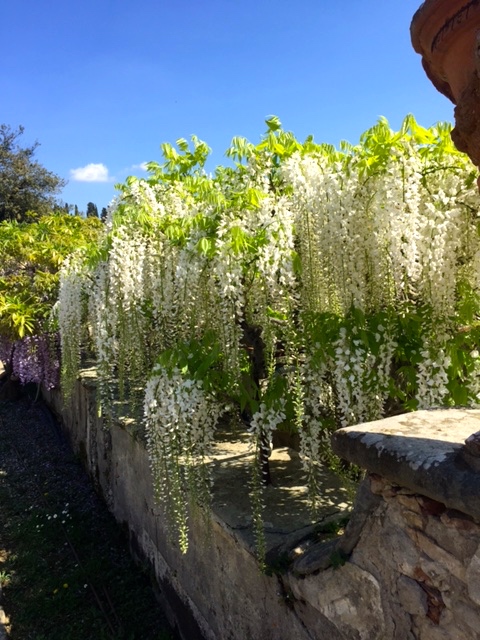
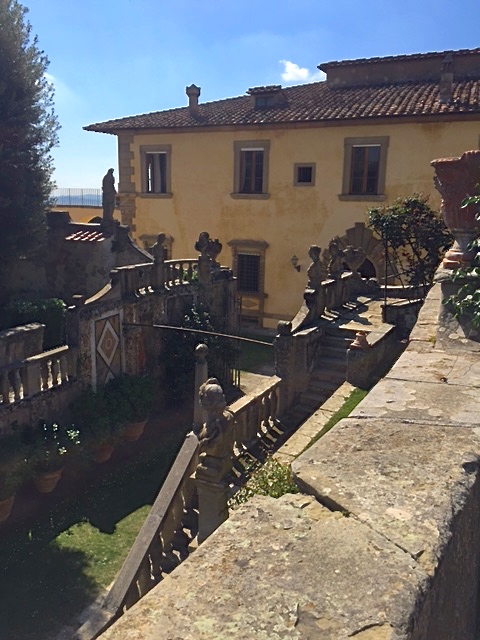
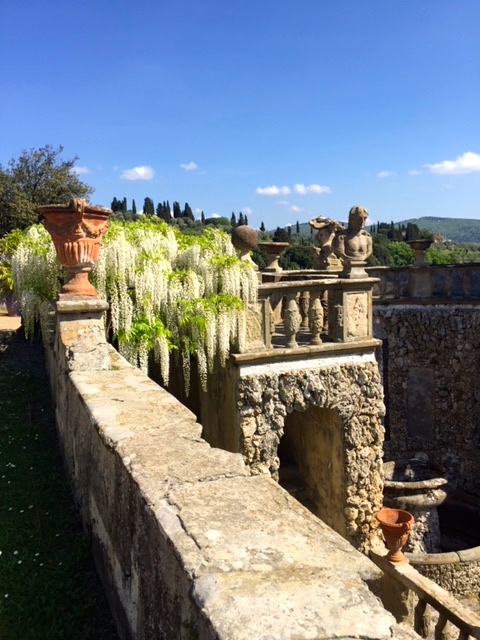
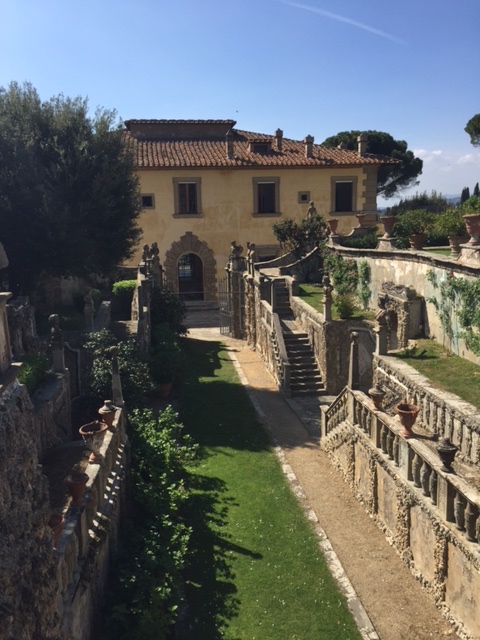
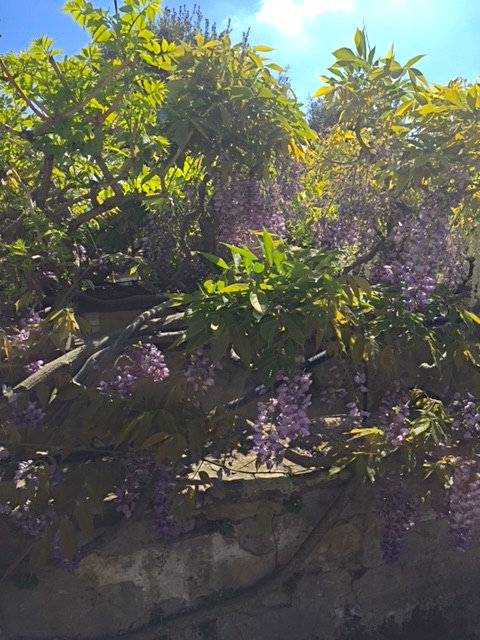
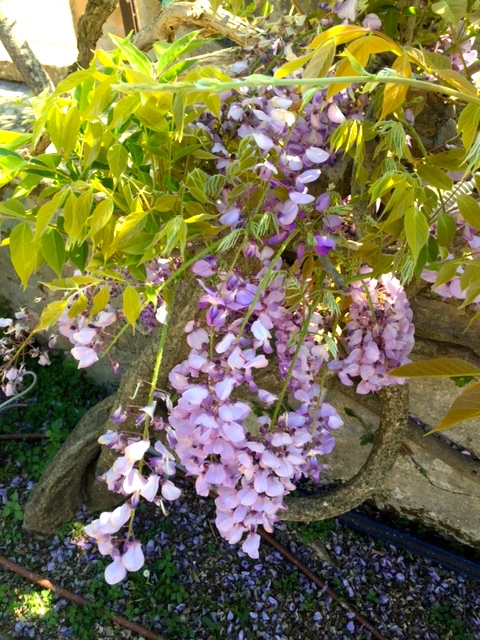
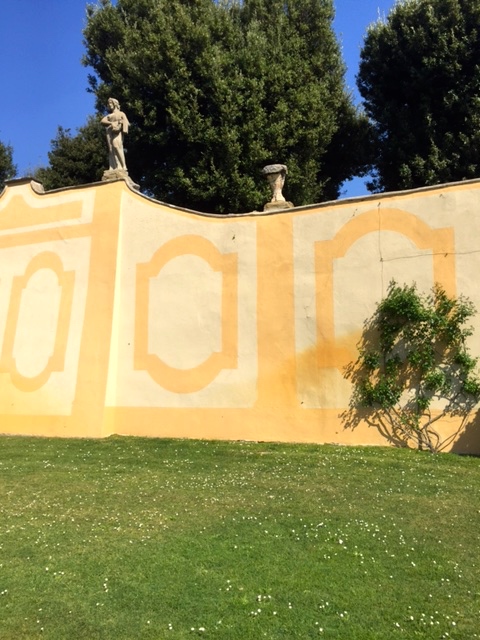
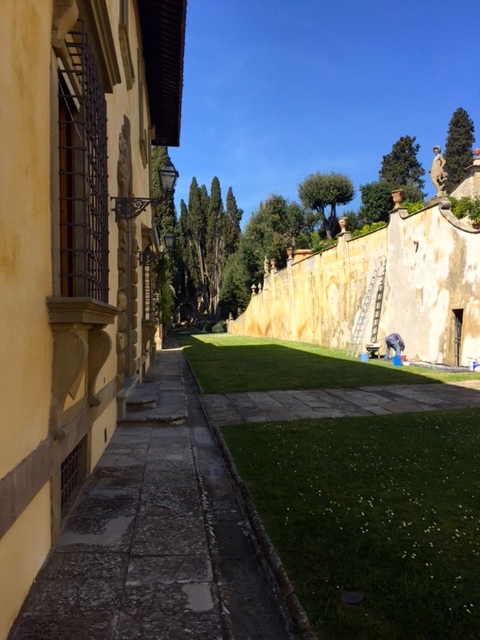
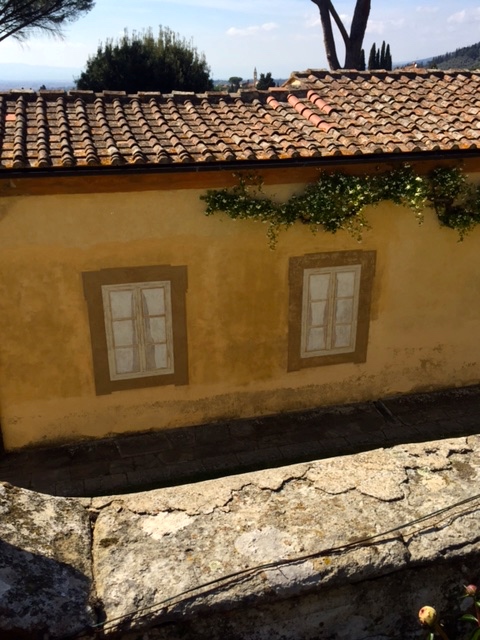
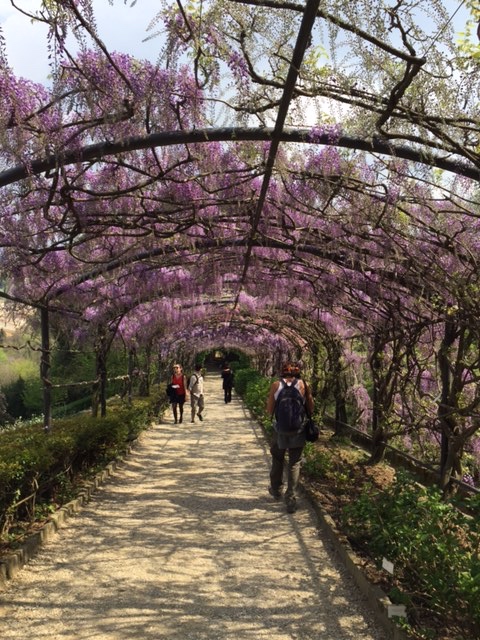
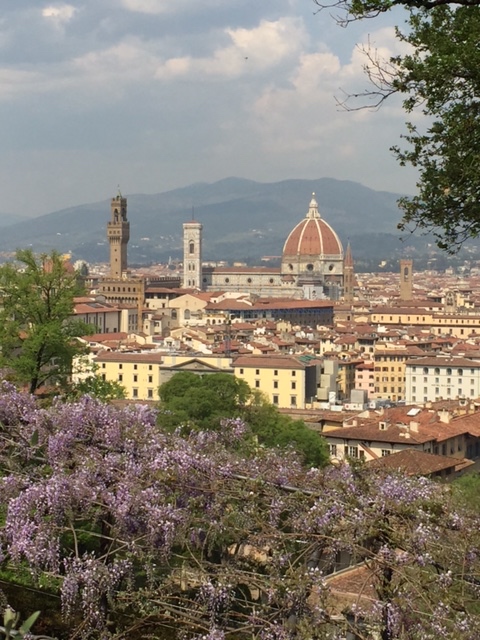
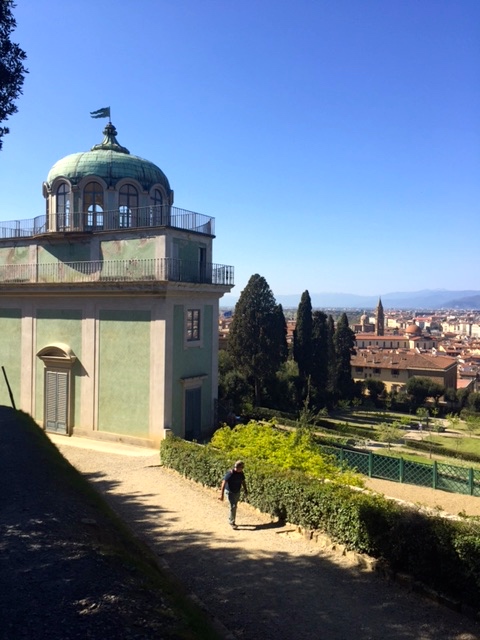
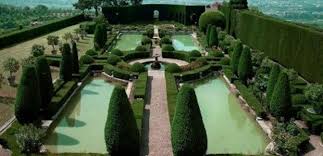
Last week I paid my first visit to the Villa Gamberaia, the 17th-C villa near Settignano, in the hills just outside of  Florence.  It is a lovely trip out into the country and up into the colline beyond Firenze.
images-2

images-3

images-4

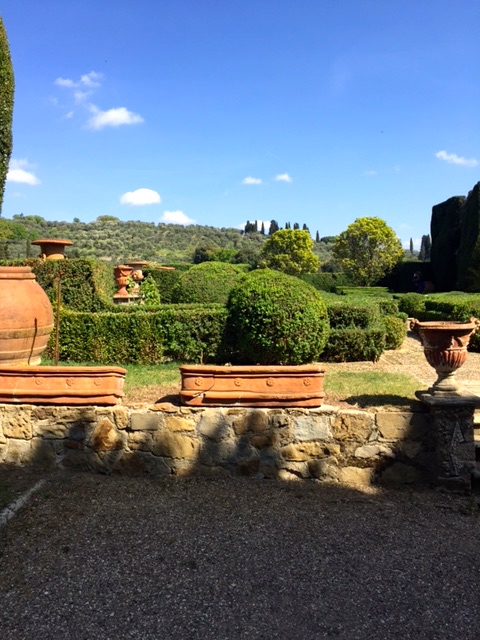
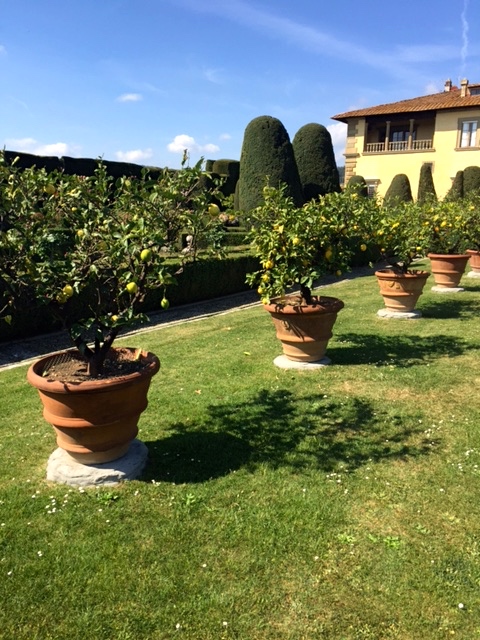
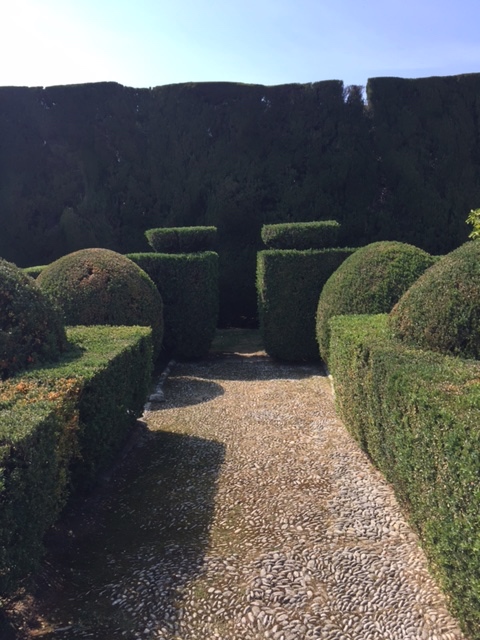
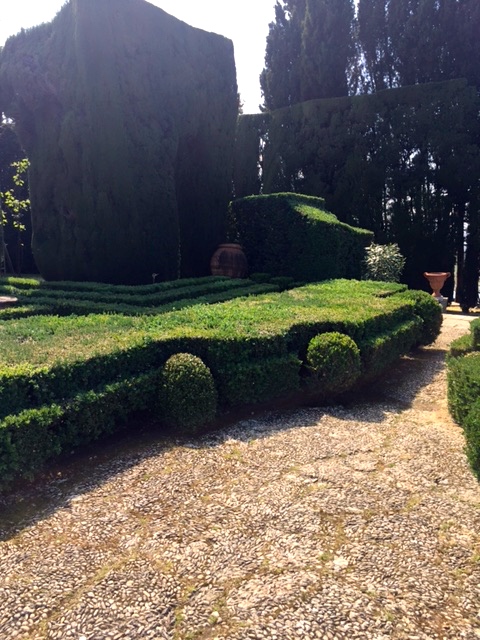
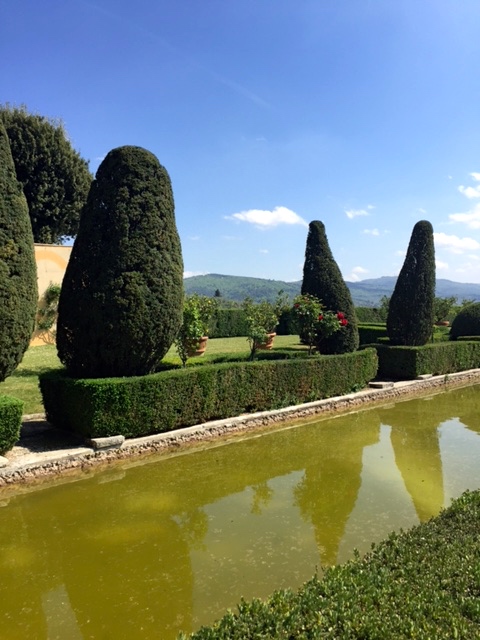
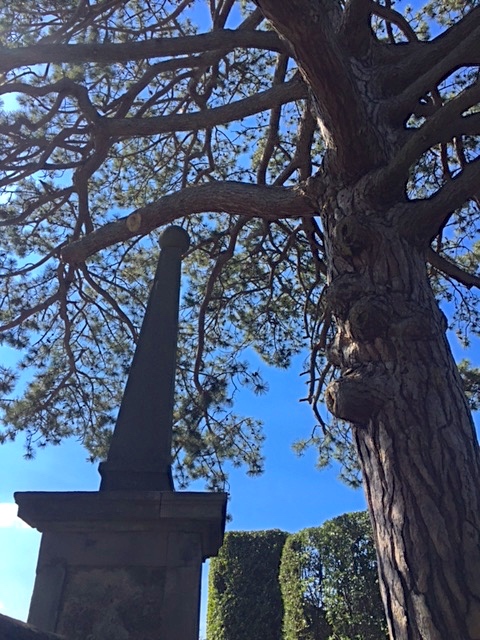
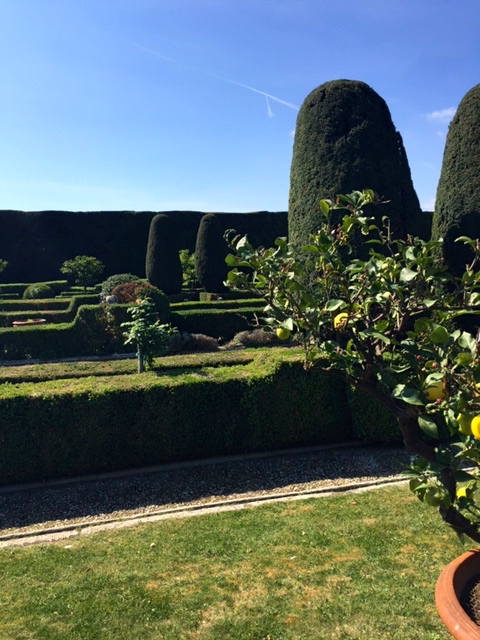
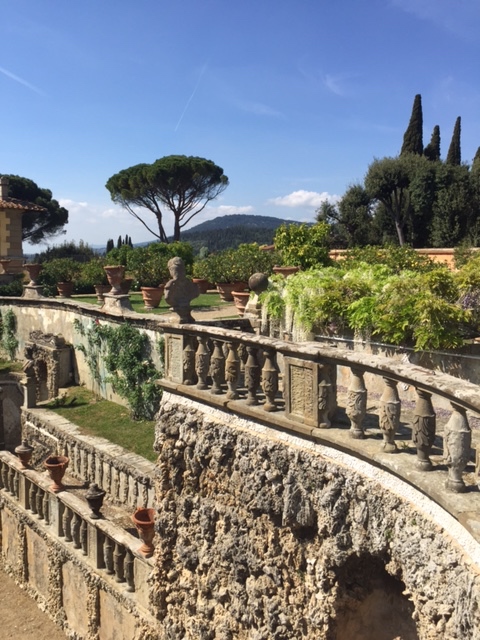
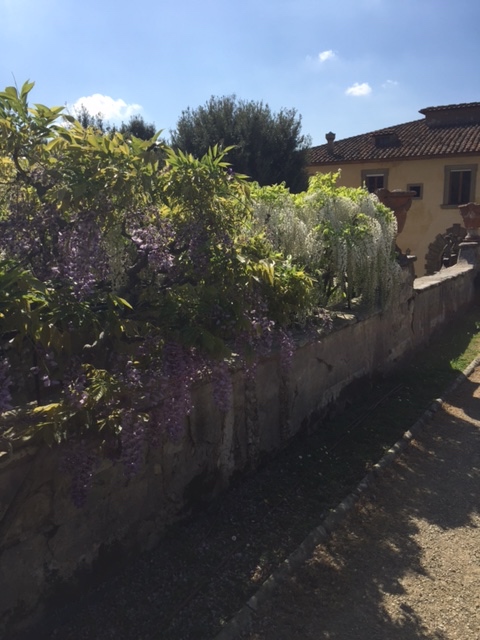
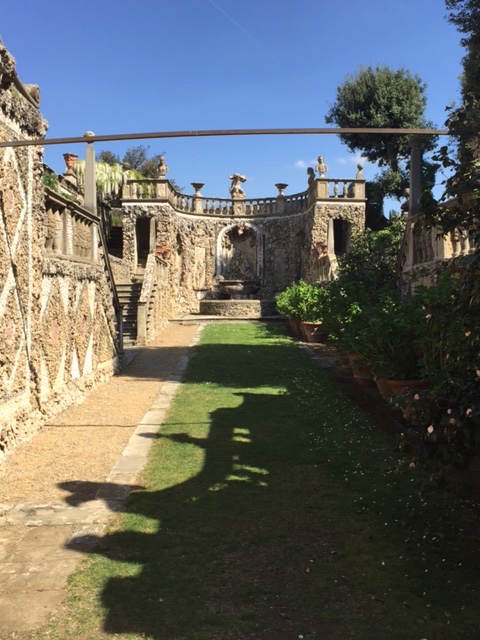
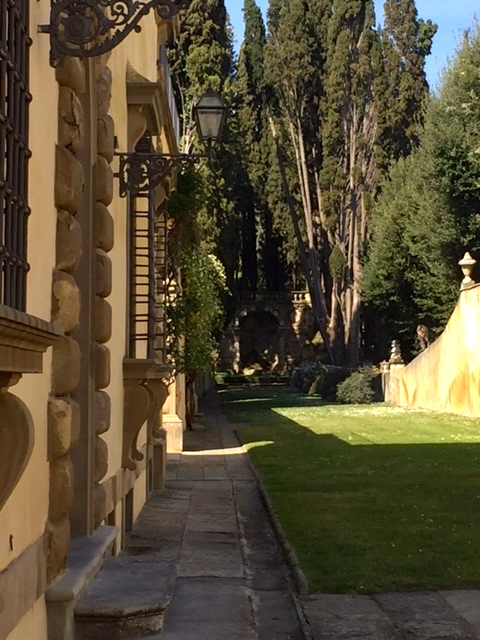
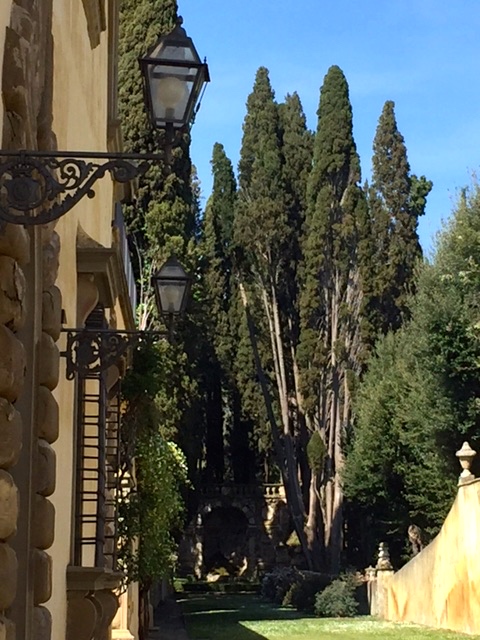
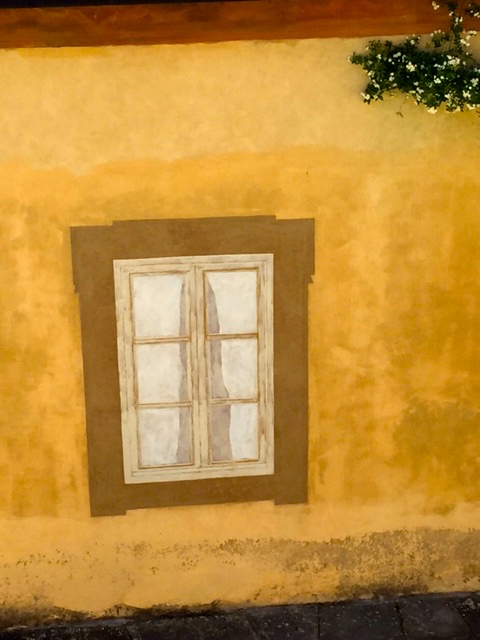
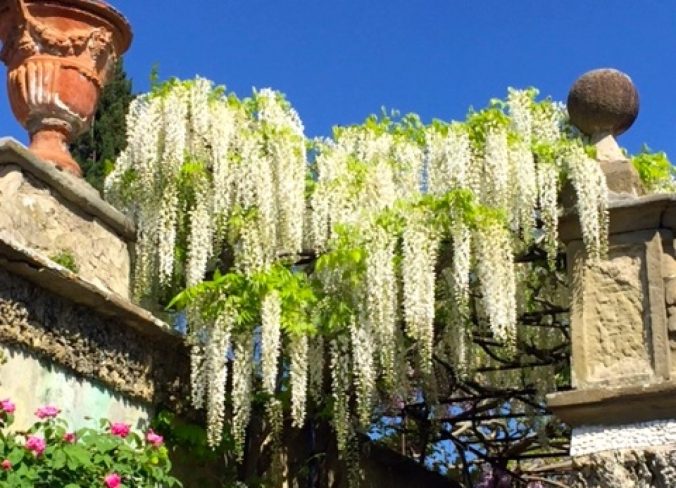
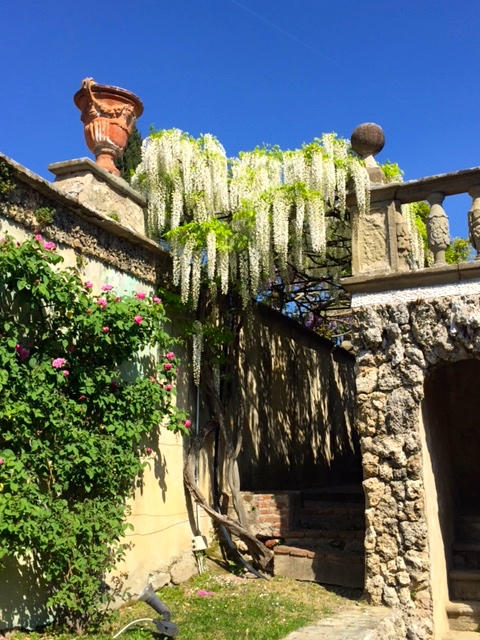
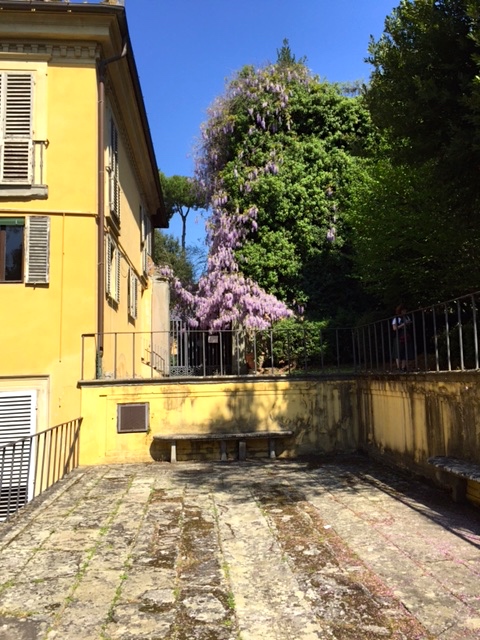
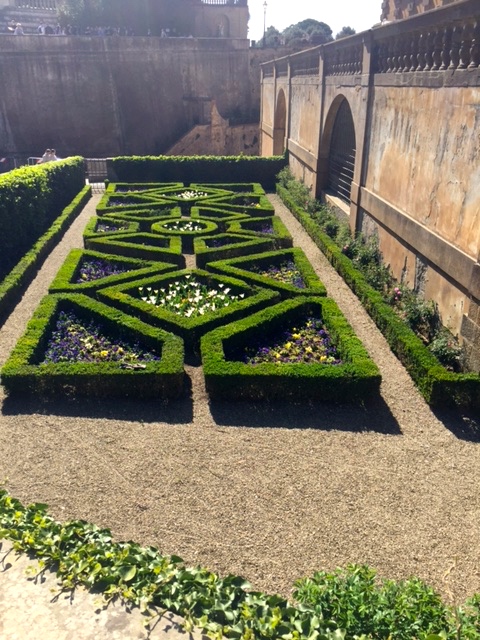
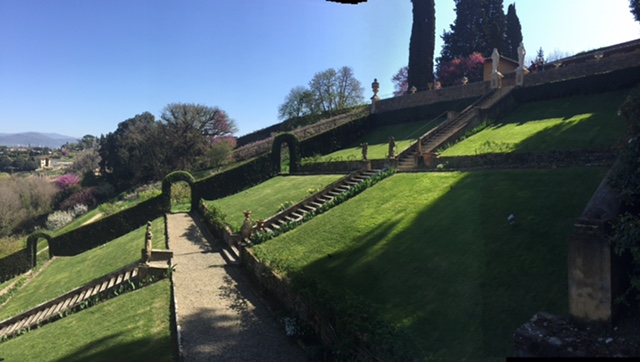
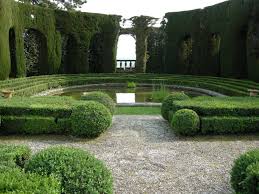
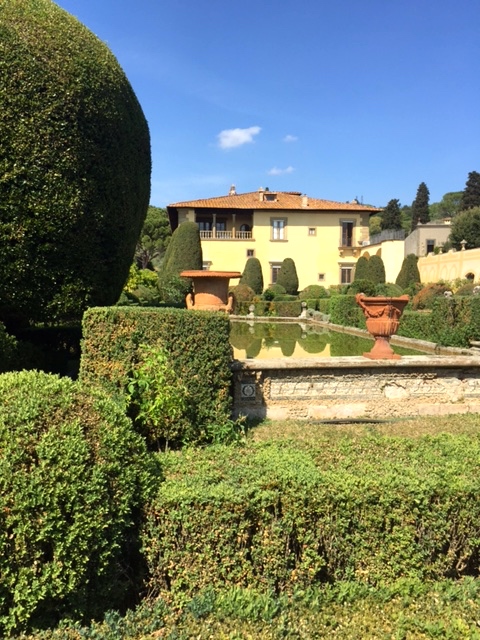
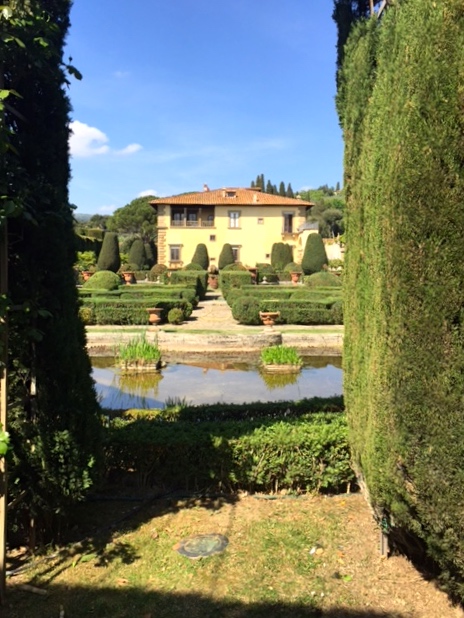
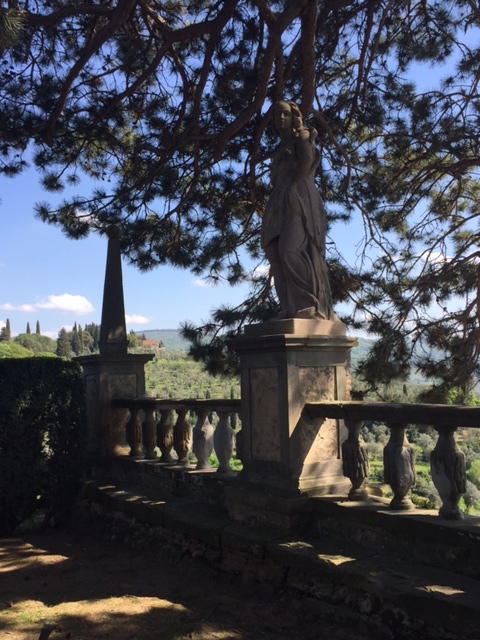
The villa has a lovely, formal 18th-century terraced garden, beautifully restored and open to anyone who presents themselves to the front gate.  There is an entrance fee.
IMG_2026IMG_2029IMG_2030IMG_2031IMG_2033
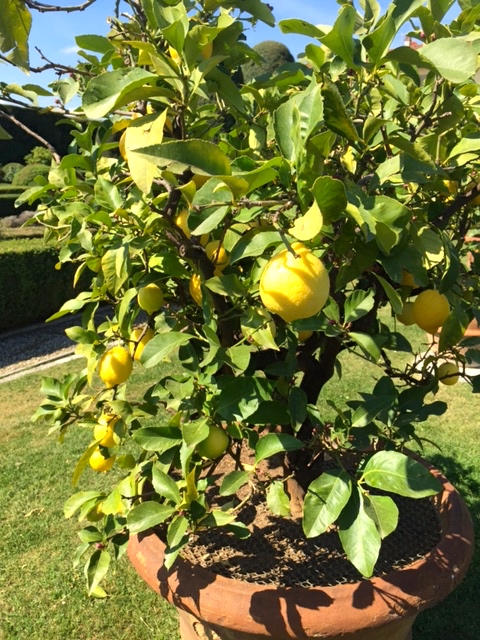
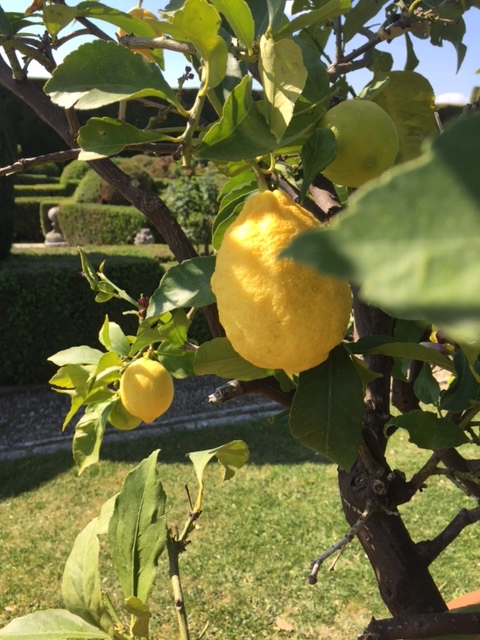
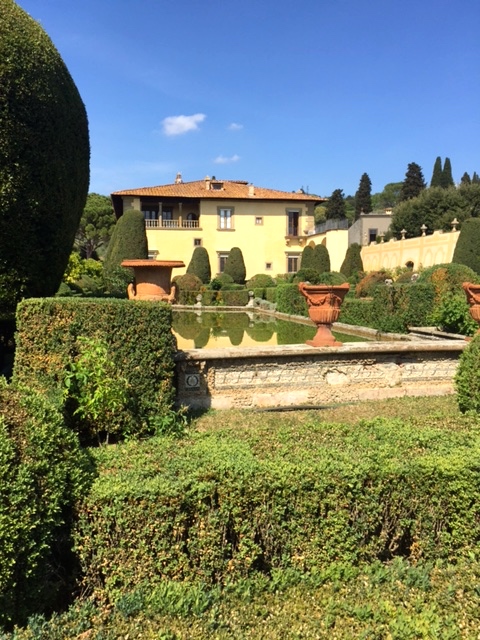
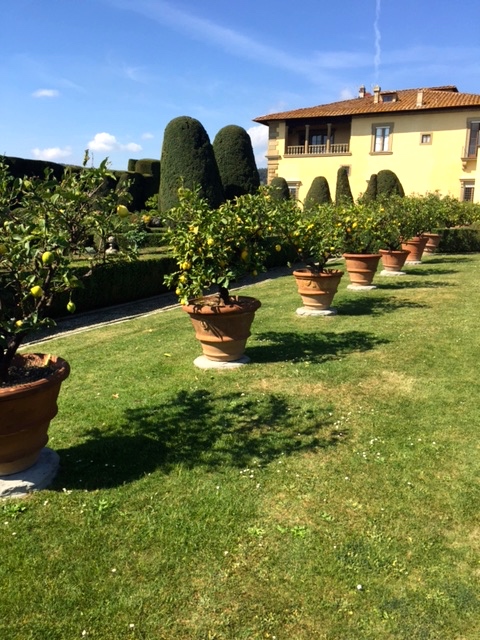
The villa, originally a farmhouse; was owned by Matteo Gamberelli, a stonemason, at the beginning of the 15th century. His sons Giovanni and Bernardo became famous architects under the name of Rossellino. After Bernardo’s son sold it to Jacopo Riccialbani in 1597, the house was greatly enlarged, then almost completely rebuilt by the following owner, Zenobi Lapi; documents of his time mention a limonaia and the turfed bowling green that is part of the garden layout today.
IMG_2027

IMG_2046IMG_2047IMG_2048IMG_2055

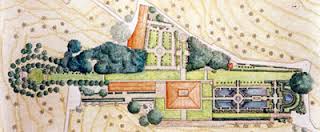
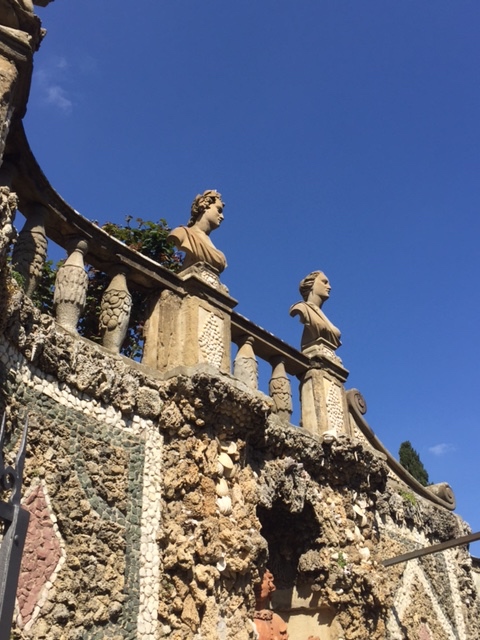
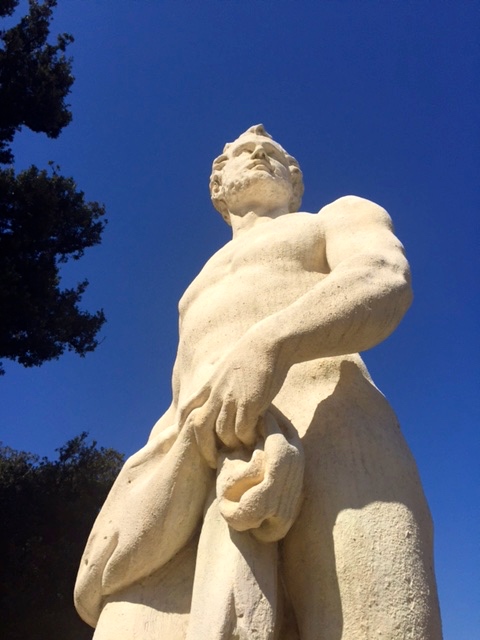
In 1717 La Gamberaia passed to the Capponi family. Andrea Capponi laid out the long bowling green, planted cypresses, especially in a long allée leading to the monumental fountain enclosed within the bosco (wooded area), and populated the garden with statues, as can be seen in an etching by Giuseppe Zocchi.

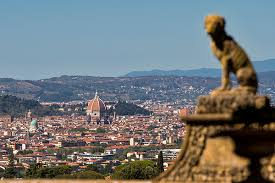
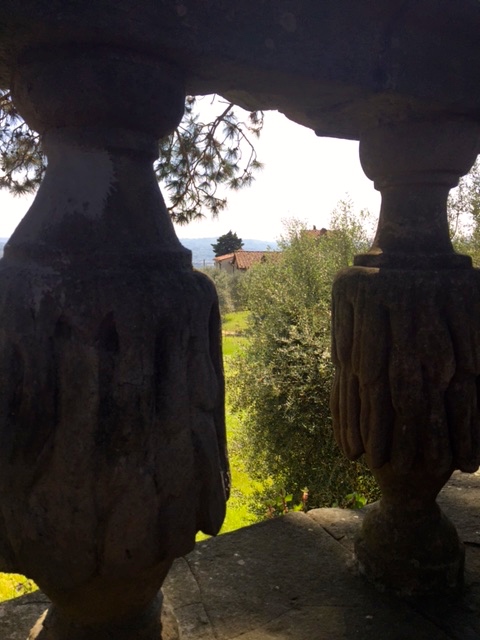
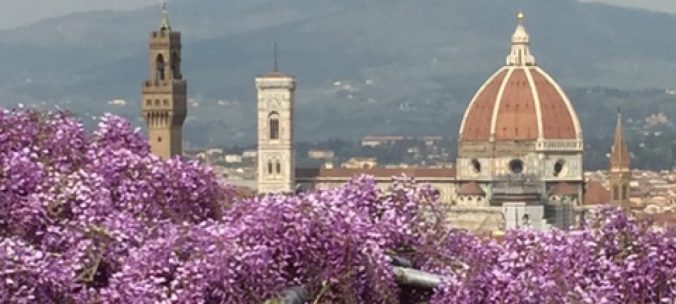
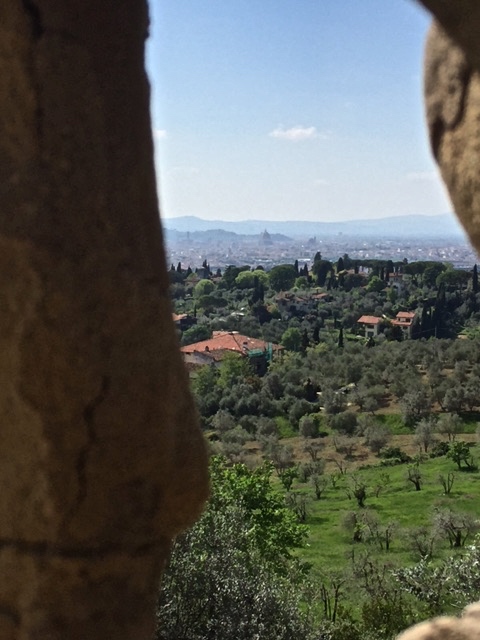
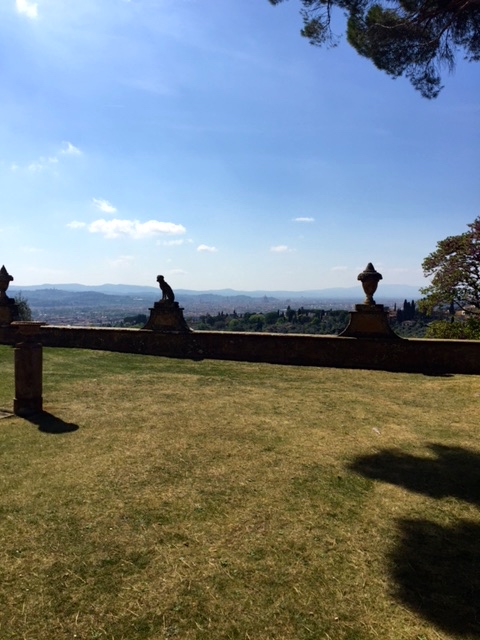
By that time, the villa already stood on its raised platform, extended to one side, where the water parterre is today. The parterre was laid out with clipped broderies in the French manner in the eighteenth century, as a detailed estate map described by Georgina Masson demonstrates. Olive groves have always occupied the slopes below the garden, which has a distant view of the roofs and towers of Florence.
images

IMG_2014

IMG_2017

IMG_2018

IMG_2019

IMG_2020

IMG_2021

IMG_2022

IMG_2025

The setting was praised by Edith Wharton, who saw it after years of tenant occupation with its parterre planted with roses and cabbages.  Wharton attributed the preservation of the garden at the Villa Gamberaia to its “obscure fate” during the 19th century, when more prominent gardens with richer owners, in more continuous attendance, had their historic features improved right out of existence.
IMG_2035

IMG_2039

IMG_2040

IMG_2042

Shortly after Wharton saw the villa, it was purchased in 1895 by Princess Jeanne Ghyka, sister of Queen Natalia of Serbia, who lived here with her American companion, Miss Blood, and thoroughly restored it.  It was she who substituted pools of water for the parterre beds.

During World War II, the villa was almost completely destroyed. Marcello Marchi restored it after the war, using old prints, maps and photographs for guidance.

Georgina Masson also wrote about seeing Villa Gamberaia;  she saw it after it was restored by Marchi.
IMG_2011IMG_2013IMG_2015IMG_2016

IMG_2044IMG_2045IMG_2053

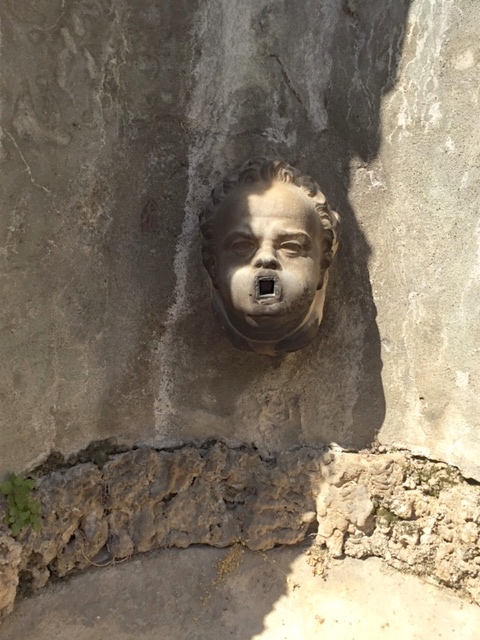
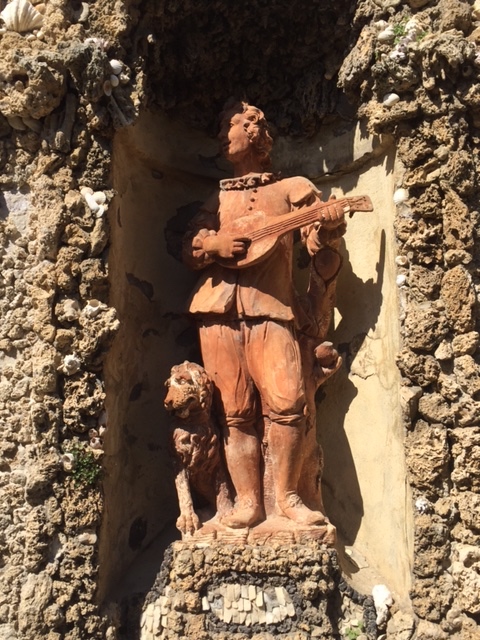
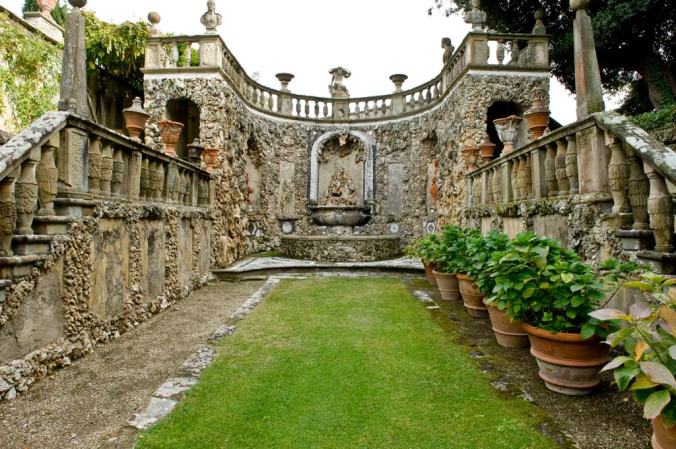
The monumental fountain set in a grotto in the steep hillside at one lateral flank of this terraced garden has a seated god next lions in stucco relief in a niche decorated with pebble mosaics and rusticated stonework.
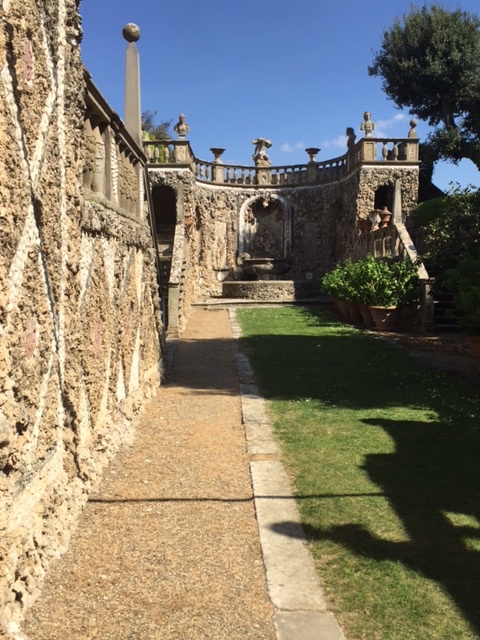
villa_gamberaia_01l

IMG_2064

IMG_2067IMG_2066IMG_2065IMG_2084IMG_2085IMG_2086IMG_2093IMG_2094IMG_2095IMG_2096IMG_2097IMG_2098IMG_2099IMG_2100IMG_2101IMG_2088IMG_2089IMG_2090IMG_2091IMG_2092IMG_2062IMG_2063

IMG_2057IMG_2059IMG_2060IMG_2061

IMG_2104IMG_2105IMG_2106IMG_2107IMG_2108IMG_2109

IMG_2113

Earl Grey Tea: bergamot oil and black China tea

You know how much I love bergamot.

images-15

Did you know that ever since the 19th C., bergamot oil has also been used to give a distinctive aroma and flavor to one of the most popular teas in the world.

images-6

Earl Grey is made from a blend of dark China teas treated with the bergamot oil or peel.

images-9

It is always said that the tea was named after the second Earl Grey of Howick, Britain’s prime minister from 1830 to 1834. The story revolves around a diplomatic mission to China, when Grey is supposed to have rescued the son of a Chinese mandarin from drowning. The mandarin was said to have been so grateful that he sent a box of bergamot-scented China tea to Grey in London.

images-7

There are several things in this story that don’t add up, not least that Grey never set foot in China and bergamot grew only in Calabria.

images-13

Nevertheless, it is certain that the English developed a taste for scented teas at about this time, blending Indian and Sri Lankan leaves, dousing them with oil of bergamot and naming the mixture Earl Grey in honour of their prime minister.

images-12

Earl Grey tea is still produced in the same way and consumed with undiminished enthusiasm in England. By the mid 19th C., bergamot was produced on an industrial scale, and harvesting the fruit and extracting its oil involved the entire community in the coastal Calabrian villages between Villa San Giovanni and Brancaleone.

images-11

The job of picking the bergamot was given to boys and the youngest men in the villages of Calabria. They used pruning knives to remove any stalks that might pierce or damage the skins of other fruit, and then placed the fruit gently in a basket lined with sacking to give it further protection from bruising or chafing that could cause the oil to ooze from its skin and be wasted.

images-10

When a basket was full it weighed about thirty kilos. It was the women’s job to hoist the baskets on to their heads and carry them in from the fields to the fabbrica. Here, the working day began at 4 a.m. and finished at 4 p.m.

The skin of a bergamot is so full of oil that it will begin to seep out at the slightest pressure, so initially it was extracted simply by pressing and turning the peel of the fruit against a sponge. The sponge was then squeezed into a glass phial and the liquid was left to settle and separate.

The oil produced by this ancient method is unrivalled, and according to one ‘nose’ in the perfume industry, the difference between it and oil extracted mechanically is ‘just the same as the difference between a bull and a bullock’.

In 1844 the macchina calabrese, the ‘Calabrian machine’, was invented by Nicola Barillà, and this revolutionized the laborious extraction process. A few bergamots of similar size were placed between two metal cups. The lower cup was covered in spikes to hold the fruit still and the upper one was armed with sharp blades. Two men took it in turns to operate the handle that rotated the cups, and the combination of pressure and the movement of the upper cup made oil and water spray out of the peel and fall into a copper bowl.

Finally, the mixture of grated peel and oil would be strained through woollen sacks that were hung from a rack and left to drip into another copper bowl. All of the copper bowls used during the extraction process were lined with tin to prevent the oil reacting with the copper.

images-14

Attlee, Helena (2015-01-05). The Land Where Lemons Grow: The Story of Italy and Its Citrus Fruit (Kindle Locations 2412-2422). Countryman Press. Kindle Edition.


Do the culinary arts follow the same patterns as the visual arts?

Noooo! reveals this clever author:

Cooking does not necessarily follow the same chronology as other fields of creative endeavor.

People did not start eating with more perspective in the Renaissance.

Nor, for that matter, did they dine more ornamentally in the Baroque period,

or more rationally during the Enlightenment.

Dickie, John (2008-01-08). Delizia!: The Epic History of the Italians and Their Food (Kindle Locations 1136-1138). Atria Books. Kindle Edition.

Wow! Florence celebrates Easter Sunday with a bang!

I’ve witnessed some celebrations in my life.  But, I can honestly say I’ve never seen anything quite like what happens every Easter morning in Florence!

OLYMPUS DIGITAL CAMERA

OLYMPUS DIGITAL CAMERA

The celebration that takes place in and in front of the Duomo is somewhere between a Chinese New Year spectacle, combined with something you might see in a festival in India, with some Roman Catholic overtones.

OLYMPUS DIGITAL CAMERA

Honestly, I’m still scratching my head!

OLYMPUS DIGITAL CAMERA

So, I got to the Piazza del Duomo about 9:45 and already the crowds were thick. I was able to nab a pretty good spot to watch part of the parade arrive in front of the Duomo.

Then I moved to a better spot to see the Carro.  Unfortunately, by 10 a.m. the crowds were super thick.

OLYMPUS DIGITAL CAMERA

OLYMPUS DIGITAL CAMERA

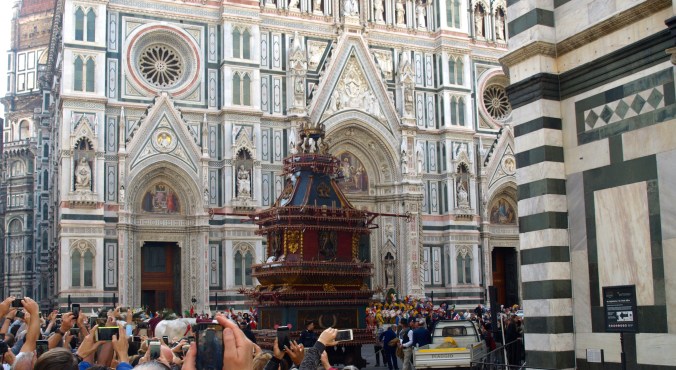
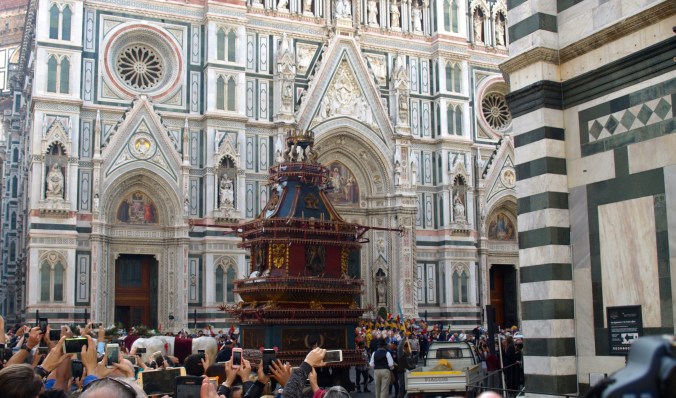
The white oxen festooned with floral wreaths pull the antique Carro to the front of the Duomo and park it there, lining it up with a mechanical dove that will shoot out of the church at the right moment, and alight the Carro.
The beloved Carro or Brindellone returns to piazza del Duomo every year on Easter Sunday. Housed 364 days of the year in via il Prato, this cart filled loaded with fireworks is paraded through the city streets, arriving in front of Santa Maria del Fiore at around 10am. After the cathedral’s morning mass, much pomp and circumstance ensues all leading to the festivity’s ending in a pyrotechnic spectacle.

dove-inside-cathedral


A dove-shaped rocket called the colombina is ignited inside the cathedral and then runs along a wire out to the Brindellone, which it ignites.

12376852_507126922813476_1701947185706443981_n

11101833_425474234279790_5775054431322835451_n

No matter how many pictures I post, nothing will take the place of these Youtube videos.  Stay with it, the fireworks are incredible.  Not sure how it celebrates the Resurrection of Christ, but that’s not a problem in this famous Florentine celebration!

Legend has it that if the Brindellone alights completely as planned, Florence will have a bountiful harvest and a great year.  From the looks of it, 2017 will be a boon year in Firenze!

Enjoy the following videos!  Buona Pasqua!


On Easter Sunday every year, Florence celebrates the religious holiday in a very special way. The Scoppio del Carro, or the “Explosion of the Cart”, dates back over 350 years. An elaborate wagon built in 1622 and standing two to three stories high is pulled by a pair of  white oxen decorated with garlands through the streets of Florence to the square between the Baptistry and Cathedral.

This tradition finds its origins in events that are partly historic and partly legendary. A young Florentine named Pazzino, a member of the noble Pazzi family, apparently took part in the First Crusade in the Holy Land in 1099, where he gave ample proof of his courage (he was the first to scale the walls of Jerusalem and raise the Christian banner).

When he came home, he brought back three flints from the Holy Sepulchre that he received for his act of courage. This reliquary, today preserved in the Church of SS. Apostoli, lies behind the Florentine celebration for the Resurrection of Christ.

Today, the ceremony still bears a strong resemblance to the way in which it has been celebrated for centuries. Starting around 10am, a priest rubs Pazzino’s three flints together until they spark and light the Easter candle; this, in turn, is used to light some coals which are placed in a container on the Cart and the procession delivers the Holy Fire to the Archbishop of Florence before Santa Maria del Fiore, better known as il Duomo. The cart is accompanied by drummers, flag throwers and figures dressed in historical costume as well as city officials and clerical representatives.


Easter in Italy; it’s at least partly about the candy!

OLYMPUS DIGITAL CAMERA


Shops around Florence have all the candy you can ever want!

First up: Rivoire!

OLYMPUS DIGITAL CAMERAOLYMPUS DIGITAL CAMERAOLYMPUS DIGITAL CAMERAOLYMPUS DIGITAL CAMERAOLYMPUS DIGITAL CAMERAOLYMPUS DIGITAL CAMERAOLYMPUS DIGITAL CAMERA


OLYMPUS DIGITAL CAMERAOLYMPUS DIGITAL CAMERA


The popular vote undoubtedly goes to Venchi.  You should see the lines outside the store.

OLYMPUS DIGITAL CAMERAOLYMPUS DIGITAL CAMERA

OLYMPUS DIGITAL CAMERAOLYMPUS DIGITAL CAMERA


My favorite little candy shop in Florence is Mignone.  Here are their offerings for Easter:


OLYMPUS DIGITAL CAMERAOLYMPUS DIGITAL CAMERAOLYMPUS DIGITAL CAMERAOLYMPUS DIGITAL CAMERAOLYMPUS DIGITAL CAMERA


Then there is Robiglio, another Florentine institution of confectionary arts:


OLYMPUS DIGITAL CAMERA


I think these Ladybug Easter packages are my favorite!  I love ladybugs!

OLYMPUS DIGITAL CAMERA


Next up, Gilli:

OLYMPUS DIGITAL CAMERAOLYMPUS DIGITAL CAMERAOLYMPUS DIGITAL CAMERAOLYMPUS DIGITAL CAMERA

OLYMPUS DIGITAL CAMERAOLYMPUS DIGITAL CAMERAOLYMPUS DIGITAL CAMERAOLYMPUS DIGITAL CAMERAOLYMPUS DIGITAL CAMERA

OLYMPUS DIGITAL CAMERA


And last, but certainly not least, on my tour of sweets on offer for Pasqua, is Scudieri:

OLYMPUS DIGITAL CAMERAOLYMPUS DIGITAL CAMERAOLYMPUS DIGITAL CAMERAOLYMPUS DIGITAL CAMERA


And I also want to give a shout out to Vestri.  I didn’t make it there today to take pictures, but I know their Easter candies would be excellent indeed!