The Egyptian Museum, Munich, Part 1

I promised myself, as I searched for the door to this museum, that today would be a holiday. I wouldn’t think too hard, but just allow myself to be swept along by the art works. I wouldn’t take a lot of pictures, which meant that it would also be a holiday for me in that I wouldn’t need to write a long post for this blog on this collection. It takes a lot of time to prepare these posts.

I found the entrance and thought, how clever they are. You descend below grade a long distance on wide granite steps to enter a building that evokes the feeling of entering an Egyptian royal tomb, a feeling I know from literature and movies. I’ve not been to Egypt, but I can imagine how it must feel to descend and then enter a world unlike any I’ve known on earth.

And, once you are in the museum and have your entry ticket, you must descend much further underground to some of the most lovely galleries ever. They are austere. They feel simple. The art works are arranged beautifully. You notice that there is an arrow on the wall, a brass arrow on a concrete wall, below eye level, that would be easy enough to miss if you aren’t paying attention. And that is a relief. You can know which way is the recommended path.

Have you been to the Louvre? Have you felt overwhelmed by the quantity of artworks in a museum and not had a clue which way was the best way to proceed so that your visit made some kind of sense and you weren’t just buffeted about on the vast sea of material culture? If you’ve experienced that, as I have multiple times, you’d be grateful for a simple arrow indicating the path to follow for optimal appreciation. Because, believe me, the curators have designed this for you. They want you to get the most out of your visit.

Immediately I am confronted by a masterpiece. It’s my favorite kind of confrontation.

I start to give myself over to the sculpture that is speaking already speaking volumes to me. I begin to relax. I lose myself in wonder.

I notice that the wife’s arm is behind her husband. I’ve seen this before but it never caught my attention like now. I am compelled to go to the side of the work to see if the sculptor finished this thought, or if that was too much to expect from someone sculpting in the 19th Dynasty? We are talking about an anonymous artist, who probably thought of himself as a trained craftsperson, working in the period between 1292-1189 B.C. Would that man (you know it was a man, women weren’t given this kind of opportunity in Egypt then) have thought to show up the rest of her arm and hand? You know the back of the block won’t be carved, so does her arm just disappear into an unfinished block of stone?

You must find out.
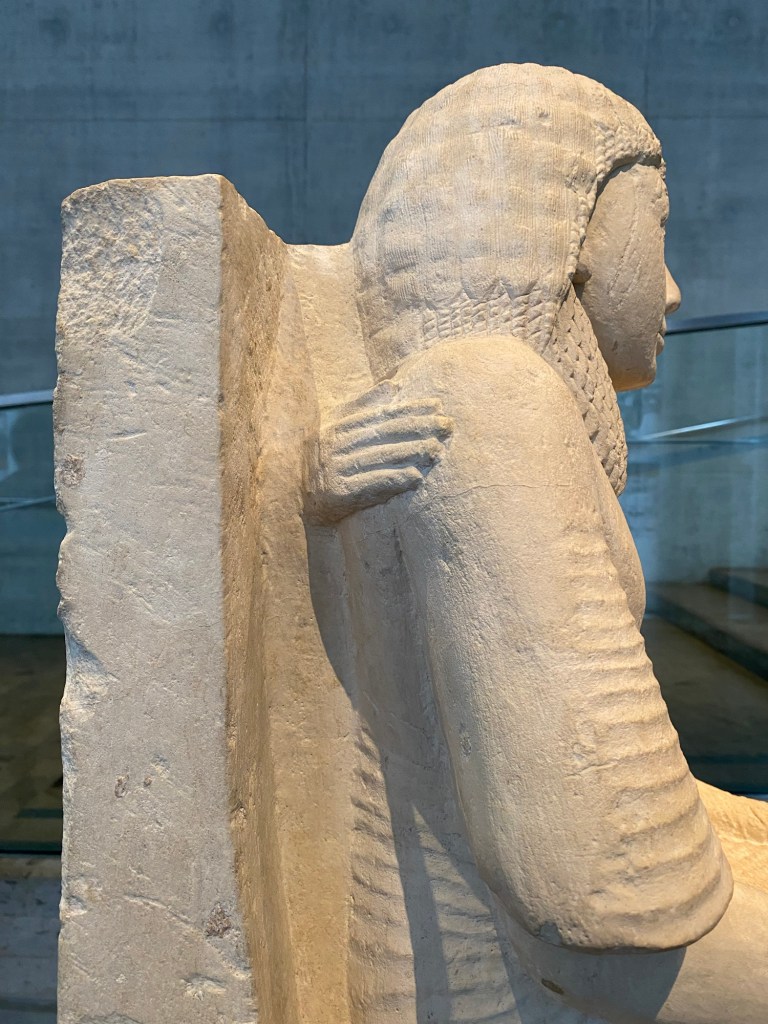
There is her hand, eternally resting on his shoulder. You are beguiled. You are captured. You will soon need more.

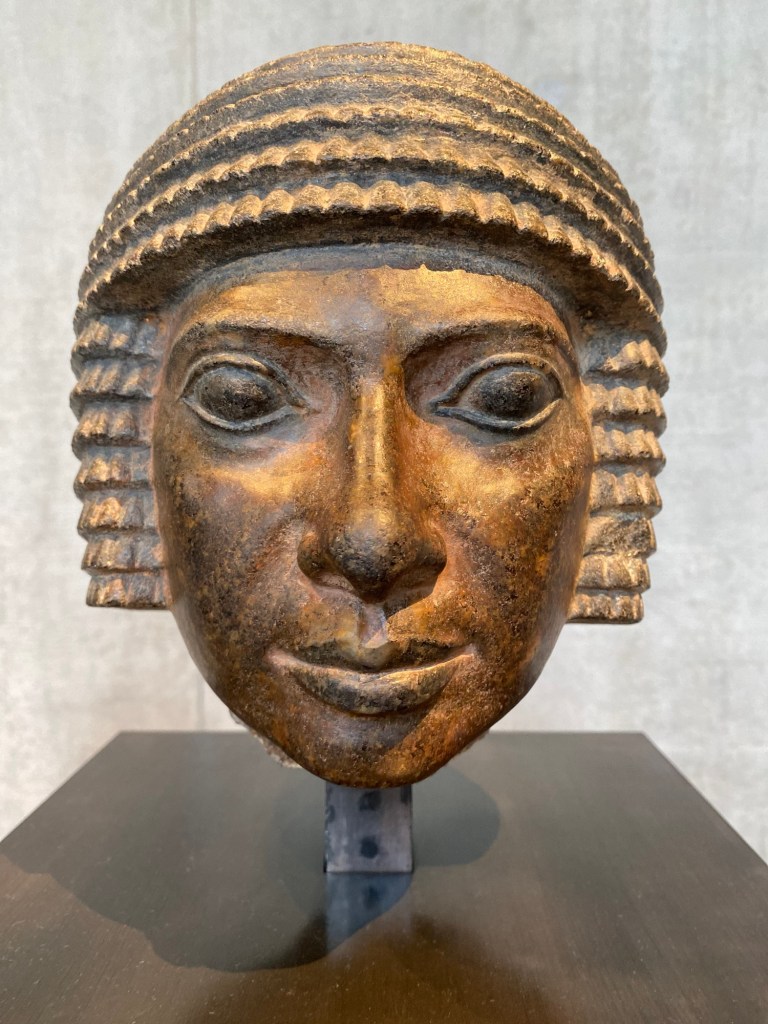
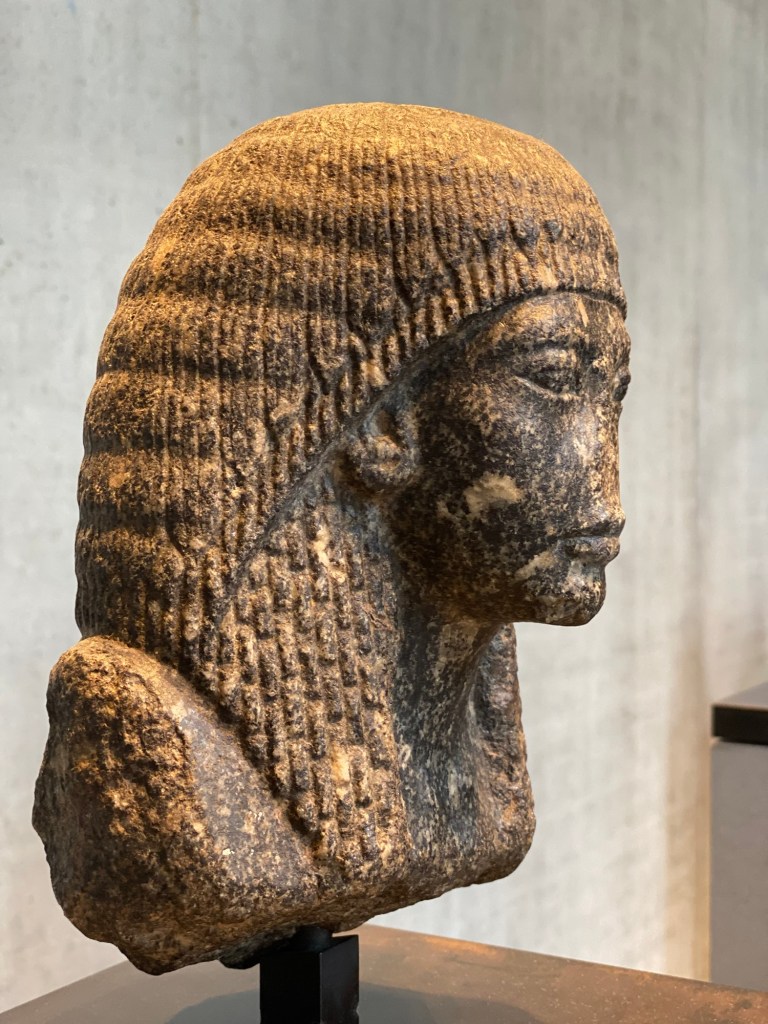
But you remember your promise. You are here to simply partake, not to document. But your phone is nearby and it has such an easy camera (of good quality) to use and you think, why not? Just a couple pictures of some fascinating heads in black stone. Such an interesting comparison, you think, to the gorgeous Greek and Roman busts you saw last week in Munich at the Glyptothek. Of course you don’t want to get drawn in to that kind of experience again, because you are on vacation today. So you take a few pictures of some beautiful sculptures, but you don’t photograph the labels, because you are resting, kind of.

Once you have thoroughly enjoyed this gallery, you follow the subtle brass arrow (see it on the lower right in the photo below?) You are intrigued by this sign, which even though you only know maybe 30 words in German, it probably tells you that it discusses the idea of “art and continuity” and that’s an interesting concept in an Egyptian museum. It doesn’t hit you between the eyes with a Wikipedia type summary of information (and on a work day, you appreciate Wikipedia type summaries and consult them all of the time) such as “Egyptian art begins in the ___th century B.C. and is characterized by…”. That kind of information has its place and you’ve written it many times for museums and articles and books, but you are on vacation today and you don’t want that kind of information. You are grateful it’s in German, because that lets you off the hook

Oh wait, there is some text in English. Ok, I’ll check it out. It’s short and sweet and goddammit, it’s interesting.

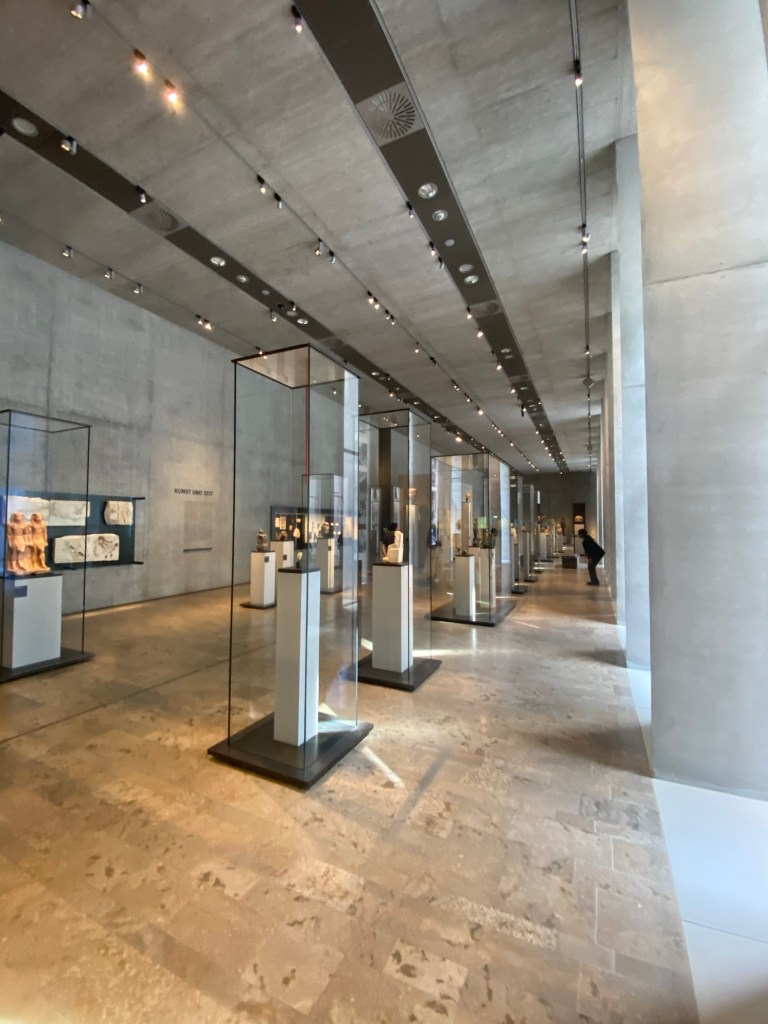
You walk into gallery 2 and you are impressed again by the quality of the display, not to mention the fascinating artworks and you take a quick picture of the gallery because you are NOT going to be photopgraphing the various artworks because you are on vacation. Remember that.
What do you think happens next?

If you want to understand Munich, this is a good place to begin

I can’t upload the video, but you can find it on Youtube here: https://www.youtube.com/watch?v=SBRXzpH7Zo0

Or try this: https://www.youtube.com/redirect?event=video_description&redir_token=QUFFLUhqbDQwMVJpQ3NrSzctYnVfNFRoa3NGeUVaOFhWZ3xBQ3Jtc0ttWUl6VERxMmVyZm1yd0szblBCNWVpN3MtVlNjNlB0SzB6eVVVSl9uZ2VERnBqZGhSRHJMLUlNX3RmZjBpVy1CMmhZQzkxa25HSFJUS094QWZfYURIS3V0Qlpfc0ZSd2M1Nk1XcmJ0V3A1RnhLMFMwRQ&q=https%3A%2F%2Fvimeo.com%2F147165742&v=SBRXzpH7Zo0

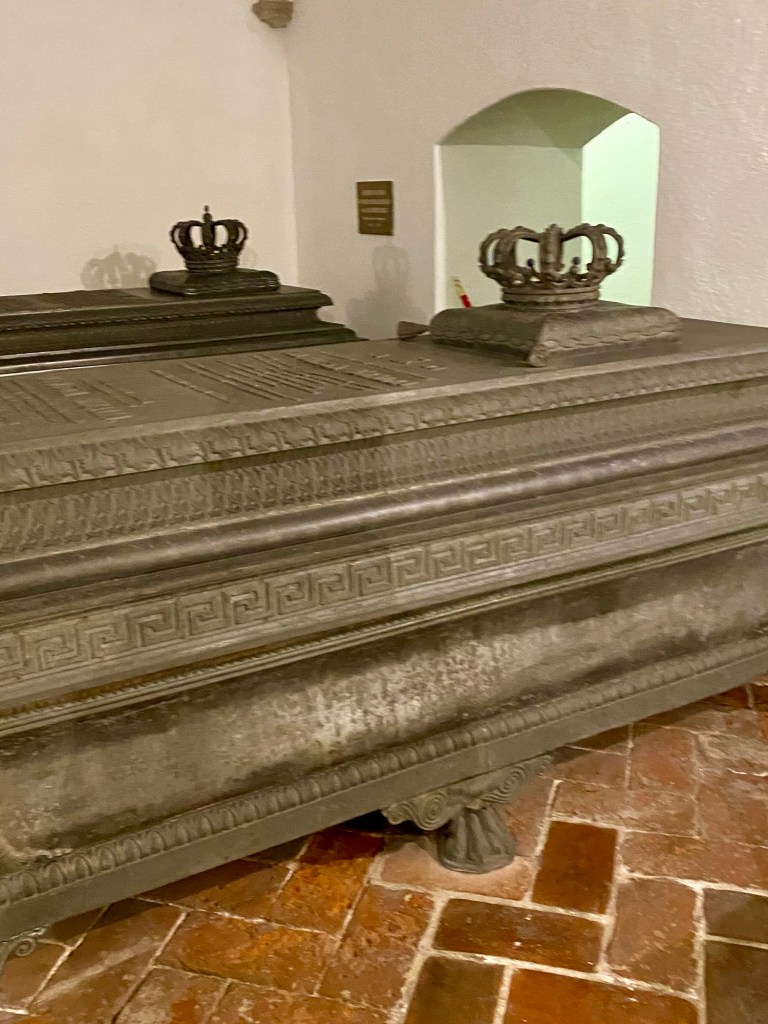
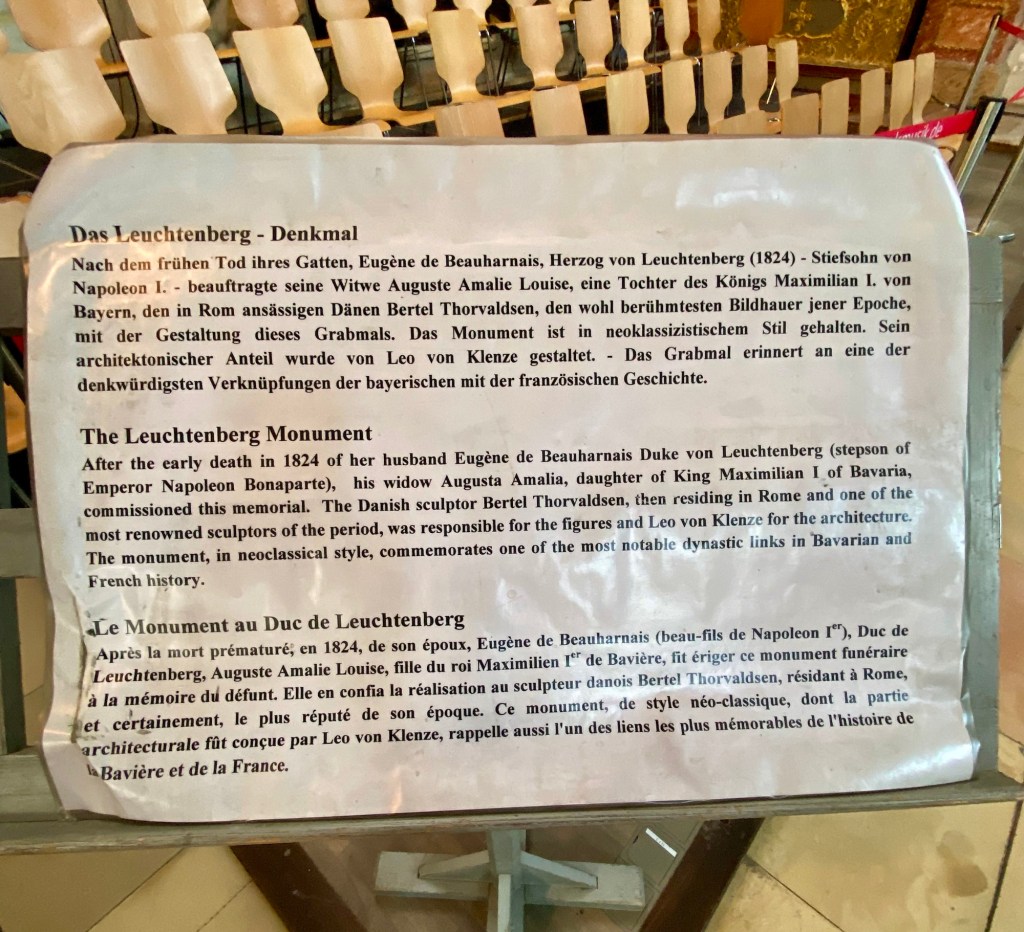
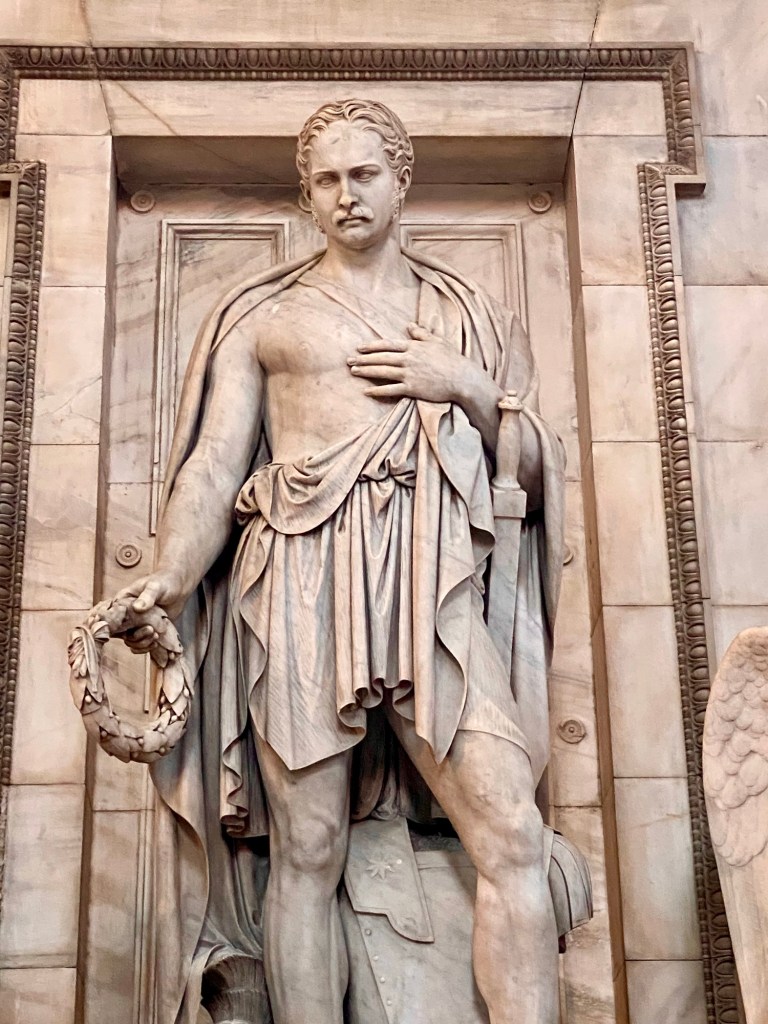
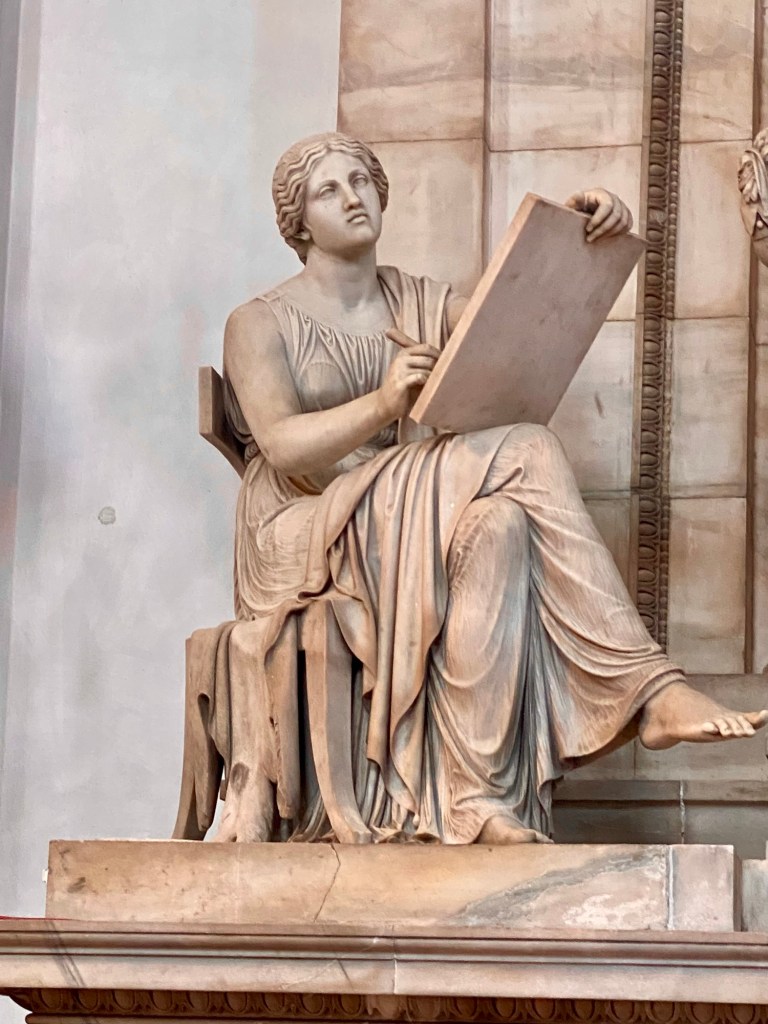
St. Michael’s Church in Munich, housing the Wittelsbach family crypt and Bertel Thorvaldsen’s monument for Eugène de Beauharnais

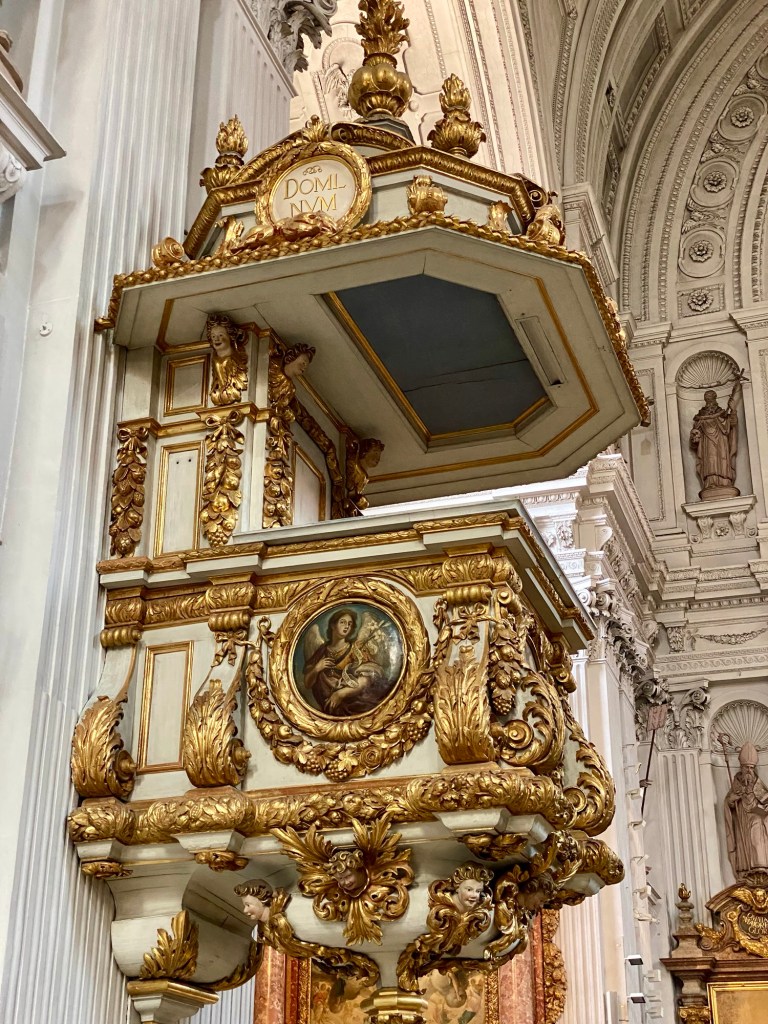
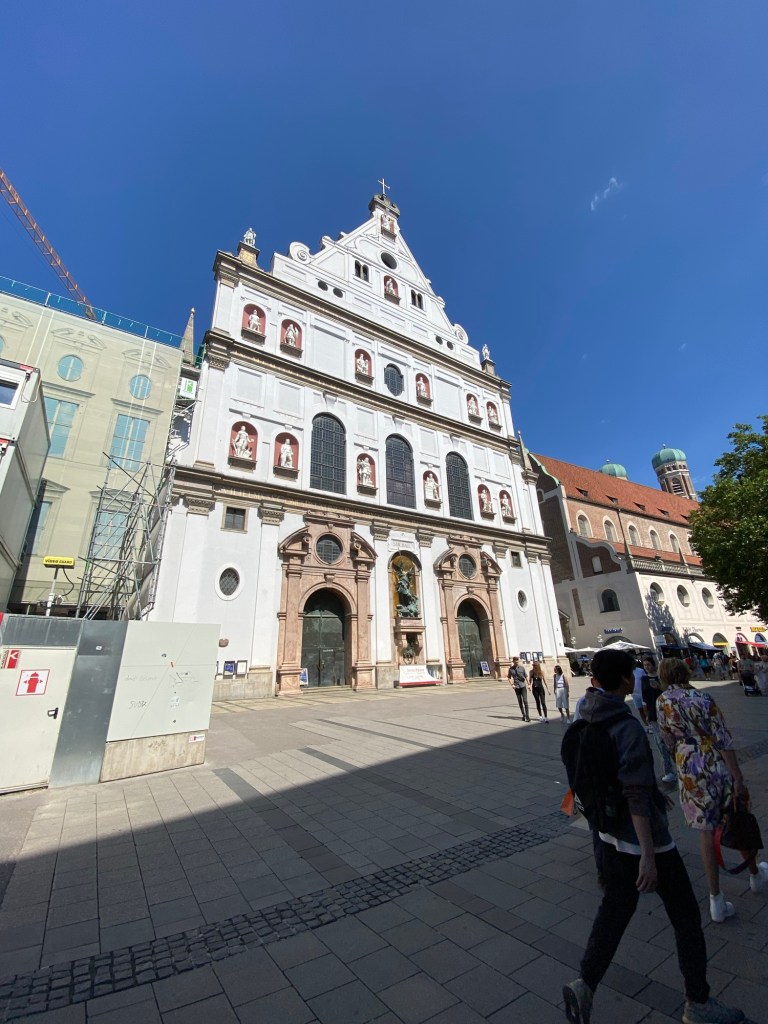
Near Marienplatz in the center of historic center Munich sits the important Jesuit church devoted to St. Michael. It has an august history and its striking architecture had an enormous influence on Southern German early Baroque architecture.


In 1556, Albert V, Duke of Bavaria granted the Society of Jesus permission to establish a presence in the city and this church was consecrated in 1597, after 14 years of construction. The church was built by William V, Duke of Bavaria between 1583–97 as a spiritual center for the Counter Reformation. The foundation stone was laid in 1585.

In order to realise his ambitious plans for the church and the adjoining college, Duke William had 87 houses in the best location razed, ignoring the protests of the citizens. The church was erected in two stages. In the first stage (1583–88), the church was built by the model of Il Gesù in Rome and given a barrel-vaulted roof by an unknown architect, the vault being the largest in the world apart from that of St Peter’s Basilica in Rome, spanning freely more than 20 meters.

The facade is impressive and contains standing statues of Duke Wilhelm and earlier rulers of the Bavarian Wittelsbach dynasty, cast in bronze, in the form of a family tree. Hubert Gerhard’s large bronze statue between the two entrances shows the Archangel Michael fighting for the Faith and killing the Evil in the shape of a humanoid demon.

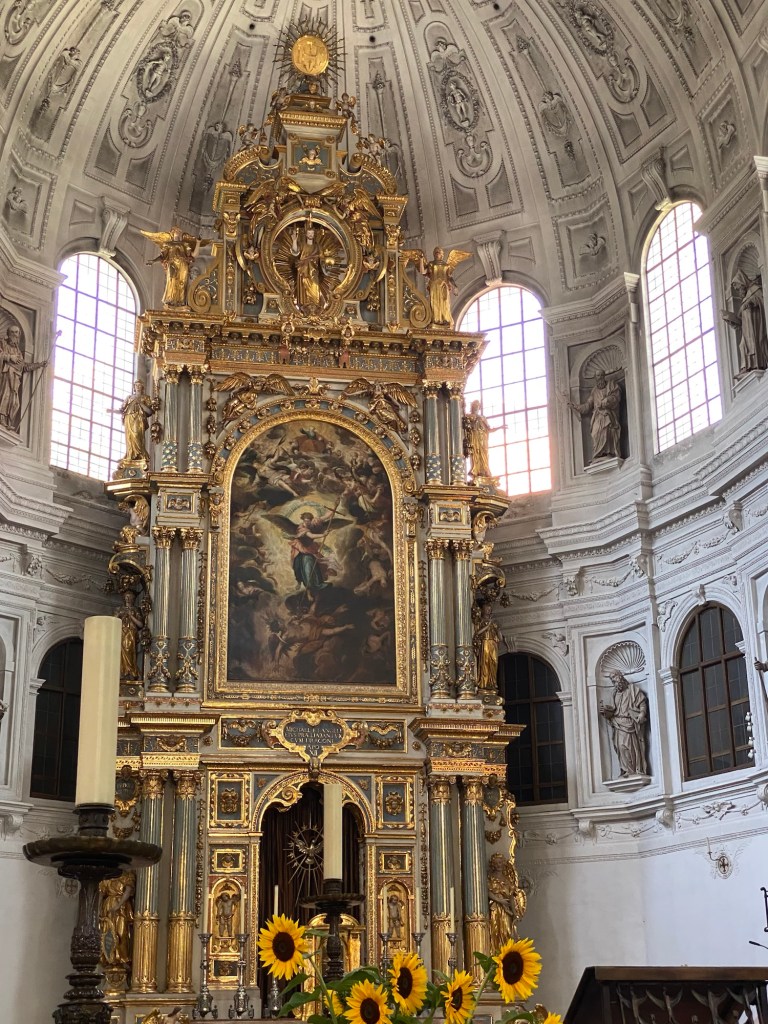
The interior is a representation of the triumph of Roman Catholicism in Bavaria during the Counter-Reformation. The heavily indented chancel arch as well as the short side aisles and even the side chapels are designed as triumphal arches in the ancient model. A very deep choir room adjoins the mighty nave. The stucco decoration of the nave represents the life of Jesus Christ. The altarpiece “Annunciation” was created by Peter Candid (1587). The sculpture of the holy angel in the nave by Hubert Gerhard (1595) was originally intended for the tomb of William V, which was not completed.

Having suffered severe damage during the Second World War, the church was restored in 1946–48. Between 1980 and 1983, the stucco-work was restored.

The church crypt contains the remains of Eugène de Beauharnais. Eugène was the son of Josephine de Beauharnais, Napoleon’s wife and her first husband, general Alexandre de Beauharnais. He married a daughter of King Maximilian I Joseph of Bavaria in 1806 and was created Duke of Leuchtenberg in 1817.

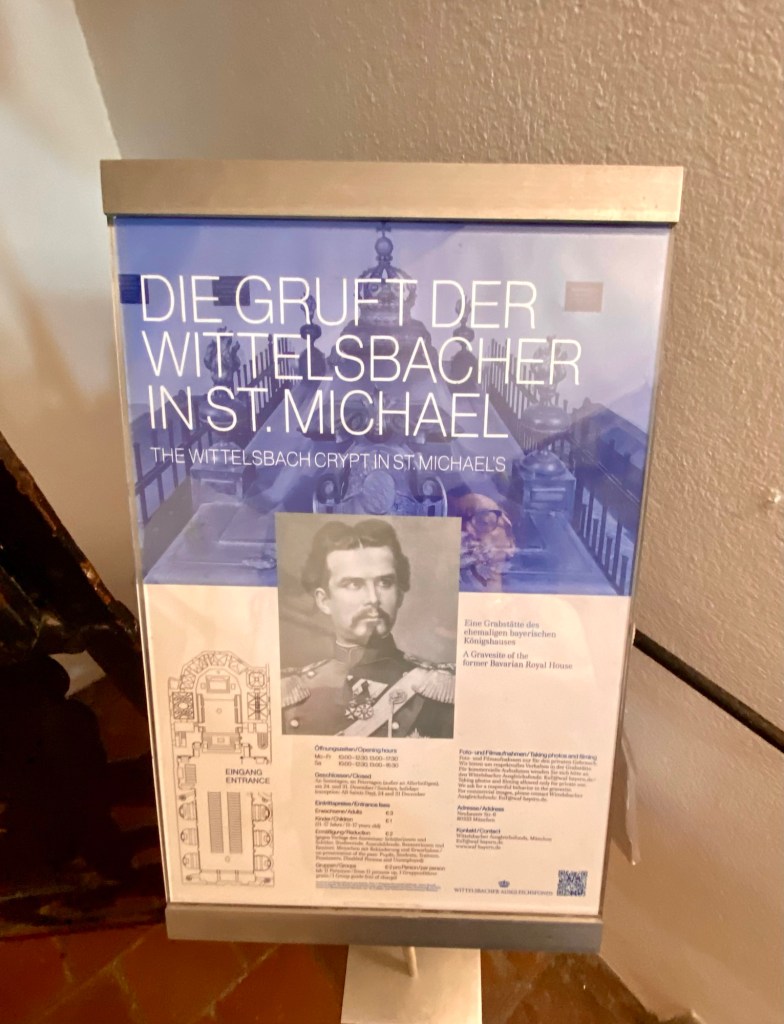
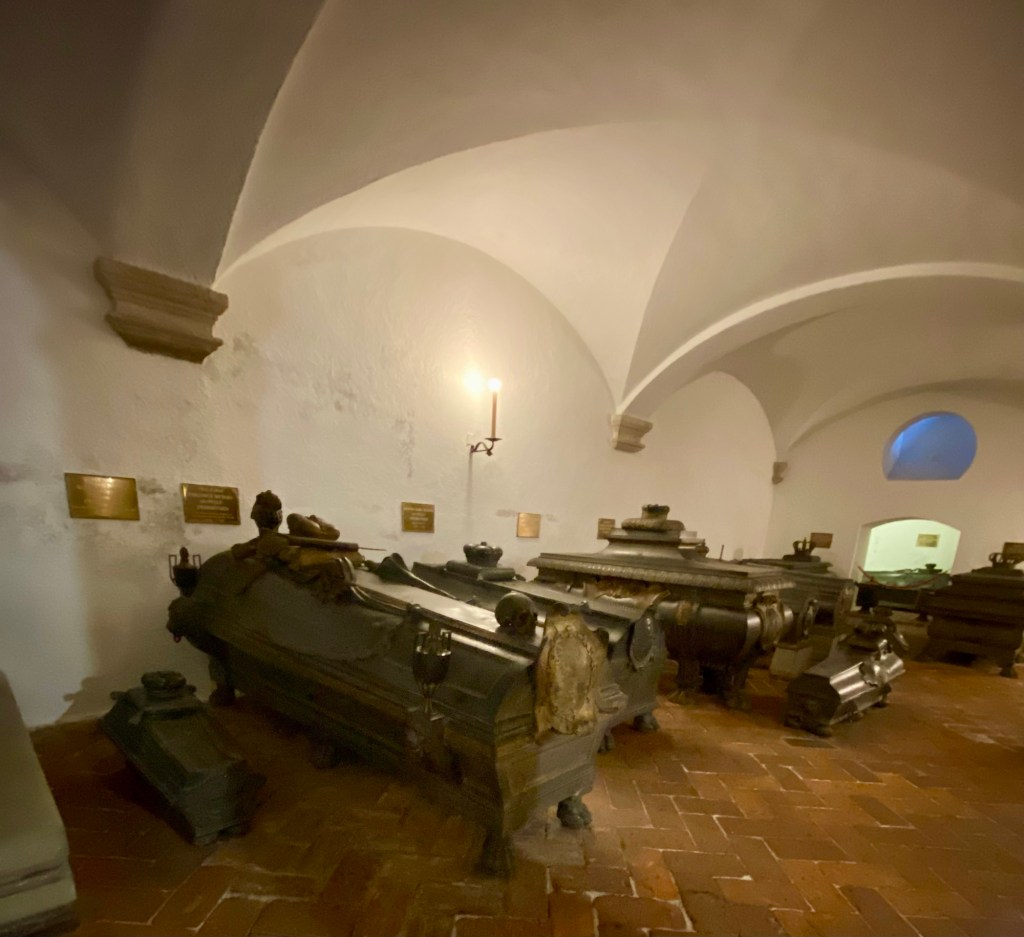
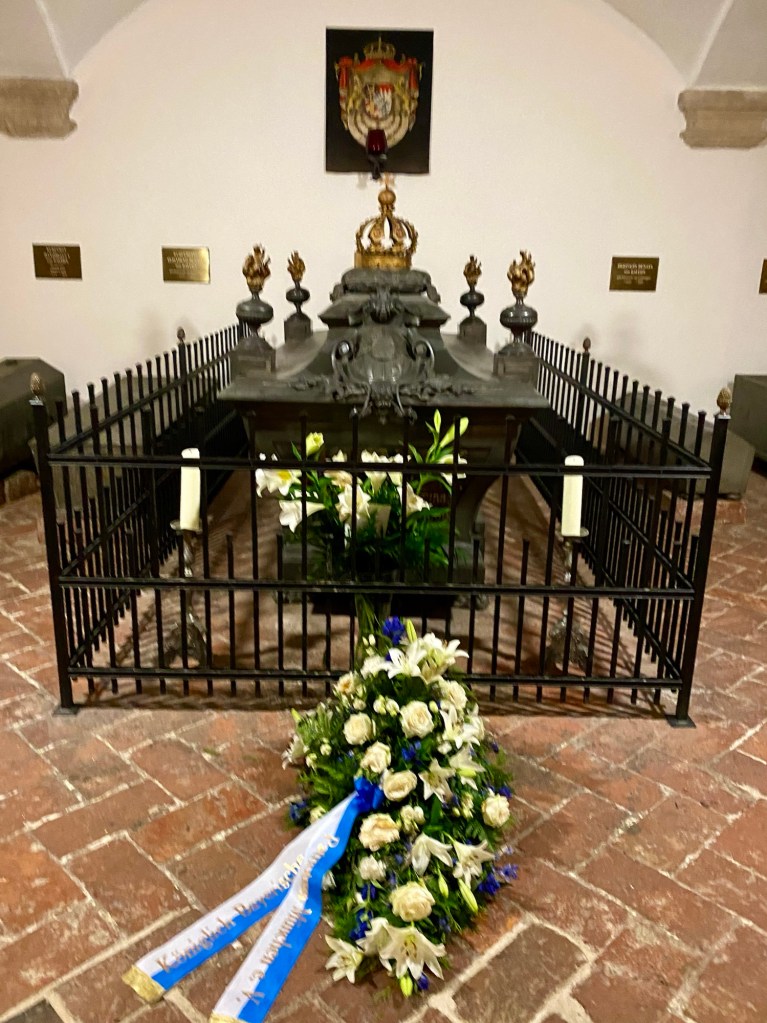
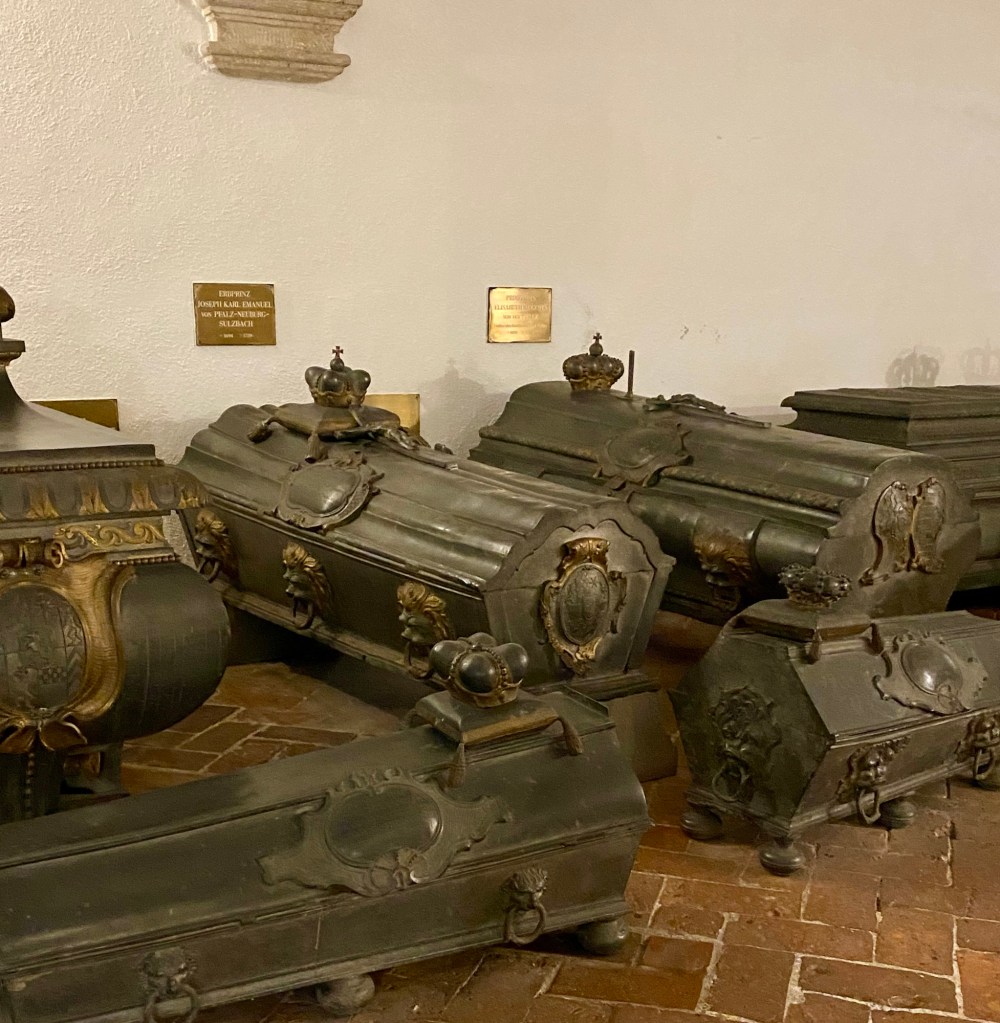
The crypt contains tombs of many members of the Wittelsbach dynasty:

When I wandered into this impressive church one afternoon in Munich, I was surprised to find the Monument for Eugène de Beauharnais (step-son of Napoleon) by Bertel Thorvaldsen. Many moons ago, I was somewhat of an expert on 19th century sculpture and delivered a lecture in Rome on Thorvaldsen. I had forgotten (never planning to visit Germany) that this monument was in Munich. But here it was and here I was and it was a good moment.

I knew it was a Thorvaldsen in my senses before my brain registered it. The winged angels gave Thorvaldsen away to my senses.

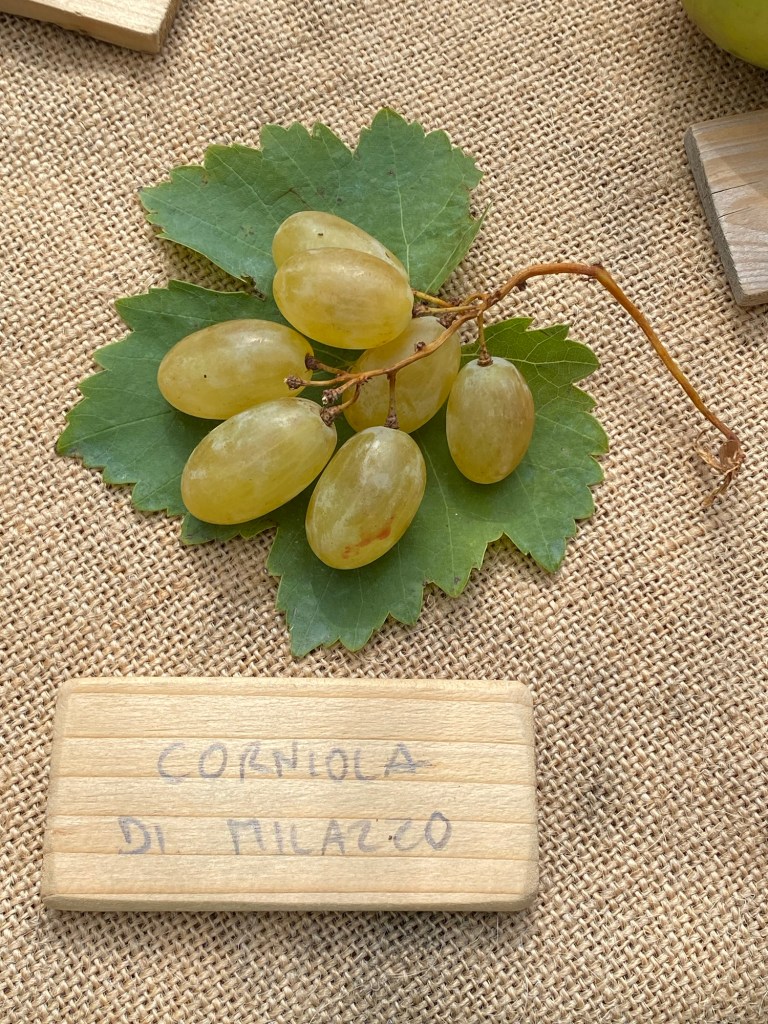
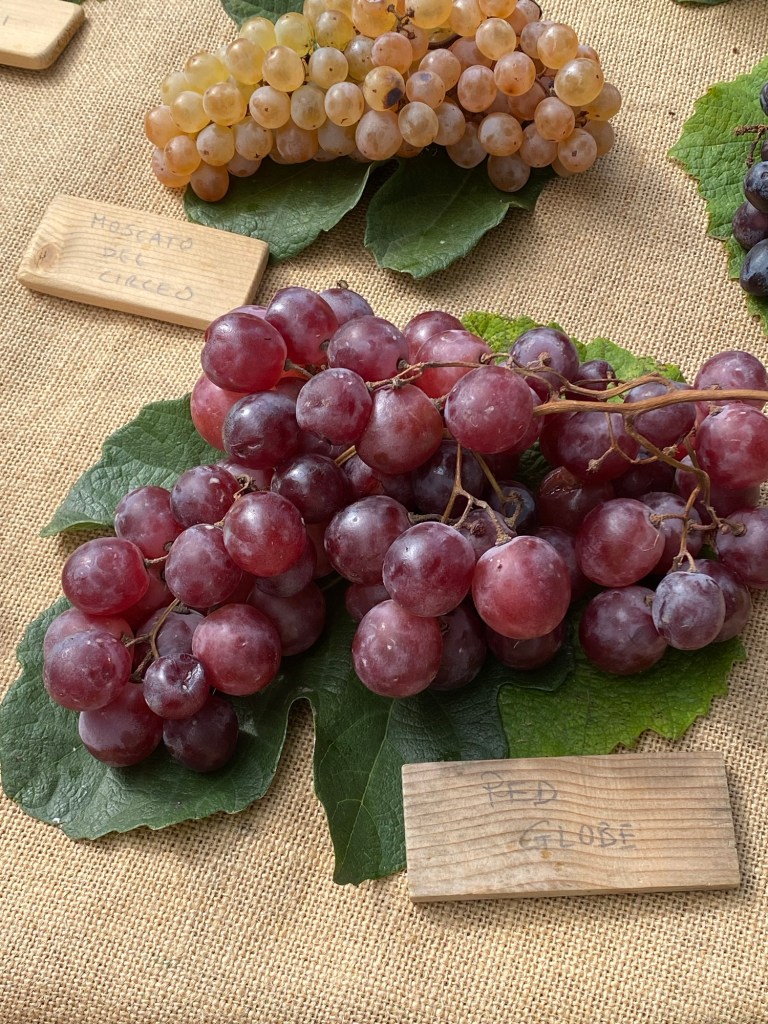
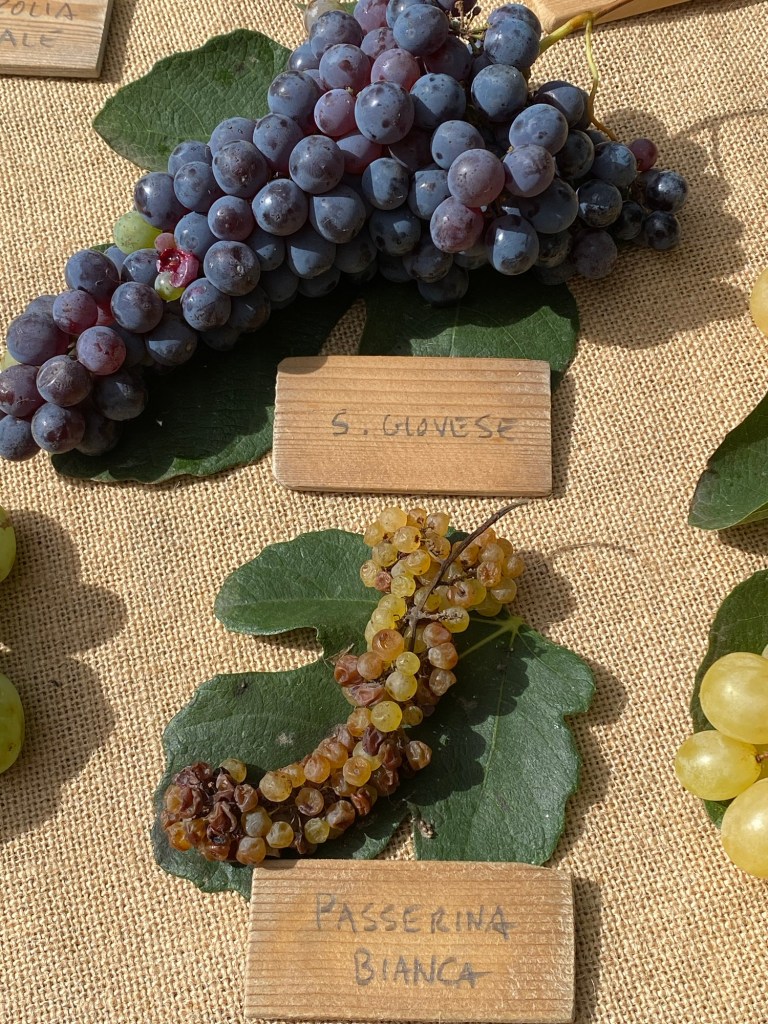
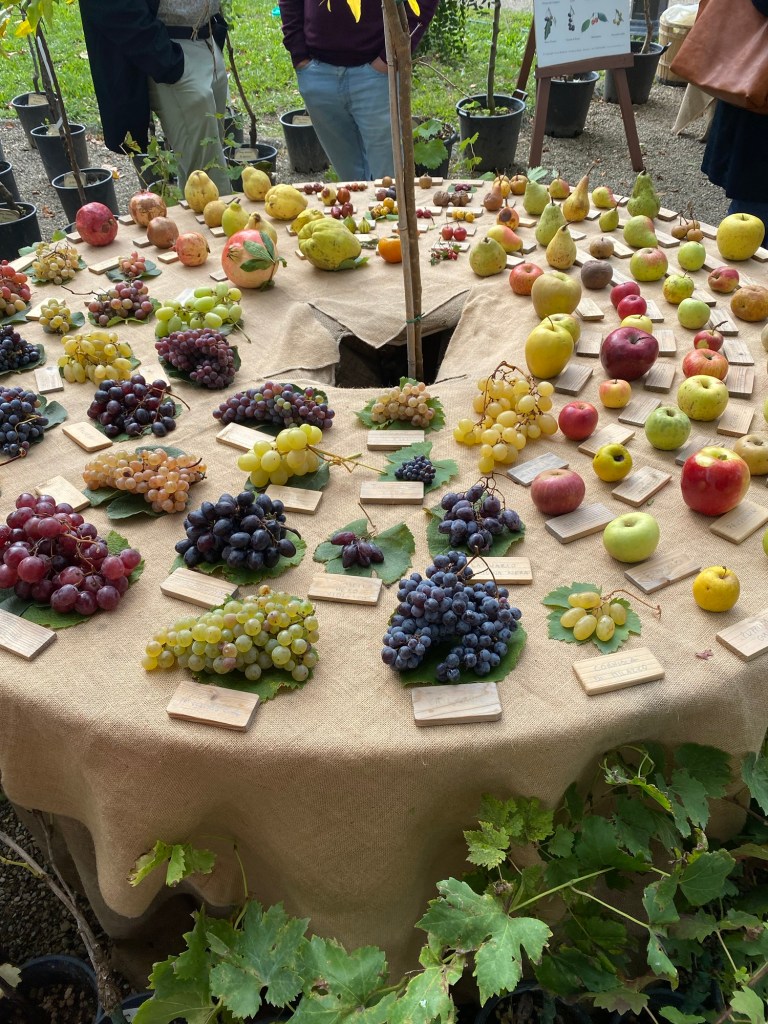
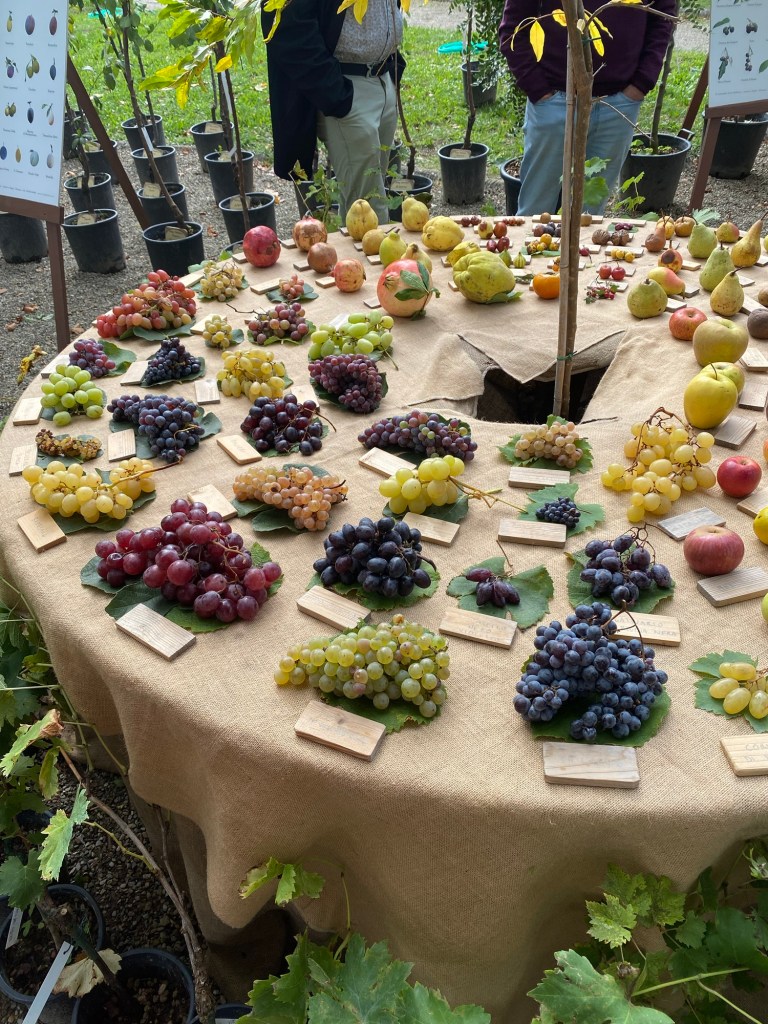
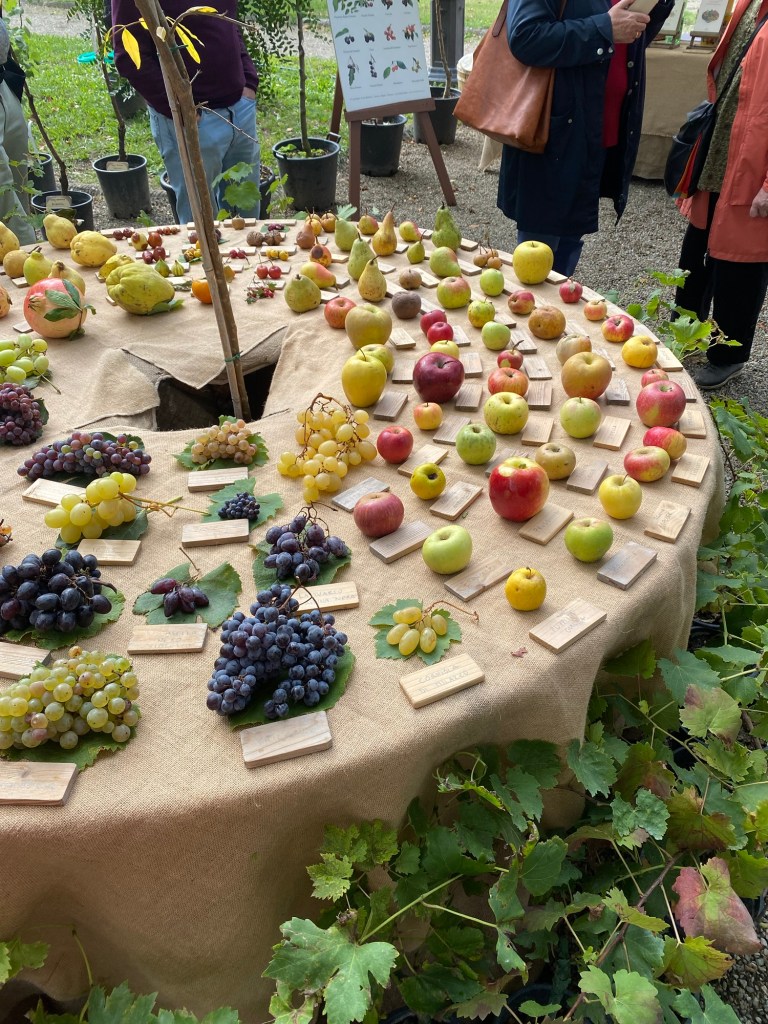
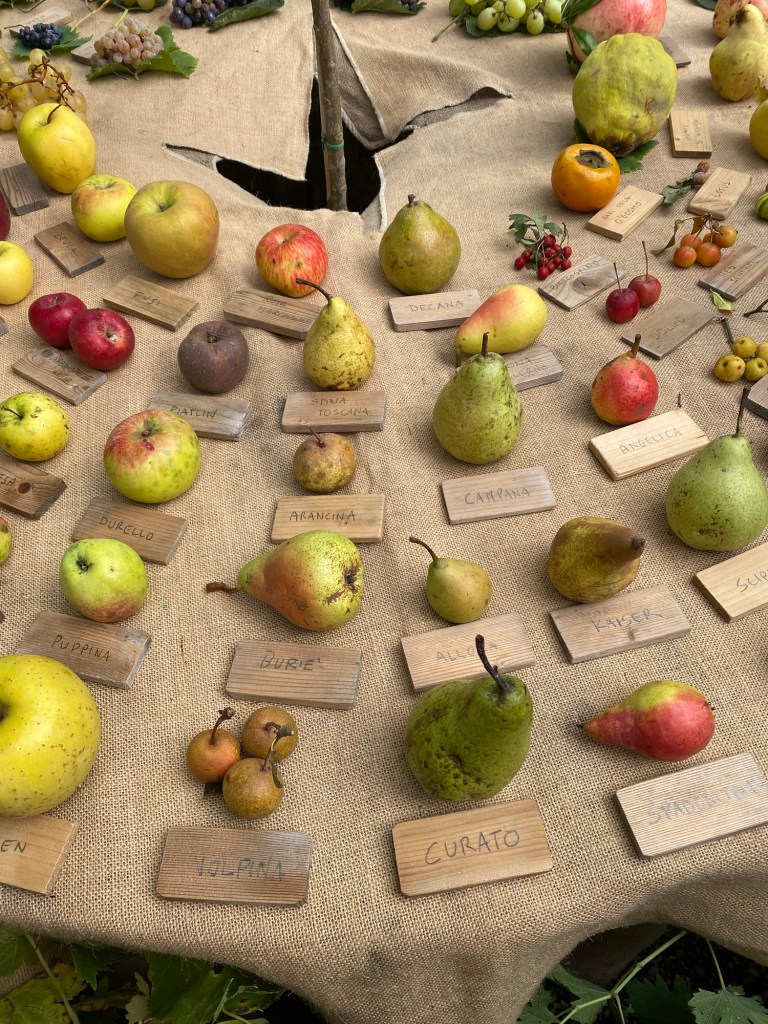
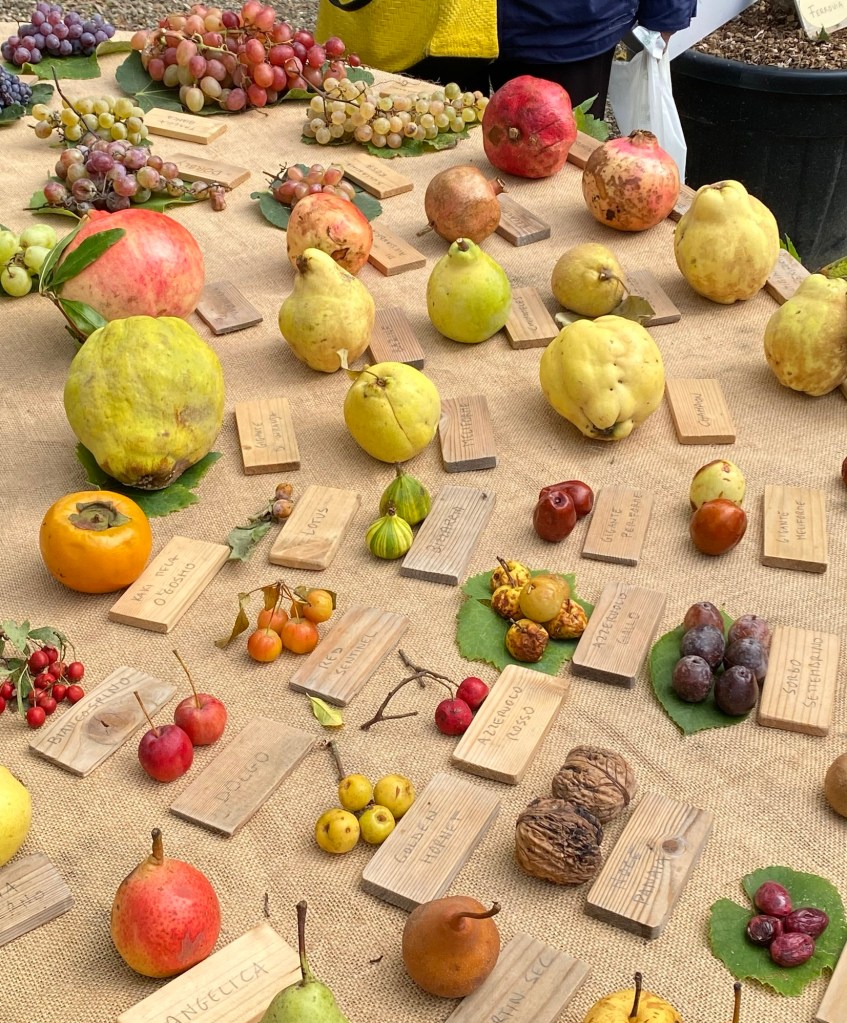
Grapes, apples, and a fantastic pranzo

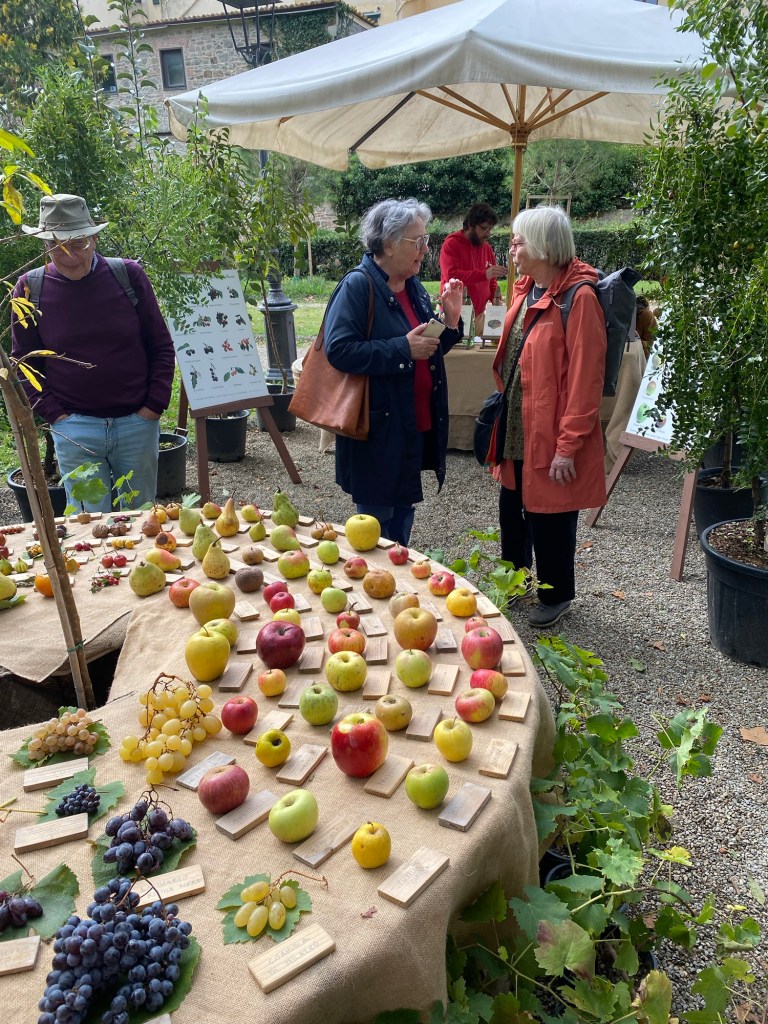
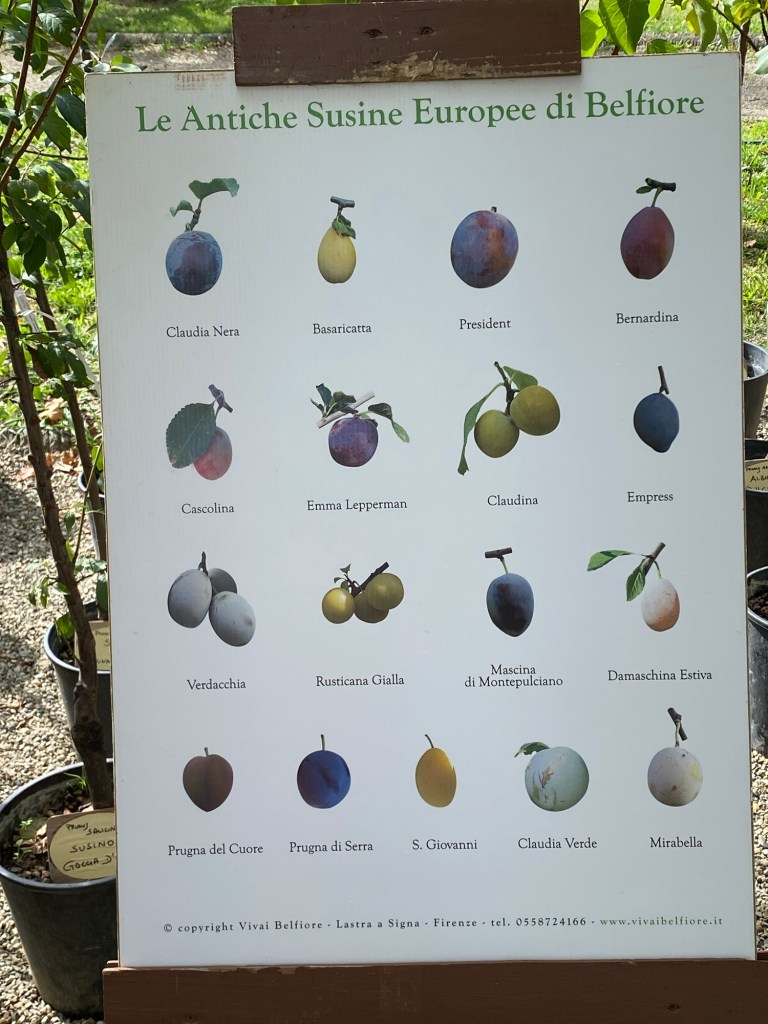
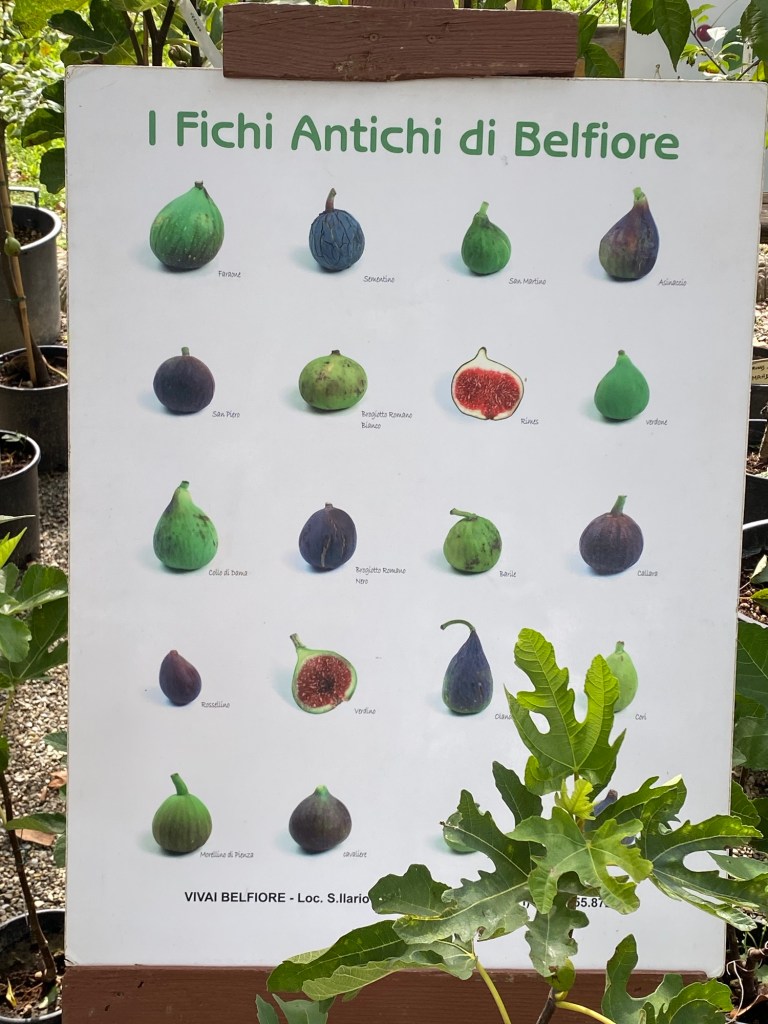
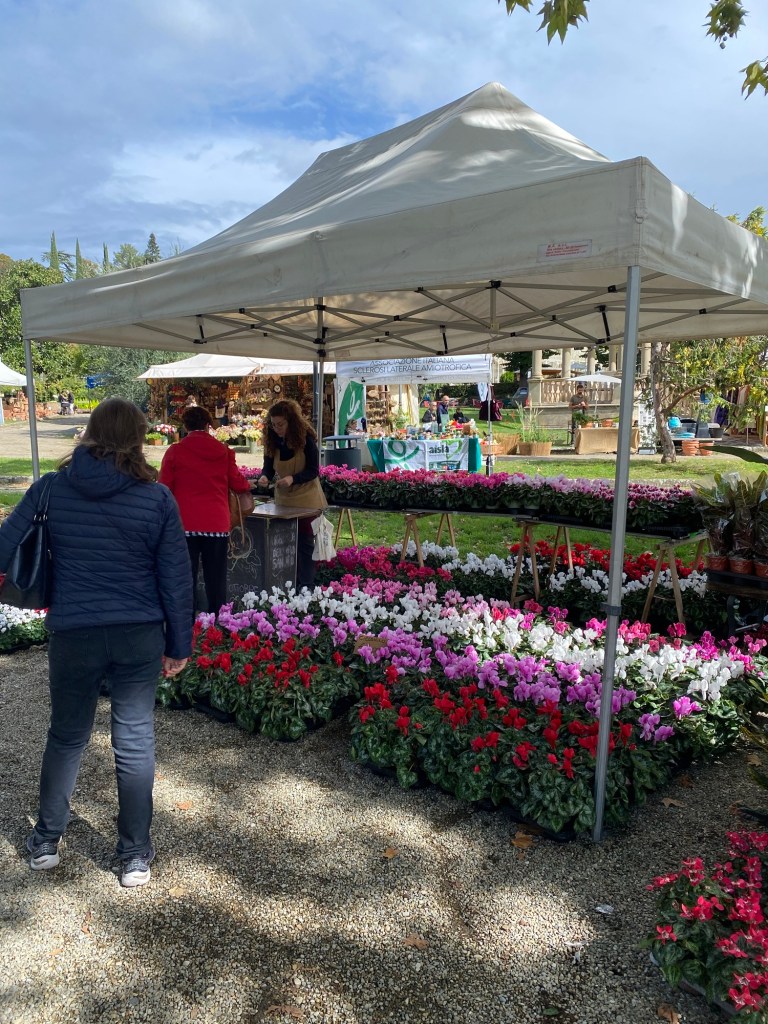
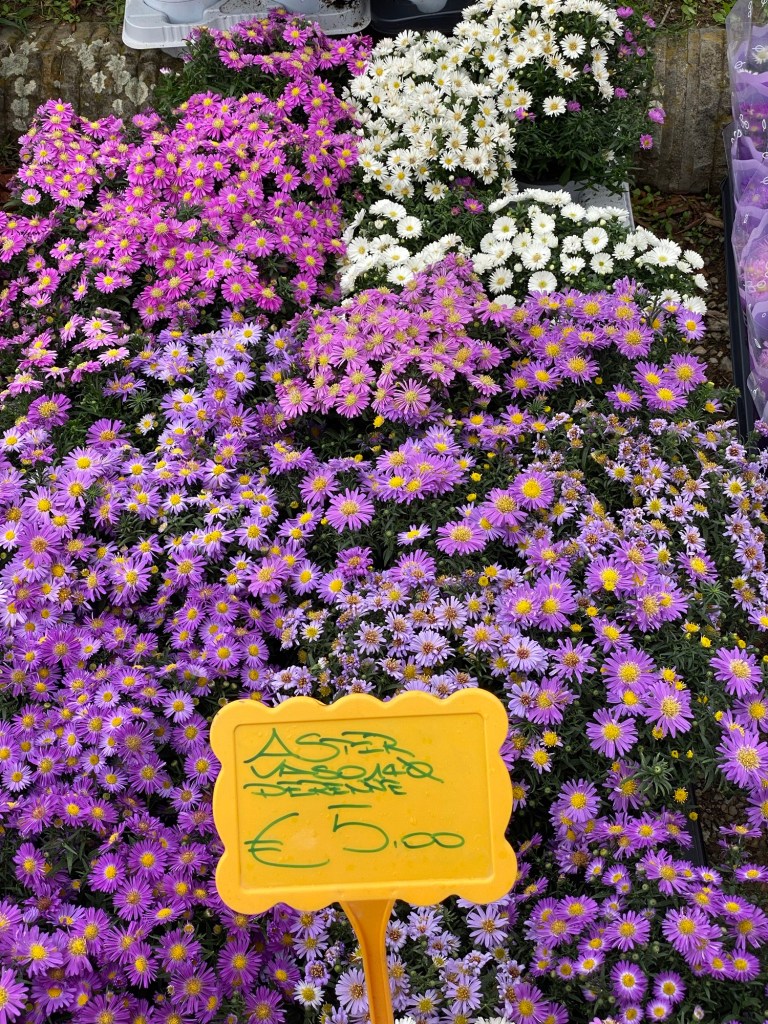
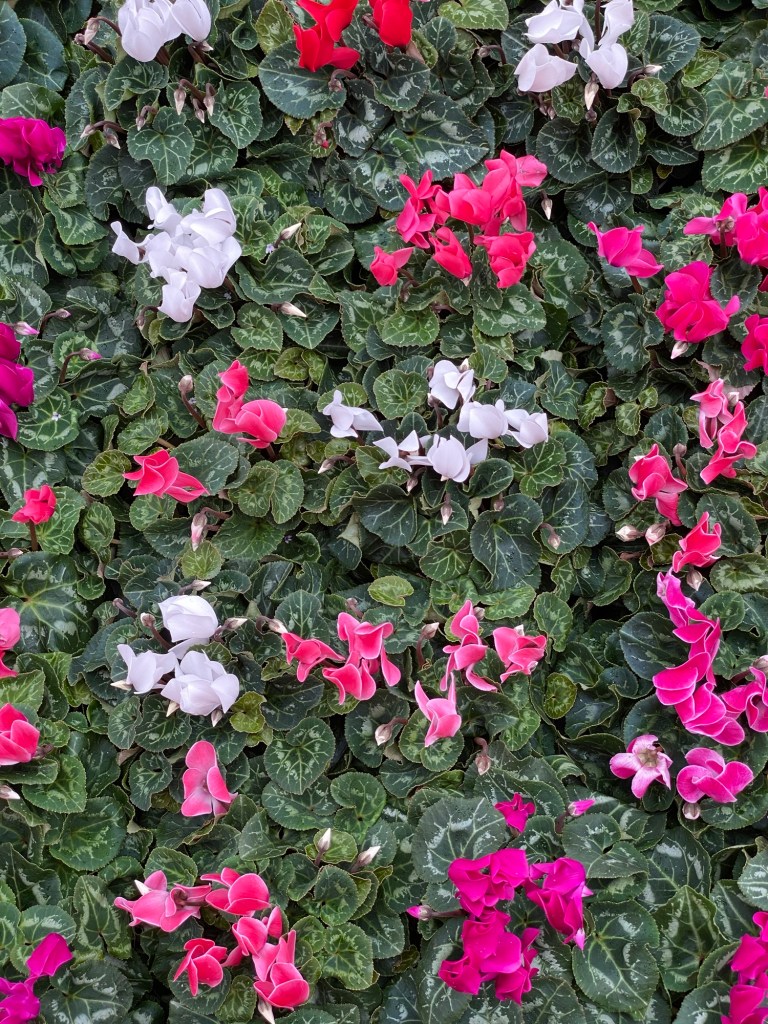
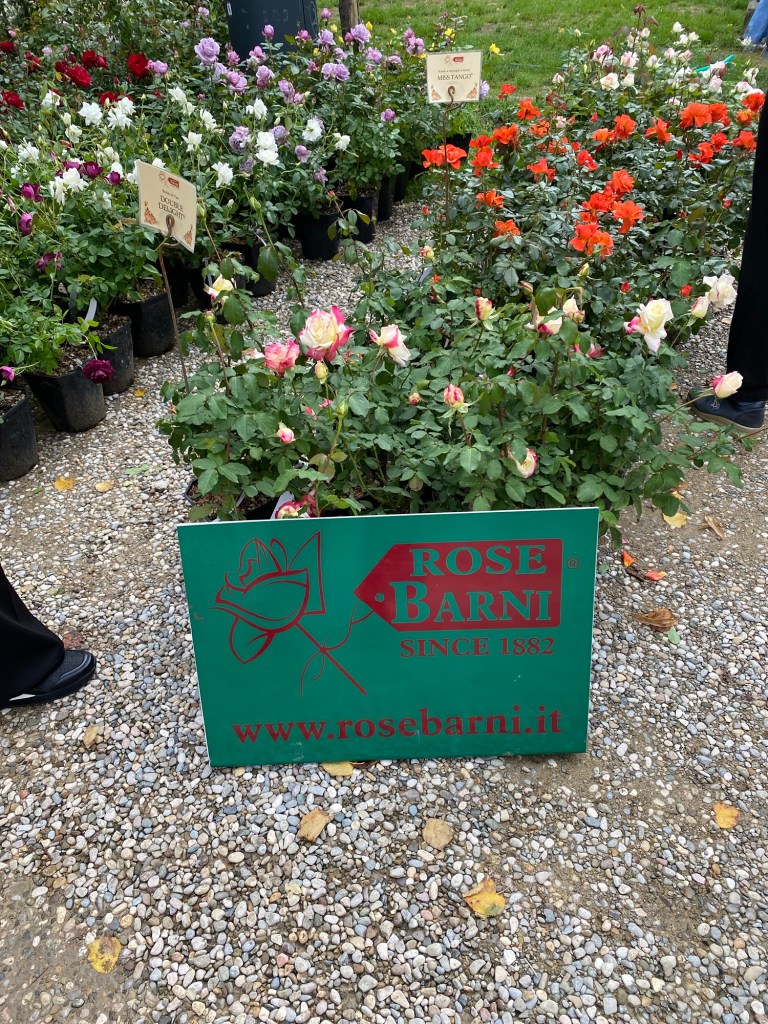
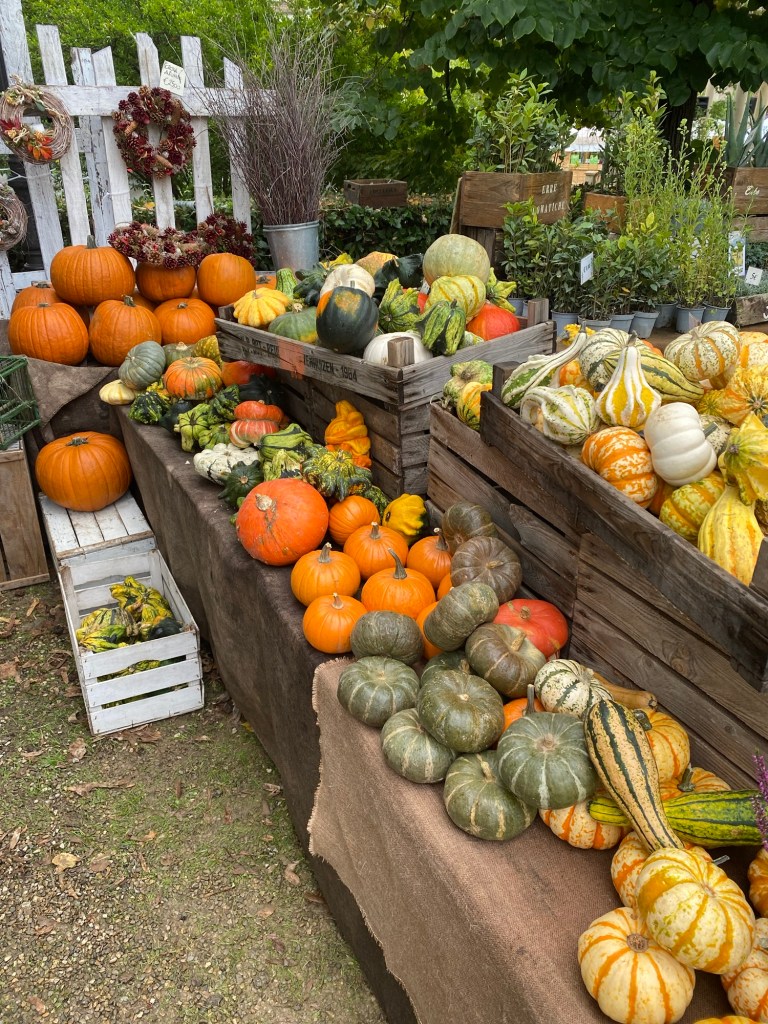
Still enjoying pictures of the various charms of the flower show/market at the Horticultural Garden. The displays are so well done!

If you know anything about Italian grapes, you probably are aware that the San Giovese is the basis for the great Italian

.

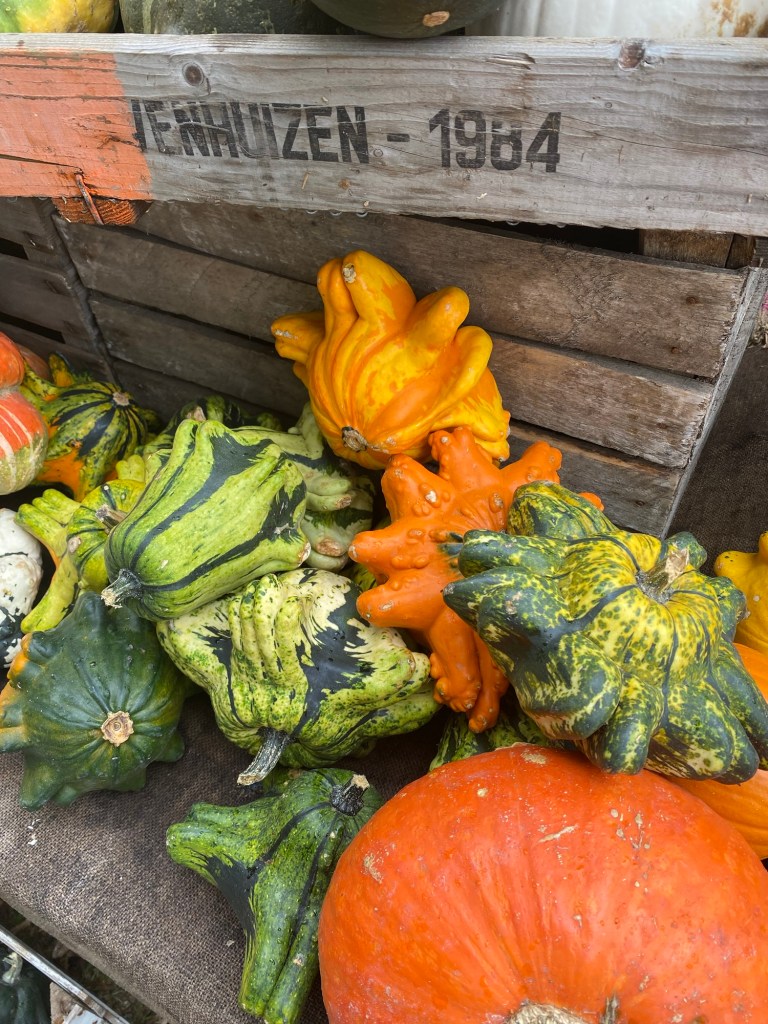
Think of the time and the work needed to create the still-life displays below!

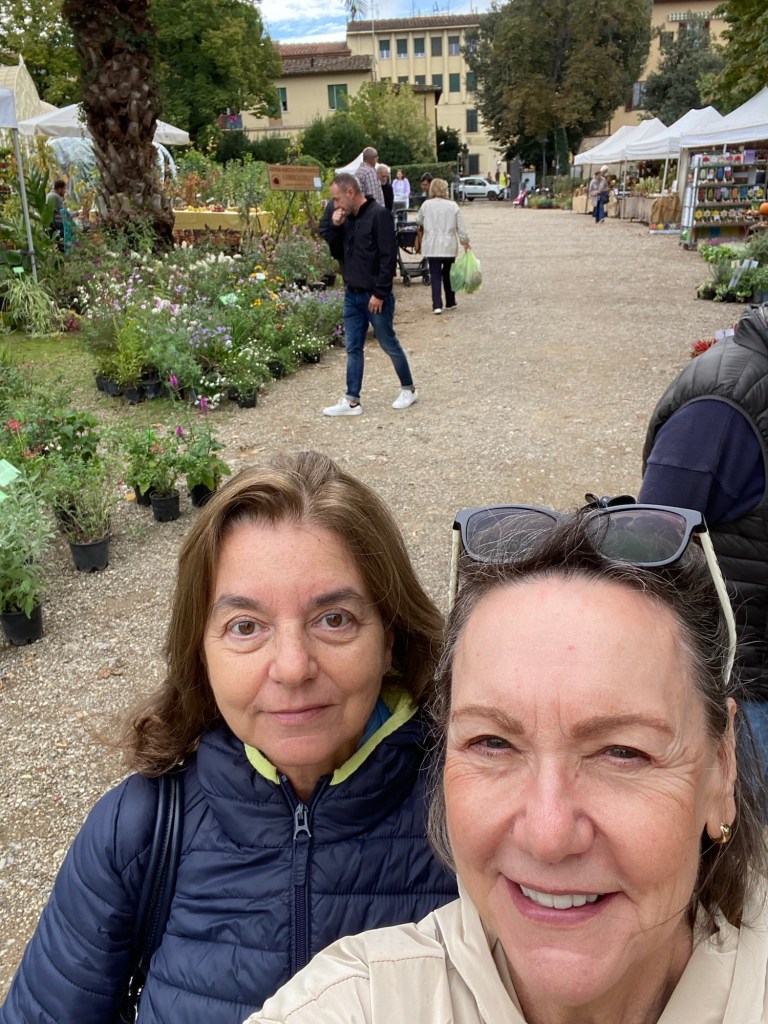
The flower show is a good time to catch up with friends, as these ladies demonstrate!

The apple above is the Red Florentine.

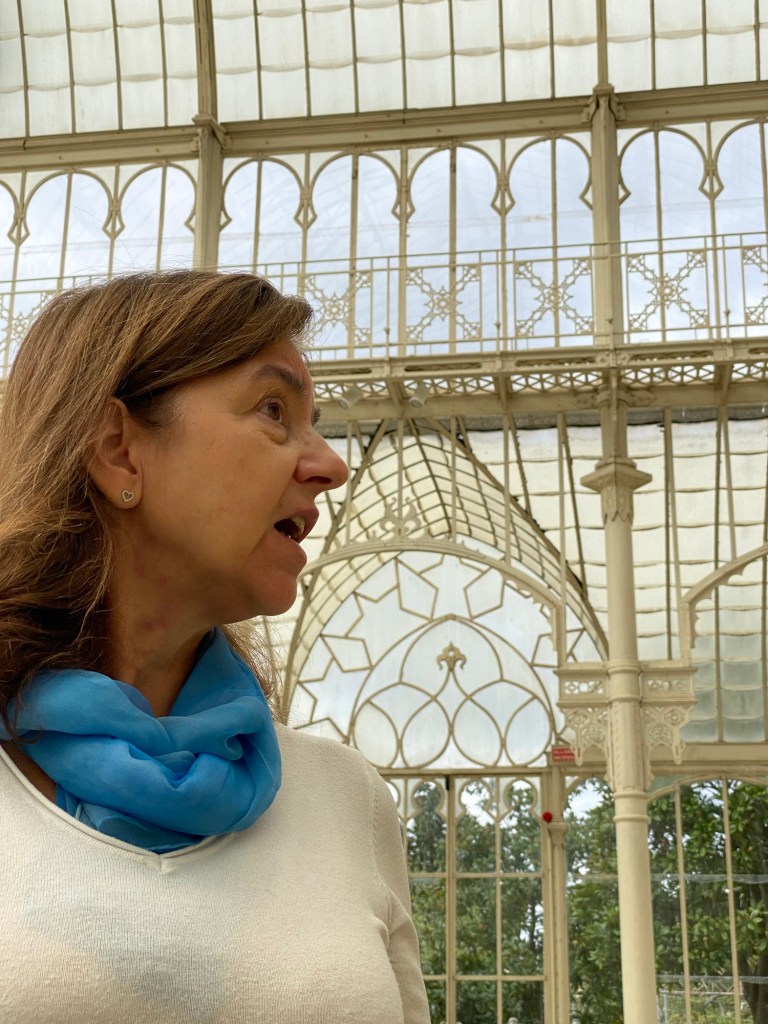
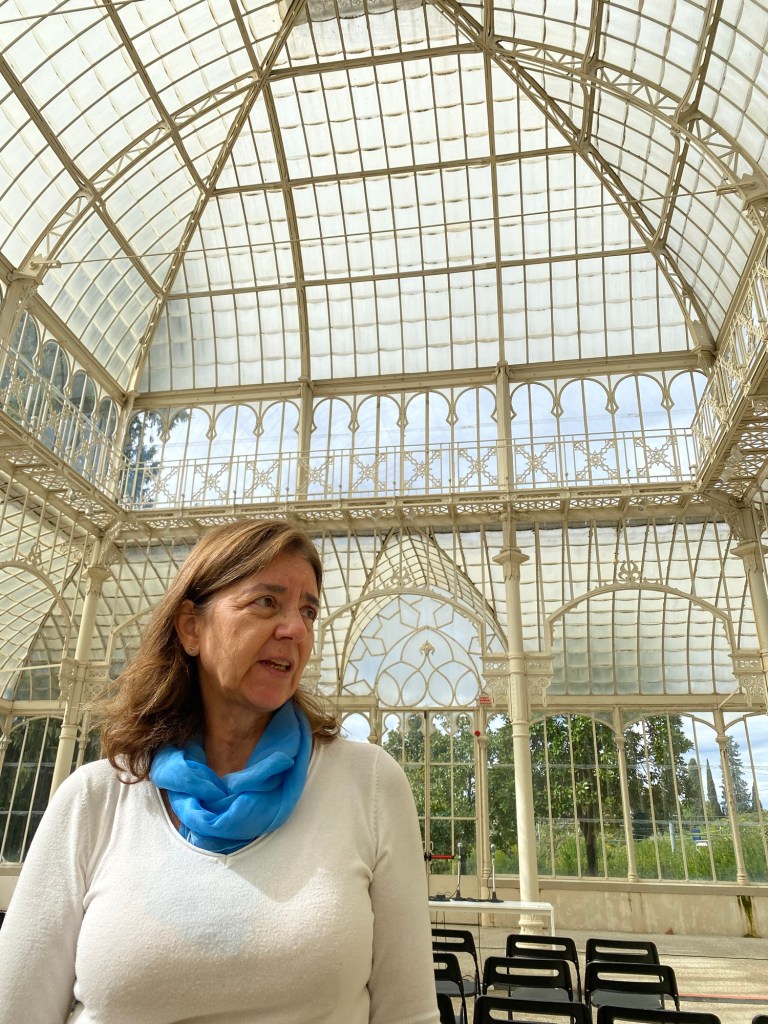
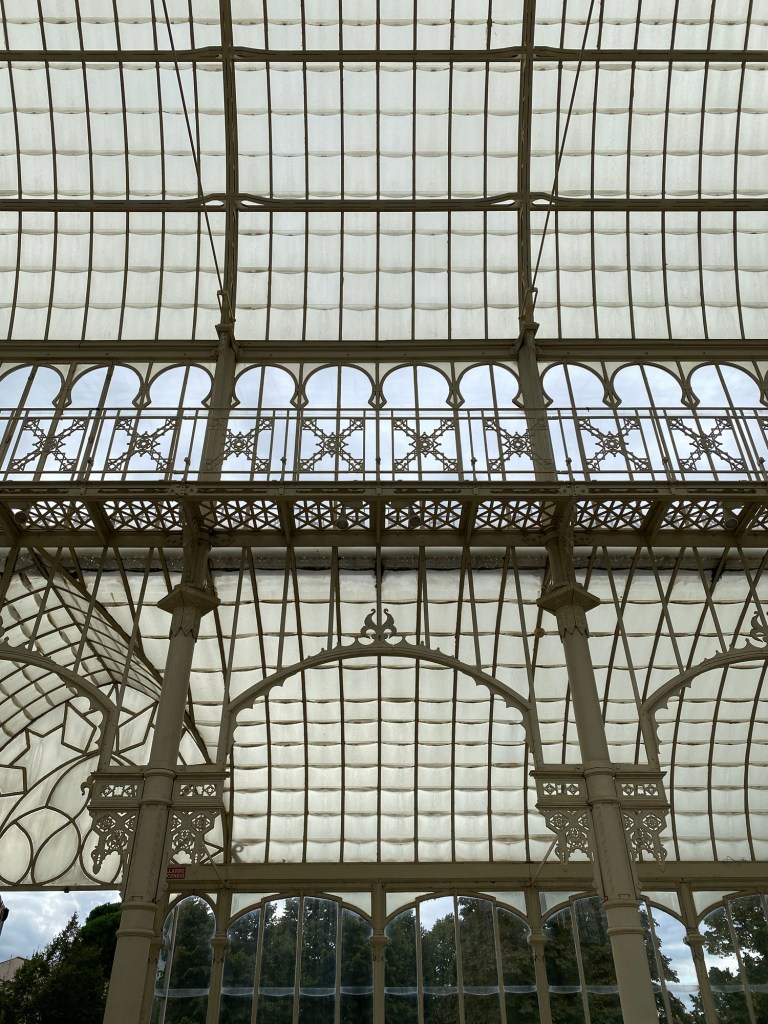
We took a break from looking at flowers and fruits and entered the 19th century glass house within the garden grounds. The house is so beautiful. We met a charming couple from Austria and in these pictures, Patrizia is talking to them about various things connected to the glass house. I took the opportunity to shoot her picture against the backdrop of the beautiful iron architecture.

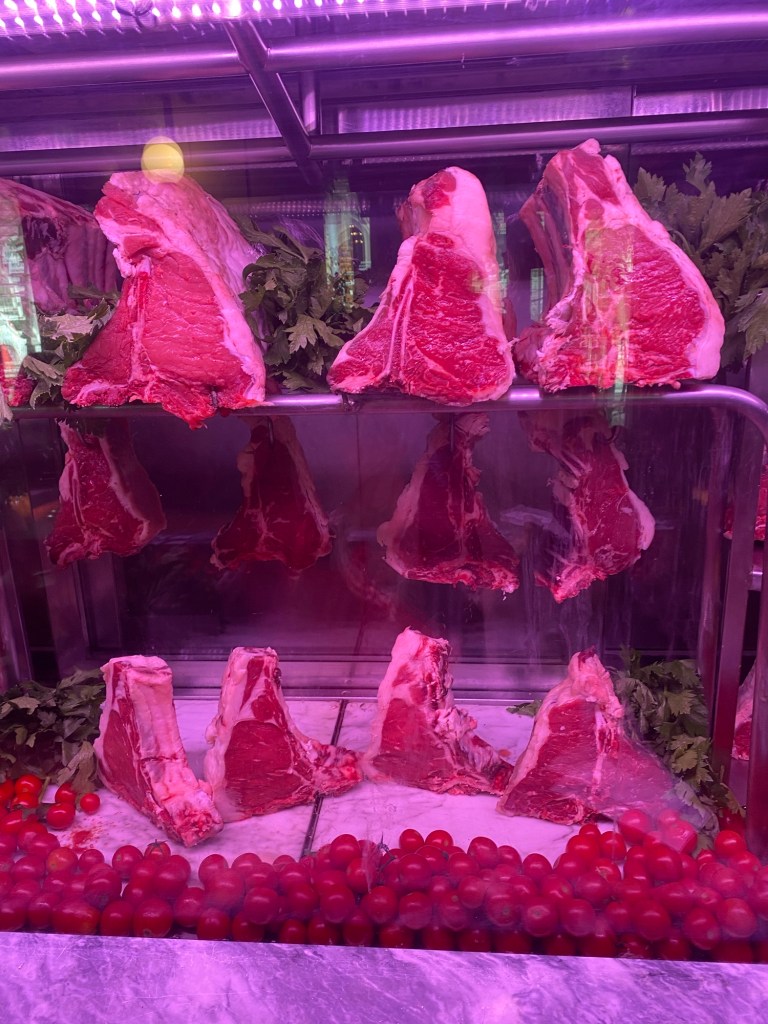
The we went to a nearby favorite restaurant where meat is king. They display the famous bistecca alla Fiorentina in glass cases with a kind of bluish light. It doesn’t make the most attractive picture, but believe me, the steaks were gorgeous.

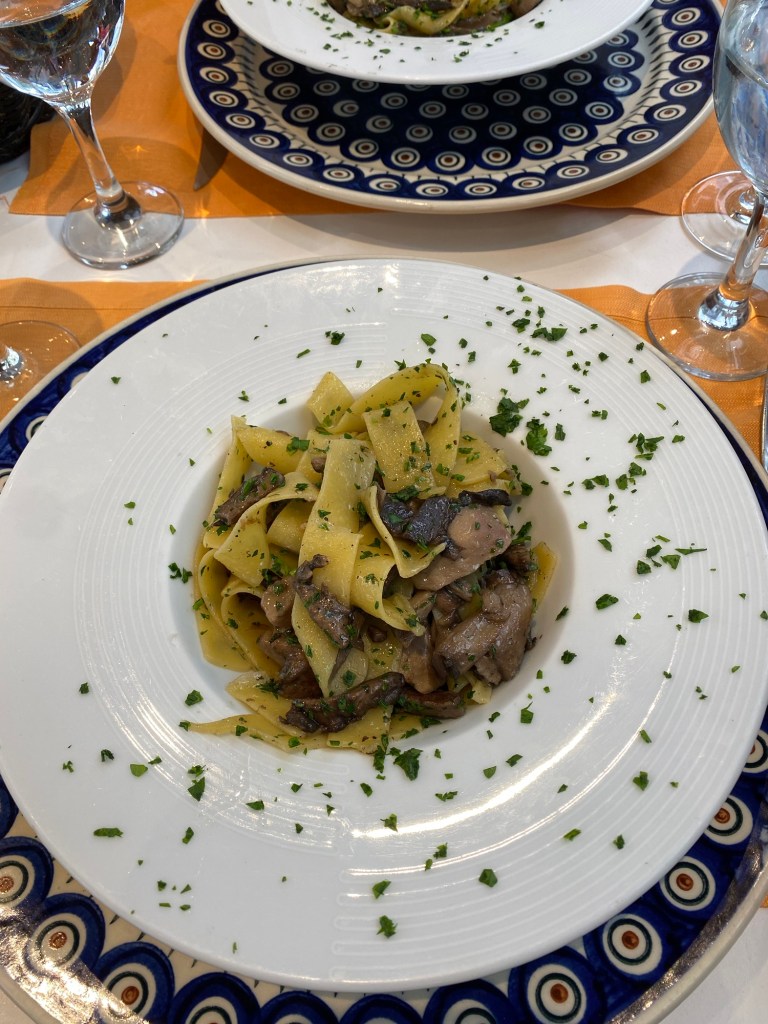
Since its fall, we opted for a fabulous pasta highlighting fresh mushrooms. We also had a plate of fried mushrooms, which I forgot to photograph. The home-made pasta in our tagliatelle al funghi was divine!

All in all, it was a gorgeous fall day with fun activities and great food with a dear friend. The best kind of day!

My favorite activity in Florence!

Twice a year the horticultural garden in Florence hosts a flower show/market. I look forward to it every spring and fall.

I’m so happy I arrived in time to enjoy it this fall! Yesterday I went with my dear friend Patrizia and we had a lovely day, followed by a fantastic lunch!

I’ll be back again soon with more on this fall show! E’ stata una giornata spettacolare! And I needed that because it’s been a trying 10 days moving here! More on that later too.

A final look at the Lenbachhaus in Munich, Part 4 and the color green

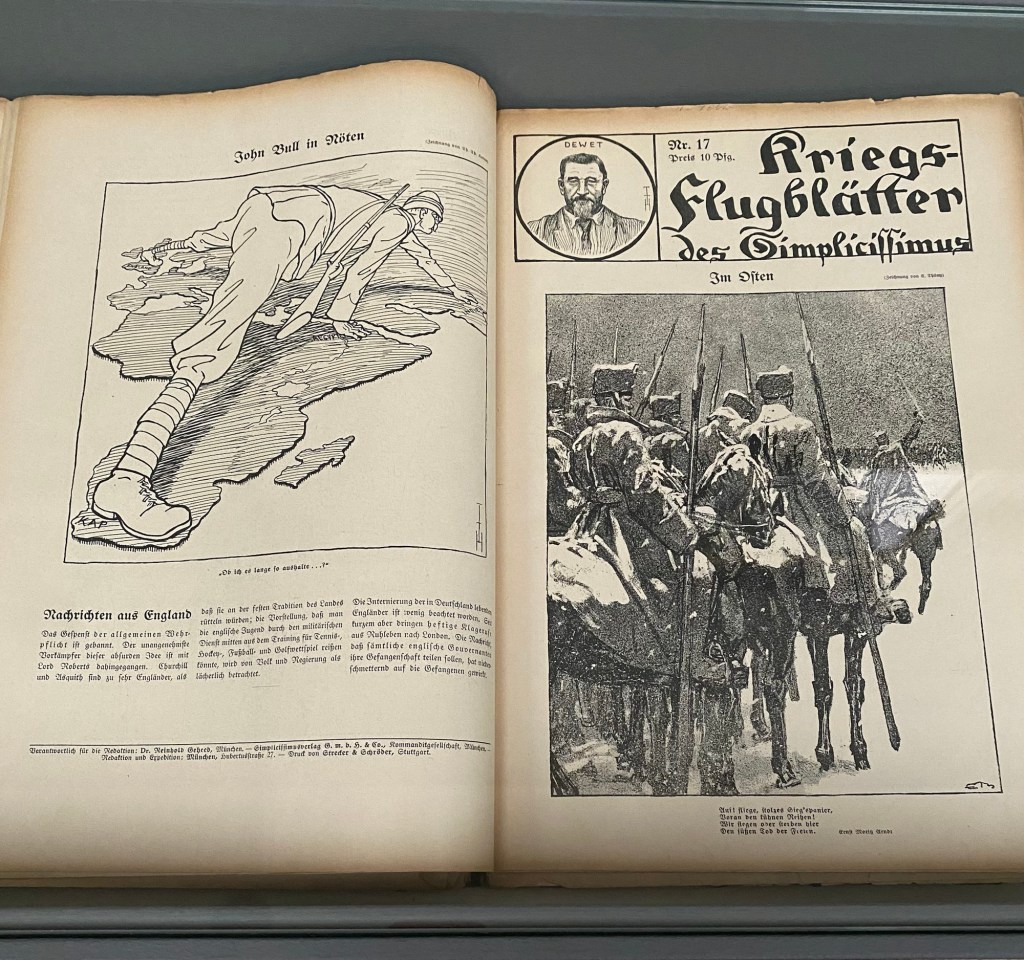
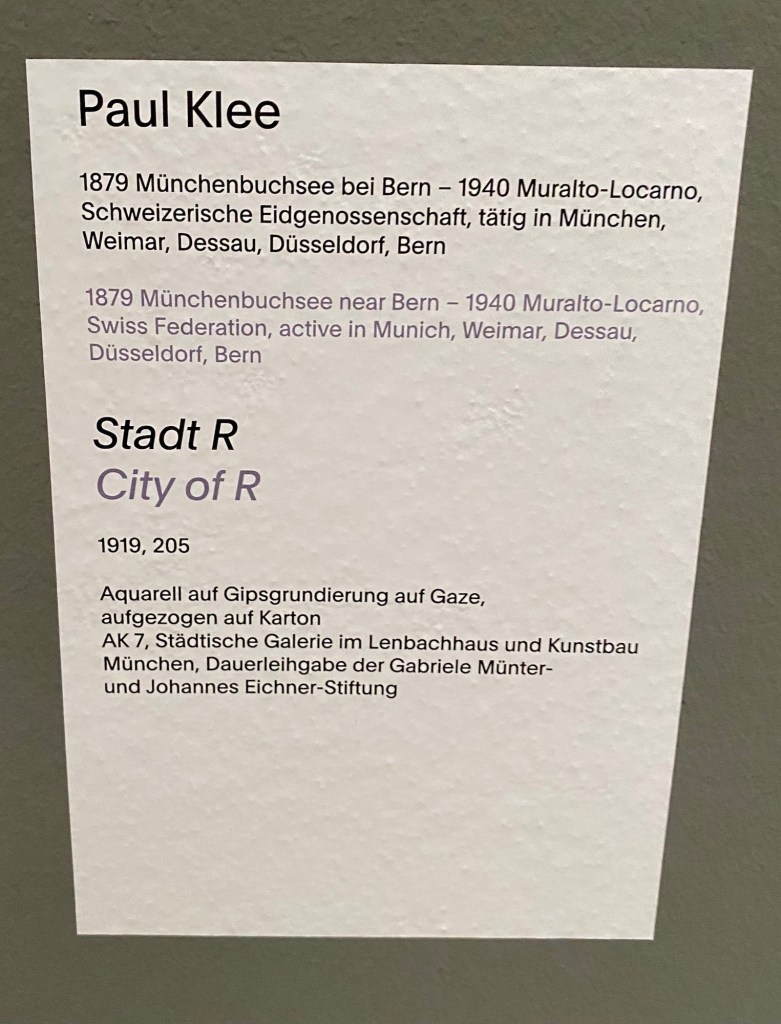
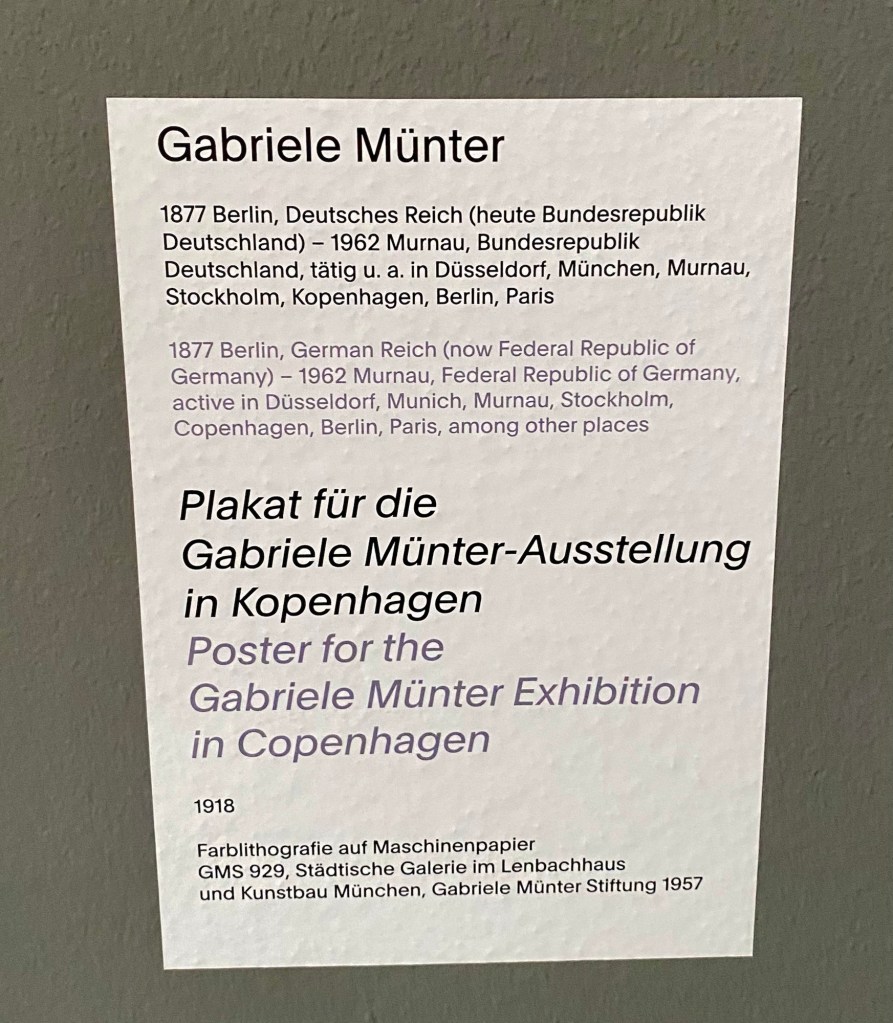
I thoroughly enjoyed my visit to this outstanding museum in Munich and here are the final images from that day. They are a bit random, but they are what stood out to me towards the end of my experience there.

This painting, which calls up Michelangelo, is huge. Not as big as the Rubens paintings I saw at the Altes Pinakothek, thank goodness (they were too large to look at in gallery lighting; really, I couldn’t fully take them in), but 5 x 8 foot more or less.

Of course I love a painting that pays homage to Michelangelo and flowers equally!

I enjoyed noticing the artist’s signature at top left, an unusual place to sign and the fact that he dotted to two ones in 1911. Is that a German thing? Can you tell me if you know?

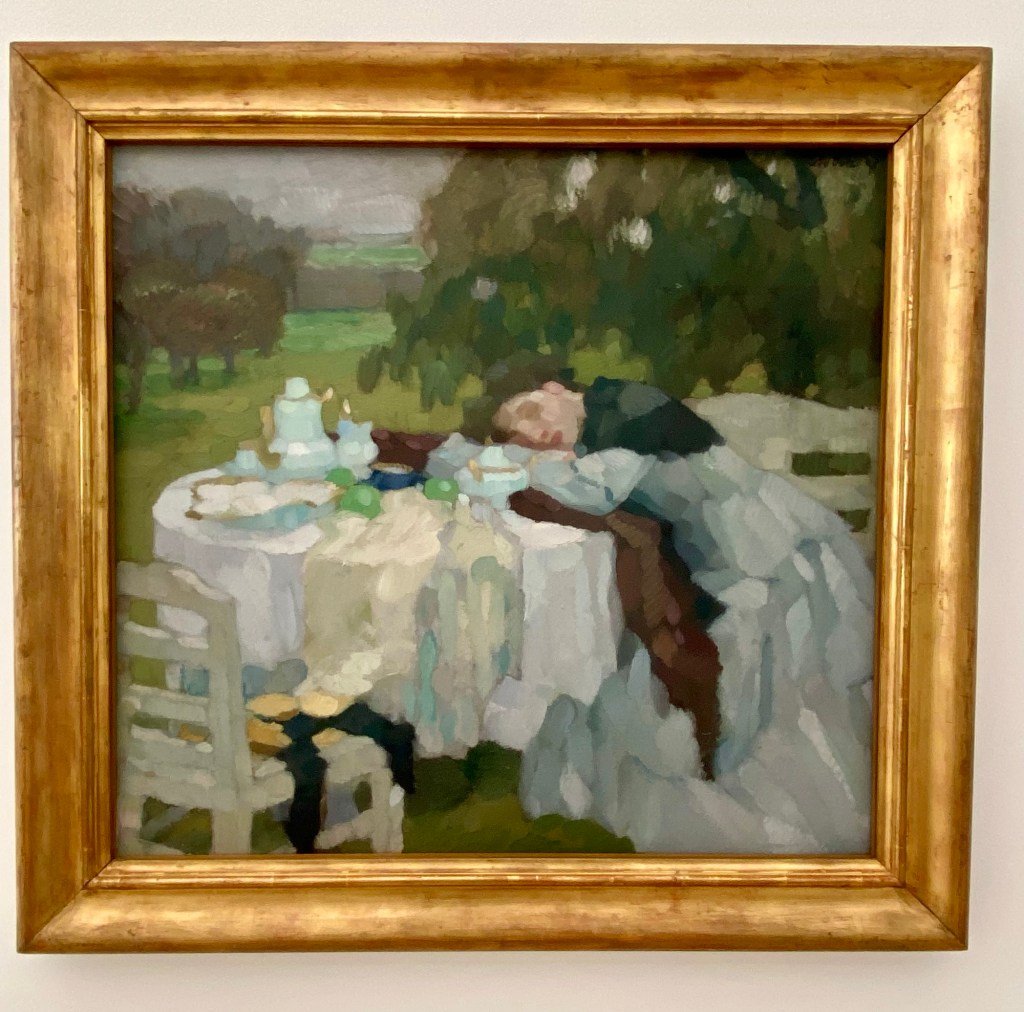
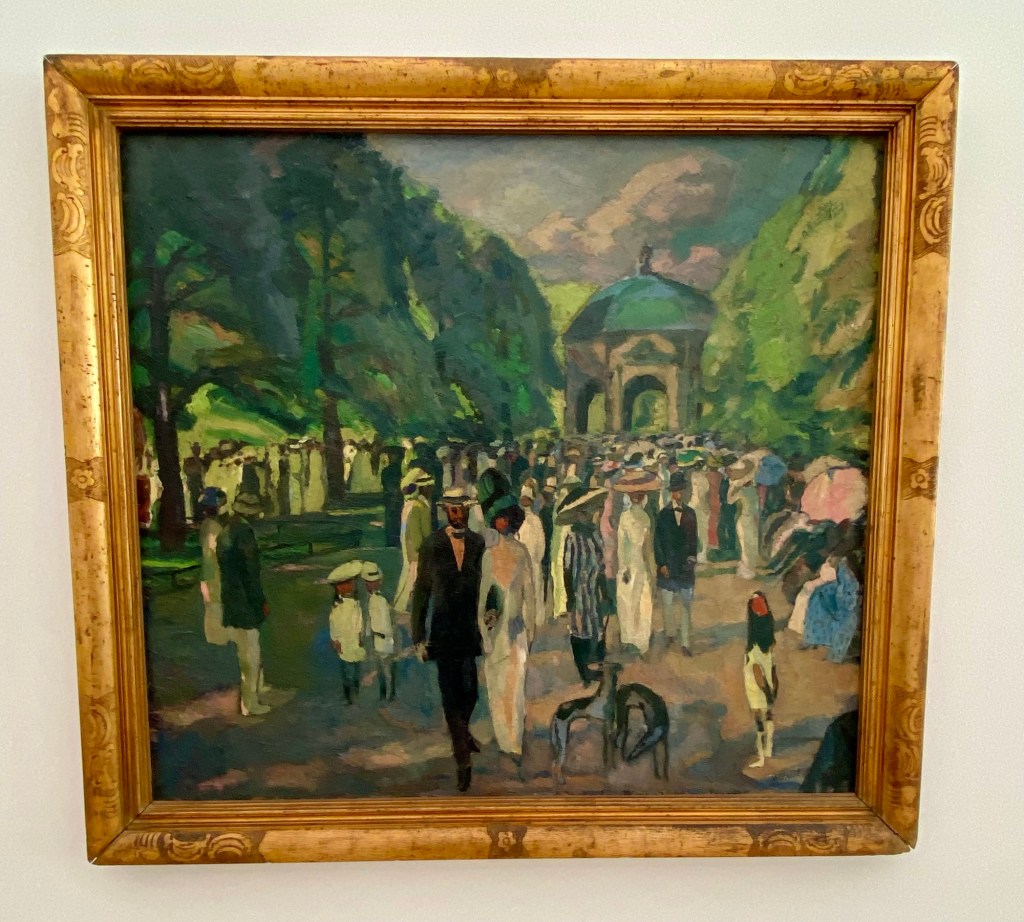
I’m a pushover for anything that captures the wistfulness of autumn.

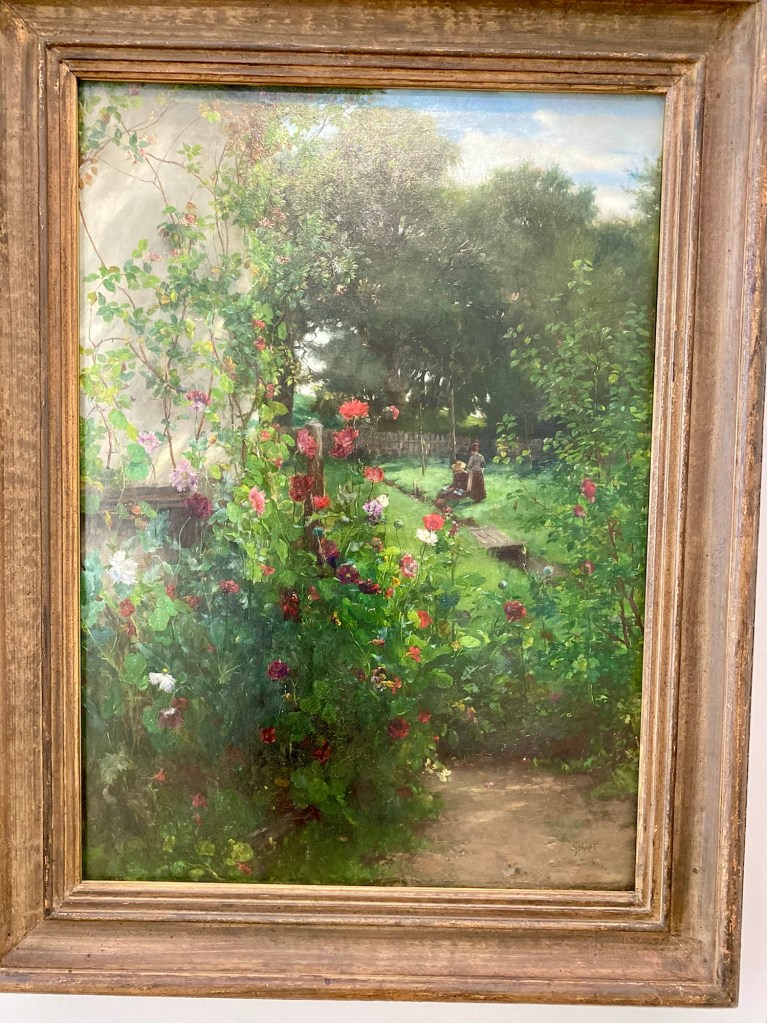
The painting below captured my imagination, for I have walked in that depicted space in Munich! Try as I might, I still cannot get over the fact that I’m living in Germany this summer!

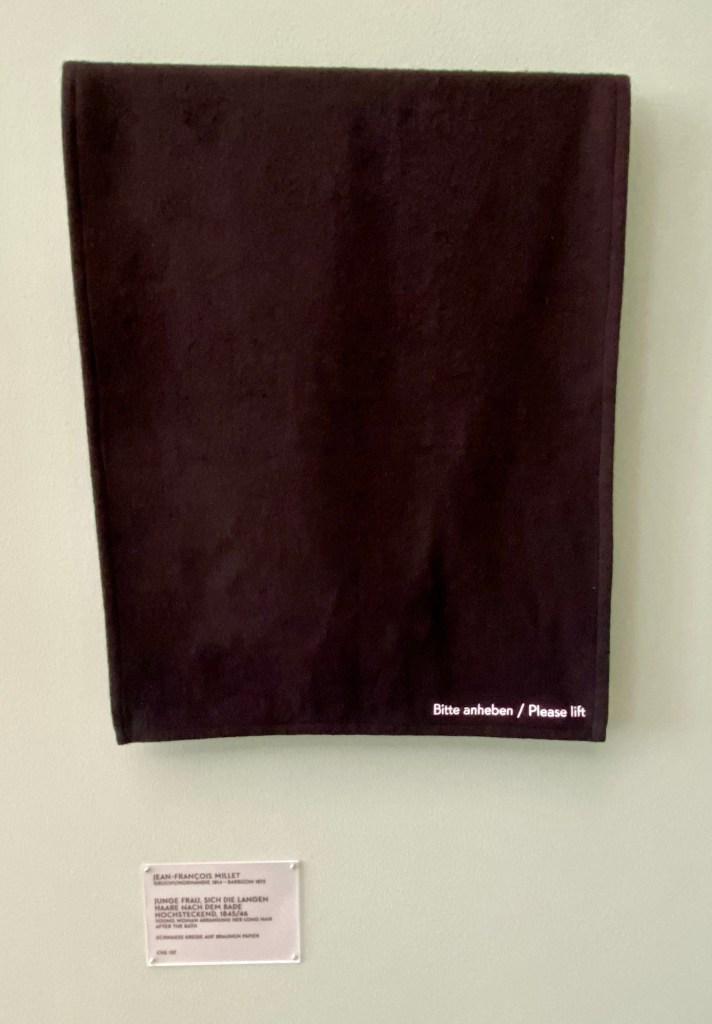
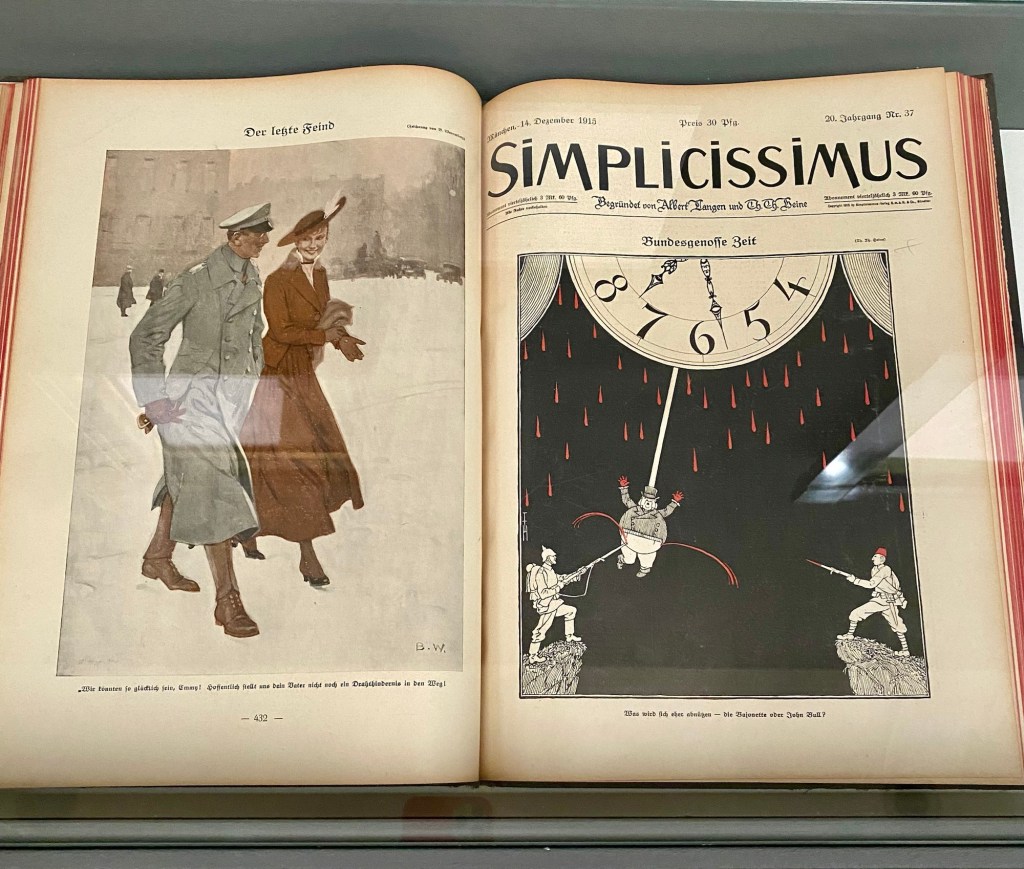
As I often say, I have spent my adult life in art museums, both as a professional staff member and as an inveterate museum goer. When, in all that time, have I seen what I photographed below?

At first I assumed the work of art had been removed from the gallery to be loaned to another museum, or perhaps it was being conserved. I thought this was the way the Lenbachhaus dealt with missing artworks, a way to alert the visitor that the museum knows the work is missing. Other museums will place signage that explains a bit.

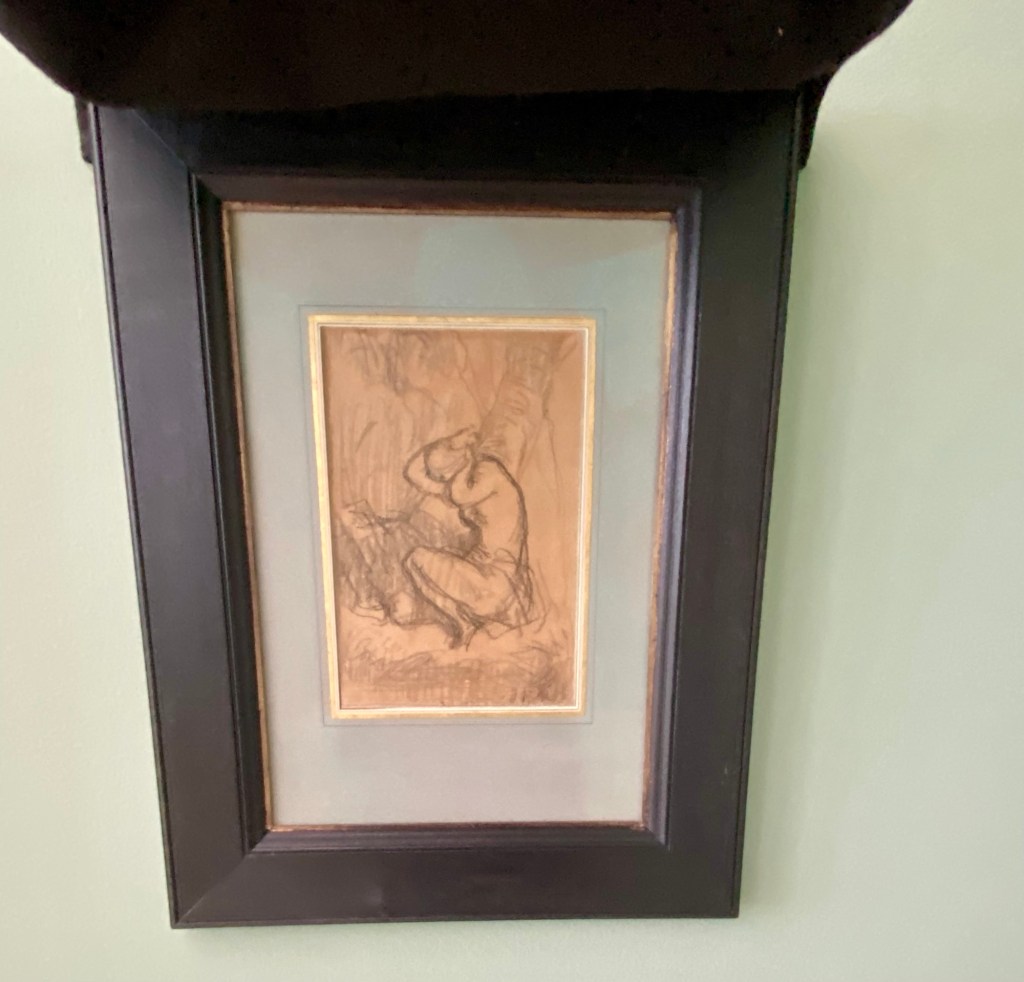
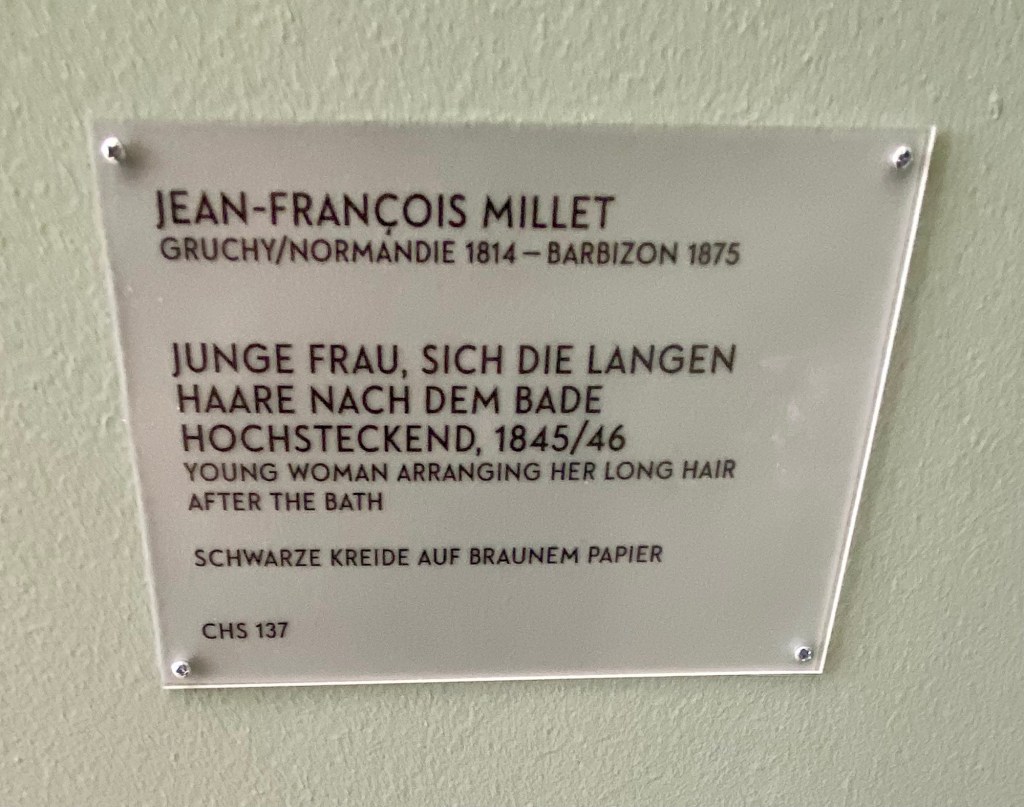
But then I noticed the words: please lift. So, I lifted the black veil and discovered a fragile drawing by Millet and realized that the museum has chosen this obvious and ingenious way to add to the visitor’s experience. They could keep this work of art in a drawer in storage, but they have chosen to exhibit it while still protecting it. Bravo again!

And finally, what museum have I ever visited that has a well-known artist’s paint palette hung on the way in a gallery, next to paintings? None. I’ve seen palettes in rooms off of paintings galleries, along with other objets connected to art making. But to hang the palette in the gallery. Bravissimo!

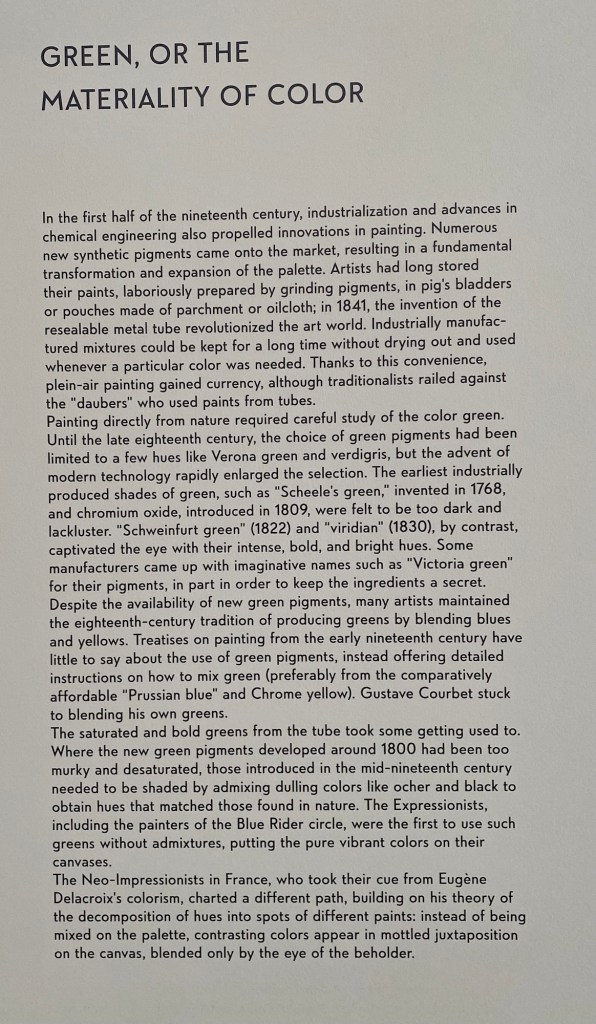
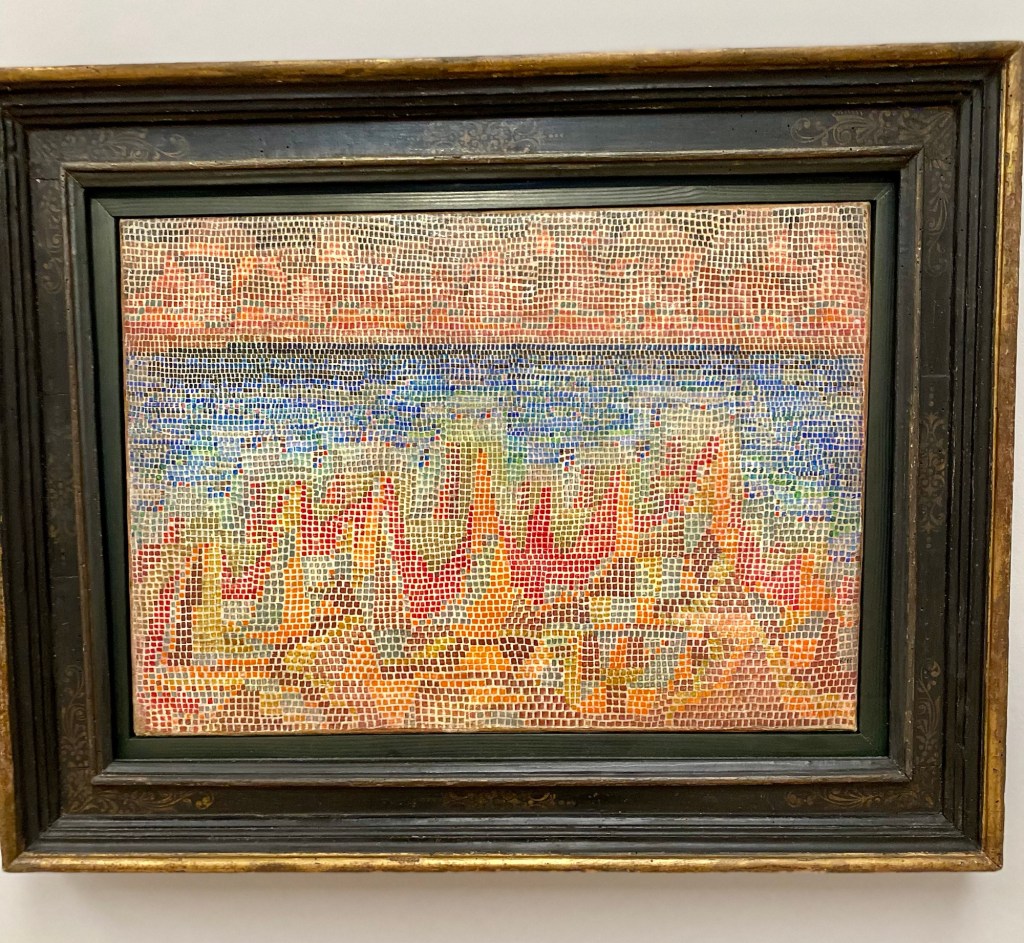
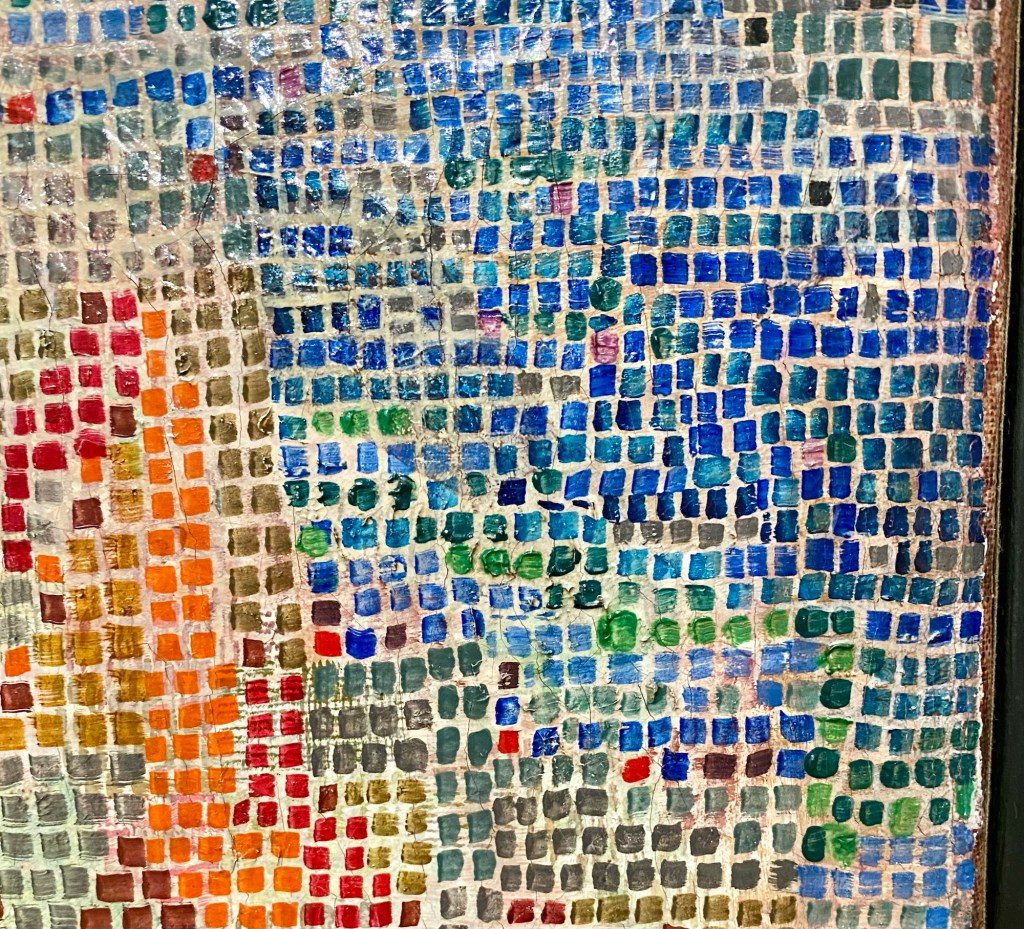
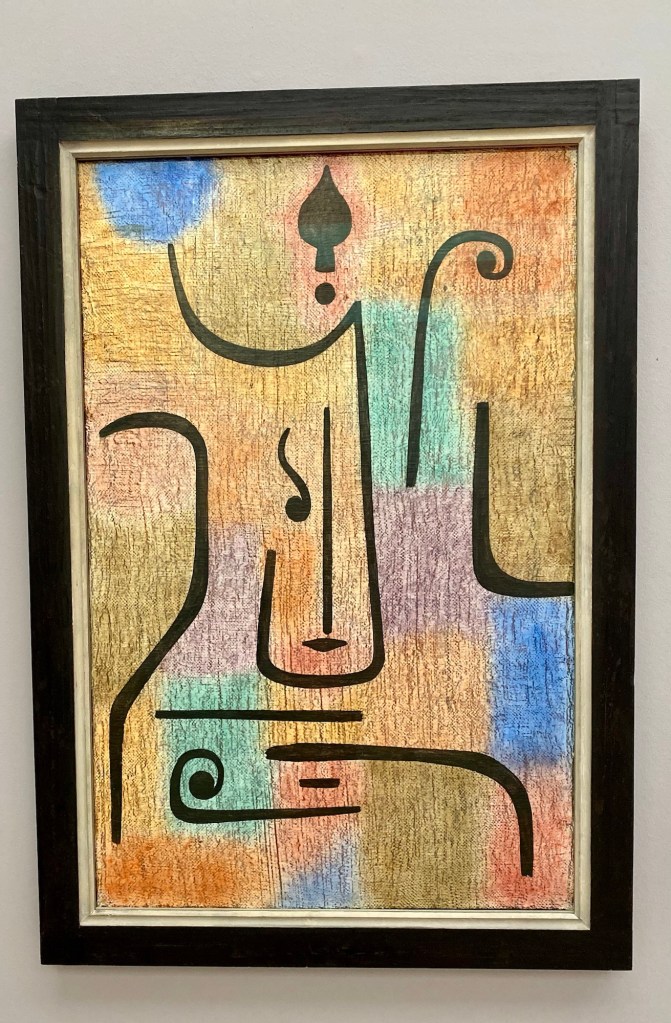
I share a love of green with these artists.

A lovely reminder about what we are looking at and how it’s made below.

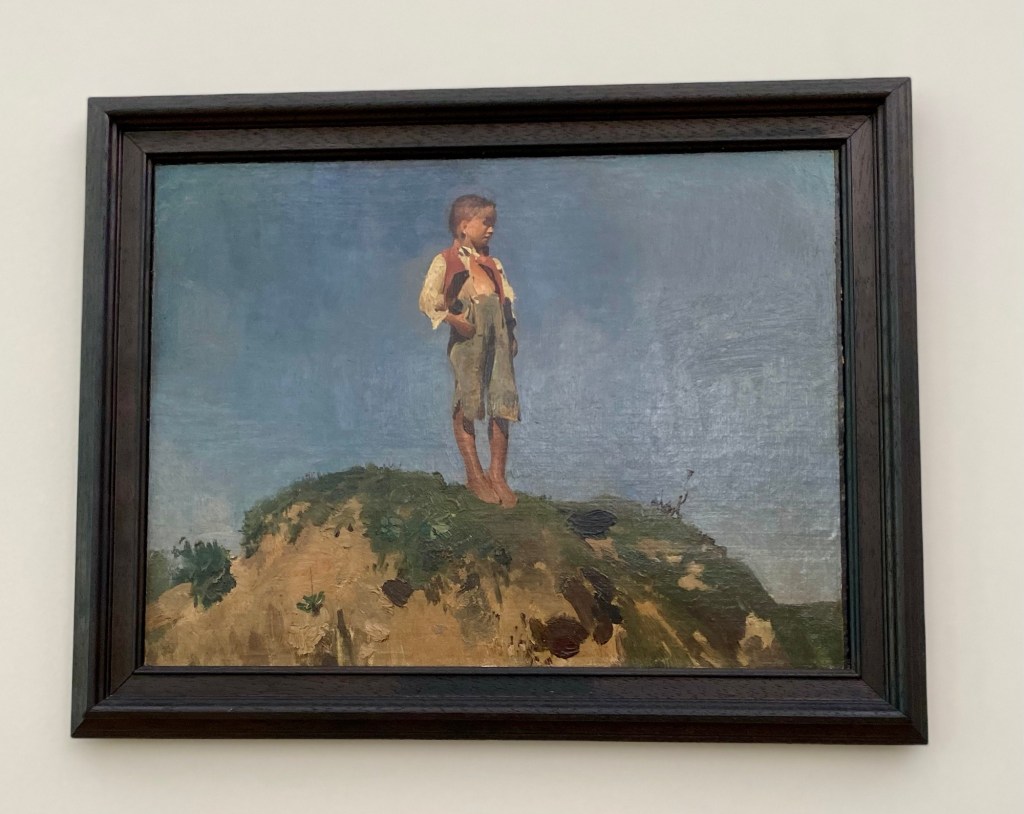
The painting above made me think of the fabulous works by Winslow Homer.

I learned a lot and loved my visit to the Lenbachhaus in Munich. If you are lucky enough to find yourself in the Bavarian capital with some time to spend, I highly recommend!

Lenbachhaus, Part 3

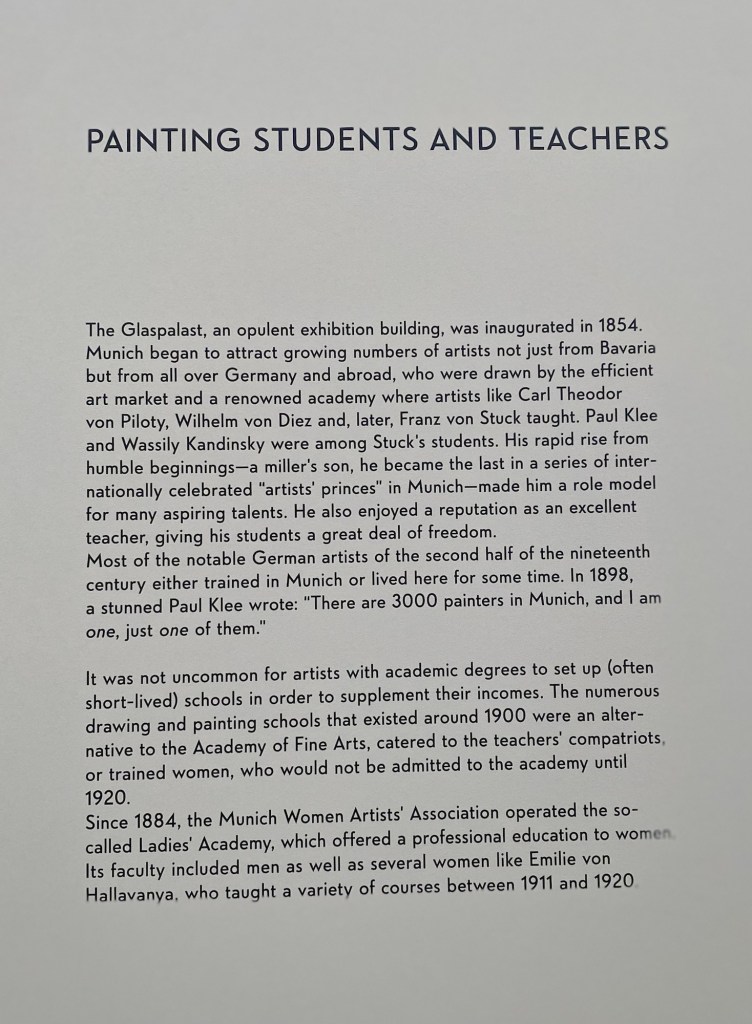
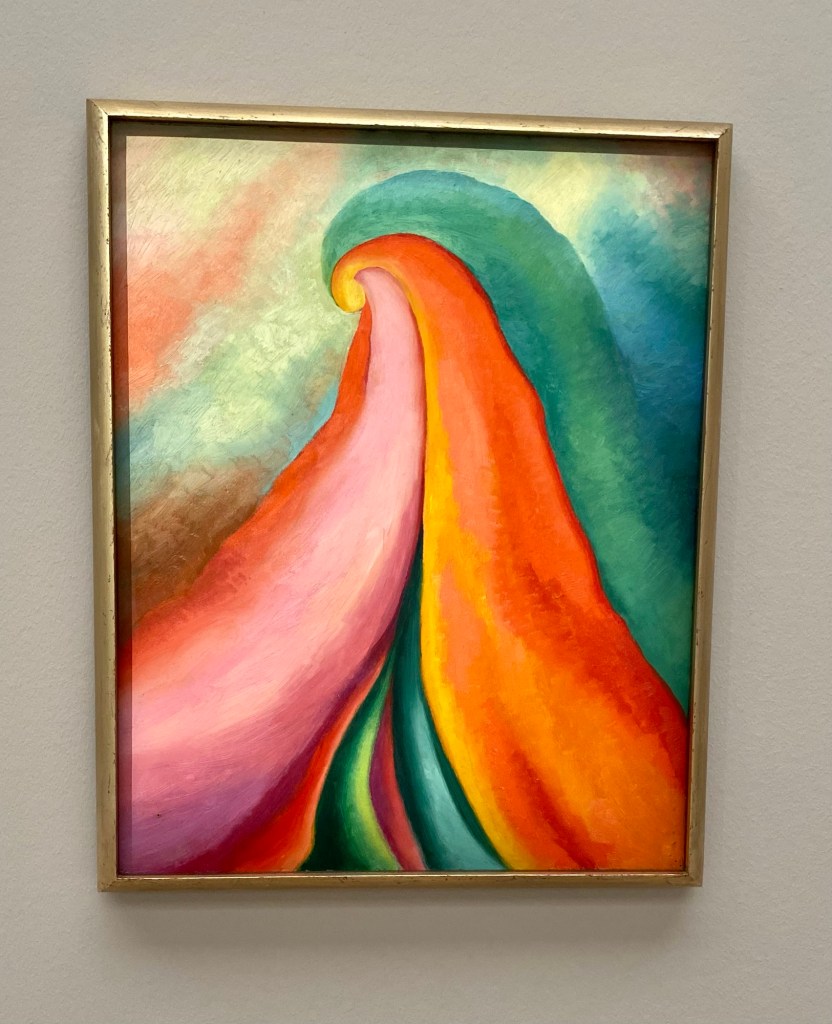
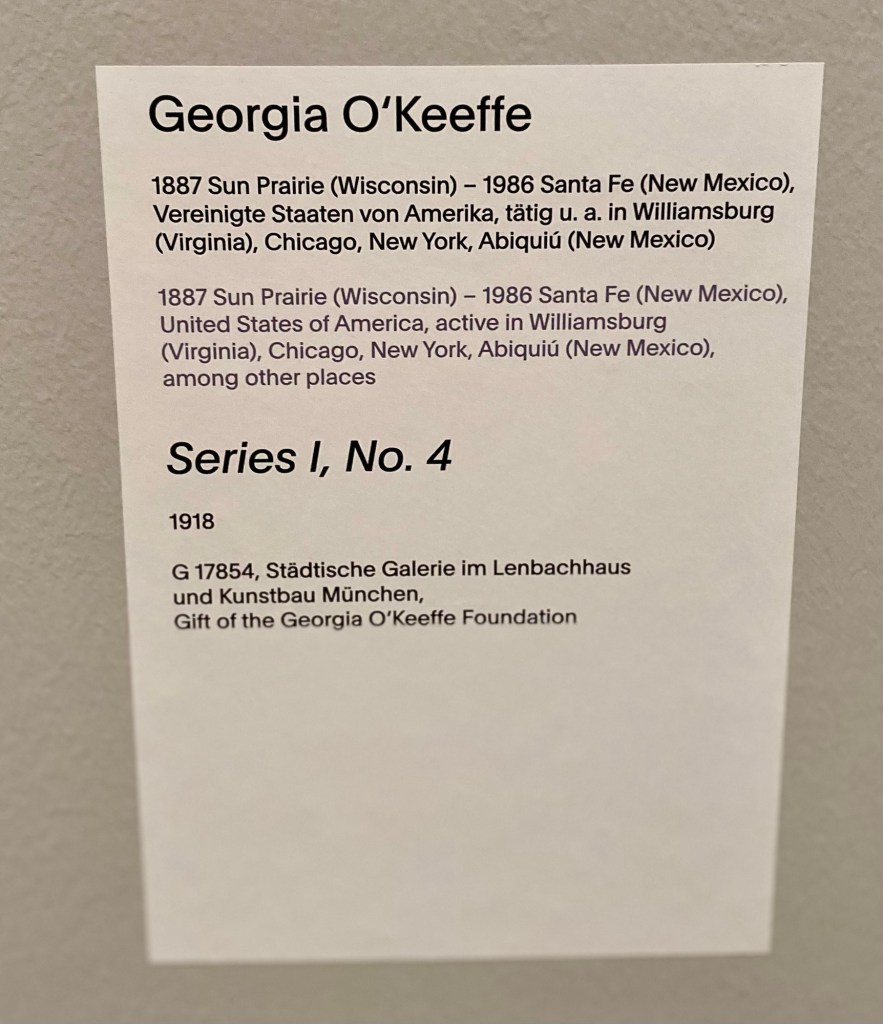
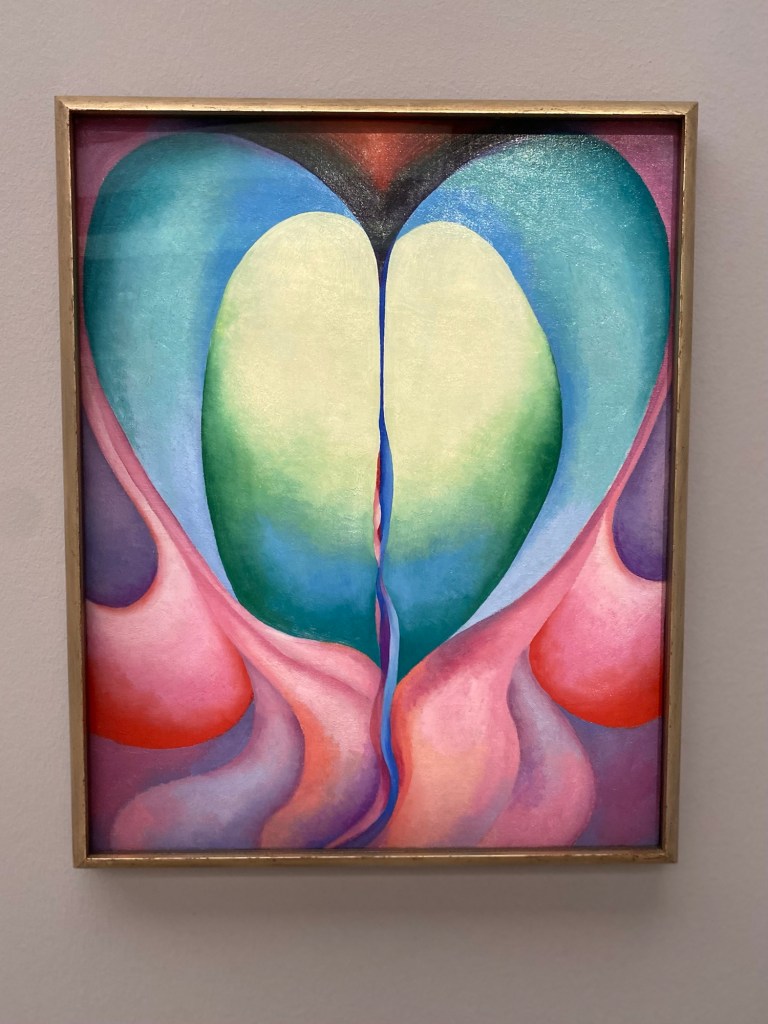
After admiring the galleries filled with 20th century German art, I was a bit surprised when I encountered Georgia O’Keefe! It was as refreshing to find a modern American artist as a breath of fresh air, I have to admit!

I was now in a gallery with a wide variety of artists, who painted and sculpted in the early to mid 20th century.

Lenbachhaus, Munich, Part 2

I’ve been rhapsodizing about the incredible art museum holdings of world art in Germany for more than a month now and I stand by every statement. But, as you would hope and expect, the holdings of German art are no less impressive, as was brought home to me recently when I had the opportunity to pay a visit to the Lenbachhaus in Munich.


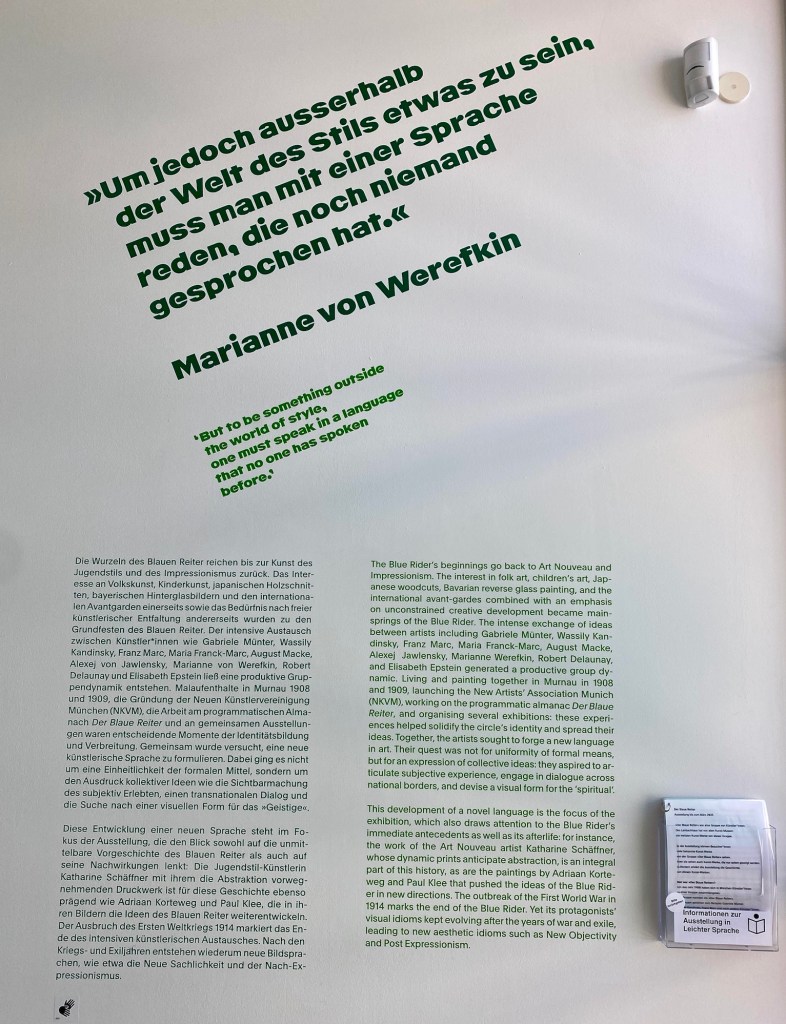
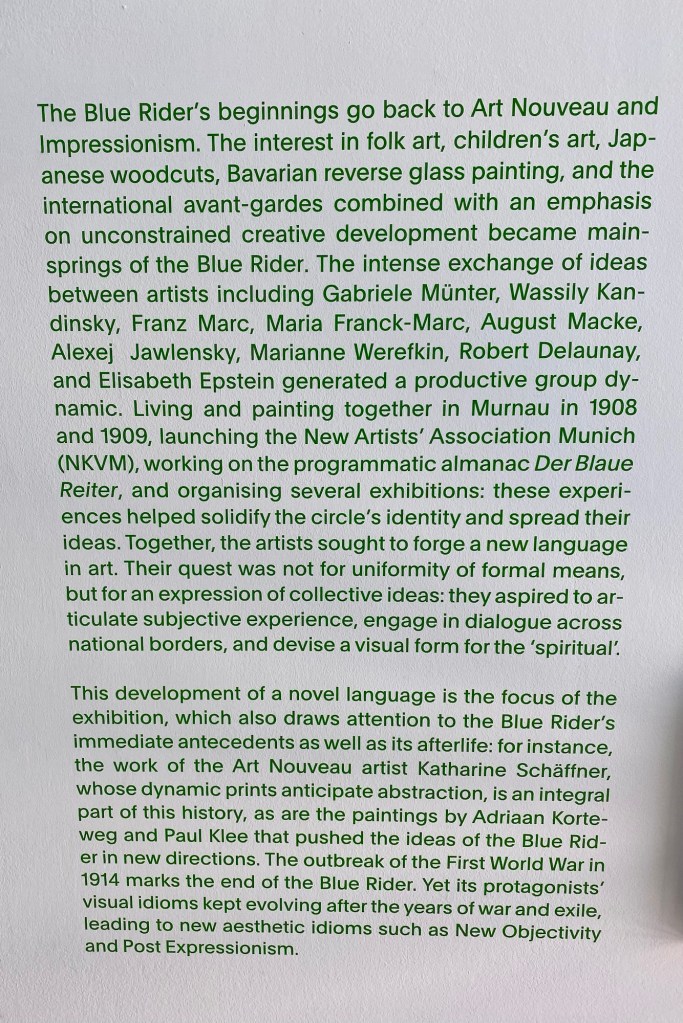
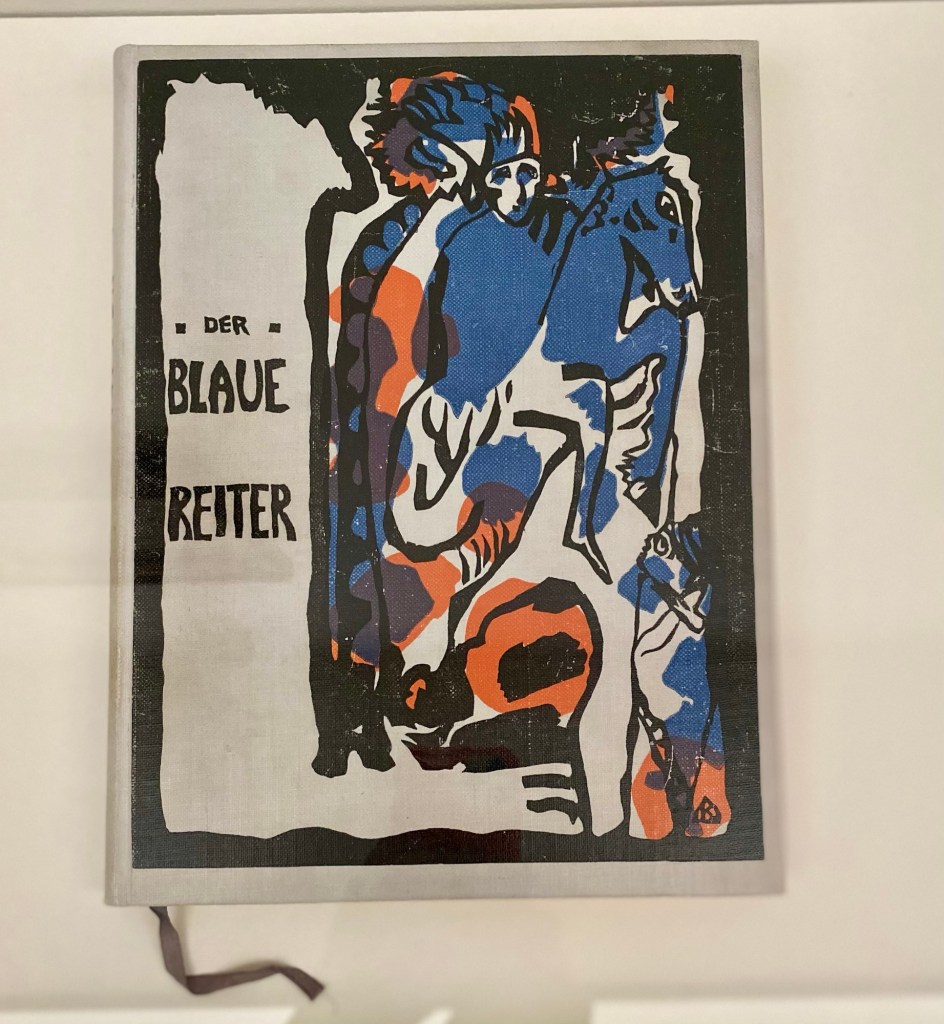
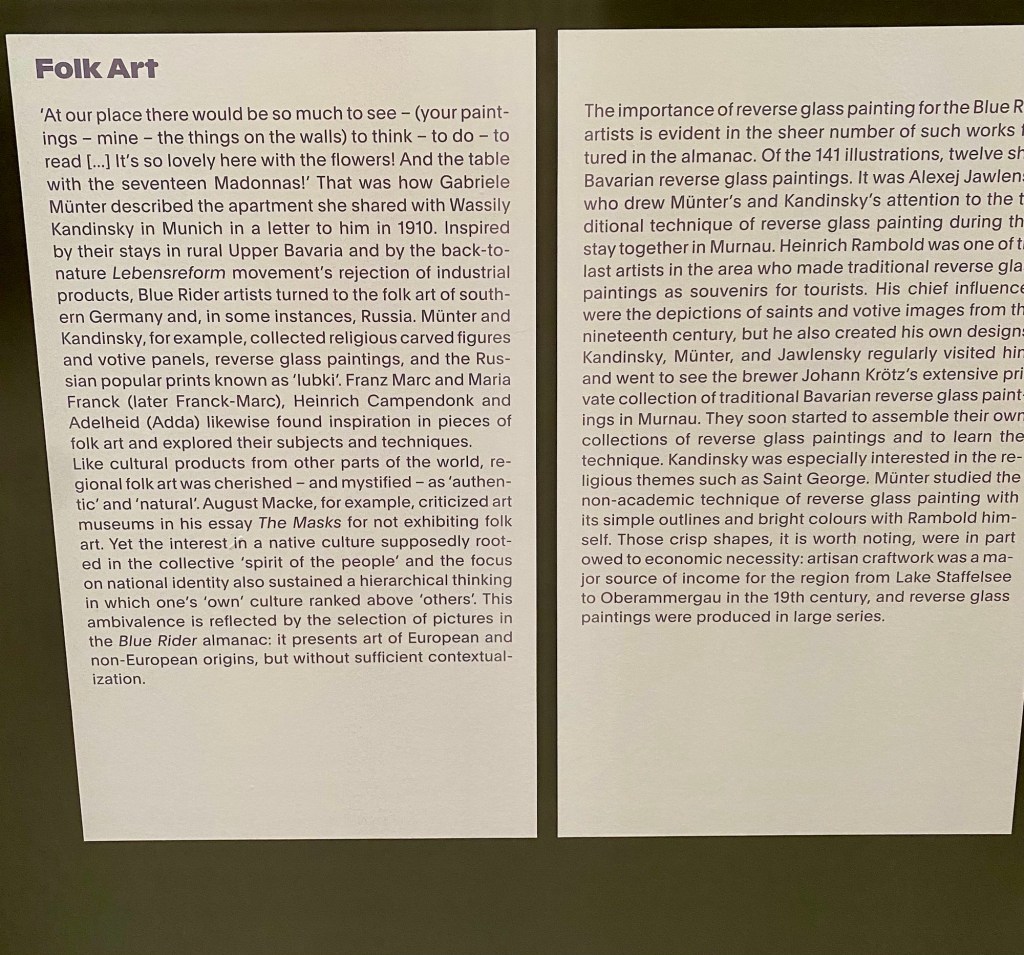
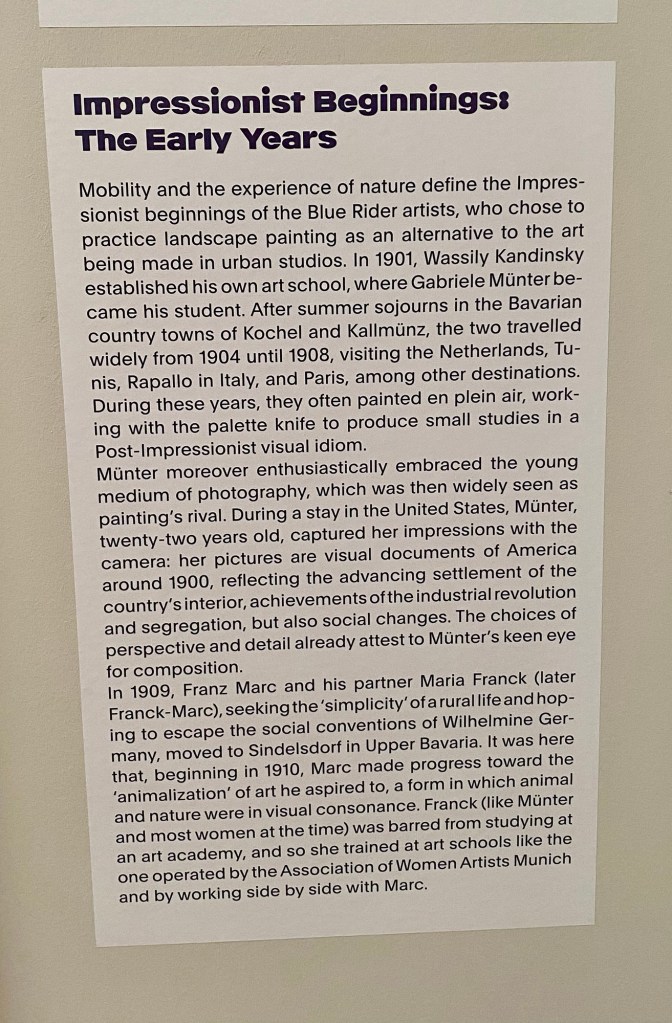
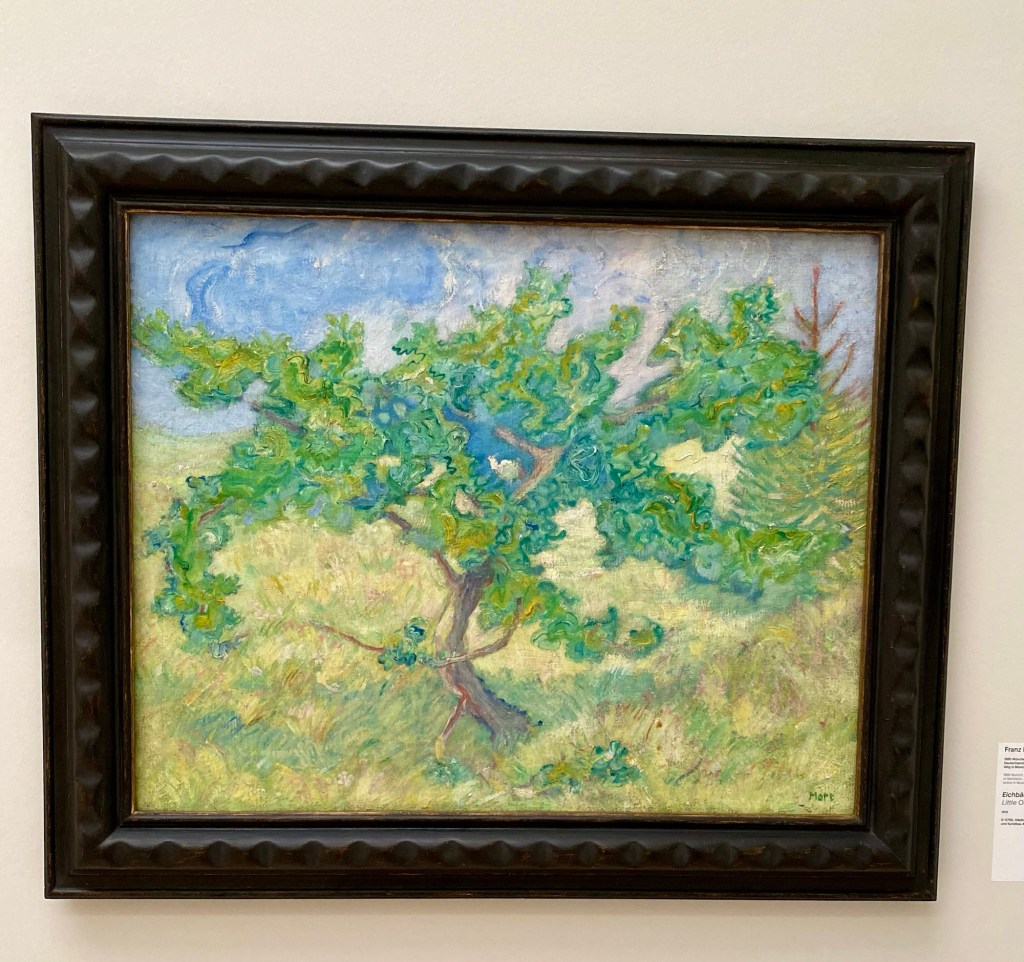
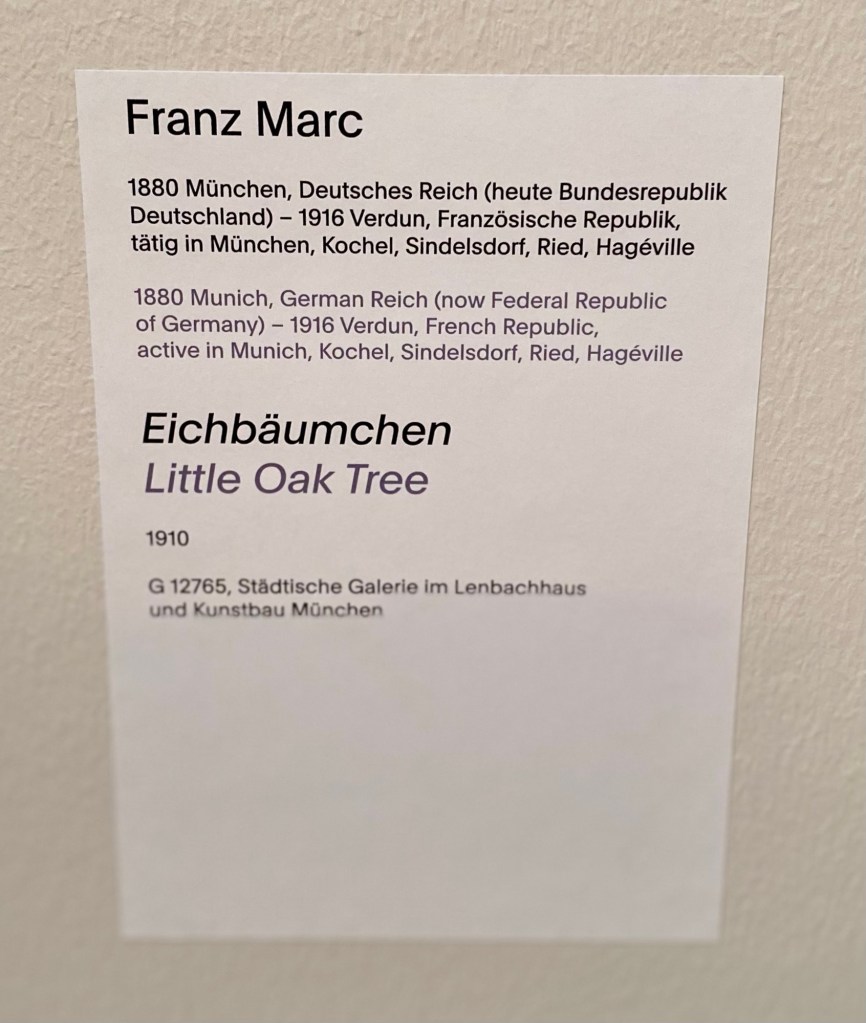
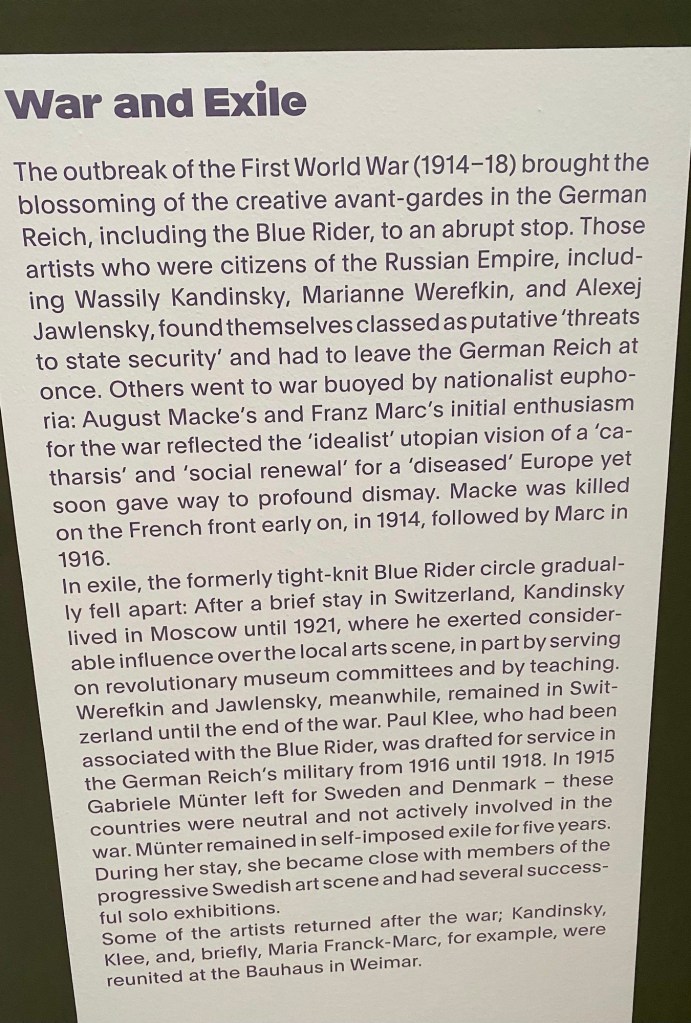
Der Blaue Reiter (The Blue Rider) was a group of artists and a designation by Wassily Kandinsky and Franz Marc for their exhibition and publication activities, in which both artists acted as sole editors in the “almanac” or book of the same name (first published in mid-May 1912). They organized two exhibitions in Munich in 1911 and 1912 to demonstrate their art-theoretical ideas based on the works of art exhibited. Traveling exhibitions in German and other European cities followed. The Blue Rider disbanded at the start of World War I in 1914.

The artists associated with Der Blaue Reiter were important pioneers of modern art of the 20th century; they formed a loose network of relationships, but not an art group in the narrower sense like Die Brücke (The Bridge) in Dresden. We generally refer to the work of these affiliated artists as German Expressionism.

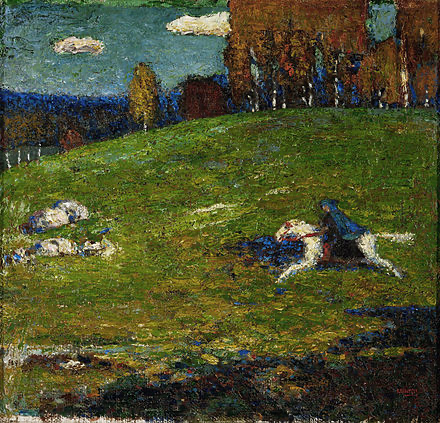
Wassily Kandinsky, The Blue Rider, 1903

Franz Marc, Blue Horse I, 1911, exhibited at the Lenbachhaus, Munich.

The name of the movement is the same as the title of a painting that Kandinsky created in 1903. Kandinsky wrote 20 years later that the name is derived from Marc’s enthusiasm for horses and Kandinsky’s love of riders, combined with a shared love of the color blue. For Kandinsky, blue was the color of spirituality; the darker the blue, the more it awakened human desire for the eternal (as he wrote in his 1911 book On the Spiritual in Art).

Let’s enter the galleries and see what we can find and learn.

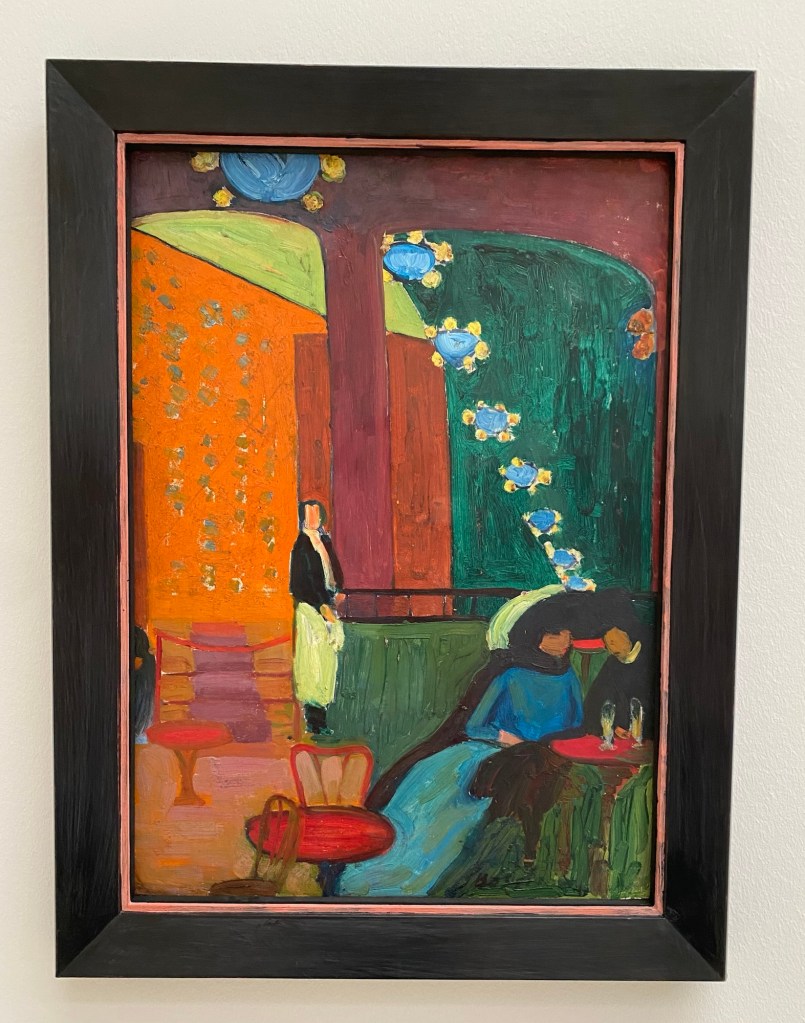
I loved this painting below with the blue ceiling lights forming an abstract formation across the canvas.

Sorry about the focus above!

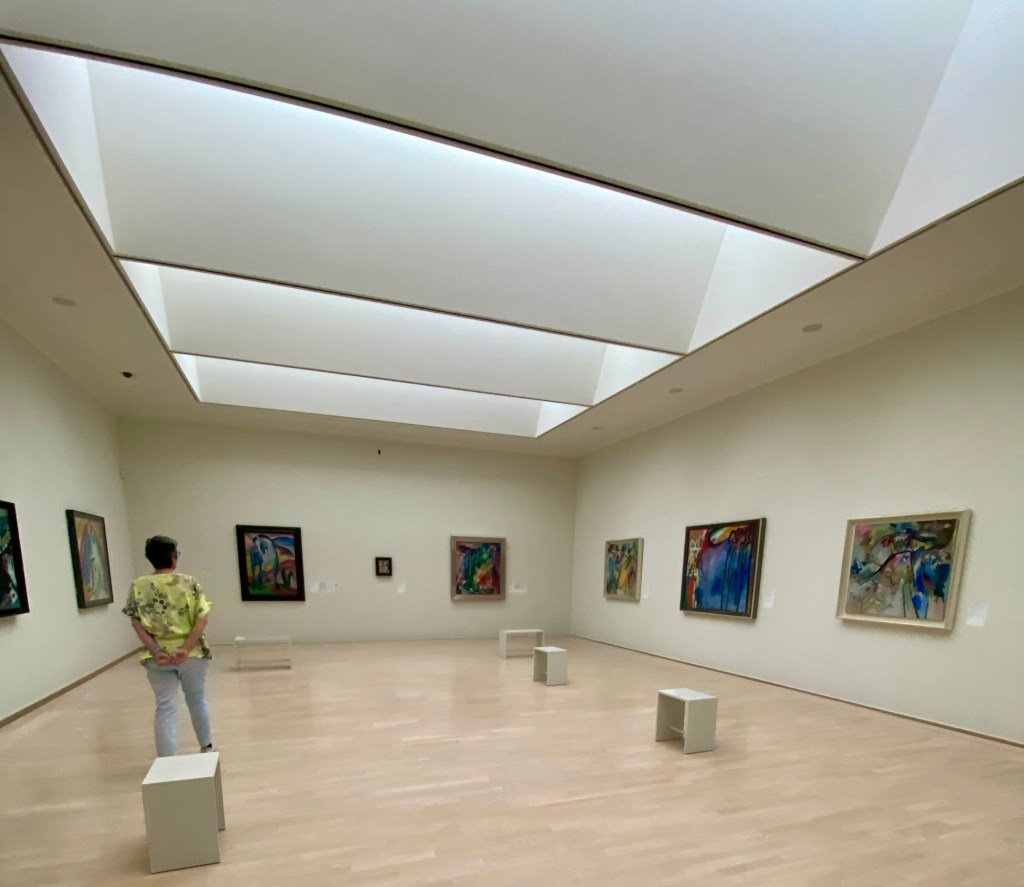
Nice galleries!

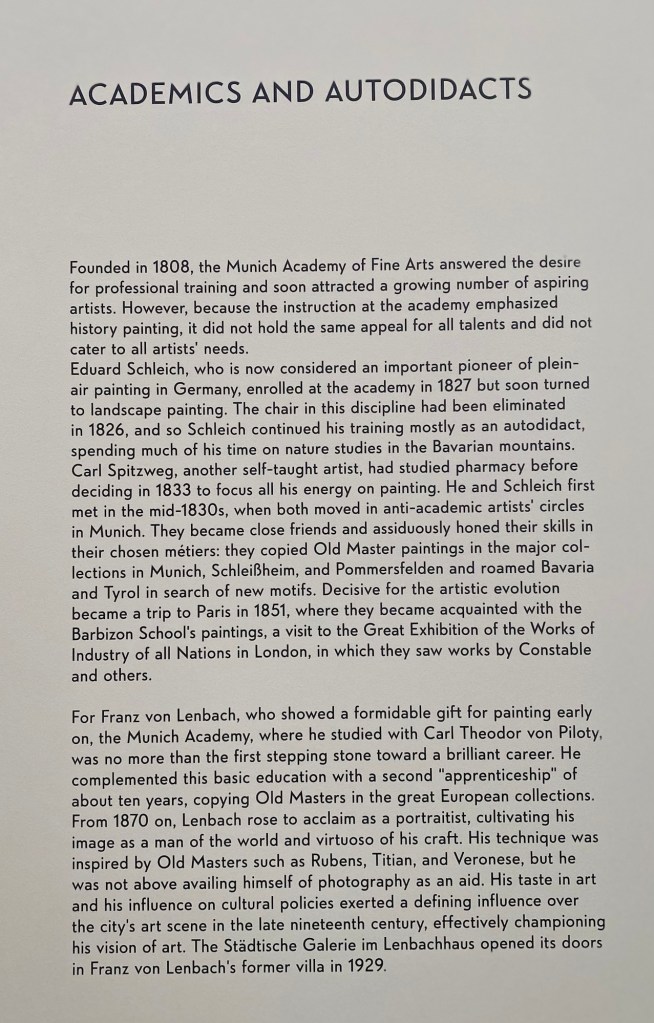
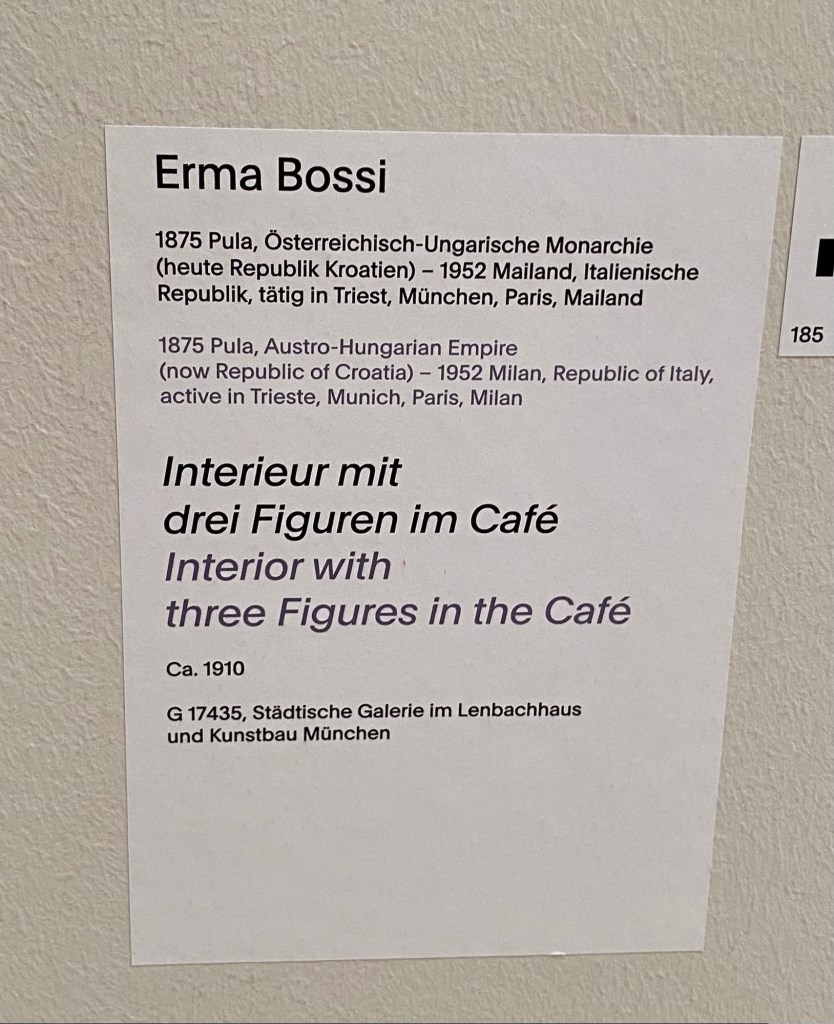
Once again I want to call out the quality and quantity of labeling in this fine museum in English. They understand they have a lot of international guests. Bravo!

The Lenbachhaus, Munich; Part 1

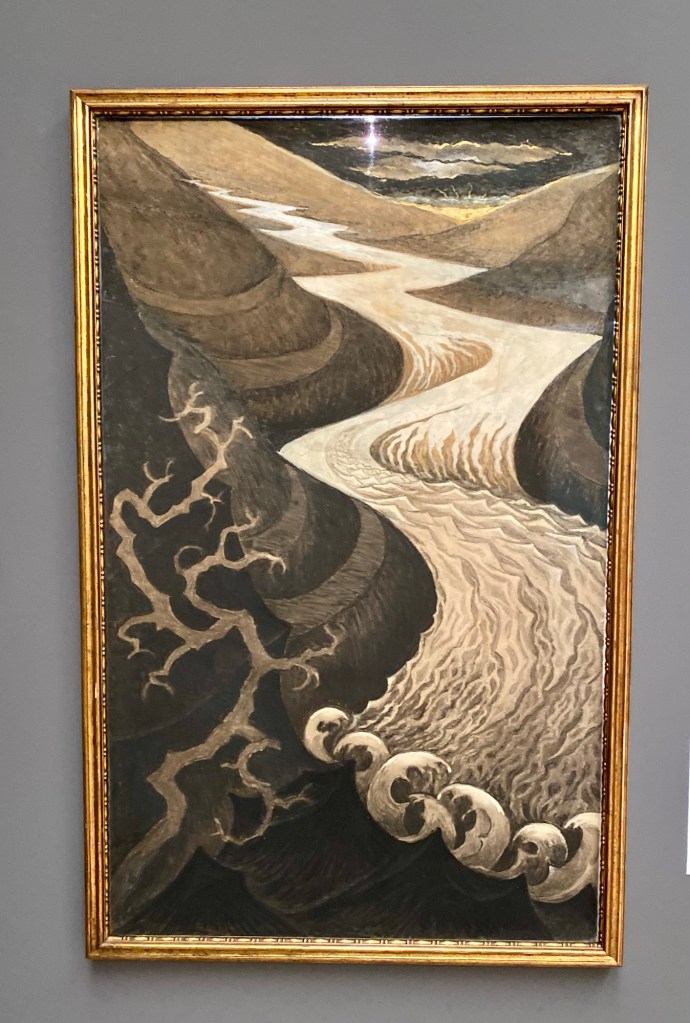
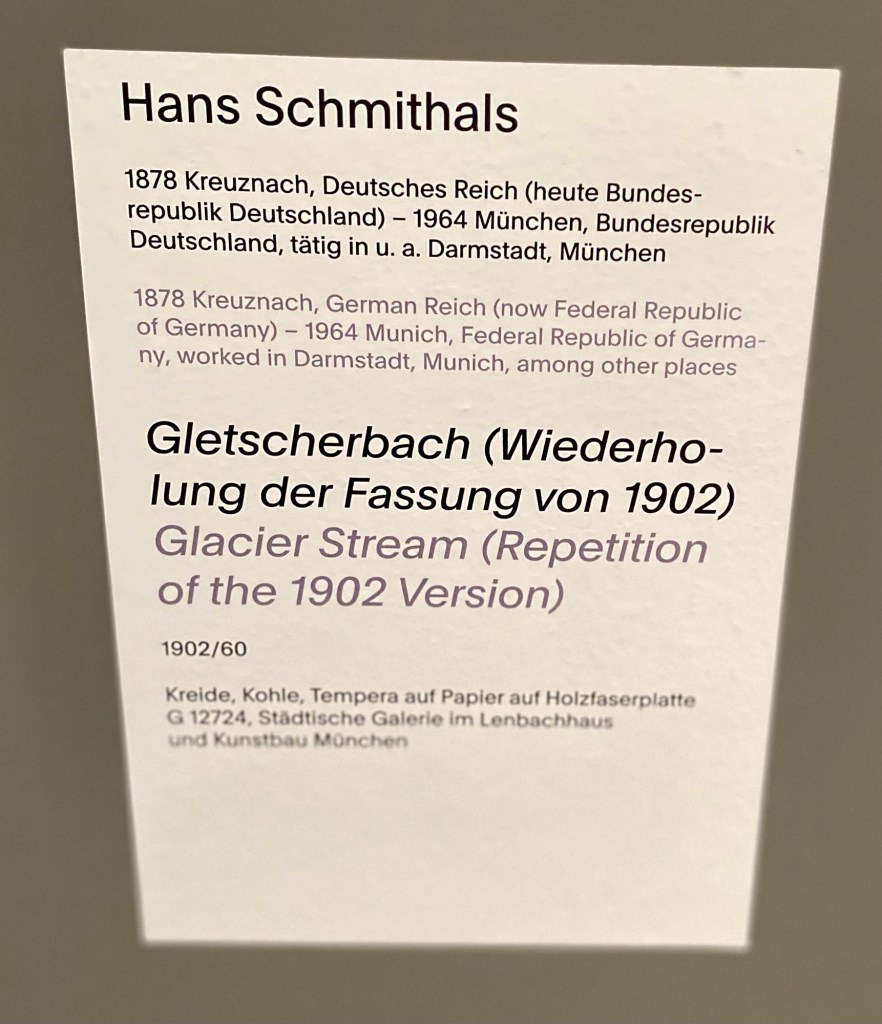
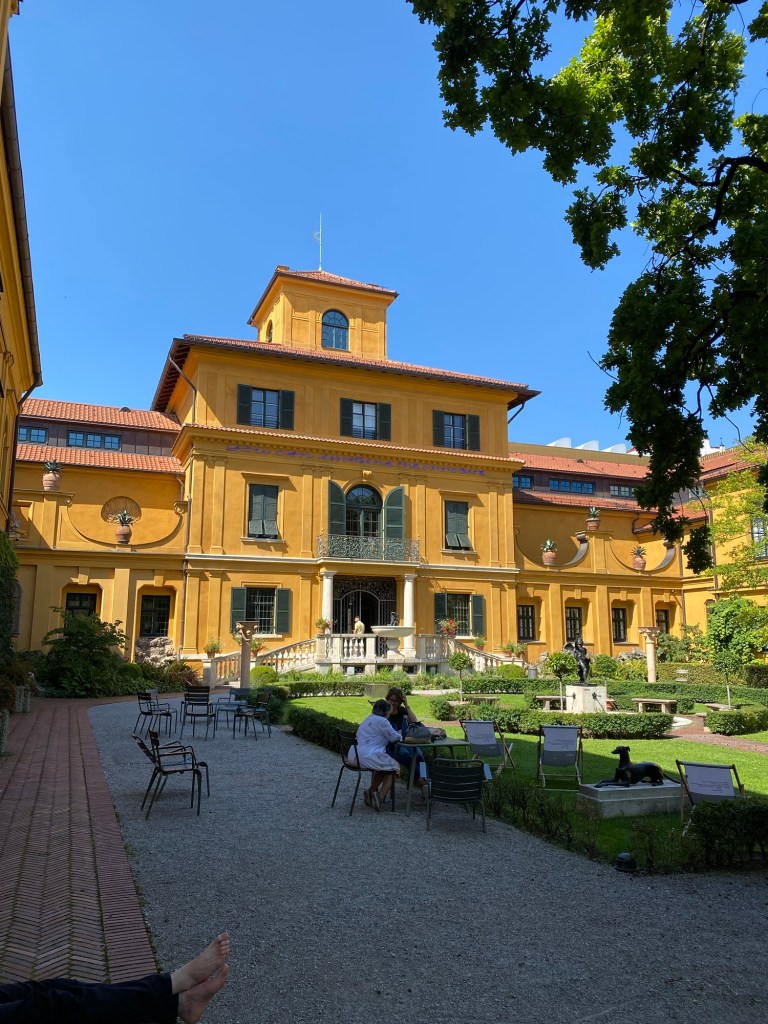
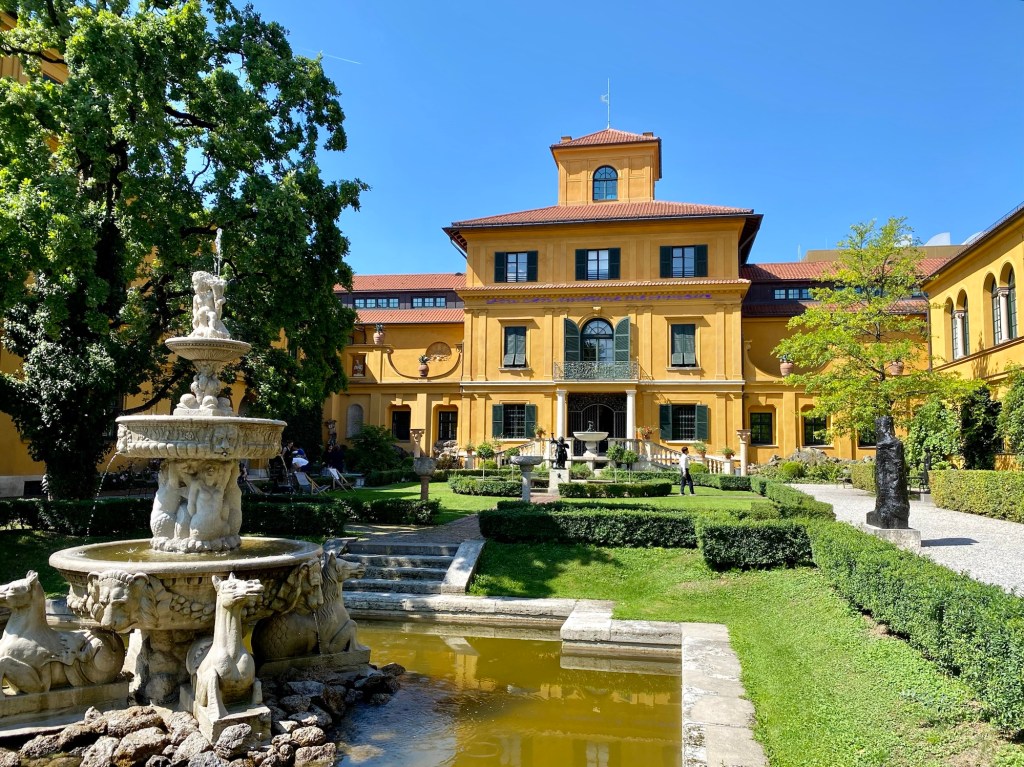
The Lenbachhaus is a building housing the Städtische Galerie (Municipal Gallery) art museum in Munich’s Kunstareal. The Lenbachhaus was built as a Florentine-style villa for the painter Franz von Lenbach between 1887 and 1891 by Gabriel von Seidl and was expanded 1927–1929 by Hans Grässel and again 1969–1972 by Heinrich Volbehr and Rudolf Thönnessen. Some of the rooms have kept their original design.

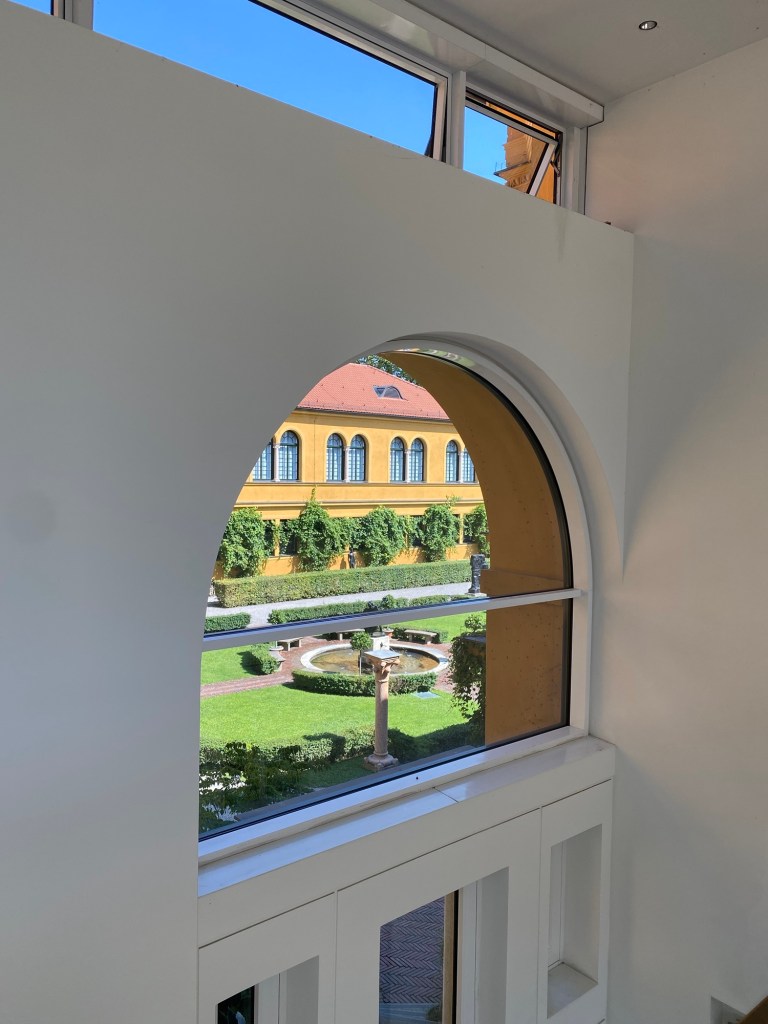
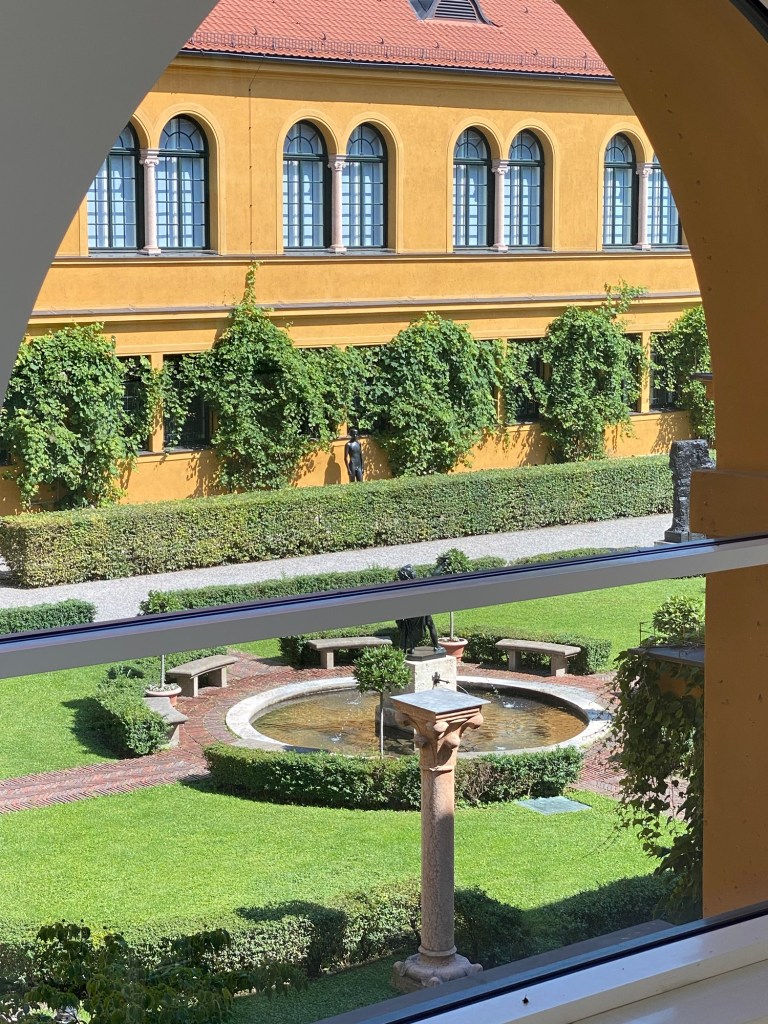
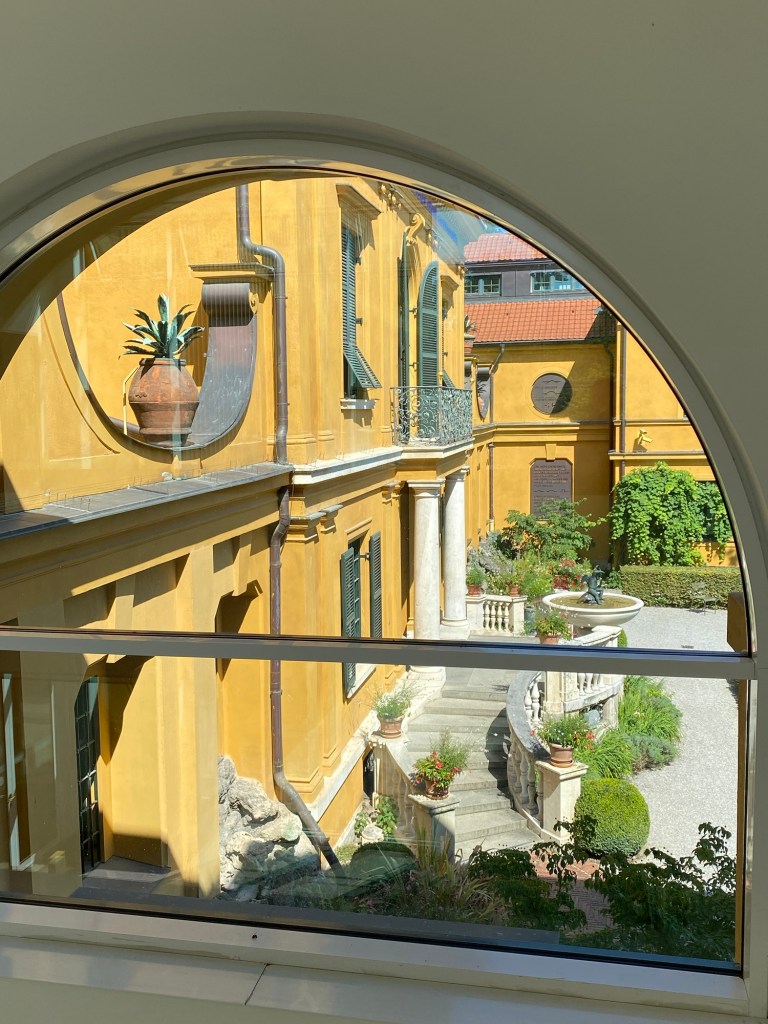
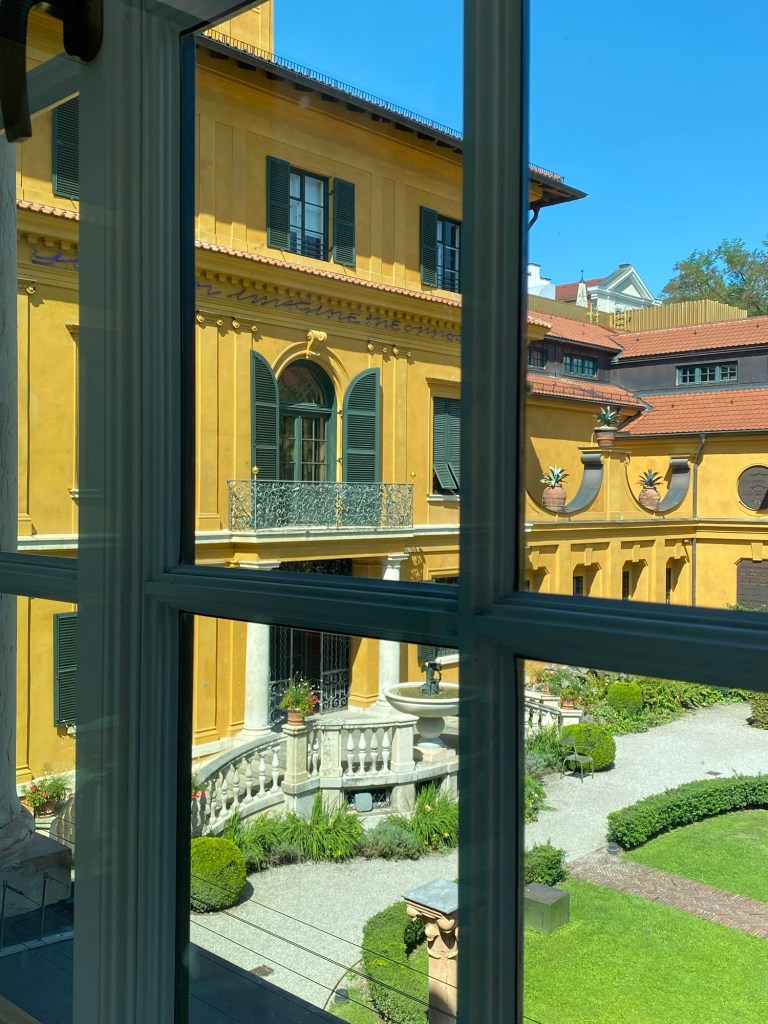
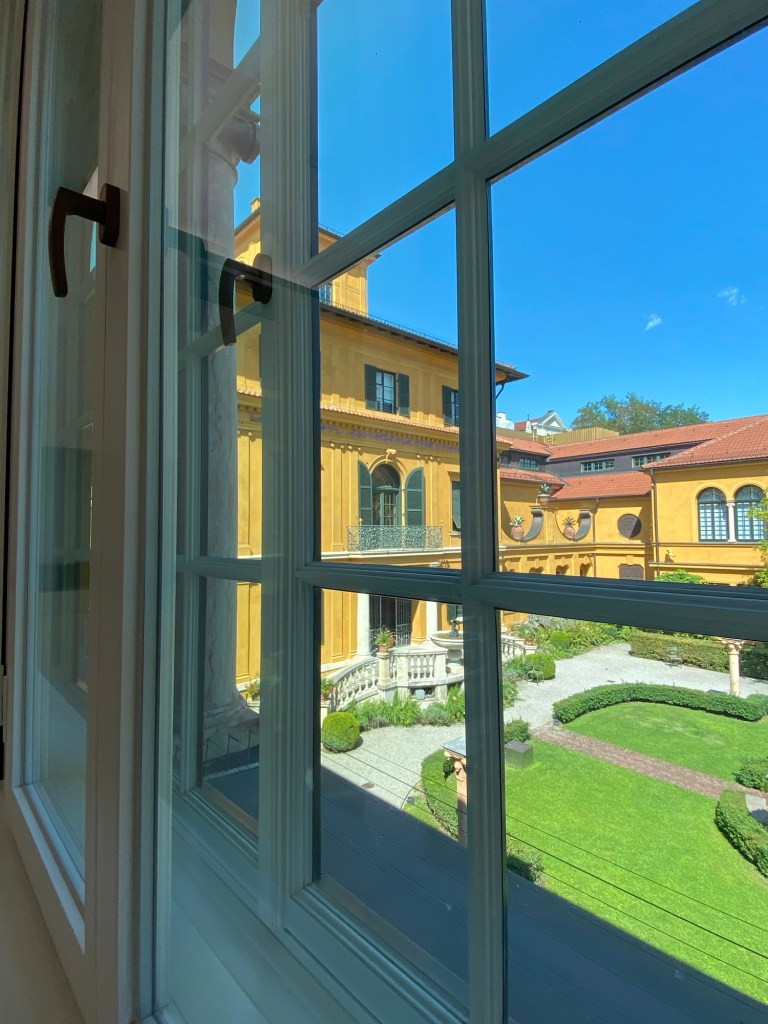
I have to share with you how I first discovered the Villa Lenbach. It was through windows in the new wing of the Lenbachhaus Museum. I’m a newbie to Germany; I think I’ve made that clear. I have never spent a moment previous to this summer thinking about visiting Germany, much less living here for a few months. Yet, here I am and I am enjoying it fully.

So that explains why I didn’t know one thing about the Lenbachhaus until I visited it. I was happily walking through what turns out to be the new wing, having no knowledge that the name of the museum or the location were based upon an Italian villa design! When I first spotted the formal garden out the window of the new wing, I almost fainted. I thought, wait, am I in Rome? It was a particularly hot sunny summer day and it felt like it could have been Italy!

The city of Munich acquired the building in 1924 and opened a museum there in 1929. The latest wing was closed to the public in 2009 to allow the expansion and restoration of the Lenbachhaus by Norman Foster; the 1972 extension was demolished to make way for the new building. The museum reopened in May 2013. The architect placed the new main entrance on Museumsplatz in front of the Propylaea. The new facade, clad in metal tubes made of an alloy of copper and aluminum, will weather with time.

The Kunstareal, Munich

Berlin has Museum Island. Munich has the Kunstareal. Either one or both will blow your art loving mind.

The Kunstareal (art district) is a museum quarter in the city center of Munich, Germany. It consists of the three Pinakotheken galleries (Alte Pinakothek, Neue Pinakothek and Pinakothek der Moderne), the Glyptothek, the Staatliche Antikensammlungen (both museums are specialized in Greek and Roman art), the Lenbachhaus, the Museum Brandhorst (a private collection of modern art) and several galleries. Also the Staatliche Sammlung für Ägyptische Kunst (the state collection of Egypt art) was moved to the Kunstareal in 2013. The history of the museums in this area of Munich began in 1816 with the erection of the Glyptothek at Königsplatz and was completed with the new building for the Egyptian Museum (2012) and the extension of the Lenbachhaus (2013)

For more, see: https://kunstareal.de

  1. The Alte Pinakothek contains a treasure trove of the works of European masters between the 14th and 18th centuries. The collection reflects the eclectic tastes of the Wittelsbach dynasty over four centuries, and is sorted by schools over two sprawling floors. Major displays include Albrecht Dürer’s Christ-like Self-Portrait, his The Four Apostles, Raphael’s paintings The Canigiani Holy Family and Madonna Tempi as well as Peter Paul Rubens self-portrait Honeysuckle Bower and his two-storey-high Judgment Day. The gallery houses one of the world’s most comprehensive Rubens collections. The Madonna of the Carnation is the only painting of Leonardo da Vinci in a German gallery.

2. The Neue Pinakothek is especially famous for its comprehensive collection of paintings of Impressionism from Pierre-Auguste Renoir, Édouard Manet, Claude Monet, Paul Cézanne, Paul Gauguin, Edgar Degas, Vincent van Gogh and many others.

3. The Pinakothek der Moderne unifies the Bavarian State Collection of Modern and Contemporary Arts, the National Collection of Works on Paper and the Museum for Design and Applied Arts with the Munich Technical University’s Museum of Architecture in one building and is deemed one of the most important and popular museums of modern art in Europe. It houses indeed the largest collection of industrial design. The Collection of Works on Paper ranges from masterpieces of Albrecht Dürer, Rembrandt, Michelangelo and Leonardo da Vinci to Paul Cézanne, Henri Matisse, Paul Klee and David Hockney.

It is owned by the nearby Staatliche Graphische Sammlung München, a world-renowned collection of 400,000 prints, engravings and drawings dating back to the Renaissance. The Collection of Modern Art keeps a large collection of paintings of Pablo Picasso, Max Beckmann and of the painters of Die Brücke.

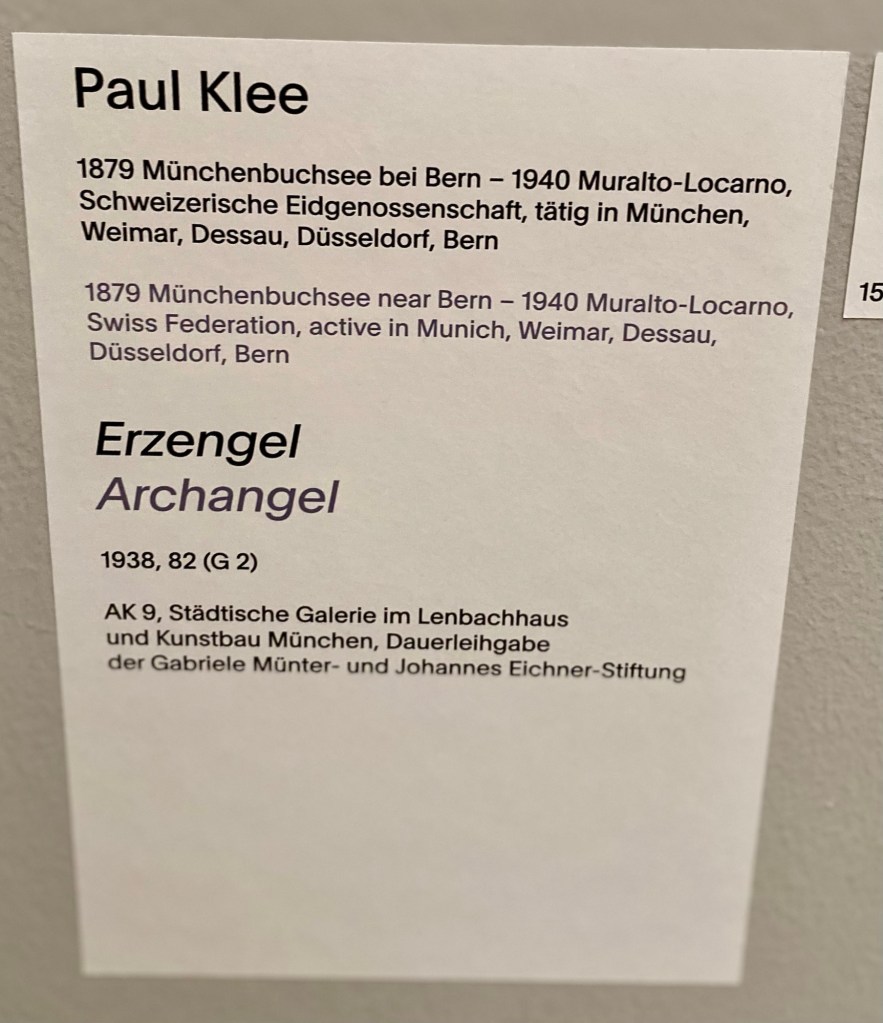
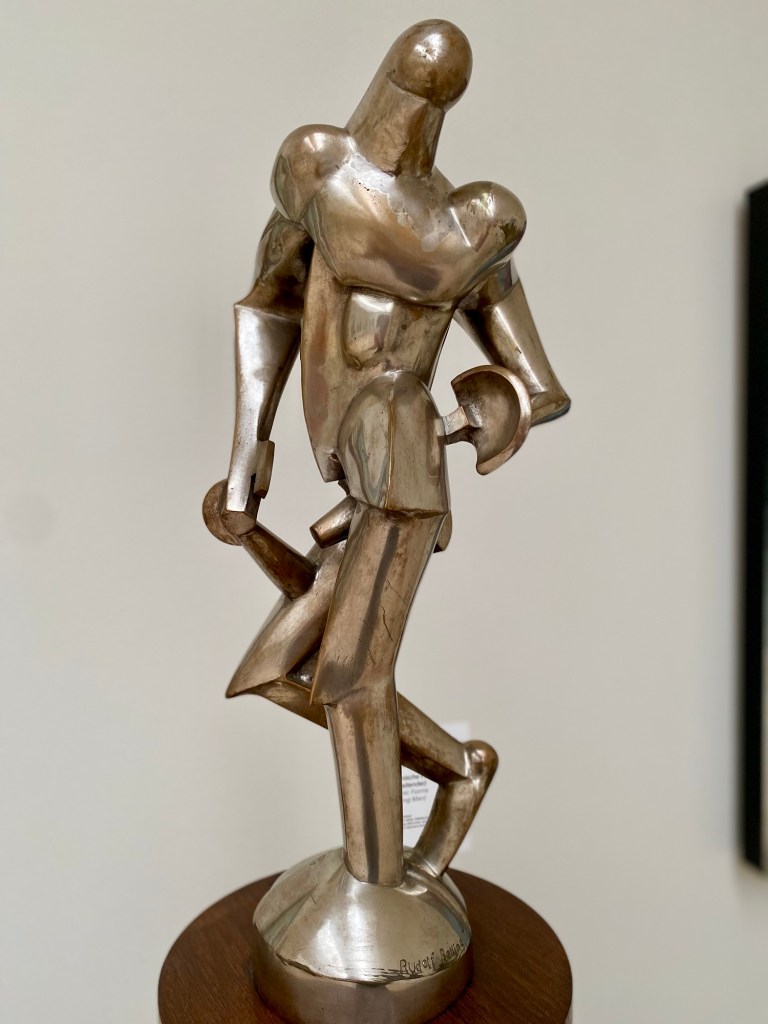
4. The Lenbachhaus houses many works by the Blaue Reiter group of artists who worked in Munich.

5. The modern Museum Brandhorst focus on the work of Andy Warhol and Cy Twombly.

6. An important collection of Greek and Roman art is held in the Glyptothek and the Staatliche Antikensammlung (State Antiquities Collection). King Ludwig I managed to acquire such famous pieces as the Medusa Rondanini, the Barberini Faun and the figures from the Temple of Aphaea on Aegina for the Glyptothek. The internationally renowned collection of antique pottery is outstanding. The Museum für Abgüsse klassischer Bildwerke displays the world’s most famous ancient Greek and Roman sculptures as plaster casts.

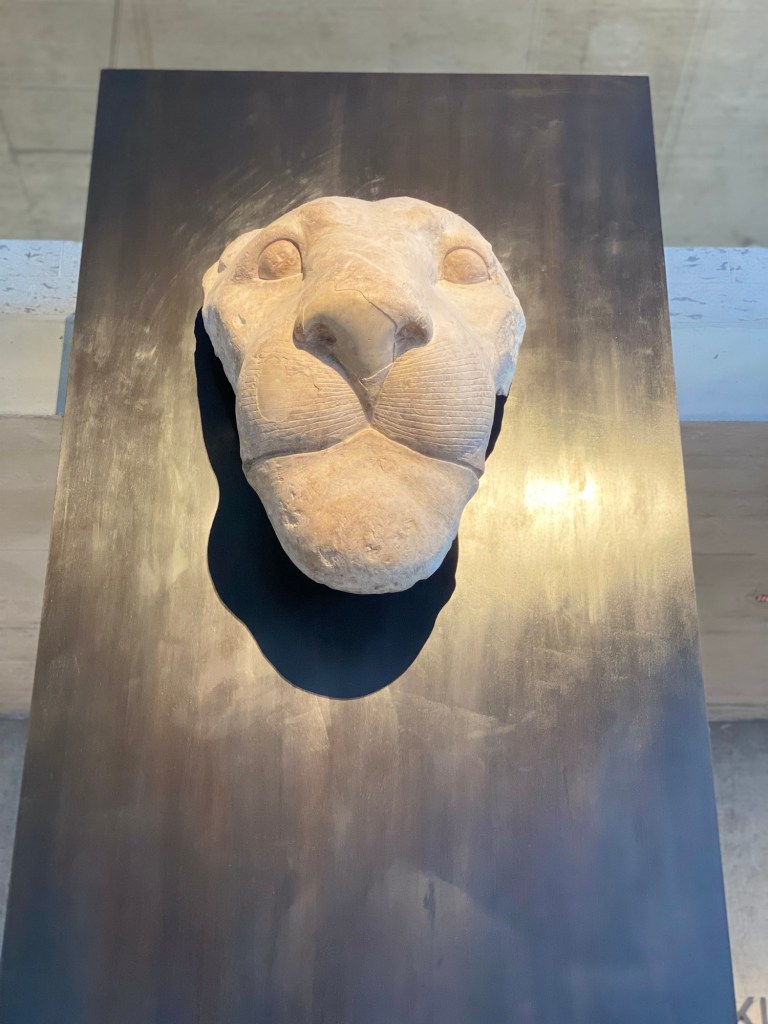
7. The Kunstareal was further augmented by the completion of the Staatliche Sammlung für Ägyptische Kunst (Egyptian Museum). This museum displays exhibits from all periods of Ancient Egypt’s history but also reliefs from Assyria and a lion from the Ishtar Gate of Babylon.

Nearby the Kunstareal are several natural scientific museums of the Bavarian state, like the Paläontologisches Museum München, the Geological Museum and the Museum Reich der Kristalle as the public part of the “Mineralogische Staatssammlung Muenchen” (Bavarian State Collection for Mineralogy).