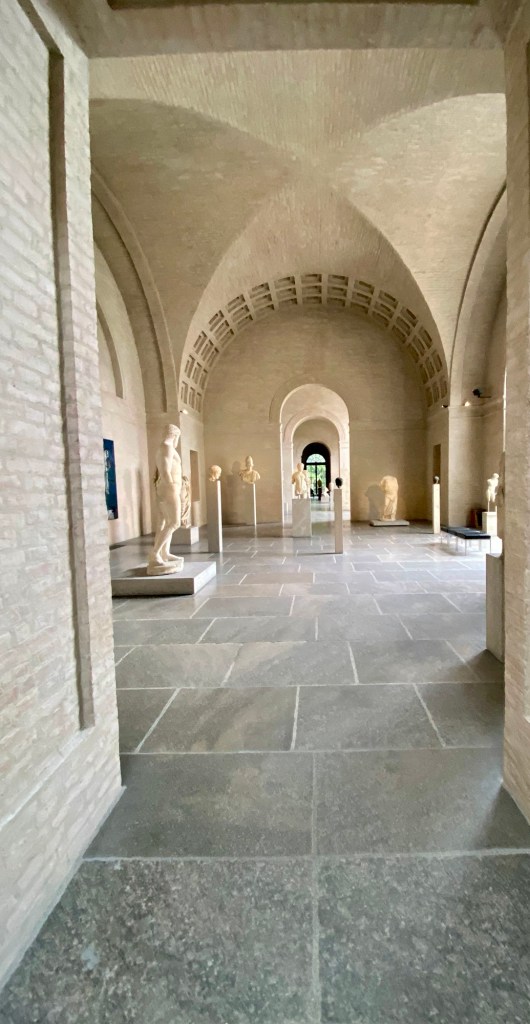
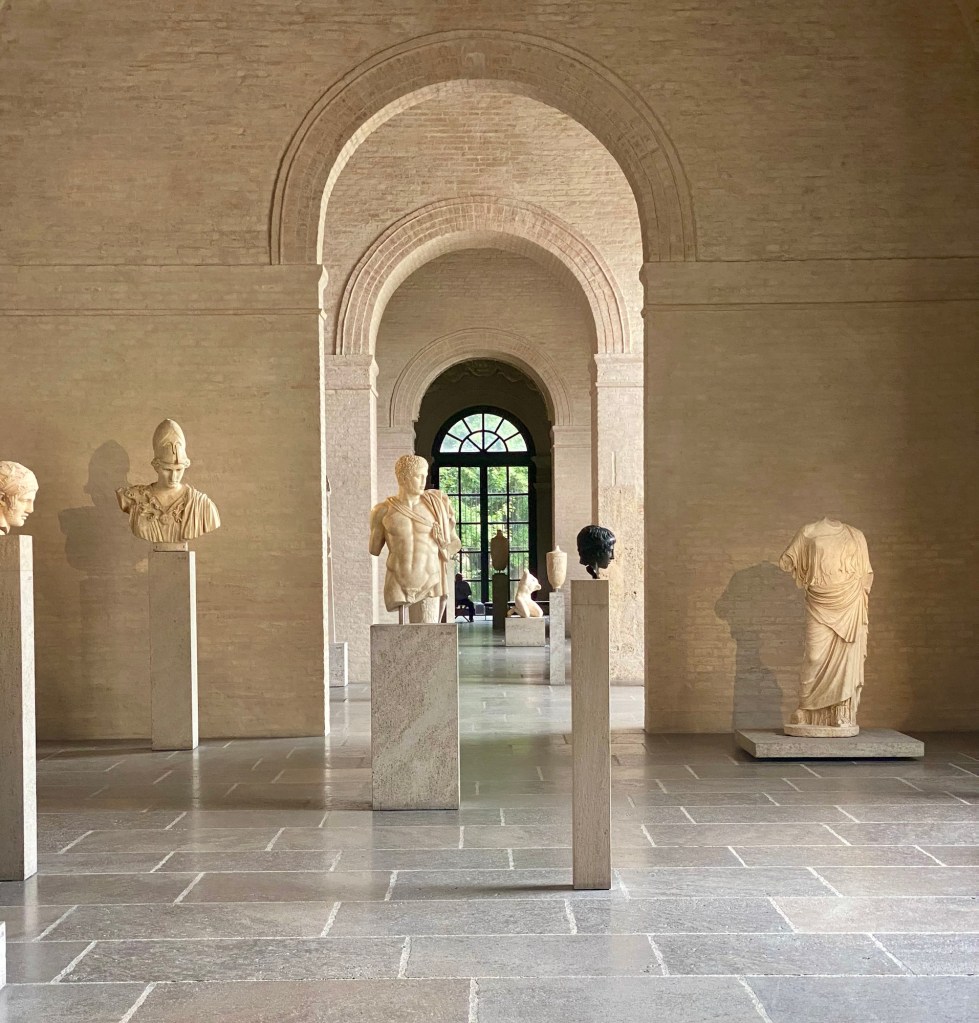
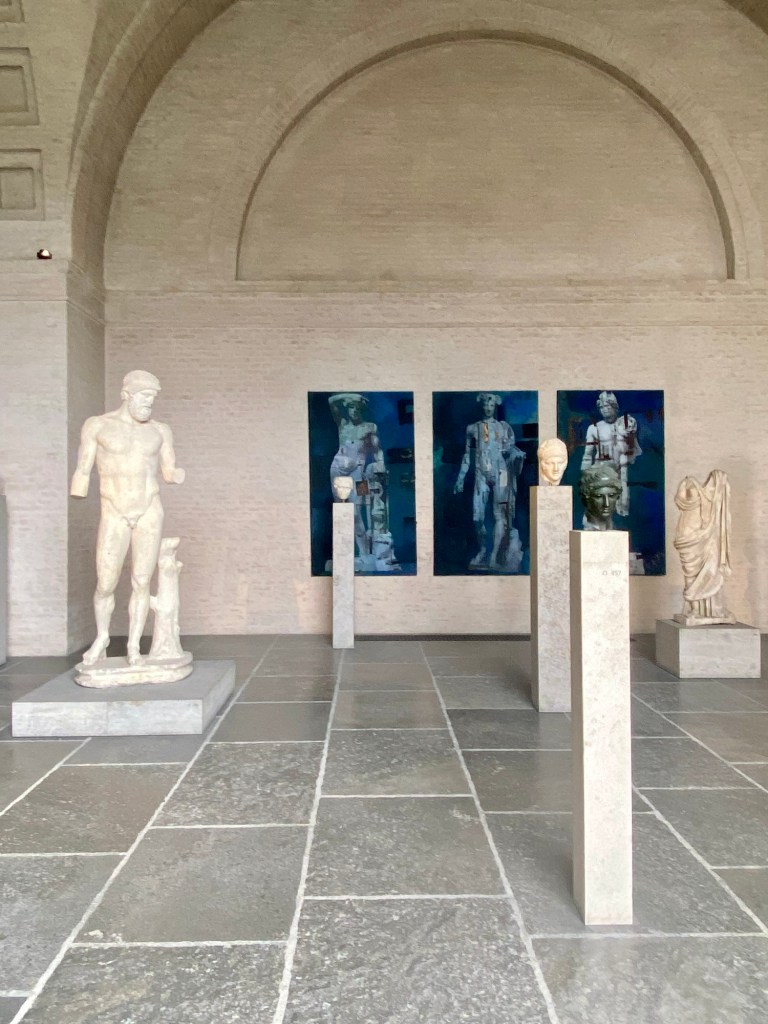
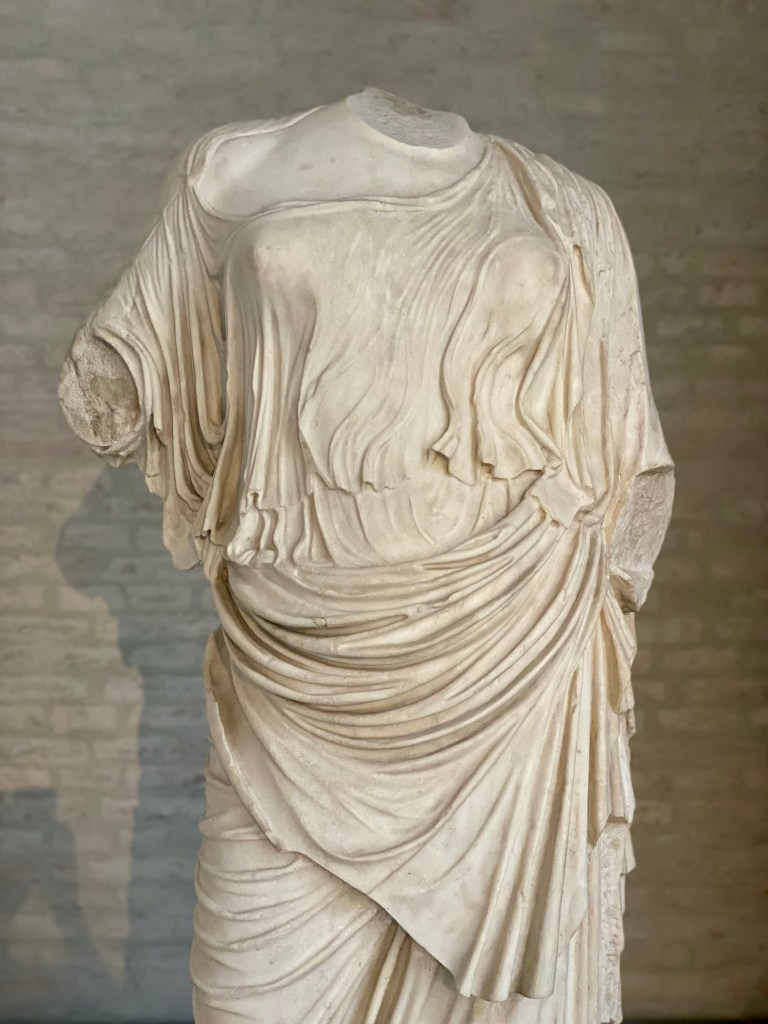
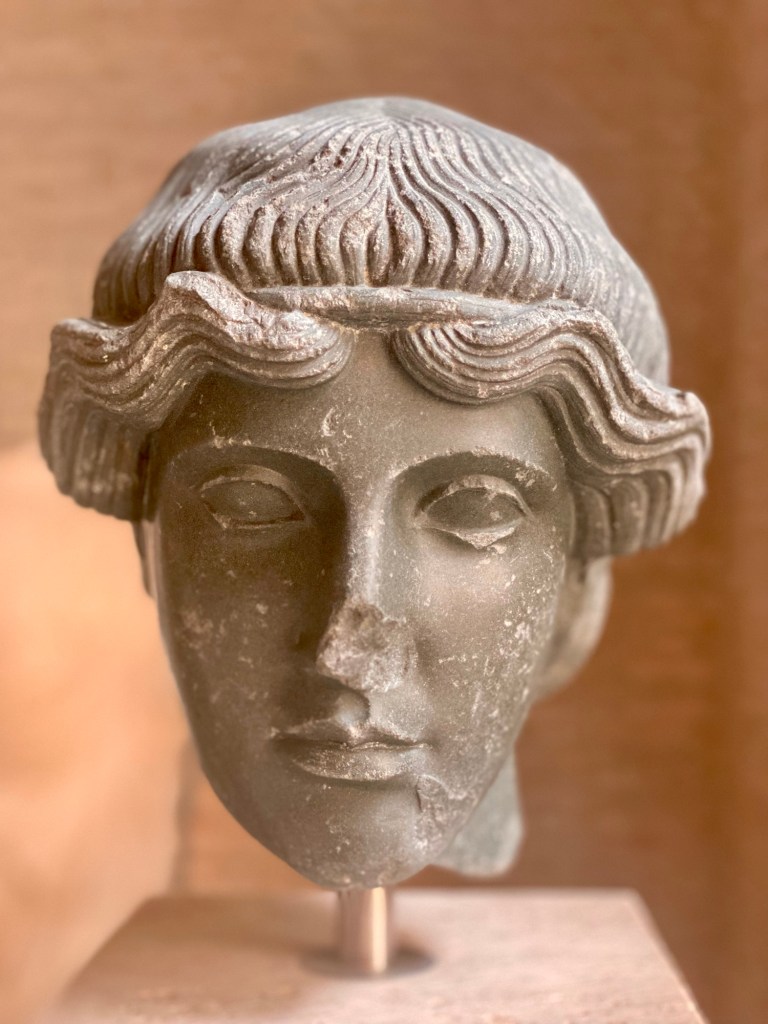
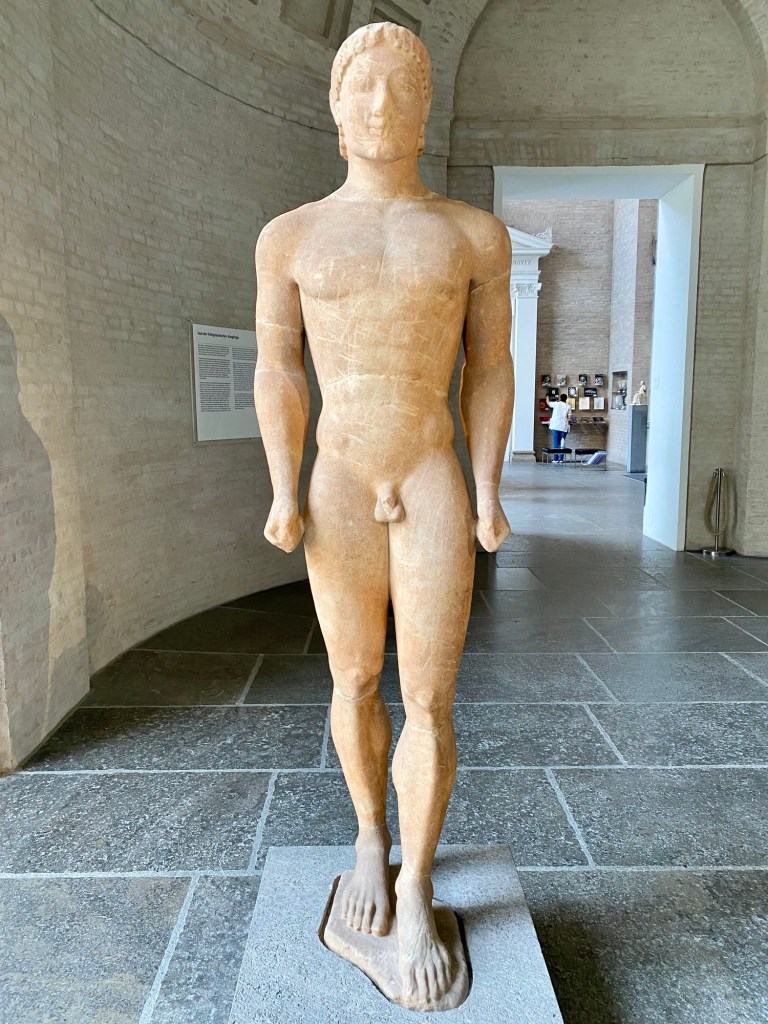
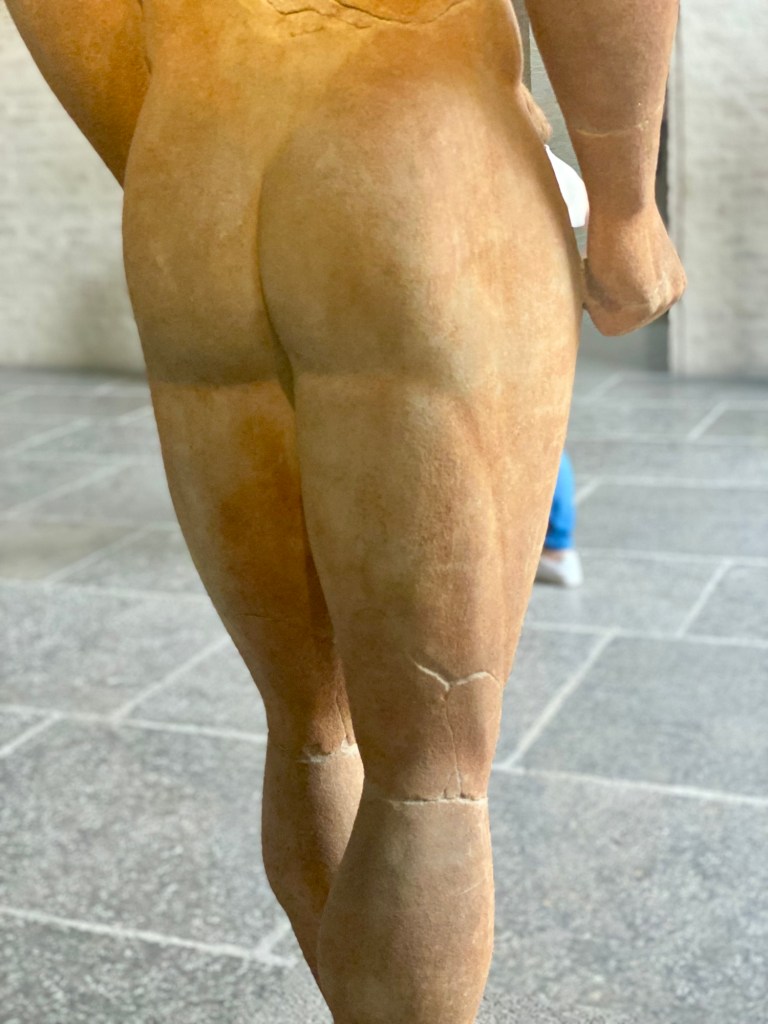
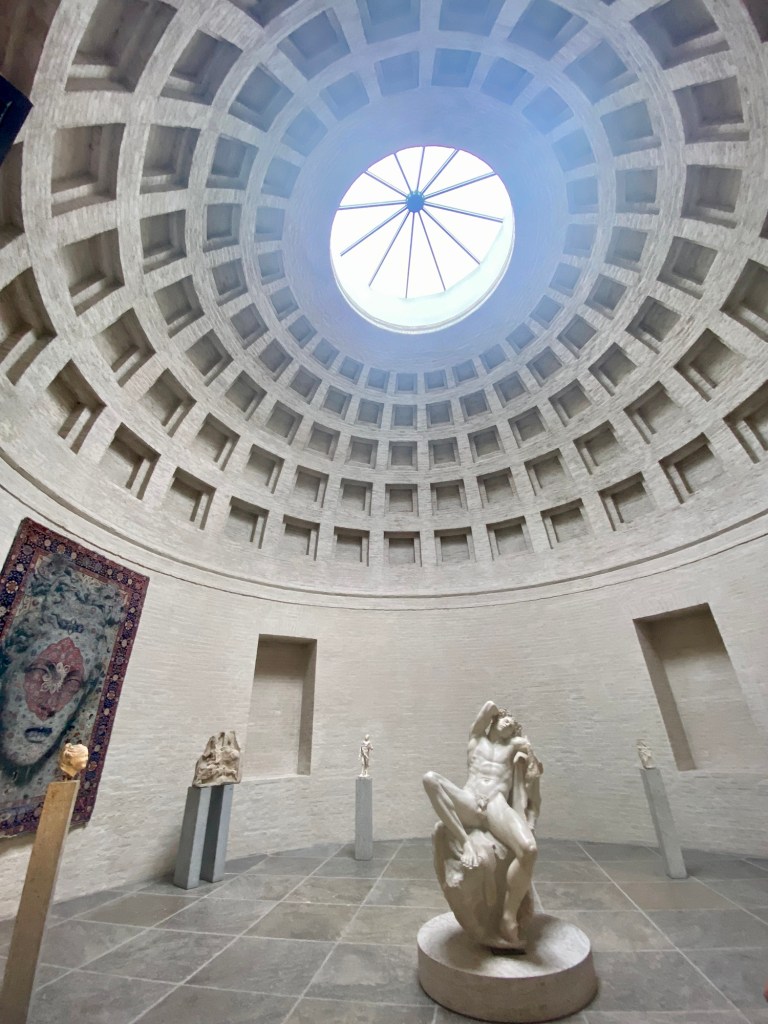
As I passed from the gallery that houses the Barberini Faun, this was what I encountered next. The austere simplicity in which these masterpieces of Greek art are housed, in this quiet Neoclassical space, is notable.
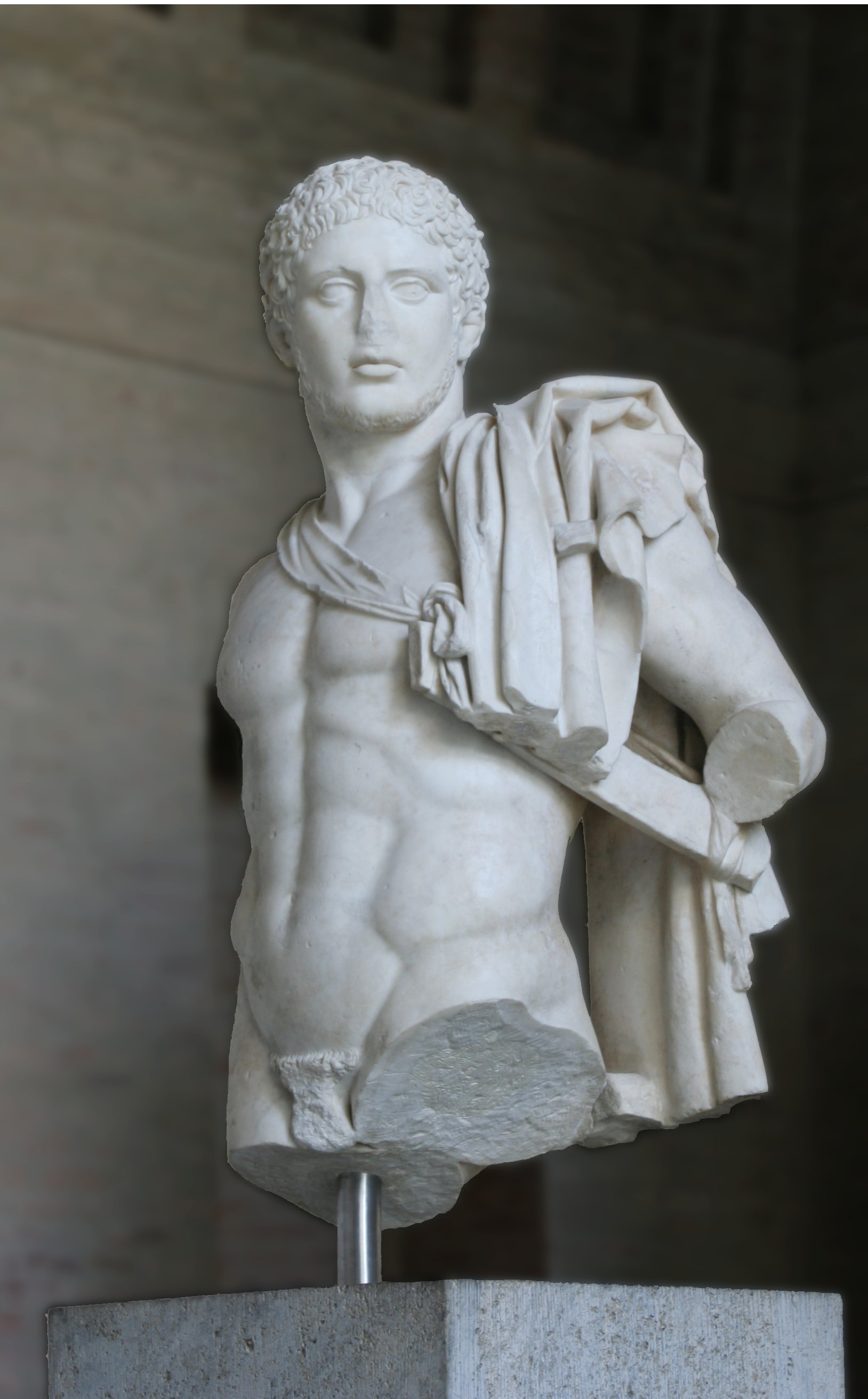
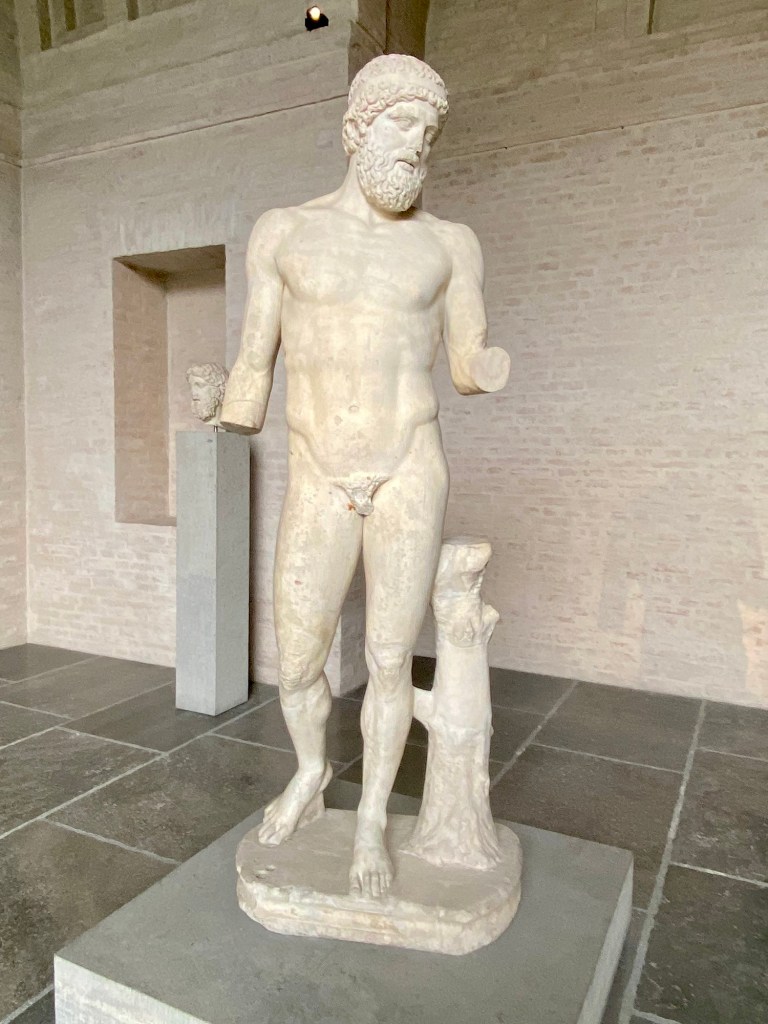
Above and below, the so-called Munich Diomedes. Roman copy after a Greek original from ca. 440–430 BC, attributed to Kresilas.
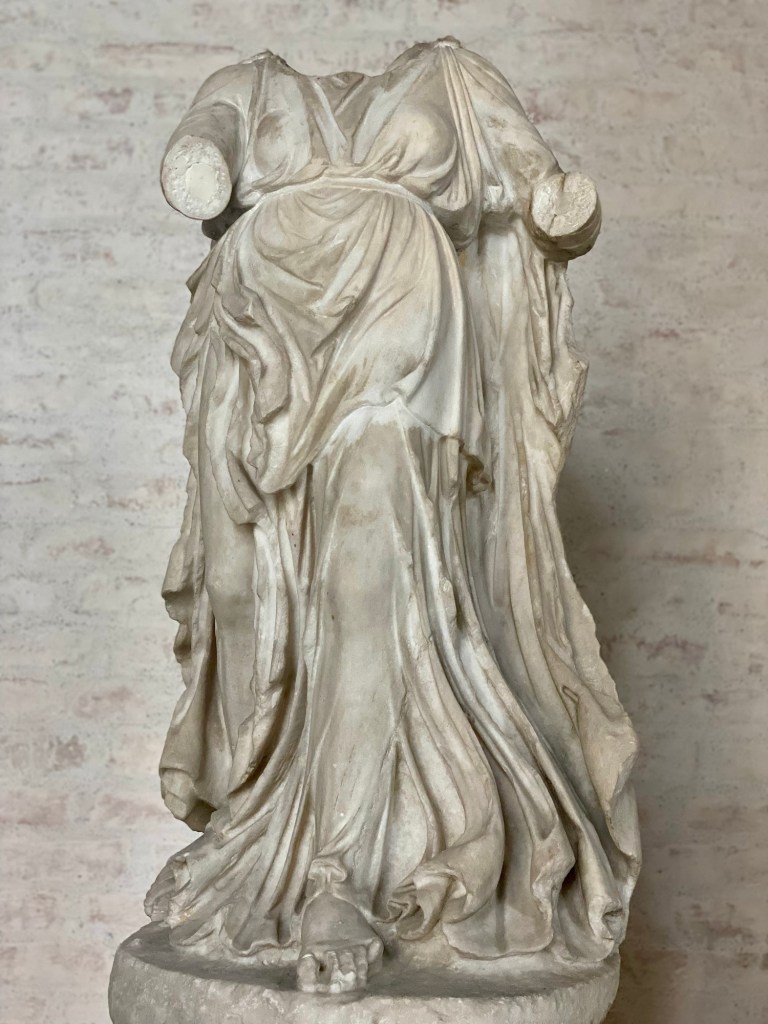
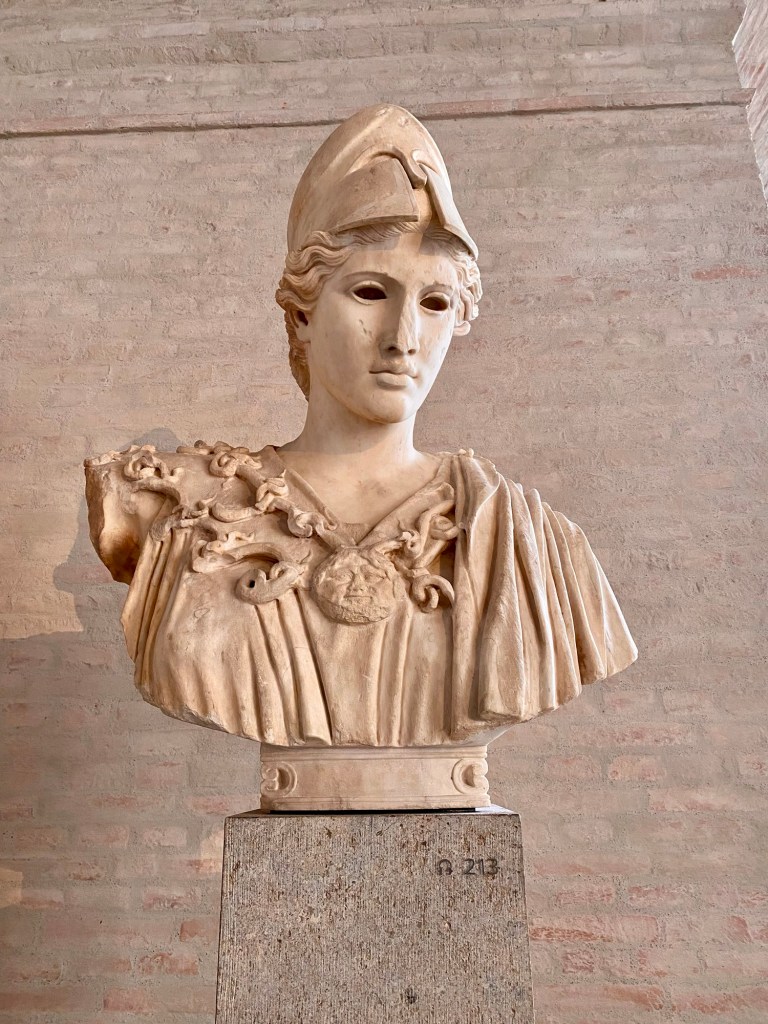
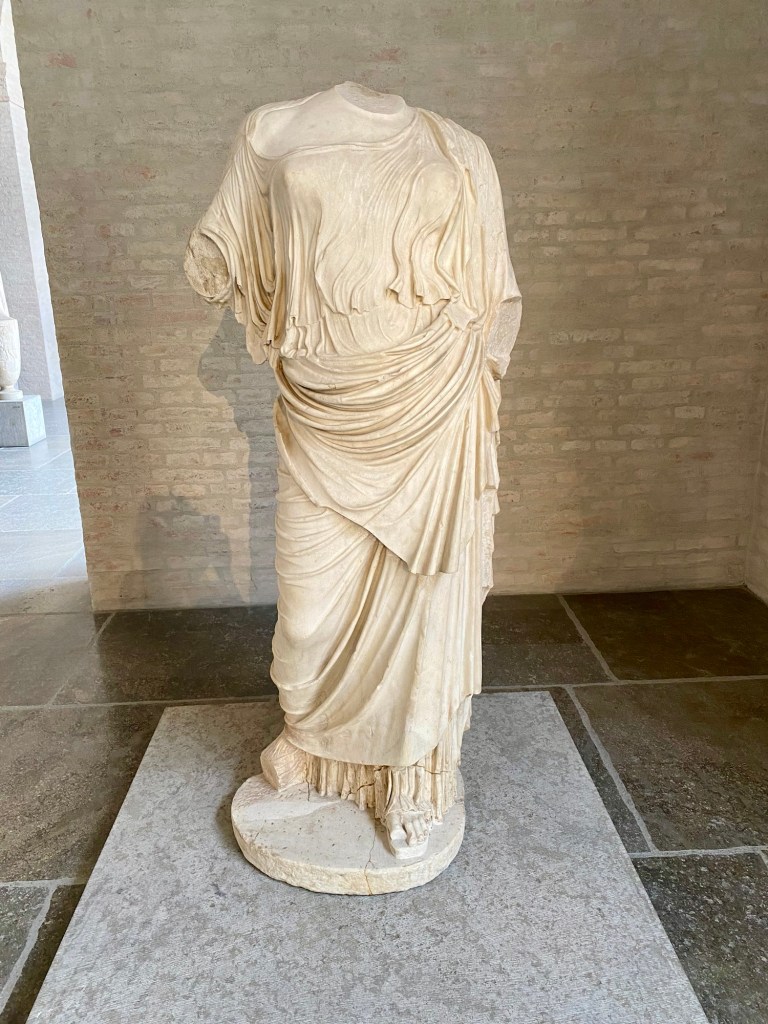
There are many beautiful artworks in this gallery; below are the ones that captured me on my visit that day.
Visiting this museum was high, very high, on my list of things I wanted to do in Munich.
Today I visited and I was delighted.
As I entered, I thought to myself, I think I’ll just enjoy it without taking a lot of pictures and may I won’t even blog about it, for a change.
My resolve continued through the first room, although I was immediately impressed with the supreme quality of the works exhibited and the gorgeous, apprpriate spaces in which the artworks were shown. I felt calmed by the space, and bewitched by the art works.
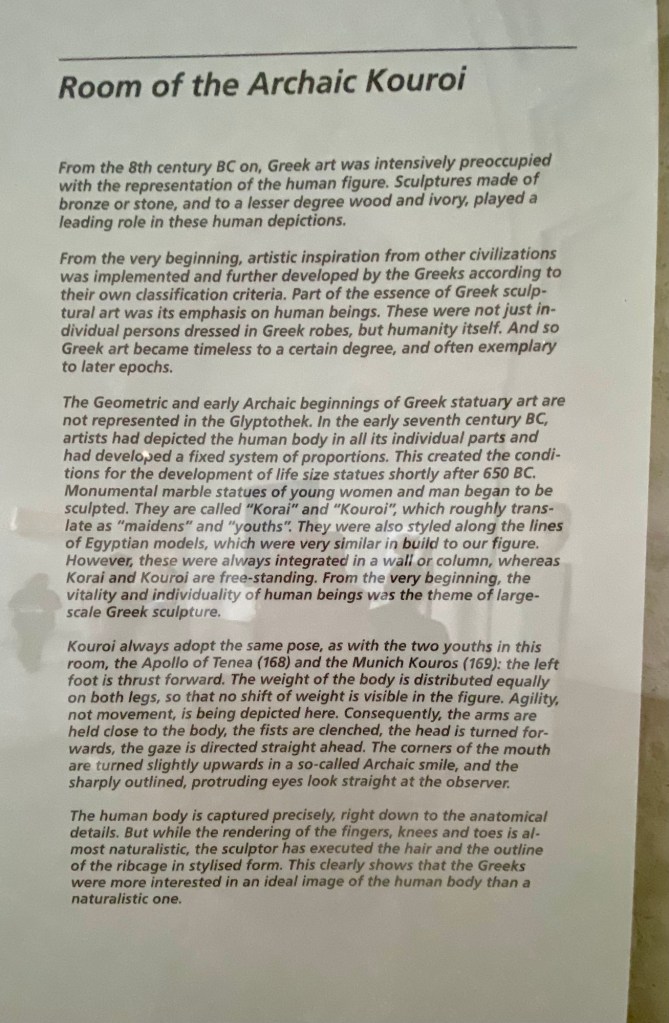
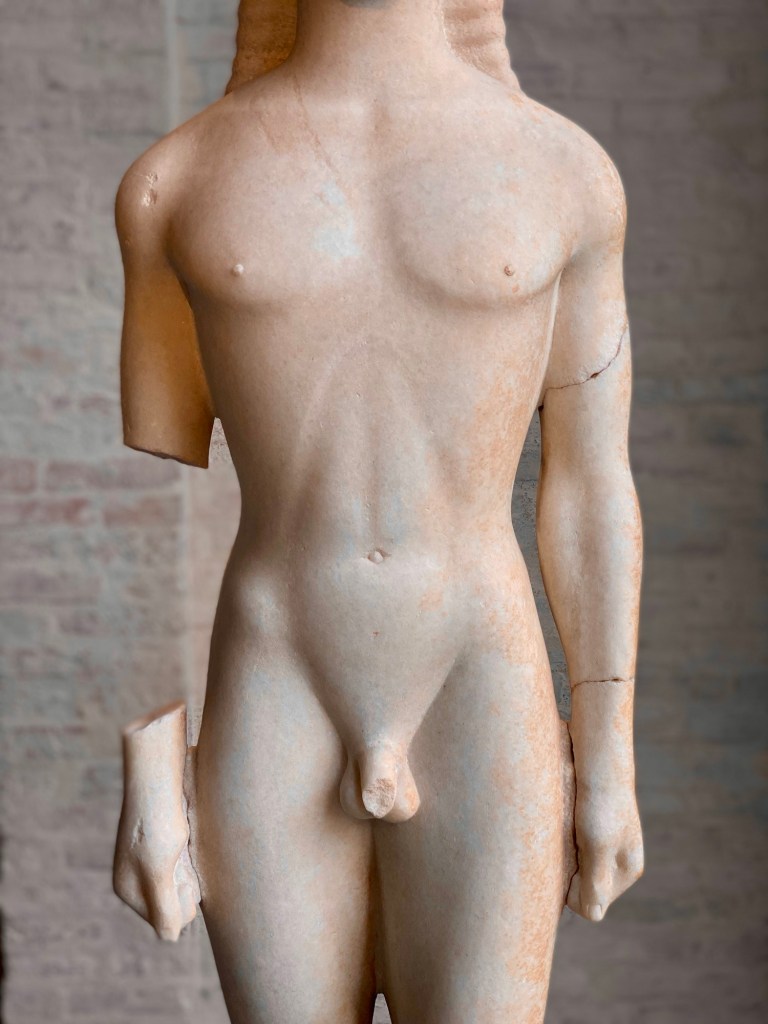
Again, as I have been saying since I first arrived in Berlin, I am very impressed by the quality and even quantity of labeling in English (and Italian. There are a lot of visitors from Italy in Germany. I hear Italian every day).
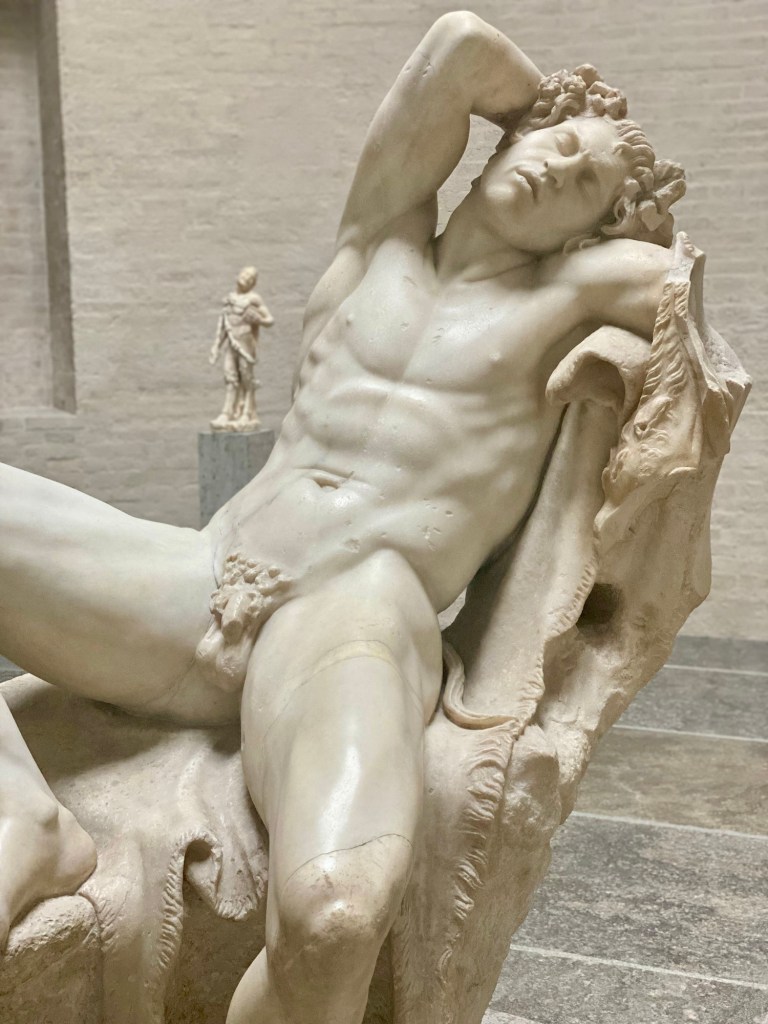
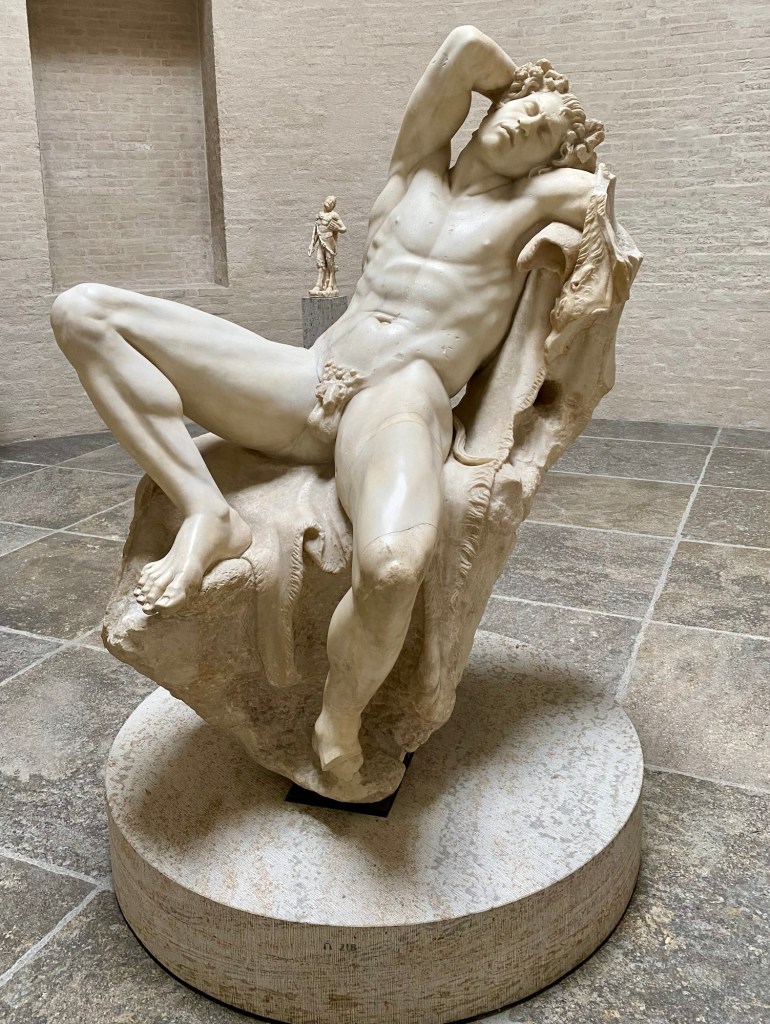
And then I passed from the Room of the Kouroi to the next, gorgeous, domed gallery, where in the center sits the magnificent Hellenistic sculpture, the Barberini Faun. It took my breath away. Behold.
I’ve seen copies of this famous work in other museums and although we can’t be sure this is the original Hellenistic version (it may be a Roman copy), nothing prepared me for this work in this space.
Nothing prepared me for the opportunity to walk around the sculpture and admire its form and structure from all angles.
Nothing prepared me for the chance to be up close and personal with this incredible thing.
It was downhill from this room onward. I was lost and taking pictures right and left. You’ll get to see the cream of the crop in a few upcoming posts. I cannot recommend German art museums highly enough.
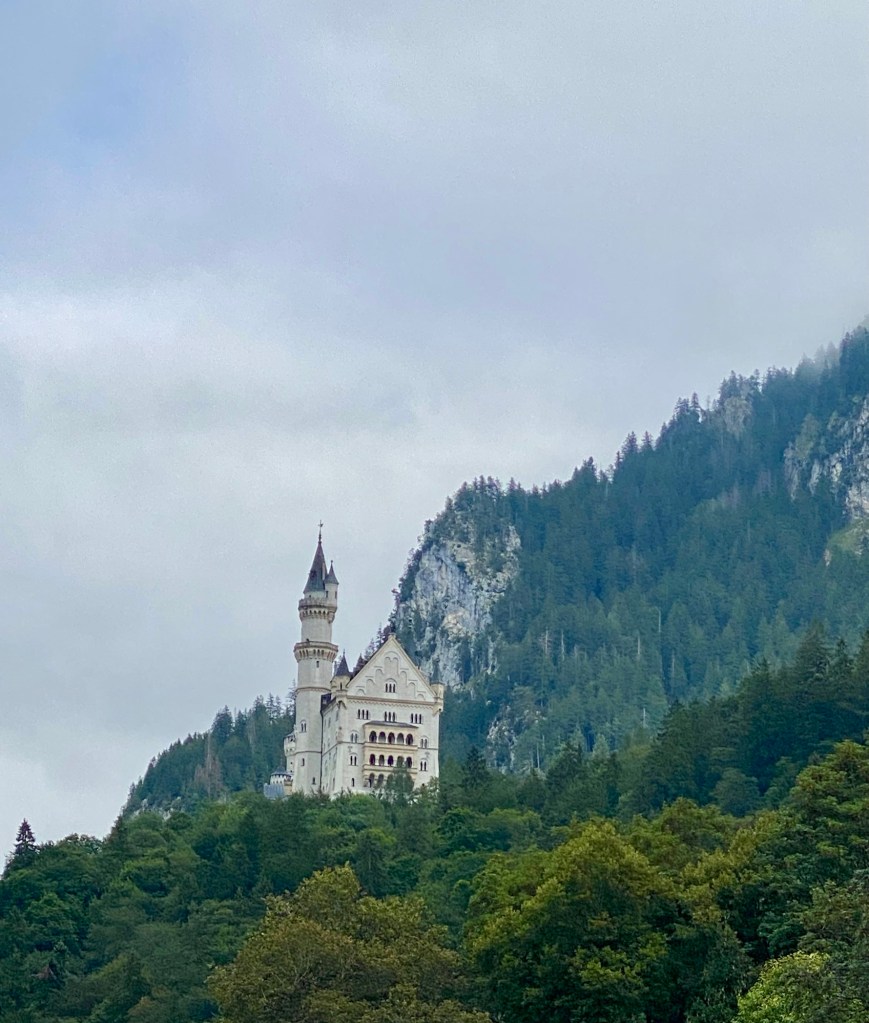
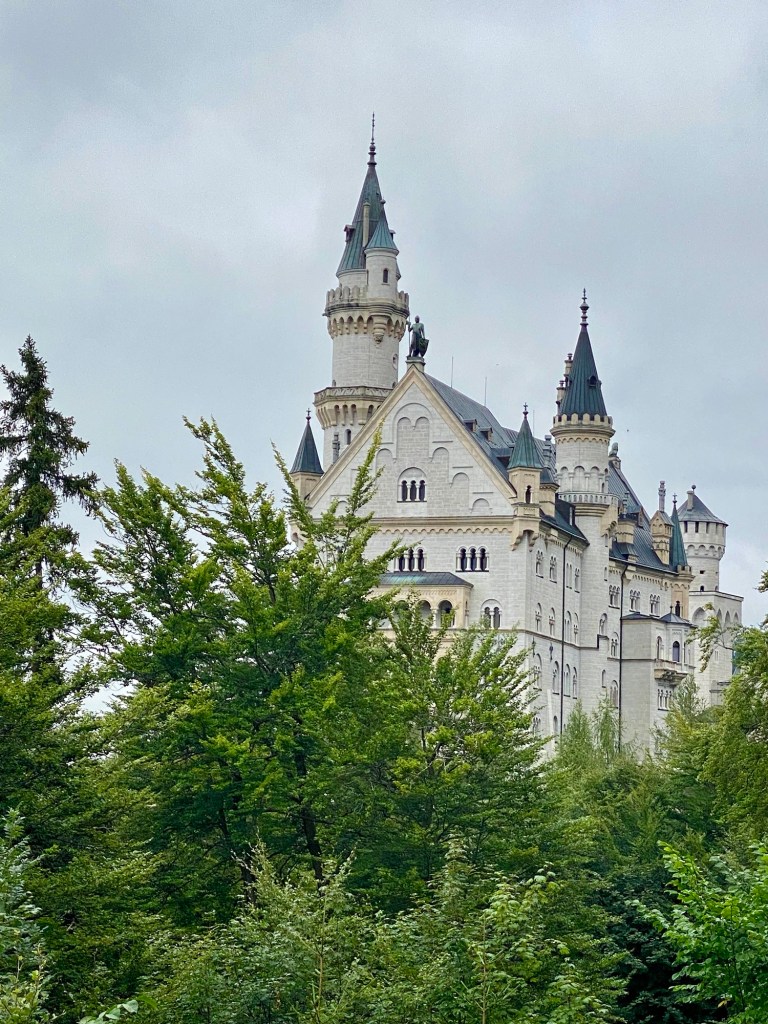
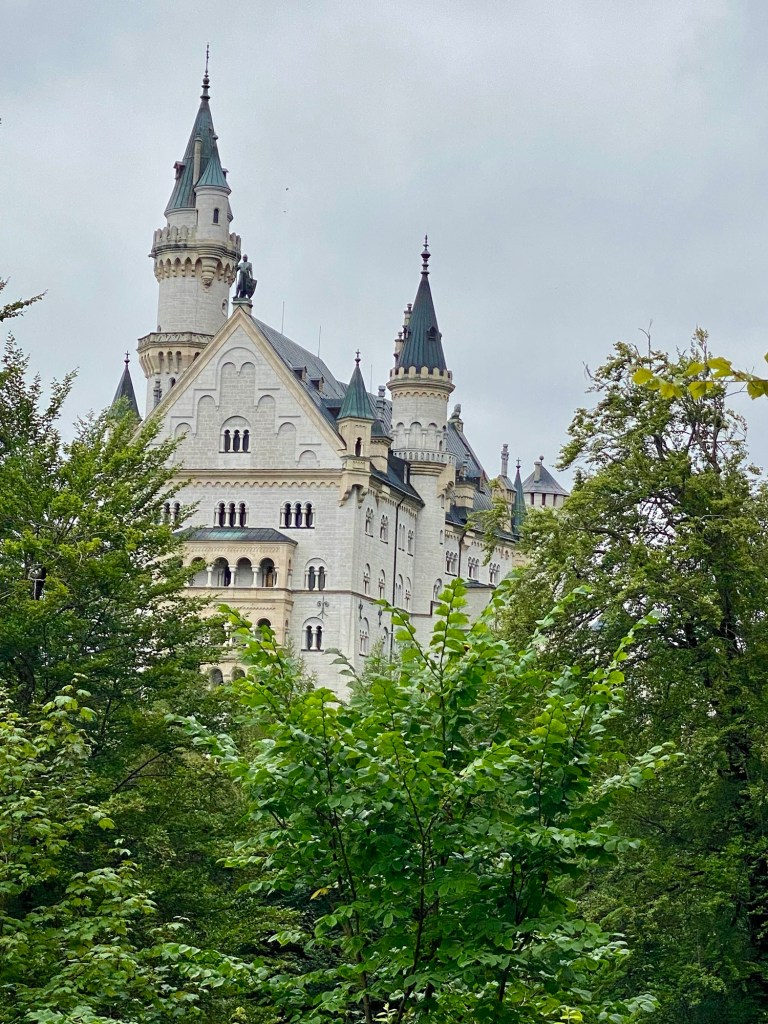
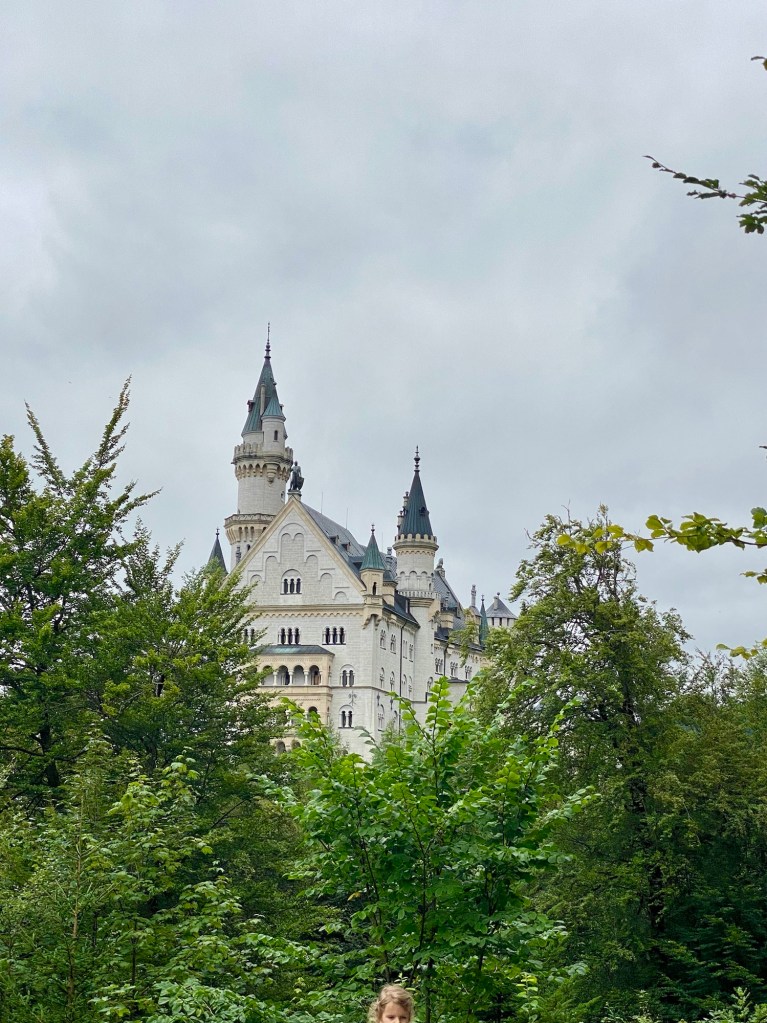
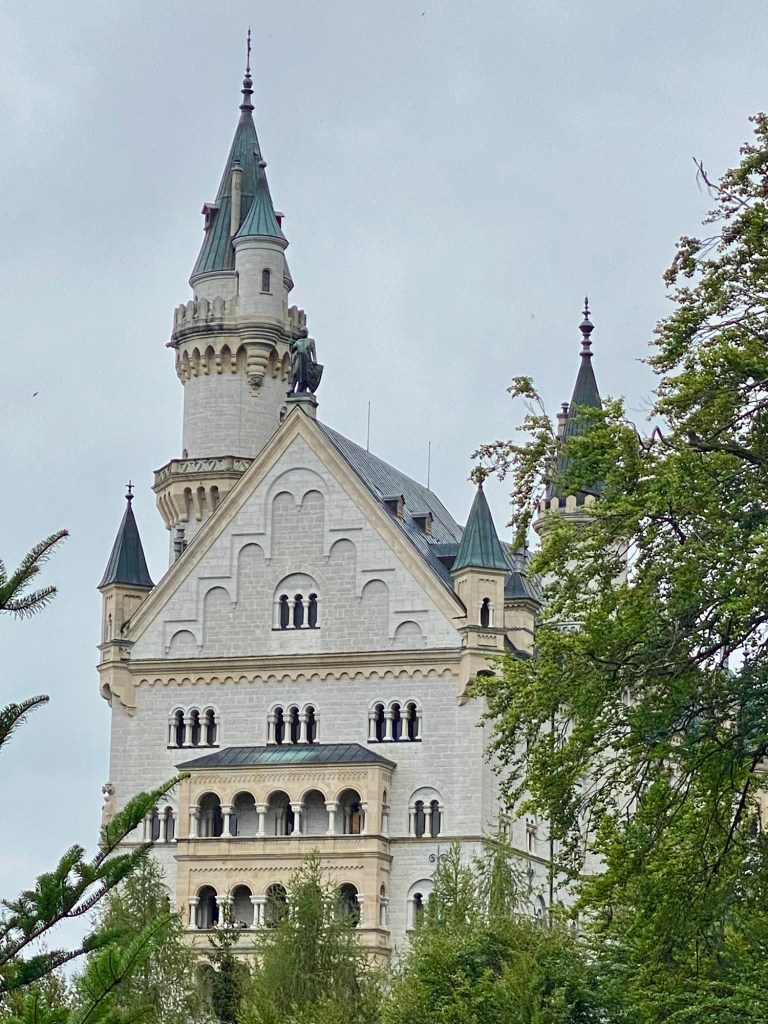
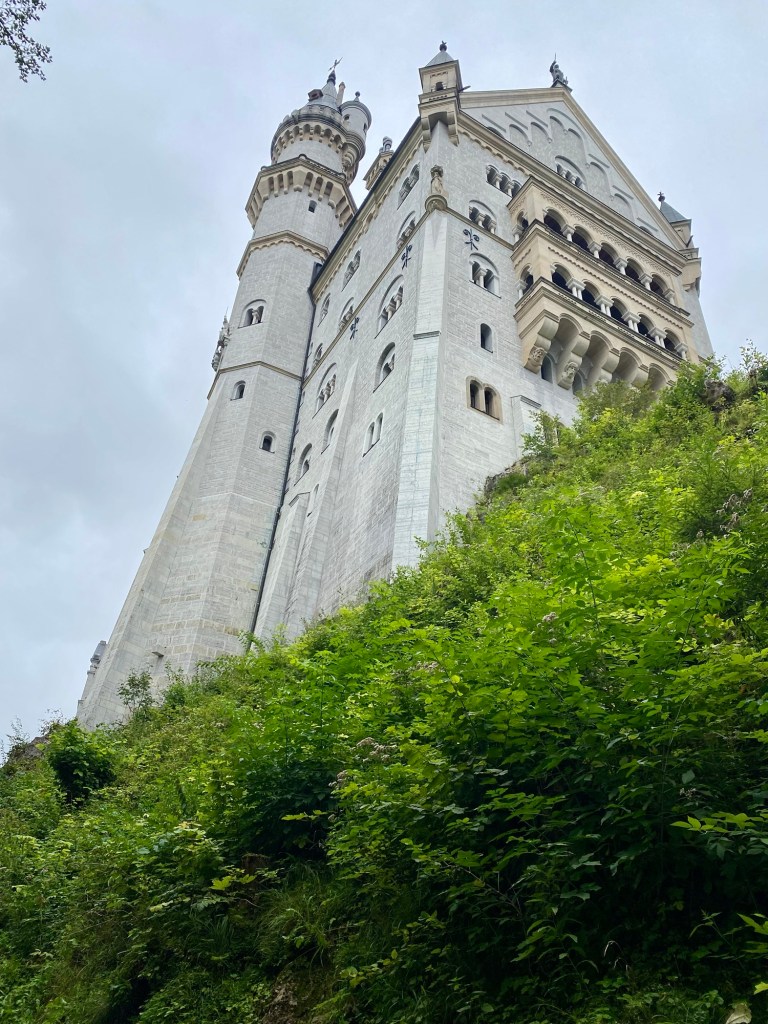
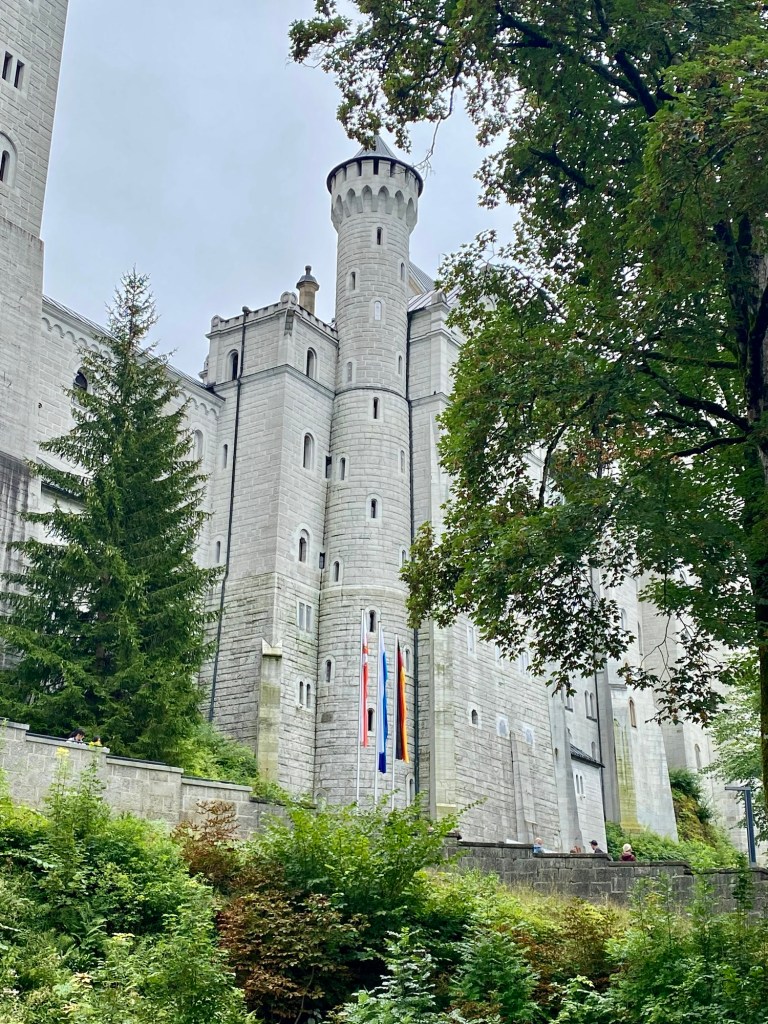
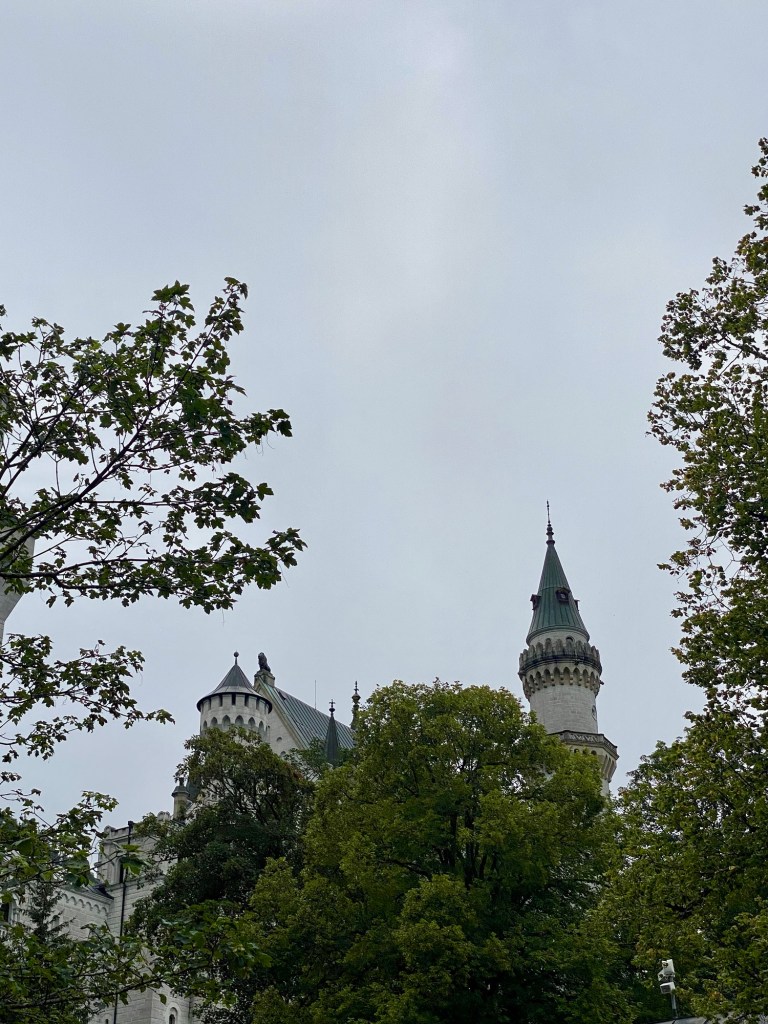
In the hamlet of Schwangau in southern Germany sits this crazy castle. Conceived and constructed by King Ludwig the II, it was not finished in his lifetime. He was eccentric and so is his castle. Perhaps it is as well known around the world as it is because it is believed that Walt Disney fashioned his Disneyland castles after this folly.
I took a day trip from Munich to view this landmark and it was well worth the trip. Ludwig II was a dreamer, and spent his days lost in literature and a fantasy world of his own creation. He was a major patron of Richard Wagner and employed the composer’s set decorator to help him design this castle, both inside and out.
Visitors are not allowed to photograph the interior, but if you are interested, you can find lots of pictures on the internet. The thing that most impressed me is that this castle was built in the 2nd half of the 19th century, using steel girders and brick construction. A steam powered crane was on site to help facilitate the building process and tragically about 30 builders lost their lives in the construction of this faux castle built upon an alpine crag.
As we all know, castles were fortified buildings, used to protect the elite while simultaneously allowing their armed forces to detect the approach of any encroachers. When Ludwig built this fortification, the telephone had been invented (and was installed in the castle), which was a more efficient and effective means of detecting approaching danger.
The castle as seen today isn’t finished to Ludwig’s specifications. There would have been an enormously tall keep in the center, which was not completed. The building, for all its size, has only one bedroom. That for the eccentric king. He spent fewer than 150 days and nights in his last castle.
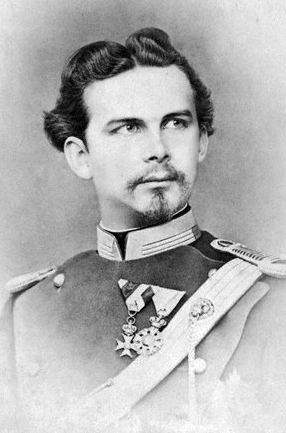
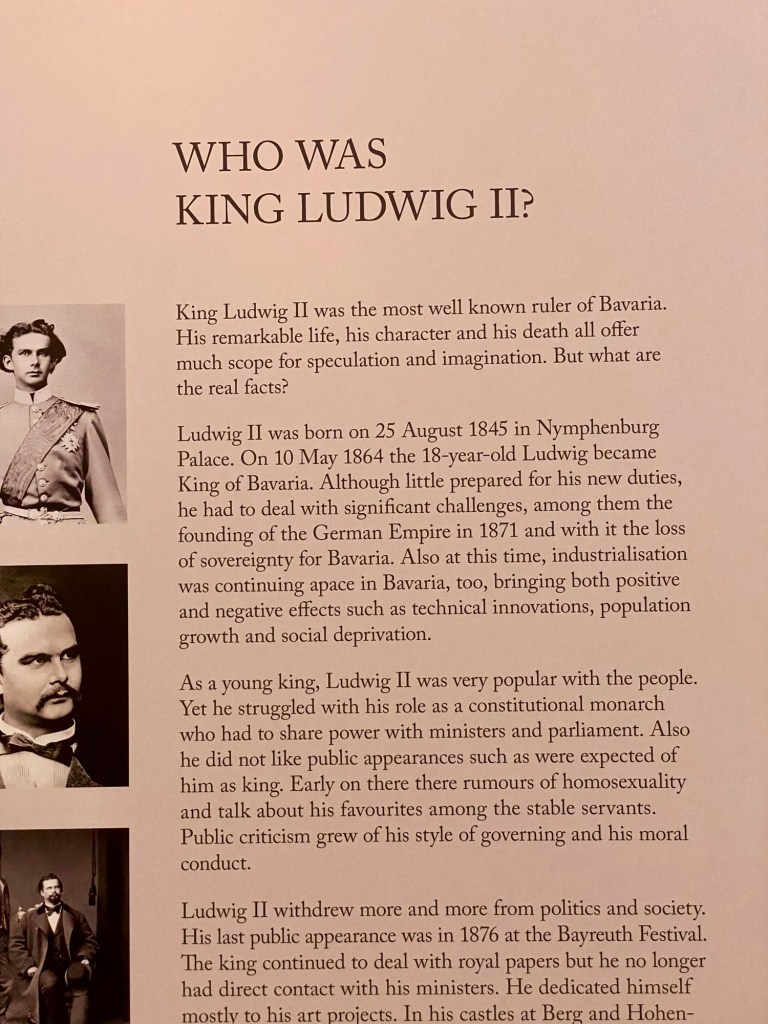
Ludwig II (Ludwig Otto Friedrich Wilhelm; 25 August 1845 – 13 June 1886), who was also known as the Swan King or the Fairy Tale King (der Märchenkönig), was King of Bavaria from 1864 until his death in 1886. He also held the titles of Count Palatine of the Rhine, Duke of Bavaria, Duke of Franconia, and Duke in Swabia. Outside Germany, he is at times called “the Mad King” or Mad King Ludwig.
Ludwig ascended to the throne in 1864 at the age of 18 but increasingly withdrew from day-to-day affairs of state in favor of extravagant artistic and architectural projects. He commissioned the construction of lavish palaces: Neuschwanstein Castle, Linderhof Palace, and Herrenchiemsee. He was also a devoted patron of the composer Richard Wagner. Ludwig spent all his own private royal revenues (although not state funds as is commonly thought) on these projects, borrowed extensively, and defied all attempts by his ministers to restrain him. This extravagance was used against him to declare him insane, an accusation that has since come under scrutiny.
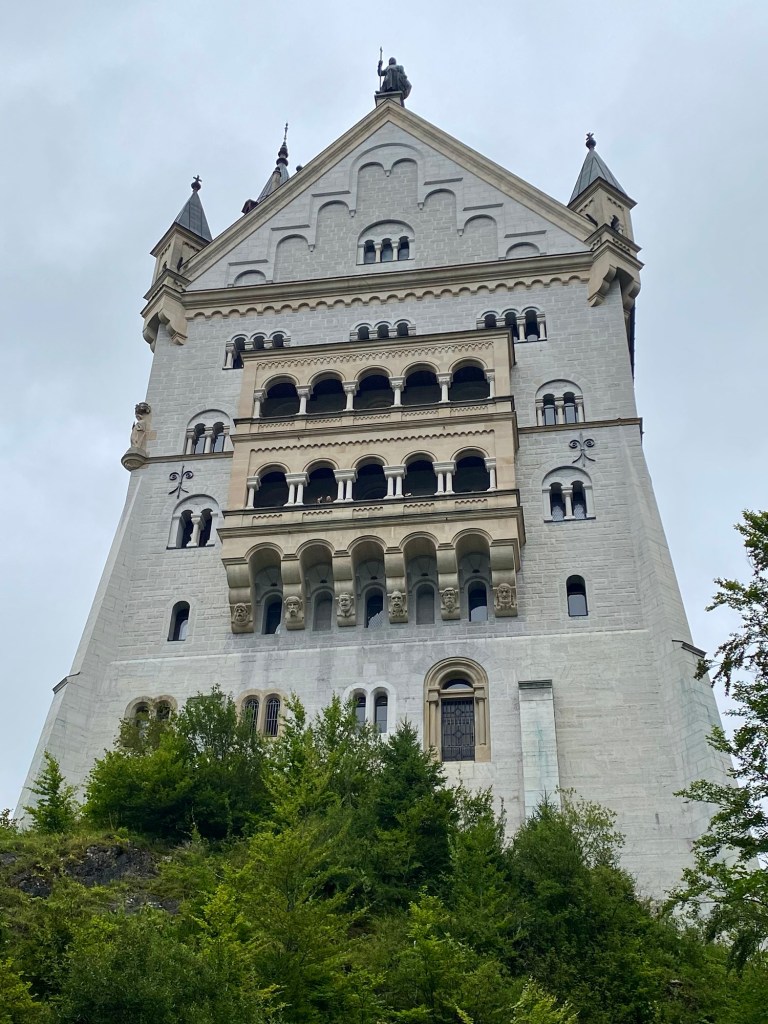
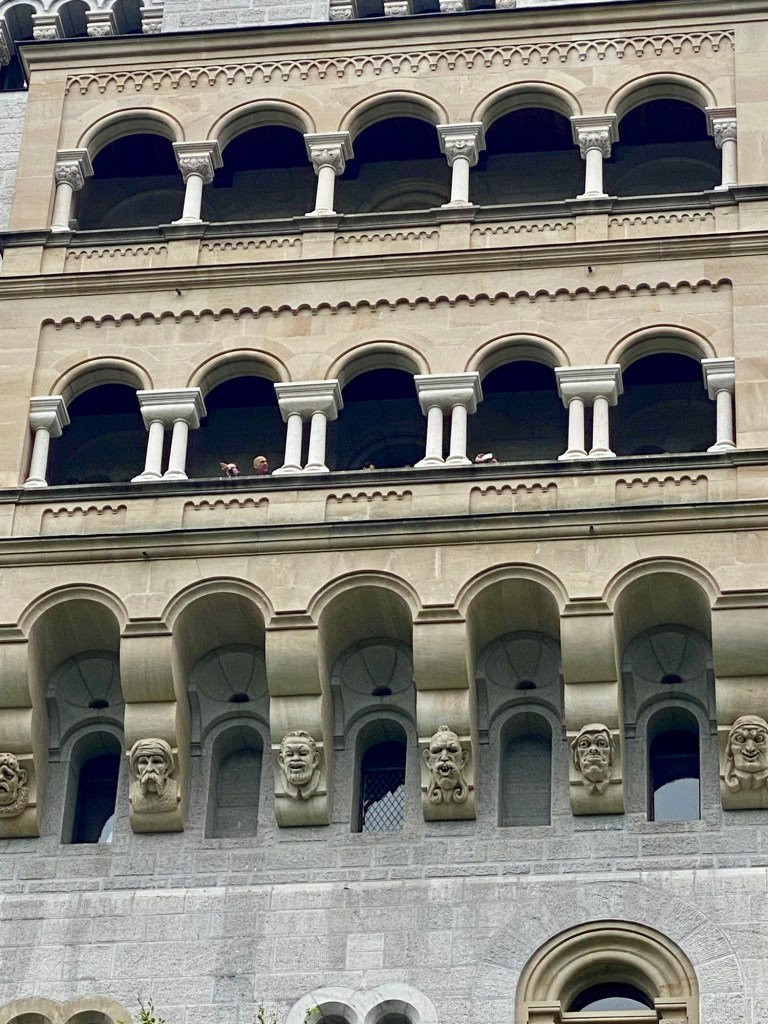
For all of its eccentricities, the building is completely understandable as a model for Walt Disney. Look at those almost comical faces attached to the corbels below.
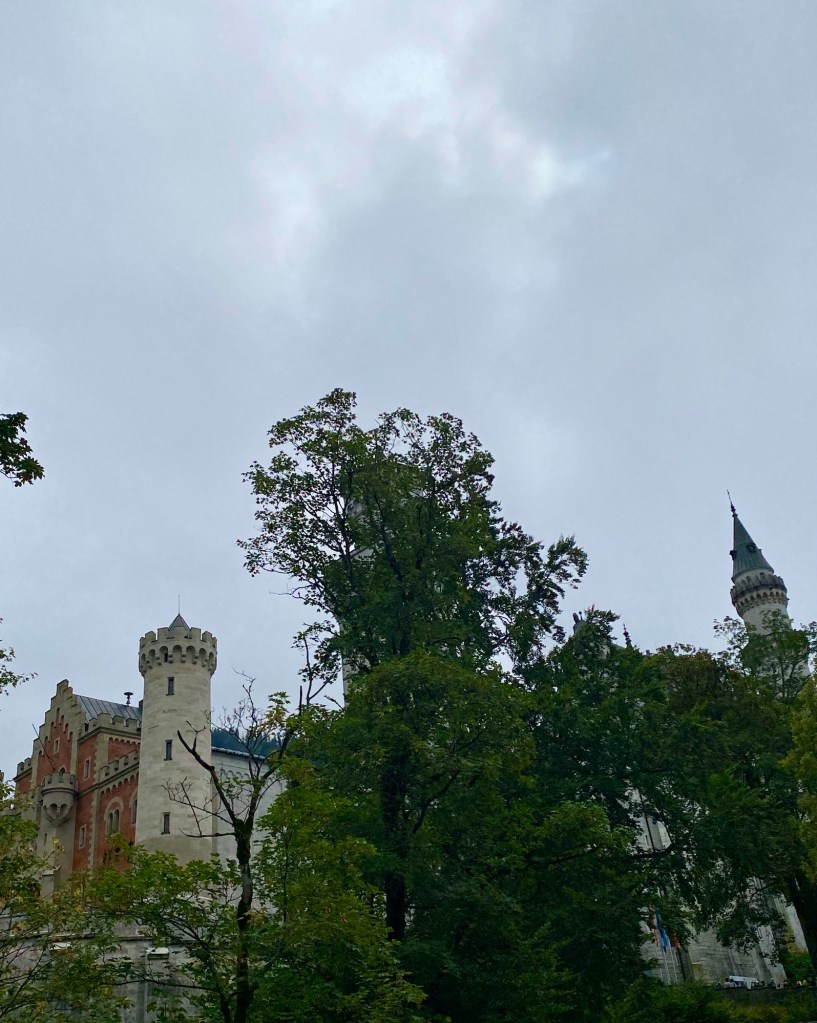
The main approach to the castle today is from the rear. In the picture above and below, we see the actual front facade of the building, which is in red brick.
And what, you might ask, was the view from the front of the castle? One turns around and sees this:
Wow. Crazy and a tourist trap. Glad I saw it though!
Another year has passed. It seems almost impossible that time flies so quickly. I posted this video a year ago and love what it says. Wanted to repost.
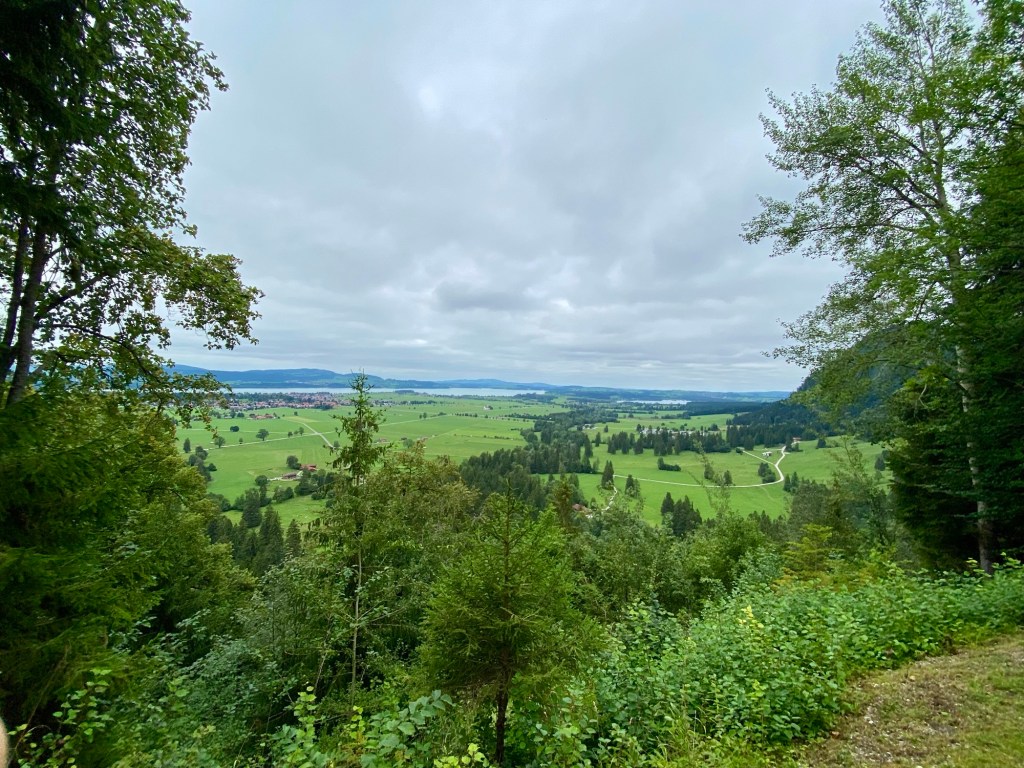
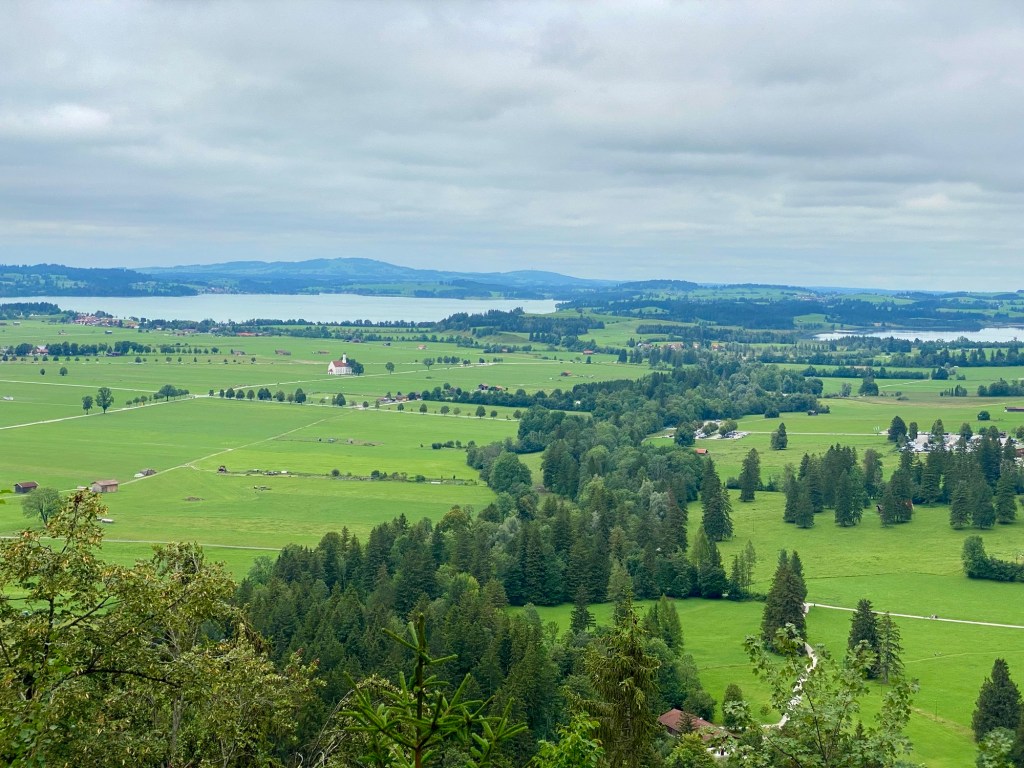
Isn’t it beautiful?! These pix and videos are from my trip to the countryside south of Munich in mid August. I loved seeing this gorgeous part of Bavaria, just north of Austria.
Above and below, I even saw a cemetery. Look at how groomed each plot is. That’s Germany!
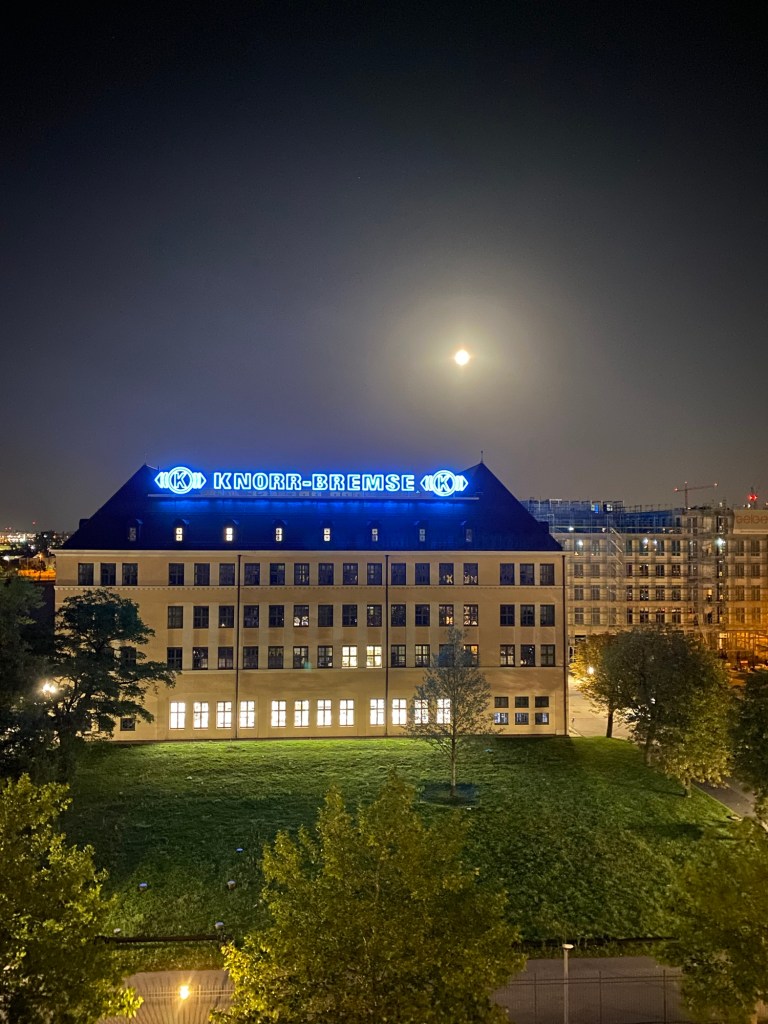
Goodbye to Munich. This was my view there for over a month. I actually liked this view a lot and I really enjoyed being in both Berlin and Munich. I caught the moon one night in a photo in the latter.
And hello to Florence!
This happened overnight of course because Europe is relatively small to us Americani!
But I traveled through Milan where I caught one cool poster while walking quite a distance from my hotel to the train station because the subway was on strike—welcome to Italy! (Although I’ve had the same experience in Paris to be fair!)
I love the poster. It says: “invitation to the theater! At the theater you will see the most beautiful things!”
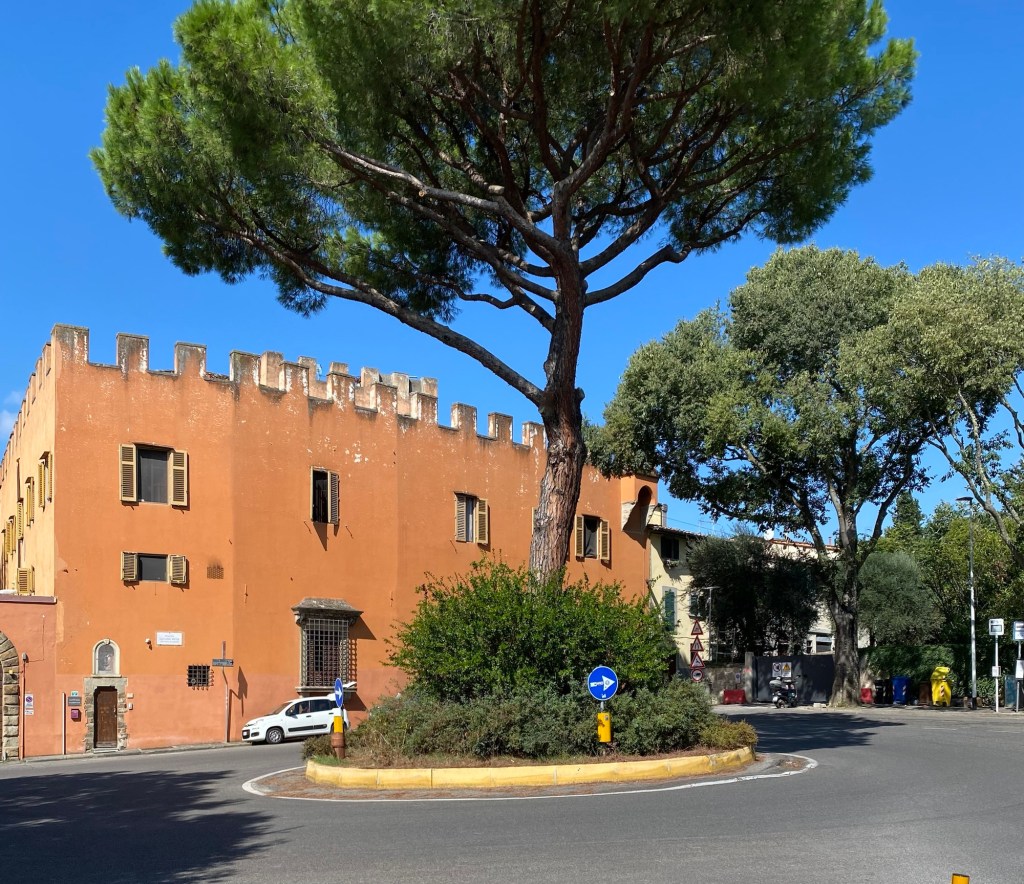
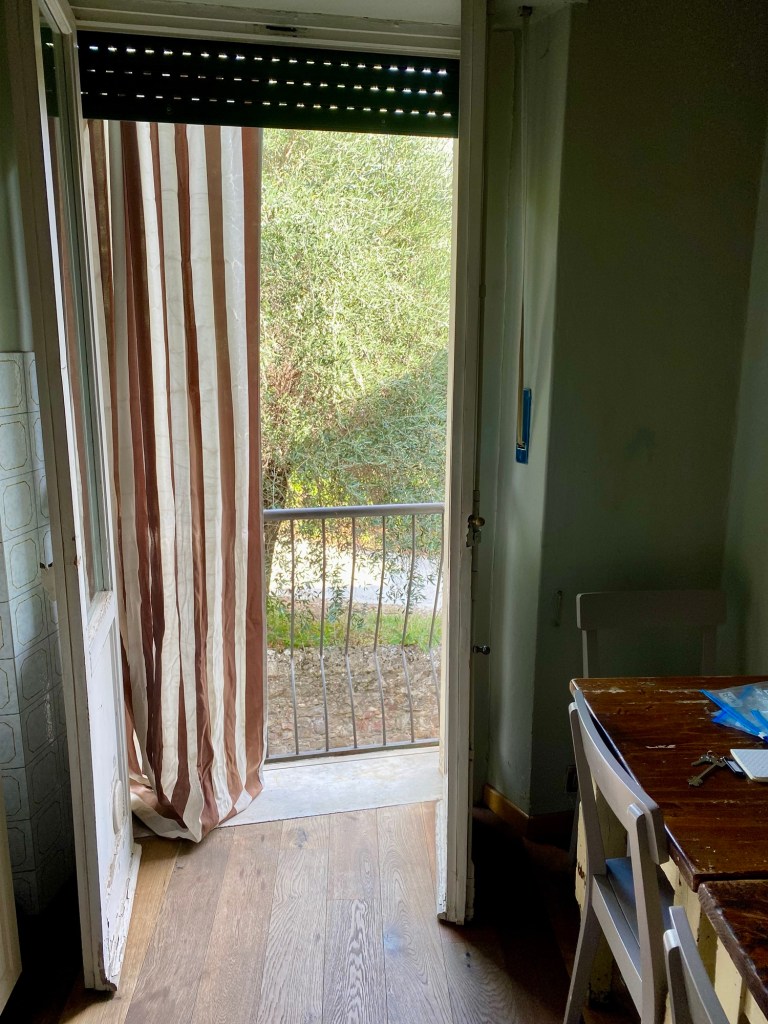
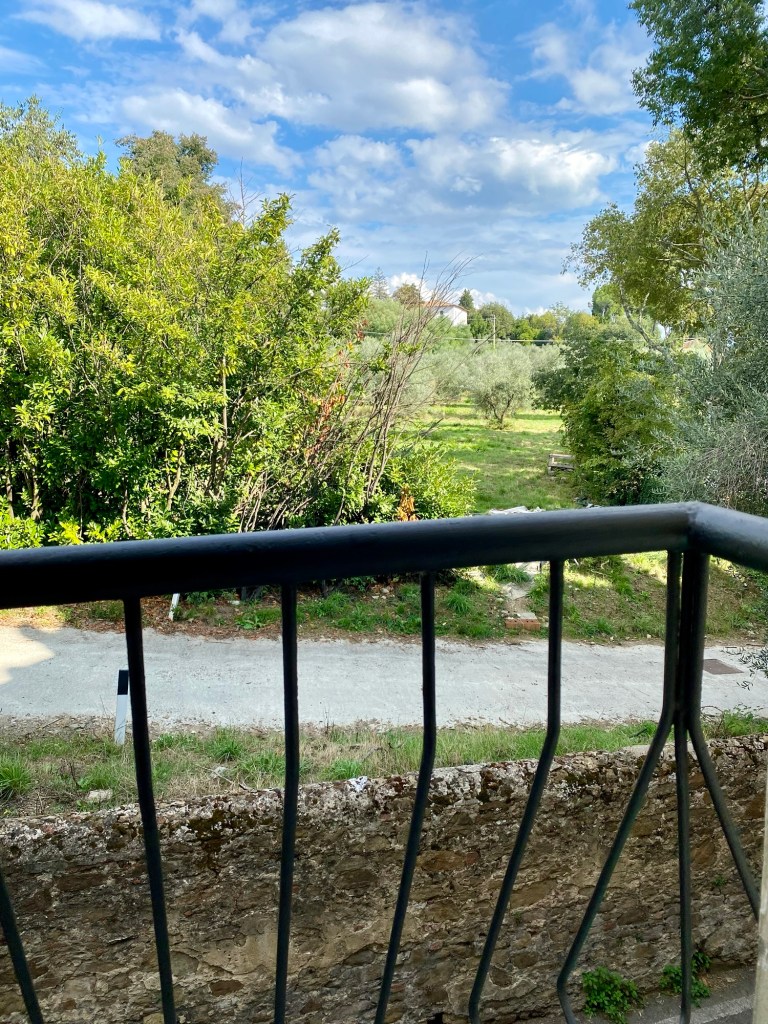
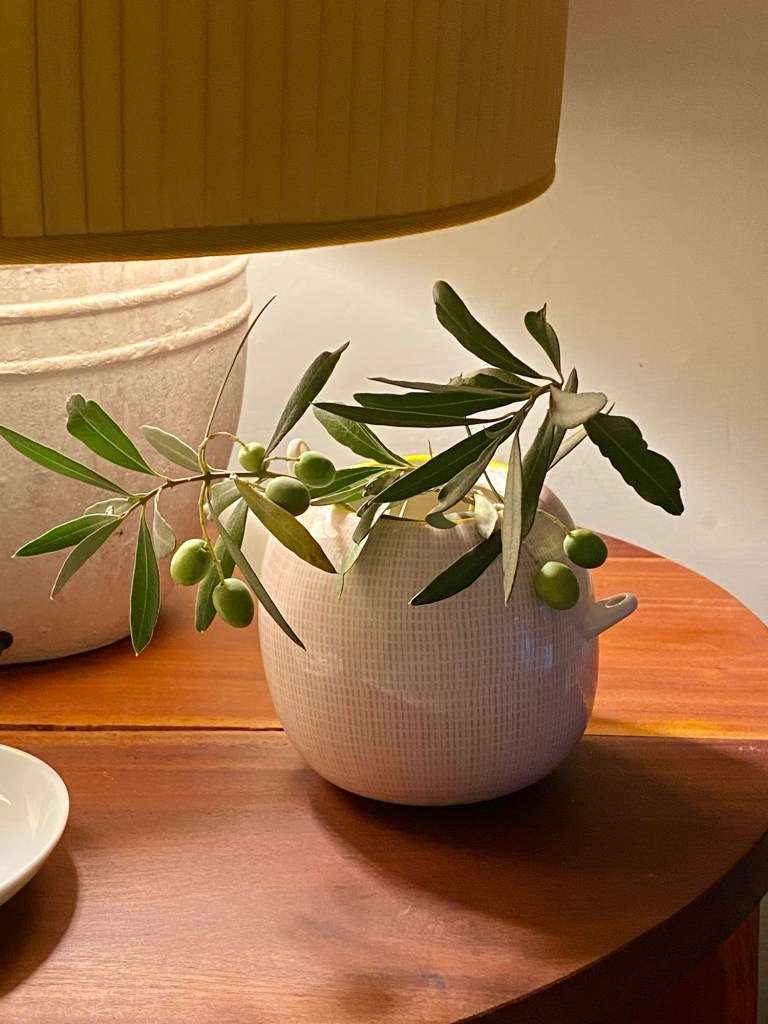
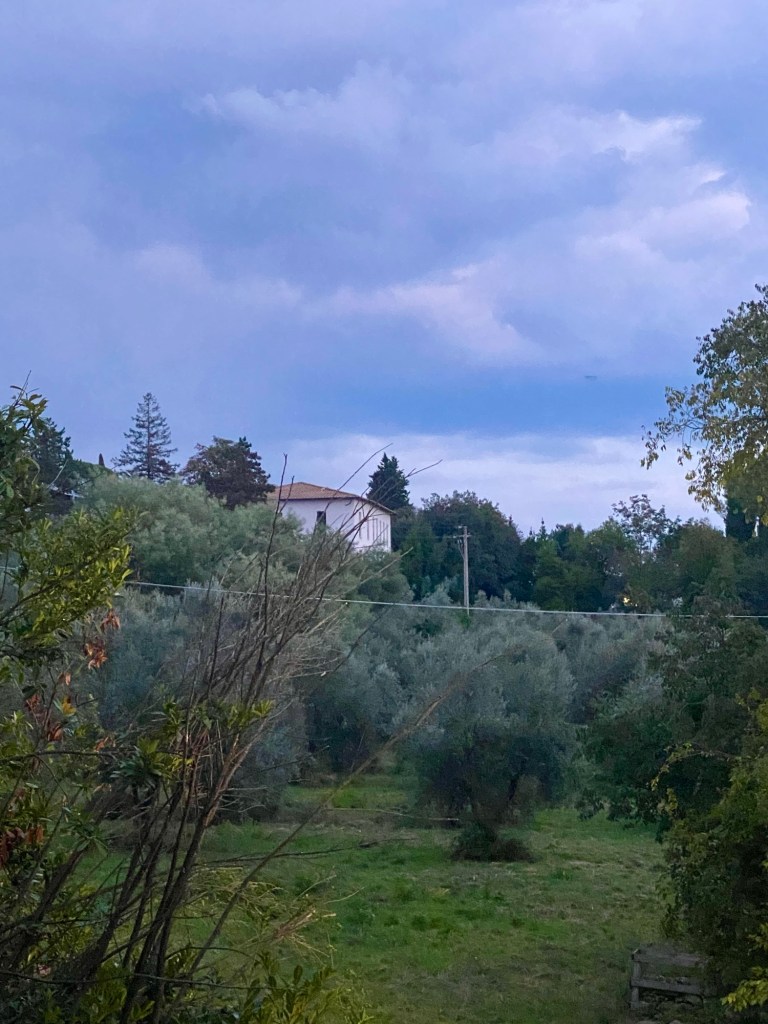
I’m staying in a sweet Airbnb apartment just outside Florence; I have a lovely olive tree outside my kitchen window and the view of a grove of olives outside my bedroom window. I’m awaiting my own apartment which should be available next week, finalmente!
My kitchen view.My bedroom view.
And while it may seem like a beautiful dream, there are also strikes you contend with in Florence, but honestly it’s a small price to pay for the opportunity to live here. I’m so happy to be here at last and the summer heat is just a memory.
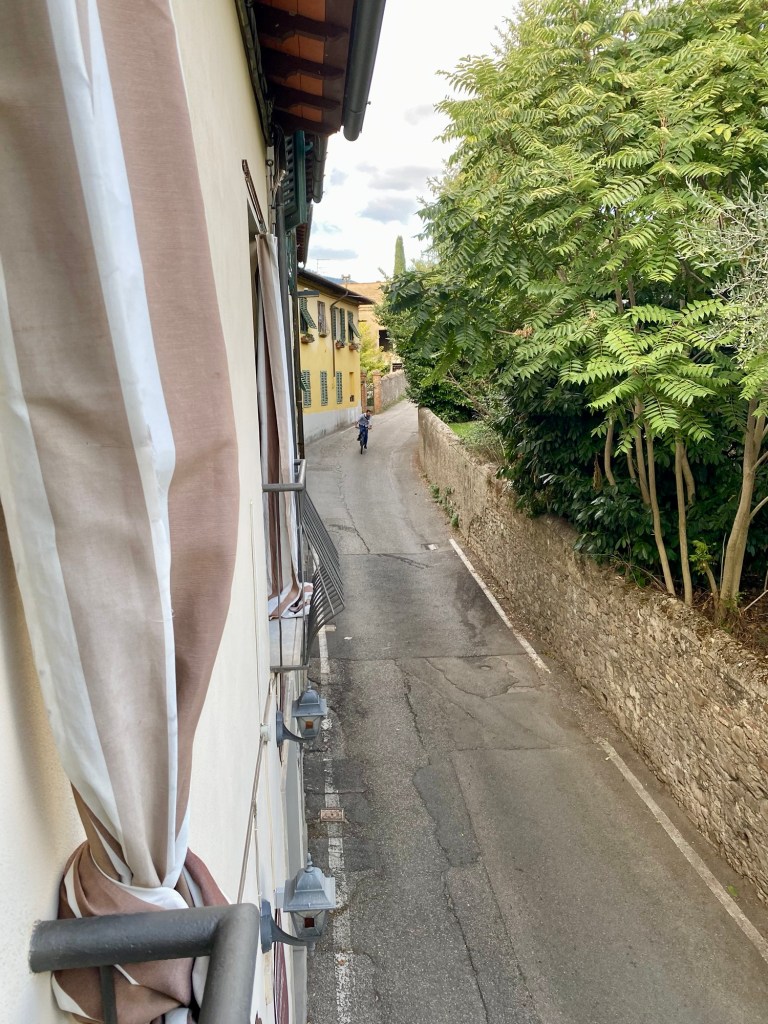
Sciopero=Italian for strikeLooking up and down the little street outside my windows.I had to pluck some olive branches! I prefer this evening view to the one in Munich, with or without the moon!
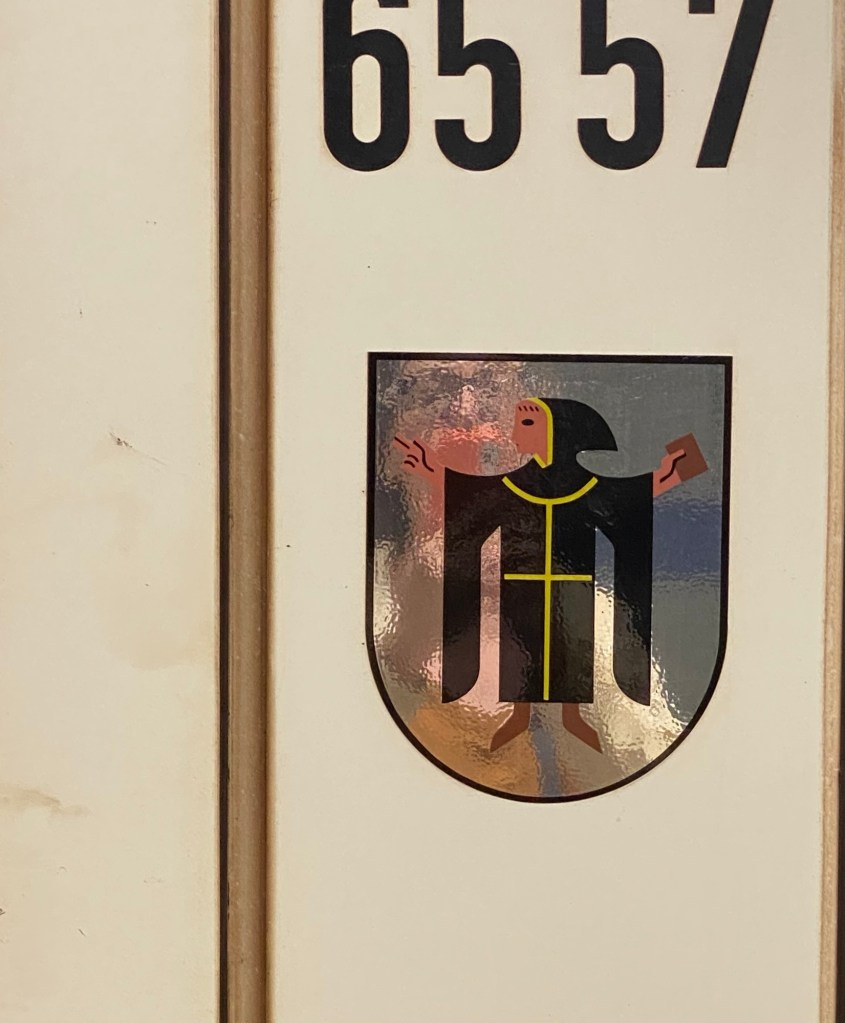
Munich is the city of monks, which is what the name means in German. I like this symbol of the heritage as spotted on a Ubahn car.
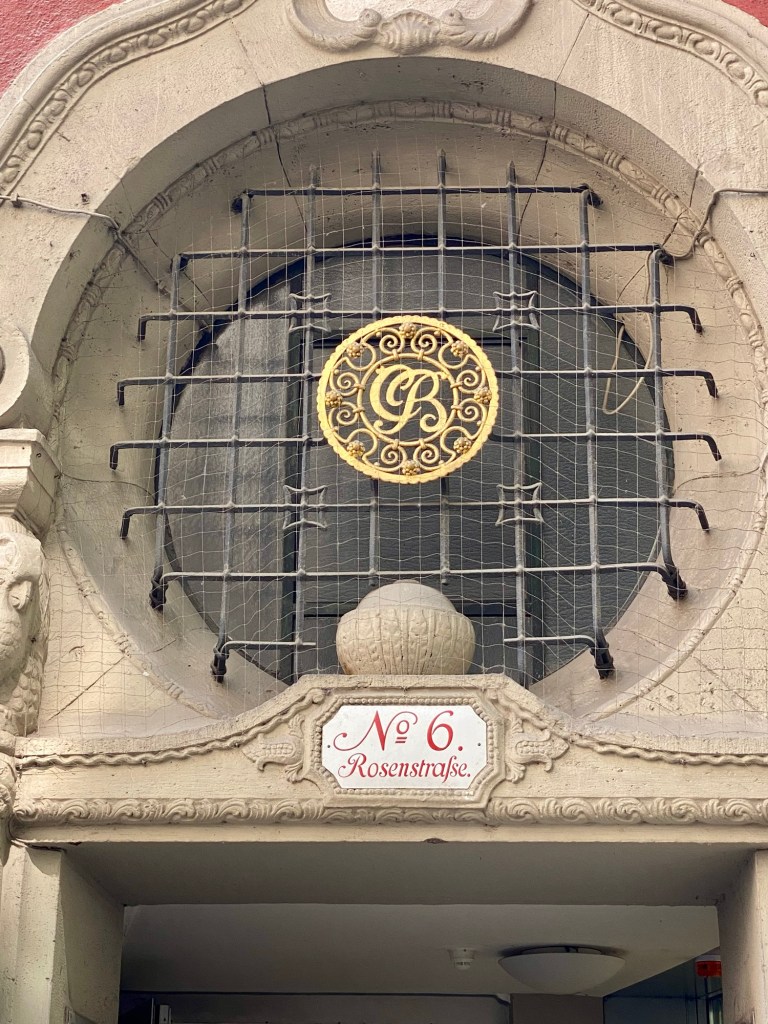
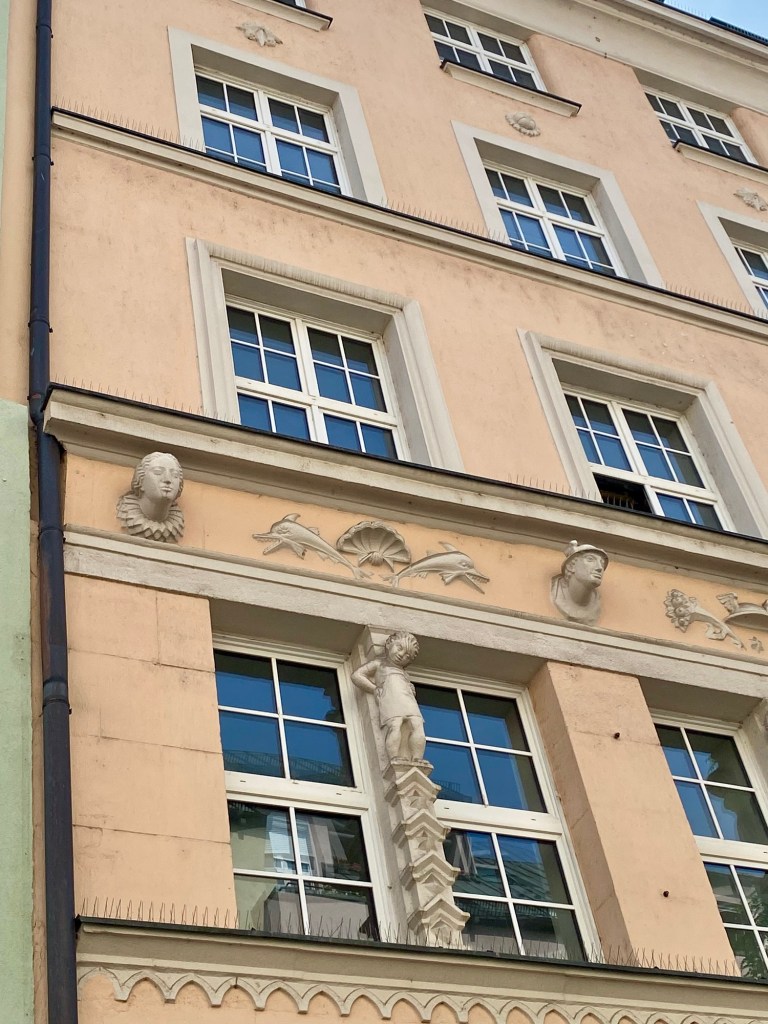
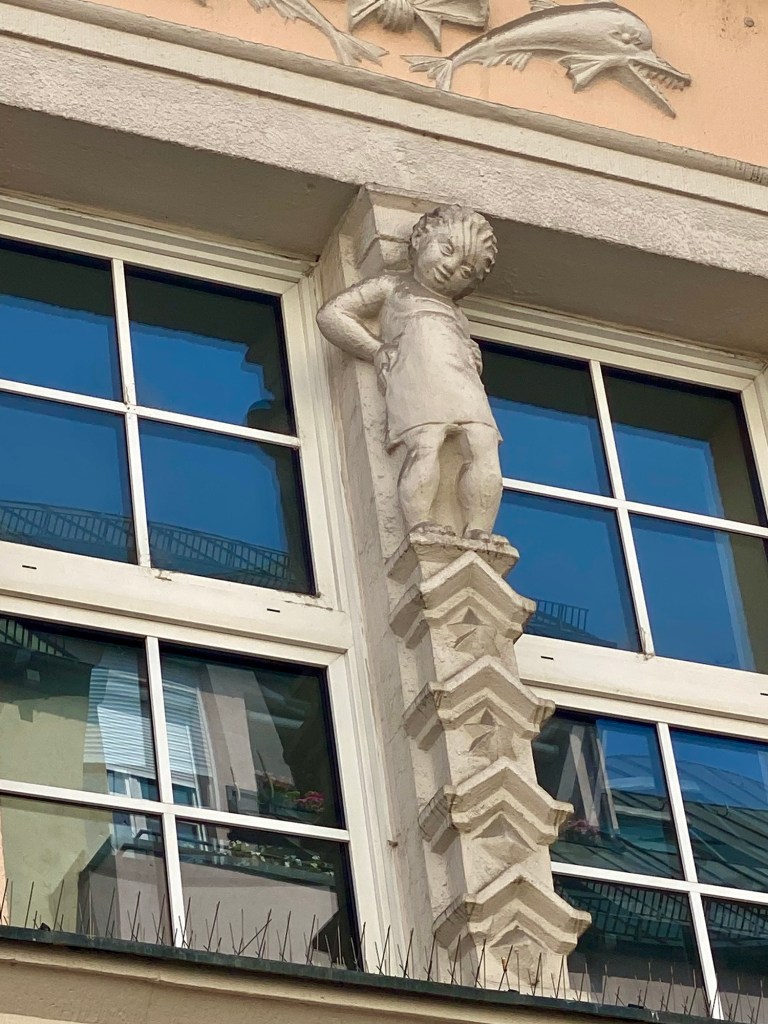
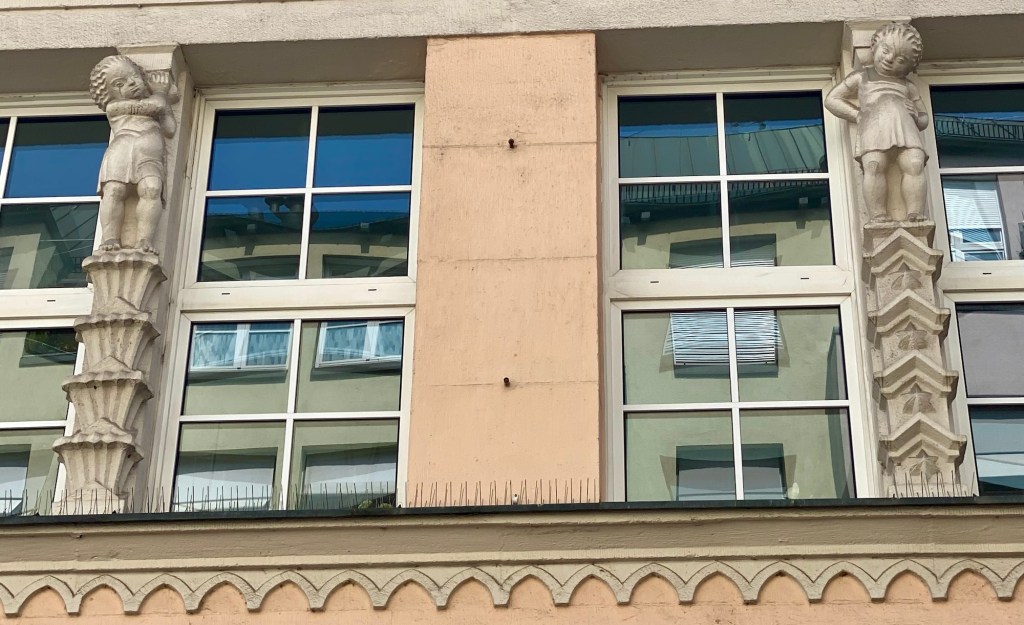
Never before have I seen children represented as caryatids. It is unique and wonderful!
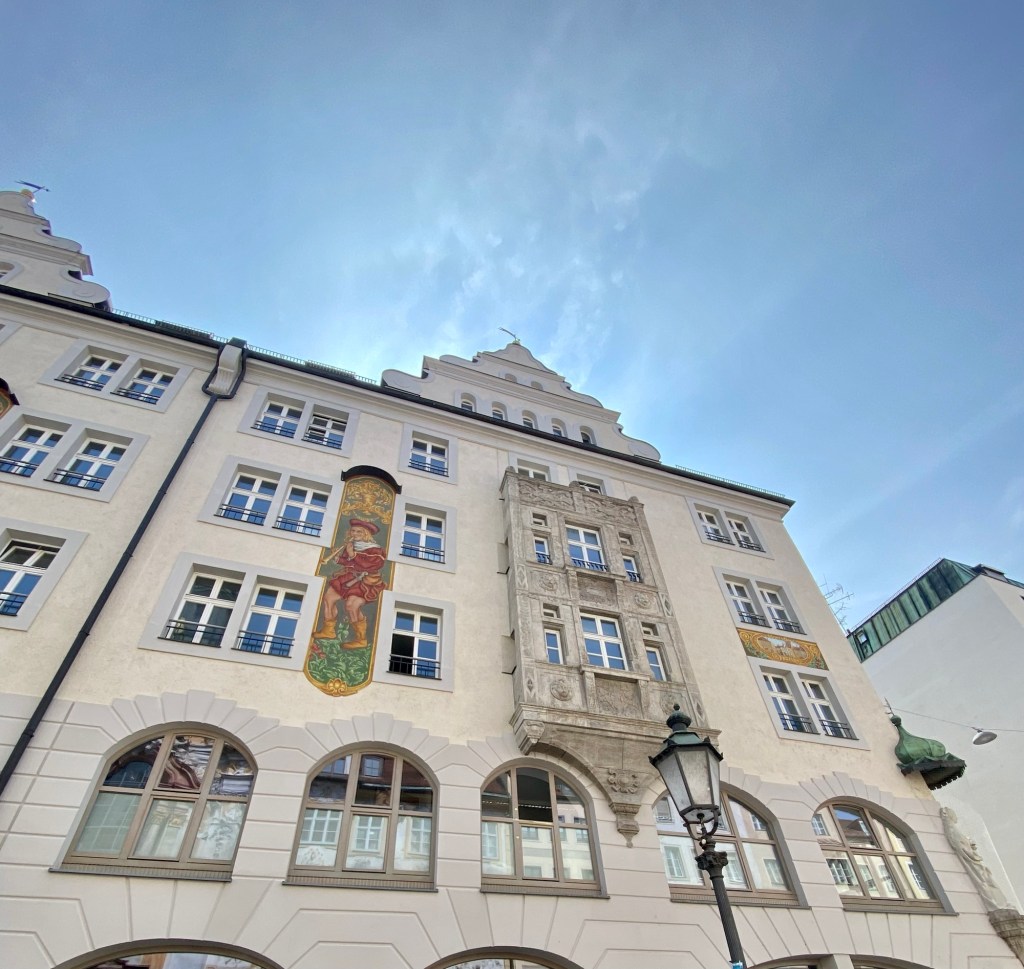
Munich is a lot of fun to walk around in the pedestrian only city center. I feel so lucky to have had this time here to get to know this great city! Bitte und danke!
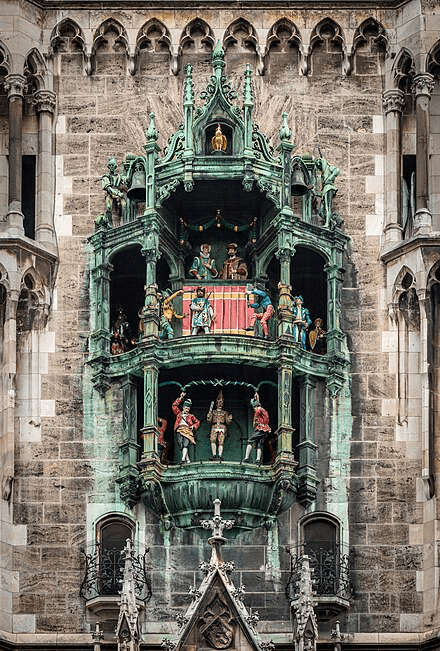
I got to see this famous clock dance! It was a sunny morning and I was in Marienplatz at just the right time. I joined hundreds of other people to watch the mechanical clock play out its drama.
The Rathaus-Glockenspiel is a large mechanical clock located in Marienplatz Square, in the heart of Munich. Famous for its life-size characters, the clock twice daily re-enacts scenes from Munich’s history. First is the story of the marriage of Duke Wilhelm V to Renata of Lorraine in 1568, followed by the story of the schäfflerstanz, also known as the coopers’ dance.
The clock, with 43 bells and 32 life-size figures, was added during the completion of the Neues Rathaus (New Town Hall) in 1908. Every day at 11 a.m. and 12 p.m. (as well as 5 p.m. from March to October) the clock re-enacts two stories from Munich’s history from the 16th century, taking about 15 minutes.
The top half of the Glockenspiel tells the story of the marriage of the local Duke Wilhelm V (who also founded the noted Hofbräuhaus) to Renata of Lorraine (Renate von Lothringen). In honor of the happy couple, there is a joust with life-sized knights on horseback representing Bavaria (in white and blue) and Lothringen (in red and white); the Bavarian knight (Bayerische Ritter) wins.
This is followed by the second story, the Schäfflertanz otherwise known as the coopers’ dance, which plays out on the bottom half of the clock. This story depicts the end of a severe plague that took place in 1517. The coopers are said to have danced through the streets, encouraging residents to leave their homes again after being frightened by the plague. The coopers remained loyal to the duke, and their dance came to symbolize perseverance and loyalty to authority through difficult times. By tradition, the dance is performed in Munich every seven years. This was described in 1700 as “an age-old custom”, but the current dance was defined only in 1871. The dance is performed during Fasching (German Carnival); it was performed in 2019.
At the very end of the show, a very small golden rooster at the top of the Glockenspiel chirps quietly three times, marking the end of the spectacle.
On a mid August afternoon, late in the day, I got the chance to ride through the countryside of Bavaria and it was so lovely. I’ve been in Germany for about a month now, but most of my time has been spent in the city centers of Berlin and Munich. It was very nice to see something of the countryside. I love how green it is and all the land is so well cared for.
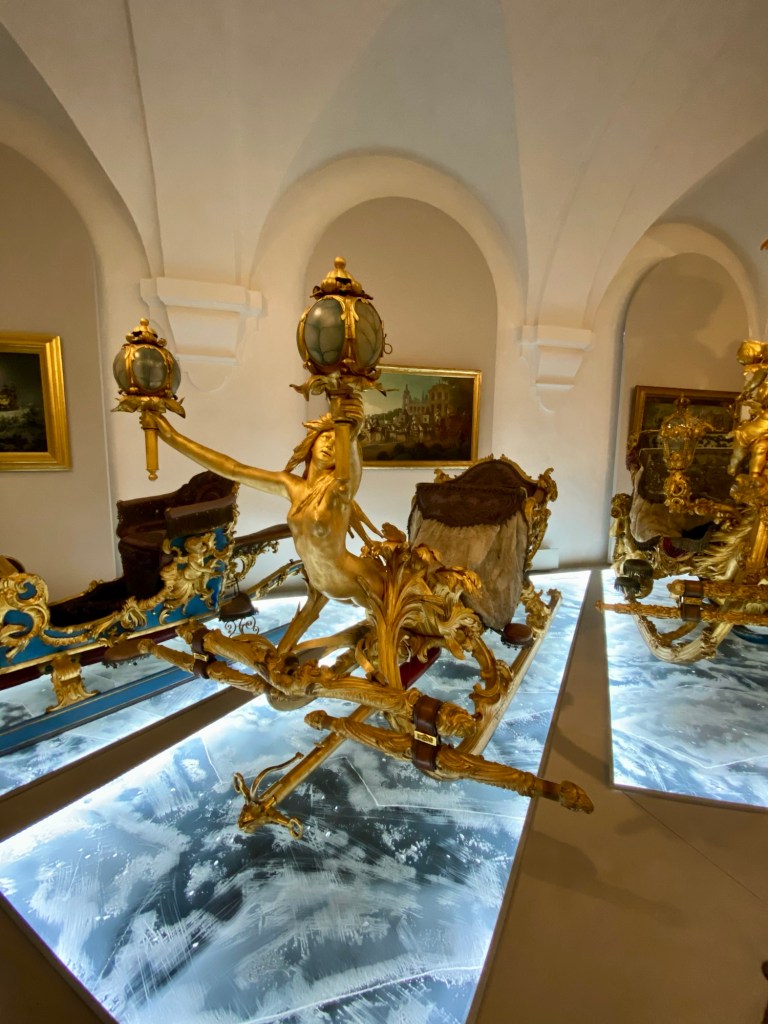
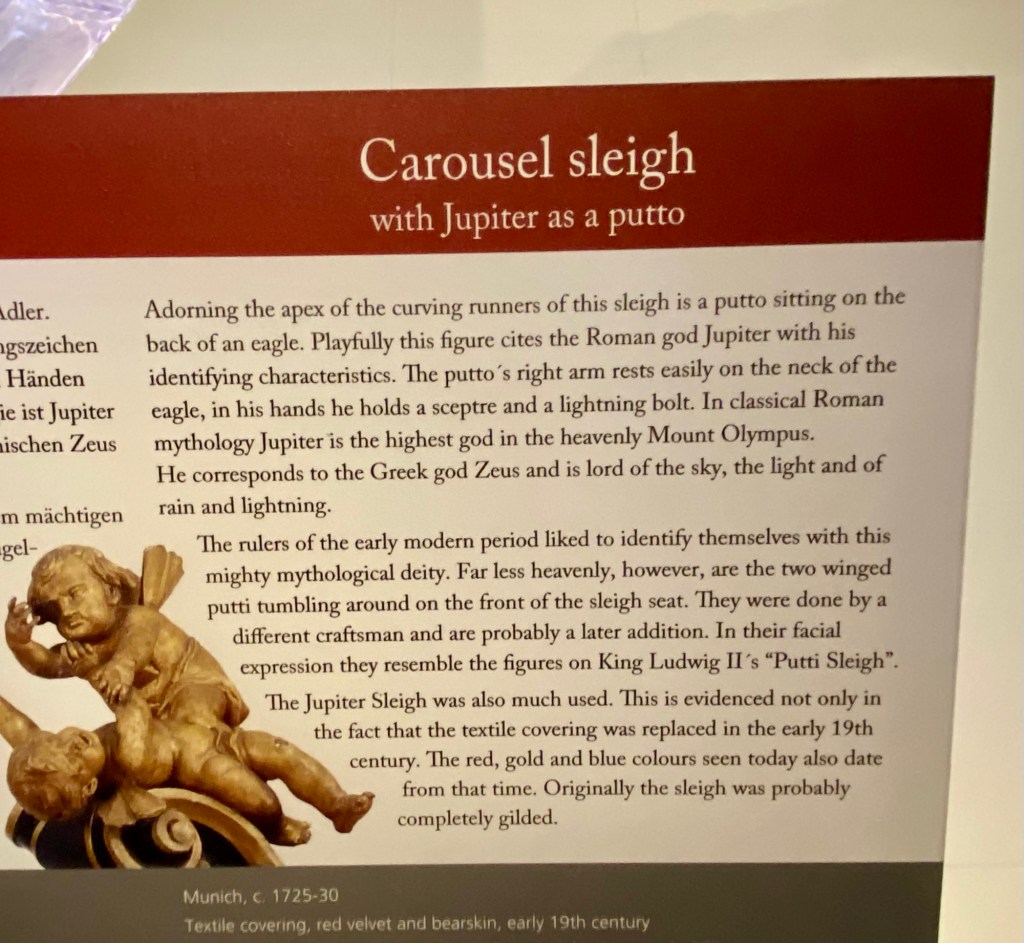
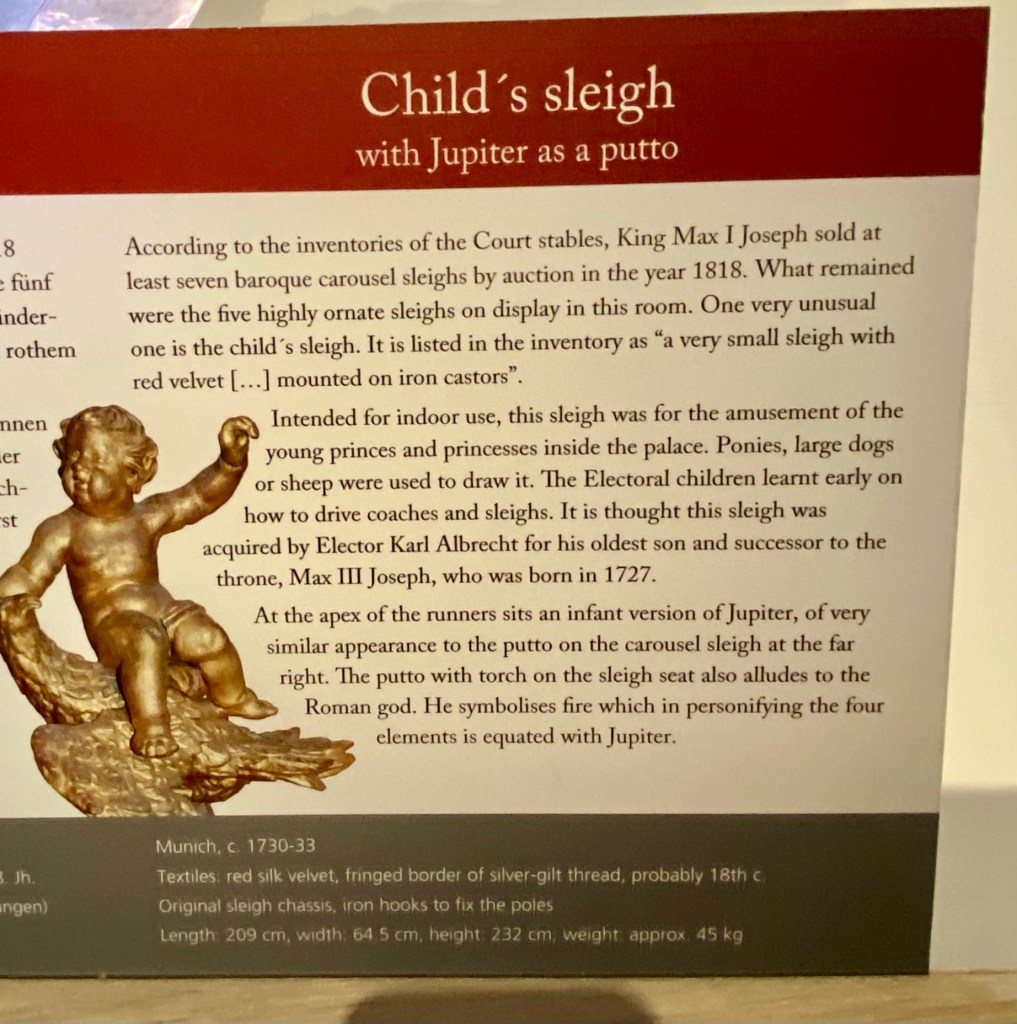
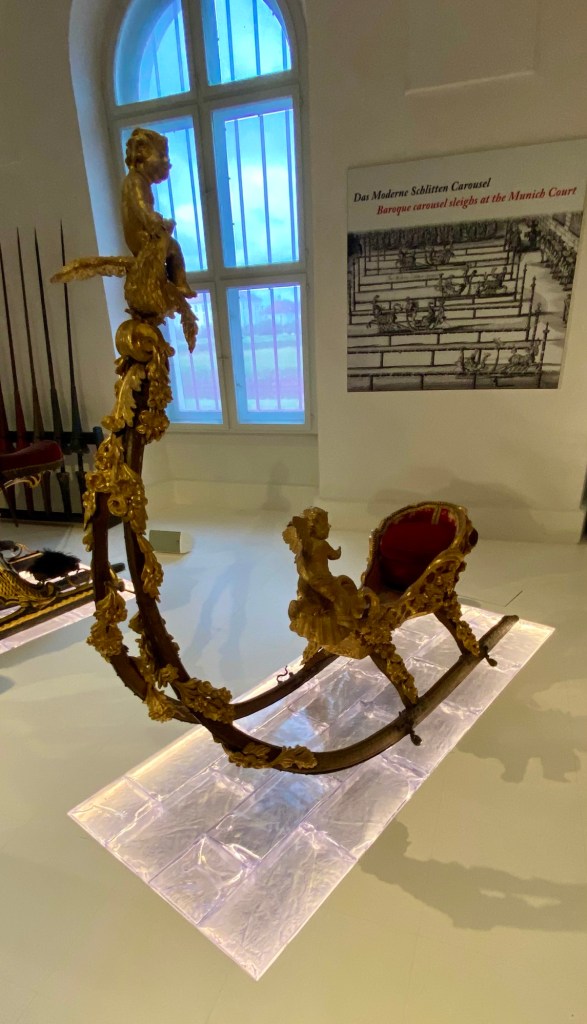
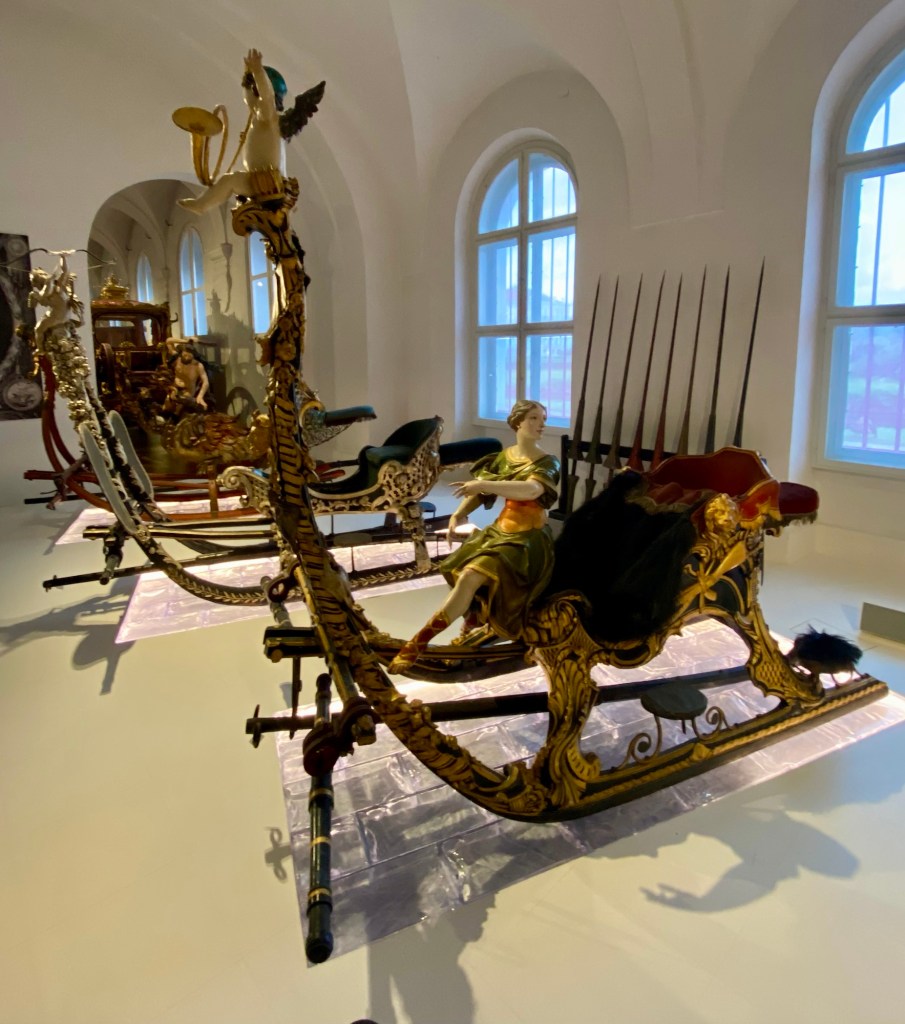
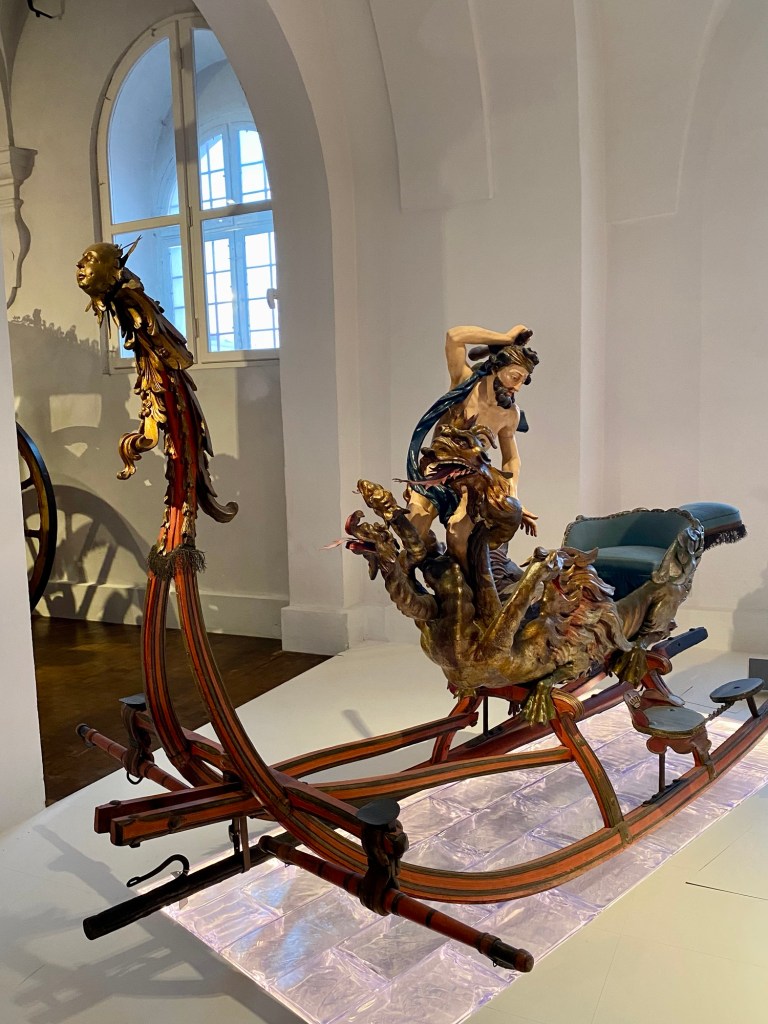
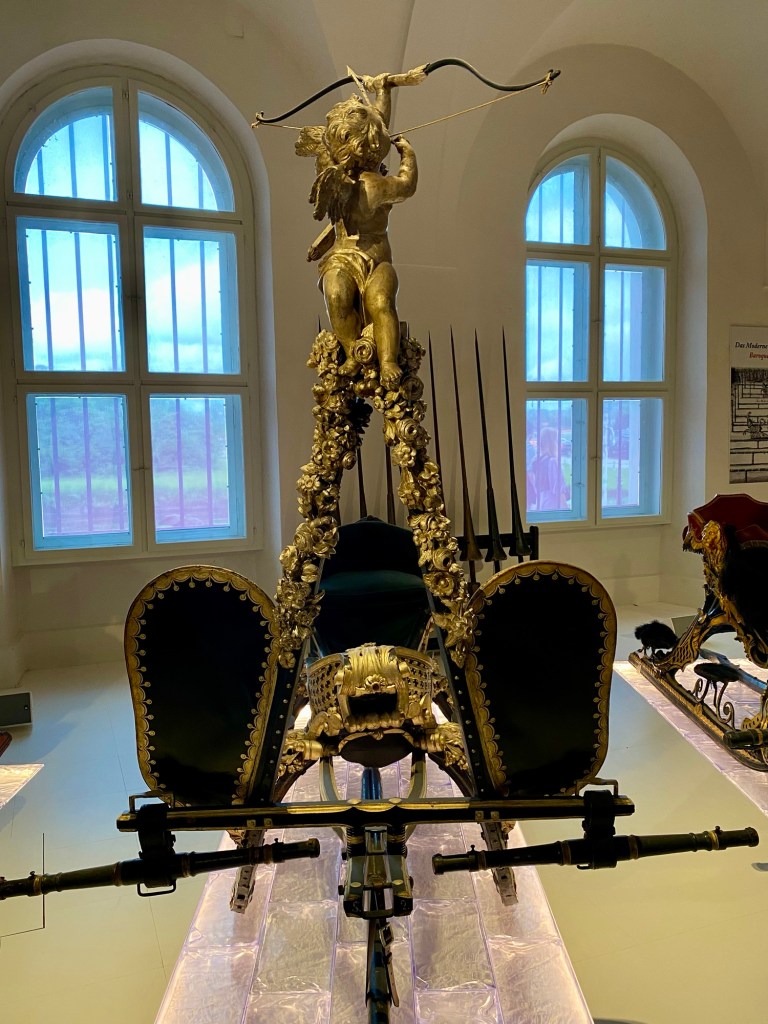
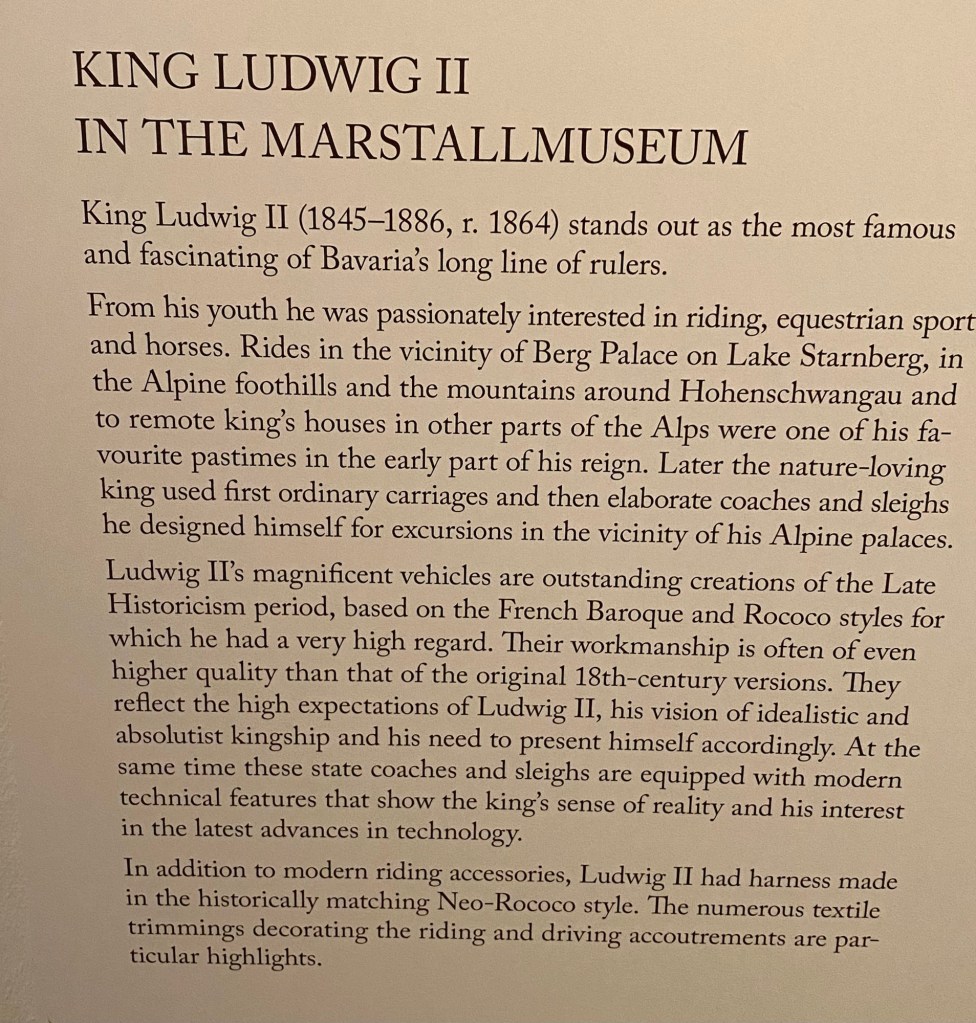
The sleighs. In my last post on this museum, I showed you a hearse carriage. But, did you ever stop to think about what princes and princesses did in wintertime? Well, they went sleigh riding of course! And this amazing collection houses some of their incredible sleighs!
There is something else I want to remark upon before I close out these posts on the Marstall Museum. The exhibit of the sleighs is particularly well done! Note the icy looking glass upon which the sleighs are displayed. Also, as one walks through the mews in this area, you hear, just barely, the sound of sleigh bells ringing. It isn’t obvious and I doubt everyone notices it. But, it’s there and I say, hat’s off to the curators of this fabulous collection! From one curator to another, bravo!








































 get back, lauretta!
You must be logged in to post a comment.