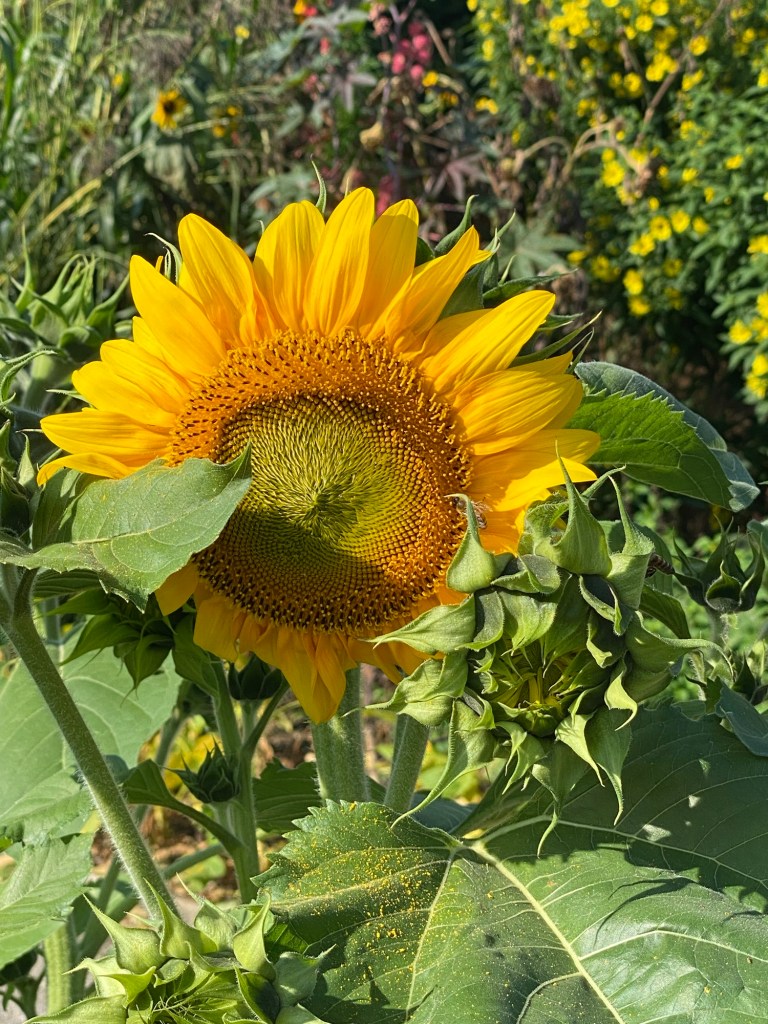
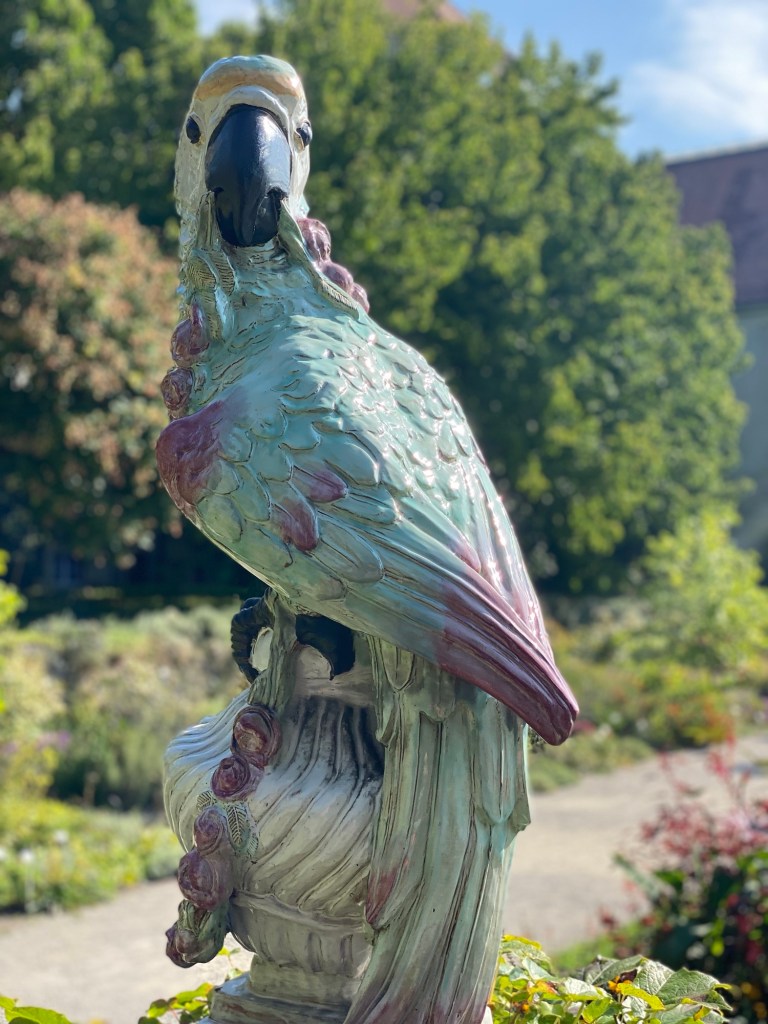
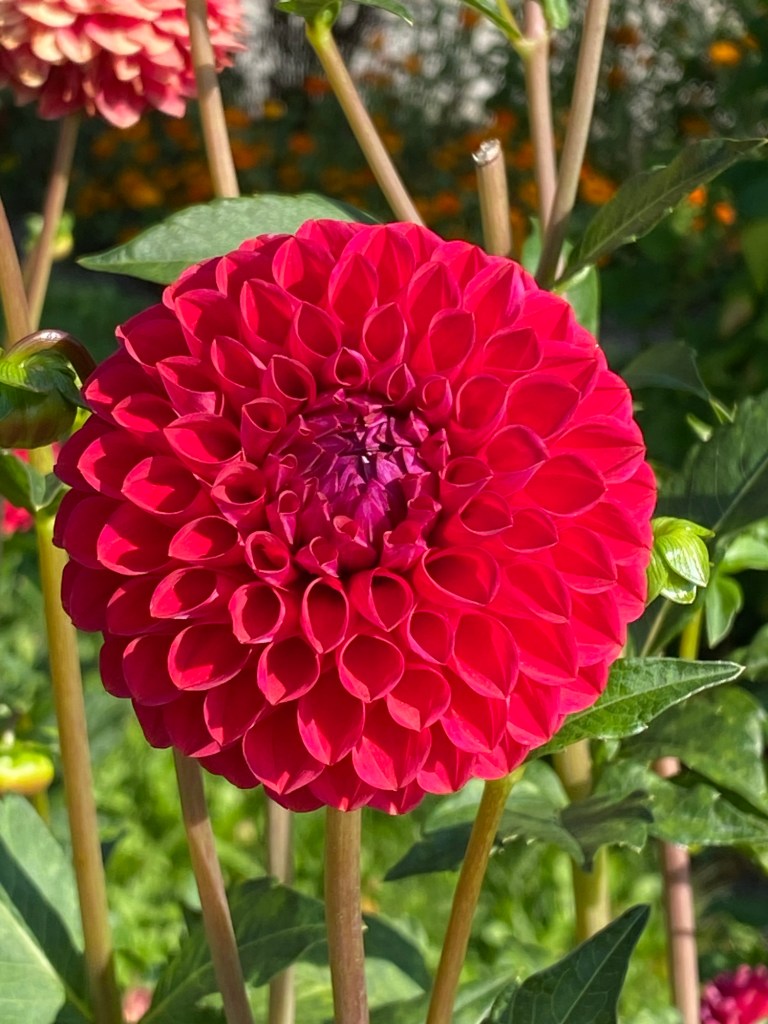
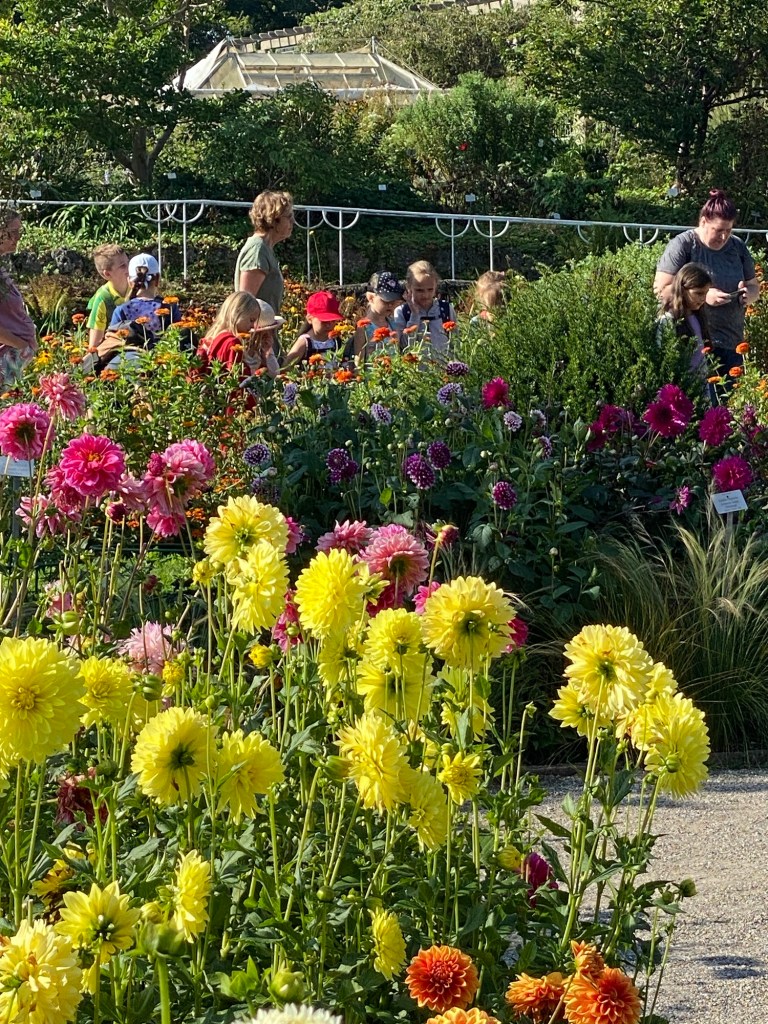
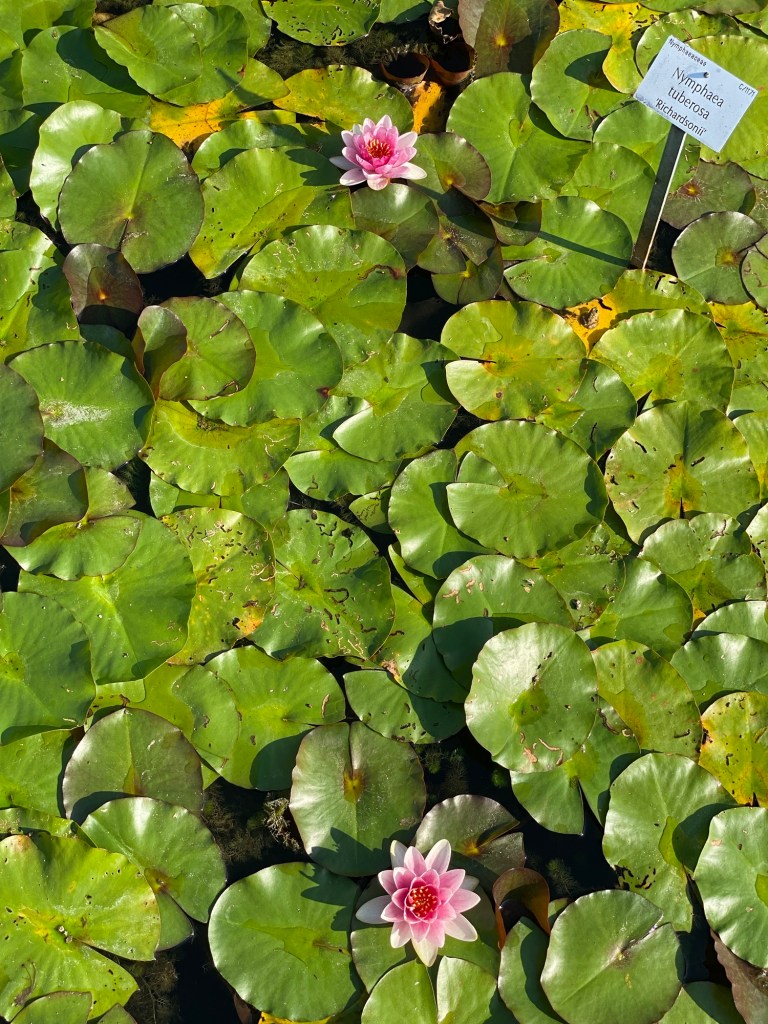
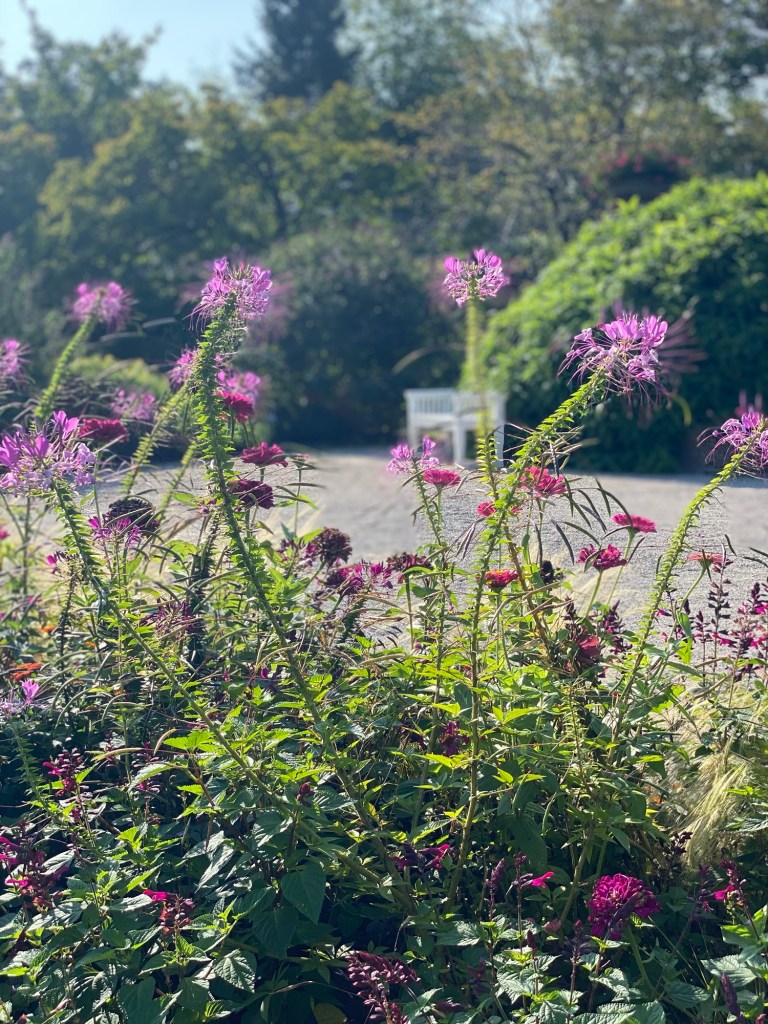
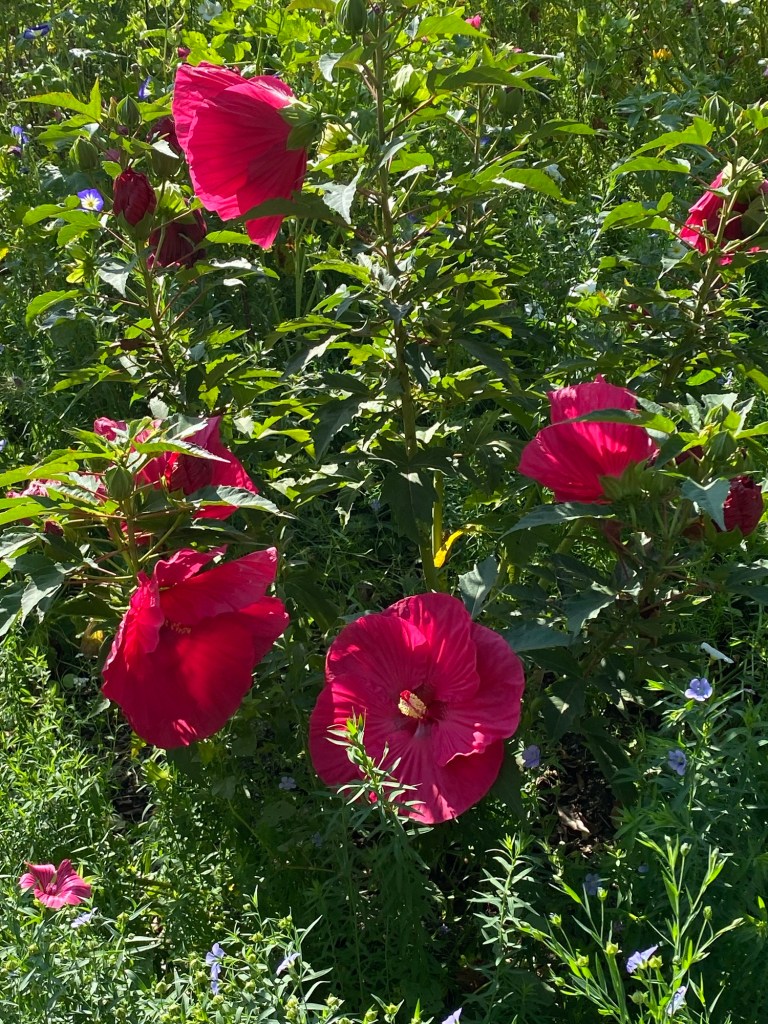
In English the name means the pleasure garden. It is the green space that fronts both the Altes Museum and Berlin Cathedral on Museum Island in Berlin
The Lustgarten is a park on Museum Island which, at various times in its history, has been used as a public park, a parade ground, and a place for mass rallies.
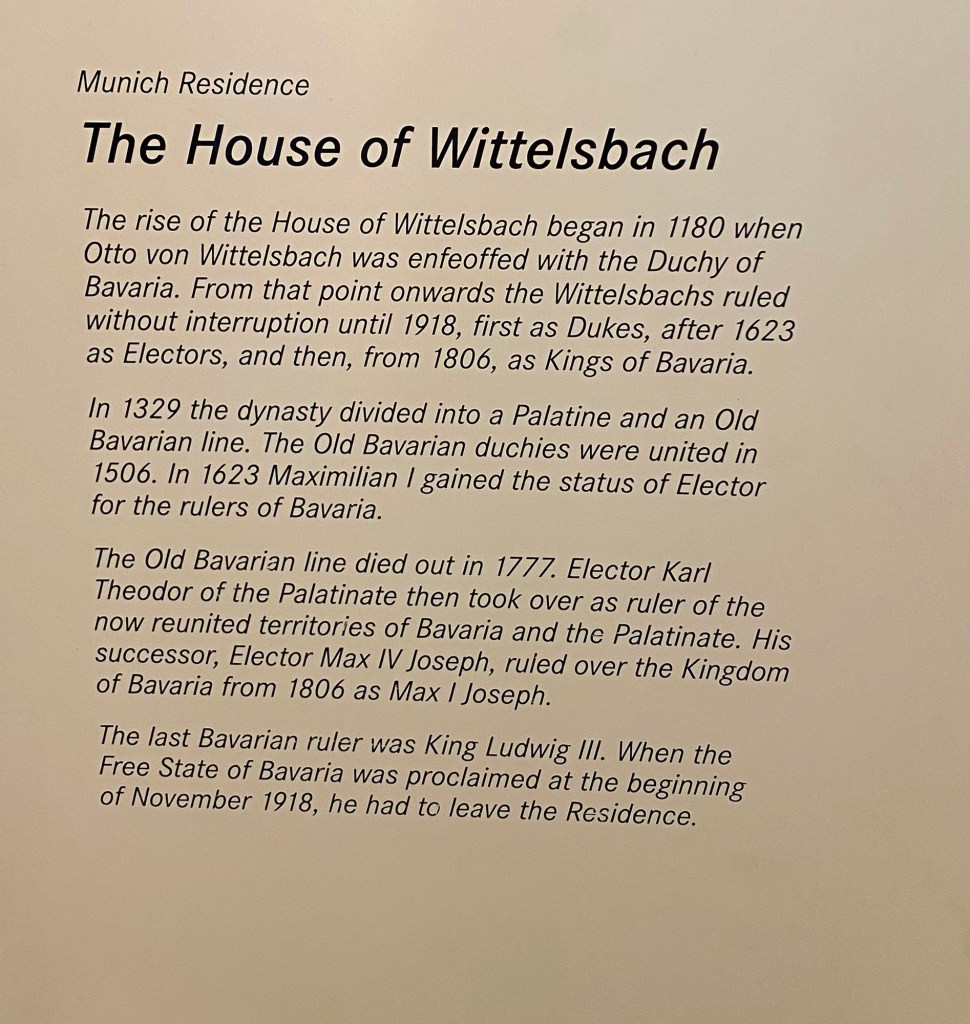
The area of the Lustgarten was originally developed in the 16th century as a kitchen garden attached to the palace which was then the residence of the Elector of Brandenburg. This area was the core of the later Kingdom of Prussia. After the devastation of Germany during the The 30 Years War, Berlin was redeveloped by Friedrich Wilhelm (the Great Elector) and his Dutch wife, Luise Henriette of Nassau. It was Luise, with the assistance of a military engineer Johann Mauritz and a landscape gardener Michael Hanff, who, in 1646, converted the former kitchen garden into a formal garden, with fountains and geometric paths, and gave it its current name, Pleasure Garden.
In 1713, Friedrich Wilhelm I became King of Prussia and set about converting Prussia into a militarised state. He ripped out his grandmother’s garden and converted the Lustgarten into a sand-covered parade ground. In 1790, Friedrich Wilhelm II allowed the Lustgarten to be turned back into a park, but during French occupation of Berlin in 1806 Napoleon again drilled troops there.
In the early 19th century, the enlarged and increasingly wealthy Kingdom of Prussia undertook major redevelopments of central Berlin. A large, new classical building, the Altes Museum, was built at the north-western end of the Lustgarten and between 1826 and 1829 the garten was redesigned by Peter Joseph Lenne, with formal paths dividing the park into 6 sectors. A 13-metre high fountain in the centre, operated by a steam engine, was one of the marvels of the age. Between 1894 and 1905, the old Protestant church on the northern side of the park was replaced by a much larger building, the Berlin Cathedral (Berliner Dom), designed by Julius Carl Raschdorff.
During the years of the Weimar Republic, the Lustgarten was frequently used for political demonstrations. The Socialists and Communists held frequent rallies there. In August 1921, 500,000 people demonstrated against right-wing extremist violence. After the murder of Foreign Minister Walther Rathenau, in 1922, 250,000 protested in the Lustgarten. On 7 February 1933, 200,000 people demonstrated against the new Nazi Party regime of Hitler; shortly afterwards public opposition to the regime was banned. Under the Nazis, the Lustgarten was converted into a site for mass rallies. In 1934, it was paved over. Hitler addressed mass rallies of up to a million people there.
By the end of WWII in the year 1945, the Lustgarten was a bomb-pitted wasteland. A movement to restore the Lustgarten to its earlier role as a park began once Germany was reunified in 1990. In 1997, the Berlin Senate commissioned the landscape architect Hans Loidl to redesign the area in the spirit of Lenné’s design and construction work began in 1998. The Lustgarten now features fountains and is once again a park in the heart of a reunited Berlin.
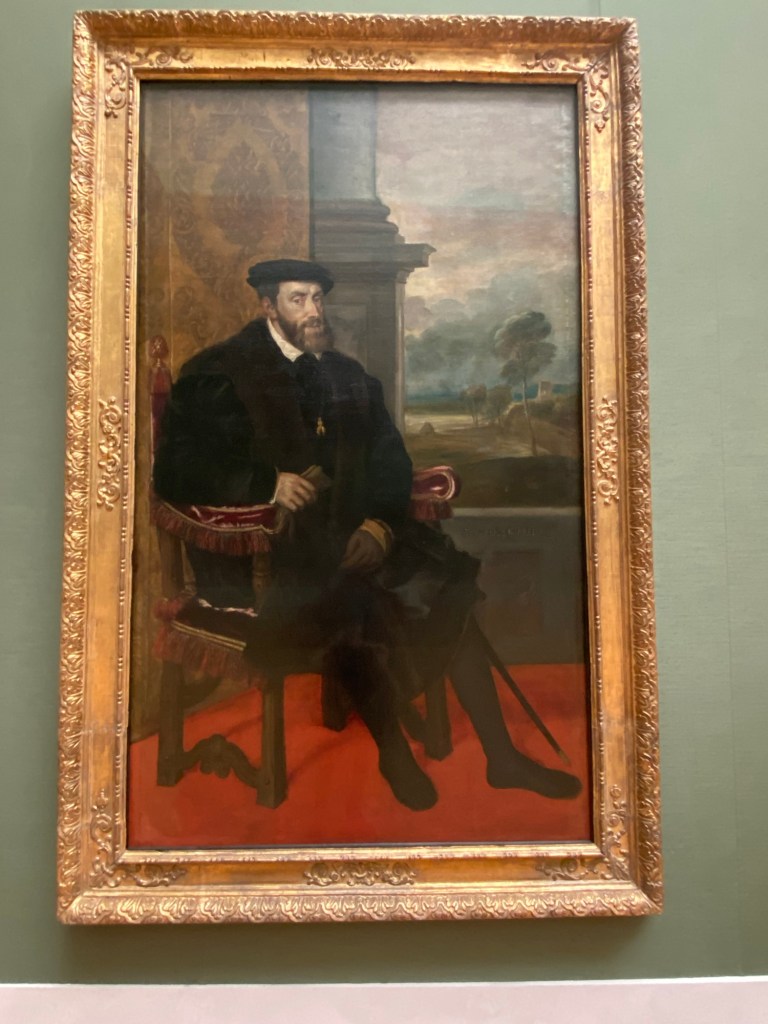
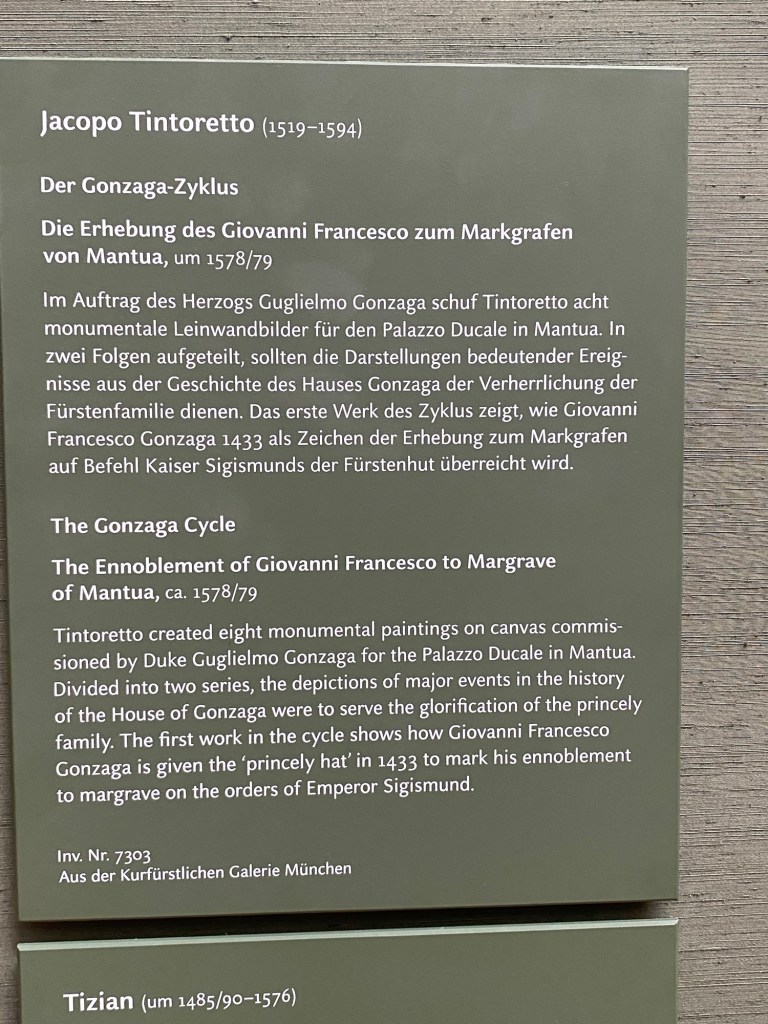
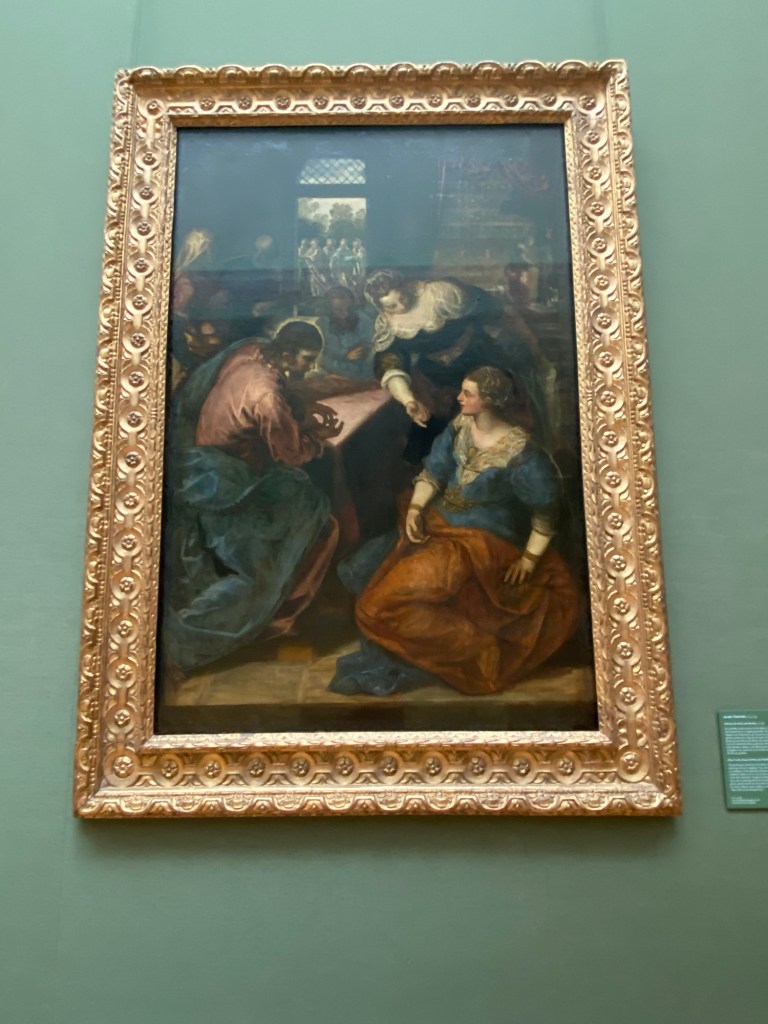
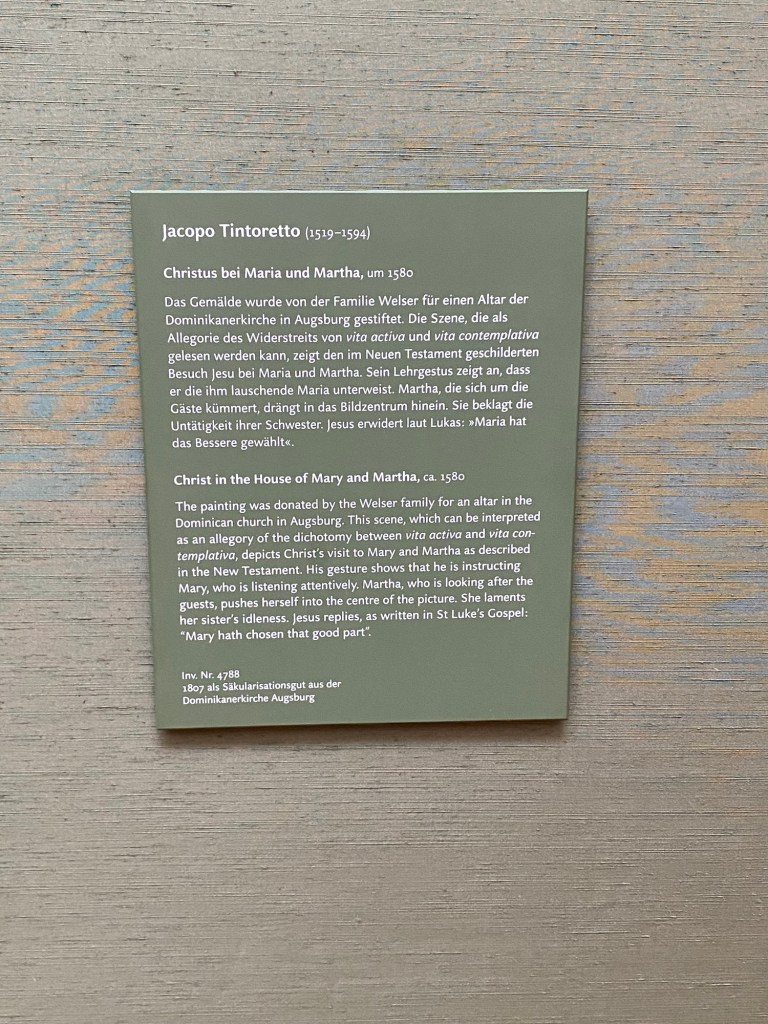
I’m going to be showing you the works of art that inspired me to take pictures from many museums in Berlin over the next many posts. Berlin’s art collections took my breath away.
But, in doing so, I also want to talk about the museums themselves. Each is an interesting work of art in its own right.
All of the information I’m using in this post that isn’t part of my own pictures or text is based upon the fabulous Wikipedia.
The Museum Island (Museumsinsel) is a museum complex on the northern part of Spree Island in the historic heart of Berlin. It is one of the capital’s most visited sights and one of the most important museum sites in Europe. Originally, built from 1830 to 1930, initially by order of the Prussian Kings, according to plans by five architects, the Museum Island was designated a UNESCO World Heritage Site in 1999 because of its testimony to the architectural and cultural development of museums in the 19th and 20th centuries and the vast collections the island contains. It consists of the Altes Museum, the Neues Museum, the Alte Nationalgalerie, the Bode-Museum and the Pergamonmuseum.
When I had my chance to spend a few weeks in Berlin in the summer of 2024, the Pergamon Museum was closed, as it had been, I gathered, for quite some time. I hope someday it will reopen and I will be lucky enough to come back to see it. It would seem to be something quite astounding.
On this, my first visit to Berlin, my first encounter with one of the amazing museums housed on this smallish island was the Altes Museum (the old museum).
The Altes Museum was built between 1825 and 1830 by order of King Frederick William III of Prussia according to plans by Karl Friedrich Schinkel, it is considered a major work of German Neoclassical architecture. The Altes Museum houses the Antikensammlung and parts of the Münzkabinett. As part of the Museum Island complex, the Altes Museum was listed as a UNESCO World Heritage Site in 1999, in recognition of its testimony to the development of the museum as a social and architectural phenomenon and the superlative collection of Greek, Etruscan, and Roman art it houses.
The design dome of the Altes Museum was intentionally made to resemble the Pantheon in Rome.
In the early 19th century, Germany’s bourgeoisie had become increasingly self-aware and self-confident. This growing class began to embrace new ideas regarding the relationship between itself and art, and the concepts that art should be open to the public and that citizens should be able to have access to a comprehensive cultural education began to pervade society. King Friedrich Wilhelm III of Prussia was a strong proponent of this Humboldtian ideal for education and charged Karl Friedrich Schinkel with planning a public museum for the royal art collection.
Above, the museum about 1830.
Schinkel’s plans for the Königliches Museum, as it was then known, were also influenced by drafts of the crown prince, the future King Friedrich Wilhelm IV, who desired a building that was heavily influenced by Classical antiquity. The crown prince even sent Schinkel a pencil sketch of a large hall adorned with a classical portico.
Schinkel’s plans incorporated the Königliches Museum into an ensemble of buildings, which surround the Berliner Lustgarten (pleasure garden). The Stadtschloss in the south was a symbol of worldly power, the Zeughaus in the west represented military might, and the Berliner Dom in the east was the embodiment of divine authority. The museum to the north of the garden, which was to provide for the education of the people, stood as a symbol for science and art—and not least for their torchbearer: the self-aware bourgeoisie. For the front facing the Lustgarten, a simple columned hall in grand style and proportionate to the importance of the location would most certainly give the building character. With the use of 18 Ionic columns, the portico was designed with a function in order to give the museum building an exterior befitting its site.
In 1841, King Friedrich Wilhelm IV announced in a royal decree that the entire northern part of the Spree Island would “be transformed into a sanctuary for art and science.” In 1845, with the completion of the Neues Museum, the Königliches Museum was renamed the Altes Museum (“Old”), a name it holds to this day.
Photo of museum before 1854
During the Nazi era, the Altes Museum was used as the backdrop for propaganda, both in the museum itself and upon the parade grounds of the redesigned Lustgarten. Close to the end of Second World War, the building was badly damaged when a tank truck exploded in front of it, and the frescoes designed by Schinkel and Peter Cornelius, which adorned the vestibule and the back wall of the portico, were largely lost.
Under General Director Ludwig Justi, the building was the first museum of Museum Island to undergo reconstruction and restoration, which was carried out from 1951 to 1966 by Hans Erich Bogatzky and Theodor Voissen. Following Schinkel’s designs, the murals of the rotunda were restored in 1982. However, neither the ornate ceilings of the ground floor exhibition rooms nor the pairs of columns under the girders were reconstructed.
he Altes Museum was originally constructed to house all of the city’s collections of fine arts, including Old Master paintings, and prints and drawings. However, since 1904, the museum has solely housed the Antikensammlung (Collection of Classical Antiquities). Since 1998, the Collection of Classical Antiquities has displayed its Greek collection, including the treasury, on the ground floor of the Altes Museum.
Because we are so lucky to be living in the internet age, you can access the floor plan of the museum here:
Just when I think I’m beginning to get the hang of living (temporarily) in Bavaria, life shoots me another surprise! Woo hoo! This is why I travel! So that I am always a little off balance. It keeps me young. Or, it will kill me. The verdict is still out!
So I’ve learned the hard way that food stores are closed in Germany on Sundays, so you had better plan in advance if you want to eat on the day of rest. Restaurants are open, so it isn’t a catastrophe unless you are not located near one.
But that was Berlin! And now I’m in Munich. Capital of Bavaria if you didn’t know (I didn’t until now).
Today I walked to the little food market near my apartment to fill my little refrigerator with the finest of Bavaria fruits and veg for the coming days. There is a little cafe attached to my market, serving coffee and pastries. These pastries in Germany are my undoing. I love them! And I am trying my best to avoid them so I can continue to wear the 3 outfits I brought in my backpack on this (planned to be short) sojourn that has been extended by circumstances having to do with the availability of my new Florentine apartment (is isn’t going to free until end, way end, of September).
As I was walking to my market this morning, I noted that the little parking lot was completely empty which seemed odd. I’ve never seen it full, but I have seen it moderately active with locals filling the trunks of their cars with cases of beer. I’m not being judgmental. I’ve seen that every day I have been at the market. Germans drink A LOT of beer. It’s not a stereotype for nothing.
It looked from a distance like the lights were off in my market, but the lights were on in the attached cafe, so I thought the market must be open too but the intense morning sunshine was making it hard to see the lights. As I got nearer the door, I saw the lights were off, but I proceeded. There are 2 automatic sliding glass doors that admit one to the market. When I approached the first one, it opened and I stupidly entered to see if the other one would also open, even though by then I could see the lights were off in the market.
So now guess what happened? I was now trapped in the vestibule between 2 glass doors, neither of which would open. I panicked.
I had seen the cafe employee sitting outside the cafe about 20 feet from where I was trapped as I approached the building, so I knocked hard of the unmoving outer glass door, assuming she would hear me and come over to investigate. Unfortunately, this employee was not snoopy like I am, and she was unmoved. I added a yell for help. She did not come.
I had my phone, so I thought about calling my apartment building manager for help, and wondered when the market would reopen. I was panicking still
I knocked and yelled some more, but she didn’t budge. I couldn’t see her, but I knew she could hear me.
About 5 minutes later I saw a man arriving on foot and he obviously thought the market was open too. He saw me and I stared waving. He approached slowly, seeing a crazy woman caught behind glass in a closed market entrance, but he approached. When he got into the right position, the door slid open and I slid out, happy to be free. He and I asked the employee if the market was closed for the day and she said yes, its some Christian holiday in Bavaria today.
He left, I lingered. I asked her if she heard me and she said yes. I asked her how you call for help in German and she said “helfer” or something, but that almost all Germans speak English. We laughed together for a moment and I left.
Back in my apartment, I Googled “holidays in Bavaria.” Here’s what I found out:
August 15, 2024:
Note: Assumption Day is only observed in predominantly Catholic communities in Bavaria.
According to Roman Catholic tradition, Assumption Day is the most important feast to “the Blessed Virgin,” who gave birth to Jesus Christ. It is not exactly the belief that Mary “ascended” to Heaven, but it is believed that her body and soul were “assumed,” meaning taken by God into Heaven, on this day.
Not until the fifth century A.D. does belief in the Assumption first appear in the historical record, and it was not established officially as a Catholic feast day until 451 A.D. at the Council of Chalcedon. The date of 15 August however, was not fixed until about 700 A.D.
Mary is thought to have lived with the Apostle John, into whose care Jesus entrusted her as he died on the cross, and to have travelled with him to reside in Ephesus when John became pastor of the church there. Both Ephesus and Jerusalem lay claim to the death-place of Mary. Her grave has been identified by some in Jerusalem, but Catholic tradition continues to maintain her tomb is, like Christ’s, an empty one.
In Bavaria and Saarland, there are many special masses, ringing church bells, and religious pilgrimages on Assumption Day. When two churches are close to one another, they often ring their bells in unison. In some areas, there are processions and summer festivals on 15 August as well.
I had to laugh a little about this experience, because today is a holiday in Italy of course too, but having been gone for 2 years, I forgot.
I hadn’t known that Bavaria was so Catholic, because I am uneducated about Germany. I am learning about the 30 Years War that followed Martin Luther and becoming a bit more informed. It’s why I travel. To become more educated and I assure you I will not forget today and what I learned!
Wow, wow, wow! I knew I was starved for art, having lived for the past 2 years in Denver, but I didn’t realize just how starved.
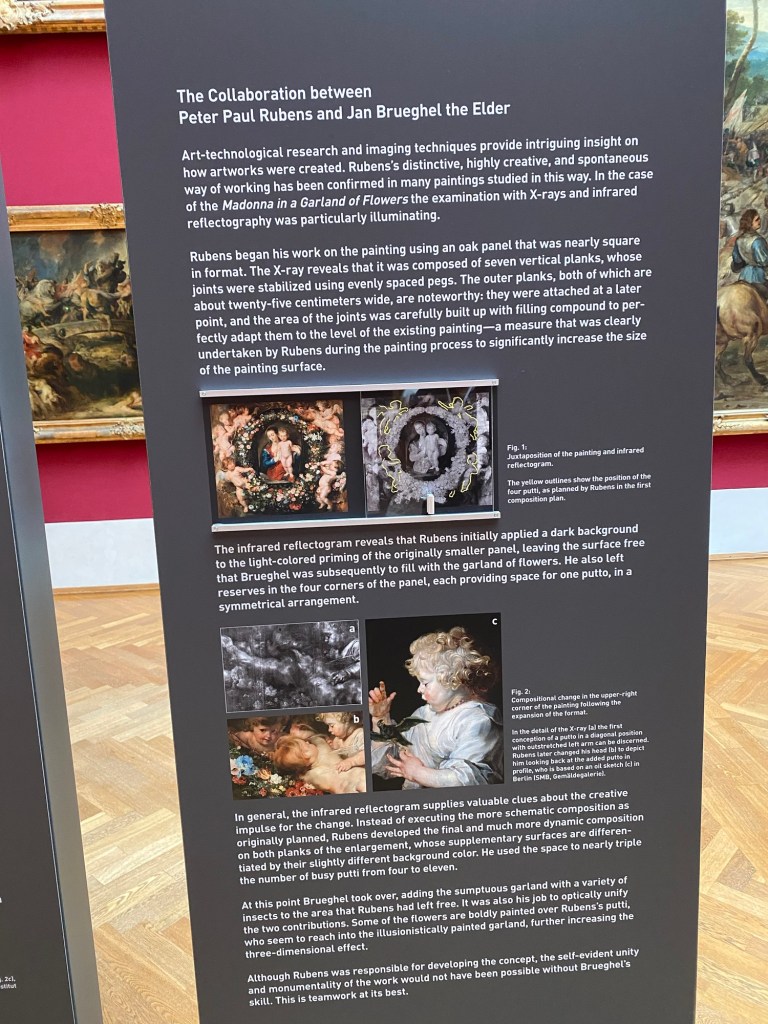
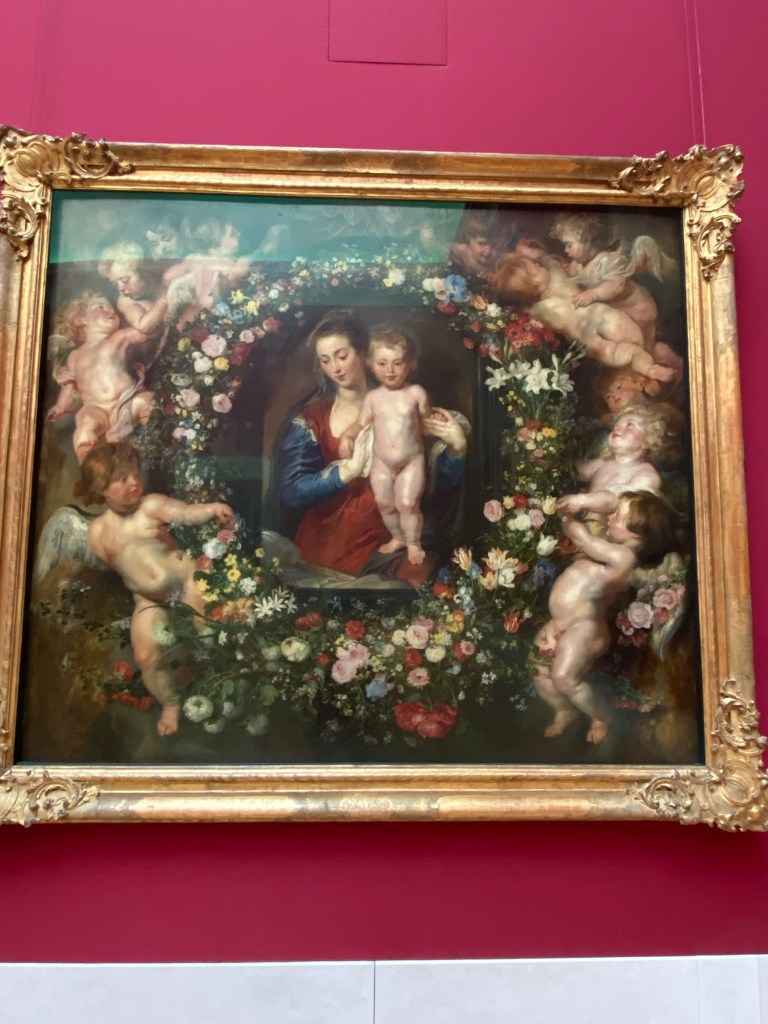
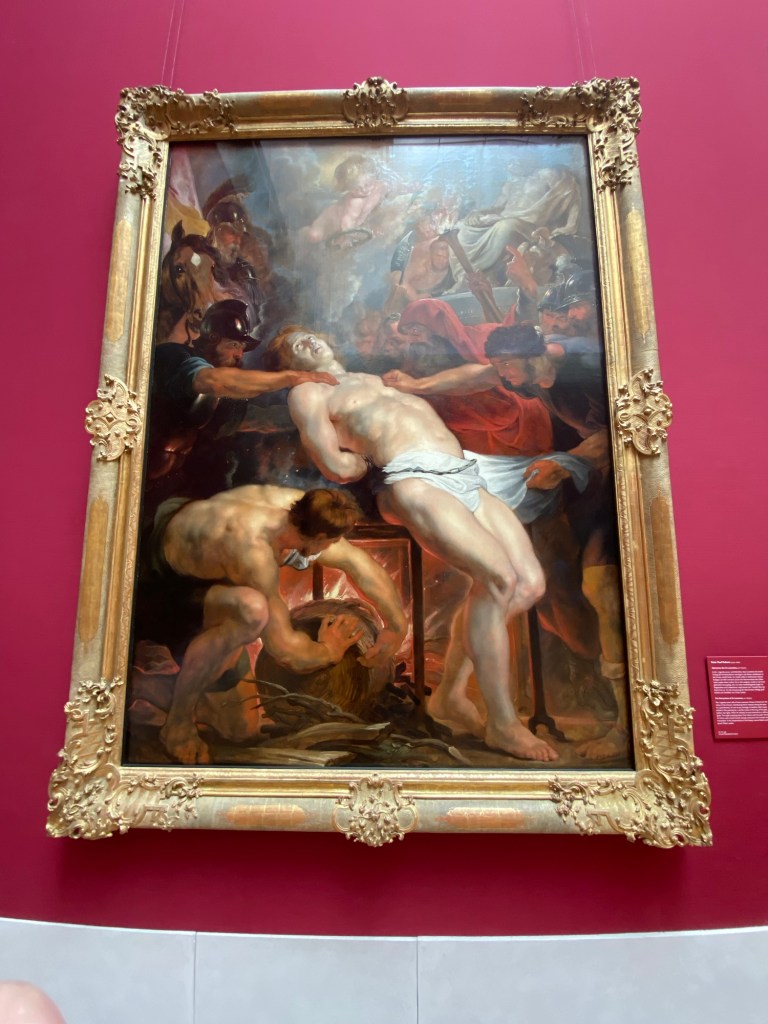
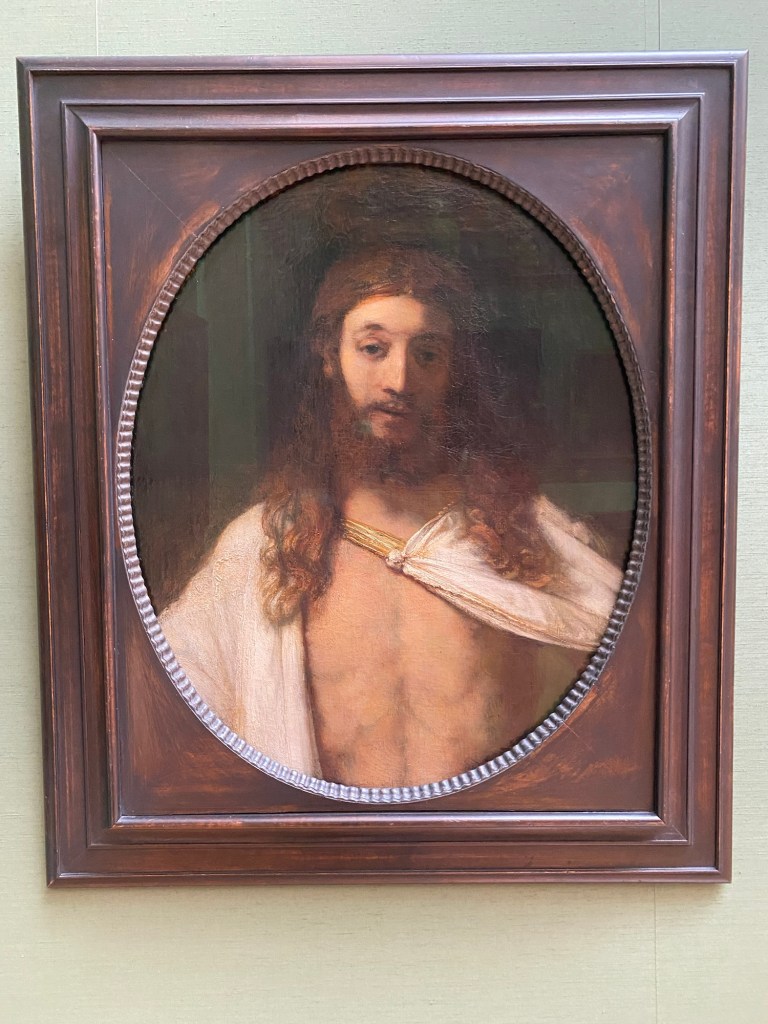
Being is Berlin is a gift! It’s my first trip to Germany and although I had always known that there were great collections of art here, it didn’t hit me until I visited this museum early in my visit.
As I admired the cutting of the marble to form strands of hair and folds in drapery, I rejoiced. Sounds dramatic, right? But, I promise you, its true.
In Berlin I marveled even more at the history of these objects I was lucky enough to witness. Not only had they survived sine the 6th century BC, but think of the 20th century history of them. Is it not a triple miracle, at least? They were created, miracle one. They survived from the Greek world in the period of BC, miracle 2. Their saviors successfully kept them safe through the turbulence of WWI and WWII. Miracle 3 for sure.
Such a gift to see these masterworks in person. In the round. The dawn of Western culture.
As I gazed at the so-called “Berlin Goddess,” I was entertained to watch the young girl you see with the headphones at the back left. She was delightful. She had her own strategy for enjoying the art of this gallery and while it was quite different from mine, I loved watching her zig zag quickly through the sculptures and taking whatever she wanted/could from each of them.
But then, I was left alone to admire the “Berlin goddess.” Wow. It was worth the trip just for this moment.
Isn’t she lovely?
I alway love statues of recumbent lions. This ancient one seemed less ferocious and more domesticated. I paused to admire the way the sculptor achieved the patterns with his hammer and chisels.
And then I encountered Athena from around 400 B.C. It speaks through the ages and tells us of Athens.
Next, the head of Dionysus. Simply beautiful.
I needed another month in Berlin to appreciate the incredible collection of Greek red figure pottery. Each vase or dish conveys so much information about what animated Greek life at the time it was created.
But the marble always calls me back. Look at this form and that draperies that reveal rather than obscure it. The goddess of love, indeed.
Relief sculpture is a favorite of mine. The format will reach its crescendo with Donatello and Michelangelo, but the Greek forerunners are impressive to say the least. Study the shallow relief that conveys the overlapping horses and their legs. Imagine carving that.
The so-called “Berlin Athlete.”
Torso of a dancer. A Roman era copy in marble of a Greek bronze original. Contemplate those words. Think what they tell us.
And then look at how beautiful the carving is. Coincidentally, think of the 20th century fashion and textiles of Fortuny in Venice. Then tell me ancient artworks are boring! I defy you.
I’ll be back soon with even more of these incredible works of art from Berlin. Prepare yourself. They are awesome.
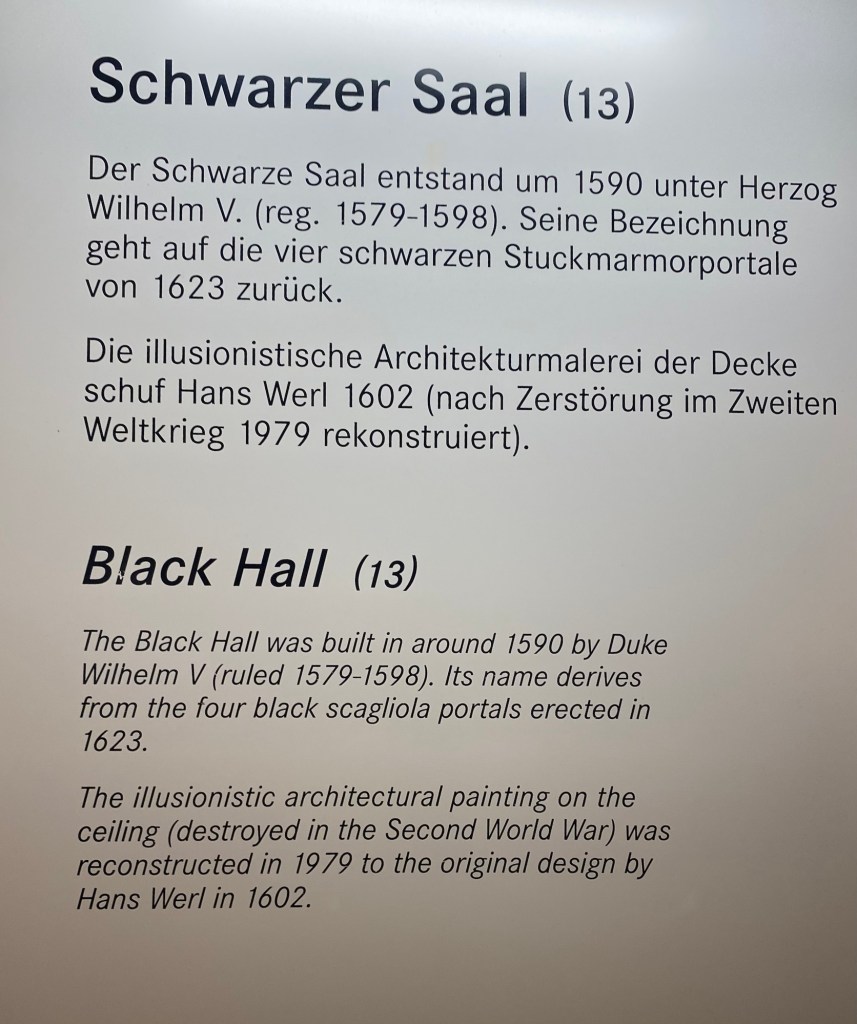
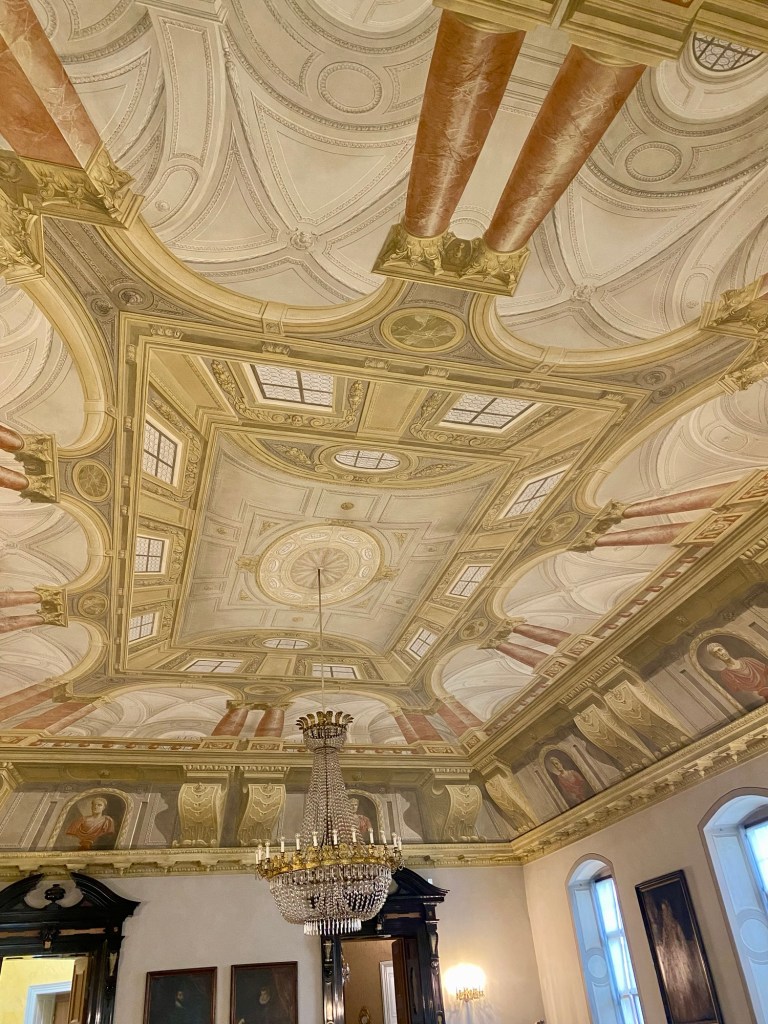
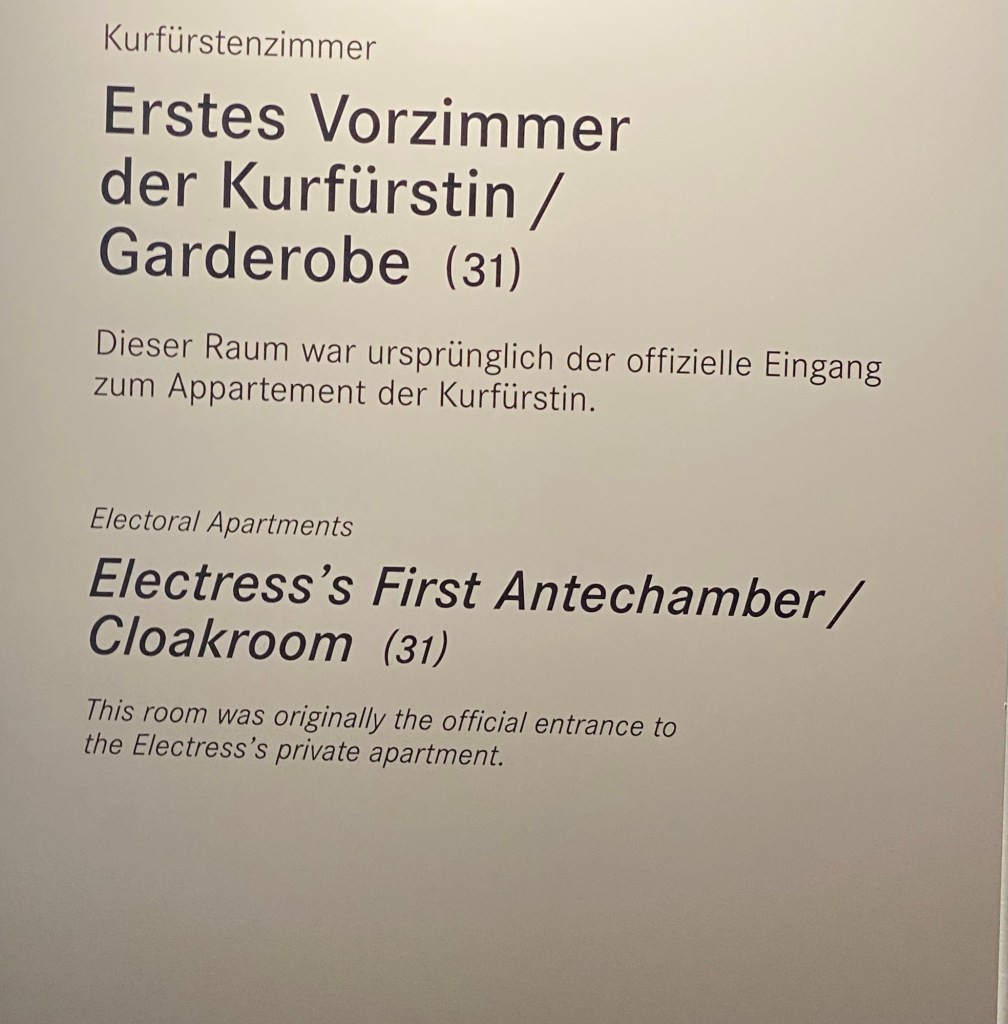
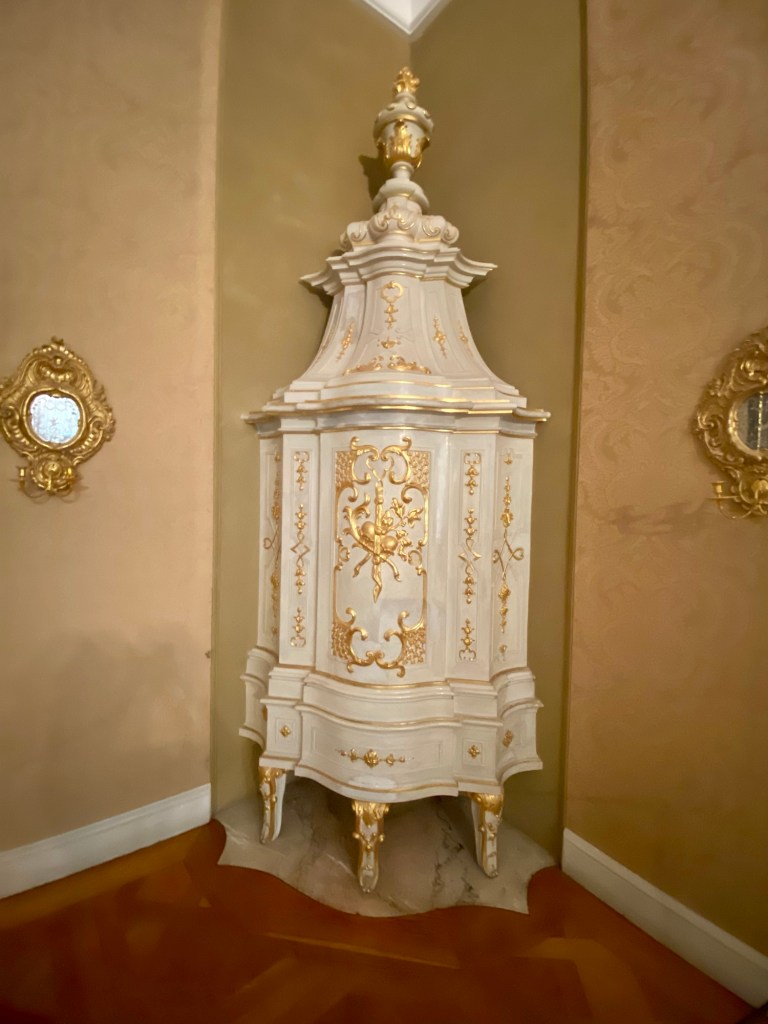
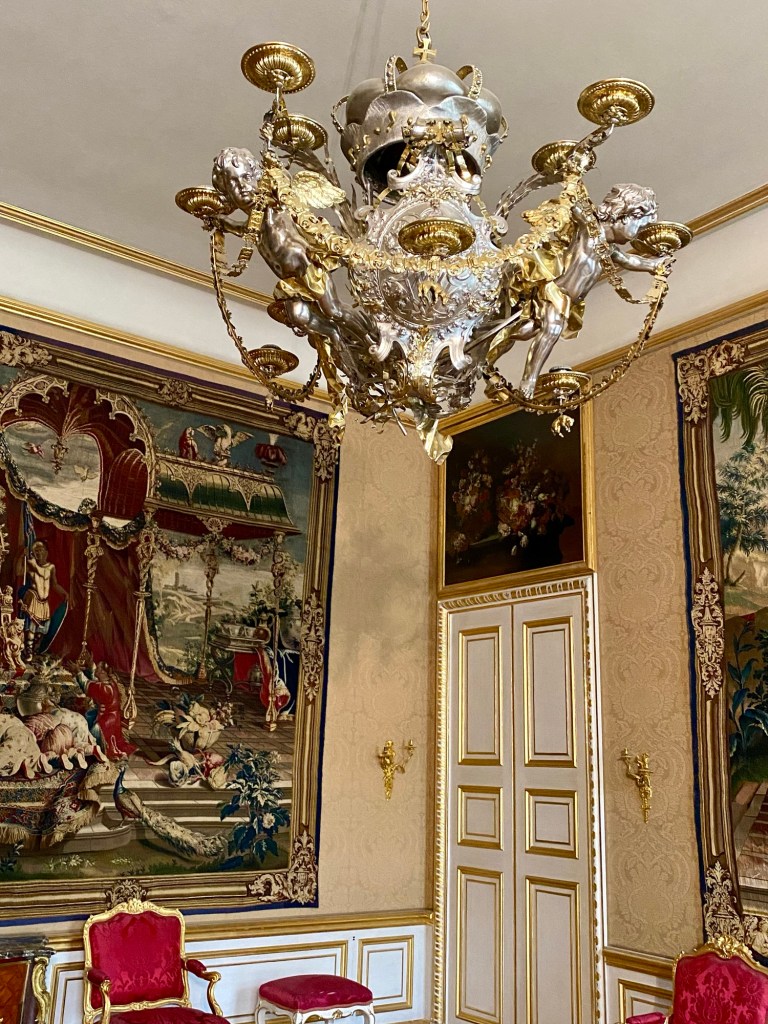
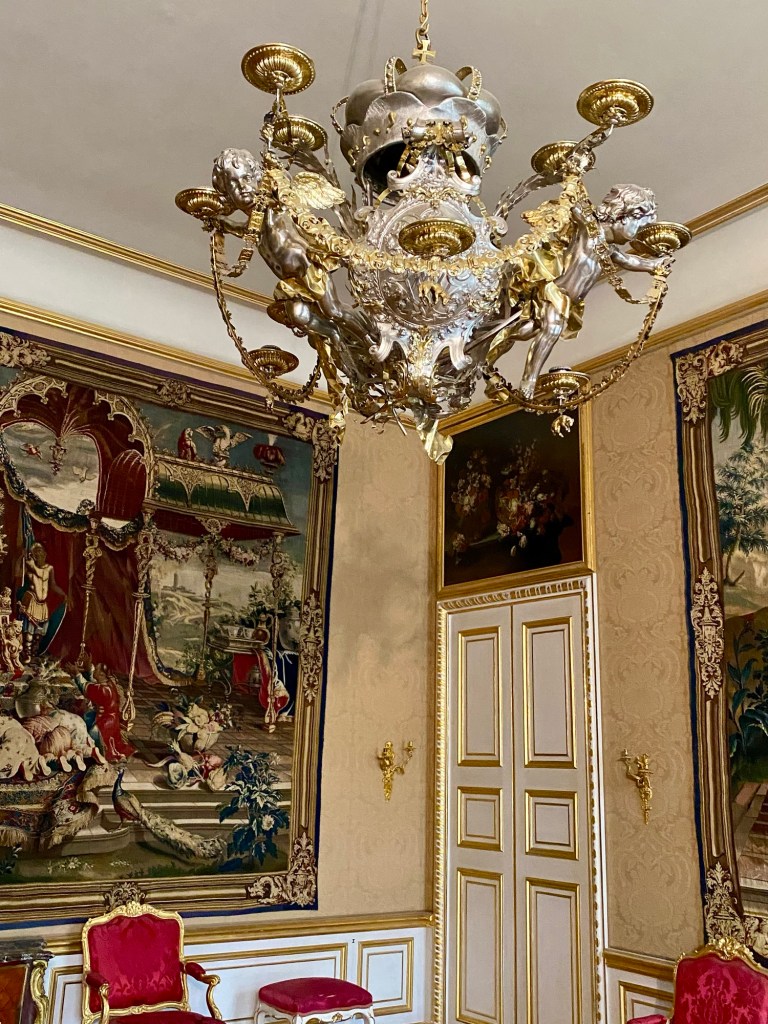
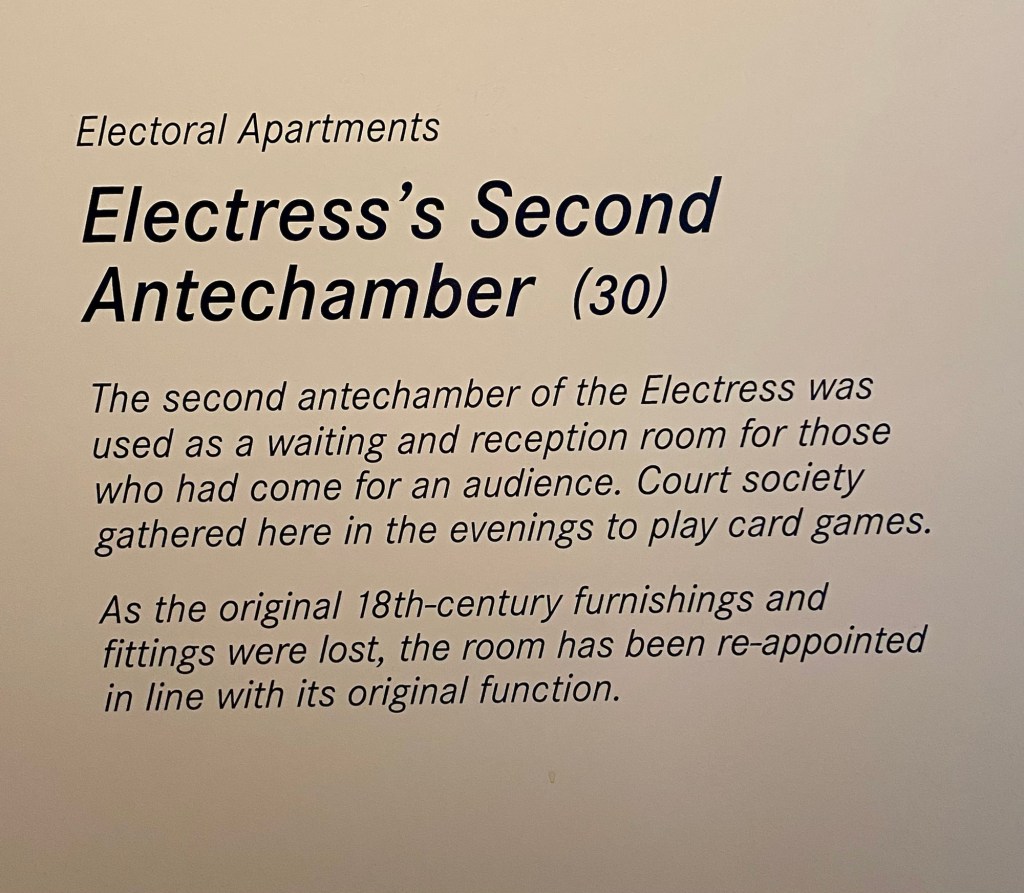
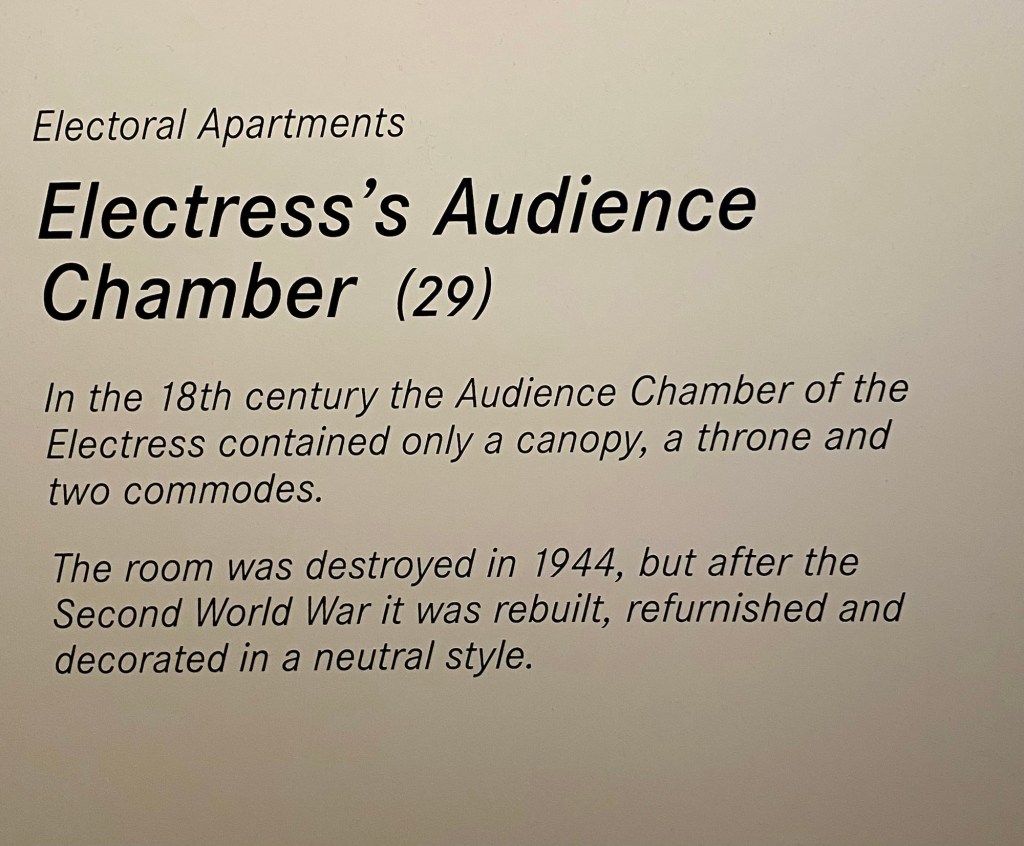
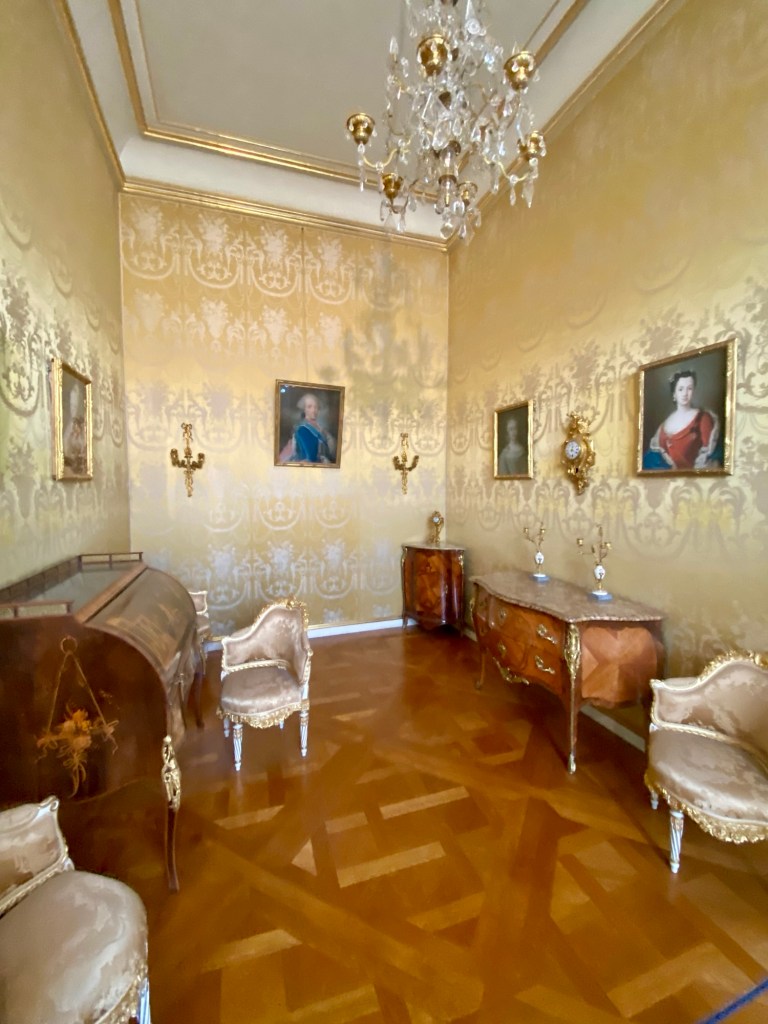
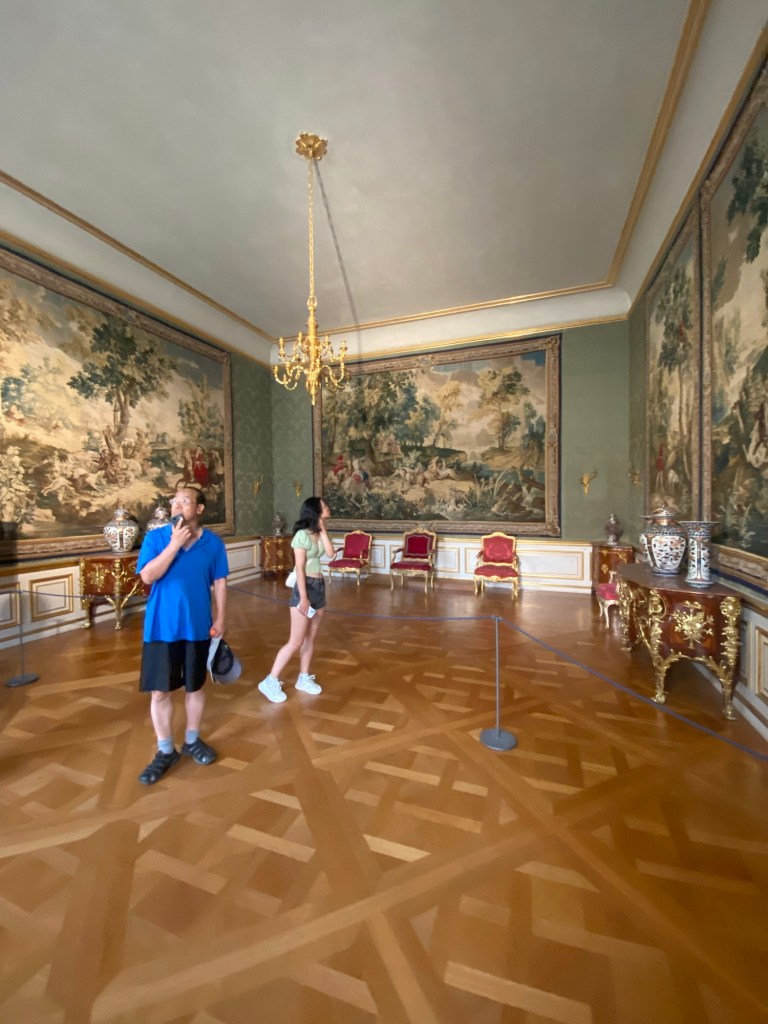
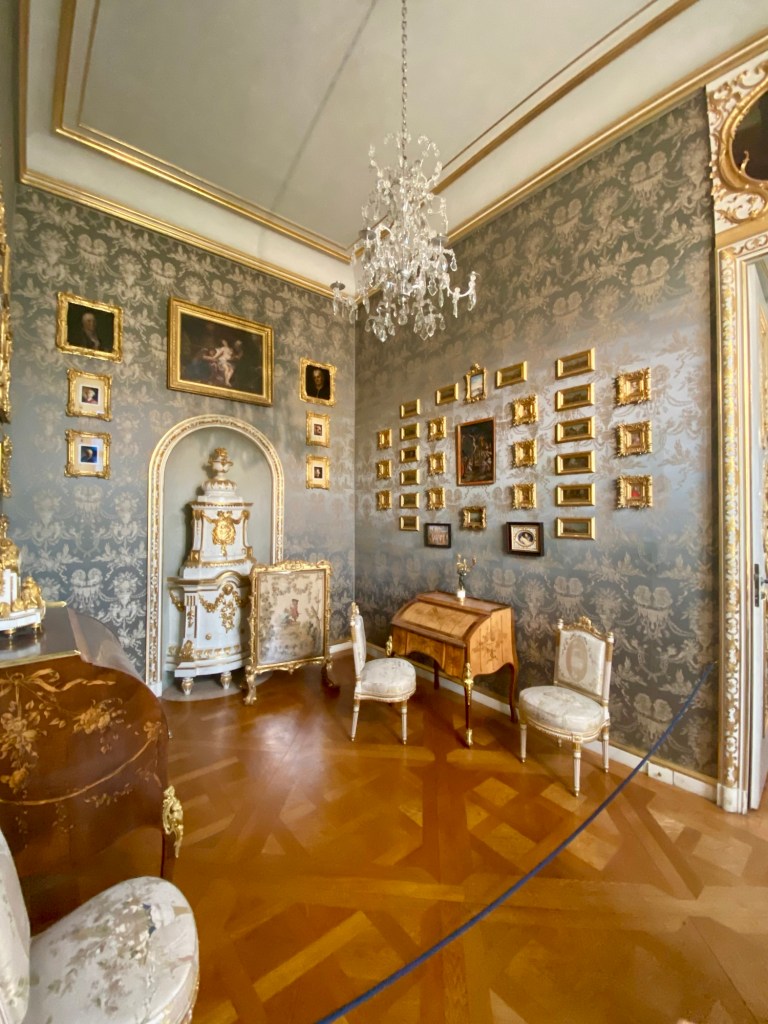
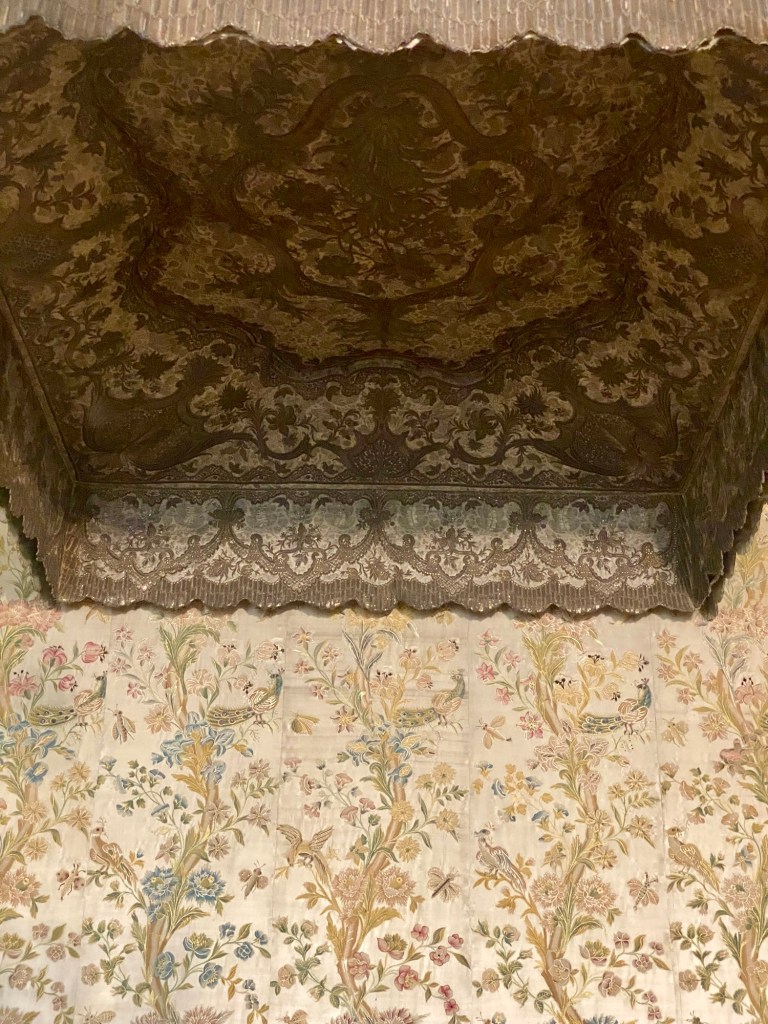
Next up, an exquisite room finished with silver leaf! It’s normal to walk through one of these rooms throughout Europe and see gold leaf finishing. But, I can’t recall ever seeing silver leaf used in the same way. I found it striking and beautiful. The choice of chandeliers in each room is also something special to behold.
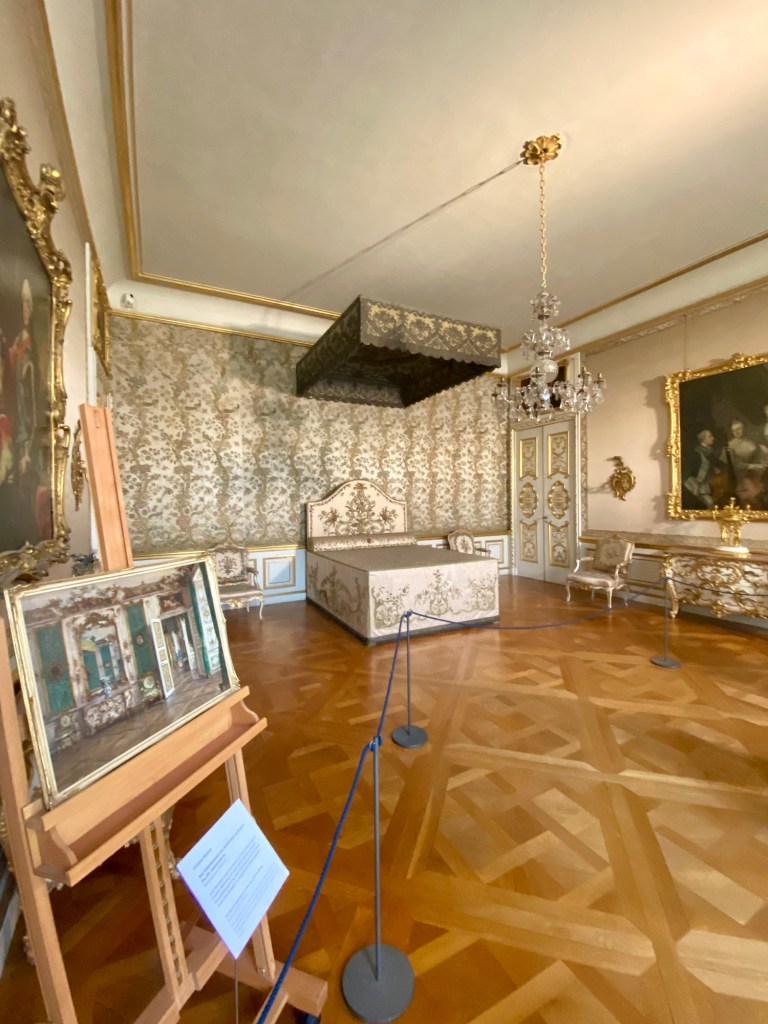
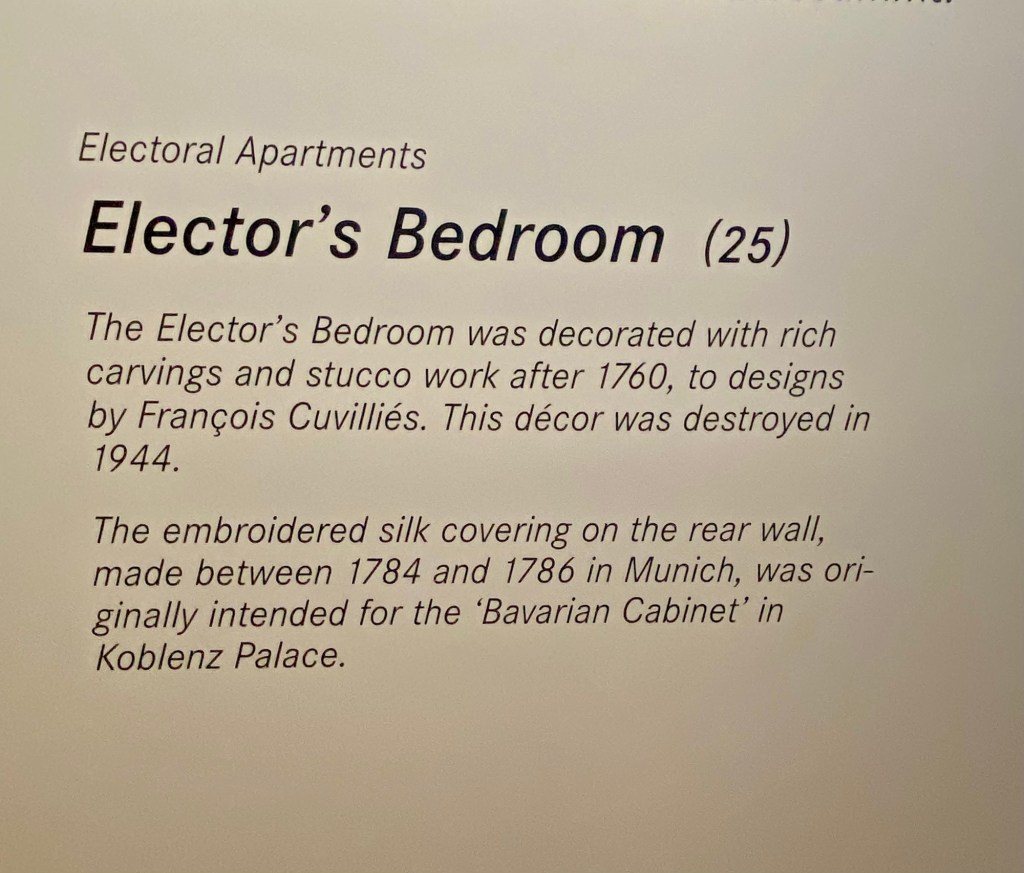
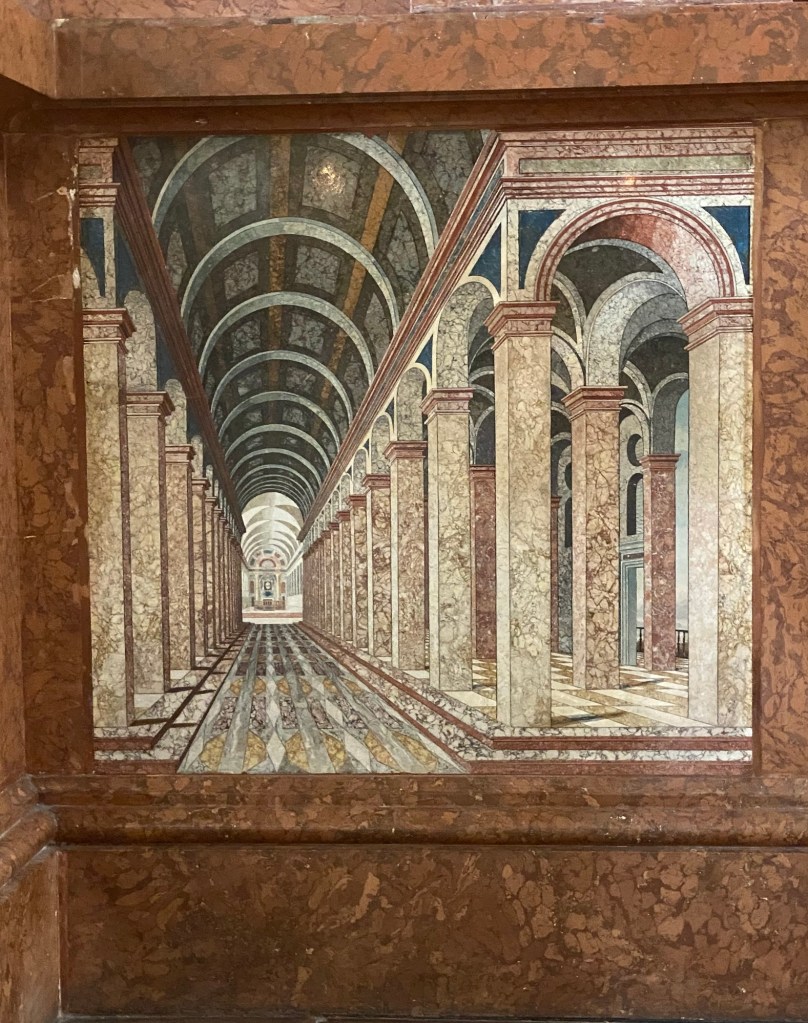
And then you enter this room, finished with the sheerest of white fabrics over a dark pink field. The designs are composed of folded fabric. I have never seen anything like this before. Please see the label at the bottom.
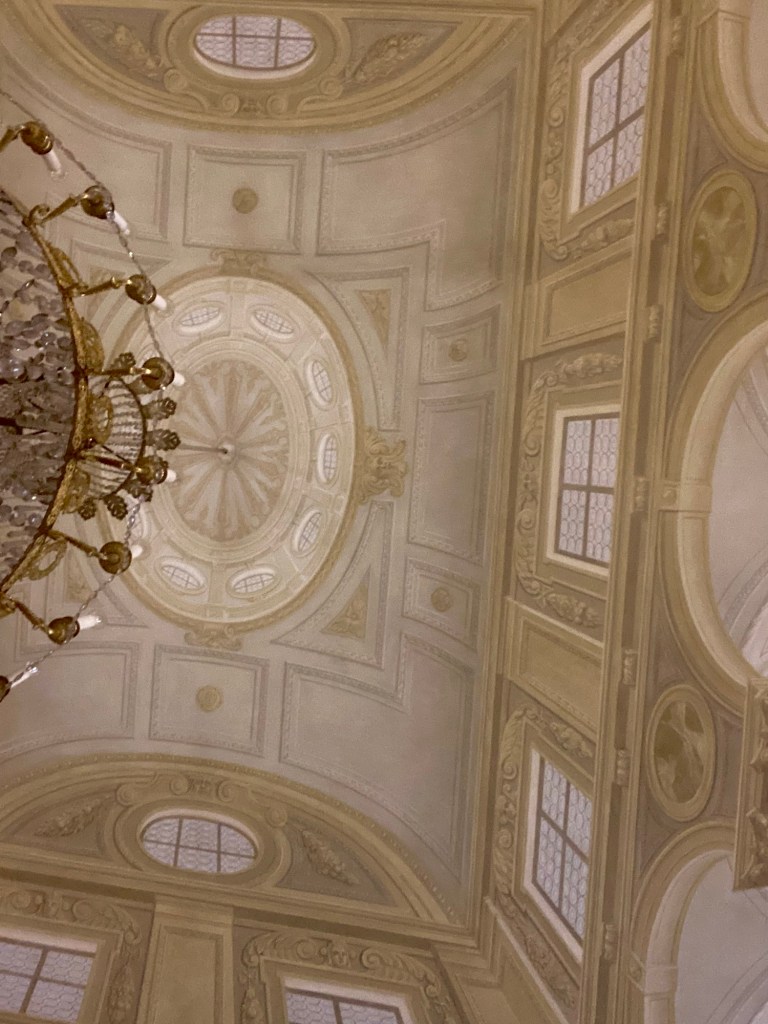
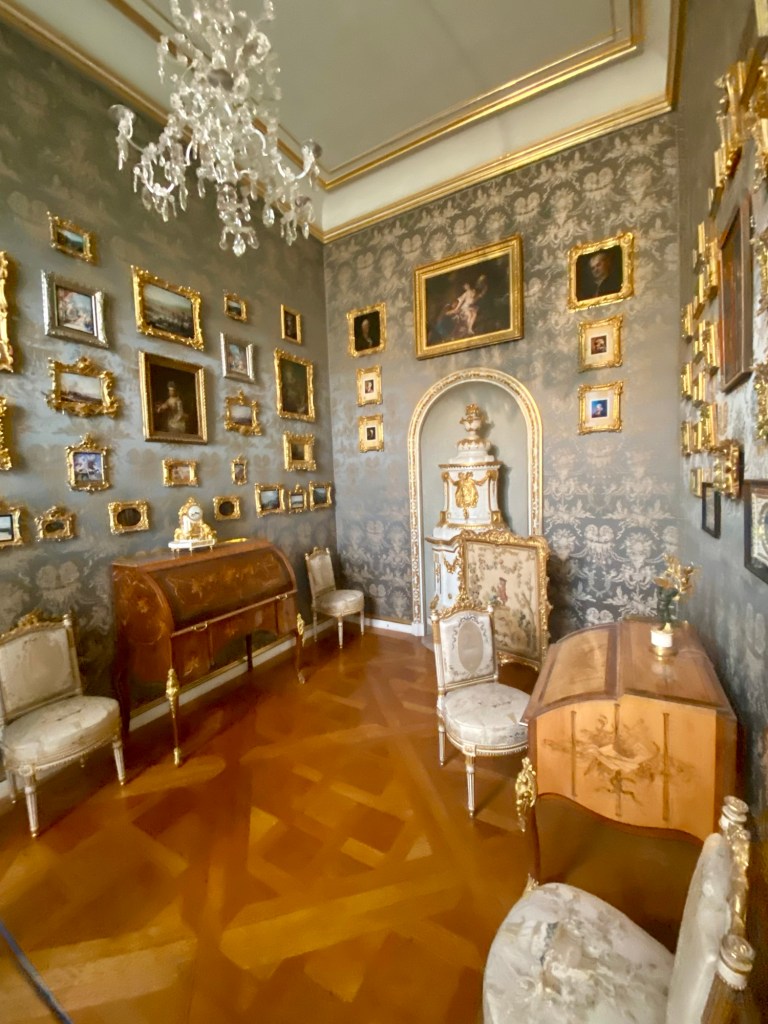
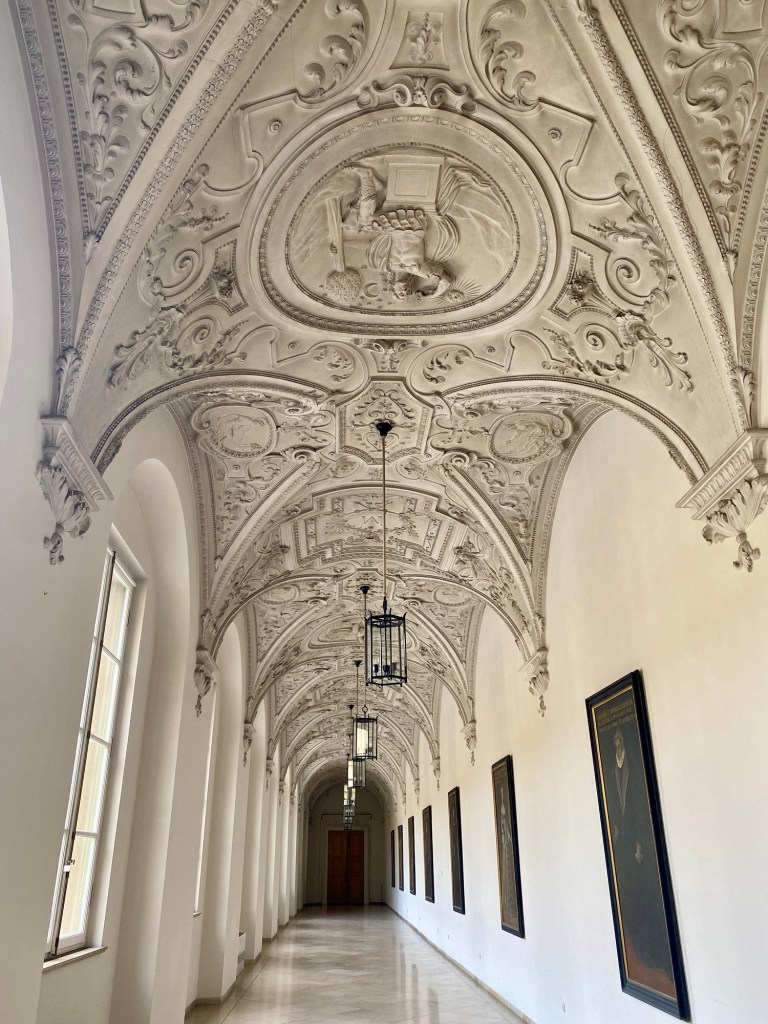
And then we enter another magnificent room, filled with repeating design on all the walls and the ceiling. I liked it!
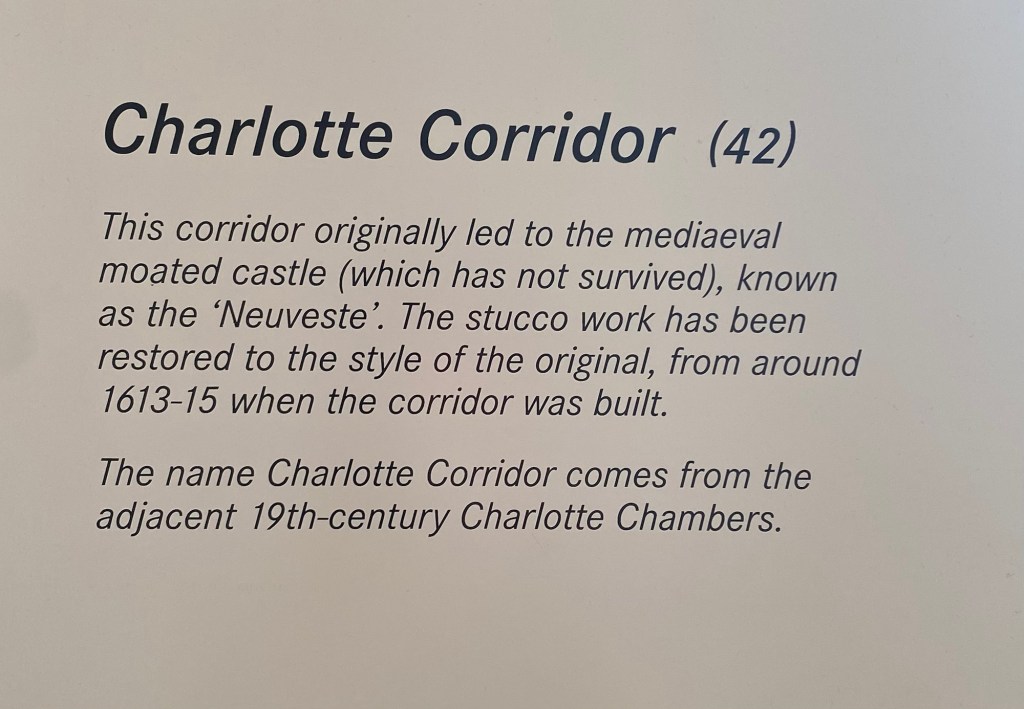
And finally, we pass through the upper landing of an amazing stairway. The label below bears some valuable info.
Berlin isn’t Paris or anything like Italy, both of which places I can’t seem to get enough pictures. But it has its own charm, which is incredible when you think that 80 years ago it was bombed almost to smithereens.
Above, the avenue known as Kurfurstendamm, where I was lucky enough to be at home during my stay.
Above and below, neighborhood boys play soccer.
Below: Other parks for other children, where grandparents swing their progeny.
The leafy streets and the famous German store named Manufactum and a strawberry stand.
Bells tolling from the Kaiser Wilhelm Memorial, the remnants of a church that was all but destroyed during WWII. Sidewalk cafes.
Above, the Spree River is a source of pleasure cruising.
Miscellaneous interesting things.
Gesundheit. The first word of German I ever learned. I was 3 years old at the time! I still remember who taught the word to me!
Pretty doorways
A taste for tacos
A taste for sushi
A taste for books. It says “buys more books!”
A hair salon’s menu with pricing.
A cafe menu, as one sees in France or London.
Attractive apartment buildings
Attractive bookshops.
The influence of Italian coffee culture is everywhere in Berlin. I enjoyed some excellent coffee here.
The baked goods! OMG!
The soviet era TV tower at Alexanderplatz
The high speed train service.
The terraces with flowers.
The interesting architecture.
The confusing but excellent Ubahn
Museuminsel: my home away from home in Berlin.
The Vespas!
The elegant sidewalk cafes.
More beautiful architecture
Learning German
Did I mention the baked goods?!
I’m sure you’re visually exhausted, so let me condense the last group of this and that taken in Berlin.
You must be logged in to post a comment.