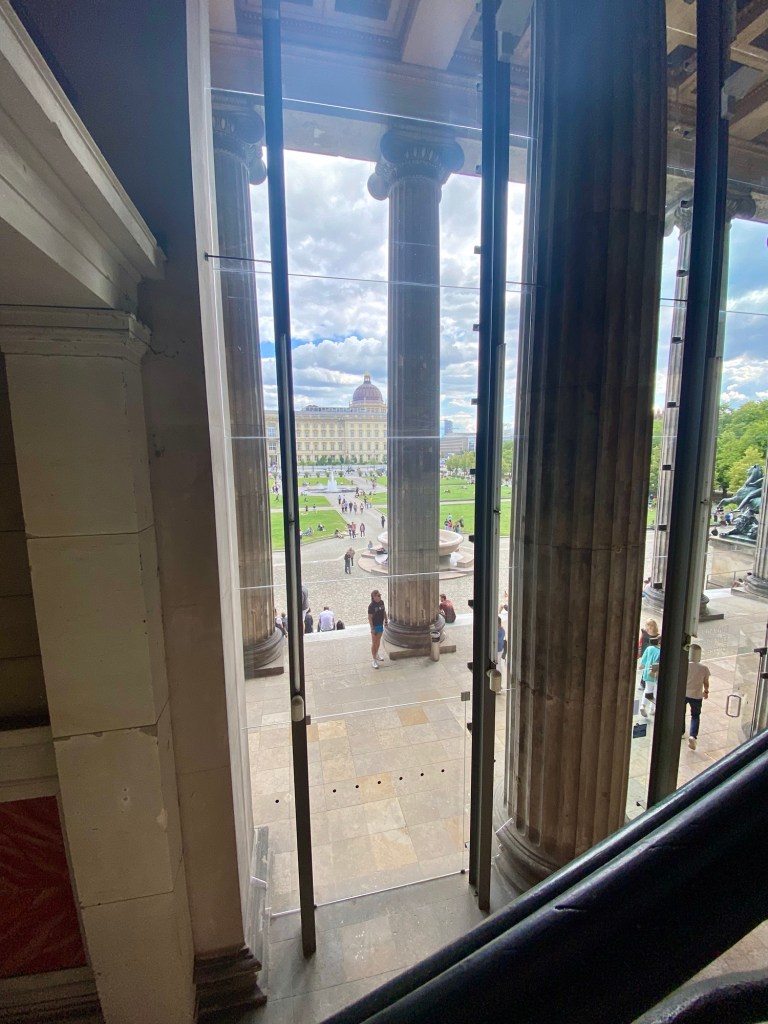
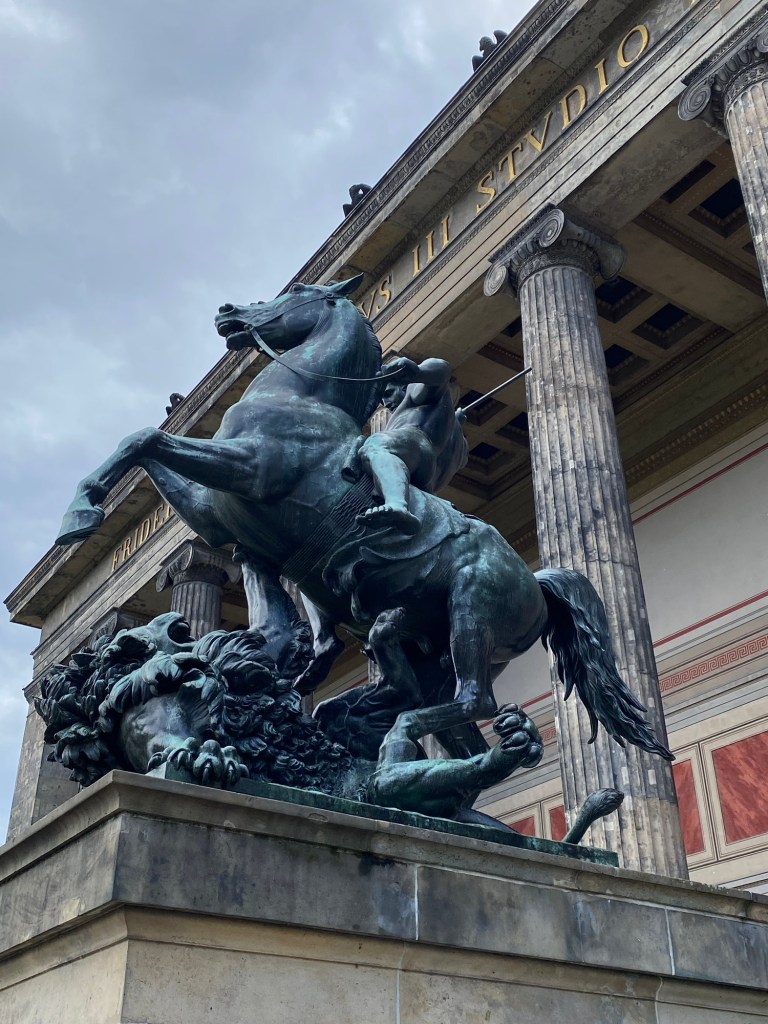
Wow! Berlin delivers! This “old” museum is fantastic!
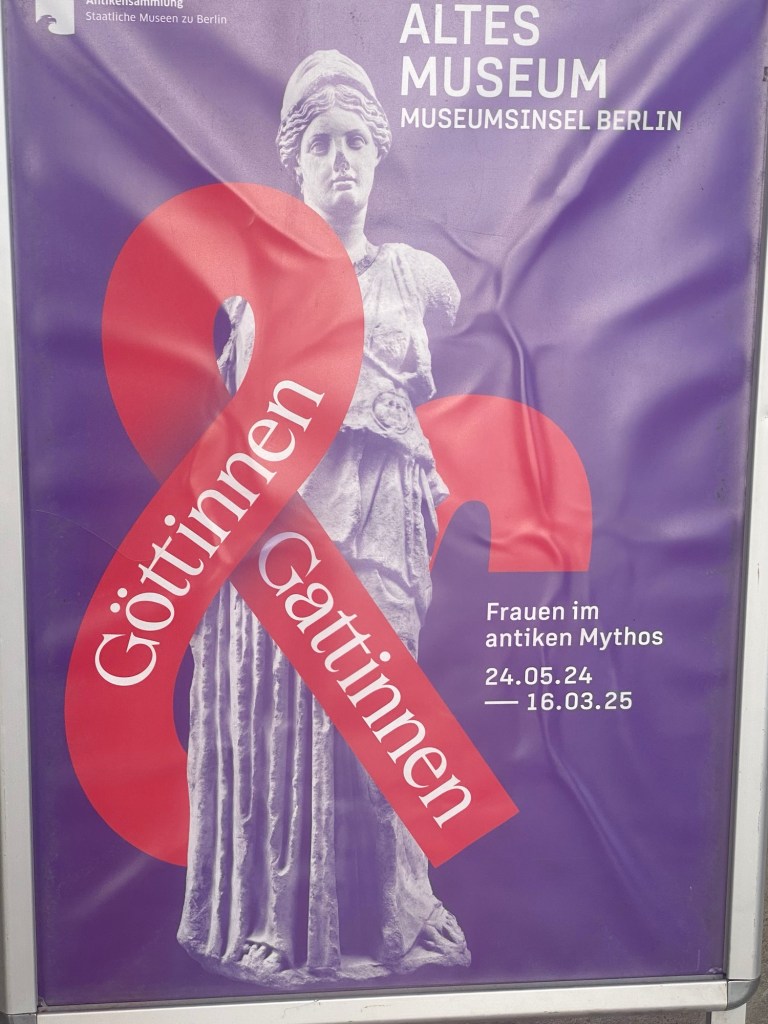
Above and below are pictures of the exterior of this magnificent old building, and the Greek, Etruscan and Roman collections will be the subject of some upcoming posts. I was absolutely blown away!
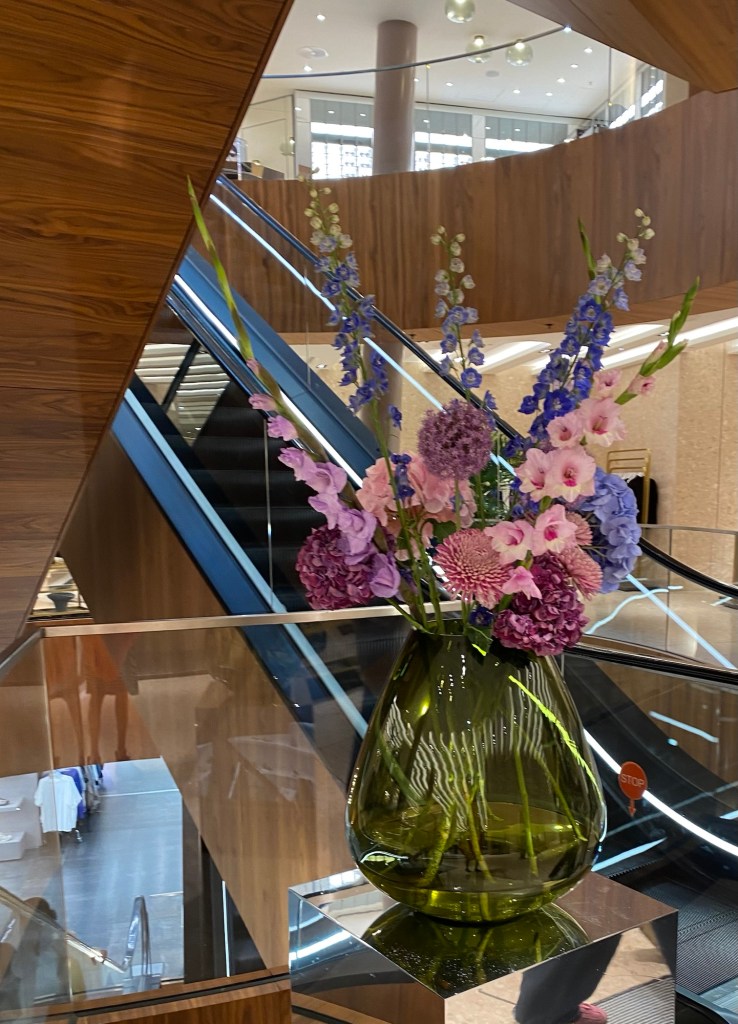
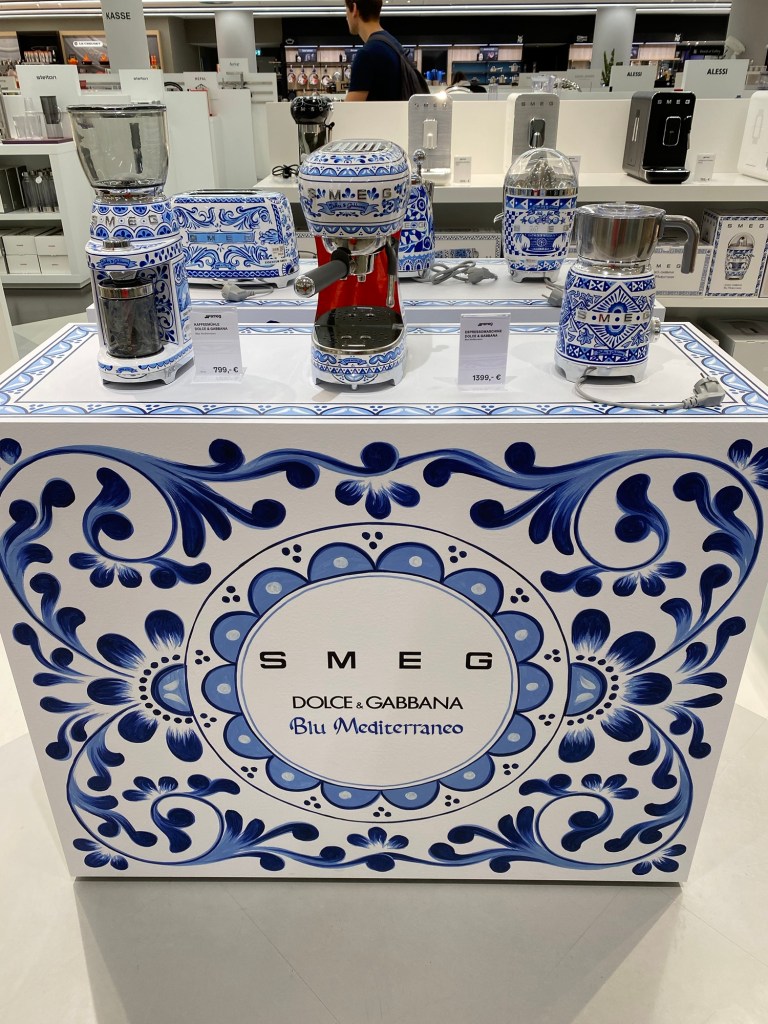
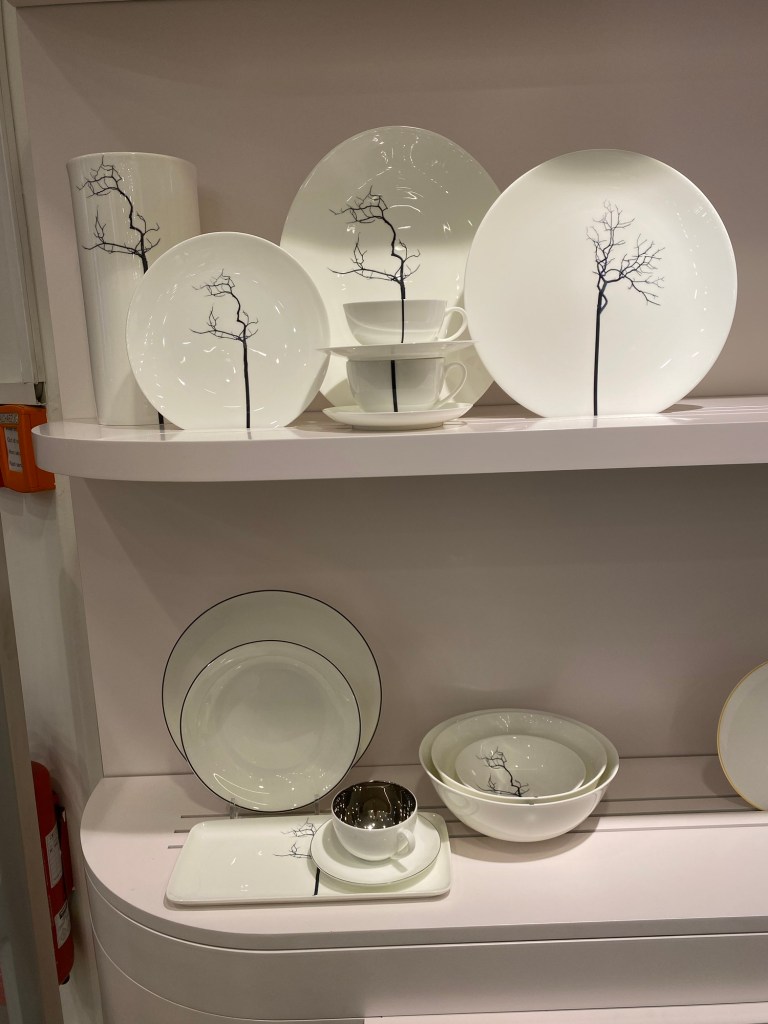
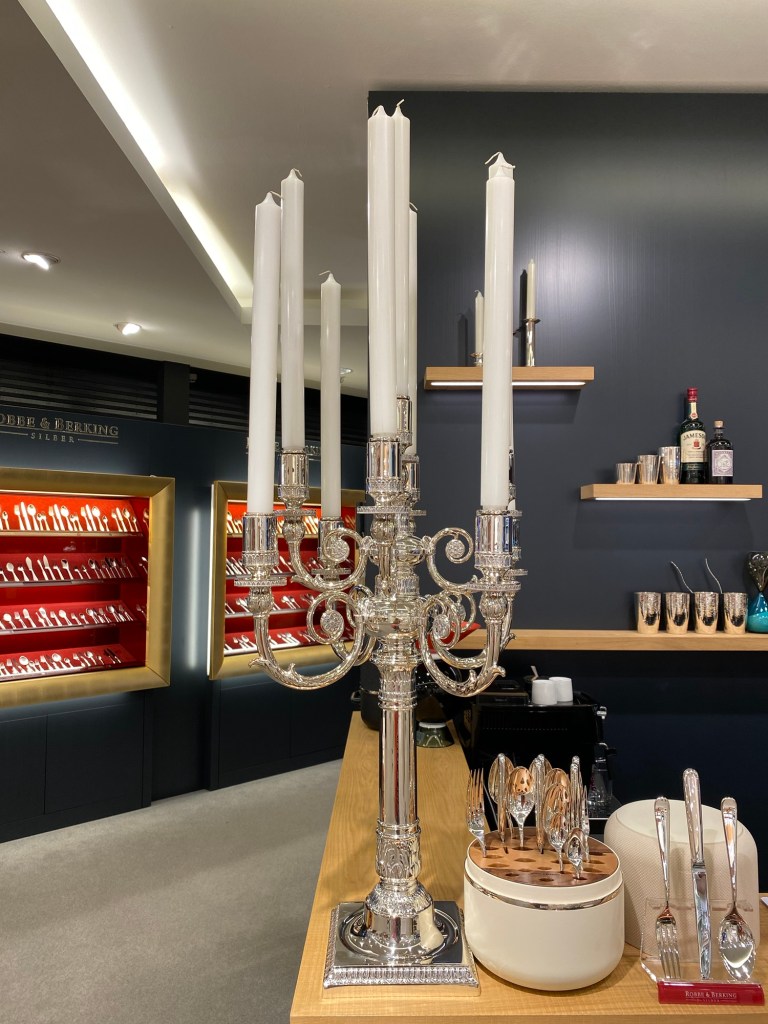
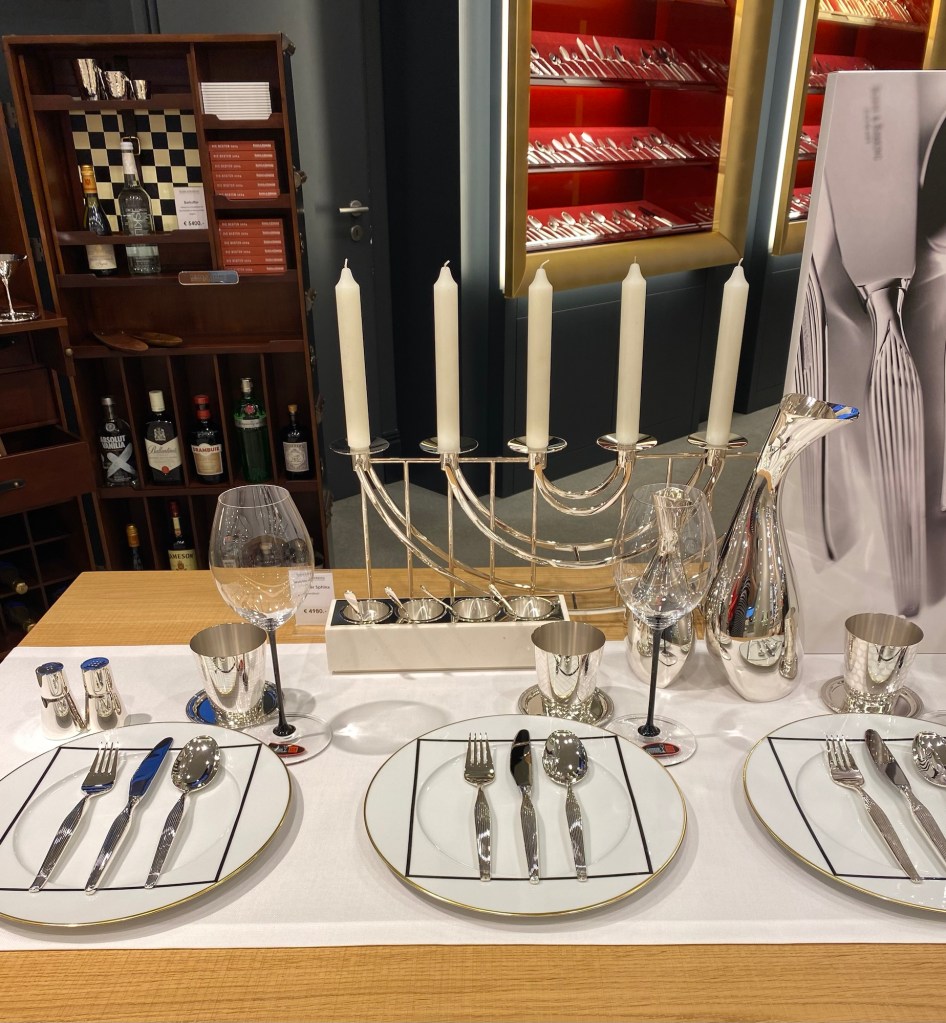
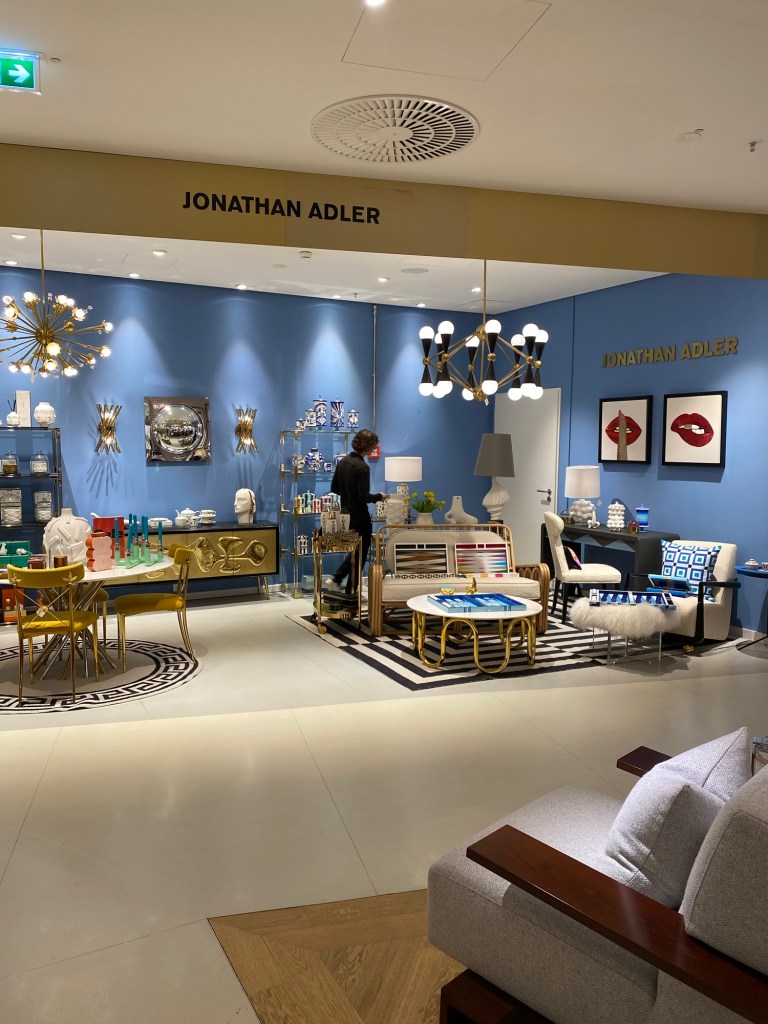
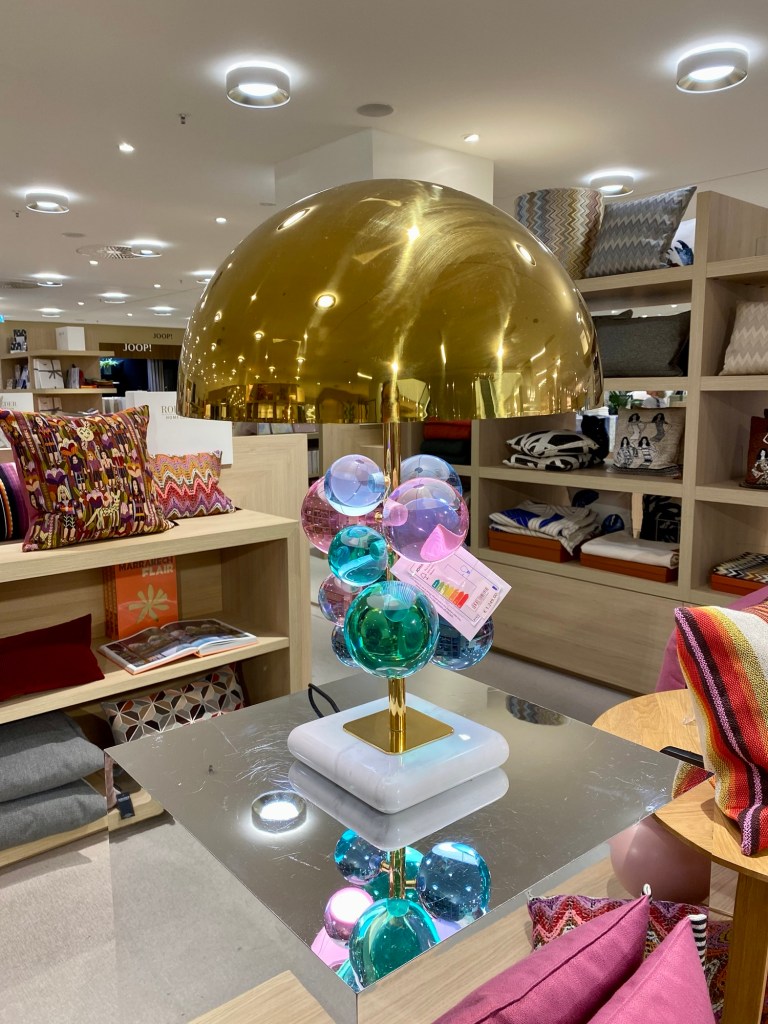
Today I had the opportunity to visit a department store in Berlin that is as storied as it is famous.
The Kaufhaus des Westens (German for ‘Department Store of the West’), abbreviated to KaDeWe, is a department store in Berlin, Germany. With over 60,000 square meters of retail space and more than 380,000 articles available, it is the second-largest department store in Europe after Harrods in London. It attracts 40,000 to 50,000 visitors every day.
The store is located on Tauentzienstraße, a major shopping street, between Wittenbergplatz and Breitscheidplatz, near the heart of former West Berlin. It is technically in the extreme northwest of the south Berlin neighborhood of Schöneberg.
Empire and Weimar Republic: the Jandorf Era
The businessman Adolf Jandorf had opened six stores for basic needs with his company A. Jandorf & Co. in Berlin by 1905. Like the competitor stores Wertheim Leipziger Strasse (1894) and the Warenhaus Tietz (1900), also on Leipziger Strasse, Jandorf wanted to cater for the high consumer desires of the Wilhelminism elite. Jandorf’s seventh branch was supposed to “satisfy the spoiled demands of the top ten thousand, the top one thousand, the very top five hundred,” as the weekly cultural magazine Der Roland von Berlin (Zeitschrift) [de] wrote. Jandorf began planning the new store in 1905 under the name Kaufhaus des Westens (KaDeWe). It was planned that the term Kaufhaus (department store) should set itself apart from the usual store and wholesaling warehouse. The abbreviation KaDeWe was used from the start and, according to a commemorative publication from 1932, was based on the abbreviation of company names that had become common in the US at the time.
The department store was built to designs by the architect Emil Schaudt [de]. It opened on 27 March 1907. In June 1927, ownership changed to Hermann Tietz OHG, which was responsible for modernizing and expanding the store. The company wanted to add two new floors, but because of the Nazi rise to power in the 1930s these plans came to a sudden halt.
Nazi era Hermann Tietz OHG was a Jewish-owned partnership and because of the Nazis’ anti-Jewish laws the company was aryanized—that is, transferred to non-Jewish owners—and its name changed to Hertie.
During World War II, Allied bombing ruined most of the store, with one shot-down American bomber actually crashing into it in 1943. Most of the store was gutted, which caused its closure.
Postwar The reopening of the first two floors was celebrated in 1950. Full reconstruction of all seven floors was finished by 1956. “KaDeWe” soon became a symbol of the regained economic power of West Germany during the Wirtschaftswunder economic boom, as well as emblematic of the material prosperity of West Berlin versus that of the East.
Between 1976 and 1978, the store’s floor space was expanded from 24,000 sq m to 44,000 sq m. Just after the fall of the Berlin Wall in 1989, KaDeWe recorded a record-breaking number of people going through the store. By 1996, with a further floor and restaurant added, the sales area had expanded to 60,000 sq m.
In 1994, the KarstadtQuelle AG corporation acquired Hertie and with it, KaDeWe. Most of the floors were renovated between 2004 and 2007 in preparation for the store’s one hundredth anniversary.
In January 2014, a majority stake in Karstadt Premium GmbH was acquired by the Signa Holding GmbH. In 2015, it was acquired by the Bangkok-based Central Group.
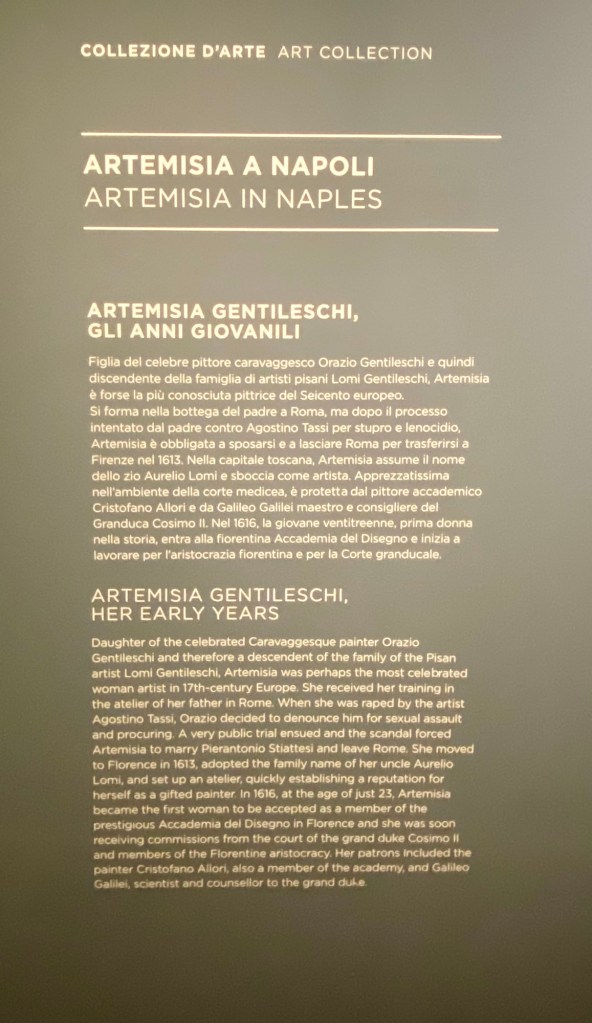
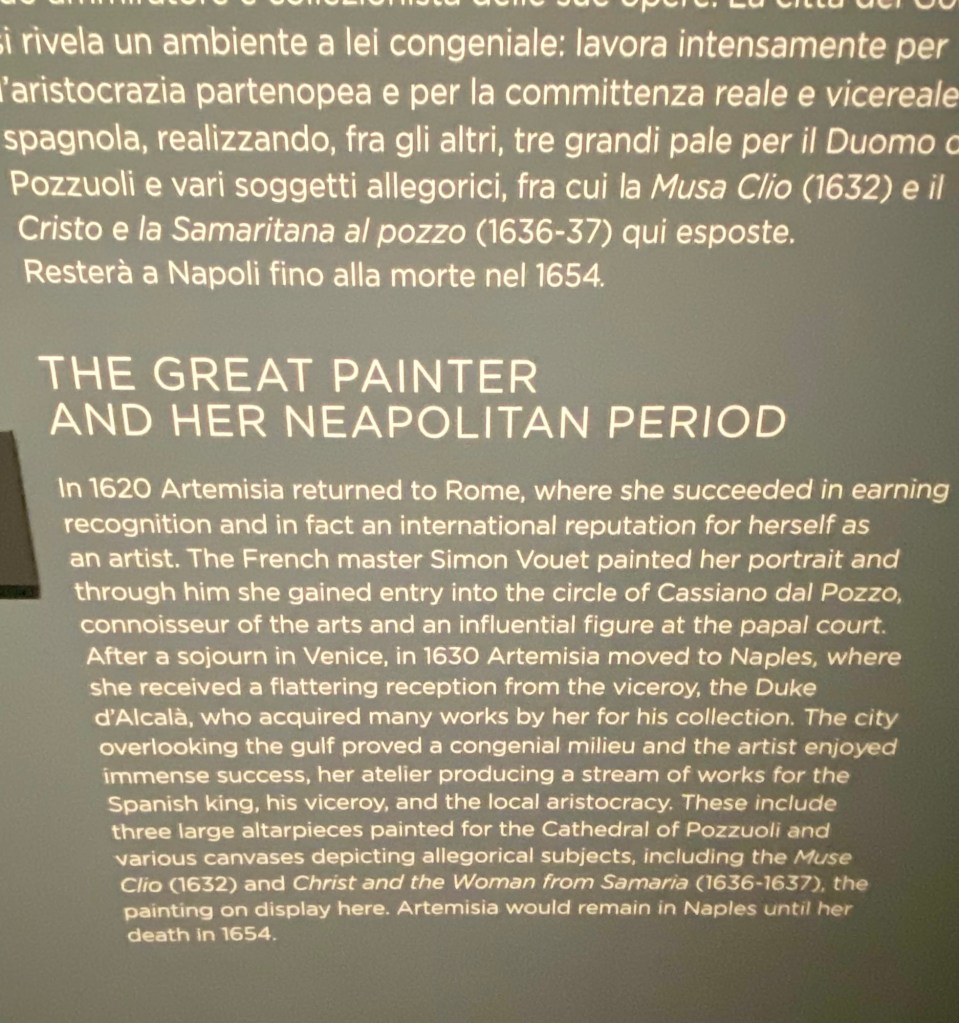
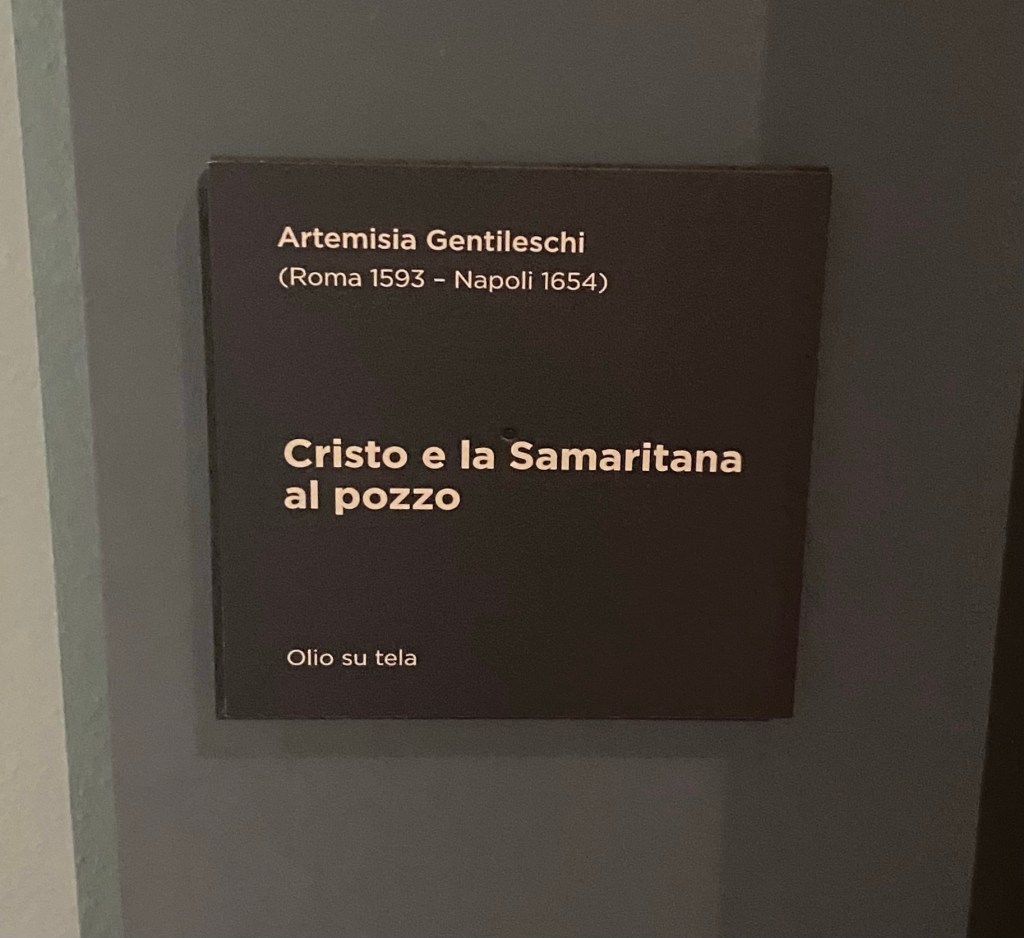
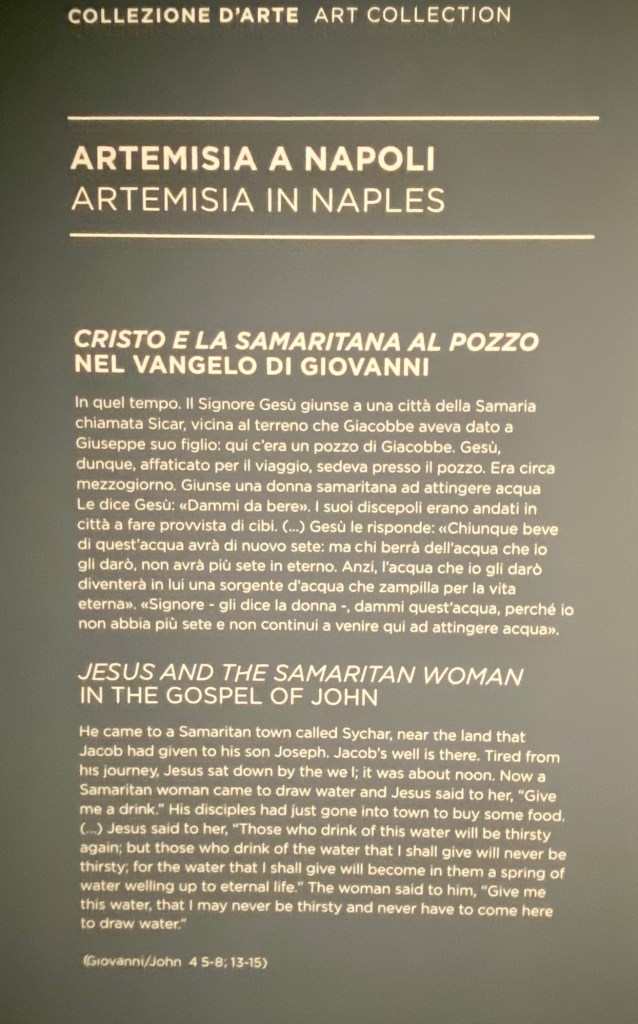
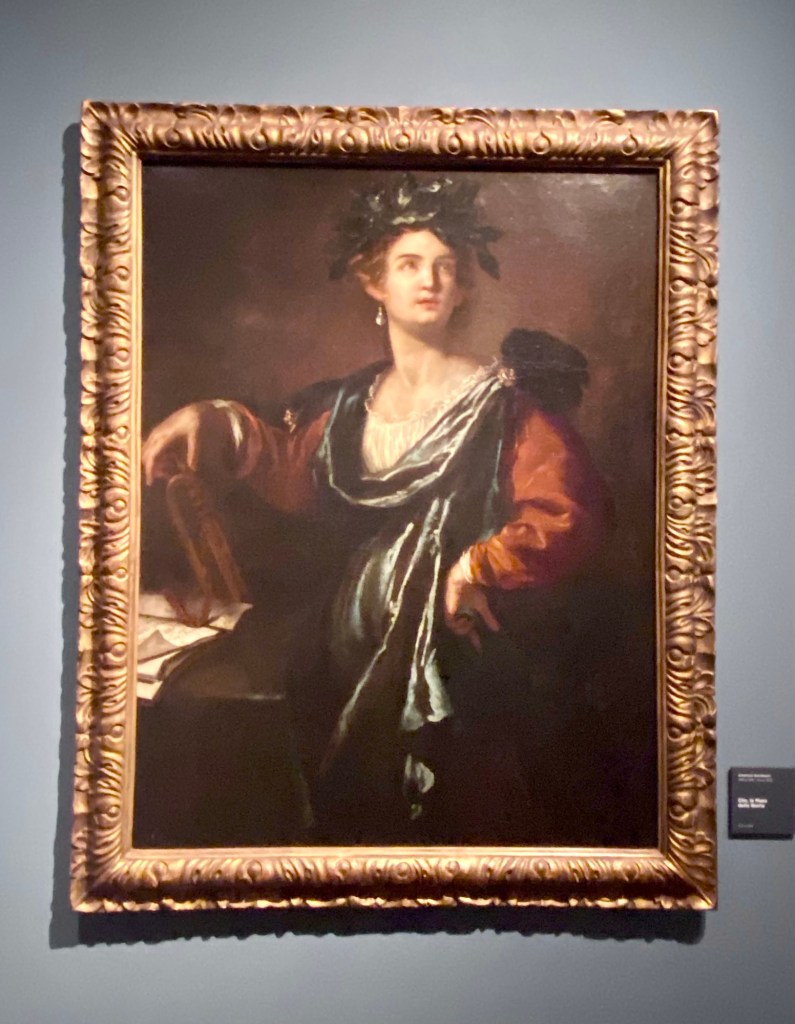
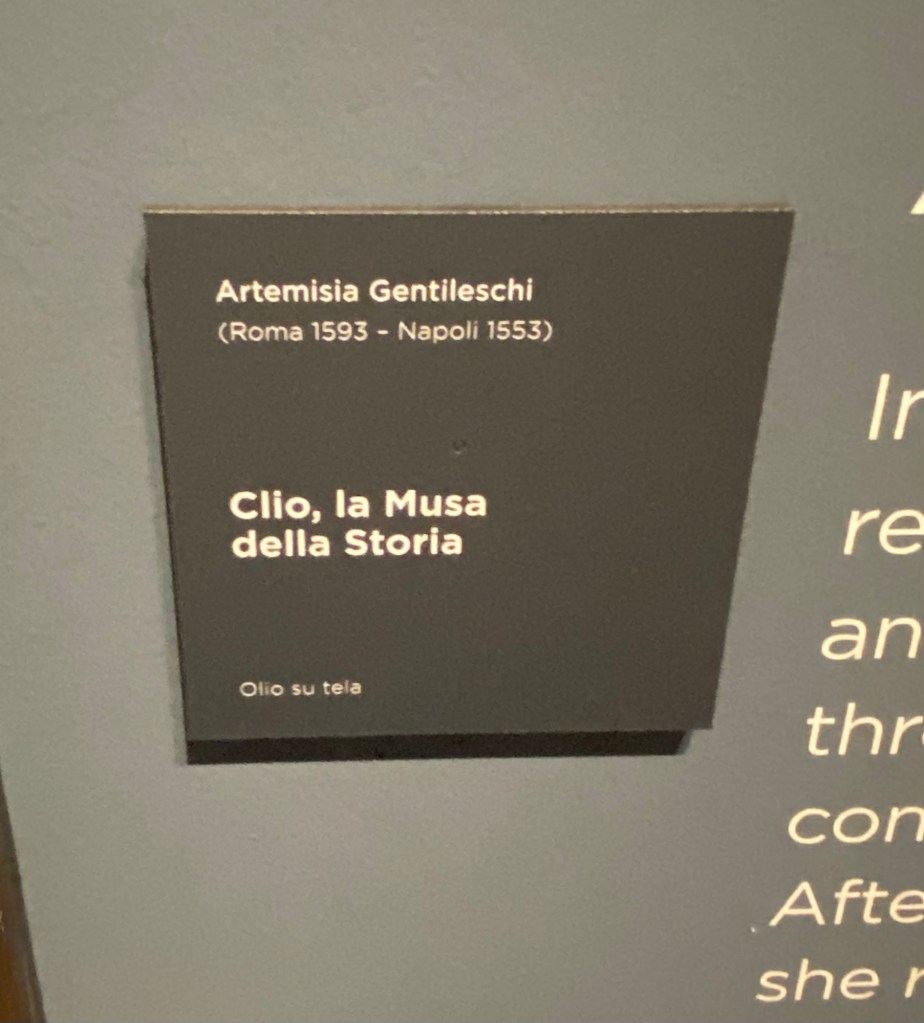
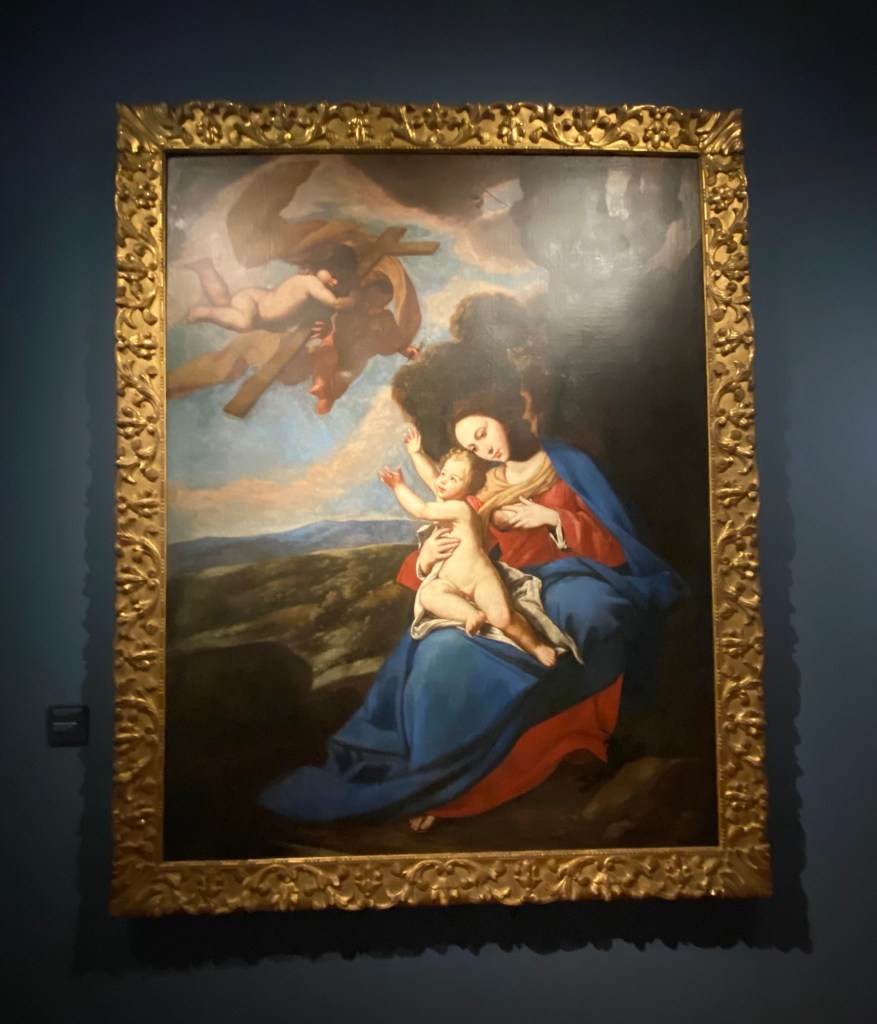
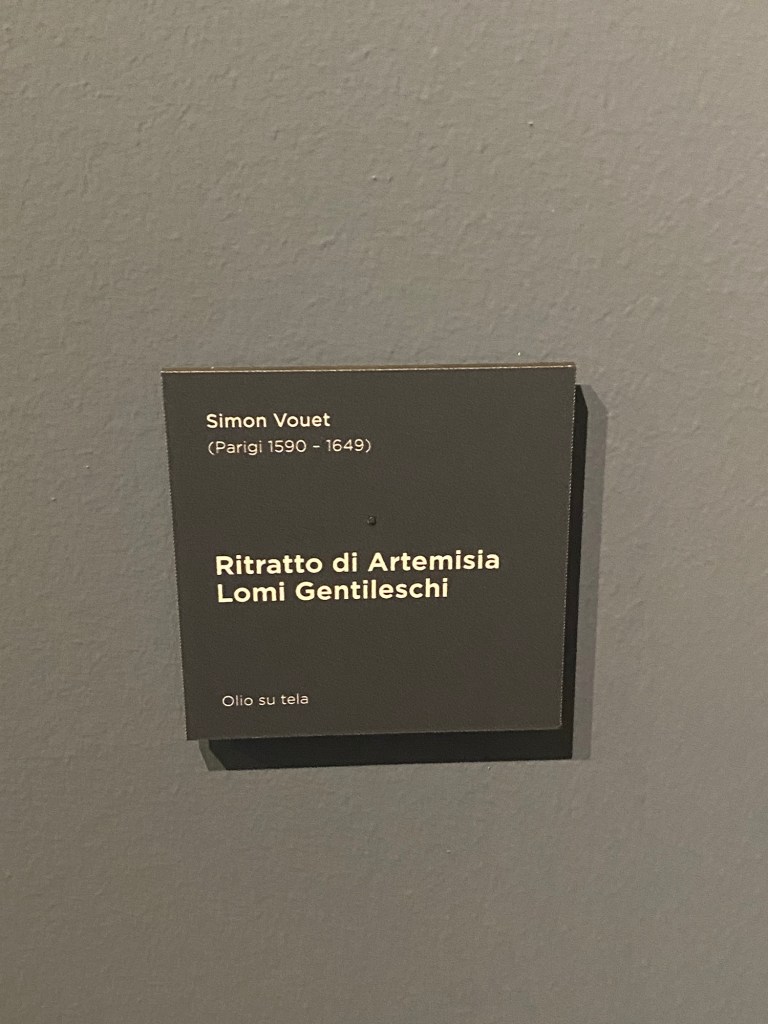
Palazzo Blu held many wonders for me when I was lucky enough to spend a couple of days in Pisa recently. Not least of which was this small collection of paintings by Artemisia G.
It is so rare in Italy to find educational material printed next to works of art, especially in English, that I wanted to include it here as a shout out to Palazzo Blu! Bravo!
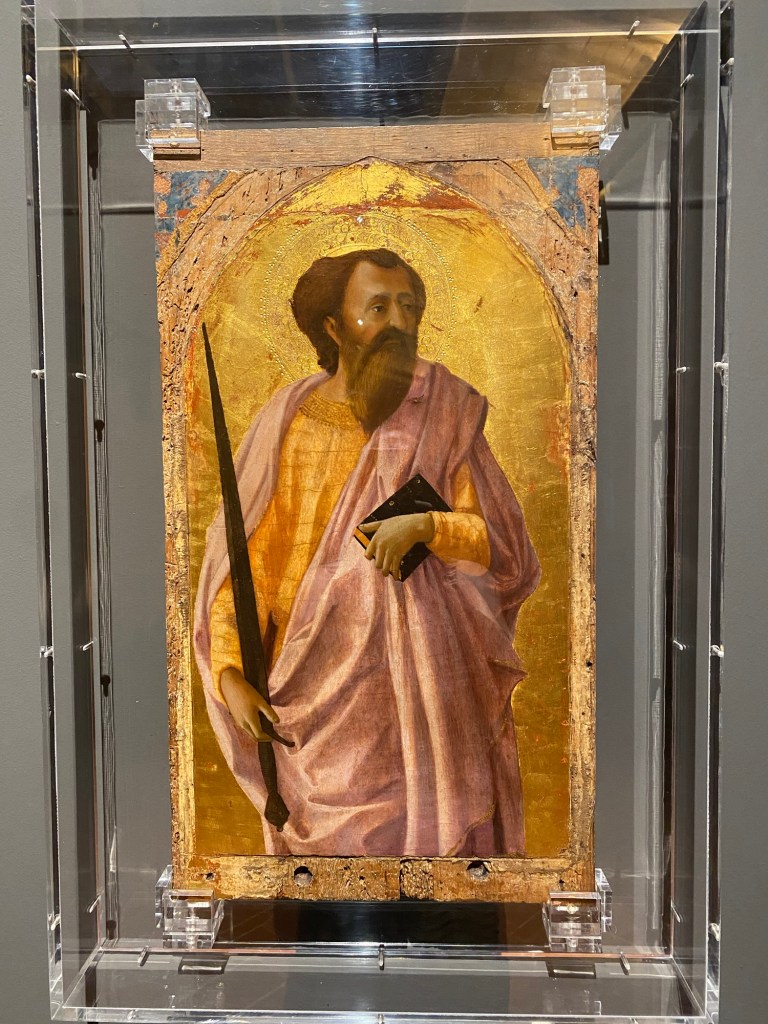
Following my post yesterday on finding Donatello and Masaccio in Pisa, I was also delighted to encounter a very fine panel by Masaccio at the Museo Nationale di San Matteo in that city.
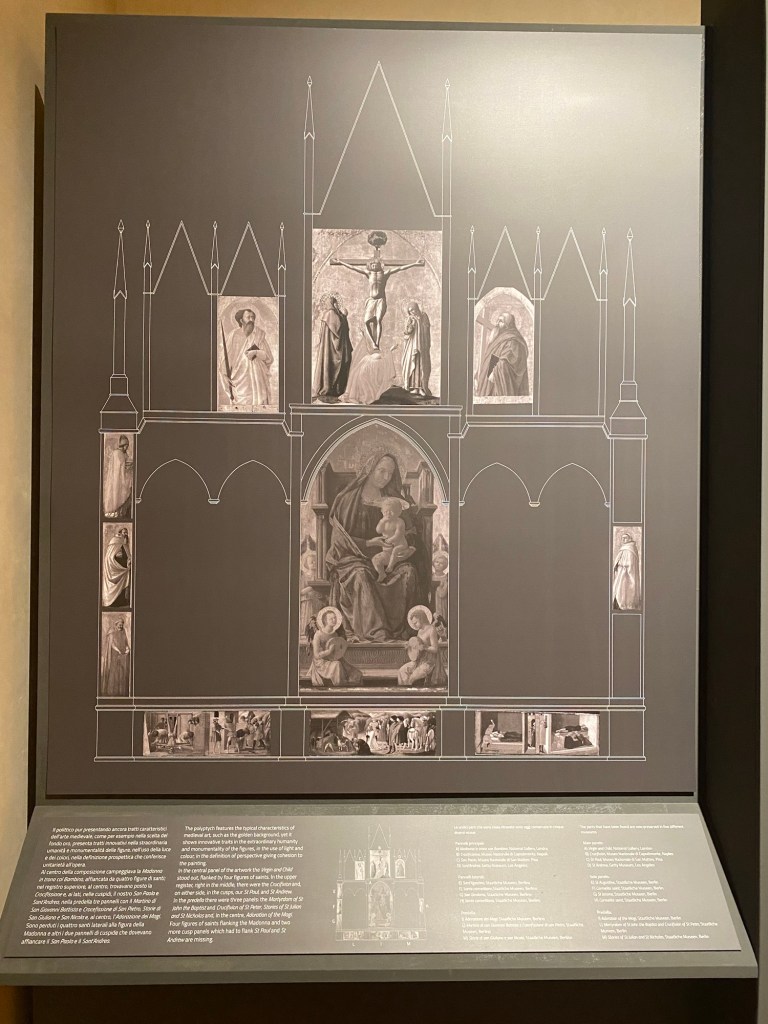
What makes the experience of viewing the Masaccio painting even richer is the didactic labels that accompany the work, showing its original placement within an elaborate altarpiece. The altarpiece is dismantled today and many part of it are in different cities/countries, but Pisa is proud to own this impressive work.
Since I arrived in Europe 2 weeks ago today, it is an embarrassment of riches on which to post! I was just in Pisa before coming to Berlin, and the incredible art found in both cities inspires me!
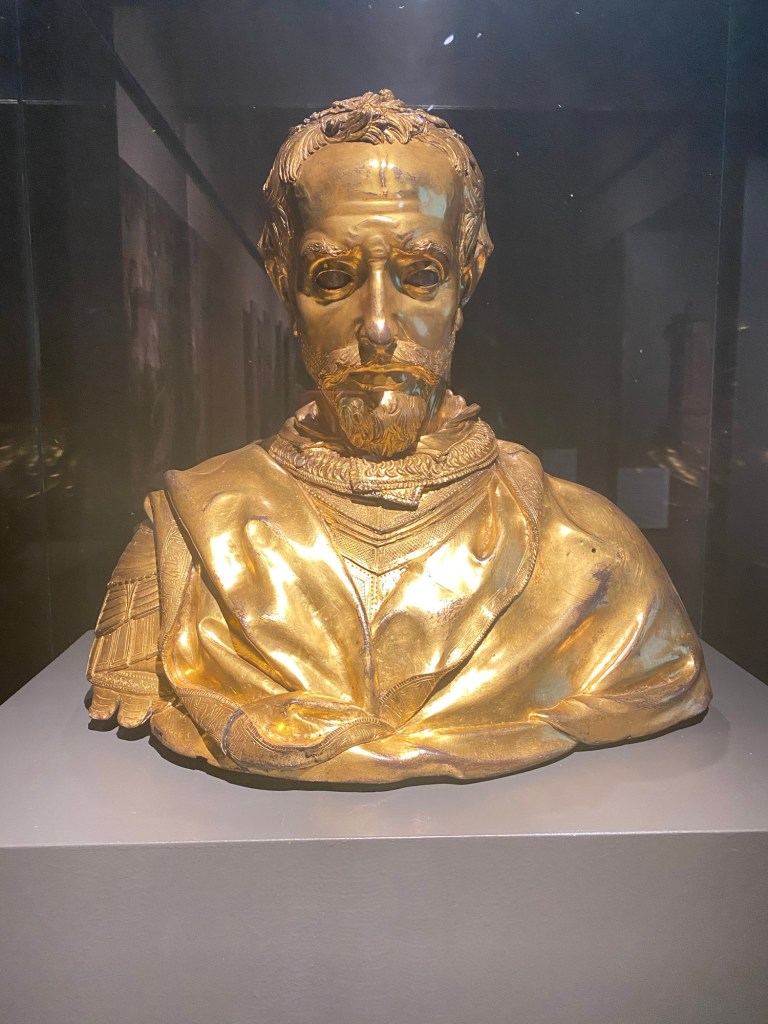
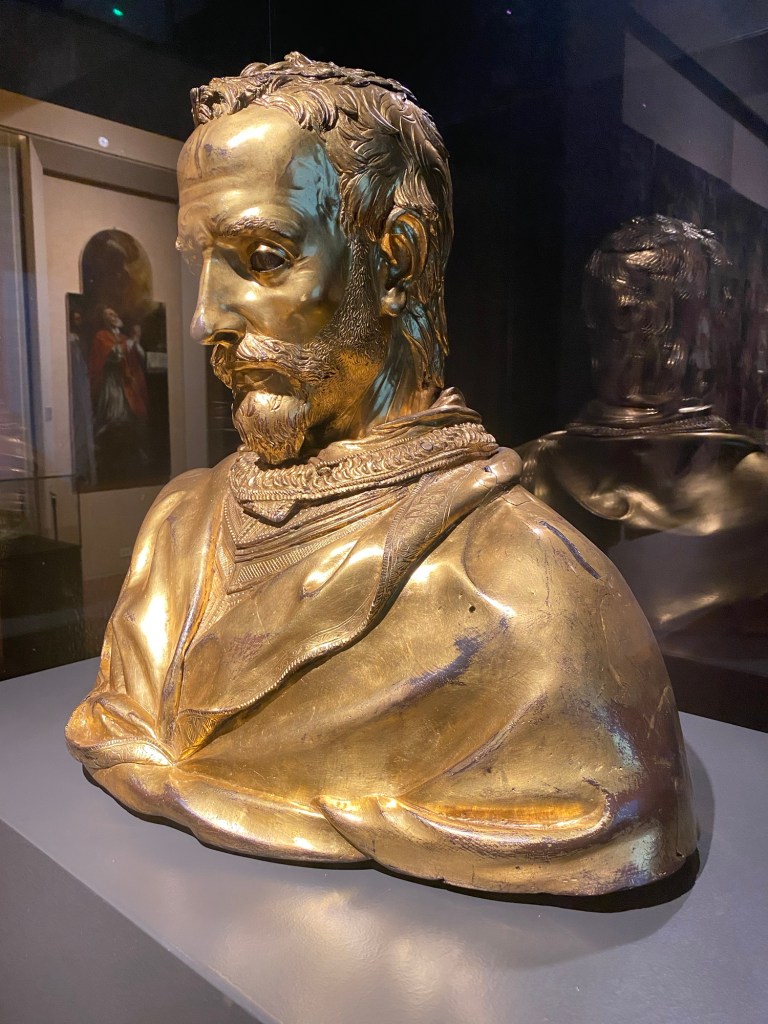
At the National Museum of San Matteo in Pisa I was delighted to come upon two beautiful Renaissance sculptures by two of my favorite sculptors. Donatello and Michelozzo.
The San Rossore Relliquary bust is a gilded, bronze sculpture from 1424-27 by Donatello. The monks of Ognissanti in Florence acquired the skull of Saint Luxorius (popularly known as San Rossore) in 1422 and 2 years later they commissioned Donatello to create the reliquary to house it.
The casting was done by Jacopo deli Stroza who created it of 4 individual cold-assembled parts. The sculpture was documented as being in Pisa in 1591 and remains there today.
Donatello’s bust seems so much to be a portrait bust rather than the previous medieval tradition of reliquary production in which the hieratic and metaphysical type for which an object of devotion was typically designed. This seems like a realistic Roman-style bust, akin to ancient statues.
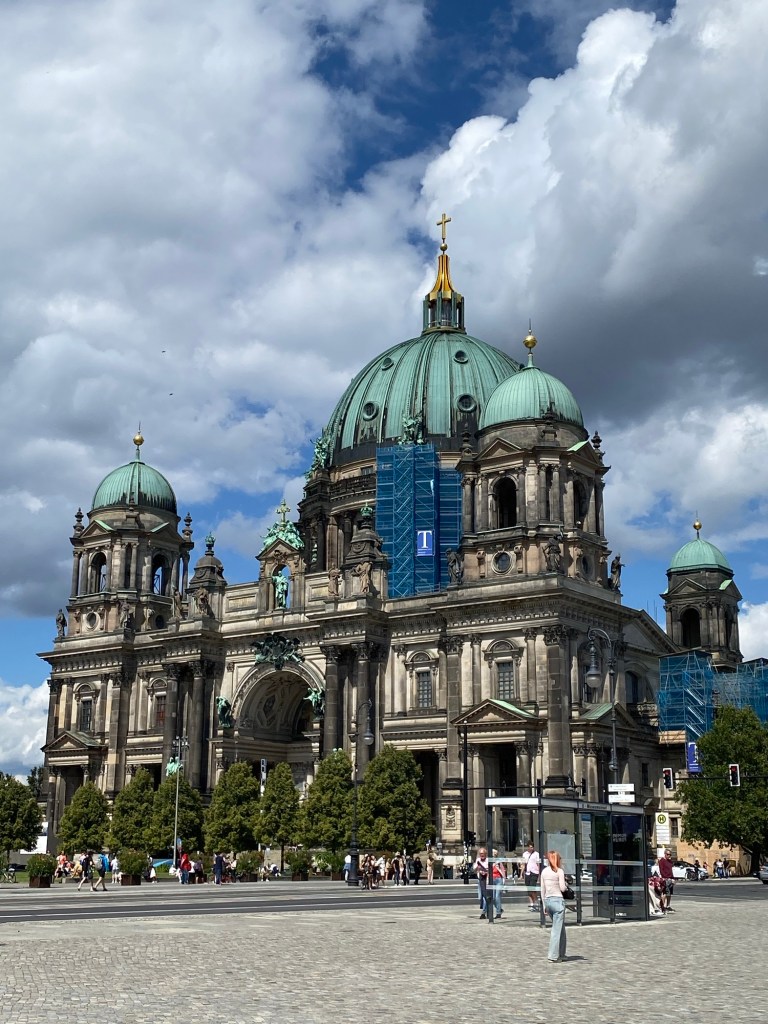
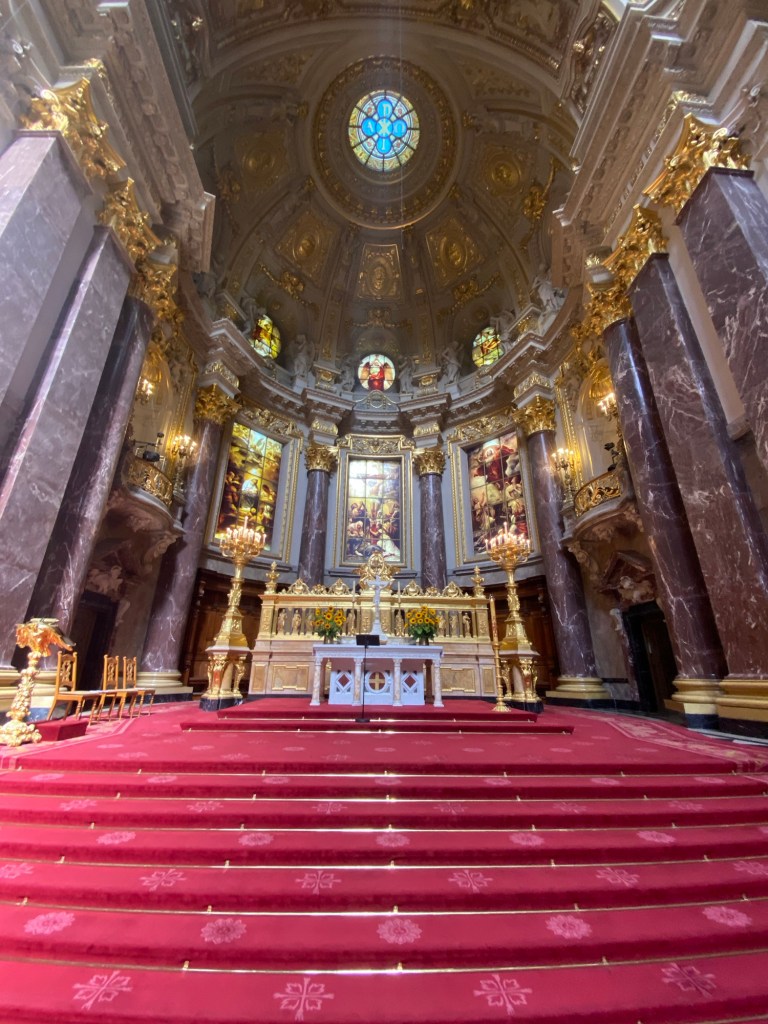
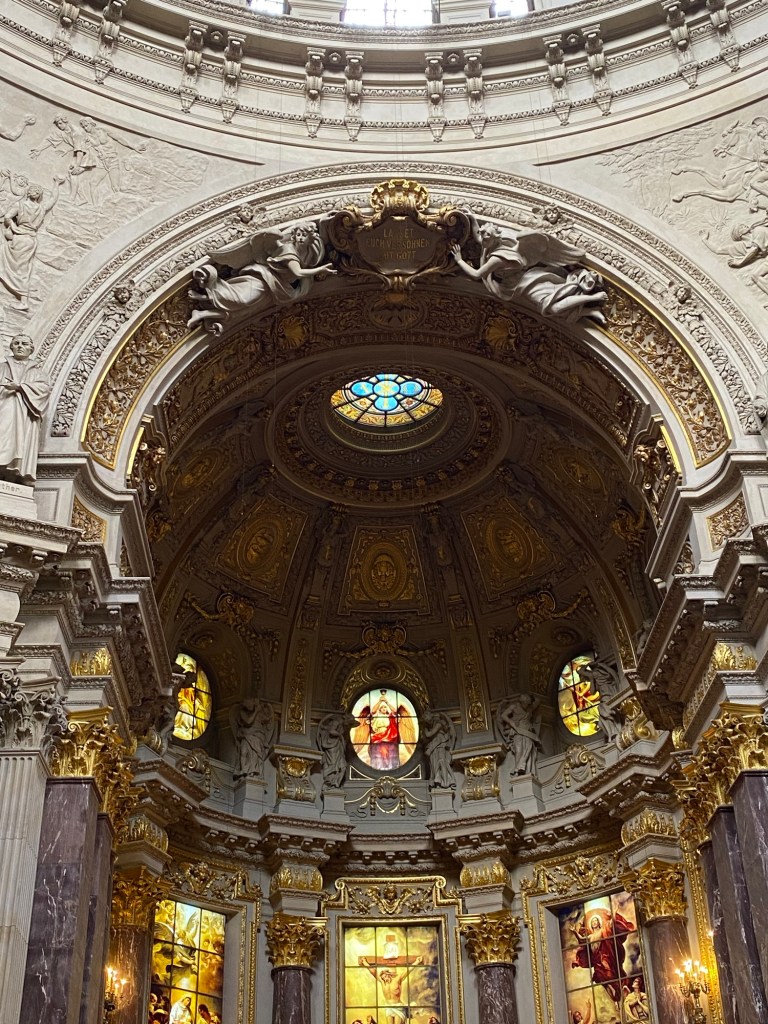
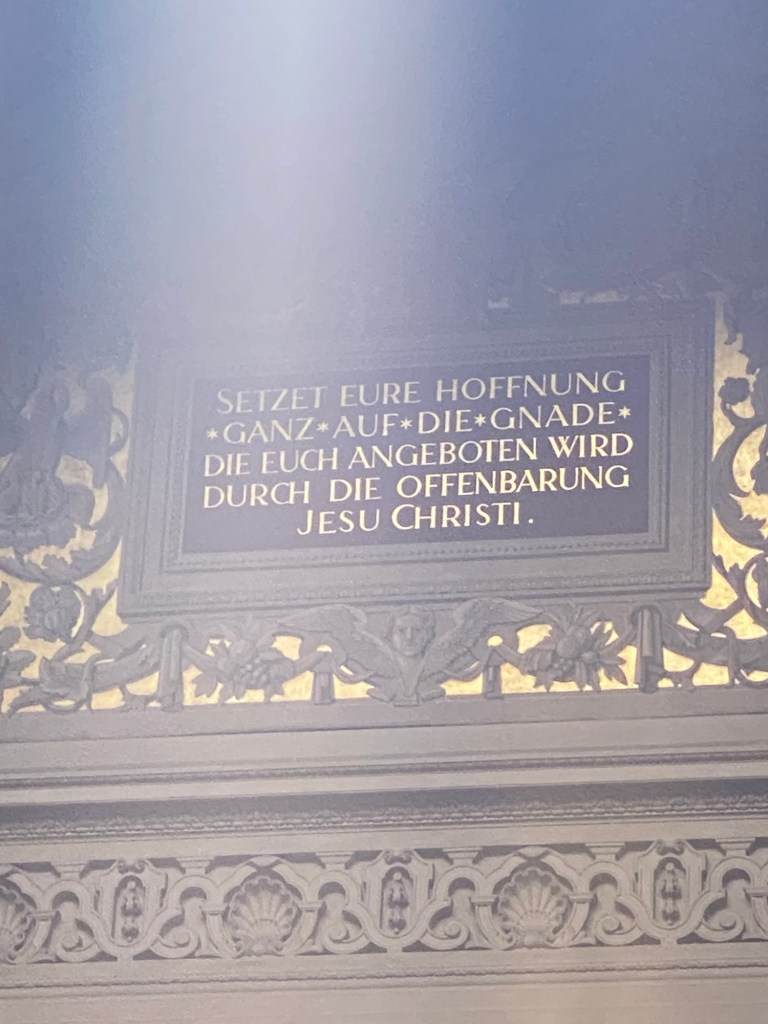
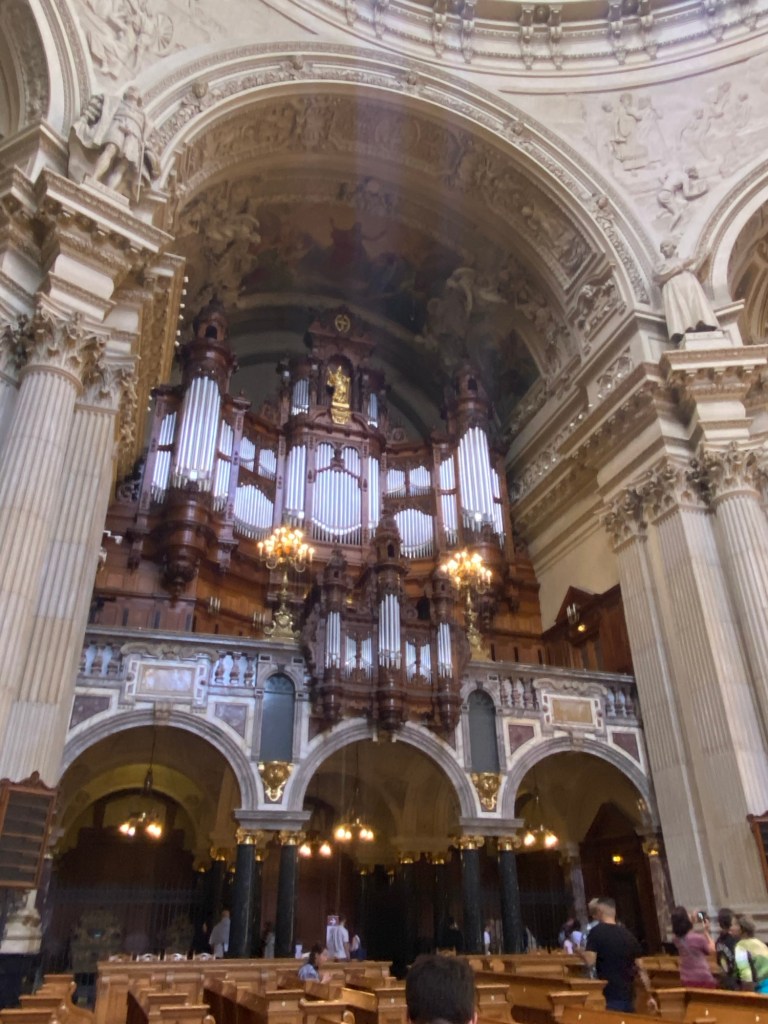
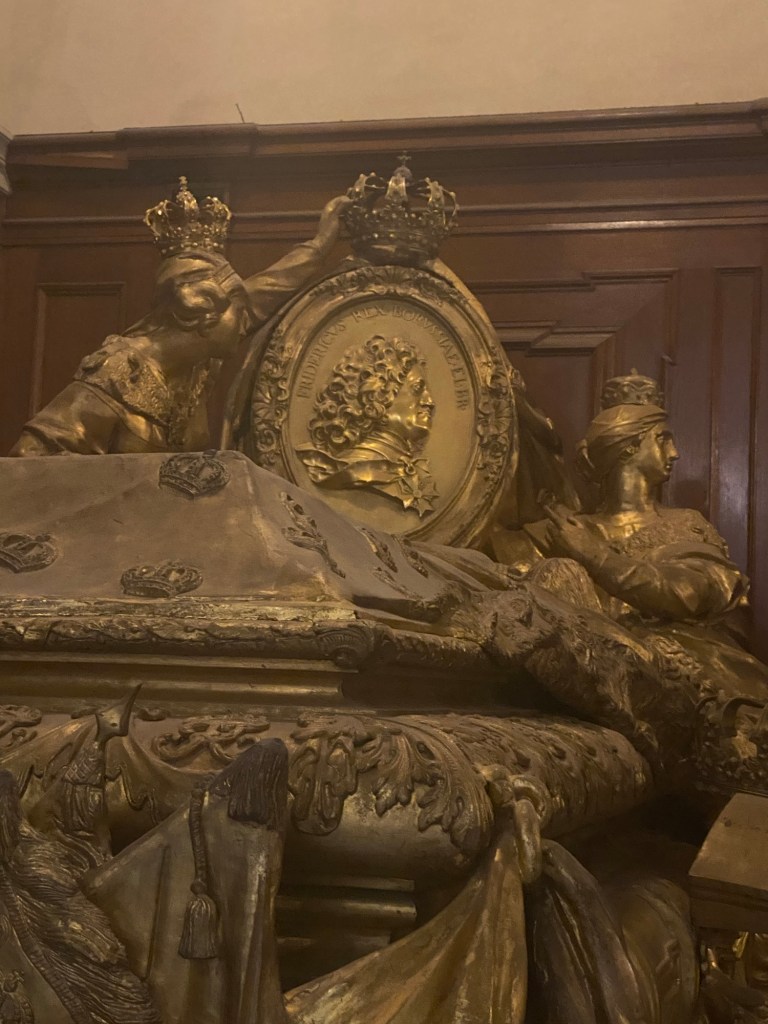
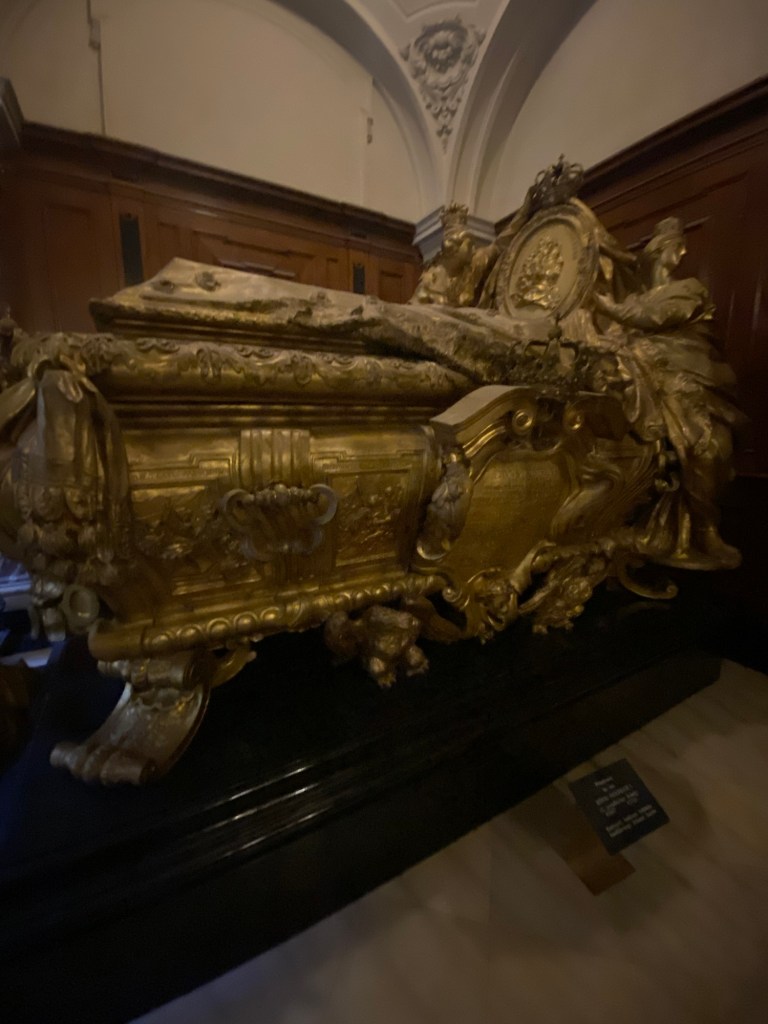
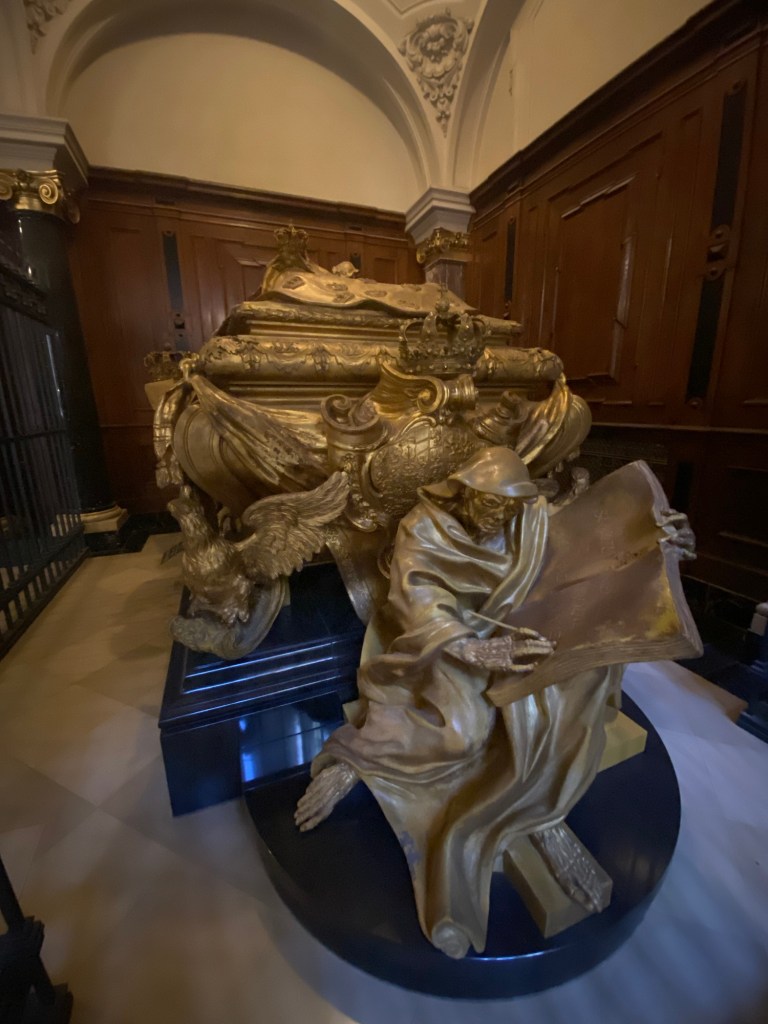
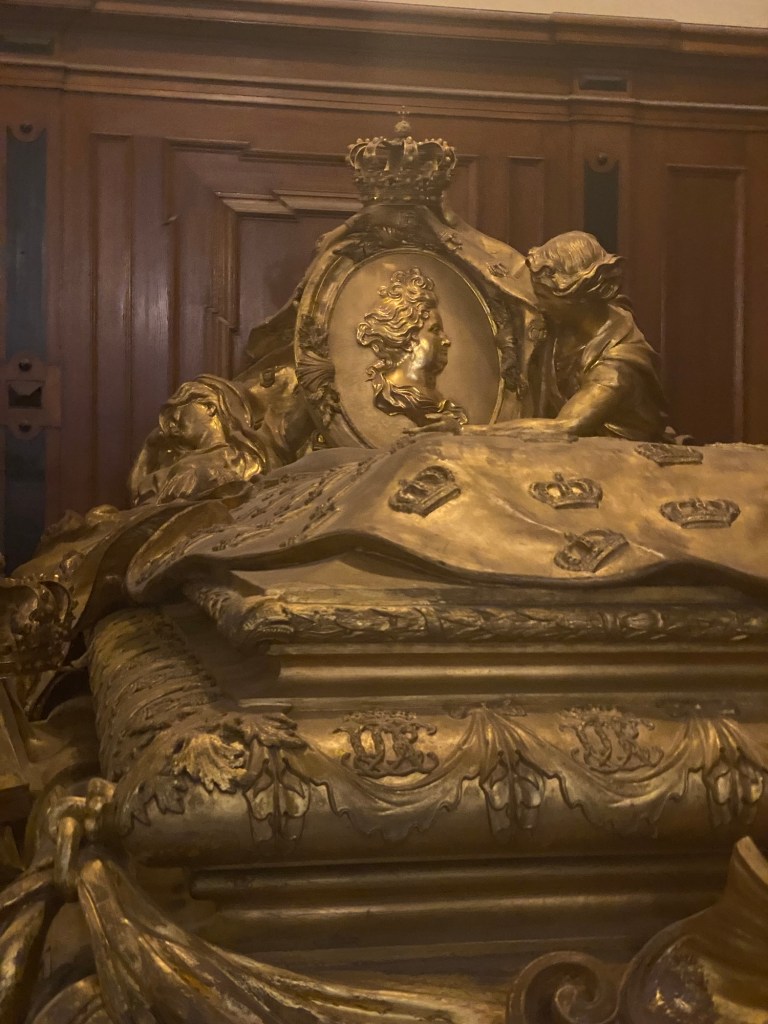
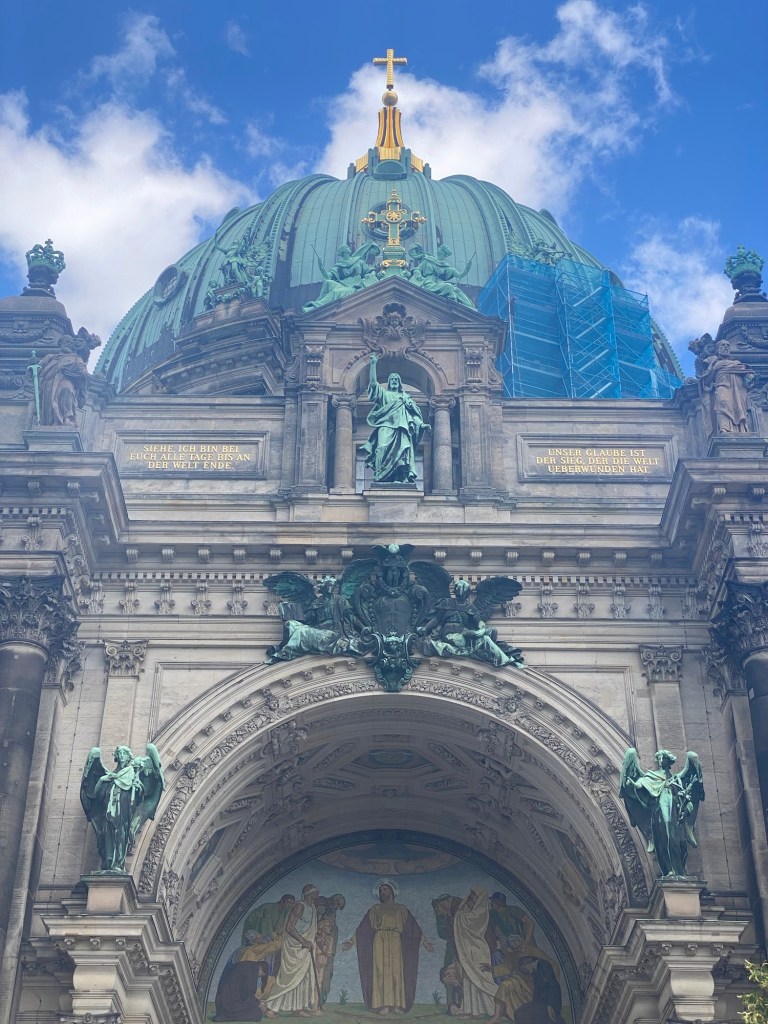
This monumental German Protestant church is also the dynastic tomb of the House of Hohenzollern. It sits on Museum Island in central Berlin. This church was built between 1894-1905 by order of Emperor William II in Neo Renaissance and Neo Baroque styles. It’s the largest Protestant church in Germany and one of the most important dynastic tombs in Europe. It was damaged by Allied bombing in WWII, but it’s interior was restored in 2002.
Two fabulous sarcophagi are just outside the main church and are but 2 of the important tombs of German/Prussian royalty.
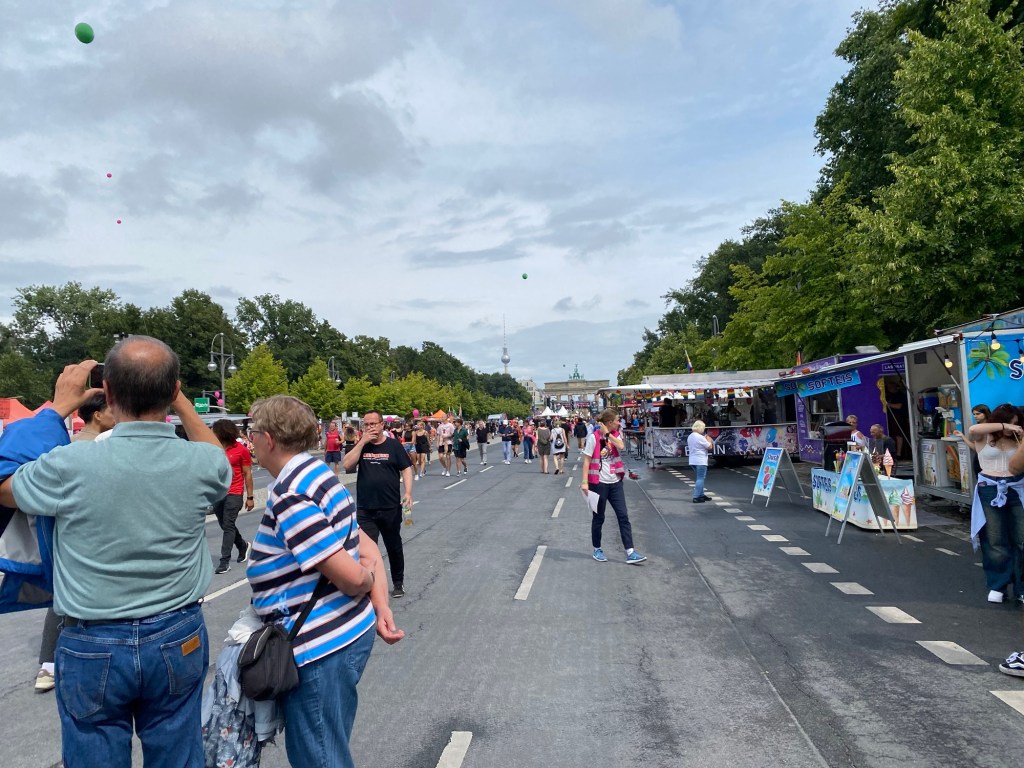
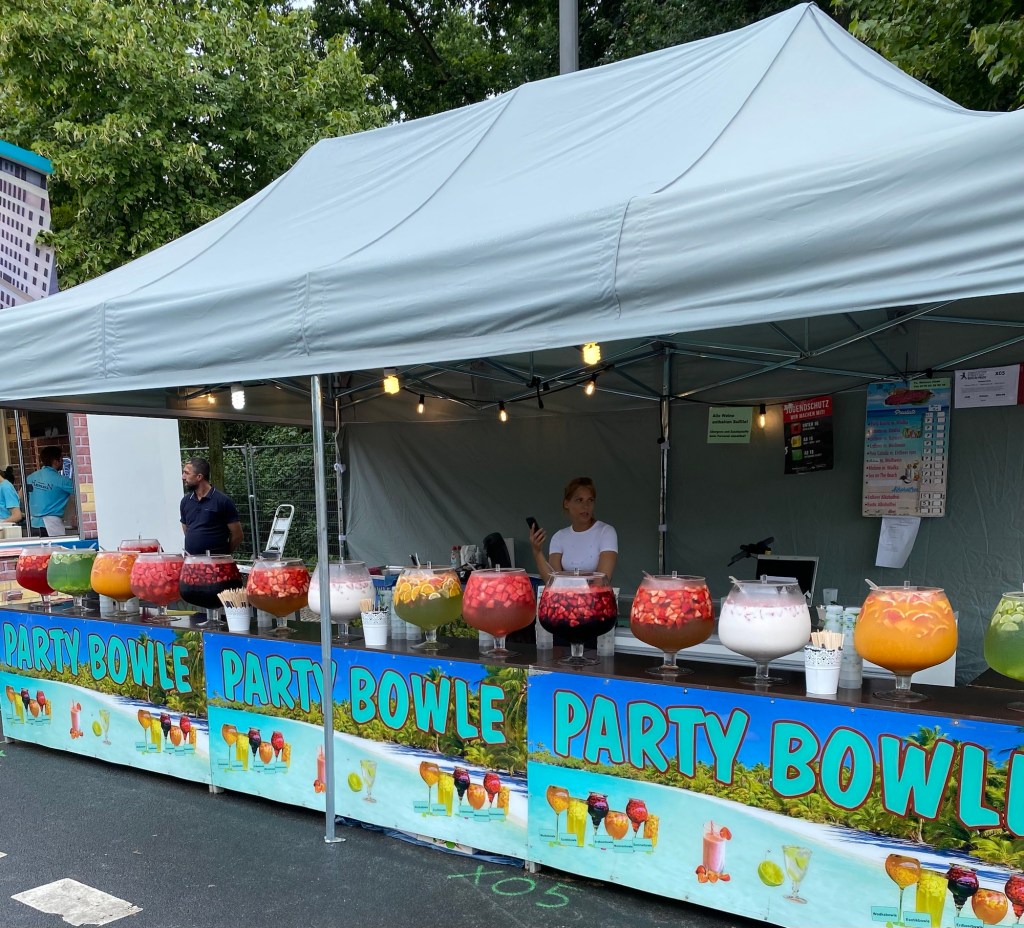
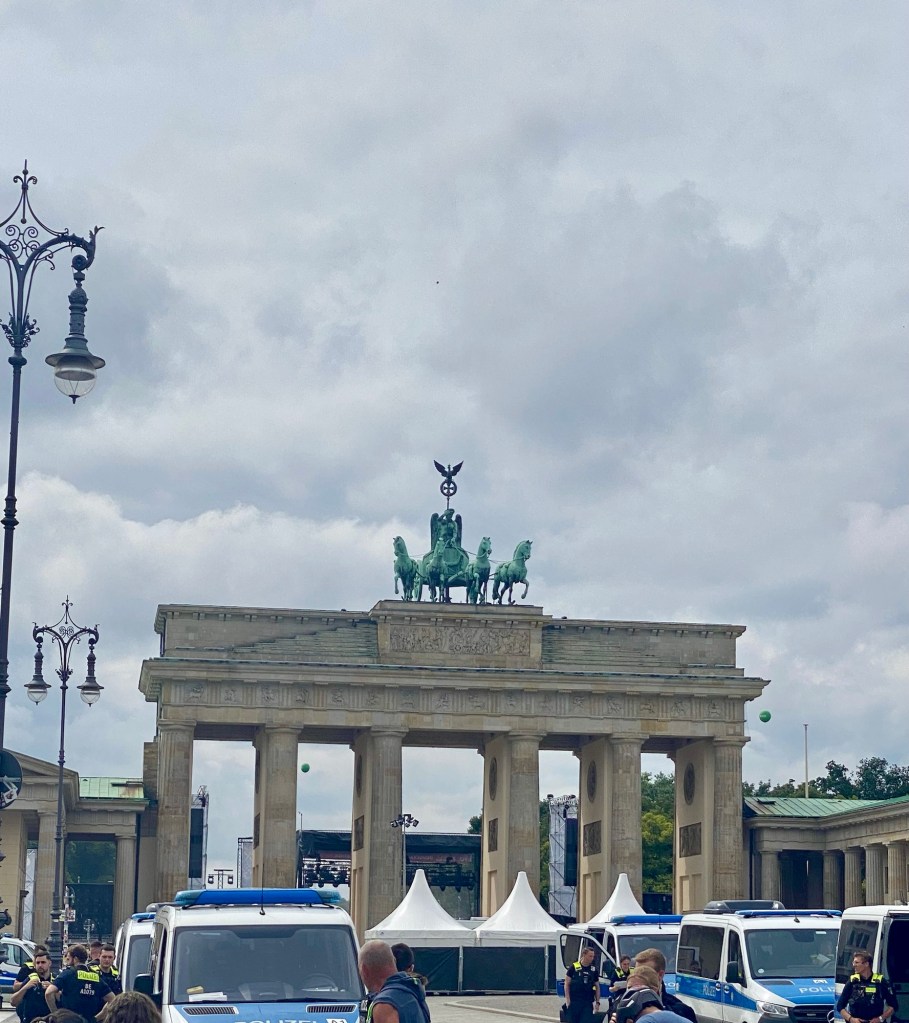
I don’t know if it’s like this every weekend, but there was a huge afternoon party today in the Tiergarten, on the section that begins with the Victory Column and ended at the Brandenburg Gate. Everybody and their brother and sister were there this afternoon and the music was blaring, the alcohol was flowing, and the crowds were huge but not unruly. There were thousands (it seemed) of portable toilets and 80% of the people at least were dressed if not in costumes, then in a weird and wacky way. Glitter abounded. It was definitely geared towards gay pride, but there were lots of themes going on, it seemed to me.
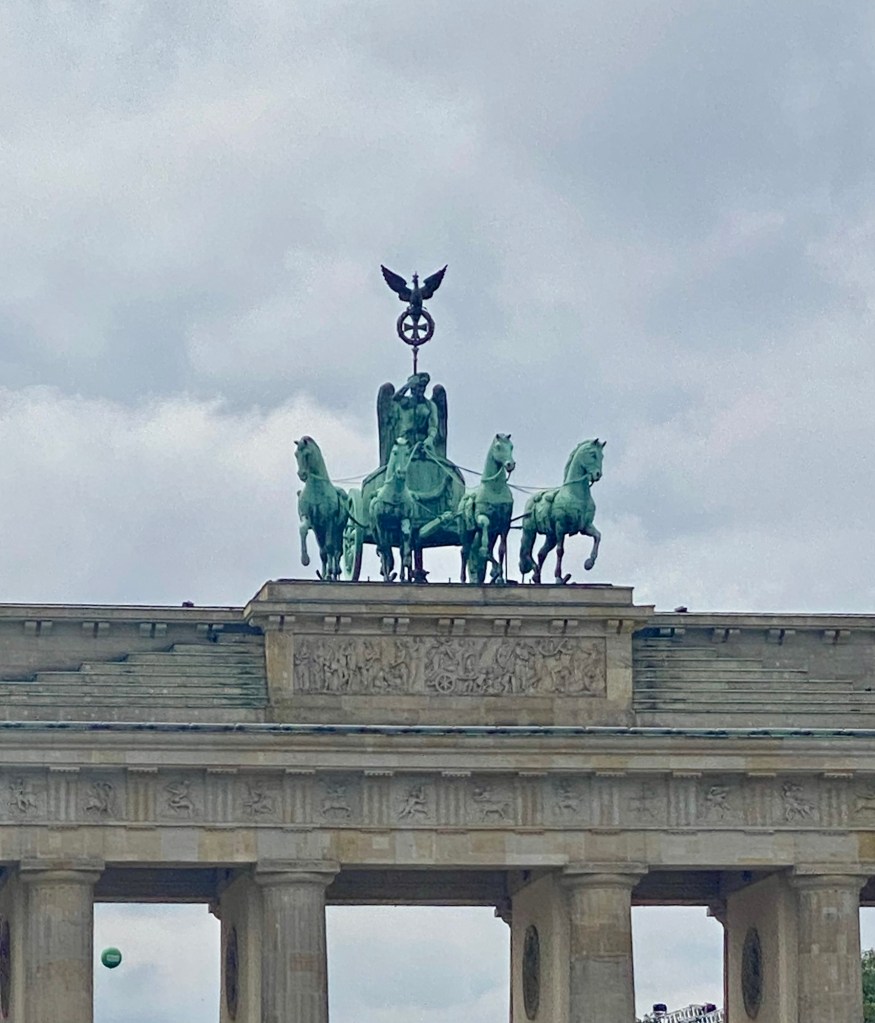
I must admit that when I pictured the Brandenburg Gate in my mind before I got to Berlin, I didn’t see it as a stage for a drag queen rendition of Queen. But, my introduction to the august monument was just that!
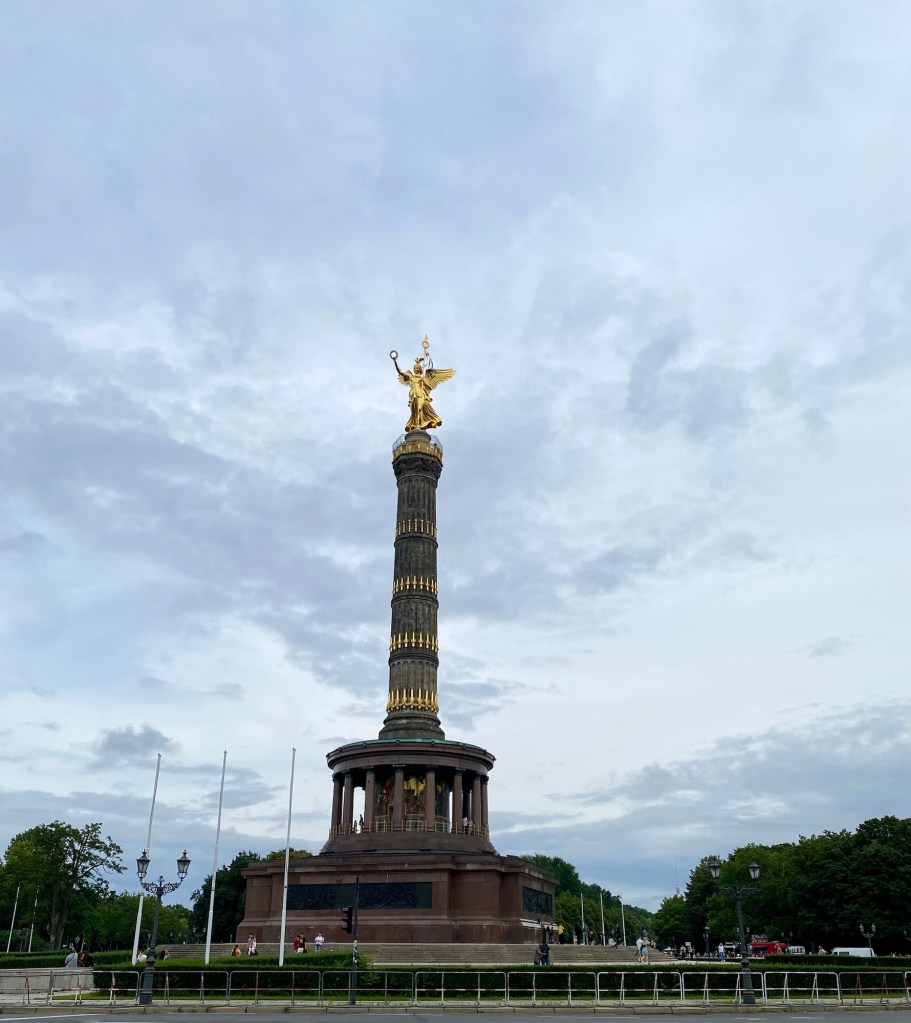
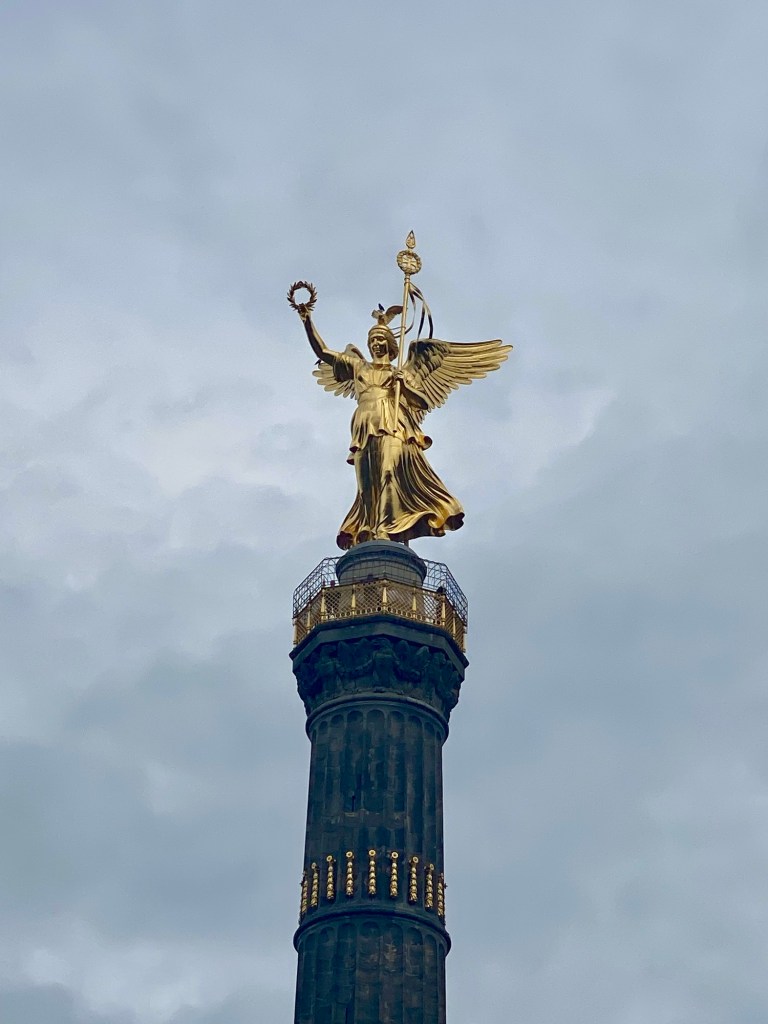
A little further down the avenue that runs through the Tiergarten stands this beautiful and impressive Victory Column.
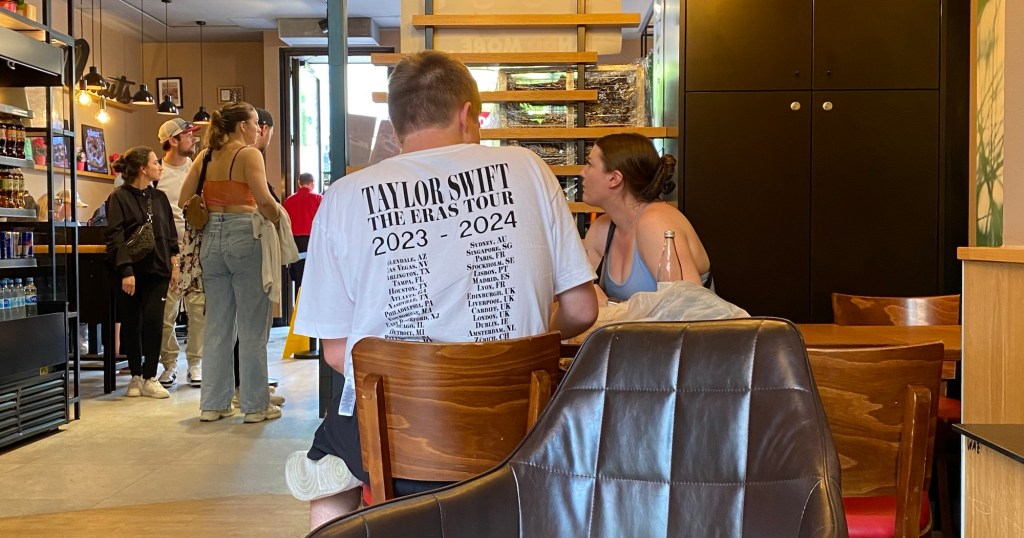
After walking all this way and dodging crazy crowds, I needed to rest at a cafe and there, right in front of me, was a reminder that everything is global. This guy had on a current Taylor Swift t-shirt and I have no doubt he attended one of the shows.
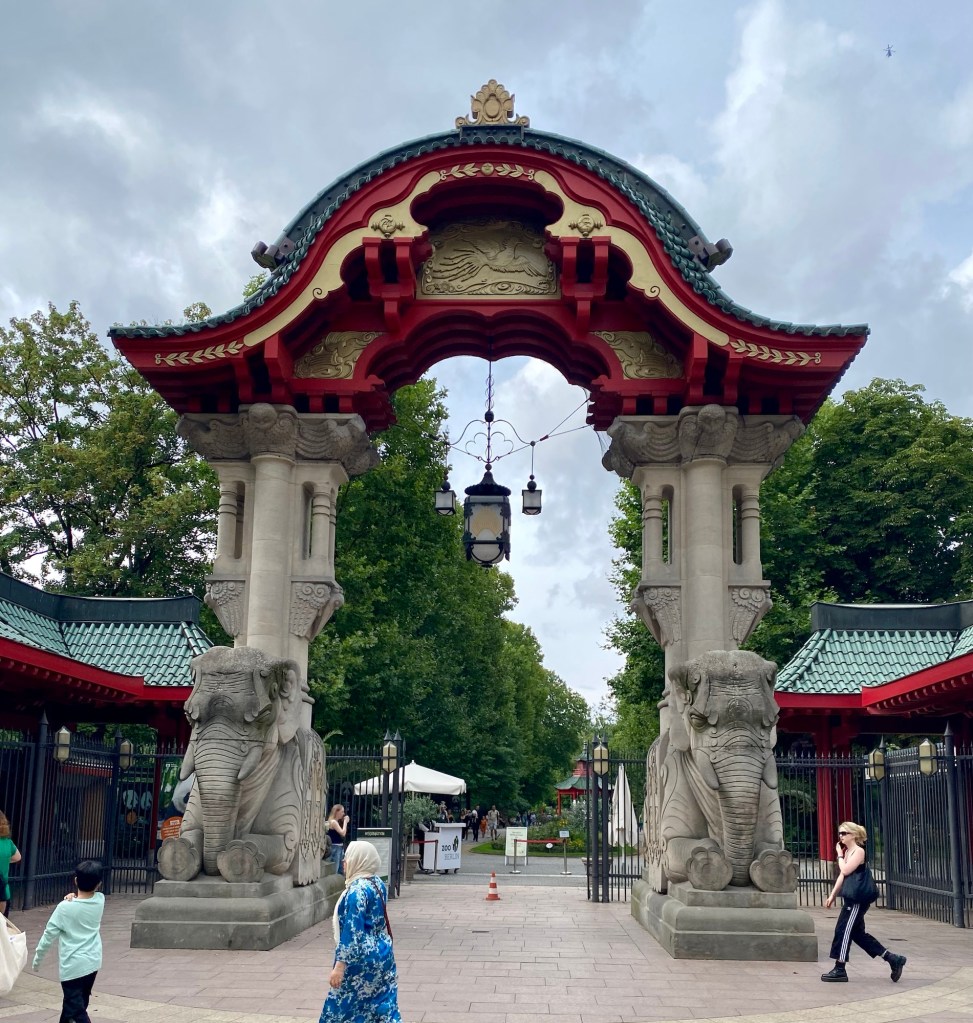
Walking back to my hotel I passed the Berlin Zoo, which is very famous. These are some gates! I love the elephants!
And, tired though I was at the end of my first full day in Berlin, I wasn’t too exhausted to notice a street sign that told me to “be creative.” I love a city that reminds its people to do just that. From what I’ve seen, there is a lot of creativity here!
Guten tag! I’m in Berlin! the Brandenburg Gate and I say hallo!
It’s at least 20 degrees cooler here than anywhere in Italy, and while I pass the time until my new apartment is available at the tail end of summer, I thought, why not visit someplace new and learns some new tricks? Germany filled the bill!🇩🇪
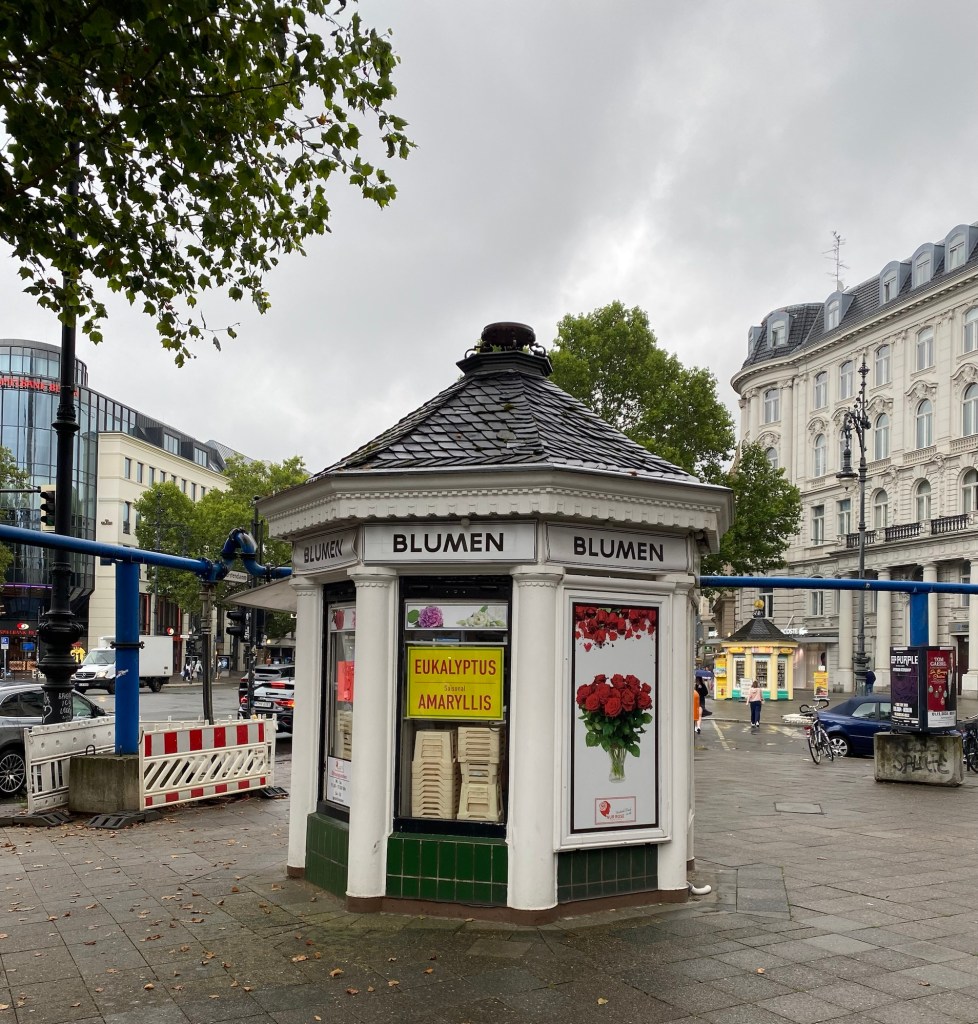
My intro to Berlin was the darling little flower shop on the Kurfurstendamm, the avenue on which I’m staying. What a charming addition to a city! I might be in love!
I arrived yesterday late afternoon and enjoyed a beautiful dinner at a bistro (what’s the German word? somebody tell me) and then fell asleep in my spacious, modern, air-conditioned hotel with a down comforter ad down pillow. Traveling from Italy is chaos always and I was tired.
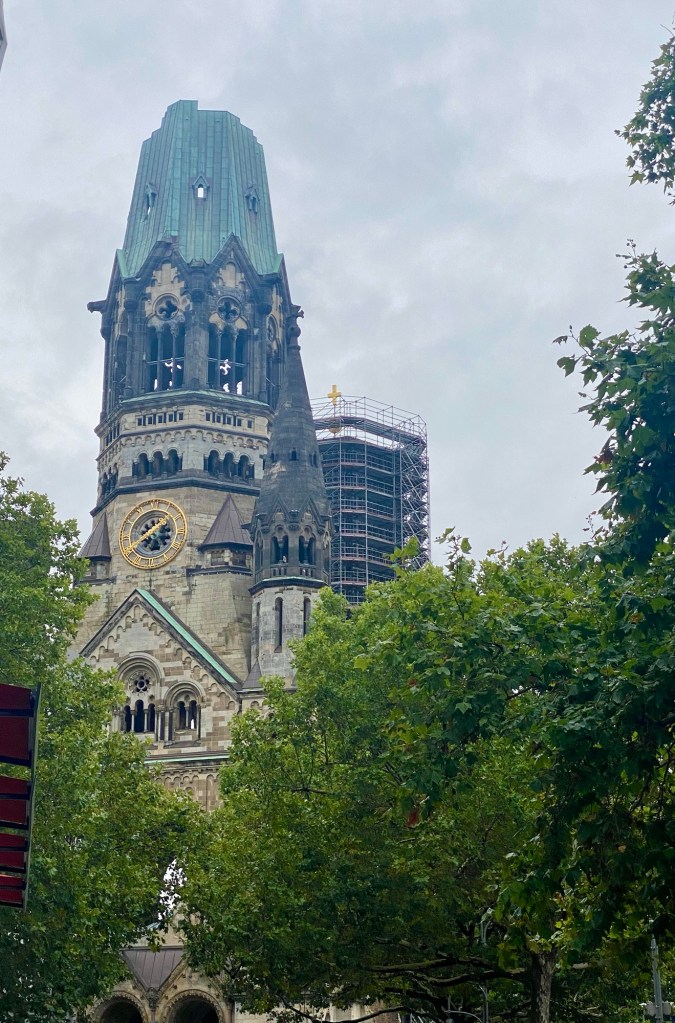
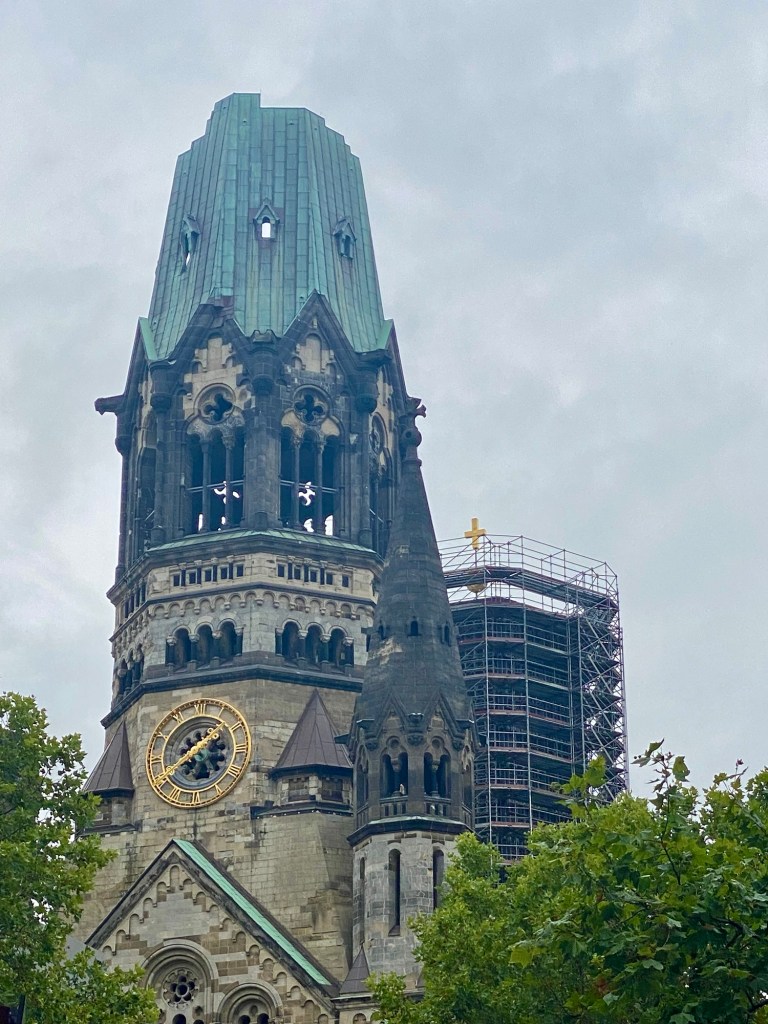
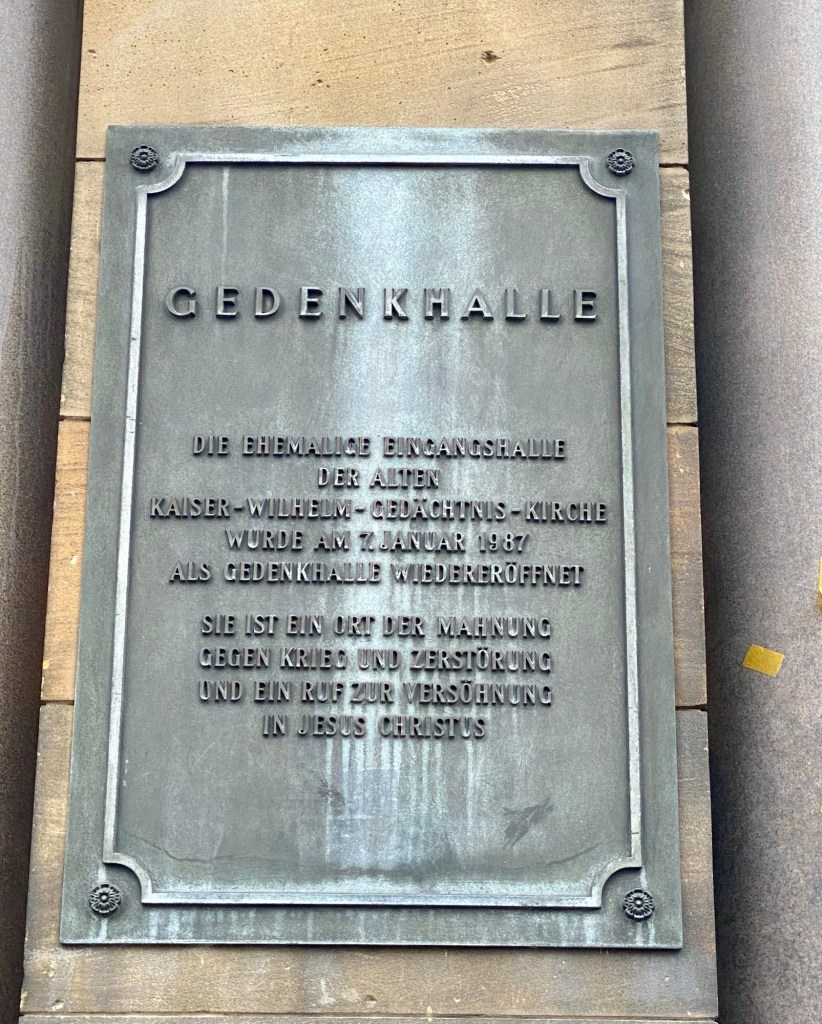
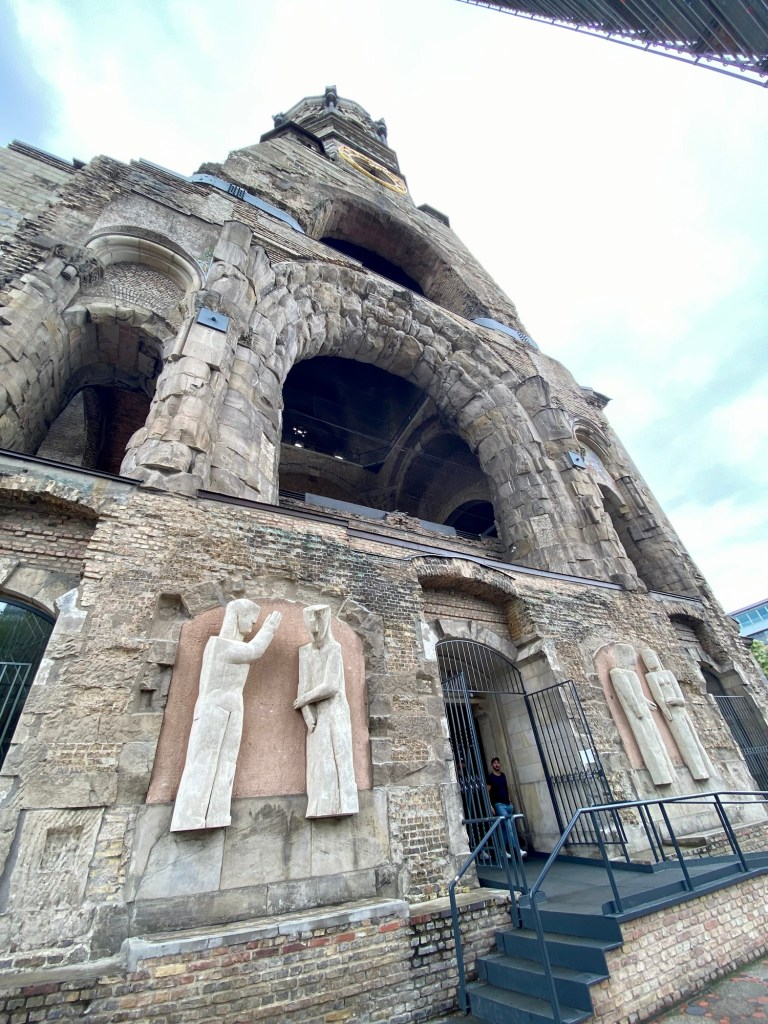
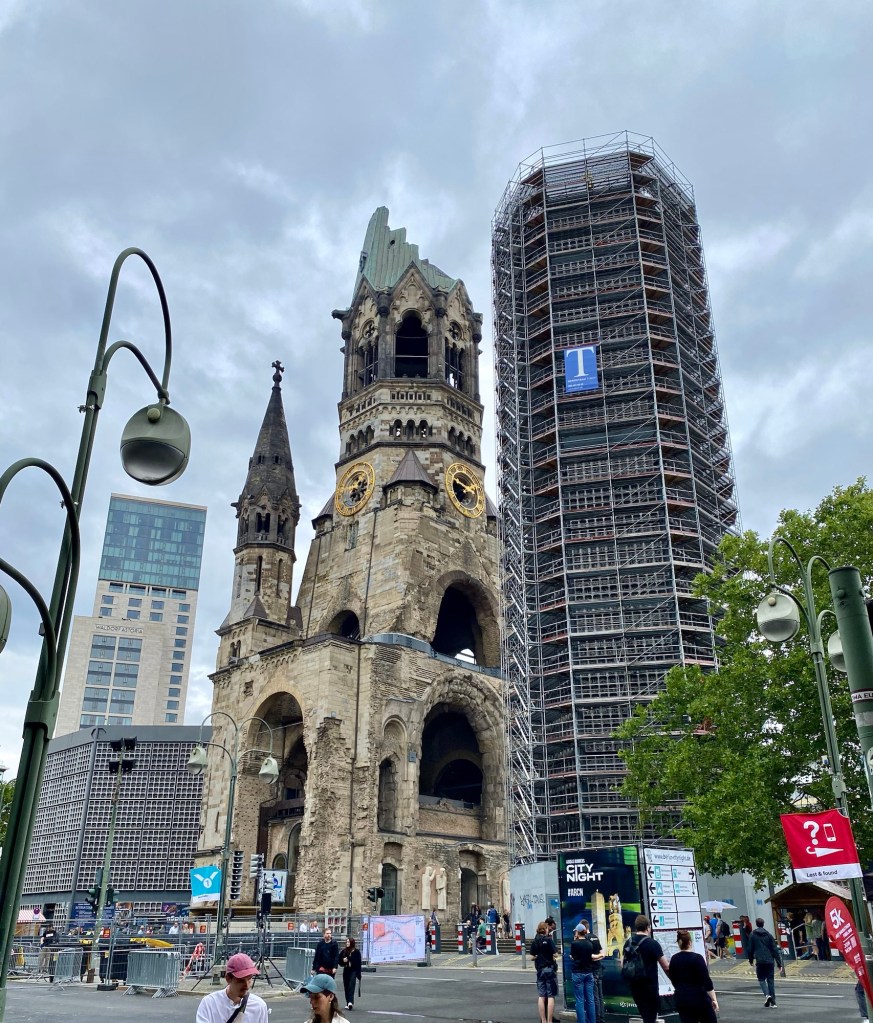
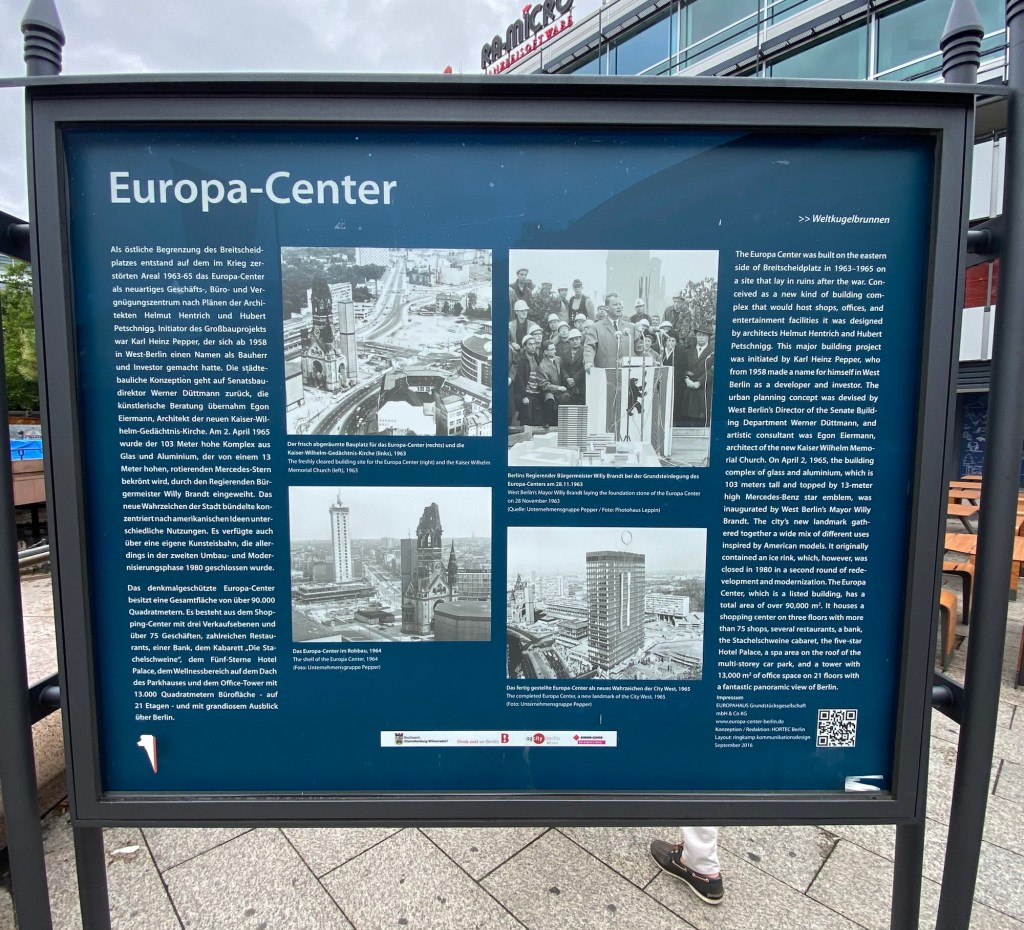
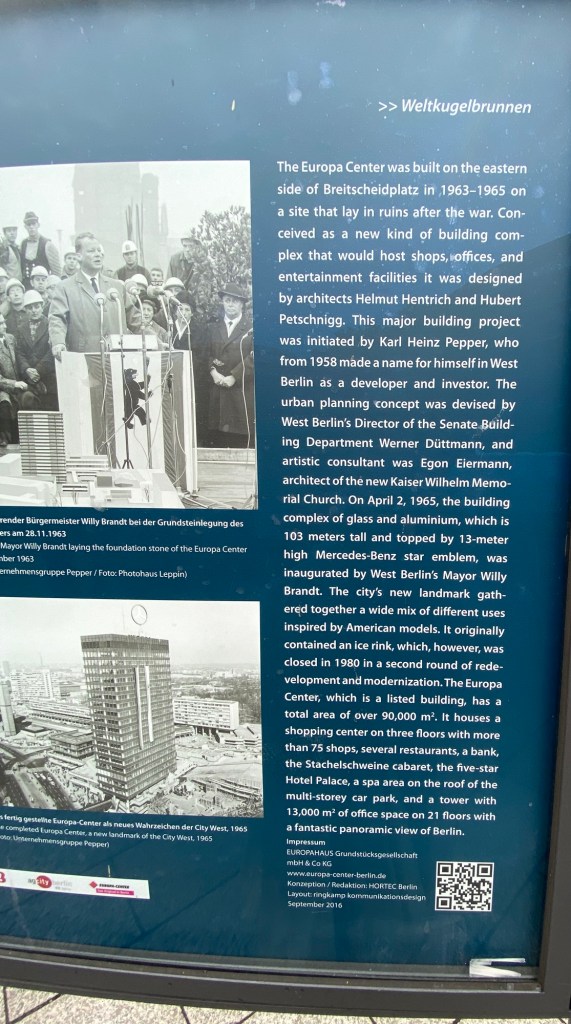
Today I walked to Tiergarten and specifically on my way to the Brandenburg Gate. The first monument I encountered was this, the remnant of the Kaiser Wilhelm Memorial Church, the most famous landmark in the western city center. In honor of Wilhelm I, the first German Kaiser, his grandson Wilhelm II planned a magnificent church. Build between 1891 and 1895 in the Neo-romantic style, it had 5 spires and reflected the flamboyant taste of times of the Kaiser.
Air raids in 1943 damaged the church this badly and the roof collapsed. The Allies were unwilling to rebuild it, as it was seen as a symbol of excessive national pride. Instead, the ruin stood as a constant reminders to Berliners of the horror of war.
In the late 1950s, the ruin was integrated as a part of the design of a new church, built between 1959-61.
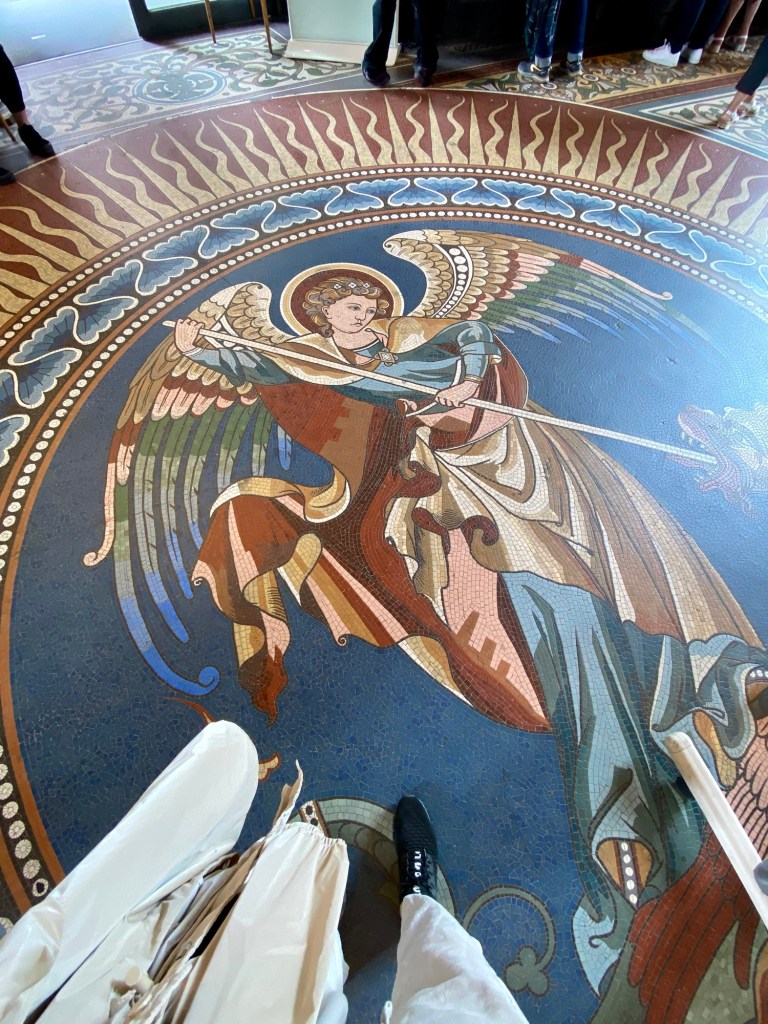
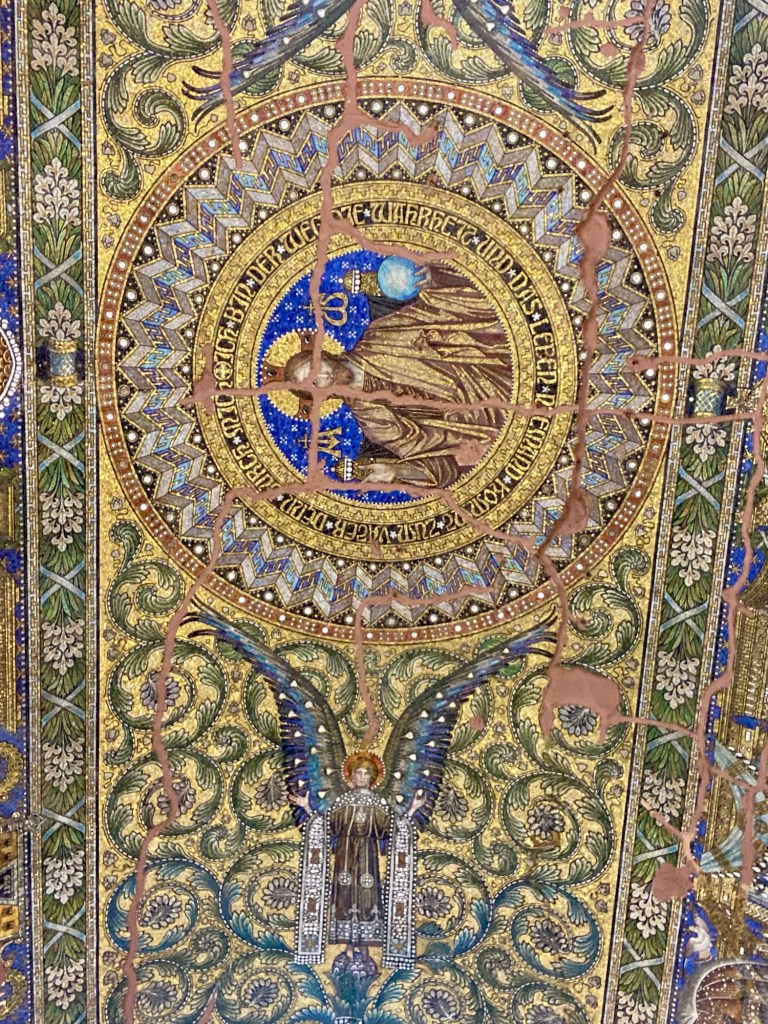
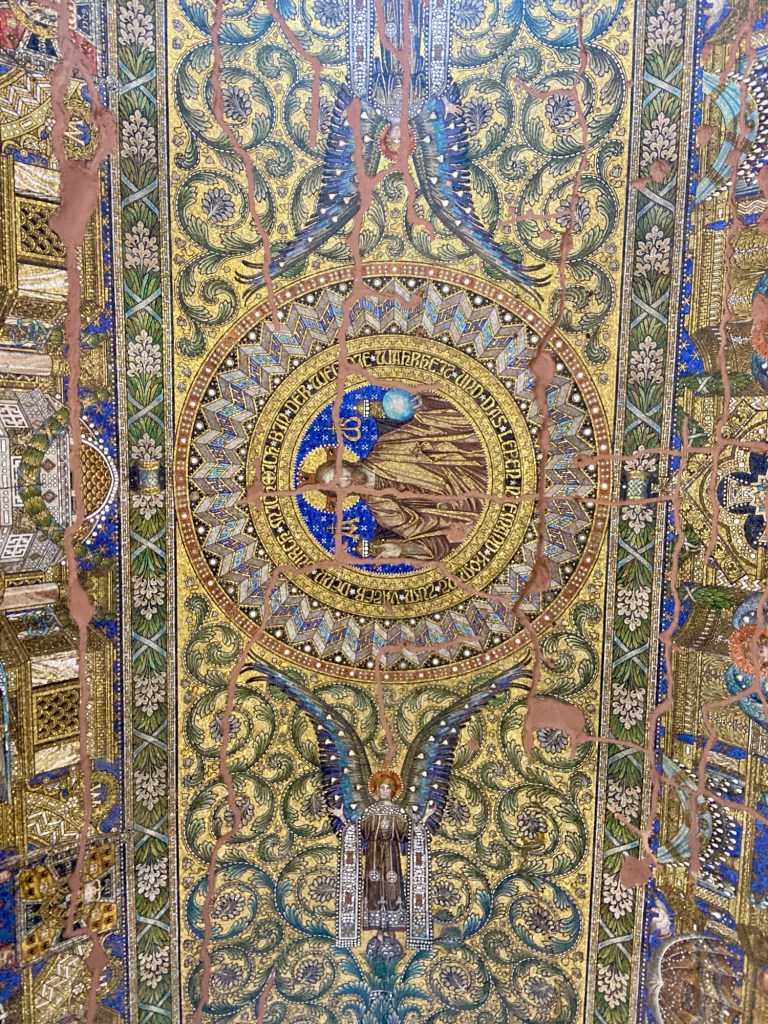
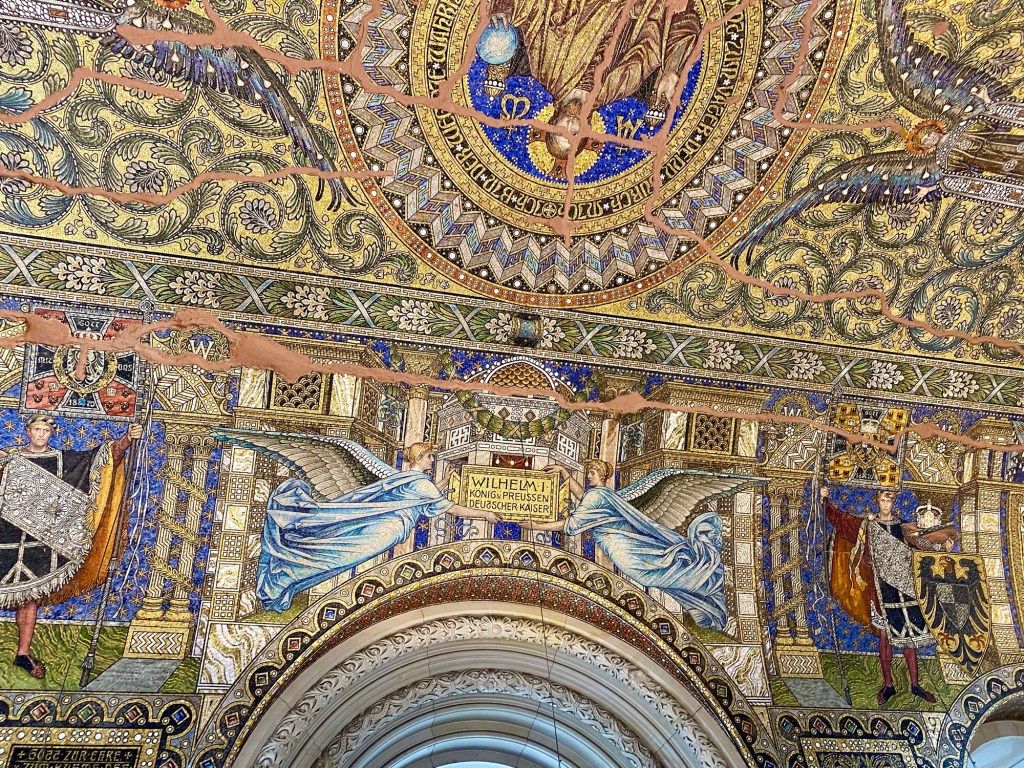
Pictures below show the lovely pavement in the memorial, as well as the mosaic ceiling and vaulted walls of the surviving room.
Below, a picture of the back of the ruin.
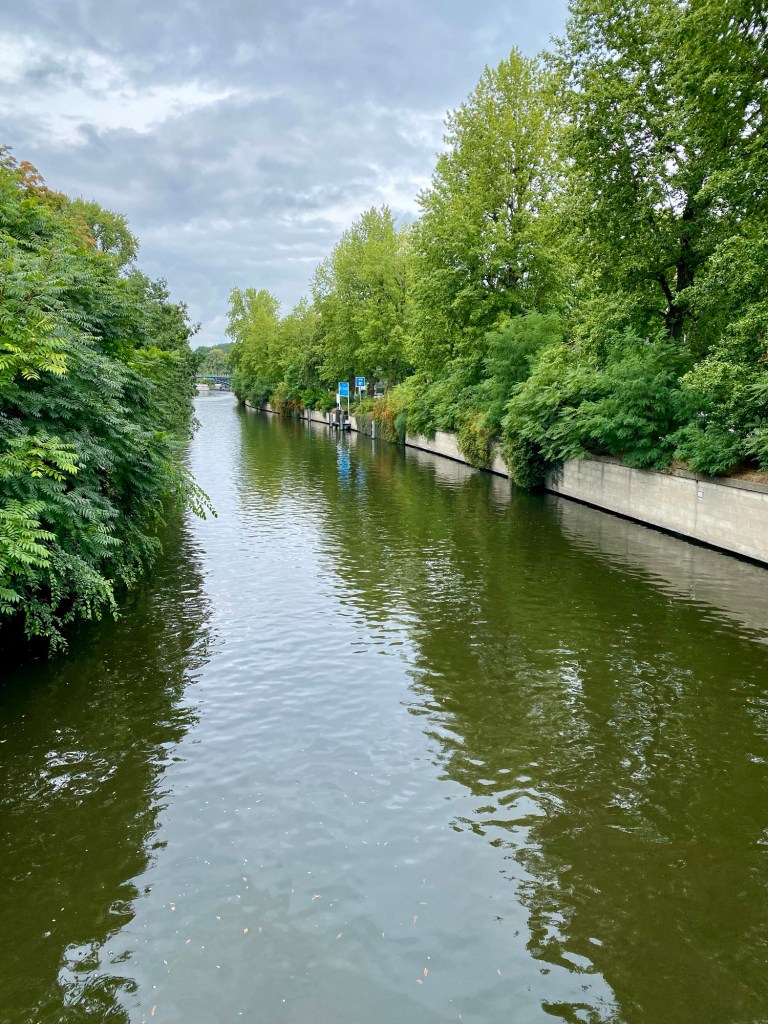
The River Spree and a marker from the 1950s for a bridge that spans it.
I’m excited to learn more about Berlin and Germany in the coming weeks. Stay tuned for more! Auf Wiedersehen!









































 get back, lauretta!
You must be logged in to post a comment.